Best Time to Visit Lumbini

lubini

Best Time to Visit Lumbini: Complete Season-by-Season Guide

Lumbini — the birthplace of Siddhartha Gautama, who became the Buddha and founded one of the world’s great religions — is one of Asia’s most profound pilgrimage destinations and one of Nepal’s most visited UNESCO World Heritage Sites. Located in the southwestern Terai plains of Nepal’s Rupandehi District, just 22 kilometres east of the India-Nepal border at Bhairahawa/Sunauli, Lumbini draws millions of visitors annually from across the Buddhist and Hindu worlds — pilgrims, scholars, meditators, and curious travellers who want to stand at the spot where, in approximately 563 BCE, a child was born beneath a sal tree who would change the world.

When to visit Lumbini is more nuanced than a simple ‘peak vs off-peak’ calculation. Lumbini’s subtropical Terai climate means temperatures can soar above 40°C in summer and drop to near freezing on winter mornings; monsoon rains can make the Sacred Garden’s paths muddy and uncomfortable; and the extraordinary Buddha Jayanti festival — celebrated on the full moon of May — transforms the site into one of the most spiritually charged gatherings in Asia, but brings peak crowds and heat simultaneously.

Understanding each season’s trade-offs between weather, crowds, festival experiences, and transport conditions helps every type of visitor — from the solo meditator seeking solitude to the large pilgrim group seeking the festival atmosphere — plan the perfect Lumbini visit.

Nepal Vehicle Hiring Pvt. Ltd., based in Thamel, Kathmandu, provides transport to Lumbini from across Nepal — from Kathmandu airport transfers and Nepal tour packages to dedicated Hiace van hire for pilgrim groups and car hire in Nepal for individual travellers. This guide combines seasonal weather data, festival calendars, transport advice, and practical visitor information to give you a complete picture of the best time to visit Lumbini—whatever your purpose for this sacred journey.
Kathmandu to Lumbini Tour Package

Best Time to Visit Lumbini: The Quick Answer

The best months to visit Lumbini overall are October, November, February, and March — the sweet spots between the extreme heat of summer, the disruption of monsoon, and the cold fog of deep winter. These four months offer the most comfortable combination of temperature, road conditions, and site accessibility.

  • October to November (Autumn): Best overall. Cool, dry, clear skies, post-monsoon lush greenery. Temperatures: 15°C to 28°C. International monasteries at their most vibrant.
  • February to March (Late Winter/Early Spring): Excellent. Gardens begin blooming, temperatures warming pleasantly (18°C to 28°C), crowds moderate. Good for spiritual reflection.
  • April to May (Spring — Buddha Jayanti): Spiritually unmissable but hot (30°C to 38°C). Buddha Jayanti festival on the May full moon is Lumbini’s most extraordinary experience.
  • December to January (Peak Winter): Comfortable daytime temperatures but morning fog, cold nights (2°C to 8°C), and air quality concerns. Good for budget travel and solitude.
  • June to September (Monsoon): Least recommended. Heavy rain, high humidity, temperatures 30°C to 40°C, potential flooding. The site remains open,n but the outdoor experience is significantly compromised.

Autumn (October to November): The Best Overall Season for Lumbini

By near-universal agreement among Lumbini visitors, guides, and travel experts, autumn is the finest overall season to visit Lumbini. The monsoon rains have ended, leaving the Sacred Garden and surrounding monastery zone lush, green, and freshly washed. Temperatures have dropped from summer and monsoon extremes to a genuinely pleasant 15°C to 28°C during the day, with cool evenings that make outdoor exploration comfortable from dawn to dusk.

Weather in October

October is Lumbini’s transition month — the last of the monsoon rains have typically finished by early October (though a late monsoon tail can bring occasional showers in the first two weeks), and the gardens emerge into post-monsoon clarity with an extraordinary lushness. October temperatures range from about 18°C to 30°C, with clear blue skies and excellent visibility.

The air quality is at its best of the year in October — the monsoon rains have scrubbed the atmosphere of dust and particulates, and the Terai plains’ characteristic winter haze has not yet built up. For photography, October’s light — golden, clear, and warm — is the finest available for Lumbini’s stone monuments, carved pillars, and monastery facades.

October also coincides with Nepal’s Dashain festival — the country’s most important Hindu celebration. While Dashain is not specifically a Lumbini festival, its national presence means more Nepali visitors during this period, and some Nepali-run accommodation and restaurants in Lumbini may have reduced staffing or modified hours during the festival week.

International pilgrims from Buddhist countries (Japan, Korea, China, Sri Lanka, Myanmar) typically find October one of the most pleasant and uncrowded months at Lumbini.

Weather in November

November is arguably the single finest month to visit Lumbini. Temperatures have cooled further to 12°C to 25°C — genuinely comfortable for the extensive outdoor walking that a thorough Lumbini visit requires (the full circuit of the Sacred Garden and international monastery zone covers 5 to 8 kilometres on foot).

The sky is consistently clear, the garden vegetation is still lush from the monsoon, and the monastery compounds are in their most active state — monks in residence, prayer ceremonies visible, meditation halls open. Nepal’s Tihar festival (Festival of Lights) falls in November, adding another layer of colour and ceremony to the Nepali communities around Lumbini, while international monasteries celebrate their own autumn ceremonies with local communities.

November is also Nepal’s peak trekking season — meaning that travellers combining a Lumbini pilgrimage with Pokhara and the Annapurna region (the most common Nepal circuit for international Buddhist and Hindu pilgrims) will find the full Nepal tourism infrastructure operating at its finest simultaneously. Nepal Vehicle Hiring’s transport network — our Nepal Nekhor tour, Nepal holiday tours, and dedicated Hiace van hire — is in high demand in November; book 3 to 4 weeks in advance.

Winter (December to February): Peaceful and Budget-Friendly

Lumbini’s winter months offer a different but equally valid pilgrimage experience — one characterised by quiet contemplation, minimal crowds, and genuine spiritual solitude. International pilgrimage crowds thin dramatically in December, January, and February, and many monastery compounds become more accessible, intimate, and genuinely meditative without the tour-group traffic of autumn and spring.

Weather in December and January

December and January bring Lumbini’s coldest weather. Daytime temperatures reach 18°C to 22°C — comfortable for walking — but morning temperatures can drop to 2°C to 8°C, and the Terai plains experience heavy morning fog that can persist until 9 or 10 AM.

This fog — a characteristic feature of the Nepali and North Indian plains in winter — is thick, low-lying, and can reduce visibility to 50 to 100 metres. It clears as the sun gains strength, but early morning starts (the traditional approach for devout pilgrims visiting the Maya Devi Temple at dawn) are significantly affected.

Plan any dawn visit knowing the fog may limit the visual experience in December and January.

Air quality is also a genuine concern in winter. The Terai plains’ still winter air, combined with agricultural burning across the north Indian plains from November to February, creates significant particulate pollution that affects Lumbini and the surrounding area.

Visitors with respiratory sensitivities — asthma, chronic respiratory conditions — should factor this into their planning and consider visiting in October or February when conditions are better. Air quality is at its worst in January and February.

Winter’s compensation is real: room rates at Lumbini’s guesthouses and hotels drop 20 to 40 per cent from peak season, and the monastery compounds are dramatically quieter and more accessible. Walking through the Sacred Garden in December with no tour groups in sight, hearing birdsong clearly, and spending unhurried time at the Maya Devi Temple is an experience that peak-season visitors rarely have.

Weather in February

February marks the turning point of Lumbini’s winter — daytime temperatures climb back toward 22°C to 28°C, morning fog thins and clears earlier, and the first signs of spring vegetation appear in the Sacred Garden. February is one of Lumbini’s most underrated visiting months—quieter than autumn and spring, still uncrowded, with improving weather and the garden beginning its annual greening.

For spiritual travellers and meditators specifically seeking Lumbini’s contemplative quality without the crowd pressure of peak months, February is an excellent choice. Nepal Vehicle Hiring’s car hire in Nepal and Hiace van hire are readily available in February with minimal booking required.

Spring (March to May) and Buddha Jayanti: Spiritually Unmissable

Spring is Lumbini’s most spiritually charged season — and its most practically challenging. The weather warms steadily from March’s comfortable 20°C to May’s 30°C—the garden blooms with colour in March and April.

In April or May (the date varies by year according to the lunar calendar), the Buddha Jayanti festival, which celebrates the Buddha’s birth, enlightenment, and death on the full moon of the month of Vaishakha, transforms Lumbini into one of Asia’s most extraordinary spiritual gatherings.

March and April: Garden in Bloom

March and April bring Lumbini’s most visually beautiful conditions. The Sacred Garden’s trees and plantings are in full spring bloom—jasmine, bougainvillaea, and seasonal flowering plants frame the ancient ruins and the Maya Devi Temple in vivid colour. The temperature in March ranges from 20°C to 30°C — warm but very manageable for outdoor exploration.

April temperatures rise further to 25°C to 35°C, making early morning (6:00 to 10:00 AM) and late afternoon (4:00 to 6:30 PM) the most comfortable times to visit, with a midday break in the relative cool of a monastery or the Sacred Garden’s shaded inner areas.

March also sees the Hindu festival of Chaite Purnima — typically falling in March or April — when Hindu devotees gather at Lumbini to offer prayers for their children’s health and well-being. This festival adds a Hindu pilgrimage dimension to what is primarily a Buddhist sacred site, reflecting Lumbini’s syncretic sacred geography that honours both traditions.

Seeing Hindu pilgrims performing puja alongside Buddhist monks circumambulating the stupa is one of the most distinctive aspects of Lumbini’s living religious character.

Buddha Jayanti (April/May Full Moon): The Spiritual High Point

Buddha Jayanti is Lumbini’s most important and most extraordinary event — the annual celebration on the full moon of Vaishakha (which falls in April or May depending on the lunar calendar) of the three pivotal events of the Buddha’s life: his birth at Lumbini, his enlightenment at Bodh Gaya, and his final passing at Kushinagar. Theravada Buddhism holds that all three events occurred on the same full moon, making this date the holiest in the Buddhist calendar.

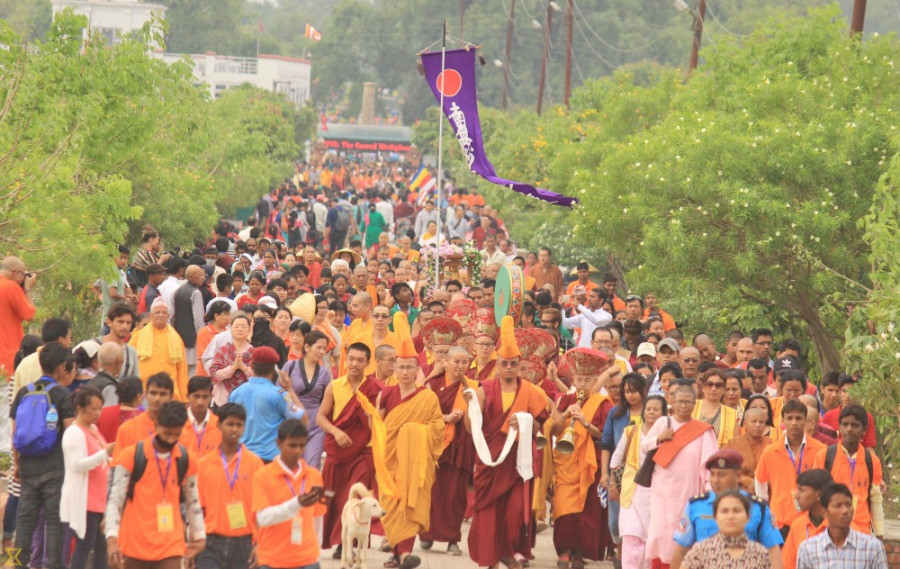
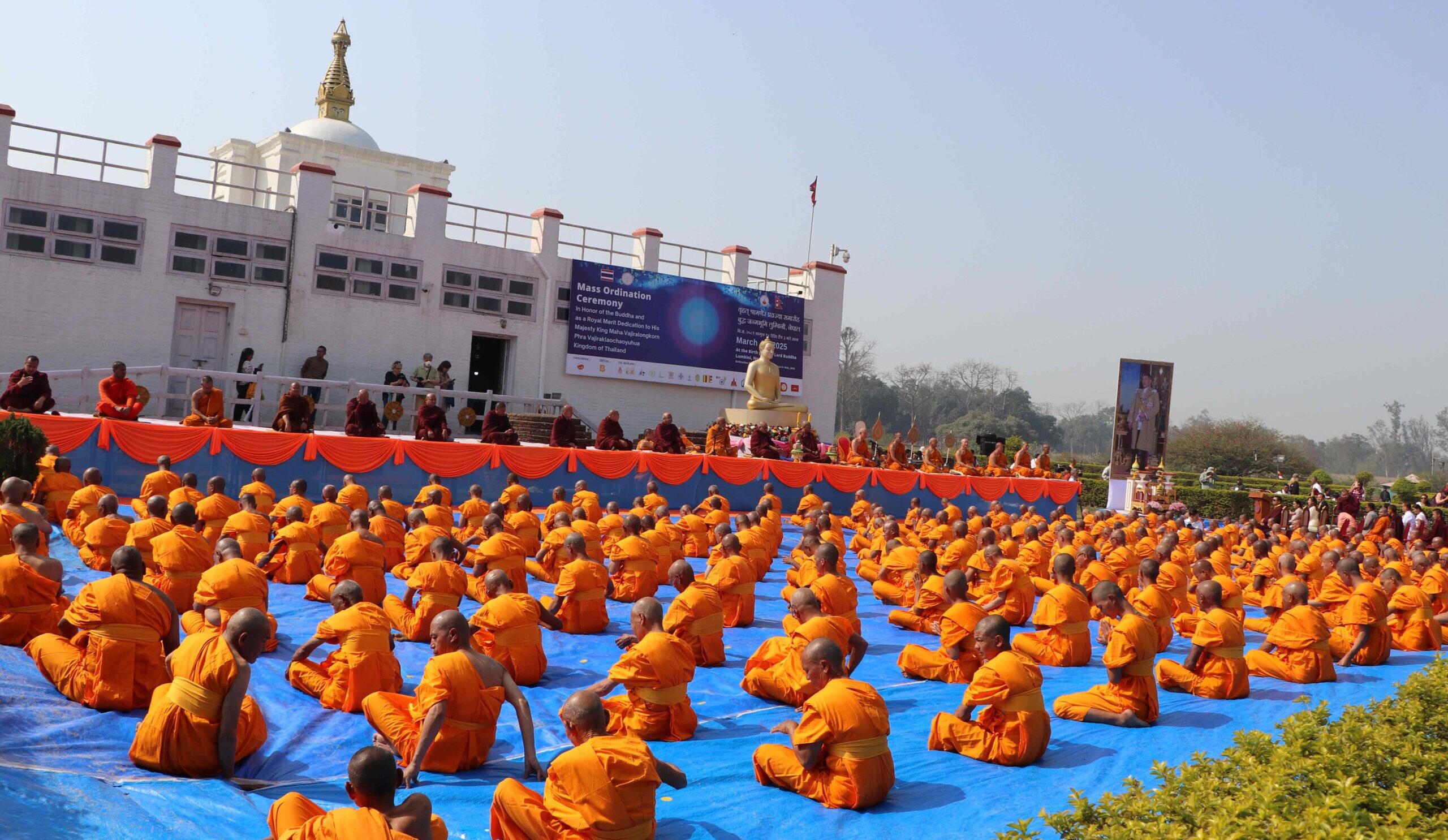
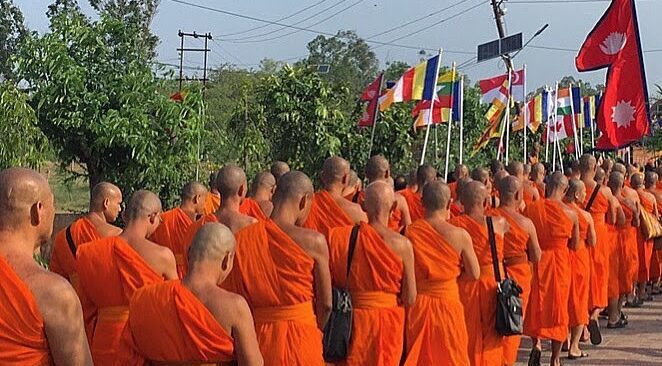
At Lumbini, Buddha Jayanti is celebrated with: morning processions through the Sacred Garden and international monastery zone, with monks from every Buddhist nation in residence marching in their distinctive robes; cultural programmes running through the day at the various national monastery compounds; lamp offerings (dipamala) after dark around the Maya Devi Temple, when thousands of small oil lamps are placed along the pathways and around the monument, creating an extraordinarily beautiful visual effect in the still evening air; and religious discourses (dhamma talks) given by senior monks from various Buddhist traditions in the monastery courtyards.

The atmosphere at Lumbini during Buddha Jayanti is like nothing available at the site at any other time of year — the energy of tens of thousands of devout pilgrims from Nepal, India, Sri Lanka, Myanmar, Thailand, Japan, Korea, China, and beyond, all converging on the same small sacred site in a shared act of devotion, creates a collective spiritual intensity that even non-Buddhist visitors consistently describe as one of the most moving experiences of their Nepal journey. Nepal Vehicle Hiring’s transport demand during Buddha Jayanti peaks significantly — book 4 to 6 weeks in advance for Buddha Jayanti transport.

Our Hiace van hire, Coaster bus hire, and car hire in Nepal all book out quickly for this period.

The practical trade-off for Buddha Jayanti is heat and crowds. The May full moon falls during Lumbini’s hottest period — daytime temperatures of 33°C to 38°C make midday outdoor walking genuinely uncomfortable.

Bring very lightweight clothing, wide-brimmed sun protection, water (at least 2 litres per person for a full day visit), and sunscreen with SPF 50 or higher. Plan your day around the early morning (6:00 to 10:00 AM) for outdoor site exploration and the evening (6:00 PM onward) for the lamp ceremony and night processions — rest in the shade of a monastery or your accommodation during the 11:00 AM to 4:00 PM heat peak.

The monsoon season brings Lumbini’s most challenging conditions. Heavy rainfall, high humidity (often above 80 per cent), and temperatures of 30°C to 40°C combine to make extended outdoor exploration genuinely uncomfortable. The Sacred Garden’s paths can become waterlogged, the Maya Devi Temple’s access paths muddy, and the overall atmosphere of the site — which is at its finest in clear, comfortable conditions — is compromised by the constant wet heat.

That said, the monsoon has its own rewards for those who must visit during this period. The Sacred Garden is explosively lush in monsoon — the sal trees, flowering plants, and surrounding vegetation reach their most vivid green, and the light through the rain-freshened leaves takes on a quality unique to this season.

The site is least crowded during monsoon — international Buddhist pilgrims typically avoid this period, and even domestic Indian pilgrim groups are fewer, making the Maya Devi Temple and the international monastery compounds more accessible for extended private visits.

Monsoon is also Lumbini’s most budget-friendly period. Accommodation rates drop to their annual low—sometimes 30 to 50 per cent below peak season rates—and Nepal Vehicle Hiring’s transport services are most readily available, with minimal booking required.

For travellers with fixed schedules who cannot choose their month, monsoon travel to Lumbini is manageable with the right preparation: waterproof footwear, lightweight rain gear, and a flexible daily schedule that avoids the heaviest rainfall periods (typically late afternoon and evening in the Terai monsoon).

Month-by-Month Guide: Lumbini Weather and Visitor Experience

  • January: Temperature 8°C to 20°C. Heavy morning fog, cold nights. Air quality concerns. Very quiet — best for solitary spiritual visits. Budget accommodation rates.
  • February: Temperature 10°C to 25°C. Fog lifting earlier, first spring signs. Quiet and contemplative. Excellent for meditators and photographers seeking solitude.
  • March: Temperature 15°C to 30°C. Gardens in spring bloom. Comfortable weather. Chaitra Purnima Hindu festival. Moderate crowds building.
  • April: Temperature 20°C to 35°C. Very beautiful gardens. Heat building. Buddha Jayanti may fall in April (lunar calendar dependent — check annual date).
  • May: Temperature 25°C to 38°C. Hot. Buddha Jayanti full moon — the spiritual high point of the Lumbini calendar. Peak pilgrim crowds. Book well in advance.
  • June: Temperature 28°C to 38°C. Monsoon begins. Humidity rising. Less recommended. Very quiet site.
  • July: Temperature 28°C to 38°C. Peak monsoon. Heavy rain. High humidity. Not recommended for most visitors.
  • August: Temperature 28°C to 38°C. Monsoon continues. Lush green gardens. Very few visitors. Budget rates.
  • September: Temperature 25°C to 35°C. Monsoon easing. Late September is a sweet spot — green gardens, improving weather, still quiet. Excellent value.
  • October: Temperature 18°C to 30°C. Post-monsoon clarity. Gardens lush and freshly washed. Clear skies. One of the two finest months.
  • November: Temperature 12°C to 25°C. Finest overall conditions. Cool, clear, vibrant. Peak season begins. Book transport in advance.
  • December: Temperature 8°C to 22°C. Pleasant days, cold mornings. Morning fog building. Quiet and peaceful. Budget season.
Discover the Best Time to Visit Lumbini for comfortable sightseeing, peaceful Buddhist pilgrimage, and exploring Maya Devi Temple, monasteries, sacred gardens, and other important heritage sites.

Who Should Visit Lumbini When: A Visitor-Type Guide

For Buddhist Pilgrims and Devotees

The absolute priority month is the Buddha Jayanti full moon (April or May) — the most sacred festival at the most sacred Buddhist site in Nepal, with the most concentrated devotional energy of any moment in the Lumbini calendar. The heat is a real challenge,e but it is worth bearing for the lamp ceremonies, the morning processions, and the collective devotional atmosphere that is genuinely unlike any other experience at the site.

The second-best window for pilgrims is October to November — cool weather, active monastery communities, and the peaceful post-monsoon clarity that makes extended meditation and prayer sessions in the monastery compounds genuinely nourishing.

For Photographers

Photographers seeking the best conditions at Lumbini should target late October to early November for clear light, lush post-monsoon garden greenery, and the golden-hour quality the autumn sun casts on the ancient stone pillars and monastery facades. Early morning in October — arriving at the Sacred Garden gate at 6:00 AM to catch the sunrise light on the Ashoka Pillar and the Maya Devi Temple before the first tour groups arrive — produces some of the finest photographs available at any Nepal heritage site.

March and April are excellent for garden photography when the flowering plants frame the monuments in colour.

For Budget Travellers

The best budget months to visit are January, February, and September. January and February offer the lowest accommodation rates (sometimes 40 to 50 per cent below peak prices) and the most readily available transport. September,r the late-monsoon sweet spot, combines improving weather, lush green gardens, and very low prices with an extraordinarily quiet site.

Nepal Vehicle Hiring’s car hire in Nepal and Hiace van hire are most readily available and often at their most flexible pricing in these off-peak months.

For Families with Children

Families visiting Lumbini with children should avoid May, June, July, and August — the combination of extreme heat and humidity makes outdoor Lumbini exploration genuinely difficult for children, and the absence of indoor entertainment options means that the heat period (11 AM to 4 PM) requires significant management. October, November, and March are the family-friendly months—comfortable temperatures, interesting monastery compounds with colourful Buddha imagery that engages younger visitors, tricycle rentals to cover the large site without fatigue, and grassy areas for children to explore between the formal heritage sites.

For Spiritual Retreats and Meditation

For travellers visiting Lumbini specifically for meditation retreats, spiritual study, or extended contemplative time at the site, January, February, and September offer the quietest conditions. Several international monastery compounds in the northern zone offer short-stay meditation retreats for serious practitioners—the Myanmar and Sri Lankan monasteries in particular run year-round retreat programmes—and the winter months’ peaceful atmosphere and the late-September post-monsoon quiet create the most conducive conditions for extended practice.

Nepal Vehicle Hiring can arrange multi-day Lumbini vehicle access for retreat participants who want day trips to nearby sacred sites (Kapilavastu, Tilaurakot) while based in the Lumbini monastery zone.
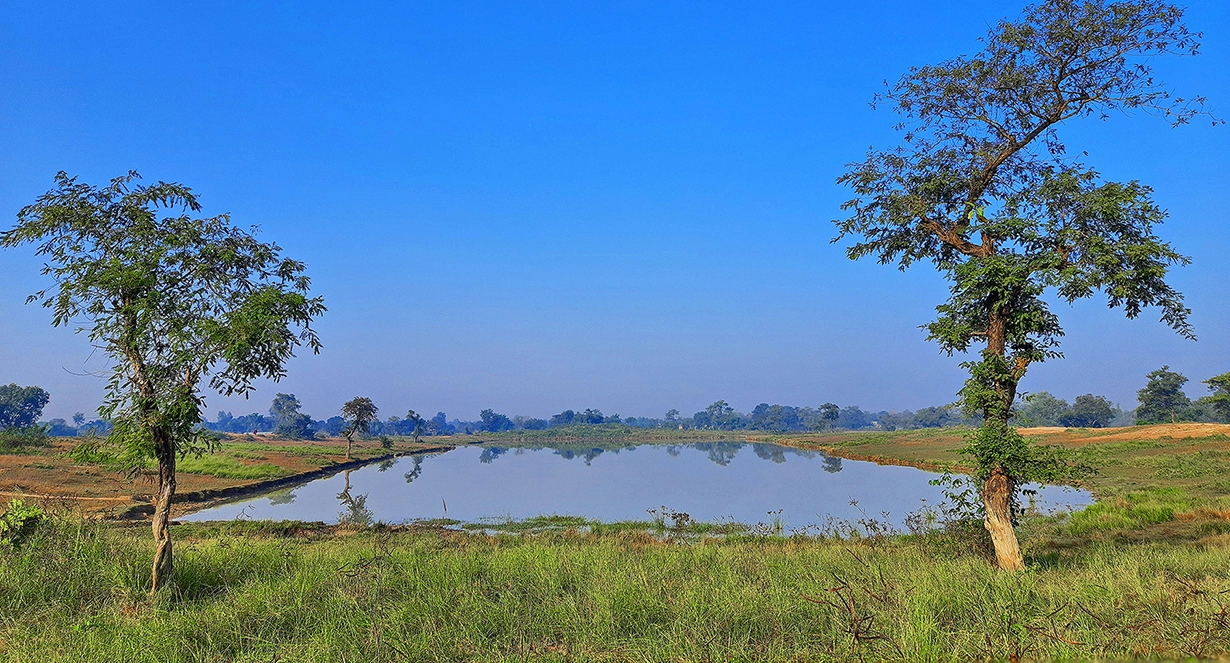
Historical Place Sagarhawa lumbini

Getting to Lumbini: Transport Options by Season

The best time to visit Lumbini is also shaped by transport availability — peak months see higher demand for vehicles, es and booking becomes more important. Nepal Vehicle Hiring provides comprehensive transport to Lumbini from every major Nepal hub:

From Kathmandu

The Kathmandu-to-Lumbini journey covers approximately 300 kilometres and takes 6 to 8 hours by private vehicle via the Prithvi Highway and Terai roads. Nepal Vehicle Hiring’s car hire in Nepal for small groups and Hiace van hire for medium groups cover this route directly.

Alternatively, our Kathmandu-to-Pokhara bus or private highway vehicle reaches Pokhara, from where our Lumbini approach continues. Our Nepal tour packages and holiday tour services coordinate full Kathmandu-Lumbini transport within a broader Nepal circuit.

From Pokhara

Pokhara to Lumbini is approximately 200 kilometres and takes 4 to 5 hours via Butwal and Bhairahawa. Nepal Vehicle Hiring’s Hiace van hire, Coaster bus hire, and car hire in Nepal all serve this route. The Pokhara-to-Lumbini journey is part of the classic Nepal triangle circuit (Kathmandu-Pokhara-Lumbini-Kathmandu) covered by our Nepal Nekhor tour service.

From Bhairahawa/Sunauli Border

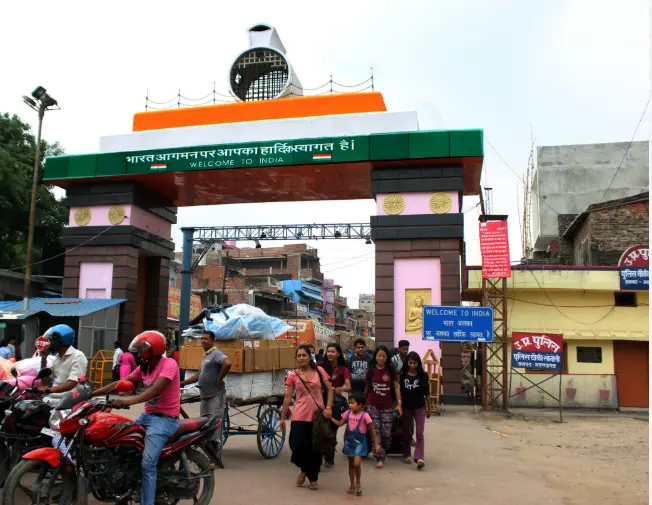
For Indian pilgrims and travellers entering Nepal at Sunauli, Lumbini is only 22 kilometres east of Bhairahawa — a 30 to 45 minute drive by car hire in Nepal or Hiace van hire. Nepal Vehicle Hiring can arrange border pickup vehicles that proceed directly to Lumbini.

This is the most common configuration for Indian Buddhist pilgrim groups whose primary Nepal destination is Lumbini before continuing to Pokhara, Kathmandu, or Muktinath on our broader Nepal sacred circuit services.

Contact Nepal Vehicle Hiring through our plan your trip page for Lumbini transport in any season — we respond within 24 hours with vehicle options, current seasonal advice, and all-in pricing. Our operations team is available on WhatsApp seven days a week.
Discover the Best Time to Visit Lumbini for comfortable sightseeing, peaceful Buddhist pilgrimage, and exploring Maya Devi Temple, monasteries, sacred gardens, and other important heritage sites.

What to See at Lumbini: Making the Most of Your Visit

Maya Devi Temple and the Sacred Garden

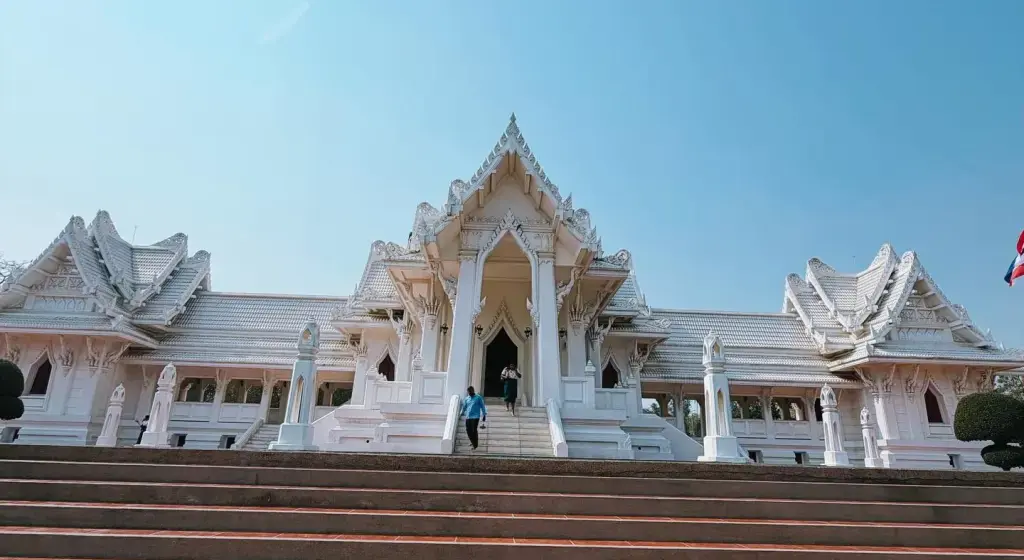
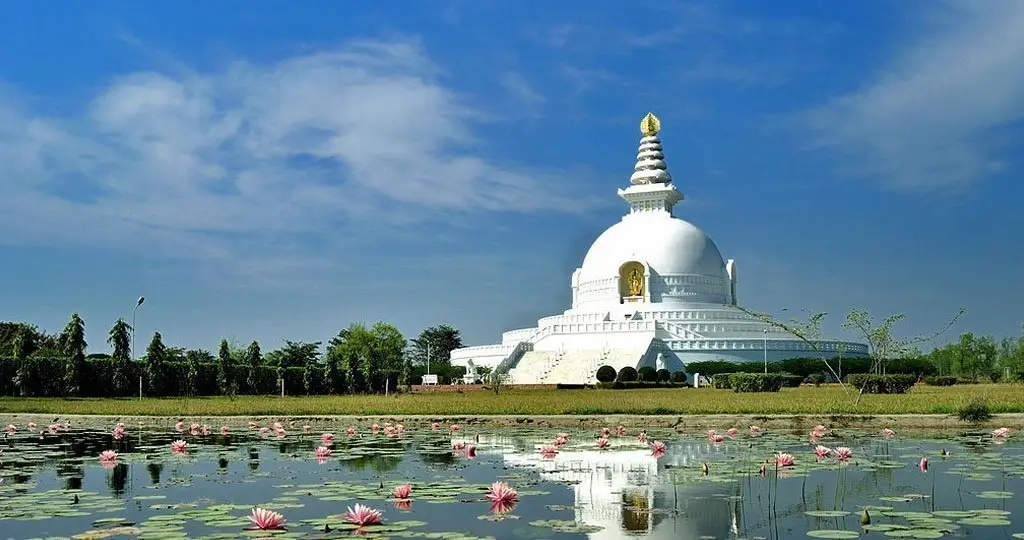
The Maya Devi Temple at the centre of the Sacred Garden marks the Buddha’s birthplace — confirmed by the Ashoka Pillar inscription of 249 BCE and the Marker Stone within the temple that identifies the birth spot. The temple contains the ruins of multiple historical monasteries built over the site over 2,500 years of pilgrimage, and the Marker Stone itself—visible through a glass floor panel within the temple—is the most sacred object at this UNESCO World Heritage Site.

Shoes must be removed before entering. Silent and respectful behaviour is expected. Morning visits (6:00 to 8:00 AM) offer the most contemplative experience before the day’s tour groups begin arriving.

Ashoka Pillar

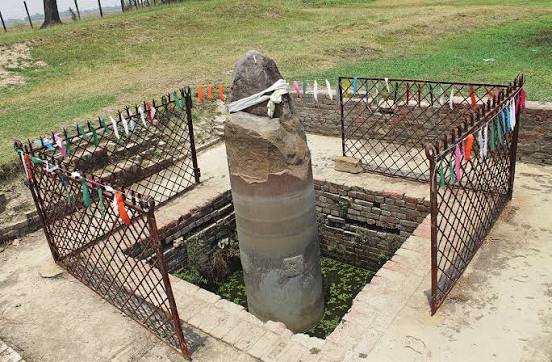
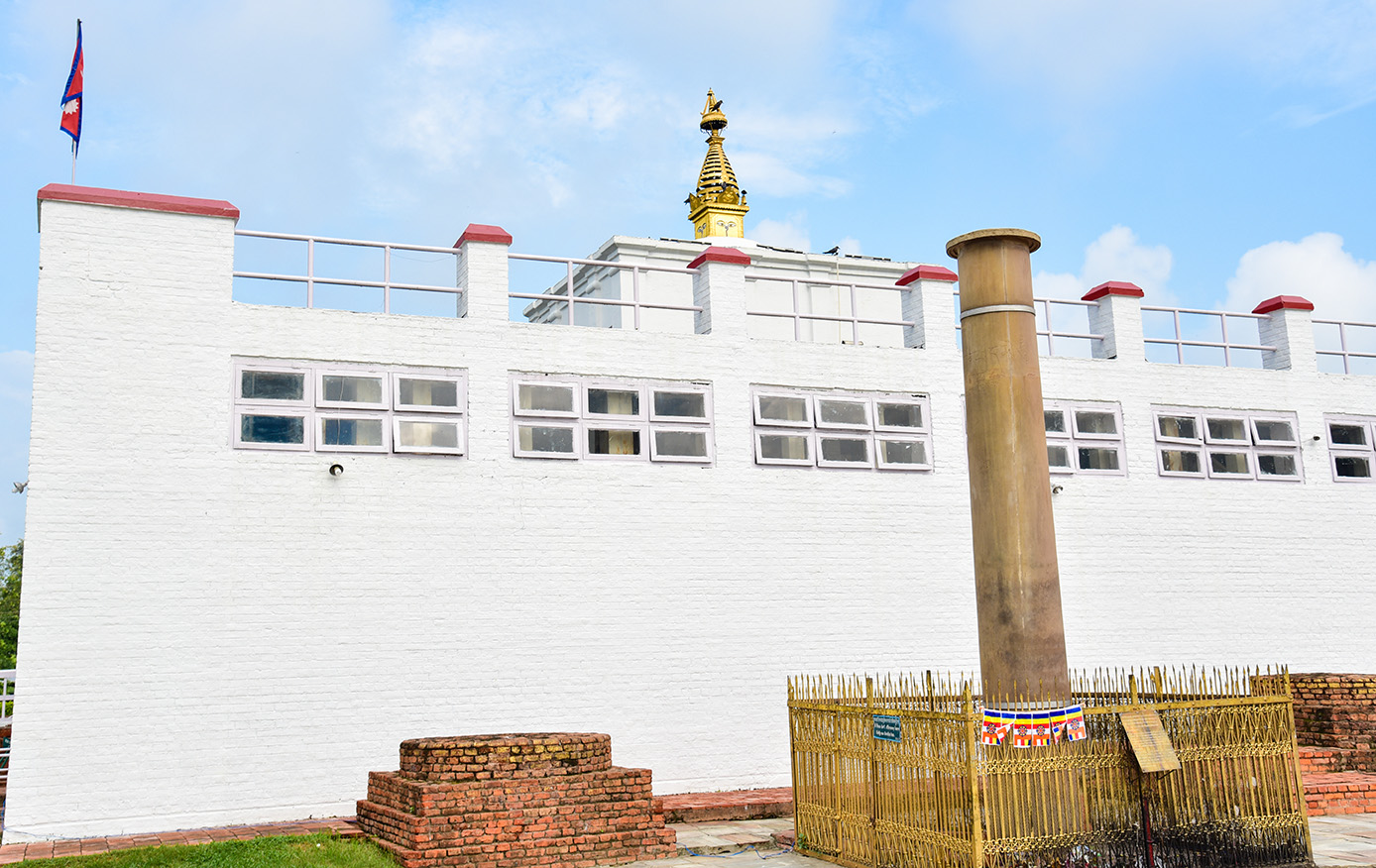
Erected in 249 BCE by Emperor Ashoka of the Maurya dynasty during his personal pilgrimage to Lumbini, the Ashoka Pillar stands adjacent to the Maya Devi Temple and bears the oldest historical inscription confirming the site’s sacred identity. The inscription reads (in Brahmi script): ‘Here the Lord Buddha was born.

A stone railing was built and a stone pillar erected. Here at Lumbini village, the Blessed One was born.’ The pillar — broken at the top and visible at approximately 6 metres of its original height — is one of the most important historical inscriptions in all of Asia.

The German archaeologist Anton Fuhrer rediscovered it in 1896, after centuries of being obscured by jungle growth.

The International Monastery Zone

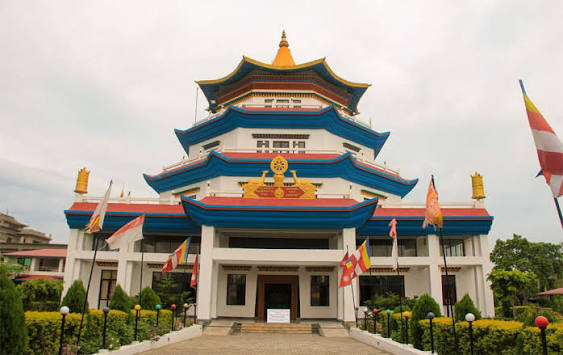
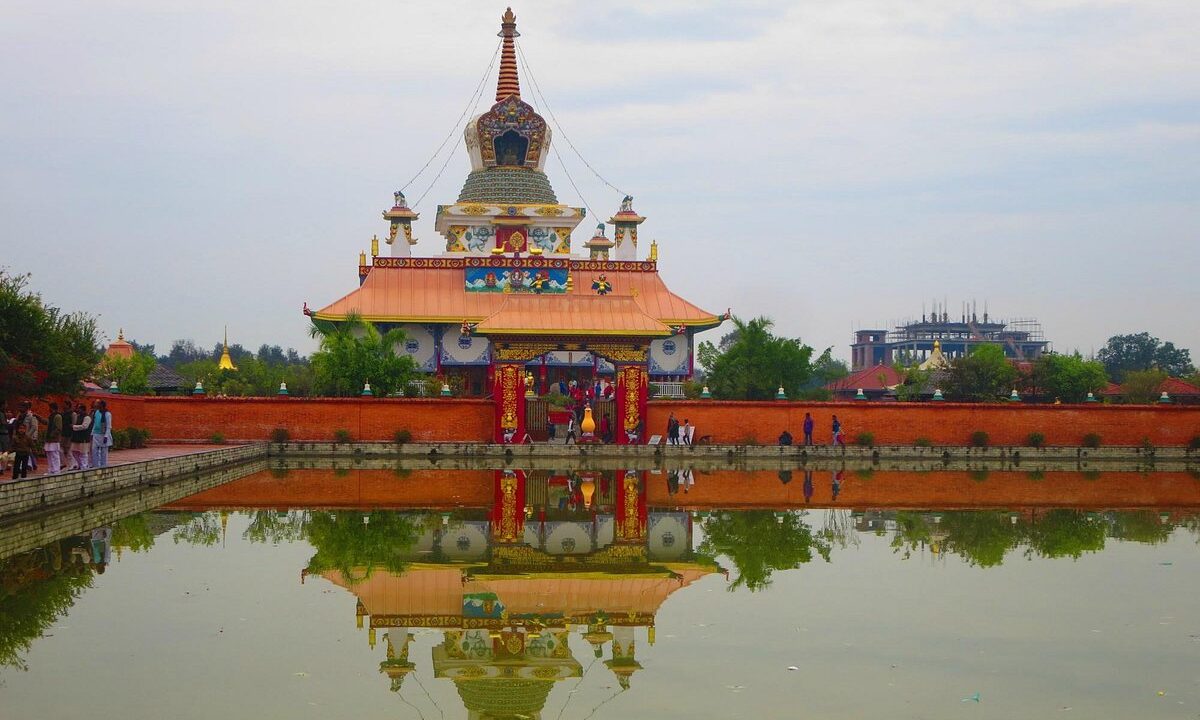
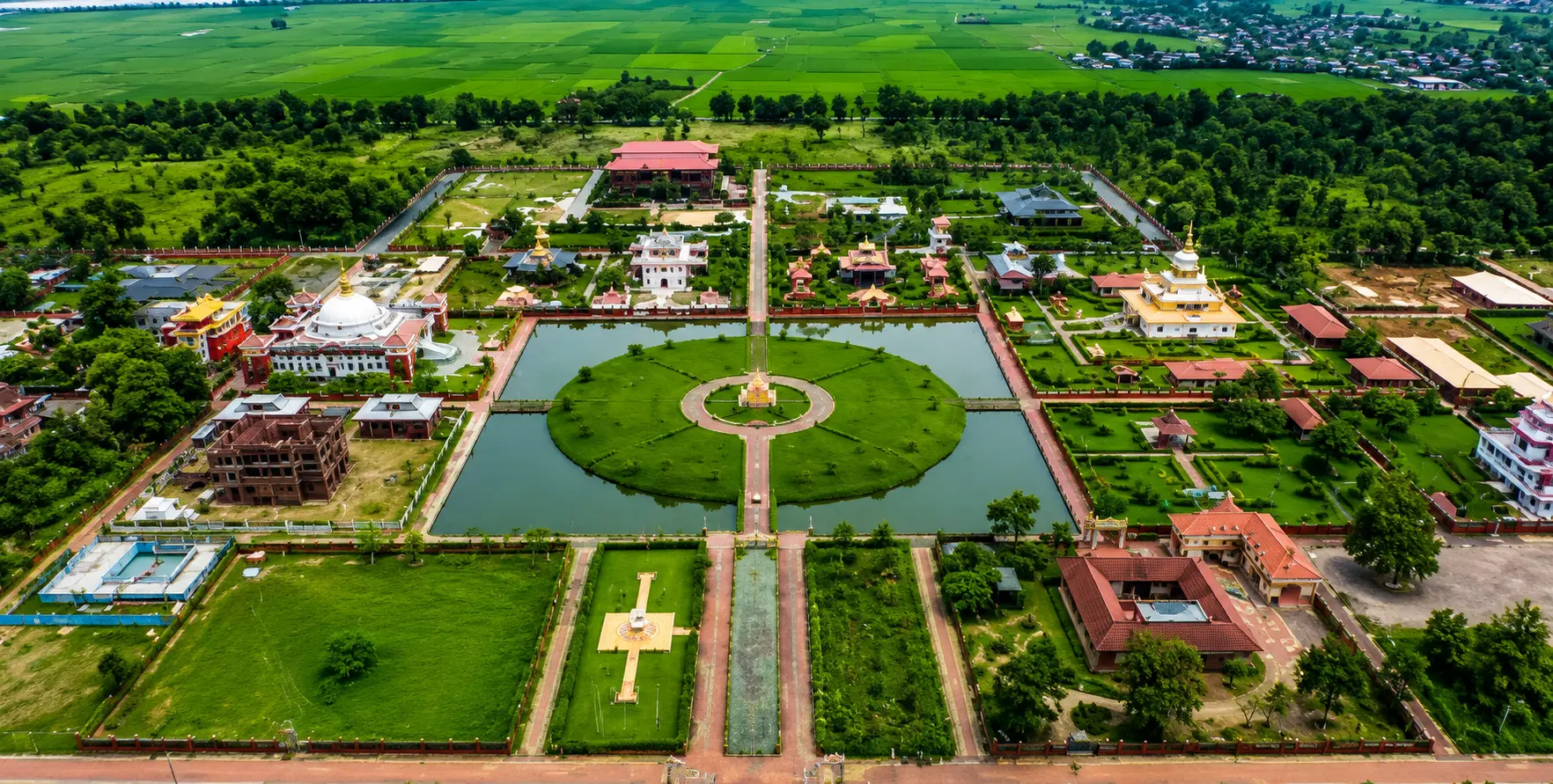
The northern section of the Lumbini Sacred Garden contains one of the most extraordinary collections of Buddhist architecture in the world — the international monastery compounds built by Buddhist nations from across Asia and beyond. The central canal divides the zone into two sections: the eastern zone (Theravada Buddhist monasteries from Myanmar, Thailand, Sri Lanka, Cambodia, and Bangladesh) and the western zone (Mahayana and Vajrayana Buddhist monasteries from China, Japan, Korea, Tibet, Vietnam, Germany, and other countries).

Exploring the full international monastery zone on foot covers approximately 4 to 5 kilometres and takes 3 to 4 hours at a comfortable pace. An electric bicycle rental service (available at the Lumbini Development Trust office) is available for visitors who prefer a faster circuit.

Puskarini Sacred Pool

Adjacent to the Maya Devi Temple, the Puskarini (Sacred Pool) is the bathing tank where, according to Buddhist tradition, Maya Devi purified herself before giving birth to Siddhartha, and where the infant was given his first ritual bath. The pool is surrounded by the ruins of ancient monastic buildings from multiple historical periods and is one of the earliest elements of the Lumbini sacred site’s archaeological record.

In autumn and spring, the pool reflects the surrounding trees and the Maya Devi Temple, creating some of the site’s finest photographs.

Lumbini Museum

The Lumbini Museum at the southern entrance to the Sacred Garden houses an important collection of Buddhist sculptures, architectural fragments, coins, and historical documents related to the site’s 2,500-year history—entry fee: NPR 150 for foreign nationals (2026). Allow 1 to 1.5 hours for a thorough visit.

The museum’s collection of Licchavi and Malla-period Buddhist sculpture is particularly valuable — many of the finest pieces from Lumbini’s archaeological excavations are housed here, providing important context for the ruins visible in the Sacred Garden above.

Discover the Best Time to Visit Lumbini for comfortable sightseeing, peaceful Buddhist pilgrimage, and exploring Maya Devi Temple, monasteries, sacred gardens, and other important heritage sites.

Frequently Asked Questions: Best Time to Visit Lumbini

What is the absolute best month to visit Lumbini?

For overall comfort and experience: November. For spiritual significance and festival atmosphere: Buddha Jayanti full moon (April or May). For budget and solitude: January or September.

For garden photography: October or March.

When is Buddha Jayanti at Lumbini in 2026?

Buddha Jayanti in 2026 falls on the full moon in the month of Vaishakha; check current-year dates, as the precise date shifts annually with the lunar calendar. In recent years,s it has fallen between late April and mid-May. Nepal Vehicle Hiring recommends booking Lumbini transport 6 to 8 weeks in advance for Buddha Jayanti, as vehicles book out quickly during this peak period.

Is Lumbini worth visiting in winter?

Yes — winter (December to February) offers a quieter, more contemplative Lumbini experience with lower accommodation rates and more accessible monastery compounds. The main challenges are morning fog (clearing by 9-10 AM) and cold nights (2°C to 8°C). Daytime temperatures of 18°C to 22°C are comfortable for outdoor exploration.

Air quality concerns in January and February may affect visitors with respiratory sensitivities.

Can I visit Lumbini during monsoon?

Yes, but it is the least recommended period for most visitors. Heavy rain, high humidity, and temperatures of 30°C to 40°C make outdoor exploration uncomfortable. Late September — the tail of the monsoon — is a better option within this season, with improving weather and lush green gardens.

If you must travel during monsoon, Nepal Vehicle Hiring’s Hiace van hire and car hire in Nepal operate year-round with flexible scheduling.

How many days do I need in Lumbini?

One full day covers the Maya Devi Temple, Ashoka Pillar, Sacred Garden, and a selection of international monastery compounds. Two days allow a thorough visit of the full international monastery zone, the museum, and day trips to nearby Tilaurakot (ancient Kapilavastu, approximately 2 km west) and Devdaha (the birthplace of Maya Devi, approximately 8 km east).

For retreat visitors and serious pilgrims, a 3 to 5 day Lumbini stay allows for extended meditation practice, monastery hospitality, and deeper engagement with the site’s historical and spiritual dimensions.

How do I get to Lumbini from Kathmandu?

Nepal Vehicle Hiring provides direct private vehicle transport from Kathmandu to Lumbini — approximately 300 km, 6 to 8 hours, by our car hire in Nepal or Hiace van. Domestic flights from Kathmandu to Bhairahawa (Gautam Buddha International Airport) take 25 minutes and cost approximately NPR 8,000 to 14,000 per person — with Lumbini then 22 km from the airport.

The Nepal tour package and Nepal Nekhor tour coordinate both transport and accommodation for Lumbini within a broader Nepal circuit. Visit our plan your trip page to book.
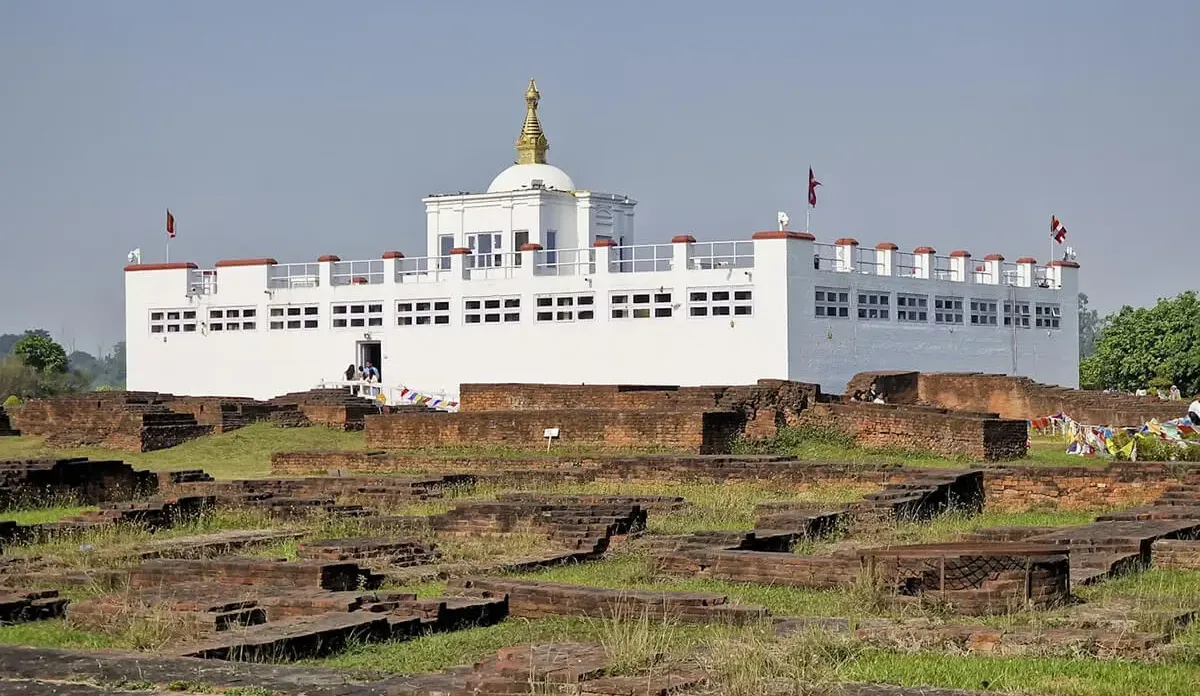
Maya Devi Temple in Lumbini

Book Your Lumbini Transport with Nepal Vehicle Hiring

Nepal Vehicle Hiring Pvt. Ltd., based in Thamel, Kathmandu, provides complete transport for every Lumbini visit — whatever the season, whatever your group size, and whatever the broader Nepal circuit your Lumbini pilgrimage forms part of:

Lumbini rewards careful timing. Choose the season that matches your purpose — whether the cool clarity of November, the spiritual fire of Buddha Jayanti, the contemplative quiet of February, or the post-monsoon sweetness of late September. Nepal Vehicle Hiring will get you there in comfort, whatever month you choose.
Discover the Best Time to Visit Lumbini for comfortable sightseeing, peaceful Buddhist pilgrimage, and exploring Maya Devi Temple, monasteries, sacred gardens, and other important heritage sites.

Lumbini’s Sacred Landscape: A Deeper Understanding

Most first-time visitors to Lumbini arrive expecting a single monument—the birthplace of the Buddha—and instead discover a sacred landscape of extraordinary richness and complexity. The UNESCO World Heritage Site encompasses 2.56 square kilometres of protected land that contains not just the Maya Devi Temple and the Ashoka Pillar but layers of archaeological history spanning 2,500 years, a living international Buddhist community of remarkable diversity, and a natural environment of sal trees, water channels, and gardens that has been continuously maintained as a sacred space since antiquity.

Understanding the three zones of the Lumbini Sacred Garden helps visitors plan their time regardless of the season. The southern Sacred Garden zone contains the Maya Devi Temple, the Ashoka Pillar, the Puskarini Pool, and the earliest archaeological remains.

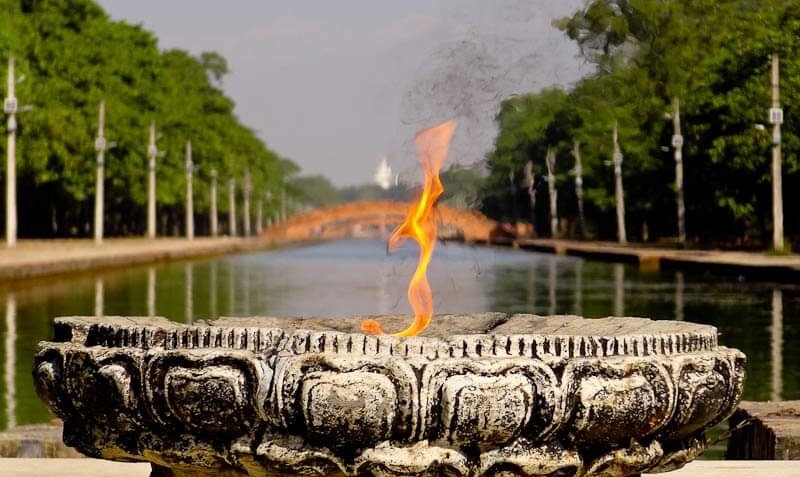
The central zone includes the Lumbini Museum and broad lawn areas used for large gatherings during Buddha Jayanti and other festivals. The northern zone — the international monastery corridor — extends approximately 1.5 kilometres north from the central area and contains the two parallel rows of national monastery compounds separated by the central Eternal Peace Flame canal.

An electric trolley service and bicycle rentals connect these zones, making the full site accessible even for elderly visitors and those with limited walking ability.

The best time of day to visit Lumbini is as important as the best season. The Maya Devi Temple and the Sacred Garden area are most magical in the early morning — the 6:00 to 8:00 AM window when the first light catches the ancient stone and the devout pilgrims who have been doing kora (circumambulation) since before dawn create a genuine atmosphere of devotion that the midday tourist-group hours cannot replicate.

Visit the international monastery zone in the mid-morning (9:00 to 11:00 AM) and late afternoon (3:00 to 6:00 PM), when the monasteries are active and welcoming to visitors. The evening lamp ceremony — small oil lamps placed around the Maya Devi Temple compound — is available on auspicious days and during Buddha Jayanti, transforming the site after dark into one of Nepal’s most visually extraordinary sacred experiences.

Nearby Sacred Sites: Extending Your Lumbini Visit

For visitors spending two or more days in the Lumbini area, several nearby sacred sites dramatically enrich the pilgrimage experience. Nepal Vehicle Hiring’s car hire in Nepal and Hiace van hire services cover day trips from Lumbini to all of these locations:

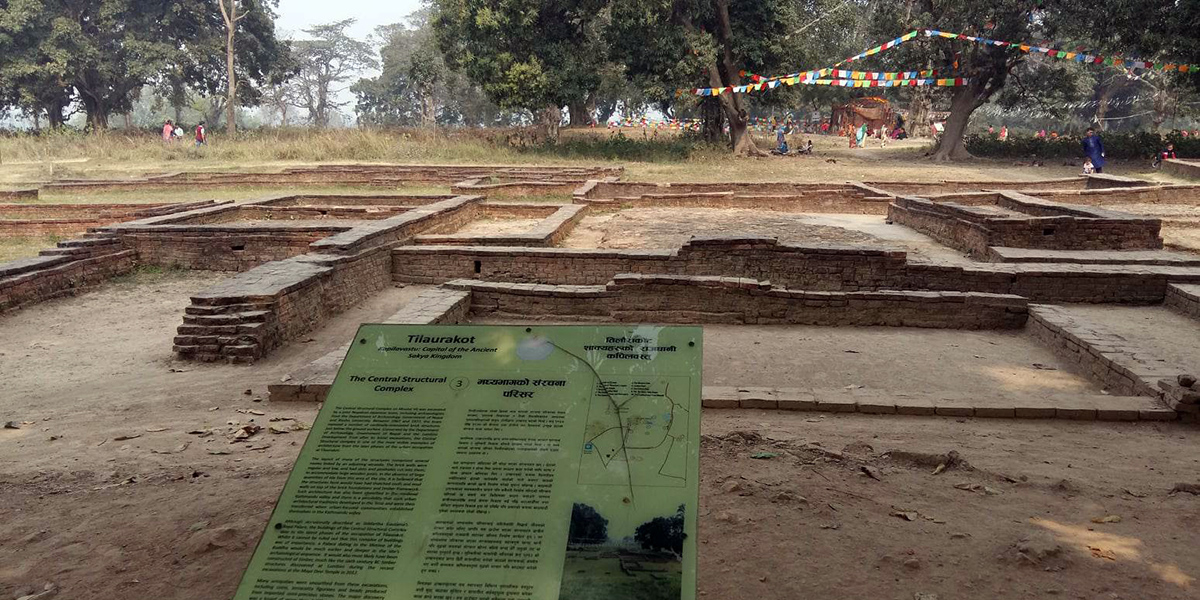
Tilaurakot (Kapilavastu) — 25 West

Tilaurakot, about 25 kilometres west of Lumbini near the town of Taulihawa, is identified by Nepali and international archaeologists as the site of ancient Kapilavastu. In this Shakya capital, Siddhartha Gautama grew up as Prince Siddhartha before leaving home to seek enlightenment.

The site contains the excavated ruins of the royal palace compound, ancient city walls, gateways, and associated monastery remains, all dating to the Shakya period (6th to 4th centuries BCE). A small museum at the site houses archaeological finds from the excavations.

Tilaurakot is one of Nepal’s most important archaeological sites and an essential extension of the Lumbini pilgrimage for serious Buddhist pilgrims and scholars. Nepal Vehicle Hiring’s car hire in Nepal makes the 25-kilometre Lumbini-to-Tilaurakot journey straightforward—about 40 minutes by private vehicle —and easily combines into a single Lumbini day or a half-day excursion.

Devdaha — 7 km East

Devdaha, about 7 kilometres east of Lumbini, is traditionally identified as the birthplace of Maya Devi, the mother of the Buddha, and as the capital of the Koliya kingdom from which she came. An ancient stupa mound and a small temple mark the traditional site.

The Devdaha visit is a natural add-on to the main Lumbini circuit for pilgrims interested in the broader sacred geography of the Buddha’s family and early life. The short 7-kilometre drive by Nepal Vehicle Hiring’s private car hire takes 15 to 20 minutes from the Lumbini garden gate.

Niglihawa and Kudan — 25 to 30 km

Further afield, the villages of Niglihawa (25 km from Lumbini) and Kudan (30 km) contain additional Ashoka Pillars — the stone pillars erected by Emperor Ashoka during his 249 BCE pilgrimage through the Buddhist sacred sites of the Terai. The Niglihawa pillar records Ashoka’s visit to Kanakamuni’s birthplace, one of the previous Buddhas in the Buddhist cosmological tradition.

The Kudan pillar records his visit to the site where Ashoka met and conversed with the Buddhist sangha. Both sites are far less visited than Lumbini and offer a genuinely archaeological atmosphere with almost no tourist infrastructure.

Nepal Vehicle Hiking’s car hire in Nepal covers the full Lumbini-Tilaurakot-Niglihawa-Kudan sacred geography circuit as a single day trip for historically motivated visitors.
Discover the Best Time to Visit Lumbini for comfortable sightseeing, peaceful Buddhist pilgrimage, and exploring Maya Devi Temple, monasteries, sacred gardens, and other important heritage sites.

Lumbini’s International Buddhist Community: Who Lives Here

One of Lumbini’s most distinctive and underappreciated aspects is its character as a living international Buddhist community—not merely a heritage site with monastery buildings, but an active religious settlement where monks, nuns, scholars, and lay practitioners from dozens of countries maintain continuous Buddhist practice at the Buddha’s birthplace. Understanding this community adds depth to the visit, no matter what season you come.

The Lumbini Development Trust, established by the Government of Nepal and UNESCO, manages the site and develops the monastery zone. Each national monastery compound is administered by its sponsoring country’s Buddhist community—typically a Buddhist council or foundation that raises funds internationally, manages construction, and provides resident monastics who maintain the compound and welcome visiting pilgrims from their home country.

The result is a community of several hundred resident monks, nuns, and lay practitioners from Myanmar, Thailand, Sri Lanka, Japan, Korea, China, Vietnam, Germany, France, and many other countries, all living and practising within a few hundred metres of each other in the northern monastery zone.

During October and November — Lumbini’s finest visiting season — this community is at its most active. Resident monks are visible in the monastery courtyards performing daily rituals, teaching visiting pilgrims, and maintaining the monastery buildings. Prayer sessions are audible throughout the monastery zone at dawn and dusk.

The contrast between the quiet natural path connecting one monastery to the next and the sounds of different Buddhist liturgical traditions emerging from each compound — Pali chanting from the Theravada temples, Sanskrit mantras from the Tibetan, melodic Japanese sutra recitation from the Nichiren compound — creates a soundscape that is one of the most extraordinary ambient experiences at any sacred site in Asia.
Discover the Best Time to Visit Lumbini for comfortable sightseeing, peaceful Buddhist pilgrimage, and exploring Maya Devi Temple, monasteries, sacred gardens, and other important heritage sites.

Practical Information for Lumbini Visitors

Entry Fees

Lumbini charges a Sacred Garden entry fee of NPR 200 for foreign nationals (2026 rate, subject to change). This fee covers entry to the Sacred Garden, the Maya Devi Temple, and the surrounding monument zone.

The Lumbini Museum has a separate entry fee of NPR 150. The international monastery zone (the northern corridor) is free to access, and individual monastery compounds welcome visitors without charge, though donations are appreciated. Electric bicycle rental within the site costs approximately NPR 200 per hour.

Accommodation in Lumbini

Lumbini’s accommodation ranges from very basic guesthouse rooms near the Sacred Garden entrance (NPR 500 to 1,200 per night) to mid-range hotel options in the Lumbini Tourism Development Area (NPR 2,000 to 5,000 per night) to the comfortable Hotel Lumbini Garden New, Hotel Nirvana, and Kasara Resort options that serve international visitors who want reliable air-conditioning and attached bathroom facilities (NPR 4,000 to 12,000 per night).

Several international monastery compounds also offer simple accommodation for serious Buddhist pilgrims—the Myanmar, Korean, and Sri Lankan monasteries all have guest rooms available for practitioners on extended pilgrimage stays. Book accommodation 2 to 4 weeks in advance for peak season (October, November, April, May, Buddha Jayanti) and well in advance specifically for the Buddha Jayanti full moon, when every room within 20 kilometres of Lumbini fills up.

Food in Lumbini

Food in Lumbini ranges from standard Nepali fare, dal bhat, fried rice, and noodle soup, in local restaurants near the Sacred Garden entrance to more elaborate menus at better hotels in the tourism development area. The monastery zone itself has no food facilities for visitors.

Bring water and snacks for a full-day site visit — 2 litres of water minimum per person in any season, more in the hot months (April through September). Several restaurants near the Maya Devi Temple entrance serve standard Nepali, Indian, and Continental menus at reasonable prices.

The Hotel Lumbini Garden New restaurant is generally the best-quality option within the site area.

Getting Around Within Lumbini

The Lumbini Sacred Garden and international monastery zone is approximately 3 kilometres from the southern entrance gate to the northern end of the monastery corridor — too far for elderly or mobility-limited visitors to cover comfortably on foot. Options for getting around within the site: electric bicycle rental (NPR 200 to 300 per hour, available near the entrance) is the most popular option; electric golf cart taxis run between the Sacred Garden entrance and the northern monastery zone (NPR 50 to 100 per trip, fixed route); private vehicle parking is available at the southern entrance for Nepal Vehicle Hiring’s car hire and Hiace van hire clients — the vehicle and driver can wait at the entrance and provide transport between the southern and northern zones as needed, avoiding the full on-foot circuit for group members who need vehicle assistance.

Dress Code and Site Etiquette

Shoes must be removed before entering the Maya Devi Temple — leave footwear at the entrance and enter in socks. Modest dress is expected throughout the Sacred Garden and monastery zone — shoulders and knees covered for both men and women.

Silence is requested within the Maya Devi Temple and encouraged near the Marker Stone area. Photography is permitted in most areas of the site but should be done respectfully without interrupting prayer or ritual activities. Some individual monastery compounds have specific photography policies — ask before raising your camera inside any prayer hall.

Mobile phones should be silenced or switched off within the Maya Devi Temple.

Lumbini in Nepal’s Broader Travel Context

Lumbini does not exist in isolation as a travel destination — it sits within a broader Nepal travel context that shapes when and how most visitors approach it. Understanding this context helps visitors plan their Lumbini visit as part of a coherent Nepal itinerary rather than a disconnected, standalone experience.

The classic Nepal tourist circuit—Kathmandu, Pokhara, Chitwan, and Lumbini—is the most common itinerary for first-time international visitors to Nepal, and the optimal sequencing of this circuit directly affects the best time to visit each element. For visitors beginning in Kathmandu, the natural circuit flows: Kathmandu (3 to 4 days) → Pokhara (3 to 4 days) → Lumbini (2 days) → return to Kathmandu or border exit.

This sequence puts Lumbini at the end of the circuit, which works well for the October-to-March period when Terai temperatures are comfortable. During the May Buddha Jayanti period, some visitors prefer starting in Lumbini to catch the festival before temperatures peak later in the summer.

For Indian pilgrims making the Nepal sacred circuit from the Indian side, the natural entry at Sunauli-Bhairahawa puts Lumbini as the first Nepal destination — visited immediately after crossing the border — before continuing north to Pokhara (via Nepal Vehicle Hiring’s Bhairahawa-to-Pokhara vehicle hire service), then to Muktinath (via our Muktinath Yatra itinerary), and finally to Kathmandu (via our Kathmandu to Pokhara bus service in reverse).

This sequence is the most geographically efficient circuit for India-entry pilgrims, and its timing is not significantly season-dependent for the Lumbini portion — the border proximity means the Lumbini visit can be kept to a single morning regardless of which month is chosen.

Nepal Vehicle Hiring’s Nepal Nekhor tour, Nepal tour packages, and Nepal holiday tours all include Lumbini in a coordinated full-circuit itinerary, with transport, timing, and seasonal advice built into the planning from the start. For visitors who want the certainty of pre-planned transport without the effort of assembling each element independently, these packages provide the most straightforward path to the best possible Lumbini visit experience.

Lumbini’s Transformation: The Development Vision

Lumbini is not a static heritage site but one undergoing active and significant transformation. The Lumbini Development Trust’s master plan — endorsed by UNESCO and supported by the Government of Nepal, the Government of India, and international Buddhist organisations — envisions Lumbini as a fully developed international Buddhist pilgrimage and cultural centre with first-rate infrastructure alongside its ancient sacred core.

Significant investments in the last decade have included: the expansion and improvement of the international monastery zone’s infrastructure; the construction of the Lumbini International Research Institute’s expanded library and documentation centre; improvements to the Sacred Garden’s path network and visitor facilities; and the opening of Gautam Buddha International Airport in Bhairahawa in 2022, which dramatically improved air access to the region.

Ongoing projects as of 2026 include additional international monastery construction (Vietnam, France, and several other countries have compounds under development in the northern zone), expanded museum facilities, and continued archaeological excavation of the Sacred Garden’s deeper historical layers.

For visitors planning future return visits to Lumbini, the site will continue to expand and improve in the coming years—with each year’s development adding new monastery compounds, improved visitor infrastructure, and potentially new archaeological discoveries from the ongoing excavations beneath the Sacred Garden. The best time to visit Lumbini, and beyond, remains October through November and February through March for the weather, with Buddha Jayanti remaining the spiritual calendar’s unmissable annual event despite the practical challenges its timing brings.

Lumbini Safety and Travel Tips

Lumbini is one of Nepal’s safest destinations for international visitors — the site’s sacred character and the presence of multiple national monastery communities create a secure, peaceful environment with virtually no petty crime or tourist-targeting behaviour. Basic sensible travel precautions apply as anywhere: keep valuables secure, stay on established paths within the Sacred Garden (particularly after dark when some paths are unlit), and maintain the respectful behaviour expected at a major religious site.

The main practical safety concern in Lumbini is heat-related illness during April to September. The Terai’s flat, shade-limited landscape and high summer temperatures create a genuine heat-stress risk for visitors doing extended outdoor walking without adequate water and shade breaks.

Nepal Vehicle Hiring recommends: carrying a minimum of 2 litres of water per person per day in the hot months (3 litres recommended in May through August); starting outdoor exploration before 9:00 AM; taking a full midday break (11:00 AM to 4:00 PM) in the shade of a monastery or accommodation facility; restarting outdoor exploration after 4:30 PM for the cooler evening hours; and wearing lightweight, light-coloured, loose-fitting clothing with wide-brimmed sun protection.

For visitors arriving from high-altitude Nepal destinations (Kathmandu at 1,350 m, Pokhara at 827 m), the descent to Lumbini’s Terai altitude of approximately 90 to 110 metres above sea level can feel oppressively warm and humid in the warmer months — the temperature difference between Kathmandu and Lumbini in May can be 15°C or more. Plan your first Lumbini day with this adjustment in mind, keeping outdoor activity to the coolest morning hours and using air-conditioned accommodation for the midday rest period.
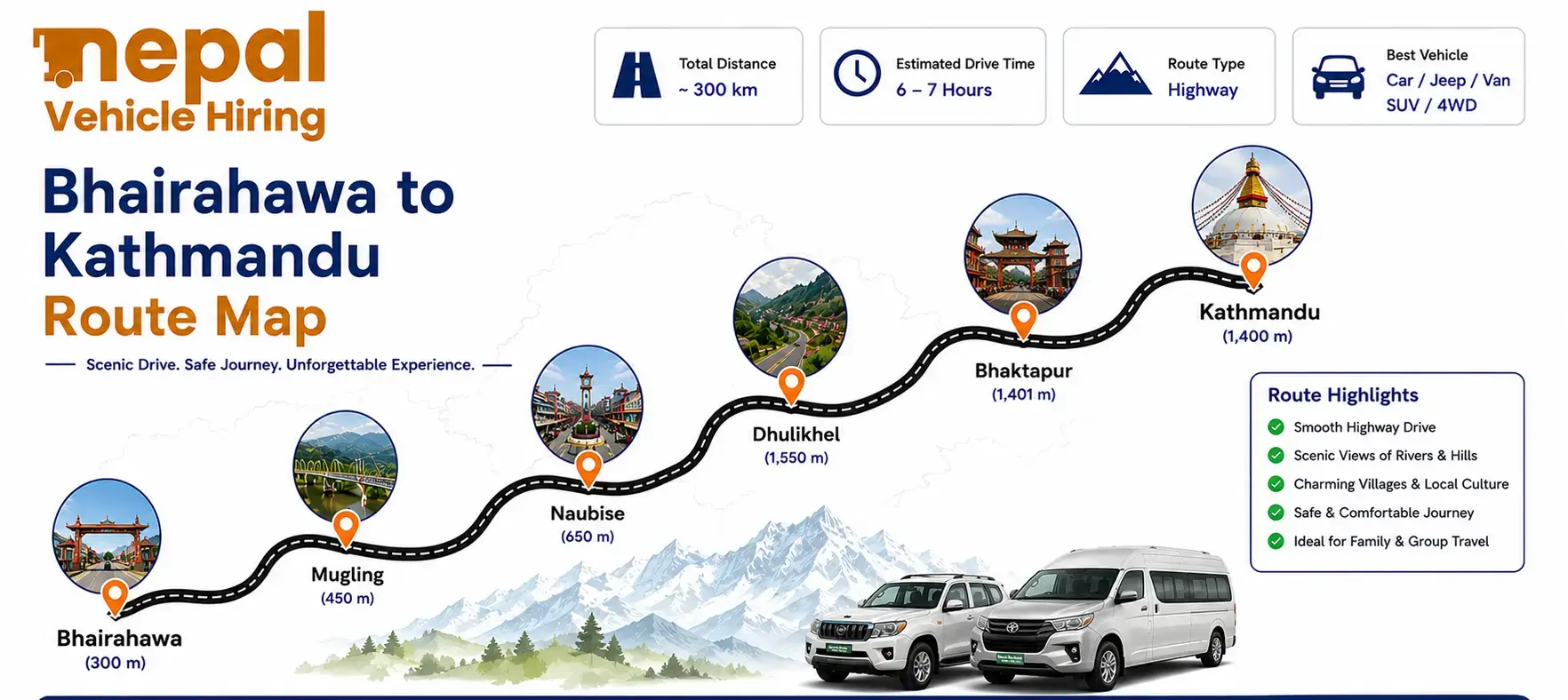
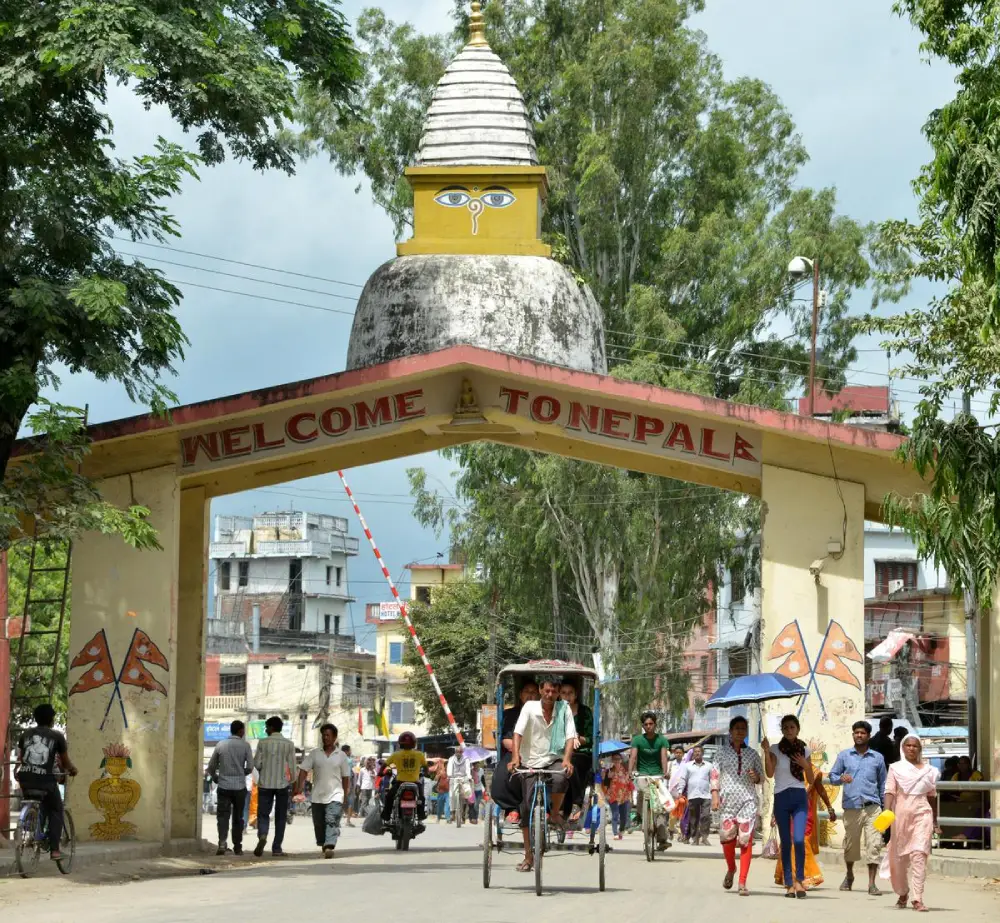
Bhairahawa to Kathmandu Private Car

lubini

Bhairahawa to Kathmandu Private Car

For travellers crossing into Nepal at the Sunauli border, especially the many Indian visitors who cross visa-free, a private car from Bhairahawa to Kathmandu is the most direct, comfortable way to reach the capital without navigating shared buses, transfers, or unpredictable schedules. This guide covers the real distance, route, cost, and every practical detail of this roughly 250- 300-kilometre journey across Nepal’s southern plains and central hills.

Whether you arrive fresh across the border at Sunauli, fly into Bhairahawa’s Gautam Buddha International Airport, or start your Nepal trip with a stop in nearby Lumbini, this guide covers everything you need to plan a smooth private car journey to Kathmandu.

Why Choose a Private Car for This Route

  • Door-to-door convenience. A private car picks you up directly at the Sunauli border or your Bhairahawa hotel. It drops you exactly where you need to be in Kathmandu — no bus park transfers or luggage handling between vehicles.
  • Fixed, upfront pricing. No negotiating with border-area drivers or worrying about a fare that changes mid-journey.
  • Flexible stops. Add a Lumbini visit, a rest break in Butwal or Narayanghat, or photo stops along the way without being tied to a bus schedule.
  • Comfort after a long journey. Many travellers reaching Sunauli have already travelled a considerable distance within India; a private car offers a comfortable final leg rather than a crowded shared vehicle.

Our car hire in Nepal service covers this route as part of our broader fleet, alongside dedicated services for nearby destinations covered throughout this guide.

Beyond the practical advantages, a private car also removes a genuine source of stress for first-time visitors to Nepal: navigating an unfamiliar bus park, confirming you’ve boarded the correct vehicle, and managing luggage through crowded transfer points after an already long journey across the border. For travellers arriving tired from an international flight into India, then taking ground transport to Sunauli, this simplicity is worth more than the cost difference compared to shared transport.

Book Bhairahawa to Kathmandu Private Car for a comfortable and reliable journey from Bhairahawa or Sunauli Border to Kathmandu. Choose from private cars, SUVs, Scorpio, 4WD jeeps, and Hiace vans with experienced drivers.

Sunauli: Nepal’s Busiest Southern Gateway

The Sunauli-Bhairahawa crossing is one of several official border points between Nepal and India. Still, it holds particular significance for travellers heading to Lumbini and the country’s central and western regions. Unlike Nepal’s eastern crossing at Kakarvitta, which primarily serves travellers heading to Kathmandu via the eastern Terai, Sunauli’s position makes it a natural gateway for pilgrims heading to Buddha’s birthplace and travellers continuing to Pokhara, Chitwan, or Kathmandu via the central route.

The crossing sees a substantial daily flow of Indian and Nepali nationals, along with a growing number of international travellers who route through India before entering Nepal overland rather than flying directly into Kathmandu. This steady traffic has helped develop reasonably good infrastructure on both sides—functioning currency exchange, food stalls, and a range of transport options on the Nepali side for onward travel.

Understanding Bhairahawa and the Sunauli Border

Bhairahawa, also known as Siddharthanagar, sits in Rupandehi District in Nepal’s Lumbini Province, roughly 4 kilometres from the Sunauli border crossing with India. It’s one of Nepal’s fastest-growing border cities, home to the Gautam Buddha International Airport, ATMs, fuel stations, and a growing range of hotels—making it a practical staging point for travellers crossing later in the day who prefer an overnight stop before continuing to Kathmandu.

The Sunauli border crossing operates 24 hours a day and is widely regarded as the most accessible international border crossing in South Asia for Indian travellers. Indian nationals do not require a visa to enter Nepal.

They can cross using a valid Voter ID card or passport, without the visa application process that complicates travel at other international borders. Immigration formalities on the Nepali side typically take 30 to 60 minutes and involve standard document verification and registration.

Bhairahawa’s growth in recent years has been driven largely by its dual role as a border trade hub and an increasingly important gateway for religious tourism, given its proximity to Lumbini. The city’s infrastructure has developed accordingly, with a wider range of accommodations, dining, and transport services available today than a decade ago, reflecting the steady increase in Indian and international travellers passing through on their way to Nepal’s interior.

Book Bhairahawa to Kathmandu Private Car for a comfortable and reliable journey from Bhairahawa or Sunauli Border to Kathmandu. Choose from private cars, SUVs, Scorpio, 4WD jeeps, and Hiace vans with experienced drivers.

Distance and Route Overview

The road distance from Bhairahawa to Kathmandu covers roughly 250 to 300 kilometres, depending on the exact route and starting point within Bhairahawa. The standard route follows the Siddhartha Highway north from Bhairahawa through Butwal, then joins the East-West Highway (Mahendra Highway) heading east toward Narayanghat (Bharatpur), before turning north onto the Prithvi Highway through Mugling and on to Kathmandu.

This route shares its final stretch with the well-known Kathmandu to Pokhara bus corridor in reverse through Mugling, meaning much of the road infrastructure and rest-stop culture along the way is already well-established for tourist and long-distance travel.

Bhairahawa to Butwal

A short, roughly 25-kilometre stretch along the Siddhartha Highway, generally smooth and quick, passing through the growing urban area connecting these two neighbouring cities in Rupandehi District.

Butwal to Narayanghat

This stretch joins the East-West Highway heading east through the flat Terai plains, passing agricultural land, small towns, and river crossings. Road conditions here are generally reliable year-round, with occasional traffic congestion near larger towns.

Narayanghat to Mugling

This stretch begins climbing into Nepal’s central hill terrain, following the Trishuli River valley with increasingly scenic views as elevation gradually increases. This section marks the transition from the flat southern plains to Nepal’s characteristic hill topography.

Mugling to Kathmandu

The final stretch climbs further into the hills before descending into the Kathmandu Valley, following the same Prithvi Highway corridor used by traffic between Kathmandu and Pokhara. Traffic congestion typically increases noticeably on the final approach to Kathmandu, particularly in the afternoon and evening.

Book Bhairahawa to Kathmandu Private Car for a comfortable and reliable journey from Bhairahawa or Sunauli Border to Kathmandu. Choose from private cars, SUVs, Scorpio, 4WD jeeps, and Hiace vans with experienced drivers.

How Long Does the Journey Take?

By private car, the full Bhairahawa to Kathmandu journey typically takes 7 to 10 hours, depending on traffic, road conditions, and how many stops you make along the way. The road runs through flat Terai plains for the first stretch before climbing into Nepal’s central hill terrain around Mugling, adding scenic variety and slightly slower average speeds for the second half of the journey.

Given the distance and terrain change, most travellers treat this as a full-day journey rather than attempting to combine it with same-day sightseeing at either end.

Departure timing matters more than many first-time travellers expect. Leaving Bhairahawa or the Sunauli border early in the morning, ideally by 6 or 7 AM, gives your driver the best chance of clearing the Mugling hill section before afternoon traffic builds and before any monsoon-season weather deteriorates later in the day.

A late-morning or afternoon departure risks arriving in Kathmandu after dark, which is manageable but less comfortable than arriving in daylight, especially for first-time visitors unfamiliar with the city.

Cost of Bhairahawa to Kathmandu Private Car Hire

Private car fares for this route are priced per vehicle rather than per passenger, typically accommodating 1 to 3 passengers comfortably with luggage in a standard car, or more in a larger vehicle. Rates depend on vehicle type, season, and whether you’re booking a one-way transfer or a multi-day itinerary with stops.

For comparison, our Sunauli to Pokhara car service — a shorter route via the same Siddhartha Highway — runs a fixed fare of around USD 120 one-way for a private car with 1-3 passengers, giving a useful reference point for the pricing structure on this corridor, with the longer Kathmandu route priced higher given the greater distance and travel time.

Kathmandu to Lumbini

Choosing the Right Vehicle

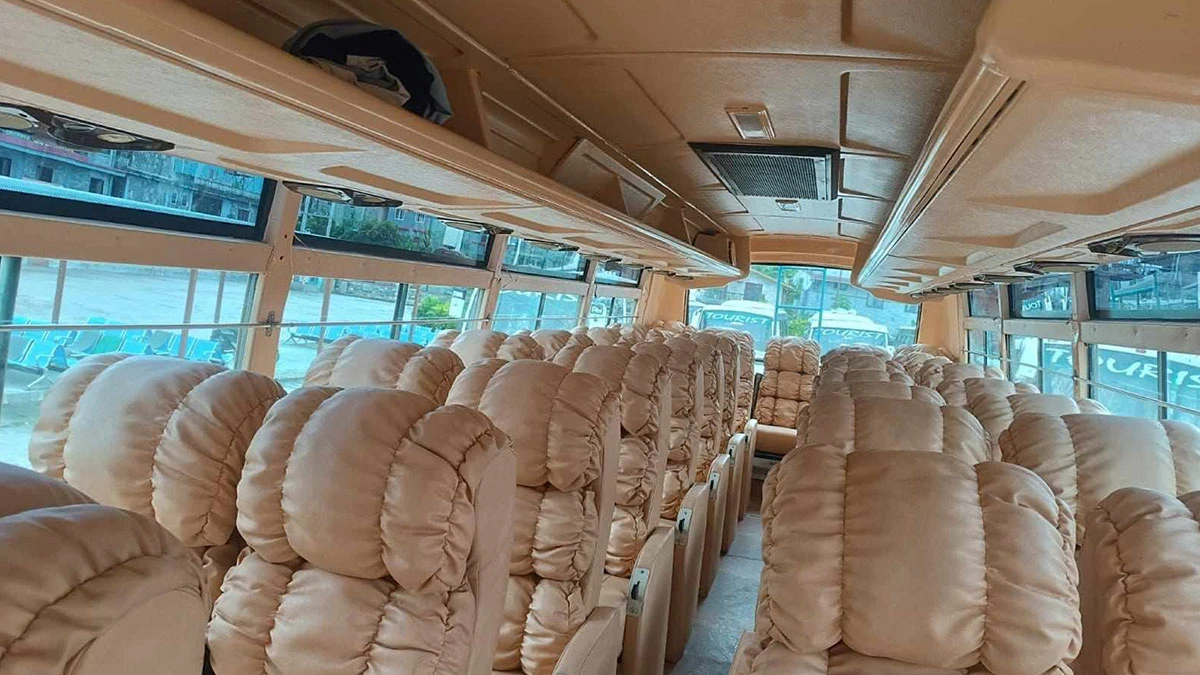
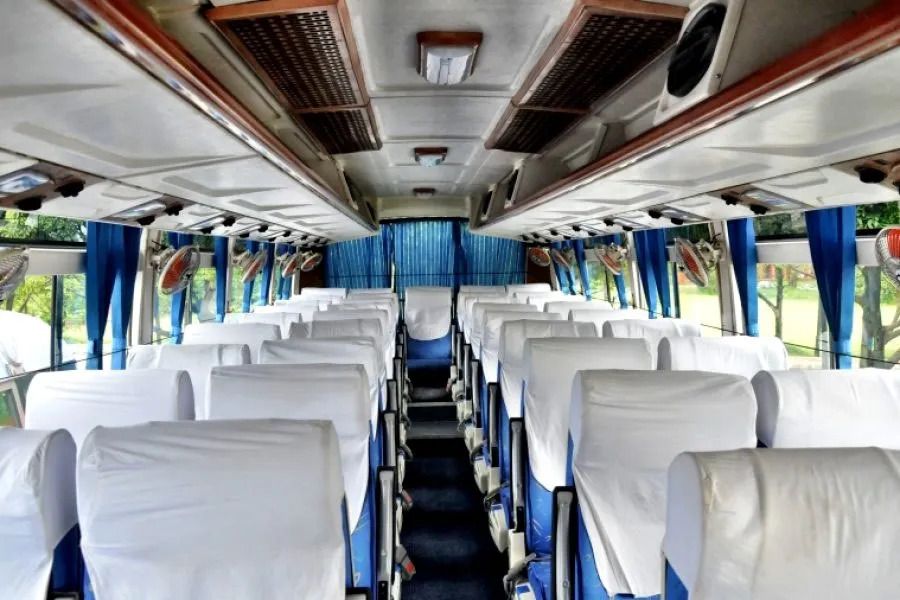
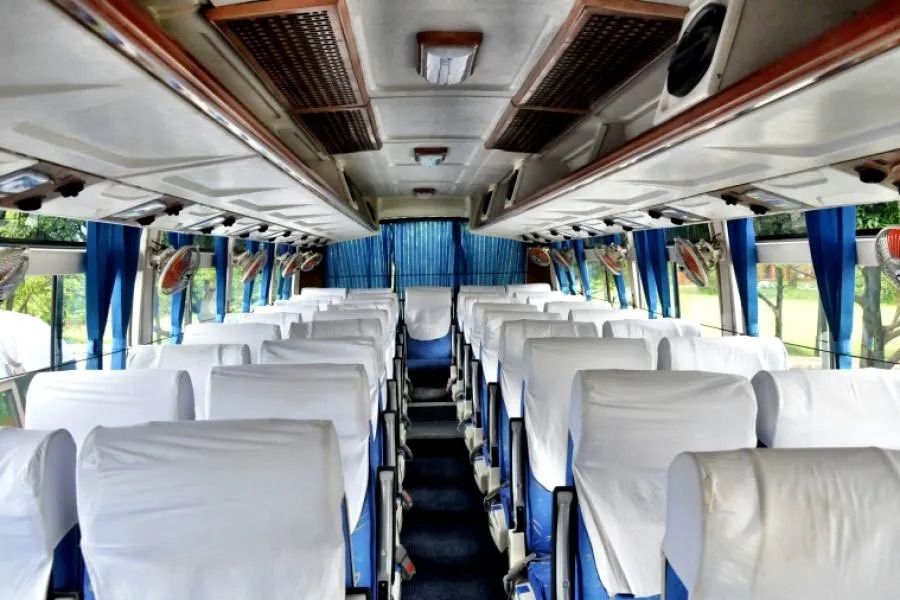
A standard car suits solo travellers, couples, or small families on this route, since most of the journey runs on paved highways. Larger families or groups often prefer a jeep or Hiace van for extra space and comfort over the 7-10 hour journey. For bigger groups or tour parties, our VIP Sofa Bus hire service explicitly covers the Kathmandu-Bhairahawa route as a standard long-distance corridor, offering 2×1 reclining seating for the full journey.

For travellers wanting genuine comfort over a full-day drive, it’s worth considering a slightly larger or better-equipped vehicle than the bare minimum your group size requires—the cost difference is often modest relative to the comfort difference over 7-10 hours. Our SUV rental in Nepal guide covers mid-range comfort options if a standard car feels too basic for a journey of this length, but a full jeep or van feels like more capacity than your group needs.

Alternative: Flying From Bhairahawa

For travellers short on time, Gautam Buddha International Airport in Bhairahawa offers domestic flights to Kathmandu, cutting the journey to under an hour compared to the 7-10 hour drive. This is a genuinely useful option for travellers who’ve already spent time crossing the border and exploring Lumbini and would rather not spend another full day on the road.

The trade-off, as with any flight-versus-road decision, is missing the overland scenery through the Terai plains and central hills, along with the generally higher cost of flying compared to a private car or bus.

Alternative: Bus Options

Beyond private car hire, several bus options run this corridor. Standard tourist and deluxe buses connect Kathmandu with Bhairahawa and nearby Lumbini. At the same time,e our VIP Sofa Bus hire page confirms the Kathmandu-Bhairahawa route as one of its core long-distance services, alongside the closely related Kathmandu to Lumbini bus and Lumbini to Kathmandu bus routes, which cover the same general corridor for travellers based at Lumbini rather than Bhairahawa specifically.

Book Bhairahawa to Kathmandu Private Car for a comfortable and reliable journey from Bhairahawa or Sunauli Border to Kathmandu. Choose from private cars, SUVs, Scorpio, 4WD jeeps, and Hiace vans with experienced drivers.

Private Car vs Bus vs Flight: A Direct Comparison

A private car offers the best balance of comfort, flexibility, and door-to-door convenience, at a higher per-person cost than the bus but with far more control over timing, stops, and comfort; it’s the natural choice for couples, families, and small groups who value convenience.

The bus (standard, deluxe, or VIP Sofa) is the most economical option, especially for solo travellers or larger groups where a private car’s per-vehicle pricing doesn’t spread as efficiently. The trade-off is a fixed schedule and shared seating rather than a dedicated vehicle.

Flying is the fastest option by a wide margin, covering the journey in under an hour versus 7-10 hours by road, but costs considerably more and skips the overland scenery entirely. It suits travellers with tight schedules or those who’ve already spent significant time on the ground crossing the border and visiting Lumbini.

First-Time Border Crossing Tips

  • Arrive at the Sunauli border with your documents easily accessible, not packed at the bottom of your luggage.
  • Expect the immigration process to take 30-60 minutes during normal periods, longer during festival seasons or peak travel time.s
  • Keep your entry stamp and any visa paperwork safe throughout your Nepal trip, since you may be asked to show them at hotels or other checkpoints.
  • If crossing later in the day, consider an overnight stop in Bhairahawa rather than starting the 7-10 hour drive to Kathmandu immediately after a long journey.
  • Confirm your private car booking in advance so your driver is waiting at the border rather than arranging one on arrival.

Currency and Money Matters

Nepal’s currency is the Nepali Rupee. While some border-area businesses informally accept Indian Rupees, it’s sensible to exchange money at official counters near the Sunauli crossing or in Bhairahawa rather than relying on informal acceptance throughout your journey. ATMs are available in Bhairahawa and at regular intervals along the route through Butwal and Narayanghat.

However, it’s worth carrying enough cash for the journey, since rural stretches between towns have limited banking infrastructure. Note that Indian currency notes above a certain denomination face import restrictions into Nepal, so check current regulations before carrying large amounts of Indian cash across the border.

Alternative Routes Worth Knowing About

While the Butwal-Narayanghat-Mugling route described above is the standard, most-travelled path, an alternative route via Tansen and the Siddhartha Highway continues toward Pokhara for travellers planning to stop in Pokhara before continuing to Kathmandu rather than heading directly to the capital. This alternative adds meaningful distance and time if Kathmandu is your only destination, but makes sense if Pokhara is already part of your itinerary, effectively combining two legs of a longer Nepal trip into one continuous drive rather than backtracking later.

Weather Considerations in Detail

The Terai plains section of this route experiences a genuinely different climate from the hill section approaching Kathmandu. Summer months (April-June) bring intense heat to the Terai, often exceeding 35-40°C, so early morning departures are especially valuable for comfort during this season.

Monsoon (June-September) brings heavy rainfall to both sections, with the hill portion near Mugling carrying the added risk of landslides given the steeper terrain. Winter (December-February) brings cooler, generally pleasant conditions in the Terai, though early-morning fog can reduce visibility and slow early departures.

Autumn and spring remain the best seasons for this route, avoiding both the Terai’s summer heat and the monsoon’s risk of disruption.

Group and Family Travel Considerations

Families travelling with children benefit particularly from a private car’s flexibility to stop as needed during the long journey, rather than being locked into a bus’s fixed schedule. For extended families or larger groups, our Hiace service scales up comfortably while retaining much of the same flexibility as a smaller private car, and very large groups — pilgrimage parties, tour groups, or corporate travel — can consider our coaster and tourist bus hire for the full journey.

Documents You’ll Need at the Border

  • A valid passport for all non-Indian nationals, with Nepal’s standard visa-on-arrival process available at the border
  • For Indian nationals: a valid Voter ID card or passport, given the visa-free entry arrangement between the two countries
  • Any pre-arranged hotel or tour booking confirmations, useful though not strictly required for entry
  • Cash in Nepali rupees or Indian rupees for any visa fees (non-Indian nationals) or incidental costs at the border

Cultural and Historical Context of the Region

The Lumbini Province region surrounding Bhairahawa carries deep historical and religious significance well beyond the border crossing itself. This area sits within the ancient Shakya kingdom’s historical territory, the clan into which Siddhartha Gautama, later the Buddha, was born.

The broader Terai region has also long served as a cultural and trade corridor between the Indian subcontinent and the Himalayan foothills, a role reflected in Bhairahawa’s continued growth as a border and transit city today. Understanding this context adds real depth to what might otherwise be treated as a purely functional transit route toward Kathmandu.

Choosing a Reliable Operator for This Route

  • Confirm the operator has genuine experience on the full Bhairahawa-to-Kathmandu route, not just shorter regional routes.
  • Ask about the driver’s familiarity with current road conditions on the Mugling hill section specifically.
  • Request a clear, upfront quote covering the full journey, including any tolls or driver meals/costs.
  • Check whether the operator offers a stop at Lumbini as a standard option or an add-on, and what additional cost.s
  • Ask about the specific vehicle model and condition being offered for a journey of this length.

What to Expect on Arrival in Kathmandu

After 7-10 hours on the road, most private car bookings drop travellers directly at their hotel or a specified address within the Kathmandu Valley, whether in Thamel, Patan, or elsewhere. Given the journey length and typical departure times, many travellers arrive in Kathmandu late afternoon or evening, so it makes sense to plan a relaxed first evening rather than rush into sightseeing.

If your onward plans include an international departure or further travel, our Kathmandu airport transfers service can pick you up directly after a long-distance arrival.

Comparing Sunauli to Nepal’s Other Border Crossings

Sunauli isn’t Nepal’s only overland entry point from India. Travellers entering from India’s eastern states more commonly use the Kakarvitta crossing, covered in our eastern border vehicle hire guide. Meanwhile, those connecting through Chitwan sometimes route via Chitwan to the Birgunj border crossing instead.

Sunauli’s advantage is its proximity to Lumbini and its position as the most natural entry point for travellers heading to central and western Nepal, including Pokhara and the Annapurna region, rather than the eastern hill districts.

Kathmandu to Lumbini Tour Package

Combining Your Trip With a Lumbini Visit

Lumbini, the UNESCO World Heritage-listed birthplace of Lord Buddha, sits just 22 kilometres from the Sunauli border, making it a natural and meaningful first stop before continuing to Kathmandu. Many travellers build in a half-day or full-day visit to the Maya Devi Temple, the sacred garden and the many international monasteries built by Buddhist communities from around the world before continuing north.

Our Muktinath tour from the Sunauli border covers this kind of extended itinerary in detail, for travellers whose journey has a broader pilgrimage character beyond just reaching Kathmandu.

This three-stop combination—Lumbini, Chitwan, then Kathmandu—is one of the more popular extended itineraries for travellers exploring Nepal via Sunauli, turning a single long transit day into a multi-day trip covering Buddhist heritage, wildlife, and the capital’s cultural sites. Building in two or three days for Chitwan specifically allows time for jungle safari activities, canoe trips, and Tharu cultural experiences before continuing north.

Book Bhairahawa to Kathmandu Private Car for a comfortable and reliable journey from Bhairahawa or Sunauli Border to Kathmandu. Choose from private cars, SUVs, Scorpio, 4WD jeeps, and Hiace vans with experienced drivers.

Combining Your Trip With a Muktinath Pilgrimage

For pilgrims specifically, Sunauli and Bhairahawa serve as a starting point for a wider Muktinath pilgrimage rather than simply a route to Kathmandu. Our dedicated Muktinath tour from Sunauli border guide covers this full itinerary, typically routing through Lumbini, Butwal, and on toward Pokhara and Jomsom rather than directly to Kathmandu, given Muktinath’s location in the Mustang region rather than the capital.

This alternative itinerary reflects a genuinely different travel pattern than the standard Bhairahawa-to-Kathmandu route covered in most of this guide: rather than heading northeast toward the capital, pilgrims continue roughly northwest from Butwal toward Pokhara, then on to Jomsom and Muktinath itself, following broadly the same Siddhartha Highway corridor before branching toward the Annapurna region. Our best time to visit Muktinath guide and Jomsom to Muktinath jeep rental guide cover the rest of the journey in detail once you reach the Pokhara-Jomsom corridor.

Health and Safety Tips for Long-Distance Travel

A 7-10 hour road journey deserves the same basic health precautions as any long-distance travel day. Stay hydrated throughout, especially during the hot Terai stretch in spring and summer, and use rest stops to stretch and move around instead of sitting the entire journey.

Travellers prone to motion sickness should consider medication before departure, given the winding hill roads in the route’s second half, and anyone with specific medical needs should carry relevant medication in hand luggage rather than checked bags, since the journey doesn’t involve air travel but does involve a full day away from pharmacies in smaller towns.

It’s also worth confirming your driver takes standard rest breaks on a journey this long, both for passenger comfort and driver alertness — a reputable operator builds this into the standard itinerary rather than treating it as an inconvenience to be minimised.

Landscape and Scenery Along the Route

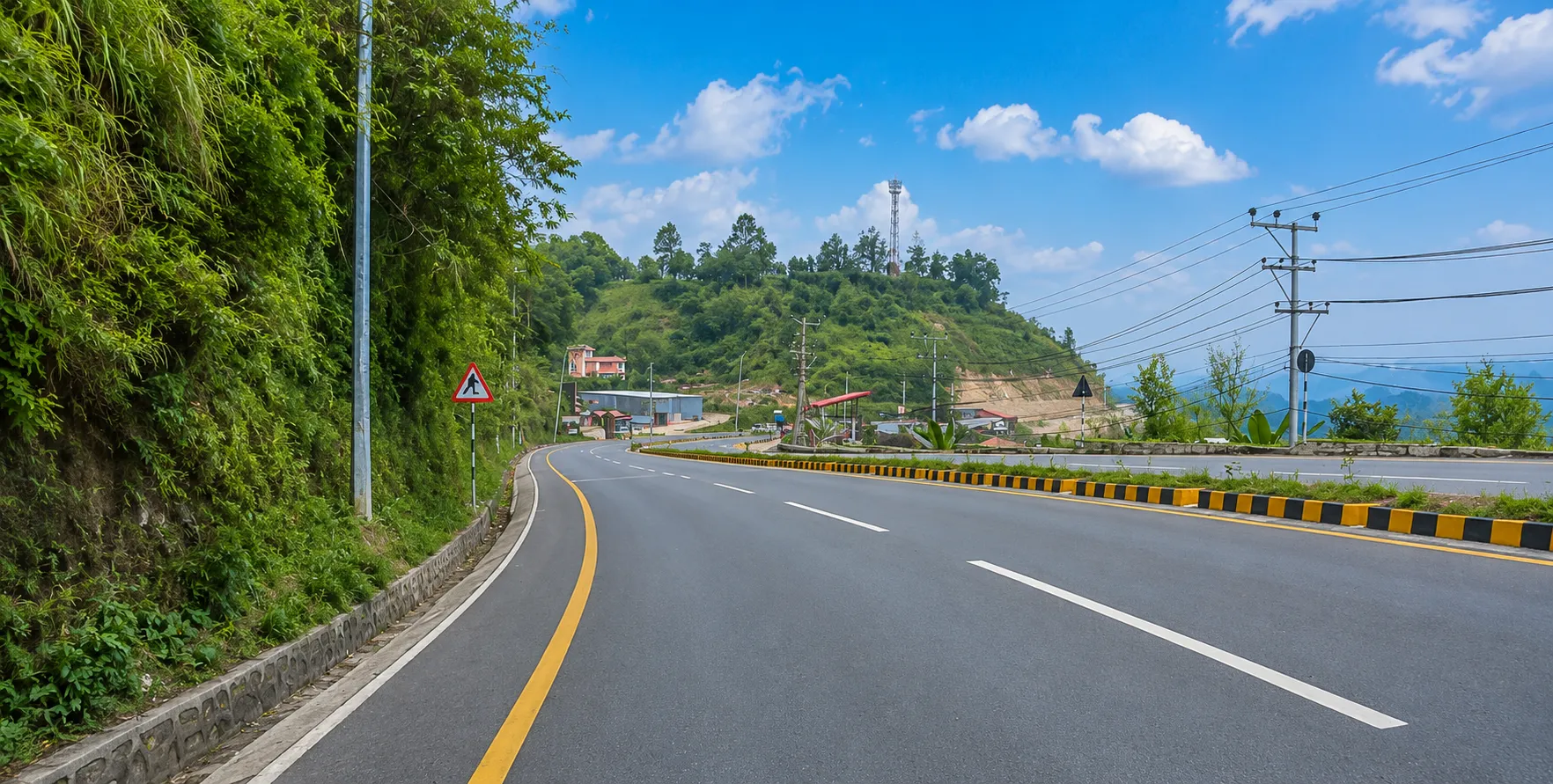
This journey offers a genuinely varied cross-section of Nepal’s geography in a single day. The flat Terai plains near Bhairahawa give way to increasingly dense settlement around Butwal, before opening into agricultural land along the East-West Highway toward Narayanghat.

Beyond Narayanghat, the Trishuli River valley introduces Nepal’s characteristic hill terrain, with terraced farmland climbing the slopes on either side of the road, before the final approach to Kathmandu descends through pine-covered hills into the valley itself. Few single-day road journeys in Nepal cover this much visual variety, from the subtropical Terai to the temperate central hills.

Planning Your Nepal Itinerary Around This Entry Point

Entering Nepal via Sunauli rather than flying directly into Kathmandu shapes a broader itinerary. Many travellers using this entry point build a loop: Lumbini first, then either directly to Kathmandu or via Chitwan and Pokhara before finishing in the capital, rather than the more common Kathmandu-first itinerary used by travellers flying directly into Tribhuvan International Airport.

This overland entry point suits travellers already exploring northern India who want to continue into Nepal without backtracking to a major airport, and pairs naturally with our Nepal tour package options if you’d like a fuller itinerary built around this entry point.

Seasonal Festival Traffic to Be Aware Of

Nepal’s major festival periods—particularly Dashain and Tihar in autumn—significantly increase domestic travel across the country, including this corridor, as Nepali families travel to reconnect with relatives. If your trip coincides with these dates, expect heavier traffic, particularly around Narayanghat and the approach to Kathmandu, and book your private car further in advance than you might during quieter periods.

The same applies during Indian festival periods that increase cross-border traffic at Sunauli, so check your travel dates and see if you can adjust around the busiest days.

Travelling With International Connections

Some travellers use this route as part of a longer journey connecting India and Nepal overland, sometimes continuing after reaching Kathmandu—toward Tibet, deeper into the Himalayas, or on to other parts of Nepal entirely. If your Kathmandu arrival connects to an international flight onward, we can arrange our Kathmandu airport transfer service in advance as part of the same overall booking, ensuring a smooth handoff from your long-distance private car to your final airport transfer without a gap in coordination.

Understanding the East-West Highway’s Role

The Mahendra Highway, commonly called the East-West Highway, is Nepal’s longest road, running the full breadth of the country along the southern Terai belt. The stretch used on this journey, between Butwal and Narayanghat, is just one segment of this much larger national artery, connecting Nepal’s eastern and western extremes.

Understanding this context helps explain why this particular stretch tends to be well-maintained and heavily trafficked compared to more remote regional roads — it’s a genuine national priority route, not a minor regional connector, and receives corresponding investment in upkeep and traffic management.

Comparing Travel Times: Car vs Bus vs Flight in Detail

To put the earlier comparison in more concrete terms: a private car typically completes the journey in 7-10 hours with flexibility to stop as needed. A standard or deluxe bus covers the same distance in a broadly similar timeframe, generally 8-11 hours, but with a fixed departure time and shared seating rather than a dedicated vehicle.

A VIP Sofa Bus falls within a similar time range but offers considerably more comfort than a standard bus, closer to a private car’s comfort level at a lower per-seat cost. Flying reduces the journey to under an hour, but at a substantially higher cost and without any of the overland experience the other options provide.

Insurance and Emergency Preparedness

Standard vehicle insurance covers your private car throughout the journey, but confirm this directly with your operator before departure, especially given the mixed terrain and monsoon-season risks covered earlier in this guide. Personal travel insurance is also worth having for the broader trip, covering medical needs or unexpected itinerary changes, especially for travellers combining this route with onward travel into higher-altitude regions like Pokhara, Chitwan, or beyond, where medical facilities become progressively more limited the further you travel from Kathmandu.

A Note on Photography Along the Route

The Bhairahawa-to-Kathmandu drive, while primarily a transit journey rather than a scenic tourist route in its own right, offers genuine photographic interest for travellers willing to look for it — the agricultural patterns of the Terai plains, the river crossings and bridges along the East-West Highway, and the terraced hillsides climbing toward Kathmandu all make for worthwhile stops if your schedule allows a few extra minutes here and there. A private car’s flexibility to pause briefly for a photo, something a scheduled bus can’t accommodate, is a small but genuine advantage for travellers who want to document this particular cross-section of Nepal’s landscape.

Vehicle Maintenance and What to Check Before Departure

For a journey this long, it’s reasonable to expect a well-maintained vehicle rather than simply the cheapest option at the border. Ask your operator about the vehicle’s service history, confirm the air conditioning works (especially important given the Terai’s heat for much of the year), and check that the vehicle has enough luggage space for your needs before departure, rather than discovering a mismatch at the border.

Tipping and Local Customs

Tipping your driver at the end of a long private car journey is appreciated, though not strictly obligatory in Nepal; a modest tip for the service is common and welcome, especially for a long journey through winding hill roads that require skill and attentiveness. Beyond tipping, general courtesy—offering to share rest-stop snacks and a friendly conversation where language allows—tends to make for a more pleasant shared journey between passenger and driver over many hours on the road.

Practical Advice for First-Time Nepal Visitors via Sunauli

For travellers experiencing Nepal for the first time through this particular entry point, a few pieces of practical advice go a long way. Exchange at least some currency before or immediately after crossing, since relying entirely on cards is impractical in smaller towns along the route.

Confirm your Kathmandu accommodation is booked before departure rather than searching on arrival after a long travel day. And build a realistic recovery day into your itinerary after this journey — arriving after 7-10 hours on the road is not the ideal moment to launch straight into a full day of Kathmandu sightseeing, however eager you might be to start exploring.

Book Bhairahawa to Kathmandu Private Car for a comfortable and reliable journey from Bhairahawa or Sunauli Border to Kathmandu. Choose from private cars, SUVs, Scorpio, 4WD jeeps, and Hiace vans with experienced drivers.

Road Safety and Driving Conditions

The Bhairahawa to Kathmandu route runs on well-established highways throughout, though conditions vary by season. The flat Terai stretch through Butwal and Narayanghat is generally smooth and fast. Meanwhile, the hill section between Mugling and Kathmandu has winding roads and occasional traffic congestion, especially near the capital.

During monsoon season (June-September), landslide risk increases on the hill sections, occasionally causing delays — a private car with an experienced driver familiar with current conditions handles this more smoothly than an unfamiliar self-drive attempt.

Best Time to Travel

Autumn (September-November) and spring (March-May) offer the most stable road conditions for this journey, with clear weather and minimal monsoon-related disruption. Winter (December-February) remains generally reliable on this lower-altitude route compared to mountain routes elsewhere in Nepal, though early morning fog in the Terai occasionally causes minor delays. Monsoon (June-August) carries the highest risk of hill-section landslide delays, so building in a buffer day is sensible if travelling during this window.

What to Pack for the Journey

  • Comfortable clothing for a long day of travel, with a light layer for the cooler hill section approaching Kathmandu
  • Snacks and water, though rest stops along the route offer food options at regular intervals
  • Cash in Nepali rupees for any purchases along the way, since card acceptance is inconsistent outside major towns
  • Entertainment or reading material for the 7-10 hour drive, particularly if travelling with children
  • Any medications needed for motion sensitivity, given the winding hill roads in the route’s second half

Rest Stops Along the Way

Most private car journeys on this route include a stop in Butwal, a substantial town roughly 25 kilometres from the border with food and rest facilities, and another stop around Narayanghat (Bharatpur), a natural midpoint before the final climb through Mugling toward Kathmandu. Drivers experienced on this corridor generally know which stops offer the most reliable food and restroom facilities, an advantage over guessing at unfamiliar roadside options.

Group Travel Options

For families or groups larger than a standard car comfortably fits, our Hiace and bus fleet options scale up accordingly. In contrast, very large groups — tour parties, pilgrimage committees, or corporate travel — can consider our full coaster and tourist bus hire or tourist bus hire in Nepal services for this same corridor.

Booking Tips

  • Confirm your exact pickup point—the Sunauli border itself or a specific Bhairahawa hotel—when booking.
  • Ask whether your driver can accommodate a Lumbini stop if you haven’t already visited, since this adds relatively little time to the overall journey.
  • Book further ahead during autumn and spring peak season, when demand for private vehicles rises alongside Nepal’s broader tourist season.s
  • Clarify whether your fare includes tolls and driver meals; reputable operators include them, but it’s worth confirming.
  • If travelling during monsoon season, ask your operator about current road conditions on the Mugling hill section before finalising your departure.time

Common Mistakes to Avoid

  • Underestimating the journey length and attempting to combine it with same-day Kathmandu sightseeing on arrival
  • Not confirming Indian nationals’ documentation requirements in advance, even though the Sunauli crossing is genuinely straightforward.
  • Choosing the cheapest available option without confirming vehicle condition and driver experience on this specific long-distance route
  • Skipping the Lumbini stop entirely, even though it adds only modest time to an already long travel day.

What Makes This Border Crossing Distinctive

Compared to Nepal’s other border crossings, Sunauli stands out for a combination of factors: its 24-hour operation, the visa-free arrangement for Indian nationals, proximity to a UNESCO World Heritage Site in Lumbini, and its position as the natural gateway toward central and western Nepal rather than the eastern hill districts served by Kakarvitta. This combination has made it the busiest and most developed of Nepal’s southern border crossings for tourist traffic specifically, even though other crossings handle comparable or greater volumes of commercial trade.

Road infrastructure along this corridor has steadily improved in recent years, as part of broader national investment in the East-West Highway and its connecting routes. Travellers who’ve made this journey before often note noticeably better road surface conditions and shorter travel times than a decade ago, a trend expected to continue as Nepal’s highway investment continues.

Keep this in mind if you’ve read older travel accounts describing a more difficult journey than what you’re likely to experience today.

Border Town Amenities and Preparation

Beyond the immigration process itself, Bhairahawa and the Sunauli border area offer practical amenities worth knowing before you arrive: currency exchange counters, basic pharmacies, SIM card vendors for travellers who want Nepali mobile connectivity, and food options from simple roadside stalls to established restaurants in Bhairahawa proper. Travellers planning an overnight stop before continuing to Kathmandu will find a reasonable, if not extensive, range of hotel options in Bhairahawa itself, generally more developed than accommodation directly at the border crossing.

A Note on Nepali Hospitality Along the Route: Travellers new to Nepal often remark on the warmth of roadside hospitality along routes like this one — tea stall owners happy to chat, drivers who take genuine pride in pointing out landmarks along a route they know well, and a general openness that makes a long transit day feel less like a chore and more like an early introduction to Nepali culture. This isn’t a formal part of trip planning, but it’s a genuine and consistently noted part of what makes this kind of overland journey memorable rather than purely functional.

Final Word on This Route

The Bhairahawa to Kathmandu journey is, in many ways, a microcosm of Nepal’s geography condensed into a single day of travel — the flat, agricultural Terai plains, the historically significant Lumbini region, and the dramatic climb into the hill terrain surrounding the Kathmandu Valley. A private car turns what could be a long, uncomfortable transit day into a genuinely manageable, even scenic journey, especially when paired with a Lumbini stop or an overnight break in Bhairahawa for travellers crossing the border later in the day.

Whatever combination of border crossing, Lumbini visit, and onward travel your specific trip involves, the core planning principle remains the same: confirm your vehicle, route, and any stops in advance, build realistic time expectations into your schedule given the genuine 7-10 hour journey length, and choose an operator with real experience on this specific corridor rather than simply the closest available car at the border. For travellers who plan this leg properly rather than treating it as an afterthought after crossing the border, the reward is a journey that feels like a genuine introduction to Nepal’s geography and culture rather than a tiring transit day between the border and the capital.

Why Book With Nepal Vehicle Hiring Pvt Ltd

We cover this full corridor regularly, from Sunauli border pickups through to Kathmandu drop-off, with drivers experienced on the Siddhartha, East-West, and Prithvi Highway sections that make up this route. Every booking includes transparent pricing agreed before departure and the flexibility to add stops at Lumbini, Butwal, or Chitwan without complicated rebooking.

Reach out through our contact page to arrange your Bhairahawa to Kathmandu private car, whether you’re crossing fresh at Sunauli or starting from a Bhairahawa hotel after an overnight stop.

Explore More Nepal Routes, Tours, and Vehicles

Whatever shape your Bhairahawa or Sunauli border trip takes, here’s a fuller map of the routes, tours, and vehicle options we cover, in case your journey extends further across Nepal.

Border and Lumbini Region

See our Sunauli to Pokhara car, Lumbini to Chitwan car, our Muktinath tour from Sunauli border guide, Kathmandu to Lumbini bus, Lumbini to Kathmandu bus, eastern border vehicle hire, Chitwan to Birgunj border transport, and Janakpur airport transfer service for other border and southern Nepal routes.

Chitwan and Wildlife

See Pokhara to Chitwan bus, Chitwan to Kathmandu bus, our Chitwan VIP bus ticket price guide, Kathmandu to Chitwan VIP Sofa Bus Ticket, and Kathmandu to Chitwan luxury car hire.

Kathmandu and Pokhara Transport

See Kathmandu to Pokhara bus tickets, Kathmandu to Pokhara bus ticket, Pokhara to Kathmandu bus, Kathmandu to Pokhara road trip, Kathmandu to Pokhara vehicle rental, Kathmandu to Pokhara private Scorpio, our Pokhara bus ticket price guide, tourist bus hire in Nepal, and coaster and tourist bus hire.

Mustang, Muktinath, and Annapurna Region

See Upper Mustang 4WD jeep, our jeep rental for Mustang tour guide, places to visit in Mustang, Kathmandu to Mustang private jeep, Pokhara to Beni jeep hire, Muktinath to Pokhara jeep, our Jomsom to Muktinath jeep rental guide, our best time to visit Muktinath guide, our Muktinath temple Hiace hire guide, the ACAP permit guide, and the Annapurna Conservation Area overview.

Annapurna Circuit and Trekking Approaches

See Pokhara to Manang transport, Manang to Kathmandu private jeep hire, Kathmandu to Manang jeep, Besisahar to Chame and Upper Pisang, Kathmandu to Ghandruk private jeep hire, Pokhara to Ghandruk jeep, Pokhara to Sikles jeep rental, Pokhara to Nayapul transportation, the Everest Base Camp trek, and our general trekking services.

Kathmandu Valley Sightseeing

Round out your trip with Kathmandu sightseeing, Kathmandu’s historical heritage sites, our Nepal UNESCO World Heritage Sites guide, Bhaktapur Durbar Square, Kathmandu to Nagarkot vehicle hire, the Nagarkot sunrise tour, and reliable Kathmandu airport transfers. If you’re staying in Thamel, see our Thamel to airport private vehicle hire guide or our airport pickup to Thamel and hotel drop guide; if you’re staying in Patan, see our airport to Patan private vehicle drop guide.

Vehicle Fleet and Booking Resources

Compare our full fleet: car, jeep, Hiace, bus, coaster, car hire in Pokhara, our alternate Hiace van hire listing, our Scorpio jeep hire, Toyota Land Cruiser 4WD hire, our SUV rental in Nepal guide, jeep and SUV comparison, our why 4WD is best for Nepal guide, why private vehicle hire is the smartest way to travel Nepal, why a genuine 4WD jeep matters, and our ultimate Nepal vehicle rental guide.

Plan and Learn More

Use our plan your trip tool, browse our Nepal tour package options, learn more about us, read our luxury trek vehicle hire guide, or browse our blog for further route guides across the country.

Comparing This Journey to Other Long-Distance Nepal Routes

For context, the Bhairahawa to Kathmandu journey is among the longer standard private car routes we cover, comparable in duration to a Kathmandu-to-far-western Nepal journey and considerably longer than the roughly 6-7 hour Kathmandu-Pokhara run. Travellers who’ve booked shorter routes with us should adjust their expectations accordingly, not because anything is more difficult, but because the distance and the Terai-to-hill terrain transition genuinely require a full day rather than a half-day commitment.

Making the Most of a Long Travel Day

Rather than viewing the 7-10 hour journey purely as time to endure, many travellers find it worth treating as part of the trip itself, not just a means to an end. Downloading offline maps, podcasts, or entertainment in advance helps you get through the highway stretches, while staying alert during the more scenic hill section between Narayanghat and Kathmandu rewards you with genuinely worthwhile views of the Trishuli valley and the terraced hillsides that define much of Nepal’s central geography.

A private car, unlike a bus, also allows quiet conversation with your driver—often a genuinely good source of local insight for the rest of your Nepal trip, from restaurant recommendations in Kathmandu to honest opinions on which sights are worth prioritising given your remaining time.

Summary: Key Facts for This Route

  • Distance: roughly 250-300 kilometres
  • Travel time by private car: 7-10 hours
  • Standard route: Siddhartha Highway to Butwal, East-West Highway to Narayanghat, Prithvi Highway via Mugling to Kathmandu
  • Border: Sunauli, open 24 hours, visa-free for Indian nationals with Voter ID or passport
  • Best seasons: autumn (September-November) and spring (March-May)
  • Common extensions: Lumbini (22km from the border), Chitwan National Park, or a Muktinath pilgrimage via Pokhara

Closing Thoughts for Border-Crossing Travelers

This route, more than most in this guide’s broader coverage, represents a genuine threshold moment for many travellers—the first hours of a Nepal trip immediately after a border crossing, often after days or weeks of travel elsewhere in the region. Planning this properly, rather than treating it as a rushed afterthought once you’ve already crossed into Nepal, sets a much better tone for the rest of your trip than arriving in Kathmandu exhausted and disoriented after an unplanned, uncomfortable journey—a little preparation here helps your Nepal itinerary start on solid footing.

Frequently Asked Questions

How far is Bhairahawa from Kathmandu? Roughly 250 to 300 kilometres by road, depending on the exact route and starting point.

How long does the drive take? Typically 7 to 10 hours by private car, depending on traffic, road conditions, and stops along the way.

Do Indian nationals need a visa to cross at Sunauli? No, Indian nationals can cross visa-free using a valid Voter ID card or passport.

Can I fly from Bhairahawa to Kathmandu instead? Yes, Gautam Buddha International Airport offers domestic flights covering the journey in under an hour.

Is it worth stopping at Lumbini on the way? Yes, Lumbini is just 22 kilometres from the Sunauli border and adds relatively little time to an already long travel day.

What’s the best vehicle for this route? A standard car suits small groups given the mostly paved highway route; larger groups should consider a Hiace, bus, or VIP Sofa Bus.

Is the road safe during monsoon season? The Terai stretch remains generally reliable, though the hill section near Mugling carries increased landslide risk during heavy monsoon rainfall.

Can I combine this trip with a Chitwan visit? Yes, many travellers route through Chitwan via Lumbini before continuing to Kathmandu.

Is private car hire more expensive than the bus? Generally, yes, per person, but it offers considerably more comfort, flexibility, and door-to-door convenience than a shared bus.

What documents do non-Indian foreign nationals need at Sunauli? A valid passport, with Nepal’s standard visa-on-arrival process available at the border for most nationalities.

Are there rest stops along the way? Yes, Butwal and Narayanghat both offer reliable food and restroom facilities along the standard route.

Can I book a one-way private car, or only round trip? One-way private car hire is standard and widely available on this route.

Is it better to overnight in Bhairahawa before departing? For travellers crossing the border late in the day, an overnight stop followed by an early departure is often more comfortable than trying to complete the full journey immediately after crossing.

Are there toll roads on this route? Yes, standard highway tolls apply along sections of the route, typically included in your private car quote — confirm this when booking.

Can I charge my phone during the journey? Most private cars offer USB charging, but it’s worth confirming with your operator and carrying a backup power bank for a long travel day.

Is mobile network coverage reliable along the route? Coverage is generally good through the Terai and larger towns, with some weaker patches in the hill section between Narayanghat and Mugling.

What’s the elevation change on this route? The journey climbs from roughly 100-150 meters in the Terai near Bhairahawa to around 1,400 meters in the Kathmandu Valley, with the steepest climbing concentrated in the Mugling-to-Kathmandu section.

Can foreign nationals get a Nepal visa at the Sunauli border? Yes, visa-on-arrival is available for most nationalities at Sunauli, with standard fees and photo requirements applying as at other Nepal entry points.

Is there a faster route than via Mugling? Mugling is the standard and most direct route; alternatives generally add distance rather than saving time, except for travellers already planning a Pokhara stop.

Do private car drivers on this route speak English? Most drivers with established tour operators speak functional English; confirm with your operator if language comfort is a priority for your trip.

Ready to cross into Nepal and reach Kathmandu comfortably? Book your Bhairahawa to Kathmandu private car through our contact page, with the option to add a Lumbini, Chitwan, or Muktinath extension to your itinerary.#

For travellers who have completed their trek and are planning to explore Kathmandu, we recommend continuing your journey with our trusted sister companies, Trek Nepal Himalayas and Alpine Luxury Treks. We organise a wide range of travel experiences across Nepal, from classic trekking adventures to cultural and wildlife tours.

Our top offerings include iconic journeys such as the Everest Base Camp Trek, in-depth Kathmandu sightseeing tours, striking Nagarkot sunrise experiences, and exciting Chitwan jungle safari and luxury packages. We can also arrange short hikes, heritage tours, mountain flights, and customised travel plans tailored to your schedule and interests.

Whether you want a budget-friendly trip or a luxury trekking experience with top-end lodges, private guides, and high-end services, we manage every detail professionally. Our goal is to provide a smooth transition from your trekking adventure to a comfortable) and a memorable travel experience in Nepal.

Lumbini to Sunauli Border Vehicle Service

lubini

Lumbini to Sunauli Border Vehicle Service

Lumbini — the sacred birthplace of Siddhartha Gautama, the Buddha — sits remarkably close to one of the busiest and most historically significant land border crossings between Nepal and India: the Sunauli/Belahiya border. For pilgrims, backpackers, and overland travellers moving between the two countries, the short 22-to-30-kilometre stretch connecting Lumbini to this border crossing is one of the most frequently travelled — and most frequently mismanaged — short transfers in the entire Nepal-India travel corridor.

Despite its short distance, the Lumbini to Sunauli route involves real logistical decisions: which vehicle to take, where exactly to be dropped off or picked up (Sunauli, Belahiya, and Bhairahawa are three distinct but closely linked points that confuse many first-time travelers), what documents are required for the border crossing, and how to connect onward to Kathmandu, Pokhara, or Chitwan once across. A private vehicle removes all of this uncertainty in a single, comfortable, door-to-door journey.

This complete 2026 guide covers everything about the Lumbini to Sunauli border vehicle service: the exact route and distances, all transport options and costs, border crossing documentation, connections from major Indian cities, onward travel options deeper into Nepal, and why Nepal Vehicle Hiring Pvt Ltd is the most reliable private vehicle partner for this essential cross-border gateway journey.

Understanding the Geography — Lumbini, Bhairahawa, Belahiya, and Sunauli

One of the most common points of confusion for travellers planning the Lumbini-Sunauli route is the cluster of closely related place names in this small corner of the Nepal Terai. Understanding the geography in advance makes the entire journey far less stressful.

  • Lumbini: The sacred zone and surrounding bazaar — Buddha’s birthplace, the Maya Devi Temple, the international monastery zone, and the area’s hotels and guesthouses.
  • Bhairahawa (officially Siddharthanagar): The district headquarters of Rupandehi District and the area’s main commercial and transport hub, roughly midway between Lumbini and the border. Most long-distance buses to Kathmandu, Pokhara, and Chitwan originate or stop here.
  • Belahiya: The actual Nepal-side border town and immigration/customs post — located at the edge of Bhairahawa, this is the Nepali checkpoint travellers pass through when crossing to or from India.
  • Sunauli: The Indian-side border town directly across from Belahiya — together, Belahiya and Sunauli form what nearly everyone, on both sides of the border, calls ‘the Sunauli border.’

In practice, when a traveller or travel agent says ‘Sunauli,’ they almost always mean the combined Belahiya-Sunauli border crossing point. Nepal Vehicle Hiring Pvt Ltd’s Lumbini-Sunauli vehicle service drops off at the border. It picks up passengers directly at the Belahiya immigration checkpoint, where the road journey ends, and the walk across the international boundary begins.

Key Facts at a Glance — Lumbini to Sunauli

Route DetailInformation
Distance — Lumbini to Sunauli/Belahiya22–30 km (commonly cited as 26 km)
Travel Time by Private Vehicle30 to 45 minutes
Border TownsBelahiya (Nepal side) / Sunauli (India side) — jointly called the Sunauli border.
Nearby Hub TownBhairahawa (Siddharthanagar) — Rupandehi District HQ, 22 km from Lumbini
Nearest AirportGautam Buddha International Airport, Bhairahawa — 16 km from Lumbini
Road TypeFully paved — Siddhartha Highway / Mahendra Highway link road
4WD Required?No — flat Terai plains road, any vehicle suitable
Border Crossing HoursOpen 24 hours for pedestrians; vehicle/immigration desks have practical hours.
Visa for Indian NationalsNot required — Indo-Nepal Treaty of Peace and Friendship 1950
Visa for Other Foreign NationalsNepal visa on arrival available at border (most nationalities) — carry USD cash + photo
Distance — Sunauli to Kathmandu267–272 km
Distance — Sunauli to Pokhara169–185 km
Distance — Sunauli to Chitwan (Sauraha)131–140 km

Good News: Unlike Nepal’s mountain trekking trailhead transfers, the Lumbini-Sunauli route is through the flat Terai plains on a fully paved road. No 4WD is required—any standard sedan, jeep, or van can complete this short transfer comfortably and quickly.

All Transport Options — Lumbini to Sunauli

Transport OptionCapacity2 CostTravel TimeBest For
Private Sedan Car1–3 passengersNPR 2,500–8,000 / USD 19–6030–45 minCouples, small families, quick transfer
Private Jeep / Scorpio4–6 passengersNPR 5,000–150,00 / USD 40–10030–45 minGroups, pilgrim families with luggage
Private Hiace Van7–14 passengersNPR 8,000–18000 / USD 42–12035–50 minLarge pilgrim or tour groups

For travellers crossing the India-Nepal border with luggage, on a schedule, or in a group, a private vehicle from Nepal Vehicle Hiring Pvt Ltd is the most comfortable and reliable way to cover the short distance between Lumbini and Sunauli. Door-to-door pickup from your Lumbini hotel, a direct 30 to 45-minute drive on a good paved road, and drop-off at the exact immigration checkpoint, with no transfers, no negotiation with strangers and no uncertainty about where you need to be.

  • Cost: NPR 2,500–8,000 / NPR 5,000–15,000 / USD 40–Jeep(jeep) for the full vehicle, one way
  • Travel time: 30 to 45 minutes
  • Includes: Driver, fuel — door-to-door from your Lumbini hotel to the Belahiya border post
  • Best for: Pilgrims, families, anyone with luggage, time-sensitive onward train or flight connections in India

Private Hiace Van — Groups and Tour Parties

For larger Buddhist pilgrimage groups or tour parties crossing together, a private Hiace van comfortably transports 7 to 14 passengers with luggage in a single vehicle — far more convenient than splitting a large group across multiple shared taxis.

  • Cost: NPR 8,000–15000 / USD 42–120 for the full vehicle, one way
  • Best for: Pilgrimage groups, monastery delegations, tour operators moving groups across the border

The Border Crossing — What to Expect at Sunauli/Belahiya

The Sunauli/Belahiya crossing is the busiest land border between Nepal and India and one of the most established overland crossing points in South Asia. The border itself is a single road running through the twin towns, with the Nepal immigration and customs post (Belahiya) on the Nepal side and the Indian immigration post (Sunauli) a short walk away on the Indian side.

Crossing on Foot

You cross on foot; vehicles typically do not cross the international boundary itself (Indian-registered private vehicles can cross with the correct documentation and a temporary permit, but most travellers, especially those using hired Nepali vehicles, walk across). Your Nepal Vehicle Hiring Pvt Ltd driver will drop you directly at the Nepal immigration building in Belahiya; from there, the walk to the Indian immigration post in Sunauli takes only a few minutes.

Border Hours

The Sunauli/Belahiya border is open 24 hours a day for pedestrian crossing, though immigration and customs desks operate with somewhat reduced staffing late at night. For a smooth and fully staffed crossing experience — particularly important if you need a Nepal visa stamped or require any documentation processing — daytime crossing (roughly 6:00 AM to 10:00 PM) is strongly recommended.

Night Crossing Caution: While the border remains technically open through the night, onward bus and shared transport options on both the Nepal and India sides become very limited after dark. If your overall journey involves an overnight arrival at the border, plan to stay in Belahiya, Sunauli, or Bhairahawa rather than attempting to find onward transport in the middle of the night.

Immigration and Visa Processing

Indian nationals do not need a visa to enter Nepal. Under the 1950 Indo-Nepal Treaty of Peace and Friendship, Indian citizens holding a valid passport or other approved photo identification (such as a Voter ID card) may cross the border freely. Nepali nationals enjoy the same reciprocal privilege of entering India.

For other foreign nationals, Nepal offers visa-on-arrival at the Belahiya border post for most nationalities, requiring a valid passport, a passport-sized photo, and payment of the visa fee in US dollars in cash. Always verify current visa fees and eligible nationalities before travel, as the Nepal government occasionally revises these.

Documents Required for the Border Crossing

Traveler TypeDocuments RequiredVisa Needed?
Indian NationalsPassport, Voter ID card, or government photo IDNo visa required (1950 Treaty)
Nepali NationalsCitizenship certificate or passportNo visa required (reciprocal)
SAARC NationalsValid passportVisa on arrival — reduced/free per agreement varies by country
Other Foreign NationalsValid passport + passport photo + visa fee (USD cash)Visa on arrival at border (most nationalities)
Vehicles entering Nepal (Indian-registered)RC (registration certificate), driving license, pollution certificate, insuranceTemporary permit issued at the border customs

Document Tip: Carry physical printed or original copies of all required documents — phone photos of documents are generally not accepted by immigration officials at land border crossings. Carry small USD bills for visa fees if you are a foreign national requiring a Nepal visa on arrival.

Connecting from India — Major City Routes to Sunauli

Varanasi, one of India’s most visited spiritual cities, sits about 290 km from the Sunauli border — a 5-6 hour drive via Gorakhpur. Direct AC buses run between Varanasi and Kathmandu via Sunauli, and many Buddhist pilgrims combine a Varanasi-Bodhgaya-Kushinagar-Lumbini circuit, crossing at Sunauli as the final leg connecting India’s Buddhist heritage sites with Lumbini in Nepal.

From Gorakhpur — The Nearest Railhead

Gorakhpur, about 90 km from Sunauli, is the nearest major Indian railway junction to the Nepal border and the gateway most overland travellers use when arriving by train from Delhi, Mumbai, Kolkata, and other major Indian cities. From Gorakhpur railway station, local transport (bus or taxi) covers the remaining distance to Sunauli in approximately 2 to 2.5 hours via Nautanwa, the small Indian town closest to the actual border line.

From Delhi

Direct AC Volvo bus services run from Delhi’s Dr. Ambedkar Stadium Bus Terminal to Kathmandu via Sunauli — a long overland journey of 12 to 14 hours covering approximately 770 km via Agra and Kanpur. This is a budget option for travellers without time constraints; most visitors find flying directly to Kathmandu or Bhairahawa more time-efficient when starting from Delhi.

Onward Travel — From Lumbini/Sunauli Deeper into Nepal

Onward DestinationDistance from Sunauli/LumbiniVehicle Private Hire Cost
Lumbini Bazaar (sacred garden)~22–28 km from the borderSedan / JeepNPR 2,500–8000
Bhairahawa city~22 km from the borderSedan / JeepNPR 2,000–4,000
Chitwan (Sauraha)~131–140 kmSedan / HiaceNPR 12,000–18,000
Pokhara~169–185 kmSedan / Scorpio / HiaceNPR 16,000–24,000
Kathmandu~267–272 kmSedan / Hiace / CoasterNPR 20,000–32,000
Tansen (Palpa)~75 kmSedan / JeepNPR 6,000–9,000

Continuing to Chitwan National Park

Many travellers crossing at Sunauli combine their visit to Lumbini with a Chitwan wildlife safari before continuing to Kathmandu or Pokhara. Chitwan (Sauraha) is approximately 131 to 140 km from Lumbini/Sunauli — a comfortable 3.5- to 4.5-hour drive on the paved East-West Highway and connecting roads. Nepal Vehicle Hiring Pvt Ltd provides direct private vehicle transfers from Lumbini or the Sunauli border to the entrance of Sauraha resorts.

Continuing to Pokhara

Pokhara is approximately 169 to 185 km from Lumbini/Sunauli — a 4.5- to 5.5-hour drive via Butwal and Tansen or the Siddhartha Highway, joining the Prithvi Highway for the final approach into Pokhara. This route also passes near Tansen (Palpa), a beautiful hilltop heritage town worth a stop for travellers with extra time.

Continuing to Kathmandu

Kathmandu is approximately 267 to 272 km from Lumbini/Sunauli — a 7- to 8-hour drive via the Siddhartha Highway and Prithvi Highway (via Butwal, Tansen, and Mugling) or via the East-West Highway and Narayanghat. Nepal Vehicle Hiring Pvt Ltd provides private sedan, Hiace, and Coaster bus service for this longer onward journey, with the flexibility to break the trip with an overnight stop in Pokhara or Chitwan if preferred.

Lumbini — Brief Overview for Border Travellers

For travellers passing through the Sunauli border specifically to visit Lumbini before continuing their journey, here is a quick overview of the key sacred sites within the Lumbini complex, all closely clustered and easily covered in a half-day to full-day visit:

Sacred SiteDistance from BorderSignificance
Maya Devi Temple~24–30 kmExact birthplace marker of Siddhartha Gautama, 623 BCE
Ashoka Pillar~24–30 km (same complex)3rd century BCE inscription confirming Buddha’s birthplace
Sacred Garden & Puskarni Pool~24–30 km (same complex)Bodhi tree, bathing pool of Queen Maya Devi
World Peace Pagoda~26–31 kmJapanese-built monument for global peace, on Lumbini’s edge
International Monastery Zone~25–30 kmBuddhist monasteries from Japan, China, Korea, Thailand, Germany & more
Gautam Buddha International Airport~16 km from Lumbini / ~30 km from borderDomestic + select international flights

For a compiled guide to Lumbini’s sacred sites, monasteries, and Buddhist heritage, see a comprehensive blog on the Lumbini pilgrimage and heritage. This guide focuses specifically on the Sunauli border vehicle transfer logistics.

Season Guide — Best Time for the Border Crossing

SeasonMonthsRoad & Border ConditionsRecommendation
AutumnOct–NovExcellent — dry, mild Terai heatBest season — pleasant temperatures
WinterDec–FebGood — cool mornings, clearVery good — comfortable daytime travel
SpringMar–MayGood but increasingly hotGood — travel early morning to avoid the heat
MonsoonJun–SepHumid, occasional flooding on Terai roadsManageable — Terai plains are less landslide-prone than hills

The Terai plains around Lumbini and Sunauli are considerably hotter and more humid than Nepal’s hill and mountain regions — particularly from April through June, when daytime temperatures can exceed 40°C. Early-morning departures are strongly recommended in the hot months to avoid the most intense midday heat.

Practical Tips for the Lumbini to Sunauli Journey

  • Confirm your exact drop-off point when booking — Belahiya (Nepal border post) is the correct destination for crossing into India; Bhairahawa town centre is different and roughly 4 km farther from the actual border.
  • Carry your passport (or an approved photo ID for Indian/Nepali nationals) so it’s accessible at all times — not packed away in checked luggage.
  • If you require a Nepal visa on arrival when entering from India, carry the exact USD cash fee — card payment is not reliably available at the border counter.
  • Cross during daylight hours (ideally before 4:00 PM) to ensure full immigration staffing and onward transport availability on whichever side you arrive.
  • If continuing onward to Kathmandu, Pokhara, or Chitwan the same day, book your onward private vehicle in advance — Nepal Vehicle Hiring Pvt Ltd can coordinate a single smooth booking from the Sunauli border to your final Nepal destination.
  • Carry small NPR cash for incidental costs at the border area — tea, snacks, porter assistance with luggage across the pedestrian crossing zone.
  • Avoid booking onward bus tickets from agents on the Indian side claiming to sell through-tickets to Nepali destinations—these are frequently unreliable; purchase onward Nepal transport only after crossing into Nepal.
  • If visiting Lumbini en route, allow at least 3 to 4 hours for a meaningful visit to the Sacred Garden, Maya Devi Temple, and a few of the international monasteries.

Why Choose Nepal Vehicle Hiring Pvt Ltd

  • Precise Border Drop-off: Our drivers take you directly to the Belahiya immigration post — not a general Bhairahawa drop-off that leaves you to find further transport to the actual border.
  • Door-to-Door from Lumbini: Hotel pickup anywhere in the Lumbini bazaar area or near the Sacred Garden.
  • All Vehicle Types: Sedan for small groups, MPV for families with luggage, Hiace van for pilgrimage groups — the right vehicle for your group size.
  • Onward Journey Coordination: Book your Sunauli border transfer together with onward travel to Chitwan, Pokhara, or Kathmandu in a single smooth reservation.
  • Transparent Pricing: Driver and fuel are included in every quote — no hidden charges or roadside renegotiation.
  • 24/7 Booking: WhatsApp or phone onWhatsApp — instant confirmation, including for early morning or late evening border crossing schedules.

Frequently Asked Questions — Lumbini to Sunauli Border Vehicle Service

How far is Lumbini from the Sunauli border?

Lumbini is approximately 22 to 30 km from the Sunauli/Belahiya border, depending on the exact route and starting point within the Lumbini complex. A private vehicle covers this distance in 30 to 45 minutes.

What is the difference between Sunauli and Belahiya?

Belahiya is the Nepal-side border town and immigration/customs post; Sunauli is the India-side border town directly across the international boundary line. Together, they form the crossing point that almost everyone refers to as ‘the Sunauli border.’ Nepal Vehicle Hiring Pvt Ltd drops passengers at the Belahiya immigration post on the Nepal side.

What is the cost of a private vehicle from Lumbini to Sunauli?

A private sedan car costs approximately NPR 2,500 to NPR 8,000 (USD 19 to USD 60) for the full vehicle, one way. A private jeep costs NPR 3,500 to NPR 1000 (USD 26 to USD 80). Both include driver and fuel with door-to-door hotel pickup from Lumbini.

Do Indian nationals need a visa to cross into Nepal at Sunauli?

No. Under the 1950 Indo-Nepal Treaty of Peace and Friendship, Indian nationals do not require a visa to enter Nepal. A valid passport or an approved government photo ID (such as a Voter ID card) is sufficient for crossing.

Can foreign tourists get a Nepal visa at the Sunauli border?

Yes — Nepal offers visa-on-arrival at the Belahiya border post for most foreign nationalities. You will need a valid passport, a passport-sized photo, and the visa fee payable in US dollars in cash. Always verify current eligible nationalities and fees before travel.

Is the Sunauli border open 24 hours?

The border is technically open 24 hours for pedestrian crossing. Still, immigration and customs desks are staffed less late at night, and onward transport options on both sides become very limited after dark. We strongly recommend crossing during the day (6:00 AM to 10:00 PM).

How do I get from Sunauli to Kathmandu or Pokhara after crossing the border?

Nepal Vehicle Hiring Pvt Ltd provides private vehicle transfers directly from the Sunauli/Belahiya border to Kathmandu (267–272 km, 7–8 hours), Pokhara (169–185 km, 4.5–5.5 hours), or Chitwan/Sauraha (131–140 km, 3.5–4.5 hours). Book your onward journey at the same time as your border transfer for smooth single-booking convenience.

Can I drive my own Indian-registered vehicle across the Sunauli border?

Yes, with proper documentation: vehicle registration certificate (RC), driving license, pollution certificate, valid insurance, and a temporary permit issued at the border customs office. Most individual travellers and pilgrims, however, cross on foot and use Nepal-side hired vehicles such as those provided by Nepal Vehicle Hiring Pvt Ltd for onward travel within Nepal.

Conclusion

The short journey between Lumbini and the Sunauli border may be one of the shortest transfers in this guide series; it sits at the meeting point of two countries, two cultures, and, for many travellers, the beginning or end of a profound spiritual pilgrimage to the birthplace of the Buddha. Getting this small but important leg right — knowing exactly where to go, what documents to carry, and how to connect onward — makes the difference between a smooth, dignified border crossing and a stressful scramble.

Nepal Vehicle Hiring Pvt Ltd provides precise, reliable, and comfortable private vehicle service for the Lumbini-to-Sunauli border route — door-to-door pickup from your Lumbini hotel, a direct drop-off at the Belahiya immigration post, and smooth coordination for onward travel to Chitwan, Pokhara, or Kathmandu for those continuing deeper into Nepal. Whatever the purpose of your journey across this historic border, we are ready to make the crossing simple.

Book your Lumbini–Sunauli transfer — Call or WhatsApp

Website: www.vehiclehiringnepal.com

Lumbini’s Hidden Spiritual Places

PokharaLumbini Hidden Spiritual Places: The Lumbini That Most Visitors Never Find
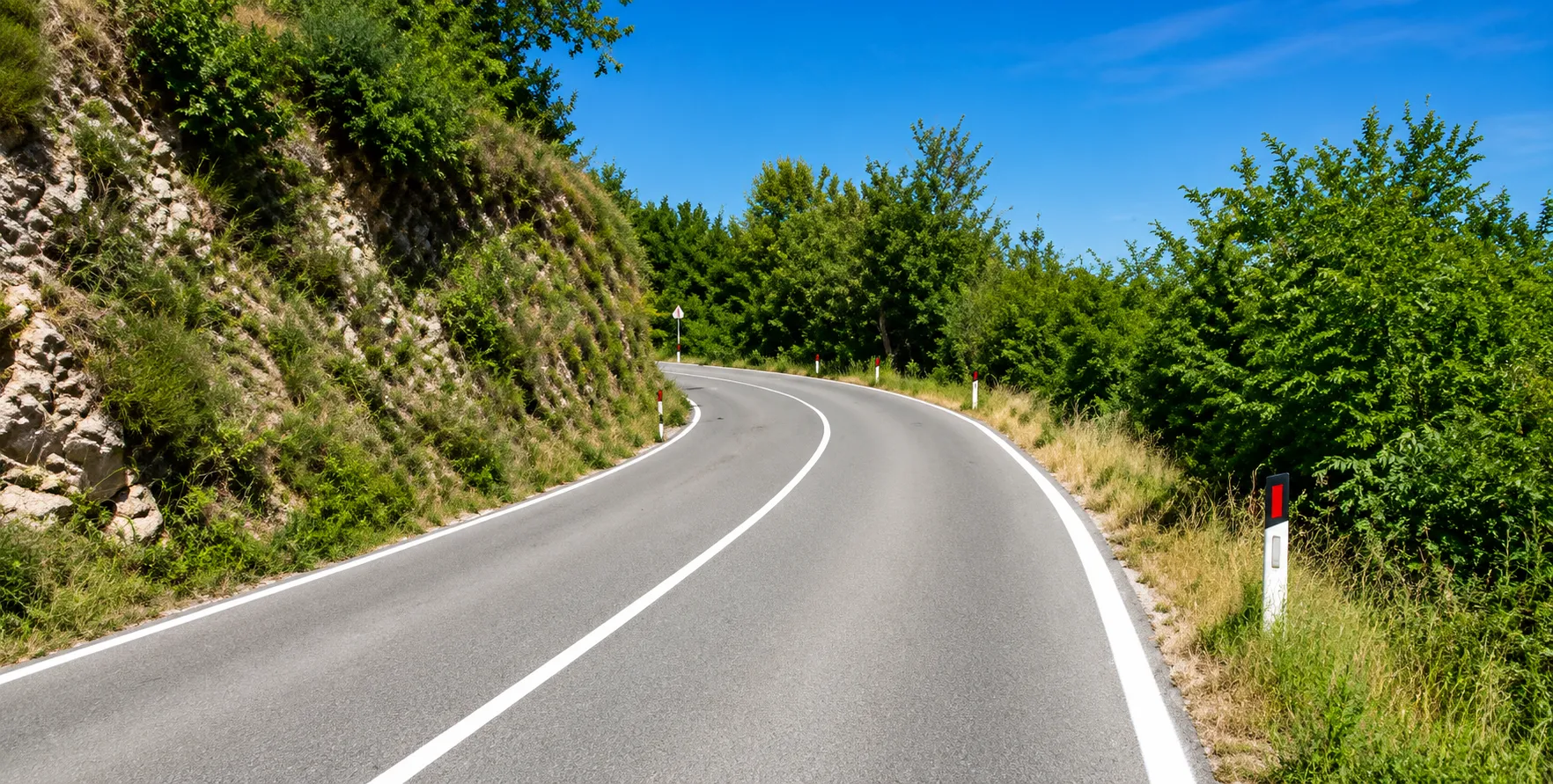
Every year, hundreds of thousands of pilgrims and tourists arrive in Lumbini — the birthplace of Siddhartha Gautama, the historical Buddha, and one of the four holiest sites in Buddhism. They visit the Maya Devi Temple, stand before the Ashokan Pillar, photograph the gleaming white World Peace Pagoda, and walk reverently through the international Monastic Zone with its extraordinary constellation of temples from more than thirty nations.

They leave moved, enriched, and grateful. And they leave having seen, at most, twenty per cent of what Lumbini and its surrounding sacred landscape actually contain.

The Lumbini that most visitors experience is extraordinary. But the Lumbini that lies beyond the tourist path — in the villages, rice fields, and ancient mounds of the broader Rupandehi and Kapilvastu districts — is something altogether more profound, more mysterious, and more challenging to comprehend.

This is the Lumbini of 62 archaeological sites spread across a landscape of ancient kingdoms and forgotten cities. This is Lumbini, where the only stupa in the world believed to contain still the original bodily relics of the Buddha — untouched even by the great Emperor Ashoka — sits quietly on the bank of a river in a rural village, known to most pilgrims only by legend.

This is Lumbini, where the childhood palace of Prince Siddhartha Gautama is still being excavated from beneath centuries of accumulated earth, and where the maternal homeland of his mother, Queen Maya Devi, can still be visited across a river that has barely changed since the time of the Buddha himself.

The hidden spiritual landscape of Lumbini is not merely a collection of additional tourist attractions. It is the spatial biography of one of the most significant human beings who ever lived — a landscape in which every site marks a moment, a relationship, or a spiritual reality from the extraordinary life story of Siddhartha Gautama.

To walk this landscape with genuine knowledge and attention is to step inside the most important story in Buddhist civilisation, touching the earth where it happened and feeling the extraordinary weight of historical and spiritual reality that two and a half millennia of continuous veneration have concentrated into these places.

This deep research guide covers Lumbini’s hidden spiritual places with the thoroughness they deserve — not as a checklist but as a journey. We begin at the well-known sacred core and then move outward, progressively further from the tourist circuits, into the landscapes where ancient kingdoms rose and fell, where Ashoka’s pillars still stand broken in rice fields, where the massacre of

the Shakya people left its trace in an ancient bloodied pond, and where the relics of the Buddha — his actual physical remains after cremation — rest in an earthen mound that human hands have never opened. And with Nepal Vehicle Hiring Pvt. Ltd. as your trusted transport partner, every one of these extraordinary places is within reach of your Lumbini base.

Lumbini demands slow travel, genuine attention, and the willingness to sit with discomfort — the discomfort of a site that does not offer comfortable heritage interpretations but presents instead the raw, unmediated archaeological reality of an ancient world. It demands respect — for the pilgrims who have been coming here for 2,500 years, for the Buddhist communities from thirty nations who have built their spiritual homes within the Monastic Zone, and for the extraordinary landscape itself, which has absorbed the prayers and the tears and the devotion of untold millions of human beings over an immense stretch of time.

This guide is your companion for that slow, attentive, genuinely transformative journey.

Siddhartha Highway

Part One: The Sacred Core — Understanding Lumbini’s Known Heart in Full Depth

Maya Devi Temple — 2,500 Years of Continuous Sacred Geography

Most visitors to Maya Devi Temple see a white modern structure over an archaeological excavation. What they are less likely to understand is the extraordinary depth beneath and within. The Maya Devi Temple marks the precise point — identified by the ancient Marker Stone beneath its floor — where Queen Maya Devi, wife of the Shakya King Suddhodhan of Kapilvastu, gave birth to Prince Siddhartha Gautama in approximately 563 BCE.

The birth took place in the open air of a sala grove as Maya Devi travelled from Kapilvastu to her parents’ home in Devd; she grasped a sala branch. She gave birth standing up, and the newborn prince immediately took seven steps northward, touching the earth with each step and declaring his final birth into existence.

The excavations within the temple compound, conducted over decades by international archaeological teams, including UNESCO, the Government of Nepal, and joint Japanese-Nepali teams, have revealed the foundations of successive temples and shrines built on this exact spot, spanning more than two thousand years. The current structure is approximately the fourth or fifth building to occupy the site, each constructed over the previous one in an act of sacred continuity that has maintained the spot’s religious significance across every political and cultural upheaval that has affected the region over twenty-five centuries.

Lumbini Hidden Spiritual Places featuring Maya Devi Temple, Ramagrama Stupa, Tilaurakot, Devdaha, and ancient Buddhist monasteries

The oldest structural remains identified at the Maya Devi Temple site suggest continuous veneration beginning in approximately the 3rd century BCE — coinciding with the visit of Emperor Ashoka, who erected his famous pillar in 249 BCE as royal confirmation of the site’s identity and spiritual significance. Beneath the foundations of the Kushana-period shrine (1st–4th centuries CE) lie the remains of an even earlier structure, possibly dating to the Mauryan period.

The layering of these successive sacred constructions over the identical point in space for over two millennia is itself one of the most extraordinary testimonies to the continuity of Buddhist devotional tradition anywhere in the world.

The Nativity Sculpture preserved within the temple — a carved sandstone relief depicting Maya Devi grasping the branch of the sala tree with the infant Siddhartha emerging from her right side, attended by the divine figures Indra and Brahma — is the earliest surviving visual representation of the Buddha’s birth anywhere in the world. Dating from the Kushana period and discovered during archaeological excavations, it is displayed within the temple behind protective glass.

It is one of the most significant pieces of Buddhist art. Its iconographic details—the specific gesture of Maya Devi, the position of the infant, the arrangement of the attending deities—reflect established visual conventions followed in Buddhist birth narratives across Asia for the next two thousand years.

What the Nativity Sculpture does not show — and what the textual tradition preserves with extraordinary detail — is the sensory world of the birth. The sal trees in bloom (it was the month of Vaisakha, corresponding to April-May), their fragrance filling the grove. The silence of the natural world that the texts describe as attending the birth of a Bodhisattva.

The spring of water that emerged from the earth to bathe the infant, and the complementary warmth of warm water that descended from the sky. The seven steps — each marked by a lotus flower springing from the earth — and the proclamation: ‘I am the highest in the world. This is my last birth.

There is now no existence again.’

The texts preserve every detail. Standing within the temple, the imagination can reconstruct it. And the Marker Stone beneath your feet confirms that you are standing within meters of where it actually happened.

The Ashokan Pillar — Decoding the World’s Most Important Buddhist Inscription

The Ashokan Pillar at Lumbini is the single most important piece of physical historical evidence for the site’s authenticity as the Buddha’s birthplace — and understanding its inscription in full depth transforms it from an ancient monument into a living document of extraordinary historical resonance. Emperor Ashoka — the Mauryan ruler who converted to Buddhism after the catastrophic battle of Kalinga (261 BCE) and dedicated his empire to propagating the Dharma — made a personal pilgrimage to Lumbini in 249 BCE, his twentieth year of reign, accompanied by his Buddhist teacher Upagupta.

The Brahmi inscription on the pillar, translated in full, reads: ‘King Priyadarsi, beloved of the gods, when he had been anointed twenty years, came himself and paid reverence, for here the Buddha Shakyamuni was born. He caused a stone enclosure and a stone pillar to be made.

Because the Lord was born here, the village of Lumbini has been made free of tax and entitled to the eighth part of the produce only.’ Every phrase of this inscription repays close attention.

‘Came himself’ — Ashoka did not send a representative but made the journey himself, a statement of the site’s exceptional significance. ‘Caused to be made a stone enclosure’ — there was already a sacred enclosure before Ashoka, which he formalised in stone. ‘Free of tax’ — the economic privilege conferred on the village community acknowledges and rewards their two-century stewardship of the birthplace.

The pillar itself is 7.2 meters tall at present — what remains after the capital (originally a stone horse figure, since lost) fell and broke the upper shaft. The shaft bears a lightning crack that the archaeological record dates to approximately the 7th century CE, when the Chinese pilgrim Xuanzang visited Lumbini and recorded seeing a ‘stone pillar with a horse on top, but struck by lightning and broken in the middle.’

This is remarkable: Xuanzang’s early medieval account of what he saw precisely matches the pillar’s physical state today. The continuity of eyewitness testimony from the 7th century to the present adds another layer of historical authentication to a site already confirmed by a 3rd-century BCE royal inscription.

Lumbini Hidden Spiritual Places featuring Maya Devi Temple, Ramagrama Stupa, Tilaurakot, Devdaha, and ancient Buddhist monasteries

The Pushkarni Sacred Pond — First Bath of the Bodhisattva

The Pushkarni Pond, immediately adjacent to the Maya Devi Temple, is one of the most consistently underappreciated sacred sites in the entire Lumbini complex. In the Buddhist textual tradition — particularly in the Mahavastu, the Lalitavistara, and the Pali Jataka commentaries — the Pushkarni is described as the sacred bathing tank where Queen Maya Devi bathed and purified herself in the days before the birth, and where the infant Siddhartha received his first ritual bath from the naga kings Nanda and Upananda, who descended from the celestial realms to purify and anoint the newborn Bodhisattva.

The current appearance of the Pushkarni — a partially reconstructed rectangular tank surrounded by ancient brick foundations, with clean water reflecting the surrounding trees — belies its extraordinary age. Excavations by archaeological teams have confirmed that the tank existed in the Mauryan period (3rd century BCE) and was already a place of ritual significance when Emperor Ashoka visited.

The brickwork visible around the tank’s edges includes elements from multiple construction phases spanning many centuries—a palimpsest of devotional maintenance stretching back over two thousand years.

The Pushkarni’s ritual significance continues today: Buddhist pilgrims regularly collect water from the pond in small containers, believing it has healing and purifying properties tied to the place’s sacred history. Hindu pilgrims similarly venerate the pond as a sacred tirtha (sacred crossing place) associated with the divine mother Maya Devi.

The simultaneous Hindu and Buddhist veneration of the Pushkarni reflects Lumbini’s broader religious character. Here, the two great Indian spiritual traditions overlap and interweave in ways that resist simple categorisation.

lubini-Explore Lumbini Hidden Spiritual Places beyond the Maya Devi Temple, including Ramagrama Stupa, Tilaurakot, Devdaha, Gotihawa, Niglihawa, and other sacred Buddhist heritage sites.

The World Peace Pagoda — Japanese Devotion to Global Harmony

The World Peace Pagoda (Shanti Stupa) at Lumbini stands approximately 1.5 km north of the Sacred Garden at the northernmost end of the Monastic Zone. It is one of the most architecturally and symbolically significant structures in the entire complex.

Built by the Japanese Buddhist organisation Nipponzan-Myohoji under the leadership of the Venerable Nichidatsu Fujii — a Buddhist monk who dedicated his life to building peace pagodas around the world as acts of devotion and commitment to global nonviolence — the Lumbini Shanti Stupa is a gleaming white dome of substantial size, topped with a golden spire, surrounded by four golden Buddha images positioned at the cardinal directions, and set within a peaceful garden that provides meditation space and a long approach walk from the canal.

The Shanti Stupa tradition that produced the Lumbini World Peace Pagoda is itself one of the most extraordinary expressions of Buddhist peace activism in the 20th century. Venerable Fujii, deeply influenced by both Mahatma Gandhi’s nonviolent philosophy and the Nichiren Buddhist tradition, began building peace pagodas in Japan after World War II and Hiroshima—physical embodiments of the vow to work for the cessation of war and violence.

Over the following decades, Nipponzan-Myohoji built peace pagodas in multiple countries, from Japan and India to the United Kingdom and the United States.

The Lumbini pagoda, built in the birthplace of the historical figure whose teachings most profoundly articulate the imperative of nonviolence, is the most symbolically appropriate of all these structures and one of the finest architecturally.

The World Peace Pagoda is best visited at two specific times: early morning, when the rising sun illuminates the white dome and the surrounding prayer flags glow in the dawn light; and at sunset, when the golden spire catches the last light and the reflection of the white dome appears in the canal below. The approach to the pagoda along the canal path in the evening light, with the white structure growing progressively larger and more luminous against the darkening sky, is one of Lumbini’s finest visual experiences and one that many visitors — who leave Lumbini without having walked the full length of the Monastic Zone — unfortunately miss.

Explore Lumbini Hidden Spiritual Places beyond the Maya Devi Temple, including Ramagrama Stupa, Tilaurakot, Devdaha, Gotihawa, Niglihawa, and other sacred Buddhist heritage sites.

The Eternal Peace Flame — The Continuously Burning Symbol

Located within the Monastic Zone compound, the Eternal Peace Flame has burned without interruption since it was ceremonially lit on October 11, 1986 — a moment of symbolic significance in the United Nations International Year of Peace. The flame was lit from fires gathered from diverse global sources representing different traditions and nations — an act of literal synthesis of the world’s flames into a single burning symbol of the aspiration toward human peace and understanding.

It is one of the longest-burning continuous peace flames in the world and perhaps the most spiritually charged, burning in the birthplace of the human being who, more than any other in world history, articulated the connection between inner peace, compassionate practice, and the cessation of violence in the world.

The Eternal Peace Flame is housed in a simple stone structure that protects it from wind and rain while allowing its light to be visible day and night. The constant tending required to keep the flame burning—refuelling, maintaining the wick, protecting it from weather—is performed by the Lumbini Development Trust staff, who regard this as one of their primary ritual obligations.

Pilgrims of many traditions visit the flame throughout the day, pausing before it for prayer, meditation, or simply a moment of silent acknowledgement of the aspiration it represents.

There is something genuinely moving about a flame that has been burning continuously for nearly four decades — that was burning during the fall of the Berlin Wall, during the September 11 attacks, during the COVID-19 pandemic, during every event of the past 38 years that has tested and sometimes shattered the aspiration toward global peace. Its continuity through these events is itself a kind of testimony — not that peace has been achieved, but that the human aspiration toward it has not been extinguished.

Part Two: The International Monastic Zone — A Walking Museum of Global Buddhism

Understanding the Master Plan — Kenzo Tange’s Vision for Unity

The Lumbini Monastic Zone, as it exists in 2026, is not an organic accumulation of sacred buildings — it is a planned spiritual landscape conceived by one of the 20th century’s most distinguished architects. In 1978, the United Nations commissioned Japanese architect Kenzo Tange (1913–2005) — whose other landmark works include the Hiroshima Peace Memorial Museum and the Tokyo National Gymnasium for the 1964 Olympics — to create a Master Plan for developing the Lumbini sacred zone.

Lumbini Hidden Spiritual Places featuring Maya Devi Temple, Ramagrama Stupa, Tilaurakot, Devdaha, and ancient Buddhist monasteries

Tange’s design, which remains the framework for all development at Lumbini to this day, divided the site into three primary areas: the Sacred Garden (containing the Maya Devi Temple and all associated ancient structures), the Monastic Zone (divided into East and West sections by a central canal), and the New Lumbini Village (service infrastructure south of the main zone).

The central canal running the full length of the Monastic Zone—stretching from the Sacred Garden to the World Peace Pagoda—is one of Tange’s most significant design decisions. The canal serves multiple symbolic purposes: it represents the river and pond water that feature in the narrative of the Buddha’s birth; it provides a visual axis that organises the spatial experience of the entire Monastic Zone; it creates a reflective surface that doubles the visual presence of the surrounding monasteries; and it establishes a clear dividing line between the East Zone (reserved for Theravada Buddhist nations of South and Southeast Asia) and the West Zone (dedicated to Mahayana and Vajrayana Buddhist nations of East and Central Asia).

The 42 plots allocated within the Monastic Zone (13 in the East Zone and 29 in the West Zone) were assigned to Buddhist nations and organisations through the Lumbini Development Trust, with each plot-holder responsible for financing, designing, and constructing their own Monastery or meditation centre. The result — now approaching completeness with 32+ structures built or under construction — is the most extraordinary concentration of diverse Buddhist architectural traditions in a single planned space anywhere in the world.

Walking the full length of the canal path from the Sacred Garden to the World Peace Pagoda (approximately 3 km), with the monasteries of thirty nations visible on both sides, is an experience that no description can fully convey.

East Monastic Zone — The Theravada Nations’ Contributions

The East Monastic Zone of Lumbini is dedicated to the Theravada Buddhist tradition, practised in South and Southeast Asian countries including Sri Lanka, Thailand, Myanmar, Cambodia, Laos, and parts of India. The architectural character of the East Zone monasteries reflects the visual languages of these nations’ Buddhist architectural traditions—generally characterised by steep-roofed buildings with layered gables, elaborate carved finials, abundant gilding, and a preference for brilliant white and gold colour combinations characteristic of Theravada sacred architecture throughout the region.

Lumbini Hidden Spiritual Places featuring Maya Devi Temple, Ramagrama Stupa, Tilaurakot, Devdaha, and ancient Buddhist monasteries

Royal Thai Monastery: The gleaming white marble structure built by the Thai royal family is without question the most visually striking building in the East Monastic Zone and one of the most beautiful in the entire Lumbini complex. The exterior is entirely clad in polished white marble with gold-leaf trim along the tiered roofline—a colour combination that, in the strong Terai sunlight, creates an almost luminescent presence from a considerable distance.

Inside, the main prayer hall centres on an exceptional golden Buddha statue in the Thai style, surrounded by gold-leafed interior surfaces, intricate ceiling paintings in brilliant colours, and the fragrance of jasmine and incense offered by the Thai monks who maintain the Monastery at the principal image. Morning prayer (approximately 6:00–7:00 AM) fills this extraordinary space with the rhythmic, melodic chanting of the Theravada Pali liturgy in the distinctive Thai style — a sound of great beauty that lends the building a distinct dimension of sacred presence beyond its already remarkable visual character.

Myanmar Golden Temple (Lokamani Cula Pagoda): The Myanmar monastery is explicitly modelled after the Shwedagon Pagoda of Yangon — one of the most revered Buddhist structures in the world — and its multi-tiered, gilded spire is visible from much of the Monastic Zone. The complex contains three interconnected prayer halls, a connecting gallery featuring paintings and sculptures of the life of the Buddha, and an exhibition space tracing the history of Buddhism within Myanmar’s distinctive religious culture.

The temple’s metalwork, particularly the ornate lamp holders and railing decorations in the Burmese decorative style, is among the finest examples of traditional Burmese Buddhist craftsmanship found outside Myanmar.

Sri Lankan Monastery: Sri Lanka, as the country most intimately associated with the preservation of the Pali Canon and the Theravada tradition in its most classical form, has built a monastery at Lumbini that reflects this centrality through architectural references to the great Anuradhapura and Polonnaruwa stupas that have defined Buddhist sacred architecture on the island for over two thousand years. The Sri Lankan monastery hosts a community of monks from the Theravada tradition who maintain a rigorous practice schedule, including daily chanting, meditation, and adherence to the traditional Vinaya monastic code.

Cambodian Monastery: The Cambodian Monastery is remarkable for its carved stone entrance portal—a direct architectural reference to the doorways of the Angkor complex, rendered in sandstone-coloured concrete that evokes the great Khmer temple tradition. The interior prayer hall houses a large golden Buddha statue, adorned with elaborate floral offerings and the distinctive blue-gold decorative scheme that distinguishes Cambodian Buddhist temple interiors.

The evening chanting ceremonies at the Cambodian Monastery, conducted in Pali and Khmer by Cambodian monks, are among the most acoustically beautiful in the Monastic Zone.

Lumbini Hidden Spiritual Places featuring Maya Devi Temple, Ramagrama Stupa, Tilaurakot, Devdaha, and ancient Buddhist monasteries

West Monastic Zone — Mahayana and Vajrayana Nations

The West Monastic Zone is dedicated to the Mahayana and Vajrayana Buddhist traditions practised in East and Central Asia — China, Japan, Korea, Vietnam, Tibet (represented through various Tibetan Buddhist organisations based in Germany, France, Nepal, and other countries), Nepal, and Bhutan. The architectural character of the West Zone is correspondingly more diverse and, in some cases, more dramatically original than that of the East Zone — reflecting the broader range of visual traditions represented, from Chinese imperial architecture to Tibetan mandala geometry to Japanese minimalism.

German Monastery (Tergar/Drigung Kagyu — German Tara Foundation): Of all the monasteries in both zones, the German Monastery is the one most consistently identified by knowledgeable visitors and architectural critics as the most extraordinary building in the entire Lumbini complex.

Built under the patronage of the Drigung Kagyu order of Tibetan Buddhism with support from the German-based Tara Foundation, the structure represents a genuinely original synthesis of Tibetan Buddhist sacred architecture and contemporary European design sensibilities.

The exterior tile-and-glass facade uses geometric patterns derived from Tibetan mandala geometry — specifically the mandala of the Chakrasamvara deity, central to the Drigung Kagyu tradition — in an abstracted, modernist visual language that feels neither decoratively busy, as in many Tibetan temples, nor austerely institutional, as in some Western religious architecture.

The interior fresco work is extraordinary: sweeping narrative paintings in brilliant pigments cover the walls and ceiling of the main hall, depicting the cosmological geography of the Buddhist universe, the biographical narrative of the historical Buddha, and the lineage tree of the Drigung Kagyu masters from the time of the Buddha to the present day.

The meditation hall is open to the public during the Monastery’s hours, and the quality of contemplative silence it maintains even during visitor hours is remarkable.

Chinese Monastery: The Chinese Monastery in the West Zone is one of the largest structures in the entire Monastic Zone — a grand pagoda-style complex of considerable scale built in the visual language of traditional Chinese Buddhist temple architecture, with characteristic curved rooflines, red and gold colour palette, and the courtyard-centred spatial organisation typical of Chinese sacred precincts. Guardian figures flank the main entrance gate in the Chinese Buddhist tradition, and the inner courtyard leads to a large prayer hall centred on a massive gilded Buddha in the Chinese style.

The temple has a distinctly Chinese cultural atmosphere — the incense styles, the decorative motifs, the sound of Chinese Buddhist chanting, and even the particular quality of light within the prayer hall all evoke the great monastery complexes of China’s sacred mountain sites.

Korean Buddhist Temple: The Korean temple is notable in the West Zone for the quality of its architectural restraint — a quality that directly reflects the particular aesthetic of Korean Buddhism, which developed over centuries a visual language of clarity, proportion, and refined simplicity that distinguishes it from both the elaborate decorative richness of Chinese Buddhist architecture and the dramatic iconographic intensity of Tibetan Buddhist sacred spaces.

The Korean temple is one of the few Lumbini monasteries that actively offers structured meditation retreat programs for international visitors, providing instruction in Son (Korean Zen) practice in English over typically 3–7 day stays.

Vietnamese Monastery (Phat Quoc Tu): The Vietnamese Monastery is one of the most imposing structures in the West Zone — a multi-level complex of considerable scale built in a synthesis of Vietnamese Buddhist and Chinese architectural influences. The large standing Buddha visible above the Monastery is one of the most prominent vertical elements in the entire Monastic Zone and serves as an effective orientation point for visitors navigating the complex.

The Monastery’s ceremonies, conducted in the Vietnamese Mahayana tradition in the morning and evening, are among the most musically elaborate in the zone — a blend of Sanskrit and Vietnamese chanting, with melodic sequences of considerable beauty.

Drigung Lotus Stupa and French Monastery: The French connection to Lumbini through the Tibetan Buddhist Kagyu lineage has produced a remarkable Great Lotus Stupa of considerable height and architectural elegance in the traditional Tibetan chorten form. The surrounding meditation garden is one of the most peaceful spaces in the entire Monastic Zone — a planted space of flowering trees and stone meditation seats arranged around the stupa’s circumambulation path where walkers can practice kinhin (walking meditation) in relative solitude even during busy visitor periods.

Meditation and Spiritual Practice at the Monasteries — What’s Available in 2026

Lumbini Hidden Spiritual Places featuring Maya Devi Temple, Ramagrama Stupa, Tilaurakot, Devdaha, and ancient Buddhist monasteries

MonasteryPractice TraditionPrograms AvailableDurationLanguage
Korean Buddhist TempleSon (Korean Zen) Buddhism3–7-day meditation retreats; daily sitting sessions open to respectful visitors3–7 daysEnglish / Korean
German Monastery (Drigung Kagyu)Tibetan Vajrayana — Drigung Kagyu lineageShort retreats; meditation hall open to the public; longer retreat arrangements available1 day to 2 weeksEnglish / German / Tibetan
Vietnamese MonasteryVietnamese Mahayana / Pure LandMorning and evening chanting are open to visitors; occasional weekend retreats are available.Day visit or stayVietnamese / English (basic)
Thai MonasteryTheravada — Thai traditionMorning chanting (6:00–7:00 AM) is open to visitors; meditation guidance is availableDay visitThai / English (basic)
Sri Lankan MonasteryTheravada — Sri Lankan traditionMeditation instruction available; monks accept visiting studentsFlexiblePali / Sinhala / English
Lumbini Meditation CCentre(LBCR)Multi-tradition / secular10-day Vipassana retreats; day and weekend mindfulness programs10 days (Vipassana) or 1–2 daysEnglish

Part Three: The Hidden Sacred Outer Circuit — 62 Sites Beyond the Tourist Path

Why the Outer Circuit Matters — Understanding the Full Sacred Landscape

The Lumbini Development Zone’s 4.8 km × 1.6 km footprint contains what most visitors see as ‘Lumbini.’ But the archaeological map of the Buddha’s world extends vastly further.

Within a radius of approximately 50 km from the Maya Devi Temple lie the material remains of the Shakya Kingdom — the political and geographic world into which Siddhartha Gautama was born, in which he spent his first 29 years as Prince Siddhartha, and through which his family story, his cultural identity, and the relationships that shaped his biography all played out.

These remains constitute the 62 archaeological sites identified by the Lumbini Development Trust and UNESCO as forming the wider Lumbini sacred landscape. In archaeological terms, this landscape represents the most important concentration of early Buddhist history preserved in any single geographic region.

Understanding what connects these 62 sites is understanding the spatial structure of early Buddhism. The Shakya Kingdom was a small, oligarchic republic (gana-sangha) in the eastern Terai, governed by an assembly of Shakya noble families from its capital at Kapilvastu (modern Tilaurakot).

The Rohini River (to the east, separating it from the Koliya Kingdom) and the Himalayan foothills (to the north) defined its borders. Within this compact political geography,

the entire cast of characters in the Buddha’s biographical narrative lived: his father, King Suddhodhan; his mother,r Maya De; i, his stepmother, Prajapati Gautam; his wife, Yashodhara;, his son, Rahula; his cousins (including the hostile Devadatta and the devoted Ananda); and the Shakya community that King Virudhaka of Kosala would ultimately massacre. The outer sacred circuit visits the places where all of these people lived, where these events occurred, and where the physical traces of this world have been preserved in earth and brick for two and a half millennia.

Lumbini Hidden Spiritual Places featuring Maya Devi Temple, Ramagrama Stupa, Tilaurakot, Devdaha, and ancient Buddhist monasteries

Ramagrama Stupa — The Most Sacred Hidden Site in the Buddhist World

Of all the hidden sacred sites in the Lumbini region, Ramagrama moves visitors most profoundly and powerfully focuses the imagination on the extraordinary historical and spiritual reality of what Lumbini represents. Located approximately 35 km east of Lumbini in the Nawalpur District on the banks of the Jharahi River, the Ramagrama Stupa is a seven-meter-high earthen mound of ancient brick that is, according to both Buddhist textual tradition and modern archaeological evidence, the only one of the original eight stupas built to contain the Buddha’s cremated remains that human hands have never opened.

The history of Ramagrama begins with the death of the historical Buddha at Kushinagar around 483 BCE. After the cremation, eight groups arrived to claim the Buddha’s ashes — the Mallas of Kushinagar (who controlled the cremation site), the Mallas of Pava, the Licchavis of Vaishali, the Shakyas of Kapilvastu, the Bulis of Allakappa, the Koliyas of Ramagrama, the Brahmin Vethadipaka of Vethadipa, and the Moriyas of Pipphalivana.

A Brahmin named Drona supervised the division, keeping the vessel that held the ashes as his own relic. Each group then returned to its capital and built a stupa to house its portion.

Two centuries later, Emperor Ashoka began a program of relic redistribution: he opened seven of the eight original relic stupas, collected the contents, and enshrined them in the 84,000 stupas he is said to have built throughout his empire to spread the Dharma physically across the subcontinent. But he left the Ramagrama Stupa untouched.

The Buddhist text tradition, preserved in Pali, Sanskrit, Chinese, and Tibetan versions, says that when Ashoka arrived at Ramagrama to open the stupa and collect the relics, the nagas (serpent-deities who are guardians of sacred places in both Hindu and Buddhist tradition) appeared before him and demonstrated through miraculous display that they were perfectly capable of venerating the relics themselves — and told Ashoka that his intervention was unnecessary. Ashoka, characteristically respectful of local sacred tradition and the evidence before him, accepted the nagas’ guardianship and departed without opening the stupa.

The result, across two and a half millennia, is the extraordinary reality of Ramagrama today: within the earthen mound visible in a rural field on the Jharahi River bank, there may lie the actual physical remains — the cremated ashes, the bodily relics — of the historical Siddhartha Gautama. One-eighth of the physical remains of one of the most consequential human beings in world history.

The thought is staggering, and no amount of prior intellectual preparation makes it less so when you are standing before the mound itself in the morning light.

Archaeological investigations at Ramagrama — conducted non-invasively, using ground-penetrating radar and other non-destructive methods — have confirmed the ancient nature of the stupa’s brick core and have identified structural elements consistent with Mauryan or pre-Mauryan construction.

The Lumbini Development Trust has made the principled decision not to undertake invasive excavation at Ramagrama, citing both scholarly caution (the risk of damaging or misidentifying what the mound contains) and religious respect for the tradition that the stupa should remain undisturbed. This decision is not universally supported among archaeologists.

Still, it reflects a mature, respectful approach to the intersection of scholarly inquiry and living religious tradition that characterises the best heritage management practice.

The landscape around the Ramagrama Stupa has a particular quality that visitors consistently note and find difficult to describe precisely—a stillness and gravity that feel qualitatively different from those at other sacred sites in the region. The rural setting (rice fields, the Jharahi River, scattered trees, the sound of birds and the distant activity of agricultural life) amplifies rather than diminishes this quality; the earthen mound sits in the actual world, not in a sanitised heritage precinct, and its unassuming presence against the ordinary rural landscape of southern Nepal makes its extraordinary content and history all the more vertiginous in implication.

Ramagrama Access: Distance: ~35 km east of Lumbini | Travel time: 50–60 min by private vehicle | Road: paved main road then rough approach | 4WD jeep recommended for final approach | Entry: Free | Hours: 5:00 AM – 8:00 PM | Nepal Vehicle Hiring Pvt. Ltd. provides dedicated Ramagrama vehicle service — contact WhatsApp

Lumbini Hidden Spiritual Places featuring Maya Devi Temple, Ramagrama Stupa, Tilaurakot, Devdaha, and ancient Buddhist monasteries

Tilaurakot — Where Siddhartha Lived as Prince for 29 Years

Tilaurakot is the archaeological site identified by the convergent evidence of textual references, coin finds, architectural remains, and comparative topography as the capital of the ancient Shakya Kingdom of Kapilvastu. In this city, the young Siddhartha spent the first 29 years of his life before the Four Sights transformed him, and he undertook the Great Renunciation.

Located about 27 km west of Lumbini, near the town of Taulihawa, Tilaurakot is one of the most historically significant archaeological sites in the Himalayan world and one of the least visited by the international pilgrims who fill the Maya Devi Temple.

The excavated remains at Tilaurakot reveal the physical character of the ancient city: massive fortification walls of rammed earth and brick (the defensive perimeter of the ancient capital), a network of internal structures identified as palace buildings, administrative spaces, and residential quarters, elaborate stupa mounds within and outside the walls erected by later Buddhist devotees to mark sacred sites within the old capital, and the particularly significant remains of the Eastern Gate — the gateway through which, in the biographical narrative, Siddhartha rode out at midnight in his final act of renunciation, leaving behind his wife, his infant son, his father’s kingdom, and the entire comfortable world of his princely existence.

The Eastern Gate of Tilaurakot is the emotional and biographical centre of the entire site. Standing before the excavated foundations of this gateway — knowing what it represents in the most important renunciation narrative in Buddhist tradition — and knowing that you are standing at the approximate physical location of one of the decisive moments in human spiritual history is an experience of quiet intensity that any amount of study or meditation cannot replicate.

The gate through which Siddhartha passed on the night he became the Buddha’s future was this gate, on this ground, under this sky.

Ongoing excavations at Tilaurakot in 2026 continue to reveal the site’s complexity and historical depth. Recent seasons have produced particularly significant coin finds — including pre-Mauryan punch-mark coins of the type circulating in the Shakya Kingdom’s period — along with pottery sequences, architectural phasing data, and structural evidence that progressively refine the chronology of the site’s occupation and the physical character of the ancient capital.

The Tilaurakot archaeological project is one of the most active and productive in South Asia, and the site in 2026 presents an extraordinary combination of excavated past and ongoing discovery.

The Kapilvastu Museum, adjacent to the Tilaurakot site, houses artefacts recovered from excavations — coins, pottery, terracotta figurines, stone sculptures, and miscellaneous archaeological finds spanning from the 7th century BCE to the medieval period. The museum’s collection, while modest by international standards, is historically irreplaceable — material objects from the world of Siddhartha Gautama’s birth, childhood, and early adult life, providing a tactile connection to the Buddha’s biography that no other collection can match.

Tilaurakot Access: Distance: 27 km west of Lumbini | Travel time: 45–60 min | Road: paved throughout | Any vehicle suitable | Entry: Free | Hours: 5:00–17:30 daily | Combine with Kudan, Gotihawa, Niglihawa, and Sagarhawa for full western circuit

Kudan (Nyigrodharama) — The Garden of Reunion

Kudan occupies a unique place in the Lumbini sacred landscape as the site of one of the most emotionally complex and spiritually significant reunions in the entire Buddhist biographical tradition — the return of the enlightened Buddha to the kingdom where he had grown up as Prince Siddhartha, and his meetings with his father the king, his stepmother Prajapati Gautami, his former wife Yashodhara, and most poignantly, his son Rahula whom he had left as an infant on the night of his renunciation and who was now approximately seven years old.

Located about 4.5 km south of Tilaurakot and easily combined into a single day’s itinerary, Kudan was the site of the Nyigrodharama monastery—a great park and Monastery built by King Suddhodhan specifically to receive the returning Buddha. The name ‘Nyigrodharama’ means ‘grove of the Nyigrodha (banyan) tree,’ and the Monastery is named for the banyan tree that stood at its centre, under which the Buddha is said to have first settled upon his arrival in the Kapilvastu area.

The Buddhist texts that describe the events at Kudan are among the most psychologically nuanced in the entire Pali and Sanskrit canonical literature. The meeting between the Buddha and his father, King Suddhodhan — the ageing monarch who had nurtured dreams of his son becoming a world-conquering emperor, only to encounter a wandering mendicant of supreme spiritual authority instead — is presented with remarkable sensitivity to the complexities of paternal pride, grief, and eventual transformation.

Suddhodhan is described as initially unable to prostrate before his son (the traditional greeting between a commoner and a monk). The Buddha’s response — performing a miracle of aerial walking and fire that compelled his father’s eventual prostration — is presented as the specific act required to break the king’s attachment and open his heart to the Dharma.

The encounter between the Buddha and his former wife Yashodhara, and the ordination of his son Rahula, take place within the Nyigrodharama complex at Kudan and are among the most moving scenes in the entire Buddhist hagiographical tradition. Yashodhara, who had maintained strict ascetic practice during her husband’s years of absence, bowed before the Buddha but could not speak.

Rahula, sent by his mother to ask for his ‘inheritance,’ approached the Buddha and asked for what was his — and the Buddha responded by summoning the monk Sariputta and instructing him to ordain the boy, giving him the Dharma itself as his inheritance rather than any material or political legacy.

The current physical remains at Kudan — excavated stupas, the ancient pond (Nyigrodharama pond), and the brick foundations of what were once significant monastic structures — sit in a peaceful rural setting that has retained something of the garden character described in the texts. The Nyigrodharama pond at Kudan, still holding water, still reflecting the surrounding trees, still providing the quiet that makes it one of the most meditative natural spaces in the entire Lumbini region, is the site’s most immediately moving feature.
Explore Lumbini Hidden Spiritual Places beyond the Maya Devi Temple, including Ramagrama Stupa, Tilaurakot, Devdaha, Gotihawa, Niglihawa, and other sacred Buddhist heritage site

Devdaha — Queen Maya Devi’s Homeland

Devdaha was the capital of the ancient Koliya Kingdom. It was the neighbouring state of the Shakya Kingdom, separated from it by the Rohini River, and the hometown of Queen Maya Devi, the mother of Siddhartha Gautama.

The significance of Devdaha in the Buddha’s biographical world is profound: this is the place from which Maya Devi set out on the journey that ended at Lumbini with the birth that changed human history; this is the place where the young Siddhartha visited his maternal grandparents; and this is the original home of several women who were central to the biographical world of early Buddhism.

Maya Devi gave birth to Siddhartha while travelling from Kapilvastu to Devadaha; at the time, women returned to their natal home to give birth. The sal grove at Lumbini, where she gave birth, was approximately halfway between the two capitals, and her early labour forced labour forced the birth to happen there rather than in Devadaha as planned.

This detail—that Lumbini was not the planned birth location but an emergency birthplace during travel—lends the sacred site a sense of historical contingency, making the precision of Ashoka’s subsequent identification and marking of the spot even more remarkable.

The town of modern Devdaha preserves traces of the ancient Koliya settlement in its archaeological remains, local temple complexes, and sacred ponds linked to legendary events of Queen Maya Devi’s life. Several Buddhist pagodas and stupas mark sacred sites associated with the Koliya tradition, and the Rohini River still runs, though somewhat diminished from its ancient course, serving as a physical boundary marker that has remained continuous since it separated the Shakya and Koliya kingdoms.

The Buddha himself, in his later teaching career, is recorded as having intervened to prevent a war between the Shakyas and the Koliyas over water rights on the Rohini — a story of extraordinary resonance for our own contemporary world of water conflicts.

Explore Lumbini Hidden Spiritual Places beyond the Maya Devi Temple, including Ramagrama Stupa, Tilaurakot, Devdaha, Gotihawa, Niglihawa, and other sacred Buddhist heritage sites.

Gotihawa and Niglihawa — The Previous Buddhas’ Sacred Sites

One of the most philosophically fascinating aspects of the Lumbini outer sacred circuit is what it reveals about the Buddhist understanding of time, cosmology, and sacred geography. Buddhist cosmology holds that many Buddhas have arisen across immense spans of cosmic time—beings who achieve complete Enlightenment in succession and teach the Dharma in their respective world-ages.

The texts of the Theravada canon name seven Buddhas of the current cosmic aeon, of whom Shakyamuni (the historical Buddha) is the seventh and most recent. The three immediately preceding Shakyamuni — Vipassi, Sikhi, Vessabhu, Kakusandha, Konagamana (Kanakmuni), and Kassapa — are said to have been born in specific locations, some of which lie within the sacred landscape of the modern Lumbini region.

Gotihawa, located approximately 3 km southwest of Taulihawa (approximately 28 km from Lumbini), is identified in Buddhist textual tradition and confirmed by Emperor Ashoka’s inscribed pillar as the birthplace of Kakusandha (Krakuchanda) Buddha — the first of the three past Buddhas of the present ‘world-aeon’ that includes the historical Shakyamuni. The Ashokan Pillar at Gotihawa — though broken and partially buried — still bears a readable inscription confirming Ashoka’s recognition of the site and his visit to venerate it, along with the remains of a large brick stupa erected to mark the birthplace.

That Ashoka visited and marked not only the birthplace of the historical Buddha but also the birthplaces of previous Buddhas is a remarkable demonstration of how seriously the Mauryan emperor took the Buddhist cosmological framework that extended Buddha-nature across time rather than concentrating it in a single historical figure.

Niglihawa, located about 35 km west of Lumbini, similarly preserves the remains of an Ashokan Pillar marking the birthplace of the sixth Buddha of the current aeon, Konagamana (Kanakmuni) Buddha. The pillar at Niglihawa is particularly historically significant because it bears two separate Ashokan inscriptions: one from the 14th year of Ashoka’s reign and a second from the 20th year, indicating that Ashoka returned to the site a second time to enhance and update his royal dedication.

This double inscription is unique among the surviving Ashokan pillars and reveals the exceptional importance that Ashoka placed on this particular sacred site.

Explore Lumbini Hidden Spiritual Places beyond the Maya Devi Temple, including Ramagrama Stupa, Tilaurakot, Devdaha, Gotihawa, Niglihawa, and other sacred Buddhist heritage sites.

Sagarhawa — Where the Shakya World Ended

Sagarhawa is the most historically sobering site in the entire Lumbini outer circuit — the location identified by archaeologists and the Buddhist textual tradition as the site of the devastation of the Shakya community ordered by King Virudhaka of Kosala late in the historical Buddha’s life. Understanding Sagarhawa requires understanding the extraordinary tragic arc of the final years of the Buddha’s own tribe.

The texts trace the origin of the massacre to a specific act of deception during the marriage negotiations between King Prasenajit of Kosala and the Shakya nobles. When Prasenajit requested a Shakya woman as his principal queen, the Shakya nobles — proud of their lineage and resistant to giving a genuine noble daughter in marriage to an outsider — sent a slave woman of exceptional beauty, Vasabha-khattiya, passing her off as a Shakya noble.

The deception succeeded: Vasabha became queen, and her son by Prasenajit became Prince Virudhaka. When Virudhaka, as a young man, visited the Shakya capital and discovered the truth of his mother’s origins — that the Shakyas considered him of low birth and had been contemptuous of him during his visit — he swore vengeance. He harboured his grievance for years until he became king.

When Virudhaka finally led his army against Kapilvastu, the aging Buddha — at this point in his 70s and spending what would be his final years travelling between the major cities of the Gangetic plain — is said to have intervened three times: sitting beneath a withered tree on the road in the direct path of the advancing army. Three times, Virudhaka stopped his army out of respect for the Buddha.

Three times, the Buddha explained that he sat beneath the withered tree because the Shakya family had no shelter. And three times the army turned back — but the fourth time, Virudhaka came again, and the Buddha did not appear, and the army swept forward to massacre the Shakya people.

Archaeologists identify the massacre site at the great fortified settlement beside the pond known as Lumbini —as Sagarhawa, about 35 km west of Lumbini. Several stupas in the vicinity were erected to honour the memory of those who died, and the large rectangular pond at the heart of the site has associations in local tradition with the blood of the Shakya dead that give it a quality of historical darkness uncommon in a landscape otherwise defined by the luminous narrative of Buddhist Enlightenment.

Standing at Sagarhawa, looking over the old pond toward the earthen mounds that represent the ruins of the ancient fortification, it is possible to feel the weight of the tragic history that ended here — the destruction of the world that gave birth to the Buddha, the annihilation of the community whose very existence had made his biography possible.

Part Four: Complete Practical Guide for Spiritual Seekers

Crafting Your Lumbini Itinerary — Day by Day

DayFocusSitesFirst ActivityKey Experience
Day 1Inner Sacred ZoneMaya Devi Temple, Pushkarni, Ashokan Pillar, Eternal Flame, World Peace Pagoda5:00 AM Sacred Garden at dawnDawn meditation at Maya Devi Temple — before the crowds arrive — is the most moving experience in Lumbini.
Day 2West Monastic Zone deep diveGerman Monastery (full interior), Thai Monastery, Myanmar Temple, Vietnamese Monastery, French Stupa6:00 AM Thai Monastery morning chantingMorning chanting at Thai Monastery — gold hall, Pali chanting, dawn light
Day 3East Monastic Zone + meditationSri Lankan Monastery, Cambodian Monastery, Korean Temple (meditation session), Lumbini Museum9:00 AM Korean Temple meditationKorean Son meditation session — one of Lumbini’s most accessible retreat experiences
Day 4Western Sacred CircuitTilaurakot, Kudan, Gotihawa, Niglihawa, Sagarhawa, Kapilvastu Museum8:00 AM departure from LumbiniStanding at Tilaurakot East Gate — biographical heart of the Buddha’s story
Day 5Eastern Sacred CircuitRamagrama Stupa, Devdaha7:00 AM departure from LumbiniRamagrama Stupa — the only original Buddha relic stupa, never opened in 2,500 years.
Day 6Deep Reflection and ResearchLIRI Library, Lumbini Development Trust, meditation practice, monastery guest houseFlexibleLIRI reading room — the world’s premier specialist library for Buddhist studies in this sacred setting

Explore Lumbini Hidden Spiritual Places beyond the Maya Devi Temple, including Ramagrama Stupa, Tilaurakot, Devdaha, Gotihawa, Niglihawa, and other sacred Buddhist heritage sites.

Deeper Reading — Understanding What You Are Visiting

The Lumbini outer sacred circuit rewards visitors who arrive with prior reading in Buddhist history, archaeology, and biographical tradition. The following books are specifically recommended for deepening the Lumbini experience:

  • ‘Old Path White Clouds’ by Thich Nhat Hanh — A beautifully written narrative retelling of the Buddha’s life story, drawn from the Pali sutras and presented as a readable, vivid historical narrative. Reading this before visiting Lumbini and Tilaurakot transforms every site from an archaeological location to a living scene from a biography.
  • ‘In the Buddha’s Words,’ edited by Bhikkhu Bodhi — An anthology of Pali canon teachings in translation, organised thematically. Reading the early sutras relating to the Buddha’s time in the Kapilvastu region — his meetings with his father, the ordination of Rahula, the return to Devdaha — while visiting those locations creates an unusually direct connection between text and landscape.
  • ‘Lumbini: The Birthplace of the Lord Buddha’ by UNESCO — The official archaeological and heritage documentation of the Lumbini site and its wider sacred landscape. Essential background for understanding the site’s archaeological complexity and the ongoing excavation work.
  • ‘Ashoka and the Decline of the Mauryas’ by Romila Thapar — The definitive scholarly account of Ashoka and his pilgrimage program, essential for understanding the full significance of the Ashokan pillars at Lumbini, Niglihawa, Gotihawa, and throughout the sacred landscape.
  • ‘Power of the Buddha’ by John Snelling — A comprehensive biography of the historical Buddha drawing on the complete range of early Buddhist textual sources, with detailed treatment of the geographical setting of the Sakya Kingdom world.

Food and Accommodation Near the Hidden Sites — Practical 2026 Information

Accommodation in the Lumbini area ranges from monastery guesthouses within the Monastic Zone to commercial hotels in the Lumbini bazaar area and the larger town of Bhairahawa (Siddharthanagar), approximately 22 km south. For visitors planning to visit the outer sacred circuit sites, basing yourself in Lumbini (within the development zone or nearby bazaar) is more convenient than Bhairahawa, as it saves 45 minutes of additional driving each way.

For visitors arriving late in the evening or departing early in the morning by flight from Gautam Buddha International Airport, Bhairahawa offers better commercial hotel options.

  • Monastery guesthouses (within Monastic Zone): NPR 1,500–3,000/night, vegetarian meals, peaceful location. Korean, German, and Vietnamese monasteries all accept spiritual visitors. Advance contact is essential.
  • Lumbini bazaar area hotels: NPR 2,500–6,000/night for mid-range rooms. Several options within 1–2 km of the main Sacred Garden entrance. Convenient for early morning Sacred Garden access.
  • Buddha Maya Garden Hotel and similar: Higher-end Lumbini-area accommodation at NPR 6,000–12,000/night. Well-maintained, good restaurants, closest to the development zone of the former hotels.
  • Bhairahawa commercial hotels: NPR 4,000–10,000 for mid-range; up to NPR 18,000+ for business-class rooms. Better range but 22 km from Lumbini. Best for flight-connection travellers.

Food near the hidden outer sites: Tilaurakot, Kudan, Gotihawa, Niglihawa, and Sagarhawa are all in rural areas with few or no restaurants. Pack lunch and enough water before leaving Lumbini for the outer circuit. Several small teahouses and dhaba-style restaurants operate on the road between Lumbini and Taulihawa and can provide dal bhat or simple snacks in the Taulihawa town area.

Essential Etiquette for Lumbini’s Hidden Spiritual Places

  • Remove footwear before entering the Sacred Garden, Maya Devi Temple, and all monastery buildings — shoe storage is provided at entrances.
  • Dress modestly at all sites — shoulders and knees covered for both men and women. Many monasteries display signs to this effect. Lightweight shawls or scarves are useful cover-ups for tanks and shorts.
  • No photography inside the Maya Devi Temple inner sanctum — signs and guards enforce this rule. Photography is generally permitted in monastery grounds but not always inside prayer halls — check signs or ask.
  • Maintain silence in the Sacred Garden and near the Maya Devi Temple — this is a living place of prayer, not a heritage museum. Phone calls and loud conversation are deeply disrespectful to praying pilgrims.
  • Circumambulate all stupas clockwise (keeping the stupa to your right as you walk). This applies to both the Maya Devi Temple complex and the Ramagrama Stupa.
  • At the outer archaeological sites, stay on marked paths and do not climb on or touch the ancient brick structures. These fragile two-thousand-year-old remains in a tropical climate deteriorate faster with physical contact.
  • At Sagarhawa and sites with historical associations with tragedy and violence, maintain a respectful, contemplative attitude. These are places of deep historical sorrow as well as Buddhist sacred significance.
  • Donations at monasteries: A small donation (NPR 100–500) at monastery donation boxes acknowledges the community’s maintenance of the sacred space and is appreciated. Donations are always discretionary.

Explore Lumbini Hidden Spiritual Places beyond the Maya Devi Temple, including Ramagrama Stupa, Tilaurakot, Devdaha, Gotihawa, Niglihawa, and other sacred Buddhist heritage sites.

Frequently Asked Questions — Lumbini’s hidden spiritual places.

What is the single most important hidden site at Lumbini that most visitors miss?

Ramagrama Stupa, located approximately 35 km east of Lumbini, is the most historically significant and spiritually profound hidden site in the wider Lumbini sacred landscape. It is the only of the original eight stupas built after the Buddha’s death to contain his cremated remains that has never been opened—making it the oldest continuously preserved Buddhist sacred object in the world and the only site where the historical Buddha’s physical remains may still be present.

The site requires a private vehicle to reach. It is about an hour’s drive from Lumbini, but standing before this unremarkable earthen mound, knowing what it may contain and what it certainly represents, is one of the most moving experiences available to any Buddhist pilgrim.

How many days do I need to see all the important hidden sites?

You need at least 4 full days to do justice to both the inner sacred zone of Lumbini and the most significant outer sites. Day 1: Dawn sacred garden visit + Inner Monastic Zone. Day 2: Complete Monastic Zone (all 32+ monasteries).

Day 3: Western outer circuit — Tilaurakot, Kudan, Gotihawa, Niglihawa, Sagarhawa (full day by vehicle). Day 4: Eastern outer circuit — Ramagrama Stupa and Devdaha (half to full day by vehicle).

An additional 1–2 days for meditation retreat activities, the LIRI Library, and more contemplative engagement with the sites already visited would complete an ideal Lumbini pilgrimage.

Is the Tilaurakot site definitely the capital of ancient Kapilvastu?

Convergent evidence from multiple scholarly disciplines supports identifying Tilaurakot as ancient Kapilvastu—the capital of the Shakya Kingdom and the site of the Buddha’s childhood palace. Archaeological evidence (coin types, pottery sequences, architectural phasing), epigraphic evidence (nearby Niglihawa’s Ashokan pillar marking locations consistent with Tilaurakot being Kapilvastu), textual evidence (distances between sites mentioned in ancient texts matching the current geography), and topographical evidence (Tilaurakot’s location relative to Lumbini and other identified sites) all point to the same identification.

While alternative identifications have been proposed (most notably the site of Piprahwa in the Indian state of Uttar Pradesh), scholarly consensus strongly favours Tilaurakot as ancient Kapilvastu.

Can I attend meditation retreats at Lumbini monasteries as a non-Buddhist?

Yes—several international monasteries in the Lumbini Monastic Zone offer meditation programs explicitly open to non-Buddhist participants. The Korean Buddhist Temple’s meditation retreat programs are specifically designed for international participants and are taught in English without religious preconditions. The German Monastery (Drigung Kagyu) accepts retreat visitors of any background who come with a genuine spiritual interest.

The Lumbini Buddhist Circuit Research (LBCR) centre runs secular Vipassana retreats in the Theravada insight meditation tradition. All programs require advance contact and registration.

How do I get from Kathmandu to Lumbini?

The most popular option is a domestic flight from Tribhuvan International Airport (Kathmandu) to Gautam Buddha International Airport (Bhairahawa)—about 35 minutes of flying time, with multiple daily flights by Buddha Air and Yeti Airlines (NPR 9,000–18,000 per person in 2026). From Bhairahawa Airport, Nepal Vehicle Hiring Pvt. Ltd. provides airport pickup and transfer to Lumbini (approximately 22 km, 45 minutes).

Alternatively, you can hire a private vehicle from Kathmandu to Lumbini (approximately 330 km, 7–8 hours) — Nepal Vehicle Hiring provides this service in Cars, 4WD Jeeps, and Hiace Vans. Contact our team on WhatsApp or vehiclehiringnepal.com to arrange transport.

Are the outer sacred circuit sites accessible during monsoon season?

Most of the outer sacred sites are accessible during the monsoon (June–September) with appropriate caution and a suitable vehicle. The main roads to Tilaurakot, Kudan, and most western circuit sites are paved and manageable in rain.

Some final approach roads to Gotihawa, Sagarhawa, and sections near Ramagrama can become muddy in heavy rain and require a 4WD vehicle. The spiritual experience at the outer sites during monsoon has a particular quality — the lush green landscape, the atmospheric mist, and the absence of other visitors create a contemplative setting of unusual depth.

Nepal Vehicle Hiring Pvt. Ltd. recommends a 4WD Fortuner or Hilux for outer circuit visits during monsoon and monitors road conditions to advise clients on current access.

What is the Lumbini Master Plan and how does it affect what I can see?

The Lumbini Master Plan, designed by Japanese architect Kenzo Tange in 1978 under UNESCO auspices, defines the spatial organisation of the entire Lumbini Development Zone — the 4.8 km × 1.6 km protected area within which the Lumbini Development Trust regulates all development. The plan allocated plots within the Monastic Zone to Buddhist nations and organisations, established the central canal as the organising spatial axis, defined the Sacred Garden as the primary protected archaeological zone, and created the New Lumbini Village as the service infrastructure zone south of the main complex.

The Master Plan has been only partially realised — as of 2026, approximately 32 of the 42 allocated monastery plots have been developed, and several plots remain under construction or in planning. The plan does not address the outer sacred circuit sites (Ramagrama, Tilaurakot, etc.), which the Lumbini Development Trust manages separately in collaboration with the Department of Archaeology.

Lumbini Hidden Spiritual Places featuring Maya Devi Temple, Ramagrama Stupa, Tilaurakot, Devdaha, and ancient Buddhist monasteries

Conclusion: The Lumbini That Changes Everything

There are two Lumbinis. The first — the one that tour operators describe, that travel guides summarise in two pages, that Instagram presents in golden-hour photographs of the gleaming World Peace Pagoda — is extraordinary: the Maya Devi Temple marking the exact birthplace of one of history’s greatest spiritual figures, the Ashokan Pillar providing one of the world’s oldest and most important archaeological inscriptions, and the Monastic Zone offering a remarkable walking survey of Buddhist traditions from thirty nations. This first Lumbini is genuinely first-rate and genuinely moving.

The second Lumbini — the one that requires a private vehicle, some planning, a willingness to leave the paved tourist path for the rural roads of the Rupandehi and Kapilvastu districts, and the imaginative and intellectual effort to see what the modest earthen mounds and scattered brick foundations of the outer sites truly represent — is something of a different order entirely. This second Lumbini is where you stand before the only stupa in the world that may contain the Buddha’s actual remains and feel the weight of 2,500 years of preserved sanctity.

It is where you walk through the excavated East Gate of Tilaurakot — the gate through which Siddhartha rode out at midnight on the night of his Great Renunciation — and feel the biographical reality of the Buddha’s life story with an immediacy that no amount of scripture reading can replicate.

It is where the broken Ashokan Pillar in a Niglihawa rice field, forgotten by most tourists, speaks more eloquently about the world of the Buddha than any museum exhibit. It is where the old pond at Sagarhawa, in its melancholy rural setting, reminds you that the very human violence eventually destroyed the world that produced the Buddha, whom he spent his life addressing — and that this makes his achievement of compassion and wisdom not less but more extraordinary.

To visit both Lumbinis — to experience the sacred core in full depth and the hidden outer circuit with genuine attention — is to undergo a spiritual Education that permanently changes your relationship to the Buddha’s story and to the possibility of human wisdom. It is neither a comfortable nor an efficient journey.

It requires time, planning, physical engagement with sometimes remote and unassuming sites, and the willingness to sit with the profound discomfort of historical and spiritual reality presented without comfortable heritage packaging. But for those who make it, it is one of the most significant journeys available to any human being in the world today.

Nepal Vehicle Hiring Pvt. Ltd. is the transport partner that makes this complete Lumbini journey possible — providing professional, reliable, and comfortable vehicle service to every inner and outer sacred site in the Lumbini spiritual landscape. From a 5:00 AM dawn drive to the Sacred Garden to a full-day western circuit through the Tilaurakot archaeological landscape to the deeply moving rural path to Ramagrama Stupa, we are with you at every stage of the most profound journey available in Nepal.

Contact our team today. The hidden Lumbini is waiting.

For travel, trekking, and Annapurna region journeys, we recommend the Annapurna region journey with our trusted sister companies, Trek Nepal Himalayas and Alpine Luxur. We specialise in luxury. We offer a wide range of experiences across Nepal, from classic trekking adventures to cultural and wildlife tours.

Our top offerings include iconic journeys such as the Everest Base Camp helicopter tour, in-depth Kathmandu sightseeing tours, striking Nagarkot sunrise experiences, exciting Chitwan jungle safaris, and luxury packages. We can also arrange short hikes, heritage tours, mountain flights, and customised travel plans tailored to your schedule and interests.

Whether you are looking for a budget-friendly trip or a luxury trekking experience with top-end lodges, private guides, and high-end services, we handle every detail professionally. Our goal is to provide a smooth transition from your trekking adventure to a comfortable) and a memorable travel experience in Nepal.

Lumbini to Kathmandu Airport Transfer

Lumbini to Kathmandu Airport Transfer

Introduction – Completing Your Sacred Journey in Comfort

Your pilgrimage to Lumbini — the birthplace of Lord Buddha and one of the most sacred sites on earth — is complete. You have stood at the Maya Devi Temple on the exact ground where Queen Maya Devi gave birth to Prince Siddhartha Gautama in approximately 563 BCE, witnessed the ancient Ashoka Pillar erected in 249 BCE, meditated beside the sacred Puskarini Pond, walked the International Monastic Zone with its 30+ national monasteries, and perhaps stood before the World Peace Pagoda at dawn as the sun rose over the Terai plains.

Now it is time to complete your journey—travel from Lumbini to Tribhuvan International Airport (KTM) in Kathmandu for your onward flight.

Nepal Vehicle Hiring Pvt Ltd provides the most reliable, professional, and comfortable Lumbini to Kathmandu airport transfer service — covering the full range of vehicle options from private cars and luxury Land Cruisers for individual and family travellers to VIP Sofa Buses and Tourist Buses for large pilgrimage groups, Buddhist delegations, and tour parties. Our door-to-door service picks you up from your Lumbini hotel or directly at Maya Devi Temple Gate 5. It delivers you to Tribhuvan International Airport or any hotel in Kathmandu on time, with professional care for every passenger.

The Lumbini to Kathmandu overland transfer covers approximately 280–300 km via the Mahendra Highway (Lumbini to Butwal) and the Prithvi Highway (Butwal to Kathmandu), taking 8–10 hours by private vehicle in comfortable, air-conditioned transport. This guide covers everything you need to plan your return journey from Lumbini—vehicle options, the full route with key stops, Lumbini’s sacred attractions to visit before departure, airport timing guidance, flight alternatives via Bhairahawa Airport, pilgrimage circuit connections, and a complete FAQ.

Book your transfer: Nepal Vehicle Hiring | Bus Hire Nepal | Jeep Hire Nepal | Call/WhatsApp: +977 981-4227196

Lumbini to Kathmandu Airport Transfer – Complete Route Overview

RouteLumbini (Maya Devi Temple / Hotel) to Kathmandu (Tribhuvan International Airport or Hotel)
Total DistanceApprox. 280–300 km via Butwal-Narayanghat-Prithvi Highway
Travel Time8–10 hours by private vehicle | 10–11 hours by tourist bus
Road TypeMahendra Highway (Lumbini–Butwal) + Prithvi Highway (Butwal–Kathmandu) – fully paved
Key Highway StopsBhairahawa, Butwal, Narayanghat/Mugling, Prithvi Highway, Kathmandu Valley
Vehicle OptionsPrivate Car / Sedan, Jeep / SUV, Toyota Land Cruiser, Hiace Van, VIP Sofa Bus, Tourist Bus
Pick-UpAny Lumbini hotel, Maya Devi Temple Gate 5 area, or any Lumbini location
Drop-OffTribhuvan International Airport (KTM), Thamel hotel, any Kathmandu destination
Flight AlternativeBhairahawa (BWA/Gautam Buddha Airport) to KTM: ~35 min | Daily Buddha Air, Yeti Airlines
Best ForPilgrims, Buddhist tour groups, international tourists, post-Lumbini KTM departure
AvailabilityDaily – 24/7 pick-up, door-to-door service
Contact+977 981-4227196  | vehiclehiringnepal.com

About Lumbini – The Birthplace of the Buddha and UNESCO World Heritage Site

Before planning your departure, understanding the profound significance of where you have been deepens the meaning of the entire journey. Lumbini, in the Rupandehi District of Lumbini Province in Nepal’s southwestern Terai plains, is one of the four most sacred sites in Buddhism—alongside Bodh Gaya (where the Buddha attained Enlightenment), Sarnath (where he gave his first teaching), and Kushinagar (where he achieved parinirvana).

Declared a UNESCO World Heritage Site in 1997, Lumbini draws approximately 1.5 million pilgrims and visitors annually from across Nepal, India, Japan, South Korea, Sri Lanka, Thailand, China, Tibet, and the global Buddhist world.

The Lumbini Development Zone — a 4 km by 2.5 km sacred landscape designed by Japanese architect Kenzo Tange in 1978 — encompasses the Maya Devi Temple complex, the Ashoka Pillar, the sacred Puskarini Pond, the International Monastic Zone with over 30 national Buddhist monasteries, the World Peace Pagoda, the Lumbini Museum, the Eternal Flame, and a central canal dividing the Eastern (Theravada) and Western (Mahayana/Vajrayana) monastery zones. No other site in South Asia brings together the religious traditions of so many nations in a single sacred landscape.

Historical Authentication of Lumbini as Buddha’s Birthplace

The historical authenticity of Lumbini as the true birthplace of the historical Buddha rests on two extraordinary archaeological pillars. The first is the Ashoka Pillar (249 BCE) — a 6–7-meter sandstone column erected by the Indian Emperor Ashoka after his personal pilgrimage to Lumbini. The pillar’s Brahmi-script inscription reads:

“Here was born the Buddha, sage of the Sakyas” — making it one of the oldest written records in South Asian history and the primary documentation of Lumbini’s status. The second is a stone marker uncovered in 1996 by a joint UNESCO–Nepal government excavation, found beneath the Maya Devi Temple structure — a commemorative stone slab from the 3rd century BCE matching Emperor Ashoka’s description in his pillar inscription, fixing the precise spot of the birth within the temple with extraordinary historical precision.

The International Monastic Zone – A World in Miniature

The most visually extraordinary aspect of the Lumbini Development Zone is its International Monastic Zone — a 3 km garden extending north from the Maya Devi Temple, divided by a central canal into the Eastern Theravada Zone (on the right, monasteries from Theravada Buddhist countries: Myanmar, Sri Lanka, Thailand, Vietnam, Cambodia) and the Western Mahayana/Vajrayana Zone (on the left, from Tibetan, Chinese, Japanese, Korean, and other Mahayana traditions).

Walking through this zone is like circumambulating the entire Buddhist world in a single afternoon. Each monastery is built in its national architectural style and tradition, housing monks and nuns from their home countries, offering diverse prayer and meditation practices, and serving as a living demonstration of Buddhism’s extraordinary geographical and cultural reach across Asia.

Architecturally distinguished monasteries in the International Zone include the Myanmar Golden Temple (gold-roofed Pagoda), the Chinese Monastery (classical Qing dynasty architecture), the Japanese Peace Pagoda, the Korean Buddhist Temple, the German Monastery (reflecting the Tibetan Buddhist tradition that has taken root in Germany), the Indian Monastery, and the magnificent multi-spired Cambodian Monastery. Nepal Vehicle Hiring recommends allocating a full day to the International Monastic Zone alone — the spiritual and architectural richness rewards unhurried exploration.

Lumbini to Kathmandu Airport Transfer

Lumbini Sacred Sites – Complete Visitor Guide Before Your Transfer

Sacred Site / AttractionSignificance & Highlights
Maya Devi TempleThe spiritual heart of Lumbini. Marks the exact birthplace of Siddhartha Gautama (Lord Buddha, ~563 BCE). Marker stone inside; Ashoka Pillar outside. Sacred Garden. UNESCO World Heritage Site core zone.
Ashoka Pillar (249 BCE)Sandstone pillar erected by Emperor Ashoka after his pilgrimage in 249 BCE. Brahmi inscription: ‘Here was born the Buddha, sage of the Sakyas.’ Primary archaeological proof of Lumbini as Buddha’s birthplace.
Sacred Puskarini PondAn ancient brick-edged sacred pool where Queen Maya Devi bathed before giving birth, and baby Siddhartha received his first ritual bath—used for meditation and reflection by pilgrims worldwide.
International Monastic Zone3 km sacred garden divided into East (Theravada) and West (Mahayana/Vajrayana) zones. 30+ countries have built national monasteries – Myanmar Golden Temple, China, Japan, Thailand, Korea, Germany, India, Sri Lanka, France, Vietnam, and more.
World Peace PagodaA gleaming white Japanese-built stupa symbolising peace and harmony. Constructed by the Nipponzan Myohoji Buddhist order. Visible from across the Lumbini Development Zone. Perfect for meditation and sunrise visits.
Lumbini MuseumHouses archaeological artefacts, Buddhist scriptures, coins, terracotta figures, and historical documents from excavations across the Lumbini Development Zone.
Eternal Flame MonumentThe United Nations’ perpetual flame symbolises world peace. It symbolises the undying light of the Buddha’s teachings across all nations and traditions.
Kapilavastu (Tilaurakot Ruins)27 km from Lumbini. Ancient ruins of Kapilavastu – the royal capital where Prince Siddhartha grew up. Archaeological excavations have revealed palace structures, walls, and artefacts dating from 600 to 400 BCE.

Maya Devi Temple – The Centre of the Buddhist World

The Maya Devi Temple is the spiritual and geographical heart of Lumbini — the site that draws every pilgrim and visitor to the Lumbini Development Zone. The white, low-profile structure preserves and protects the Marker Stone — the precise spot identified by archaeologists and confirmed by Emperor Ashoka’s pillar inscription as the birthplace of Siddhartha Gautama.

Inside the temple, successive layers of brick structures from different eras (from the 3rd century BCE to the medieval period) are visible in a remarkably sophisticated preservation design — standing inside the temple simultaneously occupies multiple centuries of Buddhist devotion.

The temple receives visitors of all faiths and nationalities. Visitors must remove their shoes at the gate. Photography inside the inner sanctum is restricted.

Visitors from every background and belief system describe standing at the Marker Stone—on the ground where, 2,500+ years ago, one of the most transformative human lives in history began—is described by visitors from every background and belief system as one of the most profound moments of their travel lives.

Ashoka Pillar – 2,270 Years of Unbroken Witness

Standing in the open courtyard adjacent to the Maya Devi Temple, the Ashoka Pillar is one of South Asia’s most significant surviving monuments — a living connection to the 3rd century BCE and one of the finest examples of the Ashokan edict pillars that the great Emperor erected across his vast South Asian empire to spread Dharma (Buddhist teaching). The Brahmi-script inscription on the pillar is remarkable not only for its content (confirming Lumbini as the Buddha’s birthplace) but for its extraordinary survival — nearly 2,270 years of exposure to the Terai climate, earthquakes, floods, and the vagaries of history, yet still legible and structurally intact.

An iron stabilising rod runs through the upper section — a modern addition to protect the pillar from cracking caused by centuries of Terai monsoons and temperature cycles.

World Peace Pagoda – Japan’s Gift to the World

The World Peace Pagoda (Shanti Stupa) in Lumbini is one of over 80 World Peace Pagodas built around the world by the Nipponzan Myohoji Buddhist order of Japan, founded by Most Venerable Nichidatsu Fujii in the post-World War II period as a global act of atonement and a symbol of the Buddhist commitment to world peace. Lumbini’s white-domed Pagoda rises above the flat Terai plains and is visible across the entire Development Zone.

Its grounds are maintained as a space for meditation and reflection, and the stupa’s design — incorporating Buddha images from all four directions — invites circumambulation and prayer from visitors of all Buddhist traditions.

Lumbini to Kathmandu Airport Transfer

Lumbini to Kathmandu Transfer Options – Complete Comparison

Transfer OptionJourney TimeCost LevelBest For / Notes
Private Car/Jeep (Nepal VH)8-9 hrsMid-Top-endDoor-to-door. Best flexibility, comfort, and timing control. Recommended for most travellers.
Toyota Land Cruiser (Nepal VH)8-9 hrsTop-endVIP pilgrims, diplomatic, and luxury. Maximum comfort on a long journey.
VIP Sofa Bus Charter (Nepal VH)9-10 hrsMid-Top-end (per group)Best per-head value for groups of 20-30. Luxury comfort. Hotel pick-up.
Deluxe Tourist Bus (Nepal VH)10-11 hrsBudget-MidGroups of 35-45 pax. AC. Comfortable. Fixed departures.
Bhairahawa Flight + KTM Transfer1.5-2 hrs totalHighFastest. BWA flight (35 min) + KTM taxi. Best for tight flight connections.
Public Bus (independent)10-12+ hrsBudgetCheapest. No door-to-door. Multiple bus changes are possible. Not recommended for tourists.

Ashokan Pillar lumbini

For solo travellers, couples, families, and small groups of up to 6 passengers, a private car or SUV/Jeep from Nepal Vehicle Hiring is the most comfortable, flexible, and time-efficient transfer option for the Lumbini–Kathmandu route. Fully air-conditioned, with door-to-door pick-up from your Lumbini hotel or the Maya Devi Temple area and direct delivery to Tribhuvan International Airport Terminal 1 or 2 (or any Kathmandu hotel), the private car transfer covers 280–300 km in about 8–9 hours, with a scheduled Mugling rest stop midway.

The private car’s flexibility in departure timing is its greatest advantage—particularly for travellers with specific flight departure times. Nepal Vehicle Hiring coordinates the Lumbini departure time based on your exact Kathmandu flight time, factoring in the 8–10-hour drive plus a safety buffer for airport check-in and security. Our operations team monitors journey progress and communicates with the driver throughout the journey to ensure on-time airport arrival, regardless of highway conditions.

Option 2 – Toyota Land Cruiser (VIP and Top-end Transfer)

For VIP pilgrims, senior Buddhist clergy, diplomatic visitors, international Buddhist delegations, and top-end tour groups completing a pilgrimage to Lumbini, the Toyota Land Cruiser offers the finest private transfer experience available. Its superior air suspension, deep leather seating, powerful dual-zone climate control, and whisper-quiet, vibration-free cabin transform the 8–10-hour highway journey into a genuinely comfortable, even restorative experience—arriving at Kathmandu Airport refreshed rather than exhausted after a full pilgrimage.

Many senior monks, abbots, and Buddhist teachers from Korea, Japan, Sri Lanka, and Thailand specifically request Land Cruiser transfers for their return journeys. View our Luxury Jeep Hire page.

Kathmandu to Lumbini Tour Package

Option 3 – VIP Sofa Bus (Best Per-Head Value for Large Groups)

For Buddhist tour groups, international monastery delegations, large pilgrimage Yatra parties, and corporate tour groups of 20–30 passengers, the Nepal Vehicle Hiring VIP Sofa Bus private charter delivers the best combination of per-head value and comfort for the Lumbini–Kathmandu transfer. The 2×1 sofa seating (21–30 passengers), full AC with air suspension, WiFi, USB charging at every seat, panoramic windows, and complimentary mineral water ensure that even the 9–10-hour journey is a genuinely restful, connected, and comfortable experience for every group member.

The VIP Sofa Bus private charter departs from your hotel in Lumbini at the agreed time. It delivers the entire group to Tribhuvan International Airport or any destination in Kathmandu in a single, cohesive vehicle — no splitting pilgrim groups across multiple vehicles, no uncertainty about departure timing, and no waiting for shared buses that depart on their own schedule. See our VIP Sofa Bus Hire page.

Option 4 – Tourist Bus (Budget Large Group Transfer)

For larger pilgrim groups of 35–52 passengers that prioritise the most economical per-person transfer cost, Nepal Vehicle Hiring’s Deluxe and Standard Tourist Buses provide reliable, comfortable Lumbini–Kathmandu service. Deluxe buses are air-conditioned with reclining 2×2 seats; standard buses offer non-AC transport at the lowest per-passenger rate.

The Deluxe Tourist Bus is particularly popular for school and college pilgrimages, community religious groups, and domestic Yatra parties travelling from Lumbini back to Kathmandu. See our Bus Hire Nepal page.

Option 5 – Bhairahawa Flight + Kathmandu Transfer (Fastest Option)

For travellers with a tight Kathmandu flight connection or very limited time, the fastest option from Lumbini to Kathmandu is a private Nepal Vehicle Hiring jeep or car from Lumbini to Gautam Buddha International Airport (BWA) in Bhairahawa (22 km, 35 minutes), followed by a domestic flight to Tribhuvan International Airport (KTM) in Kathmandu (~35 minutes). Buddha Air, Yeti Airlines, and Shree Airlines operate multiple daily flights between Bhairahawa and Kathmandu.

Total journey time (Lumbini hotel to KTM terminal): approximately 2–2.5 hours, versus 8–10 hours by road.

Nepal Vehicle Hiring offers the Lumbini-to-Bhairahawa Airport transfer as a standalone service or as part of a broader Nepal pilgrimage circuit. Important note: book your Bhairahawa flight as far in advance as possible, as these are small aircraft with limited capacity and flights can fill quickly, especially during Buddhist festivals and peak pilgrimage seasons (Buddha Jayanti in May, Losar, Vesak).

Lumbini to Kathmandu Airport Transfer

Lumbini to Kathmandu – Detailed Route Guide, Segment by Segment

Segment / CheckpointDistanceDrive TimeRoad & Key Feature
Lumbini (Maya Devi Gate 5)0 km–Departure. Temple area pick-up or hotel. Depart 6:00–7:00 AM
Bhairahawa (Siddharthanagar)22 km30-40 minBustling Terai city. Gautam Buddha International Airport. Last ATM & pharmacy before the highway
Butwal35 km45-60 minKey junction – Mahendra Hwy meets Siddhartha/Prithvi Hwy. Fuel & supplies. Industrial city
Palpa (Tansen) – Optional80 km1.5-2 hrsAncient hilltop Newari town – optional cultural detour. 45 min off the main highway
Narayanghat Junction165 km3-4 hrsMajor Terai-Hills junction. Narayani River. Join Prithvi Highway here. Fuel and rest stop
Mugling215 km4-5 hrsTrishuli-Marsyangdi confluence. Famous fish restaurants. Main rest stop
Malakhu / Prithvi Hwy240 km5-6 hrsTrishuli Gorge section. Scenic river and forest drive
Naubise / Thankot270 km7-8 hrsKathmandu Valley rim. Final hill climb. Valley panorama
Tribhuvan International Airport285-300 km8-10 hrsDESTINATION. Terminal 1 or 2. Drop-off at domestic or international departures. Thamel hotel option

Lumbini to Bhairahawa – The Gateway City (22 km | 30-40 min)

The journey from Lumbini to Kathmandu begins with a short 22 km drive to Bhairahawa (officially Siddharthanagar), the nearest major city and home to Gautam Buddha International Airport (IATA: BWA). Bhairahawa is a bustling, commercially active Terai city with excellent banking facilities (the last major ATM cluster before the long highway journey), pharmacies, restaurants, and transport connections.

The Siddhartha Highway connecting Lumbini to Bhairahawa passes through flat, agricultural Terai landscape — rice paddies, mustard fields, and roadside villages characteristic of Nepal’s southern plains.

Nepal Vehicle Hiring strongly recommends withdrawing sufficient NPR in Bhairahawa before the long highway journey — cash is essential for rest-stop meals, and roadside ATMs beyond Narayanghat are unreliable.

Bhairahawa to Butwal – The Highway Junction (13 km | 15-20 min)

From Bhairahawa, the route continues to Butwal — an important industrial city and highway junction where the Mahendra Highway (East-West Highway), the Siddhartha Highway, and the Prithvi Highway all converge. Butwal is the last major city on the route with comprehensive fuel stations, shops, and restaurants before the route turns northeast toward the Terai plains and eventually the Prithvi Highway.

Butwal to Narayanghat – The Terai Crossing (130 km | 2.5-3 hrs)

This is the longest and in many ways most peaceful segment of the Lumbini–Kathmandu journey — a 130 km drive through the flat, fertile Terai plains of Nepal’s Lumbini and Gandaki provinces. The road passes through the Tansen (Palpa) region — home to one of Nepal’s finest Newari hill towns, visible above the plains from the highway — before descending to the Narayanghat junction at the Narayani River.

Narayanghat is a key fuel stop and rest stop at the junction of the Mahendra and Prithvi Highways, with a wide range of restaurants and service facilities.

Narayanghat to Mugling – The Prithvi Highway Begins (50 km | 1 hr)

From Narayanghat, the route joins the Prithvi Highway heading northeast, and the landscape changes dramatically. The flat Terai plains give way to increasingly hilly terrain as the highway approaches the Marsyangdi River valley at Mugling.

Mugling (approximately 215 km from Lumbini) is the famous highway midpoint celebrated for its freshwater fish restaurants at the Trishuli-Marsyangdi River confluence — the essential midpoint rest stop for all Prithvi Highway travellers. A 30–45-minute stop in Mugling for lunch is one of Nepal’s best-loved road-travel traditions, and Nepal Vehicle Hiring’s drivers always coordinate it.

Mugling to Kathmandu – The Trishuli Gorge and Valley Arrival (85 km | 2-3 hrs)

From Mugling, the Prithvi Highway follows the Trishuli River gorge—one of Nepal’s most dramatic highway landscapes—for about 40 km, with the river roaring through white-water gorges below and forested hillsides rising steeply on both sides. The road then climbs through Naubise and Thankot — the traditional gateway towns at the rim of the Kathmandu Valley — before the dramatic descent into the valley and the approach to Tribhuvan International Airport or Kathmandu city.

Traffic in the Kathmandu Valley can be heavy (particularly at Balkhu, Ring Road, and the Tribhuvan Highway section). Nepal Vehicle Hiring’s drivers use the most efficient routes and monitor traffic conditions to ensure on-time airport delivery.

Lumbini to Kathmandu Airport Transfer

Tribhuvan International Airport (KTM) – Complete Transfer Guide

About Tribhuvan International Airport

Tribhuvan International Airport (IATA: KTM | ICAO: VNKT) is Nepal’s sole international airport, located approximately 6 km east of Kathmandu city centre in Gauchar. The airport operates international and domestic terminals — the International Terminal (Terminal 1 or T1) for all international departures and arrivals, and the Domestic Terminal (Terminal 2 or T2) for Nepal’s domestic routes.

Travellers connecting from Lumbini to an international flight must drop off at Terminal 1; those connecting to another domestic flight (e.g., onward to Pokhara or Bharatpur) use Terminal 2.

Nepal Vehicle Hiring’s drivers confirm the correct terminal with each passenger at the time of booking. Both terminals are within the same airport compound — approximately 500 m apart. Our drivers drop passengers at the correct terminal entrance, provide luggage assistance, and wait for confirmation of safe entry before departing.

Critical Airport Timing – Plan Your Lumbini Departure Around Your Flight

The most important planning factor for your Lumbini airport transfer is your departure time. Nepal Vehicle Hiring provides the following timing guidance for 2026:

  • For international flights from KTM: International check-in closes 60-90 minutes before departure. Immigration and security for international flights take 45-90 minutes at peak times. Nepal Vehicle Hiring recommends arriving at KTM at least 3 hours before international departure. Working backwards: if your flight is at 8:00 PM, target KTM arrival by 5:00 PM → depart Lumbini by 7:00–8:00 AM.
  • For domestic connections from KTM: Domestic check-in closes 30- 45 min before departure. Nepal Vehicle Hiring recommends arriving at T2 at least 1.5 hours before domestic departure.
  • Allow extra time during peak seasons: During major festivals (Dashain, Tihar, Buddha Jayanti), Kathmandu Valley traffic can add 1-2 hours to the final approach. Nepal Vehicle Hiring factors this into departure time calculations.
  • Nepal Vehicle Hiring’s recommendation for most international departures: Depart Lumbini by 6:30–7:00 AM to arrive at Kathmandu Airport by 4:00–5:00 PM, allowing a comfortable time for any flight departing after 7:00 PM.

What Happens If There Are Highway Delays?

Nepal’s highways can experience unexpected delays due to accidents, landslides (particularly in the monsoon on the Prithvi Highway gorge section), festival traffic, and road maintenance. Nepal Vehicle Hiring’s operations team is available 24/7 throughout your transfer and maintains active communication with the driver.

In the event of a significant delay, our team will immediately inform you of the situation, assess whether the overland route can be completed in time, and, if not, arrange an emergency Bhairahawa-to-Kathmandu flight booking through our network as a backup option. This contingency planning is available to all private charter clients and is not available when using public buses.

Lumbini as Part of a Buddhist Pilgrimage Circuit – Vehicle Hire Planning

Most visitors to Lumbini are not travelling alone—they are completing a broader Buddhist pilgrimage circuit in Nepal or a combined cultural tour. Nepal Vehicle Hiring is the preferred transport partner for comprehensive Nepal pilgrimage circuits connecting Lumbini with Nepal’s other great spiritual sites:

Circuit StopSignificanceDistance from LumbiniNepal VH Transport
LumbiniBirthplace of BuddhaStartPick-up point
KapilavastuChildhood of Buddha27 kmJeep side trip
ChitwanWildlife + Nepal culture131 kmJeep or Bus transfer
PashupatinathHoliest Hindu-Buddhist site295 kmKTM transfer
BoudhanathMajor Tibetan Buddhist stupa295 kmKTM city transfer
SwayambhunathMonkey Temple, an ancient stupa300 kmKTM sightseeing
KTM AirportDeparture from Nepal285-300 kmKTM airport drop

The Nepal Buddhist Circuit – A Complete Itinerary Suggestion

Nepal Vehicle Hiring’s most popular multi-day Buddhist Pilgrimage Circuit combines Lumbini with Kathmandu’s sacred Buddhist sites in a comprehensive 3–5 day circuit:

  • Day 1: Arrival in Kathmandu (Tribhuvan Airport) → Hotel transfer → Visit Boudhanath Stupa (Tibetan Buddhism’s world centre), Swayambhunath (Monkey Temple), Pashupatinath.
  • Day 2: Kathmandu to Lumbini by VIP Sofa Bus or private car (8-9 hours via Prithvi and Mahendra Highways). Evening arrival. Check into the Lumbini Hotel.
  • Day 3: Full day in Lumbini Sacred Zone: Maya Devi Temple, Ashoka Pillar, Puskarini Pond, International Monastic Zone, World Peace Pagoda.
  • Day 4 (Optional): Side trip to Kapilavastu (Tilaurakot Ruins, ~27 km) — childhood home of Prince Siddhartha. Return to Lumbini.
  • Day 5: Lumbini to Kathmandu Airport transfer. Depart 6:30-7:00 AM—Mugling fish lunch stop. Arrive KTM 4:00-5:00 PM—international departure.

Historical Place Sagarhawa lumbini

Who Uses the Lumbini-to-Kathmandu Airport Transfer?

International Buddhist Pilgrims and Delegations

The largest single category of Lumbini–Kathmandu transfer clients for Nepal Vehicle Hiring is international Buddhist pilgrims and delegations — groups arriving from South Korea, Japan, Sri Lanka, Thailand, Myanmar, China, Taiwan, Vietnam, India, and Western Buddhist communities in Europe, North America, and Australia. These groups typically travel as organised religious delegations of 10–50 people, led by a senior monk or abbot, following a structured pilgrimage itinerary that ends in Lumbini before the return flight from Kathmandu.

Nepal Vehicle Hiring’s VIP Sofa Bus charter is the most requested vehicle for international Buddhist delegations — the entire group travels together in a single, dignified, comfortable bus from the Lumbini hotel to Kathmandu Airport, with prayer-time stops on request, vegetarian meal arrangements at highway restaurants, and professional care throughout.

Nepal Golden Triangle Tour Completion

Many international tourists complete the Nepal Golden Triangle (Kathmandu–Chitwan–Lumbini) as an extended circuit — adding Lumbini to the classic Kathmandu–Pokhara–Chitwan package. After the Chitwan safari and a pilgrimage or cultural visit to Lumbini, the Lumbini–Kathmandu Airport transfer completes Nepal’s most popular international tour itinerary.

Nepal Vehicle Hiring coordinates the entire transport chain for this circuit—a single booking, consistent vehicle quality, and coordinated timing—making the Nepal Golden Triangle circuit smooth from airport arrival to final departure.

Indian Pilgrims via Sunauli Border

A significant proportion of Lumbini visitors are Indian pilgrims crossing the Nepal-India border at Sunauli (30 km from Lumbini) — particularly from Bihar, Uttar Pradesh, West Bengal, and other Indian states with large Buddhist and Hindu communities. These pilgrims often arrange their Lumbini stay and Kathmandu Airport transfer through Nepal Vehicle Hiring as a complete package—entering Nepal at Sunauli, visiting Lumbini, transferring to Kathmandu for darshan at Pashupatinath, Boudhanath, and Swayambhunath, and departing from Kathmandu on their return flight. Nepal Vehicle Hiring provides the complete Sunauli–Lumbini–Kathmandu vehicle chain on request.

Safety Standards – Lumbini to Kathmandu Airport Transfer

Safety FeatureNepal Vehicle Hiring Standard
Driver LicensingClass A+ commercial license (DoTM) for all bus drivers; Class A for private cars and jeeps
Vehicle InspectionFull mechanical inspection before every long-distance departure: brakes, tyres, AC, lights, fuel, emergency kit
Passenger InsurancePassenger accidental medical insurance is included on all Nepal Vehicle Hiring transfers.
Flight-Timing AwarenessFor Kathmandu Airport drop-offs, the driver monitors journey progress and adjusts the route to ensure a timely arrival at the airport. 24/7 ops contact for any en-route delays.
No Night Mountain DrivingThe Lumbini-Kathmandu route is entirely on flat Terai and highway sections, so night–driving safety is manageable. However, Nepal Vehicle Hiring recommends 6–7 AM departures for daytime arrival.
Two-Driver RotationOn overnight bus services (departing late evening), two licensed drivers rotate throughout the journey to prevent fatigue
Emergency Support A:24/7 Nepal Vehicle Hiring operations line is available throughout every journey. Dispatch registers all driver journey details before departure.

Essential Travel Tips – Lumbini to Kathmandu Airport Transfer

  • Plan Departure Around Your Flight Time: The 8–10-hour journey means departing Lumbini by 6:30–7:00 AM for most international evening flights (7:00–10:00 PM KTM departures). Share your exact flight details with Nepal Vehicle Hiring when booking to get a precise recommended departure time.
  • Withdraw Cash in Bhairahawa: Bhairahawa has reliable ATMs. Withdraw sufficient NPR for the entire journey — Mugling restaurant (NPR 400–700 per person), tips for the driver, and any emergency purchases.
  • Book in Advance During Buddhist Festivals: During Buddha Jayanti (May), Losar (Tibetan New Year, January-February), Vesak, and major Buddhist festival dates, Lumbini is overwhelmed with pilgrims, and vehicle availability is extremely limited. Book your transfer 2–4 weeks in advance during festival periods.
  • Confirm Terminal at Booking: Tell Nepal Vehicle Hiring whether you are departing on an international flight (Terminal 1 drop) or a domestic connection (Terminal 2 drop). Our drivers automatically deliver to the correct terminal entrance once confirmed.
  • VIP Sofa Bus for Large Pilgrim Groups – Book 1 Week Ahead: During peak pilgrimage season, Nepal Vehicle Hiring’s VIP Sofa Buses are in high demand. Book the Lumbini–KTM VIP Sofa Bus at least 7–10 days before your departure.
  • Kapilavastu Side Trip – Add Half a Day: The ruins of Kapilavastu (Tilaurakot, 27 km from Lumbini) — where Prince Siddhartha spent his childhood as a royal prince — are one of Nepal’s most historically significant and least-visited Buddhist sites. If you have a day before your Lumbini–KTM transfer, a morning at Kapilavastu adds an extraordinary dimension to the pilgrimage. Nepal Vehicle Hiring arranges vehicles for Lumbini–Kapilavastu side trips.
  • Terai Heat – Stay Hydrated: The Lumbini area and Terai plains can be intensely hot (35-42°C from March to October). Nepal Vehicle Hiring’s air-conditioned vehicles keep you comfortable throughout, but carry a personal water bottle for any time spent outside the vehicle. Complimentary mineral water is provided on VIP Sofa Bus services.

West Monastic Zone lumbini

How to Book Your Lumbini to Kathmandu Airport Transfer

  • Step 1 – Contact Nepal Vehicle Hiring: Call or WhatsApp +977 981-4227196 or visit com. Share: your Lumbini hotel name, number of passengers, international flight details (airline, flight number, departure time from KTM), preferred vehicle type, and any special requirements (wheelchair access, vegetarian stops, extra luggage).
  • Step 2 – Receive Timing Recommendation: Nepal Vehicle Hiring calculates the optimal departure time for Lumbini based on your KTM flight. We build a safety buffer into all airport transfer timings to protect against unforeseen delays.
  • Step 3 – Confirm and Receive Booking: Receive a written booking confirmation with the driver’s name, vehicle details, pick-up time, and the operations contact number.
  • Step 4 – Day of Transfer: Driver arrives at your Lumbini hotel at the confirmed time. Luggage assistance provided. Air-conditioned vehicle ready. The journey begins.
  • Step 5 – Airport Delivery: The driver delivers your group to the correct KTM terminal entrance with luggage assistance. Confirm your safe entry before departing.

Frequently Asked Questions – Lumbini to Kathmandu Airport Transfer

How far is Lumbini from Kathmandu?

The road distance from Lumbini (Maya Devi Temple area) to Kathmandu is approximately 280–300 km via Bhairahawa, Butwal, Narayanghat, and the Prithvi Highway. Travel time by private vehicle: 8–10 hours, including a stop at Mugling.

How long does the transfer from Lumbini to Kathmandu take?

By private car or jeep: 8–9 hours. By VIP Sofa Bus or Tourist Bus: 9–11 hours. By flight (Lumbini → Bhairahawa Airport → Kathmandu): approximately 2–2.5 hours total, including the Lumbini–Bhairahawa drive and airport wait time.

What is the fastest way to get from Lumbini to Kathmandu?

The fastest option is a private transfer from Lumbini to Bhairahawa Airport (BWA), plus a domestic flight to Kathmandu (KTM), for about 2–2.5 hours total. Flights operate by Buddha Air, Yeti Airlines, and Shree Airlines, with a flight time of about 35 minutes.

However, flights from Bhairahawa can be affected by fog and weather (particularly in winter and early monsoon). Do not use them for time-critical connections without a road backup plan.

Can Nepal Vehicle Hiring pick me up directly from the Maya Devi Temple area?

Yes — Nepal Vehicle Hiring provides direct pick-up from the Maya Devi Temple Gate 5 area, any Lumbini hotel, or any location within the Lumbini Development Zone or Bhairahawa area. Our drivers know the Lumbini layout and all hotel locations.

What vehicles are available for the transfer from Lumbini to Kathmandu Airport?

Nepal Vehicle Hiring offers: Sedan / Car (1–4 pax), SUV/Jeep Scorpio (1–6 pax), Toyota Land Cruiser (1–6 pax, top-end), Toyota Hiace Van (8–13 pax), VIP Sofa Bus (21–30 pax, charter), Deluxe Tourist Bus (35–45 pax), and Standard Bus (45- 52 pax). All are fully maintained and air-conditioned (except the standard bus). Choice depends on group size, budget, and comfort preference.

How early should I depart Lumbini for a 9:00 PM international flight from KTM?

For a 9:00 PM KTM international departure, Nepal Vehicle Hiring recommends arriving at Tribhuvan Airport by 6:00 PM (3 hours before the flight). Working backwards: allow 8–10 hours for the drive, including the Mugling stop. This means departing Lumbini by 8:00 AM at the latest, or 7:00 AM for maximum safety.

Nepal Vehicle Hiring will calculate the exact recommended departure time when you share your flight details.

Is the road from Lumbini to Kathmandu safe?

Yes — the Lumbini–Kathmandu route via Butwal, Narayanghat, and the Prithvi Highway is one of the well-maintained highways. The entire journey is on a paved road. The Prithvi Highway gorge section between Mugling and Kathmandu is a mountain highway that requires a skilled driver.

Nepal Vehicle Hiring’s drivers are licensed and experienced on this specific route. All vehicles carry passenger insurance. The only significant seasonal risk is a landslide on the gorge section during heavy monsoon rainfall (July–August) — Nepal Vehicle Hiring monitors road conditions before every departure.

Can I request a vegetarian-only meal stop for my pilgrim group?

Yes — Nepal Vehicle Hiring’s operations team can pre-arrange vegetarian meal stops at highway restaurants on request. Most restaurants in Mugling and Narayanghat offer purely vegetarian options. Please specify vegetarian requirements when booking your group transfer, and our team will coordinate with the driver and recommended stop locations.

What about my large group’s luggage? Is there enough space?

Nepal Vehicle Hiring’s vehicles provide:

  • Private car (Sedan/SUV): 1-2 large bags per passenger in the boot. Additional bags on the roof rack if pre-arranged.
  • Jeep (Scorpio): Generous rear boot for 6 passengers’ luggage. Large trekking packs fit well.
  • Hiace Van: Rear luggage area for 8-13 passengers’ bags. Additional small bags in overhead racks.
  • VIP Sofa Bus: Underfloor luggage hold (30 kg per passenger) + overhead racks (5 kg). Total capacity is 35+ bags comfortably.

For unusually large equipment (pilgrimage offerings, large donation items, ceremonial materials), please inform Nepal Vehicle Hiring at the time of booking so we can ensure the appropriate vehicle size is available.

Can Nepal Vehicle Hiring arrange the complete Lumbini pilgrimage circuit, including sightseeing in Kathmandu?

Yes — Nepal Vehicle Hiring provides complete Nepal Buddhist Pilgrimage Circuit vehicle arrangements, including: Kathmandu Airport arrival transfer → Kathmandu Buddhist sites (Boudhanath, Swayambhunath, Pashupatinath) → Lumbini → Kapilavastu side trip → Lumbini → Kathmandu Airport departure—single booking, consistent vehicle quality, coordinated timing throughout. Contact us at +977 981-4227196 to plan your complete circuit.

Does Nepal Vehicle Hiring provide receipts and invoices for corporate/organizational clients?

Yes — Nepal Vehicle Hiring provides formal tax invoices, booking receipts, and payment documentation for all vehicle hire services. Corporate clients, NGOs, international Buddhist organisations, and institutional clients that require formal expense-reporting documentation receive full accounting support. Contact our operations team to arrange a corporate account.

Book Your Lumbini to Kathmandu Airport Transfer Today – Nepal Vehicle Hiring

Your Lumbini pilgrimage has been one of the most profound experiences of your spiritual life — standing at the exact birthplace of the Buddha, breathing the same sacred air, witnessing the ancient Ashoka Pillar’s 2,270 years of unbroken witness to humanity’s greatest teachers. The journey home deserves the same quality of care.

Nepal Vehicle Hiring Pvt Ltd’s Lumbini to Kathmandu Airport transfer service delivers professional, comfortable, punctual, door-to-door service for every passenger—from solo travellers in private cars to international Buddhist delegations of 30+ in VIP Sofa Buses. Our flight-timing coordination, 24/7 support, experienced drivers, airport terminal delivery, and complete range of vehicle options make us Nepal’s most trusted transfer partner for the Lumbini–Kathmandu route in 2026.

Every journey from the birthplace of compassion deserves a transfer partner who understands what the journey means. Book your Lumbini-to-Kathmandu Airport transfer today.

Call / WhatsApp: +977 981-4227196 |  E-mail: [email protected]  |  Book Private Car or Jeep  |  Book VIP Sofa Bus or Tourist Bus

Gautam Buddha Airport to Lumbini Vehicle: Complete Transfer Guide

Gautam buddha International Airport

Gautam Buddha Airport to Lumbini Vehicle – Complete Transfer Guide

Landing at Gautam Buddha International Airport in Bhairahawa and heading to the Buddha’s sacred birthplace in Lumbini? You are just 22 kilometres away from one of the most spiritually significant places on earth. The transfer from Gautam Buddha Airport to Lumbini is short and simple, taking approximately 25 to 35 minutes by private vehicle, making it one of the most convenient airport-to-sacred-site transfers in Nepal.

Whether you are arriving as a Buddhist pilgrim, a Hindu devotee, a heritage traveller, or simply a curious visitor, this complete 2026 guide covers everything you need to know about booking your vehicle from Gautam Buddha Airport to Lumbini – transport options, prices, what to expect at the airport, what to see in Lumbini, and how to arrange your transfer with Vehicle Hiring Nepal.

Gautam Buddha International Airport – Overview

Official Name: Gautam Buddha International Airport (IATA: BWA)

Location: Siddharthanagar (Bhairahawa), Rupandehi District, Lumbini Province, Nepal

Distance to Lumbini: 22 km west of the airport – approximately 25 to 35 minutes by vehicle

Airport Type: Regional International Airport – fully operational for domestic and select international flights

Domestic Airlines: Yeti Airlines, Shree Airlines, Buddha Air – multiple daily flights from Kathmandu (35 min)

International: Select charter and scheduled international services from India and beyond

New Terminal: The new modern terminal building opened in 2022 with improved facilities for arrivals

Airport Facilities: Arrivals hall, baggage claim, currency exchange counter, café, official taxi desk, car park

Gautam Buddha International Airport is named in honour of Siddhartha Gautama – the Buddha – who was born at Lumbini, just 22 km west of the airport. This naming reflects the airport’s primary purpose as the aviation gateway for the millions of Buddhist and Hindu pilgrims who visit Lumbini each year from India, Sri Lanka, Thailand, Myanmar, Japan, South Korea, China, and across the world.

For many pilgrims, stepping off the aircraft at Gautam Buddha Airport is itself the first moment of the pilgrimage – the Buddha’s land begins at the runway.

Distance and Travel Time: Gautam Buddha Airport to Lumbini

Distance: Approximately 22 km by road

Travel Time: 25 to 35 minutes by private vehicle in normal traffic

Road Type: Fully paved road throughout – no rough sections

Route: Airport → Bhairahawa city → Siddhartha Highway west → Lumbini Development Zone gate

Best Departure: Immediately on collecting luggage – no reason to delay for such a short journey

The road from Gautam Buddha Airport to Lumbini is one of Nepal’s most straightforward airport transfers. The route passes through the commercial heart of Bhairahawa, then continues west on the Siddhartha Highway through the flat Terai agricultural landscape to the Lumbini Development Zone. The road is fully paved and in good condition throughout, and in normal traffic, the journey rarely takes more than 35 minutes.

lubini

Vehicle Options & Prices: Airport to Lumbini

Vehicle Hiring Nepal provides reliable, comfortable vehicles for groups of all sizes travelling from Gautam Buddha Airport to Lumbini. Here are your options and 2026 prices:

Vehicle TypeCapacityPrice (USD)Price (NPR)Best For
Sedan Car (Toyota Corolla / Suzuki Swift)1–3 paxUSD 40–50NPR 2,000–8,000Solo pilgrims, couples, small families
SUV / Toyota Fortuner / Jeep4–5 paxUSD 22–80NPR 3,000–9,000Families, small groups with luggage
Toyota Hiace Van7–14 paxUSD 35–100NPR 4,800–10,000Pilgrim groups, tour groups
Toyota Coaster Bus15–22 paxUSD 55–150NPR 7,500–15,000Large pilgrim groups, monastery parties
Full-Size Bus23–45 paxUSD 90–200NPR 12,000–25,000Very large groups, such as school or temple tours

All prices include the driver, fuel for the short airport-to-Lumbini journey, and vehicle insurance. These are one-way transfer prices. Return transfer pricing (Lumbini back to Gautam Buddha Airport) is available at the same rates.

Book both directions together for a combined discount and guaranteed return vehicle. Contact us for your exact 2026 quote.

Gautam Buddha Airport to Lumbini Vehicle

The Road: Gautam Buddha Airport to Lumbini

Airport Exit to Bhairahawa City (5 km | ~10 min)

From the airport departure zone, your driver heads west through the airport approach road and into the commercial heart of Bhairahawa city – officially called Siddharthanagar. Bhairahawa is a busy, modern Terai city with wide roads, commercial markets, hotels, banks, hospitals, and good amenities.

If you need to make final purchases, withdraw Nepali Rupees from an ATM, or stock up on offerings for the temple (marigold garlands, incense, fruit) before arriving in Lumbini, Bhairahawa is the ideal place. Alert your driver, and they will stop at any location in the city.

Bhairahawa City to Lumbini Road Junction (10 km | ~15 min)

Continuing west, the road passes through Bhairahawa’s outer commercial areas and transitions into the flat, open agricultural landscape of the western Terai. Rice paddies, mustard fields, and the occasional mango orchard line both sides of the road.

The sky is wide and the horizon flat – the characteristic landscape of the Lumbini plains that stretches all the way to the Indian border south of Lumbini. The road is paved and in good condition throughout.

Lumbini Road Junction to the Development Zone Gate (7 km | ~10 min)

From the main road junction, the Lumbini access road leads south through increasingly peaceful, tree-lined terrain. The landscape becomes notably quieter as the sacred zone approaches.

The famous Lumbini Master Plan – the UNESCO-supported development blueprint designed by Japanese architect Kenzo Tange – is visible in the widening, tree-lined central canal that runs through the heart of the Development Zone. Your driver will take you to your hotel, monastery guest house, or directly to the main gate of the Lumbini Development Zone.

Arriving at Lumbini – What to Expect at the Development Zone

The Lumbini Development Zone is a planned sacred park of approximately 6 square kilometres divided into three main areas. Understanding the layout before you arrive helps you make the most of your time:

The Sacred Garden (Core Zone)

At the heart of the Development Zone lies the Sacred Garden – the most ancient and spiritually charged area of Lumbini. The Sacred Garden contains the Maya Devi Temple (marking the exact birthplace of the Buddha), the Ashoka Pillar (erected in 249 BCE), the Puskarini Pond (where Queen Maya Devi bathed before giving birth and where the infant Buddha was first bathed), and the ancient brick ruins of monasteries dating from the 3rd century BCE to the 9th century CE. This is the starting point for all pilgrims.

Entry to the Sacred Garden requires removing footwear. The atmosphere inside is one of profound peace and concentrated spiritual power – particularly in the early morning before large groups arrive. Your vehicle can drop you at the Sacred Garden gate, which is a short walk from the Maya Devi Temple.

The Monastic Zone – East and West

Extending north of the Sacred Garden along a central canal, the Monastic Zone is divided into the East Zone (Theravada Buddhist countries – Sri Lanka, Myanmar, Thailand, Cambodia, Vietnam) and the West Zone (Mahayana Buddhist countries – China, Japan, South Korea, Germany, France, and others). Each monastery reflects its home country’s Buddhist tradition in its architecture.

Walking through the Monastic Zone is like a journey through global Buddhism – over 40 monasteries from dozens of nations, each one a masterpiece of its national sacred architecture.

A bicycle or electric rickshaw is the most practical way to explore the full extent of the Monastic Zone, which stretches approximately 3 km from the Sacred Garden to the northern boundary. You can hire a bicycle near the Development Zone gate for a small fee.

The Lumbini Village Area

Just outside the southern boundary of the Development Zone, the Lumbini village area contains most of the hotels, guesthouses, and monastery guest houses used by pilgrims and visitors. Your vehicle will drop you at your specific accommodation address in this area.

Lumbini Development Zone Entry Fee

Visitor CategoryEntry Fee (NPR)Entry Fee (USD approx.)Notes
Foreign National (non-SAARC)NPR 500USD 4All international visitors outside South Asia
SAARC National (India, etc.)NPR 200USD 1.50India, Bangladesh, Pakistan, Sri Lanka, etc.
Nepali CitizenNPR 50NPR 50Nepali national ID required
Children under 10 yearsFreeFreeAll nationalities

The entry fee is paid at the main gate of the Lumbini Development Zone and is valid for the full day. This fee is separate from any monastery entry fees (most individual monasteries are free to enter, with donation boxes available). The entry fee is not included in your vehicle hire price – have Nepali Rupees or USD ready at the gate.

Gautam Buddha Airport to Lumbini Vehicle

Top Sacred Sites to Visit in Lumbini

Once your vehicle drops you at Lumbini, here is a guide to the most important sites to visit during your stay:

Maya Devi Temple – The Exact Birthplace

The most sacred site in Lumbini is the exact location where Queen Maya Devi gave birth to Prince Siddhartha Gautama, the future Buddha, around 623 BCE. The ancient temple complex protects the Marker Stone – the specific stone that marks the precise birthplace – and the ruins of earlier temples built over this sacred ground since the 3rd century BCE.

Adjacent is the sacred Puskarini Pond. The Ashoka Pillar stands just outside the temple enclosure, its Brahmi inscription from 249 BCE confirming this as the authentic birthplace. Remove footwear before entering.

Photography inside the inner sanctum is restricted.

Ashoka Pillar

The sandstone pillar erected by Emperor Ashoka during his pilgrimage to Lumbini in 249 BCE is one of the oldest surviving historical monuments in Nepal. The pillar bears an inscription in Brahmi script identifying this as the birthplace of the Buddha and recording Ashoka’s exemption of Lumbini from taxes in recognition of its sacred status. The pillar has been partially restored and now stands approximately 7 meters tall, surrounded by a protective railing.

World Peace Flame

The World Peace Flame monument near the Maya Devi Temple burns with a permanent flame symbolising peace and the light of the Buddha’s teachings radiating across the world. The flame is particularly beautiful at dusk, when the warm evening light catches it against the backdrop of the ancient sacred garden.

Chinese Monastery (Zhong Hua Buddhist Monastery)

One of the most visually magnificent structures in the entire Monastic Zone, the Chinese monastery is a full-scale recreation of a traditional Chinese imperial Buddhist temple complex – sweeping curved rooflines, red lacquer pillars, gilded Buddha images, and serene meditation gardens. Chinese Buddhist monks and nuns actively maintain the monastery, and it is open to all visitors.

Royal Thai Buddhist Monastery

The Thai monastery is another architectural highlight of the West Monastic Zone – a gleaming white building with traditional Thai Buddhist architectural details including distinctive tiered spires (prangs), golden Buddha images, and beautifully maintained gardens. The monastery compound contains some of the finest Buddhist art in Lumbini.

Kapilavastu / Tilaurakot (27 km from Lumbini)

For pilgrims who wish to follow the full extent of the sacred sites associated with the Buddha’s life, Tilaurakot – identified as the ancient royal city of Kapilavastu where Prince Siddhartha grew up – lies 27 km west of Lumbini. The archaeological ruins include the remains of the palace walls, city gates, moat, and meditation garden where the young Siddhartha is believed to have had his early encounters with human suffering that set him on the path to Enlightenment.

Your Vehicle Hiring Nepal driver can take you to Tilaurakot as a half-day excursion from Lumbini.

Gautam Buddha Airport to Lumbini Vehicle

The Pilgrimage Experience – Making the Most of Your Lumbini Visit

Best Time of Day to Visit the Sacred Garden

Early morning is the best time to visit the Maya Devi Temple and Sacred Garden. Arrive at the garden gate between 6:00 and 6:30 AM, when the site opens and the morning light is soft and golden.

At this hour, the garden is relatively quiet, the atmosphere most contemplative, and the ancient stones of the birthplace most accessible without crowds. The afternoon (2:00 to 5:00 PM) is also good, but can be busy with larger tour groups.

The hour before sunset – approximately 4:30 to 6:00 PM – sees the most beautiful light in the garden.

How Long to Spend in Lumbini

A single day at Lumbini – arriving at the airport in the morning and leaving in the evening – allows time to visit the Sacred Garden and a portion of the Monastic Zone. For a meaningful pilgrimage experience, we strongly recommend at least 2 nights in Lumbini.

Two full days let you visit the Maya Devi Temple at dawn, explore both Monastic Zones by bicycle, take a half-day excursion to Tilaurakot, and experience the Sacred Garden’s beautiful evening light twice. Three nights is ideal if you also want to visit Devghat and the surrounding area.

Traditional Pilgrimage Offerings

If you are visiting as a Hindu or Buddhist pilgrim, traditional offerings for Lumbini include marigold garlands (purchased from flower sellers near the Development Zone gate), incense sticks, camphor, small ghee lamps, fruit (particularly coconuts and bananas), and red or saffron cloth. Buddhist pilgrims typically offer butter lamps (available at the monasteries), khata (white ceremonial scarves), and small monetary donations in the donation boxes at each monastery altar.

You can buy offerings in Lumbini village just outside the main gate.

Accommodation in Lumbini

Lumbini offers accommodation across a wide range of options – from peaceful monastery guest houses to comfortable hotels. Here is what is available within and around the Development Zone:

Accommodation TypePrice Per Night (USD)LocationBest For
Budget GuesthouseUSD 8–20Lumbini village, outside the zoneBackpackers, budget pilgrims
Monastery Guest HouseUSD 10–35Inside monasteries in the zoneBuddhist practitioners, pilgrims seeking immersion
Mid-range HotelUSD 30–70Lumbini village / BhairahawaFamilies, independent travellers
Lumbini Garden New HotelUSD 70–130Inside Development ZoneBest hotel in Lumbini, pool, garden, comfort
Bhairahawa City HotelsUSD 30–10022 km from LumbiniBetter facilities, wider choice, day-trip basis

For the most authentic pilgrimage experience, staying in a monastery guesthouse within the Development Zone is highly recommended. Several monasteries – including the Sri Lankan, Myanmar, and Korean monasteries – operate simple yet clean guesthouses open to visitors of all faiths. Monasteries sometimes offer meals at the refectory.

Book well in advance for the October-to-February peak pilgrimage season.

From Lumbini – Onward Transport Options

After your visit to Lumbini, Vehicle Hiring Nepal can arrange onward transport to any destination in Nepal. Here are the most frequently requested onward journeys:

DestinationDistance from LumbiniTravel TimeApprox. Price (USD)Notes
Gautam Buddha Airport (return)22 km east30 minUSD 40–50Return flight to Kathmandu
Chitwan National Park130 km east2–2.5 hrsUSD 90–120Jungle safari destination
Kathmandu300 km7–8 hrsUSD150–250Capital – via the Mugling Highway
Pokhara200 km4–5 hrsUSD 150–200Via Butwal and Prithvi Highway
Bhairahawa City Hotels22 km east30 minUSD 40–100City accommodation, airport next day
Tilaurakot (day trip)27 km west40 minUSD 40–80Half-day excursion from Lumbini
Devghat Sacred Site120 km east2 hrsUSD70–80Sacred river confluence near Narayangadh

Practical Tips for Your Airport to Lumbini Transfer

  • Pre-book your vehicle before your flight departs – Vehicle Hiring Nepal’s driver will be waiting at the arrivals exit with your name board as soon as you collect your bags.
  • Carry Nepali Rupees for the Lumbini Development Zone entry fee (NPR 500 for most foreigners), offerings, bicycle hire, and small purchases – currency exchange is available at the airport.
  • The airport journey to Lumbini takes 25 to 35 min, but the Terai can be very hot – the vehicle’s air conditioning will be a welcome relief, especially from April to September.
  • Inform your driver if you need to stop in Bhairahawa city for an ATM, pharmacy, or supplies – they will stop without hesitation.
  • If arriving on an early morning flight (7:00 to 8:00 AM), you can be at the Lumbini Development Zone gate by 8:30 AM – early enough for the most peaceful morning visit to the Maya Devi Temple.
  • Tell your driver your hotel name and full address in Lumbini at the time of booking – some accommodations are within the Development Zone and require navigating the internal road system.
  • For larger groups arriving with many bags, request a Hiace van rather than a sedan to ensure comfortable luggage storage for the full group.
  • If any group members have mobility limitations, inform us at the time of booking – we can provide a vehicle with easier access and ask your driver to assist with temple access logistics.

Gautam Buddha Airport to Lumbini Vehicle

Lumbini for Different Types of Visitors

Buddhist Pilgrims

For Buddhist pilgrims arriving at Gautam Buddha Airport, Lumbini represents the most sacred destination in the Buddhist world – the actual birthplace of the historical Buddha. The entire journey from the airport to the Sacred Garden is a pilgrimage from the very first moment.

Many devout Buddhists make prostrations (full-body bows) upon entering the Sacred Garden. The monastery zone offers the opportunity to connect with Buddhist communities from your home country in an extraordinary setting of spiritual power.

Hindu Devotees

For Hindu pilgrims, Lumbini holds significance as the birthplace of the great teacher, whom many Hindus consider the ninth avatar of Lord Vishnu. The Hindu tradition deeply respects the site, and many Indian pilgrims include Lumbini in their Nepal pilgrimage circuit alongside Pashupatinath Temple in Kathmandu and Muktinath in Mustang. Lumbini’s devotional atmosphere is familiar and welcoming to Hindu pilgrims.

Heritage and Cultural Travelers

For travellers interested in history, archaeology, and world heritage, Lumbini offers one of Asia’s finest concentrations of ancient sacred archaeology and living religious tradition. The excavated remains beneath the Maya Devi Temple represent some of the oldest brick structures in Nepal.

The Ashoka Pillar inscription is one of the earliest examples of writing in the Subcontinent. The architectural diversity of the Monastic Zone represents a remarkable cross-section of 21st-century Buddhist sacred architecture from across the global Buddhist world.

Families with Children

Lumbini is an excellent destination for families with children. The Development Zone is flat, spacious, and easy to navigate. The peaceful garden atmosphere, colourful monastery buildings, bicycle rides along the central canal, and the chance to witness living pilgrimage traditions from many countries make Lumbini an enriching educational experience for children of all ages.

Children under 10 enter the Development Zone free.

Best Time to Visit Lumbini via Gautam Buddha Airport

October to February (Best Season)

The dry winter months are the finest time for both air travel to Bhairahawa and visiting Lumbini. The weather is clear, cool (15 to 25°C), and comfortable for outdoor pilgrimage activities. The Development Zone gardens are green and lush after the monsoon.

Domestic flights to Bhairahawa from Kathmandu are most reliable in winter, with few weather-related delays. This is peak international pilgrimage season – the Lumbini garden sees its largest international groups during November, December, January, and February. Book accommodation well in advance.

March to May (Good – Warming Up)

Spring is a pleasant time to visit. Temperatures are rising but not yet extreme (25-35°C). The gardens are beautiful in March and April.

Domestic flights are reliable. May can be hot (35 to 38°C), but the early-morning Sacred Garden visit remains manageable. Fewer crowds than peak season.

June to September (Monsoon – Possible)

The monsoon brings heavy humidity to the Terai, but Lumbini itself remains accessible year-round. The gardens are intensely green. However, domestic flights to Bhairahawa are more likely to be delayed by weather during the monsoon.

If your flight is delayed or cancelled, Vehicle Hiring Nepal can help you reschedule your airport transfer. The main challenge in the monsoon is the heat and humidity rather than any access issues – Lumbini itself never closes.

What is Included in Your Airport Transfer

  • Meet and greet service – your driver waits at the arrivals exit with a sign bearing your name
  • Flight tracking – your driver monitors your actual arrival time and adjusts waiting time accordingly if your flight is early or delayed
  • Private, air-conditioned vehicle for the full airport-to-Lumbini journey
  • Full fuel cost included – no extra charges
  • Vehicle insurance for the journey
  • Luggage assistance – driver helps load and unload bags
  • Direct drop-off at your specific hotel, monastery guest house, or the Lumbini Development Zone main gate
  • Optional stop in Bhairahawa city for ATM, supplies, or currency exchange if needed
  • 24/7 WhatsApp contact for any queries or last-minute changes

Not included: Development Zone entry fee (NPR 500 for most foreigners), temple offerings, pilgrimage supplies, personal meals, accommodation, and any additional stops beyond the agreed route.

Ashokan Pillar lumbini

How to Book Your Gautam Buddha Airport to Lumbini Vehicle

  • Contact Vehicle Hiring Nepal via WhatsApp at +977 981-4227196 or visit vehiclehiringnepal.com
  • Provide your flight details – airline name, flight number, and scheduled arrival time at Bhairahawa.
  • Confirm your group size and the number of bags or pieces of luggage
  • Choose your vehicle type based on group size – sedan, SUV, Hiace, or Coaster
  • Provide your exact destination in Lumbini – hotel name, monastery name, or Development Zone gate
  • Mention if you need any stops in Bhairahawa city en route
  • Specify if you need a return transfer from Lumbini to the airport at the end of your stay
  • Receive instant booking confirmation with your driver’s name, vehicle details, and WhatsApp contact

Frequently Asked Questions

How far is Gautam Buddha Airport from Lumbini?

Gautam Buddha International Airport is approximately 22 km east of the Lumbini Development Zone main gate. By private vehicle, the drive takes 25 to 35 minutes under normal traffic conditions.

How much does a vehicle from Gautam Buddha Airport to Lumbini cost?

A pre-booked private sedan car from Vehicle Hiring Nepal costs USD 40 to USD 50 (approximately NPR 2,000 to NPR 3,000) for 1 to 3 passengers. An SUV costs USD 22- 32 for up to 5 passengers.

A Toyota Hiace van for groups of 7 to 14 costs USD 35 to USD 50. All prices include driver, fuel, and insurance. The airport official taxi desk charges approximately NPR 1,500 to NPR 2,500 for the same journey by metered taxi.

Is there a direct bus from Bhairahawa Airport to Lumbini? No direct public bus service runs from Gautam Buddha Airport to Lumbini. Local tempos (electric three-wheelers) and auto rickshaws operate in Bhairahawa city, but are impractical for getting from the airport with luggage. The most convenient and affordable option for most travellers arriving with baggage is a pre-booked private vehicle or the official airport taxi.

Can I visit Lumbini as a day trip from Bhairahawa?

Yes. If you are staying in a Bhairahawa city hotel – for example, when transiting through the area or flying in and out the same day – a day trip to Lumbini and back is very easy. The 22 km drive takes just 25 to 35 minutes each way.

Vehicle Hiring Nepal can arrange a Bhairahawa-to-Lumbini-and-return transfer for the day. We recommend arriving in Lumbini between 7:00 and 8:00 AM for a peaceful early-morning experience and returning in the late afternoon.

What if my flight arrives very early or very late?

Vehicle Hiring Nepal operates 24 hours a day, 7 days a week. Domestic flights to Bhairahawa typically operate from approximately 6:30 AM to 6:00 PM. For any flight in this window, our drivers are available, and your driver will track your flight status in real time.

If your flight is delayed, your driver waits. If your flight lands early, they will be ready. Provide your flight number when you book.

Can I include Tilaurakot in my airport transfer to Lumbini?

Yes. Tilaurakot – the ancient royal palace city where the Buddha grew up – is 27 km west of Lumbini. We can arrange your airport transfer to include a stop at Tilaurakot en route or as a half-day excursion from your Lumbini hotel on a subsequent day.

This adds approximately 1.5 to 2 hours to your transfer and a small additional cost. Inform us at the time of booking.

Can I book a return transfer from Lumbini back to the airport?

Yes. Vehicle Hiring Nepal provides return transfers from Lumbini to Gautam Buddha Airport for your departure flight. For early-morning flights (7:00 to 8:00 AM), you will need to depart Lumbini between 5:30 and 6:00 AM – we provide early-morning transfers for all flight times.

Book your return transfer at the same time as your arrival transfer for the best combined rate.

What is the best thing to do on the day I arrive in Lumbini?

If you arrive at Bhairahawa Airport on a morning flight and reach Lumbini between 8:00 and 9:00 AM, your ideal Day 1 plan is to check into your hotel, drop off your luggage, and immediately walk or cycle to the Sacred Garden for your morning visit. The Maya Devi Temple and Ashoka Pillar are most peaceful from 8:00 to 11:00 AM.

Have lunch near the Development Zone gate, rest during the midday heat, then explore one section of the Monastic Zone in the late afternoon. Watch the sunset light on the Sacred Garden. Day 1 is complete.

Final Thoughts

The transfer from Gautam Buddha Airport to Lumbini is one of Nepal’s most meaningful journeys – short in distance but profound in destination. In just 22 kilometres and 30 minutes, you travel from the airport that bears the Buddha’s name to the actual ground where he was born. No other airport-to-sacred-site transfer in the world carries quite the same weight.

Vehicle Hiring Nepal makes this transfer smooth, reliable, and comfortable. Your driver is at the arrivals exit when you land; the vehicle is cool and clean; the price is agreed before you board; and you arrive in Lumbini ready to begin your pilgrimage, without travel stress.

Whether you are arriving as a devout Buddhist pilgrim, a Hindu devotee, a heritage traveller, or a curious visitor, we are honoured to be the first vehicle to carry you to the birthplace of the Buddha.

Book your Gautam Buddha Airport-to-Lumbini vehicle transfer today. WhatsApp:+977 981-4227196 | Website: www.vehiclehiringnepal.com | Email: [email protected]. We are available 24 hours a day.

Kathmandu to Lumbini Vehicle: Complete Hiring Guide

Kathmandu to Lumbini

Kathmandu to Lumbini Vehicle – Complete Hiring Guide

Lumbini – the birthplace of Lord Siddhartha Gautama, the founder of Buddhism – is one of the most spiritually significant destinations on earth and a UNESCO World Heritage Site visited by millions of pilgrims and travellers from across the globe every year. Located in the southwestern Terai plains of Nepal, approximately 280 to 300 km from Kathmandu, Lumbini is best reached by hiring a private vehicle – giving you comfort, flexibility, and door-to-door service on this long but deeply meaningful journey.

Whether you are travelling as a Hindu or Buddhist pilgrim, a family explorer, a heritage traveller, or part of a large tour group, Vehicle Hiring Nepal has the right vehicle for your 2026 journey from Kathmandu to Lumbini. This complete guide covers every vehicle option, the full road route, pricing, travel tips, what to see in Lumbini, and how to book.

Route Overview: Kathmandu to Lumbini

Distance: Approximately 280–300 km by road

Travel Time: 6 to 8 hours by private vehicle, including rest stops

Main Route: Kathmandu – Naubise – Mugling – Narayangadh – Butwal – Bhairahawa – Lumbini

Road Type: Prithvi Highway (Kathmandu to Mugling) + Narayangadh Highway + East-West Highway (flat Terai plains)

Best Departure: 6:00 to 7:00 AM from Kathmandu to arrive in Lumbini by early afternoon

Altitude Change: From Kathmandu at 1,400 m descending to Lumbini at just 100 m – subtropical Terai lowlands

The Kathmandu to Lumbini road journey is one of Nepal’s most diverse and interesting long-distance drives – beginning in the mountain valley of Kathmandu, descending through the dramatic Trishuli River gorge on the Prithvi Highway, crossing the subtropical Terai plains on the East-West Highway, and finally arriving at the peaceful, flat sacred zone of Lumbini. No section of the journey is dull.

Vehicle Options for Kathmandu to Lumbini

Vehicle Hiring Nepal provides a full range of vehicles for the Kathmandu-to-Lumbini route – from comfortable sedans for solo travellers and couples to large buses for monastery groups and pilgrimage parties. Here is a complete overview:

Sedan Car – Best for Small Groups

A Toyota Corolla, Suzuki Swift, or similar sedan is the ideal vehicle for 1 to 3 passengers making the Kathmandu-to-Lumbini journey. Comfortable, air-conditioned, and economical on fuel for the long Terai highway section. Perfect for couples, solo pilgrims, and small families without excess luggage.

SUV / Jeep – Best for Families and Small Groups

A Toyota Fortuner, Land Cruiser Prado, or similar SUV offers more space, higher ground clearance, and a more comfortable ride for 4 to 6 passengers. The higher seating position provides better views of the passing landscape, and the vehicle handles the full highway route with ease. Ideal for families with children, small trekking groups, and business travellers who need extra luggage space.

Toyota Hiace Van – Best for Groups of 7 to 14

The Toyota Hiace is the most popular vehicle for medium-sized pilgrim groups, school tours, and cultural travel from Kathmandu to Lumbini. With seating for up to 14 passengers, the Hiace offers good interior space, air conditioning, and ample luggage storage. The van rides smoothly on the flat Terai highway section and handles the mountain road from Kathmandu comfortably.

Coaster Bus – Best for 15 to 22 Passengers

The Toyota Coaster is a mid-sized bus well suited to larger pilgrim groups, community tours, and organised religious travel parties. With 20 to 22 comfortable seats, A/C, and ample luggage space, the Coaster handles the full Kathmandu-to-Lumbini route efficiently. Buddhist and Hindu pilgrimage organisations widely use it for this sacred journey.

Full-Size Bus – Best for Large Groups

For larger groups of 25 to 45 passengers – monastery delegations, school groups, corporate tours, and large pilgrimage parties – Vehicle Hiring Nepal provides full-size buses with reclining seats, air conditioning, and full luggage holds. The full-size bus is the most economical per-person option for large groups on the long Kathmandu-to-Lumbini route.

Vehicle Hire Prices: Kathmandu to Lumbini

Vehicle TypeCapacityOne-Way Price (USD)Round Trip (USD)Best For
Sedan Car1–3 pax$100 – $200$200 – $400Solo travellers, couples
SUV / Jeep4–6 pax$150 – $250$250– $550Families, small groups
Toyota Hiace Van7–14 pax$ 200- $ 300$300 – $600Pilgrim groups, tours
Coaster Bus15–22 pax$300 – $400$400 – $800Large pilgrim groups
Full-Size Bus23–45 pax$400– $600$600 – $1200Monasteries, school tours

All prices include the driver, full fuel cost, and vehicle insurance for the one-way journey from Kathmandu to Lumbini. Round-trip pricing covers the driver staying in Lumbini or Bhairahawa during your visit and returning you to Kathmandu on your chosen departure date. Contact Vehicle Hiring Nepal for an exact 2026 quote based on your travel dates and group size.

nagarkot

Detailed Road Guide: Kathmandu to Lumbini Stage by Stage

The Kathmandu-to-Lumbini journey traverses three distinct road types and landscapes. Here is the complete stage-by-stage breakdown of what to expect:

Stage 1: Kathmandu to Naubise (30 km | 45 min)

Depart your Kathmandu hotel early – 6:00 to 7:00 AM is ideal to avoid peak Kathmandu traffic and complete the hot Terai section in the cooler morning. Exit Kathmandu through Kalanki in the west and climb the Chandragiri foothills before descending to Naubise. This section has winding switchbacks with views back over the Kathmandu Valley.

The road is fully paved and in good condition.

Stage 2: Naubise to Mugling (85 km | 1.5 hrs)

This is the most scenic section of the Kathmandu-to-Lumbini journey. The Prithvi Highway follows the dramatic Trishuli River gorge through forested hills and spectacular cliff scenery. The river runs green and fast below the road – a famous white-water rafting destination.

Pass through Malekhu, a popular roadside stop known for fresh river fish restaurants and riverside tea shops. Arrive at Mugling – a busy junction town at the confluence of the Trishuli and Marsyangdi rivers – for a recommended tea or snack break.

Stage 3: Mugling to Narayangadh (36 km | 45 min)

From Mugling, the road turns south on the Narayangadh Highway, rapidly descending from the mountain gorge into the subtropical Terai plains. The landscape transforms completely – rice paddies and farmland replace forested gorge walls, the air becomes warmer and more humid, and the Himalayan peaks disappear behind you.

Arrive in Narayangadh (Bharatpur), the provincial capital of Gandaki Province and a large, bustling Terai city. This is the ideal midpoint stop for lunch or refreshments.

Stage 4: Narayangadh to Butwal (90 km | 1.5 hrs)

Join the East-West Highway heading west across the vast, flat Terai agricultural plains. This is the longest and most straightforward section of the journey – a wide, fast highway through rice fields, mustard plantations, sugarcane, and subtropical forest patches. Towns of Sunwal, Triveni, and Rampur mark the way.

Butwal is a significant junction city where the Terai highway meets the road heading north into the Palpa hills.

Stage 5: Butwal to Bhairahawa (25 km | 30 min)

From Butwal, head south toward Bhairahawa (officially Siddharthanagar) – the nearest major city to Lumbini. The road is wide and fast. Bhairahawa is the commercial hub of the western Terai with good hotels, restaurants, ATMs, banks, and the newly upgraded Gautam Buddha International Airport.

If any members of your group are flying in or out, Vehicle Hiring Nepal can arrange airport transfers in Bhairahawa.

Stage 6: Bhairahawa to Lumbini (22 km | 30 min)

The final stage from Bhairahawa heads west on a well-paved road through flat agricultural land. As you approach Lumbini, the landscape becomes notably quieter and more peaceful – the sacred zone exerts its own gentle atmosphere even before you arrive. The road leads directly to the main gate of the Lumbini Development Zone.

Your driver will take you to your hotel, monastery guest house, or the sacred garden entrance, whichever you have chosen as your base of accommodation.

Distance and Time: Key Milestones

StopDistance from KathmanduApprox. Time from KTMWhy Stop
Naubise30 km45 minLast Kathmandu Valley view; winding road begins
Malekhu80 km1.5 hrsTrishuli riverside – tea and fresh fish stop
Mugling Junction115 km2.5 hrsMidpoint snack/tea – junction for Pokhara vs Lumbini road
Narayangadh151 km3.5 hrsBest lunch stop – last large city before the Terai highway
Butwal241 km5 hrsTea break – Terai gateway, junction town
Bhairahawa266 km5.5 hrsATM, fuel, airport transfers, and final city stop
Lumbini288 km6–8 hrsFinal destination – Sacred Garden, temples, monasteries

Why Hire a Private Vehicle from Kathmandu to Lumbini?

Many travellers ask whether public transport is an option for the Kathmandu to Lumbini journey. While local buses exist, private vehicle hire is superior in almost every way for this long-distance pilgrimage route:

  • Door-to-door service – your vehicle picks you up from your Kathmandu hotel and drops you at your chosen accommodation in Lumbini with no vehicle changes, no waiting at bus stations, and no carrying of heavy bags across crowded terminals
  • Depart at your chosen time – a 6:00 AM departure from Kathmandu means arriving in Lumbini by 1:00–2:00 PM, giving you a full afternoon to visit the Sacred Garden and begin your pilgrimage. Public transport cannot match this timing.
  • Air-conditioned comfort across the hot Terai plains – essential in spring and summer when Terai temperatures reach 38–42°C
  • Full luggage space for pilgrimage offerings, personal bags, camera equipment, and group supplies
  • Flexibility to stop at meaningful points – the Devghat sacred confluence, Manakamana Temple, or riverside meal breaks at Malekhu – all on your own schedule.
  • Privacy for pilgrims and families throughout the journey – no strangers, no overcrowding
  • Significant time saving – private vehicle in 6 to 7 hours vs public transport in 9 to 12 hours with multiple connections
  • Same driver available for the return journey, any side trips to Tilaurakot or Devghat, and any emergency assistance

Kathmandu to Lumbini Vehicle-lubini

Best Time to Travel from Kathmandu to Lumbini

October to February (Best Season)

The dry winter months are the best time for the Kathmandu-to-Lumbini journey. Roads are dry and in excellent condition, temperatures in the Terai are pleasant and cool (15 to 25°C), and the sky over the Lumbini Sacred Garden is clear and blue.

This is also the peak season for international pilgrimage, with large groups arriving from Sri Lanka, Thailand, Myanmar, Japan, South Korea, China, and India. October–November has particularly beautiful light, and the Lumbini gardens are lush after the monsoon. Book vehicles and accommodation well in advance for this period.

March to May (Good – Getting Hot)

Spring is a good time for the journey. Roads are dry and clear. However, temperatures in the Terai rise rapidly in April and May – Lumbini can reach 40–42°C during peak summer.

Depart Kathmandu by 6:00 AM to complete the Terai section in the cooler morning hours. Visit the Sacred Garden early morning (6:00–9:00 AM) and rest during the midday heat. Spring has lighter pilgrimage crowds than the October–November peak.

June to September (Monsoon – Possible with Caution)

The monsoon months bring heavy rain to the Terai, although the Prithvi Highway mountain section is generally passable. The East-West Highway can occasionally flood during severe storms. The Lumbini Sacred Garden is lush and green in the monsoon, but the humidity is intense, and many international pilgrim groups avoid this season.

Travel is possible but not comfortable on the Terai section. Confirm road conditions before departure during the active monsoon.

Top Destinations to Visit in Lumbini

Once your vehicle delivers you to Lumbini, here is a complete guide to the sacred sites and attractions awaiting you:

Maya Devi Temple – The Birthplace

The most sacred site in the entire Lumbini complex is the exact spot where Queen Maya Devi gave birth to Prince Siddhartha Gautama in 623 BCE. The ancient temple surrounds the Marker Stone that pinpoints the precise birthplace.

Adjacent is the sacred Puskarini Pond, where Queen Maya Devi bathed before giving birth and where the newborn prince was first bathed. The Ashoka Pillar, erected by Emperor Ashoka in 249 BCE, stands beside the temple and is one of Nepal’s oldest historical monuments. Entry is free for all.

Remove shoes before entering the sacred area.

The 108 Sacred Water Spouts of Lumbini (Muktinath connection)

The Sacred Garden surrounding the Maya Devi Temple contains the peaceful Puskarini Pond and ancient brick ruins dating to the 3rd century BCE. The atmosphere of the Sacred Garden is one of profound quiet and spiritual power – early morning visits before the crowds arrive are recommended.

The Monastic Zone – East and West

The Lumbini Development Zone contains over 40 monasteries built by Buddhist nations worldwide in two separate zones. The East Zone contains Theravada monasteries representing Sri Lanka, Myanmar, Thailand, Cambodia, Vietnam, and Bangladesh. The West Zone contains Mahayana monasteries representing China, Japan, South Korea, Germany, France, and other Mahayana Buddhist countries.

Each monastery is architecturally unique to its home country’s Buddhist tradition – a remarkable journey through the diversity of global Buddhism. The Chinese and Royal Thai monasteries are particularly stunning.

Lumbini Museum

The Lumbini Museum near the main entrance houses important archaeological finds from the site, including terracotta figurines, ancient coins, architectural remains, and exhibits tracing the 2,600-year history of Lumbini’s significance as a pilgrimage destination. The museum provides essential historical context for understanding the Sacred Garden.

Eternal Peace Flame

The World Peace Flame monument near the Maya Devi Temple burns perpetually as a symbol of universal peace and the spreading light of the Buddha’s teachings. The flame was ignited from the sacred Muktinath eternal flame in Mustang – connecting Nepal’s two most sacred sites in a single unbroken flame.

Kapilavastu / Tilaurakot (27 km from Lumbini)

The ancient city of Tilaurakot – believed to be Kapilavastu, the royal capital where Prince Siddhartha grew up – lies 27 km west of Lumbini. The archaeological site contains remains of palace walls, city gates, and a meditation garden. This is where the young prince lived in luxury for 29 years before his Great Renunciation.

For pilgrims visiting Lumbini, a visit to Tilaurakot is a meaningful extension of the pilgrimage. Your Vehicle Hiring Nepal driver can take you there and back as a half-day excursion.

Accommodation in Lumbini

Lumbini offers a wide range of accommodation from very simple to surprisingly comfortable. Here is what is available:

TypePrice Per Night (USD)NotesBest For
Budget GuesthouseUSD 8–20Simple rooms near the Sauraha village areaBackpackers, budget pilgrims
Mid-Range HotelUSD 25–60Good rooms, A/C, hot water, restaurantMost travellers, families
Monastery Guest HouseUSD 10–30Simple rooms inside monastery compoundsPilgrims, Buddhist practitioners
Lumbini Garden New HotelUSD 60–120Best hotel in Lumbini, pool, gardenComfort seekers, tour groups
Bhairahawa HotelsUSD 30–80City hotels 22 km away – wider choiceGroups, business travellers

Many Buddhist pilgrimage groups choose to stay in monastery guesthouses within the Lumbini Development Zone for an in-depth spiritual experience. Booking in advance is essential during the October–February peak season. Your Vehicle Hiring Nepal driver knows the best accommodation options and can offer recommendations.

nagarkot

Optional Stops and Extensions Along the Route

One of the great advantages of private vehicle hire for the Kathmandu-to-Lumbini journey is the flexibility to make meaningful stops along the way. Here are the most popular:

Manakamana Temple (Near Mugling – on the route)

The sacred Manakamana Goddess Temple sits on a hilltop above the Trishuli River gorge and is directly accessible from the Prithvi Highway via cable car from Kurintar (approximately 10 km before Mugling). The cable car ride takes 10 minutes each way, and the temple visit adds 1.5 to 2 hours to your journey.

Manakamana is one of Nepal’s most important Hindu temples and a deeply meaningful stop for pilgrims travelling from Kathmandu to Lumbini. Inform Vehicle Hiring Nepal at the time of booking if you wish to include this stop.

Devghat Sacred Confluence (Near Narayangadh)

Devghat lies approximately 10 km north of Narayangadh at the confluence of the Kali Gandaki, Trishuli, and Narayani rivers. It is one of Nepal’s holiest Hindu pilgrimage sites – traditionally believed to be a place where death leads directly to moksha (liberation).

Devghat’s sacred bathing ghats, cremation sites, and ashrams create an atmospheric, spiritually significant stop for Hindu pilgrims. The detour adds approximately 30 to 45 minutes.

Chitwan National Park (En Route – 25 km Detour)

For travellers who want to combine the Lumbini pilgrimage with a wildlife experience, Chitwan National Park is just 25 km east of Narayangadh – easily accessible as a 2- to 3-night extension to the Kathmandu-to-Lumbini journey. Vehicle Hiring Nepal can arrange a Kathmandu-to-Chitwan-to-Lumbini multi-day itinerary.

Tilaurakot from Lumbini (27 km – Half Day)

Tilaurakot – the probable site of Prince Siddhartha’s childhood palace – is a short drive from Lumbini and the most meaningful day excursion from the sacred site. Your Vehicle Hiring Nepal driver will take you there and back. Allow 3 to 4 hours for the round trip, including the site visit.

Lumbini Pilgrimage Practical Tips

  • Arrive in Lumbini with modest, respectful clothing – cover shoulders and knees in all sacred areas.
  • Remove shoes before entering the Maya Devi Temple complex and all monastery buildings.
  • Visit the Maya Devi Temple and Sacred Garden at dawn (6:00–7:00 AM) for a spiritual experience.
  • Hire a bicycle or an electric rickshaw within the Lumbini Development Zone – the monastic area is 3 km long, and walking in the Terai heat is tiring.
  • Carry drinking water – the Terai heat is intense, especially from April to September.
  • The Lumbini Development Zone entry fee is NPR 500 for foreign nationals
  • Mobile ATMs and exchange counters are available near the main gate – withdraw cash in Bhairahawa for better rates and reliability
  • Photography is permitted in the garden and monastery exteriors – always ask permission inside monastery halls
  • The evening light at Lumbini (5:00–6:30 PM) is particularly beautiful – the golden hour transforms the Sacred Garden into a place of extraordinary serenity
  • Plan a minimum of 2 nights in Lumbini to visit the Sacred Garden, the monastic zones, and Tilaurakot comfortably

Private Vehicle vs Public Bus – Kathmandu to Lumbini

FeaturePrivate Vehicle (Vehicle Hiring Nepal)Public / Local Bus
DepartureAny time from your hotelFixed – morning only from bus parks
Journey Time6–7 hours direct9–12 hours with connections
ComfortAir-conditioned, private, spaciousCrowded, variable A/C
LuggageUnlimited boot spaceRoof rack or crowded aisle
Door to doorYes – hotel to hotelNo – bus station to bus station
Rest StopsAnywhere, anytimeFixed scheduled stops only
Detour StopsManakamana and Devghat are availableNo detours possible
Cost (4 pax)USD 33/person (sharing sedan)USD 10–15/person
ReliabilityConfirmed booking, trackedVariable delays are common

For pilgrimage groups of 4 or more, a private vehicle is cost-competitive with tourist bus tickets while offering dramatically superior comfort, time-saving, and the ability to stop at sacred sites along the route. For solo or budget travellers, the public bus is economical but significantly slower and less comfortable.

Kathmandu to Lumbini Tour Package

Itinerary A: Kathmandu – Lumbini – Kathmandu (3 Days)

  • Day 1: Depart Kathmandu at 6:00 AM by private vehicle. Arrivein  Lumbini by 1:00–2:00 PM. Afternoon: Maya Devi Temple and Sacred Garden. Evening: monastery walk.
  • Day 2: Dawn visit to Sacred Garden (6:00 AM). Full day exploring the East and West Monastic Zones. Afternoon: Tilaurakot excursion (3 hrs). Evening: sunset at the Sacred Garden.
  • Day 3: Final morning prayers at the Sacred Garden. Depart Lumbini by 9:00 AM. Arrive in Kathmandu by 4:00–5:00 PM.

Itinerary B: Kathmandu – Manakamana – Lumbini (4 Days)

  • Day 1: Kathmandu to Manakamana by vehicle – cable car and temple visit (2 hrs) – continue to Narayangadh for overnight stay.
  • Day 2: Narayangadh to Lumbini via Devghat sacred confluence stop (30 min). Arrive in Lumbini in the afternoon—sacred Garden visit.
  • Day 3: Full Lumbini day – Monastic Zone exploration and Tilaurakot.
  • Day 4: Return to Lumbini from Kathmandu.

Itinerary C: Kathmandu – Chitwan – Lumbini – Kathmandu (6 Days)

  • Day 1: Kathmandu to Chitwan (4 hrs). Afternoon jeep safari.
  • Day 2: Full Chitwan safari day – dawn jeep safari, canoe ride, Tharu cultural show.
  • Day 3: Chitwan to Lumbini (2.5 hrs). Afternoon: Sacred Garden.
  • Day 4: Full Lumbini pilgrimage – Monastic Zone and Tilaurakot.
  • Day 5: Lumbini to Pokhara (4 hrs) – Lakeside sightseeing.
  • Day 6: Pokhara to Kathmandu (6–7 hrs by vehicle or 25 min flight).

Itinerary D: Lumbini Pilgrimage Circuit – 8 Days

  • Day 1: Kathmandu to Lumbini by private vehicle.
  • Day 2: Full Lumbini Sacred Garden, Maya Devi Temple, Monastic Zone.
  • Day 3: Tilaurakot and Devghat morning – afternoon free at Lumbini.
  • Day 4: Lumbini to Chitwan (2.5 hrs) – afternoon safari.
  • Day 5: Full Chitwan jungle day.
  • Day 6: Chitwan to Pokhara (3.5 hrs) – Phewa Lake and Lakeside.
  • Day 7: Pokhara – Sarangkot sunrise and sightseeing.
  • Day 8: Pokhara to Kathmandu (6–7 hrs by vehicle or 25 min flight).

What to Pack for the Kathmandu to Lumbini Journey

  • Light, breathable cotton or linen clothing for the hot Terai – avoid synthetics that trap heat
  • Modest clothing for the pilgrimage: long trousers or a skirt; shoulders covered, and all sacred areas covered.
  • Comfortable sandals or slip-on shoes – you remove footwear frequently at all temples and monasteries.
  • Wide-brimmed hat and UV-protection sunglasses – Terai sun is intense
  • High-factor sunscreen (SPF 50+) – apply before leaving the vehicle at each stop
  • Water bottle – carry at least litres per person for the Terai section
  • Light snacks for the vehicle journey – the route has good stops at Malekhu and Narayangadh
  • Nepali Rupees cash – Bhairahawa ATMs are reliable; Lumbini’s are less so
  • Camera with a charged battery – the Lumbini Sacred Garden and monasteries are extraordinarily photogenic
  • Small offerings for the temple – flowers, incense, fruit, and a ghee lamp are available in Lumbini village
  • Personal medications and a basic first aid kit for the long journey

What is Included in Your Vehicle Hire

  • Professional, licensed driver with full experience of the Kathmandu to Lumbini route
  • Full fuel cost for the complete one-way journey
  • Vehicle insurance for the entire journey duration
  • Pickup from your hotel, guesthouse, or specified address in Kathmandu
  • Drop-off at your accommodation, the Lumbini Development Zone main gate, or any specified Lumbini address
  • Rest stops at Malekhu, Mugling, and Narayangadh at your convenience
  • Driver available for Tilaurakot excursion and local Lumbini transfers during your stay
  • 24/7 WhatsApp contact for booking changes, support, and communication during the journey

Not included: Lumbini Development Zone entry fee (NPR 500), monastery donations and offerings, personal meals, accommodation, guide fees, cable car fees at Manakamana (if visiting), and additional detour destinations beyond the agreed route.

Frequently Asked Questions

How long does it take to drive from Kathmandu to Lumbini?

By private vehicle, the journey takes approximately 6 to 8 hours, including rest stops at Malekhu, Mugling, and Narayangadh. Departing from Kathmandu at 6:00 to 7:00 AM typically means arriving in Lumbini between 1:00 and 3:00 PM. Road conditions and traffic can slightly affect the timing.

What is the best vehicle for a family of 5 travelling to Lumbini?

A Toyota Fortuner SUV or Toyota Land Cruiser Prado is the ideal vehicle for a family of 5 with standard luggage. Both vehicles provide comfortable seating for 5 passengers, good air conditioning, and ample boot space. For a family of 6 or more, the Toyota Hiace van offers more interior space and remains very comfortable on long highway journeys.

Is there a direct tourist bus from Kathmandu to Lumbini?

No dedicated tourist bus service runs directly from Kathmandu to Lumbini, like the Kathmandu-to-Pokhara tourist bus. Local buses are available but require connections in Narayangadh or Butwal, and the total journey takes 10 to 14 hours. For most travellers, especially pilgrims and families, hiring a private vehicle is far superior in time, comfort, and convenience.

Can I visit Tilaurakot on the same day as arriving in Lumbini?

Yes, if you arrive in Lumbini by midday. Tilaurakot is 27 km from Lumbini, and the round trip, including the visit, takes about 3 to 4 hours.

Arriving in Lumbini between 12:00 and 1:00 PM leaves enough time to visit Tilaurakot in the afternoon, then return to Lumbini for the evening atmosphere in the Sacred Garden. Inform your Vehicle Hiring Nepal driver in advance, and they will plan the Tilaurakot timing efficiently.

Can I book a one-way vehicle to Lumbini and return by bus or flight?

Yes. Bhairahawa (Gautam Buddha International Airport) serves Lumbini with domestic flights from Kathmandu operated by Yeti Airlines, Shree Airlines, and Buddha Air, with a flight time of approximately 35 minutes. You can hire a private vehicle one-way from Kathmandu to Lumbini and fly back from Bhairahawa to Kathmandu.

Vehicle Hiring Nepal can arrange airport transfers between Lumbini and Bhairahawa Airport for this combination.

What is the Lumbini Development Zone entry fee for foreigners in 2026?

The entry fee for the Lumbini Development Zone is NPR 500 per person for foreign nationals (approximately USD 4). Nepali citizens pay NPR 100. Children under 10 years enter free. You pay the fee at the main gate, and it’s valid for the full day.

This is separate from any fees charged by individual monasteries (most are free to enter with a small donation box).

How to Book Your Kathmandu to Lumbini Vehicle

  1. Contact Vehicle Hiring Nepal via WhatsApp at +977 981-4227196 or visit vehiclehiringnepal.com
  2. Tell us your travel date and preferred departure time from Kathmandu
  3. Provide your pickup address or hotel name in Kathmandu
  4. Provide your drop-off destination in Lumbini – hotel name, monastery guest house, or Development Zone gate
  5. Confirm your group size and the number of bags or luggage pieces
  6. Choose your vehicle type based on group size – sedan, SUV, Hiace, Coaster, or bus
  7. Mention any optional stops – Manakamana, Devghat, Chitwan, or Tilaurakot
  8. Receive instant booking confirmation with driver details and journey plan

WhatsApp: +977 981-4227196
Email: [email protected]
Website: www.vehiclehiringnepal.com

Final Thoughts

The journey from Kathmandu to Lumbini by private vehicle is one of Nepal’s most meaningful and memorable road experiences – a 6 to 8-hour passage from the mountain capital through dramatic river gorges and the vast agricultural Terai plains to the flat, sacred land where the Buddha was born over 2,600 years ago. Each kilometre brings you closer to one of humanity’s most important sacred sites.

Vehicle Hiring Nepal has helped thousands of pilgrims, families, and travellers make this journey comfortably and safely. Whether you are travelling alone, with family, or as part of a large pilgrimage group, we have the right vehicle, driver, and service to make your journey from Kathmandu to Lumbini as smooth and meaningful as the destination deserves.

Book your Kathmandu-to-Lumbini vehicle today. Contact us on WhatsApp at +977 981-4227196, visit vehiclehiringnepal.com, or email [email protected]. We are available 24 hours a day, 7 days a week.

Lumbini to Chitwan Safari Transport: Complete Guide

Chitwan

Combining a visit to Lumbini – the sacred birthplace of Lord Buddha – with a wildlife safari at Chitwan National Park is one of Nepal’s most rewarding and popular travel combinations. Both are UNESCO World Heritage Sites; both are extraordinary in completely different ways, and they sit just 2 to 2.5 hours apart by private vehicle across the flat Terai plains of southern Nepal.

The journey from Lumbini to Chitwan is short and easy, and can be completed in a single morning, leaving your entire afternoon free for your first jungle safari.

This complete 2026 guide covers everything you need to know about transport from Lumbini to Chitwan – distance, travel time, vehicle options, prices, road guide, what to do in Chitwan, safari tips, and how to book your private vehicle with Vehicle Hiring Nepal.

Route Overview: Lumbini to Chitwan

Distance: Approximately 115–130 km, depending on your destination within Chitwan

Travel Time: 2 to 2.5 hours by private vehicle (one of Nepal’s easiest road journeys)

Main Route: Lumbini – Bhairahawa – Butwal – East-West Highway – Narayangadh – Sauraha (Chitwan)

Road Type: Flat East-West Highway across the Terai plains – well-paved national highway

Best Departure: 8:00 to 9:00 AM from Lumbini – arrive in Chitwan by late morning with time for an afternoon safari

Destination: Sauraha – the main tourist gateway village of Chitwan National Park

Altitude Change: Minimal – both Lumbini (100 m) and Chitwan (415 m) are in the flat Terai lowlands

The Lumbini to Chitwan journey is one of the most straightforward road trips in Nepal – flat, fast, and through the agricultural heartland of the Terai plains. Unlike the mountain routes to Pokhara or Mustang, there are no dramatic gorges or rough mountain roads. The East-West Highway is a well-maintained national road, and most private vehicles complete the journey comfortably within 2 to 2.5 hours.

Why Choose Private Transport from Lumbini to Chitwan?

A private vehicle from Lumbini to Chitwan is the clear choice for most travellers. Here is why:

  • Direct door-to-door service – picked up from your Lumbini hotel or the sacred garden gate and dropped off at your Chitwan resort in Sauraha
  • Depart at your preferred time – leave Lumbini at 8:00 AM to arrive in Chitwan by 10:30 AM, giving you a full afternoon for your first safari activity.
  • Comfortable air-conditioned vehicle across the hot Terai plains – essential in spring and summer months
  • Full luggage space for bags, safari gear, camera equipment, and personal items
  • No route changes or vehicle transfers – one direct journey in the same comfortable vehicle
  • Make meaningful stops along the way – Tilaurakot, Kapilavastu, or a riverside lunch stop.
  • Experienced driver familiar with the East-West Highway and the Sauraha resort access roads
  • Fastest option – private car takes 2 to 2.5 hours, vs public transport with connections, which takes 4 to 5 hours.

All prices include the driver, full fuel, and vehicle insurance for the one-way journey from Lumbini to Chitwan (Sauraha). Round-trip pricing (Lumbini to Chitwan and back after your safari stay) is also available at a discounted combined rate. Contact Vehicle Hiring Nepal for an exact quote based on your travel date and group size.

lubini

Detailed Road Guide: Lumbini to Chitwan

The journey from Lumbini to Chitwan is pleasantly straightforward. Here is a stage-by-stage breakdown of the route:

Stage 1: Lumbini to Bhairahawa (22 km | 30 min)

Depart from your Lumbini hotel or the Lumbini Development Zone main gate. The road to Bhairahawa (Siddharthanagar) is wide, flat, and well-paved. Bhairahawa is the nearest city to Lumbini and the commercial hub of the western Terai.

If you need to withdraw cash, stock up on snacks, or purchase any last-minute items, Bhairahawa is the place to do it – the road ahead has fewer large towns along it.

Bhairahawa also has Gautam Buddha International Airport (newly upgraded) if any members of your group are flying in or out on this leg. Vehicle Hiring Nepal can arrange airport transfers as part of the Lumbini-to-Chitwan journey.

Stage 2: Bhairahawa to Butwal (25 km | 30 min)

From Bhairahawa, head northeast to Butwal – a busy junction town where the flat Terai East-West Highway meets the road climbing north into the Palpa hills and ultimately towards Pokhara. Butwal is known for its market and as a gateway between the Terai plains and the hill districts.

The town can be congested during peak market hours – your driver will navigate efficiently. Butwal has good restaurants if you need an early breakfast or a tea stop before the highway journey.

Stage 3: Butwal to Narayangadh via East-West Highway (90 km | 1.5 hrs)

This is the longest and most straightforward section of the journey. From Butwal, join the East-West Highway heading east across the vast Terai agricultural plains. The road is wide, flat, and fast – rice paddies, mustard fields, sugarcane plantations, and patches of subtropical forest line both sides of the highway.

Towns along this stretch include Sunwal, Triveni, Rampur, and Dumkibas.

The East-West Highway is generally in good condition and lets you maintain good speed. Watch for slow trucks, tractors, and occasional livestock on the road. The flat Terai landscape is not Nepal’s most dramatic scenery.

Still, it has its own wide-sky, agricultural beauty – and the knowledge that Chitwan’s jungle and wildlife lie just ahead keeps anticipation building.

Arrival at Narayangadh (Bharatpur) – the provincial capital of Gandaki Province, a large, busy city at the foot of the hills where the East-West Highway meets the Narayangadh–Muglin road north. This is a good point for a brief stop if needed.

Stage 4: Narayangadh to Sauraha, Chitwan (25 km | 30–40 min)

From Narayangadh, take the road east and south towards Sauraha – the main tourist gateway to Chitwan National Park. The road passes through Tandi Bazaar (a busy market town with shops and restaurants) before turning south on the Sauraha access road. The road to Sauraha passes through agricultural land and patches of forest, and you begin to feel the jungle atmosphere as you approach the national park boundary.

Your driver will take you directly to your resort or hotel in Sauraha. Most resorts are within 1-3 km of the Sauraha village centre. Arrival by late morning (10:00 to 11:00 AM if departing Lumbini at 8:00 AM) gives you time to check in, freshen up, and be ready for your first afternoon safari activityPokhara to Chitwan

Key Stops & Milestones: Lumbini to Chitwan

StopDistance from LumbiniTravel TimeWhy Stop
Bhairahawa / Siddharthanagar22 km30 minATM, fuel, supplies, Gautam Buddha Airport
Butwal47 km1 hrTea break, Junction Town, restaurants
Triveni (Devghat nearby)95 km1.5 hrsOptional – Devghat sacred confluence (10 km detour)
Narayangadh / Bharatpur140 km2 hrsRest stop, last large city before Chitwan
Tandi Bazaar155 km2.2 hrsLast market town before the Sauraha turn-off
Sauraha, Chitwan125 km2–2.5 hrsFinal destination – resort and jungle safari

Optional Detour: Devghat Sacred Confluence

Located about 10 km north of Narayangadh, Devghat is one of Nepal’s most sacred Hindu pilgrimage sites. At this sacred river confluence, the Kali Gandaki, Trishuli, and Narayani rivers meet. Devghat is believed to be where Hindus who die achieve moksha (liberation), and it is also a sacred bathing ghat for major Hindu festivals, including Makar Sankranti.

For pilgrims who have just completed the Lumbini pilgrimage and are now travelling to Chitwan, a brief stop at Devghat adds a powerful spiritual dimension to the journey. The detour adds approximately 30 to 45 minutes, including the visit. Ask Vehicle Hiring Nepal to include Devghat in your route when booking.

Kathmandu to Lumbini

Chitwan National Park – What Awaits You

After the journey from Lumbini, Chitwan National Park offers one of Asia’s most thrilling and in-depth wildlife experiences. Here is a complete overview of what to expect:

About Chitwan National Park

UNESCO Status: World Natural Heritage Site – designated in 1984

Area: 952 square kilometres of core zone with 750 sq km buffer zone

Location: Chitwan District, Bagmati Province, southern Nepal (Terai lowlands)

Altitude: 100 to 815 m – subtropical and tropical forest

Wildlife: Over 700 species of wildlife, including 68 mammals and 650+ bird species

Flagship Species: One-horned rhinoceros (700+ in the park), Bengal tiger, gharial crocodile, Asian elephant, leopard, gaur (Indian bison)

Top Wildlife Activities in Chitwan

Jeep Safari

The jeep safari is the most popular and productive wildlife viewing activity in Chitwan. An open 4WD jeep takes you deep into the core national park zones at dawn (6:00–9:00 AM) and dusk (3:00–6:00 PM) – the peak wildlife activity hours. The early morning safari offers the best chance of seeing tigers, rhinos, and deer.

Jeep safari price: approximately USD 25- 50 per person, including the park entry fee and naturalist guide.

Elephant Breeding Centre & Bathing Experience

The government-run elephant breeding centre near Sauraha offers a unique opportunity to observe how Chitwan’s resident elephants are cared for, trained, and bathed. The elephant bathing session at the Rapti River (usually around 10:00–11:00 AM) is a joyful, family-friendly experience. Watching mahouts and elephants splash together in the river against the jungle backdrop is a memory that lasts a lifetime—entry fee: approximately NPR 500.

Canoe Ride on the Rapti River

A traditional dugout canoe ride along the Rapti River offers a tranquil, unique wildlife-viewing experience from the water. Glide silently past basking gharial crocodiles and marsh mugger crocodiles on the riverbanks, spot river kingfishers, storks, and herons, and observe the jungle from an entirely different perspective.

The 1-hour canoe ride is usually combined with a nature walk in the buffer zone. Cost: approximately USD 10-15 per person.

Nature Walk in the Buffer Zone

Accompanied by a licensed naturalist guide, walk through the buffer zone forest on foot for close encounters with rhinos, deer, wild boar, langur monkeys, various bird species, and the occasional glimpse of larger wildlife. The forest walk is quieter and more intimate than the jeep safari, offering the sounds, smells, and textures of the jungle in a way a vehicle cannot. Cost: approximately USD 10-15 per person.

Tharu Cultural Village & Stick Dance

The Tharu people are the indigenous inhabitants of the Chitwan valley who have coexisted with the jungle for centuries, developing a unique culture, medicinal knowledge, and traditional architecture. A guided visit to a Tharu village reveals their stick-and-clay houses, community life, and traditional practices. The Tharu stick dance performance – usually held in the evening at cultural centres in Sauraha – is a vibrant, energetic cultural show that brings Tharu heritage to life.

Bird Watching

Chitwan is one of Asia’s finest birdwatching destinations, with over 650 recorded species. Highlights include the Giant Hornbill, Bengal Florican (critically endangered), Lesser Adjutant Stork, Sarus Crane, various kingfishers, fishing eagles, and the rare Ibisbill along the Rapti River. Early morning (6:00–9:00 AM) is the prime time for birdwatching.

Most resorts in Sauraha can arrange specialist birdwatching guides.

Lumbini to Chitwan Safari Transport

Itinerary A: Lumbini to Chitwan (2 Nights – Classic)

  • Morning: Depart Lumbini at 8:00–8:30 AM by private vehicle
  • 10:30–11:00 AM: Arrive in Sauraha, check in to the resort, freshen up
  • 1:00 PM: Lunch at resort restaurant
  • 3:00–6:00 PM: Afternoon jeep safari in Chitwan National Park
  • 7:30 PM: Tharu cultural stick dance show at Sauraha cultural centre
  • Day 2: 6:00 AM dawn jeep safari (best tiger sighting hours), breakfast, elephant breeding centre visit, canoe ride on Rapti River, afternoon nature walk
  • Day 3: Early morning bird watching or final safari activity, check out, private vehicle to Kathmandu or Pokhara

Itinerary B: Lumbini to Chitwan (1 Night – Short Visit)

  • 8:00 AM: Depart Lumbini
  • 10:30 AM: Arrive at Sauraha, check in
  • 3:00–6:00 PM: Afternoon jeep safari
  • Evening: Tharu cultural show
  • Day 2: 6:00 AM dawn jeep safari, breakfast, 10:00 AM elephant bathing, check out by noon
  • Afternoon: Private vehicle to Kathmandu (4 hrs) or Pokhara (3.5 hrs)

Itinerary C: Lumbini – Chitwan – Kathmandu Circuit (5 Days)

  • Day 1: Kathmandu to Lumbini by private vehicle (7–8 hrs) – overnight in Lumbini
  • Day 2: Full Lumbini pilgrimage – Maya Devi Temple, 108 spouts, Sacred Garden, Monastic Zone
  • Day 3: Lumbini to Chitwan by private vehicle (2–2.5 hrs) – afternoon jungle safari
  • Day 4: Full Chitwan safari day – dawn jeep safari, canoe ride, Tharu village
  • Day 5: Chitwan to Kathmandu by private vehicle (4 hrs) – arrive in the afternoon

Itinerary D: Lumbini – Chitwan – Pokhara Triangle (7 Days)

  • Day 1: Kathmandu to Lumbini
  • Day 2: Full Lumbini pilgrimage & Tilaurakot day trip
  • Day 3: Lumbini to Chitwan (2.5 hrs) – afternoon safari
  • Day 4: Full Chitwan safari and cultural day
  • Day 5: Chitwan to Pokhara (3.5 hrs) – Lakeside exploration
  • Day 6: Pokhara – Sarangkot sunrise, Phewa Lake, World Peace Pagoda
  • Day 7: Pokhara to Kathmandu (6–7 hrs by vehicle or 25 min by flight)

Lumbini to Chitwan Safari Transport: Complete Guide

Best Time to Travel from Lumbini to Chitwan

October to February (Best Season)

The dry season is the finest time for both Lumbini and Chitwan. At Chitwan, vegetation is lower after the monsoon, making wildlife easier to spot, especially rhinos and deer in the open grasslands. Temperatures are pleasant (20–28°C by day) and comfortable for outdoor safari activities.

The East-West Highway is dry and fast. Bird watching is exceptional from November to February, with many migratory species wintering in Chitwan. This is peak season – book resorts and vehicles at least 2 to 4 weeks in advance.

March to May (Good – Hot)

Spring is productive for wildlife sightings, as animals concentrate around water sources as temperatures rise. Tiger sightings increase in April and May as vegetation becomes sparse. However, temperatures in the Terai reach 38–42°C in April and May – early-morning and late-afternoon safaris are essential; midday activities are uncomfortable.

Drive from Lumbini to Chitwan in the cool morning hours. Carry plenty of water.

June to September (Monsoon – Possible with Limitations)

Chitwan National Park partially closes during peak monsoon (typically mid-June to mid-August) as roads flood and wildlife disperses into dense vegetation. The park usually reopens in mid-August. The East-West Highway from Lumbini to Chitwan can be affected by flooding in severe monsoon years.

Travel is possible from late August and September, but leeches are abundant on nature walks. If visiting during the monsoon, check the park’s opening status before booking.

What to Pack for Chitwan Jungle Safari

After your Lumbini spiritual pilgrimage, pack the following for the very different environment of Chitwan’s subtropical jungle:

Clothing for Safari

  • Neutral-coloured clothing – khaki, olive, beige, grey, or dark green – avoid bright colours and white, which can startle wildlife.
  • Long-sleeved shirts and long trousers – essential protection against insects, leeches, and the sun in the jungle
  • Light waterproof jacket – jungle humidity can produce sudden showers at any time
  • Comfortable walking shoes with grip – for nature walks on uneven jungle trails.
  • Wide-brimmed hat and sunglasses for open jeep safari sections

Safari Essentials

  • High-factor sunscreen (SPF 50+) – the open jeep leaves you fully exposed to the sun during safari
  • Insect repellent (DEET-based) – essential for nature walks and evening activities
  • Binoculars – dramatically improve wildlife and bird watching from the jeep.
  • Camera with zoom lens – a minimum 200mm zoom is recommended for wildlife photography
  • Fully charged power bank – most resorts have limited power in evening hours.
  • Cash in Nepali Rupees – for park entry fees, tips, cultural shows, and purchases in Sauraha
  • Water bottle – stay very well hydrated in the Terai heat.

Lumbini to Chitwan Safari Transport |

Chitwan National Park – Entry Fees 2026

Visitor TypeEntry Fee (NPR)Entry Fee (USD)Notes
Foreign National (SAARC countries)NPR 1,000USD 7.50India, Bangladesh, Pakistan, Sri Lanka, etc.
Foreign National (other countries)NPR 1,500USD 11All other international visitors
Nepali CitizenNPR 100NPR 100Nepali ID required
Children under 10 yearsFreeFreeRegardless of nationality

Park entry fees are paid at the Sauraha park entry gate and are separate from safari activity costs (jeep hire, canoe, guide fees). Entry fees are valid for one day – if you conduct activities on multiple days, a new entry ticket is required for each day. Most resorts include park entry fees in their packaged safari prices – confirm this when booking your resort.

Accommodation in Sauraha, Chitwan

Sauraha offers accommodation across a wide range of budgets – from backpacker guesthouses to luxury jungle lodges. Here is a price guide for 2026:

CategoryPrice Per Night (USD)Examples / NotesBest For
Budget GuesthouseUSD 10–25Basic rooms, fan, cold water, and local mealsBackpackers, budget travellers
Mid-range ResortUSD 40–80A/C rooms, hot water, pool, restaurantMost travellers, couples, and families
Boutique Eco LodgeUSD 80–150Jungle-edge location, guided activities, poolNature lovers, honeymooners
Luxury Jungle LodgeUSD 150–300+Full board, private safaris, top-end serviceLuxury travellers, special occasions

Most reputable mid-range and luxury resorts in Sauraha include jeep safaris, canoe rides, nature walks, and Tharu cultural shows in their package prices. Always confirm what is included in your resort package before booking to avoid paying for activities twice.

Private Transport vs Public Bus – Lumbini to Chitwan

Feature
Departure timeAny time from your Lumbini hotel
Journey time2–2.5 hours direct
ComfortAir-conditioned private vehicle
LuggageFull boot space for all bags
Drop-offYour Sauraha resort door
Cost (2 pax)USD 80- 100 total (USD 28–37/person)
Cost (4 pax)USD 100–150 total (USD 19–25/person)
Detour stopsDevghat, Tilaurakot, available on request
ReliabilityConfirmed, driver tracks your schedule.

For groups of 3 or more, a private vehicle from Lumbini to Chitwan is cost-competitive with public bus tickets while offering a dramatically superior experience in every other regard. The 2-hour direct journey vs the 4 to 6-hour public transport ordeal is the biggest reason most travelers choose private transport for this route.

Practical Tips for the Lumbini to Chitwan Journey

  • Depart Lumbini between 7:30 and 9:00 AM – arriving in Chitwan by 10:00 to 11:30 AM allows time for check-in and your first afternoon safari.
  • Carry all Lumbini pilgrimage items, offerings, and purchased goods in a separate bag from your safari clothing to avoid mixing sacred items with jungle gear.
  • The Terai is significantly hotter than Lumbini and Chitwan – wear breathable, light clothing for the drive and carry at least 2 litres of water per person.
  • Confirm your Chitwan resort booking before departing Lumbini – walk-in availability is possible but not guaranteed in peak season.
  • Book your safari activities (jeep safari, canoe) at the resort reception on arrival – popular morning safaris fill up quickly and must be booked the evening before
  • Carry Nepali Rupees cash for park entry fees, tips, and additional activities – the Sauraha area has ATMs, but they occasionally run out of cash in peak season.
  • Ask your Vehicle Hiring Nepal driver about current road conditions on the East-West Highway if travelling during or after heavy rain.
  • Safari vehicles inside the park must be entered before sunrise for the dawn safari – confirm your 6:00 AM safari pickup with the resort the evening before

What is Included in Your Transport Booking?

  • Private air-conditioned vehicle with experienced, licensed driver
  • Full fuel cost for the one-way journey from Lumbini to Chitwan (Sauraha)
  • Vehicle insurance for the full journey
  • Pickup from your hotel, resort, or the Lumbini Development Zone gate
  • Drop-off directly at your Sauraha resort or hotel in Chitwan
  • Optional stop at Bhairahawa and Narayangadh for refreshments
  • Optional detour to Devghat sacred confluence (pre-arranged, approximately 30–45 min extra)
  • 24/7 support before and during the journey

Not included: Chitwan National Park entry fees, safari activity costs (jeep safari, canoe), resort accommodation, personal meals, guide fees, Tharu cultural show entry, and any additional detour destinations beyond the agreed route.

Lumbini to Chitwan Safari Transport

How to Book Your Lumbini to Chitwan Safari Transport

  1. Contact Vehicle Hiring Nepal via WhatsApp or visit vehiclehiringnepal.com
  2. Provide your travel date and preferred departure time from Lumbini
  3. Give your pickup address or hotel name in Lumbini
  4. Give your drop-off resort or hotel name in Sauraha, Chitwan
  5. Confirm your group size and the number of luggage pieces
  6. Choose your vehicle type based on group size – sedan, SUV, Hiace, or Coaster
  7. Mention any optional stops – Bhairahawa, Devghat, Narayangadh
  8. Receive instant booking confirmation with driver name, vehicle details, and pickup time

Frequently Asked Questions

How far is Lumbini from Chitwan National Park?

Lumbini is approximately 115 to 130 km from Sauraha – the main tourist gateway to Chitwan National Park – depending on your exact starting point in Lumbini. The journey takes 2 to 2.5 hours by private vehicle along the flat East-West Highway.

Can I travel from Lumbini to Chitwan and Kathmandu in one day?

Travelling from Lumbini to Chitwan and then continuing to Kathmandu in a single day is possible, but very long and tiring. The Lumbini to Chitwan drive takes 2 to 2.5 hours, and Chitwan to Kathmandu takes a further 3.5 to 4 hours.

A total driving day of 6 to 7 hours is achievable, but you would see nothing of Chitwan. We strongly recommend spending at least one night in Chitwan for even a minimal safari experience.

What is the best wildlife to see at Chitwan?

Chitwan’s most sought-after wildlife sightings are the one-horned rhinoceros (extremely common – most visitors see multiple rhinos), Bengal tiger (rarer but sightings occur regularly on dawn jeep safaris), Asian elephant (wild and domesticated), gharial and marsh mugger crocodiles, spotted deer, barking deer, wild boar, grey langur monkey, and the prolific birdlife including hornbills, kingfishers, eagles, and storks.

Is Chitwan National Park safe for tourists?

Yes. Chitwan National Park is one of Nepal’s most visited and best-managed national parks and is completely safe for tourists. Licensed naturalist guides trained in wildlife behaviour and safety protocols lead all jeep safaris and nature walks.

Visitors are never put in genuinely dangerous situations. Wild animals are respected and observed from appropriate safe distances.

Can I book just the transport, or do I need a full tour package?

Vehicle Hiring Nepal provides transport only – we do not require you to book a full tour package. You can book just the private vehicle from Lumbini to Chitwan and arrange your Chitwan resort and safari activities directly with your resort when you arrive. Many experienced Nepal travellers prefer this flexible approach.

We can also recommend reputable resorts in Sauraha if you need assistance with accommodation.

What if my Chitwan resort is not in Sauraha but further inside the park?

Some top-end eco-lodges are located beyond the main village of Sauraha, closer to the park boundary. Our drivers know all resort locations in the Chitwan area, including properties in Kasara, Madi, and the buffer zone. Provide your resort’s full name and address when booking, and your driver will take you directly there.

Can I continue from Chitwan to Kathmandu or Pokhara after my safari?

Yes. Vehicle Hiring Nepal provides onward transport from Chitwan (Sauraha) to Kathmandu (approximately 3.5-4 hours) and from Chitwan to Pokhara (approximately 3-3.5 hours). Book your return or onward transport at the same time as your Lumbini-to-Chitwan journey for a smooth Nepal itinerary at the best combined price.

Final Thoughts

The journey from Lumbini to Chitwan is one of Nepal’s most rewarding single-day transitions – moving from the peaceful sacred plains where the Buddha was born to the wild, vibrant jungle where Bengal tigers and one-horned rhinoceroses roam freely. In just 2 to 2.5 hours by private vehicle, you travel between two UNESCO World Heritage Sites and two completely different worlds, both extraordinary in their own right.

With Vehicle Hiring Nepal handling your transport, the journey itself is comfortable, direct, and stress-free – door-to-door from your Lumbini hotel to your Chitwan safari resort, with an experienced driver, a cool air-conditioned vehicle, and the flexibility to stop wherever the journey takes you.

Book your Lumbini-to-Chitwan safari transport today. Contact us on WhatsApp or visit vehiclehiringnepal.com. We also provide onward transport from Chitwan to Kathmandu, Pokhara, or any other destination in Nepal at the end of your safari stay.

For travellers who have completed their trek and plan to explore Kathmandu, we recommend continuing your journey with our trusted sister companies, Trek Nepal Himalayas and Alpine Luxury Treks. We specialise in organising a wide range of travel experiences across Nepal, from classic trekking adventures to cultural and wildlife tours.

Our top offerings include iconic journeys such as the Everest Base Camp Trek, in-depth Kathmandu sightseeing tours, striking Nagarkot sunrise experiences, and exciting Chitwan jungle safari and luxury packages. We can also arrange short hikes, heritage tours, mountain flights, and customised travel plans tailored to your schedule and interests.

Whether you are looking for a budget-friendly trip or a luxury trekking experience with top-end lodges, private guides, and high-end services, we manage every detail professionally. Our goal is to provide a smooth transition from your trekking adventure to a comfortable) and a memorable travel experience in Nepal.

WhatsApp
Email: [email protected]
Website: www.vehiclehiringnepal.com

Lumbini to Kathmandu Car Rental: Complete Travel Guide

Kathmandu to Lumbini

Lumbini to Kathmandu Car Rental – Complete Travel Guide

After visiting the sacred birthplace of Lord Buddha in Lumbini, the return journey to Kathmandu is a long but beautiful road trip through Nepal’s Terai plains, river valleys, and Himalayan foothills. Hiring a private car from Lumbini to Kathmandu is the most comfortable, flexible, and reliable way to make this journey – whether you are a pilgrim completing your sacred tour, a family traveller, or a trekker heading back to Kathmandu for your next adventure.

This comprehensive 2026 guide covers the route from Lumbini to Kathmandu, all vehicle options and prices, the best time to travel, road conditions, key stops along the way, and practical tips to ensure a smooth, enjoyable journey.

Lumbini to Kathmandu

The return road journey from Lumbini to Kathmandu reverses the outward route: it follows the East-West Highway east from Bhairahawa, then climbs north through Narayangadh and the Prithvi Highway back to Kathmandu.

Distance: Approximately 280–300 km by road

Travel Time: 6 to 8 hours by private car, including rest stops

Main Route: Lumbini – Bhairahawa – Butwal – Narayangadh – Mugling – Naubise – Kathmandu

Road Type: East-West Highway (flat Terai) + Narayangadh Highway + Prithvi Highway (mountain)

Altitude Climb: From Lumbini 100 m (Terai plains) up to Kathmandu 1,400 m

Best Departure: 6:00 – 7:00 AM from Lumbini to arrive in Kathmandu by early to mid-afternoon

Why Choose a Private Car Rental from Lumbini to Kathmandu?

Many travellers choose public buses or shared vehicles for the return journey from Lumbini to Kathmandu. However, a private car rental is a superior option in almost every way. Here is why:

  • Depart from your Lumbini hotel or the sacred garden gate at any time – no fixed bus schedule
  • Door-to-door service – picked up from your Lumbini resort and dropped off at your Kathmandu hotel
  • Comfortable, air-conditioned Vehicle – essential on the hot Terai plains section
  • Full luggage space for pilgrimage items, offerings, purchases, and personal gear
  • Stop at your own convenience – Butwal, Narayangadh, Mugling lunch stops all at your pace
  • Safe and experienced driver familiar with the long Lumbini to Kathmandu route
  • Privacy for families, pilgrimage groups, and couples throughout the journey
  • Faster journey than public buses – a private car saves 1 to 2 hours on this route
  • Option to make meaningful detour stops – Tilaurakot, Pokhara, Chitwan – along the way

Kathmandu to Lumbini Tour Package

Vehicle Options & Prices: Lumbini to Kathmandu

Vehicle Hiring Nepal offers a full fleet of vehicles for the Lumbini-to-Kathmandu route. Choose the Vehicle that best fits your group size, comfort needs, and budget:

Vehicle TypeCapacityPrice (USD)Best For
Sedan Car1–3 passengers$ 170- 252Solo pilgrims, couples, small families
SUV / Jeep (Toyota Fortuner / Prado)4–6 passengers$ 200- 300Families, small groups with gear
Hiace Van (Toyota Hiace)7–14 passengers$ 260- $ 350Pilgrimage groups, tour groups
Coaster Bus (Toyota Coaster)15–22 passengers$ 350- $ 450Large pilgrimage groups, school tours
Full-Size Bus23–35 passengers$ 450- $ 550Monastery groups, large events

All prices include the driver, full fuel cost, and vehicle insurance for the one-way journey from Lumbini to Kathmandu. Round-trip packages (Kathmandu–Lumbini–Kathmandu) are also available at discounted rates. Contact us for a precise quote based on your travel date.

Detailed Road Guide: Lumbini to Kathmandu

The Lumbini-to-Kathmandu road journey has two distinct characters – the flat, fast Terai section and the winding mountain highway section. Here is a complete stage-by-stage breakdown:

Stage 1: Lumbini to Bhairahawa (22 km | 30 min)

Begin your return journey from the Lumbini Development Zone main gate or your hotel in Sauraha village. The road to Bhairahawa (officially Siddharthanagar) is wide, flat, and well-paved. Bhairahawa is the nearest city to Lumbini and a major commercial hub in the western Terai.

Stop in Bhairahawa if you need to: withdraw cash from an ATM, fuel up the Vehicle, purchase snacks or medicine for the journey, or pick up additional passengers. This is the last comfortable urban stop before the long stretch of the Terai highway begins.

Stage 2: Bhairahawa to Butwal (25 km | 30 min)

From Bhairahawa, the road heads northeast to Butwal – a busy gateway town at the base of the Siwalik hills where the Terai plains meet the first Himalayan foothills. Butwal is an important junction – the East-West Highway continues east from here, and the road north climbs into the hills towards Pokhara and the Gandaki region.

Butwal has good restaurants and roadside shops. It is a convenient early-morning tea stop if you left Lumbini at dawn. The road through Butwal can be congested during market hours – your driver will navigate efficiently.

Stage 3: Butwal to Narayangadh / Bharatpur (90 km |1.5 hrs)

This is the longest flat section of the journey – a wide, fast highway through the agricultural Terai heartland of Nepal. Rice paddies, mustard fields, banana plantations, and patches of subtropical forest line both sides of the road. You pass through towns including Sunwal, Triveni, and Dumkibas.

The East-West Highway’s road surface is generally good, allowing steady progress. Watch for slow-moving trucks, farm vehicles, and occasional livestock on the road. The landscape is quintessential Terai Nepal – wide, warm, and agricultural.

Arrival at Narayangadh (also called Bharatpur) – the busy provincial capital of Gandaki Province and a major junction town.

Narayangadh is the ideal midpoint rest stop on the journey from Lumbini to Kathmandu. The town has excellent restaurants serving fresh dal bhat, momo, noodles, and Nepali snacks. Use the facilities here – the mountain road ahead through Mugling has limited comfortable stops.

From Narayangadh, the road turns north onto the Narayangadh–Mugling Highway, leaving the flat Terai behind and beginning the dramatic climb into the mountain terrain of central Nepal.

Stage 4: Narayangadh to Mugling (36 km |45 min)

The road climbs rapidly from the Terai plains into forested hill country. The air becomes noticeably cooler and fresher as you gain altitude. The Trishuli River gorge comes into view as the road reaches Mugling – a busy junction town at the confluence of the Trishuli and Marsyangdi rivers.

Mugling is the most important rest stop on the mountain section. All vehicles stop here for tea, refreshments, or a light meal. The town is famous for its riverside restaurants – fresh fish from the Trishuli River is a local speciality.

Take 20 to 30 minutes here to refresh before the final mountain highway section.

Stage 5: Mugling to Naubise (75 km |1.5 hrs)

From Mugling, join the Prithvi Highway heading east towards Kathmandu. This is the most scenic stretch of the return journey – the highway hugs the banks of the Trishuli River through a dramatic gorge, with green rapids below and forested cliffs above.

Pass through Malekhu – another popular riverside stop with tea houses and fish restaurants – before the road begins its long climb away from the river and up into the Chandragiri foothills towards Naubise. The gorge section offers spectacular views of the river and the verdant mountain landscape. Sit on the right side of the Vehicle for the best river views on this eastward journey.

Stage 6: Naubise to Kathmandu (30 km |45 min)

The final stage climbs over the Chandragiri ridge before descending into the Kathmandu Valley—the road enters Kathmandu’s urban sprawl via Kalanki in the west. Morning and evening rush hours can add 30 to 60 minutes to this final stretch – an early Lumbini departure helps you beat the Kathmandu afternoon traffic.

Your driver will drop you directly at your Kathmandu hotel, guesthouse, or another destination in the valley. Thamel, Boudhanath, Patan, Bhaktapur – all can be your drop point.

Lumbini temple

Key Stops on the Lumbini to Kathmandu Route

StopDistance from LumbiniApprox. Travel TimeWhy Stop Here
Bhairahawa22 km30 minATM, fuel, and early supplies
Butwal47 km1 hrTea break, Junction Town, restaurants
Narayangadh140 km2.5 hrsBest midpoint lunch stop, facilities
Mugling176 km3.5 hrsRiverside tea & snacks, scenic rest
Malekhu206 km4.5 hrsOptional riverside stop, fresh fish
Naubise246 km5.5 hrsLast mountain section before KTM
Kathmandu280 km6–8 hrsFinal destination – hotel drop-off

Best Time to Travel from Lumbini to Kathmandu

October to February (Best Season)

The dry season months offer the most reliable and comfortable driving conditions on the Lumbini-to-Kathmandu route. The East-West Highway is dry and fast, the Prithvi Highway mountain section is clear and safe, and the air quality over the Terai is good. Temperatures are cool and pleasant for travel.

The Kathmandu Valley is at its clearest in October and November, with excellent views of the Himalayas on approach.

March to May (Good Season)

Spring is warm and generally dry in the Terai. The Prithvi Highway is in good condition. Temperatures on the Terai section can reach 35–38°C in April and May – air conditioning in the Vehicle is essential.

A morning departure from Lumbini before 7:00 AM is advisable to complete the Terai stretch in the cooler morning hours.

June to September (Monsoon – Use Caution)

The monsoon season brings heavy rain to both the Terai and the mountain highway sections. The East-West Highway can flood or accumulate standing water in severe storms. The Prithvi Highway through the Trishuli gorge is prone to rockfalls and landslides during the active monsoon season.

Travel is still possible with an experienced driver, but delays are common. A 4WD vehicle is recommended during the monsoon. Always check current road conditions with your driver before departing.
Ashokan Pillar lumbini

Private Car vs Public Bus – Lumbini to Kathmandu

Most travellers returning from Lumbini to Kathmandu choose either private cars or public or tourist buses. Here is a detailed comparison:

FeaturePrivate Car RentalPublic / Tourist Bus
Departure timeAny time you chooseFixed schedule (often 6:00–7:00 AM)
Pickup locationYour Lumbini hotel or resortBhairahawa bus park (taxi required)
Drop-offYour Kathmandu hotel doorBus station (taxi required to the hotel)
Travel time6–7 hours8–10 hours
ComfortAir-conditioned private VehicleShared seating, variable A/C quality
LuggageUnlimited boot spaceLimited hold space, shared
Rest stopsStop whenever and wherever you wantFixed scheduled stops only
Cost (3 pax)USD 170-252 Per VehicleDeluxe Tourist Bus USD 15 per person
Cost (6 pax)USD 200-300 total Per VehicleLuxury Sofa bus USD 20 Per Person
PrivacyComplete privacy for your groupShared with 30–45 other passengers
Detour flexibilityPokhara and Chitwan stops are possibleNo detours

For groups of 3 or more, a private car rental from Lumbini to Kathmandu is usually comparable in total cost to tourist bus tickets – and significantly more comfortable, faster, and flexible. For solo travellers on a strict budget, the tourist bus via Bhairahawa remains an affordable option.

Combine Your Return Journey with Other Destinations

One of the great advantages of hiring a private car from Lumbini to Kathmandu is the ability to make meaningful stops along the way. Here are the most popular combination routes:

Lumbini to Kathmandu via Pokhara

Add a stop in Pokhara to your return journey. From Lumbini, drive northeast to Pokhara (approximately 3.5 to 4 hours), spend 1 to 2 nights in the Lakeside city enjoying Phewa Lake, Annapurna views from Sarangkot, and adventure activities, then continue to Kathmandu the following day (6 to 7 hours). Vehicle Hiring Nepal can arrange a multi-day itinerary from Lumbini to Pokhara to Kathmandu.

Lumbini to Kathmandu via Chitwan

Chitwan National Park lies approximately 120 km northeast of Lumbini – about 2 to 2.5 hours by private Vehicle. Add a 2-night Chitwan jungle safari to your return journey from Lumbini for a classic Nepali travel combination. Drive from Lumbini to Chitwan on Day 1, enjoy a jeep safari and jungle activities on Days 2 and 3, then continue to Kathmandu from Chitwan on Day 4 (3.5 to 4 hours).

Lumbini to Kathmandu via Tilaurakot (Half Day Detour)

Tilaurakot – the ancient palace of King Suddhodana and the childhood home of the Buddha – lies just 27 km from Lumbini. If you haven’t visited this UNESCO-listed archaeological site yet, you can add it as a short early-morning detour before the main drive from Lumbini to Kathmandu. Add approximately 1.5 to 2 hours for the visit.

Lumbini to Kathmandu via Manakamana Temple

The Manakamana Temple – a famous Hindu temple dedicated to a goddess, perched on a hill above the Trishuli River gorge – lies directly on the Prithvi Highway between Mugling and Naubise. Accessible by cable car from Kurintar (approximately 10 minutes each way), Manakamana adds 1.5 to 2 hours to the return journey. This is an extremely meaningful detour for Hindu pilgrims completing their Lumbini pilgrimage.

Lumbini to Kathmandu car – Practical Travel Tips

  • Depart Lumbini by 6:00 to 7:00 AM – this allows you to complete the hot Terai section in the cooler morning hours and arrive in Kathmandu before evening traffic.
  • Carry sufficient cash in Nepali Rupees – ATMs are available in Bhairahawa before the journey, but are limited in hill sections.
  • Fill the vehicle fuel tank in Bhairahawa or Butwal – petrol stations are available but less frequent on the East-West Highway.
  • Carry at least 2 litres of drinking water per person – the Terai section has limited quality drinking-water stops.
  • Pack light snacks for the Vehicle – the route has designated stops, but carrying your own gives more flexibility.
  • Dress in light, breathable clothing for the Terai section and carry a light layer for the cooler mountain section after Narayangadh
  • Inform your Kathmandu hotel of your estimated arrival time so they can prepare your room.
  • If prone to motion sickness, take medication before the Mugling to Kathmandu mountain section, which has many winding bends.
  • The right side of the Vehicle offers the best views of the Trishuli River gorge on the eastward journey from Mugling to Kathmandu

What is Included When You Book With Vehicle Hiring Nepal?

  • Experienced, licensed driver with full knowledge of the Lumbini to Kathmandu route
  • Full fuel cost for the entire one-way journey from Lumbini to Kathmandu
  • Vehicle insurance for the full journey duration
  • Pickup from your hotel, resort, or guesthouse in Lumbini or Sauraha village
  • Drop-off at your chosen hotel, guesthouse, or address in Kathmandu
  • Rest stops at Bhairahawa, Narayangadh, and Mugling at your convenience
  • Assistance with luggage loading and unloading
  • 24/7 WhatsApp support before and throughout the journey
  • Option to add detour stops at Pokhara, Chitwan, or Manakamana (extra cost and time)

Not included: Personal meals at rest stops, hotel accommodation for multi-day combinations, entry fees for any sites visited, and any additional detour destinations beyond the agreed route.

Lumbini to Kathmandu car – Frequently Asked Questions.

How long does it take to drive from Lumbini to Kathmandu?

By private car, the journey from Lumbini to Kathmandu takes approximately 6 to 8 hours, including rest stops at Narayangadh and Mugling. Departing from Lumbini between 6:00 and 7:00 AM typically means arriving in Kathmandu between 1:00 and 3:00 PM.

How much does a private car from Lumbini to Kathmandu cost?

A private sedan for 1 to 3 passengers costs US$220 for a full-vehicle one-way, including driver and fuel. An SUV or Jeep for 4 to 6 passengers costs USD 250-350. A Hiace van for groups of 7 to 14 costs USD 240-350. All prices are for the complete Vehicle, not per person.

Is there a direct bus from Lumbini to Kathmandu?

There is no direct tourist bus from Lumbini to Kathmandu. Travellers using public transport must take a local bus or taxi from Lumbini to Bhairahawa or Butwal, then board a bus or shared jeep to Kathmandu. The total journey by public transport typically takes 9 to 11 hours and involves multiple transfers.

A private car is significantly more convenient and often comparably priced for groups.

Can I stop at Chitwan on the way from Lumbini to Kathmandu?

Yes. Chitwan National Park is approximately 120 km northeast of Lumbini – about 2 to 2.5 hours by private Vehicle. Stopping in Chitwan for 1 to 2 nights is a popular addition to the Lumbini-to-Kathmandu journey.

Vehicle Hiring Nepal can arrange a combined Lumbini-to-Chitwan-to-Kathmandu itinerary with a single vehicle and driver.

What is the best Vehicle for a pilgrimage group from Lumbini to Kathmandu?

For pilgrimage groups of 7 to 14 people, the Toyota Hiace van is the most popular and practical choice. It provides comfortable seating, ample luggage space for offerings and personal items, full air conditioning for the Terai section, and a spacious interior suitable for longer journeys. For groups of 15 to 22 people, we recommend a Toyota Coaster bus.

Can we visit Manakamana Temple on the way back to Kathmandu?

Yes. Manakamana Temple is directly on the Prithvi Highway route and is a very meaningful stop for Hindu pilgrims returning from Lumbini. The cable car ascent takes approximately 10 minutes each way, and a temple visit adds 1.5 to 2 hours to the journey.

Inform Vehicle Hiring Nepal when you book, and we will plan your route accordingly.

Should I book a one-way or round-trip vehicle for Lumbini?

If you are returning to Kathmandu after your visit to Lumbini, a one-way vehicle hire from Lumbini to Kathmandu is the most cost-effective option. If you prefer the same driver and Vehicle for the entire trip – Kathmandu to Lumbini and back – a round-trip booking is available at a discounted rate. Round-trip trips are particularly convenient for pilgrimage groups who want the security of a familiar driver throughout their journey.

Is it safe to drive from Lumbini to Kathmandu in the monsoon?

Travel is possible during the monsoon but requires extra caution. The East-West Highway can flood in severe rain, and the Prithvi Highway mountain section is prone to landslides from June to September. Our experienced drivers monitor road conditions closely and will choose the safest route.

We recommend a 4WD SUV or Jeep during the monsoon for better road handling. Always allow extra time for potential delays.

How to Book Your Car Rental from Lumbini to Kathmandu

  1. Visit vehiclehiringnepal.com or contact us on WhatsApp
  2. Tell us your travel date and preferred departure time from Lumbini
  3. Enter your pickup address in Lumbini (hotel name, Lumbini Development Zone gate, or Sauraha village)
  4. Enter your drop-off address in Kathmandu (hotel name or area)
  5. Select your vehicle type based on your group size
  6. Mention any detour stops required – Pokhara, Chitwan, Manakamana, or Tilaurakot.
  7. Submit your booking or receive instant confirmation via WhatsApp
  8. Receive your driver’s details and departure confirmation the evening before travel

WhatsApp:+977 981-4227196
Email: [email protected]
Website: www.vehiclehiringnepal.com

Final Thoughts

The road from Lumbini to Kathmandu is a journey through the full diversity of Nepal’s landscape – from the sacred, flat Terai plains where the Buddha was born, through subtropical river valleys and mountain gorges, and up into the vibrant capital of Kathmandu. Whether you are completing a spiritual pilgrimage, a family vacation, or an adventurous Nepal road trip, hiring a private car from Lumbini to Kathmandu gives you the comfort, speed, and freedom to travel entirely on your own terms.

Vehicle Hiring Nepal has helped thousands of travellers complete this route safely and comfortably. Our experienced drivers, well-maintained vehicles, and 24/7 support make us the most trusted vehicle hire service for the Lumbini to Kathmandu route.

Book your private car from Lumbini to Kathmandu today. Contact us on WhatsApp at +977 981-4227196 or visit vehiclehiringnepal.com to reserve a vehicle and confirm your journey.

If you are planning a tour in Kathmandu, we warmly welcome you to start your journey with our trusted sister company, Trek Nepal Himalayas. We specialise in organising the best travel experiences in Nepal, including the Everest Base Camp Trek, the Manaslu  Circuit Trek, Kathmandu full-day sightseeing, the Nagarkot sunrise tour, and the Chitwan Jungle Safari.

We operate all these tours year-round with professional service, experienced guides, and well-planned itineraries. Whether you want a budget-friendly adventure or a luxury trekking and lodge experience, we can fully customise your trip to match your comfort and travel style. Our goal is to provide safe, memorable, and high-quality travel experiences across Nepal.

Kathmandu to Lumbini by Private Car, Jeep, Hiace and Bus: Full Vehicle Guide

Lumbini to Kathmandu Bus

Kathmandu to Lumbini by Private car, jeep, Hiace, and bus: full Vehicle Guide – Road Trip to the Birthplace of Buddha

Lumbini is one of the most sacred destinations on earth – the birthplace of Siddhartha Gautama, the founder of Buddhism, and a UNESCO World Heritage Site visited by pilgrims and travellers from every corner of the world. Travelling from Kathmandu to Lumbini by private vehicle is the most comfortable, flexible, and rewarding way to make this meaningful journey. This complete guide covers everything you need to know before you go.

Route Overview: Kathmandu to Lumbini

The road journey from Kathmandu to Lumbini is long but scenic, passing through the mountains, river valleys, and subtropical Terai plains of western Nepal. Most private vehicles follow the Prithvi Highway to Mugling, then head south and west via Butwal to reach Lumbini.

Distance: Approximately 280–300 km by road
Travel Time: 6 to 8 hours by private car (depending on road and traffic conditions)
Main Route: Kathmandu – Mugling – Narayangadh – Butwal – Bhairahawa – Lumbini
Road Type: Prithvi Highway + East-West Highway – national highways, mostly paved
Altitude: From 1,400 m (Kathmandu) down to 100 m (Lumbini Terai plains)

Why Travel from Kathmandu to Lumbini by Private Vehicle?

Given the long distance, choosing a private vehicle over public transport makes the journey far more comfortable, safer, and more enjoyable. Here is why:

  • Depart from your Kathmandu hotel at any time – no fixed bus schedules
  • Direct door-to-door service to your Lumbini hotel or monastery guest house
  • Rest stops at your own pace – stop at scenic spots, riverside dhabas, or local towns
  • Full luggage and equipment space – important for pilgrims carrying offerings or ceremonial items
  • Private and peaceful travel – ideal for spiritual pilgrimages, family trips, and group tours
  • More comfortable than overnight buses on long mountain-to-plains routes
  • Experienced driver who knows the Kathmandu to Lumbini route inside out
  • Option to combine with Pokhara, Chitwan, or Bhairahawa stops along the way

Vehicle Options & Prices: Kathmandu to Lumbini

Vehicle Hiring Nepal offers a full fleet of vehicles for the Kathmandu-Lumbini route. Choose the right vehicle for your group size and comfort needs:

Vehicle TypeCapacityApprox. Price (USD)Best For
Sedan Car1–3 passengers $ 180- 220$180-220Couples, solo pilgrims
SUV / Jeep4–6 passengers$ 230- 250Families, small groups
Hiace Van7–14 passengers$ 270- 320Pilgrimage groups, tour groups
Coaster Bus15–22 passengers$ 330- $ 400Large pilgrimage groups
Full Bus23–30 passengers$ 380- $ 580Monastery groups, school tours

All prices include driver, fuel, and vehicle insurance for a one-way journey. Round-trip packages with driver stay are also available. Contact us for an exact quote based on your travel dates.
kathmandu to lumbini by private car

Road Guide: Kathmandu to Lumbini Milestone by Milestone

The Kathmandu-to-Lumbini drive is a full-day journey. Here is what you will see and experience at each stage of the road:

Kathmandu to Naubise (30 km | 45 min)

Leave Kathmandu early – ideally by 6:00 or 7:00 AM. Exit the city via Kalanki heading west, then climb into the Chandragiri hills before the road descends into Naubise. This section has winding mountain roads with views back towards the Kathmandu Valley.

The road can be slow during morning rush hour – an early departure helps.

Naubise to Mugling (75 km | 1.5 hrs)

One of the most beautiful stretches of the journey. The Prithvi Highway hugs the banks of the Trishuli River through a deep gorge. The river is green and fast-moving – a famous destination for white-water rafting.

You will pass Malekhu, where local restaurants serve fresh river fish (sahar and asla) – a popular stop for Nepali travellers.

Mugling is a busy junction town at the confluence of the Trishuli and Marsyangdi rivers. This is the halfway point and the route’s most popular rest stop. Take a tea break, have a light meal, or stretch your legs before continuing south.

Mugling to Narayangadh / Bharatpur (36 km | 45 min)

From Mugling, head south on the Narayangadh Highway. The road descends rapidly from mountain terrain into the flat Terai lowlands. The landscape transforms from terraced hillsides to open farmland and subtropical forest.

Narayangadh and Bharatpur are busy commercial hubs – your driver will navigate through the town towards the East-West Highway.

Narayangadh to Butwal (90 km | 1.5 hrs)

Join the East-West Highway heading west. This is a long, flat stretch through the Terai plains – rice paddies, mustard fields, and occasional forest patches line the road. The highway is generally in good condition.

Watch for slow trucks and farm vehicles. Butwal is a major Terai city and a gateway to the western hills.

Butwal to Bhairahawa to Lumbini (25 km | 45 min)

From Butwal, head south towards Bhairahawa (also called Siddharthanagar), the nearest city to Lumbini. The road is wide and well-paved. From Bhairahawa, it is just 22 km west to the Lumbini sacred garden.

Your driver will bring you directly to your hotel or to the main gate of the Lumbini Development Zone.
Kathmandu to pokhar4a

Best Time to Visit Lumbini from Kathmandu

October to March (Best Season)

The cool, dry winter months are the best time to visit Lumbini. Temperatures are comfortable (15–28°C during the day), roads are clear, and the Lumbini gardens are peaceful and pleasant. This is also the peak pilgrimage season, with many international Buddhist groups visiting from Sri Lanka, Thailand, Japan, China, Korea, and Myanmar.

April to May (Good but Hot)

The weather is warm and dry, but temperatures can reach 38–42°C in Lumbini during peak summer. Visit early morning and late afternoon to avoid midday heat. The gardens are lush and green, and crowds are smaller than in peak season.

The Terai plains receive heavy monsoon rainfall from June to September. Roads on the East-West Highway can flood in severe rain. Humidity is extreme, and the heat is intense.

Travel is still possible, but not recommended for comfort. If you must travel during the monsoon, choose a Hiace or SUV for better ground clearance.

Top Places to Visit in Lumbini

Lumbini is a deeply spiritual and historically significant destination. Here are the key sites to visit:

Maya Devi Temple

The holiest site in Lumbini – the exact birthplace of Siddhartha Gautama. The ancient temple stands beside the sacred Puskarini Pond, where Queen Maya Devi bathed before giving birth. The Ashoka Pillar, erected by Emperor Ashoka in 249 B.C., marks the precise birthplace.

Entry is free, ree but remove shoes before entering.

The Sacred Garden

Surrounding the Maya Devi Temple, the Sacred Garden is a peaceful park of ancient ruins, meditation spaces, and the sacred Bodhi tree. This is the core pilgrimage zone and a UNESCO World Heritage Site. Visitors are asked to maintain silence and respect the spiritual atmosphere.

Monastic Zone – East and West

The Lumbini Development Zone includes dozens of beautiful monasteries built by Buddhist nations worldwide. The East Zone contains Theravada monasteries (Sri Lanka, Myanmar, Thailand, Cambodia). The West Zone contains Mahayana monasteries (China, Japan, Korea, Vietnam, Germany).

Each monastery has its own unique architectural style – a remarkable journey through global Buddhism.

World Peace Flame

A permanent flame near the Maya Devi Temple symbolises universal peace and the spread of the Buddha’s teachings. The flame is lit day and night and is a powerful symbol for Buddhist pilgrims.

Lumbini Museum

The Lumbini Museum near the entrance of the Development Zone contains archaeological artefacts, ancient coins, terracotta figurines, and exhibits on the history of Lumbini and Buddhist civilisation in Nepal.

Kapilavastu (Tilaurakot)

Just 27 km from Lumbini lies Tilaurakot – believed to be the ancient palace of King Suddhodana, the father of Buddha, where Siddhartha grew up. The archaeological ruins include palace foundations, city walls, and the eastern and western gates. A deeply moving site for Buddhist pilgrims.

Lumbini Travel Tips

  • Depart Kathmandu by 6:00–7:00 AM to arrive in Lumbini by early afternoon and make the most of your first day.
  • Lumbini is a sacred site – dress modestly (cover shoulders and knees), remove shoes at temples, and maintain silence in the Sacred Garden.
  • Carry cash in Nepali Rupees – ATMs are available in Bhairahawa, not always inside Lumbini.
  • Hire a bicycle or electric rickshaw inside the Lumbini Development Zone – the monasteries are spread over a large area (about 3 km north to south)
  • Accommodation options range from monastery guest houses (very affordable, authentic experience) to comfortable hotels in Bhairah.awa
  • The Lumbini Development Zone entry fee is NPR 500 for foreign visitors
  • Visit the Maya Devi Temple early in the morning for a peaceful, crowd-free experience
  • Plan at least 2 nights in Lumbini to explore the monasteries, the Sacred Garden, and Tilaurakot comfortably
  • Carry sunscreen, a hat, and sufficient drinking water – the Terai sun is intense

Kathmandu to Lumbini

Combine Lumbini with Other Destinations

Lumbini’s location in western Nepal makes it easy to combine with other destinations on the same trip:

Lumbini + Pokhara

Pokhara is approximately 140 km northeast of Lumbini (2.5–3 hrs by private vehicle). A Kathmandu – Lumbini – Pokhara – Kathmandu circuit is a popular itinerary for travellers who want to combine pilgrimage, culture, and mountain scenery in one trip.

Lumbini + Chitwan

Chitwan National Park is approximately 120 km east of Lumbini (2–2.5 hrs by road). A Lumbini-to-Chitwan combination allows you to pair a spiritual pilgrimage with a jungle safari. Vehicle Hiring Nepal can arrange multi-destination itineraries.

Lumbini + Kapilavastu (Tilaurakot)

Just 27 km from Lumbini, Tilaurakot is a half-day excursion easily reached by private vehicle. Our drivers know this route and can take you there and back during your stay in Lumbini.

What is Included in Your Vehicle Booking?

  • Experienced, licensed driver with knowledge of the Kathmandu to Lumbini route
  • Full fuel cost for the entire journey (one-way or round-trip)
  • Vehicle insurance coverage
  • Hotel pickup in Kathmandu and drop-off at your Lumbini destination
  • Flexible rest stops at Mugling, Narayangadh, or Butwal
  • 24/7 support before and during travel
  • Option for the driver to stay in Lumbini during your visit for the return trip

Not included: Lumbini Development Zone entry fees, monastery donations, personal meals, accommodation, and any additional site visits (Tilaurakot, Kapilavastu) which can be arranged at extra cost.

How to Book Your Private Vehicle to Lumbini

  1. Visit vehiclehiringnepal.com and select your vehicle type
  2. Choose your travel date and preferred departure time from Kathmandu
  3. Enter your hotel pickup address in Kathmandu
  4. Enter your destination in Lumbini or Bhairahawa
  5. Submit your booking form or contact us via WhatsApp for instant confirmation.
  6. Receive your driver details and journey confirmation

WhatsApp
Email: [email protected]
Website: www.vehiclehiringnepal.com
Kathmandu to Lumbini Tour Package

Frequently Asked Questions

How far is Lumbini from Kathmandu by road?

Lumbini is approximately 280 to 300 km from Kathmandu by road, depending on your exact destination within the Lumbini area.

How long does it take to drive from Kathmandu to Lumbini in a private car?

The journey takes 6approximately 6 hours, including rest stops. The route involves mountain highways near Kathmandu and flat Terai plains in the second half.

Is it better to fly or drive from Kathmandu to Lumbini by private car?

Bhairahawa Airport (now Gautam Buddha International Airport) serves Lumbini with daily flights to Kathmandu, with a flight time of around 5 minutes. However, flights depend on the weather and may be delayed. Many travellers prefer the private car option for its flexibility, cost-effectiveness, and suitability for groups.

Can I visit Lumbini in one day from Kathmandu?

A same-day return from Kathmandu to Lumbini is extremely difficult, given the 6–8 hour drive each way. We strongly recommend at least 2 nights in Lumbini to properly experience the Sacred Garden, monasteries, and nearby Tilaurakoy.

What is the best vehicle for a pilgrimage group to Lumbini?

For pilgrimage groups of 10 or more, the Toyota Hiace van is the most popular and practical choice. It offers comfortable seating, good luggage space for offerings and personal items, and is well-suited to the long Terai highway drive. For larger groups, we offer Coaster buses and full-size buses.

Can I book a multi-city trip – Kathmandu, Lumbini, Pokhara, and Chitwan?

Yes. Vehicle Hiring Nepal specialises in multi-destination vehicle hire across Nepal. We can arrange a full circuit covering Lumbini, Pokhara, and Chitwan in a single booking, with a professional driver for the entire duration of your trip.

Is Lumbini safe to visit?

Yes. Lumbini is a peaceful, well-maintained UNESCO Heritage Site with a strong pilgrimage tradition. It is safe for solo travellers, families, and international groups.

The Bhairahawa area is a modern city with good facilities, hospitals, and police presence.

Final Thoughts

The journey from Kathmandu to Lumbini by private vehicle is more than just a road trip – it is a pilgrimage through Nepal’s spectacular landscape, from the mountain valleys of Kathmandu to the sacred Terai plains where the Buddha was born over 2,500 years ago.

Whether you are travelling as a Buddhist pilgrim, a curious traveller, or a family exploring Nepal’s heritage, a private vehicle gives you the comfort, flexibility, and personal space to make the journey as meaningful as the destination itself.

Book your private vehicle from Kathmandu to Lumbini today. Contact Vehicle Hiring Nepal on WhatsApp or visit vehiclehiringnepal.com to reserve your vehicle and begin your journey to the birthplace of the Buddha.

Visit our sister company, Alpine Luxury Treks, for luxury vacation packages and trekking journeys. There, you may choose from a variety of carefully planned itineraries.

Chat with us