Pokhara to Besisahar Jeep

Pokhara to Besisahar Jeep

Pokhara to Besisahar Jeep 2026: Complete Guide to Cost, Route & Annapurna Circuit Start

Besisahar is one of the most important trekking gateway towns in Nepal. As the district headquarters of Lamjung District and the traditional starting point of the Annapurna Circuit Trek — one of the most celebrated long-distance trekking routes in the world — Besisahar sits at the confluence of the Khudi and Marsyangdi rivers at 76 meters above sea level, surrounded by the forested foothills of the Annapurna Conservation Area.

For trekkers, adventurers, and travelers heading to the Annapurna Circuit from Pokhara, the jeep journey to Besisahar is the natural and most convenient starting point. The route covers approximately 72 to 87 kilometers from Pokhara, depending on the road taken, passing through the Prithvi Highway corridor, the Damauli junction, and then north along the beautiful Marsyangdi River valley to Besisahar. The drive takes 2 to 3 hours by private jeep — a scenic, comfortable, and efficient start to one of Nepal’s greatest trekking adventures.

At Nepal Vehicle Hiring Pvt Ltd, we provide professional private jeep services from Pokhara to Besisahar and onward to Bhulbhule, Syange, Jagat, Chame, and Manang for trekkers beginning the Annapurna Circuit. This comprehensive 2026 guide covers everything you need — the full route, all vehicle options and costs, the road conditions, what to see along the way, the Annapurna Circuit trek connections, permits, seasonal guidance, and expert booking tips.


About Besisahar – Gateway to the Annapurna Circuit

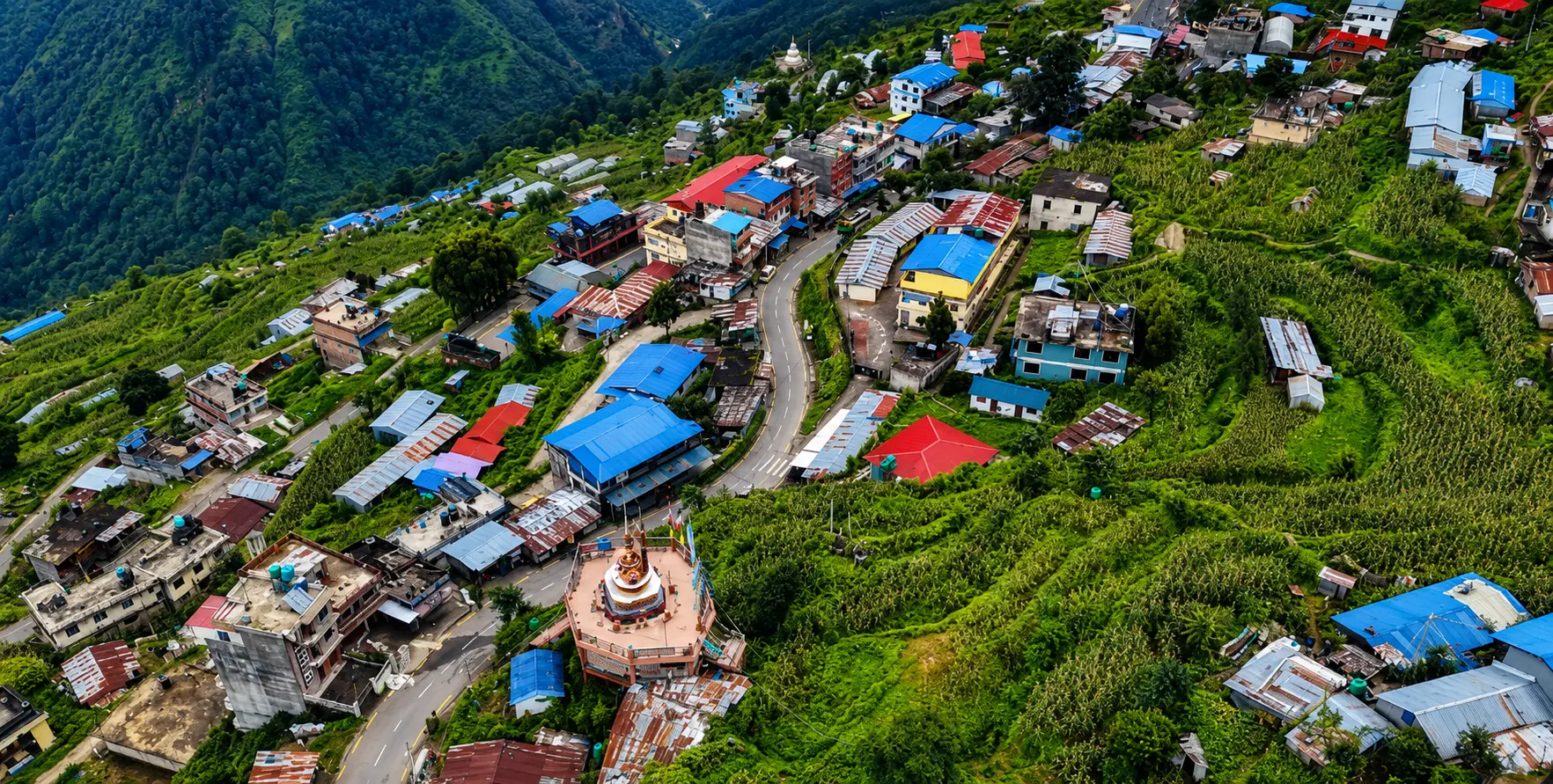
Besisahar (also spelled Besi Sahar or Besishahar) is a lively small city serving as the headquarters of Lamjung District. Situated at 760 meters above sea level on the east bank of the Marsyangdi River, Besisahar is positioned at the southern end of the spectacular Marsyangdi gorge that runs northward all the way to the Manang valley below the Annapurna and Manaslu massifs.

The town serves a vital practical function for Annapurna Circuit trekkers — it has several banks and ATMs (the last reliable banking before Manang), an ACAP and TIMS permit checkpoint, guesthouses, restaurants, a well-stocked market with trekking supplies, a bus station, and a jeep stand. Most trekking groups that hire a jeep from Pokhara or Kathmandu begin their Annapurna Circuit walk in Besisahar or in the first few villages north of the town.

Besisahar Key FactsDetails
Altitude760 metres above sea level
DistrictLamjung District, Gandaki Province
Distance from Pokhara72–87 km by road
Drive Time from Pokhara2 to 3 hours (private jeep)
Main RiverMarsyangdi River
Trek ConnectionAnnapurna Circuit Trek starting point
Key FacilitiesATM, banks, permit checkpoint, guesthouses, restaurants, shops
Nearby PeaksLamjung Himal (6,983 m), Annapurna II (7,937 m), visible to the north
ACAP Permit CheckpointYes – all trekkers checked at Besisahar/Khudi.
Next Trekking Stages BeyondBhulbhule (16 km), Syange (32 km), Jagat (43 km), Chame (90 km)


Why Choose a Private Jeep from Pokhara to Besisahar?

Direct Hotel Pickup – No Morning Bus Station Rush

A private jeep from Nepal Vehicle Hiring picks you up directly from your hotel in Pokhara Lakeside. There is no need to organize transport to a public bus station with heavy trekking bags before dawn. Your driver arrives at the agreed time and takes your group directly to Besisahar — door to door, with all your gear loaded efficiently and no stress.

Most Efficient Start to the Annapurna Circuit

Starting the Annapurna Circuit from Pokhara by private jeep to Besisahar is the most time-efficient option. A 7:00 AM departure from Pokhara delivers you to Besisahar by 9:30 to 10:00 AM, giving you the full rest of the day to begin the first trekking stage to Bhulbhule and beyond.

Flexibility to Continue Beyond Besisahar

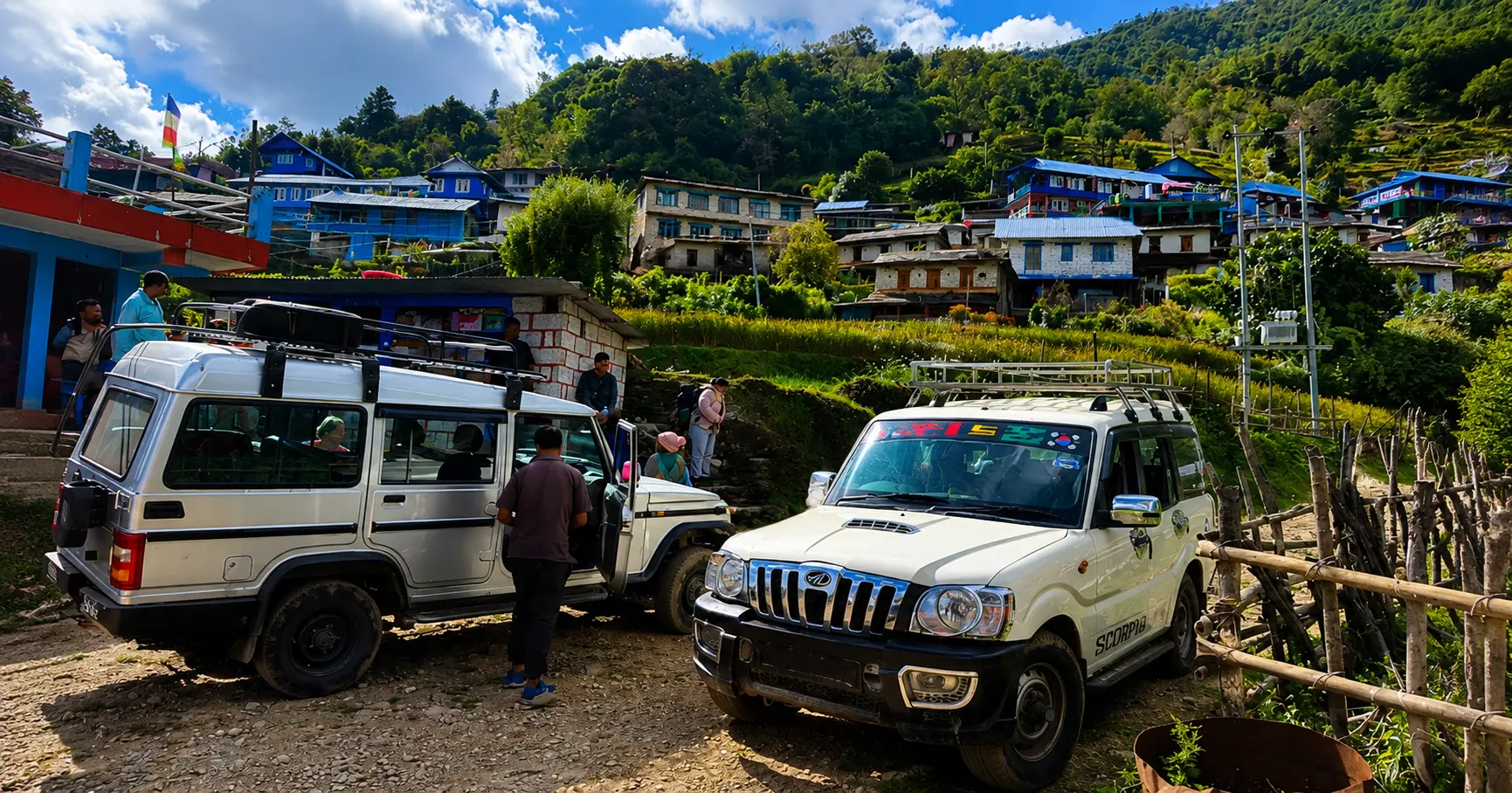
Many trekkers choose to skip the lower Marsyangdi Valley road sections and ride a jeep farther north to Bhulbhule, Syange, Jagat, Dharapani, or even Chame. A private jeep from Nepal Vehicle Hiring can take you as far along the Annapurna Circuit road as you want to go, saving 1 to 3 days of walking the lower trail. This extension is pre-arranged with us before departure.

Best Value for Trekking Groups

For trekking groups of 4 to 6 people, a private jeep to Besisahar typically costs NPR 1,500 to 2,500 per person when shared — comparable to or only slightly more than a sharing jeep, but with hotel pickup, more luggage space, and greater comfort and speed.

Luggage and Porter Equipment Space

Trekking groups often carry substantial luggage — personal bags for each trekker plus porter loads, a guide’s equipment, group supplies, and camera gear. A private jeep from Nepal Vehicle Hiring provides ample boot and roof rack space for all of this, whereas public sharing jeeps offer very limited luggage capacity.

Pokhara to Besisahar Jeep

Pokhara to Besisahar Jeep – Journey Quick Facts


DetailInformation
Road Distance72–87 km (Pokhara to Besisahar)
Drive Time (Private Jeep)2 to 3 hours
Drive Time (Sharing Jeep/Bus)2.5 to 4 hours
RoutePokhara → Prithvi Highway (east) → Damauli → Dumre Junction → Marsyangdi valley road → Besisahar
Road TypePaved Prithvi Highway to Dumre; paved but narrower Dumre to Besisahar
Vehicle RequiredAny vehicle suitable for Besisahar; 4WD essential beyond Besisahar
Sharing Jeep DeparturePrithvi Chowk / Baglung area, Pokhara
Recommended Departure7:00 AM – 8:00 AM for the full first trekking day
ACAP Permit CheckpointAt Besisahar / Khudi (permit purchased in Pokhara recommended)
Beyond Besisahar4WD jeep mandatory from Bhulbhule onward to Chame and Manang

Pokhara to Besisahar Jeep

Vehicle Options: Pokhara to Besisahar Jeep 2026

Vehicle TypeCapacityOne Way Cost (NPR)Round Trip (NPR)Best For
Sharing Jeep (per seat)7–8 totalNPR 500–900/personNPR 900–1,600/personSolo budget travellers
Local Bus (per seat)OpenNPR 250–400/personN/ACheapest – slow, stops
Private Car (to Besisahar)2–4 paxNPR 6,000–9,000NPR 10,000–15,000Small groups, car only to Besisahar
Private Jeep – Standard4–5 paxNPR 7,000–11,000NPR 12,000–18,000Most popular option
Private Jeep – Hilux/Fortuner5–6 paxNPR 9,000–14,000NPR 15,000–24,000Best comfort + onward to Chame
Private Jeep – Land Cruiser5–6 paxNPR 12,000–18,000NPR 20,000–32,000Premium, best for Manang extension
Toyota Hiace Van (to Besisahar only)7–10 paxNPR 14,000–20,000NPR 24,000–34,000Large group to Besisahar

Note: All private vehicle prices include driver and fuel. Prices may vary by season and vehicle availability. Toyota Hiace and standard cars are not suitable beyond Besisahar due to the rough off-road conditions. 4WD jeep mandatory from Bhulbhule onward.


Private Jeep Cost Guide: Pokhara to Besisahar and Beyond 2026

Here is the full cost guide for private jeep hire from Pokhara, including extensions beyond Besisahar along the Annapurna Circuit road:

DestinationDistance from PokharaOne Way (NPR)One Way (USD)Notes
Besisahar72–87 kmNPR 7,000–11,000USD 52–82Road is smooth to Dumre, narrow to Besisahar
Bhulbhule87–102 kmNPR 8,500–13,000USD 63–9715 km beyond Besisahar – new concrete road
Syange105–115 kmNPR 10,000–16,000USD 75–12030 km beyond Besisahar, a rough, narrow road starts
Jagat115–125 kmNPR 12,000–18,000USD 90–13543 km beyond Besisahar – 4WD essential
Dharapani130–140 kmNPR 14,000–22,000USD 105–16560 km beyond – cliff road, very rough
Chame155–165 kmNPR 18,000–28,000USD 135–21088 km beyond – high-clearance 4WD mandatory
Manang175–185 kmNPR 25,000–40,000USD 185–300110 km beyond – extreme 4WD, all day


All prices are one-way private vehicle rates from Pokhara. Destination prices are cumulative — the Manang price covers the full journey from Pokhara to Manang. Contact Nepal Vehicle Hiring for confirmed quotes for your specific departure date and group size.

Pokhara to Besisahar Jeep

Pokhara to Besisahar Route – Stage by Stage

The drive from Pokhara to Besisahar is a scenic journey through the Gandaki Province foothills, transitioning from the Pokhara valley onto the Prithvi Highway and then turning north into the Marsyangdi River valley. Here is the detailed stage-by-stage breakdown:


Stage 1: Pokhara to Damauli – Approx. 40 km (1 hour)

The journey begins in Pokhara and heads east along the Prithvi Highway. The road is smooth and well-maintained. You pass through the outskirts of Pokhara, cross the Seti River, and climb through the midhill agricultural landscape before descending to Damauli — the headquarters of Tanahun District, located at the confluence of the Seti and Madi rivers. Damauli is an excellent first stop for tea or an early breakfast if needed. The first glimpses of the Annapurna and Manaslu ranges become visible on the northern horizon from the higher sections of the road approaching Damauli.

Stage 2: Damauli to Dumre Junction – Approx. 25 km (35 minutes)

From Damauli, the Prithvi Highway continues east. At Dumre, the road forks — the highway continues east toward Mugling and Kathmandu, while a separate road branches north toward Besisahar and the Marsyangdi valley. Dumre is a busy junction town with fuel stations, teahouses, and shops. Your Nepal Vehicle Hiring driver will turn north at Dumre toward Besisahar.

Stage 3: Dumre to Besisahar Along the Marsyangdi Valley – Approx. 40 km (1 to 1.5 hours)

From Dumre, the road heads north following the Marsyangdi River upstream through increasingly beautiful terrain. The road passes through several villages, terraced hillsides, and forested stretches. The Marsyangdi River is visible on the left as the road climbs gradually toward Besisahar. The road is paved throughout, but becomes narrower and has occasional rough patches in the final approach to Besisahar. The distant snow peaks of Lamjung Himal and the Annapurna range come progressively into view as you approach the town.


Route Overview Table: Pokhara to Besisahar


StageSectionDistanceRoad ConditionTimeHighlights
1Pokhara to Damauli40 kmPrithvi Hwy – smooth1 hourSeti River, Tanahun hills, first Himalayan views
2Damauli to Dumre25 kmPrithvi Hwy – smooth35 minJunction town, fuel stop, last major highway
3Dumre to Besisahar40 kmPaved, narrower Marsyangdi valley road1–1.5 hrsMarsyangdi River, terraced hills, Lamjung views
TotalPokhara to Besisahar72–87 kmMostly paved2–3 hoursScenic midhill journey to the Annapurna Circuit gateway

Pokhara to Besisahar Jeep

Beyond Besisahar: The Annapurna Circuit Road to Chame and Manang

One of the most significant advantages of hiring a private jeep from Nepal Vehicle Hiring is the ability to continue beyond Besisahar as far north along the Annapurna Circuit road as you wish. Here is a detailed guide to the road conditions and options beyond Besisahar:


Besisahar to Bhulbhule – 15 km (45 minutes)

Bhulbhule (840 m) is the first significant village north of Besisahar and the most common point for trekkers who want to save 1 day on the lower-valley walk. The road from Besisahar to Bhulbhule is a new concrete pavement ais nd in good condition. This is an excellent option for trekkers wanting to start the proper trek from Bhulbhule while skipping the walk from Besisahar.

Bhulbhule to Jagat – Approx. 27 km (1.5 to 2 hours)

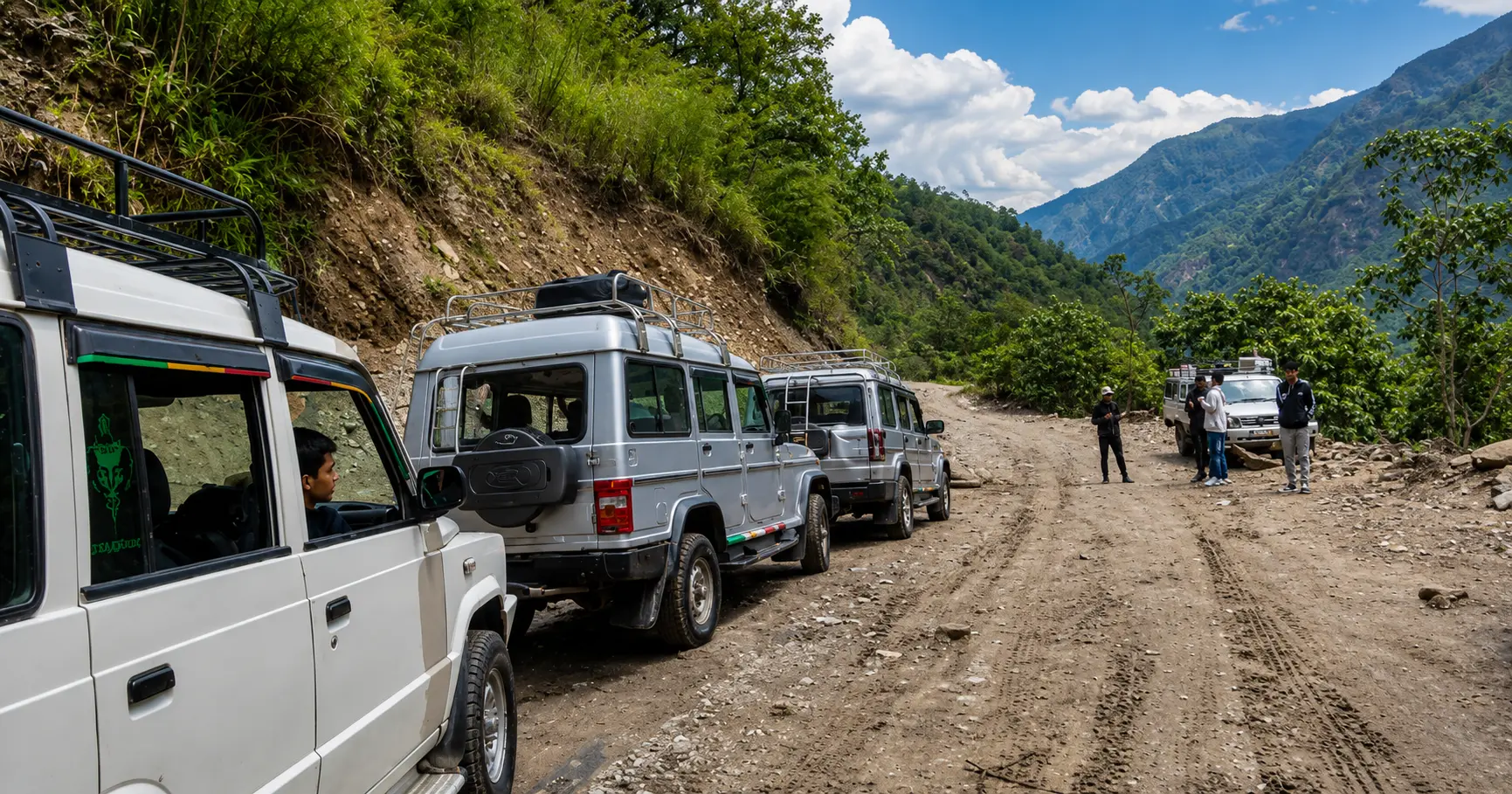
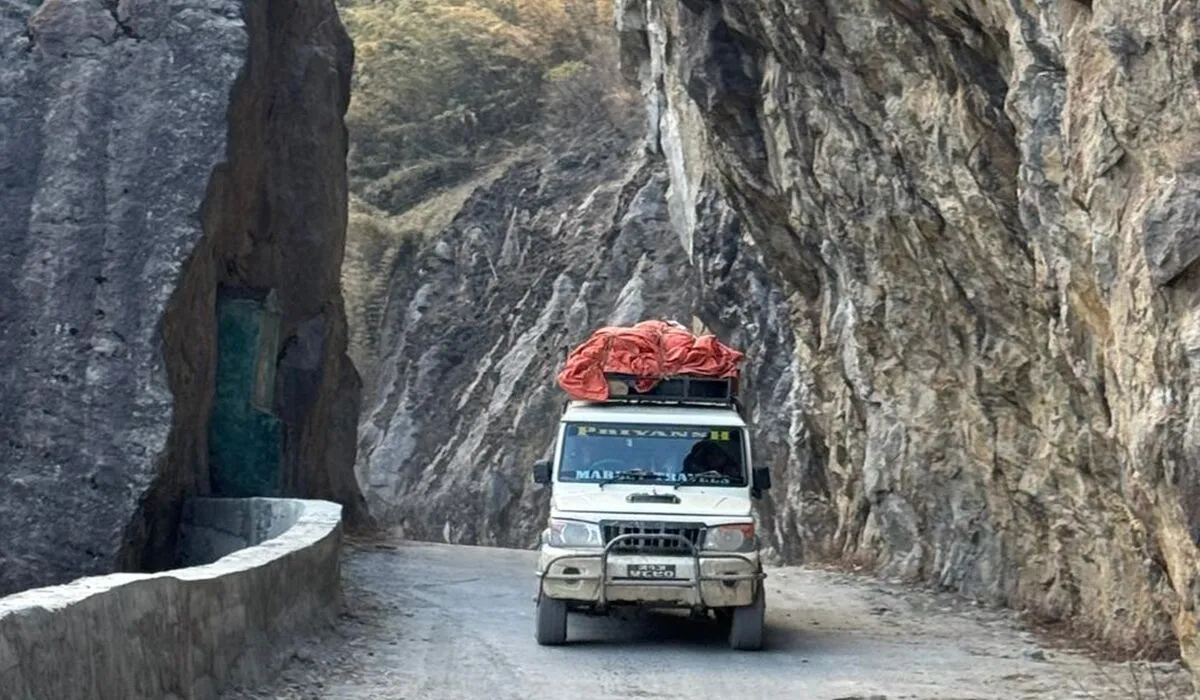
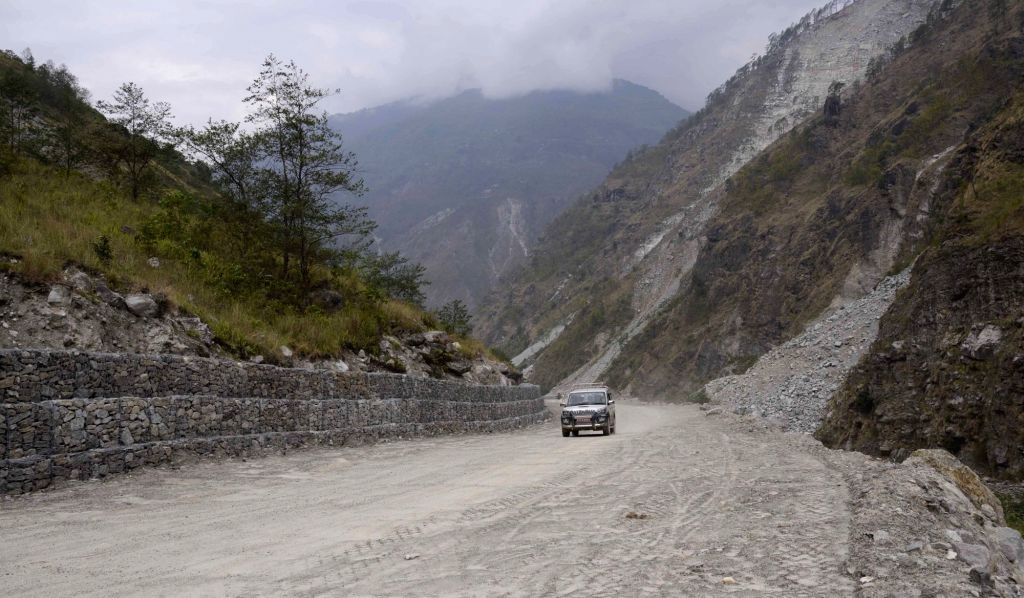
Beyond Bhulbhule, the road follows the Marsyangdi gorge through Ngadi, Syange, and Tal to Jagat (1,300 m). The road surface becomes progressively rougher — a mix of rocky gravel, steep climbs, and narrow cliff-edge sections. 4WD is essential from this point. The scenery is spectacular — the gorge narrows dramatically, and the Marsyangdi rushes far below. Jagat marks the Manaslu Conservation Area boundary checkpoint.

Jagat to Chame – Approx. 47 km (2.5 to 3 hours)

From Jagat, the road continues through Chamche, Tal, Dharapani, Bagarchhap, Danaque, and Timang to reach Chame (2,670 m) — the district headquarters of Manang District and the most commonly used ‘skip point’ for Annapurna Circuit trekkers who drive this section. The road is very rough from Jagat onward — deep ruts, river crossings, and steep gravel climbs that require a fully capable 4WD jeep and experienced driver.

Chame to Manang – Approx. 25 km (2 to 3 hours)

The road continues from Chame through Pisang to Manang (3,519 m) — the highest point reachable by vehicle on the Annapurna Circuit. The road from Chame to Manang is extremely rough and demanding, passing through the spectacular Paungda Danda cliff and the high-altitude Humde plateau. Reaching Manang directly by jeep from Pokhara saves 4 to 5 days of the lower circuit trekking.


Stage-by-Stage Guide: Beyond Besisahar to Manang


StageFrom BesisaharDistanceRoadDrive TimeAltitude
Besisahar to Bhulbhule0 km start15 kmNew concrete – good45 min840 m
Bhulbhule to Syange15 km17 kmRough narrow – 4WD recommended1 hr1,100 m
Syange to Jagat32 km11 kmRough, cliff road – 4WD essential45 min1,300 m
Jagat to Dharapani43 km17 kmVery rough, cliff sections1.5 hrs1,860 m
Dharapani to Chame60 km28 kmRough gravel, steep ascent2.5 hrs2,670 m
Chame to Manang88 km25 kmRough high-altitude road2–3 hrs3,519 m

Note: All distances in the ‘From Besisahar’ column are approximate road distances from Besisahar. Distances from Pokhara add approximately 72–87 km to each figure.

Pokhara to Besisahar Jeep

Sharing a jeep from Pokhara to Besisahar

For solo travelers and budget-conscious trekkers, shared jeeps run daily from Pokhara to Besisahar during trekking season. Here are the key details:

DetailInformation
Departure PointPrithvi Chowk or local jeep stand near Baglung Bus Park, Pokhara
Departure Time7:00 AM – 10:00 AM (departs when full – 7 to 8 passengers)
Journey Time2.5 to 3.5 hours
Cost Per PersonNPR 500–900 per person
LuggageRoof rack available – limited space for large trekking bags
FrequencyDaily during spring and autumn trekking seasons; less frequent in off-season
Drop-offBesisahar town center or bus park
Sharing jeeps beyond BesisaharAvailable at Besisahar jeep stand – NPR 800–2,500 per person to Chame/Manang


Pros of Sharing a Jeep

  • Very affordable – NPR 500 to 900 per person
  • Daily departures during trekking season
  • Good opportunity to meet other Annapurna Circuit trekkers
  • No booking required in off-peak season


Cons of Sharing a Jeep

  • Crowded – 7 to 8 passengers in one vehicle
  • No hotel pickup – must travel independently to the departure point
  • Departs only when full – uncertain waiting time
  • Very limited luggage space – large trekking bags are difficult to manage
  • No freedom to stop along the route for sightseeing or photos


Private Jeep vs Sharing Jeep vs Bus – Full Comparison

CategoryPrivate JeepSharing JeepLocal Bus
Cost (per person, 5 pax)NPR 1,400–2,800NPR 500–900NPR 250–400
Travel Time2–3 hours2.5–3.5 hours3.5–5 hours
Hotel PickupYesNoNo
Departure TimeFlexibleFixed (when full)Fixed schedule
Luggage SpaceExcellentVery limitedVery limited
ComfortHighMediumLow
Extension Beyond BesisaharYes – same jeepChange jeep at BesisaharNot available
Stop FreedomFull – on demandNoneNone
Best ForGroups, trekkers, familiesSolo budget travellersVery budget only

Pokhara to Besisahar Jeep

Annapurna Circuit Trek – Jeep Transport Strategy from Pokhara

The Annapurna Circuit is one of the world’s great trekking routes — a 160 to 230 km circuit through the Annapurna Conservation Area crossing the Thorong La Pass (5,416 m). The jeep transport strategy you choose from Pokhara significantly affects your total circuit duration and cost. Here are the main options:

Transport StrategyPokhara Jeep DestinationTrek Start PointTotal Circuit DaysBest For
Classic full circuitBesisaharBesisahar18–21 daysExperienced trekkers with maximum time
Save 1 dayBhulbhuleBhulbhule17–20 daysGood balance of road and trail
Save 2–3 daysJagat or SyangeSyange/Jagat15–18 daysTime-limited trekkers, Manang focus
Save 4–5 daysChameChame12–15 daysCompact circuit, popular choice
Maximum time savingManangManang (acclimatize here)8–10 daysVery time-limited, Thorong La focus


Note: Driving to Chame or Manang and starting the trek there saves significant walking days but reduces the cultural and scenic experience of the lower Marsyangdi valley circuit. Nepal Vehicle Hiring recommends the Bhulbhule or Jagat starting point for the best balance of time efficiency and trekking experience.


Permits Required for the Annapurna Circuit from Besisahar


PermitCostRequired ForWhere to Obtain
ACAP – Annapurna Conservation Area PermitNPR 3,000 (foreigners)All visitors to the ACAP area – Besisahar and beyondNepal Tourism Board, Pokhara Lakeside (recommended) or Besisahar/Khudi checkpoint
TIMS CardNPR 2,000 (foreigners)All trekkers on multi-day routesNepal Tourism Board, Pokhara Lakeside, or Kathmandu
Manaslu Conservation Area PermitNPR 3,000 (foreigners)Trekkers entering the Manaslu area at Jagat checkpointNepal Tourism Board, Pokhara or Kathmandu

IMPORTANT: Nepal Tourism Board recommends obtaining ACAP and TIMS permits in Pokhara before departure, rather than at the Besisahar/Khudi checkpoint. The Pokhara NTB office in Lakeside processes permits efficiently and avoids potential queues at the trail checkpoint. The office is open daily from 9:00 AM to 5:00 PM.


Attractions Along the Pokhara to Besisahar Route

Damauli and the Seti–Madi River Confluence

Damauli, the headquarters of Tanahun District, sits at the confluence of the Seti and Madi rivers — a scenic riverside setting with a pleasant local market and excellent views of the surrounding hills. As the natural midpoint of the Pokhara-to-Besisahar drive, Damauli is the ideal refreshment stop. The riverside teahouses serve excellent fresh Nepali tea, and the first mountain views of the journey appear on the northern horizon from Damauli’s elevated road sections.

Marsyangdi River Valley

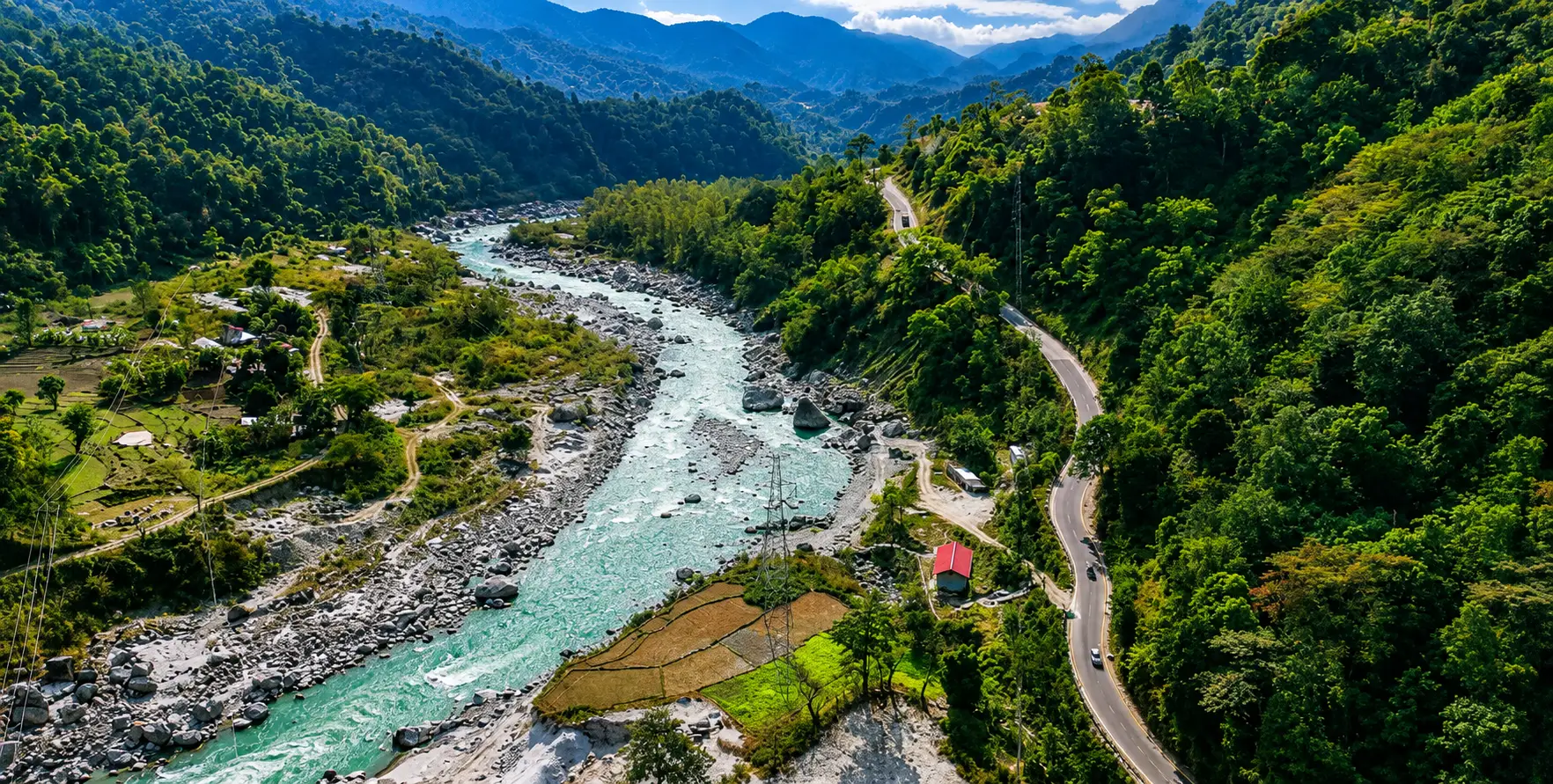
The 40 km drive from Dumre to Besisahar along the Marsyangdi River valley is one of the finest river valley drives in Nepal. The Marsyangdi — one of Nepal’s most powerful rivers, originating in the high glaciers of Manang and draining the entire Annapurna region — rushes southward through a progressively deeper and more dramatic gorge as the road climbs toward Besisahar. The river’s turquoise-green color, the terraced hillsides above, and the first snow-capped peaks appearing on the northern horizon create a journey of ever-improving scenery.

Lamjung Himal Views

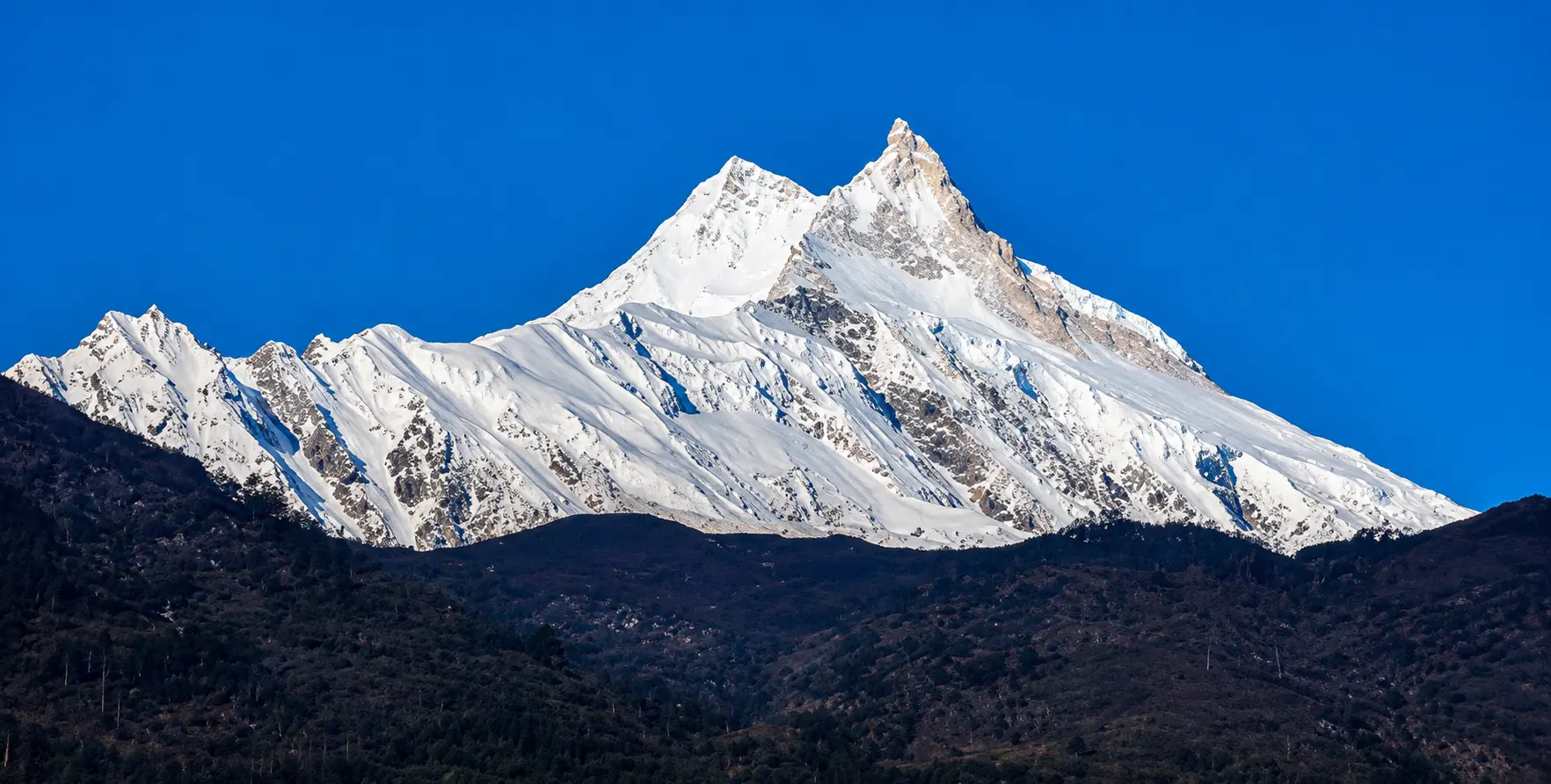
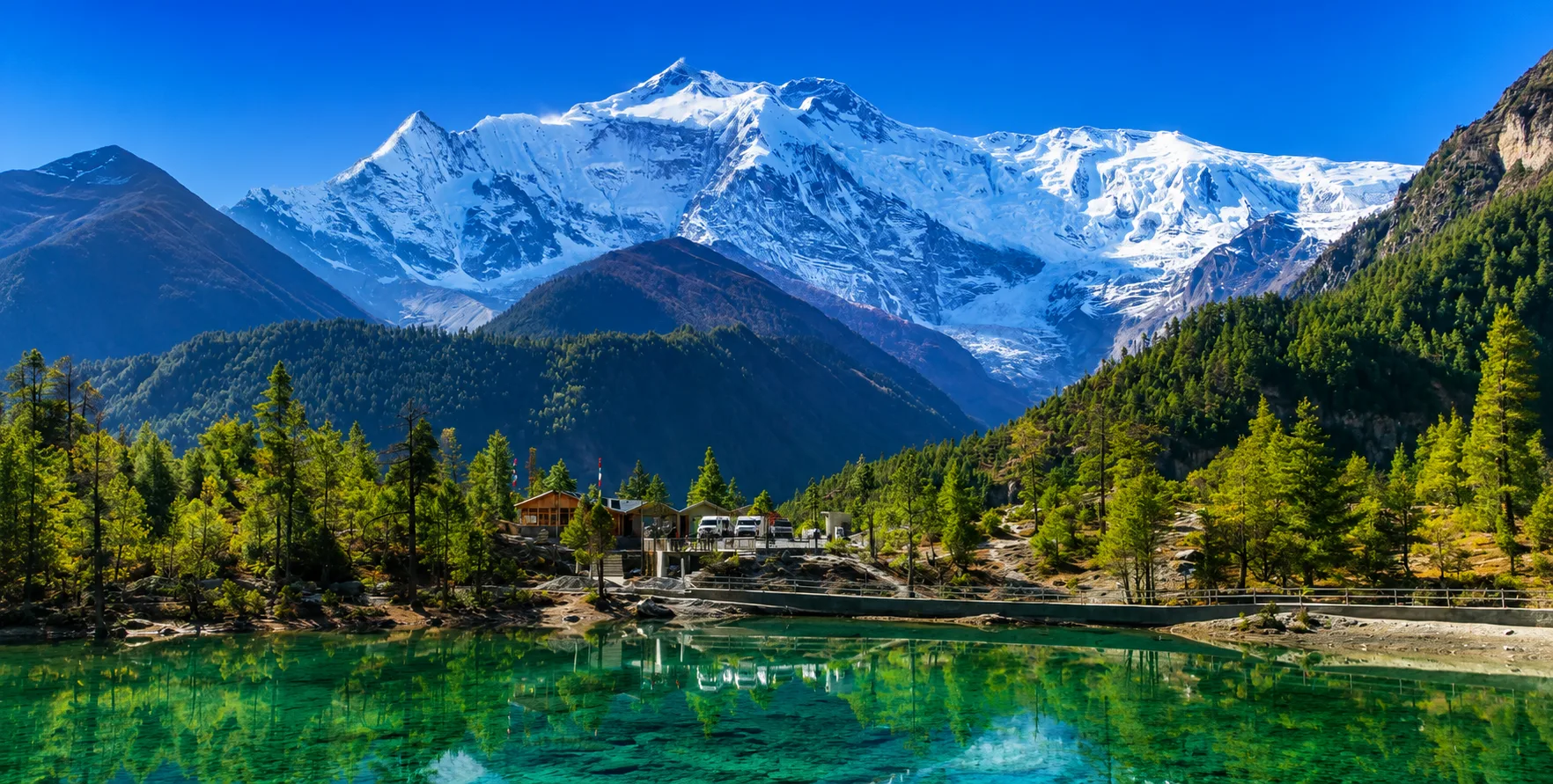
As you approach Besisahar from the south, the distinctive snow pyramid of Lamjung Himal (6,983 m) rises directly ahead. This peak, which gives Lamjung District its name, is one of the most elegant mountains in the Annapurna region and a dramatic visual focal point for the final approach to Besisahar. Annapurna II (7,937 m) and Annapurna IV (7,525 m) are also visible from the upper sections of the Marsyangdi valley road.

Besisahar Bazaar

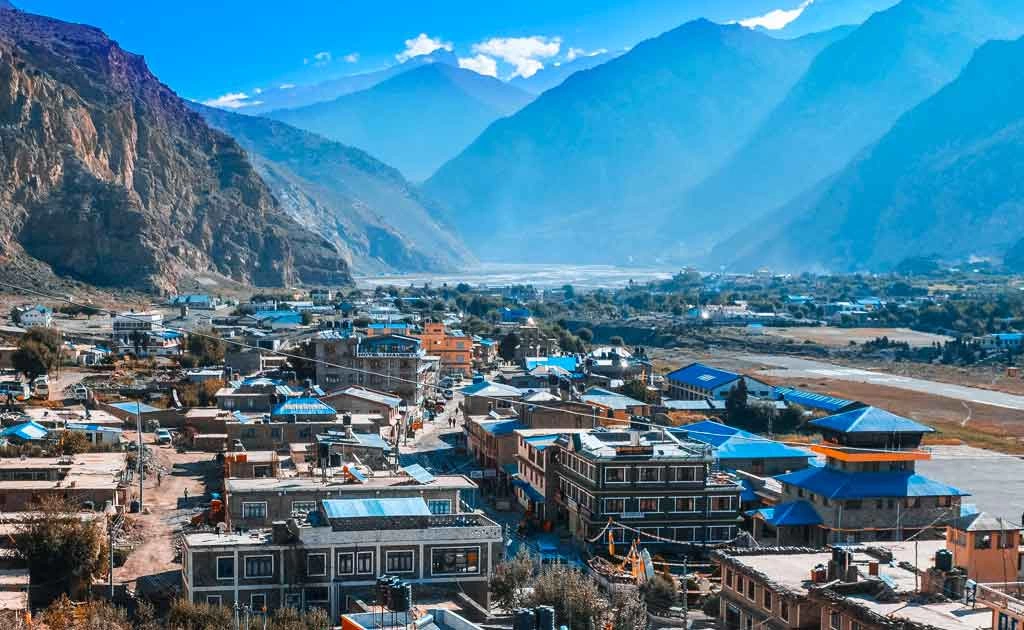
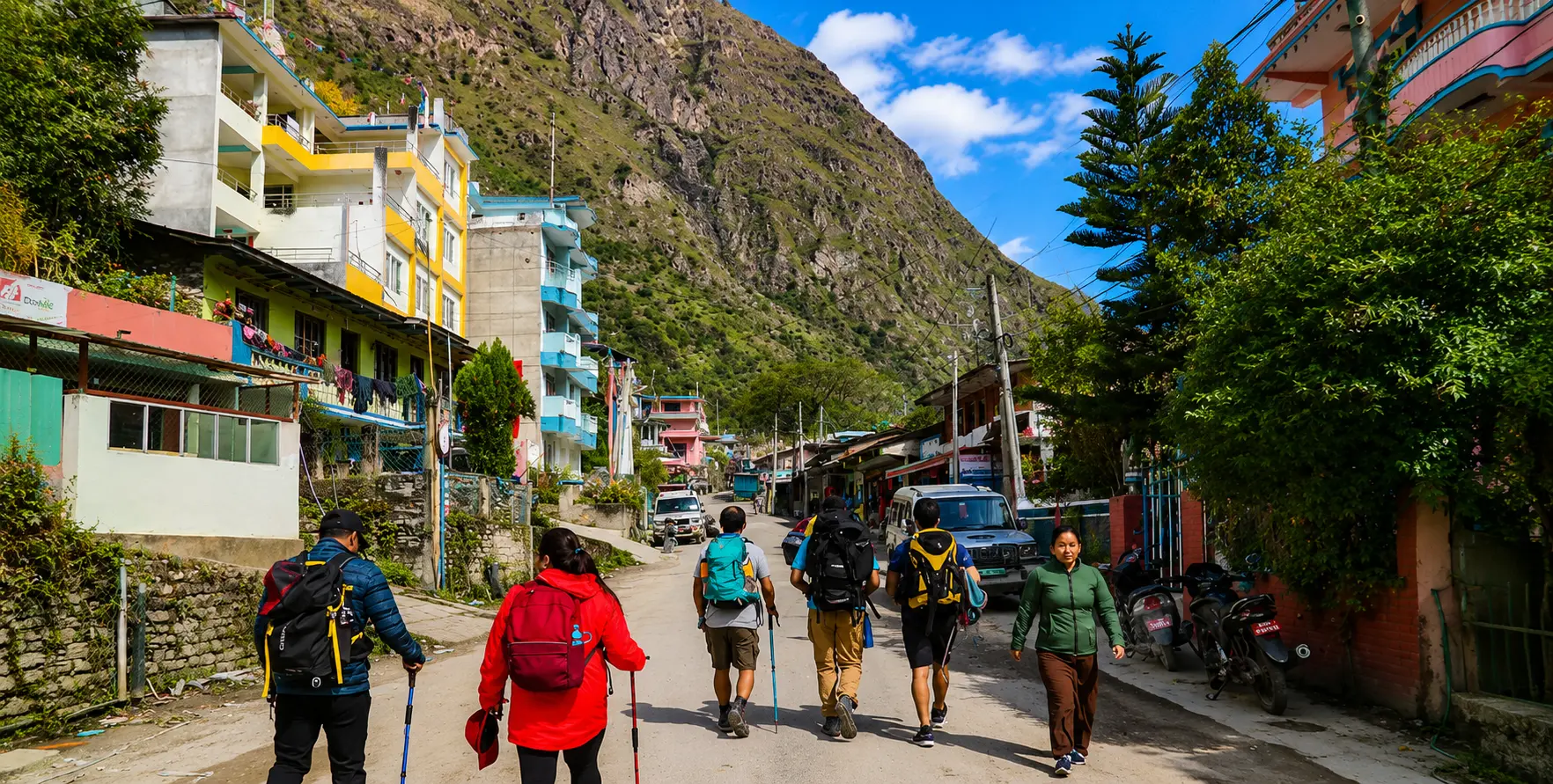
Besisahar’s main bazaar is a lively mix of trekking supply shops, local restaurants, teahouses, and community market stalls. The town has an authentic midhill Nepali market character with a clear adventurous energy — the presence of trekking groups, local guides, and porters preparing for the Annapurna Circuit gives it an exciting departure-point atmosphere. Most trekking groups stop in Besisahar for permit confirmation, an ATM withdrawal (last reliable ATM before Manang), and a final meal before beginning the trek.

Pokhara to Besisahar Jeep

Best Time for Pokhara to Besisahar Jeep

Autumn (September to November) – Best Season

Autumn is the finest season for the drive from Pokhara to Besisahar and for the Annapurna Circuit. Post-monsoon skies are crystal clear, the Marsyangdi valley is at its most verdant and vivid, and the mountain views of Lamjung Himal and the Annapurna range, both from the road and from Besisahar, are outstanding. October and November are peak season — book your private jeep at least 5 to 7 days in advance.

Spring (March to May) – Excellent

Spring is the second peak season for the Annapurna Circuit. The road is dry and in good condition. Rhododendron forests bloom magnificently on the Marsyangdi valley hillsides in March and April. Mountain views are excellent—a superb time for the Pokhara-to-Besisahar jeep journey.

Winter (December to February) – Good

Winter travel to Besisahar is perfectly comfortable — the Pokhara-Besisahar road is open year-round. The road beyond Besisahar to Chame and Manang may be covered in frost and snow above 3,000 m in winter. For trekkers going to the Thorong La or Manang, winter conditions require extra preparation. The lower sections of the circuit from Besisahar to Chame are generally fine in winter.

Monsoon (June to August) – Possible with Caution

The Pokhara-Besisahar road is generally passable during the monsoon. However, the Marsyangdi valley road beyond Besisahar is significantly more hazardous in the monsoon due to landslides and flooding. Nepal Vehicle Hiring monitors road conditions and advises trekkers on the current state of the road beyond Besisahar before departure.


What to Pack for the Pokhara to Besisahar Jeep Journey

  • ACAP permit and TIMS card – obtain from Nepal Tourism Board in Pokhara before departure
  • Full trekking backpack packed and ready – boot or roof rack space in the jeep
  • Small day bag accessible in the vehicle – water, snacks, documents, camera
  • Warm layers for the morning departure – Besisahar mornings are cool
  • Water bottles – refill at teahouses in Damauli or Besisahar
  • Camera – the Marsyangdi valley and Lamjung Himal views are excellent photography subjects
  • Nepali cash – for ATM withdrawal in Besisahar (last reliable ATM before Manang) and first-day trekking expenses
  • Motion sickness tablets, if needed – the road from Dumre to Besisahar has occasional curves
  • Light snack – for the 2 to 3 hour drive


Expert Tips for the Pokhara to Besisahar Jeep

  • Book your private jeep at least 3 to 5 days in advance during October, November, March, and April peak seasons – Besisahar-bound vehicles are in high demand when the Annapurna Circuit is busy.
  • Collect your ACAP and TIMS permits from the Nepal Tourism Board office in Pokhara Lakeside before departure – processing at the Besisahar/Khudi checkpoint can create queues during peak season.
  • Withdraw sufficient NPR cash from Pokhara before departure – the ATMs in Besisahar are the last reliable option before Manang and should not be relied upon as your sole cash source.
  • Depart from Pokhara by 7:00 AM or 7:30 AM to arrive in Besisahar by 10:00 AM, leaving a full day for the first stage of the trek.
  • If extending beyond Besisahar to Chame or Manang, confirm this with Nepal Vehicle Hiring before departure, so the correct vehicle is arranged – a Hilux or Land Cruiser is required for the rough road beyond Bhulbhule.
  • For trekking groups with porters, a private jeep arranged to carry the porters with the main group from Pokhara saves time compared to meeting them at Besisahar.
  • Tell your driver if you want to stop at Damauli for breakfast or a tea break – it is a pleasant midway stop.
  • Nepal Vehicle Hiring can also arrange the return transfer from Jomsom, Nayapul, Besisahar, or any Annapurna Circuit endpoint at the end of your trek – book this before you start.


How to Book Your Pokhara to Besisahar Jeep with Nepal Vehicle Hiring

Booking your Pokhara to Besisahar jeep with Nepal Vehicle Hiring Pvt Ltd is simple:

  • Step 1: Contact us via phone, WhatsApp, or at vehiclehiringnepal.com
  • Step 2: Share your travel date, group size (trekkers + guide + porters), hotel name in Pokhara, and desired final destination (Besisahar, Bhulbhule, Syange, Jagat, Chame, or Manang)
  • Step 3: Choose your vehicle – standard jeep, Hilux/Fortuner (recommended for Chame+), or Land Cruiser
  • Step 4: Confirm return transfer requirement at trek end – we arrange return from Jomsom, Nayapul, Besisahar, or other endpoint
  • Step 5: Receive booking confirmation with driver details, vehicle information, and pickup time
  • Step 6: Your driver arrives at your Pokhara hotel at the agreed time – your Annapurna adventure begins

We recommend booking at least 3 days in advance for off-peak trips and 5-7 days in advance during the October–November and March–April peak seasons.


Frequently Asked Questions (FAQ)

How far is Pokhara from Besisahar?

The road distance from Pokhara to Besisahar is approximately 72-87 kilometers via the Prithvi Highway and the Marsyangdi Valley Road from Dumre.

How long does the drive from Pokhara to Besisahar take?

By private jeep, the journey takes 2 to 3 hours. A shared jeep or local bus takes 2.5 to 4 hours, depending on stops and waiting time.

How much does a private jeep from Pokhara to Besisahar cost in 2026?

A private standard jeep costs NPR 7,000-11,000 (USD 52–82) one way. A private Hilux/Fortuner costs NPR 9,000-14,000 (USD 67–105). All prices include driver and fuel.

Can the private jeep continue beyond Besisahar to Chame or Manang?

Yes. Nepal Vehicle Hiring private jeeps can continue beyond Besisahar to Bhulbhule, Syange, Jagat, Dharapani, Chame, or Manang. A Toyota Hilux or Land Cruiser is mandatory for the rough road beyond Bhulbhule. The additional cost from Besisahar to Chame is approximately NPR 10,000 to 18,000, and to Manang, approximately NPR 18,000 to 30,000 additional.

Is a 4WD jeep necessary for the Pokhara-Besisahar route?

The road from Pokhara to Besisahar is paved throughout, and a standard car or jeep is adequate. However, to continue beyond Bhulbhule toward Syange, Jagat, Chame, and Manang, a 4WD vehicle with high ground clearance is required. Nepal Vehicle Hiring recommends booking a Hilux or Fortuner if any extension beyond Besisahar is planned.

Where do I get ACAP and TIMS permits for the Annapurna Circuit?

Permits can be obtained at the Nepal Tourism Board office in Pokhara Lakeside (recommended – efficient and quick) or at the checkpoint in Besisahar/Khudi at the start of the trek. ACAP costs NPR 3,000 for foreign trekkers, and TIMS costs NPR 2,000. Both are required for the Annapurna Circuit.

Can I hire a sharing jeep from Besisahar to Chame or Manang?

Yes. Sharing jeeps operating from the Besisahar jeep stand run daily to Chame and Manang during the trekking season. The cost is approximately NPR 800-2,500 per person, depending on the destination. Sharing jeep availability from Besisahar is generally good during peak trekking season, but can be unreliable in the off-season.

What is the last ATM before Manang on the Annapurna Circuit?

Besisahar has the last reliably functioning ATM before Manang. There are ATMs in Chame (occasionally working), but they cannot be relied upon. Nepal Vehicle Hiring strongly advises withdrawing sufficient NPR cash from Pokhara or Besisahar before beginning the circuit.


Book Your Pokhara to Besisahar Jeep with Nepal Vehicle Hiring

The drive from Pokhara to Besisahar along the Marsyangdi River valley is the perfect beginning to one of the world’s great trekking adventures. As the Lamjung Himal rises ahead and the Marsyangdi rushes southward beside the road, you feel the Annapurna Circuit already beginning to unfold — the landscapes, the scale, and the anticipation building with every kilometer north.

Nepal Vehicle Hiring Pvt Ltd provides Pokhara’s most reliable, best-maintained, and most professionally driven jeep service for the Annapurna Circuit approach. Whether you are going only as far as Besisahar for the traditional start, or extending all the way to Chame or Manang to maximize your trekking efficiency, we have the right vehicle, the right driver, and the right price for your group.

Contact Nepal Vehicle Hiring Pvt Ltd today at vehiclehiringnepal.com to book your Pokhara-to-Besisahar jeep and start your Annapurna Circuit adventure the right way.

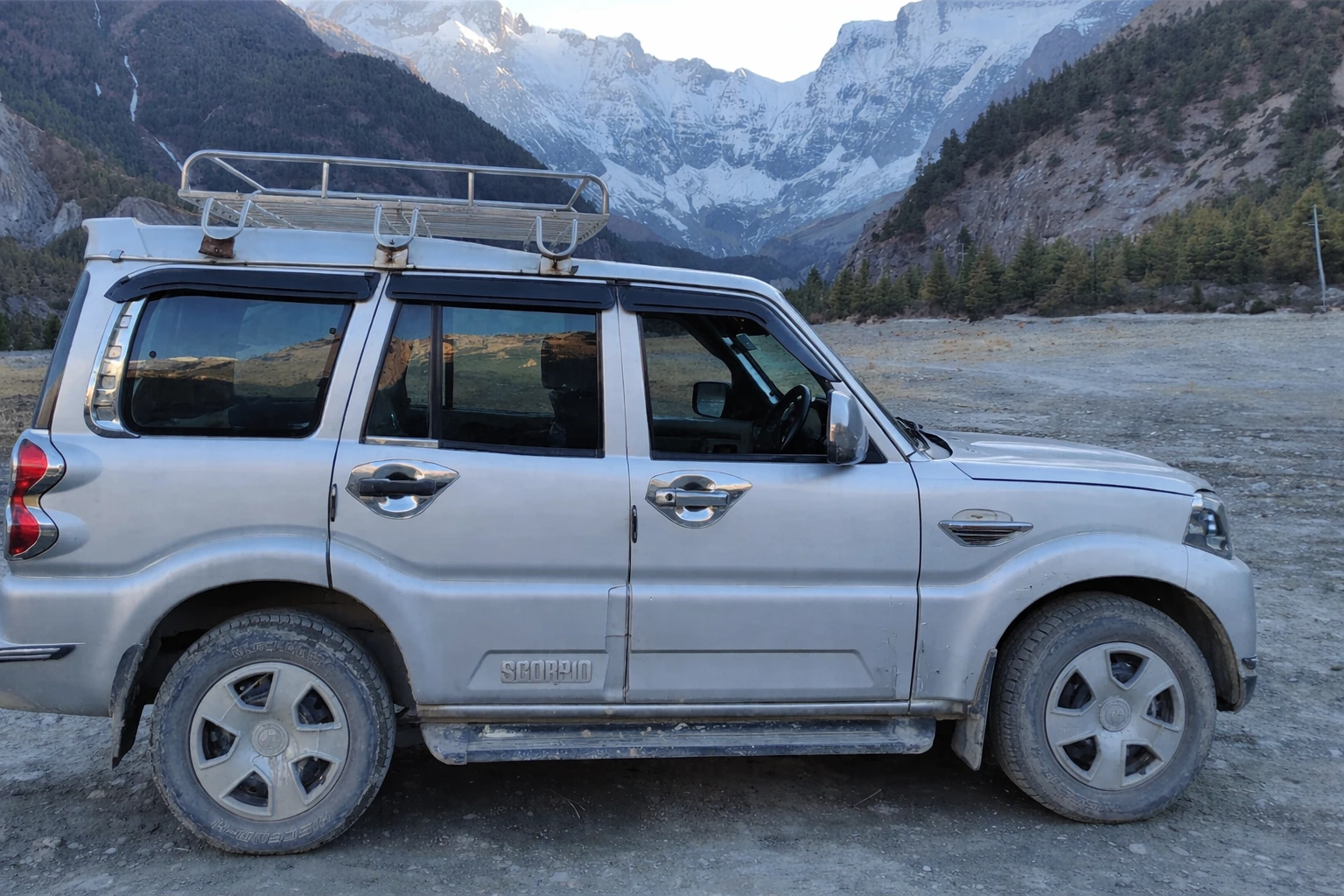
Call / WhatsApp: +977 9851013196  | E-mail: [email protected]    | Website: vehiclehiringnepal.com  |  Book Scorpio or Land Cruiser  |  Nepal Trekking Packages

Pokhara | Kathmandu | Chitwan | All Annapurna Region Destinations

Pokhara to Kathmandu Transport

Pokhara to Kathmandu Transport

Pokhara to Kathmandu Transport 2026: Complete Guide to All Options, Costs & Tips

Pokhara and Kathmandu are Nepal’s two most important cities — one the adventure and trekking capital beside the Annapurna Himalaya, the other the historical, cultural, and political heart of the country. The 200-kilometer road between them is one of the most traveled routes in Nepal, following the scenic Prithvi Highway through the Trishuli and Marsyangdi river valleys, and the journey is taken by hundreds of thousands of travelers every year.

In 2026, the Pokhara to Kathmandu transport options range from budget-friendly shared tourist buses to premium VIP sofa coaches, from private cars for small groups to large Hiace vans for families, from night buses that let you sleep through the journey to 25-minute domestic flights for those who prioritize speed over scenery. Each option has a distinct price point, comfort level, departure schedule, and travel experience.

At Nepal Vehicle Hiring Pvt Ltd, we provide private vehicle services (cars, jeeps, Hiace vans, and buses) for the Pokhara-to-Kathmandu route, as well as bus ticket booking assistance for all tourist bus categories. This comprehensive 2026 guide covers every transport option available — with full cost comparisons, departure details, route highlights, pros and cons, and the expert tips that make the Pokhara to Kathmandu journey as comfortable and smooth as possible.


All Pokhara to Kathmandu Transport Options – Quick Comparison 2026


TransportTimeCost Per PersonDepartureComfortBest For
Local/Deluxe Bus7–9 hrsNPR 700–1,200Pokhara Bus Park (6 AM)Low–MediumCheapest option
Tourist Bus (Standard)6–8 hrsNPR 1,000–1,500Lakeside Bus Park (7 AM)MediumBudget independent travellers
VIP Sofa Bus (2+1)6–7 hrsNPR 1,400–2,000Lakeside Bus Park (7–8 AM)HighComfort-conscious solo/couple
Night Sofa BusOvernightNPR 1,500–2,500Lakeside (7–10 PM)Medium-HighSave a night’s hotel
Private Car5–6 hrsNPR 14,000–20,000 (vehicle)Hotel pickupVery HighCouples, small families
Private Jeep5–6 hrsNPR 18,000–28,000 (vehicle)Hotel pickupVery HighGroups of 4–6
Toyota Hiace Van6–7 hrsNPR 25,000–38,000 (vehicle)Hotel pickupVery HighGroups of 7–10
Coaster Bus6–7 hrsNPR 28,000–42,000 (vehicle)Hotel pickupHighGroups of 12–18
Domestic Flight25–30 minUSD 109–150/personPokhara International AirportPremiumMaximum speed


Pokhara to Kathmandu – Journey Quick Facts


DetailInformation
Road DistanceApproximately 200 km
Drive Time (Private Vehicle)5 to 6 hours
Drive Time (Tourist Bus)6 to 8 hours
Main RoutePrithvi Highway – Pokhara → Damauli → Mugling → Kathmandu
Road ConditionMostly paved; ongoing construction near Mugling
Tourist Bus Departure (Lakeside)Pokhara Tourist Bus Park, Lakeside – daily 7:00 AM
Tourist Bus Departure (Baglung)Pokhara Baglung Bus Park – multiple times
Key Rest StopMugling (~midpoint, Trishuli/Marsyangdi confluence)
Flight Time25 to 30 minutes
Flight PriceUSD 109–150 one way (subject to change)
Best Departure Time7:00 AM – 8:00 AM for scenic daytime journey

Pokhara to Kathmandu Transport

Tourist Bus Options: Pokhara to Kathmandu 2026

Tourist buses are the most popular choice for independent travelers making the Pokhara-to-Kathmandu journey. Several categories are available at the Pokhara Lakeside Tourist Bus Park:


Standard Tourist Bus (2+2 Seats)

The standard tourist bus operates a fixed daily morning departure from Pokhara Lakeside Bus Park at approximately 7:00 AM. Standard 2+2 seating with air conditioning (in most models), push-back reclining seats, and a window curtain. The most common choice for budget travelers.

Standard Bus DetailsInformation
Departure PointPokhara Lakeside Tourist Bus Park
Departure Time7:00 AM daily
Arrival (Kathmandu)Thamel area or Kantipath – approximately 1:30 PM to 3:00 PM
Ticket PriceNPR 1,000–1,300 per person
Seating2+2 push-back reclining
ACYes
Capacity35–40 passengers
Best ForBudget travelers, backpackers

The VIP Sofa Bus has become the most popular choice for travelers seeking genuine comfort on the Pokhara-to-Kathmandu route. The 2+1 seating layout means every passenger has either a window or aisle seat with no middle seat, and the sofa-style reclining seats are significantly wider and more cushioned than standard bus seats.

VIP Sofa Bus DetailsInformation
Departure PointPokhara Lakeside Tourist Bus Park
Departure Time7:00 AM – 8:30 AM (varies by operator)
Arrival (Kathmandu)Approximately 1:00 PM – 2:30 PM
Ticket PriceNPR 1,400–2,000 per person
Seating2+1 wide sofa-style recliners
ACPremium full AC
Total Seats25–30 passengers
Reading LightYes – individual
USB ChargingSome models
Best ForSolo travelers, couples, comfort seekers


Night Bus / Night Sofa Bus

For travelers who want to maximize their time in Pokhara and arrive in Kathmandu ready to start the day, the night bus is an efficient option. Night sofa buses depart Pokhara Lakeside between 7:00 PM and 10:00 PM and arrive in Kathmandu’s Thamel area in the early morning (3:00 AM to 5:00 AM). Blankets are provided on premium night sofa buses.

Night Bus DetailsInformation
Departure PointPokhara Lakeside Tourist Bus Park
Departure Time7:00 PM – 10:00 PM
Arrival (Kathmandu)3:00 AM – 5:00 AM
Ticket PriceNPR 1,500–2,500 per person
BlanketProvided on premium night sofa buses
Seating2+1 sofa (premium) or 2+2 (standard)
Best ForTravelers wanting to save on hotel accommodation costs
NoteConfirm hotel check-in time on early arrival in Kathmandu

Pokhara to Kathmandu Transport

Tourist Bus Type Comparison: Pokhara to Kathmandu 2026


FeatureDeluxe BusTourist BusVIP Sofa BusNight Sofa Bus
Seat Layout2+22+22+12+1 or 2+2
Ticket PriceNPR 700–1,200NPR 1,000–1,500NPR 1,400–2,000NPR 1,500–2,500
LegroomStandardStandard–GoodExcellentGood–Excellent
ACYesYesPremiumPremium
ReclineBasicPush-backFull sofaFull sofa
Reading LightNoSometimesYesYes
BlanketNoNoNoYes
Arrival TimePMPMPMEarly AM
Hotel SavingsNoNoNoYes (saves 1 night)
Best Comfort Rank4th3rd1st2nd

Pokhara to Kathmandu Transport


Private Vehicle Options: Pokhara to Kathmandu 2026

Nepal Vehicle Hiring Pvt Ltd provides professional private vehicle services on the Pokhara-Kathmandu route. All private vehicles include hotel-to-hotel service, flexible departure time, and freedom to stop anywhere along the route.

VehicleCapacityOne Way (NPR)One Way (USD)Round Trip (NPR)Best For
Private Car (Sedan)2–3 paxNPR 14,000–18,000USD 105–135NPR 24,000–30,000Couples, solo with bags
Private SUV/Crossover3–4 paxNPR 16,000–22,000USD 120–165NPR 28,000–38,000Small family
Private Jeep (Scorpio)4–5 paxNPR 18,000–24,000USD 135–180NPR 30,000–42,000Groups, trekkers
Private Jeep (Hilux/Fortuner)5–6 paxNPR 22,000–30,000USD 165–225NPR 38,000–52,000Premium groups
Private Land Cruiser5–6 paxNPR 28,000–38,000USD 210–285NPR 48,000–65,000Luxury private travel
Toyota Hiace Van7–10 paxNPR 25,000–38,000USD 185–285NPR 42,000–65,000Large families, groups
Toyota Coaster12–17 paxNPR 32,000–45,000USD 240–335NPR 55,000–75,000Small tour groups
Tourist Bus (Private)25–45 paxNPR 45,000–70,000USD 335–520NPR 75,000–120,000Large tour groups


Note: All private vehicle prices include driver, fuel, and toll charges for the one-way journey from Pokhara to Kathmandu. Prices may vary by season and vehicle availability. Contact Nepal Vehicle Hiring for confirmed quotes.


What Is Included in Your Private Vehicle from Nepal Vehicle Hiring

  • Hotel pickup from your exact accommodation anywhere in Pokhara Lakeside or Pokhara city
  • Air-conditioned private vehicle — well-maintained and regularly serviced
  • Professional, licensed driver experienced on the Pokhara to Kathmandu Prithvi Highway
  • Fuel, toll charges, and driver expenses are included in the quoted price
  • Freedom to stop at Mugling, Bandipur, Damauli, or any attraction along the route on request
  • Drop-off at your exact hotel or accommodation address in Kathmandu
  • Flexible departure time — leave when you are ready, not according to a bus schedule

Pokhara to Kathmandu Transport

Pokhara to Kathmandu by Domestic Flight

For travelers who prioritize speed above all else, the 25- to 30-minute domestic flight from Pokhara International Airport to Tribhuvan International Airport in Kathmandu is the fastest option. The new Pokhara International Airport (opened in 2023) operates multiple daily flights on this route with several airlines.

Flight DetailsInformation
Departure AirportPokhara International Airport (PKR)
Arrival AirportTribhuvan International Airport, Kathmandu (KTM)
Flight Duration25 to 30 minutes
Price RangeUSD 109–150 one way (foreigners); NPR 6,000–8,000 (Nepali citizens)
Airlines OperatingBuddha Air, Yeti Airlines, Shree Airlines, others
Baggage Allowance15–20 kg checked (varies by airline)
FrequencyMultiple daily flights (early morning departures are most common)
Airport to Thamel5 km – approximately 20–30 minutes by taxi
Best ForBusiness travelers, time-sensitive travelers, and those with flight phobias are not applicable
DrawbackNo road scenery, expensive for groups, and airport check-in time is required


Note: Domestic flight prices in Nepal are significantly higher for foreign passport holders than for Nepali citizens. Prices are subject to change. Always book flights directly with airlines or through reputable agents.


Complete Transport Comparison: Pokhara to Kathmandu 2026


FactorVIP Sofa BusPrivate CarPrivate JeepHiace VanFlight
Journey Time6–7 hours5–6 hours5–6 hours6–7 hours25–30 min
Cost Per PersonNPR 1,400–2,000NPR 3,500–9,000*NPR 3,000–6,000*NPR 2,500–5,400*USD 109–150
Hotel PickupLakeside Bus ParkYes – doorYes – doorYes – doorAirport only
Hotel Drop-offThamel areaYes – doorYes – doorYes – doorAirport only
Departure TimeFixed 7 AMFlexibleFlexibleFlexibleFixed schedule
LuggageUnderfloor compartmentBoot + rackExcellent + rackExcellent + rack15–20 kg checked
Stop FreedomNoneFullFullFullNone
PrivacyShared 25–30 paxCompleteCompleteCompleteShared flight
Best ForSolo/couple budgetCouple/small familyGroups 4–6Groups 7–10Max speed


Per-person cost calculated by dividing vehicle price by typical group size. Private car per person for 2–3 pax, jeep for 4–5 pax, Hiace for 7–9 pax.


Which Transport Option is Right for You?


Your ProfileBest OptionReason
Solo traveller on a budgetVIP Sofa BusBest comfort per rupee for single travelers
Couple on a budgetVIP Sofa BusTwo adjacent seats or a 2+1 layout for each window
Small family (2+2 children)Private Car or JeepDoor-to-door, flexible, space for bags, no rushing
Group of 4–6Private JeepBest value per person, hotel pickup, fast
Group of 7–10Toyota HiaceAll travel together, AC, hotel pickup, economical
Large group (12–45)Coaster or Tourist BusSingle vehicle, group cohesion, cost-effective
Time-critical travellerDomestic Flight25 min vs 6 hrs – unbeatable when time matters
Night traveller/hotel saverNight Sofa BusSave one night’s accommodation cost
Senior or mobility-limitedPrivate Car or HiaceComfortable boarding, no time pressure, direct
Wants Bandipur stopPrivate VehicleOnly private vehicles allow off-route stops on request


Pokhara to Kathmandu Route Highlights

The Prithvi Highway from Pokhara to Kathmandu is one of Nepal’s most scenic road journeys. Here are the key highlights along the way:


Pokhara Exit – Seti River Gorge

Shortly after leaving Pokhara, the road crosses the Seti River — a river famous for its remarkably white water caused by glacial flour in suspension. The Seti flows through a deep underground gorge directly beneath parts of Pokhara city. The bridge crossing offers a brief but dramatic view of the gorge.

Damauli – Tanahun District Headquarters

Damauli sits at the confluence of the Seti and Madi rivers, approximately 40 km from Pokhara. It is the first major town on the route and an excellent refreshment stop. The riverside setting, with the hill town rising above the confluence, is attractive, and the local teahouses serve excellent Nepali food.

Bandipur – Optional Heritage Town Detour

The UNESCO candidate heritage hill town of Bandipur is located approximately 8 km off the main Prithvi Highway between Damauli and Dumre. This beautifully preserved Newari trading town, with its cobblestone main street, traditional architecture, and panoramic mountain views, is one of Nepal’s finest cultural stops. Adding Bandipur extends the journey by approximately 1 to 1.5 hours, but it is highly recommended for travelers with a private vehicle.

Mugling – The Classic Midway Stop

Mugling sits at the confluence of the Trishuli and Marsyangdi rivers, approximately 105 km from Pokhara and roughly the midpoint of the journey. It is Nepal’s most famous roadside stop — the teahouses and restaurants lining the riverbank serve fresh fish curry, dal bhat, and snacks. Almost every tourist bus and private vehicle stops here for 20 to 30 minutes. The riverside setting is scenic, and the food is genuinely good.

Prithvi Highway – Trishuli River Gorge

The section of the Prithvi Highway between Mugling and Kathmandu follows the Trishuli River upstream through a dramatic gorge. The road winds alongside the rushing river with forested hillsides above and the occasional Nepali village clinging to the slopes. This is consistently the most photographed section of the entire drive.

Naubise – Final Valley Descent to Kathmandu

From Naubise, the road begins the final descent through the Chandragiri hills into the Kathmandu Valley. The transition from the river gorge terrain to the bowl of the valley is dramatic — the great density of Kathmandu city suddenly appears below as the road descends the final approach. On clear days, the rim of the valley and the distant Himalayas are visible from this final ridge section.


Departure Points and Schedules: Pokhara to Kathmandu


Pokhara Lakeside Tourist Bus Park

The Pokhara Lakeside Tourist Bus Park (near Hallan Chowk, Lakeside) is the main departure point for all tourist-class shared buses heading to Kathmandu. The bus park is approximately a 10-minute walk from the central Pokhara Lakeside area, or a short taxi ride (NPR 100 -00).

Bus TypeDeparture TimeTicket PriceArrival KTM
Standard Tourist Bus7:00 AMNPR 1,000–1,3001:30–2:30 PM
VIP Sofa Bus7:00–8:30 AMNPR 1,400–2,0001:00–2:30 PM
Super Deluxe7:00–8:00 AMNPR 1,200–1,6001:15–2:30 PM
Night Sofa Bus7:00–10:00 PMNPR 1,500–2,5003:00–5:00 AM

Private Vehicle Pickup (Nepal Vehicle Hiring)

Nepal Vehicle Hiring offers private vehicle pickup directly from your hotel or guesthouse in Pokhara at any time you specify. There is no need to travel to a bus station. We recommend a 7:00 AM to 8:00 AM departure for comfortable daytime travel, arriving in Kathmandu by 1:00 PM to 2:00 PM.


Pokhara to Kathmandu Transport

Best Time for Pokhara to Kathmandu Travel

Autumn (October to November) – Best Season

Autumn offers the finest road conditions, clearest skies, and most comfortable temperatures for a drive on the Prithvi Highway. The mountain views on the Pokhara departure section and the lush post-monsoon greenery throughout the route make this the finest time of year for the journey. Tourist buses and private vehicles are in peak demand — book in advance.

Spring (March to May) – Excellent

Spring is warm, and the road is in good condition. The Marsyangdi and Trishuli valley sections are particularly beautiful with rhododendrons visible on the hillsides. Mountain views from the Pokhara end of the route are excellent in March and April. May sees some pre-monsoon haze developing.

Winter (December to February) – Good

Winter travel on the Prithvi Highway is comfortable year-round. Temperatures are cool — bring a light jacket for the journey. Fewer tourists means less traffic and sometimes better seat availability on tourist buses. Mountain views near Pokhara can be exceptional in clear winter air.

Monsoon (June to August) – Possible with Caution

The Prithvi Highway near Mugling can experience occasional landslides during the monsoon. Travel is possible, but allow extra time for potential delays. Nepal Vehicle Hiring monitors road conditions and advises clients before departure during the monsoon season.


What to Pack for the Pokhara to Kathmandu Journey

  • Light jacket or fleece – tourist bus AC can be cold, and mountain sections are cooler than Pokhara
  • Water bottle – stay hydrated; Mugling stop is the best refill opportunity
  • Light snacks – biscuits, fruits, nuts for the 6+ hour bus journey
  • Motion sickness tablets – the Trishuli gorge section has winding roads
  • Camera or phone charged – Marsyangdi valley and Trishuli gorge views are excellent
  • Nepali cash – for the Mugling stop and any incidental expenses
  • Headphones and entertainment for bus travelers – downloaded content for the 6–7 hour journey
  • Travel documents – passport/ID for any checkpoint along the highway


Expert Tips for the Pokhara to Kathmandu Journey

  • For VIP Sofa Bus, book at least 2 to 3 days in advance during October–November and March–April peak seasons – the 25 to 30-seat buses sell out quickly.
  • Arrive at the Lakeside Tourist Bus Park at least 30 minutes before the 7:00 AM departure to find your bus, load luggage, and settle in.
  • For private vehicles, request a Bandipur heritage town stop – it is a remarkable detour that adds only 1 to 1.5 hours and is one of Nepal’s finest cultural experiences.
  • For tourist bus travelers, choose the RIGHT side of the bus (facing Kathmandu) for the best views of the Trishuli River gorge on the Mugling to Kathmandu section.
  • The Mugling rest stop is typically 20 to 30 minutes – most tourist buses stop here; it is the best opportunity for a meal on the journey.
  • Night bus travelers should confirm the hotel’s early morning check-in policy before booking – arriving at 4:00 AM at a hotel that opens at 8:00 AM is problematic.
  • Private vehicle from Nepal Vehicle Hiring includes flexible departure – if you want to leave at 9:00 AM rather than 7:00 AM to have a full Pokhara morning, that is entirely your choice.
  • For flight travelers, arrive at Pokhara International Airport at least 1.5 hours before departure – domestic security takes longer than expected.
  • Book the complete Nepal transport sequence with Nepal Vehicle Hiring – Chitwan to Pokhara, Pokhara to Kathmandu, and airport transfers – in a single coordinated arrangement.

Pokhara to Kathmandu Transport

How to Book Pokhara to Kathmandu Transport with Nepal Vehicle Hiring

Nepal Vehicle Hiring Pvt Ltd provides both private vehicle hire and tourist bus ticket booking for the Pokhara to Kathmandu route:

  • Step 1: Contact us via phone, WhatsApp, or at vehiclehiringnepal.com
  • Step 2: Tell us your travel date, number of passengers, hotel in Pokhara, and destination hotel in Kathmandu
  • Step 3: Choose your transport type – VIP Sofa Bus ticket, Super Deluxe bus, or private vehicle (car, jeep, Hiace, coaster)
  • Step 4: Receive your booking confirmation with vehicle details, departure time, and driver information
  • Step 5: For private vehicles – your driver arrives at your Pokhara hotel at the confirmed time
  • Step 6: For the tourist bus, we provide guidance on reaching the Lakeside Bus Park and confirming your seat

We recommend booking 2 to 3 days in advance for off-peak travel, and 5 to 7 days in advance during October–November and March–April.


Frequently Asked Questions (FAQ)

How far is Pokhara from Kathmandu?

The road distance from Pokhara to Kathmandu is approximately 200 kilometers along the Prithvi Highway.

How long does the Pokhara to Kathmandu journey take?

By private car or jeep: 5-6 hours. By tourist bus: 6-8 hours. By domestic flight: 25 to 30 minutes.

How much does the Pokhara-to-Kathmandu VIP Sofa Bus ticket cost in 2026?

VIP Sofa Bus (2+1 seating) costs NPR 1,400 to 2,000 per person. Standard tourist bus costs NPR 1,000 to 1,500 per person. Night sofa bus costs NPR 1,500 to 2,500 per person.

How much does a private car from Pokhara to Kathmandu cost in 2026?

A private sedan costs NPR 14,000-18,000 one way (USD 105–135). A private jeep costs NPR 18,000 to 24,000. A Toyota Hiace van costs NPR 25,000 to 38,000. All prices include driver and fuel.

Where does the tourist bus depart from in Pokhara?

Tourist buses depart from the Pokhara Lakeside Tourist Bus Park (near Hallan Chowk in the Lakeside area). It is approximately a 10-minute walk from central Lakeside or a short taxi ride. All major tourist bus operators have counters at this bus park.

Can I hire a private vehicle from Pokhara to Kathmandu with hotel pickup?

Yes. Nepal Vehicle Hiring provides hotel-to-hotel private vehicle service – pickup from your hotel in Pokhara and drop-off at your hotel in Kathmandu. Contact us at vehiclehiringnepal.com to book.

Is there a direct flight from Pokhara to Kathmandu?

Yes. Multiple airlines operate direct flights from Pokhara International Airport (PKR) to Tribhuvan International Airport in Kathmandu (KTM). The flight takes 25 to 30 minutes. Current prices are approximately USD 109-150 one-way for foreign passport holders.

What is the best transport from Pokhara to Kathmandu for a group of 6 people?

A private jeep (Toyota Fortuner or Hilux) is the ideal option for 6 people. Hotel pickup and drop-off in Kathmandu, 5 to 6 hours travel time, full luggage space, and the flexibility to stop at Bandipur or Mugling. Contact Nepal Vehicle Hiring for a quote.

Can I stop at Bandipur on the way from Pokhara to Kathmandu?

Yes, with a private vehicle from Nepal Vehicle Hiring. Bandipur is a magnificent Newari heritage hill town located approximately 8 km off the Prithvi Highway between Damauli and Dumre. A Bandipur stop adds approximately 1 to 1.5 hours to the journey. Public tourist buses cannot make this detour.


Book Your Pokhara to Kathmandu Transport with Nepal Vehicle Hiring

The Pokhara to Kathmandu journey is one of Nepal’s great road experiences — the Marsyangdi and Trishuli river gorges, the bustling roadside life of Mugling, the optional heritage town of Bandipur, and the spectacular final descent into the Kathmandu Valley all make the 200-kilometer drive a genuinely engaging travel experience rather than merely functional transport.

Whether you choose the outstanding value of a VIP Sofa Bus, the door-to-door comfort of a private car or jeep, the group convenience of a Toyota Hiace, or the speed of a domestic flight, Nepal Vehicle Hiring Pvt Ltd has the right service for your Pokhara to Kathmandu journey. Our tourist bus ticket booking, private vehicle hire, and group transport services are trusted by thousands of travelers in Nepal every year.

Contact Nepal Vehicle Hiring Pvt Ltd today at vehiclehiringnepal.com to book your Pokhara-to-Kathmandu transport and continue your Nepal adventure with complete confidence.


Direct Bookings & Inquiries /Call / WhatsApp (24/7): +977 9851013196
E-mail: [email protected]

Pokhara | Kathmandu | Chitwan | All Destinations Across Nepal

Pokhara to Mardi Himal Trek Route Vehicle

Pokhara to Mardi Himal Trek Route Vehicle

Pokhara to Mardi Himal Trek Route Vehicle 2026: Complete Jeep, Car & Transfer Guide

The Mardi Himal Trek is one of Nepal’s most rewarding and most rapidly growing trekking routes — a spectacular journey through rhododendron and oak forests, sub-alpine meadows, and high-altitude ridgelines to the Mardi Himal Base Camp at 4,200 metres, with close-range views of Machhapuchhre (Fishtail), Annapurna South, Annapurna I, Hiunchuli, and the full Annapurna range that rival anything the more famous ABC and Poon Hill routes can offer, at a fraction of the crowd.

First opened to trekkers in 2012, the Mardi Himal Trek follows a ridge route entirely separate from the classic ABC or Poon Hill trails, ascending through a sequence of dramatically named and beautifully positioned camps — Forest Camp, Low Camp, High Camp, and finally the open viewpoint at 4,200 meters — before descending to the quiet village of Siding or Siwai in the Modi Khola valley below.

Because the Mardi Himal Trek begins and ends at different points — with the most popular starting trailheads at Kande or Dhampus and the most popular finishing points at Siding or Siwai — arranging the right vehicle transfers for both the beginning AND the end of the trek is an essential part of Mardi Himal trek planning. At Nepal Vehicle Hiring Pvt Ltd, we provide professional vehicle transfers for all Mardi Himal trek starting and ending points. This comprehensive 2026 guide covers every trailhead, all vehicle options and costs, the route, and the expert tips that make your Mardi Himal trek transport seamless.


About the Mardi Himal Trek

The Mardi Himal Trek takes its name from Mardi Himal (5,587 m) — a dramatic ice peak in the Annapurna massif positioned between Machhapuchhre (Fishtail) and Annapurna Base Camp. The trekking route does not summit Mardi Himal itself but reaches the viewpoint and base camp area at 4,200 meters, from where the mountain appears at close and overwhelming range.

The trek is notable for its distinct character — quieter, less commercial, and with a more wilderness feel than the ABC or Poon Hill circuits, despite being close to Pokhara and accessible to moderately fit trekkers. The ridge trail gives constant panoramic views throughout rather than the valley-floor approach of the ABC route.


Mardi Himal Trek Key FactsDetails
Trek Duration4 to 7 days from Pokhara
Maximum Altitude4,200 meters (Mardi Himal Viewpoint / Base Camp approach)
DifficultyModerate
Trek StyleRidge route – panoramic views throughout
Main Starting TrailheadsKande (most common), Dhampus, Pothana, Hemja/Astam
Main Finishing PointsSiding, Siwai (Kalimati), Lumre, Ghandruk (via descent)
Permit RequiredACAP (NPR 3,000 foreigners) + TIMS Card (NPR 2,000)
Guide RequiredMandatory from April 2023 (ACAP regulation)
Best SeasonSpring (March–May) and Autumn (September–November)
Key ViewsMachhapuchhre/Fishtail, Annapurna South, Annapurna I, Hiunchuli, Mardi Himal
Pokhara to Mardi Himal Trek Route Vehicle
Mardi-himal

All Mardi Himal Trek Trailheads and Finish Points from Pokhara

The Mardi Himal Trek can be started and finished at several different points. Understanding the complete picture of all trailhead options is essential for planning your vehicle transfer correctly:

PointTypeDistance from PokharaDrive TimeAltitudeNotes
KandeStart (most common)22 km via Baglung Hwy45–60 min1,770 mMost popular trailhead – short drive from Pokhara
DhampusStart / End25–35 km1–1.5 hrs1,650 mVia Hemja/Dhikur Pokhari – rough jeep track
PothanaStart (near Dhampus)30–38 km1–2 hrs1,890 mSlightly higher start – shorter to Forest Camp
Hemja / AstamStart (longer)15–20 km30–45 min920 mRoad start, walk to Astam, then Dhampus
SidingFinish (most common)42–50 km from Pokhara2.5–3.5 hrs1,700 mMost common trek end – 4WD jeep required
Siwai (Kalimati)Finish (alternate)45–55 km from Pokhara2.5–4 hrs1,100 mModi Khola valley – same road as ABC return
LumreFinish (rare)55–65 km3–4 hrs900 mLower valley – less common return point
GhandrukFinish (circuit)55 km2.5–3 hrs1,940 mFor the Mardi–Ghandruk circuit option

Pokhara to Mardi Himal Trek Route Vehicle

Why Book a Private Vehicle for the Mardi Himal Trek Transfer?

Outbound Transfer to Kande or Dhampus

The most popular Mardi Himal Trek starting point — Kande — is approximately 22 km from Pokhara on the Baglung Highway and takes about 45 to 60 minutes by vehicle. Dhampus is slightly further and requires a rough jeep track beyond the main highway. A private vehicle from Nepal Vehicle Hiring picks you up from your hotel in Pokhara Lakeside. It drops you at the exact trailhead entrance, with all your trekking gear loaded and your guide and porter already aboard.

Return Transfer from Siding — 4WD Essential

The return jeep transfer from Siding (the most common Mardi Himal finish point) to Pokhara is the most important vehicle arrangement for the entire trek. The road from Siding back to the main Baglung Highway involves a rough, steep, unpaved jeep track that descends through the Modi Khola valley. A 4WD jeep is absolutely required for this section. Trekkers who do not arrange their return jeep in advance often wait at Siding for 1 to 2 hours trying to find available transport.

Book Both Transfers Before Starting the Trek

Nepal Vehicle Hiring strongly recommends booking both the outbound transfer (Pokhara to Kande/Dhampus) AND the return transfer (Siding/Siwai to Pokhara) before departing Pokhara. This eliminates any uncertainty at the end of the trek when you arrive at Siding tired and wanting immediate transport back to your Pokhara hotel. Our driver can be pre-arranged to wait at the Siding at your estimated arrival time.

Complete Luggage Management

Many Mardi Himal trekkers carry a full trekking bag on the trail, but also have additional items (extra luggage, valuables, a laptop) that they want to leave safely in Pokhara during the trek. A private vehicle from Nepal Vehicle Hiring can be arranged to transport your leftover luggage to a secure Pokhara hotel storage facility and collect it on return, completely solving the luggage management challenge.


Vehicle Options: Pokhara to Mardi Himal Trailheads 2026

Vehicle TypeCapacityTo Kande (NPR)To Dhampus (NPR)Return Siding (NPR)Best For
Taxi (local)1–3 paxNPR 1,000–2,000Not recommendedNot availableQuick solo transfer to Kande
Private Car (to Kande only)2–4 paxNPR 2,000–3,500Not recommendedNot suitableSmall group to Kande only
Private Jeep – Standard4–5 paxNPR 3,000–5,500NPR 4,500–7,000NPR 6,000–9,000All trailheads, including Dhampus
Private Jeep – Hilux/Fortuner5–6 paxNPR 4,000–7,000NPR 5,500–9,000NPR 8,000–12,000Best for Dhampus + Siding return
Sharing Jeep (per seat)7–8 totalNPR 400–700/paxNPR 600–1,000/paxNPR 1,000–1,500/paxBudget solo trekkers


Note: All private vehicle prices include driver and fuel. Prices may vary by season and availability. Return from Siding requires a 4WD jeep — standard cars and taxis cannot navigate the Siding to Baglung Highway jeep track. Contact Nepal Vehicle Hiring for confirmed quotes.

Pokhara to Mardi Himal Trek Route Vehicle

Complete Vehicle Cost Guide: All Mardi Himal Transfer Points 2026


Transfer RoutePrivate Jeep (NPR)Private Jeep (USD)Sharing Jeep/paxNotes
Pokhara to Kande (one way)NPR 3,000–5,500USD 22–41NPR 400–700Smooth Baglung Highway – 45–60 min
Pokhara to Dhampus (one way)NPR 4,500–7,000USD 34–52NPR 600–1,000Via Hemja jeep track – 1–1.5 hrs, 4WD
Pokhara to Pothana (one way)NPR 5,000–8,000USD 37–60NPR 700–1,100Beyond Dhampus – rough track, 4WD essential
Siding to Pokhara (return)NPR 6,000–9,000USD 45–67NPR 1,000–1,5004WD mandatory – rough Modi valley track
Siwai to Pokhara (return)NPR 6,000–9,000USD 45–67NPR 900–1,400Similar to Siding – rough jeep track
Lumre to Pokhara (return)NPR 8,000–12,000USD 60–90NPR 1,200–1,800Longer – deep valley access
Ghandruk to Pokhara (return)NPR 8,000–12,000USD 60–90NPR 1,200–1,8004WD mandatory – Ghandruk jeep track
Round Trip: Kande start + Siding returnNPR 9,000–14,500USD 67–108N/ABook both transfers together – best value


Trailhead-by-Trailhead Vehicle Guide

Pokhara to Mardi Himal Trek Route Vehicle
kande-village

Kande (also spelled Khande), at 1,770 meters, is the most popular and most convenient trailhead for the Mardi Himal Trek. Located approximately 22 kilometers from Pokhara Lakeside on the Pokhara-Baglung Highway, Kande is accessible by any vehicle — the road is smooth and paved, and the drive takes approximately 45 to 60 minutes from Pokhara.

From Kande, the trail climbs through dense oak and rhododendron forest to AusCampian Camp (2,060 m) and then continues northeast along the Mardi Himal ridge to Forest Camp, Low Camp, High Camp, and the viewpoint. Trekkers starting at Kande typically reach Mardi Himal Base Camp on Day 3 of a 5-day itinerary.


Pokhara to Kande DetailsInformation
Distance22 km
Drive Time45 to 60 minutes
Road TypeBaglung Highway – paved, smooth
Vehicle RequiredAny vehicle suitable
Private Jeep CostNPR 3,000–5,500 one way
Sharing Jeep CostNPR 400–700 per person
Trek From Kande to Forest Camp~4 to 5 hours walk
Trek From Kande to Mardi Base Camp3 to 4 days
NotesMost convenient trailhead – earliest on the trail


Pokhara to Dhampus – Cultural Village Start

Dhampus (1,650 m) is both a magnificent Gurung cultural village in its own right and an excellent alternative starting point for the Mardi Himal Trek. Driving to Dhampus rather than Kande immediately puts you in a high Gurung-ridge village with stunning Annapurna panoramas before the trek even begins.

The road to Dhampus from Hemja (15 km from Pokhara) turns off the Baglung Highway and climbs steeply on a rough jeep track through Dhikur Pokhari. A 4WD jeep is required for this final section. From Dhampus, the trail continues to Pothana and then joins the Mardi Himal ridge route.

Pokhara to Mardi Himal Trek Route Vehicle
dhampus-village
Pokhara to Dhampus DetailsInformation
Distance~25–35 km
Drive Time1 to 1.5 hours
Road TypePaved to Hemja; rough 4WD jeep track to Dhampus
Vehicle Required4WD Jeep mandatory from Hemja onward
Private Jeep CostNPR 4,500–7,000 one way
Sharing Jeep CostNPR 600–1,000 per person
Cultural BonusDhampus is one of Nepal’s finest Gurung villages with panoramic Annapurna views
Trek From Dhampus to Forest Camp3 to 4 hours via Pothana


Return Transfer: Siding to Pokhara – The Critical Jeep Arrangement

Siding (also called Sidhing or Siddha Village) at approximately 1,700 meters is the most common trek endpoint for the Mardi Himal Trek. After descending from the high ridge through Low Camp and Forest Camp, the trail drops steeply to Siding village in the Modi Khola valley. From Siding, a rough 4WD jeep track descends through the valley to join the Baglung Highway and return to Pokhara.

The Siding-to-Pokhara jeep journey takes approximately 2.5 to 3.5 hours and covers 42 to 50 kilometers. The road from Siding to the highway is rough, steep, and unpaved — a 4WD vehicle with an experienced driver is necessary. Standard cars and local taxis cannot manage this route.

IMPORTANT: Always pre-book your Siding-to-Pokhara return jeep with Nepal Vehicle Hiring BEFORE beginning the trek. Do not expect to find available transport at Siding without prior arrangement, especially during peak trekking season (October, November, March, April).


Siding to Pokhara Return DetailsInformation
Distance42–50 km
Drive Time2.5 to 3.5 hours
Road TypeRough off-road jeep track from Siding to Baglung Highway – 4WD mandatory
Vehicle Required4WD Jeep – absolutely mandatory
Private Jeep CostNPR 6,000–9,000 one way
Sharing Jeep CostNPR 1,000–1,500 per person
Advance BookingEssential – especially in October/November and March/April
The driver waits at the sidingNepal Vehicle Hiring can arrange a driver to wait at tSidinging for your arrival.

Pokhara-Pokhara to Mardi Himal Trek Route Vehicle

Return Transfer: Siwai (Kalimati) to Pokhara

Siwai (also called Kalimati or Syauli Bazaar) is an alternative trek endpoint in the lower Modi Khola valley, approximately 45-55 km from Pokhara. Some Mardi Himal trekkers descend via Landruk village to Siwai rather than Sidingding, connecting the Mardi Himal descent with the standard ABC return route.


Siwai to Pokhara DetailsInformation
Distance45–55 km
Drive Time2.5 to 4 hours
Road TypeRough jeep track – 4WD required
Private Jeep CostNPR 6,000–9,000 one way
Sharing JeepNPR 900–1,400 per person
Trek ConnectionModi Khola valley – also the endpoint for

ABC and Jhinu Danda treks

Pokhara to Mardi Himal Trek Route Vehicle

Complete Mardi Himal Trek Vehicle Packages from Nepal Vehicle Hiring

Nepal Vehicle Hiring offers complete vehicle packages covering both the outbound trailhead transfer AND the return vehicle from Siding or Siwai as a single coordinated booking:

PackageRouteVehicleCost (NPR)Cost (USD)Notes
Package A – Kande StarSidingding ReturnPokhara→Kande + Siding→PokharaStandard JeepNPR 9,000–14,500USD 67–108Most popular Mardi Himal package
Package B – Kande Start + Siding Return (Premium)Pokhara→Kande + Siding→PokharaHilux/FortunerNPR 12,000–18,000USD 90–135Best comfort for both legs
Package C – Dhampus Start + Siding ReturnPokhara→Dhampus + Siding→PokharaHilux/FortunerNPR 14,500–21,000USD 108–1574WD is essential for both legs
Package D – Kande Start + Ghandruk ReturnPokhara→Kande + Ghandruk→PokharaHilux/FortunerNPR 12,000–20,000USD 90–150For the Mardi–Ghandruk circuit


All package prices include driver and fuel for both legs. Contact Nepal Vehicle Hiring to confirm availability and exact pricing for your trek dates and group size.


Mardi Himal Trek Itineraries and Vehicle Timing Guide


DayActivityOvernightAltitudeVehicle Needed
Day 1Drive Pokhara to Kande (45–60 min) – Trek Kande to Forest Camp (4–5 hrs)Forest Camp2,600 mPokhara to Kande: NPR 3,000–5,500
Day 2Trek Forest Camp to Low Camp (3–4 hrs)Low Camp3,550 mNone
Day 3Trek Low Camp to High Camp to Mardi Base Camp Viewpoint – return to High CampHigh Camp3,580 mNone
Day 4Trek High Camp to Low Camp to Forest Camp to Siding (full day)Siding1,700 mNone
Day 5Return jeep Siding to Pokhara (2.5–3.5 hrs)Pokhara820 mSiding to Pokhara: NPR 6,000–9,000


4-Day Fast Mardi Himal Trek


DayActivityOvernightVehicle
Day 1Drive to Kande (45 min) – Trek Kande→Australian Camp→Forest CampForest CampVehicle on Day 1 only
Day 2Trek Forest Camp→Low Camp→High CampHigh CampNone
Day 3Trek High Camp→Mardi Base Camp viewpoint (4,200 m)→return High Camp→Low CampLow CampNone
Day 4Trek Low Camp→Forest Camp→Siding – Return jeep to PokharaPokharaReturn jeep Day 4


7-Day Mardi Himal Trek – Full Experience


DayActivityOvernight
Day 1Drive Pokhara to Kande – Trek to Australian Camp or PothanaPothana / Australian Camp
Day 2Trek Pothana→Forest CampForest Camp (2,600 m)
Day 3Trek ForeCampamp→Low CampLow Camp (3,550 m)
Day 4Trek LowCampp→High CampHigh Camp (3,580 m)
Day 5Trek High Camp→Mardi Base Camp Viewpoint (4,200 m)→High CampHigh Camp
Day 6Trek High Camp→Low Camp→Forest Camp→SidingSiding (1,700 m)
Day 7Return jeep Siding to PokharaPokhara


Mardi Himal Trek Route: Camp by Camp Guide

Kande (1,770 m) – The Trailhead

Kande is a small roadside settlement on the Pokhara-Baglung Highway where the Mardi Himal and Australian Camp trail begins. The trail rises steeply through oak and rhododendron forest from Kande. There are teahouses at Kande for breakfast and final supplies before the climb.

Australian Camp (2,060 m) – First Camppoint

Australian Camp is a grassy hilltop clearing approximately 1.5 to 2 hours above Kande, famous for its panoramic views of the Annapurna range. Named for the Australian trekking groups who popularised this viewpoint, it is an excellent first-day rest stop with multiple teahouse lodges.

Forest Camp (2,600 m) – The Forest Gateway

Forest Camp sits in the transition zone between the dense subtropical forest on the lower slopes and the beginning of the high-altitude ridge environment. The camp consists of a small collection of teahouse lodges in a forest clearing, with the Mardi Himal ridge rising above. From Forest Camp, the trail begins to climb more steeply northward along the ridge.

Low Camp (50 m) – High Country Entry

Low Camp marks the entry into genuinely high-altitude terrain. The forest gives way to dwarf bamboo and alpine shrubs. Mountain views open dramatically — Machhapuchhre/Fishtail appears directly ahead for the first time in its full, overwhelming close-range form. Most trekkers need two days to ascend comfortably from Forest Camp to Low Camp, depending on fitness and acclimatization.

High Camp Camp 80 m) – The Viewpoint Base

High Camp is one of the finest mountain viewpoints accessible on foot in the entire Annapurna region. The camp sits on the open ridge with the massive white faces of Machhapuchhre, Annapurna South, and Hiunchuli dominating the northern horizon. Mardi Himal itself rises to the northeast. Sunrises from High Camp over these peaks are extraordinary — many trekkers describe the High Camp sunrise as the highlight of the entire Mardi Himal experience.

Mardi Himal Base Camp Viewpoint (4,200 m)

The Mardi Himal Base Camp viewpoint at 4,200 meters is the highest point of the standard Mardi Himal Trek. At this altitude, the trekker stands at the base of the Mardi Himal glacier with the vertical faces of Machhapuchhre, Annapurna South, and Mardi Himal itself looming above. The panorama from this point — looking down the ridge to the Pokhara valley far below and up to the 7,000-meter and 8,000-meter peaks above — is one of the most spectacular viewpoints accessible without technical climbing in all of Nepal.

Siding (1,700 m) – The Descent End Point

Siding is a small village at the base of the Mardi Himal descent in the Modi Khola valley. The 4WD jeep pickup point is at the Siding village road access, Siding. The jeep track descends through the Modi Khola valley past Lumre to join the Baglung Highway for the return to Pokhara.


Permits Required for the Mardi Himal Trek


PermitCostRequired ForWhere to Obtain
ACAP – Annapurna Conservation Area PermitNPR 3,000 (foreigners)All visitors entering ACAP from Kande, Dhampus, or any Annapurna trailheadNepal Tourism Board, Pokhara Lakeside
TIMS CardNPR 2,000 (foreigners)All trekkers on multi-day routesNepal Tourism Board, Pokhara Lakeside
Licensed Guide (Mandatory)Varies – typically NPR 3,000–5,000/dayAs of April 1, 2023, all ACAP trekkers must have a licensed, government-approved guide.Arrange through a trekking agency in Pokhara.


IMPORTANT: A licensed government-approved trekking guide is now mandatory for all trekkers in the Annapurna Conservation Area (including the Mardi Himal Trek) under ACAP regulation, effective from April 1, 2023. Solo trekking without a guide is not permitted. Nepal Vehicle Hiring can assist with arranging guides.

Pokhara to Mardi Himal Trek Route Vehicle

Best Time to Trek Mardi Himal and Book Vehicle Transfer

Autumn (October to November) – Best Season

Autumn is the finest season for the Mardi Himal Trek. Post-monsoon clarity delivers extraordinary views from High Camp and the Base Camp viewpoint — Machhapuchhre, Annapurna South, and the Annapurna range appear in perfect focus against deep blue skies. The road to Kande is excellent, and the Siding return jeep track is in its best post-monsoon condition. October and November are peak season — book all vehicle transfers at least 5 to 7 days in advance.

Spring (March to May) – Excellent

Spring is beautiful on the Mardi Himal Trek. The rhododendron forests between Kande and Forest Camp are in spectacular full bloom in March and April — the trail passes through tunnels of pink, red, and white blossoms. Mountain views are generally excellent. The Baglung Highway and Siding Road are in good condition—a superb time for the trek and the vehicle transfers.

Winter (December to February) – Cold but Rewarding

Winter trekking on Mardi Himal is possible, and the views can be exceptional — snow-covered peaks against crystal-clear skies create outstanding photography conditions. However, High Camp and the Base Camp approach may have snow cover, making the final section challenging without ice-traction gear. The Kande road and the Siding jeep track are generally open to 4WD vehicles in winter.

Heavy monsoon rainfall makes the Mardi Himal trail extremely slippery above Forest Camp and the Siding return jeep track very hazardous due to landslides and deep mud. The trek is not recommended during the core monsoon months. September marks the beginning of the post-monsoon improvement.


What to Pack for the Pokhara to Mardi Himal Trek Vehicle Transfer

  • ACAP permit and TIMS Card – obtain from Nepal Tourism Board in Pokhara before departure
  • Full trekking backpack with all gear for the complete trek duration
  • Warm down jacket and thermal layers – High Camp nights are well below freezing in autumn and winter
  • Rain jacket – forest sections between Kande and Forest Camp can be wet even in autumn
  • Small daypack accessible in the vehicle – water, snacks, camera, documents for the drive to Kande
  • Water bottles (2 liters minimum) – refill at teahouses along the trail
  • Trekking boots worn from hotel departure – start trekking immediately from the vehicle drop-off at Kande
  • Nepali cash for teahouse accommodation, meals, and guide/porter fees – no ATMs on the Mardi trail
  • Camera with a fully charged battery and a power bank – the Annapurna views from High Camp are extraordinary
  • Sunscreen SPF 50+ and sunglasses – UV intensity is extremely high above 3,000 meters
Pokhara to Mardi Himal Trek Route Vehicle
4WD-jeep

Expert Tips for Mardi Himal Trek Vehicle Transfers

  • Book BOTH the outbound Pokhara to Kande transfer AND the return Siding to Pokhara transfer before leaving Pokhara – returning trekkers who have not arranged this waSidingSiding for unpredictable periods
  • For the return from Siding, Nepal Vehicle Hiring can arrange for the driver to wait at your expected finishing time – communicate your approximate arrival time to us before starting the trek.
  • Request a 4WD Hilux or Fortuner specifically for the Siding return – the Modi Khola valley track requires proper clearance and diff lock capability.
  • Depart from Pokhara to Kande early – a 7:00 AM departure gives you the full day for the Kande to Forest Camp first stage.
  • For the Dhampus start option, depart even earlier (6:30 AM), as the rough jeep track to Dhampus adds time to the approach.
  • The mandatory guide requirement is strictly enforced at the Kande ACAP checkpoint – do not arrive without a licensed guide expecting to pass.
  • Collect your ACAP and TIMS permits from the Nepal Tourism Board in Pokhara Lakeside before the vehicle departure in the morning.
  • Nepal Vehicle Hiring can arrange the complete Mardi Himal trek transport package: Pokhara to Kande outbound, Siding to Pokhara return, and any additional transfers in a single confirmed booking.


How to Book Your Mardi Himal Trek Vehicle with Nepal Vehicle Hiring

Booking your Mardi Himal trek vehicle transfers with Nepal Vehicle Hiring Pvt Ltd is simple:

  • Step 1: Contact us via phone, WhatsApp, or at vehiclehiringnepal.com
  • Step 2: Share your trek start date, trailhead preference (Kande, Dhampus, or Pothana), group size, hotel in Pokhara, and estimated trek finish date
  • Step 3: Choose your vehicle package – outbound only, return only, or complete round-trip package
  • Step 4: Provide your estimated Siding/Siwai arrival time so we can coordinate the return driver timing
  • Step 5: Receive booking confirmation with driver details, vehicle information, and pickup times for both legs
  • Step 6: On trek start day – your driver picks you up from your hotel and takes you to the trailhead
  • Step 7: On trek finish day, your pre-arranged driver is waiting at Siding or Siwai to return you to Pokhara

We recommend booking at least 3 to 5 days in advance, and 7 days in advance during the October, November, March, and April peak seasons.


Frequently Asked Questions (FAQ)

Where does the Mardi Himal Trek start from Pokhara?

The most popular starting point is Kande (1,770 m), approximately 22 km from Pokhara Lakeside on the Baglung Highway (45–60 minutes by vehicle). Alternative starting points include Dhampus (1,650 m) and Pothana (1,890 m), both of which require a rough 4WD jeep track beyond Hemja.

How much does the vehicle transfer from Pokhara to Kande cost?

A private jeep from Pokhara to Kande costs approximately NPR 3,000-5,500 one way (USD 22–41). A shared jeep seat costs NPR 4-o 700 per person. All private vehicle prices include driver and fuel.

Is a 4WD jeep necessary for the Mardi Himal trek transfers?

For the Pokhara-to-Kande outbound transfer, any vehicle type is adequate, as the road is paved. For Dhampus or Pothana start points, a 4WD jeep is mandatory due to the rough hillside track. For the return from Siding or Siwai, a 4WD jeep is essential — the Modi Khola valley track is rough and unpaved and cannot be managed by standard cars or taxis.

Where does the Mardi Himal Trek end, and how do I get back to Pokhara?

The most common endpoint is Siding village in the Modi Khola valley. Siding, a 4WD jeep, returns to Pokhara via the Baglung Highway (2.5 to 3.5 hours, NPR 6,000 to 9,000 for a private jeep). Always pre-book this return jeep with Nepal Vehicle Hiring before starting the trek.

What permits are required for the Mardi Himal Trek?

An ACAP permit (NPR 3,000 for foreigners) and a TIMS Card (NPR 2,000) are required. As of April 2023, a licensed, government-approved trekking guide is also mandatory for all trekkers in the ACAP area. Both permits are available from the Nepal Tourism Board in Pokhara Lakeside.

How many days does the Mardi Himal Trek take?

The most popular itinerary is a 5-day itinerary from Pokhara. A fast 4-day version is possible for fit trekkers. The full experience, including extra exploration days, takes 7 days. All versions use a vehicle for the Kande starting transfer and a return 4WD jeep.

Can Nepal Vehicle Hiring arrange both the outbound and return vehicles as a single booking?

Yes. Nepal Vehicle Hiring provides complete Mardi Himal trek vehicle packages covering the Pokhara to Kande outbound transfer and the Siding to Pokhara return transfer in a single coordinated booking. This ensures your return jeep is confirmed and waiting at the airport on the day you finish your trek.


Book Your Mardi Himal Trek Vehicle with Nepal Vehicle Hiring

The Mardi Himal Trek is one of the most spectacular and most personally rewarding short treks available from Pokhara — a route that delivers close-range views of Machhapuchhre, Annapurna South, and the Annapurna massif from a high-altitude ridge that feels genuinely remote and wild despite being just a short vehicle transfer from Pokhara Lakeside.

The vehicle transfers that bookend this trek — from Pokhara to Kande at the start, and from Siding back to Pokhara at the end — are an essential part of the Mardi Himal experience. Arranging both confidently and in advance with Nepal Vehicle Hiring Pvt Ltd ensures your trek begins and ends with complete peace of mind.

Contact Nepal Vehicle Hiring Pvt Ltd today at vehiclehiringnepal.com to book your Pokhara to Mardi Himal trek route vehicle transfers and begin one of Nepal’s finest ridge trek adventures.


Direct Bookings & Inquiries: vehiclehiringnepal.com
Call / WhatsApp (24/7): +977 9851013196
E-mail: [email protected]

Pokhara | Kathmandu | Chitwan | All Annapurna Region Destinations

Pokhara to Mustang Border Route Jeep

Pokhara to Mustang Border Route Jeep
Pokhara to Mustang Border Route Jeep 2026-2027: Lo Manthang, Korala & Upper Mustang Complete Guide

The jeep journey from Pokhara to the Mustang-Tibet border at Korala is one of the most extraordinary overland adventures available anywhere in the Himalayan world. The route travels from the lakeside paradise of Pokhara through the world’s deepest river gorge — the Kali Gandaki — past thermal hot springs, ancient Thakali villages, and the famous apple orchards of Marpha, to Jomsom and then northward into the high desert of Upper Mustang: a landscape of eroded red and ochre cliffs, ancient cave monasteries, medieval walled villages, and the legendary walled city of Lo Manthang — for centuries the capital of the independent Kingdom of Lo.

In a landmark development for Nepal’s overland adventure travel, the road from Pokhara to the Kora La Tibet border was fully opened in November 2025 — making the complete Pokhara-to-Mustang-to-Tibet border route drivable by jeep for the first time. This road, which connects Nepal to Tibet at the Korala border crossing, approximately 23 kilometers north of Lo Manthang, has transformed the Upper Mustang experience and opened a new chapter for overland adventure travel in Nepal.

At Nepal Vehicle Hiring Pvt Ltd, we provide professional Land Cruiser and Hilux jeep services along the Pokhara-Upper Mustang border route. This comprehensive 2026 guide covers every aspect of the journey — the complete route, all vehicle options and costs, the latest 2026 permit regulations, the key destinations, the road conditions, suggested itineraries, and the expert tips that prepare you for one of the greatest jeep adventures in Asia.


IMPORTANT 2026 UPDATE: Korala Border Road and New Permit System

Road Opening: The Korala Tibet border road was formally opened in November 2025, making the Pokhara-to-Korala route fully drivable by jeep for the first time.


New Permit Pricing: The previous flat Upper Mustang Restricted Area Permit fee of USD 500 for 10 days has been replaced in 2026 with a per-day fee of USD 50 per person per day.


2026 Upper Mustang Permit – Key ChangesDetails
Previous Permit SystemUSD 500 flat fee per person for 10 days (now discontinued)
New 2026 SystemUSD 50 per person per day in the Upper Mustang restricted area
Minimum Group RequirementMinimum 2 people with a licensed government-approved guide
Permit Area CoverageNorth of Kagbeni – all of Upper Mustang, including Lo Manthang and Korala
Where to ObtainDepartment of Immigration or Nepal Tourism Board, Kathmandu
Processing TimeAllow 3 to 5 working days in Kathmandu.
Road to KoralaOpened November 2025 – first time jeep-accessible to the Tibet border


Note: The new USD 50/day permit system means a standard 8-day Upper Mustang jeep tour now costs USD 400 per person in permit fees alone, compared to USD 500 previously for 10 days. For shorter 5- to 6-day tours, the new system is actually more economical than the previous flat fee. Always verify current permit pricing with the Department of Immigration before departure, as regulations may continue to evolve.

Pokhara to Mustang Border Route Jeep

About Upper Mustang – The Last Forbidden Kingdom

Upper Mustang (known as Lo in Tibetan) is one of the most culturally intact and most visually extraordinary regions in all of Nepal. For centuries, this was an independent kingdom — the Kingdom of Lo — with its own royalty, language, governance, and ancient Bon-Buddhist traditions that have remained largely untouched by the modern world. Nepal integrated Mustang in the 18th century, but the region retained much of its autonomous character and was only opened to foreign visitors in 1992.

The landscape of Upper Mustang is unlike anything else in Nepal — a Trans-Himalayan plateau wilderness of eroded red and ochre cliffs shaped by ancient lake beds and wind erosion, dry riverbeds, sparse juniper forests, and ancient cave systems carved into the cliff faces that served as dwellings, meditation retreats, and storage facilities for thousands of years. The culture is profoundly Tibetan — the architecture, food, dress, religion, and language all belong to the same cultural sphere as Tibet itself.


Upper Mustang Key FactsDetails
CapitalLo Manthang (walled city at 3,840 m)
DistrictMustang District, Gandaki Province
Altitude Range2,750 m (Kagbeni) to 4,660 m (Korala Border Pass)
Distance from Pokhara420–430 km to Lo Manthang; ~453 km to Korala Border
Korala (Tibet Border) Altitude4,660 meters
Distance from Korala to Lo Manthang23 km north
PopulationApproximately 7,000 (mostly Loba Tibetan people)
ReligionTibetan Buddhism and ancient Bon religion
Famous ForLo Manthang walled city, sky caves, ancient monasteries, Tiji Festival
Road StatusFully drivable Pokhara to Korala as of November 2025
Restricted AreaYes, north of Kagbeni requires an Upper Mustang permit


The Complete Jeep Route: Pokhara to Mustang Tibet Border (Korala)

The complete Pokhara-to-Kora La Tibet border jeep route covers approximately 453 kilometers. It follows one of the world’s most spectacular overland corridors — from the subtropical hills of Pokhara through the Kali Gandaki gorge to the high Trans-Himalayan plateau. Here is the complete route:


StageSectionDistanceDrive TimeRoadKey Highlights
1Pokhara to Beni75 km2.5–3 hrsPaved highwayKushma Bridge, Baglung, Myagdi Valley
2Beni to Tatopani42 km2 hrsRough Gorge RoadRupse Waterfall, Kali Gandaki gorge entry
3Tatopani to Marpha70 km3 hrsRough off-roadGhasa, Kalopani, Dhaulagiri views, Marpha
4Marpha to Jomsom7 km30 minSandy riverbedKali Gandaki riverbed crossing, Jomsom bazaar
5Jomsom to Kagbeni18 km45 minRough jeep trackUpper Mustang entry, medieval village
6Kagbeni to Lo Manthang90 km5–7 hrsOff-road plateauChuksang, Ghami, Tsarang – ancient villages
7Lo Manthang to Korala23 km1.5–2 hrsNew road, roughTibet border pass at 4,660 m
TOTALPokhara to Korala453 kmMulti-dayMixedWorld-class overland adventure

Pokhara to Mustang Border Route Jeep

Stage-by-Stage Jeep Route Guide


Stage 1: Pokhara to Beni – 75 km (2.5 to 3 hours)

The adventure begins in Pokhara, with a northwestward drive along the smooth Baglung Highway. The road passes through Baglung Bazaar before descending to Beni, the district headquarters of Myagdi District at the confluence of the Myagdi and Kali Gandaki rivers at 830 meters. The optional detour to the Kushma Suspension Bridge (Nepal’s highest and longest suspension bridge) is a worthwhile 20-minute stop before Beni.

Stage 2: Beni to Tatopani – 42 km (2 hours)

After Beni, the road enters the Kali Gandaki gorge, and the surface immediately becomes rough. The track passes through the villages of Baglung, Dana, and the area of the spectacular Rupse Waterfall. Tatopani village (1,190 m) is famous throughout Nepal for its natural geothermal hot springs on the Kali Gandaki riverbank — the perfect first overnight stop or a soak before continuing.

Stage 3: Tatopani to Marpha – 70 km (3 hours)

The most spectacular section of the Kali Gandaki drive. The road climbs through the world’s deepest gorge — flanked by Dhaulagiri (8,167 m) and Annapurna I (8,091 m) — passing Ghasa, Kalopani, Lete, Kobang, Larjung, and Tukuche before reaching Marpha (2,670 m). Marpha is the most beautiful and most celebrated village on the entire Mustang route — famous for its apple orchards, apple brandy, whitewashed stone lanes, and the dramatic backdrop of Dhaulagiri rising directly above.

Stage 4: Marpha to Jomsom – 7 km (30 minutes)

The short but memorable crossing of the wide sandy Kali Gandaki riverbed from Marpha to Jomsom. The landscape has fully transformed into a high-altitude semi-desert — the Mustang valley opens wide, the mountains are enormous and close, and the powerful afternoon valley winds begin to blow. Jomsom (2,720 m) is the district headquarters of Mustang District, with a small airport, bustling bazaar, and the last reliable services before the remote upper valley.

Stage 5: Jomsom to Kagbeni – 18 km (45 minutes)

From Jomsom, the road heads north through the wide sandy Kali Gandaki riverbed to Kagbeni (2,810 m) — the medieval walled village that marks the entry into the Upper Mustang restricted area. Kagbeni is one of the most atmospheric and most visually striking villages in Nepal — its ochre-coloured stone buildings, ancient monastery, and narrow covered lanes are entirely Tibetan in character. This is where the Upper Mustang permit checkpoint is located.

Stage 6: Kagbeni to Lo Manthang – 90 km (5 to 7 hours)

The most dramatic and most extraordinary section of the entire route. North of Kagbeni, the landscape transforms completely into the high Trans-Himalayan plateau. The road passes through Chuksang (3,050 m), Chele (3,050 m), Syangbochen, Ghami (3,520 m), and the impressive cliff paintings of the Ghami Monastery, then climbs to Tsarang (3,720 m) — with its ancient five-story palace — before the final spectacular approach to Lo Manthang.

Lo Manthang (3,840 m) is the capital of the ancient Kingdom of Lo and the crown jewel of Upper Mustang. The walled city — one of the last intact walled cities in the Himalayan world — contains the King’s Palace (a five-story whitewashed mansion), the Champa Lhakhang and Thupchen Lhakhang monasteries (which contain some of the finest medieval Buddhist murals in existence), and the Chyodi Monastery. The experience of arriving at Lo Manthang’s gates by jeep as the sun sets over the Tibetan plateau is genuinely unforgettable.

Stage 7: Lo Manthang to Korala Tibet Border – 23 km (1.5 to 2 hours)

The newly opened road (November 2025) from Lo Manthang continues north to the Korala border pass at approximately 4,660 meters — the official Nepal-Tibet frontier. The landscape on this final section is pure high-altitude desert plateau — expansive, austere, and magnificent in its stark emptiness. The Korala pass was historically one of the most important salt and trade routes between Nepal and Tibet, and has been used by traders, pilgrims, and travelers for thousands of years.

At Korala, the Nepal border gate and the beginning of Chinese (Tibetan) territory are visible. Foreign visitors can approach the border, but crossing into Tibet requires separate Chinese visas and permits that are not covered by the Nepal Upper Mustang permit. The view from Korala — south toward the entire Upper Mustang valley and north toward the Tibetan plateau — is extraordinary.

Pokhara to Mustang Border Route Jeep

Vehicle Options: Pokhara to Mustang Border Route 2026

Nepal Vehicle Hiring Pvt Ltd provides the following 4WD vehicles for the Pokhara to Upper Mustang and the Kora La border jeep route:

VehicleCapacityPokhara to Jomsom (NPR)Pokhara to Lo Manthang (NPR)Pokhara to Korala (NPR)Best For
Toyota Land Cruiser4–5 paxNPR 35,000–50,000NPR 65,000–95,000NPR 80,000–115,000Maximum capability and comfort – recommended
Toyota Hilux (4WD)4–5 paxNPR 25,000–38,000NPR 50,000–75,000NPR 62,000–92,000Best all-round for Upper Mustang
Mahindra Scorpio (4WD)4–5 paxNPR 18,000–28,000NPR 35,000–52,000NPR 44,000–65,000Budget – adequate for the dry season


Note: All prices are for one-way vehicle hire,, including driver and fue,l from Pokhara. These are approximate rates for the full vehicle. Prices vary by season, road conditions, and vehicle availability. A Toyota Land Cruiser or Hilux is strongly recommended for the Kagbeni-to-Lo Manthang section and is mandatory for Korala. Contact Nepal Vehicle Hiring for confirmed expedition quotes.


  • 225mm+ ground clearance handles the deeply rutted plateau roads north of Kagbeni
  • Legendary reliability — in a region where breakdown recovery takes days, Land Cruiser reliability is not optional
  • Full-time 4WD with a low-range transfer case for the steep rocky climbs north of Ghami
  • Large fuel tank with extended range — fuel is unavailable north of Jomsom; full tanks plus spare jerricans required
  • V8 or straight-6 turbodiesel maintains power at 4,000+ meter altitude
  • Spacious interior for 4 to 5 passengers with full camping and expedition gear


Complete Cost Guide: Pokhara to Mustang Border Route 2026

Here is the full cost breakdown for a complete Pokhara to Lo Manthang / Korala jeep tour in 2026:

Cost ItemCost (NPR)Cost (USD)Notes
Private Land Cruiser (Pokhara to Lo Manthang return)NPR 130,000–190,000USD 970–1,415Multi-day return trip – most popular package
Private Land Cruiser (Pokhara to Korala return)NPR 160,000–230,000USD 1,190–1,715Includes the road to the Tibet border
Private Hilux (Pokhara to Lo Manthang return)NPR 100,000–150,000USD 745–1,115Best value capable 4WD
ACAP Permit (per person)NPR 3,000USD 22Annapurna Conservation Area
Upper Mustang Permit (NEW 2026 – per day/person)USD 50/day/personUSD 50/dayMin. 2 pax + guide mandatory
TIMS Card (per person)NPR 2,000USD 15Required for the trekking component
Licensed Guide (mandatory)NPR 3,000–5,000/dayUSD 22–37/dayUpper Mustang regulation
Accommodation (per night)NPR 800–2,000/personUSD 6–15/personGuesthouses in the Lo Manthang area
Meals (per day)NPR 1,500–3,000/personUSD 11–22/personLimited options in Upper Mustang
Emergency jerrican fuelNPR 2,000–4,000/jerricanUSD 15–30Essential – no fuel north of Jomsom

Example total cost for a 4-person group on a 10-day Pokhara to Lo Manthang tour: Vehicle (Land Cruiser round trip) NPR 160,000 + Upper Mustang permit (4 pax × USD 50 × 7 days in restricted area) = USD 1,400 + ACAP and TIMS = NPR 20,000 + guide fees and accommodation/meals = approximately USD 3,500 to 4,500 total for the full group for the vehicle and permit portions.

Pokhara to Mustang Border Route Jeep

Key Destinations Along the Pokhara to Mustang Border Route


Tatopani – The Hot Spring Pit Stop

The natural geothermal hot springs of Tatopani (1,190 m) on the Kali Gandaki riverbank are among the most celebrated in Nepal. After the rough gorge road from Beni, a soak in the warm mineral pools beside the rushing glacial river is an excellent first-night reward before the serious mountain driving begins. Tatopani has multiple simple guesthouses and good local restaurants.

Marpha – The Apple Capital of Nepal

Marpha (2,670 m) is arguably the most beautiful village along the entire Pokhara-to-Mustang route. The perfectly preserved Thakali stone village with its covered alleys, whitewashed buildings, ancient chortens, and magnificent apple orchards is a masterpiece of Himalayan vernacular architecture. The local apple brandy and apple cider are world-famous among Himalayan travelers. Marpha deserves at least a 45-minute exploration stop — walk the covered lanes, visit the gompa, and have a glass of the famous local apple chang.

Jomsom – Gateway of the Mustang Valley

Jomsom (2,720 m) is the district headquarters of Mustang and the last town with reliable services, an airport, and ATMs before Upper Mustang. The Jomsom bazaar has a fascinating mix of Thakali and Tibetan culture, excellent local restaurants, and the remarkable Eco Museum with displays of Shaligram fossils and Mustang natural history. All jeep parties heading to Upper Mustang stop in Jomsom to fuel up, resupply, and verify permits.

Kagbeni – The Medieval Gateway

Kagbeni (2,810 m) is the Upper Mustang permit checkpoint and one of the most historically and visually compelling villages in Nepal. The ancient walled settlement of ochre-coloured stone buildings crowned by a large red gompa monastery, situated at the confluence of the Kali Gandaki and Kak rivers, feels entirely medieval and entirely Tibetan. The narrow covered alleys, ancient stupas, and the sudden view of the barren Upper Mustang plateau above create an atmosphere of time travel. Do not rush through Kagbeni — allow at least 1 hour for exploration.

Ghami – Ancient Mani Wall and Cliff Paintings

Ghami (3,520 m) contains Nepal’s longest mani wall — a continuous stone wall with thousands of carved Buddhist prayer stones stretching for approximately 300 meters through the center of the village. The Ghami Monastery contains ancient wall paintings of exceptional quality. The approach to Ghami from the south also offers the most dramatic views of the eroded red cliff formations that define the Upper Mustang landscape.

Tsarang – The Ancient Palace Village

Tsarang (also known as Charang, 3,720 m) is the second most important settlement in Upper Mustang after Lo Manthang. The five-story ancient palace of the local lords, the large red gompa housing remarkable medieval murals and clay sculptures, and the panoramic plateau views make Tsarang one of the finest villages along the entire route.

Lo Manthang – The Forbidden City

Lo Manthang (3,840 m) is the climax of the entire journey. The ancient walled city — with its 200 or so houses enclosed within whitewashed mud-brick walls and four major monasteries — is the capital of the former Kingdom of Lo and the last intact walled city in the Himalayan world. The King’s Palace, the Champa Lhakhang and Thupchen Lhakhang monasteries (with 600-year-old murals), and the Chyodi Monastery form a cultural treasure of global significance.
Beyond the sights, Lo Manthang has an otherworldly atmosphere — the flat-roofed Tibetan houses, prayer flags on every rooftop, elderly Loba women spinning wool, monks debating in the monastery courtyard, and the vast silence of the surrounding plateau create an experience of profound cultural authenticity that is increasingly rare in the modern Himalayan world.

Korala – The Tibet Border Pass

Korala (approximately 4,660 m) is the Nepal-Tibet frontier at the northern end of the Upper Mustang valley — now accessible by jeep following the road opening of November 2025. The pass is flanked by Nepal’s immigration post and the corresponding Chinese structures on the Tibetan side. The view from Korala is extraordinary: south across the entire Upper Mustang plateau with Lo Manthang visible below, and north into the vast, empty Tibetan tableland. The Korala crossing was historically one of the most important salt trade routes connecting Nepal and Tibet.

Pokhara to Mustang Border Route Jeep


Permits for the Pokhara to Mustang Border Route 2026


PermitCost (2026)Required ForWhere to Obtain
ACAP – Annapurna Conservation Area PermitNPR 3,000 (foreigners)Lower Mustang area – Jomsom, Muktinath, TatopaniNepal Tourism Board, Pokhara Lakeside
Upper Mustang Restricted Area Permit (NEW)USD 50 per person per dayNorth of Kagbeni – Lo Manthang, KoralaDepartment of Immigration, Kathmandu
TIMS CardNPR 2,000 (foreigners)All trekking componentsNepal Tourism Board, Pokhara or Kathmandu
Licensed Guide (Mandatory)NPR 3,000–5,000/dayUpper Mustang – mandatory per ACAP regulationLicensed agency in Pokhara or Kathmandu
Vehicle Road PermitArranged by Nepal Vehicle Hiring4WD vehicles on Mustang roadsNepal Vehicle Hiring manages


2026 Permit Important Note: The Upper Mustang permit is now USD 50 per person per day (changed from the previous USD 500 flat fee for 10 days). For a typical 7-day Upper Mustang stay, this means USD 350 per person in permit fees. For shorter 5-day visits, the new system costs USD 250 per person — less than the old flat fee. Plan your days in Upper Mustang carefully to manage permit costs.


Suggested Itineraries: Pokhara to Mustang Border Route


Option A: 8-Day Pokhara to Lo Manthang Jeep Tour


DayDrive / ActivityNightAltitude
Day 1Pokhara to Tatopani (via Beni, Rupse Waterfall)Tatopani1,190 m
Day 2Tatopani to Jomsom (via Marpha – apple orchard stop)Jomsom2,720 m
Day 3Jomsom to Kagbeni – permit checkpoint – drive to ChuksangChuksang3,050 m
Day 4Chuksang to Ghami (ancient Mani wall, monastery)Ghami3,520 m
Day 5Ghami to Lo Manthang via TsarangLo Manthang3,840 m
Day 6Lo Manthang full exploration day (monasteries, palace, walled city)Lo Manthang3,840 m
Day 7Lo Manthang to Jomsom (return drive)Jomsom2,720 m
Day 8Jomsom to Pokhara (return via Marpha, Tatopani)Pokhara820 m


Option B: 10-Day Pokhara to Korala Tibet Border Jeep Tour


DayDrive / ActivityNightAltitude
Day 1Pokhara to TatopaniTatopani1,190 m
Day 2Tatopani to Jomsom (Marpha stop, Muktinath option)Jomsom2,720 m
Day 3Jomsom – Muktinath Temple visit – KagbeniKagbeni2,810 m
Day 4Kagbeni to Ghami via Chuksang and CheleGhami3,520 m
Day 5Ghami to Lo Manthang via TsarangLo Manthang3,840 m
Day 6Lo Manthang full day – monasteries, palace, Namgyal GompaLo Manthang3,840 m
Day 7Drive Lo Manthang to the Kora La Tibet border (23 km) – explorationLo Manthang4,660 m border
Day 8Lo Manthang to Ghami (southern return route)Ghami3,520 m
Day 9Ghami to Jomsom via the alternate valleyJomsom2,720 m
Day 10Jomsom to PokharaPokhara820 m

Pokhara to Mustang Border Route Jeep

Best Season for the Pokhara to Mustang Border Jeep Route

Spring (March to June) – Best Season for Upper Mustang

Spring and early summer are the finest seasons for the Pokhara-to-Upper Mustang jeep route. Upper Mustang lies in a rain shadow north of the Himalayan range and receives very little monsoon rainfall, making it uniquely accessible when most of Nepal is in the wet season. May is particularly special as it coincides with the Tiji Festival in Lo Manthang — a three-day sacred Buddhist ceremony of extraordinary cultural significance. The road conditions are excellent, and the plateau views are spectacular in the clear pre-monsoon air.

Autumn (September to November) – Excellent

Post-monsoon autumn delivers outstanding visibility and excellent road conditions on the Kali Gandaki gorge section and the Upper Mustang plateau. October’s famous clear skies provide outstanding views of Dhaulagiri, Annapurna, and the Mustang plateau. Apple harvest season in Marpha (late September to October) is a bonus. Book vehicles well in advance for October and November.

Monsoon (July to August) – Possible with Caution

Because Upper Mustang is in a rain shadow, the plateau itself has relatively little rain during the monsoon. However, the Pokhara-Tatopani gorge section of the Kali Gandaki road can be affected by landslides during the monsoon season. The Beni-to-Tatopani section requires caution. Nepal Vehicle Hiring monitors road conditions and provides advice before confirming monsoon-season bookings.

The plateau north of Kagbeni, at elevations ranging from 000 to 4,600 meters, experiences severe cold and significant snowfall in winter. The road to Lo Manthang and Korala can be completely blocked by snow for weeks at a time. Nepal Vehicle Hiring does not operate the Upper Mustang jeep route during the winter months.


The Kali Gandaki Wind – Critical Departure Time Advisory

The Kali Gandaki valley experiences powerful afternoon winds that funnel through the gorge from the Tibetan plateau every day, intensifying from approximately 11:00 AM to 12:00 PM onward. These winds create dangerous driving conditions on the sandy sections of the Kali Gandaki riverbed and strong dust storms between Tatopani and Jomsom.

Nepal Vehicle Hiring requires all jeeps on the Pokhara-Jomsom section to depart Pokhara between 6:00 AM and 6:30 AM at the absolute latest. This is non-negotiable for safety on the Kali Gandaki route.


Essential Packing List for the Mustang Border Jeep Tour

  • All permits arranged in Kathmandu before departure (ACAP, Upper Mustang permit, TIMS) – carried in waterproof document pouch
  • Warm down jacket and thermal layers – Lo Manthang nights can be below –5 °C even in spring and autumn
  • Windproof outer layer – the Kali Gandaki valley winds and the Mustang plateau winds are powerful
  • Face mask, buff scarf, or balaclava – the dust on the plateau road is severe.
  • Sunscreen SPF 50+, UV-blocking sunglasses, and a wide-brimmed hat – UV intensity at 3,800 m is extreme
  • Water bottles (minimum 2 liters) plus water purification tablets – clean water is scarce north of Kagbeni.
  • Sufficient Nepali cash for all expenses – there are NO ATMs north of Jomsom.
  • High-energy snacks and emergency food rations – restaurants are very limited north of Kagbeni
  • Camera with multiple charged batteries and power banks – exceptional photography throughout the route
  • Altitude medication (Diamox) – consult your doctor before departure for the Lo Manthang and Korala stages
  • Offline maps (Maps.me – Mustang region) – no mobile data north of Jomsom
  • Sleeping bag rated to -10°C for Lo Manthang guesthouse nights


Expert Tips for the Pokhara to Mustang Border Jeep Route

  • Book your Land Cruiser or Hilux at least 2 to 3 weeks in advance – Upper Mustang-bound vehicles are in very high demand during May (Tiji Festival) and October–November.
  • Begin permit processing in Kathmandu at least 5 to 7 working days before departure – the Upper Mustang permit requires advance processing.
  • Always depart Pokhara between 6:00 AM and 6:30 AM to complete the Kali Gandaki gorge section before the afternoon winds intensify.
  • Fuel up completely in Jomsom – there is no fuel available anywhere north of Jomsom to Lo Manthang or Korala; carry at least 2 spare jerricans (20 liters each) in the Land Cruiser.
  • Carry all the Nepali cash you need from Pokhara or Jomsom – there are absolutely no ATMs, bank facilities, or digital payment options between Kagbeni and Lo Manthang.
  • Stop at Marpha for at least 45 minutes – the apple brandy, the covered lanes, and the Dhaulagiri views make it the finest village on the entire route.
  • Always spend at least one full rest day in Lo Manthang (not just a drive-through) – the monasteries, the King’s Palace, and the walled city atmosphere require time to appreciate.
  • For the Korala border visit, depart Lo Manthang early morning to complete the 23 km border road and return before afternoon weather develops on the high plateau.
  • Nepal Vehicle Hiring can arrange a combined Pokhara-to-Mustang package, including vehicle hire, permit guidance, guide arrangement, and all logistics in a single booking.

How to Book Your Pokhara to Mustang Border Route Jeep

Booking your Upper Mustang jeep with Nepal Vehicle Hiring Pvt Ltd requires careful planning:

  • Step 1: Contact us at vehiclehiringnepal.com or via WhatsApp, ideally 3 to 4 weeks before departure
  • Step 2: Share your planned dates, group size, desired itinerary (Lo Manthang only, or including Korala), and departure point (Pokhara or Kathmandu)
  • Step 3: Nepal Vehicle Hiring provides a full itinerary and cost breakdown, including vehicle, permit guidance, and guide arrangement referrals
  • Step 4: Begin permit collection in Kathmandu with our documentation checklist
  • Step 5: Vehicle pre-expedition service and driver briefing at Nepal Vehicle Hiring base
  • Step 6: Depart Pokhara at 6:00 AM and begin one of the world’s greatest jeep adventures

Book at least 3 weeks in advance for the spring and autumn peak seasons, and 2 weeks ahead for other periods.


Frequently Asked Questions (FAQ)

Is the road from Pokhara to the Mustang-Tibet border (Korala) now open?

Yes. The road from Pokhara to the Kora Tibet border via Lo Manthang was officially opened in November 2025 and is now drivable by a capable 4WD jeep. This is a major 2026 development that has made it possible to complete the overland journey from Pokhara to the Mustang border for the first time.

How much does the Upper Mustang permit cost in 2026?

The permit system changed in 2026. The previous flat fee of USD 500 for 10 days has been replaced by a USD 50-per-person-per-day charge in the Upper Mustang restricted area. A minimum group of 2 people with a licensed guide is mandatory.

How far is Pokhara from Lo Manthang?

The road distance from Pokhara to Lo Manthang is approximately 420-430 kilometers. The drive takes 2 full driving days via Tatopani, Jomsom, Kagbeni, Ghami, and Tsarang.

How far is Lo Manthang from the Kora Tibet border?

Korala is approximately 23 kilometers north of Lo Manthang. The drive from Lo Manthang to the Korala border post takes approximately 1.5 to 2 hours on the newly opened road.

What vehicle is best for the Upper Mustang and the Kora La road?

The Toyota Land Cruiser is the recommended vehicle for the full route, including the stretch from Lo Manthang to Korala. The Toyota Hilux is an excellent and more economical alternative for experienced mountain drivers. Standard jeeps (Scorpio/Bolero) are adequate for Jomsom but struggle on the rougher plateau sections north of Kagbeni.

Can I visit the Tibet border at Korala as a foreign visitor?

Yes, foreign visitors with a valid Upper Mustang Restricted Area Permit can visit the Korala border post on the Nepal side. Crossing into Tibet requires separate Chinese visas and Tibet Travel Permits that are not part of the Nepal permit system. Contact Nepal Vehicle Hiring for the current border visit regulations.

What is the Tiji Festival, and when does it take place?

The Tiji Festival is the most sacred annual ceremony in Upper Mustang — a three-day Buddhist ritual performed by monks in Lo Manthang to celebrate the defeat of a demon and ensure the renewal of the valley’s life. The festival falls in May according to the Tibetan lunar calendar (exact dates vary annually) and is the single most spectacular cultural event in Upper Mustang. Visiting during Tiji is one of the most rewarding experiences available in Nepal.


Book Your Pokhara to Mustang Border Route Jeep with Nepal Vehicle Hiring

The Pokhara to Mustang Tibet border jeep journey is Nepal’s greatest overland adventure — a journey that begins in the subtropical lakeside beauty of Pokhara, traverses the world’s deepest river gorge through the Kali Gandaki, climbs to the high Trans-Himalayan plateau of Upper Mustang, and reaches the Nepal-Tibet frontier at Korala, where the Himalayan range finally meets the great emptiness of the Tibetan plateau. Along the way: the apple orchards of Marpha, the medieval lanes of Kagbeni, the ancient murals of Lo Manthang’s monasteries, the silence of the plateau dawn, and views of the Annapurna and Dhaulagiri massifs from every angle and every altitude.

Nepal Vehicle Hiring Pvt Ltd provides the most reliable, well-prepared, and experienced 4WD jeep services for the Pokhara-Upper Mustang and Kora La border routes. Our Land Cruisers and Hilux vehicles, expert Mustang road drivers, and complete expedition logistics make us the preferred vehicle partner for one of the world’s greatest jeep adventures.

Contact Nepal Vehicle Hiring Pvt Ltd today at vehiclehiringnepal.com to book your Pokhara-to-Mustang border-route jeep and experience the last forbidden kingdom of the Himalayas.

Direct Bookings & Inquiries: vehiclehiringnepal.com
Call / WhatsApp (24/7): +977 9851013196
E-mail: [email protected]

Pokhara | Kathmandu | Chitwan | Upper Mustang | All Himalayan Destinations

Private Vehicle Hire in Nepal

Private Vehicle Hire in Nepal

Private Vehicle Hire in Nepal

Traveling Nepal on your own terms — departing when you want, stopping where you want, reaching destinations that no public bus can access, traveling in privacy with your own group, and arriving at every destination on time — is what private vehicle hire in Nepal makes possible.

Nepal is a country of extraordinary geographical and cultural diversity: eight of the world’s ten highest mountains, ancient heritage cities, subtropical wildlife reserves, remote pilgrimage sites, and some of the world’s most dramatic and inaccessible mountain roads. Experiencing the full richness of this country requires transport that matches its complexity. Private vehicle hire — a professionally driven, exclusively reserved vehicle for your group alone — is the single most effective way to achieve the freedom, comfort, and flexibility that Nepal travel demands.

Nepal Vehicle Hiring Pvt Ltd is Kathmandu’s most trusted private vehicle hire company. With over 60 vehicles, including private cars, Scorpio 4WD SUVs, Toyota Hilux, Toyota Land Cruiser, Hiace vans, coaster buses, and tourist buses, we cover every group size from solo travelers to 45-person tour groups and every destination from Kathmandu’s busy city streets to the remote mountain trails of the Annapurna and Everest regions.

This complete 2026 guide answers every question about private vehicle hire in Nepal: what it is, why it beats public transport, what vehicles are available, 2026 rates and pricing policies, the most popular routes, the booking process, and the practical tips that make every Nepal private vehicle hire journey smooth, safe, and memorable.


What is Private Vehicle Hire in Nepal?

Private vehicle hire in Nepal means reserving an entire vehicle — car, jeep, van, or bus — exclusively for your group, with a professional, licensed driver, for a journey lasting a day or multiple days across Nepal. No strangers share the vehicle. No fixed schedules to follow. No stops you didn’t choose. The vehicle, the driver, and the journey are entirely yours.

This is fundamentally different from public transport (buses, shared jeeps, and taxis), where you share space with other passengers, follow fixed routes and timetables, and have no control over stops, departure times, or the pace of travel. Private vehicle hire transforms the journey itself into a personal, flexible, and comfortable experience tailored entirely to your group’s needs.

The Private Vehicle Hire Experience

  • Your driver arrives at your hotel at the exact time you specified — no need to find a bus park or shared vehicle stand.
  • The vehicle is clean, air-conditioned, and fueled — ready for your journey from the moment you board.
  • Your luggage is loaded by your driver and secured on the roof rack or in the cabin.
  • You depart at your agreed time — not when a bus fills up, or a schedule dictates.
  • En route, you stop wherever you wish — a Himalayan viewpoint, an ancient temple, a roadside tea house, a photo opportunity that appears unexpectedly around a mountain corner.
  • Your driver navigates, handles all toll payments, engages 4WD on mountain roads, and communicates via WhatsApp throughout the journey.
  • You arrive at your destination directly — no terminal transfers, no taxi from a bus park, no navigating an unfamiliar city with heavy bags.

Nepal Vehicle Hiring Pvt Ltd’s drivers are more than chauffeurs — they are locally knowledgeable travel companions who know the best roadside photo stops, the finest local tea houses for lunch, the correct army checkpoints for permit presentation, and the fastest alternative routes around Kathmandu’s notorious traffic jams.


Why Choose Private Vehicle Hire Over Public Transport?


BenefitPrivate Vehicle HirePublic Transport
Hotel Pickup✅ Door-to-door from your hotel❌ Walk to the bus park or the taxi stand
Departure Time✅ Depart exactly when you choose❌ Fixed schedule — miss it, wait again
Privacy✅ Your group only — no strangers❌ Crowded with unknown passengers
Luggage✅ Private roof rack, secure tie-down❌ Shared space, limited, risk of loss
Route Stops✅ Stop anywhere — viewpoints, temples, tea houses❌ Designated stops only
Journey Time✅ Faster — direct, no unnecessary stops❌ Slower — multiple passenger stops
Off-Road Access✅ 4WD jeep reaches any trailhead❌ No bus or shared vehicle on off-road
Flexibility✅ Change plans en route — driver adapts❌ Impossible to deviate from the fixed route
Night Transfers✅ Available 24/7 including midnight❌ Limited or no night services
Airport Timing✅ Departure calculated for your exact flight❌ Cannot guarantee on-time arrival
Group Cost (4 pax)✅ NPR 14,000 ÷ 4 = NPR 3,500 / personNPR 1,600 × 4 = NPR 6,400 (VIP bus)


The Real Cost Advantage for Groups

One of the most common misconceptions about private vehicle hire in Nepal is that it is significantly more expensive than public transport. For solo travelers and pairs, public transport is often genuinely cheaper per person. But for groups of 3 or more, the cost equation shifts dramatically:

  • Example 1 — Kathmandu to Pokhara: VIP Sofa Bus costs NPR 1,600 per person × 4 people = NPR 6,400 total. Private Scorpio hire costs NPR 14,000–16,000 total = NPR 3,500–4,000 per person. Private hire is CHEAPER per person for a group of 4+.
  • Example 2 — Kathmandu to Besisahar: No comfortable, direct public transport is available. Shared jeep: NPR 1,200 per person × 5 = NPR 6,000 total + no hotel pickup + wait until full + no flexibility. Private Scorpio: NPR 15,000–18,000 total = NPR 3,000–3,600 per person + hotel pickup + depart when you want.
  • Example 3 — Pokhara to Ghandruk: No public transport reaches Ghandruk directly. Private Scorpio hire: NPR 8,000–12,000 total. Shared jeep: not reliably available. Private hire is the ONLY practical option for many mountain trailheads.

The Group Size Tipping Point: For groups of 3 or more on standard Nepal routes, private vehicle hire from Nepal Vehicle Hiring Pvt Ltd is typically priced at or below public transport per person, with dramatically superior comfort, convenience, and flexibility. For solo travelers and pairs on paved highway routes, the VIP Sofa Bus remains the better value.

Pokhara Private Vehicle Hire in Nepal

Available Vehicles — Nepal Vehicle Hiring Pvt Ltd Fleet 2026


VehicleSeatsBest UseDaily Rate (incl. driver + fuel)
Private Sedan Car3+driverCity tours, airport, highway travelNPR 4,500–8,000 / USD 34–60
Scorpio 4WD SUV6+driverMountain roads, trekking, and pilgrimagesNPR 12,000–18,000 / USD 90–135
Toyota Hilux 4WD5+driverDemanding off-road, Annapurna, LangtangNPR 15,000–22,000 / USD 115–165
Land Cruiser 4WD6+driverPremium mountain, Upper Mustang, VIPNPR 22,000–30,000 / USD 165–225
Toyota Hiace (14-seat)13+driverGroup highway travel, toursNPR 14,000–20,000 / USD 105–150
Toyota Coaster (24-seat)23+driverLarge tour groups on highwaysNPR 18,000–26,000 / USD 135–195
Tourist Bus (45-seat)44+driverPilgrimages, corporate, weddingsNPR 22,000–35,000 / USD 165–260


How to Choose the Right Vehicle

  • 1–3 passengers, paved roads: Private Sedan Car — most economical, comfortable, air-conditioned
  • 2–6 passengers, mountain or off-road routes: Scorpio 4WD or Toyota Hilux 4WD — 4WD mandatory beyond paved roads
  • 4–7 passengers, demanding off-road (Manang, Upper Mustang): Toyota Hilux or Land Cruiser — higher clearance, superior traction
  • 7–14 passengers, paved highway routes: Toyota Hiace Van — spacious, economical per person, rooftop carrier
  • 15–24 passengers, organized tours: Toyota Coaster — best mid-size group vehicle
  • 25–45 passengers, large pilgrimages / corporate: Tourist Bus — maximum capacity highway travel

Vehicle Suitability Rule: Hiace vans, coaster buses, and tourist buses are suitable for paved highway routes ONLY. For any off-road mountain route (Annapurna Circuit beyond Besisahar, Langtang, Ghandruk, Muktinath), a 4WD jeep is mandatory. Nepal Vehicle Hiring Pvt Ltd always recommends the right vehicle for your specific route.


2026 Private Vehicle Hire Rates — NTVA Approved

All Nepal Vehicle Hiring Pvt Ltd rates are based on the Nepal Tourist Vehicle Association (NTVA) approved rate schedule. NTVA is the industry body established in 2004 to standardize pricing for tourist vehicle hire and protect the interests of both travelers and operators.

Vehicle TypeHourly Rate (NPR)Min HoursOvernight ChargeNight Surcharge (after 8 PM)
Sedan CarNPR 600–7005 hrsNPR 4,500–5,0001.5× sRateard rate
Scorpio / SUVNPR 800–9755 hrsNPR 5,000–6,0001.5× sRateard rate
Toyota Hiace (14-seat)NPR 1,100–1,2005 hrsNPR 5,000–6,0001.5× sRateard rate
Toyota Coaster (24-seat)NPR 1,600–1,7005 hrsNPR 6,000–7,0001.5× sRateard rate
Tourist Bus (45-seat)NPR 1,900–2,0005 hrsNPR 7,000–8,0001.5× sRateard rate
Midnight travel (12 AM–5 AM)2× sRateard rate—Rateble Rate applies

Nepal Vehicle Hiring Pvt Ltd’s quoted prices are fully all-inclusive: driver, fuel, and road tolls are all included in every quote. The minimum booking period for hourly hire is 5 hours. Full-day hire rates are generally more economical than hourly rates for journeys of 6+ hours. Multi-day rates are available for extended tours at negotiated package prices.


RouteDistanceRecommended Vehicle2026 Private Hire Cost
Kathmandu → Pokhara~00 kmSedan / Scorpio / HiaceNPR 12,000–24,000
Kathmandu → Chitwan (Sauraha)147 kmSedan / Scorpio / HiaceNPR 10,000–22,000
Kathmandu → Lumbini280 kmSedan / Hiace / CoasterNPR 18,000–38,000
Kathmandu → Nagarkot32 kmSedan / ScorpioNPR 4,500–9,000
Kathmandu → Besisahar175 kmScorpio 4WD / HiluxNPR 15,000–22,000
Kathmandu → Syabrubesi122 kmScorpio 4WD / HiluxNPR 14,000–20,000
Kathmandu → Ramechhap132 kmSedan / Scorpio / HiaceNPR 12,000–22,000
Pokhara → Muktinath168 kmScorpio 4WD / HiluxNPR 16,000–25,000
Pokhara → Jomsom150 kmScorpio 4WD / HiluxNPR 14,000–22,000
Pokhara → Ghandruk55–61 kmScorpio 4WDNPR 8,000–12,000
Kathmandu → Manang (2 days)250 kmHilux / Land CruiserNPR 35,000–50,000
Kathmandu Valley SightseeingCity circuitSedan / ScorpioNPR 5,000–11,000 / day


All costs are for full private vehicle hire, including driver and fuel — one-way unless otherwise stated. Contact Nepal Vehicle Hiring Pvt Ltd for custom multi-destination and multi-day package quotes.


Kathmandu Sightseeing Tour-Private Vehicle Hire in Nepal

Nepal’s Top Private Hire Destinations — What to Expect

Kathmandu Valley — Heritage and Culture

The Kathmandu Valley is home to seven UNESCO World Heritage Sites concentrated within a 30 km radius — the densest collection of heritage monuments anywhere in the world. A private sedan or Scorpio for a full-day Kathmandu Valley circuit gives your group complete freedom to spend as much time as you wish at each site, avoid tourist bus crowds, and add spontaneous detours — an ancient courtyard here, a local bazaar there — that transform sightseeing into genuine cultural immersion.
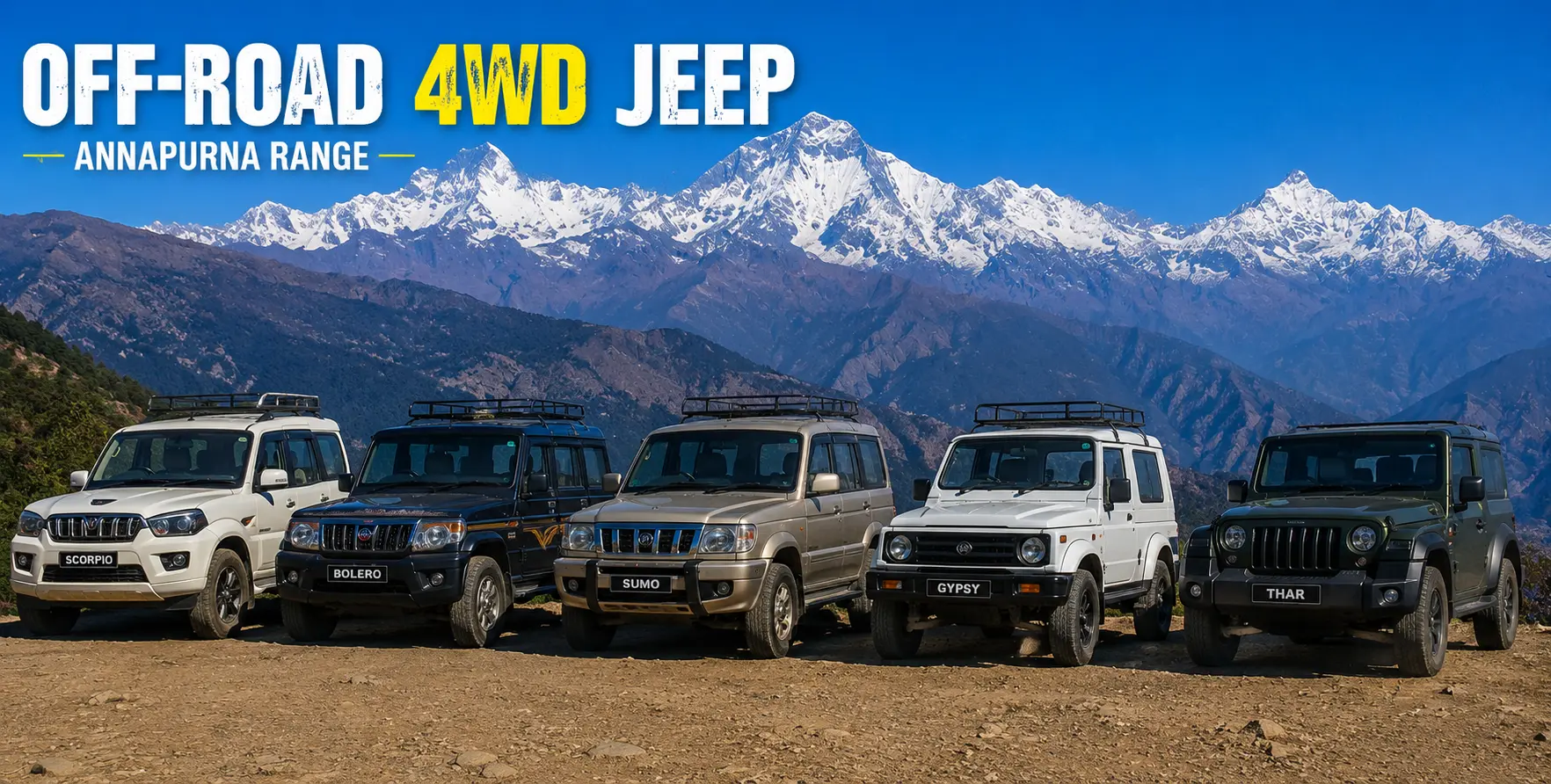
Key stops: Pashupatinath Temple (the largest Hindu temple in Nepal), Boudhanath Stupa (one of the world’s largest Buddhist stupas), Swayambhunath (Monkey Temple — hilltop panoramic views), Kathmandu Durbar Square (ancient royal palace complex), Patan Durbar Square (finest Newari architecture), Bhaktapur (medieval UNESCO city), Nagarkot (Himalayan sunrise viewpoint).

Pokhara — Nepal’s Adventure Capital

Pokhara is Nepal’s most beloved tourist destination — a city of extraordinary natural beauty set between Phewa Lake and the Annapurna Range. A private vehicle hire from Kathmandu to Pokhara covers 200 km on the scenic Prithvi Highway in 5.5 to 6.5 hours — faster and more flexible than the tourist bus. From Pokhara, private vehicles access all surrounding trekking trailheads (Nayapul, Ulleri, Ghandruk, Kande) and connect to the Muktinath pilgrimage route via Jomsom.

Chitwan National Park — Wildlife Safari

Chitwan National Park, Nepal’s premier wildlife destination and UNESCO World Heritage Site, is 147 km from Kathmandu — a 4 to 5 hour drive on the BP Koirala Highway. Private vehicle hire from Kathmandu drops you directly at your Sauraha resort entrance — no terminal transfers, no local taxi at the end of an already long journey. The Sauraha area is easily accessible by private vehicle for early-morning and evening wildlife game drives, in addition to the park’s official safari activities.

Lumbini — Birthplace of Lord Buddha

Lumbini, the birthplace of Lord Gautama Buddha and one of the world’s most sacred pilgrimage sites, is approximately 280 km from Kathmandu. The 7 to 8-hour drive passes through the scenic Terai lowlands. A private sedan or Hiace van from Nepal Vehicle Hiring Pvt Ltd provides the most comfortable and direct way to reach Lumbini’s sacred garden, the Maya Devi Temple, and the international monastery zone where Buddhist nations have built spectacular representative monasteries.

Annapurna Region — Trekking Transfers

The Annapurna region offers Nepal’s most comprehensive trekking network — from the short Australian Camp day hike to the full 15-day Annapurna Circuit. Private 4WD jeep hire from Nepal Vehicle Hiring Pvt Ltd connects Kathmandu and Pokhara with all Annapurna region trailheads: Nayapul, Birethanti, Ulleri, Ghandruk, Jhinu Danda (ABC approach), Besisahar (Annapurna Circuit), and Arughat (Manaslu Circuit).

Everest Region — Ramechhap Airport Transfer

The critical predawn transfer from Kathmandu to Ramechhap Manthali Airport (departing 1:00–2:00 AM for morning Lukla flights) is Nepal Vehicle Hiring Pvt Ltd’s most frequently booked service during peak Everest trekking seasons. Private sedan, Scorpio, and Hiace hire ensures your group arrives at Manthali Airport with the exact time buffer needed for your specific Lukla flight — 24/7 availability, including midnight departures.

Muktinath — Sacred Pilgrimage

Muktinath Temple (3,710 m) — one of the most sacred Hindu and Buddhist pilgrimage sites in the Himalayan world — requires a 4WD vehicle on the Jomsom-to-Muktinath road section. Nepal Vehicle Hiring Pvt Ltd’s Scorpio 4WD and Hilux fleet provides comfortable, safe pilgrimage transport from Pokhara to Jomsom (Day 1 — overnight acclimatization) and from Jomsom to Muktinath (Day 2), ensuring pilgrims of all ages arrive at the sacred temple safely.


The Booking Process — Step by Step


StepActionWhat Nepal Vehicle Hiring Pvt Ltd Does
1Contact us via WhatsApp or phoneRespond within minutes — day or night
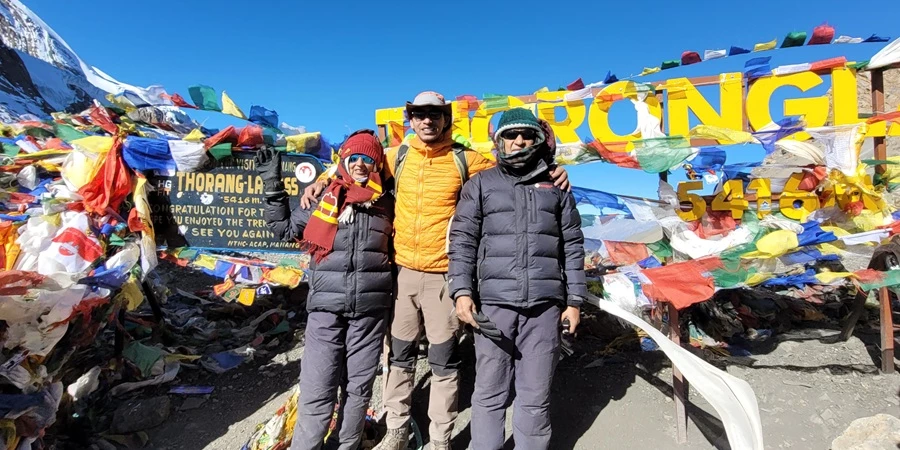
2Share: date, group size, pickup, destinationRecommend the right vehicle for your route
3Receive an all-inclusive quoteDriver + fuel + tolls — one clear price, no surprises
4Confirm booking + hotel addressSend confirmation + driver’s WhatsApp number
5Day of travel — driver arrives at hotelPunctual, clean vehicle, helps with luggage
6Enjoy your journeyStop anywhere, anytime — the vehicle is yours


What Information to Have Ready When Booking

  • Travel date and departure time
  • Number of passengers
  • Pickup location (hotel name, area in Kathmandu or Pokhara)
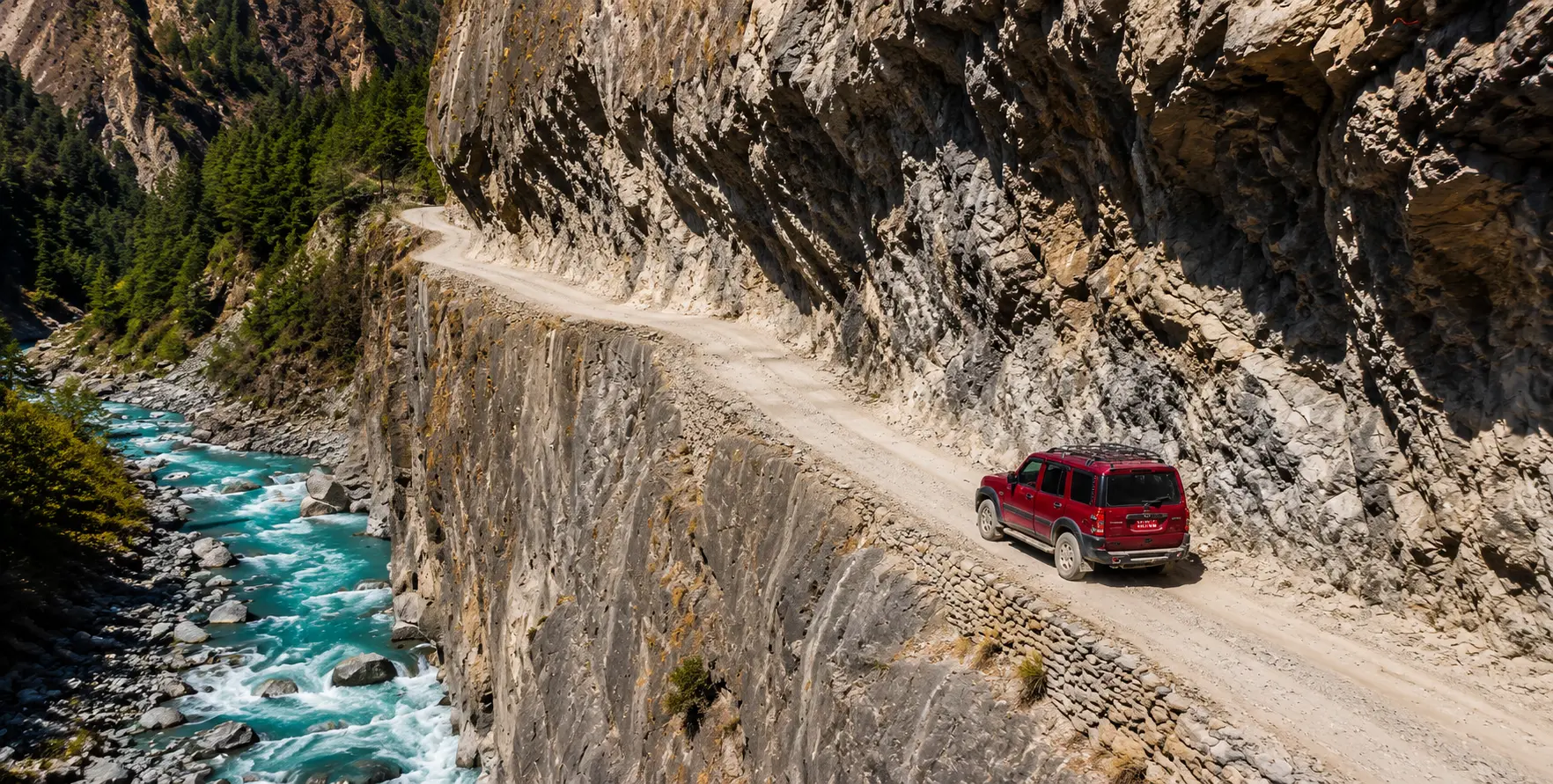
  • Destination and any intermediate stops
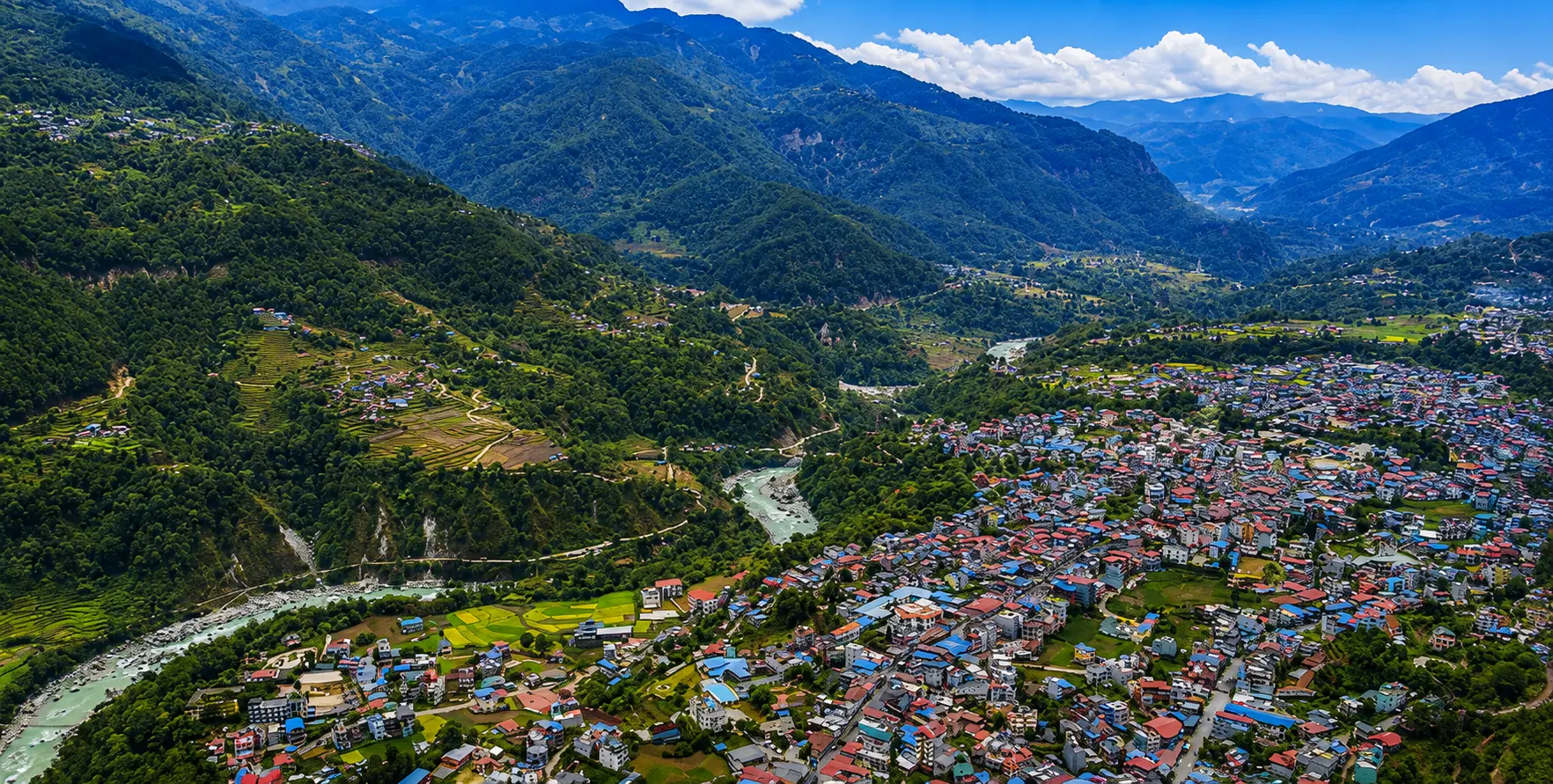
  • Type of journey (one way, return, multi-day circuit)
  • Route type (paved highway only, or does it include off-road mountain sections?)
  • Luggage volume (number and size of bags — important for confirming roof rack availability)
  • Any special requirements (elderly passengers, children, very early morning departure, airport flight details)


Pricing Transparency — What is Always Included

Nepal Vehicle Hiring Pvt Ltd’s pricing policy is designed for complete transparency. Every quote includes:

  • Professional licensed driver — experienced on your specific route
  • Fuel for the entire journey — no hidden surcharges
  • All standard road tolls and parking fees
  • Air conditioning — functional in all vehicles
  • Rooftop luggage carrier with securing ropes (jeeps and Hiace vans)
  • 4WD engagement on mountain off-road routes as required
  • 24/7 WhatsApp contact with your driver throughout the journey
  • Comprehensive vehicle insurance covering all passengers


What may be quoted separately for multi-day tours:

  • Driver overnight accommodation: NPR 4,500–6,000 per night — required when the driver stays outside Kathmandu
  • Driver daily meal allowance: NPR 800–1,200 per day — for multi-day extended tours
  • Special entry fees or restricted area permits (e.g., Upper Mustang permit)

Always ask Nepal Vehicle Hiring Pvt Ltd to confirm whether driver accommodation is included in your multi-day tour quote or will be charged separately. We include driver accommodation in our multi-day package prices where specified.

KTM to Chitwan

Private Vehicle Hire for Different Traveler Types

International Tourists and Trekkers

For international visitors with 10 to 14 days in Nepal, private vehicle hire unlocks the country’s most spectacular destinations efficiently and comfortably. The typical international Nepal journey — Kathmandu heritage, Pokhara lakeside, trekking trailhead transfer, and Chitwan safari — is best executed with a private vehicle that provides hotel-to-hotel door service and complete schedule flexibility. Nepal Vehicle Hiring Pvt Ltd’s drivers speak sufficient English to communicate, share local knowledge, and ensure that international guests feel informed and comfortable throughout their experience in Nepal.

Indian and South Asian Pilgrims

Nepal is home to some of the most sacred pilgrimage destinations for Hindu and Buddhist devotees across South Asia — Muktinath, Pashupatinath, Lumbini, Janakpur, Manakamana, Halesi Mahadev, and dozens of others. Indian pilgrims visiting from sea-level cities, for whom mountain altitude is a new experience, benefit enormously from private vehicle hire: they avoid the physical exertion of navigating public transport with luggage, arrive at high-altitude temples rested, and have a driver who can handle all logistics at busy pilgrimage sites. Nepal Vehicle Hiring Pvt Ltd’s Scorpio and Hilux fleet is the most popular choice for Indian pilgrim groups touring Muktinath.

Families with Children and Elderly Travelers

Families traveling with young children or elderly parents face unique transport challenges in Nepal — managing multiple bags, keeping children comfortable on long journeys, ensuring elderly passengers have adequate rest stops, and avoiding the crowds and confusion of shared public transport. Private vehicle hire solves all of these challenges at once: a clean, private cabin, flexible rest stops, luggage handled by the driver, and complete journey pacing controlled by your family’s needs.

Corporate and Business Groups

Nepal’s growing corporate sector regularly requires reliable, professional transport for team outings, incentive tours, conference transfers, and site visits to destinations outside Kathmandu. Nepal Vehicle Hiring Pvt Ltd’s Toyota Land Cruiser Prado and Land Cruiser fleet provides the professional vehicle standard that corporate groups expect — clean, well-presented, punctual, and driven by professional, appropriately presented drivers.

Photography and Filming Teams

Professional photographers and film crews working in Nepal have specific transport requirements: reliable early morning departures for golden-hour shoots, the ability to stop at any moment for an emerging scene, cargo space for equipment, and access to locations that public transport cannot reach. Private 4WD jeep hire from Nepal Vehicle Hiring Pvt Ltd — with flexible itinerary, generous equipment storage, and access to Nepal’s most remote and photogenic landscapes — is the standard transport choice for professional media teams working across the country.


Expert Tips for Private Vehicle Hire in Nepal


TipWhy It Matters
Book 48–72 hrs ahead in peak seasonJeeps and Hiace vans sell out fast, Oct–Nov and Mar–May
Specify 4WD clearly for mountain routesThe2WD Scorpio cannot access off-road sections safely
Share your exact flight time for airport transfersWe calculate the departure time precisely for your flight
Confirm what is included in the quoteDriver, fuel, and tolls should all be included — NVH always includes these
Ask about overnight driver charges on multi-day toursStandard: NPR 4,500–6,000 per night for driver accommodation
Carry permits before departureCAP + TIMS for Annapurna, Langtang — obtain in Kathmandu
Carry NPR cash beyond KathmanduATMs disappear on mountain routes — withdraw before departure
eep valuables in a day bag inside the vehicleDo not leave the camera, passport, or cash in the roof rack luggage
Depart early for mountain routes5:30–6:00 AM departure reaches trailheads before afternoon cloud
Book a return vehicle at the same timeGuarantees availability — especially post-trek return from Jhinu Danda, Ghandruk


Private Vehicle Hire in Nepal

Why Nepal Vehicle Hiring Pvt Ltd

With dozens of vehicle hire companies operating in Kathmandu and Pokhara, choosing the right partner for your Nepal travel makes a significant difference to your experience. Here is what sets Nepal Vehicle Hiring Pvt Ltd apart:

  • 62+ vehicle fleet: Nepal’s most comprehensive range — sedan, Scorpio, Hilux, Land Cruiser, Prado, Hiace, Coaster, and Tourist Bus — from one company.
  • 24/7 operations: We operate round the clock — midnight airport transfers, predawn mountain departures, and festival-season demand are all standard for our team.
  • Verified 4WD: Every 4WD vehicle in our fleet is a confirmed high-clearance 4WD variant — we never send a 2WD vehicle on a mountain off-road booking.
  • All-inclusive transparent pricing: Driver, fuel, and tolls always included — the price quoted is the price you pay.
  • Experienced local drivers: All drivers hold valid commercial licenses and have extensive knowledge of Nepal’s routes — city roads and mountain off-road tracks.
  • Door-to-door pickup: From any hotel in Kathmandu, Pokhara, or other cities — no bus park navigation required.
  • Single-booking convenience: Multi-day Nepal circuits, multi-vehicle bookings, airport transfers combined with sightseeing — coordinate everything with one WhatsApp message.
  • Instant confirmation: Book and receive a confirmed booking via WhatsApp within minutes, any time, day or night.


Frequently Asked Questions — Private Vehicle Hire Nepal 2026

What is private vehicle hire in Nepal?

Private vehicle hire means renting an entire vehicle — car, jeep, van, or bus — exclusively for your group, with a professional, licensed driver, for a single journey or for multiple days. No other passengers share the vehicle. You control the departure time, route stops, and journey pace.

How much does private vehicle hire cost in Nepal in 2026?

Daily hire rates (including driver and fuel) range from NPR 4,500 (USD 34) for a private sedan car to NPR 35,000 (USD 260) for a tourist bus. The most popular private hire: Scorpio 4WD at NPR 12,000–18,000 per day; Hiace van at NPR 14,000–20,000 per day. All rates are NTVA-approved and all-inclusive of driver, fuel, and tolls.

Is private vehicle hire cheaper than a bus for groups?

Yes — for groups of 3 or more on standard Nepal routes, private vehicle hire is typically cheaper per person than VIP sofa bus tickets, and dramatically more comfortable and flexible. For example, 4 people sharing a private Scorpio at NPR 15,000 pay NPR 3,750 per person — versus NPR 1,600 per person on a VIP sofa bus, for a total of NPR 6,400 for all four on the bus. The private vehicle is NPR 1,400 cheaper for the group.

Can I hire a vehicle with a driver in Nepal?

Yes — all Nepal Vehicle Hiring Pvt Ltd vehicles come with a professional licensed driver. Self-drive vehicle hire is not commonly available or recommended in Nepal due to the complexity of the roads, mountainous terrain, and permit requirements at military checkpoints. All hire packages include driver service as standard.

What vehicles are available for private hire in Nepal?

Nepal Vehicle Hiring Pvt Ltd offers: private sedan cars, Mahindra Scorpio 4WD, Toyota Hilux 4WD, Toyota Land Cruiser 4WD, Toyota Land Cruiser Prado, Toyota Hiace Van (12- and 14-seat), Toyota Coaster (24-seat), and tourist buses (35–45-seat). The right vehicle depends on your group size and whether your route includes off-road mountain sections.

Do I need a 4WD vehicle in Nepal?

A 4WD vehicle is mandatory for any route that includes off-road mountain sections — such as the Besisahar to Manang road, the Ramche landslide zone near Syabrubesi, Ghandruk and Ulleri off-road tracks, or the Jomsom to Muktinath road. For paved highway routes only (Kathmandu-Pokhara, Chitwan, Lumbini), a sedan or Hiace van is suitable.

Can private vehicles access trekking trailheads in Nepal?

Yes — private 4WD jeeps from Nepal Vehicle Hiring Pvt Ltd provide direct access to all road-accessible trekking trailheads, including Besisahar (Annapurna Circuit), Syabrubesi (Langtang), Nayapul, Ghandruk, Ulleri, Jhinu Danda (Annapurna Base Camp), and the Ramechhap Manthali Airport (Everest region Lukla flights). Public transport cannot reliably access many of these trailheads directly.

How do I book private vehicle hire with Nepal Vehicle Hiring Pvt Ltd?

Contact Nepal Vehicle Hiring Pvt Ltd via WhatsApp or phone at +977-9851343204 with your travel date, group size, pickup location, and destination. We respond immediately, recommend the right vehicle, and provide an all-inclusive quote. Booking confirmation is sent via WhatsApp within minutes.

Is fuel included in private vehicle hire in Nepal?

Yes — all Nepal Vehicle Hiring Pvt Ltd private vehicle hire quotes are all-inclusive of driver, fuel, and road tolls. The quoted price is the final price. No hidden fuel surcharges are added at remote mountain toll points or fuel stops.

What is the overnight charge for private vehicle hire in Nepal?

When your driver stays overnight outside Kathmandu on a multi-day tour, the standard overnight accommodation allowance is NPR 4,500–6,000 per night (as per NTVA guidelines). Nepal Vehicle Hiring Pvt Ltd includes overnight driver accommodation in all multi-day package quotes where specified — always confirm this when booking.

Muktinath-Private Vehicle Hire in Nepal

Conclusion

Private vehicle hire in Nepal is the single most effective way to experience this extraordinary country on your own terms. It gives you freedom — the freedom to depart when you choose, stop where you want, travel in privacy, reach destinations that no public vehicle can access, and arrive at every destination exactly on time for every flight, every trek start, and every sacred pilgrimage.

Whether you are a solo traveler taking a single airport transfer, a family of six on a two-week Nepal circuit, a trekking group of four heading to the Annapurna Circuit trailhead at Besisahar, or a 40-person pilgrimage group bound for Muktinath — Nepal Vehicle Hiring Pvt Ltd has the right vehicle, the experienced driver, and the transparent all-inclusive pricing to make your Nepal journey exactly as it should be.

Private vehicle hire in Nepal is not a luxury. For groups of three or more, it is often the most economical mode of transport. And for off-road mountain destinations, late-night airport transfers, and any journey where timing, comfort, and direct hotel-to-hotel service matter — it is the only sensible choice.

Book your private vehicle hire with Nepal Vehicle Hiring Pvt Ltd today and discover the Nepal that only private transport can show you.

Book your private vehicle — Call or WhatsApp: +977-9851343204

E-mail: [email protected]

Shey Phoksundo Lake Jeep Tour

Shey Phoksundo Lake Jeep Tour

Shey Phoksundo Lake Jeep Tour 2026: Complete Overland Vehicle Guide from Kathmandu

Shey Phoksundo Lake is Nepal’s deepest lake and one of the most extraordinarily beautiful natural phenomena in the entire Himalayan world. Sitting at 3,611 meters above sea level in the heart of the Shey Phoksundo National Park in Dolpa District, the lake’s water is an impossible, otherworldly shade of turquoise-blue — caused by glacial mineral content and the exceptional clarity of high-altitude light — that photographers travel from across the globe to capture. Ancient eroded cliffs of rust-red and ochre encircle the lake on three sides, dense blue pine forests descend to the shoreline, and the ancient Bon Buddhist village of Ringmo perches on the eastern bank, its prayer flags fluttering above rooftops that have been inhabited for centuries.

Reaching Shey Phoksundo Lake is not a casual undertaking. The lake lies deep within Nepal’s most remote and least accessible national park, in a district that has historically been one of the most difficult destinations in the country to reach. The standard approach involves two domestic flights (Kathmandu to Nepalgunj, then Nepalgunj to Juphal) followed by 2 to 3 days of trekking through the Shey Phoksundo National Park from Juphal. However, for adventurous overland travelers, a 4WD jeep from Kathmandu via the mid-western Nepal highway network — covering the Surkhet–Dunai section of the Karnali Highway — offers one of the greatest overland adventures in Nepal.

At Nepal Vehicle Hiring Pvt Ltd, we provide professional 4WD jeep transfer services for the Shey Phoksundo Lake jeep tour — from Kathmandu overland to Dunai and Juphal, as well as local jeep transfers within the Dolpa region. This comprehensive 2026 guide covers every transport option for visiting Shey Phoksundo Lake, including the overland jeep route, flight connections, local Juphal transfers, vehicle costs, permits, the complete itinerary, and expert advice to make the Phoksundo Lake journey safe, rewarding, and well planned.


About Shey Phoksundo Lake – Nepal’s Turquoise Jewel

Shey Phoksundo Lake (also spelled Phokusumdo or Phoksumdo) is the centerpiece of the Shey Phoksundo National Park — Nepal’s largest national park covering 3,555 square kilometers of Trans-Himalayan wilderness in Dolpa District. The lake was designated as part of Nepal’s first national park in Dolpa in 1984 and remains one of the country’s most strictly protected and least accessible natural treasures.

The lake was brought to global attention by American naturalist Peter Matthiessen in his landmark 1978 book ‘The Snow Leopard’, which described his 1973 journey through the Dolpa wilderness in search of the elusive snow leopard. The book is widely considered one of the finest travel and nature narratives ever written about Nepal, and it continues to inspire travelers to undertake the Dolpa pilgrimage decades later.


Shey Phoksundo Lake Key FactsDetails
Altitude3,611 meters (11,847 feet) above sea level
DepthApproximately 145 meters – Nepal’s deepest lake
LengthApproximately 4.8 kilometres
WidthApproximately 1.3 kilometres
DistrictDolpa District, Karnali Province, Nepal
National ParkShey Phoksundo National Park (Nepal’s largest NP)
Water ColourDistinctive turquoise-blue (glacial mineral content)
Adjacent VillageRingmo (ancient Bon Buddhist community)
Nearby MonasteryTshowa Gompa (Bon religion) on the lakeshore
Famous ForExtraordinary turquoise color, ancient Bon culture, snow leopard habitat
WildlifeSnow leopard, Himalayan wolf, tahr, blue sheep, musk deer, 200+ bird species
Literary ConnectionPeter Matthiessen’s ‘The Snow Leopard’ (1978)


How to Reach Shey Phoksundo Lake: All Options

There are two main ways to reach the Shey Phoksundo Lake area — by domestic flight combination (Kathmandu to Nepalgunj to Juphal) or by the overland 4WD jeep route (Kathmandu to Dunai/Juphal via the Karnali Highway). Here is a complete comparison:

ApproachRouteTimeCost (per person)Best For
Flight Approach (Standard)KTM → Nepalgunj (flight) → Juphal (flight) → Trek2 flight days + 2–3 trek daysUSD 450–550 round-trip flights onlyTrekkers with limited time, standard approach
Overland Jeep (Nepal Vehicle Hiring)KTM → Nepalgunj → Surkhet → Dunai → Juphal (4WD)3–4 driving daysNPR 80,000–130,000 (vehicle, group of 4–5)Adventure travelers, overland experience seekers
Mixed: Overland in + Flight outKTM to Dunai by jeep; return by Juphal flight3 drive + 3 trek daysJeep + 1 return flight setBest of both – adventure in, quick return
Mixed: Flight in + Overland outFly to Juphal; jeep from Dunai to Kathmandu3 trek + 3 drive days1 flight set + Jeep returnScenic arrival by air, epic overland return


The Overland Jeep Route: Kathmandu to Shey Phoksundo Lake

The overland 4WD jeep journey from Kathmandu to Dunai and Juphal — gateway to Shey Phoksundo Lake — is one of Nepal’s greatest adventure road journeys. The route passes through Nepalgunj, Surkhet, and the remote Karnali Highway corridor, traversing some of the most spectacular and least-visited terrain in the country. Here is the complete stage-by-stage overland guide:


Stage 1: Kathmandu to Nepalgunj – Approx. 530 km (2 days)

The first section from Kathmandu heads west on the Prithvi Highway to Narayanghat, then follows the East-West Highway (Mahendra Highway) through the Terai lowlands to Nepalgunj — a bustling commercial city near the Indian border in Banke District. The road is paved and in generally good condition throughout. Day 1 typically reaches Butwal or Bhairahawa (approximately 270 km) with an overnight stop, followed by Day 2 to Nepalgunj (approximately 260 km further).

Nepalgunj serves as the main hub for western Nepal operations and the flight gateway for Juphal. The city has good hotels, restaurants, and facilities for the last comfortable night before the Karnali Highway begins.

Stage 2: Nepalgunj to Surkhet – Approx. 90 km (2.5 to 3 hours)

From Nepalgunj, the route heads northeast through Kohalpur to Surkhet — the headquarters of Karnali Province. The road is paved and in good condition. Surkhet is the last major city on the overland route and the last point with reliable banking, fuel stations, and well-equipped accommodation. All cash, fuel, and essential supplies should be fully stocked at Surkhet before continuing north on the Karnali Highway.

Stage 3: Surkhet to Kalikot – Approx. 180 km (6 to 8 hours)

From Surkhet, the route turns north onto the Karnali Highway. This is where the overland adventure truly begins. The highway climbs steeply through the Karnali hills on a rough, unpaved mountain track that winds through dramatic river gorges, remote villages, and dense forest. The road surface varies enormously — from reasonable gravel sections to deeply rutted tracks and occasional river crossings. A Toyota Hilux or Land Cruiser with an experienced driver is essential from this point forward.

Stage 4: Kalikot to Dunai – Approx. 100 km (5 to 7 hours)

The final leg of the overland approach passes through some of the most remote terrain in Nepal. The road follows the Karnali River valley through an extraordinary landscape of eroded red and ochre cliffs, traditional stone villages, ancient Buddhist and Hindu temples, and forest sections where wildlife, including Himalayan bears and deer, are occasionally seen. Dunai (2,140 m) — the district headquarters of Dolpa — sits at the end of the motorable road and is the overnight base before the trek to Phoksundo Lake begins.

Stage 5: Dunai to Juphal – Approx. 14 km (1 to 2 hours)

From Dunai, a local jeep track continues to Juphal (2,475 m) — the site of the small STOL (Short Take-Off and Landing) airstrip that receives flights from Nepalgunj. Juphal is the traditional starting point for the trek to Shey Phoksundo Lake. A local sharing jeep or private vehicle covers this short section in 1 to 2 hours on a rough track.


Overland Route Overview: Kathmandu to Dunai/Juphal


StageSectionDistanceRoad ConditionDrive TimeOvernight
1aKathmandu to Butwal/Bhairahawa270 kmPrithvi + Mahendra Hwy – paved6–7 hrsButwal or Bhairahawa
1bButwal to Nepalgunj260 kmMahendra Hwy – paved5–6 hrsNepalgunj
2Nepalgunj to Surkhet90 kmPaved – good2.5–3 hrsSurkhet (or continue)
3Surkhet to Kalikot180 kmKarnali Hwy – rough off-road6–8 hrsKalikot or Dailekh
4Kalikot to Dunai100 kmVery rough mountain track5–7 hrsDunai
5Dunai to Juphal14 kmRough jeep track1–2 hrsJuphal (trek start)
TOTALKathmandu to Juphal914 kmMixed – 4WD essential from Surkhet3–4 driving days3 nights en route

Shey Phoksundo Lake Jeep Tour

Vehicle Options for the Shey Phoksundo Lake Jeep Tour 2026

Nepal Vehicle Hiring Pvt Ltd provides the following vehicle options for the Shey Phoksundo Lake overland jeep tour:

VehicleCapacityOverland Cost KTM–Dunai (NPR)Per Day Rate (NPR)Best For
Toyota Land Cruiser (4WD)4–5 paxNPR 100,000–150,000NPR 25,000–35,000/dayBest for Karnali Hwy – max capability
Toyota Hilux (4WD)4–5 paxNPR 80,000–120,000NPR 20,000–28,000/dayRecommended – 280mm clearance, diff lock
Sharing Jeep (Surkhet to Dunai)7–8 pax totalNPR 3,000–5,000/pax (Surkhet–Dunai)N/ABudget option from Surkhet onward
Local Jeep (Dunai to Juphal)7–8 pax totalNPR 500–1,000/paxN/AShort local transfer only


Note: The Karnali Highway from Surkhet to Dunai is one of the most demanding roads in Nepal. Nepal Vehicle Hiring strongly recommends the Toyota Hilux or Land Cruiser for this route. Standard jeeps are not suitable. All prices include driver and fuel for the stated route. Contact Nepal Vehicle Hiring for confirmed multi-day expedition quotes.


Flight Option: Kathmandu to Juphal via Nepalgunj

For trekkers who want to reach Shey Phoksundo Lake without the overland driving days, the standard flight approach via Nepalgunj is the most practical option. Here is the complete flight information:

Flight SegmentAirlinesDurationApprox. Cost (One Way)Notes
Kathmandu to NepalgunjBuddha Air, Yeti Airlines, others55–60 minutesNPR 8,000–12,000 (foreigners higher)Multiple daily flights
Nepalgunj to JuphalTara Air, Summit Air, others25–30 minutesNPR 5,000–8,000Early morning only – afternoon winds
Juphal to NepalgunjSame operators25–30 minutesNPR 5,000–8,000Early morning mandatory – canyon winds
Nepalgunj to KathmanduMajor airlines55–60 minutesNPR 8,000–12,000Multiple daily flights


CRITICAL: Juphal flights operate ONLY in the early morning (before approximately 8:00 AM). The Juphal canyon experiences strong winds from mid-morning onward, making flying impossible. Always book the earliest possible Juphal departure and build in buffer days for weather delays.

Shey Phoksundo Lake Jeep Tour

Local Jeep Transfers: Juphal, Dunai, and Sulighat Area

Once you arrive at Juphal (by flight or overland jeep), local jeep transfers are available within the Dolpa area for getting to the trek starting point:

Local TransferDistanceDrive TimeCost (NPR)Notes
Juphal to Dunai14 km1–2 hoursNPR 500–1,000/pax (sharing)Rough track – connects airstrip to district HQ
Dunai to Sulighat6 km30–45 minNPR 300–600/pax (sharing)Starting point for park trail
Juphal to Sulighat20 km2–3 hoursNPR 800–1,500/pax (sharing)Combined transfer to the main trek trailhead
Private Jeep Juphal to DunaiAll seatsNPR 4,000–7,000 (vehicle)USD 30–52Comfortable, flexible – Nepal Vehicle Hiring


Shey Phoksundo Lake Itinerary: Trek Stages from Juphal

After reaching Juphal by flight or overland jeep, the trek to Shey Phoksundo Lake follows a beautiful trail through the Shey Phoksundo National Park. Here is the standard trek itinerary:


DayTrek StageDistanceWalking TimeAltitudeHighlights
Day 1Juphal → Dunai14 km (or jeep)3–4 hrs (or 1.5 hr jeep)2,475→2,140 mJuphal airstrip, Dolpa entry, Bheri River
Day 2Dunai → Chhepka14 km5–6 hrs2,140→2,660 mShey Phoksundo NP entry, forest trails
Day 3Chhepka → Phoksundo Lake (Ringmo)12 km5–6 hrs2,660→3,611 mDramatic gorge, Phoksundo Falls, lake arrival
Day 4Phoksundo Lake ExplorationDay hikeFull day3,611 mLake circuit, Ringmo village, Tshowa Gompa
Day 5Phoksundo Lake → Chhepka12 km4–5 hrs3,611→2,660 mReturn through the gorge and forest
Day 6Chhepka → Dunai14 km5–6 hrs2,660→2,140 mDescend through the national park
Day 7Dunai → Juphal (jeep) → Fly Nepalgunj → KathmanduJeep + flights1 hr + 2 flights2,140→1,400 mReturn journey – Juphal morning flight


This is the standard 9-day Shey Phoksundo Lake itinerary from Kathmandu, including travel days—total trekking: 7 days from Juphal. The itinerary can be extended for Upper Dolpa exploration (requires an additional Upper Dolpa Restricted Area Permit, USD 500).


For adventurous travelers who want the full Dolpa experience, Nepal Vehicle Hiring recommends the following combined overland jeep approach with flight return:


DayActivityTransportNight
Day 1Kathmandu to Butwal/Bhairahawa4WD JeepButwal
Day 2Bhairahawa to Nepalgunj4WD JeepNepalgunj
Day 3Nepalgunj to Surkhet to Kalikot4WD Jeep – Karnali Hwy beginsKalikot
Day 4Kalikot to Dunai4WD Jeep – very roughDunai
Day 5Dunai to Sulighat (jeep) + Trek to ChhepkaLocal jeep + trekChhepka
Day 6Trek Chhepka to Phoksundo LakeTrekRingmo
Day 7Phoksundo Lake exploration dayRingmo
Day 8Trek Phoksundo to ChhepkaTrekChhepka
Day 9Trek Chhepka to DunaiTrekDunai
Day 10Dunai to Juphal (jeep) + morning flight Juphal to NepalgunjJeep + STOL flightNepalgunj
Day 11Nepalgunj to Kathmandu flightDomestic flightKathmandu


Permits Required for Shey Phoksundo Lake Tour 2026


PermitCostRequired ForWhere to Obtain
Shey Phoksundo National Park EntryUSD 30 (foreigners), NPR 100 (citizens)All visitors to Shey Phoksundo NPPaid at the park entry checkpoint near Dunai/Sulighat
Lower Dolpo Restricted Area PermitUSD 20 per weekAll visitors to Lower Dolpa, including Phoksundo LakeDepartment of Immigration, Kathmandu, Nepal Tourism Board
TIMS CardNPR 2,000 (foreigners)All trekkersNepal Tourism Board, Kathmandu
Upper Dolpo Restricted Area PermitUSD 500 (10 days) + USD 50/extra dayOnly for trekkers going north of Phoksundo Lake into Upper DolpaDepartment of Immigration, Kathmandu (min. group of 2 + guide)
Vehicle Movement Permit (overland)Arranged by Nepal Vehicle Hiring4WD vehicles on Karnali HighwayNepal Vehicle Hiring manages this


IMPORTANT: The Lower Dolpo Restricted Area Permit (USD 20/week) is significantly cheaper than the Upper Dolpa permit (USD 500/10 days) and covers the standard Phoksundo Lake trek. All permits must be obtained in Kathmandu before departure. Nepal Vehicle Hiring can advise on the exact permit requirements for your specific itinerary.


Key Attractions of the Shey Phoksundo Lake Tour

Shey Phoksundo Lake – The Turquoise Jewel

The lake itself is the defining attraction of the entire journey. Nothing quite prepares first-time visitors for the intensity of the color — the water is a shade of turquoise-blue that seems almost artificially vivid in the high-altitude sunlight. The lake changes color throughout the day — deep cobalt blue in the early morning, brilliant turquoise at midday, steel grey at dusk. The surrounding red-ochre cliffs and the dense blue pine forest along the shores create a landscape unlike any other in Nepal.

Ringmo Village – Ancient Bon Community

Ringmo is a small village on the eastern shore of Phoksundo Lake, home to approximately 50 families who have maintained the ancient Bon Buddhist tradition for centuries. The stone houses, mani walls, prayer flags, and the beautiful Tshowa Gompa monastery create a deeply moving atmosphere of timeless spirituality. Interaction with Ringmo villagers offers a rare glimpse into one of Nepal’s most ancient and most isolated living cultures.

Phoksundo Waterfall

The Phoksundo Falls — where the lake’s outflow drops dramatically over a series of waterfalls into the gorge below — is one of the most spectacular natural features of the entire approach to the trek. The water flows a distinctive deep blue-green colour due to the mineral content carried from the lake. The falls are visible from the trail on the Day 3 approach to the lake and are a mandatory stop for photography.

Tshowa Gompa – Ancient Bon Monastery

The Tshowa Gompa on the lakeshore at Ringmo is one of the oldest and most sacred Bon Buddhist monasteries in Nepal. The Bon religion is the ancient pre-Buddhist spiritual tradition of Tibet and Nepal — older than Buddhism itself and still actively practiced by the Ringmo community. The gompa contains ancient thangka paintings, ritual objects, and manuscripts of enormous cultural significance. Visiting Tshowa Gompa with respectful curiosity is one of the most rewarding cultural experiences available anywhere in the Himalayan region.

Wildlife of Shey Phoksundo National Park

The Shey Phoksundo National Park is one of the most biodiverse protected areas in Nepal. The park is internationally renowned as prime snow leopard habitat — the elusive cat is present in the park, though rarely seen. More commonly observed wildlife includes the Himalayan wolf, Himalayan tahr, blue sheep (bharal), musk deer, Himalayan bear, and red panda. Over 200 bird species have been recorded, including Himalayan griffon, lammergeier, wood snipe, Tibetan partridge, and the rare Pallas’s cat. The park’s Trans-Himalayan plateau ecosystem is one of the richest high-altitude ecosystems in Asia.

The Karnali Highway (Overland Route)

For those taking the overland jeep approach, the Karnali Highway from Surkhet to Dunai is itself a major attraction — one of Nepal’s most remote and most spectacular mountain roads. The highway passes through ancient hill kingdoms (Kalikot and Jumla areas), dramatic Karnali River gorges, traditional stone-built villages unchanged by modern development, and some of the finest untouched natural landscapes anywhere in Nepal. Travelers who make this overland journey consistently describe it as one of the most extraordinary road experiences of their lives.

Dolpa-Shey Phoksundo Lake Jeep Tour

Best Season for the Shey Phoksundo Lake Jeep Tour

Spring (April to June) – Best for Overland and Trek

Spring is the recommended season for the Shey Phoksundo Lake tour. The Upper Dolpa region lies in a rain shadow north of the main Himalayan range. It receives significantly less monsoon rain than the rest of Nepal, making it an attractive destination even in early summer. The Karnali Highway is in good condition by April after winter, and the Phoksundo Lake area is at its most vivid turquoise in the clear spring light. May and June are particularly good months before the lower Karnali highway sections become more difficult with monsoon rains.

Autumn (September to November) – Excellent

Autumn is the second prime season. Post-monsoon clarity delivers exceptional visibility at the lake and along the Karnali Highway. October and November are peak months. The Karnali Highway is in its best post-monsoon condition in September and October. Phoksundo Lake in autumnal light is among the finest natural photography opportunities in Nepal.

Monsoon (July to August) – Partially Possible

The Dolpa region receives significantly less monsoon rainfall than southern Nepal due to its rain-shadow position. Phoksundo Lake and the trekking trail remain largely accessible. However, the lower Karnali Highway from Surkhet to Dunai can be affected by landslides during the monsoon. Nepal Vehicle Hiring advises on current conditions before confirming overland jeep bookings during the monsoon season.

Winter (December to March) – Difficult

High passes and some sections of the Karnali Highway above 3,000 meters can be snowbound in winter. The Juphal airstrip can be closed by snow. Winter travel to Phoksundo Lake is not recommended for most travelers. Specialist winter expedition groups with appropriate equipment may attempt the overland in late February/early March when conditions begin to improve.


Essential Packing List for the Shey Phoksundo Lake Jeep Tour

For the Overland Jeep Journey (Karnali Highway)

  • Lower Dolpo Restricted Area Permit + Shey Phoksundo NP permit + TIMS Card – obtained in Kathmandu
  • Sufficient NPR cash for the entire expedition – NO ATMs exist from Surkhet to Kathmandu on the return.
  • Warm down jacket and thermal base layers – Dunai nights are cool, lake altitude nights are cold.
  • Face mask or buff – the Karnali Highway is extremely dusty in the dry section.
  • Water bottles (2 liters minimum) and purification tablets
  • Energy snacks and emergency food rations for the overland driving days
  • Power bank (multiple) – charging is unavailable on the Karnali Highway
  • Offline Maps.me map of the Dolpa region – no mobile data beyond Surkhet
  • Basic first aid kit + altitude medication (Diamox) for the lake altitude


For the Trek to Phoksundo Lake

  • Full trekking gear, including a down sleeping bag (rated to -10°C for lake altitude)
  • Waterproof trekking boots and gaiters
  • Sun protection – sunscreen SPF 50+, lip balm, sunglasses, sun hat
  • Camera with multiple batteries and a power bank – the lake photography is extraordinary
  • Trekking poles – the gorge trail approaches the lake involves steep sections
  • Nepal trekking permits – all carried in a waterproof document pouch


Expert Tips for the Shey Phoksundo Lake Jeep Tour

  • Begin permit collection in Kathmandu at least 3 to 5 business days before departure – the Lower Dolpo Restricted Area Permit takes time to process
  • Book the overland jeep at least 2 to 3 weeks in advance – the Karnali Highway requires careful vehicle preparation and the assignment of an experienced driver.
  • Always request a Toyota Hilux or Land Cruiser for the Karnali Highway – no other vehicle is suitable for the Surkhet-Dunai section.
  • For the flight approach, always build in 2 buffer days for Juphal flight delays – Juphal is one of Nepal’s most weather-sensitive airstrips, and morning fog or wind frequently delays departures.
  • Carry all cash from Kathmandu – there are absolutely no ATMs or banking facilities beyond Surkhet.
  • Phoksundo Lake is best photographed in the morning, when the water is a deep cobalt blue, and the light is clear; afternoon clouds can reduce the turquoise intensity.
  • Spend at least 2 full days at the lake (not just 1) – the different light conditions, the walk around the lake, and the Ringmo village visit all require time to appreciate properly.
  • Respect the Bon Buddhist culture of Ringmo village – always ask permission before photographing villagers and never enter the Tshowa Gompa without invitation from the monks.
  • Nepal Vehicle Hiring provides complete expedition logistics for the overland Phoksundo tour – vehicle, driver, fuel planning, Karnali permit, and coordination with the local jeep in Dunai for the final approach.


How to Book Your Shey Phoksundo Lake Jeep Tour with Nepal Vehicle Hiring

Booking the Shey Phoksundo Lake jeep tour with Nepal Vehicle Hiring Pvt Ltd requires careful planning due to the remoteness and complexity of this destination:

  • Step 1: Contact us at vehiclehiringnepal.com or via WhatsApp as early as possible – ideally 3 to 4 weeks before your planned departure
  • Step 2: Share your planned dates, group size, and preferred approach (overland jeep, flight to Juphal, or combined)
  • Step 3: Nepal Vehicle Hiring prepares a complete expedition plan with vehicle options, route, overnight stops, permit guidance, and cost breakdown
  • Step 4: Begin permit collection in Kathmandu with our guidance – we provide the exact documentation checklist
  • Step 5: Vehicle pre-expedition service and driver briefing at Nepal Vehicle Hiring base in Kathmandu
  • Step 6: Depart Kathmandu for the greatest natural beauty destination in western Nepal

We recommend booking at least 3 to 4 weeks in advance for the overland Phoksundo jeep tour and at least 2 weeks in advance for Juphal flight-based tours.


Frequently Asked Questions (FAQ)

How deep is Shey Phoksundo Lake?

Shey Phoksundo Lake is approximately 145 meters deep — making it Nepal’s deepest lake. It sits at 3,611 meters above sea level in the Dolpa District.

How do I get to Shey Phoksundo Lake from Kathmandu?

There are two main approaches: (1) By flight — Kathmandu to Nepalgunj (~55 min flight), then Nepalgunj to Juphal (~25 min STOL flight), followed by 2 to 3 days trekking. (2) By overland 4WD jeep — Kathmandu to Dunai via Nepalgunj, Surkhet, and the Karnali Highway (3 to 4 driving days), then short local jeep and trek to the lake.

How much does the Shey Phoksundo Lake tour cost in 2026?

The overland jeep tour from Kathmandu costs approximately NPR 80,000 to 150,000 for a vehicle (Toyota Hilux or Land Cruiser) with 4 to 5 passengers for the full Kathmandu-to-Dunai journey. The round-trip flight costs approximately USD 450-550 per person (Kathmandu–Nepalgunj–Juphal–Nepalgunj–Kathmandu).

What permits are needed for Shey Phoksundo Lake?

You need a Lower Dolpo Restricted Area Permit (USD 20 per week per person), a Shey Phoksundo National Park Entry Permit (USD 30), and a TIMS Card (NPR 2,000). All must be obtained in Kathmandu before departure.

Is a guide mandatory for the Shey Phoksundo Lake trek?

Yes. A licensed government-approved guide is mandatory for all trekking in the Dolpa restricted area. The guide also helps navigate the permit checkpoints and understand the local culture and trail conditions.

What is the best time to visit Shey Phoksundo Lake?

Spring (April to June) and Autumn (September to November) are the best seasons. The Dolpa region’s rain-shadow position makes it accessible even in the early monsoon season (June), when other trekking areas in Nepal are closed. October offers exceptional clarity and color at the lake.

Can Nepal Vehicle Hiring arrange the complete Shey Phoksundo tour, including permits and vehicle?

Yes. Nepal Vehicle Hiring Pvt Ltd provides complete expedition logistics for the Shey Phoksundo Lake overland jeep tour — including the 4WD vehicle and experienced Karnali Highway driver, fuel planning, Karnali permit processing guidance, coordination with local Dunai and Juphal jeep operators, and full itinerary support. Contact us at vehiclehiringnepal.com for a detailed expedition quote.


Book Your Shey Phoksundo Lake Jeep Tour with Nepal Vehicle Hiring

Shey Phoksundo Lake is one of those rare natural destinations that genuinely exceeds all expectations. The turquoise water, the ancient Bon village of Ringmo, the silence of the Dolpa wilderness, the snow leopard’s domain on the cliffs above — Phoksundo Lake offers a Nepal experience that is entirely different from the Everest and Annapurna circuits and arguably even more profoundly moving.

Whether you approach by the dramatic overland 4WD jeep journey through the Karnali Highway, by the classic domestic flight combination to Juphal, or by the best-of-both combined approach, Nepal Vehicle Hiring Pvt Ltd provides the most reliable, best-prepared, and most professionally managed vehicle services for the Shey Phoksundo Lake jeep tour in 2026.

Contact Nepal Vehicle Hiring Pvt Ltd today at vehiclehiringnepal.com to begin planning your Shey Phoksundo Lake jeep tour and experience the greatest hidden natural treasure in all of Nepal.


Kathmandu | Pokhara | Chitwan | Dolpa | All Expedition Destinations Across Nepal

Toyota Hilux, Fortuner, or Land Cruiser Hire Nepal

Toyota Hilux, Fortuner, or Land Cruiser Hire Nepal

Toyota Hilux, Fortuner, or Land Cruiser Hire Nepal

When it comes to private vehicle hire in Nepal, Toyota dominates the premium 4WD segment — and for very good reason. Toyota’s engineering reputation for reliability, durability, and off-road performance has been proven on Nepal’s most demanding mountain roads for decades. But with three distinct 4WD options available — the Toyota Hilux pickup, the Toyota Fortuner SUV, and the Toyota Land Cruiser — choosing the right Toyota for your specific journey in Nepal requires understanding the meaningful differences among these vehicles in terms of capability, comfort, capacity, and cost.

Nepal Vehicle Hiring Pvt Ltd operates one of Kathmandu’s most comprehensive Toyota 4WD fleets — Hilux, Fortuner, Land Cruiser 300, and Land Cruiser Prado — all regularly serviced, mechanically inspected, and driven by professional, licensed drivers with extensive local mountain-road experience. Whether you are a trekking group heading to the Annapurna Circuit, a pilgrim family bound for Muktinath, a corporate team on a mountain resort getaway, or an adventure traveler planning a full Upper Mustang expedition, there is a Toyota in our fleet that is precisely right for your journey.

This complete 2026 guide compares the Toyota Hilux, Fortuner, and Land Cruiser in detail: technical specifications, off-road capabilities, passenger capacity, 2026 hire rates, route suitability, and the clearest possible guidance on which Toyota is best for each type of journey in Nepal.


The Three Toyotas — An Overview

Toyota Hilux 4WD — The Off-Road Workhorse

The Toyota Hilux is one of the world’s most celebrated off-road vehicles and Nepal’s most widely hired premium 4WD. Built on a ladder-frame chassis designed for demanding off-road use, the Hilux combines exceptional mechanical durability, a powerful 2.8L diesel engine producing 204 PS and 500 Nm of torque, 220 mm ground clearance, and a locking rear differential — giving it genuine all-terrain capability across Nepal’s most challenging mountain roads.

In Nepal’s tourist vehicle hire market, the Hilux occupies the critical middle ground between the affordable Mahindra Scorpio and the premium Land Cruiser — offering better off-road performance than the Scorpio at significantly lower cost than the Land Cruiser. Its dual-cab pickup configuration provides seating for 5 to 6 passengers plus driver, with the bed and rooftop carrier providing generous luggage space for full trekking expeditions.

  • Engine: 2.8L GD-series turbocharged diesel — 204 PS, 500 Nm
  • 4WD: Part-time with locking rear differential — superior traction on loose and wet surfaces
  • Ground clearance: 220 mm — excellent for Nepal’s mountain off-road routes
  • Seating: 5–6 passengers plus driver
  • Body type: Dual-cab pickup — bed and rooftop carrier for luggage
  • 2026 hire rate: NPR 15,000–22,000 per day (driver + fuel included)

Toyota Fortuner 4WD — The Premium Family SUV

The Toyota Fortuner is a completely different vehicle proposition from the Hilux — a proper 7-seat SUV with a premium interior, sophisticated suspension, and car-like refinement that makes long highway journeys significantly more comfortable than the Hilux’s commercial-truck-derived ride. The Fortuner shares the Hilux’s 2.8L diesel engine (producing 203 PS and 420 Nm) and offers a similar 221 mm ground clearance. Still, its fully enclosed SUV body, three-row seating, and premium cabin appointments give it a distinctly different character.

In Nepal’s vehicle hire market, the Fortuner has become increasingly popular among pilgrim families, corporate tour groups, and premium tourists who want genuine 4WD capability on mountain roads combined with the comfort and dignity of a proper full-size SUV. For groups where passenger comfort on long journeys is as important as off-road performance, the Fortuner is frequently the preferred choice.

  • Engine: 2.8L GD-series turbocharged diesel — 203 PS, 420 Nm
  • 4WD: Part-time with A-TRC (Active Traction Control)
  • Ground clearance: 221 mm — virtually identical to Hilux
  • Seating: 6 passengers plus driver — 7 total in three rows
  • Body type: Full-size 7-seat SUV — proper premium interior, enclosed cargo area
  • 2026 hire rate: NPR 16,000–24,000 per day (driver + fuel included)

Toyota Hilux, Fortuner, or Land Cruiser Hire Nepal

Toyota Land Cruiser — The King of Nepal’s Mountain Roads

The Toyota Land Cruiser — available in Nepal as the LC300 Series and the Land Cruiser Prado (LC250) — is Nepal’s definitive premium mountain vehicle and the benchmark by which all other 4WD vehicles are judged. The Land Cruiser 300 Series features a 3.3L twin-turbo diesel engine producing 309 PS and a staggering 700 Nm of torque, full-time 4WD with Kinetic Dynamic Suspension System (KDSS), Crawl Control, Multi-Terrain Select, and the highest ground clearance (225 mm) in the Nepal tourist 4WD fleet.

For Nepal’s most extreme and remote routes — Upper Mustang’s canyon roads, the Rara Lake expedition track, the Tsum Valley approach, and other journeys where road quality is at the absolute limit of what any vehicle can traverse — the Land Cruiser is not just preferred but essential. Its combination of raw power, maximum ground clearance, the most sophisticated 4WD system available, and a premium leather-appointed interior for 6 to 7 passengers makes it Nepal’s ultimate all-in-one mountain-and-luxury vehicle.

  • Engine: 3.3L twin-turbo diesel (LC300) — 309 PS, 700 Nm — the most powerful in class
  • 4WD: Full-time with KDSS, Crawl Control, Multi-Terrain Select, locking center differential
  • Ground clearance: 225 mm (LC300) / 218 mm (Prado)
  • Seating: 6–7 passengers plus driver in premium leather interior
  • Body type: Full-size premium SUV — commanding presence on Nepal roads
  • 2026 hire rate: NPR 25,000–35,000 per day LC300 / NPR 22,000–30,000 Prado (driver + fuel)


Full Technical Comparison — Hilux vs Fortuner vs Land Cruiser


FeatureToyota Hilux 4WDToyota Fortuner 4WDToyota Land Cruiser 300Toyota Prado LC250
Engine2.8L GD diesel (204 PS)2.8L GD diesel (203 PS)3.3L twin-turbo diesel (309 PS)2.8L GD diesel (204 PS)
Torque500 Nm420 Nm at 1,400–3,400 RPM700 Nm500 Nm
4WD SystemPart-time + locking diffPart-time 4WD + A-TRCFull-time KDSS + Crawl ControlFull-time 4WD + KDSS + crawl
Ground Clearance220 mm221 mm225 mm218 mm
Seating5–6 + driver6 + driver = 7 total6–7 + driver6–7 + driver
Body TypePickup truck (dual cab)7-seat SUV7-seat premium SUV7-seat premium SUV
Luggage SpaceBed + roof rackRear cargo + roof rackRear cargo + roof rackRear cargo + roof rack
Comfort LevelVery GoodExcellentPremium / LuxuryPremium / Luxury
Off-Road RatingExcellentVery GoodOutstandingOutstanding
Nepal Market PriceNPR 96L–1.1 CrNPR 2.7 Cr–2.83 CrNPR 5.39 Cr (LC300)NPR 3.7 Cr (Prado LUX)
2026 Daily Hire RateNPR 15,000–22,000NPR 16,000–24,000NPR 25,000–35,000NPR 22,000–30,000
Best Hire UseTrekking, off-road, all routesPremium touring, trekking, groupLuxury, extreme off-road, VIPCorporate, luxury, mountain touring


Key Insight: All three vehicles have very similar ground clearance (218–225 mm), and all provide genuine 4WD capability. The real differences lie in passenger comfort (Land Cruiser and Fortuner far superior to Hilux as passenger vehicles), engine power (Land Cruiser dramatically more powerful), off-road sophistication (Land Cruiser leads), and daily hire cost (Hilux most economical, Land Cruiser most expensive).

Toyota Hilux, Fortuner, or Land Cruiser Hire Nepal

2026 Hire Rates — Full Comparison


VehicleDaily Rate (NPR)Daily Rate (USD)Hourly Rate (NPR)Notes
Toyota Hilux 4WDNPR 15,000–22,000USD 115–165NPR 900–1,100/hrMost popular 4WD hire vehicle in Nepal
Toyota Fortuner 4WDNPR 16,000–24,000USD 120–180NPR 1,000–1,200/hrPremium SUV — comfort + capability
Toyota Land Cruiser (LC300)NPR 25,000–35,000USD 190–265NPR 1,500–2,000/hrTop-tier — extreme off-road + luxury
Toyota Land Cruiser PradoNPR 22,000–30,000USD 165–225NPR 1,300–1,600/hrPremium comfort with full 4WD
All above with driver + fuelIncluded in quoted rateIncludedIncludedAll NVH rates are all-inclusive


All Nepal Vehicle Hiring Pvt Ltd rates are all-inclusive: professional licensed driver, fuel, and road tolls are included in every quoted price. The rates above are daily rates for full private hire. Hourly hire is available for city sightseeing and short transfers (minimum 5 hours). Multi-day package rates for extended circuits and tours are available at negotiated prices — contact Nepal Vehicle Hiring Pvt Ltd for a custom quote.


Route-by-Route Cost Guide — All Toyota Models


RouteHilux 4WDFortuner 4WDLand CruiserPrado
Kathmandu → Pokhara (~200 km)NPR 15,000–19,000NPR 17,000–22,000NPR 24,000–32,000NPR 20,000–28,000
Kathmandu → Chitwan (~147 km)NPR 13,000–17,000NPR 15,000–20,000NPR 22,000–28,000NPR 18,000–25,000
Kathmandu → BesisaharNPR 16,000–21,000NPR 18,000–24,000NPR 25,000–34,000NPR 22,000–30,000
Kathmandu → SyabrubesiNPR 14,000–19,000NPR 16,000–22,000NPR 23,000–31,000NPR 20,000–27,000
Kathmandu → Manang (2 days)NPR 32,000–45,000NPR 38,000–52,000NPR 52,000–72,000NPR 45,000–62,000
Pokhara → MuktinathNPR 18,000–25,000NPR 21,000–29,000NPR 30,000–40,000NPR 26,000–35,000
Pokhara → JomsomNPR 16,000–22,000NPR 19,000–26,000NPR 27,000–36,000NPR 23,000–31,000
Kathmandu → LumbiniNPR 21,000–28,000NPR 24,000–32,000NPR 34,000–45,000NPR 29,000–39,000
KTM → Ramechhap (Manthali)NPR 13,000–17,000NPR 15,000–20,000NPR 21,000–28,000NPR 18,000–24,000
KTM Valley Sightseeing (full day)NPR 10,000–14,000NPR 12,000–17,000NPR 18,000–24,000NPR 15,000–20,000
Upper Mustang (Lo Manthang)NPR 45,000–65,000NPR 50,000–70,000NPR 75,000–100,000NPR 60,000–85,000


All costs are one-way, full private vehicle hire including driver and fuel. ‘Upper Mustang‘ costs include the multiple days required for the full Lo Manthang route. Contact Nepal Vehicle Hiring Pvt Ltd for custom pricing for multi-day, multi-destination packages.


Route Suitability — Which Toyota for Which Road?


Route TypeHiluxFortunerLand CruiserPrado
Paved highways (KTM–PKR, Chitwan)✅ Excellent✅ Excellent✅ Excellent✅ Excellent
Besisahar → Manang gorge road✅ Best choice✅ Very capable✅ Outstanding✅ Very capable
Syabrubesi Ramche zone✅ Excellent✅ Very capable✅ Outstanding✅ Very capable
Pokhara → Ulleri / Ghandruk✅ Excellent✅ Very capable✅ Outstanding✅ Very capable
Jomsom → Muktinath✅ Excellent✅ Very capable✅ Outstanding✅ Very capable
Upper Mustang → Lo Manthang✅ Very capable✅ Capable✅ Best choice✅ Very capable
Rara Lake (extremely remote)⚠️ Challenging⚠️ Challenging✅ Best choice✅ Capable
Kathmandu Valley city roads✅ Excellent✅ Excellent✅ Excellent✅ Excellent
Airport transfers (TIA, RHP)✅ Excellent✅ Excellent✅ Excellent✅ Excellent
Corporate / VIP events✅ Good✅ Very Good✅ Premium✅ Premium


All three vehicles are highly capable on Nepal’s mountain roads. The practical distinction is that the Land Cruiser has the most sophisticated 4WD system and the highest ground clearance, giving it a meaningful advantage only on the most extreme routes (Upper Mustang’s canyon roads beyond Kagbeni, Rara Lake, extreme Himalayan remote tracks). For 95% of Nepal’s tourist jeep routes, the Hilux and Fortuner perform as well as the Land Cruiser at significantly lower hire costs.


Luxury 4WD Jeep Hire in Nepal – Land Cruiser, Prado and Fortuner Rental
Luxury 4WD Jeep Hire in Nepal

Use Case Guide — Which Toyota is Right for You?


Use CaseBest VehicleWhy
Annapurna Circuit trailhead transferToyota HiluxBest off-road + best value for trekking groups
Langtang / Gosaikunda trek transferToyota HiluxProven on Ramche zone; best balance of cost and capability
Muktinath pilgrimage (Pokhara–Jomsom)Hilux or FortunerFortuner: extra comfort for longer pilgrim groups; Hilux: economy
Upper Mustang expedition (Lo Manthang)Land CruiserMaximum ground clearance and 4WD for extreme canyon roads
Rara Lake remote expeditionLand CruiserOnly vehicle reliably completing this extreme route
Corporate / VIP mountain tourLand Cruiser or PradoPremium interior + 4WD capability for business guests
Family Nepal sightseeing tourToyota Fortuner7-seat SUV, premium comfort, city + mountain roads
Photography/film crew transportHilux or Land CruiserOff-road access + cargo space for equipment
Wedding car hireFortuner or Land CruiserElegant appearance, 7-seat spaciousness, premium finish
Airport group transfer (small group)Hilux or FortunerComfortable, spacious, reliable — hotel pickup
Everest region (Ramechhap transfer)Hilux or SedanPaved BP Highway — 4WD not required; Hilux for added comfort
Extreme budget mountain transferToyota HiluxBest value 4WD with genuine off-road capability


Trekking Groups — Toyota Hilux Is the Professional’s Choice

Nepal’s trekking community has a strong preference for the Toyota Hilux on trailhead transfers. The reasons are practical: the Hilux’s bed and rooftop carrier handle the largest trekking duffel bags and expedition equipment without compromise; the proven off-road reliability of the Hilux on the Besisahar-Manang gorge road and the Langtang approach is well-established; and the hire cost saving compared to a Land Cruiser — approximately NPR 8,000–15,000 per day — is meaningful for budget-conscious trekking groups. The Hilux is the standard vehicle of choice for Nepal’s professional trekking operators on all standard mountain trailhead routes.

Pilgrim Families — Toyota Fortuner Offers Best Comfort

For pilgrim families traveling to Muktinath, Lumbini, Halesi Mahadev, Janakpur, or other sacred destinations in Nepal, the Toyota Fortuner is frequently the preferred choice. The SUV’s three-row seating accommodates families of 6 to 7 people, including elderly grandparents, with appropriate comfort — the Fortuner’s lower step-in height compared to a pickup truck makes it significantly easier for elderly passengers to board.

The fully enclosed cabin protects from road dust on mountain sections, and the premium interior makes long pilgrimage journeys more dignified and less physically demanding. The Fortuner’s ground clearance (221 mm) is virtually identical to the Hilux’s — all mountain pilgrimage roads, including Jomsom to Muktinat,h, are well within the Fortuner’s capability.

Corporate and VIP — Land Cruiser or Prado as Standard

For corporate delegations, government officials, senior business executives, and high-profile international visitors, the Toyota Land Cruiser or Prado is the standard vehicle — the only Toyota in the fleet whose interior and presence match the expectations of premium business travel. The Land Cruiser’s V8 or twin-turbo diesel engine ensures effortless power at any altitude; its KDSS suspension delivers.

The smoothest ride quality of any vehicle in Nepal’s fleet, along with its premium leather interior and dual-zone climate control, provides the level of comfort that business travel demands — even on Nepal’s most challenging mountain roads. Nepal Vehicle Hiring Pvt Ltd’s Land Cruiser fleet is frequently booked for corporate retreats to Dhulikhel mountain resorts, executive transfers to Pokhara, and VIP pilgrimages to Muktinath.

Upper Mustang Expeditions — Land Cruiser is Mandatory

The Upper Mustang jeep road from Jomsom to Lo Manthang is Nepal’s most demanding standard 4WD tourist route — a journey through windswept canyon terrain, river crossings, high-altitude desert tracks, and narrow cliff-edge roads that test every aspect of 4WD performance. While the Hilux and Fortuner are both capable on this route, Nepal Vehicle Hiring Pvt Ltd exclusively recommends the Land Cruiser for the full Upper Mustang expedition.

The Land Cruiser’s Crawl Control (which automatically maintains a constant low speed on extreme gradients), Multi-Terrain Select (which optimizes traction for specific surface types), and maximum ground clearance provide meaningful safety and performance advantages on Lo Manthang’s most challenging sections.

Luxury 4WD Jeep Hire in Nepal – Premium Land Cruiser, Prado, Fortuner and Off-Road Vehicle Rental with Himalayan Mountain Background

Toyota Hilux vs Fortuner vs Land Cruiser — Head-to-Head Decision Guide

Choose the Toyota Hilux If:

  • Budget is important — the Hilux saves NPR 2,000–5,000/day vs Fortuner and NPR 10,000–15,000/day vs Land Cruiser
  • Your group is 4 to 5 passengers — optimal for the Hilux’s dual cab configuration
  • You need maximum luggage space for trekking gear — the bed and rooftop carrier handle full expedition equipment
  • Your route includes demanding off-road sections — Besisahar to Manang, Langtang, and standard mountain treks
  • You are a trekking group prioritizing performance and value over cabin luxury

Choose the Toyota Fortuner If:

  • Your group is 6 to 7 people — the Fortuner’s three-row seating is ideal for full family or group travel
  • Passenger comfort on long journeys is a priority — the SUV body and refined suspension make the Fortuner significantly more comfortable than the Hilux for passengers
  • You are transporting elderly passengers or families with children — easier boarding, enclosed cabin, superior ride quality
  • Your route combines mountain roads with long highway sections — the Fortuner shines on mixed terrain
  • You want a premium appearance for a pilgrimage or family tour without Land Cruiser pricing

Choose the Toyota Land Cruiser If:

  • Your destination includes Upper Mustang (beyond Kagbeni to Lo Manthang) or other extreme remote routes
  • Maximum passenger comfort is non-negotiable — VIP, corporate, or luxury tour groups
  • You want the most capable and most powerful 4WD vehicle available in Nepal for complete peace of mind
  • Your route may include genuinely extreme terrain where Crawl Control and Multi-Terrain Select provide meaningful advantage.
  • Budget is not the primary concern, and you want the best Nepal has to offer in private vehicle hire.

Nepal Vehicle Hiring Pvt Ltd’s Honest Recommendation: For 90% of Nepal’s tourist vehicle hire needs — trekking transfers, pilgrimage routes, sightseeing tours — the Toyota Hilux or Fortuner provides everything you need at significantly better value than the Land Cruiser. Choose the Land Cruiser when your route specifically demands it (Upper Mustang, Rara Lake) or when a VIP/corporate presentation is essential.


What is Included in Every Toyota Hire

  • Professional licensed driver with extensive mountain road experience
  • Full fuel for the entire journey — no hidden surcharges
  • All road tolls and standard parking fees
  • Rooftop carrier with securing ropes (Hilux bed + roof rack; Fortuner/LC roof rack)
  • Air conditioning — full cabin dual-zone on Land Cruiser; standard on Hilux and Fortuner
  • 4WD engagement as terrain requires — driver manages 4H/4L/Crawl Control throughout
  • Door-to-door hotel pickup from anywhere in Kathmandu or Pokhara
  • 24/7 WhatsApp driver contact throughout the journey
  • Comprehensive vehicle insurance covering all passengers


Practical Tips for Toyota 4WD Hire in Nepal

  • Book 48–72 hours in advance during peak season (October–November and March–May) — Hilux and Fortuner are both in very high demand.
  • For Upper Mustang: Book a Land Cruiser at least 1 to 2 weeks in advance — Land Cruisers are limited and the most sought-after vehicles in Nepal’s hire fleet.
  • All three Toyotas require the ACAP permit for Annapurna region routes and a TIMS card — obtain both in Kathmandu before departure.
  • For the Besisahar-to-Manang route, the Hilux is the standard recommendation; the Land Cruiser is the luxury upgrade. Both should include a Chame overnight acclimatization stop.
  • For the Muktinath pilgrimage, a Fortuner is excellent — 7-seat comfort + a Jomsom overnight stop for acclimatization is essential.
  • Depart early: 5:30–6:30 AM for mountain routes — morning light, cooler temperatures, minimal traffic.
  • Carry NPR cash from Kathmandu — ATMs disappear beyond Besisahar, Dhunche, and Jomsom. Withdraw enough for the full mountain stay.
  • For multi-day tours: Confirm whether the driver’s overnight accommodation is included in the quoted price — Nepal Vehicle Hiring Pvt Ltd includes this in all extended tour packages.


Why Choose Nepal Vehicle Hiring Pvt Ltd

  • Complete Toyota Fleet: Hilux, Fortuner, Land Cruiser 300, and Land Cruiser Prado — all vehicles, one trusted company.
  • All Vehicles Verified 4WD: Every Toyota in our fleet is confirmed genuine 4WD — regularly serviced and mechanically inspected before every booking.
  • Honest Vehicle Advice: We recommend the right Toyota for your specific route and budget — not the most expensive option.
  • Experienced Drivers: All drivers have extensive experience on Nepal’s mountain road network, including Upper Mustang, Annapurna Circuit, and Langtang, and possess the specific Crawl Control and KDSS expertise required for Land Cruiser hire.
  • Transparent All-Inclusive Pricing: Driver, fuel, and tolls included — the price quoted is the price you pay.
  • 24/7 Booking: WhatsApp or phone at +977-9851343204 — instant confirmation any time.


Frequently Asked Questions — Toyota Hire Nepal 2026

What is the difference between the Toyota Hilux and Toyota Fortuner for Nepal hire?

The Hilux is a dual-cab pickup truck with a cargo bed — ideal for trekking groups with bulky equipment. The Fortuner is a 7-seat full SUV with a premium enclosed cabin — ideal for families and groups prioritizing passenger comfort. Both have similar ground clearance (220–221 mm) and 4WD capability. The Hilux is slightly cheaper to hire; the Fortuner is significantly more comfortable for passengers on long journeys.

Is the Toyota Fortuner suitable for mountain roads in Nepal?

Yes — the Toyota Fortuner with 221 mm ground clearance and 4WD is fully capable on Nepal’s mountain roads, including the Besisahar to Manang off-road route, Jomsom to Muktinath, the Ramche zone near Syabrubesi, and the Ghandruk approach. For Upper Mustang (Lo Manthang) and the most extreme remote routes, the Land Cruiser is preferred, but the Fortuner is also capable.

What is the daily hire rate for a Toyota Land Cruiser in Nepal in 2026?

The Toyota Land Cruiser 300 Series daily hire rate is approximately NPR 25,000 to NPR 35,000 (USD 190 to USD 265) per day with driver and fuel included. The Land Cruiser Prado rates are NPR 22,000 to NPR 30,000 (USD 165 to USD 225) per day. These are all-inclusive rates — driver, fuel, and road tolls are all included.

Is the Toyota Hilux or the Land Cruiser better for the Besisahar-Manang route?

Both are excellent choices. The Toyota Hilux 4WD is Nepal Vehicle Hiring Pvt Ltd’s standard recommendation for the Besisahar-to-Manang route — its 220 mm ground clearance and locking rear differential handle the gorge road, the Dharapani-to-Chame steep ascent, and the wide Manang valley road comfortably. The Land Cruiser is the premium upgrade — same capability, more comfort, more power. Choose the Hilux for the value; the Land Cruiser for maximum capability and luxury.

Can the Toyota Fortuner reach Upper Mustang (Lo Manthang)?

The Toyota Fortuner is capable of the Upper Mustang road, but the Toyota Land Cruiser is strongly recommended for the full Lo Manthang route. The Land Cruiser’s Crawl Control, Multi-Terrain Select, and maximum ground clearance provide meaningful safety and performance advantages on the most extreme canyon road sections in Upper Mustang. For the more accessible parts of Upper Mustang (Jomsom to Muktinath, early Upper Mustang sections), the Fortuner is fully adequate.

How do I book a Toyota Hilux, Fortuner, or Land Cruiser with Nepal Vehicle Hiring Pvt Ltd?

Contact Nepal Vehicle Hiring Pvt Ltd via WhatsApp or phone at +977-9851343204. Share your travel date, group size, pickup location, and destination. We confirm vehicle availability, recommend the right Toyota for your route, and provide an all-inclusive quote. Booking confirmation is sent via WhatsApp within minutes.

Luxury 4WD Jeep Hire in Nepal – Premium Land Cruiser, Prado, Fortuner and Off-Road Vehicle Rental with Himalayan Mountain Background

Conclusion

Toyota’s three flagship 4WD vehicles — the Hilux, Fortuner, and Land Cruiser — represent the gold standard of private vehicle hire in Nepal. Each offers genuine 4WD capability, proven reliability on Nepal’s demanding mountain roads, and passenger comfort. The choice between them depends on your specific priorities: the Hilux for the best value off-road trekking transfer, the Fortuner for the finest combination of 4WD capability and 7-seat SUV comfort, and the Land Cruiser for the ultimate in mountain road performance, capability, and luxury.

Nepal Vehicle Hiring Pvt Ltd operates all three Toyota models — Hilux, Fortuner, Land Cruiser 300, and Land Cruiser Prado — as a full professional hire fleet with experienced drivers, transparent all-inclusive pricing, and 24/7 booking availability. Whether you need a Hilux for a trekking group transfer to Besisahar, a Fortuner for a pilgrim family journey to Muktinath, or a Land Cruiser for a luxury expedition to Lo Manthang — Nepal Vehicle Hiring Pvt Ltd has the right Toyota, the right driver, and the right price for your Nepal journey.

Book your Toyota today — Call or WhatsApp: +977-9851343204

E-mail: [email protected]

VIP Sofa Bus Hire in Nepal – Luxury Bus Rental Service for Comfortable Group Travel 2026

VIP Sofa Bus Hire in Nepal – Luxury Travel Experience


Introduction – Nepal’s Most Comfortable Bus Experience

There is a profound difference between traveling across Nepal and experiencing Nepal. On a standard local bus from Kathmandu to Pokhara, travelers endure cramped 2×2 seating, erratic air conditioning, unpredictable stops, and 6–8 hours of highway discomfort that drains the energy and joy from the journey before it has begun. On a Nepal Vehicle Hiring VIP Sofa Bus, the same journey is transformed: wide, deeply cushioned 2×1 sofa-style reclining seats with individual USB charging, WiFi, panoramic windows framing the Trishuli River gorge and the Annapurna massif, and the smooth, whisper-like motion of premium air suspension — delivering passengers to Pokhara Lakeside not exhausted and stiff, but relaxed, refreshed, and ready for their Himalayan adventure.

Nepal Vehicle Hiring Pvt Ltd operates Nepal’s finest VIP Sofa Bus hire service — a fleet of premium luxury buses featuring the most comfortable seating configuration available in Nepal’s bus transport market. Whether you are booking a private full-bus charter for a tour group, a corporate team, a wedding party, or a pilgrimage Yatra, arranging a multi-day Nepal Golden Triangle circuit with consistent VIP travel quality throughout, or seeking the most comfortable individual seats on Nepal’s major intercity routes, our VIP Sofa Bus hire service delivers the standard of luxury travel that Nepal’s magnificent landscapes deserve.

This is your complete 2026 guide to VIP Sofa Bus hire in Nepal — covering our bus specifications, the complete amenities that make VIP Sofa Bus travel the finest land transport experience in Nepal, every major route we serve, who benefits most from VIP Sofa Bus hire, seasonal and timing advice, safety standards, and a comprehensive FAQ. By the end of this guide, you will understand exactly why the VIP Sofa Bus has become Nepal’s premium group transport choice for thousands of satisfied travelers, tour operators, and corporate clients every year.

Book your VIP Sofa Bus: Nepal Vehicle Hiring – Bus Hire | All Vehicles | Call/WhatsApp: +977 9851013196

What Is a VIP Sofa Bus? – Nepal’s Premium Bus Category Explained

The term “VIP Sofa Bus” in Nepal refers to a specific premium category of tourist coach that differs from standard deluxe buses in one critical architectural dimension: seating configuration. Where standard tourist buses use a 2×2 layout (two seats on each side of the central aisle), the VIP Sofa Bus uses a 2×1 layouttwo seats on the left side and a single seat on the right side of the aisle. This seemingly simple change delivers transformative results:

  • Each passenger has up to 35–40% more seat width than on a 2×2 bus
  • The aisle is significantly wider — comfortable for movement and luggage retrieval
  • Total passenger capacity is reduced to 21–30 passengers — fewer passengers means less noise, more privacy, and a more relaxed atmosphere
  • Each seat is a genuine sofa-style unit with deep cushioning, padded armrests, fully adjustable recline, and adjustable headrest — not a repurposed standard bus seat
  • The overall interior feels genuinely premium-class rather than mass transit

Combined with air suspension, dual-zone climate control, panoramic windows, WiFi, individual USB ports, and a professional bus attendant, the VIP Sofa Bus delivers a land transport experience in Nepal that is incomparably superior to any alternative and genuinely rivals the comfort of a first-class train seat or premium coach service in more developed transport markets.


Nepal Vehicle Hiring VIP Sofa Bus – Complete 2026 Specifications

Every Nepal Vehicle Hiring VIP Sofa Bus is maintained to the highest standard in Nepal’s tourist bus market. Here are the full specifications:

FeatureNepal Vehicle Hiring VIP Sofa Bus – 2026 Specification
Seating Configuration2×1 (two seats left side, one seat right side) – premium sofa-style
Total Seating Capacity21 to 30 passengers per bus (varies by bus model)
Seat TypeFull-recline VIP sofa seats with padded armrests, adjustable headrests, deep cushioning, and wide seatback
LegroomSuperior – 2×1 configuration delivers 35-40% more legroom per passenger vs standard 2×2 buses.
Air ConditioningFull dual-zone AC with individual overhead vents at every seat. Heating is available for winter routes.
Air Suspension SystemPremium air suspension on all wheels – dramatically smooths rough highway sections for maximum passenger comfort.
WiFiOnboard WiFi available on Kathmandu–Pokhara and Kathmandu–Lumbini routes (connectivity varies by location)
USB Charging PortsIndividual USB charging ports at every seat – keep all devices powered throughout the journey
LCD EntertainmentIndividual LCD screens (selected models) or shared screen entertainment systems showing movies, documentaries, and music
Panoramic WindowsLarge panoramic windows with sun shading for optimal scenic views without glare on mountain highway routes
Luggage StorageGenerous underfloor luggage hold (30 kg check-in + 5 kg hand luggage per passenger) + overhead storage racks
Complimentary WaterMineral water bottle provided to every passenger at departure – no additional charge.
StaffProfessional driver + attentive bus attendant on all VIP Sofa Bus services – dedicated to passenger comfort
Night Bus AvailabilityAvailable on Kathmandu–Pokhara and Kathmandu–Lumbini routes – fully reclining seats for overnight comfort.
InsurancePassenger accidental medical insurance is included on all Nepal Vehicle Hiring VIP Sofa Bus hires

VIP Sofa Bus Hire in Nepal – Luxury Travel Experience

VIP Sofa Bus vs Other Nepal Bus Categories – Complete Comparison 2026

Understanding where the VIP Sofa Bus sits in Nepal’s bus hierarchy helps travelers make the right choice for their journey. Here is a comprehensive comparison of Nepal’s four main bus categories:

FeatureVIP Sofa Bus (2×1)VIP Deluxe Bus (2×2)Standard DeluxeLocal Bus
Seating2×1 sofa recline2×2 reclining2×2 semi-recline2×2 basic
Capacity21–30 pax30–40 pax35–45 pax45–52 pax
Personal SpaceExceptionalGoodStandardCramped
WiFiYes (major routes)Selected routesRarelyNo
USB ChargingEvery seatMost seatsLimitedNo
Air SuspensionYes – premiumStandardBasicNone
LCD EntertainmentYes (selected)LimitedNoNo
Free WaterYesMost servicesNoNo
Price RangeNPR 2,000–3,500NPR 1,200–2,000NPR 800–1,200NPR 300–600
Best ForPremium tourists, VIP groups, corporates, long routesGroup tours, pilgrimsBudget groups, schoolsLocal commuter travel


Why 2×1 Seating Is the Critical Difference

The 2×1 sofa seating configuration is the defining feature that sets the VIP Sofa Bus apart from every other bus category in Nepal. In a 2×2 bus (30–45 passengers), even the widest reclining seat feels constrained because the passenger to your right is occupying the same space that on a VIP Sofa Bus would be part of your own seat width and armrest area. In the 2×1 configuration, the right-side single-seat passenger has a completely open view and personal space to their right — no neighboring passenger, no armrest competition, and a genuine sense of personal space that transforms the 6–8-hour Kathmandu–Pokhara journey from an endurance exercise into a pleasure.

In the left-side 2-seat row, the window-seat passenger has a panoramic view and privacy, with the window on one side and the spacious aisle on the other. In contrast, the aisle-seat passenger has the widest aisle in any Nepal bus and the reassurance of the window-seat companion’s presence without the intrusion of a full 2×2 bus neighbor. This careful architecture of personal space is not accidental — it is precisely why discerning travelers, premium tour operators, corporate clients, and experienced Nepal visitors choose the VIP Sofa Bus over every alternative.

When to Choose VIP Sofa Bus Over VIP Deluxe (2×2)

Nepal Vehicle Hiring recommends the VIP Sofa Bus (2×1) over the VIP Deluxe Bus (2×2) in the following circumstances:

  • Long-distance routes (6+ hours): Kathmandu–Pokhara, Kathmandu–Lumbini, Kathmandu–Bardiya — any journey over 6 hours strongly rewards the superior comfort of 2×1 seating.
  • Overnight bus travel: The VIP Sofa Bus’s deep recline creates a genuinely restful sleeping position on night services to Pokhara and Lumbini — impossible to replicate on a 2×2 seat.
  • Premium international tourist groups: For travelers accustomed to first-class trains and premium coach travel in Europe, North America, or East Asia, the VIP Sofa Bus is the appropriate standard for buses in Nepal.
  • Corporate and diplomatic clients: The VIP Sofa Bus projects a professional standard of travel that reflects well on organizations that use it to transport staff and stakeholders.
  • Senior travelers: The wide sofa seat with full armrests, deep cushioning, and generous legroom provides the most comfortable long-distance bus experience available for elderly passengers in Nepal.


VIP Sofa Bus Hire in Nepal – Luxury Travel Experience

VIP Sofa Bus Hire Routes – Nepal Vehicle Hiring 2026 Complete Network

RouteDistanceTravel TimeNight Bus?Key Highlights & Scenic Stops
Kathmandu – Pokhara200 km6–8 hrsYesPrithvi Hwy, Trishuli gorge, Mugling fish stop, Annapurna views
Pokhara – Kathmandu200 km6–8 hrsYesReverse Prithvi Highway; Himalayan dawn views from Pokhara
Kathmandu – Lumbini280 km8–9 hrsYesTerai highway, Butwal, Bhairahawa, UNESCO Maya Devi Temple area
Kathmandu – Chitwan150 km4–5 hrsNoPrithvi Hwy to Narayanghat; Narayani River; Sauraha lodge drop
Pokhara – Chitwan150 km4–5 hrsNoPrithvi Highway; Dumre junction; Terai plains
Kathmandu – Birgunj150 km4–5 hrsNoTribhuvan / Mahendra Hwy; Hetauda; India border transport
Kathmandu – Bardiya560 km12–14 hrsYesFar western Terai, national park gateway; long-distance overnight
Kathmandu – Janakpur225 km6–8 hrsNoSindhuli Highway, Madhesh plains; Ram Janaki Temple pilgrimage
Kathmandu – Bhairahawa265 km7–9 hrsYesButwal area; Lumbini access; border crossing to India at Sunauli


The Kathmandu to Pokhara VIP Sofa Bus is the single most booked luxury bus service in Nepal, and the route for which the VIP Sofa Bus format was essentially created. The 200 km journey on the Prithvi Highway takes 6–8 hours. It passes through some of Nepal’s finest highway scenery: the Trishuli River gorge, the Mugling riverside fish restaurants, the Damauli valley, and the breathtaking arrival into Pokhara with the Annapurna and Machhapuchchhre (Fishtail Mountain) massif dominating the northern sky.

Nepal Vehicle Hiring operates morning and evening VIP Sofa Bus services on the Kathmandu–Pokhara route. Morning departures (6:30–7:00 AM from Kathmandu) arrive in Pokhara Lakeside by 2:00–3:00 PM, allowing a full afternoon for lake activities, Sarangkot viewpoint preparation, or resort check-in. Evening departures (7:00–9:00 PM) arrive in Pokhara early in the morning on the night bus service, with fully reclining VIP sofa seats, making overnight travel genuinely restful. Hotel pick-up from Thamel and other central Kathmandu areas is available for private charter bookings.

Kathmandu to Lumbini – The Sacred Buddhist Pilgrimage Route

The Kathmandu to Lumbini VIP Sofa Bus covers approximately 280 km on the Prithvi Highway and Mahendra Highway through the flat Terai plains — an 8–9 hour journey that particularly benefits from the VIP Sofa Bus’s superior seating comfort. Lumbini, the birthplace of Lord Siddhartha Gautama (the historical Buddha) and a UNESCO World Heritage Site, attracts pilgrim groups from South Korea, Japan, Sri Lanka, Thailand, Tibet, India, and the global Buddhist diaspora — all of whom consistently choose the VIP Sofa Bus as their preferred land transport option from Kathmandu.

Nepal Vehicle Hiring operates morning departures (6:00 AM) arriving in Lumbini by 3:00–4:00 PM, and evening bus departures (6:00 PM) arriving in Lumbini at approximately 5:00 AM the following morning — ideal for pilgrim groups wanting to be at the Maya Devi Temple at dawn for morning puja. Drop off at the Lumbini Mayadevi Temple gate (Gate 5 opposite) for all Lumbini services.

Kathmandu to Chitwan – Wildlife Safari Transfer

The Kathmandu to Chitwan VIP Sofa Bus covers approximately 150 km in 4–5 hours via the Prithvi Highway to Mugling and then south to Narayanghat and Sauraha. The route is shorter than the Pokhara run but equally popular — Chitwan National Park is Nepal’s most visited wildlife destination, drawing international safari travelers, school groups, corporate retreat organizers, and family holiday makers in their thousands year-round.

Nepal Vehicle Hiring’s VIP Sofa Bus service to Chitwan operates from morning departures (7:00 AM from Kathmandu), arriving in Sauraha by 12:00–1:00 PM, leaving a full afternoon for jungle activities on arrival day. Return services from Sauraha depart between 7:30 and 8:00 AM and arrive in Kathmandu by early afternoon. Private charter option available with resort pick-up directly from any Sauraha accommodation.

Night Bus Service – Kathmandu to Pokhara and Lumbini

Nepal Vehicle Hiring’s night VIP Sofa Bus service operates on two routes: Kathmandu to Pokhara (depart 7:00–9:00 PM, arrive 2:00–5:00 AM) and Kathmandu to Lumbini (depart 6:00 PM, arrive ~5:00 AM). On both routes, the VIP Sofa Bus’s fully reclining 2×1 sofa seats create the most comfortable overnight bus sleep available in Nepal’s bus market — passengers in standard deluxe buses on the same night routes frequently arrive stiff, unslept, and uncomfortable from the partial recline of 2×2 seats not designed for genuine sleeping.

The VIP Sofa Bus night service is strictly limited to flat Terai and low-gradient highway routes where safe, well-lit driving conditions allow overnight operation. Nepal Vehicle Hiring’s categorical policy of no night driving on mountain routes ensures that night services are operated only where passenger safety is fully assured. All-night services use rotating drivers — two licensed drivers alternate throughout the overnight run to prevent fatigue.

VIP Sofa Bus Hire in Nepal – Luxury Travel Experience

Who Benefits Most from VIP Sofa Bus Hire in Nepal?

Client TypeWhy VIP Sofa Bus is the Perfect Choice
International TouristsNepal Golden Triangle circuits (KTM–Pokhara–Chitwan) in VIP comfort matching their 5-star hotel experience. Private charter available for full-group exclusive travel.
Hindu & Buddhist PilgrimsMuktinath Yatra groups, Lumbini pilgrimages, Pashupatinath, Janakpur – VIP Sofa Bus is ideal for senior devotees who need superior seat comfort on long ritual journeys.
Corporate GroupsStaff outings, NGO field visits, conference transfers, and incentive tours. VIP Sofa Bus projects the professional standard that corporate clients expect in Nepal.
Wedding & Event GroupsWedding guest shuttles, event venue transfers, and baraat (procession) transport. The VIP Sofa Bus’s elegant interior creates a celebratory atmosphere for travel.
Tour OperatorsNepal’s licensed tour operators use VIP Sofa Bus for premium international tourist circuits: pre-confirmed hotel pick-up, assigned seats, and punctual departures.
School & College GroupsSelect educational institutions book VIP Sofa Bus for premium annual excursions, heritage trips, and educational tours requiring above-standard comfort.
Senior Traveler GroupsThe VIP Sofa Bus 2×1 seat, with deep recline, armrests, and superior legroom, is the most appropriate bus option for elderly travelers on Nepal’s long-distance routes.
Film & Media ProductionsProduction companies, documentary crews, and media groups use Nepal Vehicle Hiring’s VIP Sofa Bus for comfortable, flexible transportation of crew and equipment.


International Tourists – The Nepal Golden Triangle in VIP Style

The Nepal Golden Triangle — the classic Kathmandu–Pokhara–Chitwan circuit completed by the majority of first-time international visitors — is transformed by the VIP Sofa Bus into a genuinely luxurious overland experience. International tourists arriving from Europe, North America, Japan, South Korea, Australia, and the Gulf countries increasingly expect land transport standards that match their accommodation quality — and after three nights at a Pokhara lakeside boutique lodge, the VIP Sofa Bus is the only Nepal bus option that sustains that standard for the Pokhara–Chitwan and Chitwan–Kathmandu legs.

Nepal Vehicle Hiring works directly with international tour operators, destination management companies (DMCs), and Nepal-based trekking agencies to provide VIP Sofa Bus services that are seamlessly integrated into Nepal’s most popular tourism packages. Our pre-confirmed hotel pick-up, assigned seat confirmation, punctual departure, and dedicated bus attendant service ensure that the VIP Sofa Bus component of any Nepal tour package reflects the overall quality of the experience.

Hindu and Buddhist Pilgrim Groups – Comfort for the Devout

Nepal is one of the world’s great pilgrimage nations — and pilgrimage groups often include elderly devotees for whom comfort is not a luxury but a medical necessity. The 8–9 hour Kathmandu–Lumbini journey, the 7–8 hour Kathmandu–Janakpur journey for Ram Navami and Vivah Panchami celebrations, and the multi-day circuits combining Pashupatinath, Muktinath, Lumbini, and Janakpur — these are long, demanding journeys that the VIP Sofa Bus’s superior seating, legroom, and air suspension make genuinely manageable for devotees of all ages and physical conditions.

Nepal Vehicle Hiring understands the specific requirements of religious pilgrimage groups: prayer-time stops at key intervals, flexibility for sudden route diversions to additional temples, vegetarian meal preferences at highway restaurants, early-morning departures to accommodate festival timing, and the particular respect and patience that elderly pilgrims require throughout a long journey. Our VIP Sofa Bus attendants are trained to serve all passengers’ needs throughout the pilgrimage journey with genuine attentiveness and cultural sensitivity.

Corporate and NGO Groups – Professional Group Travel Standard

For Nepal’s corporate sector — multinationals, development banks, international NGOs, UN agencies, and domestic corporations — the VIP Sofa Bus provides the professional travel standard that executive, technical, and staff groups require for incentive tours, team outings, field visits, and conference transfers. Nepal Vehicle Hiring provides formal corporate booking agreements, GST-compliant invoicing, advance seat assignment confirmation, and a dedicated operations contact for corporate accounts requiring structured vehicle hire management.

The VIP Sofa Bus’s clean, well-maintained, air-conditioned environment also provides a practical workspace for mobile team briefings, document review, and informal discussion during highway travel — something that’s entirely impossible on a crowded public bus. Many corporate clients report that the 6–8-hour Kathmandu–Pokhara journey in a VIP Sofa Bus becomes a highly productive team-building and planning session, made possible by the private charter, quiet environment, and comfortable seating.


VIP Sofa Bus Hire in Nepal – Luxury Travel Experience

Private VIP Sofa Bus Charter – The Superior Option for Groups

Nepal Vehicle Hiring’s private charter VIP Sofa Bus — where your group hires the entire bus exclusively — delivers a completely different and superior experience compared to individual seat bookings on shared departure services. Understanding the full value of private charter helps groups make the right decision:

Complete Departure Flexibility

Private charter means your group determines the departure time, not a fixed schedule. This is particularly valuable for groups combining VIP Sofa Bus travel with hotel checkout times, flight connections, resort check-in requirements, and festival timing. Nepal Vehicle Hiring’s VIP Sofa Bus charter can depart at any agreed time — 5:00 AM for an early Pokhara arrival, 10:00 AM for a mid-morning departure, or a customized schedule that fits your group’s complete itinerary—no waiting for a shared bus to fill with strangers.

Hotel and Resort Pick-Up – Zero Transfer Hassle

On a private charter, Nepal Vehicle Hiring’s VIP Sofa Bus collects your entire group directly from your hotel, resort, or any specified location in Kathmandu, Pokhara, or another city. Your group walks from the hotel lobby to the waiting bus — no secondary taxi transfer to a bus park, no navigating Kathmandu’s morning traffic with heavy bags, and no losing group members in the confusion of public bus departure terminals. For groups of 15–30 passengers with significant luggage, this hotel-to-destination continuity is not a minor convenience — it eliminates hours of logistical friction.

Custom Intermediate Stops

A private VIP Sofa Bus charter allows your group to stop at any intermediate destination on your route — for photography, temple visits, river viewpoints, specific restaurants, or unscheduled detours. The Mugling fish stop in Kathmandu–Pokhara, a Manakamana Cable Car visit, a Tribhuvan Highway heritage stop, or a riverside picnic break — all are possible on a private charter and impossible on a scheduled shared departure bus. Nepal Vehicle Hiring’s experienced drivers are familiar with the best intermediate stops on every major Nepal highway route and are happy to recommend options based on your group’s interests.

Group Privacy and Security

On a private VIP Sofa Bus charter, your group occupies the entire bus for the full journey. No strangers, no luggage mix-ups, no conversation privacy concerns, and no vulnerability from unknown co-passengers on long overnight services. For corporate groups handling sensitive business discussions, diplomatic parties requiring confidentiality, high-value tour groups with professional camera equipment, and family groups traveling with young children, a private charter provides the security and privacy that shared bus travel fundamentally cannot offer.

Consistent Group Cohesion

When your entire group travels together in a single private VIP Sofa Bus, group dynamics remain intact throughout the journey. Tour guides can brief the group during the drive, team leaders can coordinate logistics, pilgrimage groups can conduct prayer sessions, and wedding parties can celebrate — all within the exclusive, private space of your chartered VIP Sofa Bus. In shared services, groups are split across multiple buses or among passenger seats with strangers, fundamentally disrupting the cohesion that is often the most valuable aspect of group travel.


VIP Sofa Bus Amenities – A Deep Dive into Nepal’s Finest Bus Features

The VIP Sofa Seat – Engineering of Comfort

The defining feature of Nepal’s VIP Sofa Bus is, naturally, the seat itself. Nepal Vehicle Hiring’s VIP sofa seats are purpose-built premium coach seats — not converted standard bus seats, but specifically engineered units designed for extended highway journeys. Key design features include:

  • Full-recline mechanism: The seatback reclines to approximately 160 degrees — close to horizontal — creating a genuinely restful sleeping position on overnight services.
  • Deep foam cushioning: Premium-density foam with fabric or velour upholstery distributes body weight evenly across the entire seat surface, eliminating pressure points that cause discomfort on long journeys in standard bus seats.
  • Padded, adjustable armrests: Full-length padded armrests on both sides of each sofa seat — no armrest-sharing with neighboring passengers, and adjustable height on most models.
  • Adjustable headrest: Multi-position headrest allows each passenger to position head and neck support precisely for their own sleeping posture and height.
  • Footrest on selected models: Some Nepal Vehicle Hiring VIP Sofa Bus models include integrated leg rests, further enhancing the quality of the overnight sleeping position.

Air Suspension – Why It Matters on Nepal’s Highways

Nepal’s highway network — while significantly improved in recent years — still includes sections with irregular surfaces, bridge transitions, and gradient changes that cause significant jolting to passengers in standard buses with conventional steel-spring suspension. Nepal Vehicle Hiring’s VIP Sofa Buses are equipped with premium air-suspension systems on all axles, using pressurized air bags rather than metal springs to absorb road irregularities. The practical result for passengers is dramatic: sections of the Prithvi Highway that shake standard buses noticeably are absorbed almost entirely by the air suspension system, delivering a smooth, quiet, gliding sensation that transforms the driver’s experience and greatly reduces passenger fatigue on long journeys.

WiFi – Staying Connected on Nepal’s Highways

Nepal Vehicle Hiring’s VIP Sofa Buses on the Kathmandu–Pokhara and Kathmandu–Lumbini routes are equipped with onboard WiFi routers. Coverage quality varies: strong in populated valley sections (Kathmandu, Narayanghat, Mugling, Pokhara approaches) and intermittent in the deep Trishuli River gorge sections, where mobile network coverage is patchy across all operators in Nepal. Passengers are advised to download content for offline use as a backup before departure, but WiFi is reliably available for most of any route’s journey time. USB charging at every seat is more reliable than WiFi for keeping devices powered, and Nepal Vehicle Hiring recommends both as a dual-connectivity solution for VIP Sofa Bus travel.

Panoramic Windows – The Himalayan Living Screen

Nepal’s highway routes are among the most scenically extraordinary road journeys in the world — and the panoramic windows of Nepal Vehicle Hiring’s VIP Sofa Buses are specifically sized to make the most of these views. Larger than standard bus windows, with UV-filtering tinted glass and adjustable sun shading, the panoramic windows frame the Trishuli River gorge, the Annapurna range, the Machhapuchchhre (Fishtail) spire, the Dhaulagiri massif, and the Terai plains in a constantly moving, constantly spectacular natural panorama. For photographers, the panoramic windows offer a genuine added value, particularly on the Pokhmplimentary Mineral Water – Hydration as Standard

Every passenger on every Nepal Vehicle Hiring VIP Sofa Bus service receives a complimentary sealed mineral water bottle at boarding. This standard of complimentary provision — expected on premium coach services globally but absent on Nepal’s standard bus options — reflects the VIP Sofa Bus’s commitment to passenger care from the first moment of the journey. On long-distance routes, a second water bottle or light refreshments may be provided by the bus attendant at the midpoint rest stop. Nepal Vehicle Hiring’s VIP Sofa Bus attendants are trained to monitor passenger comfort, water availability, and AC performance throughout the journey.

VIP Sofa Bus Hire in Nepal – Luxury Travel Experience

Safety Standards – Nepal Vehicle Hiring VIP Sofa Bus 2026

Safety is the unconditional foundation of every Nepal Vehicle Hiring VIP Sofa Bus operation. Our safety standards exceed Nepal’s DoTM regulatory requirements in multiple dimensions:

Safety StandardNepal Vehicle Hiring Protocol
Driver LicensingAll VIP Sofa Bus drivers hold a Class A+ commercial license issued by DoTM (Department of Transport Management) – the highest category for passenger vehicles.
Vehicle RegistrationAll Nepal Vehicle Hiring VIP Sofa Buses hold a current Lal Purja (blue book) and a valid province transport route permit for each specific route operated.
Passenger InsurancePassenger accidental medical insurance is included in every Nepal Vehicle Hiring VIP Sofa Bus hire – covering all passengers from departure to destination.
Pre-Journey InspectionFull mechanical inspection performed before every long-distance departure: brakes, tires, all fluid levels, lights, AC, entertainment, and USB charging systems
Bus AttendantA dedicated bus attendant accompanies the driver on all VIP Sofa Bus services – available to assist passengers throughout the journey.
Night Driving PolicyNight VIP Sofa Bus services operate ONLY on safe, flat, well-lit Terai highway routes (Kathmandu–Pokhara, Kathmandu–Lumbini)—no night mountain driving.
Driver Rest HoursDOTM rest-hour regulations are followed rigorously. Long-distance routes use driver rotation to ensure no fatigue-affected driving at any point.
Emergency EquipmentFirst aid kit, emergency contacts (Nepal Vehicle Hiring 24/7 support, traffic police, medical services), and an air extinguisher are carried on all VIP Sofa Bus services.
Cleaning ProtocolFull interior cleaning and sanitization after every trip. Seat covers and headrests are replaced/cleaned for each new journey.


Driver Selection and Training

Nepal Vehicle Hiring’s VIP Sofa Bus drivers are selected through a rigorous process that goes well beyond license verification. All drivers undergo: a minimum of 3 years of commercial passenger vehicle driving experienceroute-specific knowledge testing on all major Nepal highway routesa defensive driving assessment; an English communication evaluation for international passenger servicebackground and reference checks; and ongoing performance monitoring through passenger feedback collected after every trip. Our VIP Sofa Bus drivers are among the most experienced and professional in Nepal’s commercial vehicle sector.

What to Do If You Have a Safety Concern on Board

If any passenger has a safety concern during a Nepal Vehicle Hiring VIP Sofa Bus journey — such as driver behavior, vehicle condition, or an emergency — the bus attendant is the first point of contact. It is empowered to halt the bus, contact Nepal Vehicle Hiring operations, or contact emergency services immediately. Nepal Vehicle Hiring’s 24/7 operations line (+977 9851013196) is available throughout every journey. All VIP Sofa Bus drivers’ journey details are registered with Nepal Vehicle Hiring’s dispatch system before departure — your group’s location is always known.


How to Book Your VIP Sofa Bus Hire – Complete Booking Guide 2026

Booking TypeDetails & Best Use
Private Charter (Full Bus)Entire VIP Sofa Bus exclusively for your group. Full control over departure time, hotel pick-up, route stops, and privacy. Best for tour groups, corporations, weddings, and pilgrimages.
Hotel Pick-Up ServiceNepal Vehicle Hiring VIP Sofa Bus collects passengers directly from their hotel in Thamel, Lazimpat, or any location in Kathmandu. No travel to bus parks required.
Advance Booking RequiredPeak season (Dashain, Tihar, Vivah Panchami, Christmas/New Year): 7–14 days advance. Standard dates: 2–5 days advance. Large groups (20+ pax): 1–2 weeks.
Night Bus BookingNight VIP Sofa Bus departure on Kathmandu–Pokhara: 7:00–9:00 PM, arriving 2:00–5:00 AM. Night to Lumbini: 6:00 PM, arriving ~5:00 AM. Book 3+ days ahead.
Multi-Day Package BookingNepal Vehicle Hiring provides VIP Sofa Bus for full Nepal circuit packages (KTM–Pokhara–Chitwan–KTM): a single booking, consistent vehicle standards, and a coordinated schedule.


Step-by-Step Booking Process

  • Step 1 – Contact Nepal Vehicle Hiring: Call or WhatsApp +977 9851013196 or visit com/bus. State: your travel date, route, group size, preferred departure time, pick-up address, and whether you need a private charter or are joining a shared departure.
  • Step 2 – Receive Quote and Confirm: Nepal Vehicle Hiring provides a full, transparent pricing quote. For private charters, the quote covers the entire bus hire — per-vehicle pricing, not per-person. For peak season or large groups, a booking deposit may be required.
  • Step 3 – Receive Booking Confirmation: Written confirmation with bus model, seat numbers (where applicable), driver and attendant details, pick-up time and address, departure time, and estimated arrival time.
  • Step 4 – Day Before Reminder: Nepal Vehicle Hiring’s operations team contacts your group lead the evening before travel to confirm pick-up time, luggage requirements, and any last-minute details.
  • Step 5 – Journey Day: VIP Sofa Bus arrives at your hotel at the confirmed time. Luggage is stored in the underfloor hold by the attendant. Passengers board, receive complimentary water, and settle into their VIP sofa seats. The journey begins.

Advance Booking Advice by Season

Nepal Vehicle Hiring strongly advises booking advance times based on the travel season:

  • Festival Periods (Dashain Oct, Tihar Oct–Nov, Vivah Panchami Nov–Dec, Ram Navami Apr–May, Chhath Puja Oct–Nov): Book 2–4 weeks in advance — VIP Sofa Bus availability is severely limited during major festivals when all transport fills rapidly.
  • Peak Tourist Season (Oct–Nov, Mar–May): Book 7–14 days in advance for private charter. Individual seat bookings on shared departures: 3–7 days.
  • Standard Season (Jun–Sep, Dec–Feb): Book 2–5 days in advance for most routes. Last-minute availability may be available, but is not guaranteed for the VIP Sofa Bus.
  • Large Groups (20+ passengers): Always book at least 2 weeks in advance, regardless of season — a full VIP Sofa Bus (21–30 seats) for private charter requires logistical preparation.


VIP Sofa Bus Hire in Nepal

VIP Sofa Bus Travel Tips – Getting the Most From Your Nepal Bus Journey 2026

Seat Selection Strategy

On a VIP Sofa Bus with 2×1 seating, seat selection can meaningfully affect your journey experience:

  • Right-side single seats (Column A): Maximum personal space and privacy — no neighbor. However, views from these seats are on the right side of the road, which is the mountainside on the Kathmandu–Pokhara (Trishuli gorge) route, but the less scenic side on some stretches.
  • Left-side window seats (Column B): Best views of the Trishuli River gorge and the Annapurna range approach on Kathmandu–Pokhara. Shared row with one neighbor on the aisle.
  • Front seats (Rows 1–4): Best views through the front windscreen but most sensation of road motion — less suitable for motion sickness sufferers.
  • Middle seats (Rows 8–15): Smoothest ride quality. Least vibration. Most comfortable for elderly passengers and those prone to motion sickness.
  • Rear seats (Rows 16–end): More road sensation and noise from the rear axle. Generally less comfortable on rough sections. Not ideal for long journeys or motion-sensitive passengers.

What to Pack for Long VIP Sofa Bus Journeys

  • Warm Layer: AC can be cold on VIP Sofa Buses, even in warm weather — always carry a light jacket or fleece, regardless of the season.
  • Travel Pillow and Eye Mask (Night Bus): For overnight services to Pokhara or Lumbini, a personal travel pillow and eye mask significantly enhance the sleeping experience, even in the VIP sofa seat.
  • Ear Plugs or Noise-Canceling Headphones: Entertainment systems, phone conversations, and engine noise can disturb sleep on night buses. Ear protection is recommended for overnight travel.
  • Cash (NPR) for Rest Stops: Highway restaurant stops are cash-only. Carry NPR for meals (NPR 300–700 per person at midpoint restaurant stops) and any purchases.
  • Motion Sickness Medication: The Prithvi Highway’s winding sections between Malakhu and Mugling can cause motion sickness in susceptible travelers. Take medication before boarding if needed.
  • Offline Entertainment Download: Download films, podcasts, or playlists before boarding — WiFi in gorge sections is intermittent.

Rest Stop Guide – Kathmandu to Pokhara VIP Sofa Bus

Nepal Vehicle Hiring’s Kathmandu–Pokhara VIP Sofa Bus makes two scheduled rest stops:

  • Malakhu / Adhibhumi (approx. 80 km, 2 hrs from Kathmandu): Brief comfort stop (15–20 min). Clean facilities. Basic snacks and tea are available.
  • Mugling (approx. 100 km, 2.5 hrs from Kathmandu): Main rest and meal stop (30–45 min). The famous Mugling fish restaurants serve freshly grilled Asla (snow trout) — arguably Nepal’s finest highway dining experience and one of the most discussed features of the Kathmandu–Pokhara journey among both local and international travelers. Strongly recommended.


Frequently Asked Questions – VIP Sofa Bus Hire in Nepal 2026

What exactly is a VIP Sofa Bus in Nepal?

A VIP Sofa Bus is Nepal’s premium luxury bus category, distinguished by its 2×1 seating configuration (two seats on the left side, one on the right) rather than the standard 2×2 layout. This gives each of the 21–30 passengers significantly more personal space, wider sofa-style seats with full recline, and a more private, comfortable journey experience. Additional premium features include WiFi, USB charging, air suspension, LCD entertainment, panoramic windows, complimentary mineral water, and passenger insurance.

How is a VIP Sofa Bus different from a VIP Deluxe Bus?

The fundamental difference is seating configuration and personal space. A VIP Sofa Bus uses 2×1 seating (21–30 passengers) while a VIP Deluxe Bus uses 2×2 seating (30–40 passengers). The Sofa Bus offers more width per seat, a wider aisle, and a significantly more personal, premium experience. The VIP Deluxe Bus is more economical and better suited to larger groups. The Sofa Bus is the choice when maximum comfort is the priority.

Can I hire a VIP Sofa Bus as a private charter for my group?

Yes — Nepal Vehicle Hiring’s primary VIP Sofa Bus service model is private full-bus charter. Your group hires the entire bus (21–30 seats) exclusively — full control over departure time, hotel pick-up, route stops, and privacy. Private charter is available for all routes and is strongly recommended for tour groups, corporate outings, pilgrimages, weddings, and any group requiring full privacy and schedule flexibility.

What routes does Nepal Vehicle Hiring VIP Sofa Bus serve?

Nepal Vehicle Hiring’s VIP Sofa Bus serves all major tourist and pilgrimage routes in Nepal,  including: Kathmandu–Pokhara (most popular), Pokhara–Kathmandu, Kathmandu–Lumbini, Kathmandu–Chitwan, Pokhara–Chitwan, Kathmandu–Birgunj, Kathmandu–Bardiya, Kathmandu–Janakpur, and Kathmandu–Bhairahawa. Custom routes and multi-day circuits are also available on request.

Does Nepal Vehicle Hiring VIP Sofa Bus have WiFi?

Yes — WiFi is available on Nepal Vehicle Hiring VIP Sofa Buses operating the Kathmandu–Pokhara and Kathmandu–Lumbini routes. Coverage is good in populated sections and intermittent in deep gorge areas where mobile network coverage is limited across all Nepal operators. USB charging at every seat is available and fully reliable on all routes — we recommend this as the primary device-charging solution and WiFi as a supplementary connectivity feature.

How many passengers can a VIP Sofa Bus accommodate?

Nepal Vehicle Hiring’s VIP Sofa Buses accommodate 21 to 30 passengers, depending on the specific bus model. For private charter, the entire bus capacity is available for your group. For groups smaller than 21, the private charter cost covers the full bus — but the superior space and comfort make even small groups of 10–15 passengers choose VIP Sofa Bus private charter over cramped alternatives.

Is the VIP Sofa Bus suitable for elderly passengers?

Yes — the VIP Sofa Bus is the most suitable bus option for elderly passengers in Nepal. The wide 2×1 sofa seat with deep cushioning, full armrests, easy-recline mechanism, and generous legroom provides the most comfortable seating available on Nepal’s bus network. The air suspension system dramatically reduces road vibration and impact that can cause discomfort for passengers with joint or back sensitivities. Nepal Vehicle Hiring’s bus attendants provide additional assistance for elderly passengers with boarding, luggage, and seating throughout the journey.

Are there night bus services on the VIP Sofa Bus?

Yes — Nepal Vehicle Hiring operates VIP Sofa Bus night services on Kathmandu–Pokhara (depart 7:00–9:00 PM) and Kathmandu–Lumbini (depart 6:00 PM). The 2×1 fully reclining sofa seats create the most comfortable overnight sleeping position available on Nepal’s highway buses. Night services are operated exclusively on safe, flat, well-lit highway routes — never on mountain or winding hill routes. Two licensed drivers rotate on all night services to prevent driver fatigue.

How far in advance do I need to book a VIP Sofa Bus?

For standard periods: 2–5 days in advance. For peak festival season (Dashain, Tihar, Vivah Panchami): 2–4 weeks ahead. For peak tourist season (Oct–Nov, Mar–May): plan 7–14 days in advance for large groups requiring a charter; at least 2 weeks in advance, regardless of season.

What luggage can I bring on a Nepal Vehicle Hiring VIP Sofa Bus?

Nepal Vehicle Hiring’s VIP Sofa Bus luggage allowance per passenger: 30 kg in the underfloor luggage hold (large bags, trekking equipment, backpacks) + 5 kg hand luggage in the overhead storage rack. For private charter groups, the entire underfloor hold is available — generous for those with trekking packs, camera equipment, or oversized luggage. Confirm unusually large items (e.g., bicycle, large camping equipment) at the time of booking.

What is included and not included in the VIP Sofa Bus hire price?

Included: bus, driver, bus attendant, fuel, passenger accident insurance, complimentary mineral water, WiFi (on major routes), USB charging, and air conditioning. Not included: passenger meals at highway rest stops, porter fees, national park entry fees (for safari routes), and driver/attendant gratuity. A full transparent quote is provided in writing before booking confirmation — no hidden charges.

Can VIP Sofa Bus pick me up from my hotel in Thamel?

Yes — hotel pick-up from Thamel and all central Kathmandu areas is available on private charter bookings. For shared departure services, pick-up is from designated Kathmandu departure points (Sorakhutte/Khusibu area or Gongabu Bus Park, depending on route). Nepal Vehicle Hiring recommends a private charter for hotel pick-up convenience — eliminating the need for any secondary taxi transfer to a bus departure point.


Book Your VIP Sofa Bus Hire in Nepal Today – Nepal Vehicle Hiring 2026

The Nepal Vehicle Hiring VIP Sofa Bus represents the finest land travel experience available in Nepal in 2026. From the moment your group settles into the deeply cushioned 2×1 sofa seats, connects to WiFi and USB charging, receives their complimentary mineral water, and feels the smooth air suspension absorbing the first highway undulation — the difference from every other bus travel experience in Nepal is immediately, undeniably apparent.

Whether your journey is Kathmandu to Pokhara with the Annapurna massif shimmering through panoramic windows, Kathmandu to Lumbini overnight in a reclined sofa-bed on Nepal’s finest night bus, a private charter for your corporate team’s annual outing, a pilgrimage group of senior devotees requiring the most comfortable possible Yatra transport, or an international tour group completing the Nepal Golden Triangle in VIP style — Nepal Vehicle Hiring’s VIP Sofa Bus delivers the quality, professionalism, safety, and comfort that Nepal’s magnificent destinations deserve.

With 24/7 booking, hotel pick-up, private charter flexibility, a premium maintained fleet, licensed and experienced drivers and attendants, passenger insurance, and competitive, transparent pricing — Nepal Vehicle Hiring is Nepal’s first choice for VIP Sofa Bus hire in 2026. Book your VIP journey today.

Call / WhatsApp: +977 9851013196  |  Website: vehiclehiringnepal.com  |E-mail: [email protected]  Book VIP Sofa Bus  |  Coaster & Hiace Hire


Besisahar to Manang Jeep

Besisahar to Manang Jeep-4WD Jeep

Besisahar to Manang Jeep — Complete 2026 Guide

The 75 to 83 kilometres of off-road mountain track between Besisahar and Manang is one of the most thrilling, beautiful, and demanding jeep drives in all of Nepal. From the moment the paved road ends at Besisahar (760 m) and the 4WD jeep begins its climb into the Marsyangdi River gorge, every kilometre brings a new and more dramatic Himalayan landscape — roaring waterfalls, towering cliff walls, ancient Gurung and Tamang villages, dense rhododendron forests, and finally the wide, arid, Tibetan-flavoured valley of Manang (3,519 m) with its extraordinary mountain panorama.

For Annapurna Circuit trekkers, the Besisahar to Manang jeep journey serves a critical purpose: it saves 5 to 7 days of walking on the lower sections of the circuit while delivering trekkers directly to the acclimatization hub at Manang — fully rested and ready for the high-altitude challenges of Thorong La Pass (5,416 m) and the upper circuit ahead. For adventurous travelers and road trip enthusiasts, it is simply one of the world’s great off-road driving experiences.

This complete 2026 guide covers every aspect of the Besisahar to Manang jeep journey: the route in full detail, segment-by-segment road conditions, 2026 costs for both shared and private jeep hire, vehicle recommendations, altitude acclimatization advice, permits, and why Nepal Vehicle Hiring Pvt Ltd is the most trusted jeep hire provider for this demanding off-road route.


Route Overview — Key Facts 2026


Route DetailInformation
Total Off-Road Distance75–83 km (Besisahar to Manang — entirely off-road)
Manang Altitude3,519 m (11,545 ft) above sea level
Besisahar Altitude760 m (2,493 ft) above sea level
Total Altitude Gain2,759 m — from 760 m to 3,519 m
Travel Time (Dry Season)8 to 12 hours — often done over 2 days
Travel Time (Monsoon)10–14+ hours — road conditions variable
Road Type100% off-road throughout — paved road ends at Besisahar
4WD Required?MANDATORY — no sedan, car, or Hiace can safely complete this route
Best VehiclesToyota Land Cruiser, Toyota Hilux 4WD, Mahindra Scorpio 4WD, Bolero 4WD
Shared Jeep CostNPR 4,500–5,500 / USD 35–45 per person (Besisahar to Manang)
Private Jeep CostNPR 25,000–40,000 / USD 200–330 (full vehicle, Besisahar to Manang)
Best SeasonOctober–December and March–May (dry season)
Permits RequiredACAP + TIMS card — inspected at Jagat army checkpoint

4WD IS NOT OPTIONAL: The Besisahar to Manang road is 100% off-road. No paved sections exist beyond Besisahar. Sedans, standard SUVs, and Hiace vans CANNOT safely complete this route. A high-clearance 4WD vehicle with an experienced driver is mandatory for the entire Besisahar to Manang journey.


Why Take a Jeep from Besisahar to Manang?

Save 5 to 7 Trekking Days

The Annapurna Circuit from Besisahar to Manang on foot takes 5 to 7 days of walking through the Marsyangdi River valley. While this is a beautiful and culturally rich trekking section, many time-limited trekkers prefer to cover it by jeep — saving nearly a week that can be spent on the more spectacular high-altitude sections of the circuit above Manang, or on side trips to Tilicho Lake and Ice Lake.

Ideal for Trekkers with 10 Days or Fewer

International visitors with tight vacation schedules of 10 to 14 days cannot afford to spend 5 to 7 of those days walking the lower Annapurna Circuit. The jeep from Besisahar to Manang compresses this section to 1 to 2 days, preserving the majority of the available trekking time for the genuinely spectacular terrain above Manang — the high alpine pastures, glacial valleys, and finally the extraordinary crossing of Thorong La Pass.

An Off-Road Adventure in Its Own Right

For many travelers, the Besisahar to Manang jeep drive is not a shortcut — it is the main event. The route passes through some of Nepal’s most dramatic gorge country: cliff-face roads carved into the side of mountains hundreds of metres above the Marsyangdi River, enormous waterfalls cascading across the road, suspension bridges, ancient villages unchanged for centuries, and progressively more dramatic Himalayan scenery as altitude increases. Every hour of the drive brings a landscape change of remarkable intensity.

Gradual Acclimatization Over Two Days

When split across two days with an overnight stop at Chame (2,670 m), the Besisahar to Manang jeep journey actually provides better acclimatization than the direct single-day trek from Besisahar. Sleeping at Chame before ascending to Manang (3,519 m) on Day 2 is the standard acclimatization protocol recommended for jeep travelers — and Nepal Vehicle Hiring Pvt Ltd builds this into all Manang jeep itineraries.


The Route — Segment by Segment


SegmentDistanceDurationAltitudeRoad CharacterDifficulty
Besisahar → Syange20 km2.5–3 hrs760 m → 1,100 mBumpy, narrow, rocky trackChallenging
Syange → Jagat12 km1.5 hrs1,100 m → 1,300 mNarrow gorge, cliff edgesVery Challenging
Jagat → Chamche3 km30–45 min1,300 m → 1,430 mHuge cliff walls, waterfallsChallenging
Chamche → Dharapani8 km1 hr1,430 m → 1,860 mValley opening, off-road mixModerate
Dharapani → Chame16 km3–3.5 hrs1,860 m → 2,670 mSteep ascent, pine forestsVery Challenging
Chame → Pisang7 km1 hr2,670 m → 3,200 mApple orchards, valley roadModerate
Pisang → Manang18 km1.5–2 hrs3,200 m → 3,519 mWide Manang valley, arid roadEasy-Moderate

4wd jeep for manang

Segment 1 — Besisahar to Syange (20 km, 2.5–3 hours)

The off-road adventure begins immediately at Besisahar. As the jeep leaves the last paved street and begins climbing the rocky track above the Marsyangdi River, the character of the journey changes completely. The road is narrow, rough, and bumpy — the driver engages 4WD and the vehicle begins the slow, deliberate progress that characterises the entire Besisahar-Manang journey.

This first section passes through Ngadi and Bulbule — two small villages where the first suspension bridges cross the Marsyangdi. The river gorge begins to deepen and narrow, and the first glimpses of the high peaks above become visible. By Syange (1,100 m), the gorge has become truly dramatic — waterfalls tumble from cliff faces on both sides and the river far below roars through its rocky channel. The road here is often barely wider than the jeep itself, with sheer drops to the river on one side and cliff walls on the other.

Segment 2 — Syange to Jagat (12 km, 1.5 hours)

Between Syange and Jagat, the gorge deepens further and the road becomes progressively more challenging. This section involves some of the narrowest and most technically demanding driving on the entire route — cliff-face roads with loose rock surfaces, multiple stream crossings, and occasional landslide debris that requires careful navigation. The views are extraordinary: massive rock walls hundreds of metres high, multiple waterfalls, and the constant turbulent presence of the Marsyangdi River below.

Jagat (1,300 m) is the location of the ACAP army checkpoint — all passengers must present their Annapurna Conservation Area Permit (ACAP) and TIMS card here. The checkpoint officers are thorough; always have your permits accessible. Jagat has basic tea houses and a small bazaar — a common rest stop after the demanding Syange-Jagat section.

Segment 3 — Jagat to Chamche (3 km, 30–45 minutes)

The short but visually extraordinary stretch from Jagat to Chamche is arguably the most spectacular 3 kilometres of the entire route. The road passes beneath enormous cliff walls — in some places 200 to 300 metres of sheer rock towering directly above the vehicle. Multiple large waterfalls cascade across or near the road. The Chamche area is named for the waterfalls (‘chamche’ means ‘waterfall’ in Nepali) and the concentration of falling water here — particularly impressive during and after the monsoon — makes this one of the most photographed sections of the Annapurna Circuit road.

Segment 4 — Chamche to Dharapani (8 km, 1 hour)

Above Chamche, the gorge gradually widens and the road quality improves slightly. The valley opens as the route passes through Tal (1,675 m) — a large flat settlement in an ancient glacial lake bed — and continues to Dharapani (1,860 m). Dharapani is an important junction village where the Annapurna Circuit trail meets the road from Tsum Valley and the Manaslu Circuit. The widening valley and warming landscape around Dharapani feel like a relief after the dramatic gorge sections below.

chame village

Segment 5 — Dharapani to Chame 16 km, 3–3.5 hours) — Hardest Section

The climb from Dharapani to Chame is the most physically demanding section of the route for both vehicle and driver. The road gains approximately 800 metres of altitude in 16 km — a steep, sustained ascent through dense rhododendron and pine forest on a narrow, rocky track that requires constant low-range 4WD engagement. In wet conditions, this section becomes extremely challenging — steep, slippery, and prone to minor landslides.

The reward for the long climb is Chame (2,670 m) — the headquarters of Manang District and the largest settlement between Besisahar and Manang. Chame has natural hot springs, apple orchards beginning to appear, several well-equipped guesthouses, restaurants, a telecommunications office, vehicle repair facilities, and the first genuine mountain views of the journey — Annapurna II (7,937 m) appearing above the forest ridgeline to the northeast. Most two-day jeep itineraries overnight in Chame.

Overnight at Chame: Nepal Vehicle Hiring Pvt Ltd strongly recommends the Chame overnight stop. Sleeping at 2,670 m before continuing to Manang (3,519 m) provides critical acclimatization and avoids the significant AMS risk of driving directly from Besisahar to Manang in a single day.

Segment 6 — Chame to Pisang (7 km, 1 hour)

Above Chame, the terrain transforms dramatically. The forest gives way to open alpine terrain and the Manang valley begins to reveal itself in earnest. Apple orchards line the road — Chame and the surrounding area is famous for apple production at altitude, and the apple brandy and cider produced here are among the finest in Nepal. Pisang (3,200 m) offers a spectacular viewpoint with Annapurna II (7,937 m) dramatically visible and the Upper Pisang Monastery perched on a ridge above the lower village.

Segment 7 — Pisang to Manang (18 km, 1.5–2 hours)

The final section from Pisang to Manang passes through the wide, increasingly arid Manang valley — a landscape that feels more Tibetan than Nepali. The valley floor is broad and flat between towering 7,000-metre walls on all sides. The road quality on this section is relatively better than the gorge sections below — still off-road but less technically demanding. Braga village, just before Manang, has the famous Braga Gompa — one of the oldest Buddhist monasteries in the Annapurna region with extraordinary frescoes and a massive collection of clay statues. Manang (3,519 m) appears around the final bend — a cluster of traditional white-washed stone houses beneath the immense south faces of Annapurna III and Gangapurna.


Key Stops Along the Route


StopAltitudeDistance from BesisaharKey Features & Notes
Besisahar760 mStartLast ATM, fuel, permits, paved road ends here
Ngadi / Bulbule840 m15 kmFirst suspension bridges, Marsyangdi views, off-road starts
Syange1,100 m20 kmDeep gorge entry, towering cliffs, waterfalls begin
Jagat1,300 m32 kmArmy checkpoint — ACAP + TIMS inspected here
Chamche1,430 m35 kmMost dramatic cliff section — huge walls, multiple waterfalls
Dharapani1,860 m43 kmManaslu Circuit junction, wider valley, guesthouses
Bagarchap2,160 m47 kmTraditional stone village, first Tibetan-influenced culture
Chame2,670 m59 kmManang District HQ, hot springs, apple orchards — OVERNIGHT
Pisang3,200 m66 kmUpper + Lower Pisang, monastery, Annapurna II views
Braga3,360 m78 kmAncient cave monastery — 500 year old Braga Gompa
Manang3,519 m83 kmAcclimatization hub, Gangapurna Lake, HRA clinic


jeep hire in nepal-Besisahar to Manang Jeep-Luxury 4WD Jeep Hire in Nepal – Premium Land Cruiser, Prado, Fortuner and Off-Road Vehicle Rental with Himalayan Mountain Background

Costs — Besisahar to Manang Jeep 2026

Route SegmentShared Jeep (per person)Private Jeep (full vehicle)Notes
Besisahar → SyangeNPR 600–800 / USD 5–6NPR 5,000–7,000 / USD 38–53Short early section
Besisahar → JagatNPR 1,000–1,500 / USD 8–12NPR 7,000–10,000 / USD 53–75Includes gorge section
Besisahar → DharapaniNPR 1,500–2,000 / USD 12–16NPR 10,000–15,000 / USD 75–115Half-route stop
Besisahar → ChameNPR 2,500–3,500 / USD 19–27NPR 15,000–22,000 / USD 115–165Recommended overnight
Besisahar → ManangNPR 4,500–5,500 / USD 35–45NPR 25,000–40,000 / USD 190–300Full off-road route
Chame → ManangNPR 1,500–2,000 / USD 12–16NPR 8,000–12,000 / USD 60–90Day 2 section only
Manang → Besisahar (return)NPR 4,500–5,500 / USD 35–45NPR 25,000–40,000 / USD 190–300Same pricing return


Shared Jeep — Budget Option

Shared jeeps operate from Besisahar throughout the morning (typically 6:00–9:00 AM) and are the most affordable motorised option. They operate on a fill-and-depart basis — the jeep departs when all seats are taken, typically with 7 to 9 passengers sharing the vehicle.

  • Cost: NPR 4,500–5,500 / USD 35–45 per person (Besisahar to Manang, one way)
  • Departure: From Besisahar jeep stand — morning departures (6:00–9:00 AM typically)
  • Capacity: 7–9 passengers per jeep — cramped with full trekking gear
  • Limitation: No hotel pickup, no flexibility in stops, departs only when full
  • Best for: Solo trekkers or pairs on a budget willing to share with other passengers

A private jeep gives your group complete control over departure time, rest stops, and pace. With Nepal Vehicle Hiring Pvt Ltd’s private jeep hire, you get hotel or guesthouse pickup in Besisahar, freedom to stop at every waterfall, viewpoint, and village, and a driver who prioritises your comfort and safety throughout the journey.

  • Cost: NPR 25,000–40,000 / USD 190–300 (Besisahar to Manang, full vehicle, one way)
  • Booking: Through Nepal Vehicle Hiring Pvt Ltd — book in Kathmandu or online in advance
  • Departure: Flexible — depart from Besisahar at your preferred time
  • Capacity: 4–6 passengers comfortably with luggage on roof rack
  • Includes: Driver, fuel, all tolls — all-inclusive pricing

Group Value: For 6 trekkers sharing a private jeep at NPR 35,000 (USD 265), the per-person cost is approximately USD 44 — comparable to the shared jeep but with private vehicle comfort, hotel pickup, flexible stops, and a professional Nepal Vehicle Hiring Pvt Ltd driver.

pokhara to kathmandu seorpio

Vehicle Comparison — Which Jeep for Besisahar to Manang?


Vehicle4WD SystemGround ClearanceCapacityBest For2026 Cost (Besisahar–Manang)
Mahindra ScorpioPart-time 4WD180 mm6–7 passengersBudget groups — standard routeNPR 25,000–30,000 / USD 185–230
Mahindra BoleroPart-time 4WD185 mm7–9 passengersLarger groups, popular local jeepNPR 22,000–28,000 / USD 165–210
Toyota Hilux 4WDPart-time + diff lock220 mm5–6 passengersBest off-road performance, safestNPR 30,000–40,000 / USD 230–300
Toyota Land CruiserFull-time 4WD + crawl225 mm6–7 passengersPremium comfort + max capabilityNPR 40,000–55,000 / USD 300–410


Nepal Vehicle Hiring Pvt Ltd recommends the Toyota Hilux 4WD or Toyota Land Cruiser for the Besisahar to Manang route. The Hilux provides the best combination of ground clearance (220 mm), off-road capability, reliability, and passenger comfort for this demanding mountain road. The Land Cruiser is the premium option — maximum clearance, the most advanced 4WD system, and superior interior comfort for the long journey.

Besisahar to Manang jeep-Luxury 4WD Jeep Hire in Nepal – Premium Land Cruiser, Prado, Fortuner and Off-Road Vehicle Rental with Himalayan Mountain Background

Road Conditions — Season Guide


SeasonMonthsRoad ConditionDifficulty LevelRecommendation
Autumn (Best)Oct – NovDry, stableHigh but manageableBest season — dry roads, clear views
WinterDec – FebDry but coldHigh — frost risk above ChameGood — cold nights; possible snow near Manang
Spring (Good)Mar – MayMostly dryHigh but manageableExcellent — warming up, rhododendrons
MonsoonJun – SepMuddy, riskyVery High — landslidesCaution — verify daily; 4WD critical


Autumn — October to November (Best Season)

The finest season for the Besisahar to Manang jeep. Post-monsoon roads are dry and at their most stable. The air is crystal-clear — mountain views from the upper sections (Chame to Manang) are spectacular. The waterfalls in the gorge sections are still active but not dangerous. October and November are peak trekking months — shared jeeps are readily available and the Besisahar to Manang route is busy with Annapurna Circuit trekkers.

Winter — December to February

Dry conditions and clear skies make winter a surprisingly good season for the Besisahar to Manang jeep. The gorge sections are dry and manageable. Above Chame and toward Manang, frost and occasional light snowfall are possible — the Toyota Hilux and Land Cruiser handle this without difficulty. Chame and Manang are cold but well-serviced by guesthouses in the trekking season. Fewer trekkers mean more availability and potentially lower prices.

Spring — March to May

Spring is excellent — warming temperatures, rhododendron forests in bloom on the Dharapani to Chame section, and generally dry road conditions. March and April see heavy Annapurna Circuit trekking traffic — book private jeeps well in advance. The Chamche waterfall sections are particularly beautiful in spring when snowmelt swells the falls.

Monsoon — June to September

Monsoon Warning: The Besisahar to Manang off-road track is prone to landslides, mudslides, and surface damage during heavy monsoon rainfall — particularly the gorge sections between Syange and Dharapani. Road closures after major rainfall events can delay journeys by hours or days. A Toyota Land Cruiser or Hilux is mandatory during monsoon. Nepal Vehicle Hiring Pvt Ltd monitors road conditions daily and will advise on current status before departure. Always have a contingency plan during monsoon.


Permits Required

ACAP — Annapurna Conservation Area Permit

  • Cost: NPR 3,000 per person for foreign nationals (approximately USD 22)
  • SAARC nationals: NPR 200 per person
  • Where to obtain: Nepal Tourism Board office in Kathmandu or Besisahar
  • Inspected at: Jagat army checkpoint — mandatory; cannot proceed without valid ACAP

TIMS Card — Trekkers’ Information Management System

  • Cost: Approximately USD 10–20 per person for foreign nationals
  • Where to obtain: Nepal Tourism Board or TAAN office, Thamel Kathmandu

Get both permits in Kathmandu before departure — saves time at Besisahar and avoids any risk at the Jagat checkpoint. Nepal Vehicle Hiring Pvt Ltd can assist with permit information and directions to the Nepal Tourism Board office.


DayRouteDrive TimeOvernightNotes
Day 1Kathmandu → Besisahar5–6 hrs (paved)Besisahar (760 m)Early 5:30 AM departure from KTM; last ATM here
Day 2Besisahar → Chame7–8 hrs (off-road)Chame (2,670 m)8 hrs through gorge, cliff sections, pine forests
Day 3Chame → Manang3–4 hrs (off-road)Manang (3,519 m)Apple orchards, Pisang monastery, wide valley
Day 4Manang — rest dayManang (3,519 m)Acclimatization — Gangapurna Lake, Braga Gompa
Day 5Begin Annapurna CircuitTrek startsYak Kharka / LedarToward Thorong La Pass (5,416 m)


The 3-day approach (Day 1: Kathmandu to Besisahar; Day 2: Besisahar to Chame; Day 3: Chame to Manang) is the safest and most comfortable itinerary for the Kathmandu-to-Manang jeep journey. The Chame overnight provides critical altitude acclimatization before the final ascent to Manang at 3,519 m.

Do NOT drive Besisahar to Manang in a single day — the combination of 8 to 12 hours of rough driving and a 2,759-metre altitude gain is both physically exhausting and a significant AMS risk. Always split the journey with an overnight at Chame (2,670 m).


Manang valley-Besisahar to Manang jeep
Manang valley

Altitude Acclimatization — Essential Advice

Manang at 3,519 m is well into the high-altitude zone where Acute Mountain Sickness (AMS) is a genuine risk. Arriving by jeep rather than trekking up means your body has had less time to adjust to the altitude. Here is essential acclimatization advice for jeep travelers to Manang:

  • MANDATORY: Sleep at Chame (2,670 m) on Day 2 before ascending to Manang (3,519 m) on Day 3
  • Drink 3–4 liters of water per day throughout the jeep journey — dehydration worsens AMS
  • Take a rest day in Manang on Day 4 before any further ascent — Gangapurna Lake (3,700 m) or Braga Gompa are ideal acclimatization walks
  • AMS symptoms to watch: Headache, nausea, fatigue, dizziness, loss of appetite
  • Golden rule: If AMS symptoms worsen — DESCEND IMMEDIATELY
  • Discuss Diamox (Acetazolamide) with your doctor before travel — particularly recommended for those arriving from sea-level cities
  • Visit the HRA (Himalayan Rescue Association) clinic in Manang for free altitude briefings — open daily during trekking season


What to Bring for the Besishahar to Manang Jeep Journey

  • ACAP permit and TIMS card: Easily accessible — inspected at Jagat checkpoint
  • Cash (NPR): Besisahar is the last ATM. Carry enough for Chame and Manang accommodation, meals, and contingencies — minimum NPR 15,000–20,000 per person
  • Travel pillow or cushion: 8 to 12 hours of rough off-road driving — a neck pillow dramatically improves comfort
  • Warm layers: Temperature drops dramatically from Besisahar (warm) to Chame (cool, 2,670 m) to Manang (cold, 3,519 m). Carry a fleece and a down jacket in the cabin — not in the roof rack luggage
  • Dust buff or mask: The dry sections above Dharapani generate considerable dust — essential for comfort
  • Water bottle (2 liters): Carry water for the journey — rest stops are spaced 2 to 3 hours apart
  • Motion sickness medication: The winding gorge road below Dharapani involves hundreds of turns — essential for sensitive travelers
  • Camera accessible: Keep camera in day bag, not roof luggage — the Chamche waterfall section and Chame-Pisang mountain views are among Nepal’s finest photography subjects
  • Snacks and energy food: Carry provisions for the full day, while tea houses exist in villages, stops are not guaranteed
  • First aid kit: Basic medical supplies including blister treatment, painkillers, and altitude medication


Practical Tips for Besisahar to Manang Jeep

  • Book your private jeep from Nepal Vehicle Hiring Pvt Ltd in Kathmandu before reaching Besisahar — private jeeps at Besisahar during peak season (October–November) are in very high demand and may not be available same-day.
  • Depart Besisahar by 6:30–7:00 AM on Day 2 — the long Dharapani to Chame ascent must be completed before late afternoon light fades.
  • Take fuel in Besisahar — it is the last reliable fuel point before Manang. Nepal Vehicle Hiring Pvt Ltd ensures all vehicles are fully fueled before departure.
  • At the Jagat checkpoint: Have all permits (ACAP and TIMS) immediately accessible — the army checkpoint can take 20 to 30 minutes at busy times. Passengers who cannot produce permits will not be allowed through.
  • Chamche waterfall section: Ask your driver to pause for 5 to 10 minutes — this is the most photographed section of the entire route and the experience is worth the brief stop.
  • Chame hot springs: If overnighting at Chame, the natural hot spring baths (a short walk from the main guesthouse area) provide extraordinary relief after a day of rough-road travel.
  • Keep luggage on the roof rack secure and locked — while security on this remote road is generally excellent, valuables should always be kept in your day bag inside the vehicle.
  • Inform your trekking agency or hotel of your planned arrival date in Manang — guesthouses fill quickly during peak season and advance booking is strongly recommended.
  • For the return journey: Nepal Vehicle Hiring Pvt Ltd arranges return jeep hire from Manang to Besisahar and Kathmandu — book at the same time as the outward journey.
Manang valley-Besisahar to Manang jeep
Manang valley

Why Choose Nepal Vehicle Hiring Pvt Ltd

  • Off-Road Route Expertise: Our drivers have extensive personal experience on the Besisahar to Manang route — including the most challenging gorge sections, the Dharapani to Chame steep ascent, and the high-valley Chame to Manang road. Every challenging section is familiar territory.
  • Best Vehicles for the Route: Toyota Hilux 4WD and Toyota Land Cruiser — the two most capable and reliable vehicles for the Besisahar to Manang off-road. We never send an underpowered vehicle on this demanding mountain track.
  • Altitude-Safe Itinerary: We always recommend and arrange an overnight stop in Chame — the essential acclimatization measure for jeep travelers to Manang. We never propose a single-day Besisahar to Manang itinerary.
  • All-Inclusive Pricing: Driver, fuel, and road tolls included in the quoted price — no hidden charges at mountain checkpoints or fuel stops.
  • Kathmandu to Manang Full Package: We coordinate the complete Kathmandu-to-Besisahar highway leg AND the Besisahar-to-Manang off-road section as a single booking — one driver, one price, full route coverage.
  • Real-Time Road Monitoring: Our team tracks road conditions on the Marsyangdi valley route daily — monsoon landslide updates, road closures, and construction delays are communicated proactively before departure.
  • Return Journey Arranged: Book a Manang-to-Besisahar return jeep at the same time as the outward journey — vehicle guaranteed at Manang when your trek or acclimatization period is complete.
  • 24/7 Booking: WhatsApp, phone, or email — instant confirmation at any time.


Frequently Asked Questions — Besisahar to Manang Jeep 2026

How far is Besisahar from Manang by road?

The off-road distance from Besisahar to Manang is approximately 75 to 83 km. This entire section is unpaved off-road track — the paved highway ends at Besisahar.

How long does the Besisahar-to-Manang jeep journey take?

In dry-season conditions, the journey takes 8 to 12 hours by car. Due to the altitude gain and road conditions, the journey is strongly recommended to be split across two days with an overnight stop at Chame (2,670 m) — Day 1 Besisahar to Chame (7–8 hrs), Day 2 Chame to Manang (2.5–3 hrs).

Q: What is the 2026 cost of a private jeep from Besisahar to Manang?

A private 4WD jeep hire from Besisahar to Manang costs approximately NPR 25,000 to NPR 40,000 (USD 190 to USD 300) for the full vehicle, one way. This varies by vehicle type — Hilux is mid-range; Land Cruiser is premium. Includes driver, fuel, and road tolls.

What is the shared jeep cost from Besisahar to Manang?

Shared jeep per-seat cost from Besisahar to Manang is approximately NPR 4,500 to NPR 5,500 per person (USD 35 to USD 45) one way. Shared jeeps depart from Besisahar jeep stand when full — typically morning departures.

Is a 4WD jeep really mandatory for Besisahar to Manang?

Yes — absolutely mandatory. The entire Besisahar to Manang route is off-road with rocky, narrow tracks, steep ascents, cliff-edge sections, stream crossings, and high-altitude terrain. Sedans, standard cars, and Hiace vans cannot safely complete this route. A 4WD vehicle with high ground clearance and an experienced off-road driver is essential.

Which is the best vehicle for Besisahar to Manang?

The Toyota Hilux 4WD is the best overall choice — 220 mm ground clearance, proven off-road reliability, and excellent performance on the steep Dharapani to Chame section. The Toyota Land Cruiser is the premium option for groups wanting maximum capability and interior comfort. The Mahindra Scorpio and Bolero are the budget options — capable but less refined than the Japanese 4WDs.

Do I need to overnight at Chame?

Yes — strongly recommended. Besisahar to Manang in a single day (8–12 hours drive + 2,759 m altitude gain) is both exhausting and a significant AMS risk. Sleeping at Chame (2,670 m) before ascending to Manang (3,519 m) is the standard safe approach followed by Nepal Vehicle Hiring Pvt Ltd and all responsible operators.

What permits do I need for Besisahar to Manang by jeep?

ACAP (Annapurna Conservation Area Permit — NPR 3,000 / ~USD 22 per person) and TIMS Card (USD 10–20 per person). Both are inspected at the Jagat army checkpoint (approximately 32 km from Besisahar). Obtain both in Kathmandu before departure for the smoothest passage through the checkpoint.Can I do the Besisahar to Manang jeep in the monsoon season?

Yes, but with significant caution. The gorge sections (Syange to Dharapani) are particularly susceptible to landslides and road damage in heavy monsoon. Always verify road conditions with Nepal Vehicle Hiring Pvt Ltd the morning of travel. A Land Cruiser or Hilux is essential during monsoon. Journey times can be significantly longer than dry season.


Conclusion

The Besisahar to Manang jeep journey is one of the most extraordinary off-road driving experiences in all of Nepal — 75 to 83 kilometres of raw Himalayan adventure through roaring river gorges, enormous waterfall-draped cliff walls, ancient Gurung villages, dense rhododendron forests, and the wide, arid, mountain-ringed valley of Manang. It is a journey that challenges vehicle and driver equally and rewards both with scenery that few roads anywhere on earth can match.

For Annapurna Circuit trekkers, it is a practical masterpiece — compressing 5 to 7 days of lower circuit walking into 2 days of jeep travel, delivering trekkers to Manang rested and acclimatized for the extraordinary high-altitude terrain ahead. For adventure travelers, it is a destination in its own right — an off-road road trip of the highest order.

Nepal Vehicle Hiring Pvt Ltd is your most trusted partner for the Besisahar to Manang jeep. With specialist 4WD vehicles, experienced off-road drivers, altitude-safe itinerary design including the essential Chame overnight stop, real-time road monitoring, and the ability to book the complete Kathmandu to Manang journey as a single, seamless package, we ensure your arrival at Manang is exactly as it should be: safe, successful, and ready for the mountains ahead.

 Book your Besisahar to Manang jeep — Call or WhatsApp: +977-9851343204

G-mail: [email protected]

Besisahar to Dharapani Jeep Hire – Complete 4WD Transfer Guide for Annapurna Circuit Trekkers

Besisahar to Dharapani Jeep Hire

Introduction – The Gateway Drive to Nepal’s Greatest Trek

The Besisahar to Dharapani jeep hire is one of the most important and dramatic 4WD transfers in all of Nepal — the ride that launches trekkers directly into the heart of the Annapurna Conservation Area (ACAP) and the iconic Annapurna Circuit, widely regarded as one of the greatest trekking routes on earth. Nepal Vehicle Hiring Pvt Ltd provides the most reliable, professional, and experienced private 4WD jeep hire service for this spectacular off-road mountain route.

Covering approximately 40 km along the roaring Marsyangdi River gorge, the Besisahar–Dharapani jeep track ascends from the green subtropical valleys of Lamjung District (760 m) through a landscape of increasing dramatic grandeur — past traditional Gurung and Magar villages, through narrow gorge sections where waterfalls cascade directly onto the road, along cliff-hugging tracks carved into sheer rock faces, through the ancient salt-trade village of Jagat, and finally to the gateway village of Dharapani (1,860 m) — where the classic Annapurna Circuit trek officially begins for most modern trekkers.

The Besisahar–Dharapani section of the Annapurna Circuit was originally a 2-day stage of the trek. However, as road construction extended the jeep track deeper into the Marsyangdi valley over the past decade, this section is now motorable by 4WD — and most trekkers in 2026 choose to ride by jeep from Besisahar to Dharapani, skipping the dusty, vehicle-trafficked lower trail and beginning their genuine wilderness trekking from Dharapani, where the road ends.
The pristine high-mountain trail to Manang and Thorong La begins. This guide explains everything you need to know to make the most of your jeep transfer from Besisahar to Dharapani.

Book now: Nepal Vehicle Hiring – Jeep | All Vehicles | Call/WhatsApp: +977 9851013196


Besisahar to Dharapani Jeep Hire – Complete Route Overview

RouteBesisahar (760 m) to Dharapani (1,860 m)
Road DistanceApprox. 40 km off-road mountain track
Travel Time3–4 hours (private jeep) | 4–5 hours (shared jeep)
Road ConditionRough, narrow, unpaved off-road – 4WD MANDATORY
Altitude Gain760 m (Besisahar) to 1,860 m (Dharapani)
Key VillagesBhulbhule, Ngadi, Khudi, Syange, Jagat, Chamje, Tal, Dharapani
Best VehicleToyota Land Cruiser (premium) | Mahindra Scorpio (most popular)
Permits RequiredACAP (Annapurna Conservation Area Permit) + TIMS Card
Best ForAnnapurna Circuit trekkers starting/skipping lower trail sections
AvailabilityDaily – depart Besisahar early morning for the best conditions
Contact+977 9851013196 | vehiclehiringnepal.com


The Annapurna Circuit – Context for Your Jeep Transfer

Before diving into the details of the Besisahar–Dharapani jeep route, it is essential to understand the context of the Annapurna Circuit itself — Nepal’s most complete trekking experience and arguably the finest long-distance mountain trek in the world.

What Is the Annapurna Circuit?

The Annapurna Circuit is a circular trekking route that circumnavigates the entire Annapurna massif — one of the world’s most spectacular mountain ranges, located in the Gandaki Province of north-central Nepal. The full circuit covers approximately 160–175 km of trekking, ascending from the subtropical Marsyangdi River valley (760 m) in the east, climbing through lush rhododendron and oak forests, crossing the Thorong La Pass (5,416 m) — the world’s highest trekking pass — before descending dramatically into the arid trans-Himalayan Mustang region and the Kali Gandaki valley, Nepal’s deepest gorge. The circuit takes most trekkers 10–21 days to complete, depending on the starting point and pace.

Why Trekkers Start at Dharapani Instead of Besisahar in 2026

The classic starting point for the Annapurna Circuit is Besisahar (760 m) in Lamjung District. However, over the past decade, road construction has progressively extended a jeep track from Besisahar up the Marsyangdi valley, passing through villages that were once pure trekking territory. Today, the road reaches Dharapani (1,860 m) and beyond to Chame and Manang.

As a result, the trail between Besisahar and Dharapani has become increasingly dusty, trafficked by jeeps and motorcycles, and less wilderness-like than it once was. Most experienced trekking guides and agencies now recommend starting the actual trekking from Dharapani, where the road effectively ends as a practical jeep route, and the pristine high-mountain trail to Chame, Manang, and Thorong La Pass begins.

The Annapurna Circuit in Brief – Key Stages After Dharapani

From Dharapani (1,860 m), the Annapurna Circuit progresses through these key stages:

  • Dharapani to Chame (2,670 m): 15 km trekking through rhododendron and pine forests, past Bagarchhap, Danakyu, and Timang villages. Spectacular views of Manaslu and Annapurna II emerge. 5–6 hours walk.
  • Chame to Upper Pisang (3,300 m): 17 km through narrow gorge, dense forest, and first views of the soaring Annapurna III. 5–6 hours walk.
  • Upper Pisang to Manang (3,540 m): 20 km across a wide open glacial valley; Tilicho Peak and Gangapurna dominate the skyline—mandatory acclimatization rest day at Manang.
  • Manang to Thorong Phedi / High Camp (4,450 m): 12 km across alpine meadows. Views of Annapurna III, Gangapurna Glacier.
  • Thorong La Pass (5,416 m) to Muktinath (3,760 m): The great crossing — 15 km, 8–9 hours. World’s highest trekking pass. Descent to the sacred Muktinath Temple.
  • Muktinath to Jomsom to Pokhara: Most trekkers drive from Jomsom to Pokhara by jeep or bus via Marpha, Tatopani, and Beni.

annapurna sunrise tour


Why Hire a Private 4WD Jeep from Besisahar to Dharapani?

Shared jeeps do run from Besisahar to Dharapani — departing when full (typically 6–7 passengers per jeep), with no fixed schedule, no luggage guarantees, and stops at every village along the 40 km route. A private 4WD jeep hire from Nepal Vehicle Hiring transforms the experience entirely:

Departure on Your Schedule – Critical for Trekking Timing

The 40 km off-road Besisahar–Dharapani jeep track takes 3–4 hours under ideal conditions. Combined with a 6–7 hour drive from Kathmandu to Besisahar, a total Kathmandu-to-Dharapani day requires departing Kathmandu by 5:30–6:00 AM. With a private jeep, you control every departure time along the chain. Shared jeeps from Besisahar often wait until full, which can mean standing at the bus park for 1–2 hours — a significant waste of precious trekking-day time.

No Passenger Overcrowding – Luggage and Comfort Protected

Shared jeeps on the Besisahar–Dharapani route are notoriously overcrowded. Seven passengers in a vehicle designed for six, trekking poles strapped to the roof, backpacks wedged between passengers — the shared jeep experience on this off-road mountain track can be genuinely uncomfortable. With a private jeep, your group has the vehicle to itself. Trekking backpacks are secured in the boot or on the roof rack under a tarpaulin. Everyone has a proper seat with adequate legroom. After a long day of travel from Kathmandu, arriving in Dharapani refreshed and comfortable makes a meaningful difference to your first days of trekking.

Expert Local Driver with Off-Road Mountain Experience

The Besisahar–Dharapani jeep track is not a road for inexperienced drivers. It is narrow, steep, and rutted, with cliff drops on one side and rock faces on the other, and features multiple blind corners, river crossings, and sections that become treacherous after rain. Nepal Vehicle Hiring’s drivers for this route are experienced mountain specialists who have driven the Marsyangdi valley track many times, know every difficult section, and understand the conditions required for safe passage in different seasons.

Flexible Stops at Key Villages and Viewpoints

The Besisahar–Dharapani route passes through villages that, while now accessible by road, still retain significant cultural, scenic, and experiential value. A private jeep allows you to stop at Bhulbhule for ACAP permit registration, photograph the Syange waterfall, briefly explore Jagat’s historic lanes, and pause at Tal’s stunning flat valley and waterfall backdrop — all impossible at your own pace on a shared jeep following a shared schedule.

Vehicle Reliability in Remote Terrain

Breaking down on the Besisahar–Dharapani track — deep in a remote mountain gorge with no phone signal and no passing traffic — is a genuine possibility with poorly maintained vehicles. Nepal Vehicle Hiring’s fleet is regularly inspected and serviced before every departure on a mountain route. All vehicles are fully insured and equipped with basic tools, a spare tire, and a first-aid kit. Our drivers carry emergency contact numbers and are experienced in handling minor mechanical issues in remote locations.

Combined Kathmandu–Besisahar–Dharapani Service

Many trekkers want the convenience of a single vehicle and driver from Kathmandu all the way to Dharapani — rather than switching from a bus to a shared jeep at Besisahar Bus Park. Nepal Vehicle Hiring offers a fully combined Kathmandu-to-Besisahar-to-Dharapani private jeep service — one booking, one driver, one vehicle for the entire 220+ km journey. This is the most stress-free, comfortable, and time-efficient way for trekking groups to reach the Annapurna Circuit starting point.

Besisahar to Dharapani Jeep Hire

Best 4WD Vehicles for the Besisahar to Dharapani Route

The Besisahar–Dharapani jeep track is one of the most technically demanding roads regularly driven in Nepal. All vehicles MUST be genuine 4WD with high ground clearance — standard AWD crossovers, sedans, and vans are entirely unsuitable for this route. Nepal Vehicle Hiring uses only the following proven mountain vehicles:

VehicleCapacityOff-Road RatingGround ClearanceBest For
Toyota Land Cruiser 4WD1–6 paxExcellent220 mmPremium trekkers / VIP groups
Mahindra Scorpio 4WD1–6 paxExcellent180–200 mmGroups / Standard trekkers
Mahindra Bolero 4WD1–6 paxExcellent180 mmBudget groups
Tata Sumo 4WD1–7 paxGood165 mmLarge budget groups


Toyota Land Cruiser 4WD – The Ultimate Marsyangdi Valley Vehicle

For the Besisahar–Dharapani route, the Toyota Land Cruiser 4WD is without question the finest available vehicle. Its purpose-built off-road architecture — locking differentials, superior suspension travel, 220 mm of ground clearance, a low-range transfer case, and a proven high-torque diesel engine — handles the roughest sections of the Marsyangdi valley track with capabilities other vehicles cannot match.

Passengers experience significantly less jarring on the rocky sections, and the Land Cruiser’s spacious interior accommodates 6 trekkers with full backpacks in genuine comfort. For groups who have invested in a 15–20-day Annapurna Circuit trek, starting the journey in a Toyota Land Cruiser is an investment in both safety and physical well-being that pays dividends on the first days of trekking.

The Mahindra Scorpio 4WD is the most widely used private jeep on Nepal’s mountain trekking transfer routes — and with very good reason. Its powerful diesel engine, 180–200 mm ground clearance, genuine 4WD with switchable low-range, and 6-passenger capacity make it the most cost-effective and reliable vehicle for the Besisahar–Dharapani off-road section.

The Scorpio handles the cliff-edge sections, stream crossings, and steep rock-strewn climbs of the Marsyangdi valley track with proven confidence, and its reputation on Nepal’s mountain roads is unimpeachable. For most trekking groups, the Scorpio represents the optimal balance of off-road capability, passenger comfort, luggage capacity, and value for money.

Mahindra Bolero and Tata Sumo – Budget 4WD Alternatives

For groups traveling on tighter budgets, the Mahindra Bolero and Tata Sumo 4WD are reliable budget options for the Besisahar–Dharapani route. Both are genuine 4WD vehicles with adequate ground clearance for the route in dry conditions. The Bolero and Sumo offer slightly less refined interiors than the Scorpio but equivalent off-road capability under standard Marsyangdi valley conditions. Suitable for trekking groups prioritizing value over comfort. Not recommended during or after heavy rainfall, when the more powerful Scorpio or Land Cruiser provides meaningfully superior traction on wet rock and mud sections.


Besisahar to Dharapani – Detailed Village-by-Village Route Guide

The 40 km Besisahar–Dharapani off-road route is not merely a transfer — it is a journey through one of Nepal’s most dramatically beautiful and culturally rich river valleys. Here is a complete village-by-village guide to what you will see and experience:

Village / CheckpointDistance from BesisaharAltitudeDrive Time from StartHighlights
Bhulbhule7 km840 m30 minAnnapurna Conservation Area entry; ACAP permit check; first Gurung villages
Ngadi / Khudi10 km790 m45 minMarsyangdi River crossing; local villages; wide valley views
Syange15 km1,100 m1–1.5 hrsDramatic gorge entry; seasonal waterfall over road; Mad Honey hunters’ village
Jagat22 km1,330 m1.5–2 hrsFormer Tibet salt-route checkpoint; suspension bridge; cliff-hugging road
Chamje27 km1,410 m2–2.5 hrsMarsyangdi gorge narrows; dense forest; dramatic canyon views
Tal32 km1,700 m2.5–3 hrsFirst village of Manang District; wide flat valley; impressive waterfall backdrop; palm trees
Dharapani40 km1,860 m3–4 hrsACAP checkpoint; Annapurna Circuit proper begins; Manaslu Circuit junction; stone-paved lanes


Besisahar (760 m) – The Annapurna Circuit Gateway Town

Besisahar is the headquarters of Lamjung District and the traditional starting point of the Annapurna Circuit. A bustling small mountain town straddling the Marsyangdi River (“Turbulent River” in Nepali — named for its powerful, churning currents), Besisahar serves as the last major town with reliable ATMs, well-stocked shops, pharmacies, and vehicle fuel before entering the Annapurna Conservation Area. The town’s tea houses, trekking supply shops, and guesthouse lodges are always busy with Annapurna Circuit trekkers preparing for their mountain journey.

Besisahar is also where most Annapurna Circuit trekkers obtain their ACAP (Annapurna Conservation Area Permit) and TIMS Card if they have not already secured them in Kathmandu or Pokhara. Nepal Vehicle Hiring drivers wait in Besisahar for the permit process and any last-minute supplies before continuing on the off-road section to Dharapani.

Bhulbhule (840 m) – The ACAP Entry Checkpoint

Just 7 km from Besisahar, Bhulbhule is the official entry checkpoint for the Annapurna Conservation Area (ACAP). All trekkers must have their ACAP permit and TIMS card checked and stamped here — whether arriving by foot or by jeep. The ACAP checkpoint is managed by the National Trust for Nature Conservation (NTNC), and the fees collected directly fund conservation of the extraordinary biodiversity of the Annapurna region — including the protection of snow leopards, Himalayan tahr, red pandas, and over 400 bird species. The village itself has several guesthouses and a scenic suspension bridge over the Marsyangdi River, which trekkers cross to begin the trail proper from the east bank.

Khudi and Ngadi – River Valley Villages

Beyond Bhulbhule, the jeep track continues through Khudi (790 m) and Ngadi — traditional Gurung and Magar villages set among rice paddies, banana groves, and millet fields. The Marsyangdi River here is wide and powerful, its glacier-fed waters a magnificent turquoise-grey, flanked by forested hills that hint at the increasingly dramatic landscape ahead.

These lower-valley villages are home to the indigenous Gurung people — a community famous throughout Nepal and around the world for producing the legendary Gurkha soldiers who have served in the British and Indian armies for two centuries. The stone-built homes, water mills (called dhiki or kol), and terraced farmland of these villages are among the most photogenic scenes of the lower circuit.

Syange (1,100 m) – Waterfalls, Gorge Entry, and Mad Honey

At Syange, approximately 15 km from Besisahar, the Annapurna Circuit jeep track enters the first true gorge section of the Marsyangdi valley. The road narrows dramatically as it is carved directly into sheer cliffs above the river, with the gorge walls rising hundreds of meters on either side.

The approach to Syange is marked by a spectacular seasonal waterfall that cascades directly across the road during monsoon and early autumn — passengers in the jeep are drenched as the vehicle passes through, an experience that generates both shock and delight in equal measure. In the dry season, the waterfall is reduced to a trickle, but the rocky overhang above the road remains impressively dramatic.

Syange is also associated with Nepal’s legendary “Mad Honey” (Phryngo Mahuri) — a rare hallucinogenic honey produced by the giant Himalayan Cliff Bee (Apis laboriosa) from the nectar of rhododendron flowers. The Gurung honey hunters of Syange and the surrounding cliffs practice the ancient, vertigo-inducing art of cliff-face honey harvesting using traditional rope ladders and smoke pots — a practice documented in the famous Eric Valli National Geographic photographs that brought global attention to this extraordinary Lamjung tradition.

The unique psychoactive properties of Mad Honey have been known to the Gurung people for millennia, and it is used in very small quantities for medicinal and ritual purposes.

Jagat (1,330 m) – The Ancient Salt Road Checkpoint

Roughly halfway between Besisahar and Dharapani, Jagat is one of the most historically significant villages on the lower Annapurna Circuit. Its name in Nepali means “the world” — reflecting its former importance as a toll and customs post on the ancient Tibet–India salt trade route, where traders from Tibet bringing salt, wool, and dried meat southward paid taxes to the local administration. The historic trail passed directly through Jagat before descending to the Terai plains.

Today, Jagat retains its stone-built character and its position on a rocky ridge above the Marsyangdi, with the jeep track requiring a suspension bridge crossing and a short, steep climb to reach the village. The approach to Jagat involves some of the most dramatic cliff-edge driving on the entire route — sections where the road is barely wide enough for a single jeep and the drop to the river below is vertigo-inducing.

Chamje (1,410 m) – Into the Deep Gorge


Beyond Jagat, the jeep track descends to Chamje — a small village where the Marsyangdi River gorge narrows to its most extreme point. The walls of the gorge here are vertical or overhanging in places, with the river far below and the road carved into a thin ledge of rock. Rhododendron, oak, and pine forests cling to every available slope. In spring, the blaze of red and pink rhododendron flowers against the grey cliff walls creates an extraordinary scene of natural beauty.

The sound of the river is constant and powerful at Chamje — the Marsyangdi roaring through the narrows in a permanent white-water thunder that fills the canyon. This is one of the finest sections of the entire Besisahar–Dharapani drive for photography and sheer natural drama.

Tal (1,700 m) – The Flat Valley and the Great Waterfall

At Tal, the dramatic gorge suddenly and unexpectedly opens into a wide, flat valley floor — a geological anomaly formed by an ancient glacial lake that once filled this entire section of the Marsyangdi valley. The name “Tal” literally means “lake” in Nepali, reflecting this origin. The village sits at the center of this wide valley on a raised plateau of flat alluvial land, with the Marsyangdi flowing peacefully between engineered embankments (gabions) rather than in its usual fury.

The backdrop to Tal is one of the most iconic natural scenes on the Annapurna Circuit — a magnificent waterfall cascading several hundred meters from the cliff face at the head of the valley, flanked by dense forest. In the foreground, palm trees sway beside traditional stone-built teahouses — an incongruous tropical touch at 1,700 m. Tal is the first village of Manang District — the cultural transition point from the largely Hindu Lamjung communities of the lower valley to the increasingly Buddhist Gurung and Tibetan-influenced communities of the upper Marsyangdi and Manang.

Dharapani (1,860 m) – Where the Trek Truly Begins

The destination: Dharapani — a small but critically important village at 1,860 meters, marking both the practical end of the Besisahar–Dharapani jeep transfer and the beginning of the pure wilderness trekking section of the Annapurna Circuit. Dharapani is also the junction village for the Manaslu Circuit — the trail to the north leading toward the Nubri Valley and the Manaslu Base Camp region. The ACAP checkpoint here records all trekkers’ permits and collects data on conservation fees.

Dharapani’s teahouse lodges are simple yet welcoming — and their warm dal bhat, sweet Nepali tea, and campfire evenings mark the beginning of authentic mountain-trekking hospitality. The dramatic view of the Manaslu range (8,163 m) visible to the north from Dharapani is often many trekkers’ first direct sighting of an 8,000-meter peak — a moment of genuine awe that signals the scale and magnificence of what lies ahead on the Annapurna Circuit.Besisahar to Dharapani Jeep Hire


Permits Required for the Besisahar to Dharapani Jeep Route

All visitors to the Annapurna Conservation Area must carry valid permits. These must be obtained BEFORE the jeep departs from Besisahar — the ACAP checkpoint at Bhulbhule will require their presentation. Permits are significantly more expensive and time-consuming to obtain at mountain checkpoints. Obtain in advance at the NTB (Nepal Tourism Board) offices in Kathmandu, Pokhara, or Besisahar:

PermitRequired ForCost (Foreign)Where to Get
ACAPAll Annapurna Conservation Area visitorsNPR 3,000NTB offices KTM / Pokhara / Besisahar
TIMS CardAll foreign trekkersUSD 20 (~NPR 2,700)NTB / TAAN offices
Manaslu MCAPManaslu Circuit extension onlyNPR 3,000NTB office Besisahar / Kathmandu


ACAP Permit – The Annapurna Conservation Area Entry Pass

The Annapurna Conservation Area Permit (ACAP) is the primary permit required for all visitors entering the Annapurna region — whether on foot or by vehicle. The permit funds the National Trust for Nature Conservation (NTNC), which manages the 7,629 sq. km Annapurna Conservation Area — the largest protected area in Nepal. The ACAP fees directly support wildlife conservation, trail maintenance, community development, and environmental protection across the entire circuit. Foreign nationals pay NPR 3,000; SAARC nationals NPR 1,000; Nepali citizens NPR 100.

TIMS Card – Trekker Registration

The TIMS (Trekkers Information Management System) Card is a safety registration system managed by the Nepal Tourism Board. It records trekkers’ personal details, contact information, and trek routes, creating a database that facilitates search-and-rescue operations in the event of an emergency on the trail. The TIMS card costs USD 20 for independent trekkers and USD 10 for trekkers using a registered trekking agency. The card is checked at multiple points along the Annapurna Circuit.


Choosing Your Annapurna Circuit Starting Point – Complete 2026 Guide

One of the most important decisions for any Annapurna Circuit trekker in 2026 is where to start the actual trek. The extension of the jeep road to Dharapani (and beyond to Chame and Manang) has created multiple viable starting points, each with its own advantages and disadvantages. Nepal Vehicle Hiring’s jeep service covers all of these, and our drivers can advise on the best option for your group’s fitness, timeline, and priorities:

Trek Start PointAltitudeProsConsBest For
Besisahar760 mFull circuit; local cultureDusty road walking 40 kmPurist trekkers
Bhulbhule840 mPartial road skip; ACAP startStill near the roadBudget trekkers
Syange1,100 mSkip the dusty lower roadMiss the lower villagesTrekkers with time limits
Jagat1,330 mGood middle-start optionSkip Bhulbhule gorgeModerate trekkers
Dharapani1,860 mPure trekking begins here; the most popular 2026Miss lower trail entirelyMost trekkers in 2026
Chame2,670 mSkip all road sections; 3 extra daysAltitude gain is fast and expensiveFit/experienced trekkers


The overwhelming majority of Annapurna Circuit trekkers in 2026 choose to ride by jeep from Besisahar (or directly from Kathmandu/Pokhara) to Dharapani, and begin trekking from there. The reason is straightforward: the 40 km trail from Besisahar to Dharapani now runs alongside a paved road, making it dusty, noisy, and less wild than the original remote trekking trail. Beyond Dharapani, the road becomes increasingly impractical for most vehicles, and the trail enters genuine wilderness terrain — dense rhododendron forests, dramatic river gorges, traditional alpine villages, and the soaring Himalayan peaks of Annapurna and Manaslu appearing above the treeline. Starting from Dharapani delivers the authentic Annapurna Circuit experience without the compromised lower section.


Besisahar to Dharapani Jeep Hire

Best Time for the Besishahar to Dharapani Jeep Transfer

SeasonMonthsRoad ConditionTrek ConditionsRecommendation
AutumnOct–NovDry & stableBest season: clear viewsHighest recommended
SpringMar–MayGoodRhododendrons; warmHighly recommended
WinterDec–FebCold; possible iceQuiet; snow above 3,500 mModerate; experienced only
MonsoonJun–SepLandslide risk; muddyLeeches; road closuresNot recommended


Autumn Season – October to November

Without question, October and November are the finest months for the Besisahar–Dharapani jeep transfer and the Annapurna Circuit. The monsoon has ended, the roads have dried, the rivers run clear, and the skies are crystal blue with the full panorama of the Annapurna massif, Manaslu, and Lamjung Himal visible in sharp relief. The rhododendron forest along the route has its deepest autumn foliage, and the waterfalls — including the spectacular one above Syange — are still running strongly from late monsoon discharge but not overflowing onto the road. October and November are peak trekking season — Nepal Vehicle Hiring strongly recommends booking your Besisahar–Dharapani jeep transfer at least 1 week in advance during this period.

Spring Season – March to May

Spring is the second great trekking season for the Annapurna Circuit. March and April bring the extraordinary spectacle of rhododendron forests in full bloom along the Besisahar–Dharapani route — the hillsides between Syange and Tal ablaze with red, pink, and white flowers against the snow-covered mountain backdrop. Temperatures are warm and pleasant at lower elevations (excellent for the jeep ride), and trail conditions above Dharapani improve progressively as the month advances. May is warm and slightly hazy, but still good — and the Haribodhini Ekadashi festival at Muktinath (usually April–May) draws enormous numbers of pilgrims to the upper Mustang end of the circuit, adding a vibrant cultural dimension to the trek.

Winter – December to February

Winter travel on the Besisahar–Dharapani route is possible but requires extra caution and preparation. The lower sections (Besisahar to Tal) remain drivable in most years because the altitude is too low for significant snowfall. However, the track can be icy in shaded sections and slippery after overnight frost. Above Dharapani on the trek itself, snow accumulates heavily at altitude, and the Thorong La Pass is frequently closed from December through February. Winter trekkers on the circuit typically need more time, experience, and appropriate equipment. The road section from Besisahar to Dharapani is quieter in winter — a significant benefit for those who prefer solitude, lower costs, and an uncrowded trail.

Monsoon – June to September

The monsoon season is not recommended for hiring a jeep between Besisahar and Dharapani. Heavy rainfall causes frequent landslides on the cliff-face sections between Syange and Jagat, which can block the road for hours or days. The track becomes extremely muddy and slippery, significantly increasing the risk of vehicle incidents. The waterfalls — spectacular in the dry season — become dangerous flood cascades that can overwhelm the road. Leeches are rampant on the lower trails from Bhulbhule to Dharapani during the monsoon months.

For determined monsoon trekkers, the Annapurna region’s rain shadow effect (Manang and Mustang districts receive relatively little monsoon rain) makes the upper circuit passable — but reaching Dharapani safely from Besisahar by jeep in July or August requires experienced drivers and close monitoring of road conditions.


Packing and Preparation Guide – Besisahar to Dharapani Jeep Transfer

The Besisahar–Dharapani jeep transfer is the gateway to a major Himalayan trek. Being well-prepared before the jeep departs sets the tone for your entire Annapurna Circuit experience:

Trekking Permits and Documents

  • ACAP Permit: NPR 3,000 (foreign). Obtain in Kathmandu, Pokhara, or Besisahar. Carry the original certificate.
  • TIMS Card: USD 20. Obtain from the NTB offices in Kathmandu or Pokhara. Required from Bhulbhule checkpoint onwards.
  • Passport: Original passport required at all ACAP checkpoints along the circuit.
  • Travel Insurance: Must cover trekking at an altitude above 5,000 m and helicopter evacuation. Verify your policy before departure from Kathmandu.

Cash and Banking

  • Besisahar ATMs: The last reliable ATM on the Annapurna Circuit is in Besisahar. Draw sufficient Nepali rupees for your entire trek — including accommodation, meals, hot showers, charging fees, and tips. Budget approximately NPR 2,500–4,000 per day for teahouse costs in the lower circuit, rising to NPR 4,000–6,000+ in upper Manang.
  • Small Denominations: Carry notes in small denominations (NPR 100, 200, 500) — teahouses on the trail have limited change.

Essential Gear for the Jeep Ride and First Trek Days

  • Layered Clothing: The Besisahar–Dharapani jeep ride passes through subtropical (760 m) to lower temperate (1,860 m) zones—light clothes for the jeep ride, with layers available for Dharapani evenings.
  • Trekking Poles: Secure in the jeep boot or tied to the roof rack, not between passengers.
  • Hydration: Carry 1–2 liters of water for the 3–4 hour jeep ride. Water refills are available at all villages along the route.
  • Snacks: Energy bars, biscuits, or fruit for the jeep ride. Restaurants are available at Bhulbhule, Jagat, and Tal.
  • Camera / Drone: The Syange waterfall, Jagat gorge, and Tal valley backdrop are extraordinary photography subjects. Have your camera accessible during the jeep ride.

Besisahar to Dharapani Jeep Hire


How to Book Your Besisahar to Dharapani Jeep Hire

  • Step 1 – Browse Fleet: Visit com/jeep and review our 4WD fleet.
  • Step 2 – Contact Us: Call or WhatsApp +977 9851013196 with: your trek start date, number of passengers, volume of luggage and trekking packs, preferred vehicle (Scorpio / Land Cruiser), and whether you need the combined Kathmandu–Besisahar–Dharapani service or only the Besisahar–Dharapani section.
  • Step 3 – Confirm Permits: Confirm that all passengers have valid ACAP and TIMS permits, or advise Nepal Vehicle Hiring to factor in permit acquisition time in Besisahar.
  • Step 4 – Receive Booking Confirmation: We provide your driver’s name, vehicle registration, pick-up location, and departure time.
  • Step 5 – Depart Early: Meet your driver at the agreed point — in Besisahar, at Kathmandu hotel, or at Pokhara — and depart as early as possible (6–7 AM maximum) to complete the off-road Besisahar–Dharapani section before the afternoon.


Essential Travel Tips – Besishahar to Dharapani Jeep Transfer

  • Depart Besisahar by 8 AM: The off-road section to Dharapani takes 3–4 hours in good conditions. Departing by 8 AM ensures arrival at Dharapani by noon–1 PM, giving you a full afternoon to rest, settle into your guesthouse, and prepare for the next day’s trekking.
  • Obtain Permits Before Besisahar: Getting ACAP and TIMS permits in Kathmandu or Pokhara saves significant time in Besisahar. The NTB office in Kathmandu’s Pradarshani Marg and Pokhara’s Damside area both process permits within 30 minutes on weekday mornings.
  • Sit on the Right Side: For the best views of the Marsyangdi gorge and the waterfalls on the approach to Syange, sit on the right side of the jeep (facing forward) — this is the mountain/river side on the northbound journey from Besisahar to Dharapani.
  • Avoid Sharing Your Jeep with Freight: Local shared jeeps on this route often carry local produce, building materials, and supplies alongside passengers. A private Nepal Vehicle Hiring jeep carries only your group — no freight, no unexpected co-passengers, no impromptu collections along the road.
  • Notify Your Trek Agency or Guesthouse: If your trekking agency or Dharapani guesthouse is expecting you, send your estimated arrival time from Besisahar. Phone signal is available in most villages, but may be unavailable in deep, narrow gorges.
  • Check Weather Forecasts: In monsoon and shoulder seasons, check weather forecasts before departure. Heavy overnight rain can cause landslides that block the Syange–Jagat section for several hours. Nepal Vehicle Hiring’s drivers monitor road conditions and advise on safe departure timing.
  • Budget Extra Time in Besisahar: Plan to spend 1–2 hours in Besisahar for permit checks, last-minute supply purchases, a proper breakfast, and vehicle loading. Rushing this preparation phase adds stress to the entire trek.


Besisahar to Dharapani Jeep Hire

Nepal Vehicle Hiring covers the full range of transport options for Annapurna Circuit trekkers and all other Nepal routes:


Frequently Asked Questions – Besisahar to Dharapani Jeep Hire

How far is Besisahar from Dharapani?

The road distance from Besisahar to Dharapani is approximately 40 km along an off-road mountain track that follows the Marsyangdi River valley through Bhulbhule, Syange, Jagat, Chamje, and Tal. Despite the relatively short distance, the rough terrain means the drive takes 3–4 hours by private jeep.

Is a 4WD jeep truly necessary for the Besisahar-Dharapani route?

Yes — absolutely. The Besisahar–Dharapani track is entirely off-road, narrow, rocky, and steep in multiple sections. Standard cars, sedans, SUVs without 4WD, and vans cannot safely navigate this route. Only genuine 4WD vehicles with high ground clearance — Toyota Land Cruiser, Mahindra Scorpio, Bolero, or Tata Sumo — should be used. Nepal Vehicle Hiring operates exclusively genuine 4WD jeeps for this route.

Can I go from Kathmandu directly to Dharapani by private jeep in one day?

Yes — the combined Kathmandu-Dharapani journey (approx. 220 km) can be completed in a single long day with a very early departure from Kathmandu (5:30–6:00 AM). Expect to arrive at Dharapani in 9–12 hours, including the off-road section from Besisahar. Nepal Vehicle Hiring provides this combined single-day service on request. Departing earlier is strongly recommended, as it allows the off-road Besisahar–Dharapani section to be completed before the afternoon, when road traffic and weather conditions can be less favorable.

Can I continue by jeep from Dharapani to Chame or Manang?

Yes — the jeep road continues beyond Dharapani to Chame (2,670 m, 17 km) and to Manang (3,540 m, 50+ km) in good conditions. However, Nepal Vehicle Hiring and the most experienced trekking guides strongly recommend starting the trek in Dharapani rather than in Chame or Manang. The trail from Dharapani to Chame passes through some of the most beautiful forest terrain on the entire circuit — driving past it means missing superb biodiversity, wildlife, and classic mountain village culture. Additionally, driving to Manang without proper acclimatization significantly increases the risk of altitude sickness.

What happens if the road is blocked by a landslide between Besisahar and Dharapani?

Landslide blockages are a real possibility on the Syange–Jagat section, particularly during and after heavy monsoon rainfall. If a blockage occurs, options include: (a) waiting for the road clearance team (typically 2–6 hours for minor blockages), (b) trekking around the blockage on foot, loading equipment after the cleared section, or (c) in extreme cases, returning to Besisahar to overnight and retry the following morning. Nepal Vehicle Hiring’s drivers are experienced in managing these situations and carry emergency contact numbers. We monitor road conditions before departure and advise clients on the safest timing.

Where can I get ACAP permits and TIMS cards near Besisahar?

ACAP permits and TIMS cards can be obtained at the NTB office in Besisahar Bazaar (open standard office hours, Monday–Friday). They can also be obtained at NTB offices in Kathmandu (Pradarshani Marg area) and Pokhara (Damside), which Nepal Vehicle Hiring recommends as the faster and more reliable option. Some private trekking agencies also process permits on behalf of their clients in advance. The ACAP checkpoint at Bhulbhule requires both the ACAP certificate and TIMS card — have both ready before passing this checkpoint.

How many people can fit in a private jeep from Besisahar to Dharapani?

A Mahindra Scorpio or Bolero comfortably seats 6 passengers with full trekking backpacks in the boot or on the roof rack. A Toyota Land Cruiser also seats 6 in comfort. If your group is larger than 6, we arrange a second jeep — both departing together to maintain the group dynamic throughout the drive. Nepal Vehicle Hiring does not overload vehicles — passenger safety and comfort on off-road sections require proper seating for all passengers.

What is included in the Nepal Vehicle Hiring jeep hire price?

Our Besisahar to Dharapani jeep hire rate includes a 4WD vehicle, a professional mountain driver, fuel, and vehicle insurance. Not included: passenger food and refreshments en route, ACAP and TIMS permit fees, and driver gratuity. A full, transparent quote is provided before booking confirmation — there are no surprise charges on the day.

Can I book the jeep from Pokhara to Besisahar and then to Dharapani?

Yes — Nepal Vehicle Hiring provides a complete private jeep service from Pokhara to Besisahar to Dharapani. The journey from Pokhara to Besisahar takes approximately 3–4 hours via Dumre (paved road), followed by a 3–4-hour off-road section to Dharapani. Total Pokhara–Dharapani journey: approximately 6–8 hours. Contact us at +977 9851013196 to arrange this combined service.

Is the Besisahar-to-Dharapani route safe for families and less-experienced travelers?

The jeep ride itself is safe with an experienced driver. However, it is genuinely rough and adventurous — not the driving that suits travelers prone to severe motion sickness or those who are highly anxious about heights and cliff-edge tracks. The gorge section between Syange and Jagat has several dramatic cliff-edge moments that some passengers find startling. Children and older travelers generally manage well with a calm, experienced driver at the wheel. If motion sickness is a concern, take medication before departure from Besisahar and sit in the front passenger seat for the most stable ride.


Book Your Besisahar to Dharapani Jeep Hire Today

The Besisahar to Dharapani jeep transfer is the first great adventure of the Annapurna Circuit — 40 km of off-road mountain driving through waterfalls, cliff-face gorges, ancient salt-route villages, and the roaring Marsyangdi River that is, in itself, an unforgettable experience. Nepal Vehicle Hiring Pvt Ltd provides Nepal’s most trusted, experienced, and professionally equipped 4WD jeep service for this spectacular route.

Whether you are a solo trekker, a group of friends, a family on an adventure journey, or a professional trekking agency arranging transport for your clients, our Toyota Land Cruisers and Mahindra Scorpios, our expert mountain drivers, and our 24/7 booking and support service ensure that your Annapurna Circuit begins exactly as it deserves — in safety, comfort, and genuine mountain adventure.

The trek of a lifetime begins with the right vehicle. Book your Besisahar-to-Dharapani jeep hire today.

Call / WhatsApp: +977 9851013196  |  Website: vehiclehiringnepal.com  |  Book Your 4WD Jeep Now  |  Nepal Trekking Packages