Chitwan to Kathmandu Airport Transfer

Chitwan to Kathmandu Airport Transfer

Chitwan to Kathmandu Airport Transfer

Your Chitwan safari is complete — the one-horned rhinoceros sightings, the elephant grass jeep drives through Chitwan National Park, the sunrise over the Rapti River, and the unforgettable encounters with Nepal’s extraordinary wildlife are memories you will carry for a lifetime. Now comes the critical next chapter: getting from Sauraha (Chitwan) to Tribhuvan International Airport (TIA) in Kathmandu in time for your departing flight.

This is not a transfer to take lightly. The Sauraha to TIA journey is approximately 147 to 165 km by road — a distance that takes 4 to 6 hours under normal conditions but can stretch to 7 or 8 hours when Kathmandu’s notorious afternoon traffic is factored in. Missing a flight because of poor transfer planning is one of the most frustrating and expensive travel mistakes a visitor to Nepal can make.

This complete 2026 guide covers every aspect of the Chitwan to Kathmandu Airport transfer — all available transport options, 2026 costs, departure time planning, the Kathmandu traffic reality, key stops along the route, Tribhuvan International Airport information, expert tips, and why Nepal Vehicle Hiring Pvt Ltd is the most reliable private transfer partner for this critical journey.


Key Facts at a Glance — Chitwan to Kathmandu Airport 2026


DetailInformation
Distance — Sauraha to TIA147–165 km (depends on exact lodge/hotel location)
Travel Time — Private Car/Jeep4 to 5 hours (traffic-free) — allow 5 to 6 hours to be safe
Kathmandu Traffic WarningAfternoon rush (4–7 PM) can ADD 1–2 hours to journey time
Main RouteSauraha → Narayanghat → Mugling → Prithvi Highway → Kathmandu TIA
Key Stop En RouteMugling (common lunch/rest stop, ~midway point)
Tribhuvan International AirportLocated ~6 km east of Kathmandu city center (Gaushala area)
Alternative — Flight via BharatpurBharatpur (BHR) → TIA: 25 min flight + 1 hr to Bharatpur Airport
Best Departure Time from SaurahaEarly morning: 5:00–6:00 AM recommended for afternoon/evening flights
Recommended TransportPrivate car or jeep — NOT tourist bus for airport transfers


The Most Important Factor — Kathmandu Traffic Planning

If there is one thing that surprises first-time travelers on the Chitwan to Kathmandu Airport route more than anything else, it is Kathmandu’s traffic. The city’s road network — designed for a much smaller population — now carries an enormous volume of vehicles, and congestion can transform a 30-minute Kathmandu cross-city drive into a 2-hour ordeal.

Kathmandu Traffic Patterns — What to Expect

  • Morning (6:00–9:00 AM): Light to moderate traffic — the best time to arrive in Kathmandu city
  • Mid-morning (9:00 AM–12:00 PM): Increasing traffic — manageable, but allow extra time.
  • Afternoon (12:00–4:00 PM): Moderate to heavy traffic — plan cautiously
  • Rush hour (4:00–7:00 PM): SEVERE traffic — Kalanki to TIA can take 1.5 to 2.5 hours alone
  • Evening (7:00–10:00 PM): Easing traffic — generally manageable
  • Night (10:00 PM–5:00 AM): Minimal traffic — the fastest time to arrive at TIA

The Kalanki Bottleneck

Kalanki is the junction where the Prithvi Highway (coming from Chitwan) meets the Kathmandu ring road. It is consistently one of the most congested traffic points in the city — and the unavoidable passage for all vehicles arriving from Chitwan en route to TIA. During rush hours, waiting at Kalanki alone can cost 45 minutes to 1.5 hours. This single junction is why Nepal Vehicle Hiring Pvt Ltd always advises planning a significant time buffer for airport transfers from Chitwan.

TIA Airport — Distance from Kalanki

The distance from Kalanki to Tribhuvan International Airport is approximately 9 km. Under good traffic conditions, this takes 20 to 30 minutes. During rush hour, the same 9 km can take 1.5 to 2 hours. This reality underscores why the timing of departure from Sauraha is the single most important planning decision for this transfer.

 All Transfer Options — Chitwan to Kathmandu Airport 2026


OptionTravel Time2026 CostReliability for FlightsBest For
Private Sedan Car4–5 hrsUSD 110–150 (full vehicle)High — hotel pickup, flexible1–3 passengers
Private Jeep (4WD)4–5 hrsUSD 130–170 (full vehicle)High — hotel pickup, flexible2–6 passengers
Private Hiace Van4.5–5.5 hrsUSD 160–220 (full vehicle)High — hotel pickup, flexible7–14 passengers
Tourist Bus6–8 hrsUSD 10–15 per personLow — fixed schedule, delaysBudget, flexible timing
Local Bus7–9 hrsNPR 800–1,200 per personVery LowBudget only, no flight
Flight (BHR → TIA)25 min flight + 1 hr transferUSD 100–130 per personMedium — weather-dependentTime-critical, luxury


Private Sedan Car — Best for Small Groups (1–3 Passengers)

A private sedan (Toyota Corolla, Hyundai Sonata, Suzuki Swift Dzire, or similar) hired directly from your Sauraha hotel to Tribhuvan International Airport is the most popular and reliable transfer option for couples, solo travelers, and small groups of up to 3 passengers.

  • Vehicle types: Toyota Corolla, Hyundai Sonata, Suzuki Swift Dzire, or similar
  • Capacity: 2–3 passengers comfortably with moderate luggage
  • 2026 Cost: USD 110–150 for the full vehicle (one way — driver, fuel, tolls included)
  • Travel time: 4 to 5 hours in good traffic conditions
  • Pickup: Door-to-door from your hotel or lodge in Sauraha
  • Drop-off: Directly at the TIA international or domestic terminal
  • Best advantage: Air-conditioned comfort, reliable timing, no stops without your approval

Private Jeep (4WD) — Versatile Option for Groups

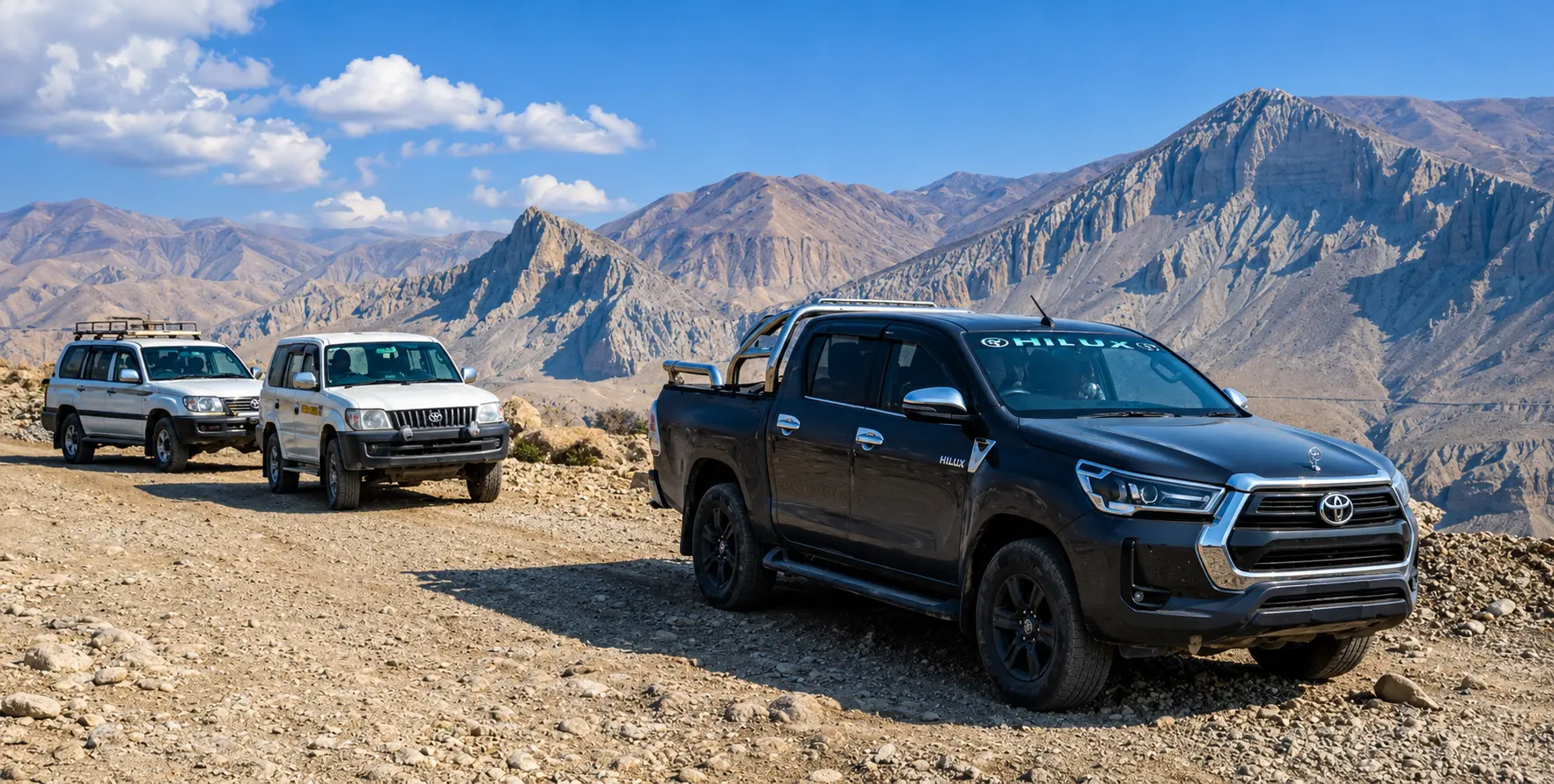
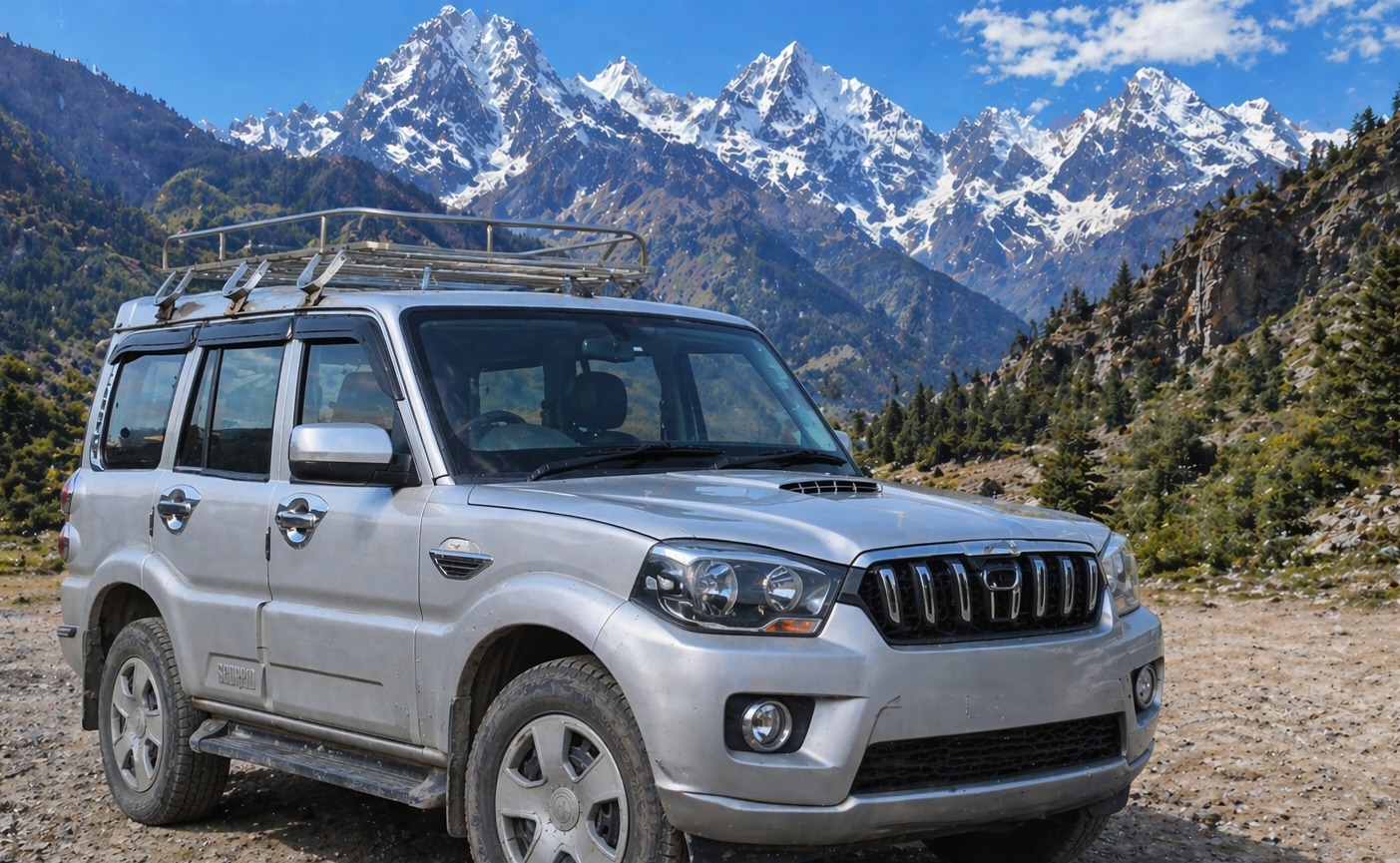
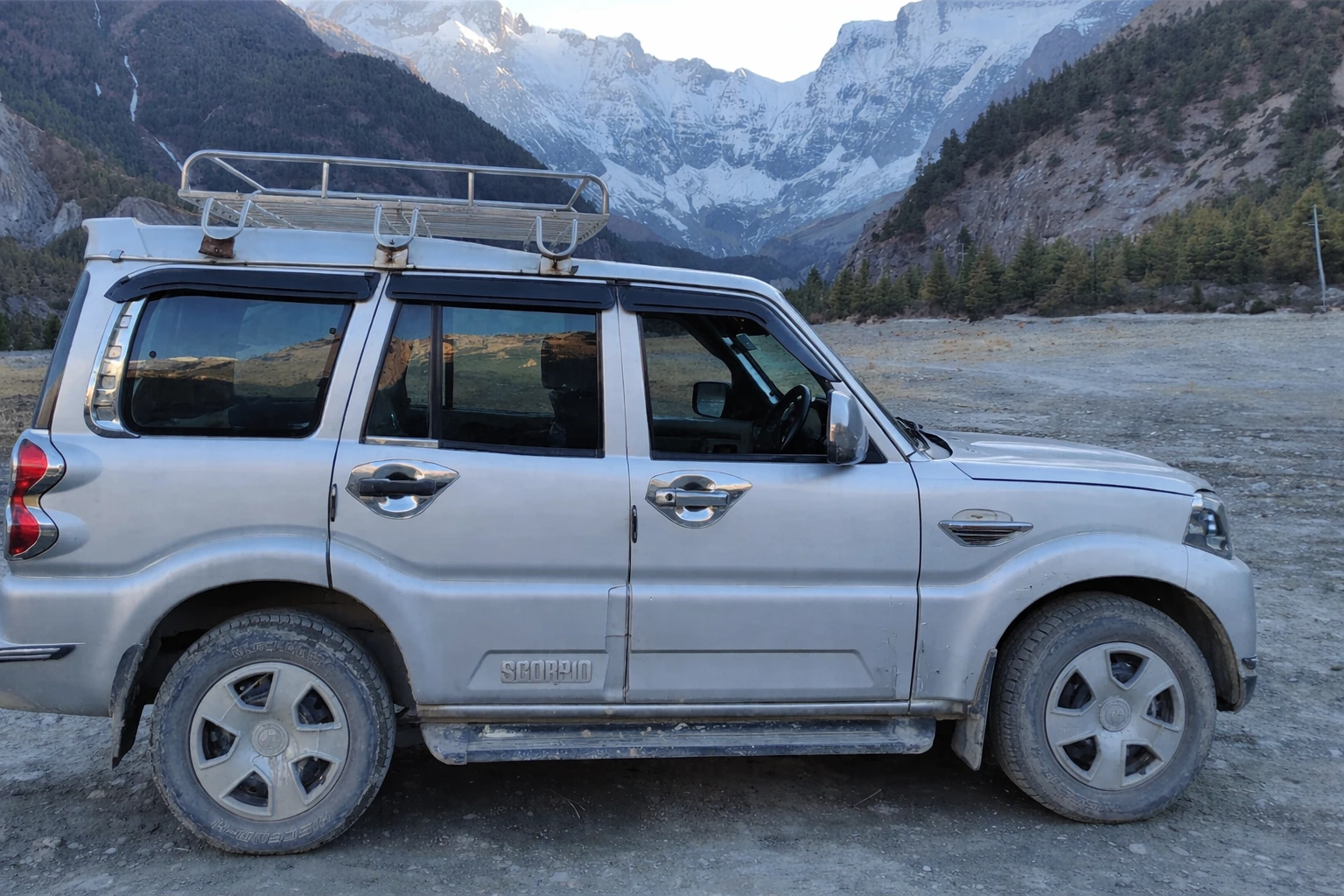
A private 4WD jeep (Toyota Hilux, Mahindra Scorpio, or similar) is an excellent alternative to a sedan, offering more passenger space and luggage capacity with only a modest price premium. The 4WD capability is not essential for this paved highway route, but it provides peace of mind on the occasional rough road section near Sauraha.

  • Vehicle types: Mahindra Scorpio 4WD, Toyota Hilux 4WD, or similar
  • Capacity: 4–6 passengers comfortably with full luggage on the roof rack
  • 2026 Cost: USD 130–170 for the full vehicle (one way)
  • Travel time: 4 to 5 hours
  • Best for: Groups of 4–6 travelers or those with heavy luggage, including trekking gear

Private Hiace Van — Best for Large Groups

For groups of 7 or more traveling together from Chitwan to Kathmandu Airport, a Toyota Hiace van is the most economical and practical option. The per-person cost for a group of 12 sharing a Hiace at USD 180 works out to just USD 15 per person — comparable to a tourist bus but infinitely more reliable for flight connections.

  • Capacity: Up to 14 passengers with luggage on the roof rack
  • 2026 Cost: USD 160–220 for the full vehicle (one way)
  • Travel time: 4.5 to 5.5 hours
  • Best for: Tour groups, families of 7+, corporate travel parties
  • Advantage: Keeps the entire group together — no splitting across multiple vehicles or buses

Tourist buses from Sauraha to Kathmandu are a popular and affordable option for general travel — but they are entirely unsuitable for airport transfers where a specific arrival time matters. Here is why:

  • Fixed departure schedule — buses leave at set times regardless of your flight time
  • Multiple passenger stops — buses may pick up and drop off additional passengers en route
  • No hotel pickup — you must get yourself to the bus departure point
  • Cannot accommodate last-minute timing changes
  • Average journey 6 to 8 hours — longer than a private vehicle
  • No responsibility for ensuring you reach the airport on time

Chitwan to Kathmandu Airport Transfer

Flight — Bharatpur Airport to TIA (Fastest Option)

For travelers with very tight schedules or those willing to pay a premium for speed, a domestic flight from Bharatpur Airport (BHR) to Tribhuvan International Airport (TIA) is the fastest option — with a flight time of just 25 minutes.

  • Airlines: Buddha Air, Yeti Airlines (Summit Air) — multiple daily flights
  • Flight time: ~25 minutes from Bharatpur (BHR) to Kathmandu (KTM)
  • Distance from Sauraha to Bharatpur Airport: ~20–25 km, approximately 45 minutes to 1 hour by car
  • 2026 Cost: Approximately USD 100–130 per person one way (foreign nationals)
  • Total time including transfers: Approximately 2.5 to 3 hours from Sauraha to TIA
  • Limitation: Flights are weather-dependent — Bharatpur flights can be canceled or delayed in low visibility or bad weather
  • Best for: Travelers with very early TIA departure times or those willing to pay for speed and certainty

When to Depart Sauraha — Flight-by-Flight Timing Guide

Departure time from Sauraha (Chitwan) is the single most important planning decision for this transfer. Here is a precise departure guide based on your TIA flight time:

Your Flight TimeLatest Depart SaurahaWhy
Morning flight (6:00–9:00 AM)The previous evening (stay overnight near TIA)AA4–5 hr drive is impossible for dawn flights
Mid-morning flight (9:00–11:00 AM)3:00–4:00 AM from SaurahaArrive KTM by 7:30–9:00 AM — 2 hr buffer
Midday flight (11:00 AM–1:00 PM)5:00–6:00 AM from SaurahaArrive KTM by 10–11 AM — safe buffer
Afternoon flight (1:00–5:00 PM)6:00–7:00 AM from SaurahaAvoid the afternoon Kathmandu traffic
Evening flight (5:00–9:00 PM)8:00–9:00 AM from SaurahaEarly enough to avoid rush hour + buffer
Late night/red-eye (9 PM+)10:00–11:00 AM from SaurahaRelaxed departure, avoid afternoon traffic

TIA International Check-in: Most international airlines require check-in completion at least 3 hours before departure. For example, if your international flight departs at 3:00 PM, you must complete check-in by 12:00 PM. This means arriving at TIA by 11:30 AM at the latest, which means leaving Sauraha by 5:30–6:00 AM at the latest.

Nepal Vehicle Hiring Pvt Ltd always plans departure times based on your specific flight schedule, the current traffic forecast, and a built-in safety buffer. We coordinate with you the evening before your transfer to confirm your departure time and ensure our driver arrives at your hotel punctually.

The Route — Sauraha to Tribhuvan International Airport


StopDistance from SaurahaNotes
Sauraha (Chitwan)StartMain tourist hub — lodges, hotels, safari start
Bharatpur City20 kmChitwan district HQ — fuel, ATMs, facilities
Narayanghat25 kmMajor junction — Prithvi Highway starts here
Malekhu95 kmScenic riverside town — optional tea stop
Mugling105 kmStandard lunch stop — halfway point, river confluence
Naubise140 kmKathmandu Valley entry — traffic increases here
Kalanki155 kmKathmandu ring road — notorious traffic bottleneck
Tribhuvan Intl Airport (TIA)160–170 km6 km east of the city center, Gaushala area

Sauraha to Narayanghat (25 km, 45 min)

The journey begins from your lodge or hotel in Sauraha, the main tourist hub of Chitwan. The road from Sauraha to Bharatpur (the district capital of Chitwan) and on to Narayanghat is a provincial road in good condition. Narayanghat is a major commercial town where the route joins the Prithvi Highway — the main arterial road between Nepal’s south and Kathmandu. Narayanghat has fuel stations, ATMs, pharmacies, and restaurants if needed.

Narayanghat to Mugling (80 km, 2 hours)

From Narayanghat, the Prithvi Highway heads northeast toward Kathmandu. This is the most scenic section of the Chitwan-to-Kathmandu route. The highway follows the beautiful Trishuli River for much of this stretch, passing through lush subtropical forest, river gorges, and small riverside bazaars. The road climbs steadily from the Terai lowlands toward the first Himalayan foothills.

Mugling is the standard midpoint rest stop — approximately 105 km from Sauraha and roughly the halfway point to TIA. It is the confluence of the Trishuli and Marsyangdi rivers. Most private transfers stop here for 15 to 20 minutes to use the toilet facilities, have tea, and enjoy light snacks. Nepal Vehicle Hiring Pvt Ltd drivers communicate with passengers about rest stop preferences and timing — if your flight is tight, the Mugling stop can be shortened to 5-10 minutes.

Mugling to Naubise (45 km, 1 hour)

Above Mugling, the Prithvi Highway continues climbing through increasingly mountainous terrain with numerous hairpin bends, river crossings, and dramatic valley views. The road quality in this section has improved significantly in recent years and is generally smooth tarmac. At Naubise, the highway enters the Kathmandu Valley corridor — you begin to feel the increase in traffic density as you approach the capital.

Naubise to Kalanki (15 km, 30–90 min depending on traffic)

The final approach to Kathmandu from Naubise is where traffic becomes the critical variable. The road descends into the Kathmandu Valley ring, converging with traffic from all directions at Kalanki. This section — just 15 km — can take 30 minutes on a clear morning or 90 minutes during peak afternoon rush hour. Nepal Vehicle Hiring Pvt Ltd drivers monitor traffic conditions in real time using apps and local knowledge, selecting alternative approach routes when congestion is heavy.

Kalanki to Tribhuvan International Airport (9 km, 20–90 min)

From Kalanki, the route heads east through Kathmandu city toward TIA. The airport is located in the Gaushala / Sinamangal area, approximately 6 km east of Thamel. The 9 km from Kalanki to TIA is the most traffic-sensitive section of the entire journey — in the morning it takes 20 to 30 minutes; in afternoon rush hour it can take 1.5 to 2 hours. Nepal Vehicle Hiring Pvt Ltd uses knowledge of Kathmandu’s inner road network to navigate the fastest available route to TIA on the day of travel.

Tribhuvan International Airport (TIA) — Essential Information


TIA Terminal DetailInformation
Full NameTribhuvan International Airport (TIA)
IATA CodeKTM
LocationGaushala / Sinamangal area, east Kathmandu
International TerminalTerminal 1 (main international terminal)
Domestic TerminalDomestic terminal — separate building, 200m from the international terminal
Airport-to-Thamel Distance6 km — approximately 20–40 min depending on traffic
Check-in Deadline (International)Minimum 3 hours before departure — arrive at TIA 3–4 hrs early
Check-in Deadline (Domestic)Minimum 1 hour before departure
FacilitiesBanks, ATMs, currency exchange, duty-free, cafes, and  SIM card shops


Arriving at TIA — What to Expect

Tribhuvan International Airport is Nepal’s primary international gateway. The international terminal processes all international departures and arrivals. The domestic terminal, used for domestic flights, is a separate building approximately 200 meters from the international terminal — your Nepal Vehicle Hiring Pvt Ltd driver will drop you at the correct terminal for your flight.

TIA Check-in and Departure Process

  • Arrive at TIA at least 3 hours before international flight departure — check-in queues can be long.
  • Have your passport, visa, and flight booking confirmation readily accessible at the security checkpoint at the airport gate.
  • Currency exchange counters and ATMs are available inside the terminal — exchange remaining NPR to USD or other currencies before departing.
  • The duty-free zone inside TIA has a reasonable selection of Nepali handicrafts, pashmina, tea, and local products — budget 30–45 minutes if you wish to shop
  • For outbound international flights, a departure tax is included in most international tickets — confirm with your airline.

TIA Drop-off Point

Nepal Vehicle Hiring Pvt Ltd drivers drop you directly at the departure entrance of the appropriate terminal — international or domestic. The driver will assist with unloading luggage from the vehicle and ensure you are oriented correctly before departing. If you have any last-minute questions or need assistance, our driver remains contactable via WhatsApp throughout the journey.


bhatarpur airport

Sauraha to Bharatpur Airport — Domestic Flight Transfer

For travelers whose TIA flight timing makes the 4- to 5-hour road journey impractical, or who want the fastest possible transfer, Nepal Vehicle Hiring Pvt Ltd also provides ground transfers from Sauraha to Bharatpur Airport — the first leg of the air transfer to Kathmandu.

Sauraha to Bharatpur Airport Transfer

  • Distance: Approximately 20–25 km from Sauraha to Bharatpur Airport
  • Travel time: 45 minutes to 1 hour by private car
  • 2026 Cost: USD 25–40 for a private car from Sauraha to Bharatpur Airport
  • Bharatpur Airport domestic check-in: Arrive at least 1 hour before flight departure

Bharatpur (BHR) to Kathmandu (KTM) Flight Details

  • Airlines: Buddha Air, Yeti Airlines (Summit Air) — check current schedules
  • Frequency: Multiple daily flights (approximately every 4 hours)
  • Flight duration: 25 minutes
  • Cost: USD 100–130 per person one way for foreign nationals (2026 rate)
  • TIA arrival: Domestic terminal — allow 20–30 minutes to exit arrivals and reach the TIA international terminal

When to Choose Flight over Road Transfer

  • Your international TIA flight departs before 9:00 AM — road transfer from Sauraha overnight or for the fewer passengers or the ewper-passenger costserscostrostcompain transfersconumbersss
  • Ypassengersule has no flexibility — the 25-minute flight dramatically reduces weather and traffic risk.
  • Delays prefer comfort and speed above all — the aerial views of the Annapurna range on the Bharatpur–Kathmandu flight are spectacular.

Weather Risk: Bharatpur domestic flights are weather-dependent and can be canceled or significantly delayed due to fog (codue toon in winter), heavy cloud cover, or monsoon conditions. For TIA, conditions can change the same day; always have a backup ground transfer plan. Nepal Vehicle Hiring Pvt Ltd can arrange both the Bharatpur flight transfer AND a backup road transfer simultaneously for maximum security.


Booking Your Chitwan to Kathmandu Airport Transfer — Step by Step

Step 1 — Confirm Your TIA Flight Details

Before contacting Nepal Vehicle Hiring Pvt Ltd, have your exact flight details ready: airline, flight number, departure date, departure time (local Nepal time), and terminal (international or domestic). This information is essential for calculating your optimal departure time from Sauraha.

Step 2 — Contact Nepal Vehicle Hiring Pvt Ltd

Reach us via WhatsApp or phone at +977-9851343204. Share your flight details, group size, luggage volume, and pickup address in Sauraha. We will calculate your departure time, recommend the best vehicle type, and provide an all-inclusive quote within minutes.
Step 3 — Confirm Your Booking

Confirm by WhatsApp or email. We accept payment in USD cash, NPR, or bank transfer. A small advance deposit may be required for peak-season bookings. You will receive a booking confirmation with your driver’s name and WhatsApp contact number.

Step 4 — Evening Before Transfer — Reconfirmation

The evening before your transfer, your Nepal Vehicle Hiring Pvt Ltd driver will contact you to reconfirm the departure time, your hotel address, and any last-minute updates. This is also the time to communicate any changes to luggage or group size.

Step 5 — Transfer Day

Your driver arrives at your hotel at the confirmed time. The vehicle is clean, air-conditioned, and fully fueled. The driver loads your luggage. You are on the road to Kathmandu Airport — with a professional, experienced driver who knows every kilometer of the route and every alternative road around Kathmandu’s traffic hotspots.

Booking Tip: Book your Chitwan-to-Kathmandu Airport transfer at least 48–72 hours in advance during peak travel seasons. Same-day and last-minute bookings are accommodated, subject to availability, but booking an airport g provides peace of mind and ensures the right vehicle is reserved for your group.

What to Do If Your Flight Changes

Flight changes, cancellations, and rescheduling are a reality of Nepal air travel — especially for international connections. Here is how Nepal Vehicle Hiring Pvt Ltd handles common scenarios:

Flight Delayed — Extra Time Available

If your TIA flight is delayed and you have additional time before check-in, Nepal Vehicle Hiring Pvt Ltd can adjust your Sauraha departure time accordingly, allowing you to fit in an extra safari activity, enjoy a more relaxed morning at your lodge, or stop for a comfortable Mugling lunch. Contact us via WhatsApp as soon as you receive the delay notification — we coordinate with your driver to adjust timing without penalty.

Flight Canceled — Needs Rescheduling

If your flight is canceled (common with Nepal’s domestic and some international carriers in bad weather), Nepal Vehicle Hiring Pvt Ltd can adjust your transfer date to match your rebooked flight at no additional scheduling fee. Road transfer costs remain the same — only the date changes.

Emergency — Missed Flight Due to Unforeseen Circumstances

In the rare event of a vehicle breakdown, road closure, or other emergency en route, Nepal Vehicle Hiring Pvt Ltd maintains a network of backup vehicles and contacts. We will coordinate an alternative vehicle or transport solution and communicate proactively with you throughout any disruption. Our drivers carry tools for minor vehicle issues and have contacts along the route for emergency support.


Practical Tips for Your Chitwan to Kathmandu Airport Transfer

  • Book your transfer AT LEAST 48 hours in advance — this guarantees vehicle availability and allows proper departure time planning around your specific flight.
  • Always share your exact flight details (airline, flight number, departure time) with Nepal Vehicle Hiring Pvt Ltd — departure time is calculated based on your specific flight, not a generic estimate.
  • Plan to leave Sauraha early. Kathmandu traffic is unpredictable — an early departure is the most effective risk-mitigation strategy for this transfer.
  • Have your passport, visa, and flight confirmation easily accessible in your day bag — not in checked luggage. Airport security checks begin at the TIA gate entrance.
  • Exchange or withdraw enough NPR before leaving Sauraha for any incidentals — the TIA exchange rate is often less favorable than Sauraha or Narayanghat.
  • Carry a light jacket or layer for the vehicle — air conditioning in private cars and vans can be cold on a 4- to 5-hour journey.
  • Eat a proper meal before departing Sauraha or plan a stop at Mugling — TIA has limited and expensive food options once you pass security.
  • Keep your phone charged — your driver’s WhatsApp contact is your primary line of communication throughout the transfer. Carry a power bank.
  • If flying internationally, reconfirm with your airline whether your flight departs from the international terminal or if any last-minute terminal changes have occurred — TIA procedures can change.
  • For families or groups with young children, communicate this when booking — Nepal Vehicle Hiring Pvt Ltd ensures child-appropriate seating and can plan more frequent rest stops.
  • Do not leave valuable items (passports, laptops, cameras) in the vehicle if making a rest stop — always take your day bag with valuables inside with you.


Chitwan to Kathmandu Airport — Frequently Asked Questions

How far is Sauraha (Chitwan) from Kathmandu Airport (TIA)?

The road distance from Sauraha, Chitwan, to Tribhuvan International Airport (TIA) in Kathmandu is approximately 147 to 165 km, depending on the exact location of your hotel in Sauraha. The route follows the Prithvi Highway through Narayanghat, Mugling, and Naubise into Kathmandu.

How long does the Chitwan to Kathmandu Airport transfer take?

A private car or jeep transfer takes approximately 4 to 5 hours in good traffic conditions. However, due to Kathmandu’s unpredictable traffic — particularly at the Kalanki junction — Nepal Vehicle Hiring Pvt Ltd always advises planning for a minimum of 5 to 6 hours, or adding a 2-hour buffer to the estimated drive time.

What is the 2026 cost of a private car from Chitwan to Kathmandu Airport?

A private sedan hire from Sauraha (Chitwan) to TIA costs approximately USD 110-150 for the full vehicle (one-way), including driver, fuel, and road tolls. A private jeep costs USD 130-170. A Hiace van for larger groups costs USD 160-220.

Can I take a tourist bus from Chitwan to Kathmandu Airport?

Tourist buses are not recommended for airport transfers. They operate on fixed schedules, make multiple stops, take 6 to 8 hours, and cannot guarantee arrival times. The risk of missing your international flight is significant. Nepal Vehicle Hiring Pvt Ltd strongly recommends private car or jeep hire for all Chitwan-to-TIA airport transfers.

What time should I leave Sauraha for a 3:00 PM flight from TIA?

For a 3:00 PM international TIA flight, international check-in closes at 12:00 PM — meaning you must arrive at TIA by 11:30 AM at the latest. Allow 5 to 6 hours for the Sauraha-to-TIA transfer to account for Kathmandu traffic. This means departing from Sauraha between 5:30 and 6:00 AM. Nepal Vehicle Hiring Pvt Ltd calculates this precisely for every booking.

Is there an alternative to driving — can I fly from Chitwan to Kathmandu?

Yes. Bharatpur Airport (BHR), approximately 20–25 km from Sauraha, has multiple daily domestic flights to TIA Kathmandu. The flight takes only 25 minutes. Nepal Vehicle Hiring Pvt Ltd provides a Sauraha-to-Bharatpur Airport ground transfer (approximately USD 25–40), after which you fly to TIA on Buddha Air or Yeti Airlines (approximately USD 100–130 per person). This is the fastest option, but it is weather-dependent.

What if there is a traffic jam and I might miss my flight?

Nepal Vehicle Hiring Pvt Ltd drivers use real-time traffic monitoring and knowledge of Kathmandu’s inner road network to navigate around congestion. Our departure times are always calculated with a traffic buffer. In cases of extreme or unexpected congestion, drivers contact us immediately, and we explore all available options, including alternative routes. This is why we never recommend tourist buses for airport transfers — a private driver has the flexibility and motivation to find solutions.

Can you arrange a Chitwan-to-Kathmandu Airport transfer on short notice?

Yes. Nepal Vehicle Hiring Pvt Ltd accepts same-day and last-minute bookings subject to vehicle availability. However, for the reliability and peace of mind that an airport transfer requires, we recommend booking at least 48 hours in advance. Contact us immediately via WhatsApp at +977-9851343204 for urgent transfer requests.

Does the transfer price include drop-off directly at the TIA terminal?

Yes. All Nepal Vehicle Hiring Pvt Ltd airport transfer prices include door-to-door service from your Sauraha hotel directly to the TIA departure terminal — international or domestic as required. There are no hidden fees or additional charges for terminal drop-off.

Why Choose Nepal Vehicle Hiring Pvt Ltd for Your Airport Transfer?

Nepal Vehicle Hiring Pvt Ltd is Kathmandu’s most trusted vehicle hire company, with extensive experience in time-sensitive airport transfers. Here is why travelers choose us for the Chitwan to Kathmandu Airport transfer:

  • Flight-Specific Departure Planning: We calculate your Sauraha departure time based on your exact TIA flight, real-time traffic forecasts, and a built-in safety buffer — not a generic estimate.
  • 24/7 Availability: Airport transfers happen at all hours — 3:00 AM departures, midnight pickups, early morning flights. Nepal Vehicle Hiring Pvt Ltd operates around the clock.
  • Door-to-Door Service: Pickup from your hotel or lodge in Sauraha, drop-off at the correct TIA terminal — international or domestic. No stops, you did not request.
  • Professional Licensed Drivers: Experienced in the Prithvi Highway, knowledgeable about Kathmandu’s inner road network, and skilled at navigating around traffic congestion on transfer days.
  • Real-Time Traffic Monitoring: Our drivers use apps and local knowledge to select the fastest available route into Kathmandu and to TIA on the day of travel.
  • Transparent All-Inclusive Pricing: Driver, fuel, tolls, and parking at TIA are all included. The price quoted is the price you pay.
  • Flight Change Flexibility: Last-minute flight rescheduling or delays are accommodated without penalty. We coordinate with your driver to adjust timing in real time.
  • Full Fleet: Private sedans (1–3 pax), 4WD jeeps (2–6 pax), Hiace vans (7–14 pax), and coaster buses (15–25 pax) — the right vehicle for every group size.
  • WhatsApp Communication Throughout: Your driver’s direct WhatsApp number is shared at booking — continuous communication from departure to TIA drop-off.


Conclusion

The Chitwan-to-Kathmandu Airport transfer is one of Nepal’s most time-critical travel logistics challenges. The 147 to 165 km road journey, combined with Kathmandu’s unpredictable traffic, means this is not a transfer that rewards last-minute planning or budget compromises on transport reliability.

A private car, jeep, or Hiace van from Nepal Vehicle Hiring Pvt Ltd gives you the control, flexibility, and professional service that an airport transfer demands. With flight-specific departure time planning, door-to-door hotel pickup in Sauraha, experienced drivers who know every kilometer between Chitwan and TIA, and 24/7 booking and communication support, we ensure you arrive at Tribhuvan International Airport on time — every time.

Book your Chitwan to Kathmandu Airport transfer today and end your Nepal adventure the right way: relaxed, on time, and with every detail handled professionally.

 Book your transfer now — Call or WhatsApp: +977 9851013196

Pokhara to Ulleri Jeep Service

Pokhara to Ulleri Jeep Service

Pokhara to Ulleri Jeep Service

Ask any experienced Poon Hill trekker about the Ulleri stone steps, and watch their eyes go wide. More than 3,300 stone steps rise steeply from Tikhedhunga to Ulleri — a knee-punishing, lung-testing climb that many trekkers describe as the hardest two hours on the entire Ghorepani–Poon Hill circuit. For years, there was no choice but to climb every single step on foot.

That has all changed. Thanks to road development in the Annapurna foothills, a 4WD jeep can now reach Ulleri directly from Pokhara — skipping those legendary stone steps entirely and placing you at 1,960 meters in just 2.5 to 3.5 hours. This is genuinely game-changing for families with children, older trekkers, time-limited visitors, and anyone who wants to start their Poon Hill or Annapurna Base Camp trek with energy rather than exhaustion.

This complete 2026 guide covers everything you need to know about the Pokhara to Ulleri jeep service — route details, costs, road conditions, the best stopping points, permit requirements, onward trek options, and why Nepal Vehicle Hiring Pvt Ltd is the most reliable jeep hire partner for this exciting off-road journey.


Ulleri — A Village at the Gateway of Poon Hill

Ulleri is a traditional Magar community village situated at an elevation of 1,960 meters (6,430 ft) in the Annapurna Conservation Area, Kaski District. One of the largest Magar settlements in the Annapurna foothills, Ulleri has long been a key waypoint on the Ghorepani–Poon Hill trekking route — the overnight rest stop after the notorious stone step ascent from Tikhedhunga.

The Magar people of Ulleri have strong ties to Nepal’s Gurkha military tradition and maintain a deeply rooted culture of warm hospitality, traditional stone-built houses, and age-old farming practices on the terraced hillsides above the Modi Khola valley. From Ulleri, the Annapurna South, Hiunchuli, and Machhapuchhre (Fishtail) peaks fill the northern horizon in an extraordinary panorama.

  • Altitude: 1,960 m (6,430 ft) above sea level
  • District: Kaski District, Gandaki Province, Annapurna Conservation Area
  • People: Magar community — Gurkha heritage, warm hospitality, traditional culture
  • Mountain Views: Annapurna South (7,219 m), Hiunchuli (6,441 m), Machhapuchhre / Fishtail (6,993 m)
  • Famous For: Gateway to Ghorepani and Poon Hill; the legendary 3,300+ stone step ascent from Tikhedhunga
  • Trek Connections: Ghorepani–Poon Hill Circuit, Annapurna Base Camp Trek, Tadapani–Ghandruk Loop
  • Facilities: Tea houses, guesthouses, basic dining, stunning mountain viewpoints


Key Facts at a Glance — Pokhara to Ulleri 2026


DetailInformation
Total Distance48–52 km (Pokhara to Ulleri)
Ulleri Altitude1,960 m (6,430 ft) above sea level
Travel Time by Private Jeep2.5 to 3.5 hours total
Pokhara to Nayapul42 km | 1 hour | Paved Beni Baglung Highway
Nayapul to Hile / Tikhedhunga6 km | 45 min | Rough off-road track
Hello to Ulleri4 km | 30–45 min | Very rough, steep — 4WD essential
4WD Required?Mandatory from Nayapul onward
Famous Stone Steps BypassedYes — jeep skips the legendary 3,300+ stone steps to Ulleri
Best Season for JeepOctober to February (dry season) — road not passable in heavy monsoon
Permits RequiredACAP (Annapurna Conservation Area Permit) + TIMS Card
Trek ConnectionsGhorepani–Poon Hill, Annapurna Base Camp, Tadapani–Ghandruk Loop


The Big Advantage: Hiring a jeep from Pokhara to Ulleri saves you the famous 3,300+ stone step climb from Tikhedhunga — approximately 2 hours of steep, knee-straining ascent that many trekkers find the most demanding section of the entire Poon Hill circuit. You arrive at Ulleri rested, ready, and with your knees intact for the real mountain trekking ahead.


The Route — Pokhara to Ulleri Step by Step

The Pokhara to Ulleri jeep route follows a clear two-phase journey: a smooth paved highway for the first 42 km, followed by a progressively rougher off-road mountain track for the final 10 km. Here is the complete route breakdown:


StopDistance from PokharaAltitudeRoad TypeKey Notes
Pokhara (Lakeside)Start827 mCity roadsDeparture point — hotel pickup available
Naudanda / Kande28 km1,440 mPaved highwayPanoramic Annapurna views — photo stop
Nayapul42 km1,070 mPaved highwayClassic ABC trek start, bus stop junction
Birethanti44 km1,025 mPaved → roughACAP checkpoint, Modi Khola riverside
Hile / Tikhedhunga47 km1,480 mRough off-roadCommon stopping point; walk option to Ulleri
Ulleri50–52 km1,960 mVery rough 4WD trackMagar village, Poon Hill gateway, stone steps start.


Phase 1 — Pokhara to Nayapul via Beni Baglung Highway (42 km, 1 hour)

Leaving Pokhara, the jeep follows the Beni Baglung Highway southward through the Modi Khola valley. The road is fully paved and in good condition — one of the better-maintained provincial highways in the Gandaki region. The journey passes through Naudanda and Kande, offering spectacular panoramic views of the Annapurna massif on clear mornings, before descending toward Nayapul.

  • Pokhara Lakeside → Naudanda / Kande (28 km, 40 min): Climbing hilltop with sweeping Annapurna Range views — prime photography stop
  • Kande → Nayapul (14 km, 20 min): Descending into the Modi Khola valley through terraced farmland
  • Nayapul → Birethanti (2 km, 5 min): Riverside village junction — ACAP checkpoint and permit inspection

Phase 2 — Nayapul / Birethanti to Hile / Tikhedhunga (~6 km, ~45 min)

Beyond Birethanti, the paved road gives way to a rough gravel-and-earth track that follows the Modi Khola upstream. This is where the off-road adventure begins. The track is manageable for a 4WD jeep, but noticeably rougher than the highway. Views of the river gorge and terraced hillsides become increasingly dramatic as altitude increases.

  • Birethanti → Sudame: 3 km, 20–25 min — riverside track, initial off-road transition
  • Sudame → Hile / Tikhedhunga: 3 km, 20 min — steeper track, Modi Khola views, first mountain settlement

Phase 3 — Hile / Tikhedhunga to Ulleri (4 km, 30–45 min)

The section from Hile (Tikhedhunga) to Ulleri is the most challenging and exciting part of the entire jeep journey. The road is very rough, narrow, and steep — requiring genuine 4WD capability, low-range gear engagement, and an experienced driver. This section bypasses the famous 3,300+ stone steps that trekkers climb on foot between Tikhedhunga and Ulleri.

  • Hile / Tikhedhunga → Ulleri: 4 km, 30–45 min — extremely rough, rocky track, steep switchbacks, dramatic views

Important Distinction: Hile (also called Tikhedhunga) and Ulleri are different points on the route. Hile is at 1,480 m; Ulleri is at 1,960 m. Some jeeps stop at Hile rather than attempting the very steep Hile-to-Ulleri section. From Hile to Ulleri on foot takes approximately 1.5 to 2 hours, still saving most of the stone steps. Confirm with your driver whether they will attempt the full drive to Ulleri or stop at Hile.

Nepal Vehicle Hiring Pvt Ltd’s experienced drivers assess road conditions on arrival at Hile and reach the closest accessible point to Ulleri village — maximizing the value of your jeep service.


All Jeep Service Options — Pokhara to Ulleri 2026

Here is a complete comparison of all transport options for reaching Ulleri from Pokhara:

Service TypeCapacity2026 Cost (approx.)Notes
Private Jeep — Pokhara to Ulleri4–7 passengersUSD 100–150 (full vehicle)Best — hotel pickup, flexible, direct
Private Jeep — Pokhara to Hile4–7 passengersUSD 80–120 (full vehicle)Slightly cheaper; 30-min walk to Ulleri
Private Jeep — Nayapul to Ulleri4–7 passengersUSD 70–90 (full vehicle)Take the local bus to Nayapul first
Shared Jeep — Pokhara to UlleriPer seat (7–9 total)USD 15–20 per personFrom Baglung Bus Park, fill-and-go
Shared Jeep — Nayapul to UlleriPer seatUSD 10–15 per personAvailable at Nayapul / Birethanti
Local Bus — Pokhara to NayapulMany passengersNPR 200–300 per personThen walk or shared jeep to Ulleri

Pokhara to Ulleri Jeep Service

Private Jeep — Pokhara to Ulleri (Best Option)

A private 4WD jeep (Mahindra Scorpio, Toyota Hilux, or similar) hired directly from Pokhara to Ulleri is the gold standard for this route. You get door-to-door hotel pickup from anywhere in Pokhara, complete flexibility to stop at viewpoints along the Beni Baglung Highway, and the most direct and comfortable route to Ulleri, with no vehicle transfers.

  • Vehicle types: Mahindra Scorpio 4WD, Toyota Hilux 4WD
  • Capacity: 4–6 passengers comfortably; up to 7 with minimal luggage
  • 2026 Cost: USD 100–150 for the full vehicle (one way — driver, fuel, tolls included)
  • Travel time: 2.5 to 3.5 hours from Pokhara to Ulleri
  • Pickup: Door-to-door from your hotel in Lakeside or anywhere in Pokhara
  • Advantage: No transfers, no waiting, hotel pickup, complete itinerary flexibility

Per-Person Value: With a group of 6 sharing a private jeep for USD 120, the per-person cost is just USD 20 — barely more than a shared jeep, yet with massive advantages in comfort, convenience, and service.

Private Jeep — Pokhara to Hile (Budget Alternative)

A slightly more economical option is to hire a private jeep from Pokhara to Hile (Tikhedhunga), then walk the 1.5 to 2 hours uphill from Hile to Ulleri. This avoids the most challenging jeep section (Hile to Ulleri) while still saving approximately 1.5 hours of the Nayapul-to-Hile walking section.

  • 2026 Cost: USD 80–120 for full vehicle hire from Pokhara to Hile
  • Walking from Hile to Ulleri: ~1.5 to 2 hours on foot — significantly less demanding than the full stone step climb from Tikhedhunga on the traditional trekking route
  • Best for: Trekkers who want to save money but still skip the worst of the lower approach walking

Shared Jeep — Budget Option for Solo Travelers

Shared jeeps depart from Baglung Bus Park in Pokhara on an irregular fill-and-go schedule. In peak season (October–November and March–May), shared jeeps are relatively easy to find. During the off-season, availability is more limited.

  • 2026 Cost: USD 15–20 per person from Pokhara to Ulleri
  • Departure: Baglung Bus Park, Pokhara — no hotel pickup
  • Departure time: Early morning (6:30–8:00 AM) — departs only when vehicle is full
  • Travel time: 3 to 4 hours (additional stops en route)
  • Limitation: Crowded seating with 7–9 passengers; limited luggage space; no flexibility in stops or schedule

Local Bus to Nayapul + Shared Jeep to Ulleri

The most budget-friendly combination — a local bus from Pokhara to Nayapul, followed by a shared jeep from Nayapul or Birethanti to Ulleri.

  • Local bus Pokhara to Nayapul: NPR 200–300 per person (from Baglung Bus Park)
  • Shared jeep Nayapul to Ulleri: USD 10–15 per person
  • Total cost: Approximately USD 12–17 per person
  • Total time: 3.5 to 5 hours with waiting time
  • Best for: Solo budget backpackers who are comfortable managing their own logistics in Nepal


Road Conditions — Pokhara to Ulleri

Pokhara to Nayapul — Beni Baglung Highway

The Beni Baglung Highway is a well-maintained two-lane paved road in good overall condition. It is easily manageable for all vehicle types, including standard cars and Hiace vans. Road improvements have been ongoing in this section, and the surface quality is consistently good throughout the year.

Nayapul to Hile / Tikhedhunga — Off-Road Track

Beyond Nayapul, the tarmac gives way to a rough gravel track that follows the Modi Khola river upstream. The road is narrow — wide enough for one vehicle with passing places for two vehicles to maneuver. It is manageable for 4WD jeeps throughout the dry season (October–May), but can become muddy and difficult to navigate after heavy rain. This section requires 4WD traction and a driver experienced in narrow off-road mountain tracks.

Hile to Ulleri — The Steepest Section

This is the most technically demanding section of the Pokhara-Ulleri jeep route. The road is extremely steep, rocky, and very narrow — in some sections only slightly wider than the vehicle itself. Ground clearance is critical. The driver must engage low-range 4WD and navigate carefully around large rocks and tight switchbacks. In good, dry conditions, an experienced driver in a well-maintained Scorpio or Hilux can reach Ulleri without difficulty. In wet or monsoon conditions, this section can become impassable.

Season-by-Season Road Conditions

SeasonMonthsRoad ConditionJeep Accessible?Recommendation
Post-Monsoon / AutumnOct – NovDry, goodYes — best conditionsBest — crystal clear mountain views
WinterDec – FebDry, coldYes — dusty gravelGood — quiet trails, fewer tourists
SpringMar – MayMostly dryUsually yesGood — rhododendron forests in full bloom
MonsoonJun – SepMuddy, dangerousOften NOAvoid the jeep to Ulleri — landslide risk

Monsoon Season (June–September): The Nayapul to Ulleri off-road track is highly susceptible to landslides, mudslides, and track damage during heavy monsoon rainfall. The Hile to Ulleri section, in particular, becomes dangerous and is often completely impassable during the peak monsoon season. Nepal Vehicle Hiring Pvt Ltd monitors daily road conditions and will proactively advise you if jeep service to Ulleri is not possible on your planned travel date. The dry season (October to February) is the recommended period for jeep service to Ulleri.

Pokhara to Ulleri Jeep Service

Why Take a Jeep to Ulleri? — The 3,300 Stone Steps Question

This is the question every Poon Hill trekker faces: should I walk from Tikhedhunga to Ulleri on the traditional route, or hire a jeep?

The traditional trekking route from Tikhedhunga to Ulleri follows a famous (or infamous) stone staircase of more than 3,300 steps, rising approximately 500 vertical meters in about 2 hours. It is one of the most demanding short climbs on any Nepal trekking trail — steep, unrelenting, and exhausting, especially under the weight of a full trekking pack in warm conditions.

Strong Reasons to Take the Jeep

  • Save 2 hours of steep climbing before your trek even properly begins — arrive at Ulleri with full energy reserves for the days ahead.
  • Ideal for older trekkers or those with knee, hip, or joint concerns — the stone step descent on the return is equally punishing.
  • Perfect for families with young children — carrying children or keeping them motivated on 3,300 steps is genuinely difficult.
  • Time-efficient — particularly valuable for 2-day express Poon Hill itineraries where every hour matters
  • Heavy trekking luggage is much safer on a jeep roof rack than being carried on steep stone steps.
  • The jeep ride itself is a thrilling off-road adventure — the views of Annapurna, Machhapuchhre, and the Modi Khola gorge from the jeep track are spectacular.

When Walking is the Better Choice

  • If you have 4+ days for the Poon Hill circuit, the traditional walking route from Nayapul offers the complete trekking experience — riverside paths, village culture, and the satisfying sense of earning the altitude
  • The stone step climb, while demanding, is also a remarkable cultural experience — passing through Magar villages, meeting local porters, and experiencing the rhythm of traditional Himalayan trekking
  • During monsoon season, when the jeep road is unreliable, walking is the only option, and the trail is lush and vibrantly green

Treks Accessible from Ulleri


Trek / DestinationFrom UlleriDurationHighlights
Ghorepani VillageUlleri (start)4–5 hrs walkRhododendron forests, mountain lodges
Poon Hill Sunrise (3,210 m)Via Ghorepani+45 min from GhorepaniBest Himalayan panorama in the Annapurna region
Banthanti VillageUlleri (1 hr)1 hour above UlleriForest tea houses, green valley views
Ghandruk Loop (via Tadapani)Via Ghorepani2–3 day loopClassic Annapurna circuit loop trek
Annapurna Base CampVia Ghorepani + Chhomrong6–8 days totalFull ABC journey from Ulleri
Mulde / Dobato ViewpointVia Ghorepani2–3 day optionOff-beat panorama, Dhaulagiri views

Pokhara to Ulleri Jeep Service

Ghorepani and Poon Hill (3,210 m) — The Primary Destination

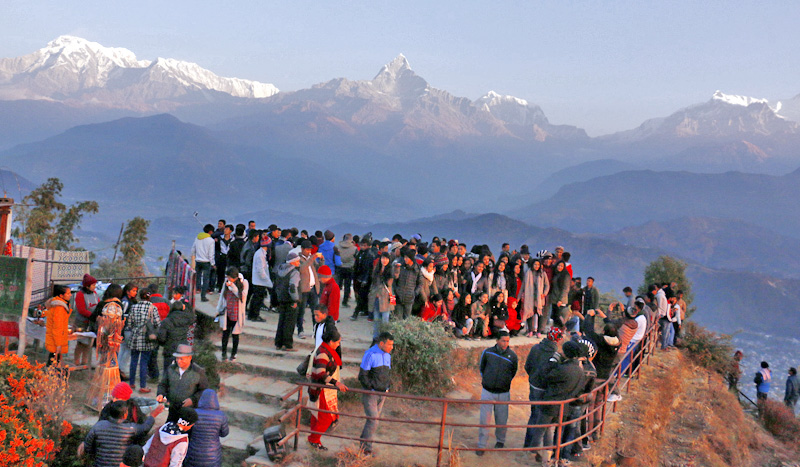
From Ulleri, the trail climbs north through the charming village of Banthanti (2,250 m) and the cool rhododendron and oak forests above, reaching Ghorepani (2,870 m) in approximately 4 to 5 hours. Ghorepani is the overnight base for the famous Poon Hill sunrise hike. At 3:30–4:30 AM the following morning, trekkers make the 45-minute climb to Poon Hill (3,210 m) to witness one of the most celebrated Himalayan panoramas on earth — a 180-degree arc of peaks including Dhaulagiri (8,167 m), Annapurna I (8,091 m), Annapurna South (7,219 m), Nilgiri (7,061 m), and Machhapuchhre (6,993 m), all lit by the rising sun in shades of gold and pink.

Banthanti Village (1 Hour Above Ulleri)

Just one hour above Ulleri, Banthanti is a small but charming village of tea houses set in dense forest. The transition from open terraced farmland to cool montane forest happens between Ulleri and Banthanti — a beautiful transformation that signals your genuine entry into the high Annapurna foothills. Many trekkers on 2-day itineraries push through Banthanti to Ghorepani in a single day.

Ghorepani to Tadapani – Ghandruk Loop (3 Days)

One of the most rewarding loop treks in the Annapurna region combines the Poon Hill sunrise with a traverse from Ghorepani to Tadapani and descent to Ghandruk village before returning to Pokhara by jeep. After the sunrise at Poon Hill, trekkers cross the ridge to Tadapani (2,630 m) — a beautiful traverse through rhododendron forests — then descend to the Gurung village of Ghandruk (1,940 m) with its cobblestone lanes and magnificent Annapurna South views. From Ghandruk, a jeep returns to Pokhara. This loop avoids retracing the same route and is widely regarded as the finest 3–4 day trekking circuit in the western Annapurna foothills.

Annapurna Base Camp Trek (Via Ghorepani and Chhomrong)

For trekkers with 7 to 9 days available, Ulleri serves as a starting point for the full Annapurna Base Camp Trek. From Ghorepani, the route continues to Tadapani, Chhomrong, and the Annapurna Sanctuary — the glacial amphitheater surrounded by Annapurna I, II, III, IV, South, Gangapurna, and Machhapuchhre — before returning via Jhinu Danda and Nayapul to Pokhara. Starting this trek from Ulleri by jeep saves one full day of walking on the lower approach.


Permits Required — Pokhara to Ulleri 2026

The Ulleri area falls within the Annapurna Conservation Area. Two mandatory permits are required and inspected at the ACAP checkpoint in Birethanti:
ACAP — Annapurna Conservation Area Permit

  • Cost: NPR 3,000 per person for foreign nationals (approximately USD 22 — verify current rate before travel)
  • SAARC nationals: NPR 200 per person
  • Where to obtain: Nepal Tourism Board office in Lakeside, Pokhara, or Bhrikuti Mandap, Kathmandu — OR at the Birethanti checkpoint
  • Inspected at: Birethanti ACAP checkpoint (mandatory vehicle stop) and multiple points on the trail

TIMS Card — Trekkers’ Information Management System

  • Cost: Approximately USD 10–20 per person for foreign nationals
  • Where to obtain: Nepal Tourism Board or TAAN office in Lakeside, Pokhara, or Thamel, Kathmandu

The Pokhara-to-Ulleri jeep service offers an efficient 2-day Poon Hill experience that has become increasingly popular among time-limited travelers. Here is the recommended 2-day itinerary:

Day 1 — Pokhara to Ulleri by Jeep, Trek to Ghorepani

  • 7:00 AM: Depart Pokhara by private jeep — hotel pickup in Lakeside
  • 7:30 AM: Photo stop at Kande / Naudanda viewpoint — Annapurna Range panorama
  • 9:00 AM: Arrive Birethanti — ACAP permit check, brief rest stop
  • 9:30–10:00 AM: Arrive Ulleri (1,960 m) — start trek
  • Trek: Ulleri → Banthanti (2,250 m) → Nangethanti → Ghorepani (2,870 m) — approximately 4 to 5 hours walking
  • 2:30–3:30 PM: Arrive Ghorepani — check into tea house, rest, explore village
  • Evening: Tea house dinner, early bedtime — Poon Hill sunrise requires a 4:30 AM start

Day 2 — Poon Hill Sunrise, Trek Return to Ulleri, Jeep to Pokhara

  • 4:30–5:00 AM: Wake up and hike to Poon Hill (3,210 m) — approximately 45 minutes to 1 hour
  • 6:00–6:30 AM: Sunrise panorama — Dhaulagiri, Annapurna Range, Machhapuchhre in morning light
  • 7:30 AM: Return to Ghorepani for breakfast
  • 8:30 AM: Begin descent — Ghorepani → Nangethanti → Banthanti → Ulleri
  • 11:00–11:30 AM: Arrive Ulleri — board jeep for return to Pokhara
  • 1:30–2:00 PM: Arrive Pokhara — afternoon free

This 2-day itinerary is the most efficient way to experience the Poon Hill sunrise and return to Pokhara in a single overnight trip — perfect for travelers with limited time or those combining Poon Hill with other Nepal experiences.


What to Pack for the Pokhara to Ulleri Jeep Journey

  • ACAP permit and TIMS card: Easily accessible in your day bag — inspected at Birethanti checkpoint
  • Trekking boots: The trail above Ulleri is rocky and uneven — proper footwear is essential
  • Warm layers: Ghorepani at 2,870 m is significantly colder than Pokhara — pack a fleece and a down jacket
  • Rain gear: The Poon Hill area is prone to afternoon showers even in the dry season — a lightweight waterproof jacket is essential
  • Headlamp and spare batteries: The Poon Hill pre-dawn hike requires reliable light
  • Water bottle and water purification tablets or filter: Tea houses provide boiled water, but carry backup
  • Snacks and energy food for the trek: Tea houses are available every hour on the trail
  • Sunscreen, sunglasses, and lip balm: High altitude UV intensity is strong even on overcast days
  • Camera with full battery and extra storage: The Poon Hill panorama is one of Nepal’s greatest photography opportunities
  • Cash (NPR): Limited ATM access on the trail — carry enough for accommodation, meals, and tips
  • Motion sickness medication: The Beni Baglung Highway and off-road section to Ulleri have numerous winding switchbacks

Pokhara to Ulleri Jeep Service

Practical Tips for Your Pokhara to Ulleri Jeep Service

  • Book your jeep at least 24–48 hours in advance during peak season (October–November and March–May) — vehicles are in high demand from Pokhara during the Poon Hill trekking season.
  • Depart Pokhara by 7:00–7:30 AM to arrive in Ulleri by 10:00–10:30 AM — giving you the full morning to trek to Ghorepani and arrive well before dark.
  • Obtain ACAP and TIMS permits at the Nepal Tourism Board in Lakeside, Pokhara, before departure — saves time and avoids delays at the Birethanti checkpoint.
  • Confirm with your driver whether the jeep will reach Ulleri directly or stop at Hile (Tikhedhunga) — and plan your trekking time accordingly.
  • Book your return jeep from Ulleri to Pokhara at the same time as your outward journey — this guarantees a vehicle is available when you descend from Ghorepani.
  • The Poon Hill sunrise hike is best done without a large trekking pack — leave main bags at your Ghorepani tea house and take only a day bag with camera, warm layers, and water.
  • Carry adequate NPR cash: There are no ATMs on the trail from Ulleri to Ghorepani — carry enough for two days of accommodation, meals, and tips (approximately NPR 4,000–6,000 per person).
  • During the monsoon season, always verify road conditions with Nepal Vehicle Hiring Pvt Ltd before your planned departure — the Hile-to-Ulleri section is particularly susceptible to rain damage.
  • Check in advance which tea houses in Ghorepani you will stay at during peak season — popular lodges fill up fast and booking ahead is strongly recommended for October and November.
  • The jeep track to Ulleri becomes increasingly rough above Hile — a travel pillow or cushion makes the ride significantly more comfortable.


Return Journey — Ulleri to Pokhara

Nepal Vehicle Hiring Pvt Ltd arranges private jeep returns from Ulleri or Hile to Pokhara at the same rate as the outward journey. Book your return at the same time as the outward trip to ensure vehicle availability — especially critical during the busy October–November trekking season. Most trekkers complete the descent from Ghorepani to Ulleri by mid-morning and are back in Pokhara by early afternoon.

Shared Jeep — Ulleri / Hile to Pokhara

Shared jeeps can be found at Ulleri and Hile in the mornings (typically 7:00 AM to 11:00 AM) heading back to Pokhara at approximately USD 10–15 per person. During peak season, these are reasonably easy to find. During off-peak times, availability can be uncertain. Asking at your Ghorepani tea house the evening before your descent is the best way to confirm availability.

Walk to Nayapul and take a bus to Pokhara

The traditional descent from Ulleri follows the stone steps back down to Tikhedhunga, then continues along the riverside trail to Birethanti and Nayapul — approximately 3 to 4 hours of walking. From Nayapul, local buses and shared taxis return to Pokhara in approximately 1 hour at NPR 200–300 per person.


Why Choose Nepal Vehicle Hiring Pvt. Ltd. for the Pokhara to Ulleri Route?

  • Experienced 4WD Drivers: Our drivers have extensive knowledge of the Beni Baglung Highway and the challenging Nayapul-to-Ulleri off-road track — including the steepest Hile-to-Ulleri section. They know when to engage low-range 4WD, where to slow down, and how to navigate the narrow sections safely.
  • Right Vehicles for the Route: Mahindra Scorpio 4WD and Toyota Hilux 4WD — the ideal jeeps for Nepal’s Annapurna foothills off-road tracks. High ground clearance, reliable 4WD systems, and proven performance on steep rocky terrain.
  • Hotel Pickup in Pokhara: Door-to-door service from your hotel in Lakeside, Dam Side, or anywhere in Pokhara — no need to navigate to Baglung Bus Park.
  • All-Inclusive Pricing: Driver, fuel, and road tolls all included in the quoted price. No hidden charges or fuel surcharges.
  • Flexible Stops: Ask your driver to pause at Kande viewpoint for morning mountain photos, or at Birethanti for tea — our drivers accommodate all reasonable requests along the route.
  • Return Booking: Book an outward and return jeep in a single reservation — guaranteed vehicle availability when you descend from Ghorepani.
  • Real-Time Road Monitoring: Our team tracks the Ulleri road condition daily during the monsoon season — we will proactively alert you to any road closures or safety concerns.
  • 24/7 Booking: WhatsApp, phone, or email at any time — instant confirmation.

Pokhara to Ulleri Jeep Service

Frequently Asked Questions — Pokhara to Ulleri Jeep Service 2026

Q: How far is Pokhara from Ulleri?

The road distance from Pokhara to Ulleri is approximately 48-52 km. The first 42 km from Pokhara to Nayapul is a paved highway; the remaining 6 to 10 km from Nayapul to Ulleri via Hile is a rough off-road mountain track.

How long does the jeep journey from Pokhara to Ulleri take?

A private 4WD jeep takes approximately 2.5 to 3.5 hours from Pokhara to Ulleri, depending on road conditions and the number of stops. The Hile to Ulleri section is the slowest due to the extremely rough and steep track.

What is the 2026 cost of a private jeep from Pokhara to Ulleri?

A private jeep hire from Pokhara to Ulleri costs approximately USD 100-150 for the full vehicle (one-way), including driver and fuel. For a group of 6, this works out to approximately USD 17–25 per person — excellent value compared to the shared jeep alternative.

Does the jeep really skip the 3,300 stone steps?

Yes. The jeep track from Hile (Tikhedhunga) to Ulleri bypasses the famous stone step ascent that trekkers climb on the traditional trail. The jeep reaches Ulleri directly, saving approximately 2 hours of steep climbing. This is the primary reason many trekkers — especially families, older travelers, and those on tight schedules — choose to hire a jeep rather than walk from Nayapul.

Does the jeep go all the way to Ulleri or stop at Hile?

This depends on road conditions and the driver’s assessment on the day. Nepal Vehicle Hiring Pvt Ltd’s drivers always attempt to reach the closest accessible point to Ulleri village. In good dry season conditions, the jeep typically reaches Ulleri directly. Under certain conditions, the jeep stops at Hile (approximately a 1.5- to 2-hour walk below Ulleri). Confirm with us in advance.

When is the best time for the Pokhara-Ulleri jeep service?

October to February (dry season) is the best period for the jeep service. The Hile to Ulleri road is dry, manageable, and in its best condition during these months. Autumn (October–November) and spring (March–May) are the peak trekking seasons with the clearest mountain views at Poon Hill. Jeep service is not recommended during the heavy monsoon season (June–September), when roads are prone to landslides and closures.

What permits do I need for the Ulleri and Poon Hill trek?

You need an ACAP (Annapurna Conservation Area Permit — approximately NPR 3,000 / USD 22 per person) and a TIMS Card (approximately USD 10–20 per person). Both are inspected at the Birethanti checkpoint on the jeep route. Get both permits at the Nepal Tourism Board office in Lakeside, Pokhara, before departure.

Can I book a return jeep from Ulleri to Pokhara?

Yes. Nepal Vehicle Hiring Pvt Ltd arranges return private jeep hire from Ulleri or Hile to Pokhara at the same rate as the outward journey. We strongly recommend booking the return at the same time as your outward trip to guarantee availability during peak trekking season.

Can I hire a jeep for just the Nayapul-Ulleri section?

Yes. If you prefer to travel independently by local bus from Pokhara to Nayapul, Nepal Vehicle Hiring Pvt Ltd can arrange a private jeep hire from Nayapul to Ulleri only, costing approximately USD 70–90 for the entire vehicle.


Conclusion

The Pokhara-to-Ulleri jeep service is one of the smartest transport decisions any Poon Hill trekker can make. By bypassing the legendary 3,300 stone steps of Tikhedhunga and arriving at Ulleri rested and ready, you preserve your energy for the beautiful rhododendron forest trail to Ghorepani and the magical pre-dawn climb to Poon Hill.

Whether you are embarking on the classic 2-day Poon Hill express itinerary, the 3–4 day Ghorepani–Tadapani–Ghandruk loop, or the full Annapurna Base Camp Trek, the Pokhara to Ulleri jeep service from Nepal Vehicle Hiring Pvt Ltd gives you the fastest, most comfortable, and most flexible start to your Annapurna adventure.

With experienced 4WD drivers, the right vehicles for Nepal’s off-road mountain tracks, transparent, all-inclusive pricing, hotel pickup in Pokhara, and 24/7 booking support, Nepal Vehicle Hiring Pvt Ltd makes the Pokhara-to-Ulleri journey as memorable and enjoyable as the trekking that follows.

Book your Pokhara to Ulleri jeep today — Call or WhatsApp: +977 9851013196
Email: [email protected]
Website: www.vehiclehiringnepal.com

Pokhara to Ghasa Jeep Service – Complete Transport Guide 2026

Pokhara to Ghasa Jeep Service

Pokhara to Ghasa Jeep Service – Complete Transport Guide 2026

Ghasa is a beautiful, forested village in the heart of the Kali Gandaki River valley – one of the deepest gorges on earth and the main corridor leading from the Annapurna foothills to the high-altitude desert of Mustang. Located at 2,010 m on the Annapurna Circuit route, Ghasa sits where the lush subtropical forest gives way to the stark, arid Tibetan-influenced landscape of Upper Mustang. It is a key overnight stop for Annapurna Circuit trekkers and a gateway village for travelers heading further north to Tatopani, Marpha, Jomsom, Muktinath, and beyond.

This complete 2026 guide covers everything you need to know about the jeep service from Pokhara to Ghasa – route details, road conditions, prices, what to see along the way, trekking information, and how to book your private jeep with Vehicle Hiring Nepal.


Where is Ghasa, and Why Go There?

Location: Ghasa, Mustang District, Gandaki Province, Nepal

Altitude: 2,010 m above sea level

Distance from Pokhara: Approximately 110–120 km by road via Beni

Travel Time from Pokhara: 3.5 to 5 hours by 4WD jeep

Road Type: Paved road, Pokhara to Beni + rough Kali Gandaki gorge track from Beni onwards

Vehicle Required: 4WD Jeep mandatory from Beni – sedans cannot reach Ghasa

Trek Connection: Ghasa is on the Annapurna Circuit and a trail stop on the Annapurna Conservation Area route

Famous For: Dense forest, waterfalls, dramatic gorge scenery, gateway to Mustang


Ghasa marks the transition point in the Kali Gandaki valley, where the landscape shifts from the lush subtropical forests of the lower gorge to the increasingly arid, wind-sculpted terrain of the upper valley. The village is a significant rest stop on the Annapurna Circuit and one of the last places with dense forest before the treeless Mustang plateau begins. The area around Ghasa is also known for its dramatic waterfalls and the opportunity to hear and see snow leopards in the winter months.


Why Book a Private Jeep from Pokhara to Ghasa?

Whether you are a trekker skipping the lower section of the Annapurna Circuit, a pilgrim on the way to Muktinath making an overnight stop, or a traveler exploring the Kali Gandaki valley, a private jeep from Pokhara to Ghasa is by far the most comfortable and reliable option. Here is why:

  • Direct hotel pickup from your Pokhara Lakeside hotel – no need to navigate to the local bus park with a heavy trekking pack
  • Depart at your preferred time – early morning departures recommended to arrive in Ghasa before the famous Kali Gandaki afternoon wind begins
  • Full luggage space for trekking backpacks, sleeping bags, and gear – far more comfortable than local shared transport
  • Faster journey than local buses – private jeep takes 3.5 to 5 hours vs 5 to 7 hours by local shared vehicle
  • Skip the lower Annapurna Circuit section from Nayapul to Tatopani and begin trekking from Ghasa or above
  • Stop for photos, rest, and refreshments at your own pace along the stunning Kali Gandaki gorge
  • The driver can be pre-arranged to return you from Ghasa, Tatopani, or Jomsom at the end of your trek
  • 4WD capability essential from Beni onwards – private jeep hire guarantees the right vehicle for the road

Jeep Service Prices: Pokhara to Ghasa 2026

Vehicle Hiring Nepal offers competitive 2026 pricing for private jeep service from Pokhara to Ghasa:

Vehicle TypeCapacityOne-Way Price (USD)Round Trip (USD)Notes
Toyota Land Cruiser4–6 pax$120 – $155$200 – $260Most recommended for the Kali Gandaki road
Toyota Land Cruiser Prado4–5 pax$135 – $165$220 – $280Premium comfort on rough terrain
Mahindra Bolero / Scorpio4–6 pax$100 – $130$170 – $220Budget 4WD option, capable
Toyota Hiace Van7–14 paxTo Beni only – USD 90–120Not suitable beyond BeniCannot proceed on the Gorge Road to Ghasa

All prices include the driver, full fuel for the journey, and vehicle insurance. Round-trip pricing includes the driver staying in Ghasa or nearby Tatopani during your trek and returning you to Pokhara at the end of your trek. Contact us for exact 2026 pricing based on your travel date and specific requirements.


Route Guide: Pokhara to Ghasa

The journey from Pokhara to Ghasa follows the Kali Gandaki Highway through the Annapurna foothills and into the world’s deepest river gorge. The route has two very distinct sections – the comfortable paved road to Beni and the dramatic mountain track into the gorge beyond.


StageDistanceRoad TypeTravel TimeKey Landmark
Pokhara to Naya Pul junction18 kmPaved – city & foothills road~30 minAnnapurna range views begin
Naya Pul to Baglung25 kmPaved – Baglung Highway~40 minModi Khola valley, terraced hills
Baglung to Beni19 kmPaved – good condition~30 minMyagdi River confluence, last ATM
Beni to Tatopani45 kmRough gravel – Kali Gandaki gorge~1.5 hrsHot springs, waterfall views
Tatopani to Ghasa25 kmVery rough – narrow gorge track~1–1.5 hrsDense forest, cascading streams

Detailed Road Guide: Pokhara to Ghasa Stage by Stage

Pokhara Lakeside to Baglung Chowk Junction (18 km | ~30 min)

Depart from your Pokhara Lakeside hotel early—ideally between 6:00 and 6:30 AM—to maximize your driving time before the afternoon Kali Gandaki wind arrives. Head south through Pokhara city towards Baglung Chowk—the main southwest junction of Pokhara. The road passes through busy urban Pokhara traffic before clearing into the cleaner foothills road. On clear mornings, the Annapurna range is brilliantly visible to the north.

Baglung Chowk to Baglung Town (25 km | ~40 min)

From Baglung Chowk, the road heads west through lush rice paddies and terraced hillsides, crossing the Modi Khola river before climbing into the Baglung district. Baglung is a pleasant mid-sized town known as the ‘city of suspension bridges’ – the area has more suspension bridges than anywhere else in Nepal. The road is paved and in generally good condition through this section.

Baglung to Beni (19 km | ~30 min)

From Baglung, the road descends to Beni, the district headquarters of Myagdi District and the last major town before the Kali Gandaki gorge road begins. Beni sits at the confluence of the Kali Gandaki and Myagdi rivers at an elevation of 830 m. This is a crucial stop – the last ATM, the last reliable fuel station, and the last large market before Jomsom, far to the north. Stop in Beni for fuel, cash withdrawal, final supplies, and a tea break before the mountain road begins.

Beni to Tatopani (45 km | ~1.5 hrs by jeep)

Beyond Beni, the paved road ends, and the Kali Gandaki gorge track begins. The character of the journey changes completely – the road narrows, the river gorge deepens, and the landscape becomes more dramatic with every kilometer. The track follows the east bank of the Kali Gandaki River through a succession of small villages, including Shahasradhara, Titi, and Maldhunga.

The Kali Gandaki gorge is one of the world’s geological wonders. Flanked by Dhaulagiri (8,167 m) to the west and Annapurna I (8,091 m) to the east, it is statistically the world’s deepest gorge measured from peak to river level. The vertical scale of the landscape is almost incomprehensible – giant cliff walls, hanging waterfalls, and the fast-flowing green river below create an extraordinary natural drama.

Tatopani, at 1,190 m, is the most popular rest and overnight stop on the Pokhara-to-Jomsom route. The village is famous for its natural hot springs on the riverbank – a blessed relief for tired muscles after the rough road. There are numerous teahouses, restaurants, and lodges at Tatopani.

Tatopani to Ghasa (25 km | ~1 to 1.5 hrs)

The road from Tatopani to Ghasa climbs steadily through increasingly dramatic scenery. The Kali Gandaki gorge narrows further, and the river becomes louder and faster. Large waterfalls cascade down the cliff faces on both sides of the valley. The road winds through Dana (1,400 m), Rupse Chhahara waterfall viewpoint, and Kokhethanti before reaching Ghasa at 2,010 m.

The Rupse Chhahara waterfall – visible from the road between Dana and Ghasa – is one of the most spectacular waterfalls in the Annapurna region, plunging dramatically into the gorge. Ask your driver to stop here for a few minutes.

Arrival at Ghasa. The village sits in a beautiful mixed forest of oak, rhododendron, and pine at the transition zone where the subtropical lower gorge meets the cooler, drier upper valley. The air is cooler and crisper than Tatopani below, and the scenery markedly more alpine. Several teahouses and lodges serve trekkers and travelers.


Road Conditions: Pokhara to Ghasa

Understanding road conditions on the Kali Gandaki route is essential for planning your jeep service from Pokhara to Ghasa:

SectionSurfaceDifficultySeason Notes
Pokhara to BeniPaved highwayEasyGood year-round – no 4WD needed
Beni to TatopaniRough gravel trackModerate–Hard4WD required – rocky, narrow gorge road
Tatopani to DanaVery rough trackHardNarrow with river-edge drops, rockfall risk
Dana to GhasaRocky Mountain trackHardSteep climbs, exposed sections above the gorge


The road from Beni to Ghasa is categorized as rough mountain terrain and is only suitable for well-maintained 4WD vehicles with high ground clearance. Do not attempt this section in a standard sedan or minivan. Vehicle Hiring Nepal only dispatches capable 4WD jeeps on this route.

The Kali Gandaki Afternoon Wind – Critical Travel Warning

The Kali Gandaki valley is famous – and notorious – for one of the world’s most powerful thermal wind systems. Every afternoon from approximately 12:00 to 1:00 PM, a fierce wind begins sweeping up the valley from south to north at speeds of 60 to 100 km/h or more. This wind:

  • Makes driving very difficult and dangerous on the exposed sections of the gorge road
  • Covers everything in thick dust and grit – vehicles, clothing, and eyes
  • It is bitterly cold even in the summer months at Ghasa altitude and above
  • Can reduce road visibility significantly on dusty, dry-season days
  • Forces the closure of Jomsom Airport every afternoon as aircraft cannot land safely


The golden rule for the Pokhara-Ghasa jeep service: depart Pokhara no later than 6:30 AM and aim to reach Ghasa by 11:00–11:30 AM at the latest. Arriving in Ghasa before noon means you have safely completed the exposed gorge section before the worst of the wind arrives. Attempting the Tatopani-Ghasa section after midday is strongly discouraged.


Best Time for Pokhara to Ghasa Jeep Service

October to November (Best Season)

The post-monsoon is the finest time for the Pokhara-to-Ghasa jeep journey. The gorge road has dried after the monsoon, skies are brilliantly clear, and the Dhaulagiri and Annapurna peaks appear impossibly close and sharp above the gorge walls. The Kali Gandaki forest around Ghasa is lush and green. This is peak Annapurna Circuit season – book your jeep 2 to 4 weeks in advance. The morning drive through the gorge in October and November light is one of Nepal’s great travel experiences.

March to May (Excellent)

Spring is the second-best season for this route. Rhododendron forests on the lower gorge slopes (between Tatopani and Ghasa) bloom spectacularly in March and April – red, pink, and white against the grey gorge walls and blue sky. Mountain views are excellent in the morning. The road is in good condition. Temperatures are warm and pleasant at Tatopani and comfortable at Ghasa.

December to February (Cold but Beautiful)

Winter travel to Ghasa is possible, and the gorge is dramatically beautiful in the cold, clear winter air. Temperatures in Ghasa drop to -5 to -10°C at night, and the upper gorge walls may carry snow. The road from Beni to Ghasa is passable in dry winter conditions, but early-morning ice on rocky sections requires careful driving. The gorge is very quiet in winter, with far fewer trekkers and a more intimate experience of the landscape.

June to September (Monsoon – High Risk)

The monsoon season brings the highest risk to the Beni-Ghasa road. Heavy rainfall causes frequent landslides, particularly on the steep gorge walls between Tatopani and Ghasa. Road closures of several days are common after heavy rain. Rivers flood and can cut the road at lower crossing points. We advise against attempting the Pokhara-Ghasa road during the active monsoon unless local road conditions have been confirmed on the day of travel. If travel in monsoon is necessary, the Beni to Tatopani section is generally more reliable than the Tatopani to Ghasa upper gorge section.

pokhara to kathmandu seorpio

What to See Along the Pokhara to Ghasa Route

Annapurna South and Machhapuchhre Views – Pokhara to Nayapul

On clear mornings, the first section of the drive from Pokhara offers spectacular views north of the Annapurna range and the iconic Machhapuchhre (Fishtail) peak at 6,993 m. The best views come as the road passes through the foothills west of Pokhara, then descends into the Modi Khola valley.

Baglung District – Suspension Bridge Country

The Baglung area contains more suspension bridges than any district in Nepal. As you drive through the Modi Khola valley and approach Beni, you will cross several of these bridges and see others spanning tributary gorges. The engineering of these bridges – many built with community labor – is remarkable.

Beni – River Confluence Town

Beni sits at the dramatic confluence of the Kali Gandaki and Myagdi rivers. From the tbridgeide, you can look south down the Myagdi Valley and north up the narrowing Kali Gandaki Gorge. The busy market town is worth a brief walk through – local life here is a world away from Pokhara Lakeside tourism.

Tatopani Hot Springs

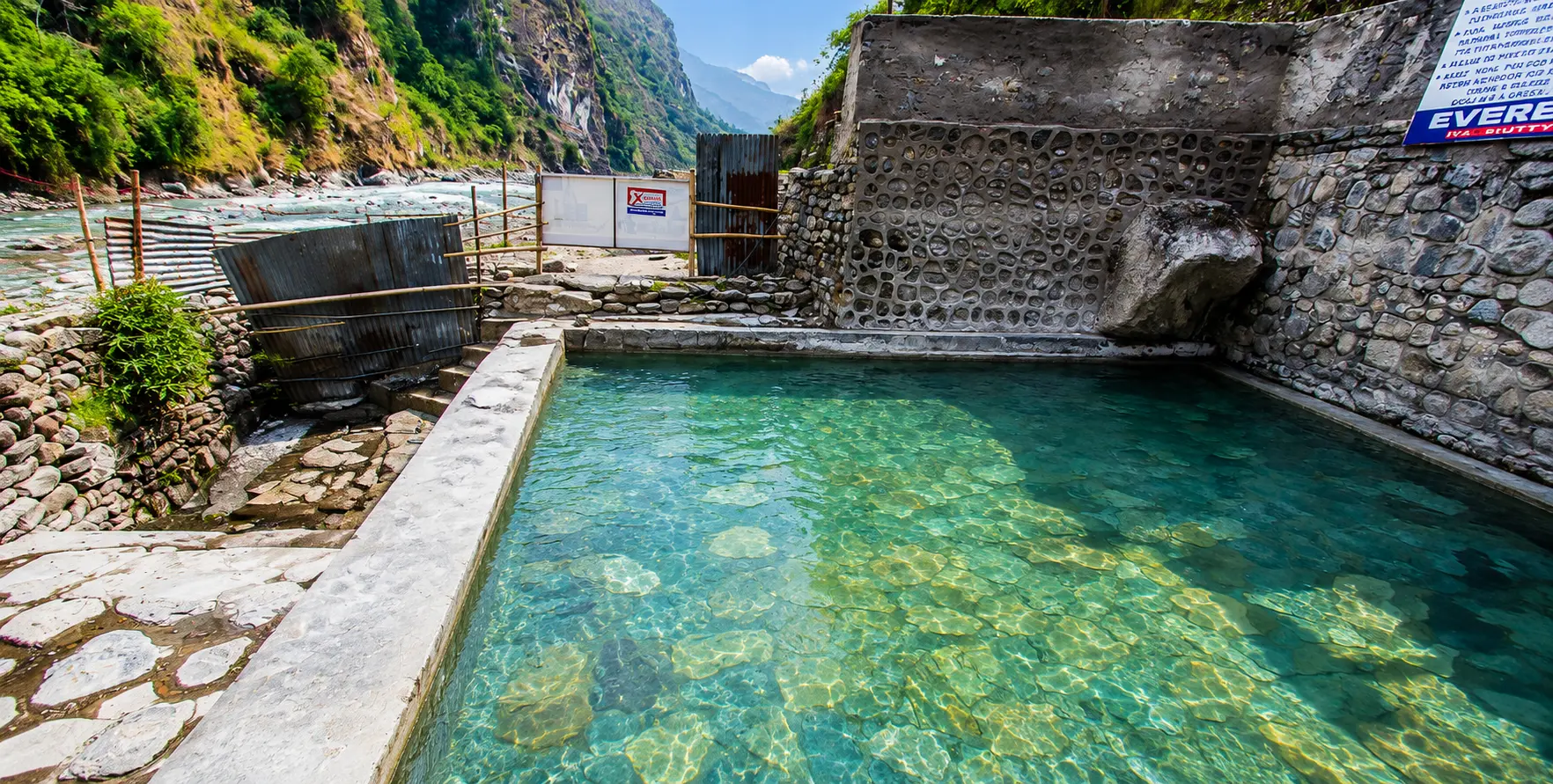
The natural hot springs of Tatopani are among the most welcome stops along the entire Kali Gandaki route. The springs emerge from the riverbank at a comfortable bathing temperature and have been developed into public bathing pools with facilities. A soak at Tatopani after the rough road from Beni is deeply restorative. A small entry fee applies. Several excellent restaurants near the springs serve fresh meals.

Rupse Chhahara Waterfall

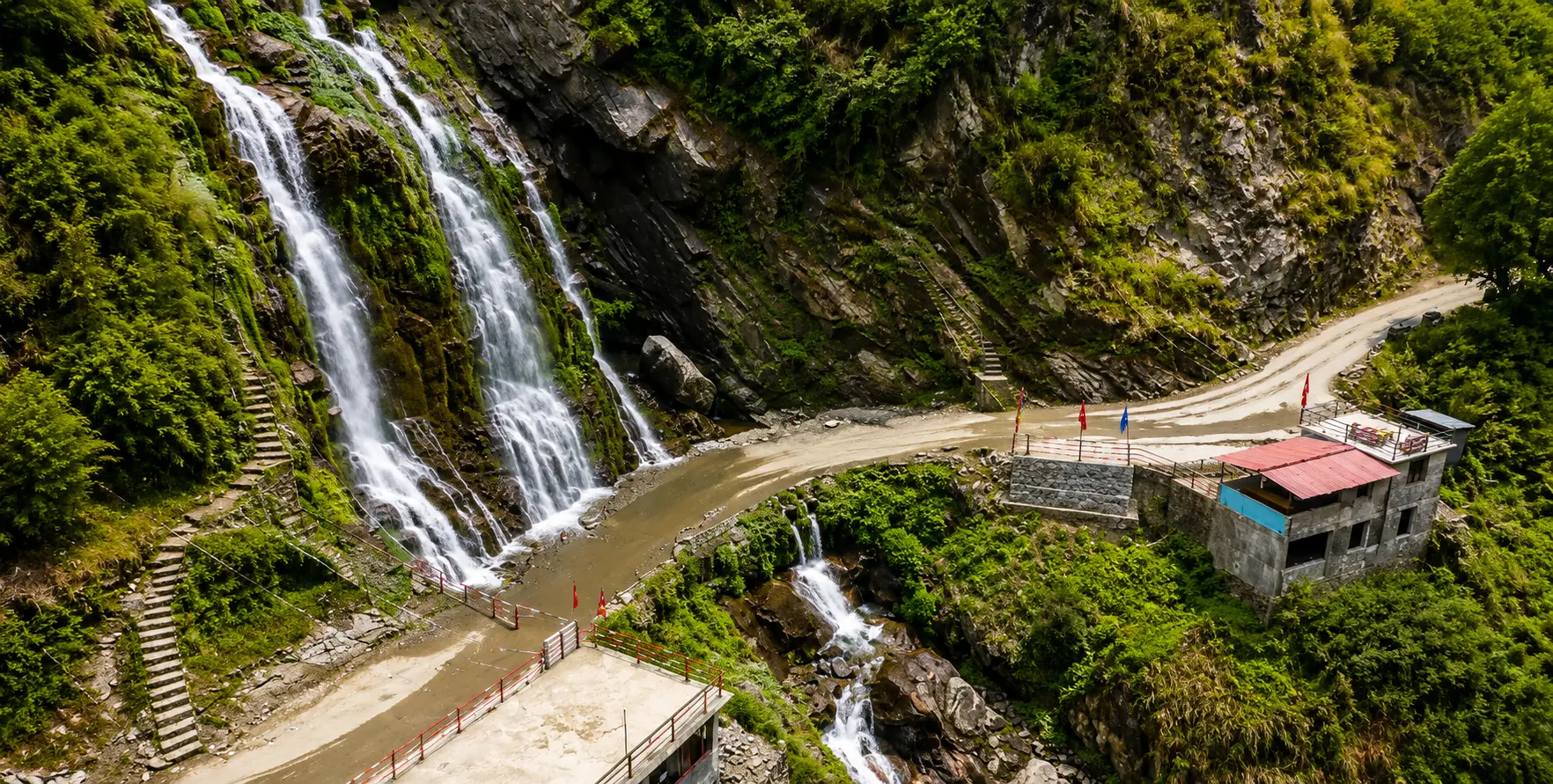
Between Dana and Ghasa, the Rupse Chhahara waterfall plunges in multiple cascades down the gorge wall directly beside the road. This is one of the most dramatic waterfalls visible from a vehicle in all of Nepal. Ask your driver to stop here – the waterfall is powerful and thunderous in the wet season and still impressive in dry months. The spray reaches the road, creating a cool, refreshing mist on hot days.

Ghasa Village and Forest

Ghasa itself is a beautiful Thakali and Magar village surrounded by mixed oak, rhododendron, and pine forest – the densest and most lush forest on the entire Annapurna Circuit. The village has a traditional Thakali architecture of flat-roofed stone houses, prayer flags, and carved wooden windows. The forest above Ghasa is one of the best areas in Nepal for sighting langur monkeys, Himalayan thar, and – in winter – snow leopards.


Ghasa as a Trekking Base – Annapurna Circuit

Many trekkers begin their Annapurna Circuit from Ghasa rather than Besisahar or Nayapul, arriving by jeep from Pokhara to skip the lower sections and start trekking in the more dramatic upper gorge. Here is what lies ahead from Ghasa on the Annapurna Circuit:


Stage from GhasaToDistanceAltitude GainHighlights
Day 1 from GhasaKalopani~10 km2,010m → 2,530mDhaulagiri full view, Nilgiri North
Day 2Marpha20 km2,530m → 2,670mApple orchards, Tibetan monastery, brandy
Day 3Jomsom8 km2,670m → 2,720mJomsom town, airport, Kali Gandaki beach
Day 4Muktinath22 km2,720m → 3,710mSacred temple, 108 spouts, Kagbeni
Day 5Muktinath (rest/pilgrimage)3,710mFull pilgrimage day at Muktinath
Day 6+Thorong La / Lo Manthang5,416mAnnapurna Circuit high pass or Upper Mustang


Starting the Annapurna Circuit from Ghasa immediately puts you into the dramatic high-Himalayan landscape of the upper Kali Gandaki valley, with Dhaulagiri towering above Kalopani on your very first day of trekking. The lower gorge section from Tatopani to Ghasa, which many trekkers now skip by jeep, is the least scenic portion of the circuit – starting from Ghasa means you begin trekking in the finest scenery from Day 1.

Pokhara to Ghasa Jeep Service

Beyond Ghasa – Continuing by Jeep to Mustang

Vehicle Hiring Nepal provides jeep service beyond Ghasa for travelers continuing to Tatopani, Marpha, Jomsom, Kagbeni, Muktinath, and Upper Mustang. Here are the continuation options from Ghasa:


DestinationDistance from GhasaAdditional TimeAdditional Price (USD)Notes
Tatopani25 km south1 hr (return)Included in Pokhara–Ghasa priceHot springs – a popular rest point
Kalopani~10 km north30 min$15–25 extraDhaulagiri views
Marpha~30 km north1–1.5 hrs$30–45 extraApple orchards, monastery
Jomsom~38 km north1.5–2 hrs$40–55 extraAirport, district HQ
Muktinath~60 km north3–3.5 hrs$70–90 extraSacred pilgrimage site 3,710 m
Lo Manthang~140 km north6–7 hrs$150–200 extraUpper Mustang permit required


If you are planning to continue beyond Ghasa to Jomsom or Muktinath, it is more cost-effective to book a single Pokhara-to-Jomsom or Pokhara-to-Muktinath jeep hire rather than two separate bookings. Contact Vehicle Hiring Nepal to discuss the most economical option for your full itinerary.


Pokhara to Ghasa Jeep Service

Trekking Permits for the Ghasa Area 2026

All travelers entering the Ghasa area via the Kali Gandaki corridor must carry valid trekking permits. These are checked at the Beni checkpoint and again at Ghasa:


PermitCost 2026Where to ObtainRequired For
ACAP – Annapurna Conservation Area PermitNPR 3,000 (~USD 22)Nepal Tourism Board – Kathmandu or Pokhara (Damside office)All visitors to Ghasa and the Kali Gandaki valley within ACAP
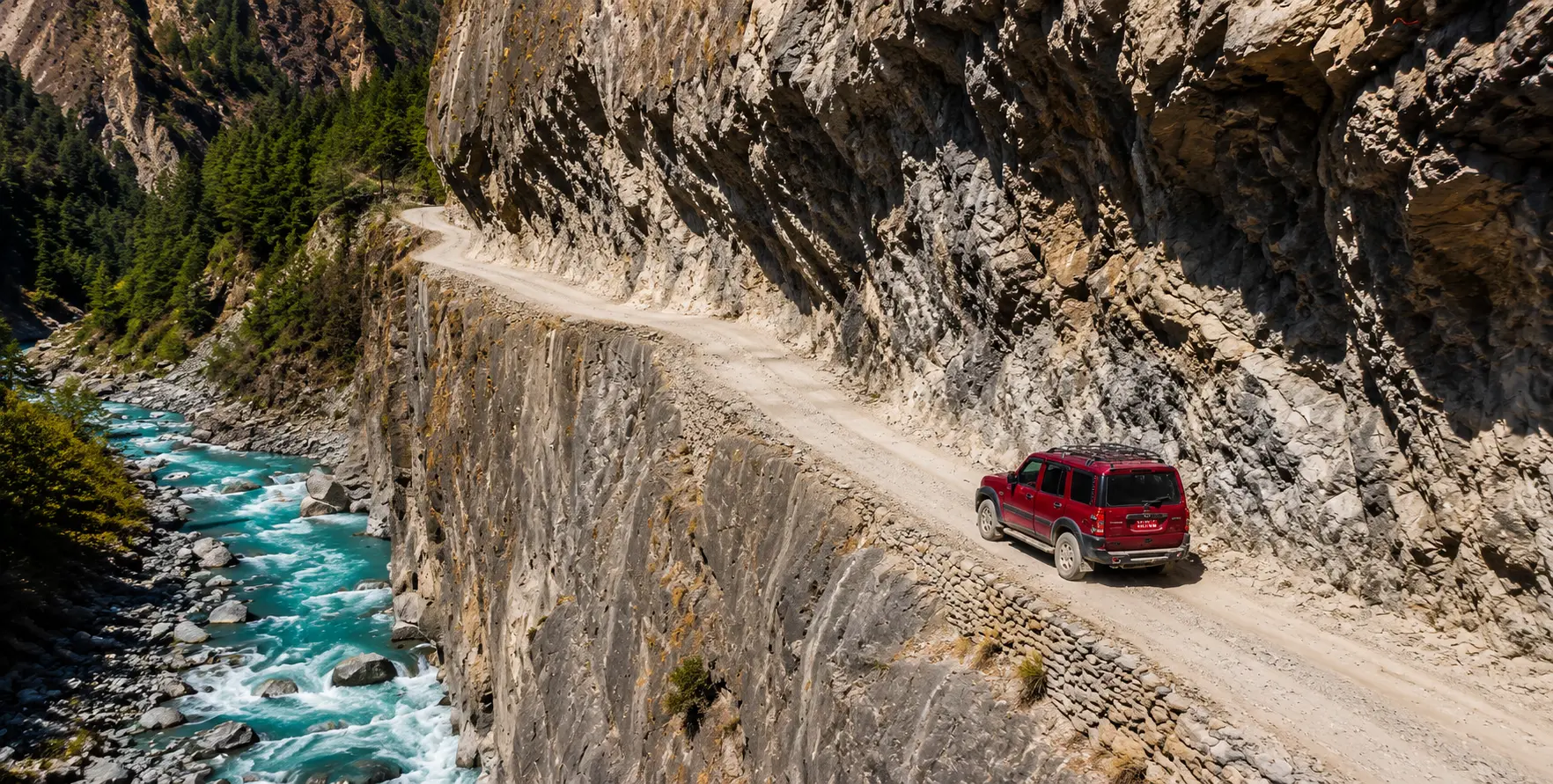
TIMS Card – Trekkers Information Management SystemUSD 10Nepal Tourism Board / TAAN officeRequired for trekkers – confirm if required for vehicle-only pilgrims


Obtain all permits in Pokhara at the Nepal Tourism Board office in Damside (near the Phewa Lake dam) the day before your departure. The permit office opens at 9:00 AM. Allow 30 to 60 minutes for processing. Permits are checked at the Beni entry checkpoint and again at various points along the Kali Gandaki. All permits must be carried and presented at each checkpoint.
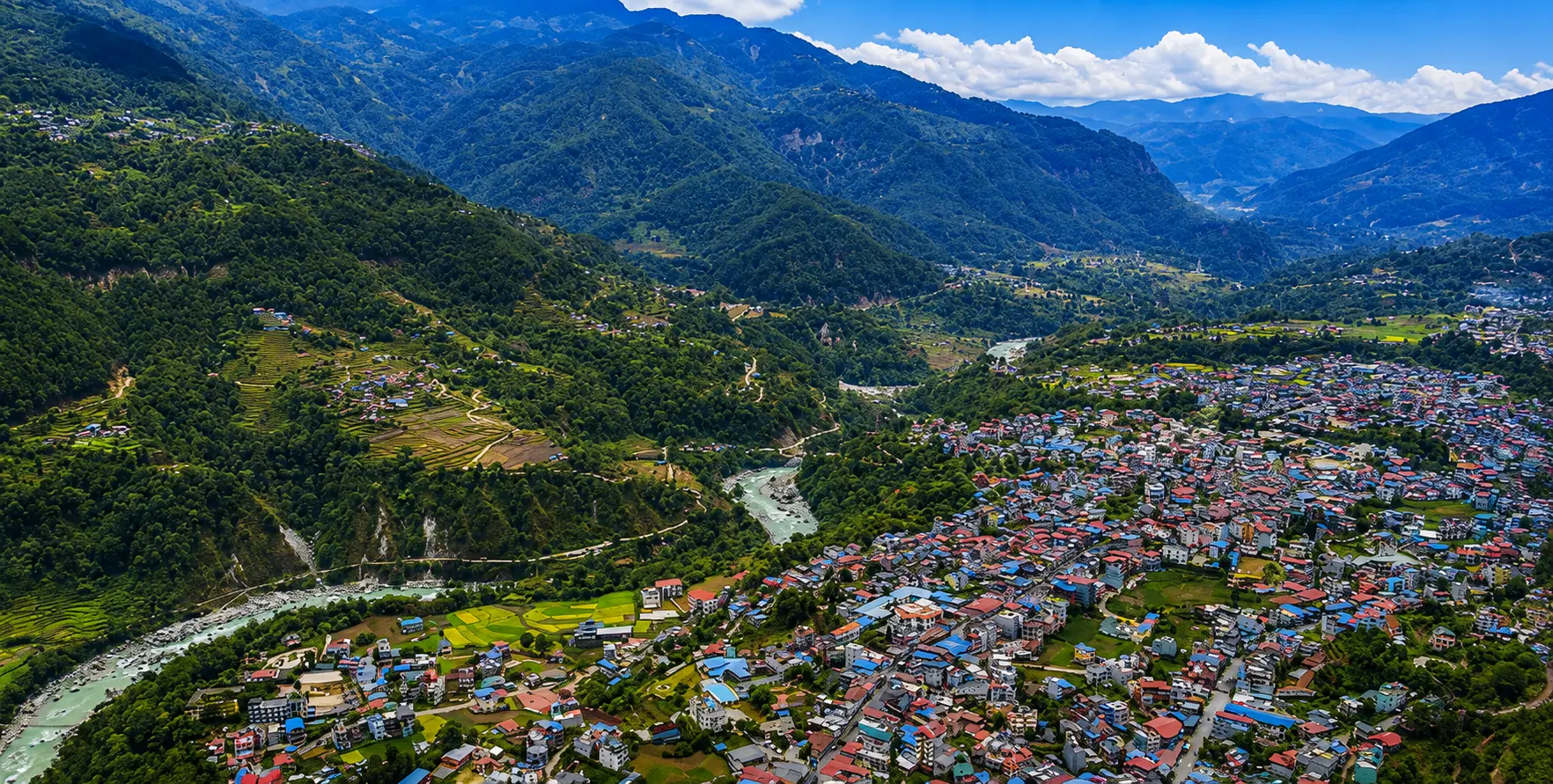
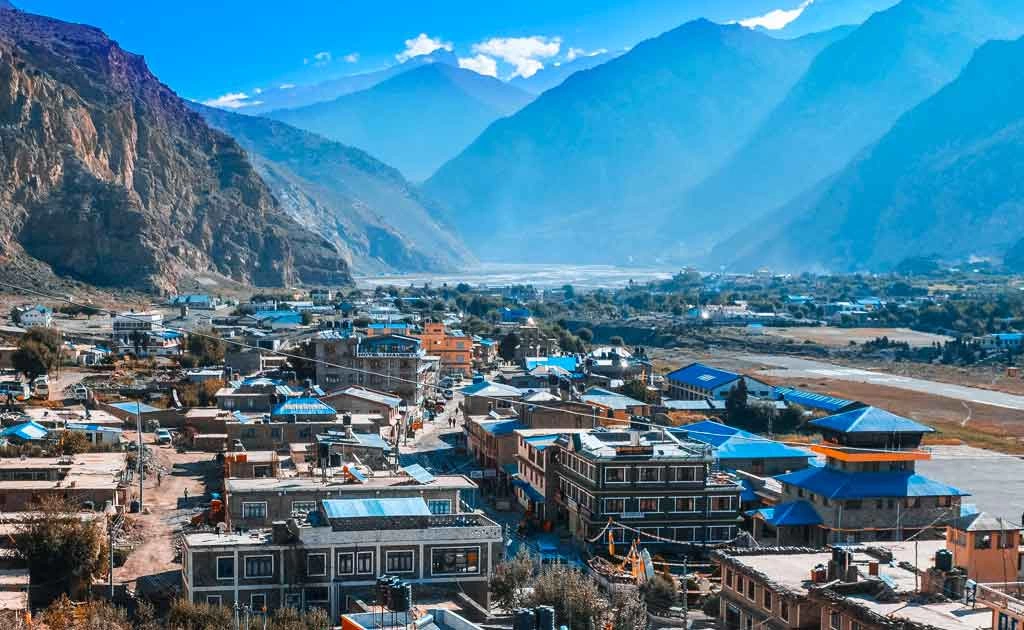
 

Accommodation at Ghasa

Ghasa has a small but functional selection of teahouse lodges suited to Annapurna Circuit trekkers and travelers. Here is what to expect:

  • Simple twin or dormitory rooms with basic foam mattresses and blankets – bring a sleeping bag liner for extra warmth
  • Shared bathrooms with cold water – hot showers available at most lodges at an extra charge (NPR 200–400)
  • Electricity from solar panels – charge devices in the morning before the afternoon wind arrives
  • Teahouse menus include dal bhat, noodle soup, fried rice, pasta, egg dishes, Tibetan bread, and hot drinks
  • Apple products begin appearing at Ghasa – apple juice, apple pie, and apple cider become staples from here northward
  • Mobile signal available in Ghasa – NTC is more reliable than Ncell in the upper gorge
  • No ATM in Ghasa – withdraw cash in Pokhara or Beni before arriving
  • Approximate cost per night: NPR 400–800 per person, including basic meals


Pokhara to Ghasa vs Pokhara to Tatopani – Which Stop is Right for You?

Many travelers debate whether to stop for the night at Tatopani (1,190 m) or continue to Ghasa (2,010 m). Here is how to decide:


FactorTatopani (1,190 m)Ghasa (2,010 m)
Drive time from Pokhara2.5–3.5 hrs3.5–5 hrs
Famous forNatural hot springsDense forest, dramatic gorge
Accommodation qualityBetter – more optionsBasic – fewer teahouses
TemperatureWarm and pleasantCool to cold at night
Altitude acclimatizationLow (1,190m) – gentleBetter (2,010m) – gradual
Trek Day 1 from hereLonger climb to GhasaShorter reach to Kalopani
Afternoon wind impactStrong from 1:00 PMStrong from 12:30 PM – arrive early
Best forRelaxation, pilgrims, hot soakTrekkers, Mustang-bound travelers


Our recommendation: If you depart Pokhara by 6:00 AM, you can reach Tatopani by 9:00–10:00 AM, enjoy the hot springs, have lunch, and continue to Ghasa, arriving by 12:00–1:00 PM before the full force of the afternoon wind. This is the ideal one-day schedule for the Pokhara-to-Ghasa journey.


What to Bring for the Pokhara to Ghasa Jeep Journey

  • Trekking permits – ACAP and TIMS card – must be obtained in Pokhara before departure
  • Sufficient Nepali Rupees cash – withdraw in Pokhara or Beni, as no ATM at Ghasa
  • Water – 2 liters per person, minimum, for the journey. Ghasa teahouses provide drinking water
  • Snacks for the road – the only proper meal stop is at Tatopani (halfway) or Beni
  • Windproof and warm jacket – Ghasa at 2,010 m is significantly cooler than Pokhara
  • Sunglasses and scarf/buff – dust from the dry gorge track can be intense on windy days
  • Motion sickness medication, if needed – the road from Beni onwards has many sharp bends
  • Camera with a charged battery – Rupse waterfall and gorge scenery deserve documentation
  • Offline maps downloaded (Maps.me or Gaia GPS) – mobile signal can be patchy in the gorge
  • Headlamp in case of unexpected delay and late arrival at Ghasa


What is Included in Your Jeep Service with Vehicle Hiring Nepal?

  • Private 4WD jeep (Toyota Land Cruiser or equivalent) with experienced Kali Gandaki route driver
  • Full fuel cost for the complete Pokhara to Ghasa journey
  • Vehicle insurance for the full journey duration
  • Hotel pickup from your Pokhara Lakeside hotel or guesthouse
  • Drop off directly at your teahouse or lodge in Ghasa village
  • Rest stops at Beni for fuel and supplies, and Tatopani for hot springs and lunch
  • Pre-arranged return pickup from Ghasa, Tatopani, or onward Mustang destinations
  • 24/7 WhatsApp support during the journey and throughout your stay in the Kali Gandaki valley


Not included: Trekking permits (ACAP and TIMS), personal meals at stops, teahouse accommodation costs, hot spring entry fees at Tatopani, and any additional detour stops beyond the agreed route.


How to Book Your Pokhara to Ghasa Jeep Service

  1. Contact Vehicle Hiring Nepal via WhatsApp at +977 9851013196 or visit vehiclehiringnepal.com
  2. Provide your travel date and preferred departure time from Pokhara (6:00–6:30 AM recommended)
  3. Give your pickup address or hotel name in Pokhara Lakeside
  4. Confirm your group size and number of trekking packs/luggage pieces
  5. Choose your vehicle type – Land Cruiser is strongly recommended for the Kali Gandaki road
  6. Specify if you need a return pickup from Ghasa or onward service to Tatopani, Jomsom, or Muktinath
  7. Receive booking confirmation with driver name, vehicle details, and departure plan
  8. Arrange your ACAP permit and TIMS card at the Nepal Tourism Board, Damside, Pokhara, the day before

WhatsApp: +977 9851013196
Email: [email protected]
Website: www.vehiclehiringnepal.com

Pokhara to Ghasa Jeep Service

Frequently Asked Questions

How long does it take to drive from Pokhara to Ghasa?

The journey from Pokhara Lakeside to Ghasa takes approximately 3.5 to 5 hours by private 4WD jeep, depending on road conditions and rest stops. Departing from Pokhara at 6:00 AM, you can expect to arrive in Ghasa between 10:00 and 11:00 AM, with brief stops at Beni and Tatopani.

Can a normal car or taxi reach Ghasa from Pokhara?

No. The road from Beni to Ghasa through the Kali Gandaki gorge is a rough mountain track that requires a 4WD with high ground clearance. Standard city taxis and sedans can only travel as far as Beni on the paved road. Beyond Beni, a Toyota Land Cruiser or equivalent 4WD is the only reliable option. Vehicle Hiring Nepal dispatches only capable 4WD jeeps on this route.

Is Ghasa a good place to start the Annapurna Circuit?

Yes – for trekkers who want to begin in the most dramatic section of the Annapurna Circuit, Ghasa at 2,010 m is an excellent starting point. By jeep from Pokhara to Ghasa, you skip the lower gorge section from Tatopani to Ghasa (which is now largely beside the jeep road and less scenic to walk). From Ghasa, Day 1 of trekking takes you to Kalopani, with extraordinary views of Dhaulagiri – some of the finest mountain scenery on the entire circuit.

What happens if a landslide blocks the road?

The Kali Gandaki gorge road is prone to landslides, especially during and after the monsoon. Our drivers monitor road conditions daily and will inform you of any blockages before departure. In the event of a landslide during the journey, your driver will assess the situation and communicate options – waiting for clearance, turning back to Tatopani, or finding an alternative approach. We maintain real-time contact with local road crews and will keep you updated via WhatsApp throughout the process.

Can I book a jeep from Ghasa back to Pokhara at the end of my trek?

Yes. Vehicle Hiring Nepal provides return jeep service from Ghasa, Tatopani, Marpha, Jomsom, and Muktinath back to Pokhara. If you book your return at the same time as your outward journey, we give a combined round-trip rate. Alternatively, WhatsApp us from anywhere in the Kali Gandaki valley when you know your return date, and we will arrange a pickup within 24 to 48 hours of your message.

How much does it cost per person to travel from Pokhara to Ghasa by jeep?

The Toyota Land Cruiser costs USD 120-155 for a full-vehicle one-way. For a group of 4 trekkers sharing, this works out to USD 30-39 per person – very competitive with local shared jeep rates, but with the huge advantage of private departure, door-to-door service, and full luggage space. For a group of 6, the cost is approximately USD 20-26 per person.

What is the Kali Gandaki gorge famous for?

The Kali Gandaki is statistically the world’s deepest gorge when measured from the river level (approximately 2,500 m) to the summits of the flanking peaks – Dhaulagiri (8,167 m) to the west and Annapurna I (8,091 m) to the east. The height difference between the river and the surrounding peaks exceeds 5,500 m. The gorge is also famous for its Shaligram fossil stones – sacred black ammonite fossils found only in the Kali Gandaki riverbed and considered the living form of Lord Vishnu.


Final Thoughts

The jeep journey from Pokhara to Ghasa through the Kali Gandaki gorge is one of Nepal’s great road adventures – a 4 to 5 hour drive that takes you from the bustling Lakeside city of Pokhara deep into one of the world’s most dramatic river gorges, with Dhaulagiri and Annapurna towering 5,500 m above the river on either side. By the time you step out of the jeep in Ghasa’s cool, forested village, you are already deep inside the Annapurna Conservation Area and surrounded by some of the most extraordinary mountain terrain on earth.

Vehicle Hiring Nepal provides the most reliable and experienced jeep service for the Pokhara-Ghasa route in 2026. Our Land Cruiser drivers know every bend of the Kali Gandaki road, every landslide-prone section, and every timing consideration to ensure you arrive safely before the afternoon wind. Whether you are trekking the Annapurna Circuit, making a pilgrimage to Muktinath, or simply exploring the extraordinary Kali Gandaki valley, we are your most trusted transport partner.

Book your Pokhara-to-Ghasa jeep service today.

WhatsApp: +977 9851013196
Email: [email protected]
Website: www.vehiclehiringnepal.com

Muktinath Tour guide 2026 – Complete Travel & Pilgrimage Guide from Nepal

Muktinath

Muktinath Tour Guide 2026 – Complete Travel & Pilgrimage Guide

Muktinath is one of the most sacred and awe-inspiring destinations in all of Asia. Perched at 3,710 m in the high-altitude desert of Upper Mustang, Nepal, Muktinath is a supreme pilgrimage site for both Hindus and Buddhists – one of the rare places on earth where two great religions share a single sacred ground with equal reverence. In 2026, more travelers and pilgrims are visiting Muktinath than ever before, drawn by its spiritual power, its extraordinary Himalayan setting, and the increasingly accessible road and air connections from Kathmandu and Pokhara.

This complete 2026 Muktinath tour guide covers everything you need to plan your journey – how to get there, which vehicle to hire, recommended itineraries, what to see, pilgrimage rituals, accommodation, permits, altitude tips, and how to book with Vehicle Hiring Nepal.


About Muktinath – The Sacred Site

Location: Muktinath, Mustang District, Gandaki Province, Nepal

Altitude: 3,710 m (12,172 feet) above sea level

Religious Significance: One of the 108 Divya Desams (sacred Vishnu temples) for Hindus and a Tibetan Buddhist pilgrimage site

Temple Name: Mukti Dhaam (also called Muktinath Temple) – sacred to both Vaishnavas and Shaivites

Sacred Elements: 108 stone water spouts (muktidhara), eternal flame from natural gas (jwala mai), sacred Gandaki river stones (shaligrams)

Nearest Town: Jomsom (2,720 m) – 22 km south, 1.5 to 2 hours by jeep

Nearest Airport: Jomsom Airport – 25-minute flight from Pokhara (Tara Air / Summit Air)


Hindus revere Muktinath as one of the most important Vaishnava pilgrimage sites in the world – the only place where the divine elements of earth (shaligram fossils), water (108 spouts), fire (eternal flame), sky, and air converge in a single sacred location. For Buddhists, Muktinath is identified with Chumig Gyatsa – the place of a hundred waters – and is associated with Guru Rinpoche (Padmasambhava). The monastery adjacent to the Hindu temple complex is an important Tibetan Buddhist site managed by nuns.


Days to Reach Muktinath in 2026

In 2026, there are three main ways to reach Muktinath from Kathmandu or Pokhara. Each has distinct advantages depending on your time, budget, group size, and whether you prioritize the journey experience or the destination itself:

Route OptionFromTravel TimeBest VehicleCost (Approx.)Best For
Road – Kathmandu to MuktinathKathmandu2–3 daysLand Cruiser 4WDUSD 380–450 (full jeep)Road lovers, groups, pilgrims
Road – Pokhara to MuktinathPokhara1.5–2 daysLand Cruiser 4WDUSD 200–280 (full jeep)Most popular route, scenic
Flight – Pokhara to Jomsom + JeepPokhara1 dayFlight + local jeepUSD 130–160/person + jeepShort on time, comfort seekers
Flight – Kathmandu to Pokhara + RoadKathmandu1.5 daysFlight + Land CruiserUSD 80 flight + jeep hireGood combination for groups


Vehicle Hiring Nepal specializes in private jeep hire for the Pokhara-to-Muktinath and Kathmandu-to-Muktinath routes. We also assist with local jeep arrangements in Jomsom for travelers who fly into Jomsom airport.


Jeep hira in nepal

Kathmandu to Muktinath by Private Jeep – Full Guide

Route and Distance

Total Distance: Approximately 430–450 km from Kathmandu to Muktinath

Travel Time: 2 to 3 days by private jeep (with overnight stops)

Main Road Route: Kathmandu – Pokhara – Beni – Tatopani – Ghasa – Marpha – Jomsom – Kagbeni – Muktinath

Vehicle Required: 4WD Toyota Land Cruiser or equivalent – mandatory from Beni onwards


Day-by-Day Road Journey

Day 1 – Kathmandu to Pokhara (200 km | 6–7 hrs): Depart Kathmandu early morning via Prithvi Highway. Travel through the Trishuli River gorge, lunch stop at Mugling, and arrival in Pokhara by early afternoon. Overnight in Pokhara Lakeside.

Day 2 – Pokhara to Tatopani or Marpha (130–170 km | 5–7 hrs): Depart Pokhara at 6:00 AM. Drive via Baglung and Beni into the Kali Gandaki gorge. Pass through Tatopani (hot springs), Ghasa, Kalopani, and Marpha (apple orchards). Overnight in Tatopani, Ghasa, or Marpha.

Day 3 – Marpha to Jomsom to Muktinath (40 km | 3–4 hrs): Complete the drive to Jomsom, continue to Kagbeni (Upper Mustang entry point), and climb via the Ranipauwa switchbacks to Muktinath at 3,710 m. Arrive in the morning to complete the full temple pilgrimage before afternoon winds.


Vehicle Hire Price – Kathmandu to Muktinath 2026


VehicleCapacityOne-Way Price (USD)Round Trip Price (USD)Notes
Toyota Land Cruiser4–6 pax$380 – $450$600 – $700Most popular for the Muktinath route
Toyota Land Cruiser Prado4–5 pax$400 – $480$650 – $750Superior comfort on rough roads
Mahindra Bolero4–6 pax$320 – $380$520 – $600Budget option, capable 4WD


All prices include driver, full fuel, and vehicle insurance. Round-trip pricing includes the driver staying in Jomsom or the Muktinath area during your visit and returning you to Kathmandu or Pokhara on your chosen return date.


Pokhara to Muktinath by Private Jeep – Full Guide

The most popular way to visit Muktinath is by private jeep from Pokhara. Shorter than the Kathmandu route and equally spectacular, this is the preferred choice for most pilgrims and tourists in 2026.

Route and Distance

Total Distance: Approximately 230–250 km from Pokhara to Muktinath

Travel Time: 1 full day (very long) or 2 days with an overnight stop (recommended)

Main Route: Pokhara – Baglung – Beni – Tatopani – Ghasa – Marpha – Jomsom – Kagbeni – Muktinath

Key Road Challenge: Kali Gandaki gorge road from Beni onwards – requires 4WD, rough, and narrow

jeep hire in nepal

Vehicle Hire Price – Pokhara to Muktinath 2026


VehicleCapacityOne-Way (USD)Round Trip (USD)Notes
Toyota Land Cruiser4–6 pax$200 – $260$320 – $400Standard choice, experienced drivers
Toyota Land Cruiser Prado4–5 pax$220 – $280$360 – $440Best comfort for the long Kali Gandaki road
Mahindra Bolero / Thar4–6 pax$170 – $220$280 – $350Budget 4WD option


Jomsom to Muktinath by Local Jeep

For travelers who fly into Jomsom Airport from Pokhara, the final leg to Muktinath is by local jeep hire from Jomsom. This is a 22 km drive that takes approximately 1.5 to 2 hours via Kagbeni:

Jomsom to Kagbeni: 18 km | ~1 hr by local jeep

Kagbeni to Muktinath: 22 km | ~1.5 hrs total from Jomsom

Local Jeep Price: NPR 5,000 – NPR 8,000 for the full jeep (shared jeep services also available)

Shared Jeep: NPR 700 – NPR 1,200 per person from Jomsom to Muktinath

Flight Cost: USD 130 – USD 160 per person, Pokhara to Jomsom (Tara Air / Summit Air)


Note: Jomsom Airport is one of the most weather-dependent airports in Nepal. The famous afternoon Kali Gandaki wind grounds flights daily after approximately 10:00–11:00 AM. Flights depart early in the morning and are frequently delayed or canceled due to cloudy weather, wind, or poor visibility. Always carry a backup plan – usually an extra day in Pokhara and a private jeep as the alternative.


The Sacred Sites of Muktinath – Complete Visitor Guide

Muktinath is not just a single temple – it is a complex of sacred sites spread across the Ranipauwa plateau at the base of the Thorong La pass route. Here is a complete guide to every sacred site:

Mukti Dhaam Temple (Vishnu Mandir)

The main Muktinath temple is a golden-roofed shrine dedicated to Lord Vishnu (in his form as Muktinath – the Lord of Liberation). This is one of the 108 Divya Desams – the most sacred Vishnu temples in the world – and the only one located in the Himalayas outside India. The inner sanctum houses a golden image of Lord Vishnu with the sacred Shaligram stones – fossilized ammonite shells found in the Kali Gandaki riverbed and considered to be the living form of Lord Vishnu.

Entry to the temple is free and open to all faiths. Remove shoes before entering. The temple is open from sunrise to sunset with a midday closing from approximately 12:00 to 1:00 PM. Photography inside the inner sanctum is generally not permitted – respect the religious atmosphere.

The 108 Sacred Water Spouts (Muktidhara)

Arranged in a semicircle around the main temple, 108 stone waterspouts in the shape of cows’ heads pour a continuous stream of icy Himalayan spring water from the sacred mountain above. For Hindu pilgrims, bathing under all 108 spouts in sequence is considered to wash away all sins and grant moksha (liberation from the cycle of rebirth). The ritual bath is conducted at dawn or early morning when the water, though bitterly cold, is at its most spiritually potent.

The 108 spouts represent the 108 sacred names of Vishnu and the 108 sacred texts of the Vedas. Even non-religious visitors find the sight of the curved spouts, set against the backdrop of the Himalayan peaks and the Mustang plateau, deeply moving.

Jwala Mai – The Eternal Sacred Flame

Behind the main Vishnu temple lies the Jwala Mai shrine – a small chamber where a perpetual flame burns from a natural gas seep in the rock. This eternal flame has burned without human intervention for centuries, representing the sacred element of fire in the divine composition of Muktinath. The flame is closely associated with the goddess Jwala Devi and is worshipped by both Hindu and Buddhist pilgrims. The sight of the blue flame emerging from the rock – often with a thin trickle of water flowing beside it – is profoundly sacred.

Jwala Mai Water and Fire Together

Uniquely, at the Jwala Mai site, both fire (natural gas) and water flow from the same rock simultaneously. This extraordinary natural phenomenon – fire and water together from the earth – is considered the most sacred miracle of Muktinath and the reason pilgrims travel thousands of kilometers to reach this remote high-altitude shrine. It is believed that witnessing this phenomenon and offering prayer here grants liberation of the soul.

Gompa Muktinath – The Buddhist Monastery

Adjacent to the Hindu temple complex is the Gompa Muktinath – an ancient Tibetan Buddhist monastery managed by Buddhist nuns. The monastery contains beautiful thangka paintings, bronze statues of Avalokitesvara and Guru Rinpoche, prayer wheels, and butter lamps. Tibetan Buddhists identify the monastery as Chumig Gyatsa (the Hundred Waters), which is a significant stop on the ancient Tibetan pilgrimage circuit. Visitors are welcome to enter, make offerings, and sit in quiet meditation.

Shaligram Stones – Sacred Fossils of the Kali Gandaki

Shaligram stones are black fossilized ammonites found in the bed of the Kali Gandaki River – the only place on earth where they are found in their natural setting. These stones are considered to be the physical embodiment of Lord Vishnu and are among the most sacred objects in Hinduism. Pilgrims collect Shaligram stones from the riverbed between Kagbeni and Muktinath for worship at home temples. The stones range from marble-sized to melon-sized, with distinct spiral fossil patterns.

Ranipauwa Village

The small settlement of Ranipauwa, immediately below the Muktinath temple complex, is where most accommodation and restaurants are located. The village has approximately 20 to 30 teahouses and small hotels ranging from very basic to surprisingly comfortable. Most pilgrims spend at least one night in Ranipauwa to complete the full dawn ritual at the 108 spouts before returning to Jomsom.

Kathmandu to Muktinath Bus

Muktinath Pilgrimage Ritual – Step-by-Step Guide

For Hindu pilgrims, the Muktinath pilgrimage follows a specific sequence of sacred rituals. Here is the traditional pilgrimage sequence:

  1. Arrive in Ranipauwa the evening before the main pilgrimage day and rest overnight to acclimatize to the 3,710 m altitude
  2. Wake before sunrise (approximately 5:00–5:30 AM) and dress in clean, fresh clothes for the pilgrimage
  3. Walk to the 108 sacred water spouts – the ritual bath under all 108 spouts is best done at dawn when the site is quiet and spiritually powerful.
  4. Stand under each of the 108 spouts in sequence, chanting the name of Lord Vishnu or your chosen mantra at each spout.
  5. The water is extremely cold (approximately 4–6°C year-round) – be prepared and bring a dry change of clothing.
  6. After the bath, enter the main Vishnu temple and offer flowers, incense, and prayer at the inner sanctum.
  7. Visit the Jwala Mai fire temple and witness the eternal flame – offer ghee, incense, and prayer here.
  8. Visit the adjacent Buddhist Gompa, spin the prayer wheels, and make an offering at the altar.
  9. Collect Shaligram stones from the nearby riverbed if desired (a few small ones for personal worship is traditional)
  10. Complete the pilgrimage with a final prayer facing the sacred peaks of Dhaulagiri and Nilgiri, offering gratitude for safe arrival at this holy site.

The complete pilgrimage ritual typically takes 2 to 4 hours. Non-religious visitors are welcome to attend any or all parts of the ritual as respectful observers. Dress modestly, remove shoes at all temple entrances, and maintain a quiet, respectful demeanor throughout.


Muktinath Tour Itineraries 2026

Vehicle Hiring Nepal offers complete Muktinath tour packages suitable for pilgrims, families, and adventure travelers. Here are our most popular 2026 itineraries:

Itinerary A: Muktinath Express Tour – 5 Days from Kathmandu

  • Day 1: Kathmandu to Pokhara by private vehicle (6–7 hrs) – overnight Pokhara Lakeside
  • Day 2: Pokhara to Tatopani by 4WD jeep via Beni and Kali Gandaki gorge (5–6 hrs) – hot spring soak, overnight Tatopani
  • Day 3: Tatopani to Muktinath via Marpha and Jomsom (4–5 hrs) – arrive by noon, temple pilgrimage (108 spouts, Vishnu temple, Jwala Mai), overnight Ranipauwa
  • Day 4: Full day pilgrimage – dawn ritual at 108 spouts, Gompa visit, Shaligram collection, Kagbeni exploration, overnight Jomsom or Marpha
  • Day 5: Return drive to Pokhara (6–7 hrs) or fly Jomsom to Pokhara (25 min) – evening in Pokhara or return to Kathmandu

Itinerary B: Muktinath Pilgrimage & Mustang Tour – 8 Days

  • Day 1: Kathmandu to Pokhara by private vehicle – overnight in Pokhara
  • Day 2: Pokhara to Marpha by 4WD jeep – overnight Marpha (apple orchards, Tibetan monastery)
  • Day 3: Marpha to Muktinath via Jomsom and Kagbeni – afternoon temple visit, overnight Ranipauwa
  • Day 4: Dawn pilgrimage at Muktinath – full sacred ritual at 108 spouts and all shrines
  • Day 5: Muktinath to Kagbeni – explore the ancient Kagbeni village and the Kag Chode monastery
  • Day 6: Kagbeni to Jomsom – explore Jomsom market, Thakali culture museum, river beach
  • Day 7: Jomsom to Tatopani – descend Kali Gandaki gorge, hot spring soak, overnight Tatopani
  • Day 8: Tatopani to Pokhara (3–4 hrs) – return to Kathmandu or extend Pokhara stay

Itinerary C: Fly-In Muktinath Day Tour from Pokhara – 2 Days

  • Day 1: Pokhara to Jomsom by flight (25 min, depart 6:00–7:00 AM) – hire local jeep Jomsom to Muktinath (1.5 hrs) – full temple pilgrimage – overnight Ranipauwa
  • Day 2: Dawn ritual at 108 spouts – Kagbeni and Jharkot village exploration – jeep return to Jomsom (1.5 hrs) – fly Jomsom to Pokhara (25 min) by 10:00 AM – return to Kathmandu by afternoon

Itinerary D: Complete Muktinath & Chitwan & Pokhara Circuit – 10 Days

  • Day 1: Kathmandu to Chitwan by private vehicle – jeep safari (2 nights Chitwan)
  • Day 3: Chitwan to Pokhara by private vehicle (3.5 hrs)
  • Day 4: Pokhara sightseeing – Sarangkot sunrise, Phewa Lake, World Peace Pagoda
  • Day 5: Pokhara to Tatopani by 4WD jeep – overnight Tatopani hot springs
  • Day 6: Tatopani to Muktinath via Marpha, Jomsom – afternoon temple visit, overnight Ranipauwa
  • Day 7: Full Muktinath pilgrimage – dawn ritual, all sacred sites – overnight Jomsom
  • Day 8: Jomsom to Pokhara by jeep or flight – overnight in Pokhara
  • Day 9: Pokhara to Kathmandu by private vehicle or flight
  • Day 10: Departure from Kathmandu

Jeep hire in nepal

Best Time for Muktinath Tour 2026

October to November (Best Season – Peak Pilgrimage)

The post-monsoon is the finest time to visit Muktinath. Crystal-clear skies offer spectacular views of Dhaulagiri, Nilgiri, and the entire Mustang plateau. The road from Beni is in good condition after monsoon repairs. Temperatures at Muktinath are cool (5 to 15°C by day) and manageable for the outdoor 108-spout ritual. This is the peak pilgrimage season – teahouses in Ranipauwa can be busy. Book vehicles and accommodation 4 to 6 weeks in advance.

March to May (Excellent – Spring Pilgrimage)

Spring is the second-best season for Muktinath. Lower-altitude sections bloom with rhododendrons, and the Mustang plateau turns vivid ochre and red. Mountain views are superb in the morning. The road is in good condition. Temperatures at Muktinath are mild to cool. The Tiji Festival in Lo Manthang (nearby Upper Mustang) typically falls in May – a spectacular cultural bonus for those with extra time.

June to August (Mustang’s Unique Season)

While the rest of Nepal is drenched in monsoon, Mustang and Muktinath lie in a rain shadow and remain remarkably dry and sunny. June to August is an increasingly popular time for the Muktinath pilgrimage and Mustang tourism. The Kali Gandaki road south of Tatopani can be affected by landslides during the active monsoon – confirm road conditions before departure from Pokhara. The atmosphere at Muktinath during monsoon is unique – dramatic storm clouds over the Annapurna massif to the south, with the Mustang plateau clear above.

December to February (Cold but Spiritually Powerful)

The winter pilgrimage to Muktinath is a deeply meaningful experience for devoted pilgrims. The 108-spout bath in winter (water temperature approximately 2–4°C; air temperature -5 to -15°C at dawn) is an act of profound devotion. The site is quiet, uncrowded, and deeply spiritual. Roads from Jomsom to Muktinath may be icy and snow-covered in December and January – a capable 4WD jeep with snow chains is essential. Tatopani road from Beni can occasionally close in severe winter weather.


Altitude and Health: Essential Muktinath Advice

Muktinath sits at 3,710 m – a significant altitude that requires respect and preparation. Here is everything you need to know about staying safe and well at Muktinath:

Acclimatization Plan

  • Do NOT drive from Kathmandu or Pokhara directly to Muktinath in a single day – the rapid altitude gain increases the risk of Acute Mountain Sickness (AMS)
  • Spend at least one night at Jomsom (2,720 m) before ascending to Muktinath (3,710 m) – one night of acclimatization at Jomsom significantly reduces AMS risk.
  • Marpha at 2,670 m and Tatopani at 1,190 m are excellent gradual acclimatization stops on the multi-day road journey.

Symptoms of Altitude Sickness (AMS)

  • Headache – the most common symptom at Muktinath altitude
  • Nausea and loss of appetite
  • Fatigue and weakness disproportionate to activity level
  • Dizziness or lightheadedness
  • Difficulty sleeping and restless nights at altitude
  • In severe cases: confusion, loss of coordination, difficulty breathing at rest – descend iately

Prevention and T-meliters

  • You are very dehydrated – drink 3 to 4 L of water per day from Jomsom onward, and avoid alcohol for at least 48 hours after arriving above 3,000 m
  • Walk slowly and steadily – if you feel unwell, rest immediately and do not ascend further.
  • Carry Diamox (acetazolamide 250 mg) – take as prescribed by your doctor, typically 125–250 mg twice daily starting 24 hours before ascent.t
  • Travel and health insurance covering high-altitude helicopter evacuation is strongly recommended for all Muktinath visitors
  • The rule of mountains: if symptoms worsen, descend immediately – descending even 500 m usually provides rapid relief


What to Wear and Bring for Muktinath

For the 108 Spout Pilgrimage Bath

  • Carry a complete change of clothing specifically for the ritual bath – you will be completely soaked.
  • Pack the change of clothes in a waterproof bag – keep them dry until you need them.
  • Quick-drying lightweight clothes are ideal – avoid heavy denim or cotton that stays wet and cold.
  • A dry towel (microfibre recommended for compact packing)
  • Warm thermal layers to put on immediately after the bath

General Clothing for Muktinath at 3,710 m

  • Warm down jacket or heavy fleece – essential even in summer as temperatures drop rapidly after noon
  • Windproof outer shell jacket – the Kali Gandaki wind reaches the Muktinath plateau by early afternoon
  • Thermal base layers for early morning pilgrimage
  • Warm hat, gloves, and neck gaiter – especially important for dawn rituals in all seasons
  • Sturdy, comfortable walking shoes or trekking shoes – the temple complex is on uneven ground
  • Sunglasses with UV protection – UV radiation is intense at 3,710 m
  • High-factor sunscreen (SPF 50+) – apply before leaving your teahouse each morning

General Essentials

  • Sufficient Nepali Rupees cash – no reliable ATM at Muktinath, withdraw in Jomsom or Pokhara.
  • Personal medications, first aid kit, altitude sickness medication (Diamox)
  • Travel insurance documents with emergency contact numbers
  • ACAP permit and TIMS card – mandatory and checked at the Kagbeni checkpoint
  • Small offerings for the temple – flowers, incense, ghee, or fruit purchased in Jomsom or Ranipauwa
  • Camera with a charged battery and a spare – the landscape and temple complex are extraordinarily photogenic

mustang jeep

Accommodation at Muktinath / Ranipauwa 2026

Ranipauwa village, adjacent to the Muktinath temple complex, offers a good range of accommodation options for pilgrims and travelers. Here is what to expect in 2026:


Accommodation TypePrice Per Night (NPR)FacilitiesBest For
Basic TeahouseNPR 300–500Simple twin room, shared bathroom, cold waterBudget pilgrims
Standard Teahouse LodgeNPR 500–1,200Twin/double room, shared bathroom, hot shower extraMost trekkers
Hotel Bob MarleyNPR 1,500–2,500Better rooms, attached bathroom, hot shower, WiFiMid-range comfort
Hotel North PoleNPR 2,000–3,500Comfortable rooms, A/C, good restaurant, hot showerBest in Ranipauwa
Hotel Muktinath ViewNPR 1,800–3,000Rooms with temple views, a restaurant, and hot waterView seekers


Book accommodation in advance during October–November and March–May peak seasons as Ranipauwa fills up quickly. Outside peak seasons, walk-in accommodation is usually available. Electricity is supplied by solar and micro-hydro – charge all devices during daylight hours, as power can be cut at night.


Permits Required for Muktinath Tour 2026


PermitCost 2026Where to GetRequired For
ACAP – Annapurna Conservation Area PermitNPR 3,000 (~USD 22)Nepal Tourism Board, Kathmandu or PokharaAll visitors to Muktinath via the Kali Gandaki road
TIMS CardUSD 10Nepal Tourism Board / TAANRequired for trekkers (not required for pure pilgrims on vehicle only in some cases – confirm when booking)
Upper Mustang Restricted Area PermitUSD 500 for 10 daysDept of Immigration, KathmanduOnly required for travel NORTH of Kagbeni towards Lo Manthang – NOT required for Muktinath.


Important: Muktinath and Jomsom are in Lower Mustang. The Upper Mustang Restricted Area Permit (USD 500) is NOT required to visit Muktinath. It is only required for travel north of Kagbeni to Lo Manthang and the former Kingdom of Mustang. Confirm with Nepal Tourism Board whether TIMS is required for pilgrims traveling by vehicle only (not trekking).


vehicle hire for mustang

Practical Tips for Muktinath Tour 2026

  • Arrive at Muktinath in the morning – the famous Kali Gandaki afternoon wind begins at 12:00–1:00 PM and makes outdoor activity uncomfortable and cold by early afternoon.
  • Plan your 108-spout bath for dawn (5:30–7:00 AM), when the site is quietest, and the spiritual atmosphere is most powerful.
  • The 108-spout bath is voluntary, not compulsory, for non-Hindu visitors – you can observe and photograph respectfully without participating.
  • Hire a local temple guide in Ranipauwa (NPR 500–1,000) to understand the full religious significance of each sacred site – deeply enriches the experience.
  • Jomsom has the nearest hospital and health post – in case of AMS or other health concerns, descend to Jomsom immediately.
  • The evening puja (prayer ceremony) at the main Vishnu temple is a beautiful experience – usually conducted at 5:00–6:00 PM with bells, incense, and lampsA vegetarianan diet iwidely observeded at Muktinath – most teahouses offer vegetarian menu,s, and Hindu pilgrims traditionally eat pure vegetarian food during the pilgrimage.
  • Photography is generally permitted outside temples and at the 108 spouts – always ask permission before photographing other pilgrims performing rituals.
  • Local yaks and horses are used for transportation in Ranipauwa – short yak or horse rides to the temple are available for pilgrims who cannot walk easily.


Muktinath Tour from Kathmandu with Vehicle Hiring Nepal – What is Included

  • Private 4WD jeep (Land Cruiser or equivalent) with experienced Mustang route driver for the full journey
  • Full fuel cost from Kathmandu or Pokhara to Muktinath and return
  • Vehicle insurance for the complete journey duration
  • Hotel pickup from your Kathmandu or Pokhara hotel or guesthouse
  • Drop-off at Ranipauwa village, adjacent to Muktinath temple
  • Overnight stops at recommended teahouses in Tatopani, Marpha, or Jomsom (accommodation cost separate)
  • Driver accommodation during your Muktinath stay (for round-trip bookings)
  • Return journey from Muktinath to Kathmandu or Pokhara on your chosen return date
  • 24/7 WhatsApp support throughout the entire journey


Not included: ACAP permit and TIMS card, flight costs, personal meals, accommodation, temple entry (free), offerings, local guide fees, porter charges, and any additional detour stops beyond the agreed route.


How to Book Your Muktinath Tour 2026

  • Contact Vehicle Hiring Nepal via WhatsApp at +977 9851013196 or visit vehiclehiringnepal.com
  • Choose your preferred tour itinerary from the options above or describe your own custom plan.
  • Select your vehicle type – Land Cruiser recommended for all Muktinath routes.
  • Confirm your travel dates, group size, and departure point (Kathmandu or Pokhara)
  • Specify whether you need a one-way journey or a full round-trip with a driver waiting.
  • Mention any additional stops – Chitwan, Pokhara sightseeing, Kagbeni, Marpha, Jomsom.
  • Receive your complete tour confirmation, driver details, and vehicle information.
  • Arrange your ACAP permit and TIMS card in Kathmandu or Pokhara before departure.


WhatsApp: +977 9851013196
Email: [email protected]
Website: www.vehiclehiringnepal.com

Muktinath Tour guide 2026

Frequently Asked Questions – Muktinath Tour 2026

How many days does a Muktinath tour take from Kathmandu?

A minimum of 5 days is required for a comfortable Muktinath tour from Kathmandu: Day 1 to Pokhara, Day 2 to Tatopani, Day 3 to Muktinath, Day 4 for the full pilgrimage, Day 5 return to Pokhara. Add 1 to 2 extra days to return from Pokhara to Kathmandu by road, or fly back in 35 minutes. A 7- to 8-day tour is more relaxed and also allows exploration of Jomsom and Kagbeni.

Is Muktinath accessible by car or only by jeep?

From Jomsom, the 22 km road to Muktinath via Kagbeni is a rough mountain track that requires a 4WD vehicle. Standard sedans and cars can reach Jomsom from the south only in the dry season and on the best road days. For the Kagbeni-to-Muktinath switchback climb, a 4WD Land Cruiser or equivalent is always required. Hiring a capable 4WD jeep is the only reliable way to reach Muktinath by road.

Can elderly or mobility-limited pilgrims visit Muktinath?

Yes. Muktinath is accessible for elderly and mobility-limited pilgrims by jeep all the way to Ranipauwa. The temple complex itself is on a gentle slope, and most of the sacred sites are within 200-300 m of the road. Local yaks and horses are available for hire to carry pilgrims who cannot walk even short distances. A path with stone steps accesses the 108 spouts – some sections require assistance. With proper planning, elderly pilgrims complete the full pilgrimage successfully every year.

Is Muktinath safe to visit in 2026?

Yes. Muktinath is a safe, peaceful pilgrimage destination in 2026. The main considerations are altitude (3,710 m), weather, and road conditions – not security or crime. The local community is extremely welcoming to pilgrims and tourists. Standard altitude precautions and travel insurance covering helicopter evacuation are the most important safety preparations.

What is the difference between Muktinath and Lo Manthang?

Muktinath is in Lower Mustang at 3,710 m and is accessible with only an ACAP and TIMS permit. Lo Manthang is the ancient walled capital of Upper Mustang at 3,840 m, located approximately 80 km north of Kagbeni, and requires the additional USD 500 Upper Mustang Restricted Area Permit. Muktinath is the primary Hindu and Buddhist pilgrimage destination – Lo Manthang is the cultural and historical capital of the former Kingdom of Mustang, famous for its medieval monastery frescoes and the Tiji Festival.

Can I combine Muktinath with the Annapurna Circuit Trek?

Yes. Muktinath is a key waypoint on the Annapurna Circuit Trek. Trekkers typically arrive at Muktinath after crossing the Thorong La Pass (5,416 m) from Manang and descend to Jomsom by jeep. Many Annapurna Circuit trekkers hire a private vehicle from Jomsom to Pokhara at the end of their trek rather than continuing the full circuit on foot via Tatopani and Nayapul. Vehicle Hiring Nepal can arrange jeep pickups from Muktinath or Jomsom for Annapurna Circuit trekkers who have finished their circuit.


Final Thoughts

A Muktinath tour in 2026 is one of the most profound and rewarding journeys available in Nepal – combining spectacular Himalayan scenery, ancient sacred pilgrimage, and the unique high-altitude culture of the Mustang region. Whether you come as a devout Hindu pilgrim seeking liberation through the sacred 108 spout bath, a Buddhist traveler retracing the steps of Guru Rinpoche, or simply an adventurer drawn by the extraordinary landscape of the Kali Gandaki and the Mustang desert plateau, Muktinath will leave a permanent impression on your heart.

Vehicle Hiring Nepal makes your Muktinath journey smooth, safe, and memorable. From our well-maintained 4WD jeeps and experienced Mustang route drivers to our 24/7 WhatsApp support and flexible custom itineraries, we have helped thousands of pilgrims and travelers reach the sacred shores of Muktinath. Let us help you plan your 2026 Muktinath tour.

Contact Vehicle Hiring Nepal today. WhatsApp: +977 9851013196
Email: [email protected]
Website: www.vehiclehiringnepal.com

Kathmandu to Chame Vehicle Hire

Kathmandu to Chame Vehicle Hire

Kathmandu to Chame Vehicle Hire – Complete Road Guide 2026

Chame is the district headquarters of Manang District and one of the most important access points on the legendary Annapurna Circuit Trek. Situated at an altitude of 2,710 m in the Marsyangdi River valley, Chame is where trekkers first see the dramatic Annapurna range up close and where the classic Annapurna Circuit scenery truly begins. Getting to Chame from Kathmandu by private vehicle is the fastest and most comfortable way to begin your Annapurna Circuit trek – and in 2026, it has never been easier to arrange.

This complete guide covers everything you need to know about hiring a vehicle from Kathmandu to Chame – route options, road conditions, vehicle types, prices, permits, trekking overview, and practical tips for trekkers in 2026.


Where is Chame and Why Go There?

Location: Chame, Manang District, Gandaki Province, Nepal

Altitude: 2,710 m above sea level

Distance from Kathmandu: Approximately 185–195 km by road

Distance from Besisahar: Approximately 55 km north by mountain road

Travel Time from Kathmandu: 7 to 10 hours by 4WD jeep (road conditions vary significantly)

Road Type: Prithvi Highway (paved) + Annapurna Circuit road (rough mountain track from Besisahar)

Vehicle Required: 4WD Jeep mandatory from Besisahar onwards – sedans cannot reach Chame

Trek: Chame is Day 4–5 stop on the Annapurna Circuit Trek

Chame sits in the deep Marsyangdi River gorge flanked by the towering Annapurna II (7,937 m), Annapurna IV (7,525 m), and Lamjung Himal (6,983 m). The village has teahouses, a health post, small shops, and nearby hot springs. It is the last significant settlement with reliable facilities before the trek enters the higher, more remote Manang valley.

Why Hire a Private Vehicle to Chame?

The Annapurna Circuit Trek traditionally starts from Besisahar and follows the Marsyangdi River valley on foot all the way to Chame and beyond. However, many modern trekkers choose to hire a private vehicle from Kathmandu or Besisahar directly to Chame to skip the lower, less scenic sections of the circuit and begin trekking from the more spectacular mountain terrain. Here is why hiring a vehicle makes sense:

  • Save 3 to 4 days of trekking on the lower valley section from Besisahar to Chame – now largely a jeep road rather than a traditional trail.
  • The road from Besisahar to Chame has been significantly developed in recent years,s and much of the traditional trail now runs alongside or on the jeep road – less rewarding to walk than it once was
  • Begin your trek from Chame at 2,71 m, where the most dramatic mountain scenery of the Annapurna Circuit begins.
  • Arrive fresher and stronger for the harder high-altitude sections aboveC. homee.
  • A private vehicle provides ample space for luggage, trekking gear, sleeping bags, and personal equipment. pment
  • Depart from your Kathmandu hotel at any time – complete flexibility
  • Experienced driver with knowledge of the rough Besisahar to Chame mountain road
  • Significantly faster than local jeeps or buses on this route

jeep hire in nepal

Vehicle Options & Prices: Kathmandu to Chame 2026

Vehicle Hiring Nepal provides a full range of 4WD vehicles suitable for the Kathmandu-to-Chame mountain route. Note that only 4WD vehicles are suitable beyond Besisahar:


Vehicle TypeCapacityPrice One-Way (USD)Price Round Trip (USD)Notes
Toyota Land Cruiser4–6 pax$200 – $250$320 – $380Most popular – best for Chame road
Toyota Land Cruiser Prado4–5 pax$220 – $270$350 – $420Comfortable, capable on rough terrain
Mahindra Bolero / Scorpio4–6 pax$170 – $210$280 – $330Budget option with good clearance
Toyota Hiace (to Besisahar only)7–14 pax$130 – $165$210 – $280Cannot proceed beyond Besisahar – jeep needed
Sedan / Standard Car1–3 paxNot suitableNot suitableCannot reach Chame – road too rough


All private vehicle prices include the driver, full fuel for the journey, and vehicle insurance. Round-trip pricing includes the driver staying in Chame or Besisahar during your trek and returning you to Kathmandu after your circuit is complete. Contact us directly for the most accurate 2026 pricing based on your specific travel dates.


Route Overview: Kathmandu to Chame

The journey from Kathmandu to Chame comprises two distinct road experiences – the smooth national highway from Kathmandu to Besisahar, and the rough mountain track from Besisahar north to Chame. Understanding this division is essential for planning your journey.

SectionDistanceRoad TypeTravel TimeDifficulty
Kathmandu to Dumre~120 kmPrithvi Highway – paved2.5–3 hrsEasy
Dumre to Besisahar~22 kmSecondary road – mostly paved45 minEasy–Moderate
Besisahar to Khudi~10 kmRough gravel track30–45 minModerate
Khudi to Bahundanda~8 kmRocky Mountain track30–45 minDifficult
Bahundanda to Chamje~12 kmVery rough, narrow gorge road45–60 minVery Difficult
Chamje to Tal~8 kmRiver crossing + rough track45–60 minVery Difficult
Tal to Dharapani~10 kmRocky Gorge track45–60 minDifficult
Dharapani to Chame~15 kmRough mountain road, some paved1–1.5 hrsModerate–Difficult

Total distance: approximately 185 to 195 km. Total travel time: 7 to 10 hours, depending on road conditions, river levels, and weather. An early departure from Kathmandu, between 5:00 and 6:00 AM, is essential to reach Chame before dark.

Kathmandu to Chame Vehicle Hire

Detailed Road Guide: Kathmandu to Chame

Kathmandu to Dumre (120 km | ~2.5–3 hrs)

Depart Kathmandu early – ideally 5:00 to 5:30 AM. Follow the Prithvi Highway west through Naubise, along the scenic Trishuli River gorge, past Malekhu and Mugling (a brief tea stop is recommended), then continue west past Damauli. At Dumre, turn north onto the road heading towards Besisahar. Dumre is the last town on the highway before the Annapurna Circuit road begins. Fuel up here if needed and stock up on snacks and water.

Dumre to Besisahar (22 km | ~45 min)

From Dumre, the road heads north into the Marsyangdi River valley. The road is mostly paved with some rough sections. Besisahar is the official starting point of the Annapurna Circuit and the district headquarters of Lamjung District. The town has ATMs (the last reliable ones before Chame), shops, teahouses, and the ACAP permit checkpoint where all trekking permits are first registered.

Stop in Besisahar for: a final ATM withdrawal, permit registration at the ACAP checkpoint, fuel (the last reliable fuel stop), and a light meal if you have not eaten since Kathmandu.

Besisahar to Khudi (10 km | ~30–45 min)

Beyond Besisahar, the road immediately becomes rough. The well-paved highway ends, and the Annapurna Circuit jeep track begins. The road follows the west bank of the Marsyangdi River through green terraced hillsides and small farming villages. The track is rocky and bumpy, but passable for 4WD vehicles. Khudi is a small village at 790 m with a few teahouses – the Marsyangdi River runs fast and clear below.

Khudi to Bahundanda (8 km | ~30–45 min)

The road becomes noticeably rougher and narrower through this section. The river gorge begins to close in. Bahundanda, at 1,310 m, is a Brahmin village perched on a ridge with excellent views down the Marsyangdi Valley and north towards the Annapurna range. The road through and beyond Bahundanda requires careful driving on narrow sections above steep drops.

Bahundanda to Chamje (12 km | ~45–60 min)

This is one of the most challenging sections of the drive. The road squeezes through a dramatic, narrow gorge with the Marsyangdi River roaring below. Multiple sections are cut directly into the cliff face. Your driver will navigate carefully and slowly. During the monsoon, this section is especially prone to rockfalls and road damage. On clear days, the views into the gorge are spectacular.

Chamje to Tal (8 km | ~45–60 min)

Chamje requires crossing the Marsyangdi River on a bridge to the east bank. From here, the road enters the Manang District. Tal at 1,700 m is a flat, open village situated in a wide river valley – a dramatic contrast to the tight gorge sections below. The village was formed by a massive ancient landslide that dammed the river and created the flat basin. A good place for a brief rest and snack break.

Tal to Dharapani (10 km | ~45–60 min)

From Tal, the road continues north through increasingly dramatic Himalayan terrain. Karte, Dharapani, and Bagarchhap are small villages along this section. Dharapani, at 1,860 m, marks the entry into the Manang District proper and serves as an important checkpoint where permits are inspected. The mountains are now noticeably closer and higher.

Dharapani to Chame (15 km | ~1–1.5 hrs)

The final section to Chame passes through Bagarchhap (affected by the famous 1995 landslide), Danaque, Timang, Thanchowk, and Koto. The Annapurna II (7,937 m) massif begins to dominate the northern skyline as you approach Chame. The road improves slightly in this final section with some paved stretches around Koto and Chame itself.

Arrival at Chame (2,710 m) – the district headquarters of Manang. The town has government offices, a health post, multiple teahouses and lodges, small shops, a police checkpoint, and hot springs just outside town. Your trekking adventure begins in earnest from here.

Chame Route
Chame Route

Kathmandu to Chame – Two-Day Option

Many trekkers and drivers prefer to split the long Kathmandu-to-Chame journey into two days for safety and comfort. Here is the recommended two-day itinerary:

Day 1: Kathmandu to Besisahar (142 km | 3.5–4 hrs)

Depart Kathmandu at a comfortable 7:00 AM. Drive via the Prithvi Highway to Dumre, then north to Besisahar. Arrive by late morning. Spend the afternoon exploring Besisahar, completing permit registrations, visiting the weekly market if timing allows, and resting in preparation for the rough road ahead. Overnight in Besisahar in a comfortable guesthouse – a good rest before the mountain track.

Day 2: Besisahar to Chame (55 km | 4–6 hrs by jeep)

Depart Besisahar early, between 6:00 and 6:30 AM. The mountain track from Besisahar to Chame takes 4 to 6 hours, depending on road conditions. Arrive in Chame by noon to early afternoon, giving you time to settle in, explore the village, visit the hot springs, and acclimatize to the 2,710 m altitude before beginning to trek the following morning.

The two-day option is strongly recommended for trekkers who want to arrive in Chame well-rested and fully acclimatized, rather than exhausted after a 9- to 10-hour continuous drive.


Road Conditions: What to Expect on the Chame Road

The road from Besisahar to Chame is one of the most challenging access roads in Nepal. Here is what to expect in each season:

October to November (Best Conditions)

The post-monsoon is the best time for the Besisahar-Chame road. The monsoon rains have ended, road surfaces have dried out and been partially repaired, and water levels in the Marsyangdi River are dropping. Rockfall risk is reduced. The road is at its most reliable and passable during this peak trekking season. Still expect rough, bumpy sections throughout, but no major blockages in normal years.

March to May (Good Conditions)

Spring is the second-best season. Winter frosts have cleared, river levels are moderate, and the road is generally in good shape. Snow can occasionally affect the highest sections near Chame in early March, but usually clears by mid-March—a reliable season for vehicle hire.

December to February (Cold – Possible with Caution)

Winter driving to Chame is possible but requires an experienced driver and a suitable vehicle. Ice and frost can make the rocky sections above Chamje and near Tal slippery in the early morning. Check conditions with your driver before departure. The road itself is usually passable, but arrival in Chame after dark must be avoided.

June to September (Monsoon – High Risk)

The Besisahar-Chamee road is at its most dangerous during the monsoon. Heavy rains cause frequent landslides and rockfalls, and occasional complete road closures along the narrow sections of the gorge between Bahundanda and Tal. Road repairs during the monsoon are ongoing, but closures can last for days at a time. We strongly advise against attempting the Besisahar to Chame road during active monsoon unless road conditions have been confirmed by local sources on the day of travel.

Kathmandu to Chame Vehicle Hire

Trekking Permits Required for Chame and Annapurna Circuit 2026

All trekkers visiting Chame and the Annapurna Circuit must carry valid permits. These must be arranged in Kathmandu or Pokhara before travel – not available at Chame:

PermitCost 2026 (Approx.)Where to GetValid For
ACAP – Annapurna Conservation Area PermitNPR 3,000 (~USD 22)Nepal Tourism Board, Kathmandu or PokharaFull Annapurna Circuit including Chame and Manang
TIMS Card – Trekkers Information ManagementUSD 10Nepal Tourism Board / TAAN officeRequired for all trekkers on the circuit
Manang Restricted Area PermitNot required for the standard Annapurna CircuitN/AOnly needed for restricted side valleys off the main circuit


Permit checkpoints are located at Besisahar, Dharapani, Chame, and Manang. All permits are thoroughly checked at each point. Trekkers without valid, stamped permits will be fined or turned back. Arrange all permits in Kathmandu or Pokhara the day before departure.


The Annapurna Circuit Trek – Overview from Chame

Starting your Annapurna Circuit trek from Chame rather than Besisahar means skipping the lower-valley section and starting directly in the dramatic high-mountain terrain. Here is what lies ahead from Chame:


StageFrom – ToDistanceAltitudeHighlights
Day 1 from ChameChame – Pisang~17 km2,710m → 3,200mPaungda Danda rock face, Lamjung Himal views
Day 2Pisang – Manang~22 km3,200m → 3,500mAnnapurna III, Gangapurna, upper Pisang monastery
Day 3Manang (acclimatization)3,500mIce Lake, Gangapurna Lake, Milarepa Cave
Day 4Manang – Yak Kharka~10 km3,500m → 4,018mHigh yak pastures, Annapurna IV views
Day 5Yak Kharka – Thorong Phedi~8 km4,018m → 4,450mLast teahouses before the pass
Day 6Thorong La Pass crossing~16 km4,450m → 5,416m → 3,800mThe highest point of the circuit, descent to Muktinath
Day 7+Muktinath – Jomsom – Pokhara3,710m → 2,720mSacred temple, apple orchards, Kali Gandaki valley


Total Trek Duration from Chame: Approximately 10 to 14 days to complete the circuit to Pokhara via Muktinath and Jomsom

Highest Point: Thorong La Pass at 5,416 m – one of the highest trekking passes in the world

Trek End Point: Most trekkers end at Nayapul or Pokhara via Jomsom and Muktinath

Chame Village – What to Expect

Accommodation

Chame has a good selection of teahouses and lodges by Annapurna Circuit standards. Rooms are simple – twin beds, blankets, and basic shared bathrooms. Hot showers are available at most teahouses at a small extra charge. Electricity is available in Chame via the local micro-hydro system. Charge all devices here as power becomes less reliable above Manang.

Food and Dining

Teahouse menus in Chame offer the standard Annapurna Circuit fare – dal bhat (the best value and most filling option), noodle soup, fried rice, pasta, momo, pancakes, porridge, chapati, and Tibetan bread. Dal bhat with unlimited refills is the recommended meal for trekkers needing maximum energy. Apple-based products, including apple pie, apple juice, and apple brandy, become available from Chame onwards.

Hot Springs

Natural hot springs are located just outside Chame village, a short walk from the main teahouse area. After the long drive from Kathmandu, a soak in the hot springs is an excellent way to relax tired muscles and acclimatize before beginning the trek. The hot springs are open daily with a small entry fee.

Mobile Signal and WiFi

Ncell and NTC both have a signal in Chame, though it can be intermittent. WiFi is available at most teahouses for a small fee. Download offline maps (Maps.me or Gaia GPS with the Annapurna Circuit map) before leaving Kathmandu, as the signal becomes very unreliable above Manang.

Banking and ATM

There is no reliable ATM in Chame. The last reliable ATMs on the circuit are in Besisahar and Pokhara. Withdraw sufficient Nepali Rupees in Kathmandu or Besisahar before proceeding. Budget approximately NPR 3,00- 5,000 per person per day for teahouse accommodation and meals above Besisahar.


Best Time to Hire a Vehicle from Kathmandu to Chame

October to November (Peak Season – Best)

The finest time for the Kathmandu to Chame drive and the Annapurna Circuit Trek. Clear post-monsoon skies offer spectacular views of Annapurna II, IV, and Lamjung Himal from the road and trail. Road conditions are at their most reliable. The circuit is busy during this season – book your vehicle 3 to 6 weeks in advance. The golden autumn colors of the Marsyangdi valley are breathtaking.

March to May (Excellent – Spring)

Spring is the second-best season for the Annapurna Circuit. Rhododendron forests below 3,000 m are in full bloom from March to April—clear mornings with excellent mountain views. The Besisahar-Chame road is in good condition after winter. Slightly less crowded than October–November. Strongly recommended season for the circuit.

December to February (Quiet – Cold)

Winter trekking on the Annapurna Circuit is possible but challenging. The Thorong La Pass can be snowbound or closed in January and February. Chame and Manang are very cold (-10°C to -20°C at night). The drive from Besisahar to Chame is possible but requires extra care on icy sections. Fewer trekkers and lower teahouse prices make winter an appealing option for experienced cold-weather trekkers.

While the Annapurna Circuit above 3,000 m remains relatively dry during the monsoon, the Besisahar to Chame road is extremely risky from June to September. Frequent landslides can block the road for days. We do not recommend attempting a drive to Chame during the active monsoon season. If trekking in the monsoon, consider flying to Jomsom or Pokhara and starting from Muktinath on the reverse circuit instead.

Kathmandu to Chame vs Kathmandu to Besisahar – Which is Right for You?

Some trekkers prefer to drive only to Besisahar and walk from there to Chame over 3 to 4 days. Others prefer driving all the way to Chame. Here is how to decide:


FactorDrive to Besisahar OnlyDrive all the way to Chame
Trek starting altitude820 m (Besisahar)2,710 m (Chame) – skip lower valley
Drive difficultyEasy – paved road onlyDifficult – rough mountain track to Chame
Total trek days16–20 days full circuit12–15 days full circuit
Lower valley experienceWalk through the full Marsyangdi gorgeSkip lower valley (now largely jeep road)
Vehicle requiredAny vehicle4WD jeep mandatory
CostLower – sedan suitableHigher – jeep required
Physical demandMore walking, gradual ascentHigher altitude start – monitor for AMS
Best forFirst-time circuit trekkers, traditionalistsExperienced trekkers, limited time


Our recommendation: If you have 16 or more days for the circuit, consider driving to Besisahar and walking the full route. If you have 12 to 14 days, driving to Chame allows you to experience the best sections of the circuit without rushing. Either way, Vehicle Hiring Nepal provides the right vehicle for both options.


What to Pack for the Kathmandu to Chame Jeep Ride

  • All trekking gear is packed and organized in your main backpack the night before departure.
  • ACAP permit and TIMS card – essential, must be shown at Besisahar and Dharapani checkpoints
  • Sufficient Nepali Rupees – withdraw in Kathmandu or Besisahar, as there are no reliable ATMs in Cha.me.
  • Motion sickness tablets – the road beyond Besisahar is extremely rough and windy. ing
  • Snacks and liters of water per person for the full day journey
  • Warm layers – Chame is at 2,710 m and temperatures drop significantly, especially after sunset
  • Camera or phone fully charged – mountain views begin appearing from Tal onwards
  • Offline maps downloaded to phone – signal unreliable above Besisahar
  • Headlamp accessible – in case of late arrival at Chame after dark
  • First aid kit and altitude sickness medication (Diamox) – consult a doctor before travel

What is Included When You Book With Vehicle Hiring Nepal?

  • Private 4WD jeep (Land Cruiser or equivalent) with experienced mountain road driver
  • Full fuel cost for Kathmandu to Chame and return journey
  • Vehicle insurance for the entire journey duration
  • Hotel pickup from your Kathmandu hotel or guesthouse
  • Drop off directly at your teahouse in Chame village
  • Rest stops at Mugling, Dumre, and Besisahar
  • Driver staying in Besisahar or Chame during your trek (for round-trip bookings)
  • Return pickup from Chame, Besisahar, or Nayapul at the end of the trek
  • 24/7 WhatsApp support during the journey and throughout your trek

Not included: Trekking permits (ACAP and TIMS), personal meals, teahouse accommodation, porter and guide fees, and any additional detour stops beyond the agreed route.


How to Book Your Kathmandu to Chame Vehicle Hire

  1. Visit vehiclehiringnepal.com or contact us directly on WhatsApp
  2. Select your vehicle type – Land Cruiser or Prado, recommended for Chame road
  3. Choose your travel date and preferred departure time (5:00–5:30 AM strongly recommended)
  4. Provide your pickup address or hotel name in Kathmandu
  5. Confirm your drop-off destination – Chame, Besisahar, or another Annapurna Circuit point
  6. Specify if you need a round-trip booking with a driver waiting for the post-trek return
  7. Confirm your group size and luggage – trekking packs require adequate boot space
  8. Receive booking confirmation with driver details, vehicle type, and departure plan

WhatsApp: +977 9851013196
Email: [email protected]
Website: www.vehiclehiringnepal.com

Frequently Asked Questions

Can a regular car reach Chame from Kathmandu?

No. A regular sedan or standard car can travel comfortably from Kathmandu to Besisahar on the paved Prithvi Highway. However, the road from Besisahar to Chame is a rough, rocky mountain track with steep sections, narrow ledges, and occasional river crossings, requiring a high-clearance 4WD vehicle. A Toyota Land Cruiser or equivalent is the minimum requirement for the Besisahar-Chame section.

How early should I depart from Kathmandu to reach Chame in one day?

To reach Chame in a single day, depart Kathmandu by 5:00 to 5:30 AM at the latest. The journey takes 8 to 10 hours, including rest stops at Mugling and Besisahar. Departing after 6:00 AM risks arriving in Chame after dark, which is not safe on the mountain track sections. A two-day journey with an overnight in Besisahar is recommended for most trekkers.

Is it necessary to have a guide or porter arranged before reaching Chame?

The Annapurna Circuit does not legally require a guide or porter, though both are strongly recommended. Guides and porters can be arranged in Kathmandu, Pokhara, or Besisahar. By the time you reach Chame, it becomes harder to find reliable guides or porters as most work out of Pokhara or Kathmandu. We recommend arranging your guide and porter before departure.

What if the road is blocked by a landslide between Besisahar and Chame?

Landslide blockages are a real possibility, especially after heavy rain. Our drivers are experienced on this route and monitor road conditions before departure. If a blockage occurs mid-journey, the driver will assess whether to wait for clearance (minor slides are typically cleared within hours), take an alternative route, or arrange for you to continue on foot with your gear while the vehicle waits. We maintain communication with local road crews and will keep you informed via WhatsApp.

Can I combine a Kathmandu-to-Chame vehicle with a Pokhara-to-Nayapul return?

Yes. This is one of the most popular Annapurna Circuit transport combinations. Hire a jeep from Kathmandu to Chame at the start of your trek, and pre-arrange a vehicle from Nayapul (or Jomsom) to Pokhara at the end of your circuit. Vehicle Hiring Nepal can arrange both legs as part of a single booking – giving you seamless transport at both the start and finish of your Annapurna Circuit trek.

How much does it cost per person for the Kathmandu-to-Chame jeep?

The Land Cruiser jeep costs USD 200-250 for a one-way trip from Kathmandu to Chame. For a group of 4 trekkers sharing the jeep, this works out to approximately USD 50-63 per person – excellent value given the distance, road conditions, and driver expertise involved. For groups of 5 to 6 sharing a single Land Cruiser, the per-person cost drops further to USD 33 to USD 50.

Is altitude sickness a risk when driving directly to Chame?

Yes. Driving directly from Kathmandu at 1,400 m to Chame at 2,710 m in a single day is a significant altitude gain. Most healthy adults tolerate this well, but some individuals may experience mild AMS symptoms – headache, fatigue, or nausea – on the first night in Chame. To minimize risk, stay well hydrated throughout the drive, avoid alcohol on your first night in Chame, and if symptoms are more than mild, spend an extra night in Chame before beginning the trek upward. Carry Diamox (consult your doctor for dosage) as a precaution.

kathmandu to manang jeep

Final Thoughts

Hiring a private vehicle from Kathmandu to Chame is one of the smartest ways to begin the Annapurna Circuit trek in 2026. By starting at Chame at 2,710 m, you skip the lower valley section of the circuit that has been significantly modified by road construction and begin your trek in the most spectacular and dramatic mountain terrain of the entire route – with Annapurna II towering above you from the very first morning.

The road journey from Kathmandu to Chame is itself a remarkable experience – descending through the Trishuli gorge, crossing the Terai foothills at Dumre, and then climbing through progressively wilder and more remote Himalayan terrain from Besisahar to Chame. With Vehicle Hiring Nepal, you travel with an experienced mountain driver who knows every kilometer of this challenging road and will ensure your group arrives safely, on time, and ready to begin one of the world’s great trekking adventures.

Book your Kathmandu-to-Chame vehicle hire today. We also arrange return transport from Nayapul or Pokhara at the end of your circuit.

WhatsApp: +977 9851013196
Email: [email protected]
Website: www.vehiclehiringnepal.com

Pokhara to Jhinu Danda Jeep Rental

jeep hire in nepal

Pokhara to Jhinu Danda Jeep Rental 2026: Complete Guide to Cost, Route & Tips

Jhinu Danda is one of the most rewarding destinations in Nepal’s Annapurna region. Perched at approximately 1,760 meters above sea level on a hillside above the Modi Khola river valley, this charming village is celebrated throughout the trekking world for two things: its famous natural geothermal hot springs on the banks of the Modi River, and its position as a key stopping point on the Annapurna Base Camp Trek route between Chhomrong and Nayapul.

For trekkers beginning or ending the ABC Trek, for pilgrims visiting the Annapurna region, and for travelers simply seeking the relaxation of natural hot springs in a Himalayan setting, the journey from Pokhara to Jhinu Danda begins with one essential decision: what vehicle to hire and how to get there efficiently, comfortably, and affordably.

At Nepal Vehicle Hiring Pvt Ltd, we specialize in professional jeep rental services from Pokhara to Jhinu Danda. This comprehensive 2026 guide covers everything you need — the route, the costs, the vehicle options, the road conditions, the hot springs, and the expert tips that make the difference between a stressful journey and a perfect start to your Annapurna adventure.


About Jhinu Danda – The Hot Spring Village of the Annapurna Region

Jhinu Danda (also written as Jhinudanda or Jhino Danda) is a small but internationally famous village in the Annapurna Conservation Area, located in Kaski District of Gandaki Province. The village sits above the Modi Khola river gorge at 1,760 meters and is surrounded by the dense subtropical forests and terraced hillsides characteristic of the lower Annapurna region.

The village serves a dual role in the Annapurna trekking ecosystem. It is both a key point on the Annapurna Base Camp Trek — positioned between Chhomrong (2,170 m) above and Siwai/Nayapul below — and the location of Nepal’s most accessible and most loved natural hot springs. Trekkers returning from ABC routinely describe the Jhinu hot spring soak as one of the greatest rewards of the entire trek.


Jhinu Danda Key FactsDetails
Altitude1,760 meters (5,774 feet) above sea level
DistrictKaski District, Gandaki Province
Distance from PokharaApproximately 50–60 km by road
Drive Time by Private Jeep3.5 to 5 hours
Hot Spring Location15–20 minutes walk downhill from Jhinu village
Hot Spring Entry FeeNPR 200–300 per person
Trek ConnectionABC Trek – between Chhomrong (above) and Nayapul (below)
Nearest TownNayapul (~15 km by trail/road)
Famous ForNatural geothermal hot springs, ABC Trek gateway


Why Hire a Jeep from Pokhara to Jhinu Danda?

4WD is Essential Beyond Nayapul

The road from Pokhara to Nayapul follows the well-paved Pokhara-Baglung Highway and is comfortable for any vehicle. However, beyond Nayapul, the road to Siwai and Jhinu Danda becomes a rough, unpaved, narrow mountain track that winds steeply through the Annapurna foothills. This section requires a 4WD jeep with high ground clearance. Standard passenger cars and 2WD vehicles are not suitable for this route.

Hotel Pickup from Pokhara Lakeside

With a private jeep from Nepal Vehicle Hiring, there is no need to travel to a bus station or public terminal. Your driver arrives at your hotel in Pokhara Lakeside at the agreed time and drives you directly to Jhinu Danda. This door-to-door service saves time and eliminates the stress of early morning navigation through Pokhara city.

Fastest Route to the ABC Trek Starting Area

A private jeep to Jhinu Danda is significantly faster than taking a bus to Nayapul and then walking or taking a shared jeep onward. For trekkers on tight itineraries, the time saved by driving all the way to Jhinu Danda versus starting on foot from Nayapul can mean an extra full day of trekking in the Annapurna Sanctuary.

Ideal for ABC Trek Return Pickup

Jhinu Danda is the most common pickup point for returning vehicles for trekkers finishing the ABC Trek. Most 7 and 8-day ABC itineraries end at Jhinu Danda (via Chhomrong) rather than walking all the way back to Nayapul. Arranging your return jeep pickup from Jhinu Danda before beginning the trek ensures your driver is waiting at the suspension bridge when you arrive.

Hot Springs Day Trip from Pokhara

Many travelers hire a jeep from Nepal Vehicle Hiring for a full-day round trip from Pokhara to Jhinu Danda purely to enjoy the natural hot springs. The combination of the scenic mountain drive, the Annapurna region atmosphere, and a long, relaxing soak in the geothermal pools makes this one of the best day trips available from Pokhara.

Pokhara to Jhinu Danda Jeep Rental

Pokhara to Jhinu Danda – Journey Quick Facts


DetailInformation
Road Distance (Pokhara to Jhinu Danda)Approximately 50–60 km
Drive Time (Private Jeep)3.5 to 5 hours
RoutePokhara → Pokhara-Baglung Highway → Nayapul → Birethanti → Siwai → Jhinu Danda
Road TypePaved to Nayapul (~42 km), rough unpaved track from Nayapul to Jhinu Danda (~15 km)
Vehicle Required4WD Jeep mandatory beyond Nayapul
Departure Point (Sharing Jeep)Hari Chowk / Baglung Bus Park, Pokhara
Departure Point (Private Jeep)Hotel pickup anywhere in Pokhara
Recommended Departure Time6:30 AM – 8:00 AM
Jhinu Danda Hot Springs Walk15–20 minutes downhill from Jhinu village


Pokhara to Jhinu Danda Route Breakdown

The route from Pokhara to Jhinu Danda is a scenic journey through the foothills of the Annapurna Conservation Area. Here is a stage-by-stage breakdown of what to expect on the drive:

Stage 1: Pokhara to Nayapul – Approx. 42 km (1.5 to 2 hours)

The journey begins in Pokhara and heads west-northwest along the Pokhara-Baglung Highway. The road is smooth and well-paved throughout this section. You pass through the lively junction of Phedi, climb through the ridge village of Naudanda (with panoramic Annapurna views on clear mornings), and descend through Kande before reaching Nayapul.

Nayapul, at 1,070 meters, is a small bazaar village at a river confluence and serves as the major trekking departure point for the Annapurna region. The ACAP permit checkpoint is located just past Nayapul in Birethanti. Your driver will stop briefly here if you need to present or obtain your ACAP permit.

Stage 2: Nayapul / Birethanti to Siwai – Approx. 8–10 km (1 to 1.5 hours)

From Nayapul, the road crosses the Modi Khola river and turns onto the Annapurna Conservation Area jeep track. The surface immediately becomes rough and unpaved. This section winds through the Modi Khola river valley, passing through the traditional village of Birethanti and then following the river upstream through subtropical forest and small farming communities toward Siwai (also called Syauli Bazaar).

The road from Nayapul to Siwai is narrow, winding, and frequently passes through active farmland and small settlements. Your 4WD jeep driver will navigate this section carefully. The scenery is beautiful — the river rushes below, terraced fields climb the hillsides above, and the distant Annapurna peaks begin to appear on clear days.

Stage 3: Siwai to Jhinu Danda – Approx. 3–5 km (30 to 45 minutes)

From Siwai, the road continues on an even rougher track to the Jhinu Danda suspension bridge area. This final section is the most challenging driving of the entire route — steep, narrow, and deeply rutted in sections. The jeep descends into the Modi Khola gorge and reaches the vehicle drop-off point near the Jhinu Danda suspension bridge.

From the vehicle drop-off point, it is a short 5 to 10-minute walk across the famous Jhinu suspension bridge and up a short trail to reach Jhinu Danda village. The natural hot springs are a further 15 to 20 minutes downhill below the village on the riverbank.

Route Overview Table

StageSectionDistanceRoad TypeTimeKey Highlights
1Pokhara to Nayapul~42 kmPaved highway1.5–2 hrsNaudanda views, Kande junction, Annapurna foothills
2Nayapul to Siwai~8–10 kmRough unpaved jeep track1–1.5 hrsBirethanti village, Modi Khola valley, ACAP checkpoint
3Siwai to Jhinu Danda~3–5 kmVery rough, narrow track30–45 minSteep descent, Modi Khola gorge views, suspension bridge


Vehicle Options: Pokhara to Jhinu Danda 2026

Nepal Vehicle Hiring Pvt Ltd offers the following vehicle options for the Pokhara to Jhinu Danda journey:

Vehicle TypeCapacityOne Way Cost (NPR)One Way Cost (USD)Best For
Sharing Jeep (per seat)7–8 pax totalNPR 1,000–1,500/personUSD 7–11/personSolo budget travellers
Private Jeep – Standard (Scorpio/Bolero)4–5 paxNPR 6,000–10,000USD 45–75Small groups, couples, families
Private Jeep – 4WD (Hilux/Fortuner)5–6 paxNPR 10,000–14,000USD 75–105Groups with luggage, comfort seekers
Private Jeep – Premium (Land Cruiser)5–6 paxNPR 14,000–18,000USD 105–135Premium experience, large luggage
Round Trip – Standard Jeep4–5 paxNPR 10,000–16,000USD 75–120Day trip to hot springs
Round Trip – 4WDTripp5–6 paxNPR 16,000–24,000USD 120–180Trek start/end + hot springs

Note: All private jeep prices include driver and fuel. Prices may vary by season, road conditions, and vehicle availability. Contact Nepal Vehicle Hiring Pvt Ltd for a confirmed quote for your travel date.


Pokhara to Jhinu Danda Jeep Rental

Private Jeep Rental: Pokhara to Jhinu Danda

A private 4WD jeep from Nepal Vehicle Hiring Pvt. Ltd. is the best choice for the journey from Pokhara to Jhinu Danda. Here is everything that is included with your private jeep rental:

  • Hotel pickup directly from your accommodation anywhere in Pokhara Lakeside
  • Well-maintained 4WD jeep – Mahindra Scorpio, Toyota Hilux, Fortuner, or Land Cruiser
  • Experienced driver fully familiar with the Pokhara to Jhinu Danda route, including all rough road sections
  • Flexible departure time – depart when you are ready
  • Freedom to stop at any viewpoint, village, or attraction along the Pokhara-Baglung Highway
  • Ample luggage space for full trekking bags, camera equipment, and personal belongings
  • The driver remains with the vehicle at the drop-off point or returns at an agreed pickup time
  • All fuel, toll charges, and driver expenses are included in the quoted price


Why a Scorpio or Hilux is Ideal for This Route

The Mahindra Scorpio and Toyota Hilux are the most popular and practical vehicles for the Pokhara-to-Jhinu Danda route. Both offer the 4WD capability and ground clearance necessary for the rough tracks beyond Nayapul, while providing comfortable seating for 4 to 6 passengers. The Hilux, in particular, with its 280mm ground clearance, handles the deeply rutted Siwai-to-Jhinu section with confidence.


Sharing a jeep from Pokhara to Jhinu Danda

For solo travelers and budget-conscious trekkers, sharing jeeps to Jhinu Danda are available from Pokhara. Here is the key information:


DetailInformation
Departure PointHari Chowk (near Bindhayabasini Temple) or Baglung Bus Park, Pokhara
Departure TimeApproximately 7:00 AM – 9:00 AM (departs when full)
Journey Time4 to 5 hours (sharing jeeps make more stops)
Cost Per SeatNPR 1,000–1,500 per person (approximately USD 7–11)
Capacity7 to 8 passengers per jeep
LuggageRoof rack available – confirm space for large trekking bags
AvailabilityDaily during trekking season; less frequent in off-season
BookingShow up at Hari Chowk early – no aooking usually required


Pros of the Sharing Jeep

  • Most affordable option – NPR 1,000 to 1,500 per person
  • Daily departures during trekking season – no booking required
  • Good way to meet other trekkers heading to the ABC route
  • 4WD vehicle handles the rough road sections competently


Cons of the Sharing Jeep

  • Crowded – up to 7 or 8 passengers in one vehicle
  • No hotel pickup – you must travel to Hari Chowk yourself
  • Fixed departure time – departs only when all seats are filled
  • No freedom to stop along the route for views or photos
  • Less luggage space than a private vehicle

Pokhara to Jhinu Danda Jeep Rental

Private Jeep vs Sharing Jeep – Full Comparison


CategoryPrivate JeepSharing Jeep
CostNPR 6,000–18,000 (full vehicle)NPR 1,000–1,500 per person
Per Person (group of 4)NPR 1,500–4,500 per personNPR 1,000–1,500 per person
DepartureHotel pickup anywhere in PokharaHari Chowk / Baglung Bus Park
Departure TimeFully flexible~7:00–9:00 AM (when full)
Journey Time3.5–4.5 hours4–5 hours
ComfortHigh – spacious, privateMedium – crowded (7–8 pax)
Luggage SpaceExcellentLimited (roof rack shared)
Stop FreedomFull – on demandNone
PrivacyCompleteNo (shared with strangers)
4WD CapabilityYes – all vehiclesYes – all sharing jeeps
Best ForGroups, families, trekkersSolo budget travellers


Jhinu Danda Natural Hot Springs – Everything You Need to Know

The Jhinu Danda hot springs are one of the most beloved natural attractions in the entire Annapurna region. The geothermal pools sit on the banks of the Modi River, approximately a 15-20-minute downhill walk from Jhinu Danda village. The springs are open year-round and accessible to all visitors, whether trekking or simply visiting for the day.

Location and Access

From Jhinu Danda village, a clear trail descends steeply to the Modi River gorge below. The hot springs are located right on the riverbank where geothermal water bubbles up from the ground alongside the cold glacial Modi River. The contrast between the warm spring pools and the rushing cool river beside them is remarkable. The trail down to the springs takes approximately 15 to 20 minutes and requires careful footwork on the steep stone path.

Temperature and Facilities

The hot spring water temperature at Jhinu Danda is typically between 35°C and 45°C — warm enough to be deeply relaxing and therapeutic after days of trekking, but not uncomfortably hot. The springs have been developed with basic concrete bathing pools and changing facilities. The natural setting, with the roaring Modi River below the Annapurna peaks, is spectacular.

Entry Fee and Opening Hours

Entry to the Jhinu Danda hot springs costs approximately NPR 200-300 per person. The springs are generally open from early morning to late evening during trekking season. There is no fixed official closing time during peak season.

Why Trekkers Love the Jhinu Hot Springs

  • Perfect physical recovery after the steep Chhomrong descent and the full ABC trek circuit
  • One of the few natural geothermal hot springs in Nepal accessible without a multi-day trek
  • The view from the springs – deep gorge walls above, Modi River rushing past – is unforgettable.
  • Soaking in hot water at 1,760 meters with Himalayan peaks visible on clear days is a uniquely Nepalese experience.
  • Combined with a private jeep return to Pokhara, it makes for one of the best one-day excursions from the lakeside city

Pokhara to Jhinu Danda Jeep Rental

Jhinu Danda and the Annapurna Base Camp Trek

Jhinu Danda plays a central role in the Annapurna Base Camp Trek itinerary. Understanding how Jhinu fits into the ABC route helps you plan your jeep rental accordingly.

ABC Trek RoleDetails
Trek Starting Point OptionSome trekkers drive directly to Jhinu Danda and then walk up to Chhomrong – saving 1 full day compared to starting from Nayapul.
Trek End Point (Return)Most 7-day ABC itineraries end at Jhinu Danda – vehicle pickup arranged here for return to Pokhara.
Trek Stage LocationOn the ABC trail between Chhomrong (2,170 m) above and Siwai/Nayapul below
Walking Time Up to ChhomrongApproximately 2 to 3 hours steep uphill from Jhinu Danda
Walking Time Down to NayapulApproximately 3 to 4 hours from Jhinu Danda via Siwai and Birethanti
Hot Spring TimingBest visited on the last trekking day after descending from Chhomrong, before the jeep returns to Pokhara.


The most popular and most efficient transport arrangement for the 7-day ABC Trek is as follows:

  • Day 1 (Start): Private jeep from Pokhara hotel to Nayapul or Ghandruk – begin trekking toward ABC
  • Day 7 (End): Trek descends from Chhomrong to Jhinu Danda – soak in hot springs (1–2 hours)
  • Day 7 (Return): Pre-arranged private jeep picks you up at Jhinu Danda suspension bridge and returns to Pokhara hotel

This arrangement means you enjoy the hot springs as a reward at the end of your trek, and you arrive back at your Pokhara hotel the same evening rather than spending an extra night at Nayapul. Nepal Vehicle Hiring coordinates both the outbound drop-off and return pickup as part of a single booking.


Attractions Along the Pokhara to Jhinu Danda Route

Naudanda Ridge Viewpoint

Approximately 18 km from Pokhara on the Baglung Highway, the Naudanda ridge offers a sweeping panoramic view of Phewa Lake below and the Annapurna and Machhapuchhre peaks above. On clear mornings, this is one of the finest roadside mountain viewpoints near Pokhara. Ask your Nepal Vehicle Hiring driver to stop for 10 minutes — it is well worth it.

Kande Junction

Kande is a small roadside settlement at a junction on the highway where the trail to Pothana and the Australian Camp begins. For trekkers combining a Poon Hill circuit with the ABC Trek, Kande is where the Poon Hill trail departs from the road. The mountain views from the tea stalls at Kande are excellent.

Nayapul and Birethanti

Nayapul is the major trekking gateway for the entire Annapurna region. Just past Nayapul, the charming village of Birethanti sits at the confluence of the Bhurungdi and Modi Khola rivers. The ACAP permit checkpoint is located here. The stone-paved village lanes, suspension bridge, and river views make Birethanti one of the most picturesque entry points to any trekking area in Nepal. Even if you are passing through by jeep, it is a beautiful spot for a brief stop.

Modi Khola Valley

The drive from Nayapul through Siwai to Jhinu Danda follows the Modi Khola river valley upstream. The turquoise-green river, the dense subtropical forest on the valley walls, the cascading side streams, and the distant white peaks visible at the head of the valley create a continuously spectacular series of views throughout this section of the drive.

Jhinu Suspension Bridge

The Jhinu Danda suspension bridge spans the Modi Khola gorge and provides the village’s final access. The bridge itself is a memorable highlight — swinging gently above the rushing river, with forested gorge walls above and the Annapurna peaks on the distant horizon. Crossing this bridge at the end of a successful ABC Trek, knowing the hot springs are minutes away, is one of the great small pleasures of Annapurna travel.

Pokhara to Jhinu Danda Jeep Rental

Permits Required for Jhinu Danda and the ACAP Area

Jhinu Danda lies within the Annapurna Conservation Area. All visitors — whether trekking or visiting only for the hot springs — are required to hold an ACAP permit. Trekkers additionally need a TIMS card.


PermitCostWho Needs ItWhere to Obtain
ACAP – Annapurna Conservation Area PermitNPR 3,000 (foreigners)All visitors to the ACAP area, including hot spring visitorsNepal Tourism Board, Pokhara Lakeside, or Kathmandu
TIMS CardNPR 2,000 (foreigners)Trekkers only (not required for hot spring day visitors)Nepal Tourism Board, Pokhara Lakeside


Note: Permits are checked at the Birethanti ACAP checkpoint, which all vehicles and trekkers pass through on the way to Jhinu Danda. Always carry your original permits with you.


Best Time to Hire a Jeep from Pokhara to Jhinu Danda

Autumn (September to November) – Best Season

Autumn is the finest season for the Pokhara-to-Jhinu Danda jeep journey. Post-monsoon skies are crystal clear, roads are in excellent condition after the summer grading, and the Annapurna views from the Baglung Highway and the Modi Khola valley are outstanding. October and November are the peak trekking months. Book your private jeep well in advance.

Spring (March to May) – Excellent

Spring offers warm temperatures, blooming rhododendrons along the Modi Khola valley trail, and generally excellent road conditions. The Annapurna region is at its most colorful in March and April.—A superb time for the jeep journey to Jhinu Danda.

Winter (December to February) – Good

Winter offers clear skies and fewer fellow trekkers on the trail. The Pokhara to Jhinu Danda road is generally open in winter except after heavy snowfall above Nayapul. The hot springs are particularly enjoyable in winter — soaking in warm geothermal water on a cold Himalayan morning is a memorable experience.

The jeep track from Nayapul to Jhinu Danda is particularly vulnerable to monsoon damage. Heavy rainfall causes landslides, deep road rutting, and occasional complete blockages on this unpaved section. Nepal Vehicle Hiring does not recommend this route during the monsoon season.


What to Pack for the Pokhara to Jhinu Danda Journey

  • Swimwear or shorts – essential for enjoying the Jhinu hot springs
  • Quick-dry towel – pack a lightweight travel towel for the hot spring visit
  • Warm layers and a fleece – even in spring and autumn mornings t, the Modi Khola valley can be cool
  • Waterproof jacket – for the unpaved section from Nayapul onward, where rain can start suddenly
  • Sturdy trekking shoes – the path down to the hot springs from Jhinu village is steep and rocky
  • Camera – the Modi Khola valley drive and the hot springs setting are both outstanding photography subjects
  • Nepali cash – for ACAP permits (if not already obtained), hot spring entry fee, and lunch at Siwai or Jhinu teahouses
  • Water bottle – stay hydrated throughout the 3.5 to 5-hour journey
  • Motion sickness tablets – the road beyond Nayapul is winding and bumpy
  • Light snacks – energy bars and biscuits for the drive

Pokhara to Jhinu Danda Jeep Rental

Expert Tips for the Pokhara to Jhinu Danda Jeep Rental

  • Book your private jeep at least 2 to 3 days in advance – and 5 to 7 days ahead during October, November, March, and April peak seasons.
  • Obtain your ACAP permit from the Nepal Tourism Board office in Pokhara Lakeside on the morning of departure or the day before – do not leave it for the Birethanti checkpoint.t
  • Depart from Pokhara by 7:00 AM or 7:30 AM to give yourself maximum time at Jhinu Danda, especially if planning a same-day return after the hot springs.
  • If ending your ABC Trek at Jhinu Danda, always pre-book your return jeep with Nepal Vehicle Hiring before beginning the trek – do not expect to find a vehicle available at the Jhinu suspension bridge without prior arrangement.
  • Tell your driver if you want to stop at Naudanda viewpoint – on a clear morning,s the Annapurna panorama from the ridge is spectacular and adds only 10 minutes to the journey
  • Carry small-denomination Nepali notes for the hot spring entry fee (NPR 200–300) and for any food or drinks at teahouses in Siwai or Jh.inu.
  • Wear sturdy footwear in the vehicle, even before the jeep ride – the walk from the vehicle drop-off point to the village and down to the hot springs involves uneven terrainn
  • If visiting purely for the hot springs (no trekking), consider visiting on a weekday in the off-peak season for a quieter, more relaxed experience.
  • The hot spring pools can be busy with trekkers in the late afternoon during peak season – arriving in the morning for a day trip from Pokhara means you often have the pools to yourself.


How to Book Your Pokhara to Jhinu Danda Jeep Rental

Booking your private jeep from Pokhara to Jhinu Danda with Nepal Vehicle Hiring Pvt Ltd is quick and straightforward:

  • Step 1: Contact us via phone, WhatsApp, or at vehiclehiringnepal.com
  • Step 2: Share your travel date, departure time, group size, hotel name in Pokhara, and purpose of trip (trek, trek return pickup, or hot springs day trip)
  • Step 3: Choose your vehicle – standard jeep, 4WD Hilux/Fortuner, or premium Land Cruiser
  • Step 4: Confirm one-way, round-trip, or rTrip pickup arrangement (for ABC trekkers)
  • Step 5: Receive your booking confirmation with the driver’s name, vehicle details, and exact pickup time
  • Step 6: Your driver arrives at your Pokhara hotel at the agreed time and takes you to Jhinu Danda

For ABC Trek return pickups, we coordinate with your trek guide’s schedule to ensure your driver is at the Jhinu suspension bridge when your group arrives — even if your trek finishing time changes due to weather or pace.

WhatsApp: +977 9851013196
Email: [email protected]
Website: www.vehiclehiringnepal.com

Frequently Asked Questions (FAQ)

How far is Pokhara from Jhinu Danda?

The road distance from Pokhara to Jhinu Danda is approximately 50-60 kilometers. The exact distance varies depending on the specific road track used on the Siwai to Jhinu Danda section.

How long does the jeep ride from Pokhara to Jhinu Danda take?

A private jeep takes approximately 3.5 to 5 hours. A shared jeep typically takes 4 to 5 hours with additional stops. The time varies depending on road conditions, especially on the rough unpaved section beyond Nayapul.

How much does a private jeep from Pokhara to Jhinu Danda cost in 2026?

A one-way private jeep from Pokhara to Jhinu Danda costs approximately NPR 6,000 to 14,000 (USD 45 to 105) depending on the vehicle type. A round-trip costs NPR 10,000 to 24,000. All prices include driver and fuel.

Is a 4WD jeep necessary for this route?

Yes. The road from Nayapul to Jhinu Danda is a rough, unpaved mountain track that requires 4WD capability and high ground clearance. Standard passenger cars and 2WD vehicles are not suitable beyond Nayapul. All jeeps provided by Nepal Vehicle Hiring are 4WD vehicles.

Can I visit the Jhinu Danda hot springs without trekking?

Yes. Many visitors hire a jeep from Pokhara specifically for a day trip to the Jhinu Danda hot springs with no trekking involved. The hot springs are accessible to all visitors with a valid ACAP permit. Nepal Vehicle Hiring offers round-trip day tour packages for this purpose.

Where do shared jeeps to Jhinu Danda depart from in Pokhara?

Sharing jeeps to Jhinu Danda depart from Hari Chowk (near Bindhayabasini Temple) in Pokhara, approximately 15-20 minutes by taxi from Pokhara Lakeside. Departures are between 7:00 AM and 9:00 AM, depending on the jeep’s capacity.

How do I arrange a return jeep from Jhinu Danda to Pokhara after my ABC Trek?

Always pre-book your return jeep with Nepal Vehicle Hiring before beginning your trek. We coordinate with your trek guide via WhatsApp or radio to confirm your arrival time and ensure your driver is waiting at the Jhinu suspension bridge. Do not expect to find a vehicle available at the trailhead without prior arrangement.

What time do I need to leave Pokhara for a day trip to the hot springs in Jhinu Danda?

Departing from Pokhara between 7:00 AM and 7:30 AM allows you to arrive in Jhinu Danda between approximately 11:00 AM and 12:30 PM. After 1 to 2 hours at the hot springs and lunch at a local teahouse, you can depart for Pokhara by early afternoon and arrive back by evening.

Do I need a permit to visit Jhinu Danda?

Yes. Jhinu Danda is within the Annapurna Conservation Area. All visitors need an ACAP permit (NPR 3,000 for foreigners), available from the Nepal Tourism Board office in Pokhara Lakeside. Trekkers also need a TIMS card (NPR 2,000). Hot spring day visitors need only the ACAP permit.


Book Your Pokhara to Jhinu Danda Jeep Rental with Nepal Vehicle Hiring

Whether you are beginning the adventure of a lifetime on the Annapurna Base Camp Trek, returning from the mountains to reward yourself with a long soak in the legendary Jhinu hot springs, or simply making the scenic drive from Pokhara into the Annapurna foothills for the day, the journey from Pokhara to Jhinu Danda by private jeep is one of the finest short vehicle journeys in all of Nepal.

Nepal Vehicle Hiring Pvt Ltd provides Pokhara’s most reliable, professional, and fairly priced jeep rental service for the Jhinu Danda route. Our 4WD fleet, experienced Annapurna-route drivers, flexible booking options, and door-to-door hotel service make every aspect of your journey from Pokhara to Jhinu Danda smooth, safe, and truly memorable.

Contact Nepal Vehicle Hiring Pvt Ltd today at vehiclehiringnepal.com to book your Pokhara-to-Jhinu Danda jeep rental and start your Annapurna adventure the right way.

WhatsApp: +977 9851013196
Email: [email protected]
Website: www.vehiclehiringnepal.com


Pokhara to ABC Trek Starting Point

Pokhara to ABC Trek Starting Point

Pokhara to ABC Trek Starting Point 2026: Complete Vehicle Guide

The Annapurna Base Camp Trek — commonly known as the ABC Trek — is Nepal’s most beloved and most accessible high-altitude trekking experience. Beginning from the beautiful lakeside city of Pokhara and ascending through lush rhododendron forests, traditional Gurung villages, and stunning alpine terrain to the spectacular glacial amphitheater of Annapurna Base Camp at 4,130 meters, it is a journey that transforms everyone who completes it.

Before the trek begins, every trekker needs to answer one practical yet important question: how do I get from Pokhara to the starting point of the ABC trek? The answer depends on which trailhead you choose, your group size, your budget, and how much time you want to spend on the road versus on the trail.

This 2026 guide by Nepal Vehicle Hiring Pvt Ltd covers every aspect of the Pokhara to ABC trek starting point vehicle journey — all trailhead options, vehicle types, costs, departure logistics, and expert tips that will ensure your ABC trek adventure starts perfectly from the very first kilometer.

About the Annapurna Base Camp Trek

The Annapurna Base Camp Trek is one of the world’s great Himalayan adventures. The trail leads into the heart of the Annapurna Sanctuary — a magnificent glacial basin encircled by thirteen peaks above 6,000 meters, including Annapurna I (8,091 m), the tenth highest mountain in the world, Machhapuchhre (Fishtail) (6,993 m), Annapurna South (7,219 m), Hiunchuli (6,441 m), and Gangapurna (7,455 m).

The trek combines outstanding natural beauty with rich cultural experiences in Gurung and Magar villages. It is suitable for fit beginners and experienced trekkers alike, and with proper planning, it can be completed in as few as 7 days from Pokhara.


ABC Trek Key FactsDetails
Annapurna Base Camp Altitude4,130 meters (13,549 feet)
Total Trekking DistanceApproximately 76–97 km, depending on the starting point
Trek Duration7 to 14 days (most common: 10–12 days)
Difficulty LevelModerate (suitable for fit beginners)
Best Starting PointsNayapul, Ghandruk, Jhinu Danda, Kimche, Siwai
Main Peaks VisibleAnnapurna I, Machhapuchhre, Annapurna South, Hiunchuli, Gangapurna
Permits RequiredACAP + TIMS Card
Best SeasonSpring (Mar–May), Autumn (Sep–Nov)


All ABC Trek Starting Points from Pokhara

There are five main starting points for the Annapurna Base Camp Trek, each offering a different entry into the trail system. Nepal Vehicle Hiring provides vehicle services to all of these trailheads. Choosing the right one depends on your itinerary, the number of trekking days you have, and whether you want to include or skip certain trail sections.


Starting PointDistance from PokharaDrive TimeAltitudeBest For
Nayapul42 km1.5–2 hours1,070 mClassic route, most common trailhead
Ghandruk55 km2.5–3 hours1,940 mDirect Gurung village entry, shorter approach
Jhinu Danda50 km2–2.5 hours1,760 mReturn point or alternate start via Chhomrong
Kimche50 km2–2.5 hours1,640 mShorter approach to Ghandruk, less-trodden
Siwai / Syauli Bazaar45 km2–2.5 hours1,100 mAlternative entry to Ghandruk via Modi Khola valley


Starting Point 1: Pokhara to Nayapul

Nayapul is the most popular and most commonly used starting point for the ABC Trek. Located approximately 42 kilometers northwest of Pokhara, at an altitude of 1,070 meters, Nayapul is a small roadside village at the confluence of the Bhurungdi and Modi rivers. Almost every standard ABC trek itinerary begins from Nayapul.

Why Trekkers Choose Nayapul

  • The most accessible trailhead — the easiest road to reach by any vehicle type
  • Starting point for both the classic ABC Trek route and the Ghorepani Poon Hill route
  • ACAP permit checkpoint at nearby Birethanti — required for all trekkers
  • Good first-day trekking options: Birethanti, Tikhedhunga, Ulleri, or Ghandruk
  • The trek from Nayapul to ABC and back is approximately 76 km total


Road and Vehicle Details

The Pokhara-Nayapul route follows the Pokhara-Baglung Highway through Phedi, Naudanda, and Kande. The road is mostly paved and in good condition for the majority of the route. A private jeep, van, or car handles this route comfortably.


DetailInformation
Distance from Pokhara42 km
Drive Time1.5 to 2 hours
Road ConditionMostly paved, some rough patches after Kande
Private Car CostNPR 2,500–4,000 one way
Private Jeep CostNPR 4,000–6,000 one way
Sharing Jeep CostNPR 500–800 per person
Local Bus CostNPR 200–350 per person
Return Vehicle from NayapulNPR 2,500–6,000, depending on vehicle

Starting Point 2: Pokhara to Ghandruk

Ghandruk is one of Nepal’s most beautiful and famous Gurung villages, perched at 1,940 meters in the hills above the Modi Khola valley, with direct views of Annapurna South, Hiunchuli, and Machhapuchhre. Driving to Ghandruk rather than trekking from Nayapul saves a full day of walking and places you immediately in a rich cultural environment at altitude.

Why Trekkers Choose Ghandruk as Starting Point

  • Saves 1 to 1.5 days of walking compared to starting from Nayapul
  • Ideal for trekkers with limited time who want to maximize trail time at altitude
  • Ghandruk is itself one of the finest Gurung cultural villages in the Annapurna region
  • Direct mountain views from the village from the very first morning
  • From Ghandruk, the trail climbs directly to Chhomrong and then to the Annapurna Sanctuary


Road Conditions: Pokhara to Ghandruk

The road from Pokhara to Ghandruk goes via Nayapul, then turns off the main highway onto a progressively rougher jeep track that climbs steeply into the hills. The road beyond Syauli Bazaar to Ghandruk is rough, unpaved in sections, and requires a 4WD jeep. A standard car is not recommended beyond Nayapul for the Ghandruk road.


DetailInformation
Distance from Pokhara55 km
Drive Time2.5 to 3 hours (can be longer in rain)
Road ConditionPaved to Nayapul, rough/unpaved jeep track to Ghandruk
Vehicle Required4WD Jeep mandatory beyond Nayapul
Private Jeep CostNPR 6,000–10,000 one way
Private Car CostNot recommended beyond Nayapul
Sharing Jeep CostNPR 1,000–1,500 per person
Return Vehicle from GhandrukNPR 6,000–10,000 (private jeep, booking essential)


Starting Point 3: Pokhara to Jhinu Danda

Jhinu Danda (sometimes called Jhinu) is located at an elevation of approximately 1,760 meters. It is more commonly used as a return point after the ABC Trek, particularly famous for its natural hot springs beside the Modi River. However, some trekkers also choose Jhinu Danda as a starting point, from where the trail climbs steeply to Chhomrong before heading toward the Annapurna Sanctuary.

Why Some Trekkers Start or End at Jhinu Danda

  • Famous for the natural Jhinu hot springs — the perfect reward after the ABC Trek
  • Return point for most 7-day ABC trek itineraries — vehicle pickup arranged here
  • Starting from Jhinu, the route cuts directly to Chhomrong, saving 1 day compared with starting from Nayapul.
  • The Jhinu suspension bridge crossing is a memorable highlight of the route
  • Vehicle pickup at the bridge means no extra hiking at the end of the trek


DetailInformation
Distance from Pokhara50 km
Drive Time2 to 2.5 hours
Road ConditionRough jeep track — 4WD recommended
Private Jeep Cost (One Way)NPR 5,500–8,500
Sharing Jeep CostNPR 900–1,300 per person
Popular UseReturn vehicle pickup after ABC Trek
Hot Spring Entry FeeNPR 200–300 per person

Starting Point 4: Pokhara to Kimche

Kimche is a small village at an elevation of approximately 1,640 meters, located on the hillside trail between Nayapul and Ghandruk. Driving to Kimche rather than Nayapul saves approximately 1.5 to 2 hours of walking time, since the road bypasses the lower valley. From Kimche, it is a manageable 1-hour climb to Ghandruk village. The road to Kimche is rough, and a 4WD jeep is required.

DetailInformation
Distance from Pokhara50 km
Drive Time2 to 2.5 hours
Road ConditionRough, unpaved JeepWDp required
Private Jeep Cost (One Way)NPR 5,000–8,000
Walking Time from Kimche to Ghandruk1 hour
Best ForTrekkers shortcutting to Ghandruk


Starting Point 5: Pokhara to Siwai / Syauli Bazaar

Siwai (also spelled Samrung or Syauli Bazaar) is another alternative starting and finishing point used by some ABC trekkers. It is located at an elevation of approximately 1,100 meters in the Modi Khola valley. Some trekking agencies use Siwai as the return vehicle pickup point rather than Nayapul, as it is accessible by jeep and avoids retracing the full trail back to Nayapul.

DetailInformation
Distance from Pokhara45 km
Drive Time2 to 2.5 hours
Road ConditionRough, narrow jeep track
Private Jeep Cost (One Way)NPR 5,000–7,500
Use CaseReturn vehicle pickup point after the ABC trek
Vehicle Required4WD Jeep


Vehicle Options: Pokhara to ABC Trek Starting Points 2026

Nepal Vehicle Hiring Pvt Ltd offers three main types of private vehicles for transfers from Pokhara to the ABC trek starting point. Here is a complete comparison:

VehicleCapacityNayapul CostGhandruk CostBest For
Private Car (Sedan/SUV)2–4 paxNPR 2,500–4,000Not recommended*Nayapul only – couples, small groups
PJeepte Jeep (4WD)4–6 paxNPR 4,000–6,000NPR 6,000–10,000All trailheads – most popular
Toyota Hiace Van7–10 paxNPR 8,000–12,000NPR 10,000–15,000Larger trekking groups
SJeepng Jeep (per person)7–8 paxNPR 500–800/paxNPR 1,000–1,500/paxBudget solo travellers
Local Bus (per person)OpenNPR 200–350/paxN/ACheapest option to Nayapul only

Private cars (2WD sedans) are not suitable beyond Nayapul due to the rough, unpaved jeep track to Ghandruk, Kimche, Jhinu Danda, and Siwai. A 4WD jeep is mandatory for all trailheads beyond Nayapul.

Complete Cost Guide: Pokhara to All ABC Trek Starting Points 2026


DestinationPrivate Car (NPR)Private Jeep (NPR)Hiace Van (NPR)Sharing Jeep/paxLocal Bus/pax
NayapulNPR 2,500–4,000NPR 4,000–6,000NPR 8,000–12,000NPR 500–800NPR 200–350
GhandrukNot recommendedNPR 6,000–10,000NPR 10,000–15,000NPR 1,000–1,500N/A
Jhinu DandaNot recommendedNPR 5,500–8,500NPR 9,000–13,000NPR 900–1,300N/A
KimcheNot recommendedNPR 5,000–8,000NPR 8,500–12,500NPR 800–1,200N/A
Siwai/Syauli BazarNot recommendedNPR 5,000–7,500NPR 8,000–12,000NPR 800–1,200N/A

Note: All private vehicle prices include driver and fuel. Prices are approximate and may vary by season and demand. Contact Nepal Vehicle Hiring for a confirmed quote.

Pokhara to ABC Trek Starting Point

Which Starting Point is Right for You?


Your SituationBest Starting PointReason
First-time trekker, 10–12 daysNayapulClassic route, full experience, easy road
Limited time (7–8 days)GhandrukSaves 1–1.5 days walking, drives you to the altitude
Want Ghorepani Poon Hill + ABCNayapulOnly the Nayapul route accesses the Poon Hill circuit
Large group, shared vehicleNayapul (Hiace Van)Smooth road suitable for vans and larger vehicles
Solo budget trekkerNayapul (sharing jeep/bus)Cheapest and most frequent transport option
Return pickup after trekJhinu Danda or NayapulArrange in advance with Nepal Vehicle Hiring
Short on time, want direct ABCGhandruk or KimcheClosest road access to the Chhomrong trail


Why a Private Jeep is the Best Choice for ABC Trek Transport

For the vast majority of trekkers heading to the ABC Trek starting points, a private 4WD jeep from Nepal Vehicle Hiring is the clear best choice. Here is why:

  • Hotel pickup from Pokhara Lakeside or anywhere in Pokhara — no early morning taxi to a bus station
  • 4WD capability handles the rough jeep tracks to Ghandruk, Kimche, Jhinu Danda, and Siwai with ease
  • Comfortable, spacious interior for 4 to 6 passengers with full trekking bags and gear
  • Flexible departure time — depart when you are ready, not according to a bus schedule
  • Freedom to stop for photos, mountain views, and tea breaks along the scenic Pokhara-Baglung Highway
  • Driver’s local knowledge of road conditions, checkpoints, and trailhead drop-off points
  • Return pickup service arranged in advance — your driver meets you at Nayapul, Jhinu Danda, or Siwai after your trek
  • When the cost is split among a group of 4 to 6 trekkers, a private jeep often works out very affordable per person


Toyota Hiace Van for ABC Trek Groups

For larger trekking groups of 7 to 10 people, the Toyota Hiace van is the most practical and economical private vehicle for the transfer from Pokhara to Nayapul. While the Hiace is not suitable for the rough roads beyond Nayapul, it is perfect for the well-paved Pokhara-to-Nayapul section, offering air-conditioned comfort for all group members.

DetailInformation
Capacity7 to 10 passengers comfortably
Route Suitable ForPokhara to Nayapul only (smooth paved road)
Beyond NayapulSeparate 4WD jeeps are required for the Ghandruk/Kimche routes
Cost from Pokhara to NayapulNPR 8,000–12,000
Air ConditioningFull front and rear AC
Luggage SpaceLarge rear storage for full trekking bags
Best ForGroups of 7–10 trekkers with Nayapul as start/end point


Departure Tips from Pokhara to the ABC Trek Starting Point

What Time to Depart from Pokhara

The recommended departure time from Pokhara for the ABC trek starting point transfer is between 7:00 AM and 8:30 AM. This allows you to reach Nayapul between 9:00 and 10:00 AM, giving you a full day of trekking to reach Ghandruk, or at least Ulleri, on the first day.

For Ghandruk departures, aim to leave Pokhara by 7:00 AM at the latest to ensure you arrive at the village with enough daylight for a walk around and a comfortable first evening.

Where Vehicles Depart from in Pokhara

With a private vehicle from Nepal Vehicle Hiring, a jeep picks you up directly from your hotel or guesthouse in Pokhara Lakeside. There is no need to travel to a bus station or public terminal. Confirm your hotel address when booking, and your driver will arrive at the agreed time.

For sharing jeeps to Nayapul, the departure point is Baglung Bus Park in Pokhara, approximately 15 to 20 minutes by taxi from Pokhara Lakeside.

Permit Checkpoint at Birethanti

All trekkers entering the Annapurna Conservation Area are required to show a valid ACAP permit and TIMS card at the checkpoint in Birethanti, a short walk from Nayapul. These permits must be obtained before you depart from Pokhara or Kathmandu. The Nepal Tourism Board office in Pokhara Lakeside is the most convenient place to obtain both permits on the morning of your departure.

ACAP Permit fee: NPR 3,000 for foreign trekkers. TIMS Card fee: NPR 2,000 for foreign trekkers. Both are required without exception.

Return Transport: ABC Trek End Point Back to Pokhara

Most ABC Trek itineraries end at a different point than where they began. The most common return scenarios and vehicle arrangements are:

Return PointDistance to PokharaVehicle RequiredPre-BookingCost (NPR)
Nayapul42 kmAny private vehicle or a JeepRecommendedNPR 2,500–6,000
Jhinu Danda Bridge50 JeepWD Jeep mandatoryEssential – book before trekNPR 5,500–8,500
Siwai / Syauli Bazar45 JeepWD Jeep mandatoryEssential – book before trekNPR 5,000–7,500
Ghandruk55 JeepWD Jeep mandatoryEssential – book before trekNPR 6,000–10,000

Pokhara to ABC Trek Starting Point

Road Trip Highlights: Pokhara to Nayapul

The drive from Pokhara to Nayapul along the Pokhara-Baglung Highway is itself a scenic and enjoyable journey. Here are the key highlights you will see along the way:

Phedi and the Annapurna Foothills

Shortly after leaving Pokhara, the road passes through Phedi, where the Annapurna foothills begin to rise dramatically. The Annapurna Range becomes increasingly visible behind the ridgelines as the highway climbs out of the Pokhara valley.

Naudanda Ridge Viewpoint

Naudanda offers a spectacular panoramic view of the Pokhara valley and Phewa Lake far below, with the Annapurna and Machhapuchhre peaks towering above. Many drivers stop here for a brief photo opportunity and a tea break at the ridgeline tea houses.

Kande Junction

Kande is the junction where the Poon Hill trekking trail departs from the road. If your ABC trek itinerary includes Poon Hill, your driver will point out where the trail begins. It is also a popular short hike from this road junction.

Birethanti Village

Just past Nayapul is the charming village of Birethanti at the confluence of the Bhurungdi Khola and Modi Khola rivers. This is where the ACAP permit checkpoint is located. The stone-paved village lanes, riverside teahouses, and beautiful river views make Birethanti one of the most welcoming entry points to Nepal’s trekking regions.


Permits Required for the ABC Trek 2026


PermitCost (NPR)Cost (USD)Where to GetRequired For
ACAP – Annapurna Conservation Area PermitNPR 3,000USD 22Nepal Tourism Board, Pokhara or KathmanduAll visitors to the ACAP area
TIMS Card – Trekkers Information Management SystemNPR 2,000USD 15Nepal Tourism Board, Pokhara or KathmanduAll trekkers

Note: Both permits are mandatory and must be shown at the Birethanti checkpoint. Both are available at the Nepal Tourism Board office on Pokhara Lakeside, which is open daily from 9:00 AM to 5:00 PM. Obtain them on the morning of your departure or the day before.


Best Time to Travel from Pokhara to the ABC Trek Starting Point

Autumn (September to November) – Best Season

Autumn is the finest season for the ABC Trek and the best time for the drive from Pokhara to Nayapul/Ghandruk. Post-monsoon skies are clear, roads are in excellent condition, and the mountain views from the highway are spectacular. October and November offer the very best clarity for mountain panoramas. This is peak trekking season — book your vehicle well in advance.

Spring (March to May) – Excellent

Spring is the second peak trekking season. Rhododendron forests along the trail are in full glorious bloom. The highway drive passes through spectacularly colorful hillsides in March and April. Mountain views are generally excellent, and the weather is stable. May can see some pre-monsoon haze, but it remains a good trekking month.

Winter (December to February) – Good

Winter trekking on the ABC route is possible and rewarding. The Pokhara to Nayapul road is open year-round. Trail conditions above Chhomrong can involve snow, and Machhapuchhre Base Camp and ABC see heavy snowfall. A warm sleeping bag and layered clothing are essential. Mountain views can be outstanding in the crisp winter air.

The ABC trail and the approach roads experience heavy monsoon rainfall. Landslides can affect the Pokhara-Nayapul highway and the jeep tracks to Ghandruk and Kimche. The trail itself becomes slippery and leech-infested above Chhomrong. Travel is not recommended during the core monsoon months.

Pokhara to ABC Trek Starting Point

What to Pack for the Pokhara to ABC Starting Point Journey

  • Trekking permits (ACAP and TIMS) – obtain before departure from Pokhara
  • Small daypack – keep essentials accessible in the vehicle; main trekking bag goes in the boot
  • Water bottle – refill at teahouses in Birethanti at the start of the trek
  • Light layer or fleece – mornings can be cool on the drive to Nayapul, even in spring and autumn
  • Camera – the Naudanda ridge viewpoint and Birethanti river views are excellent photo opportunities
  • Nepali cash – for permits (if not obtained already), lunch at Birethanti, and first trail supplies
  • Motion sickness tablet if needed – the road to Ghandruk is winding and bumpy
  • Trekking poles,s if using them, are easier to have accessible from the start of the trail


Expert Tips for Pokhara to ABC Trek Starting Point Transport

  • Book your private vehicle at least 1 day before your trek departure; during October and November, book 3 to 5 days ahead.d
  • Collect your ACAP permit and TIMS card at Pokhara Lakeside on the morning of departure or the previous afternoon — do not leave them at the checkpoint. nt
  • If driving to Ghandruk, confirm with your Nepal Vehicle Hiring driver the road conditions on the day, as heavy rain can make the track temporarily impassable.
  • For groups of 4 or more, a private jeep split between the group is the best value option for both comfort and cost.t
  • Always pre-book your return vehicle before you start the trek — don’t expect to find one at the Jhinu Danda bridge or in Siwai without prior arrangement.
  • Ask your driver to stop at Naudanda ridge viewpoint for 10 minutes — the panorama of Phewa Lake and the Annapurna range from here is superb. erb
  • If your trek starts from Ghandruk, bring extra cash — there are no ATMs on the ABC trail after Pokhara.
  • Confirm your trek endpoint and return pickup location with your guide and Nepal Vehicle Hiring driver before you leave Pokhara.
  • Wear or carry your lightest trekking layer in the vehicle — you will want to start walking immediately upon arrival at the trailhead.d


How to Book Pokhara to ABC Trek Starting Point Vehicle

Booking your Pokhara to ABC trek trailhead vehicle with Nepal Vehicle Hiring Pvt Ltd is simple:

  • Step 1: Contact us via phone, WhatsApp, or at vehiclehiringnepal.com
  • Step 2: Tell us your travel date, departure trailhead (Nayapul / Ghandruk / Jhinu Danda / other), group size, and hotel in Pokhara
  • Step 3: Choose your vehicle – private car (Nayapul only), pJeepte jeep, or Hiace van
  • Step 4: Also confirm your return vehicle requirement – we arrange end-point pickup at Jhinu Danda, Nayapul, or Siwai
  • Step 5: Receive booking confirmation with driver name, vehicle details, and pickup time
  • Step 6: Your driver picks you up from your hotel and takes you to the perfect start of your ABC Trek

We recommend booking at least 24 to 48 hours in advance for weekday departures and 3 to 5 days ahead during peak season (October, November, March, April).

Pokhara to ABC Trek Starting Point

Frequently Asked Questions (FAQ)

What is the starting point for the ABC Trek from Pokhara?

The most common starting point is Nayapul, approximately 42 km from Pokhara (1.5 to 2 hours by vehicle). Other popular starting points include Ghandruk, Jhinu Danda, and Kimche, all of which require a 4WD jeep and 2 to 3 hours of driving.

How much does a private jeep from Pokhara to Nayapul cost in 2026?

A private 4WD jeep from Pokhara to Nayapul costs approximately NPR 4,000-6,000 (USD 30–45) one way, including driver and fuel.

How much does it cost to hire a jeep from Pokhara to Ghandruk?

A private 4WD jeep from Pokhara to Ghandruk costs approximately NPR 6,000-10,000 (USD 45–75) one way. A standard car is not suitable for this route.

Is a 4WD jeep necessary for the drive from Pokhara to Nayapul?

A standard car can reach Nayapul as the road is mostly paved. However, for any trailhead beyond Nayapul — Ghandruk, Kimche, Jhinu Danda, or Siwai, a 4WD jeep is mandatory due to rough, unpaved jeep tracks.

Can I get a shared jeep from Pokhara to Nayapul?

Yes. Sharing jeeps depart from Baglung Bus Park in Pokhara and cost approximately NPR 500-800 per person to Nayapul. Departure times are from approximately 7:00 AM onwards. However, sharing jeeps go only to Nayapul, not to Ghandruk or other trailheads.

How do I get back from the end of the ABC Trek to Pokhara?

Most ABC treks finish at Jhinu Danda or Nayapul. A pre-booked return vehicle from Nepal Vehicle Hiring is the most reliable option. We strongly recommend arranging return vehicle pickup before beginning your trek so your driver is waiting at the trailhead when you arrive.

Do I need to book a vehicle in advance for the BC trek transport?

For private vehicles, booking is strongly recommended — especially during October, November, March, and April peak seasons when vehicles are in high demand. Nepal Vehicle Hiring accepts bookings up to the day before departure for off-peak dates.

What time should I leave Pokhara for the ABC Trek starting point?

Departing from Pokhara between 7:00 AM and 8:00 AM is ideal. This allows you to arrive in Nayapul by 9:00 to 9:30 AM, leaving a full day to trek to Birethanti, Ulleri, or Ghandruk before dark on the first day.

Book Your Pokhara to ABC Trek Starting Point Vehicle with Nepal Vehicle Hiring

The Annapurna Base Camp Trek is one of Nepal’s greatest journeys — and it begins the moment your vehicle leaves Pokhara Lakeside. Whether you are heading to the classic trailhead at Nayapul for the full experience, driving directly to Ghandruk to save precious trekking days, or arranging a return pickup at Jhinu Danda after completing the circuit, Nepal Vehicle Hiring Pvt Ltd provides the most reliable, professional, and affordable vehicle service for every ABC Trek transport need in 2026.

Our private cars, 4WD jeeps, and Toyota Hiace vans are maintained to the highest standard. Our drivers know the Pokhara-to-Nayapul and Ghandruk roads as well as their own homes, and our booking process is designed to make your ABC Trek preparation completely stress-free.

Book your jeep today — Call or WhatsApp: +977-9851343204
Website: www.vehiclehiringnepal.com
E-mail: [email protected]

Pokhara to Ghandruk Vehicle Hire

Pokhara to Ghandruk Vehicle Hire

Pokhara to Ghandruk Vehicle Hire

Ghandruk — the ancient cobblestone Gurung village draped across a terraced ridge at 1,940 meters in the Annapurna foothills — is one of Nepal’s most enchanting and rewarding destinations. Framed by the towering pyramids of Annapurna South (7,219 m), Hiunchuli (6,441 m), and the iconic fishtail peak of Machhapuchhre (6,993 m), Ghandruk offers some of the finest close-up Himalayan views available without crossing a single high pass.

A key stop on the Annapurna Base Camp Trek and a gateway to the Ghorepani–Poon Hill Circuit, Ghandruk attracts trekkers, cultural travelers, photographers, and day-trippers from Pokhara year-round. And the most efficient, comfortable, and direct way to reach this remarkable Gurung village is by hiring a private vehicle from Pokhara.

This complete 2026 vehicle hire guide covers every transport option from Pokhara to Ghandruk — private jeeps, shared jeeps, local buses, and more — with full route details, 2026 costs, road conditions, key stops, permit information, and expert travel tips from Nepal Vehicle Hiring Pvt Ltd.


Ghandruk — An Introduction

Ghandruk (also spelled Ghandrung) is a large Gurung village situated at 1,940 meters in the Modi Khola valley of the Annapurna Conservation Area, Kaski District, Gandaki Province. It is one of the largest Gurung settlements in Nepal and an important cultural, historical, and trekking hub in the Annapurna region.

The Gurung people of Ghandruk have a long and proud heritage — historically known as Ghale Gurkhas, they provided many soldiers to the British and Indian Gurkha regiments. The village retains its traditional character with stone-paved paths winding between slate-roofed stone houses, ancient Buddhist and Hindu temples, prayer wheels, and the famous Ghandruk Gurung Museum, which celebrates this rich cultural legacy.

  • Altitude: 1,940 m (6,365 ft) above sea level
  • District: Kaski District, Gandaki Province, Annapurna Conservation Area
  • People: Gurung community — known for Gurkha heritage, traditional dress, and warm hospitality
  • Mountain Views: Annapurna South (7,219 m), Hiunchuli (6,441 m), Machhapuchhre / Fishtail (6,993 m), Gangapurna (7,455 m)
  • Trek Connections: Annapurna Base Camp Trek, Ghorepani–Poon Hill Circuit, Australian Camp day hike, Landruk Loop
  • Facilities: Guesthouses, tea houses, restaurants, Gurung Museum, monastery, basic medical post

Ghandruk village

Pokhara to Ghandruk — Key Facts at a Glance 2026


DetailInformation
Total Distance55–61 km (Pokhara to Ghandruk)
Ghandruk Altitude1,940 m (6,365 ft) above sea level
Travel Time3 to 4 hours, depending on road conditions
Road Type — Pokhara to Nayapul/BirethantiPaved tarmac — Beni Baglung Highway (~42 km)
Road Type — Birethanti to GhandrukOff-road, gravel, steep and narrow (~15–19 km)
4WD Required?Mandatory from Birethanti / Syauli Bazar onward
Departure Point in PokharaLakeside / Prithvi Chowk / your hotel
Best SeasonOctober–November (Autumn) and March–May (Spring)
Permits RequiredACAP (Annapurna Conservation Area Permit) + TIMS Card

Quick Tip: A 4WD jeep is mandatory from Birethanti onward. Do not attempt the Birethanti-to-Ghandruk road section in a sedan car or standard vehicle — the steep, narrow gravel track requires genuine 4WD capability and an experienced driver.

The Route: Pokhara to Ghandruk — Step by Step

The Pokhara to Ghandruk route follows two distinct road types — a smooth, paved highway for the first 42 km, followed by an exciting off-road mountain track for the final 15-19 km. Understanding the route helps you plan your journey effectively and choose the right vehicle.

Phase 1 — Pokhara to Nayapul / Birethanti (Beni Baglung Highway, 42–44 km, ~1 hour)

Leaving Pokhara, the vehicle heads south on the Beni Baglung Highway — a well-maintained paved road that winds through the hills south of the Pokhara Valley. The route passes through Naudanda and Kande (offering spectacular Annapurna Range panoramas) before descending to Nayapul, the classic starting point for the Annapurna Base Camp Trek.

  • Pokhara (Lakeside) → Naudanda / Kande: ~28 km, 40–45 min — broad hilltop viewpoints, Annapurna Range in full view
  • Kande → Nayapul: 14 km, 20 min — descending through the Modi River valley, terrace farms
  • Nayapul → Birethanti: ~2 km, 5 min — riverside village, ACAP entry checkpoint, last paved section

Phase 2 — Birethanti to Ghandruk (Off-Road, 13–17 km, 2–3 hours)

Beyond Birethanti, the smooth highway ends, and the off-road adventure begins. The vehicle climbs steeply on a narrow, gravel-and-earth track through terraced farmland, dense rhododendron and oak forests, and Gurung villages. This section requires a 4WD jeep and an experienced driver familiar with the route. The effort is well rewarded — every bend in the road reveals a more dramatic Himalayan panorama than the last.

  • Birethanti → Syauli Bazar: ~8 km, 1 hour — rough gravel track, Modi Khola views, initial steep climb
  • Syauli Bazar → Kimche: ~3 km, 30 min — narrowing track, rhododendron canopy, mountain views open up
  • Kimche → Ghandruk: ~2–6 km depending on route, 30–60 min — final steep approach, stone paths, Ghandruk village entrance

 Note on the Kimche approach: Some jeeps stop at Kimche (from which Ghandruk is a 30-minute uphill walk) rather than driving directly to Ghandruk village. Confirm with your driver whether the vehicle will go directly to Ghandruk or stop at Kimche.

Nepal Vehicle Hiring Pvt Ltd’s drivers always aim to reach the closest accessible point to Ghandruk village itself — minimizing your walking distance with heavy trekking bags.

Alternative Route — Pokhara via Landruk to Ghandruk

A longer but equally scenic alternative route approaches Ghandruk via Tolka and Landruk, passing through the villages of the New Bridge (Jhinu Danda) area. This route is less commonly used for vehicle hire but offers spectacular views of the Modi Khola gorge. It adds approximately 30–45 minutes to the journey.

Key Stops Along the Route

StopDistance from PokharaRoad TypeHighlights
Pokhara (Lakeside)StartN/ATrek starting point, mountain views, and a lake
Naudanda / Kande28 kmPaved highwayPanoramic Annapurna Range viewpoint
Nayapul42 kmPaved highwayClassic Annapurna Base Camp trek starts
Birethanti44 kmPaved → roughModi Khola riverside village, ACAP checkpoint
Syauli Bazar50 kmOff-road gravelLast vehicle access point before steep climb
Kimche53 kmOff-road gravelAlternative route — 30-min walk to Ghandruk
Ghandruk55–61 kmOff-road mountain trackGurung village, Annapurna South, Machhapuchhre views


Naudanda / Kande (28 km from Pokhara)

Kande is a hilltop settlement on the Beni Baglung Highway offering one of the most spectacular roadside Himalayan panoramas in the Pokhara region. On a clear morning, the entire Annapurna massif — from Dhaulagiri in the west to Manaslu in the east — is visible from the roadside viewpoints here. Most private jeep drivers pause here briefly for a photo stop. It is also the trailhead for the Australian Camp day hike.

Nayapul (42 km from Pokhara)

Nayapul is a busy trailhead village at the confluence of the Bhurungdi and Modi rivers. It is the classic starting point for both the Annapurna Base Camp Trek and the Ghorepani–Poon Hill Circuit when approaching on foot. For vehicle hire travelers, Nayapul is a brief pass-through — though some trekkers choose to walk from Nayapul to Birethanti (15 minutes) and then take a vehicle from Birethanti to Ghandruk.

Birethanti (44 km from Pokhara)

Birethanti is a charming riverside village on the banks of the Modi Khola. This is where the ACAP (Annapurna Conservation Area Project) entry checkpoint is located — all trekkers must have their ACAP permit and TIMS card inspected here. After the checkpoint, the paved road ends, and the off-road track to Ghandruk begins. Birethanti has tea houses, guesthouses, and a pleasant riverside atmosphere along the Modi Khola.

Syauli Bazar (50 km from Pokhara)

Syauli Bazar is the last significant settlement before the final steep approach to Ghandruk. A small collection of tea houses and local shops marks this point. Most jeep drivers stop here briefly for passengers to use the facilities before the steepest section of the off-road climb.

Kimche (53 km from Pokhara)

Kimche is the point at which many jeep journeys effectively end — the track becomes very steep and narrow in the final section, and some vehicles turn back here. From Kimche, a 30-minute uphill walk on stone steps leads to Ghandruk village. If you are traveling with heavy trekking bags, ensure your driver confirms in advance whether they will attempt the full drive to Ghandruk or plan to stop at Kimche.

Ghandruk (1,940 m — 55–61 km from Pokhara)

You have arrived! Ghandruk village welcomes you with its cobblestone lanes, slate-roofed traditional stone houses, prayer wheels, marigold garlands, and the overwhelming presence of Annapurna South towering directly above. The village’s southern aspect and relatively low altitude mean it enjoys a warm and sunny microclimate even in autumn and early winter — making it comfortable for exploration at any time of day.

Pokhara to Ghandruk Vehicle Hire

All Vehicle Hire Options — Pokhara to Ghandruk 2026

Here is a complete comparison of every vehicle hire option available for the Pokhara to Ghandruk route:

Vehicle TypeCapacity2026 Cost (approx.)Best For
Private Jeep (Scorpio / Hilux)4–6 passengersUSD 100–140 (full vehicle)Groups of 2–6, trekkers with luggage
Shared Jeep (per seat)7–9 totalUSD 15–20 per personSolo/budget travelers
Local Bus to Nayapul + Shared JeepMultiple passengersNPR 500 (bus) + USD 12–15 (jeep)Budget backpackers
Private Car (Sedan)2–3 passengersUSD 70–90 (Pokhara to Nayapul only)Light day-trip travelers (not to Ghandruk direct)
Motorbike Hire1–2 personsUSD 15–25/day (self-drive)Experienced riders only — not for luggage

Private Jeep Hire — Best Option for Trekking Groups

A private 4WD jeep (Mahindra Scorpio, Toyota Hilux, or similar) is the most popular and recommended vehicle hire option for the Pokhara-to-Ghandruk route. It provides door-to-door hotel pickup in Pokhara, direct access to Ghandruk without transfers, comfortable seating for groups of 4 to 6 with trekking gear on the roof rack, and complete flexibility to stop at viewpoints along the way.

  • Vehicle types: Mahindra Scorpio 4WD, Toyota Hilux 4WD, or similar
  • Capacity: 4–6 passengers comfortably; up to 7 with luggage on the roof rack
  • 2026 Cost: USD 100–140 for the full vehicle (one way, including driver and fuel)
  • Travel time: 3 to 4 hours, Pokhara to Ghandruk
  • Pickup: Door-to-door from your hotel in Lakeside, Pokhara
  • Flexibility: Stop at Kande viewpoint, Nayapul, Birethanti, or anywhere along the route
  • Advantage: No vehicle changes, no waiting, direct hotel pickup, ample luggage space

Nepal Vehicle Hiring Pvt Ltd provides private 4WD jeep hire from Pokhara to Ghandruk with experienced drivers fully familiar with the Beni Baglung Highway and the off-road Birethanti–Ghandruk track. All inclusive — driver, fuel, tolls, and door-to-door service.

Shared Jeep — Budget Option for Solo Travelers

Shared jeeps depart from Pokhara’s Baglung Bus Park and operate on a fill-up-and-go basis. They are the most affordable motorized option for solo travelers or pairs willing to trade comfort and flexibility for cost savings.

  • Departure point: Baglung Bus Park, Pokhara
  • 2026 Cost: USD 15–20 per person (one way)
  • Travel time: 3.5 to 4.5 hours (departs only when full, additional stops en route)
  • Capacity: 7–9 passengers crammed into the vehicle, including the front seat
  • Luggage: Limited space — large trekking bags are difficult to manage
  • Note: No hotel pickup — you must reach Baglung Bus Park independently

Tip for solo travelers: If traveling during peak season (Oct–Nov, Mar–May), shared jeeps are readily available at Baglung Bus Park from early morning. During off-peak times, you may wait 1–2 hours for the vehicle to fill.

Local Bus to Nayapul + Shared Jeep to Ghandruk — Budget Combination

The most affordable option — combining a local bus from Pokhara to Nayapul with a shared jeep from Nayapul or Birethanti to Ghandruk. This is the typical approach for serious budget travelers.

  • Pokhara to Nayapul by local bus: NPR 200–300 per person (approximately USD 1.50–2.50)
  • Nayapul / Birethanti to Ghandruk by shared jeep: USD 12–15 per person
  • Total budget cost: Approximately USD 14–18 per person (compared to USD 100–140 for a full private jeep)
  • Total travel time: 4 to 5 hours (with waiting time included)
  • Best for: Solo budget backpackers willing to manage their own logistics
  • Limitation: Buses depart on fixed schedules, shared jeeps wait until full, and heavy luggage is difficult to manage on local buses

Private Car (Sedan) — Pokhara to Nayapul Only

A private sedan car (Toyota Corolla, Hyundai Sonata, or similar) can comfortably drive from Pokhara to Nayapul on the paved Beni Baglung Highway. However, sedans cannot safely navigate the off-road Birethanti-to-Ghandruk track. If you prefer a sedan, the standard approach is to take a sedan from Pokhara to Nayapul or Birethanti, then transfer to a shared or private jeep for the off-road section.

  • Cost: USD 60–80 for a sedan from Pokhara to Nayapul / Birethanti
  • Plus: USD 12–20 per person for shared jeep from Birethanti to Ghandruk
  • Drawback: Requires a vehicle transfer at Birethanti — inconvenient with heavy trekking luggage
  • Best for: Day-trip visitors or those traveling very light without trekking gear

Road Conditions — Pokhara to Ghandruk

Pokhara to Birethanti (Beni Baglung Highway)

The Beni Baglung Highway from Pokhara to Nayapul and Birethanti is a well-maintained paved road in good condition. It is a two-lane tarmac road for most of its length, widening to broader sections in areas. This stretch is manageable for all vehicle types, including sedans and Hiace vans. Road improvements have been ongoing, and the surface quality has significantly improved over the last two years.

Birethanti to Syauli Bazar (Off-Road Section)

Beyond Birethanti, the paved road ends, and a gravel and earth track begins climbing steeply into the Annapurna foothills. The surface is rough with loose stones, ruts, and uneven sections. A high-clearance 4WD vehicle is essential on this section. During the dry season (October–May), the track is manageable for experienced drivers in a 4WD Scorpio or Hilux. The views of the Modi Khola gorge and terraced hillsides from this section are outstanding.

Syauli Bazar to Ghandruk (Steepest Section)

The final 5 to 8 km of the jeep track above Syauli Bazar and through Kimche to Ghandruk is the most challenging section of the entire route. The road is very narrow, steep, and rocky in places. Some vehicles stop at Kimche (a 30-minute walk to Ghandruk) rather than attempting the final section. Nepal Vehicle Hiring Pvt Ltd’s experienced drivers assess conditions on the day and reach the closest accessible point to Ghandruk village.

Season-by-Season Road Conditions

SeasonMonthsRoad ConditionsVisibility / Trek ConditionsRecommendation
Autumn (Peak)Oct – NovDry, excellentCrystal-clear mountain viewsBest — book in advance
Spring (Peak)Mar – MayDry, goodRhododendron bloom, clear skiesExcellent — very popular
WinterDec – FebCold, occasional frostClear views, quiet trailsGood — fewer crowds, cold
MonsoonJun – SepMuddy, landslide riskLimited views, lush green4WD essential — verify daily

Monsoon Warning (June–September): The Birethanti-Ghandruk off-road track is prone to landslides, mudslides, and surface damage during heavy monsoon rains. Always verify road conditions the day before travel during the monsoon season. Nepal Vehicle Hiring Pvt Ltd monitors road conditions in real time and will advise if travel is not recommended on a specific day.

Ghandruk — What to See and Do

Ghandruk is far more than just a trekking transit point. The village is one of the richest cultural and scenic destinations in the Annapurna region — worthy of a dedicated stay of one to three nights. Here are the key attractions and activities:

Attraction / ActivityDistance from VillageBest For
Gurung MuseumVillage centerCultural history, Gurung heritage
Ghandruk Monastery5-min walkBuddhist/Hindu cultural visit
Annapurna South ViewVillage viewpointsSunrise/sunset panoramic photography
Annapurna Base Camp TrekStarts from GhandrukFull multi-day Annapurna Base Camp trekking
Ghorepani – Poon Hill CircuitVia upper trailClassic 4–5 day Poon Hill trek loop
Australian Camp Day Hike1.5–2 hrs from GhandrukHalf-day panoramic viewpoint hike
Modi Khola River ValleyBelow GhandrukScenic walk, river swimming, relaxation
Tadapani Village2–3 hrs walkRhododendron forests, mountain views


Gurung Museum — Heart of Ghandruk Culture

The Ghandruk Gurung Museum is one of the finest ethnic museums in the Annapurna Conservation Area. Located in the village center, the museum displays traditional Gurung costumes, weapons used by Gurkha soldiers, household implements, agricultural tools, musical instruments, and photographs chronicling the village’s proud military history. Entry is free or carries a small donation. This is an absolute must-visit for any cultural traveler.

Mountain Views — The Ghandruk Panorama

Ghandruk’s position on a broad south-facing terrace at 1,940 meters gives it extraordinary mountain views in multiple directions. Looking north, Annapurna South (7,219 m) and Hiunchuli (6,441 m) rise directly above the village in an almost vertical wall of ice and rock. To the northeast, the iconic double-summit pyramid of Machhapuchhre (Fishtail, 6,993 m) dominates the skyline. Early-morning and late-afternoon light on these peaks is absolutely breathtaking — one of the finest Himalayan village viewpoints in all of Nepal.

Annapurna Base Camp Trek — The Gateway

Ghandruk is an important junction and resting point on the Annapurna Base Camp (ABC) Trek — one of Nepal’s most popular and spectacular trekking routes. From Ghandruk, the ABC trail continues north through Chhomrong, Dovan, Himalayan Hotel, and Deurali before ascending to the glacial sanctuary of the Annapurna Base Camp at 4,130 meters. By starting your ABC trek from Ghandruk after a jeep transfer from Pokhara, you save one full day of walking on the lower approach trail.

Ghorepani – Poon Hill Circuit

The classic Ghorepani–Poon Hill loop trek is easily accessible from Ghandruk via the trail to Tadapani and Ghorepani. This 4- to 5-day circuit, culminating in the famous Poon Hill sunrise (3,210 m) with panoramic views of Dhaulagiri, Annapurna, and Machhapuchhre, is one of Nepal’s most beloved short treks. Many trekkers hire a jeep from Pokhara to Ghandruk and begin the Poon Hill loop from there — creating a circular route that avoids repeating the same trail.

Australian Camp Day Hike

Australian Camp (2,060 m) is a popular viewpoint and tea house plateau above Pokhara, accessible on foot from Kande or Ghandruk in a 2- to 3-hour walk. The viewpoint offers one of the most accessible panoramic Himalayan views in the Annapurna region — perfect for travelers who want dramatic mountain scenery without a multi-day trek.

Permits Required — Pokhara to Ghandruk

The Ghandruk area falls within the Annapurna Conservation Area, and two mandatory permits are required. Both are checked at the ACAP checkpoint in Birethanti:

ACAP — Annapurna Conservation Area Permit

  • Cost: NPR 3,000 per person for foreign nationals (approximately USD 22 — verify current rate)
  • For SAARC nationals: NPR 200 per person
  • Where to obtain: Nepal Tourism Board office in Pokhara (Lakeside), Kathmandu, or at the Birethanti checkpoint
  • Inspected at: Birethanti ACAP checkpoint and multiple points along the Annapurna trails

TIMS Card — Trekkers’ Information Management System

  • Cost: Approximately USD 10–20 per person for foreign nationals
  • Where to obtain: Nepal Tourism Board or TAAN office in Pokhara (Lakeside) or Kathmandu

Permit Tip: Obtain both permits in Pokhara before departing for Ghandruk — the Nepal Tourism Board office in Lakeside, Pokhara, issues both permits easily. This saves time at the Birethanti checkpoint and avoids any risk of being turned back without documents.


What to Pack for the Pokhara to Ghandruk Vehicle Journey

  • ACAP permit and TIMS card: Carry printed copies easily accessible — checked at Birethanti
  • Water and snacks: The vehicle journey takes 3–4 hours with limited stops
  • Camera or phone with a full battery: Kande viewpoint and the off-road approach to Ghandruk offer spectacular photography opportunities
  • Light jacket or fleece: Ghandruk at 1,940 m is noticeably cooler than Pokhara — especially early morning and evening
  • Motion sickness medication: The Beni Baglung Highway and off-road section have numerous switchbacks
  • Nepali Rupees (NPR): Limited ATM access in Ghandruk — carry cash for tea house accommodation and meals
  • Trekking boots or sturdy footwear: The cobblestone paths of Ghandruk can be slippery in wet conditions
  • Sunscreen and sunglasses: High altitude sunlight is intense — even on overcast days
  • Headlamp: Essential if you plan to do early sunrise viewpoint walks


Practical Tips for Your Pokhara to Ghandruk Vehicle Hire

  • Book your vehicle at least 24–48 hours in advance during peak season (October–November and March–May) — private jeeps fill up fast.
  • Depart from Pokhara by 7:00–8:00 AM to arrive in Ghandruk by mid-morning, maximizing your time in the village.
  • Confirm with your driver whether the jeep will reach Ghandruk directly or stop at Kimche — this affects how much walking you need to do with luggage.
  • Arrange permits in Pokhara before departure — the ACAP and TIMS permits are required at the Birethanti checkpoint.
  • Communicate your trekking plan to Nepal Vehicle Hiring Pvt Ltd — if you need a return vehicle from Ghandruk to Pokhara after your trek, book it at the same time.
  • Ask your driver to pause at Kande viewpoint for morning mountain photos — on clear mornings, the Annapurna Range panorama from Kande is outstanding.
  • Pack a small day bag with essentials for the vehicle ride — keep permits, camera, water, and medication accessible rather than in the roof rack luggage.
  • Verify road conditions during the monsoon season — the off-road section from Birethanti can become impassable after heavy rain. Nepal Vehicle Hiring Pvt Ltd monitors this route daily.
  • For groups of 8 or more, consider booking a Hiace van from Pokhara to Nayapul and a private jeep for the Birethanti-to-Ghandruk off-road section.

sunrise

Return Journey — Ghandruk to Pokhara

Most trekkers and visitors to Ghandruk need to plan their return journey to Pokhara. Here are the main options:

Nepal Vehicle Hiring Pvt Ltd can arrange a private jeep return from Ghandruk to Pokhara at the same price as the outward journey (USD 100–140 for the full vehicle). This is the most comfortable and convenient return option — especially after a multi-day trek when you have heavy bags and are physically tired. Book the return at the same time as your outward journey to guarantee vehicle availability.

Shared Jeep from Ghandruk to Pokhara

Shared jeeps depart from Ghandruk toward Pokhara in the morning (typically 7:00–10:00 AM) at approximately USD 12–15 per person. These operate on a fill-and-go basis and are a reliable, affordable option during peak season, when many trekkers are heading back to Pokhara simultaneously.

Trek Return — Walk to Nayapul and Bus or Car to Pokhara

Many trekkers prefer to walk the descent from Ghandruk to Birethanti and Nayapul (approximately 3–4 hours) and then take a local bus or car back to Pokhara. This is a pleasant and rewarding option for those whose legs feel strong after their trek — the walk through terraced farms and the Modi Khola valley is beautiful.

Combined Treks — Continue to Ghorepani or Annapurna Base Camp

Many visitors to Ghandruk do not return directly to Pokhara — instead, they continue their trek onward to Ghorepani–Poon Hill (2 days) or Annapurna Base Camp (4–5 days) and arrange a vehicle return from the endpoint of their trek (Nayapul or Pokhara). Nepal Vehicle Hiring Pvt Ltd can arrange pickup from any point on the Annapurna trekking network.


Why Choose Nepal Vehicle Hiring Pvt Ltd for Pokhara to Ghandruk?

  • Specialist 4WD Fleet: Mahindra Scorpio 4WD and Toyota Hilux 4WD — the best vehicles for the Birethanti to Ghandruk off-road section.
  • Experienced Drivers: Our drivers know every curve and condition of the Beni Baglung Highway and the Birethanti–Ghandruk jeep track — including the challenging Syauli Bazar-Kimche section.
  • Hotel Pickup in Pokhara: Door-to-door service from your hotel in Lakeside, Prithvi Chowk, or anywhere in Pokhara.
  • All-Inclusive Pricing: Driver, fuel, and road tolls are all included in the quoted price. No surprises.
  • Flexible Stops: Stop at Kande viewpoint, Nayapul, or Birethanti for photos or tea — your driver will accommodate any requests along the route.
  • Monsoon Monitoring: Our team tracks daily road conditions on the Ghandruk route and proactively communicates any risks or road closures.
  • Return Trip Booking: Book your outward and return Ghandruk transfers in a single booking — no logistics stress during your trek.
  • 24/7 Booking: WhatsApp, phone, or email — instant confirmation at any time.

Frequently Asked Questions — Pokhara to Ghandruk Vehicle Hire 2026

How far is Pokhara from Ghandruk?

The road distance from Pokhara to Ghandruk is approximately 55-61 km, depending on the exact route taken. The first 42 to 44 km from Pokhara to Birethanti is a paved highway; the remaining 13 to 17 km from Birethanti to Ghandruk is an off-road mountain track.

How long does the vehicle journey from Pokhara to Ghandruk take?

A private jeep hire takes approximately 3 to 4 hours from Pokhara to Ghandruk. A shared jeep takes 3.5 to 4.5 hours. Road conditions — particularly on the off-road Birethanti to Ghandruk section — can add time in wet or monsoon conditions.

What is the 2026 cost of hiring a private jeep from Pokhara to Ghandruk?

A private 4WD jeep hire from Pokhara to Ghandruk costs approximately USD 100-140 for the full vehicle (one-way). This includes driver, fuel, and road tolls. The cost per person for a group of 6 is therefore only USD 17-23 — excellent value compared to other transport options.

Is a 4WD jeep necessary for the Pokhara-Ghandruk route?

A 4WD jeep is necessary from Birethanti onward. The 13-17 km off-road track from Birethanti to Ghandruk is steep, narrow, and rocky — completely unsuitable for a sedan, standard SUV, or Hiace van. The Pokhara-Birethanti section of the Beni-Baglung Highway is drivable in any vehicle.

Does the jeep go directly to Ghandruk or stop at Kimche?

This depends on current road conditions and the driver’s assessment. Some jeeps reach Ghandruk village directly; others stop at Kimche (a 30-minute uphill walk to Ghandruk). Nepal Vehicle Hiring Pvt Ltd’s drivers always aim to reach the closest accessible point to Ghandruk village. Confirm this with your driver before departure.

What permits do I need for Ghandruk?

You need an ACAP (Annapurna Conservation Area Permit — approximately NPR 3,000 / USD 22 per person) and a TIMS Card (approximately USD 10–20 per person). Both are inspected at the Birethanti ACAP checkpoint. Obtain both permits at the Nepal Tourism Board office in Lakeside, Pokhara, before departure.

Can I hire a vehicle directly from Kathmandu to Ghandruk?

Yes. Nepal Vehicle Hiring Pvt Ltd can arrange a private jeep hire from Kathmandu directly to Ghandruk — a journey of approximately 260 to 280 km taking 7 to 8 hours, including the off-road Birethanti to Ghandruk section. This is typically done in combination with a stopover in Pokhara.

Can I book a return vehicle from Ghandruk to Pokhara?

Yes. Nepal Vehicle Hiring Pvt Ltd arranges a private jeep hire from Ghandruk to Pokhara. We recommend booking your return vehicle at the same time as your outward journey to guarantee availability — especially during peak trekking season.

What is the best time of year to hire a vehicle to Ghandruk?

October to November (autumn) offers the clearest skies and driest roads — the best season for mountain views and comfortable jeep travel. March to May (spring) is excellent with rhododendron forests in bloom. December to February is quiet with good views, but cold at altitude. June to September (monsoon) requires extra caution on the off-road section — always verify conditions before travel.


Conclusion

Ghandruk is one of Nepal’s most genuinely rewarding village destinations — a living cultural monument set against the backdrop of some of the world’s highest and most beautiful mountains. Reaching it from Pokhara by private jeep transforms what could be a difficult logistical challenge into an exciting and scenic adventure in its own right.

The 55 to 61 km route from Pokhara — starting on the smooth Beni Baglung Highway with its sweeping Annapurna panoramas, then transitioning to the thrilling off-road jeep track through rhododendron forest above Birethanti — is a journey that captures everything extraordinary about travel in the Nepal Himalaya.

Whether you are beginning a multi-day Annapurna Base Camp Trek, embarking on the Ghorepani–Poon Hill circuit, or simply seeking a memorable day or overnight visit to one of Nepal’s finest Gurung villages, Nepal Vehicle Hiring Pvt Ltd’s private Pokhara to Ghandruk jeep service is the most comfortable, convenient, and reliable way to get there.

Book your jeep today — Call or WhatsApp: +977-9851343204
Website: www.vehiclehiringnepal.com
E-mail: [email protected]

Private Nagarkot Sunrise Tour

Private Nagarkot Sunrise Tour

Private Nagarkot Sunrise Tour by Car, Jeep, and Hiace Van 2026: Complete Guide

Few experiences in Nepal evoke such awe as watching the sun rise over the Himalayas from Nagarkot. As the first golden light touches peaks like Ganesh Himal, Langtang Lirung, and Manaslu—and even Mount Everest on clear mornings—the world feels briefly transformed into something extraordinary.

Nagarkot is a peaceful hilltop village in the Bhaktapur District, sitting at an altitude of 2,175 meters above sea level, just 32 kilometers east of Kathmandu. It is the most popular and most accessible sunrise viewpoint near the capital, offering a panoramic sweep of eight major Himalayan ranges visible from a single location. A sunrise tour to Nagarkot by private vehicle is one of the most rewarding experiences available during any visit to Kathmandu.

At Nepal Vehicle Hiring Pvt Ltd, we specialize in private vehicle services for the Nagarkot sunrise tour. Whether you need a private car for a couple, a 4WD jeep for a small group, or a Toyota Hiace van for a larger party, we provide comfortable, reliable, and professionally driven vehicles with flexible itineraries. This 2026 guide covers everything you need to plan your perfect Nagarkot sunrise tour by vehicle.


Why Visit Private Nagarkot for Sunrise?

Panoramic View of Eight Himalayan Ranges

Nagarkot offers one of the widest panoramic views of the Himalayas from any easily accessible viewpoint in Nepal. On a clear morning, you can see eight distinct Himalayan ranges from a single spot: Annapurna, Manaslu, Ganesh Himal, Langtang, Jugal, Rolwaling, Mahalangur (Everest region), and Numbur. This 360-degree mountain panorama is genuinely rare and exceptional.

Glimpse of Mount Everest

On exceptionally clear mornings, particularly in autumn and early spring, Mount Everest (8,849 m) is visible as a distinctive dark pyramid on the far eastern horizon from the Nagarkot View Tower. Seeing the world’s highest peak at sunrise from so close to Kathmandu is an unforgettable and uniquely Nepali experience.

Easily Accessible from Kathmandu

Just 32 kilometers from Kathmandu, Nagarkot is the closest major Himalayan viewpoint, reachable in only 1.5 to 2 hours by private vehicle. This comfortable drive makes early mornings stress-free and accessible for all travelers.

Perfect for All Ages and Groups

The Nagarkot sunrise tour is suitable for everyone — solo travelers, couples, families with children, senior travelers, and large tour groups. With a private vehicle from Nepal Vehicle Hiring, the tour is fully customized to your group’s pace, with stops wherever you choose.

Combine with Other Attractions

The Nagarkot sunrise tour combines perfectly with a morning visit to Bhaktapur Durbar Square, a hike to Changu Narayan Temple, or an exploration of Dhulikhel — turning the sunrise trip into a full and rewarding day tour of the eastern Kathmandu Valley.

Kathmandu to Nagarkot Vehicle

Nagarkot Sunrise Tour – Quick Facts


DetailInformation
Nagarkot Distance from KathmanduApproximately 32 km
Drive Time (Private Vehicle)1.5 to 2 hours one way
Nagarkot Altitude2,175 meters (7,135 feet) above sea level
Nagarkot DistrictBhaktapur District, Bagmati Province
Recommended Hotel Pickup Time4:00 AM – 4:30 AM (exact time depends on season)
Sunrise Time (approximate)5:30 AM – 6:30 AM (varies by season)
Nagarkot View Tower Entry FeeNPR 150 (foreigners)
Mountains VisibleEverest, Manaslu, Ganesh Himal, Langtang, Annapurna, and more
Tour DurationHalf day (4–6 hours) or full day (8–10 hours with add-ons)
Best SeasonAutumn (Sep–Nov) and Spring (Mar–May)


Private Nagarkot Sunrise Times by Season 2026

Planning your departure time from Kathmandu correctly is essential to arriving in Nagarkot before sunrise. Here is a seasonal guide to approximate sunrise times at Nagarkot:

MonthSunrise Time (Approx.)Recommended Hotel PickupConditions
January7:00 AM5:00 AMCold, clear skies, excellent mountain views
February6:30 AM4:30 AMCold but improving, good views
March6:00 AM4:00 AMSpring starts, excellent clarity, the best season begins
April5:40 AM3:45 AMPeak spring, warm, spectacular mountain views
May5:25 AM3:30 AMLate spring, hazy some days, pre-monsoon
June5:20 AM3:20 AMMonsoon starts, clouds are frequent
July5:25 AM3:25 AMHeavy monsoon, mountain views are often blocked
August5:40 AM3:40 AMLate monsoon, some clear mornings possible
September5:55 AM3:55 AMPost-monsoon clearing, views improving
October6:10 AM4:10 AMPeak autumn season, outstanding mountain views
November6:25 AM4:20 AMExcellent clarity, one of the best months
December6:50 AM4:45 AMCold, clear skies, peaceful atmosphere

Note: Sunrise times are approximate and vary slightly depending on the exact location and year. Nepal Vehicle Hiring will confirm your pickup time based on the exact date of your tour.


Vehicle Options for Nagarkot Sunrise Tour 2026

Nepal Vehicle Hiring Pvt Ltd offers three main private vehicle options for the Nagarkot sunrise tour. Here is a complete comparison:

Vehicle TypeCapacityRound Trip Cost (NPR)Round Trip Cost (USD)Best For
Private Car (Sedan/SUV)1–4 passengersNPR 5,000–8,000USD 37–60Solo, couple, small family
Private Jeep (4WD)4–6 passengersNPR 8,000–14,000USD 60–105Groups, families, adventurers
Toyota Hiace Van7–12 passengersNPR 14,000–20,000USD 105–150Large families, tour groups
Coaster / Mini Bus15–25 passengersNPR 25,000–38,000USD 185–285School groups, large tours


Note: Prices are for round-trip hotel pickup in Kathmandu and return to Nagarkot. Prices include driver and fuel. Additional charges apply for extended itineraries that include Bhaktapur, Changu Narayan, or Dhulikhel. Contact Nepal Vehicle Hiring for a custom quote.

Nagarkot Sunrise Tour by Private Car

A private car is the most popular choice for couples, solo travelers, and small families of up to 4 people. Nepal Vehicle Hiring offers well-maintained sedans and SUVs with air conditioning for the Nagarkot sunrise tour.

Why Choose a Private Car

  • Most affordable private vehicle option for small groups
  • Comfortable air-conditioned interior for the early morning drive
  • Experienced driver picks you up directly from your Kathmandu hotel
  • A smooth sedan or SUV is perfectly adequate for the well-maintained Nagarkot road
  • Ideal for couples or families wanting a personal, intimate sunrise experience

Private Car Cost – Nagarkot Sunrise Tour 2026


Car TypeRound Trip (NPR)Round Trip (USD)CapacityIncludes
Standard SedanNPR 5,000–6,500USD 37–491–3 paxDriver, fuel, and hotel pickup
SUV/CrossoverNPR 6,500–8,000USD 49–603–4 paxDriver, fuel, and hotel pickup
Premium SUVNPR 8,000–10,000USD 60–754 paxDriver, fuel, and hotel pickup

jeep hire in nepal

Nagarkot Sunrise Tour by Private Jeep

A private 4WD jeep is the preferred vehicle for slightly larger groups and for travelers who want the most comfortable and capable vehicle for the Nagarkot road. The road to Nagarkot climbs steeply and winds through the Bhaktapur hills — a jeep handles these conditions with ease and provides a more assured, comfortable ride.

Why Choose a Jeep for Nagarkot

  • Higher ground clearance and 4WD capability for the winding hillside road to Nagarkot
  • More spacious interior — comfortable for 4 to 6 passengers with camera equipment and personal bags
  • Better suspension for the winding road on the pre-dawn drive
  • Professional 4WD mountain driver experienced on the Nagarkot route
  • Ideal for photography groups who want ample space for tripods and equipment
  • Excellent for families with children who need more room and comfort

Private Jeep Cost – Nagarkot Sunrise Tour 2026


Jeep TypeRound Trip (NPR)Round Trip (USD)CapacityIncludes
Standard Jeep (Scorpio/Bolero)NPR 8,000–10,000USD 60–754–5 paxDriver, fuel, and hotel pickup
4WD Jeep (Hilux/Fortuner)NPR 10,000–14,000USD 75–1055–6 paxDriver, fuel, and hotel pickup
Premium 4WD (Land Cruiser)NPR 14,000–18,000USD 105–1355–6 paxDriver, fuel, and hotel pickup

Nagarkot Sunrise Tour by Toyota Hiace Van

The Toyota Hiace van is the ideal vehicle for groups of 7 to 12 passengers. It is spacious, air-conditioned, comfortable, and economical for larger parties. The Hiace is the best choice for family reunions, school trips, corporate groups, and tour groups looking for a shared private-vehicle experience for the Nagarkot sunrise tour.

Toyota Hiace Key Details


DetailInformation
Seating Capacity7 to 12 passengers
Luggage/Equipment SpaceLarge rear storage + roof rack
Air ConditioningFull AC front and rear
Round Trip CostNPR 14,000–20,000 (USD 105–150)
Best ForTour groups, families, school trips, corporate tours
PickupHotel pickup anywhere in Kathmandu Valley
Departure TimeFlexible – as early as 3:30 AM on request


Why Groups Love the Hiace for Nagarkot

  • Seats up to 12 passengers – cost split per head is very economical
  • Spacious enough for camera bags, tripods, and large backpacks
  • Comfortable high seating gives everyone an excellent window view on the drive up
  • A single vehicle for the whole group means no one gets left behind or separated
  • Air conditioning keeps the pre-dawn journey comfortable even in summer

Full Vehicle Comparison: Nagarkot Sunrise Tour


FeaturePrivate CarPrivate JeepHiace VanCoaster/Bus
Capacity1–44–67–1215–25
Round Trip CostNPR 5,000–8,000NPR 8,000–14,000NPR 14,000–20,000NPR 25,000–38,000
Per Person (group of 4)NPR 1,250–2,000NPR 2,000–3,500NPR 1,167–2,857NPR 1,000–2,533
ComfortHighHighHighMedium-High
Hotel PickupYesYesYesYes
Departure FlexibilityFullFullFullFull
Luggage/EquipmentGoodExcellentExcellentExcellent
4WD CapabilitySUV optionYes (all jeeps)No (paved road)No
Best ForCouples, soloGroups, familiesLarger groupsSchool/corporate

pokhara to nayapul Tranpotation

Suggested Itinerary: Nagarkot Sunrise Tour by Private Vehicle

Here are two complete itinerary options for your Nagarkot sunrise tour with Nepal Vehicle Hiring — a half-day sunrise-only option and a full-day option that includes the most popular add-on attractions.

Option A: Half-Day Nagarkot Sunrise Tour (4 to 5 Hours)


TimeActivityDetails
4:00–4:30 AMHotel pickup in KathmanduVehicle arrives at your hotel. Departure for Nagarkot.
5:30–6:00 AMArrive at Nagarkot View TowerShort walk up to the viewing platform.
5:45–6:30 AMSunrise over the HimalayasWatch the sunrise paint the peaks in golden light.
6:30–7:30 AMExplore Nagarkot, breakfastWalk around the hilltop. Breakfast at a local café or hotel.
7:30–8:00 AMDepart Nagarkot for KathmanduReturn journey begins.
9:00–9:30 AMArrive back in KathmanduDrop off at your hotel.


Option B: Full-Day Nagarkot Sunrise + Bhaktapur Tour (8 to 10 Hours)


TimeActivityDetails
4:00–4:30 AMHotel pickup in KathmanduThe vehicle collects you from your hotel for Nagarkot.
5:30–6:00 AMArrive at Nagarkot View TowerWalk up the steps to the summit viewpoint.
5:45–6:30 AMSunrise over the HimalayasPanoramic Himalayan sunrise experience.
6:30–7:30 AMBreakfast in NagarkotEnjoy local tea, coffee, and breakfast with mountain views.
7:30–9:00 AMDrive to Changu Narayan or Bhaktapur30-min drive to Changu Narayan Temple (UNESCO site).
9:00–11:00 AMExplore Changu Narayan TempleNepal’s oldest Hindu temple. Ancient Licchavi carvings.
11:00 AM–1:00 PMBhaktapur Durbar SquareUNESCO World Heritage Site. Newari palaces and temples.
1:00–2:00 PMLunch in BhaktapurTraditional Newari cuisine at a local restaurant.
2:00–3:00 PMDrive back to KathmanduReturn to your hotel in Kathmandu.

Note: Itinerary timing is approximate and fully flexible. All stops are customizable based on your group’s preferences. Additional entrance fees apply for Bhaktapur Durbar Square (NPR 1,500 for foreigners) and Changu Narayan Temple.

Private Nagarkot Sunrise Tour

Nagarkot Sunrise Tour Package Prices 2026

Nepal Vehicle Hiring offers the following complete tour packages for the Nagarkot sunrise tour. All packages include hotel pickup and drop-off, a private vehicle, and an experienced driver:


PackageVehicleWhat’s IncludedCost (NPR)Cost (USD)
Sunrise Only – CarPrivate Car (1–4 pax)Hotel pickup, Nagarkot return transferNPR 5,000–8,000USD 37–60
Sunrise Only – JeepPrivate Jeep (4–6 pax)Hotel pickup, Nagarkot return transferNPR 8,000–14,000USD 60–105
Sunrise Only – HiaceToyota Hiace (7–12 pax)Hotel pickup, Nagarkot return transferNPR 14,000–20,000USD 105–150
Sunrise + Bhaktapur – CarPrivate Car (1–4 pax)Nagarkot + Bhaktapur Durbar SquareNPR 7,000–10,000USD 52–75
Sunrise + Bhaktapur – JeepPrivate Jeep (4–6 pax)Nagarkot + Bhaktapur Durbar SquareNPR 10,000–15,000USD 75–112
Sunrise + Changu Narayan + Bhaktapur – CarPrivate CarFull day – all 3 locationsNPR 9,000–12,000USD 67–90
Sunrise + Changu + Bhaktapur – JeepPrivate JeepFull day – all 3 locationsNPR 12,000–18,000USD 90–135
Sunrise + Changu + Bhaktapur – HiaceToyota HiaceFull day – all 3 locations (group)NPR 18,000–25,000USD 135–185

Note: Entrance fees for Bhaktapur Durbar Square (NPR 1,500/foreigner), Changu Narayan Temple (NPR 300/foreigner), and Nagarkot View Tower (NPR 150/foreigner) are not included in vehicle prices.

Key Attractions on the Nagarkot Sunrise Tour

Nagarkot View Tower

The Nagarkot View Tower is the primary sunrise viewpoint and the highest publicly accessible point in Nagarkot village. The tower offers an unobstructed 360-degree panoramic view encompassing eight Himalayan ranges. The viewing platform is a short uphill walk from where the vehicle parks. Most Nepal Vehicle Hiring drivers know the exact parking point and will guide you to the tower entrance.

Entry fee: NPR 150 for foreign visitors. The tower opens well before sunrise and is staffed by local attendants.

Nagarkot Village

After the sunrise, take time to walk through the peaceful lanes of Nagarkot village. The area around the view tower has several excellent cafés and breakfast spots where you can enjoy tea, coffee, and a fresh Nepali breakfast while still gazing at the mountain panorama. The atmosphere in Nagarkot after sunrise is wonderfully calm and refreshing.

Bhaktapur Durbar Square

Bhaktapur is located approximately 20 kilometers from Nagarkot on the return route to Kathmandu, making it a natural and highly rewarding add-on to the sunrise tour. One of Nepal’s three royal cities and a UNESCO World Heritage Site, Bhaktapur Durbar Square is a magnificent collection of ancient Newari temples, courtyards, palaces, and wooden carvings that showcase the finest medieval craftsmanship in the Kathmandu Valley.

Key highlights within Bhaktapur include Nyatapola Temple (Nepal’s tallest pagoda temple), Bhairabnath Temple, the 55-Window Palace, Taumadhi Square, and the Pottery Square. Entry fee: NPR 1,500 for foreign visitors (valid for multiple entries within the same day).

Changu Narayan Temple

Changu Narayan Temple is Nepal’s oldest Hindu temple, perched on a hilltop at 1,541 meters, and is one of the seven UNESCO World Heritage Sites in the Kathmandu Valley. The temple complex contains some of the finest examples of Licchavi-era stone carvings and woodwork in all of Nepal, dating back to the 4th century AD.

A visit to Changu Narayan is an outstanding cultural experience and a natural midway stop on the full-day tour between Nagarkot and Bhaktapur. Entry fee: NPR 300 for foreign visitors.

Nagarkot to Changu Narayan Hiking Trail

For those who enjoy combining hiking with their sunrise tour, the trail from Nagarkot down to Changu Narayan Temple is one of the finest short hikes near Kathmandu. The 12-kilometer trail descends through pine forests, terraced fields, and traditional Newari villages, taking approximately 3 to 4 hours to complete. Nepal Vehicle Hiring can arrange for your vehicle to meet you at Changu Narayan at the end of the hike rather than at Nagarkot.

Dhulikhel Viewpoint (Extension)

Dhulikhel, located approximately 30 kilometers from Nagarkot, is another outstanding Himalayan viewpoint in the Bhaktapur-Kavre area. Adding a stop in Dhulikhel to your full-day tour creates an exceptional extended Kathmandu Valley viewpoint circuit. The Nepal Vehicle Hiring driver can include a stop in Dhulikhel at your request for a small additional cost.


Himalayan Peaks Visible from Nagarkot

On a clear morning, Nagarkot offers one of the widest panoramic views of the Himalayas from any viewpoint near Kathmandu. Here is a guide to the major peaks visible:


PeakHeightRangeDirection from Nagarkot
Mount Everest8,849 mMahalangur HimalFar east (distant)
Makalu8,485 mMahalangur HimalEast
Cho Oyu8,188 mMahalangur HimalEast
Manaslu8,163 mMansiri HimalNorthwest
Langtang Lirung7,234 mLangtang HimalNorth
Dorje Lakpa6,966 mJugal HimalNorth
Ganesh Himal7,422 mGanesh HimalNorthwest
Rolwaling Peaks~6,000–7,000 mRolwaling HimalNortheast
Annapurna Rangeup to 8,091 mAnnapurna HimalFar west (distant)

Note: Visibility of distant peaks such as Everest and Annapurna depends on atmospheric clarity. The best views are in late October through December and March to April. Monsoon season (June–August) often results in cloud cover blocking the mountains.

Nagarkot Sunrise Tour

Best Time for the Nagarkot Sunrise Tour

Autumn (October to November) – Best Season

Autumn is the finest season for the Nagarkot sunrise tour. After the monsoon, the atmosphere is crystal clear, the skies are a deep, brilliant blue, and the mountain views are outstanding. October and November are the peak months for mountain visibility. This is when you have the best chance of seeing Mount Everest from Nagarkot. Temperatures are mild, and the pre-dawn drive is comfortable.

Spring (March to May) – Excellent

Spring is the second-best season. The weather is warming after winter, rhododendrons are in bloom across the Bhaktapur hills, and the mountain views are generally excellent. March and early April offer particularly clear mornings before the pre-monsoon haze builds in May—a superb time for the tour.

Winter (December to February) – Very Good for Views

Winter mornings in Nagarkot are cold — temperatures can drop below 0°C at the View Tower — but the clarity of the air and the sharpness of the mountain views is exceptional. Snow-capped peaks appear even more dramatic in winter light. Bring warm layers, gloves, and a hat. Nepal Vehicle Hiring provides warm, comfortable vehicles for the pre-dawn drive.

The summer monsoon brings clouds and rain that frequently obscure views of the Himalayas from Nagarkot. While the lush green monsoon landscape is beautiful, mountain visibility is poor and unpredictable during this period. The sunrise tour is not recommended in June, July, and August unless you are comfortable with the possibility of cloud-covered mountains.


What to Bring for the Nagarkot Sunrise Tour

  • Warm jacket, fleece layer, and windproof outer layer – the View Tower is exposed and cold before sunrise
  • Gloves and a warm hat – essential in winter months, advisable in autumn and spring mornings
  • Camera with fully charged battery – cold mornings drain batteries quickly; bring a spare
  • Wide-angle lens or smartphone with panorama mode for the 360-degree mountain view
  • Tripod – essential for low-light sunrise photography
  • Torch or headlamp – the path to the View Tower is dark in the pre-dawn hours
  • Water bottle and light snacks – for the early morning departure and return drive
  • Nepali cash – for entrance fees (NPR 150 at the View Tower) and breakfast at Nagarkot
  • Valid ID or passport – for the Bhaktapur Durbar Square and Changu Narayan entry (if visiting)
  • Sunscreen and sunglasses – UV intensity is high at Nagarkot altitude after sunrise


Expert Tips for the Nagarkot Sunrise Tour

  • Book your vehicle at least 1 to 2 days in advance; during peak autumn and spring seasons, book 3 to 5 days ahead
  • Confirm your exact pickup time with Nepal Vehicle Hiring on the evening before your tour – our team will check the seasonal sunrise time for your date
  • Dress in layers and add more than you think you need – Nagarkot is significantly colder than Kathmandu at 4 AM, especially in the October to February period
  • Face east at the View Tower for the sunrise and the best mountain panorama – do a full 360 turn to appreciate the complete view
  • Arrive at the View Tower at least 20 to 30 minutes before sunrise to find a good viewing position and allow your eyes to adjust
  • Pre-monsoon haze in April and May can reduce visibility – October and November offer the very best clarity
  • If combining with Bhaktapur, visit the Pottery Square and Taumadhi Square as well as the main Durbar Square – they are nearby and equally magnificent
  • Ask your driver to stop at scenic points on the winding road up to Nagarkot – there are beautiful valley views even before reaching the summit
  • Carry hand warmers or keep hands in pockets during the pre-dawn wait at the View Tower – the wind chill can be significant
  • If your tour includes the Changu Narayan hike, wear comfortable walking shoes and bring a small daypack with water and snacks

How to Book Your Nagarkot Sunrise Tour Vehicle

Booking your Nagarkot sunrise tour vehicle with Nepal Vehicle Hiring Pvt Ltd is simple:

  • Step 1: Contact us via phone, WhatsApp, or at vehiclehiringnepal.com
  • Step 2: Tell us your tour date, number of passengers, hotel name in Kathmandu, and preferred vehicle type
  • Step 3: Choose your itinerary – sunrise only, sunrise and Bhaktapur, or full-day with Changu Narayan
  • Step 4: Receive your booking confirmation with driver details and exact pickup time for your tour date
  • Step 5: Our driver arrives at your hotel on the morning of your tour, 10 minutes before the confirmed pickup time

We recommend booking at least 24 to 48 hours in advance for weekday tours, and 3 to 5 days in advance for weekend tours and peak-season bookings.


Frequently Asked Questions (FAQ)

What time should I leave Kathmandu for the Nagarkot sunrise?

The recommended departure time from your Kathmandu hotel is between 4:00 AM and 4:30 AM for most of the year. In the summer months (May and June) when sunrise is earlier, departure can be as early as 3:30 AM. Nepal Vehicle Hiring will confirm your exact pickup time when you book.

Can I see Mount Everest from Nagarkot?

Yes, on exceptionally clear mornings — particularly in October, November, and March — Mount Everest is visible as a dark pyramid on the far eastern horizon from the Nagarkot View Tower. Visibility depends on atmospheric clarity and weather conditions. Autumn is the most reliable season for an Everest sighting.

How much does the Nagarkot sunrise tour by private car cost in 2026?

A round-trip private car for the Nagarkot sunrise tour costs NPR 5,000-8,000 (USD 37–60). A private jeep costs NPR 8,000-14,000 (USD 60–105). A Toyota Hiace for groups costs NPR 14,000-20,000 (USD 105–150). All prices include driver and fuel.

Is it worth combining the Nagarkot tour with a visit to Bhaktapur?

Yes, absolutely. Bhaktapur Durbar Square is one of Nepal’s greatest cultural treasures and lies directly along the return route from Nagarkot to Kathmandu. Combining both in a single day is extremely efficient and rewarding. Most travelers who do both describe it as one of the highlights of their entire visit to Nepal.

What is the Nagarkot View Tower entrance fee?

The entrance fee for the Nagarkot View Tower is NPR 150 for foreign visitors. Entry to Bhaktapur Durbar Square costs NPR 1,500 for foreigners (valid for the day). Changu Narayan Temple costs NPR 300 for foreigners. These fees are not included in the vehicle hire price.

Which vehicle is best for a group of 8 people for the Nagarkot sunrise tour?

A Toyota Hiace van is the perfect choice for 8 people. It seats 7 to 12 passengers comfortably, has ample luggage and equipment space, and is air-conditioned. The round-trip cost of NPR 14,000 to 20,000 split among 8 passengers makes it very economical per person.

Is the road to Nagarkot safe at 4 AM?

Yes. The Nagarkot road is well-maintained and traveled by vehicles every morning for the sunrise tour. Nepal Vehicle Hiring employs experienced drivers who know this route thoroughly, including the winding hillside section leading to Nagarkot village. Pre-dawn departures are standard and completely safe with a professional driver.

Can I do the Nagarkot tour in the monsoon season?

It is possible, but not recommended, for mountain views. The monsoon months of June, July, and August bring frequent cloud cover that blocks views of the Himalayas from Nagarkot. If you are visiting Nepal during the monsoon and want a green, lush landscape experience, the drive is still beautiful — do not expect to see the mountains.


Book Your Private Nagarkot Sunrise Tour Vehicle with Nepal Vehicle Hiring

The Nagarkot sunrise experience is one of the most magical and accessible Himalayan moments available to any visitor in Nepal. As the first light of dawn spreads across the snow-capped peaks — Ganesh Himal, Langtang, Manaslu, and perhaps even Everest on the far horizon — you understand why travelers return to this hilltop viewpoint again and again.

Whether you arrive in a private car for two, a comfortable jeep for a group of six, or a spacious Hiace van for your family or tour party, Nepal Vehicle Hiring Pvt Ltd ensures your vehicle is waiting at your hotel door in the pre-dawn hours, your driver is experienced and professional, and your journey to Nagarkot and back is smooth, safe, and perfectly timed for the sunrise.

Contact Nepal Vehicle Hiring Pvt Ltd today at vehiclehiringnepal.com to book your Nagarkot sunrise tour vehicle and witness one of Nepal’s most unforgettable natural spectacles.

Book your jeep today — Call or WhatsApp: +977-9851343204
Website: www.vehiclehiringnepal.com
E-mail: [email protected]

Jeep Hire in Nepal – Best Vehicle for Mountain Roads

jeep hire in nepal

Jeep Hire in Nepal – Best Vehicle for Mountain Roads

Nepal is a country of extraordinary contrasts — ancient cities and pristine wilderness, smooth national highways and rugged mountain tracks that test every vehicle to its absolute limits. To truly experience Nepal’s most spectacular and remote destinations, there is one vehicle that stands above all others: the 4WD jeep.

From the dramatic gorge roads of the Annapurna Circuit beyond Besisahar, to the high-altitude desert tracks of Upper Mustang, to the early morning transfers to Ramechhap Airport for Lukla flights, to the sacred pilgrimage roads leading to Muktinath at 3,710 meters — Nepal’s most rewarding journeys demand a vehicle with the power, ground clearance, traction, and reliability that only a proper 4WD jeep can deliver.

This complete 2026 guide covers everything you need to know about jeep hire in Nepal — the best 4WD vehicles available, a full route cost guide, Nepal’s top off-road destinations, use cases, expert travel tips, and why Nepal Vehicle Hiring Pvt Ltd is your most trusted jeep hire partner across the country.


Why Nepal Demands a 4WD Jeep

Nepal’s geographical diversity creates road conditions unlike anywhere else in the world. The country transitions from the subtropical Terai plains at 60 meters above sea level to Himalayan passes exceeding 5,000 meters — often within a single day’s drive. Extreme elevation changes, monsoon-related road damage, narrow cliff-face roads, river crossings, landslide zones, and thousands of kilometers of unpaved mountain tracks combine to create a transport environment that challenges even the most capable vehicles.

Nepal’s Road Reality

  • Nearly half of Nepal’s road network is unpaved — requiring vehicles with genuine off-road capability for most mountain destinations.
  • Monsoon season (June–September) causes regular landslides, road washouts, and flood damage on mountain routes.
  • Beyond Besishahar on the Annapurna Circuit, the road is entirely off-road for 75–83 km — no sedan or van can proceed safely.
  • Narrow cliff-face roads, steep gradients, river crossings, and gravel surfaces demand high ground clearance and 4WD traction.
  • High altitude above 3,500 m reduces engine performance — only high-torque diesel 4WD engines maintain power for steep mountain climbs.
  • Remote destinations like Upper Mustang, Tsum Valley, Rara Lake, and Dolpo are completely inaccessible without a properly equipped 4WD jeep.

Why 4WD Technology is Essential on Nepal’s Mountain Roads

  • 4-Wheel Drive System: Distributes engine torque to all four wheels simultaneously — maximizing traction on loose gravel, mud, wet rock, and snow.
  • High Ground Clearance (180–225 mm): Allows passage over boulders, stream beds, and rocky track irregularities that would ground a standard vehicle.
  • Locking Differentials: Prevents wheel spin when traction is lost on one side — critical on Nepal’s slippery river crossings and wet cliff roads.
  • High-Torque Diesel Engine: Generates strong pulling power at low RPM for steep mountain ascents with a full passenger load.
  • Heavy-Duty Suspension: Absorbs constant off-road impacts without fully transmitting them to passengers — for comfort on rough terrain.
  • Proven Durability: 4WD jeeps are built to withstand repeated exposure to harsh terrain far from service facilities — essential for reliable remote mountain journeys.


Nepal’s 4WD Jeep Fleet — Full Vehicle Comparison

Nepal Vehicle Hiring Pvt Ltd operates Nepal’s most trusted and capable 4WD vehicles. Here is a complete comparison to help you choose the right jeep for your journey:

FeatureMahindra Scorpio 4WDToyota Hilux 4WDToyota Land CruiserToyota Prado 4WD
Seating6–7 passengers5–6 passengers6–7 passengers5–7 passengers
4WD SystemPart-time 4WDPart-time + locking diffFull-time + crawl controlFull-time 4WD (KDSS)
Ground Clearance180 mm220 mm225 mm218 mm
Engine2.2L mHawk diesel2.8L GD diesel4.5L V8 / 4.0L V63.0L D-4D diesel
Off-Road RatingGoodExcellentOutstandingExcellent
Comfort LevelGoodVery GoodPremium / LuxuryVery Good
2026 Daily RateUSD 100–140/dayUSD 140–180/dayUSD 180–240/dayUSD 160–220/day
Best ForBudget off-road groupsAll mountain routesRemote + luxury routesCorporate + premium tours

jeep hire in nepal

The Mahindra Scorpio has earned its place as Nepal’s most widely used tourist jeep. Genuine 4WD capability, 7-passenger seating, reasonable ground clearance, and a significantly lower hire cost than Japanese alternatives make the Scorpio the preferred choice for budget-conscious trekking groups and tour parties.

  • Engine: 2.2L mHawk turbocharged diesel — proven reliability on Nepal’s roads
  • 4WD: Part-time 4WD with high and low range — engages when needed for rough terrain
  • Ground clearance: 180 mm — handles rough tracks, loose gravel, and moderate crossings
  • Capacity: 4–5 passengers comfortably; up to 6–7 with luggage on the roof rack
  • 2026 hire rate: USD 100–140 per day, including driver and fuel
  • Best for: Annapurna Circuit jeep transfers, Langtang trekking, general mountain touring

Toyota Hilux 4WD — The Off-Road Workhorse

The Toyota Hilux is one of the world’s most celebrated off-road vehicles, built on a reputation for extraordinary mechanical reliability and exceptional 220 mm ground clearance. In Nepal, the Hilux has become the benchmark for mountain-road performance — especially on the Annapurna Circuit’s off-road sections.

  • Engine: 2.8L GD-series turbocharged diesel — excellent torque for steep mountain ascents
  • 4WD: Part-time 4WD with locking rear differential — superior traction on loose and wet surfaces
  • Ground clearance: 220 mm — significantly higher than the Scorpio; handles larger obstacles
  • Capacity: 5–6 passengers comfortably, with a generous roof rack for all trekking luggage
  • 2026 hire rate: USD 140–180 per day, including driver and fuel
  • Best for: Besisahar to Manang off-road, Langtang jeep route, all challenging mountain terrain

Toyota Land Cruiser — King of Nepal’s Mountain Roads

The Toyota Land Cruiser is the undisputed king of Nepal’s high-altitude mountain roads. Maximum ground clearance (225 mm), the most sophisticated 4WD system available, a premium interior, and Toyota’s legendary reliability combine to make the Land Cruiser the vehicle of choice for discerning travelers and anyone venturing into Nepal’s most remote and extreme terrain.

  • Engine: 4.5L V8 or 4.0L V6 diesel — enormous torque reserve for any gradient or altitude
  • 4WD: Full-time 4WD with active traction control, locking center differential, and crawl control
  • Ground clearance: 225 mm — the highest in Nepal’s jeep hire fleet
  • Capacity: 6–7 passengers in a premium leather interior with dual-zone air conditioning
  • 2026 hire rate: USD 180–240 per day including driver and fuel
  • Best for: Upper Mustang, Tsum Valley, remote extreme routes, luxury mountain touring

Toyota Land Cruiser Prado — Premium Comfort + Off-Road

The Prado sits at the ideal intersection of luxury comfort and genuine off-road performance. Full-time 4WD, 218 mm of ground clearance, and a beautifully appointed interior make the Prado the preferred choice for corporate groups, VIP tours, and anyone who wants premium travel without sacrificing mountain-road capability.

  • Engine: 3.0L D-4D turbocharged diesel with Kinetic Dynamic Suspension System (KDSS)
  • 4WD: Full-time 4WD — always engaged for consistent performance on mixed terrain
  • Ground clearance: 218 mm — excellent for mountain routes and lighter off-road conditions
  • Capacity: 5–7 passengers in a premium, well-appointed cabin
  • 2026 hire rate: USD 160–220 per day, including driver and fuel
  • Best for: Corporate groups, VIP mountain tours, Muktinath pilgrimages, premium travel


jeep hire in nepal

Jeep Hire Route Cost Guide — Nepal 2026

All prices below are for full private jeep hire including driver, fuel, and road tolls. Prices shown are one-way unless otherwise noted:

RouteDistanceTimeScorpio / HiluxLand Cruiser / Prado
Kathmandu → Pokhara 200 km5–6 hrsUSD 160–200USD 200–260
Kathmandu → Chitwan 147 km4–5 hrsUSD 140–180USD 180–230
Kathmandu → Nagarkot 32 km1.5 hrsUSD 80–110USD 110–150
Kathmandu → Besisahar 175 km5–6 hrsUSD 180–220USD 220–280
Kathmandu → Syabrubesi 122 km5–6 hrsUSD 160–200USD 200–260
Kathmandu → Manang 250 km2 daysUSD 450–550USD 550–700
Kathmandu → Ramechhap 132 km4–5 hrsUSD 160–200USD 200–260
Kathmandu → Lumbini~280 km7–8 hrsUSD 220–270USD 270–340
Kathmandu → Muktinath 360 km9–10 hrsUSD 280–350USD 350–450
Pokhara → Jomsom 150 km5–6 hrsUSD 200–260USD 260–340
Pokhara → Muktinath 180 km6–7 hrsUSD 220–280USD 280–360
Kathmandu → Bandipur 145 km4 hrsUSD 140–180USD 180–230
Kathmandu → Jiri 182 km5–6 hrsUSD 170–210USD 210–270

Note: Peak season (March–May and October–November) rates may be 10–15% higher. Land Cruiser Prado pricing falls between Hilux and Land Cruiser rates. Multi-day packages with overnight driver accommodation are available from Nepal Vehicle Hiring Pvt Ltd — contact us for a custom all-inclusive quote.

jeep hire in nepal

Nepal’s Best Off-Road Jeep Routes — Where 4WD is Mandatory


DestinationAccess From4WD Required?Challenge LevelBest Vehicle
Besisahar → ManangBesisaharMandatoryHigh — rocky gorge + cliff roadHilux / Land Cruiser
Syabrubesi (Ramche zone)DhuncheMandatoryModerate — landslide zoneScorpio / Hilux
Jomsom → MuktinathJomsomMandatoryModerate — high altitude gravelHilux / Land Cruiser
Lo Manthang (Upper Mustang)JomsomMandatoryVery High — desert, cliff, altitudeLand Cruiser only
Tsum ValleyArughatMandatoryExtreme — remote trailLand Cruiser
Rara Lake (Mugu)Nepalgunj / JumlaMandatoryExtreme — multi-day remoteLand Cruiser only
Pathibhara (Taplejung)TaplejungMandatoryHigh — steep hill roadsHilux / Scorpio
Namobuddha / DhulikhelKathmanduRecommendedEasy — light off-roadScorpio (2WD OK)
Dolpo / Shey PhoksundoDunaiMandatoryVery High — extreme remoteLand Cruiser

Besisahar to Manang — The Annapurna Circuit Off-Road

This legendary 75–83 km stretch is Nepal’s most famous mountain jeep route. The paved road ends at Besisahar, and the track transitions to a rough, narrow river-gorge road that passes through deep-cliff sections at Chamche, the army checkpoint at Jagat, a steep pine-forest ascent from Dharapani to Chame, and finally the arid Manang valley. This route requires a 4WD jeep and an experienced driver. The Toyota Hilux or Land Cruiser is highly recommended for this section.

Syabrubesi Road — Ramche Landslide Zone

The Langtang Valley trailhead route includes the notorious Ramche landslide zone — 3 km of narrow, unpaved, rocky road that is impassable without 4WD. The route via the Pasang Lhamu Highway is mostly paved but narrows significantly after Trishuli toward Dhunche. A Scorpio or Hilux handles this route confidently year-round.

Jomsom to Muktinath — The Sacred Mountain Road

The 28 km climb from Jomsom (2,720 m) to Muktinath (3,710 m) passes through windswept desert terrain with steep switchbacks, loose gravel surfaces, and dramatic panoramas of the Annapurna massif and Dhaulagiri. This section requires a 4WD vehicle and marks the spiritual high point of the entire Annapurna region road network.

Upper Mustang — Lo Manthang Expedition

The road from Jomsom north through Kagbeni, Chele, and the ochre-canyon landscape of Upper Mustang to the ancient walled city of Lo Manthang (3,840 m) is Nepal’s most adventurous and culturally distinctive jeep journey. The landscape beyond Kagbeni resembles Tibet more than Nepal — wind-sculpted cliffs, cave dwellings, and ancient monasteries. This route requires a Toyota Land Cruiser, a restricted area permit (USD 500 per person for 10 days), and our most experienced high-altitude drivers.

Rara Lake — Nepal’s Most Remote Jeep Journey

Rara Lake (2,990 m) in remote Mugu District is Nepal’s largest and most pristine lake — accessible only by multi-day 4WD jeep travel from Nepalgunj or Jumla on extreme off-road tracks. This is strictly Land Cruiser territory. The reward is Nepal’s most untouched wilderness, completely free of tourist crowds — one of the greatest remaining wilderness experiences in Asia.

Jeep Hire Use Cases — Who Needs a Jeep in Nepal?


Use CaseBest JeepGroup SizeWhy It Fits
Annapurna Circuit trekkingToyota Hilux / Scorpio4–6 peopleOff-road Besisahar–Manang section
Langtang / Gosaikunda trekScorpio / Hilux4–6 peopleHandles the Ramche zone comfortably
Everest region transferHilux / Land Cruiser4–6 peopleReliable early morning Ramechhap run
Upper Mustang / MuktinathLand Cruiser / Prado4–7 peopleHigh altitude desert roads
KTM Valley sightseeingScorpio / Prado4–6 peopleComfortable, flexible, no off-road needed
Corporate / VIP tourPrado / Land Cruiser3–5 peoplePremium interior + professional image
Pilgrimage tourScorpio / Hilux4–6 pilgrimsReliable, spacious, long-distance capable
Wedding / special eventPrado / Land Cruiser4–6 guestsElegant, spacious, premium finish
Adventure off-road tourLand Cruiser3–5 peopleMaximum clearance for any terrain

jeep hire in nepal

Trekking Groups — The Core Jeep Hire Market

The majority of jeep hire services in Nepal serve trekking groups transferring from Kathmandu to their trailheads. A private jeep departs from your hotel at any time, carries large trekking bags on the roof rack, reaches the trailhead faster than any public transport, and provides access to destinations completely beyond the reach of buses.

  • Kathmandu to Besisahar: Annapurna Circuit, Tilicho Lake, Nar Phu Valley
  • Kathmandu to Syabrubesi: Langtang Valley, Gosaikunda, Tamang Heritage Trail
  • Kathmandu to Ramechhap: Everest region via Lukla flight
  • Kathmandu to Arughat: Manaslu Circuit Trek
  • Pokhara to Jomsom: Annapurna Circuit / Muktinath pilgrimage
  • Kathmandu to Jiri: Lower Everest Classic Route start

Pilgrimage and Religious Tours

Nepal’s major pilgrimage destinations require long-distance or high-altitude travel — often both. A private jeep provides the reliability and comfort that pilgrim groups need for these meaningful journeys:

  • Muktinath Temple (3,710 m): Sacred Vaishnava site — requires a jeep from Jomsom
  • Gosaikunda Lake (4,380 m): Sacred glacial lake — jeep to Syabrubesi, then trek
  • Pathibhara Temple (3,794 m): Sacred goddess temple in eastern Nepal near Taplejung
  • Janakpur — Ram Janaki Temple: Long highway journey from Kathmandu
  • Lumbini — Birthplace of Lord Buddha: Full Kathmandu to Lumbini jeep hire available

Corporate and VIP Travel

For corporate delegations, government officials, film production teams, and high-profile visitors, Nepal Vehicle Hiring Pvt Ltd’s Toyota Land Cruiser and Prado fleet delivers the level of comfort, reliability, and professional presentation that business travel demands — even on Nepal’s most challenging mountain roads.

jeep hire in nepal

Road Conditions by Season — Jeep Travel Guide

October to December — Post-Monsoon (Best Season)

The finest jeep travel season in Nepal. Roads are dry, views are crystal clear, and the autumn colors of the Annapurna foothills make every journey visually spectacular. All routes — including Upper Mustang, Manang, and Muktinath — are in their best annual condition. Highly recommended for all jeep hire routes.

March to May — Spring (Excellent Season)

Rhododendron forests line the mountain roads in vivid red, pink, and white bloom. Dry roads, excellent visibility, and stable weather make spring the second-best season for jeep travel. Peak booking season — reserve your jeep 3–5 days in advance.

December to February — Winter

Lower altitude routes remain fully open year-round. Routes above 3,000 m (Manang, Muktinath, Upper Mustang) may be affected by snowfall, with passes temporarily blocked. Generally passable with a Land Cruiser but flexible scheduling is recommended. Fewer tourists and lower rates.

June to September — Monsoon Season

Experienced jeep operators complete most mountain routes throughout the monsoon with proper planning. The landscape is extraordinarily green. Key principles: use a well-maintained 4WD, be an experienced monsoon-road driver, check morning road reports, and build flexibility into your schedule.

jeep hire in nepal

Jeep vs. Other Nepal Transport Options

Jeep vs. Public / Tourist Bus

Public and tourist buses follow fixed schedules on paved routes only. They cannot access trailheads beyond Besisahar or any off-road destination. A private jeep provides door-to-door hotel pickup, flexible departure times, the freedom to stop anywhere, and access to all destinations, regardless of road type.

Jeep vs. Hiace Van

A Hiace is excellent for paved highway routes with groups of 8–14. However, the Hiace’s limited ground clearance and absence of 4WD mean it cannot safely navigate off-road mountain tracks. Choose a jeep whenever your route includes off-road sections.

Shared Jeep vs. Private Jeep Hire

Shared jeeps operate on fixed early-morning schedules, depart only when full, charge per seat (USD 15–35), and offer no flexibility for stops. A private hire gives you the entire vehicle, hotel pickup, flexible departure times, and the freedom to create your own journey — the strong preference of most international trekkers.


What is Included in Nepal Vehicle Hiring Pvt Ltd Jeep Hire?

  • Professional licensed driver experienced on Nepal’s mountain roads
  • Fuel for the entire journey — no hidden fuel surcharges
  • All road tolls and parking fees covered
  • Roof rack with securing ropes for trekking bags and duffels
  • Air conditioning — functional in all vehicles
  • 4WD engaged by driver based on terrain conditions
  • Door-to-door hotel pickup from anywhere in Kathmandu
  • WhatsApp driver contact throughout the journey
  • Comprehensive vehicle insurance for all passengers

Optional extras available on request:

  • Multi-day packages with overnight driver accommodation included
  • Return transfer booking — outward and return in a single reservation
  • Permit assistance: ACAP, TIMS, Sagarmatha NP, Langtang NP, Upper Mustang
  • Second driver for very long, multi-day, extreme mountain routes
  • Vehicle decoration for weddings and special events


Expert Tips for Jeep Travel on Nepal’s Mountain Roads

  • Book 3–5 days in advance during peak seasons (March–May and September–November) — 4WD jeeps are in very high demand.
  • Always confirm 4WD: Verify you are getting a genuine 4WD vehicle — not a 2WD Scorpio or sedan — for any mountain route.
  • Start early: Morning departures mean less traffic, better lighting for photography, and arriving before afternoon cloud build-up.
  • Carry adequate cash (NPR): ATMs disappear beyond Besisahar — withdraw enough for your full mountain journey before departing Kathmandu.
  • Pack motion sickness medication: Nepal’s mountain roads have hundreds of hairpin bends — essential for sensitive travelers.
  • Wear layers: Temperature drops dramatically with altitude — carry a warm fleece even if departing from warm lowlands.
  • Secure luggage on the roof rack: Loose bags on rough mountain roads are a safety hazard and risk of equipment loss.
  • Obtain permits before departure: ACAP, TIMS, and park permits should be arranged in Kathmandu to avoid delays at checkpoints.
  • Carry drinking water: Mountain road rest stops are 2–3 hours apart — carry your own supply.
  • Build schedule flexibility: Mountain road conditions can change rapidly — leave buffer time in your itinerary.
  • Inform your driver if you feel unwell at altitude: Altitude sickness symptoms demand immediate attention — descent is the treatment.
  • Tip your driver: NPR 500–1,000 per day is customary and greatly appreciated for good service on mountain roads.

jeep hire in nepal

Nepal’s Most Iconic Jeep Journeys

Kathmandu to Manang — The Annapurna Circuit Drive

The 250 km jeep journey from Kathmandu to Manang is Nepal’s most celebrated mountain road trip. Transitioning from the Prithvi Highway to the dramatic off-road Marsyangdi gorge, passing through nine distinct ecosystems and gaining 3,500 meters of altitude, this two-day drive is an adventure that matches the trek itself in visual drama and physical excitement.

Pokhara to Lo Manthang — The Upper Mustang Expedition

The road from Pokhara through Beni, Jomsom, and north, through the windswept desert-canyon landscape of Upper Mustang, to the ancient walled city of Lo Manthang (3,840 m) is Nepal’s most adventurous and culturally unique jeep journey. Beyond Kagbeni, the landscape looks more like Tibet than Nepal — ochre cliffs, cave dwellings, ancient monasteries, and barely a tree in sight. Requires a Land Cruiser and a restricted area permit (USD 500 for 10 days).

Kathmandu to Muktinath — The Pilgrim’s Great Road

Combining the Prithvi Highway, Siddhartha Highway, and the Mustang road, this 360 km journey is one of Nepal’s great overland adventures. The final climb from Jomsom to Muktinath (3,710 m) rises through windswept high-altitude desert with Annapurna and Dhaulagiri towering on both sides — one of Nepal’s most powerful mountain experiences.

Kathmandu Valley Heritage Circuit — Day Jeep Tour

For travelers based in Kathmandu, a full-day private jeep hire covers all seven UNESCO World Heritage Sites — Pashupatinath, Boudhanath, Swayambhunath, Kathmandu Durbar Square, Patan Durbar Square, Bhaktapur Durbar Square, and Changu Narayan — plus a sunset drive to Nagarkot or Dhulikhel. A Scorpio or Prado is perfect for this flexible cultural day tour.

Muktinath

Why Choose Nepal Vehicle Hiring Pvt Ltd?

Our Fleet

  • Mahindra Scorpio 4WD: Nepal’s most popular budget mountain jeep — reliable, spacious, economical
  • Toyota Hilux 4WD: The off-road workhorse — 220 mm clearance, proven Annapurna Circuit performance
  • Toyota Land Cruiser: Nepal’s premium mountain vehicle — maximum clearance, advanced 4WD, luxury interior
  • Toyota Prado: Premium comfort with full-time 4WD — ideal for corporate and VIP mountain travel
  • All vehicles: Regularly serviced, mechanically inspected, clean interiors, roof rack fitted, fully insured

Our Drivers

  • Valid Nepali commercial driving licenses and extensive mountain road experience
  • Trained in 4WD engagement and terrain-appropriate mountain driving techniques
  • Altitude awareness — recognize and respond to passenger symptoms of altitude sickness.
  • Basic English communication — fluent enough to share route insights with international guests
  • Experienced in early morning departures, including 1:00–2:00 AM Ramechhap transfers

Our Service Promise

  • Transparent all-inclusive pricing: Driver, fuel, tolls, parking — the quoted price is the final price
  • 24/7 booking: WhatsApp, phone, or email — instant confirmation at any hour
  • Door-to-door hotel pickup from Thamel, Boudha, Patan, or the airport — anywhere in Kathmandu
  • Real-time road monitoring: Daily updates on mountain road and weather conditions
  • Permit assistance for ACAP, TIMS, National Park, and Upper Mustang permits
  • Full Nepal coverage: Return and onward transfers across Nepal — one company for your entire journey


Frequently Asked Questions — Jeep Hire in Nepal 2026

What is the best 4WD jeep for Nepal mountain roads?

The Toyota Hilux 4WD is the best all-round choice — excellent off-road capability, 220 mm clearance, and proven reliability on the Annapurna Circuit and Langtang routes. The Toyota Land Cruiser is the best for extreme remote routes like Upper Mustang, Tsum Valley, and Rara Lake. The Mahindra Scorpio is the best budget option for standard mountain trekking transfers.

How much does jeep hire cost in Nepal in 2026?

Daily rates range from USD 100–140 for a Scorpio, USD 140–180 for a Hilux, USD 180–240 for a Land Cruiser, and USD 160–220 for a Prado. All prices include driver and fuel. See Section 3 for full route-by-route pricing.

Is a 4WD jeep really necessary in Nepal?

For paved highway routes (Pokhara, Chitwan, Lumbini), a 4WD is comfortable but not mandatory. For any off-road route — Besisahar to Manang, the Ramche zone, Jomsom to Muktinath, or Upper Mustang — a 4WD jeep is absolutely mandatory. Attempting these in a sedan is impractical and potentially dangerous.

Can I hire a jeep without a driver in Nepal?

Self-drive hire is very uncommon in Nepal due to road conditions, permit requirements at checkpoints, and legal restrictions on foreign drivers. Nepal Vehicle Hiring Pvt Ltd provides all jeeps with professional, licensed local drivers — a strong recommendation for all mountain road travel.

How many people fit in a jeep in Nepal?

A Hilux or Scorpio comfortably seats 5–6 passengers with luggage on the roof rack. Up to 7 with minimal luggage. For 8 or more on paved highway routes, consider a Hiace van. For 8 or more on off-road mountain routes, book two jeeps.

What is the difference between a shared jeep and a private jeep hire?

A shared jeep charges per seat (USD 15–35), operates on a fixed schedule, and departs only when full. A private hire gives you the entire vehicle with hotel pickup, flexible departure, and complete itinerary freedom. Private hire is strongly recommended for international visitors.

How far in advance should I book?

During peak seasons (March–May, October–November), book 3–5 days ahead. Off-season, 24–48 hours is usually sufficient. Same-day bookings available, subject to availability. Nepal Vehicle Hiring Pvt Ltd also organises multi-day jeep expeditions with full planning.

Can Nepal Vehicle Hiring arrange Upper Mustang jeep tours?

Yes. Nepal Vehicle Hiring Pvt Ltd organizes complete Upper Mustang jeep expeditions, including Land Cruiser hire, an experienced high-altitude driver, Upper Mustang restricted area permit (USD 500 per person for 10 days), and accommodation arrangements throughout the route.

Conclusion

Nepal’s mountains are extraordinary. The gorge roads, cliff-face tracks, river crossings, high passes, and remote Himalayan valleys that define the country’s most spectacular destinations are also its greatest transport challenges. Only one vehicle category is truly built for this environment: the 4WD jeep.

Whether you choose the economical Mahindra Scorpio for an Annapurna Circuit trekking transfer, the reliable Toyota Hilux for the Langtang jeep route, the legendary Land Cruiser for Upper Mustang’s desert tracks, or the premium Prado for a VIP mountain tour — a 4WD jeep transforms Nepal’s mountain roads from obstacles into adventures.

Nepal Vehicle Hiring Pvt Ltd is Kathmandu’s most trusted jeep hire company. With a carefully maintained fleet of Scorpios, Hiluxes, Land Cruisers, and Prados 4WD vehicles, experienced altitude-aware drivers, transparent all-inclusive pricing, and 24/7 booking support, we ensure your jeep hire experience is as memorable as the destination itself.

When Nepal’s roads get rough — and the best ones always do — you will be glad you chose a 4WD jeep from Nepal Vehicle Hiring Pvt Ltd.

Book your jeep today — Call or WhatsApp: +977-9851343204

 Website: www.vehiclehiringnepal.com
E-mail: [email protected]