Rolwaling Valley Trek Return: Gongar Khola to Kathmandu Jeep

Rolwaling Valley Trek Return

Rolwaling Valley Trek Return: Gongar Khola to Kathmandu Private Jeep  Complete Guide

The Rolwaling Valley is one of Nepal’s most perfectly preserved Himalayan secrets — a remote east-west glacial trough in the Dolakha District of Bagmati Province, running parallel to the Tibetan border beneath the soaring peaks of the Gaurishankar range, that receives a fraction of the visitor numbers that the Everest, Annapurna, and Langtang corridors attract and rewards those who make the effort to reach it with a quality of wilderness experience and cultural authenticity that Nepal’s most famous trekking routes can no longer consistently deliver. The Rolwaling Valley is home to the famous Tsho Rolpa glacial lake — one of the largest and most beautiful glacial lakes in Nepal at 4,580 meters, set in a dramatic cirque beneath the permanent snows of the Rolwaling Himal — to the traditional Sherpa and Tamang communities of Simigaon, Beding, and Na, and to the extraordinary Tashi Lapcha Pass at 5,755 meters that connects the Rolwaling with the Khumbu region for those attempting the legendary crossing into the Everest corridor.

For trekkers completing the Rolwaling Valley Trek and descending back to the road at Gongar Khola, the return to Kathmandu is the final, and often most logistically challenging, vehicle stage of the journey. The road from Gongar Khola and the adjacent Chhetchhet trailhead back to Kathmandu follows the same 200-plus-kilometre route through Dolakha District, Charikot, Singati, and the Tamakoshi-Bhote Koshi river valley corridor that the outbound journey covered — an 8-to-10-hour drive on roads that range from the Arniko Highway’s established quality to the more demanding sections of the Dolakha District approach.

This complete guide from Nepal Vehicle Hiring Pvt Ltd (vehiclehiringnepal.com) covers every dimension of the Gongar Khola to Kathmandu return vehicle service — the route, the vehicle options, accurate costs in NPR and USD, the specific advantages of private jeep hire over the public bus alternative, and the broader Nepal vehicle network that supports Rolwaling trekkers before and after this remarkable journey.

Nepal Vehicle Hiking Pvt Ltd provides private jeep hire, private car hire, and Hiace van hire for the Gongar Khola to Kathmandu return journey throughout the Rolwaling trekking season, with vehicles and drivers specifically experienced on the Dolakha District road corridor that this return route follows. Whether you are a solo trekker returning from the Tsho Rolpa lake circuit, a group that has completed the classic Rolwaling Valley to Simigaon-Beding-Na itinerary, or an expedition party returning from the Tashi Lapcha Pass crossing that connects the Rolwaling with the Khumbu, this guide provides the complete transport picture for the return to Kathmandu.

About the Rolwaling Valley Trek: Understanding the Context

The Rolwaling Valley: Nepal’s Best-Kept Trekking Secret

The Rolwaling Valley holds a remarkable place in Nepal’s trekking landscape—close enough to Kathmandu for a single-day drive, yet remote and logistically demanding enough to remain one of the country’s least-visited major trekking destinations. Geographically, the valley lies in the Dolakha District of Bagmati Province in east-central Nepal, bordered by Tibet to the north and connected by the Tashi Lapcha Pass (5,755 m) to the Khumbu region of Solukhumbu District to the east.

The Rolwaling Valley Trek typically takes 10 to 20 days, depending on whether the classic valley circuit (Gongar Khola/Chhetchhet to Na and back) or the extended Tashi Lapcha Pass crossing into the Everest corridor is included. The standard round-trip valley circuit returns trekkers to Gongar Khola or Chhetchhet after 10 to 14 days of walking, from where the private vehicle return to Kathmandu begins.

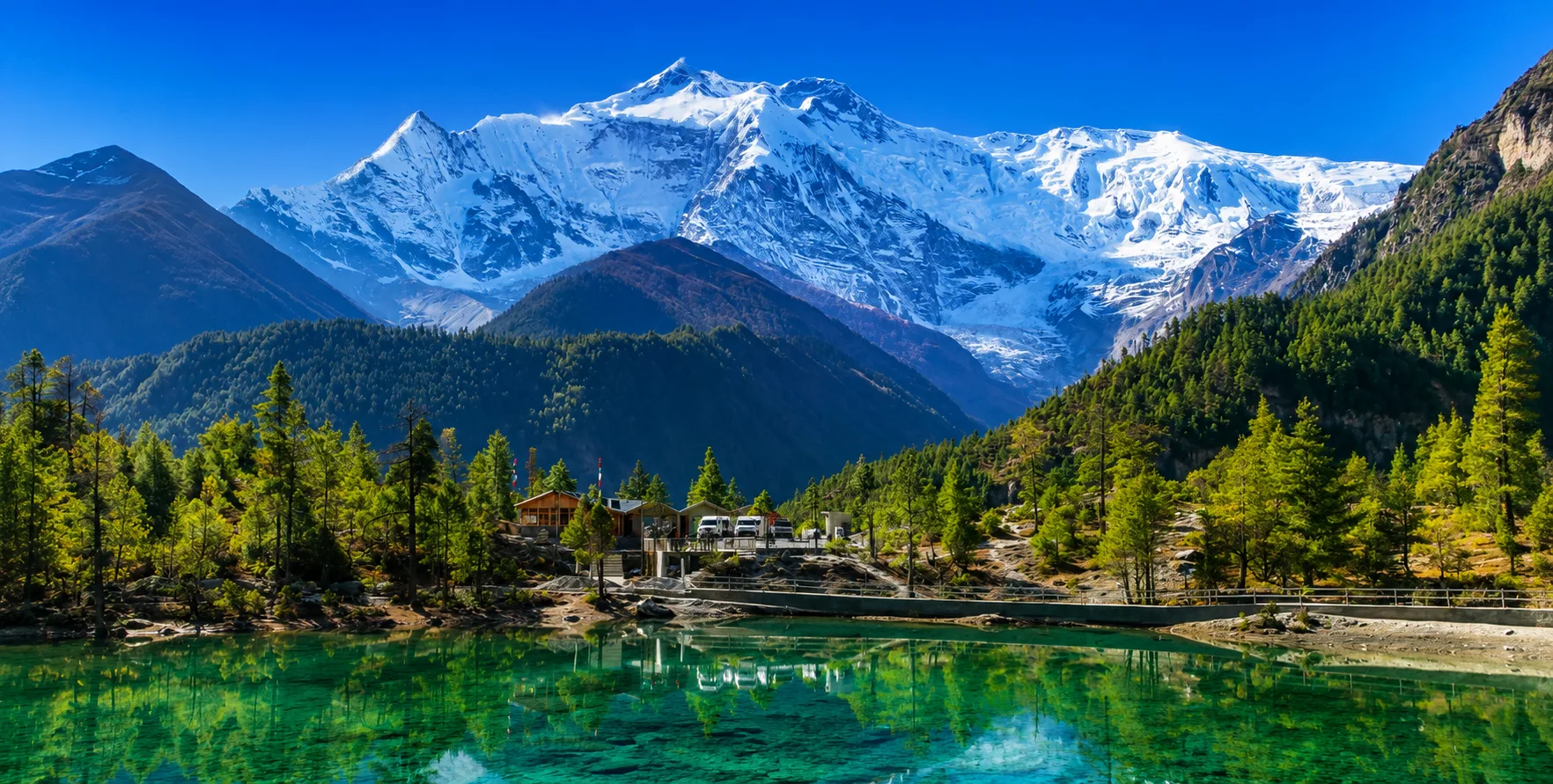
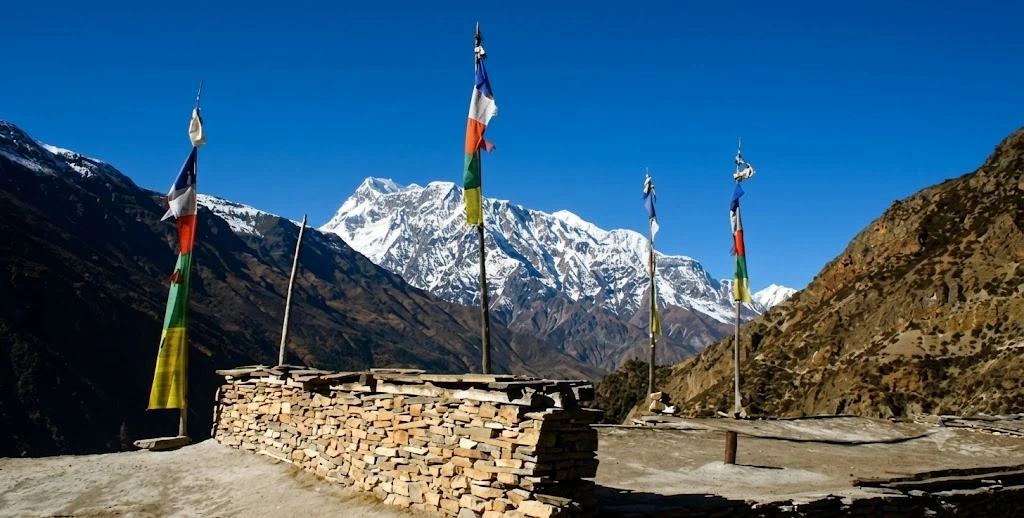
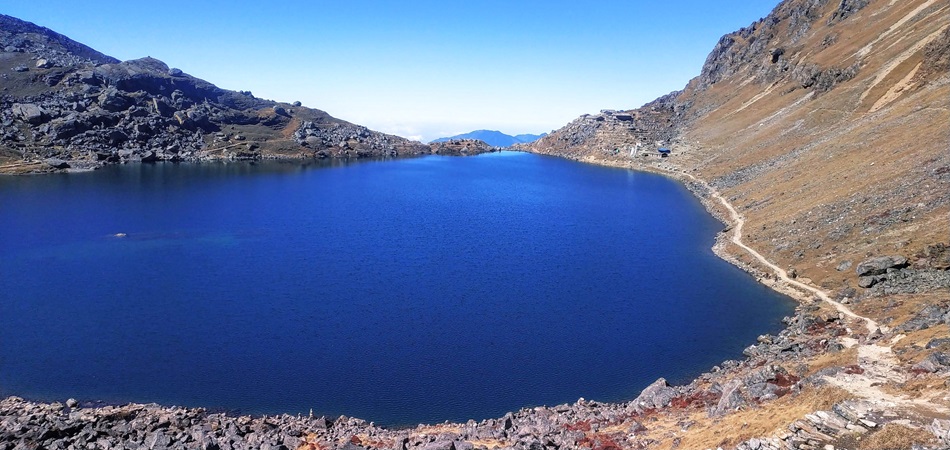
The Rolwaling Valley’s trekking attractions are exceptional. The Tsho Rolpa glacial lake at 4,580 meters — one of Nepal’s largest glacial lakes — sits in a setting of raw mountain drama beneath the permanent snowfields of the Rolwaling Himal, its turquoise waters reflecting the surrounding peaks in conditions of early morning clarity that most trekkers describe as among the most visually stunning moments of their Nepal trekking experience.

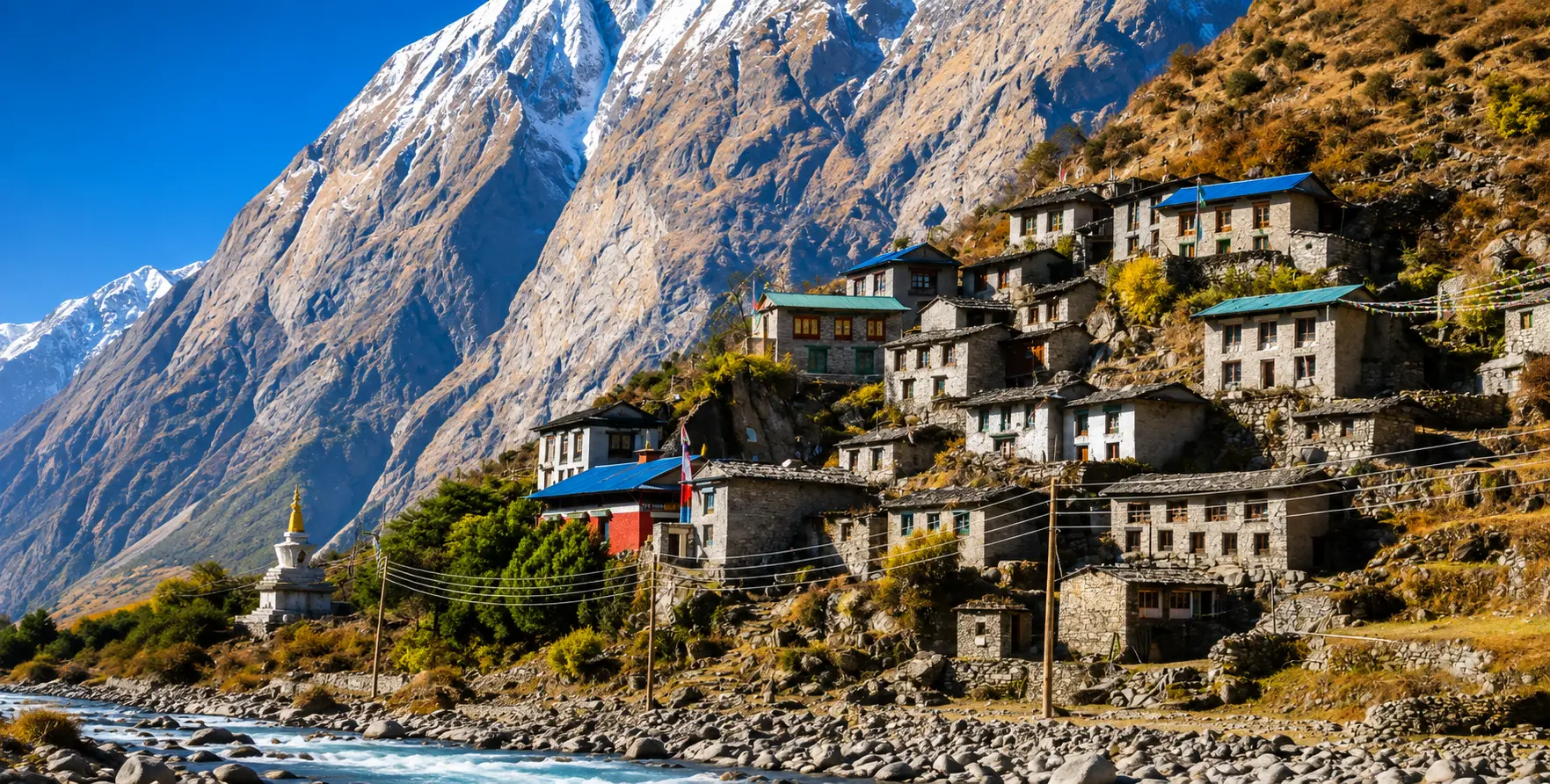
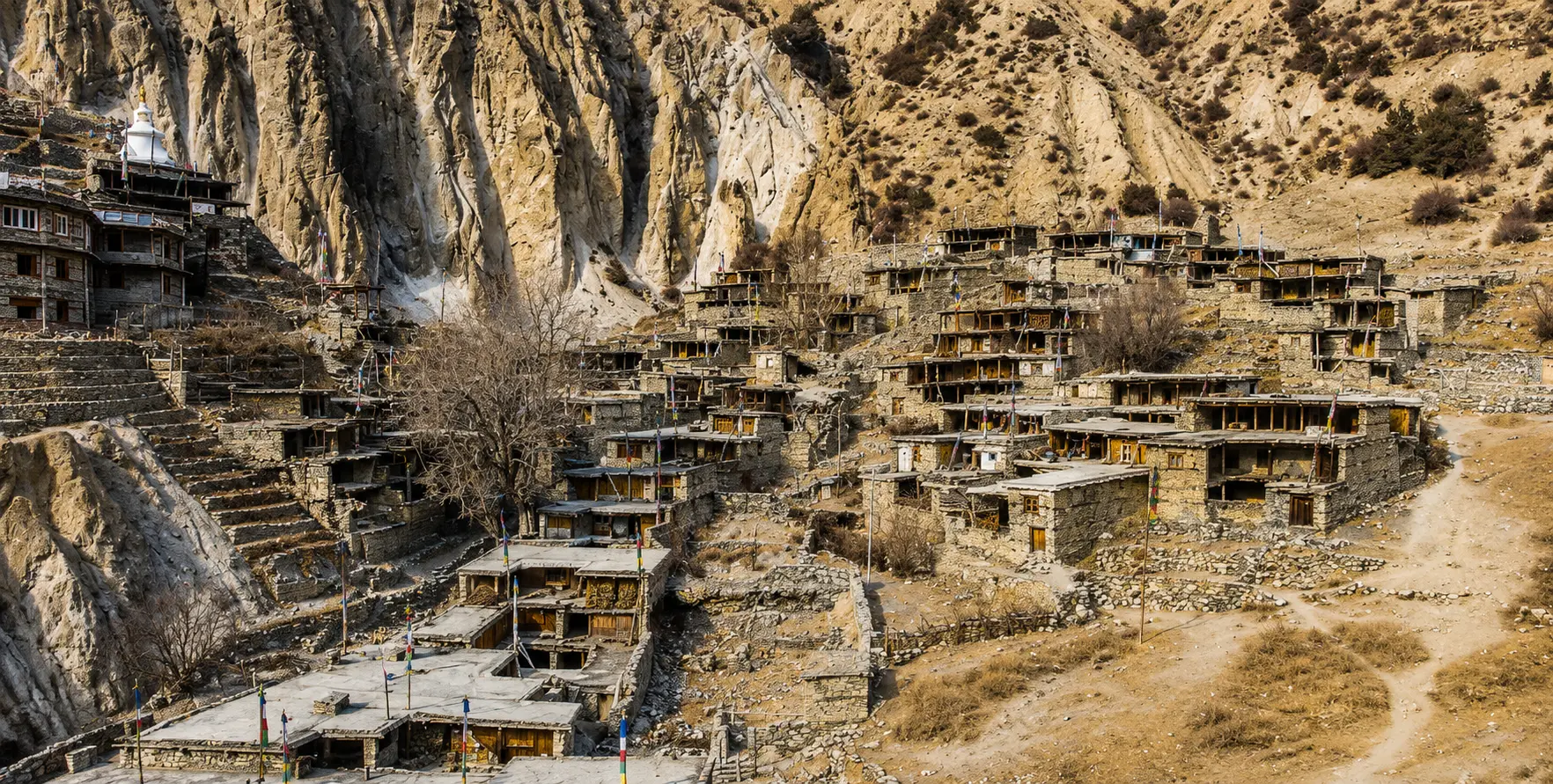
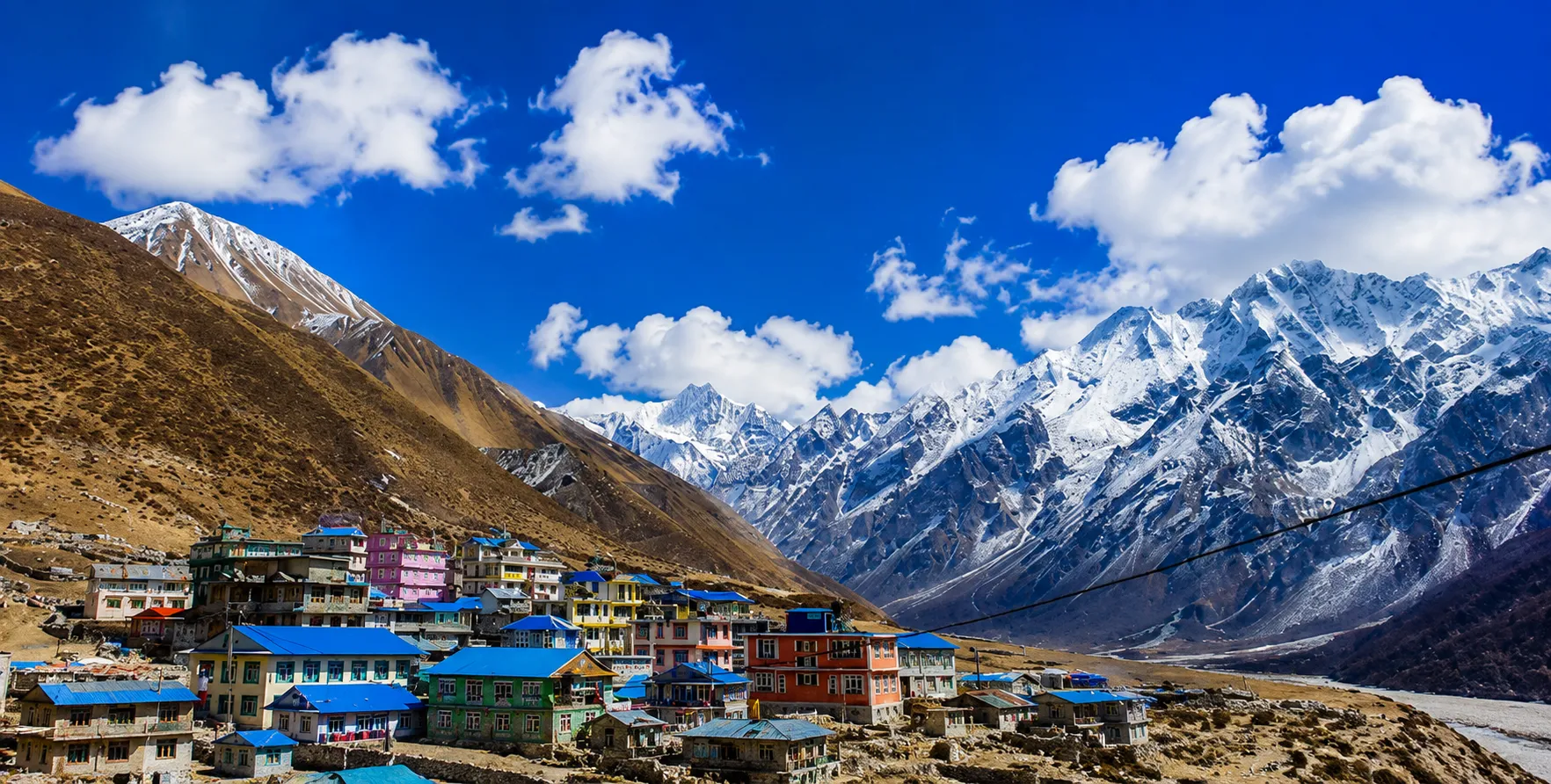
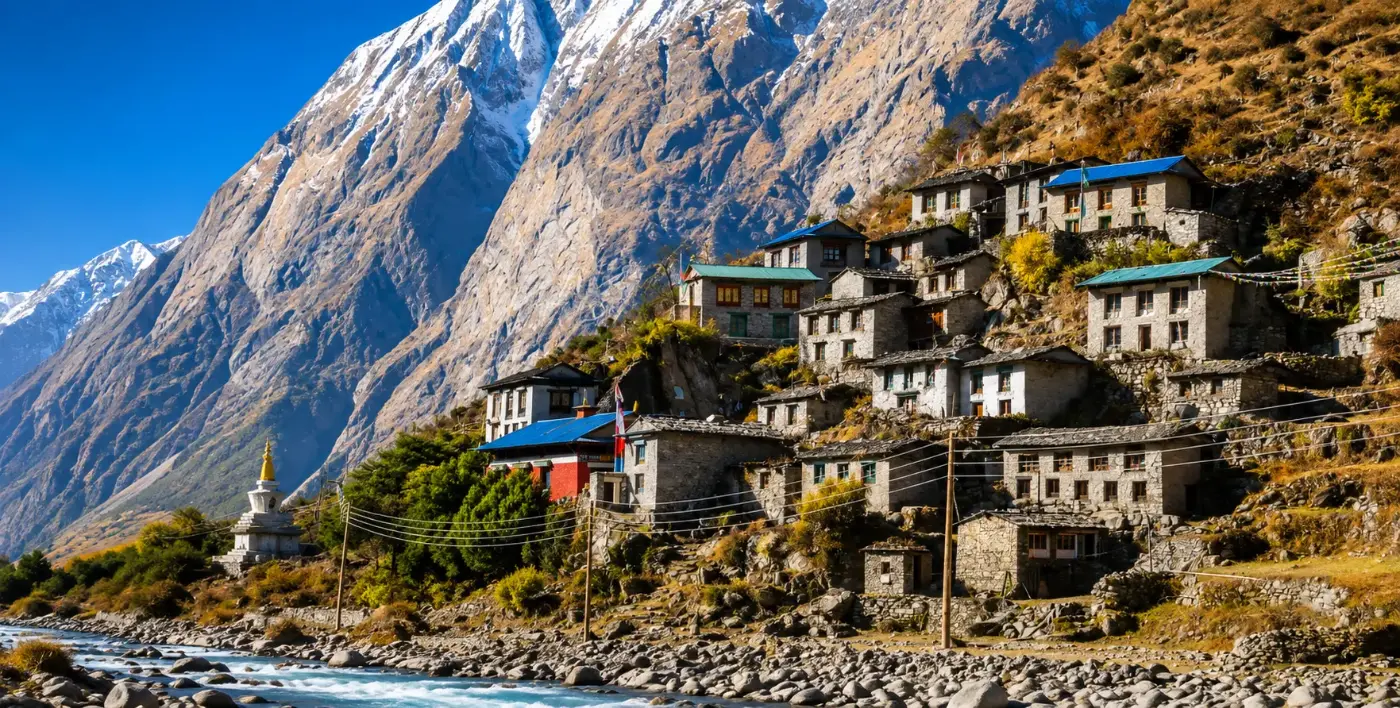
The Sherpa village of Beding at 3,510 meters, the valley’s largest settlement, offers an authentic encounter with the Sherpa Buddhist community, where cultural practices, monastery architecture, and the pastoral economy have been far less altered by trekking infrastructure than in equivalent Sherpa communities in the Everest region.

Na Gaon at 4,120 meters is the valley’s highest inhabited village and the base for excursions toward the Yalung La and the approaches to the Tsho Rolpa — a settlement whose summer pasture character and ancient monastery create an atmosphere of genuinely remote Himalayan habitation.

The Rolwaling Valley is far less visited than Nepal’s four most famous trekking corridors — Everest, Annapurna, Langtang, and Manaslu — and this lower visitor density is both the valley’s greatest attraction and its biggest logistical challenge.

Unlike the Everest Base Camp Trek’s well-serviced Lukla flight approach or the Annapurna Circuit’s multiple road access points, the Rolwaling is served by a single vehicle approach corridor from Kathmandu through Dolakha District — a route that rewards proper planning with a transport arrangement that works, without the last-minute negotiation challenges that under-served trailheads sometimes impose on returning trekkers.
Rolwaling Valley Trek Return: Gongar Khola to Kathmandu Jeep

The Return Route: Gongar Khola to Kathmandu in Full Detail

Distance, Duration and Road Overview

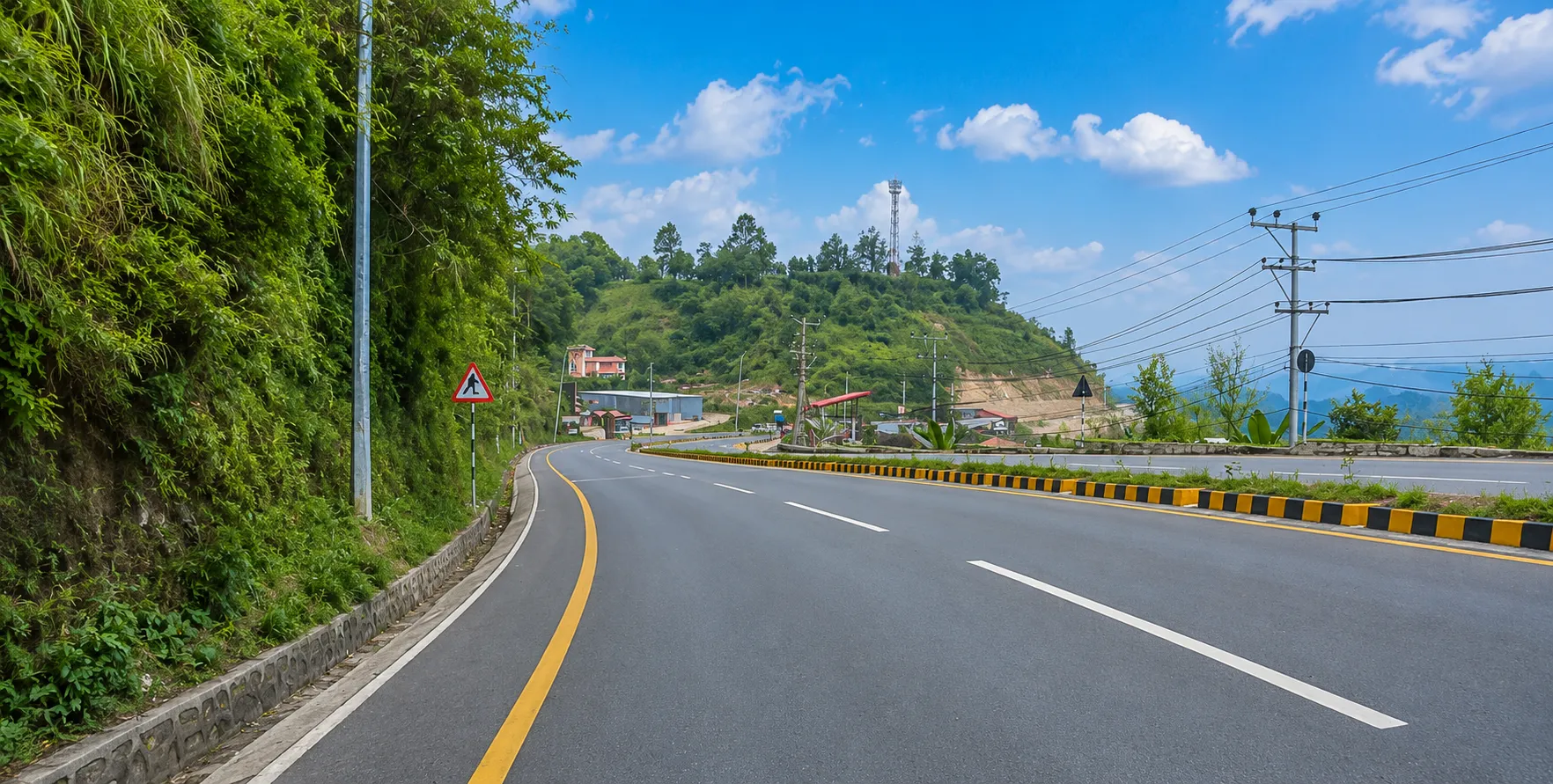
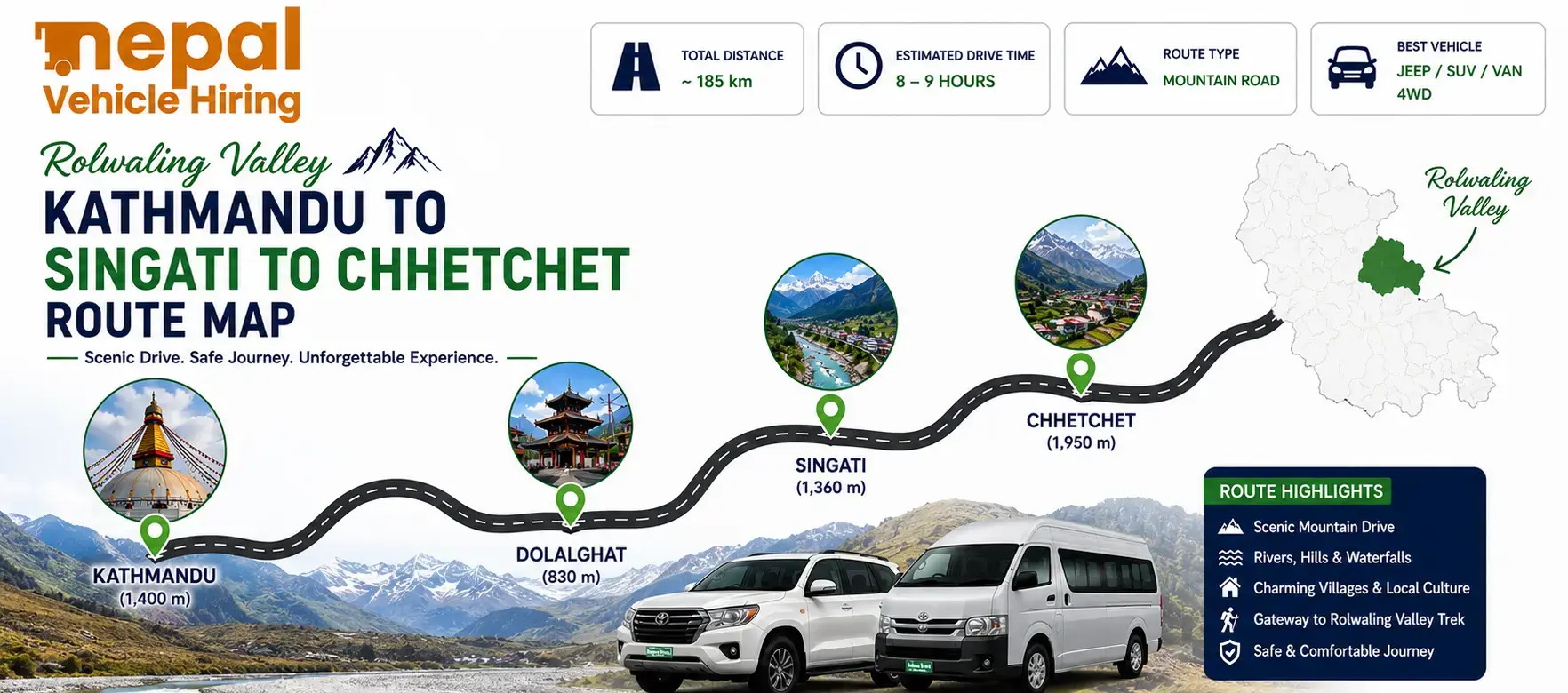
The road from Gongar Khola / Chhetchhet back to Kathmandu covers approximately 200 to 210 kilometres — confirmed by multiple current Rolwaling trek operators at 8 to 9 hours’ drive via the BB Highway (Arniko Highway and Dolakha District roads). The route follows the Dolakha District road southward from Gongar Khola through Singati, Charikot (Dolakha District headquarters at 1,980 meters), and the Dolalghat junction before joining the Arniko Highway for the final approach to Kathmandu through Banepa and the eastern valley rim.

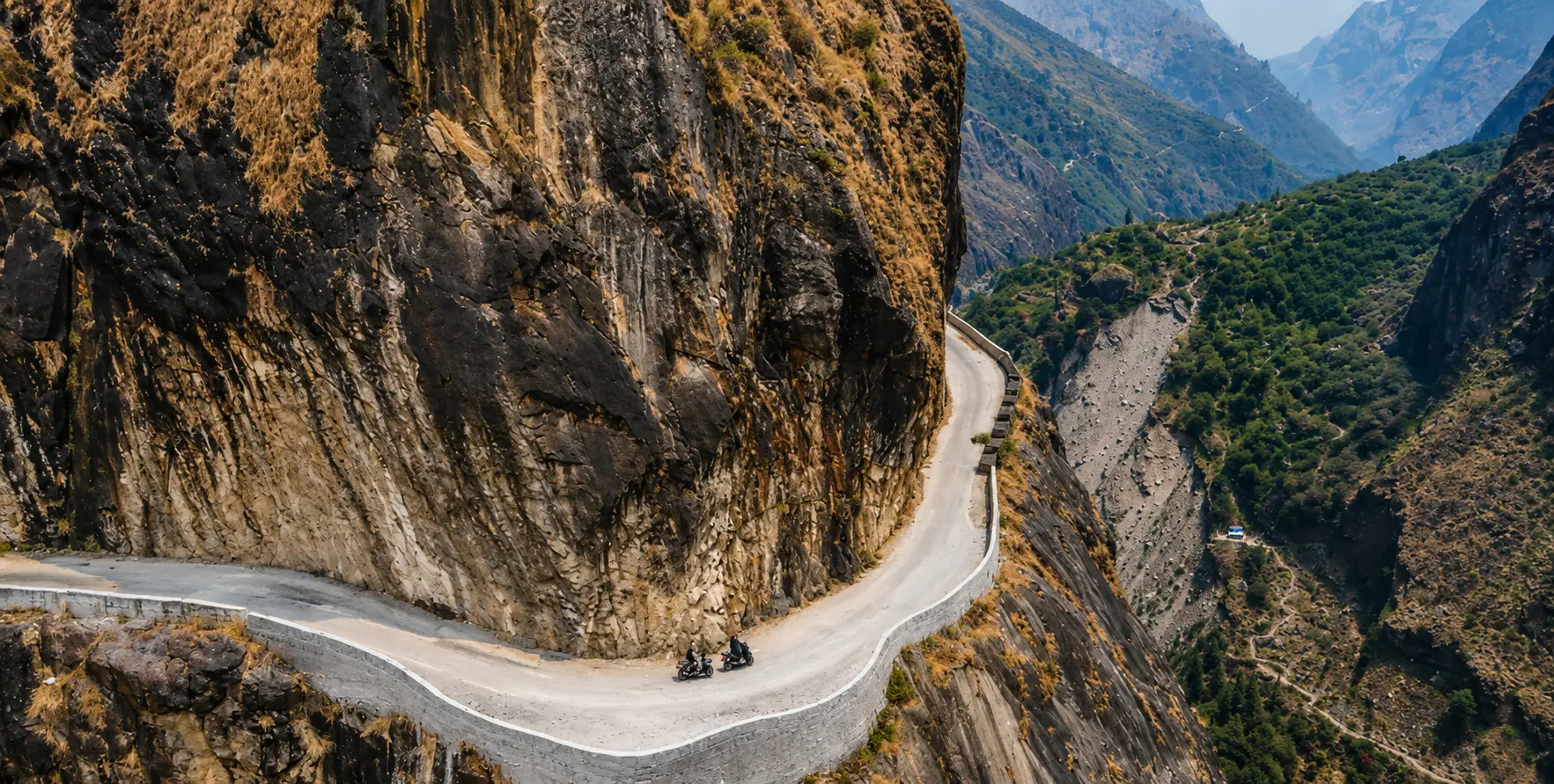
This is a mountain road of genuine character — winding, scenic, and demanding of an experienced driver and an appropriate vehicle for its more variable sections.

The road exits Gongar Khola / Chhetchhet, climbing steeply through the Tamakoshi River valley scenery that defines the approach corridor’s lower sections — the dramatic gorge walls, terraced hillsides, and river views that the outbound journey passed in either darkness (if the group departed Kathmandu before dawn) or in reverse orientation (since the outbound drive carries passengers northward while their full attention is often directed toward the adventure ahead rather than the scenery around them).

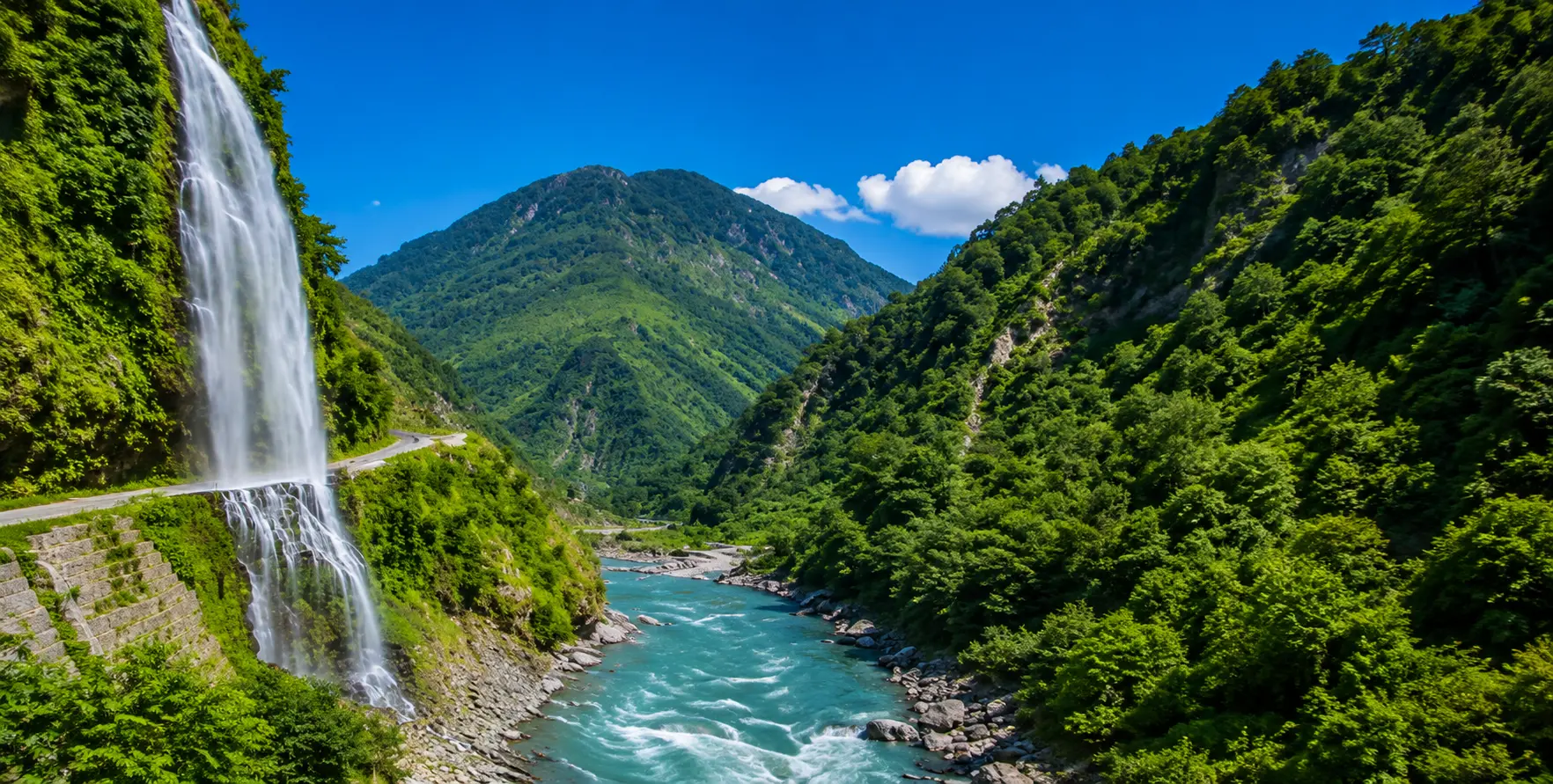
By contrast, the return journey typically takes place in daylight. Many Rolwaling trekkers describe seeing the approach valley’s landscape properly for the first time on the return drive — the Tamakoshi gorge scenery, the Bhote Koshi river confluence, and the mid-hill villages of the Dolakha District corridor revealing themselves in the afternoon light with a beauty that the outbound pre-dawn departure or trekking-focused attention had made invisible.

Key Waypoints: Gongar Khola to Kathmandu

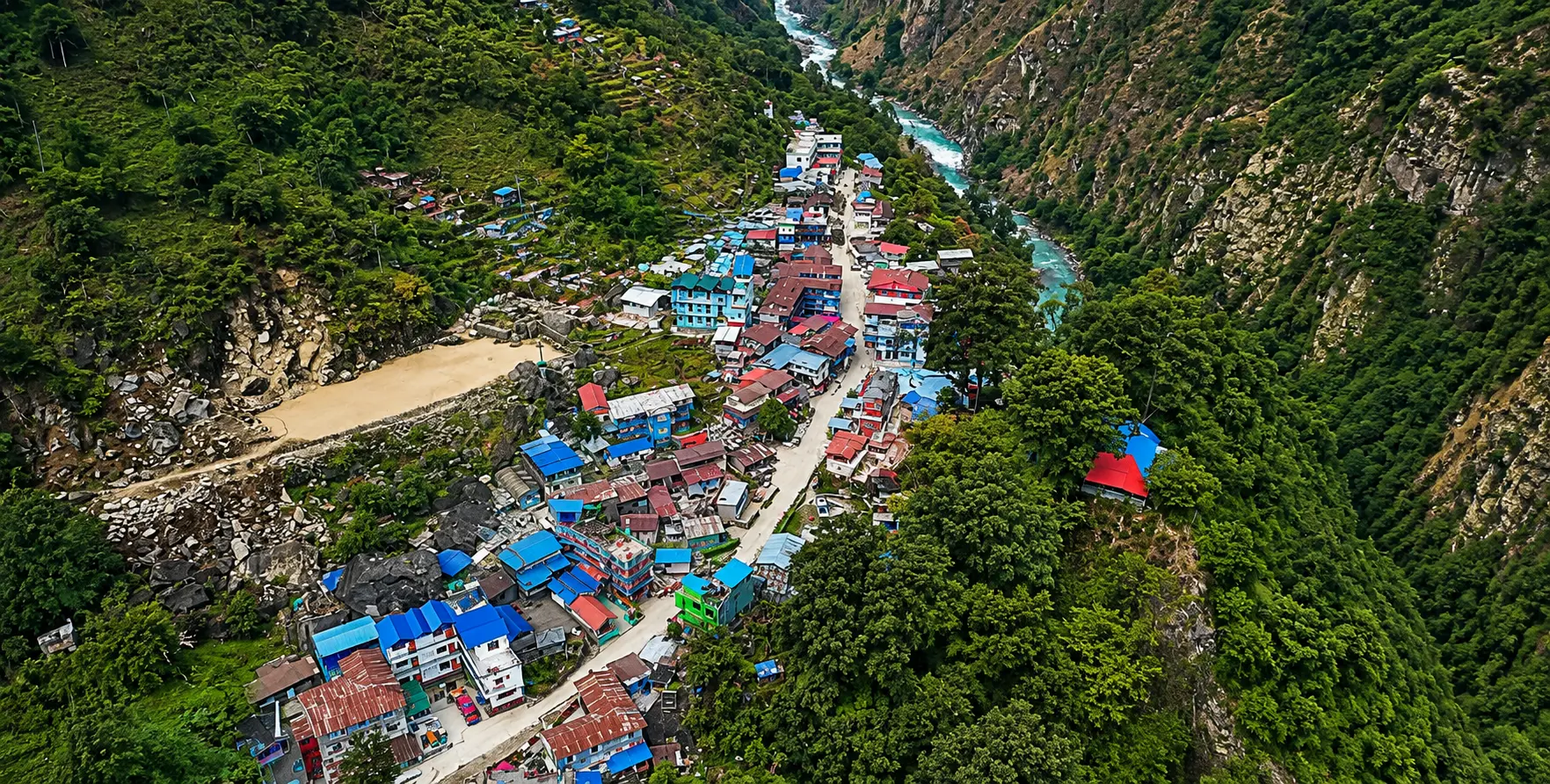
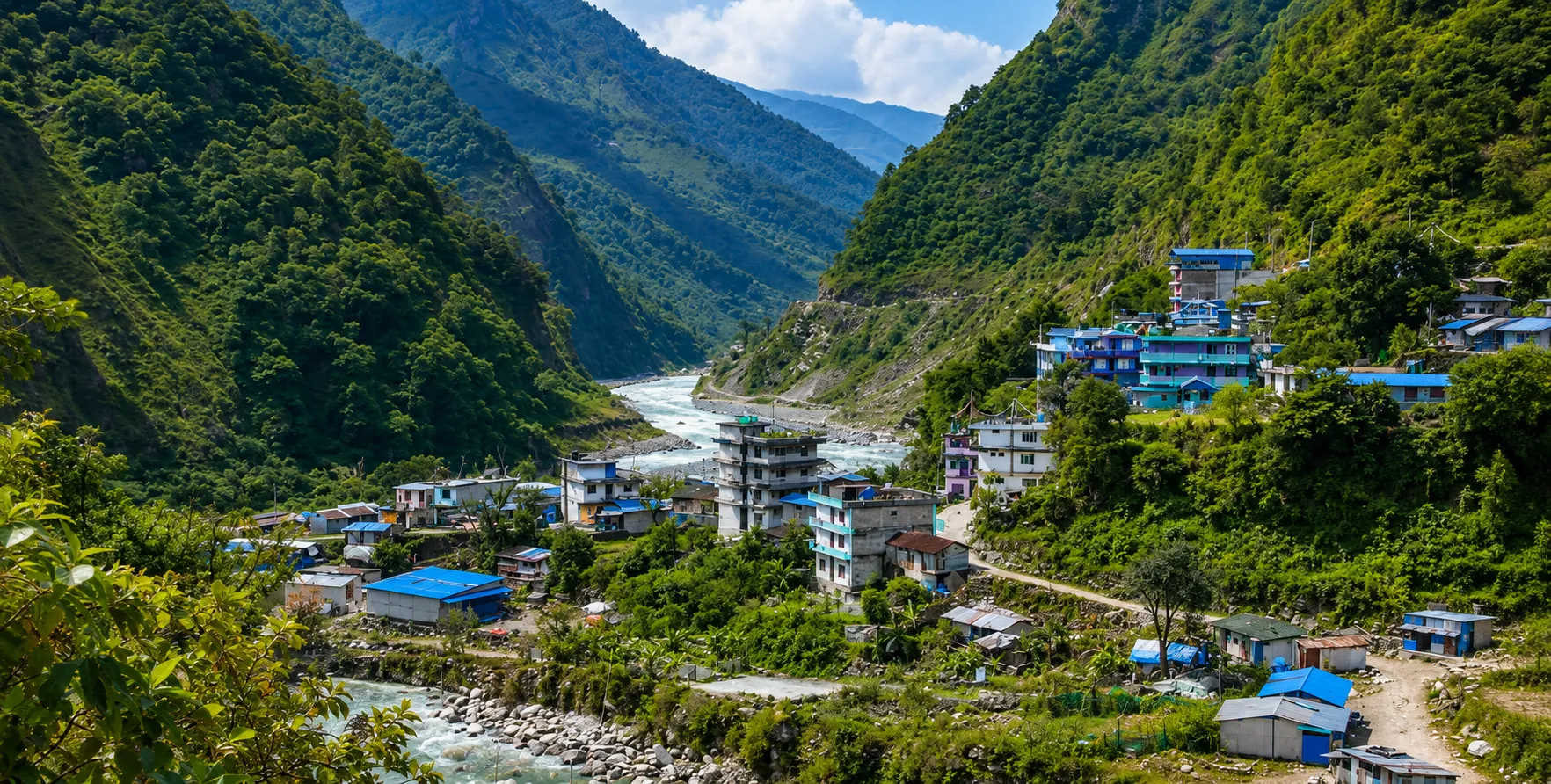
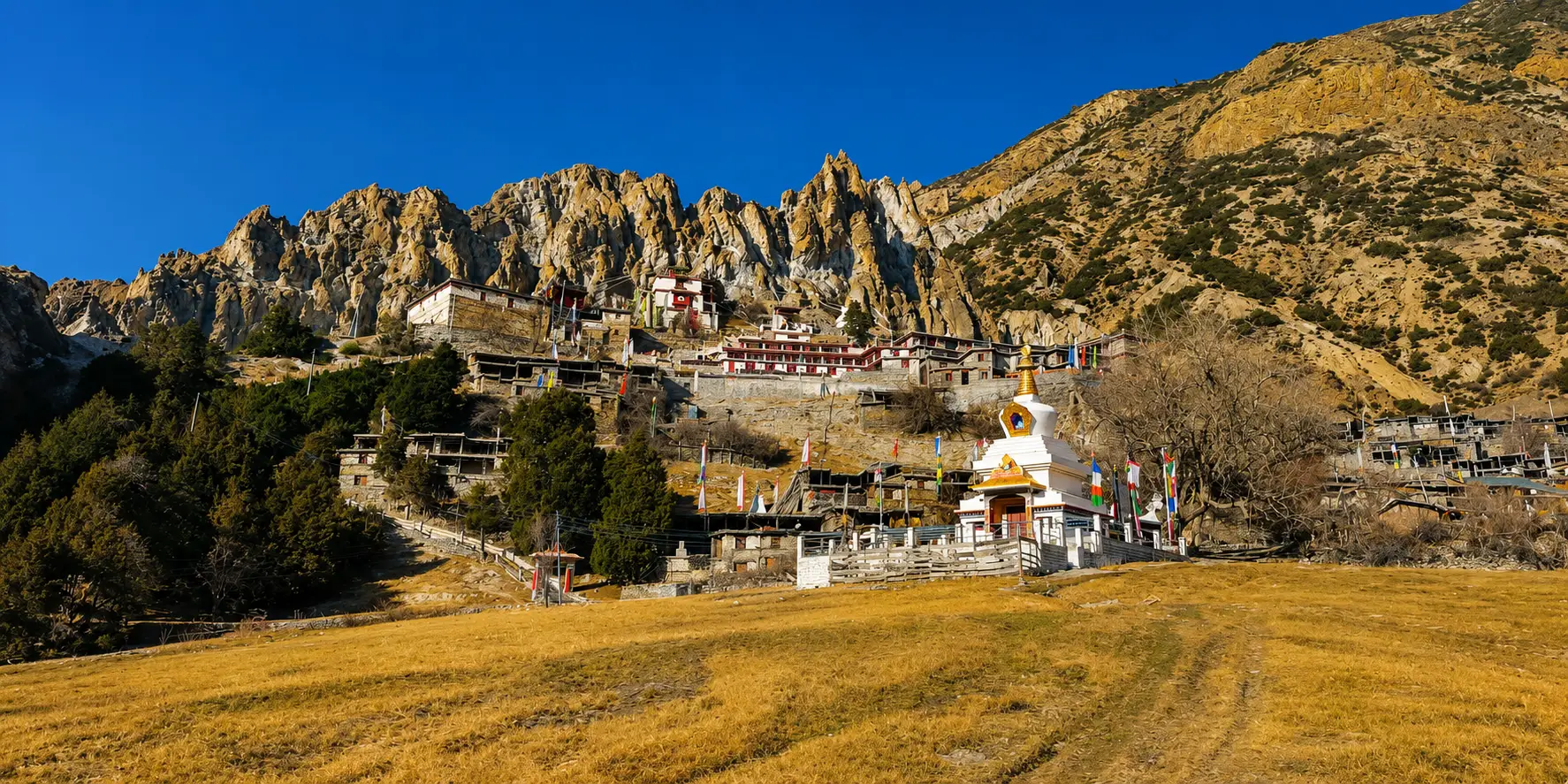
Gongar Khola (approximately 1,100 m): The return journey’s starting point — the small settlement at the confluence of the Gongar Khola stream and the Tamakoshi River where the Rolwaling Valley road access terminates and returning trekkers board their private vehicle for the Kathmandu journey.

The adjacent settlement of Chhetchhet (1,377 m), a short distance from Gongar Khola, serves as the trail start/end point for most Rolwaling itineraries, where trekkers cross the suspension bridge over the Tamakoshi. Nepal Vehicle Hiring Pvt Ltd vehicles meet returning trekkers at either Gongar Khola or Chhetchhet depending on road conditions and the group’s preferred pickup point — confirm the exact meeting location when communicating the return date via WhatsApp.

Singati (approximately 800 m): The first significant settlement on the return route south of Gongar Khola, Singati is a roadside market town in the Tamakoshi valley where fuel stops, roadside snacks, and short comfort breaks are readily available. Many returning Rolwaling trekkers stop briefly in Singati for refreshments before the longer climb to Charikot begins.

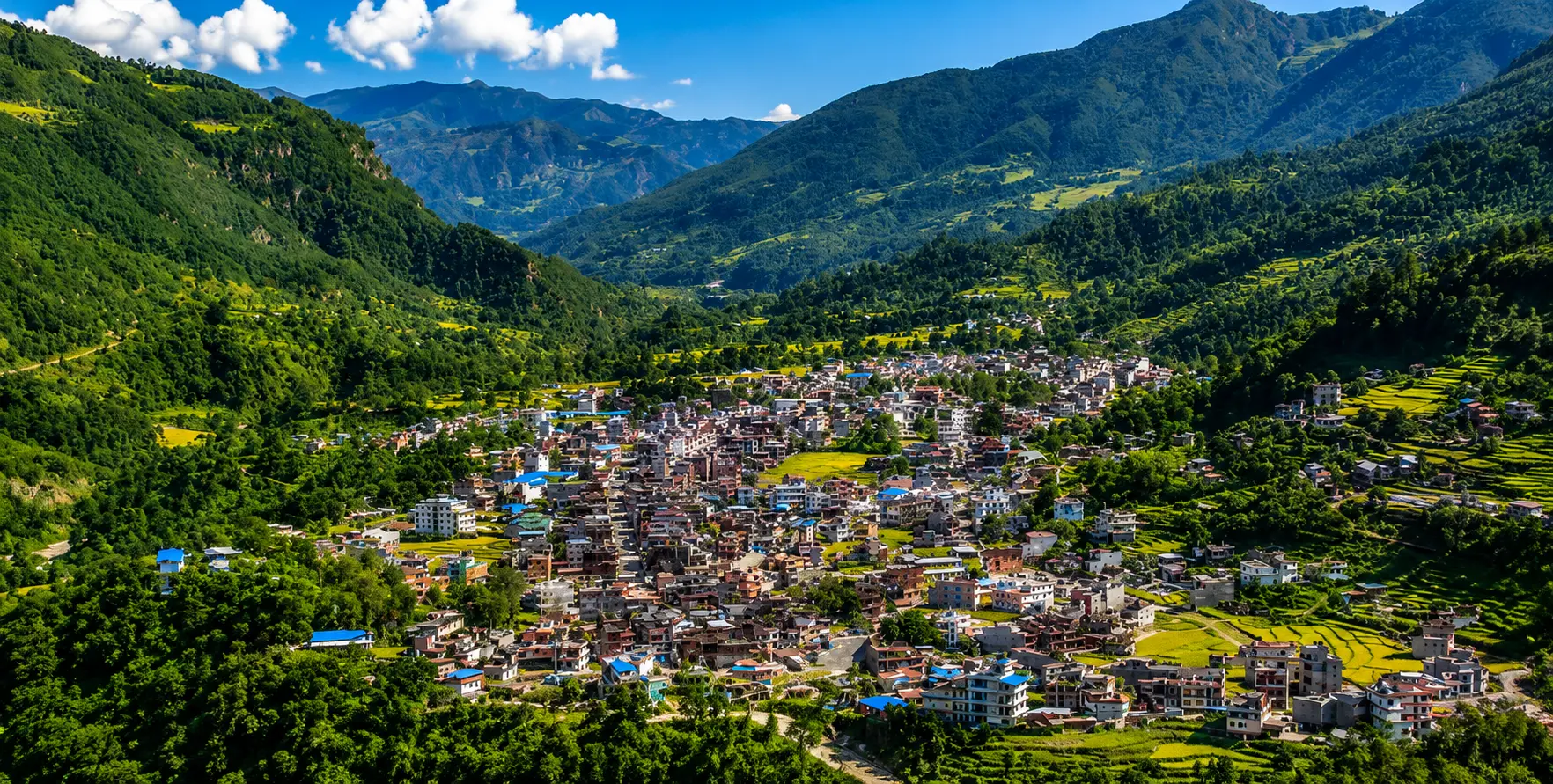
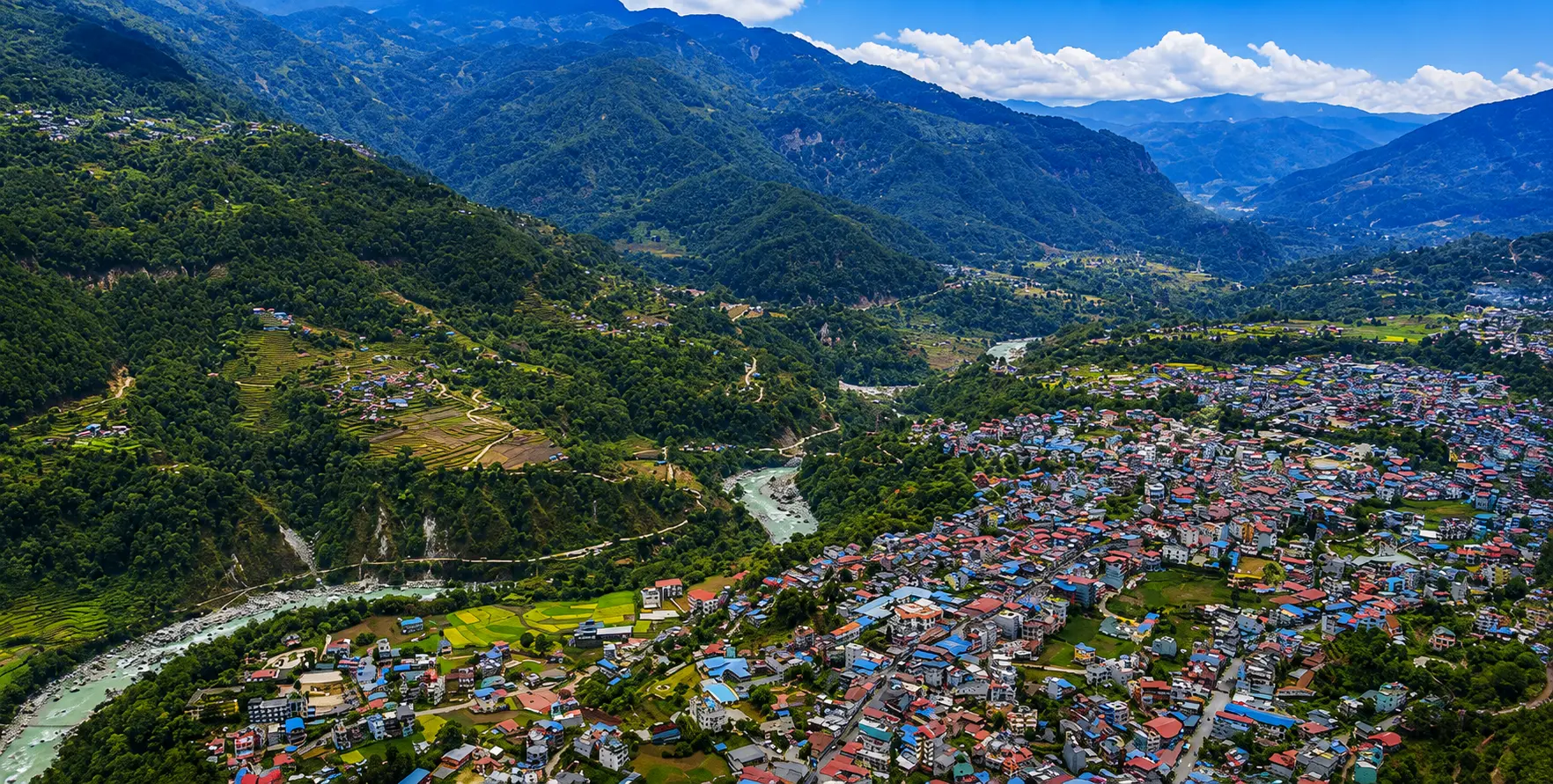
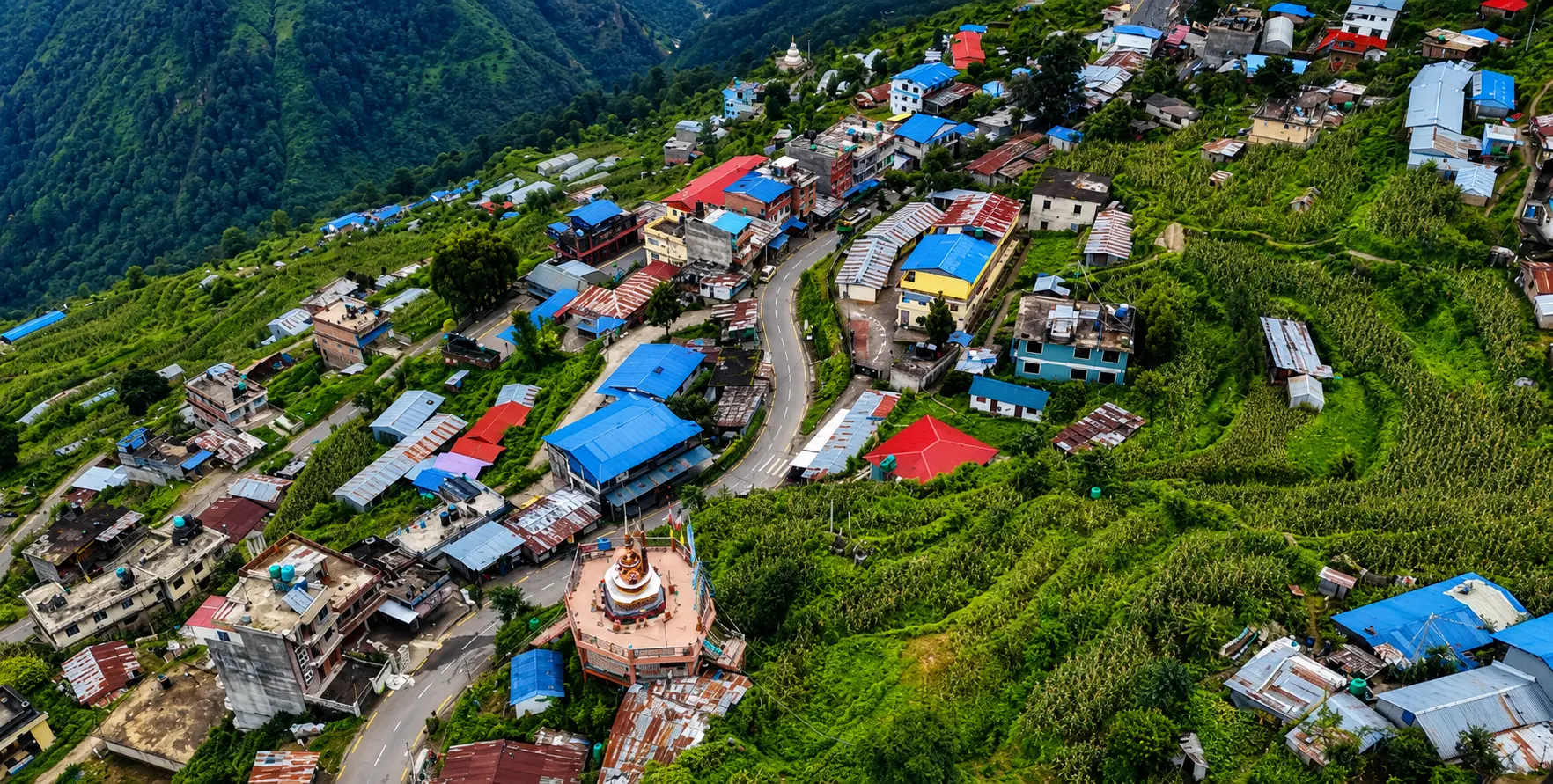
Charikot (1,980 m): The Dolakha District headquarters and the most significant town on the return corridor, Charikot sits on a ridge above the Tamakoshi valley at nearly 2,000 meters — a pleasant hill town with a broader range of hotel and restaurant options than the lower valley settlements.

For trekkers who prefer to split the return journey with a Charikot overnight — arriving from Gongar Khola in the late afternoon, resting, and departing for Kathmandu fresh the next morning — Charikot offers the most practical and comfortable stopping point. The town’s ridge position offers fine views of the Gauri Shankar massif on clear mornings, and the Dolakha Bhimsen Temple (a significant pilgrimage site for Nepali Hindu devotees) adds a cultural dimension for trekkers with the energy and inclination to visit.

Dolalghat and Banepa: As the return route joins the Arniko Highway and approaches Kathmandu, the landscape shifts from Dolakha District’s hilly terrain to the increasingly developed and densely populated Kavrepalanchok District. The Dolalghat junction — where the Sunkoshi and Indrawati rivers meet — marks the point where the return journey shifts from mountain road to established national highway character.

From Dolalghat, the Arniko Highway carries the vehicle into Banepa and then Dhulikhel before the final descent into the Kathmandu Valley. For trekkers who want to add a cultural stop to the return journey, Dhulikhel’s hilltop viewpoint offers a spectacular Himalayan panorama on clear afternoons — the same range of peaks visible from Nagarkot but from a slightly different angle, with the Rolwaling Himal and Gaurishankar range visible to the east in a context that the returning trekker can now recognize and name with intimate familiarity.
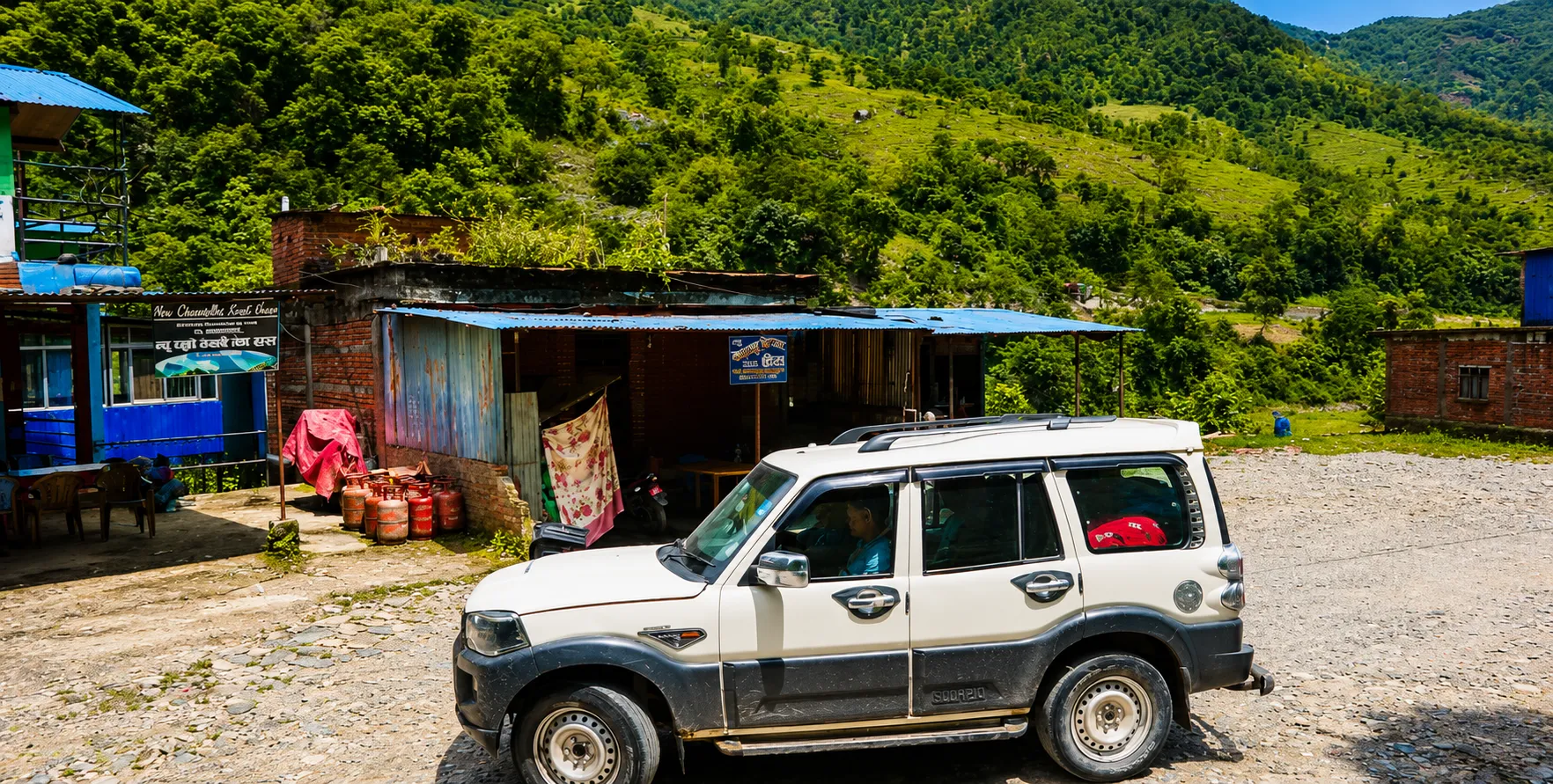
Soti khola

Vehicle Options for Gongar Khola to Kathmandu Return

Private 4WD Jeep — The Essential Choice

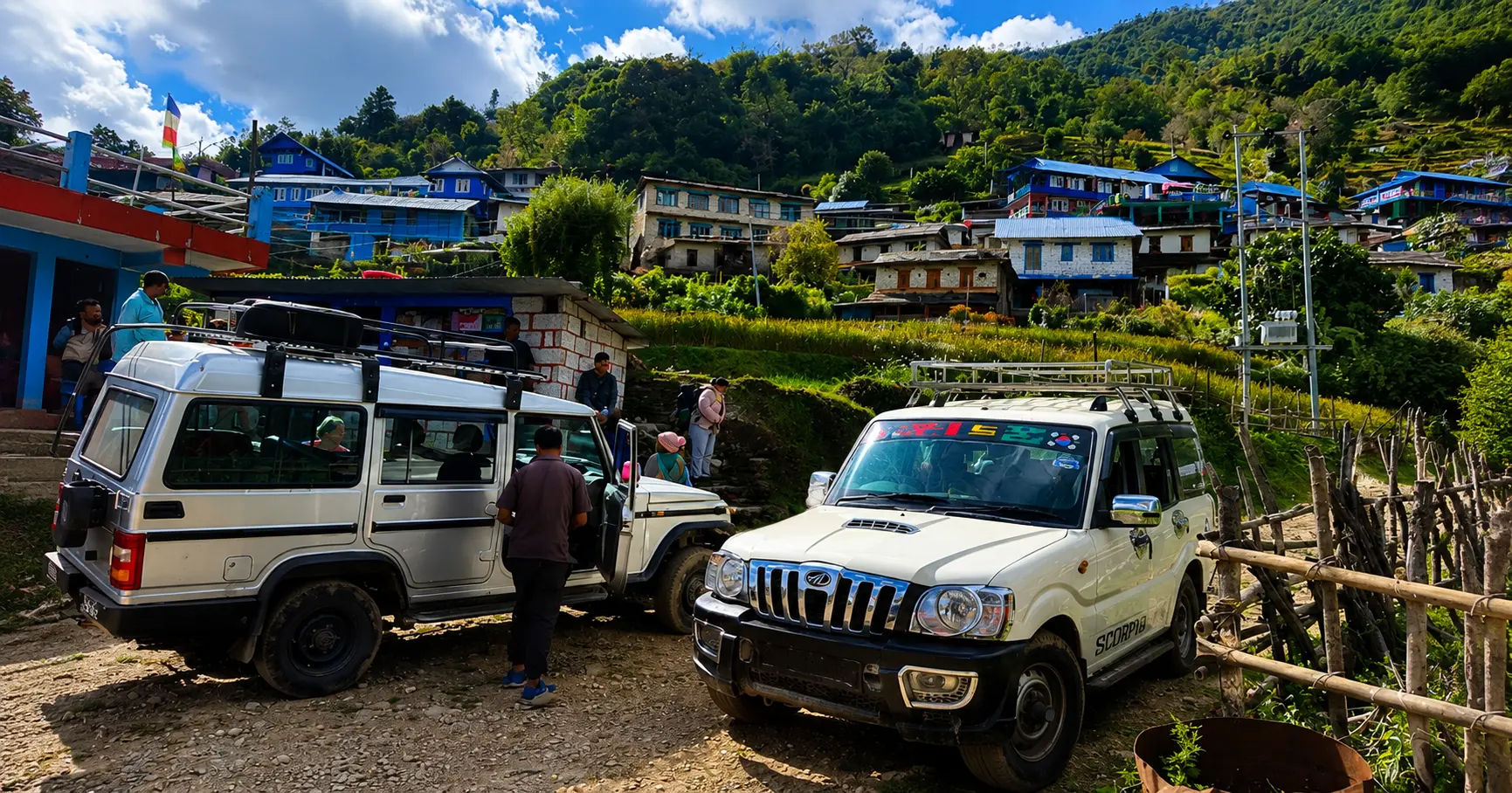
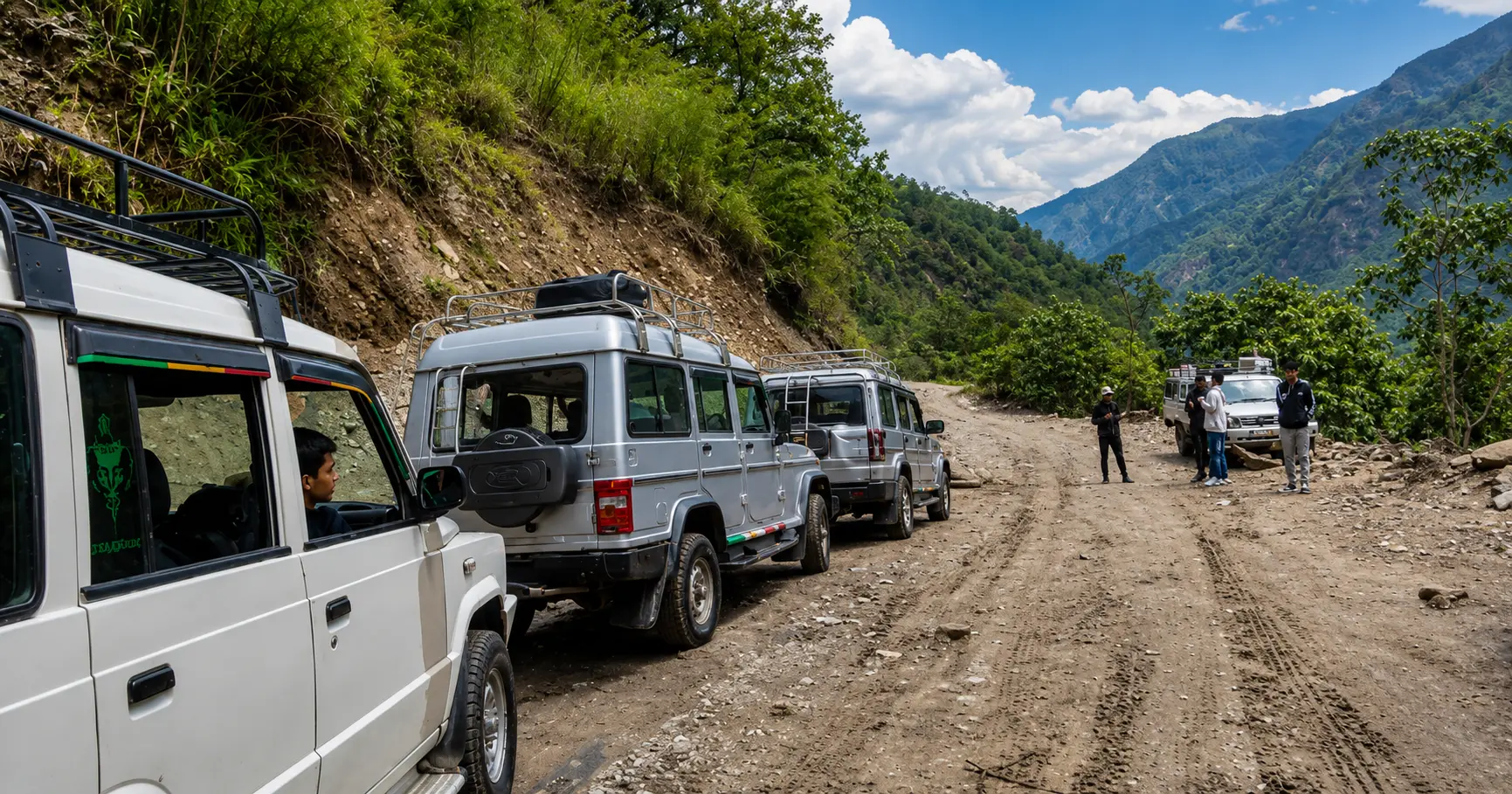
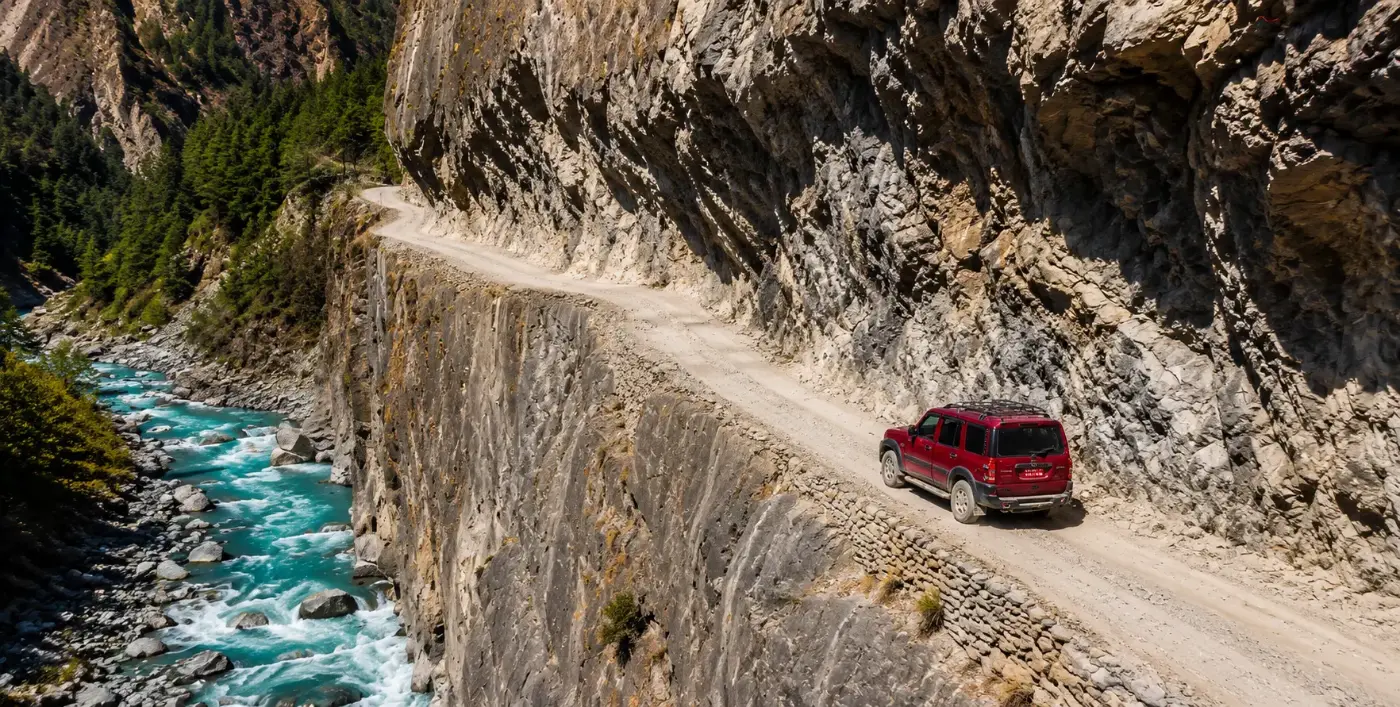
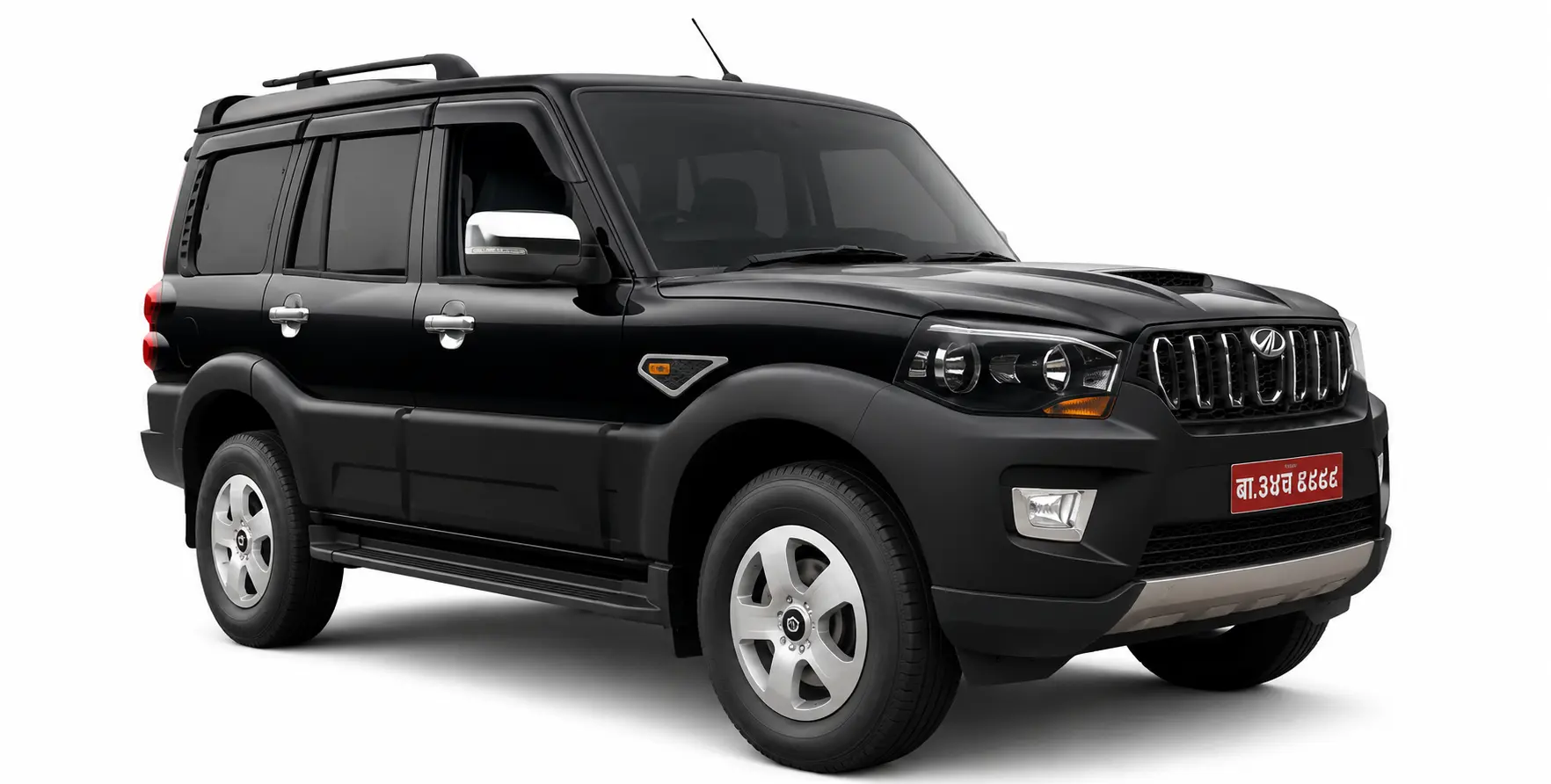
A proper 4WD jeep — Toyota Land Cruiser Prado, Land Cruiser VX, or Mahindra Scorpio — is the strongly recommended vehicle for the Gongar Khola to Kathmandu return journey. The Dolakha District road sections between Gongar Khola and Charikot involve sufficient road variation, gradient, and occasional rough-surface character that a vehicle with genuine 4WD capability and good ground clearance handles with a comfort and reliability margin that standard sedans or lower-clearance vehicles cannot match.

This is especially true during and immediately after monsoon season (June through September), when rainfall can compromise Dolakha District roads, making 4WD engagement genuinely useful rather than merely precautionary.

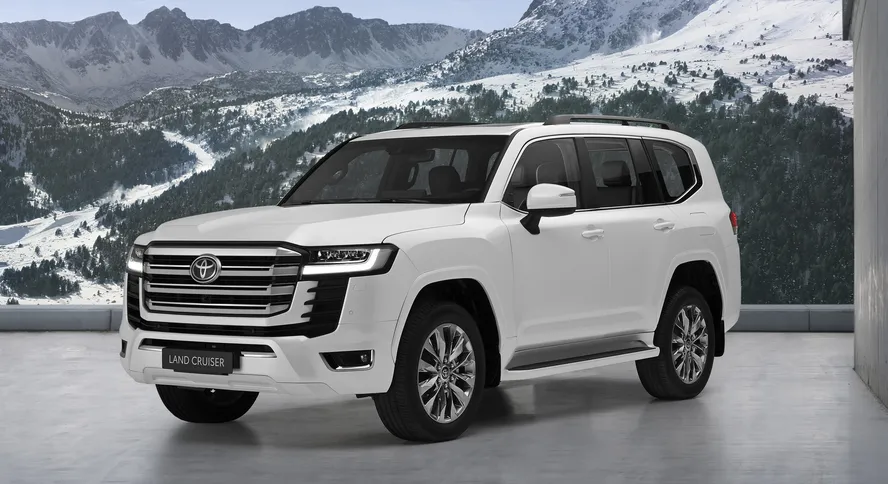
The Toyota Land Cruiser Prado is Nepal Vehicle Hiring Pvt Ltd’s top-end recommendation for the Gongar Khola to Kathmandu return — its spacious 7-seat interior providing the comfortable recovery environment that physically tired returning Rolwaling trekkers need after 10 to 14 days of sustained high-altitude walking, while its proven 4WD mountain road engineering handles the Dolakha District approach roads with easy confidence.

The Land Cruiser’s effective climate control is especially welcome on the return journey’s lower-altitude sections near the Tamakoshi valley floor, where temperatures can be much warmer than the Rolwaling Valley’s high-altitude environment trekkers spent the preceding weeks in.

The Mahindra Scorpio provides a more economical 4WD alternative — proven on Nepal’s mountain road corridors, adequate for the Dolakha District approach sections, and sufficient for the 200-kilometre return journey at a meaningfully lower hire rate than the Land Cruiser.

For budget-conscious groups, or those comfortable with a less refined cabin environment, the Scorpio delivers essential 4WD capability on a corridor where the Gongar Khola pickup point and the Dolakha District road sections reward ground clearance and all-wheel drive with improved safety and reliability margins. Nepal Vehicle Hiring Pvt Ltd’s 4WD jeep hire service provides both Land Cruiser and Scorpio options for the Rolwaling return with route-experienced drivers for each.

Private Car — Suitable for the Right Conditions

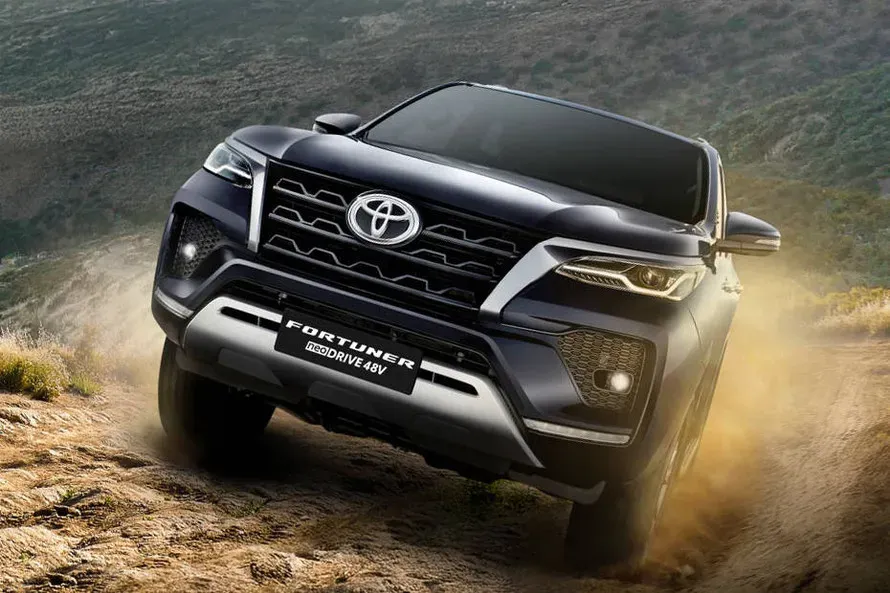
A private car or SUV — Toyota Fortuner, Hyundai Tucson, or similar — is a viable option for the Gongar Khola to Kathmandu return in good road conditions during the dry seasons of spring and autumn. The main sections of the Arniko Highway and Dolakha District roads are sealed and navigable by a well-maintained SUV; however, the sections closest to Gongar Khola, along with the variable character of the Singati-Charikot road in certain conditions, reward the jeep’s added capability.

Nepal Vehicle Hiring Pvt Ltd advises on whether a private car is appropriate for specific return dates based on current road condition information — and recommends upgrading to a 4WD jeep for monsoon-season returns or when rainfall in the preceding days has made the lower road sections less predictable.

Hiace Van — The Group Return Solution

For Rolwaling trekking groups of 8 to 12 returning together, a Hiace van hire offers the most cost-effective group return vehicle for the Gongar Khola to Kathmandu route sections the van’s ground clearance handles comfortably. The Hiace suits the Charikot to Kathmandu section on sealed roads and the Gongar Khola to Charikot section in good dry-season conditions.

For monsoon-season returns, or when the lower approach sections are in variable condition, Nepal Vehicle Hiring Pvt Ltd recommends a 4WD jeep for the Gongar Khola to Charikot section, with the Hiace meeting the group at Charikot if needed—a coordinated two-vehicle arrangement that optimizes both per-person cost and vehicle appropriateness for each road section.

Complete Cost Guide: Gongar Khola to Kathmandu

The following cost information represents current 2026/27 market rates for private vehicle hire on the Gongar Khola to Kathmandu return corridor. All Nepal Vehicle Hiring Pvt Ltd rates are fully inclusive of vehicle, experienced driver, fuel, and applicable road tolls — with no hidden additions at settlement.

Private 4WD jeep — Toyota Land Cruiser Prado (5–7 passengers): NPR 22,000 to NPR 40,000 per vehicle (approximately USD 165 to USD 250). Per-person cost for a group of 6: NPR 3,667 to NPR 5,000. Best all-round option for the complete route. Nepal Vehicle Hiring Pvt Ltd’s private jeep hire service covers this return at transparent, all-inclusive rates.

Private car/top-end SUV (3–4 passengers): NPR 16,000 to NPR 50,000 per vehicle (approximately USD 120 to USD 300). Suitable for dry-season returns on good road conditions. Nepal Vehicle Hiring Pvt Ltd offers Toyota Fortuner and equivalent options for this route.

Hiace van (8–12 passengers): NPR 25,000 to NPR 60,000 per vehicle (approximately USD 188 to USD 450).Per person for 10 passengers: NPR 2,500 to NPR 3,500. Nepal Vehicle Hiring Pvt Ltd’s Hiace van hire service is the most economical group return option for groups of 8 or more on the dry-season road.

Public bus comparison: A local bus from Charikot or the Dolakha District to Kathmandu costs approximately NPR 800 to NPR 1,500 per person and takes 10 to 12 hours — with no hotel pickup from Gongar Khola, no fixed departure time, shared seating, and no luggage security.

The public bus serves trekkers with extremely limited budgets; for everyone else, the private vehicle’s pickup flexibility, comfort, and reliable timing are worth the modest additional cost per person for groups of three or more.

Tip: For a group of six trekkers returning from the Rolwaling Valley, a private Land Cruiser costs NPR 26,000 total, or about NPR 4,333 per person—less than USD 33 each—for a comfortable 8-to-9-hour door-to-hotel return service. This per-person cost is the most efficient use of the return vehicle budget and should be the default choice for any group of four or more returning trekkers.
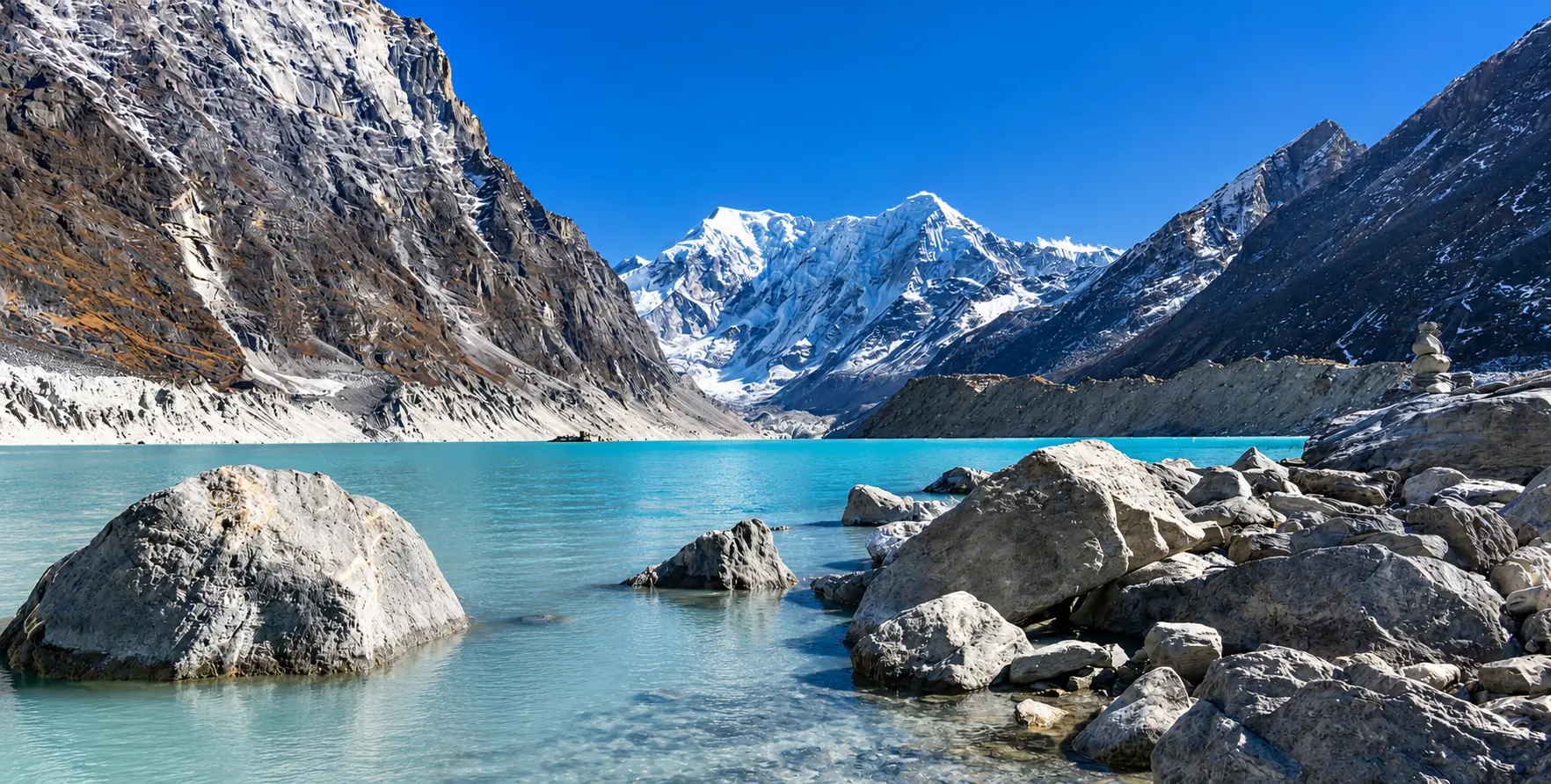
Rolwaling valley trek jeep

Why Private Jeep Hire Is Essential for the Rolwaling Return

The case for a private jeep return from Gongar Khola over public bus or shared vehicle alternatives is unusually strong for the Rolwaling corridor specifically — because the specific character of this trailhead’s road and the remote, low-infrastructure character of the Dolakha District approach make the advantages of private transport more consequential than they are on better-served Nepal trekking corridors.

The Gongar Khola / Chhetchhet trailhead is not a bustling hub with multiple daily departure options and a readily available pool of local shared vehicles. It is a small, quiet settlement at the road terminus of a relatively low-traffic mountain road in Dolakha District.

Returning trekkers who haven’t pre-arranged their return vehicle may find themselves waiting for shared vehicles or local buses on an uncertain schedule, with post-trek fatigue making extended waits far more uncomfortable than at the start of a fresh adventure.

A pre-arranged private vehicle from Nepal Vehicle Hiring Pvt Ltd waiting at Gongar Khola or Chhetchhet eliminates this uncertainty — the vehicle is there when the group descends from the trail, the driver has been briefed, and the journey back to Kathmandu begins immediately without negotiation, waiting, or logistical improvisation at the end of what has been a physically demanding two-week mountain adventure.

Hotel drop-off in Kathmandu is the second major private vehicle advantage. After 10 to 14 days in the basic teahouse accommodation that characterises Rolwaling Valley trekking, arriving directly at a Kathmandu hotel door—rather than at a general bus terminus, with all luggage safely in the vehicle boot rather than negotiating a separate city taxi—is a meaningful quality-of-return consideration.

Nepal Vehicle Hiring Pvt Ltd’s return vehicles deliver to any Kathmandu hotel, guesthouse, or address, completing the circuit from wilderness to comfort with the maximum efficiency and minimum post-trek logistical effort.

The Outbound Kathmandu to Gongar Khola Journey: Planning Ahead

Plan the return vehicle as part of the complete Rolwaling transport plan, not as an afterthought at the trek’s end. The outbound journey from Kathmandu to Gongar Khola / Chhetchhet sets the template for the return — the same 200-kilometre route, the same 8-to-9-hour driving time, the same vehicle requirement for the Dolakha District approach section.

Multiple current Rolwaling Valley Trek operators describe the outbound drive as ‘8 to 9 hours via the BB Highway (Arniko Highway) through Dolalghat, Charikot, Singati, and Gongar Khola’ covering approximately 200 to 210 kilometers. Nepal Vehicle Hiring Pvt Ltd offers both the outbound Kathmandu-to-Gongar Khola jeep transfer and the return Gongar Khola-to-Kathmandu pickup as a single coordinated booking—the most efficient and cost-effective way to arrange complete Rolwaling vehicle transport.

The outbound journey to Gongar Khola typically departs Kathmandu between 6:00 and 7:00 a.m. to ensure arrival at the trailhead in the early afternoon, with enough daylight to cross the Tamakoshi suspension bridge and reach the first teahouse at Simigaon before dark.

The route passes through Bhaktapur on the eastern Kathmandu Valley rim — many trekking groups make a brief stop at the ancient Newar city on the outbound journey for the cultural orientation it provides before entering the more remote Himalayan world of the Rolwaling.

Nepal Vehicle Hiring Pvt Ltd can incorporate a Bhaktapur stop into the outbound Kathmandu to Gongar Khola transfer on request, adding 1 to 1.5 hours to the journey but delivering a first cultural Nepal experience of genuine quality before the wilderness begins.

Seasonal Considerations: Return Journey Through the Year

The Gongar Khola to Kathmandu return journey’s character changes meaningfully by season — and the Rolwaling Valley’s trekking season constraints mean that the return vehicle is most commonly needed in the spring (March to May) and autumn (September to November) windows that also represent the finest road conditions on the Dolakha District approach corridor.

Autumn, from September through November, is both the finest Rolwaling trekking season and the best period for road conditions on the return journey. Post-monsoon road surfaces are newly stable, the Tamakoshi valley’s scenery is at its most vividly green and atmospheric in the weeks immediately after the monsoon’s departure, and the clear post-monsoon air delivers exceptional mountain views from the higher road sections near Charikot.

Nepal Vehicle Hiring Pvt Ltd recommends autumn as the optimal return season for Rolwaling trekkers — the combination of excellent trail conditions on the Tsho Rolpa approaches and excellent road conditions on the return corridor making October and November the calendar’s finest window for the complete Rolwaling experience.

Spring,g from March through May, brings the rhododendron bloom that transforms the Rolwaling approach forests in March and April, and road conditions are generally good after the winter dry period. Late May pre-monsoon conditions can make some road sections more variable as early rainfall begins to affect Dolakha District, and Nepal Vehicle Hiring Pvt Ltd monitors road conditions during this transitional period to provide clients with accurate departure-timing advice.

Monsoon season from June through August brings the highest road disruption risk on the Gongar Khola to Kathmandu corridor—the sections between Gongar Khola and Charikot are historically most affected by landslides and road surface deterioration during sustained heavy rainfall.

The Rolwaling Valley Trek is rarely undertaken during monsoon season, given both the trail conditions at higher elevations and the road risk on the approach corridor. For the few experienced trekkers who do visit during monsoon, Nepal Vehicle Hiring Pvt Ltd recommends a Land Cruiser 4WD for the monsoon-season return and monitors current road conditions before confirming departure timing from Gongar Khola.

The Rolwaling Experience: What Trekkers Return Having Seen

Understanding what the Rolwaling Valley delivers to trekkers helps explain why the return vehicle arrangement matters—because the valley’s experience creates a specific emotional character in returning trekkers that the best return vehicle service supports rather than disrupts.

The Rolwaling Valley Trek is not as accessible as the Everest Base Camp trail or as well-supported as the Annapurna Circuit Trek. It is a more demanding, more remote, and in many ways more profound encounter with Nepal’s Himalayan world — the kind of trek that changes returning trekkers’ frames of reference for what authentic mountain wilderness means.

The approach through the Tamakoshi River valley from Chhetchhet to Simigaon, climbing steeply through traditional Tamang and Chhetri villages on the ridge above the gorge, already signals a less-travelled and more culturally intact corridor than the most famous Nepal trekking routes. Simigaon at 2,020 meters is the valley’s first Sherpa village — a compact, traditional settlement with a small monastery and the warm teahouse hospitality that characterises Rolwaling’s genuinely limited but deeply sincere accommodation infrastructure.

The progression northward through Dongang, across the Rolwaling Khola suspension bridges, and up to Beding at 3,510 meters — the valley’s largest and most culturally rich Sherpa settlement — delivers an encounter with living Buddhist mountain culture at a depth that the more heavily commercialised Sherpa communities of the Everest corridor rarely match.

Na Gaon, at 4,120 meters, the valley’s highest permanently inhabited village, marks the point where the Rolwaling’s character fully transitions into the high Himalayan landscape that defines the trek’s most powerful visual and spiritual moments. The ancient monastery at Na — where the great 8th-century Buddhist master Guru Padmasambhava is said to have meditated — sits above the village amid glaciated peaks and high-altitude pastureland, creating one of Nepal’s most authentically timeless Himalayan experiences.

From Na, the approach to the Tsho Rolpa glacial lake — a half-day walk to the lake at 4,580 meters through moraine and tundra terrain, with the Rolwaling Himal reflected in the turquoise water — is consistently described by trekkers as the visual and emotional highlight of the valley experience. Those undertaking the Three Passes Trek, or extending their Rolwaling adventure to Tashi Lapcha Pass to cross into the Khumbu near the Gokyo Lake Trek corridor, add more days of extraordinary high-altitude wilderness to the experience.

Booking Your Return Vehicle: Practical Steps

Book Before the Trek Begins

The most important practical step for the Gongar Khola to Kathmandu return is booking the vehicle before the trek begins, ideally as part of a single Nepal Vehicle Hiring Pvt Ltd arrangement that includes the outbound Kathmandu to Gongar Khola transfer.

This pre-booking secures vehicle availability for your return date, provides the return driver’s WhatsApp contact details for communication from the trail, and removes the logistical uncertainty of arranging return transport from Gongar Khola’s limited local vehicle supply at the end of a demanding trek.

Contact Nepal Vehicle Hiring Pvt Ltd at+977 981-4227196 (WhatsApp/Viber) or through vehiclehiringnepal.com with your return date, group size, and pickup preference (Gongar Khola or Chhetchhet) to confirm the complete arrangement before departure.

Communication from the Trail

Mobile connectivity on the Rolwaling Valley Trek is available at the lower valley settlements — Simigaon has NTC network coverage that allows WhatsApp communication — but becomes limited or absent above Beding and in the upper valley toward Na and the Tsho Rolpa.

The practical communication strategy is: confirm the return date to the Nepal Vehicle Hiring Pvt Ltd driver by WhatsApp when leaving Na or Beding on the descent, giving 2 to 3 days’ notice of the expected Gongar Khola/Chhetchhet arrival. This advance notice alerts the driver to position and be ready at the pickup point on the confirmed day, without last-minute communication from the final descent section, where connectivity is often absent.

  • Book the return vehicle before the trek begins — the same booking session as the outbound Gongar Khola transfer.
  • Save the driver’s WhatsApp number before leaving Kathmandu — use it to send return-date confirmation from Simigaon or Beding on the descent.
  • Confirm the exact pickup point — Gongar Khola settlement or the Chhetchhet suspension bridge area — which may differ slightly based on where the trail meets the road.
  • Pack a change of clean clothes at the top of your pack for the return vehicle journey — 10 to 14 days of trail wear makes fresh clothing a meaningful quality-of-return consideration.
  • Carry NPR cash from the outbound journey — Gongar Khola and Chhetchhet have no ATMs, and you pay the return vehicle fare in NPR at the end of the journey.
  • Consider a Charikot overnight if the final descent day leaves the group arriving at Gongar Khola in the late afternoon — a Charikot overnight and fresh 6:00 a.m. Kathmandu departure the following morning produces a noticeably more comfortable return than a 5:00 p.m. departure arriving in Kathmandu at midnight.
  • For the return journey, confirm whether you want a Bhaktapur or Dhulikhel viewpoint stop — Nepal Vehicle Hiring Pvt Ltd drivers for this route know the best stops and can time them appropriately within the day’s journey.

Post-Trek Kathmandu: What Rolwaling Returnees Do Next

The Kathmandu days after completing the Rolwaling Valley Trek offer natural opportunities for the cultural and sightseeing activities the trek’s remote character has heightened appreciation for. Nepal Vehicle Hiring Pvt Ltd’s Kathmandu sightseeing vehicles serve Rolwaling returnees on the UNESCO World Heritage temple circuit—Pashupatinath, Boudhanath, Swayambhunath, and Patan Durbar Square—on a well-paced day trip by private car or jeep.

The Bhaktapur Durbar Square day tour is particularly resonant for returning Rolwaling trekkers, as the outbound route passed through Bhaktapur’s outskirts, and the medieval Newar city’s concentrated heritage offers a vivid cultural counterpoint to the Sherpa and Tamang communities of the Rolwaling Valley just experienced.

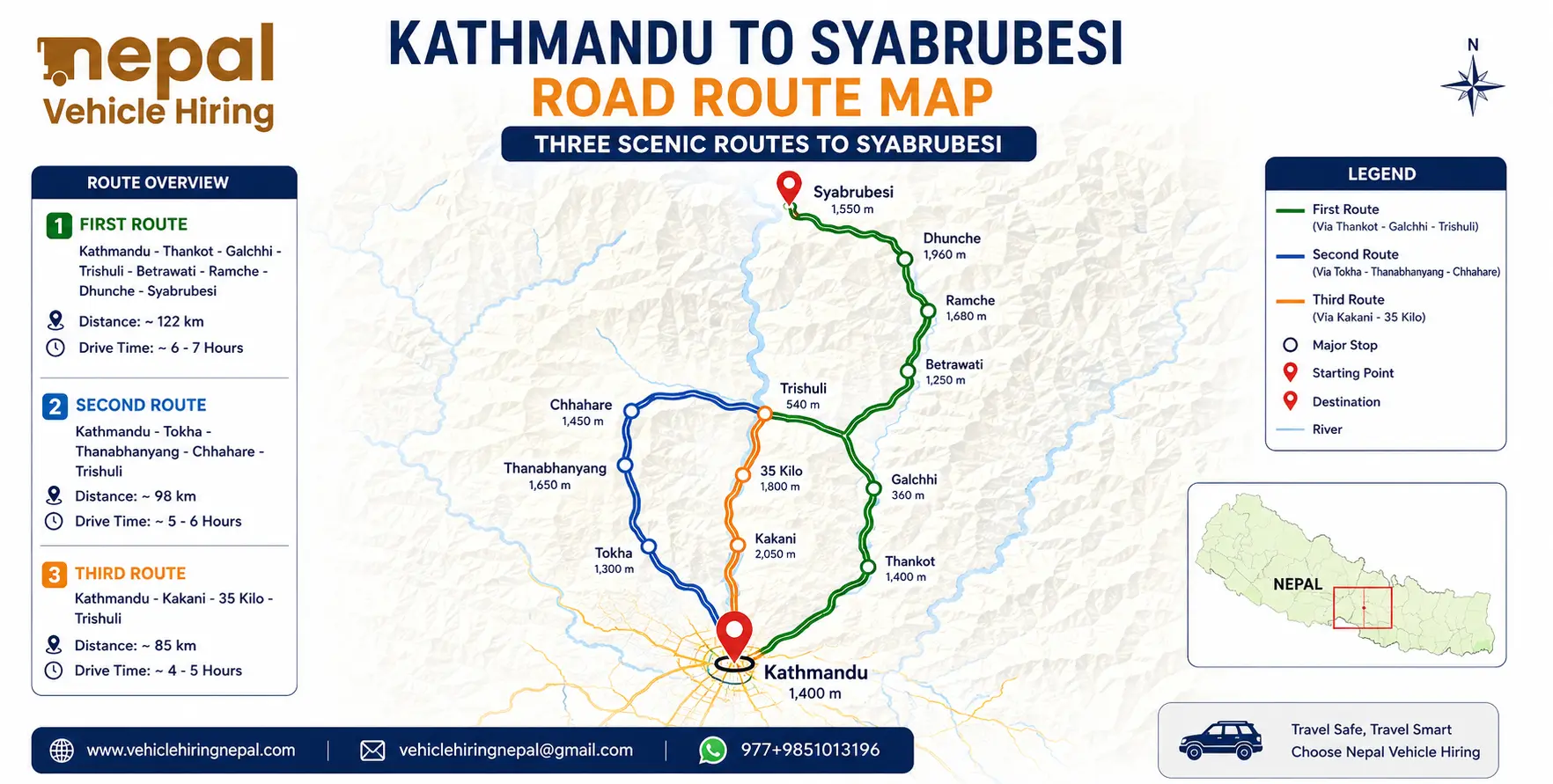
For trekkers extending their Nepal adventure beyond the Rolwaling, Nepal Vehicle Hiring Pvt Ltd’s complete transport network connects Kathmandu to every major trekking and tourism destination. A post-Rolwaling Kathmandu-to-Pokhara private vehicle opens the Annapurna region for a second trekking adventure or lakeside rest. Our Kathmandu to Syabrubesi jeep transfer connects to the Langtang Valley Trek — Nepal’s closest Himalayan glacier trek to the capital.

Our Kathmandu to Salleri and Phaplu overland service reaches the Everest Base Camp Trek corridor without a domestic flight. Our Kathmandu-to-Soti Khola jeep service offers the Manaslu Circuit Trek approach from Kathmandu.

Our Nagarkot sunrise tour offers a final Himalayan farewell panorama before any international departure—seeing the Gaurishankar and Rolwaling Himal on the northern horizon from Nagarkot after walking through their foothills creates a geographic synthesis of the complete Nepal experience that many Rolwaling returnees describe as one of their trip’s most moving moments.

Nepal Vehicle Hiring Pvt Ltd: Complete Network for Rolwaling Trekkers

Nepal Vehicle Hiring Pvt Ltd provides a complete vehicle hire network for Rolwaling Valley Trek transport—from the outbound Kathmandu-to-Gongar Khola jeep transfer to the return pickup, plus all Kathmandu city and onward trekking vehicle needs. Our private jeep hire, private car hire, Hiace van hire, coaster hire, and bus hire cover groups from solo travellers to 40+ person expedition parties.

Our Kathmandu airport transfer begins every Nepal journey from Tribhuvan International Airport. Our Kathmandu sightseeing service covers the UNESCO heritage circuit. Our Bhaktapur day tour vehicle and Nagarkot sunrise tour serve the most popular Kathmandu Valley day trips.

Our trekking trailhead network covers Kathmandu to Syabrubesi for Langtang, Kathmandu to Besisahar and Kathmandu to Manang jeep for Annapurna Circuit, Kathmandu to Soti Khola for Manaslu Circuit, Kathmandu to Salleri Phaplu for Everest overland, Kathmandu to Muktinath jeep for Mustang pilgrimage, Pokhara to Nayapul transport, Pokhara to Ghandruk jeep, Pokhara to Ghorepani Poon Hill jeep,

Pokhara to Upper Mustang overland jeep, Sarangkot sunrise tour vehicle, Pokhara car hire, and the Kathmandu to Pokhara private vehicle inter-city connection. Our Nepal tour packages and trekking transfer services coordinate complete multi-stage Nepal journeys. Plan your complete trip or contact us at +977 981-4227196 (WhatsApp).

Visit vehiclehiringnepal.com to book.

Comparing Rolwaling with Nepal’s Other Remote Trek Returns

The Gongar Khola to Kathmandu return falls into a specific category of Nepal trekking returns — those from genuinely remote, lower-infrastructure trailheads where the private vehicle arrangement matters more than on the well-served Everest and Annapurna corridors. Understanding how the Rolwaling return compares with other remote trek returns helps trekkers contextualize the logistics involved and choose the right vehicle.

The closest return corridor in Nepal’s trekking network is the Dharapani-to-Kathmandu return after the Manaslu Circuit Trek. Both the Rolwaling and Manaslu Circuit approach through Gorkha and Dolakha districts, respectively; both involve return roads of variable quality that require appropriate vehicle selection; and both trailhead settlements have limited local vehicle availability, making pre-arranged private pickup strongly preferable to last-minute local vehicle negotiation.

The Gongar Khola return covers a similar distance (200 to 210 km) to the Dharapani return (approximately 220 km), and both take 8 to 9 hours by private jeep. The main difference is road character: the Rolwaling return’s Dolakha District sections require 4WD in the lower gorge near Gongar Khola, while the Dharapani return’s Marsyangdi Valley road is generally more consistent in quality throughout.

The Kanchenjunga Base Camp Trek return from Taplejung is Nepal’s other major remote eastern trek return corridor — significantly longer (approximately 500 km from Taplejung to Kathmandu, 12 to 15 hours) and more demanding in terms of advance booking requirements given the Taplejung area’s distance from Kathmandu.

The Tsum Valley Trek return from the Gorkha District shares some logistical character with the Rolwaling return — both require 4WD jeep hire for the mountain district approach sections, and both benefit strongly from pre-arranged rather than locally negotiated return transport. Nepal Vehicle Hiring Pvt Ltd provides dedicated private jeep hire for these remote trek return corridors, using the same route-experienced-driver-assignment philosophy that characterises our Rolwaling corridor service.

The Rolwaling Trek Route in Detail: From Gongar Khola to Tsho Rolpa and Back

For trekkers planning the Rolwaling Valley Trek and coordinating vehicle return as part of a complete itinerary, understanding the trek route’s structure from the road terminus at Gongar Khola / Chhetchhet to the highest point and back helps you estimate the return vehicle date accurately. The standard round-trip Rolwaling Valley itinerary from the road covers 10 to 14 days of walking,g depending on pace, fitness, and whether it includes rest days at Beding and exploration days around Tsho Rolpa.

Day 1 from Chhetchhet: Cross the Tamakoshi suspension bridge and climb steeply up the ridge to the Tamang village of Simigaon at 2,020 meters — a 3-to-4-hour climb that immediately establishes the Rolwaling’s characteristically steep and forested lower terrain.

Simigaon’s ridge-top position above the gorge offers the first clear views of the Gauri Shankar range to the north, and the village’s small gompa and traditional Tamang architecture provide an early cultural encounter with the mixed Tamang-Sherpa community that defines the valley’s lower settlements. Day 2 continues northward through Dongang and across suspension bridges over the Rolwaling Khola tributary streams, climbing to Beding at 3,510 meters through increasingly spectacular mountain terrain.

Beding deserves at least one rest day — the ancient monastery above the village, the yak grazing pastures, and the cultural depth of the largest Sherpa settlement in the Rolwaling Valley all reward unhurried exploration. From Beding, the trail continues north to Na Gaon at 4,120 meters and the approach to the Tsho Rolpa glacial lake at 4,580 meters — the trek’s visual and spiritual culmination.

The Rolwaling Valley Trek return follows the same route in reverse to Chhetchhet and Gongar Khola, with the descent typically taking 2 to 3 days less than the ascent for fit trekkers who don’t need acclimatization rest days on the way down.

The complete Rolwaling round trip from Gongar Khola covers about 80 to 100 kilometres of trail—a distance that seems modest compared to the Annapurna Circuit’s 160-plus-kilometre route. Still, it involves altitude gain and loss across very steep terrain, making the physical demands comparable to much longer flat-terrain routes.

Most trekking agencies describe the Rolwaling as a moderate-to-challenging trek for fit adult walkers, with the Tsho Rolpa lake approach day and the return from Na to Beding being the most physically demanding single-day stages of the standard itinerary.

Combining Rolwaling with the Everest Tashi Lapcha Extension

The most adventurous Rolwaling itinerary extends through Tashi Lapcha Pass at 5,755 meters into the Khumbu region. This crossing connects the Rolwaling Valley with the Everest Base Camp Trek and Gokyo Lake Trek corridor, creating one of Nepal’s most extraordinary multi-region trekking adventures.

The Tashi Lapcha crossing is technically demanding — involving glacier travel that requires experience, appropriate equipment, and a licensed guide with specific high-altitude crossing competence — and is typically undertaken only by well-equipped, experienced trekkers with 20 to 25 days of total trek time available.

For trekkers completing the Tashi Lapcha crossing, the return to Kathmandu differs significantly from the standard Rolwaling round-trip return. Instead, the crossing takes trekkers through the Khumbu to Namche Bazaar and eventually to Lukla for the domestic flight back to Kathmandu, or via the Everest Base Camp Trek trail to the Three Passes Trek circuit before exiting at Lukla.

For these extended Rolwaling-Khumbu itineraries, Nepal Vehicle Hiring Pvt Ltd coordinates only the outbound Kathmandu to Gongar Khola jeep transfer — the return is managed through the Lukla flight infrastructure rather than road transport. Clients combining Rolwaling with the Tashi Lapcha crossing should book only the outbound Gongar Khola transfer and arrange the Lukla return separately through their trekking operator.

For trekkers who want to experience elements of both the Rolwaling and Everest corridors without the technical demands of the Tashi Lapcha crossing, Nepal Vehicle Hiring Pvt Ltd offers coordinated vehicle arrangements: a Kathmandu to Gongar Khola outbound transfer for the Rolwaling valley circuit, return to Kathmandu by private jeep, then a subsequent Ramechhap Airport transfer for the Lukla flight and

the Everest Base Camp Trek or Gokyo Lake Trek approach — two complete Himalayan adventures in a single extended Nepal itinerary with coordinated private vehicle support across every road stage. This combination offers some of the finest trekking diversity in Nepal’s eastern Himalayan region, connecting Rolwaling’s pristine wilderness with the Khumbu’s legendary mountain grandeur through a Kathmandu base, with Nepal Vehicle Hiring Pvt Ltd providing airport transfers, sightseeing vehicles, and tour package coordination throughout.

Nepal Vehicle Hiring Pvt Ltd’s complete trekking return network covers every major Nepal trek corridor: Gongar Khola to Kathmandu for Rolwaling, Dharapani to Kathmandu for Manaslu Circuit, Syabrubesi return for Langtang, Salleri-Phaplu return for Everest overland, Nayapul return for Annapurna Base Camp, Ghandruk return for Annapurna foothills, Jomsom / Upper Mustang return for Mustang overland — all with the same transparent pricing, route-experienced drivers, and pre-book-with-outbound convenience that defines Nepal Vehicle Hiring Pvt Ltd’s return vehicle philosophy.

For the Ghorepani Poon Hill Trek and Annapurna Base Camp Trek returns via Nayapul and Pokhara, our Pokhara car hire and Kathmandu-to-Pokhara vehicle complete the return chain. Our Everest Base Camp Trek support coordinates the Salleri approach and Lukla-to-Kathmandu airport transfer for the complete Everest corridor.

For the Upper Mustang Trek, our Pokhara-to-Mustang jeep operates in both directions. For the Kanchenjunga Base Camp Trek, our eastern Nepal vehicle network covers the full Taplejung approach and return corridor. Contact Nepal Vehicle Hiring Pvt Ltd to book a return vehicle for any Nepal trek.

Our fleet of private jeeps, Hiace vans, and buses serves groups of all sizes across every Nepal trek corridor.

Frequently Asked Questions

How far is Gongar Khola from Kathmandu?

The road distance from Gongar Khola / Chhetchhet to Kathmandu is approximately 200 to 210 kilometres via the Arniko Highway, Dolalghat, Charikot, and Singati. Multiple current Rolwaling Valley Trek operators confirm the drive takes 8 to 9 hours by private vehicle. Nepal Vehicle Hiring Pvt Ltd offers this return service with experienced drivers familiar with the Dolakha District corridor.

What is the best vehicle for the Gongar Khola to Kathmandu return?

A private 4WD jeep—Toyota Land Cruiser Prado or Mahindra Scorpio—is strongly recommended for the full return route. The Dolakha District sections between Gongar Khola and Charikot have variable road character that rewards genuine 4WD capability and good ground clearance. Nepal Vehicle Hiring Pvt Ltd charges NPR 22,000 to NPR 40,000 for the full vehicle—about USD 165 to USD 250.

Is there a bus from Gongar Khola to Kathmandu?

Local buses and shared jeeps connect Charikot to Kathmandu, but direct scheduled public transport from Gongar Khola / Chhetchhet is very limited given the remote character of this trailhead. Most returning Rolwaling trekkers either pre-arrange a private vehicle or take a local vehicle from Gongar Khola to Charikot and connect to Kathmandu from there. A private vehicle from Nepal Vehicle Hiring Pvt Ltd eliminates this two-stage uncertainty.

Should I book the return vehicle before or after the trek?

Before the trek — ideally in the same booking session as the outbound Kathmandu to Gongar Khola transfer. Pre-booking guarantees vehicle availability for the return date, provides the driver’s WhatsApp contact for trail communication, and eliminates post-trek transport uncertainty. Contact Nepal Vehicle Hiring Pvt Ltd at +977 981-4227196 to book both legs simultaneously.

Can I overnight at Charikot and return to Kathmandu the next morning?

Yes — and Nepal Vehicle Hiking Pvt Ltd recommends this for groups arriving at Gongar Khola in the late afternoon. Charikot at 1,980 meters has comfortable hotel options, and a fresh morning departure from Charikot at 6:00 a.m. reaches Kathmandu by 2:00 to 3:00 p.m. — a much more comfortable return than a late-afternoon Gongar Khola departure arriving in Kathmandu close to midnight.

What permit is required for the Rolwaling Valley Trek?

The Rolwaling Valley Trek requires a Gaurishankar Conservation Area Permit (GCAP) and a TIMS card (Trekkers’ Information Management System). You can obtain both from the Nepal Tourism Board office in Kathmandu before departure. Under the 2023 mandatory guide regulation, a licensed guide is required for all foreign trekkers in Nepal’s conservation areas.

Conclusion: Complete the Rolwaling Circle with the Right Return Vehicle

The Rolwaling Valley Trek is one of Nepal’s most extraordinary trekking experiences — a journey through pristine wilderness, living Sherpa culture, and the magnificent glaciated landscape of the Gaurishankar range that rewards the commitment of reaching it with memories and perspectives of lasting depth.

The private jeep from Gongar Khola that closes this journey and carries returning trekkers to Kathmandu is not incidental to the experience. Still, its final chapter — and Nepal Vehicle Hiring Pvt Ltd is committed to making that chapter as comfortable, as reliable, and as professionally managed as the adventure it completes.

Our private 4WD jeep hire, private cars, and Hiace vans provide a complete return-vehicle solution for every size and need. Contact our team today at +977 981-4227196 (WhatsApp/Viber) to book your Gongar Khola to Kathmandu return vehicle, plan your complete Rolwaling trekking transport including the outbound Kathmandu to Gongar Khola jeep, or explore our Nepal tour packages for combined trekking and cultural itineraries.

Visit vehiclehiringnepal.com — the vehicle hire partner that starts and completes your Rolwaling Valley adventure.
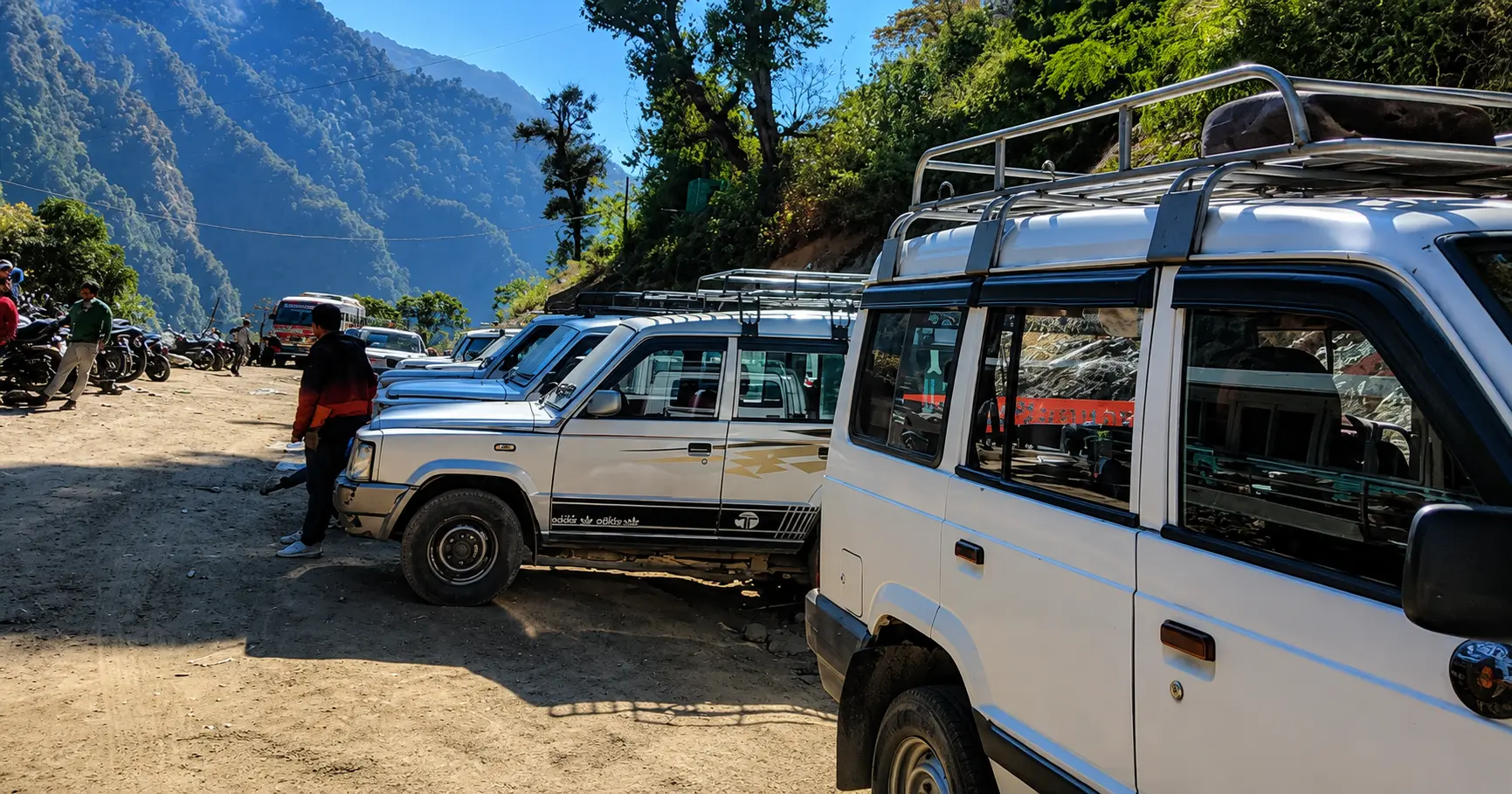
Best Vehicle for Rolwaling Valley

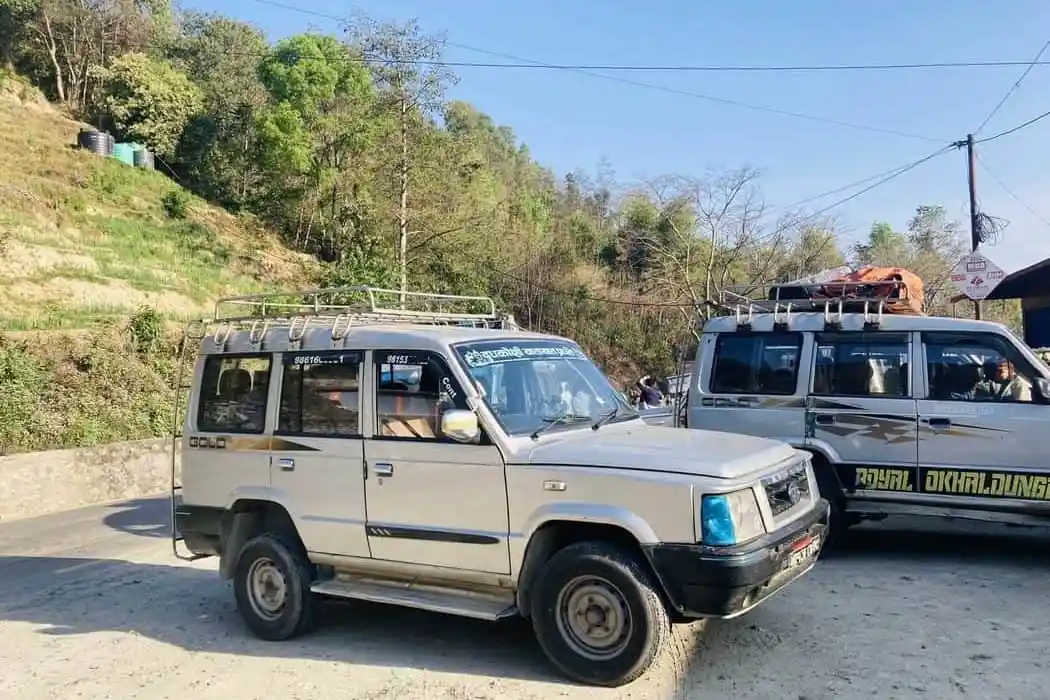
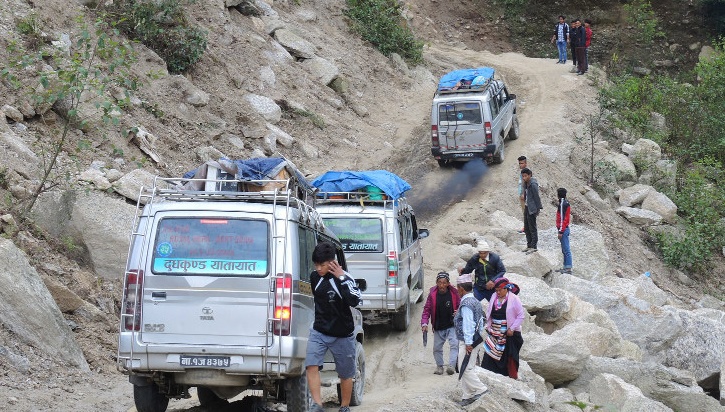
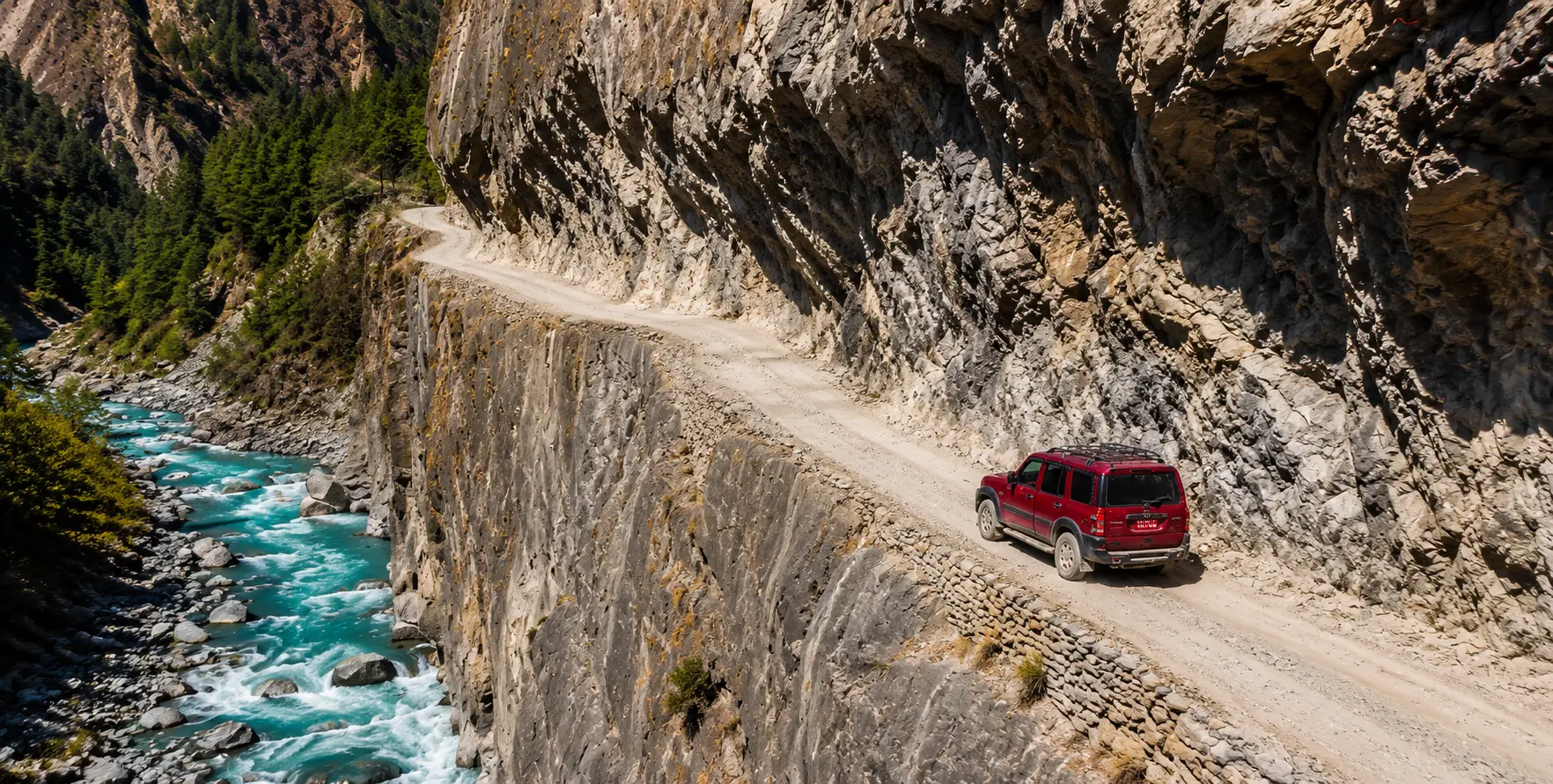
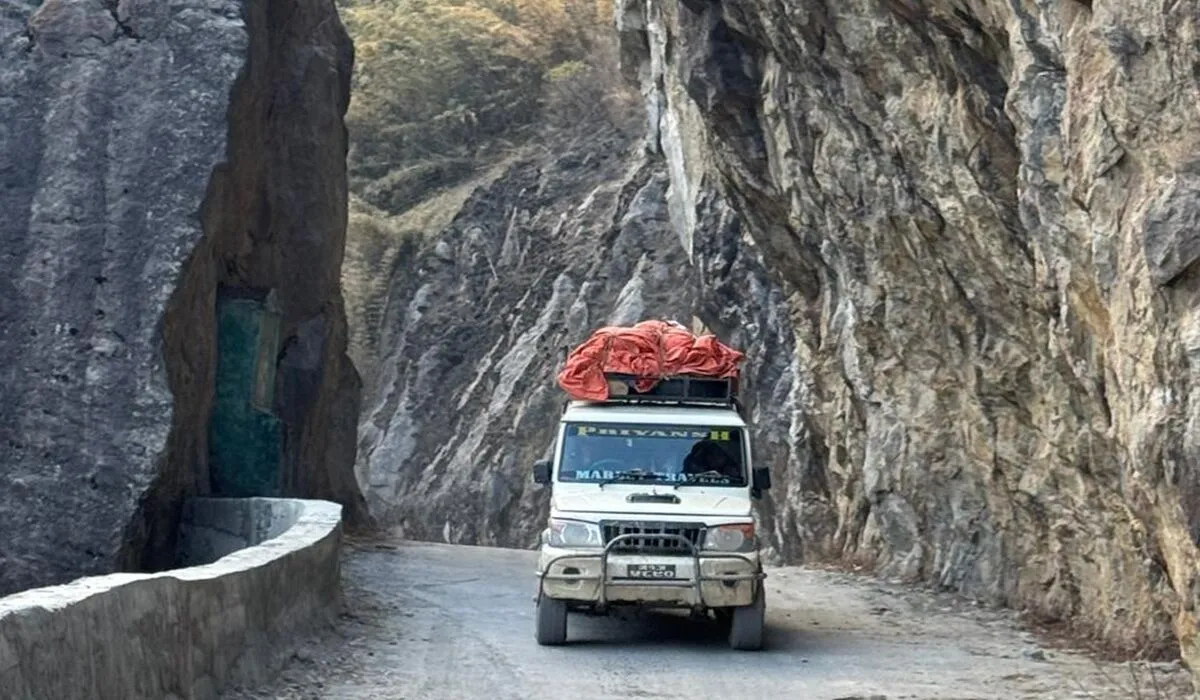
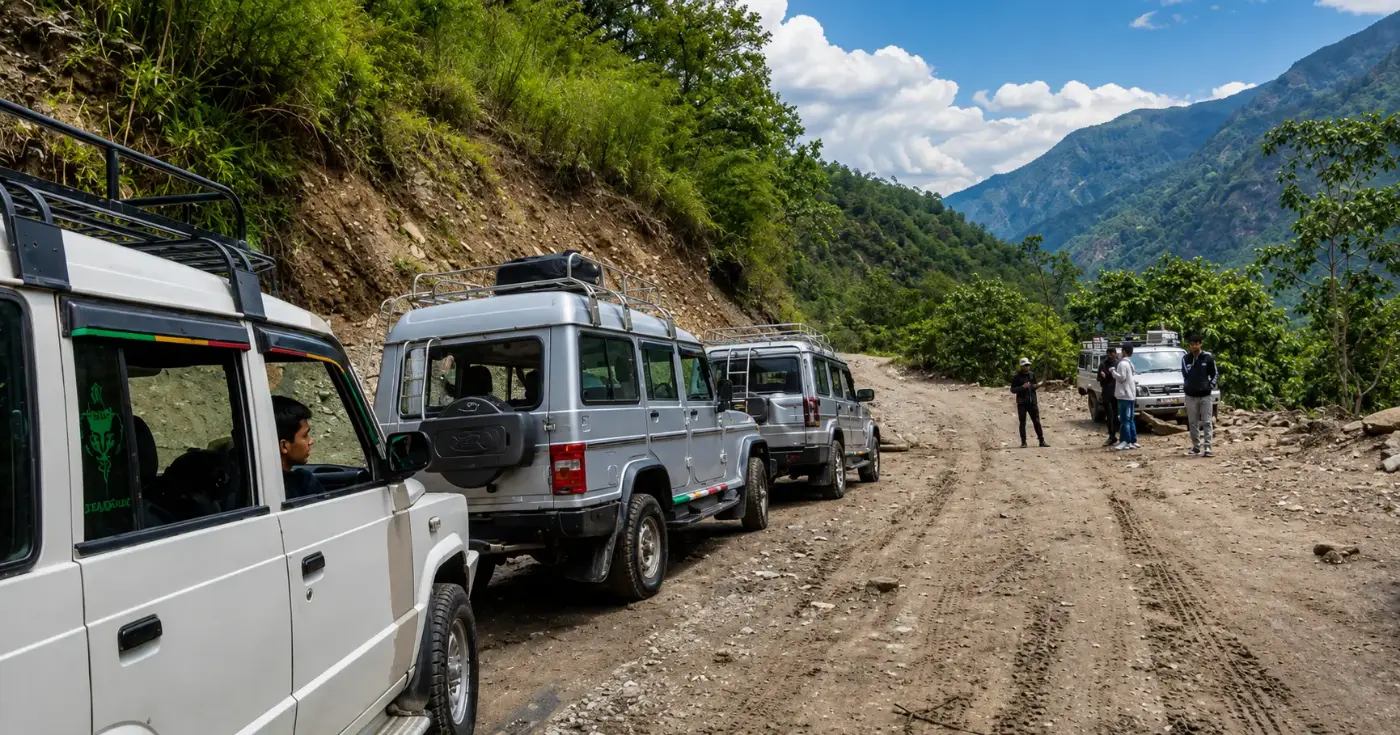
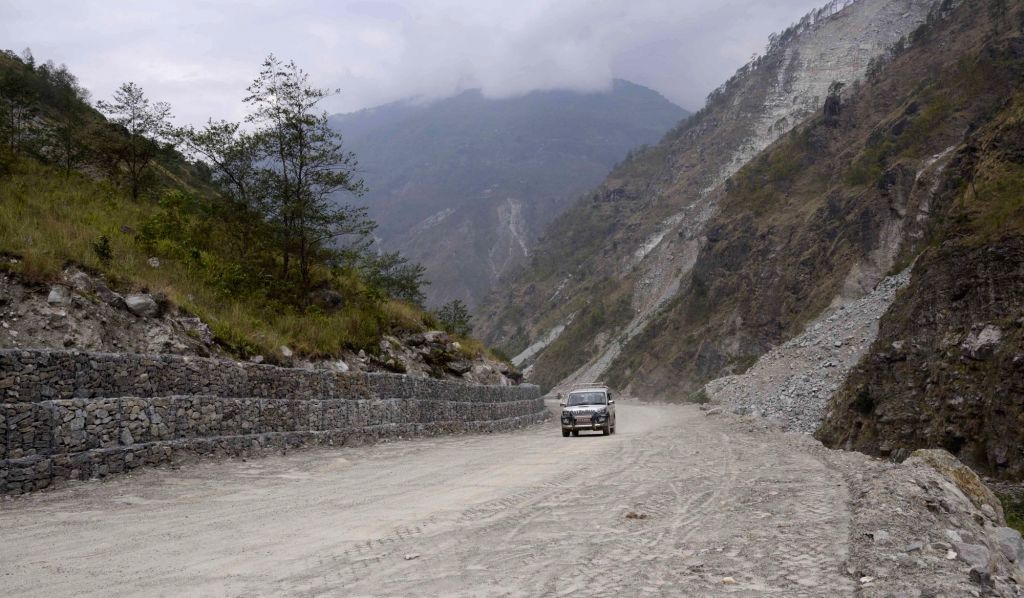
Best 4WD jeep and Scorpio vehicle traveling toward Rolwaling Valley through the rugged mountain roads of Dolakha, Nepal

Best Vehicle for Rolwaling Valley Access: The Complete Guide

Few trekking approaches in Nepal punish the wrong vehicle choice as harshly as this one. Finding the best vehicle service for Rolwaling Valley access isn’t a minor convenience here—it can make the difference between a manageable, if long, drive on your first day and a miserable ordeal on one of the roughest dirt roads leading to any major Nepali trekking region.

This guide covers the full road route from Kathmandu to Rolwaling’s trailhead villages, realistic travel times, vehicle comparisons, permits, costs, and every practical detail you need to plan your trip into one of Nepal’s most remote and least commercialised areas.

Why Vehicle Choice Matters So Much for This Route

Rolwaling sits roughly 196 kilometres east of Kathmandu by road, but that distance is deeply misleading if you’re used to thinking in highway terms. Much of the final stretch beyond Charikot runs on genuinely rough, unpaved dirt road, and the difference between a comfortable private 4WD and a crowded local bus on this stretch is enormous—not a matter of preference, but a genuine determinant of how exhausted you are before your trek even starts.

Our starter guide on why 4WD is best for Nepal explains this terrain logic in general terms; Rolwaling is one of the clearest real-world examples of exactly why that logic matters.

Choose the best vehicle for Rolwaling Valley with a private 4WD jeep or Scorpio SUV. Reliable mountain-road transport is ideal for reaching the Rolwaling Valley trekking area with luggage and trekking equipment.

Understanding Rolwaling Valley

Rolwaling is a remote, glacially carved valley in Nepal’s east-central Himalaya, sitting west of the Khumbu (Everest) region and directly along the Tibetan border. The valley takes its name from a Sherpa term sometimes translated as ‘the furrow’ or, more evocatively, ‘the grave,’ reflecting its deep, steep-sided position between towering peaks.

It remains one of Nepal’s least commercialised trekking regions, both because it isn’t a technically restricted area and because its genuinely difficult access has kept visitor numbers lower than Everest or Annapurna.

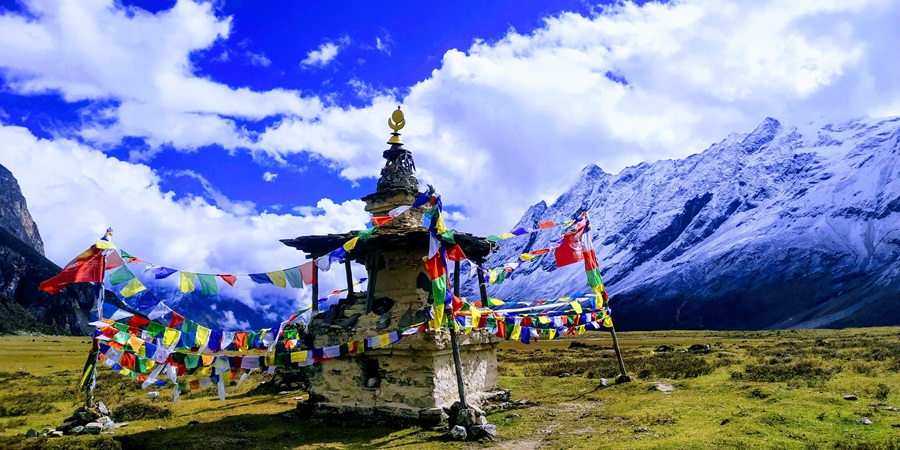
The valley’s main villages — Simigaon, Donga, Bedding, and Na — are home to Sherpa and Tamang communities with strong ties to Tibetan Buddhist culture, visible in the region’s monasteries, prayer flags, and chortens. The valley’s centrepiece is one of Nepal’s largest glacial lakes at roughly 4,580 meters, sitting beneath the dramatic backdrop of Gaurishankar (7,145 meters), the peak th. This peak gives the Gaurishankar Conservation Area its name.

Local Sherpa oral tradition holds that the valley’s ancestors migrated into Rolwaling from Tibet generations ago, and the region’s isolation has helped preserve a distinctly traditional way of life, with subsistence farming, yak herding, and a slower pace of change than more heavily trekked valleys elsewhere in Nepal. In many ways, this cultural preservation stems directly from the same difficult road access covered throughout this guide—the valley’s remoteness has protected its character even as tourism has transformed other parts of the Nepal Himalaya.

Why This Route Remains So Underdeveloped

Unlike the Everest and Annapurna regions, which have seen decades of steady infrastructure investment driven by high trekking volumes, Rolwaling’s comparatively low visitor numbers have meant slower road and trail development. This is a genuine chicken-and-egg dynamic: the difficult access keeps visitor numbers low, and low visitor numbers reduce the economic case for faster infrastructure investment.

For trekkers, the practical upshot is a route that demands more planning, patience, and vehicle-choice awareness than Nepal’s more commercialised trekking gateways — but also delivers a genuinely uncrowded, traditional Himalayan experience increasingly hard to find elsewhere in the country.

Choose the best vehicle for Rolwaling Valley with a private 4WD jeep or Scorpio SUV. Reliable mountain-road transport is ideal for reaching the Rolwaling Valley trekking area with luggage and trekking equipment.

The Road From Kathmandu: Full Route Breakdown

The standard overland route leaves Kathmandu on the Araniko Highway before turning off toward Dolakha district. Most operators break the journey into recognisable stages, each with a distinct road character.

Kathmandu to Lamosangu

The initial stretch follows the well-maintained Araniko Highway, generally smooth and fast by Nepali standards, sitting at roughly 750 meters elevation.

Lamosangu to Charikot

The road climbs into Dolakha district toward Charikot, the district headquarters, at around 1,980 meters. This stretch is paved for much of its length, though it winds through genuine hill terrain with the switchbacks and gradients typical of Nepal’s mid-hill road network.

Charikot to Singati

Beyond Charikot, the road descends toward Singati along the Bhote Koshi valley, with conditions becoming noticeably rougher and less consistently maintained than the Kathmandu-Charikot stretch.

Singati to Chhetchhet (Road End)

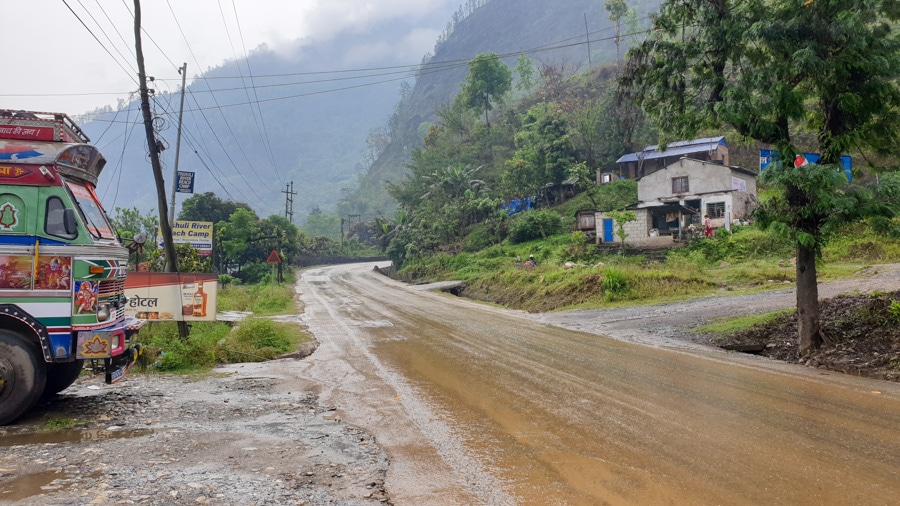
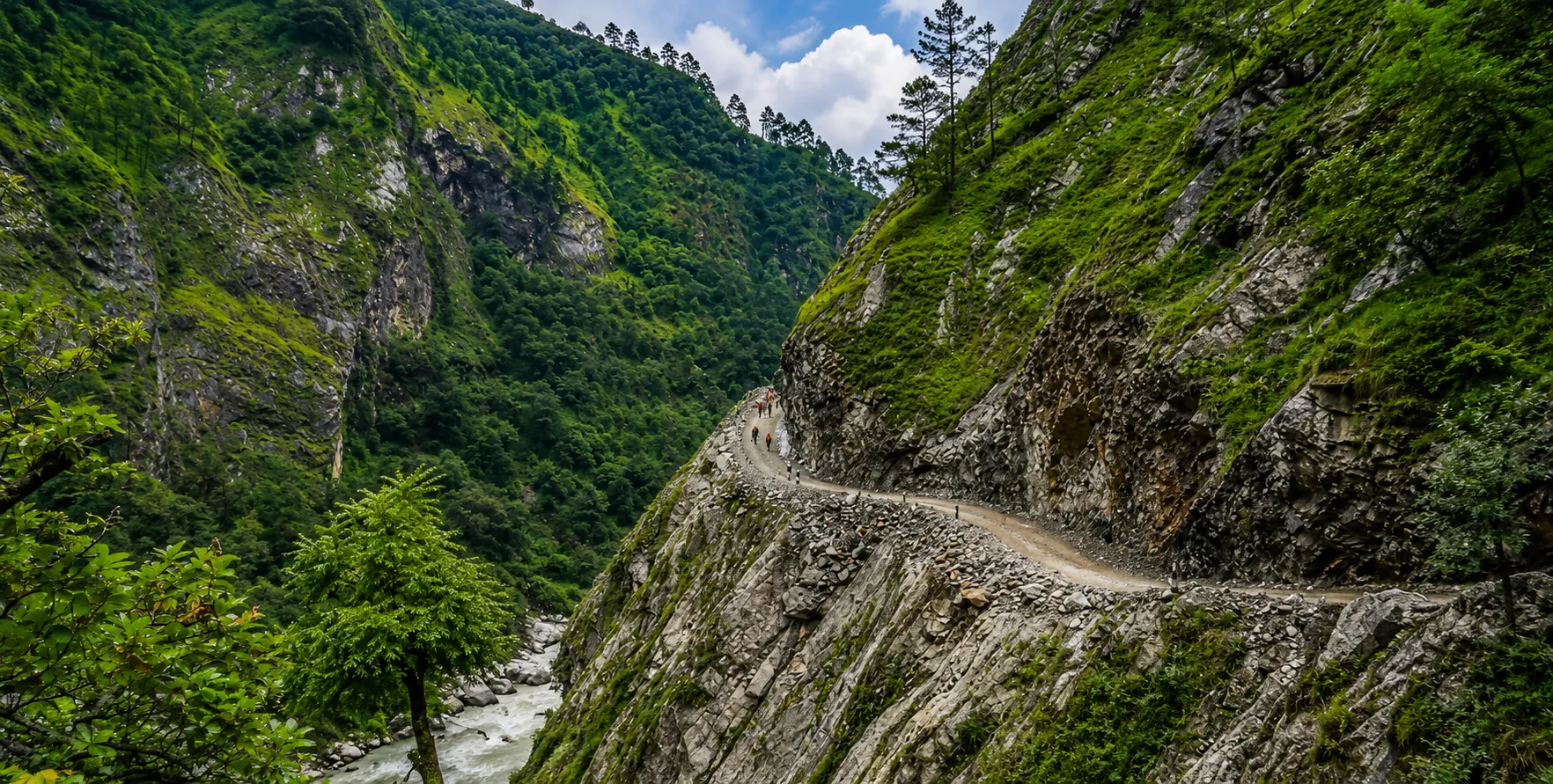
The final stretch continues through Gongar Khola to Chhetchhet, at roughly 1,377 meters — the official end of the motorable road and the true starting point of the Rolwaling trek itself. This section is where the situation changes: a genuinely rough, often dusty or muddy dirt road that demands a proper 4WD vehicle and an experienced driver, not a motor or an unfamiliar attempt at self-navigation.

Distance and Travel Time

The full road journey from Kathmandu to the Chhetchhet/Jagat road end covers about 10 hours by vehicle, given the dirt road conditions on the final stretch—a travel-time-to-distance ratio far higher than almost any other major trekking gateway route in Nepal. Some itineraries split this into two days, overnighting in Charikot or Singati, rather than attempting the full journey in one exhausting push, particularly if departing later in the day or travelling during monsoon season when road conditions slow travel further.

To put this ratio in perspective: the Kathmandu-Pokhara highway covers roughly 200 kilometres in 6-7 hours on mostly paved roads, while this Rolwaling approach covers a similar distance in significantly more time despite being, on paper, a shorter route. This single comparison shows why vehicle choice and road-condition awareness matter far more here than on Nepal’s more established tourist corridors.

Choose the best vehicle for Rolwaling Valley with a private 4WD jeep or Scorpio SUV. Reliable mountain-road transport is ideal for reaching the Rolwaling Valley trekking area with luggage and trekking equipment.

Best Vehicle Options Compared

A genuine 4WD vehicle, such as a Scorpio jeep hire, is the standard recommendation for this route, and for good reason—the final Charikot-to-Chhetchhet stretch includes exactly the kind of rutted, unpaved terrain that a 4WD’s higher clearance and traction need to handle safely and comfortably. Several established trekking operators offer this as a paid upgrade over the standard local bus, typically in D 235 each way for a private vehicle —a meaningful cost, but one many trekkers consider worthwhile given the alternative i

Local Bus (Budget Option)

The cheapest way to reach the trailhead, generally taking 9 to 11 hours and involving considerably more physical discomfort than a private vehicle — cramped seating, frequent stops, and no control over departure timing or route flexibility. Many trekking packages default to this option to keep costs down, with a private jeep offered as an optional upgrade.

Toyota Land Cruiser (Top-end Comfort)

For trekkers who want a comfortable ride on a demanding route, a Toyota Land Cruiser 4WD hire offers genuine off-road capability paired with a much more comfortable ride than a standard jeep, making it worth considering for groups that prioritise comfort on this specific journey.

Hiace Van (Group Travel, Partial Route Only)

A Hiace can comfortably handle the paved Kathmandu-to-Charikot stretch for larger groups, but is not recommended for the rough Charikot-to-Chhetchhet dirt road — groups using a Hiace for the early stage typically switch to jeeps for the final approach, similar to the two-stage vehicle strategy used on other remote Nepal trekking routes.

Vehicle Maintenance and What to Confirm Before Departure

Given how demanding this route is on a vehicle, confirm your operator’s vehicle condition and maintenance history before departure, rather than assuming any jeep marketed for the route is equally well prepared. Ask specifically about tyre condition, since the dirt-road sections punish worn tyres more than most routes, and confirm the vehicle has been serviced recently before a journey this demanding on suspension and drivetrain components.

Driver Experience and Local Knowledge

Perhaps more than any other route in our full range of services, driver experience matters enormously here. A driver who regularly runs the Charikot-to-Chhetchhet stretch will know current road conditions, recent landslide activity, and the safest line through the roughest sections— knowledge an unfamiliar driver attempting the route for the first time won’t have.

Ask your operator directly about their driver’s specific experience on this route rather than assuming general Nepal driving experience translates automatically to this particular road’s unique demands.

Cost of Private Vehicle Hire for Rolwaling Access

Private jeep hire for this route commonly runs around USD 235 each way per vehicle, based on rates cited by several established trekking operators — a useful benchmark figure. However, exact pricing varies by operator, season, and specific drop-off point (Chhetchhet versus the slightly different Jagat access point some itineraries use).

This is priced per vehicle rather than per passenger, so the effective per-person cost drops meaningfully for groups of four to six sharing a single jeep.

Choose the best vehicle for Rolwaling Valley with a private 4WD jeep or Scorpio SUV. Reliable mountain-road transport is ideal for reaching the Rolwaling Valley trekking area with luggage and trekking equipment.

Choosing Between Bus and Private Jeep

Local buses suit budget-conscious trekkers with flexible schedules and a higher tolerance for physical discomfort, willing to trade comfort for cost savings on this leg of an otherwise expensive trekking trip.

A private jeep suits trekkers who want to arrive at the trailhead reasonably rested rather than already fatigued from a long, uncomfortable bus journey—a genuinely significant consideration given the demanding, multi-day trek that follows immediately after this road journey ends.

Permits Required

Rolwaling falls within the Gaurishankar Conservation Area, so you need a Gaurishankar Conservation Area Permit (C) and a TIMS (Trekkers’ Information Management System) card. Unlike Upper Mustang or other genuinely restricted areas, Rolwaling is not formally restricted, meaning solo trekking is technically permitted—though most operators and this guide recommend against trekking alone here, given how remote and lightly trafficked the route remains compared to Nepal’s commercialised trekking regions.

GCAP and TIMS permits are typically arranged in Kathmandu before departure, either directly through the relevant offices or through a registered trekking agency handling your broader itinerary. Unlike the ACAP system covering the Annapurna region, Gaurishankar Conservation Area’s permit infrastructure is less well documented online, so it’s worth confirming current requirements and fees directly with your operator rather than relying solely on older trip reports, which can understate or misstate current permit costs and procedures.

Bhimeshwor Temple: A Worthwhile Stop in Dolakha

Many itineraries include a stop at Bhimeshwor Temple in Dolakha en route, a significant Hindu pilgrimage site dedicated to Bhimsen, one of the Pandava brothers from the Mahabharata. This adds relatively little time to an already long journey while offering a genuine cultural landmark along a route that otherwise consists mostly of driving.

Choose the best vehicle for Rolwaling Valley with a private 4WD jeep or Scorpio SUV. Reliable mountain-road transport is ideal for reaching the Rolwaling Valley trekking area with luggage and trekking equipment.

Road Conditions and Safety

The Charikot-to-Chhetchhet stretch is genuinely demanding by any standard, with dust in the dry season and slippery, occasionally landslide-affected surfaces during monsoon. This isn’t a route for self-driving or an unfamiliar operator—an experienced local driver who knows current conditions on this stretch makes a meaningful safety difference, especially given how remote this road becomes beyond Charikot, with limited support infrastructure if something goes wrong.

Our guide on why a genuine 4WD jeep matters covers this reasoning in more general terms, and it applies directly to why this specific route demands this vehicle class i

Beyond the vehicle itself, basic road safety practices matter here as much as anywhere in Nepal: wear seatbelts where fitted, avoid unnecessary night driving on the unpaved sections given reduced visibility, and trust your driver’s judgment on pacing rather than pressuring a faster pace than current conditions safely allow. Patience genuinely pays off in both safety and comfort on this route.

Best Time to Travel This Route

Autumn (September to November) and spring (March to May) offer the most stable road conditions and clearest mountain views, making them the strongest windows for this trip, consistent with the broader pattern across most Nepal trekking regions. Monsoon (June to August) brings a real risk of landslide-related delays on the unpaved sections beyond Charikot, while winter (December to February) can bring snow at higher points along the trek itself. However, the road journey remains generally passable at these lower elevations.

Choose the best vehicle for Rolwaling Valley with a private 4WD jeep or Scorpio SUV. Reliable mountain-road transport is ideal for reaching the Rolwaling Valley trekking area with luggage and trekking equipment.

Altitude Considerations Beyond the Road

While the road journey itself stays at relatively modest elevations — Charikot around 1,980 meters, Chhetchhet around 1,377 meters — the trek that follows climbs substantially higher, with Bedding at roughly 3,690 meters, Na at around 4,180 meters, and Tsho Rolpa itself at 4,580 meters. Trekkers should plan proper acclimatisation days once the trek begins, regardless of how the road journey itself goes, since altitude sickness risk is entirely separate from the vehicle and road considerations covered throughout most of this guide.

What to Pack for the Journey

  • Motion sickness medication if you’re sensitive to winding, rough roads — the Charikot-to-Chhetchhet stretch is genuinely bumpy
  • Snacks and water, since reliable food stops become less frequent beyond Charikot
  • Cash in Nepali rupees, since card and ATM access disappears well before the trailhead
  • Dust protection (a light scarf or mask) for the dry-season dirt road sections
  • Warm layers, given the elevation gain from Kathmandu’s roughly 1,300 meters to Charikot’s nearly 2,000 meters

Tsho Rolpa Lake and Valley Highlights

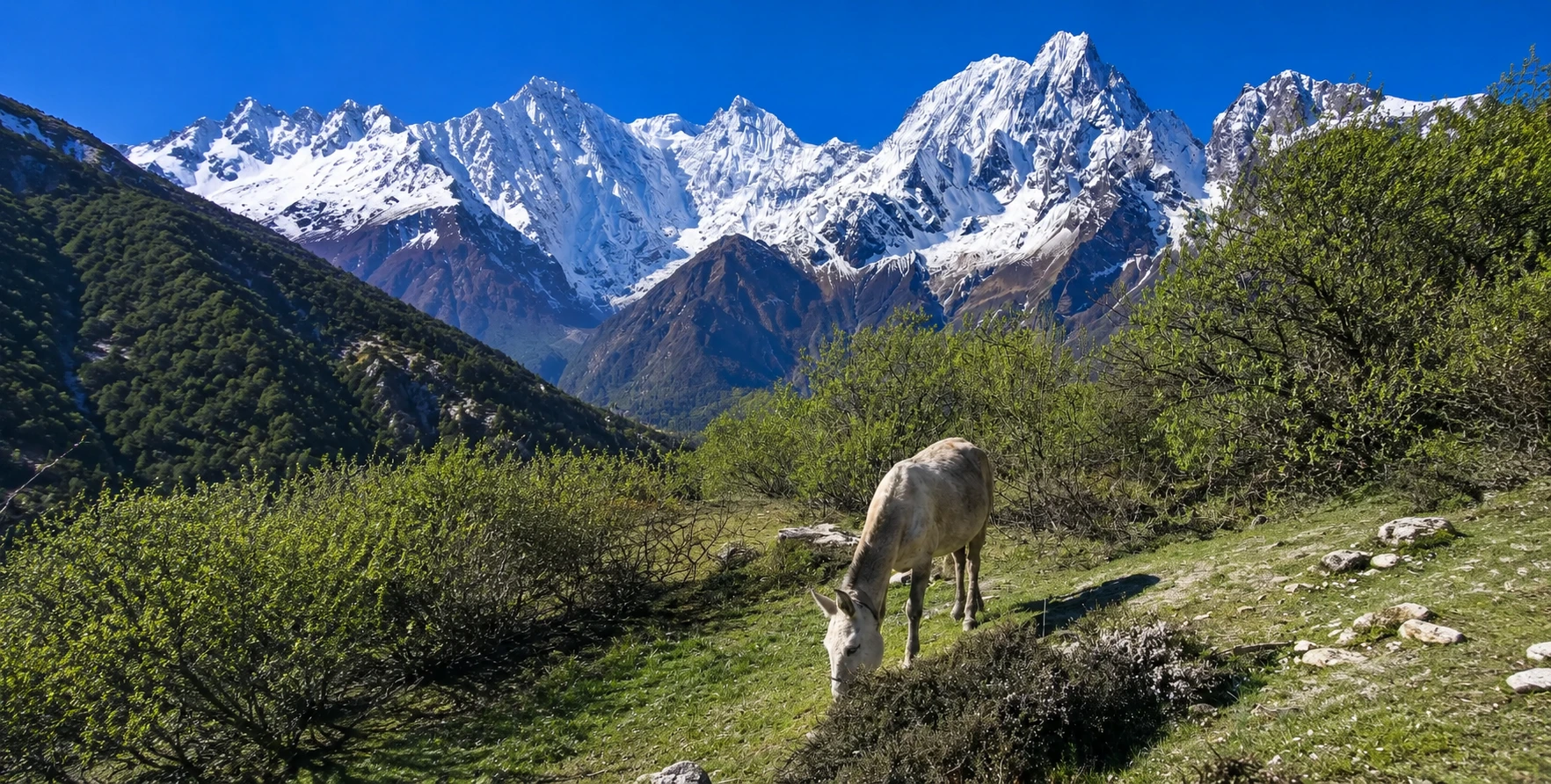
Once the road ends and the trek begins, Rolwaling rewards the difficult approach with genuinely spectacular terrain: dense rhododendron and bamboo forest around Simigaon and Donga, the wide, dramatic upper valley around Bedding and Na, and ultimately Tsho Rolpa itself, one of Nepal’s largest glacial lakes, framed by Gaurishankar and the surrounding Rolwaling Himal peaks. Advanced trekkers sometimes continue over the demanding Tashi Lapcha La (5,755 meters) into the Khumbu region, connecting Rolwaling directly to Everest-region trekking — a serious mountaineering-adjacent crossing rather than a standard trekking pass.

Tsho Rolpa also carries additional significance as a subject of ongoing glacial lake outburst flood (GLOF) monitoring, given its size and the downstream risk it poses to villages in the valley below. This scientific and safety dimension adds an interesting layer to what is otherwise one of Nepal’s most visually striking high-altitude lakes, and trekkers reaching the lake’s vicinity can see various monitoring infrastructure.

Wildlife and Natural Features of the Valley

The Gaurishankar Conservation Area protecting Rolwaling hosts a range of Himalayan wildlife, including musk deer, Himalayan tahr, and various pheasant species in the lower forested sections, with the possibility of red panda sightings in the denser bamboo and rhododendron forest around Simigaon and Donga. Birdlife is similarly rich, reflecting the diverse elevation range the trek passes through, from subtropical forest near the road end to high alpine terrain approaching Tsho Rolpa.

Choose the best vehicle for Rolwaling Valley with a private 4WD jeep or Scorpio SUV. Reliable mountain-road transport is ideal for reaching the Rolwaling Valley trekking area with luggage and trekking equipment.

Connecting to the Everest Region

For very experienced trekkers, Rolwaling’s connection to the Khumbu via Tashi Lapcha La offers a genuinely rare way to link two of Nepal’s major Himalayan regions on foot. This crossing demands real mountaineering competence, proper equipment, and an experienced guide — it isn’t a standard trekking pass, and shouldn’t be attempted casually.

Trekkers interested in this connection or in the wider Everest region afterwards can see our Everest Base Camp trek page and our Kathmandu to Salleri-Phaplu route for other overland approaches into the Solukhumbu region.

Sample Itinerary: Standard 10-14 Day Rolwaling Trek

Day 1-2: Drive from Kathmandu to Charikot or Singati, with an overnight stop given the demanding road journey.

Day 2-3: Continue by road to Chhetchhet, then trek to Simigaon, crossing the Tamakoshi River.

Day 4: Trek from Simigaon to Donga, through dense rhododendron and bamboo forest.

Day 5: Trek from Donga to Bedding, entering the main Rolwaling Valley.

Day 6: Acclimatisation in Bedding.

Day 7: Trek from Bedding to Na, the highest permanent settlement in the valley.

Day 8-9: Explore Tsho Rolpa Lake and the surrounding high terrain, with additional acclimatisation as needed.

Day 10-14: Return the same route to Chhetchhet, then take the road to Kathmandu, or continue over Tashi Lapcha La for experienced, mountaineering-capable trekkers.

Group Travel Options

For larger trekking groups, multiple Scorpio jeep hire vehicles remain the practical choice for the full journey, or a Hiace for the paved Kathmandu-Charikot stretch wi, switching jeeps beyond Charikot, similar to the two-stage approach commonly used on other remote Nepal trekking routes with a comparable paved-to-unpaved transition.

Historical Context: Rolwaling’s Place in Himalayan Exploration

Rolwaling has a notable, if lesser-known, place in Himalayan mountaineering and exploration history, having served as a route early Everest expedition teams explored to assess alternative approaches into the Khumbu region before the Nepal-Tibet border fully opened to modern trekking routes. This historical dimension adds context to the valley’s enduring reputation among serious trekkers and mountaineers as a genuine ‘expedition-style’ destination, distinct from the more package-tour character of Nepal’s most popular routes today.

A Word on Camping vs Teahouse Trekking Options

Some Rolwaling itineraries, particularly those extending toward the more demanding upper valley or the Tashi Lapcha La crossing, use a camping-style approach with dedicated cooking and camping staff, rather than relying solely on teahouse accommodation throughout. This reflects the region’s less developed guesthouse infrastructure compared to Everest or Annapurna, where teahouse trekking has become the near-universal standard.

Confirm with your operator which model your specific itinerary follows, since this affects both cost and the equipment list you’ll need to prepare.

The Role of a Local Guide Beyond Navigation

Given Rolwaling’s remoteness and comparatively undocumented trail network relative to Nepal’s more established routes, a local guide’s value extends well beyond simple route-finding. Guides familiar with this specific valley bring genuine cultural insight into the Sherpa and Tamang communities you’ll pass through, practical knowledge of current trail and weather conditions that don’t always make it into online trip reports, and — in a region with limited emergency infrastructure — a crucial safety resource if anything goes wrong during the trek itself.

Understanding GCAP’s Role in Conservation

The Gaurishankar Conservation Area, established to protect the region’s unique biodiversity and cultural heritage, functions similarly to the better-known Annapurna Conservation Area, using permit revenue to fund local conservation and community development projects. Given the area’s proximity to the Tibetan border and its status as a genuine wildlife corridor, GCAP plays an important role in balancing growing trekking interest against the region’s ecological and cultural preservation, a tension familiar from more heavily visited conservation areas elsewhere in Nepal but still relatively fresh here given the valley’s low visitor numbers to date.

Weather Patterns Specific to the Rolwaling Region

Rolwaling’s position along the Tibetan border and its dramatic elevation range create genuinely varied weather conditions along the trek, from subtropical warmth near the road end at Chhetchhet to genuine high-alpine cold approaching Tsho Rolpa. Unlike Mustang’s rain-shadow climate, Rolwaling receives substantial monsoon precipitation given its more southerly, less-sheltered position, reinforcing why autumn and spring remain the strongest windows for both the road journey and the trek itself.

Snowfall at higher elevations can begin as early as October and persist through April in a typical year, worth factoring into any late-autumn or early-spring planning specifically targeting the upper valley or Tsho Rolpa itself.

Planning Your Trip Timeline

Given the demanding road journey and multi-day trek that follows, plan at least 2-3 weeks for a Rolwaling trip to allow time to arrange GCAP and TIMS permits, confirm your vehicle booking, and build appropriate fitness preparation into your pre-trip routine. This isn’t a route to plan on short notice, both because of the specialised equipment and driver requirements covered throughout this guide and because of the genuine trekking fitness the route demands.

A Note on Seasonal Festival Traffic

Unlike Nepal’s more commercialised routes, Rolwaling sees relatively little seasonal festival-driven traffic increase, given its low overall visitor volume. Dashain and Tihar in autumn may bring a brief increase in scenic travel along the Kathmandu-Charikot stretch; this road also serves general Dolakha district traffic beyond just trekkers. Still, the effect is far less pronounced than on major tourist corridors like the Kathmandu-Pokhara highway.

Traditional Sherpa and Tamang Cuisine in the Valley

Guesthouses along the Rolwaling trek serve standard Nepali trekking staples—a bhat, noodle soups, and simple fried dishes—alongside occasional Tibetan-influenced specialities reflecting the valley’s Sherpa heritage, such as thukpa and momos. Given the region’s remoteness, menu variety narrows considerably compared to more commercialised routes; travellers should expect simpler, more limited food options the further into the valley they travel, particularly beyond Bedding.

Documenting a Trip to a Rarely Visited Valley

For travellers interested in photography or trip documentation, Rolwaling offers something increasingly rare in Nepal: genuinely uncrowded trail and village shots, without the crowds that now define much of Everest Base Camp or the Annapurna Circuit’s more popular sections. The valley’s dramatic vertical terrain, traditional Sherpa architecture, and Tsho Rolpa’s striking glacial-lake settlement reward patient photographers willing to make the demanding journey.

Physical Fitness and Trekking Experience Required

Beyond the demanding road journey, the Rolwaling trek itself is genuinely challenging — steep ascents and descents, multiple consecutive days at increasing altitude, and basic teahouse or camping-style accommodation depending on your specific itinerary. This route suits trekkers with prior high-altitude trekking experience and solid physical fitness far more than Nepal’s more beginner-friendly routes. Travellers new to the Himalayas who want to build experience on a more established route first before attempting this one

What Makes This Route Worth the Effort

For all the logistical demands covered throughout this guide, Rolwaling rewards travellers who commit to the journey with something increasingly rare in Nepal’s Himalaya: a valley where the trail genuinely feels quiet, the villages feel unhurried, and the mountain views arrive without the crowds that now define much of Everest and Annapurna. Trekkers who complete this route consistently describe it as feeling like Nepal trekking did decades ago — a meaningful distinction for travellers who’ve perhaps already done the commercialised routes and are specifically seeking something different.

Currency and Cash Considerations

Cash is essential for this entire trip beyond Kathmandu. Withdraw sufficient Nepali rupees before departure, since ATMs become unreliable past Charikot and disappear entirely beyond the road end. Budget for vehicle costs, permits, guesthouse accommodation along the trek, and porter or guide fees you use, all of which are typically paid in cash given the region’s limited banking infrastructure.

Choosing a Reliable Operator for This Route

  • Confirm the operator has genuine, recent experience on the Charikot-to-Chhetchhet stretch specifically, not just general Nepal driving experience.
  • Ask directly about vehicle condition, particularly tyres and suspension, given how demanding this route is mechanically.
  • Request a clear quote covering the full journey, including whether an overnight stop in Charikot or Singati is built into the plan.
  • Check whether GCAP and TIMS permit arrangement is included in your package or needs to be organised separately.
  • Ask about the operator’s contingency plan for monsoon-season delays or landslide-related route disruptions.

Booking Tips

  • Confirm whether your operator’s quote includes private jeep transport or defaults to the cheaper local bus option.
  • Ask specifically about current road conditions beyond Charikot before departure, particularly during or after monsoon .season
  • Consider splitting the journey over two days with an overnight in Charikot or Singati rather than attempting the full 8-10 hour drive in one push.
  • Confirm your GCAP permit and TIMS card arrangements before departure, since they aren’t available at the roadhead itself.
  • Pack for a genuinely long, rough travel day — this is not a route to underestimate based on the relatively modest total distance.

Cultural Etiquette in Rolwaling’s Villages

Rolwaling’s Sherpa and Tamang communities maintain strong Tibetan Buddhist traditions, and visitors should observe standard courtesies common throughout Nepal’s Buddhist mountain regions: circumambulate chortens and mani walls clockwise, dress modestly, and ask permission before photographing monasteries, religious ceremonies, or individuals directly. Because far fewer visitors reach this valley than Everest or Annapurna, local communities generally welcome respectful travellers, and small gestures of courtesy go a long way in a region less used to high tourist volumes.

Environmental and Responsible Travel Considerations

The Gaurishankar Conservation Area operates under a management model similar in spirit to ACAP, with permit fees supporting conservation and community development throughout the region. Given Rolwaling’s low visitor numbers and correspondingly limited waste and tourism infrastructure, responsible travel matters even more here than in more established trekking regions — pack out all waste, minimise use of plastic, and support local guesthouses and porters directly where possible, since tourism income remains a meaningful but still-developing part of the valley’s economy.

Common Mistakes to Avoid

  • Underestimating travel time based on the 196-kilometre distance alone, without accounting for the dirt road’s effect on actual driving speed
  • Booking the cheapest available transport without understanding what the local bus option actually involves on this specific route
  • Attempting the full journey in one day without a buffer, particularly outside the reliable autumn and spring windows
  • Forgetting GCAP and TIMS permits, mistakenly assuming Rolwaling requires no permits since it isn’t formally restricted
  • Planning to trek solo without accounting for the region’s remoteness and limited trekker traffic compared to Everest or Annapurna

Comparing Rolwaling to Other Remote Nepal Treks

For travellers weighing Rolwaling against Nepal’s other major trekking regions, the comparison is instructive. The Everest Base Camp trek offers far more established infrastructure and a domestic flight option into Lukla, trading Rolwaling’s remoteness for convenience and higher visitor volumes. The Annapurna region, covered extensively, offers far better road and trail infrastructure.

Rolwaling’s distinct appeal is precisely its lack of this development — a genuinely traditional, lightly visited Himalayan valley for trekkers specifically seeking that experience over convenience.

Insurance and Emergency Preparedness

Given Rolwaling’s remoteness, comprehensive travel insurance covering trekking activities and emergency evacuation is strongly recommended, arguably more important here than for more established, better-supported trekking regions. Medical facilities are minimal beyond Charikot, and any serious emergency in the valley itself would require a lengthy evacuation, whether overland or, in urgent cases, by helicopter from a suitable landing point. Confirm your policy covers the specific elevations and remote trekking activities involved before departure.

How This Route Fits Into a Broader Nepal Adventure

For travellers planning a longer, more adventurous Nepal itinerary, Rolwaling pairs naturally with other off-the-beaten-path destinations covered across our guides — the Kathmandu to Gorkha jeep service route, the approach via Kathmandu to Soti Khola toward the Manaslu region, or the Kathmandu to Salleri-Phaplu gateway into Solukhumbu. Experienced trekkers increasingly combine two or more of these remote regions on a single extended trip, seeking genuine Himalayan wilderness beyond Nepal’s commercialised areas.

Ouroguide explains ur why private vehicle hire is the smartest way to travel and why private vehicle logistics matter even more when stringing together several demanding, less-developed routes like these within one trip.

Traveling With Photography and Filming Equipment

Given the rough road conditions covered throughout this guide, trekkers carrying sensitive camera or filming equipment should pack it with extra padding and, where possible, keep it as carry-on rather than checked luggage in the vehicle, since the bumpy Charikot-to-Chhetchhet stretch can jostle poorly secured gear considerably more than a standard highway journey would. Drone operators should also confirm current Nepal regulations before bringing equipment, since rules around drone use in conservation areas and near international borders can be stricter than in more open parts of the country.

Why This Guide Focuses So Heavily on Vehicle Choice

Most Nepal trekking guides spend relatively little time on the approach transport, treating it as a logistical footnote before the real trek begins. Rolwaling genuinely warrants a different approach: the road journey here is demanding enough, and the vehicle-choice consequences significant enough, that getting this one decision right measurably changes the quality of your entire trip.

That’s the core argument this guide has made throughout — not that vehicle choice matters everywhere in Nepal equally, but that for this specific route, it deserves the same careful planning attention most guides reserve only for the trek itself.

Trip Extensions Beyond the Standard Itinerary

Beyond the standard Bedding-Na-Tsho Rolpa itinerary, some trekkers with extra time and experience extend into the upper valley toward the Drolambau Glacier, or add peaks like Ramdung (5,930 meters) as a climbing objective alongside the core trek. These extensions require genuine mountaineering equipment and experience well beyond standard trekking, and should only be attempted with a qualified guide and proper logistical support.

Our luxury trek vehicle hire page covers higher-comfort transport options if you’re organising an elaborate expedition-style trip combining Rolwaling with these kinds of technical extensions.

Frequently Confused Terms for This Route

A few terms are worth clarifying for first-time Rolwaling planners: GCAP (Gaurishankar Conservation Area Permit) is the region-specific conservation permit, distinct from ACA, P which covers the separate Annapurna region. TIMS (Trekkers’ Information Management System) is a general trekker registration card used across most of Nepal’s trekking regions, and it is required here alongside the GCAP.

Chhetchhet and Jagat are both used as road-end reference points in different itineraries — confirm with your specific operator which one your trip actually uses, since they sit close together but aren’t identical, and Rolwalilf is sometimes spelt as Rolwalling in different sources; both refer to the same valley.

What First-Time Visitors Often Get Wrong

The single most common planning mistake for this route is treating it like a scaled-up version of a standard Kathmandu day-trip distance  .A  196-kilometre journey sounds entirely manageable by ordinary road standards, and many first-time planners budget half a day for what actually takes a full, demanding day, given the road conditions covered throughout this guide. Building in realistic time expectations from the start of your planning process—rather than discovering the reality only once you’re on the roads —makes the biggest difference to how enjoyable your Rolwaling trip ultimately feels, and it’s worth planning for beyond a little extra research before you book.

A Note on Comparing Quotes Between Operators

When comparing quotes for this route, look closely at what’s included rather than headline prices alone. A cheaper quote might default to the local bus rather than a private jeep, exclude the Charikot or Singati overnight stop many trekkers find genuinely necessary for comfort, or omit GCAP and TIMS permit arrangement entirely.

Ask each operator directly to itemise what their price covers — vehicle type, driver, fuel, tolls, any overnight stops, and permit assistance — so you’re comparing genuinely equivalent packages rather than being misled by a lower number that excludes services you’ll need to arrange and pay for separately, often at a worse rate once you’re already on the road and have limited alternatives.

Preparing Mentally for a Demanding Journey

Beyond the physical and logistical preparation covered throughout this guide, it’s worth setting realistic mental expectations for this specific road journey. Even with the best available 4WD vehicle and an experienced driver, the Charikot-to-Chhetchhet stretch remains a genuinely long, bumpy, tiring day of travel.

Trekkers who go in expecting this, rather than assuming a short 196-kilometre distance means a quick, easy drive, consistently report a better overall experience than those caught off guard by how demanding the approach is, physically and mentally, especially on the first attempt.

Summary: Key Facts for This Route

  • Distance: approximately 196 kilometres from Kathmandu to the Chhetchhet road end
  • Travel time: 8-10 hours by vehicle, sometimes split over two days
  • Recommended vehicle: genuine 4WD jeep, such as a Mahindra Scorpio
  • Private jeep cost: around USD 235 each way per vehicle, as a common benchmark
  • Permits required: Gaurishankar Conservation Area Permit (GCAP) and TIMS card
  • Best seasons: autumn (September-November) and spring (March-May)
  • Trek highlights: Simigaon, Donga, Bedding, Na, and Tsho Rolpa Lake at 4,580 meters
  • Advanced extension: Tashi Lapcha La pass (5,755 meters) connecting to the Khumbu region

Final Thoughts on Planning a Rolwaling Trip

Rolwaling demands more planning and care than most Nepal trekking destinations, precisely because so much of its logistics — vehicle choice, road conditions, permit arrangements, and the trek itself — leaves less margin for error than more established, well-supported routes. Approach this trip with realistic expectations about time, cost, and physical demand, book through an operator with genuine, specific experience on this exact route, and you’ll get one of the most authentically remote, traditional Himalayan experiences still available in Nepal today.

The road journey covered throughout most of this guide is, in many ways, the first real test of a Rolwaling trip — get the vehicle choice right, and you arrive at the trailhead ready for the trek ahead rather than already depleted by the approach. That single decision, more than almost any other, shapes how the rest of your Rolwaling experience unfolds.

Few valleys in Nepal reward careful preparation as generously as this one, and few punish poor planning quite as directly either. Get the vehicle right, respect the road’s real demands, and Rolwaling delivers a genuinely rare kind of Himalayan trip — one still largely defined by the mountains and the people who live among them, rather than by the infrastructure built up around them.

As road development continues to reshape access to remote valleys throughout Nepal, routes like this one are likely to become progressively easier over time, following the same pattern already seen in parts of the Annapurna and Manaslu regions. For now, though, Rolwaling remains one of the last places where the journey itself shapes the trip’s character as much as the destination does—a genuine test of preparation, patience, and vehicle choice that pays off for travellers willing to meet it on its own terms.

Why Book With Nepal Vehicle Hiring Pvt Ltd

We provide experienced 4WD drivers specifically familiar with the demanding Charikot-to-Chhetchhet stretch, not just general highway routes, along with transparent pricing agreed before departure. Every booking includes a genuine 4WD vehicle suited to this route’s real needs, not a standard car marketed as capable but not built for it.

Reach out through our contact page to arrange your Rolwaling Valley vehicle service, whether you’re planning the standard Bedding-Na itinerary or the more demanding Tashi Lapcha La crossing into the Khumbu.

For groups or families weighing this trip alongside other demanding Nepal routes, our Toyota Land Cruiser 4WD hire and Scorpio jeep hire pages remain the starting point for comparing vehicle options specifically suited to this level of road difficulty.

Explore More Nepal Routes, Tours, and Vehicles

Rolwaling is one of many remote Nepal trekking gateways we cover. Here’s a fuller map of routes, tours, and vehicle options across the rest of the country, in case your trip extends beyond this one and you combine it with more established destinations elsewhere in Nepal.

Other Remote Trekking Gateways

See Kathmandu to Soti Khola, Kathmandu to Salleri-Phaplu, Kathmandu to Gorkha jeep service, Kathmandu to Besisahar bus ticket, Besisahar private vehicle hire, the Everest Base Camp trek, our general trekking services, why 4WD is best for Nepal, and why a genuine 4WD jeep matters.

Annapurna and Mustang Region

See Pokhara to Landruk jeep hire, Pokhara to Ghandruk jeep, Kathmandu to Ghandruk private jeep hire, Pokhara to Sikles jeep rental, Pokhara to Nayapul transportation, Sarangkot sunrise tour vehicle, Pokhara to Manang transport, Manang to Kathmandu private jeep hire, Kathmandu to Manang jeep, Besisahar to Chame and Upper Pisang, why Dharapani is the Annapurna Circuit’s most popular starting point, the ACAP permit guide, and the Annapurna Conservation Area overview.

Mustang and Muktinath Region

See Upper Mustang 4WD jeep, our jeep rental for Mustang tour guide, places to visit in Mustang, Kathmandu to Mustang private jeep, Pokhara to Beni jeep hire, Muktinath to Pokhara jeep, our Jomsom to Muktinath jeep rental guide, our best time to visit Muktinath guide, our Muktinath temple Hiace hire guide, the ACAP permit guide, and our SUV rental in Nepal guide.

Kathmandu and Pokhara Transport

See Kathmandu to Pokhara bus tickets, Kathmandu to Pokhara bus ticket, Pokhara buses Kathmandu bus, Kathmandu to Pokhara road trip, Kathmandu to Pokhara vehicle rental, our Pokhara bus ticket price guide, VIP Sofa Bus hire in Nepal, and car hire in Pokhara.

Kathmandu Valley Sightseeing

Round out your trip with Kathmandu sightseeing, Kathmandu’s historical heritage sites, our Nepal UNESCO World Heritage Sites guide, Bhaktapur Durbar Square, Kathmandu to Nagarkot vehicle hire, the Nagarkot sunrise tour, Kathmandu airport transfers, our Thamel to airport private vehicle hire guide, our airport pickup to Thamel and hotel drop guide, and our airport to Patan private vehicle drop guide.

Chitwan, Lumbini, and Border Routes

See Pokhara to Chitwan bus, Chitwan to Kathmandu bus, our Chitwan VIP bus ticket price guide, Kathmandu to Lumbini bus, Lumbini to Kathmandu bus, Sunauli to Pokhara car, Lumbini to Chitwan car, our Muktinath tour from Sunauli border guide, and our Bhairahawa to Kathmandu private car guide.

Vehicle Fleet and Booking Resources

Compare our full fleet: jeep, car, Hiace, bus, coaster, car hire in Nepal, our alternate Hiace van hire listing, Toyota Land Cruiser 4WD hire, jeep and SUV comparison, why private vehicle hire is the smartest way to travel Nepal, and our ultimate Nepal vehicle rental guide.

Plan and Learn More

Use our plan your trip tool, browse our Nepal tour package options, learn more about us, read our luxury trek vehicle hire guide, our SUV rental in Nepal guide, our Bhairahawa to Kathmandu private car guide, or browse our blog for further route guides across the country.

Frequently Asked Questions

How far is Rolwaling Valley from Kathmandu? The road journey to the Chhetchhet trailhead covers kilometres and takes 8 to 10 hours, with dirt-road conditions on the final stretch.

What’s the best vehicle for this route? A genuine 4WD jeep, such as a Mahindra Scorpio, is strongly recommended given the rough, unpaved Charikot-to-Chhetchhet stretch.

How much does private jeep hire cost for this route? Established operators commonly cite around USD 235 each way per vehicle, though exact rates vary.

Do I need a permit for Rolwaling Valley? you need both Yes, a Gaurishankar Conservation Area Permit (GCAP) and a TIMS card are required.

Is Rolwaling a restricted area? No, it isn’t formally restricted, though solo trekking is discouraged given the region’s remoteness and light visitor traffic.

Can I fly instead of driving to Rolwaling? No domestic flights serve this route directly; the standard approach is entirely by road.

Is the road to Rolwaling paved? Only partially — the Kathmandu-to-Charikot stretch is largely paved, while the Charikot-to-Chhetchhet section is a rough, unpaved dirt road.

Should I split the journey over two days? Many trekkers do, overnighting in Charikot or Singati rather than attempting the full 8-10 hour journey in one push.

What’s the best season to travel this route? Autumn (September-November) and spring (March-May) offer the most stable road conditions and clearest views.

Can I visit Tsho Rolpa Lake on a short trip? No, reaching Tsho Rolpa requires a genuine multi-day trek beyond the road end at Chhetchhet; it isn’t accessible as a short excursion.

Is a local bus a viable option for this route? Yes, it’s considerably cheaper but slower and less comfortable than a private jeep, particularly on the rough final stretch.

Can Rolwaling be combined with the Everest region? Yes, via the demanding Tashi Lapcha La pass, though this crossing requires serious mountaineering competence and experienced guiding.

Is Rolwaling suitable for beginner trekkers? Both the journey and trek require more tolerance for remoteness than commercialised treks like Annapurna or Everest Base Camp; it’s better suited to more experienced trekkers.

What should I pack for the road journey: motion sickness medication, snacks and water, cash, dust protection, and warm layers for the elevation gain toward Charikot.

Is there mobile phone coverage along the route? Coverage is generally reliable through Charikot but becomes increasingly patchy or absent beyond the road end and into the valley itself.

Can I hire porters, and can porters be arranged in Kathmandu, Charikot, or at the trailhead so they’re experienced and suited to the trek’s demanding terrain?

Is GLOF risk from Tsho Rolpa a concern for trekkers? Ongoing monitoring infrastructure manages this risk; trekkers visiting the lake area face no different risk than standard high-altitude trekking conditions.

How does Rolwaling compare to Everest Base Camp in difficulty? The road approach is considerably more demanding, and the trek itself is generally considered comparably or more physically challenging, with far less infrastructure support along the way.

Do I need a specific type of travel insurance for this route? Given the region‘s remoteness, standard trekking insurance covering the relevant altitudes and emergency evacuation is strongly recommended. Is this route a day trip from Kathmandu? No, the road journey alone takes 8-10 hours each way, making a same-day round trip impractical; this is a multi-day commitment at minimum.

Are there ATMs anywhere along the route? Limited ATM access exists in Charikot; beyond that point, cash is essential for the remainder of the trip.

What’s the elevation gain from Kathmandu to the road end? Kathmandu sits at roughly 1,300 meters, climbing to around 1,980 meters at Charikot before descending slightly to roughly 1,377 meters at Chhetchhet.

Can I book this route as part of a larger multi-destination Nepal itinerary? Yes, many operators can combine a Rolwaling trip with other regions like Everest, Annapurna, or Kathmandu Valley sightseeing as part of a broader trip.

Is there an alternative, easier road route to Rolwaling? No, the Charikot-to-Chhetchhet stretch is the standard and only practical road approach; there is no significantly easier alternative currently available.

Can I combine Rolwaling with a visit to the Kathmandu Valley’s cultural sites beforehand? Yes, many travellers spend a day or two exploring Kathmandu’s heritage sites before starting the demanding road journey, which gives a gentler start to an otherwise physically taxing trip.

Planning your trip into one of Nepal’s most remote valleys? Book your best vehicle service for Rolwaling Valley access through our contact page, and let an experienced driver handle the demanding road while you save your energy for the trek ahead.

Complete Your Nepal Journey with Trusted Travel Experiences

For travelers who have completed their trek and are planning to explore Kathmandu, we recommend continuing your journey with our trusted sister companies Trek Nepal Himalayas and Alpine Luxury Treks. We specialise in organising a range of travel experiences across Nepal, from classic trekking adventures to cultural and wildlife tours.

Our top offerings include iconic journeys such as the Everest Base Camp Trek, in-depth Kathmandu sightseeing tours, striking Nagarkot sunrise experiences, and exciting Chitwan safaris. We also arrange short hikes, heritage tours, mountain flights and customised itineraries tailored to your schedule and interests.

Whether you are looking for a budget-friendly trip or a luxury trekking experience with top-end lodges, private guides and high-end services, we make sure every detail is professionally managed; our goal is a smooth transition from your trek to a comfortable and memorable travel experience in Nepal.

Manaslu Trek Return Kathmandu Pickup Vehicle

Private 4WD jeep and Scorpio transporting trekkers from Kathmandu to the Manaslu Circuit Trek starting point

Manaslu Trek Return: Kathmandu Pickup Vehicle from Dharapani

There is something singular about the final hours of a Manaslu Circuit Trek. The trekker who descends from the Larkya La Pass at 5,106 metres through Bimthang’s yak pastures and the increasingly lush Dudh Khola valley to Dharapani at 1,860 metres has completed one of Nepal’s most physically and emotionally demanding mountain journeys — 14 to 18 days of sustained high-altitude trekking through the remote Budhi Gandaki gorge, the restricted cultural landscapes of the Nubri valley, the glaciated approaches to the world’s eighth-highest mountain, and the great pass crossing that marks the boundary between the Manaslu Conservation Area and the Annapurna Conservation Area.

Arriving at Dharapani, where the road reconnects with Nepal’s highway network and the familiar sounds of vehicle traffic announce the return to the accessible world, is a moment most trekkers describe as a complex mix of relief, pride, and the particular melancholy of leaving the mountain wilderness behind.

It is at precisely this moment — physically tired from the final day’s long descent, emotionally complex in the way that great journeys always leave their participants, and practically focused on the need to get back to Kathmandu efficiently and comfortably — that the quality of the return vehicle arrangement becomes most consequential.

A pre-arranged, professionally managed pickup vehicle waiting at Dharapani from Nepal Vehicle Hiring Pvt Ltd transforms this moment from logistical uncertainty into settled completion: the jeep is there, the driver has been briefed, the route is planned, and the trekker loads their pack, climbs in, and begins the transition from mountain adventure back to the urban world.

This complete guide covers every dimension of the Manaslu Trek return pickup vehicle service — the route from Dharapani to Kathmandu, the vehicle options, accurate costs, the two-stage alternative via Besisahar, and the practical considerations that distinguish an excellent return vehicle arrangement from a stressful last-minute scramble at the end of a demanding trek.

Nepal Vehicle Hiring Pvt Ltd provides private vehicle pickup from Dharapani for Manaslu Circuit trekkers throughout the year — in private jeeps for small and medium groups, Hiace vans for larger parties, and with the option to book the return journey simultaneously with the outbound trailhead transfer so that the complete Manaslu transport arrangement is confirmed in a single booking before the trek begins.

This guide is written for every category of Manaslu Circuit trekker: the solo trekker sharing a return vehicle with group members, the organised tour group whose operator needs a coordinated return vehicle at a specific time, and the family or friends group whose post-trek priority is maximum comfort on the return to Kathmandu after a physically demanding fortnight in the mountains.

Book a Manaslu Trek Return Kathmandu Pickup Vehicle with a private 4WD jeep or Scorpio SUV. Arrange a convenient pickup from Machha Khola, Jagat, Dharapani, Besisahar, or another agreed trail endpoint and travel comfortably back to Kathmandu.

Understanding Dharapani: The Manaslu Circuit’s Exit Point

Where Is Dharapani and Why Does It Matter?

Dharapani, at approximately 1,860 metres above sea level in the Marsyangdi River valley, is the village where the Manaslu Circuit Trek ends — or more precisely, the village where the trail from the Manaslu Conservation Area emerges onto the road network that connects back to Besisahar and the broader Nepal highway system. Nepal Vehicle Hiring’s detailed transportation guide confirms that Dharapani serves as a shared waypoint between the Manaslu Circuit and the Annapurna Circuit Trek — trekkers arriving from the Larkya La to the north and Annapurna Circuit trekkers approaching from Manang to the east both converge at this village’s road connection.

This dual-circuit function makes Dharapani one of Nepal’s most logistically significant small trekking gateway settlements, and the road that serves it — connecting northward through the Marsyangdi valley toward Manang and southward toward Besisahar — is the primary vehicle access point for returning Manaslu Circuit trekkers.

The village itself is modest in scale — a cluster of traditional houses, teahouses, and the road junction infrastructure that a dual-circuit exit point generates — but its significance to the returning Manaslu trekker is disproportionate to its size. After 14 to 18 days in a region where the only vehicular traffic is the occasional porter vehicle on the newly extended lower Budhi Gandaki road sections, arriving at a road with regular jeep and bus traffic feels genuinely dramatic.

The road from Dharapani southward to Besisahar and Kathmandu is the same Marsyangdi River valley road that carries Annapurna Circuit approach traffic northward — a relatively well-maintained route by Nepal standards that carries the returning trekker through some genuinely fine mid-hill scenery on the southward drive.

The Dharapani Road Situation: What Has Changed Recently

The road infrastructure at and around Dharapani has evolved significantly in recent years as part of Nepal’s broader programme to extend roads into its mountain districts. Nepal Vehicle Hiring, Nepal’s current transportation guide, notes that the section between Dharapani and Besisahar is part of a wider road project built by the Nepali Army. That road construction activity continues to affect the character of this corridor.

The road from Dharapani to Besisahar follows the Marsyangdi River valley southward for approximately 66 kilometres, passing through Tal, Syange, Jagat (the Annapurna Circuit’s Jagat, different from the Manaslu Circuit’s Jagat), and Bhulbhule before reaching Besisahar. This section is passable by jeep and other vehicles but involves some rough sections and construction-affected areas that require a vehicle with good ground clearance and an experienced driver.

Book a Manaslu Trek Return Kathmandu Pickup Vehicle with a private 4WD jeep or Scorpio SUV. Arrange a convenient pickup from Machha Khola, Jagat, Dharapani, Besisahar, or another agreed trail endpoint and travel comfortably back to Kathmandu.

Return Route Options: Dharapani to Kathmandu

Option A: Direct Private Jeep from Dharapani to Kathmandu

The most comfortable and time-efficient return option for Manaslu Circuit trekkers is a direct private jeep from Dharapani to Kathmandu in a single-vehicle journey. The full Dharapani-to-Kathmandu route covers about 220 to 230 kilometres via the Marsyangdi Valley to Besisahar, then onto the Prithvi Highway to Kathmandu, taking about 7 to 9 hours under normal road conditions.

The route follows the Marsyangdi River valley southward from Dharapani through Besisahar, then joins the Prithvi Highway at Dumre junction and follows the famous Trishuli River gorge highway through Mugling — where many vehicles stop for the famous freshwater fish lunch — Malekhu, and the final climb to the Kathmandu Valley. This is one of Nepal’s most scenic major highway sections, and trekkers completing the Manaslu Circuit in autumn will experience the gorge’s best views on the return drive.

Nepal Vehicle Hiring Pvt Ltd’s direct Dharapani to Kathmandu private jeep hire service costs approximately US$320 for the full vehicle — somewhat below some of the operator quotes referenced above, reflecting our transparent all-inclusive pricing that covers vehicle, driver, fuel, and tolls without the operator margin that some package-based price quotes include. For a group of 6 trekkers sharing the vehicle, the per-person cost of NPR 3,333 to NPR 4,667 (USD 25 to USD 35) is very modest relative to the comfort and efficiency advantage over shared or public transport alternatives.

Option B: Two-Stage Return via Besisahar

The two-stage return — a shared or private jeep from Dharapani to Besisahar followed by a bus or private vehicle from Besisahar to Kathmandu — is the standard budget-conscious alternative to the direct private jeep. Langtang Treks Nepal’s transportation guide confirms the Dharapani to Besisahar shared jeep at USD 20 to USD 25 per person, taking 4 to 5 hours on this section.

From Besisahar, Nepal Himalaya Trekking confirms a public bus to Kathmandu for USD 10 to USD 15 per person, taking about 6 to 7 hours on the highway.

The two-stage total cost per person is therefore approximately USD 30 to USD 40 — compared to USD 25 to USD 35 per person in a shared private jeep from Dharapani directly to Kathmandu. The economics clearly favour the direct private jeep for groups of three or more, even before considering the comfort and timing advantages.

The two-stage option has specific practical drawbacks beyond its cost disadvantage for groups. Finding and negotiating a shared jeep at Dharapani—typically on arrival after a long, physically demanding descent from the Larkya La—requires energy and logistical competence that most trekkers at the end of a 15-day circuit have in shorter supply than at the start of a fresh adventure.

The shared jeep departure from Dharapani is not scheduled but demand-based — it departs when full, which may mean waiting 30 minutes, 2 hours, or occasionally longer if the day’s trekker arrivals are sparse. The Besisahar to Kathmandu bus adds a further 6 to 7 hours of public transport sitting to a day that has already involved substantial physical effort.

The complete two-stage return from Dharapani to Kathmandu typically takes 11 to 13 hours, including the vehicle change at Besisahar and any waiting time — compared to 7 to 9 hours in a direct private jeep with no intermediate stop required.

Option C: Return via Pokhara Extension

A third, increasingly popular return option for Manaslu Circuit trekkers with extra time is to return via Pokhara rather than directly to Kathmandu. From Besisahar, the road continues westward along the Marsyangdi River to the Prithvi Highway junction, where trekkers can continue toward Pokhara rather than turn east toward Kathmandu.

The Besisahar-to-Pokhara distance is about 100 kilometres and takes 3 to 4 hours—a straightforward journey that brings Manaslu Circuit returnees to Nepal’s lakeside second city for a well-earned rest before the onward journey to Kathmandu or direct departure. Nepal Vehicle Hiring Pvt Ltd’s Kathmandu-to-Pokhara private vehicle service can be combined with the Dharapani return in a coordinated arrangement that takes the group from Dharapani to Pokhara for an overnight or multi-night stay, with a subsequent Pokhara-to-Kathmandu vehicle completing the return.

Post-Manaslu Pokhara visits often include a Sarangkot sunrise tour for an Annapurna-range dawn panorama or a Pokhara car-hire day for the World Peace Pagoda and lakeside cultural circuit.

Manaslu Circuit Trek

Complete Cost Guide: Dharapani to Kathmandu Return

The following costs consolidate verified pricing from multiple current sources. The annual cost guide confirms a direct Dharapani-to-Kathmandu private jeep at USD 200 to USD 266 per vehicle, and USD 27 per person when sharing a jeep from Dharapani to Besisahar. Nepal Vehicle Hiring Pvt Ltd provides all-inclusive private rates below.

Direct Dharapani to Kathmandu private 4WD jeep (5–7 passengers): US$320 per vehicle. This is the most convenient and most time-efficient return option, delivering the group to their Kathmandu hotel in a single 7-to-9-hour drive.

Direct Dharapani to Kathmandu Hiace van hire (8–14 passengers): NPR 35,000 to NPR 45,000 per vehicle (approximately USD 233 to 300 USD). Best value for medium-large trekking groups.

Dharapani to Besisahar private jeep + Besisahar to Kathmandu private vehicle; Besisahar to Kathmandu private car: approximately NPR 12,000 to NPR 18,000 for the full vehicle. Two-stage total for 6 people: approximately NPR 18,000 to NPR 28,000 — marginally cheaper than the direct Dharapani jeep but with the added complexity of a vehicle change.

For very large groups, coaster hire (20–22 passengers): NPR 40,000 to NPR 60,000. Bus hire (30–40 passengers): NPR 50,000 to NPR 70,000. These large vehicle options are best for organised trekking groups whose entire party descends from Larkya La together and needs coordinated return transport.

Public transport comparison: Sharing a jeep from Dharapani to Besisahar costs NPR 1,500 per person (approximately USD 11) and takes 3 to 4 hours. A  public bus from Besisahar to Kathmandu costs about NPR 1,500 to NPR 2,000 per person and takes 6 to 7 hours.

Total two-stage public option: approximately NPR 3,000 to NPR 3,500 per person (USD 23 to USD 26). For groups of four or more, a private direct jeep from Nepal Vehicle Hiring Pvt Ltd offers better per-person value and dramatically superior comfort.

Book a Manaslu Trek Return Kathmandu Pickup Vehicle with a private 4WD jeep or Scorpio SUV. Arrange a convenient pickup from Machha Khola, Jagat, Dharapani, Besisahar, or another agreed trail endpoint and travel comfortably back to Kathmandu.

Why Private Vehicle Return Is Essential After the Manaslu Circuit

The case for a private vehicle return from Dharapani to Kathmandu after completing the Manaslu Circuit is stronger than it might appear from the simple cost comparison with public alternatives — because the specific character of the end-of-trek moment makes the advantages of private transport uniquely valuable in ways that a fresh, rested traveller at an ordinary journey starting point does not experience.

Physical exhaustion is the most immediate factor. The Larkya La crossing day — a descent of more than 3,000 metres from pass to valley — is consistently described by Manaslu Circuit trekkers as the most physically demanding day of the complete circuit, and many trekkers add the Day 15 or 16 descent to Dharapani as a continuation of this effort rather than as a separate and recovered day.

Arriving at Dharapani after this final descent, the prospect of negotiating a shared jeep, waiting for it to fill, enduring a 4-to-5-hour shared ride to Besisahar, and then boarding a public bus for 6 to 7 more hours to Kathmandu — all in a state of genuine physical fatigue — is not appealing to any trekker who has alternatives. A private vehicle waiting at Dharapani offers the immediate comfort of a clean, private cabin, a briefed driver, and departure within minutes of the group’s arrival at the road.

This is one of the most concretely felt practical advantages of pre-arranged private transport at a trek’s end.

Luggage management is the second significant practical advantage. After 14 to 18 days of trail accumulation — extra layers purchased at teahouses, souvenirs, Samagaon yak cheese acquired at the famous Kyanjin factory, and the general expansion of luggage volume that any multi-week journey tends to produce — most trekkers leave Dharapani with more to carry than they arrived at the starting trailhead with.

A private vehicle accommodates this expanded luggage load in a secure boot or rear storage area, without the cramping and luggage negotiation shared vehicles require.

Hotel drop-off flexibility is the third advantage. A private Nepal Vehicle Hiring Pvt Ltd vehicle delivers the group to their specific Kathmandu hotel — Thamel, Boudha, Lazimpat, or any other district — without requiring the group to alight at a general terminus and arrange onward transfer with the luggage they are carrying. After a demanding trekking circuit, door-to-hotel delivery eliminates the final logistical step that shared transport cannot provide.

The Return Journey: What to Expect on the Drive Back

Dharapani to Besisahar: The Marsyangdi Valley

The first section of the Dharapani to Kathmandu return drive follows the Marsyangdi River south from Dharapani through the same valley Annapurna Circuit trekkers walk north at the start of their adventure. The road passes through Tal, Syange, Jagat (the Annapurna Circuit’s Jagat at 1,300 metres), Chamje, and Bhulbhule before reaching Besisahar at approximately 800 metres.

This section covers about 66 kilometres and takes 2 to 3 hours by private jeep, passing through genuinely beautiful mid-hill scenery where the Marsyangdi River cuts an impressive gorge between terraced hillsides, with the distant peaks of the Annapurna massif occasionally visible to the north.

The road quality on the Dharapani to Besisahar section is variable — it is a highway under active development with construction activity affecting specific sections — and a vehicle with good ground clearance handles it more comfortably than a standard sedan. Most trekkers find this first section of the return drive unexpectedly enjoyable; the unfamiliar perspective of descending southward through a valley they have only experienced while trekking or on maps provides a genuinely interesting scenic counterpoint to the circuit they just completed.

Book a Manaslu Trek Return Kathmandu Pickup Vehicle with a private 4WD jeep or Scorpio SUV. Arrange a convenient pickup from Machha Khola, Jagat, Dharapani, Besisahar, or another agreed trail endpoint and travel comfortably back to Kathmandu.

Besisahar to Kathmandu: The Prithvi Highway

From Besisahar, the road joins the Prithvi Highway corridor at Dumre junction and turns eastward toward Kathmandu. This 175-kilometre section follows the same route as the Kathmandu to Pokhara scenic drive through the Trishuli River gorge — the famous section of Nepal’s highway network that passes through Mugling junction, the Malekhu fish restaurant area, and the dramatic cliff-side driving of the upper gorge before the final approach to Kathmandu.

The Mugling junction at the confluence of the Trishuli and Marsyangdi rivers is the natural and most enjoyable lunch stop on the return drive — the fish restaurants here serve fresh mahseer and asla in the local style, with the river confluence visible from the restaurant terrace. The stop provides a perfect 30-to-45-minute break in what is otherwise a sustained return journey.

The full Besisahar-to-Kathmandu drive takes about 4 to 5 hours on the Prithvi Highway, making the total Dharapani-to-Kathmandu journey about 7 to 9 hours, including a Mugling lunch stop. Most groups arrive in Kathmandu in the late afternoon or early evening — ideal timing for hotel check-in, a long shower, a proper restaurant dinner, and the deeply satisfying sleep that the first proper bed after 14 to 18 days in teahouses delivers.

Post-Trek Kathmandu: What Manaslu Circuit Returnees Do Next

The Kathmandu days after completing the Manaslu Circuit are typically divided between the practical — laundry, gear cleaning, gear return for rented items, final shopping for gifts and souvenirs — and the experiential: the cultural and sightseeing activities that the pre-trek preparation days may not have fully covered. Nepal Vehicle Hiring Pvt Ltd offers Kathmandu sightseeing by private vehicle for post-circuit returnees, covering the UNESCO World Heritage circuit of Pashupatinath Temple, Boudhanath Stupa, Swayambhunath, and Patan Durbar Square in a well-paced day that balances the circuit’s physical intensity with cultural depth.

The Bhaktapur Durbar Square day tour is particularly well-suited to the post-Manaslu mood — the medieval Newar city’s quiet, pedestrian-scale heritage environment providing a gentle, culturally rich contrast to the raw mountain wilderness of the past fortnight. Bhaktapur’s Shiva temples, pottery squares, and woodcarved window heritage offer a completely different register of Nepali cultural experience from the Tibetan Buddhist communities of the upper Manaslu Circuit, and the contrast itself is educational in a way that sequential itinerary design rewards.

The Nagarkot sunrise tour provides a final Himalayan farewell — a pre-dawn drive to the valley rim for the complete Nepal mountain panorama before departure, with Manaslu itself visible on the northern horizon alongside the complete arc of the Nepal Himalayan range. Seeing Manaslu from Nagarkot after having walked around its base carries a particular emotional resonance for circuit completers that first-time Nagarkot visitors cannot share.

For Manaslu Circuit trekkers whose Nepal adventure extends beyond the circuit itself, Nepal Vehicle Hiring Pvt Ltd provides smooth connections to every subsequent destination. A post-Manaslu Kathmandu to Pokhara private vehicle opens the Annapurna region for a second trekking phase or lakeside rest. Our direct jeep from Pokhara to Ghorepani Poon Hill delivers Nepal’s most celebrated sunrise viewpoint as a short post-circuit reward trek.

Our Pokhara to Upper Mustang overland jeep takes adventurous trekkers to Lo Manthang through the Kali Gandaki Gorge. The Kathmandu to Muktinath jeep connects Manaslu returnees to the sacred Muktinath pilgrimage at 3,710 metres. And our airport transfer service provides the final Kathmandu to Tribhuvan International transfer for departing trekkers whose Nepal adventure has reached its conclusion.

Book a Manaslu Trek Return Kathmandu Pickup Vehicle with a private 4WD jeep or Scorpio SUV. Arrange a convenient pickup from Machha Khola, Jagat, Dharapani, Besisahar, or another agreed trail endpoint and travel comfortably back to Kathmandu.

Seasonal Considerations for the Return Journey

The Dharapani to Kathmandu return drive is subject to the same seasonal road condition variations as other Nepal highway sections — with the key variable being the condition of the Dharapani to Besisahar Marsyangdi valley road, which is more recently developed and more subject to seasonal maintenance gaps than the established Prithvi Highway section that follows.

Autumn from September through November delivers the best driving conditions of the year—post-monsoon road surfaces, excellent mountain visibility from the Marsyangdi valley’s higher sections, and settled weather that makes journey-time predictions reliable. The return drive in October is genuinely beautiful: the terraced hillsides of the Marsyangdi valley in their post-harvest golden tones, the peaks of the Annapurna range visible to the north and west, and the clear Trishuli gorge atmosphere on the Prithvi Highway section that follows.

Spring,g from March through May,y is the second-best season for the return drive, with good road conditions and rhododendron blooms adding colour to the Marsyangdi valley’s forested sections. Monsoon from June through August poses the highest risk of road disruption on the Dharapani to Besisahar section, with occasional debris and flooding possible at specific points.

Nepal Vehicle Hiring Pvt Ltd monitors road conditions during monsoon months and advises clients of any issues before confirming return pickup dates. Winter from December through February is cold but generally reliable on both the Marsyangdi Valley road and the Prithvi Highway sections.

Booking Your Return Pickup: The Best Approach

Book Before the Trek Begins

The single most important practical recommendation for the Manaslu Circuit return vehicle is to book it before the trek begins — simultaneously with the outbound Kathmandu to Soti Khola or Jagat private jeep hire. Booking both legs in a single Nepal Vehicle Hiring Pvt Ltd arrangement provides: (1) guaranteed return vehicle availability for the planned return date without last-minute negotiation at Dharapani; (2) the return driver’s name and WhatsApp contact details, allowing communication from Dharapani or any trail location with connectivity during the trek; and (3) the peace of mind that comes from knowing the complete transport chain is confirmed before stepping onto the trail.

Confirming the exact return date at booking time is constrained by the natural variability of multi-day trekking itineraries—weather delays at Larkya La, altitude acclimatisation extensions at Samagaon, or simply the unexpected pleasures of a landscape that rewards time spent in it more generously than the schedule anticipated. Nepal Vehicle Hiring Pvt Ltd accommodates date flexibility in return pickup bookings: trekkers notify us via WhatsApp when they reach Dharapani or the day before their expected return, and we confirm the vehicle and driver for the updated date.

The pre-booking creates a vehicle reservation framework; the WhatsApp confirmation when on trail activates it for the specific date.

Communication from the Trail

Mobile connectivity on the Manaslu Circuit is better than its remote character might suggest for much of the lower and middle sections, but becomes genuinely poor in the upper valley above Namrung and in the Larkya La approach. NTC network coverage is generally available in Jagat, Deng, Namrung, and Samagao.

At the same time,e the higher sections from Samdo to the pass and the initial descent to Bimthang have limited or no connectivity. From Bimthang southward to Dharapani, connectivity typically improves progressively, with reasonable NTC signal available at Dharapani itself.

Practical implication: trekkers should send their return date confirmation to Nepal Vehicle Hiring Pvt Ltd by the time they reach Dharapani or the previous night’s teahouse at Bimthang, giving 12 to 24 hours’ notice for the vehicle to be positioned.

Manaslu range 4k

Practical Tips for a Smooth Manaslu Return

  • Book the return vehicle before the trek begins — Nepal Vehicle Hiring Pvt Ltd provides combined outbound and return booking as a single arrangement.
  • Save the driver’s WhatsApp number before leaving Kathmandu and send a return confirmation message from Bhimthang or Dharapani as soon as connectivity allows
  • Plan for the Larkya La descent day’s physical demands: carry lunch from your Dharamsala breakfast rather than assuming food on the descent trail, and budget energy for both the pass crossing and the Dharapani arrival logistics.cs.
  • Carry NPR cash for the return journey — the Mugling lunch stop, any Besisahar town purchases, and the Kathmandu hotel check-in all benefit from readily available cash rather than card payment dependence.
  • Consider an overnight at Bhimthang or lower Dharapani if the Larkya La crossing day’s descent leaves the group genuinely exhausted — a Dharapani overnight and fresh-day departure the following morning produces a noticeably more comfortable return drive than a same-day continuation.
  • Pack a change of clean clothes at the top of your pack for the vehicle journey — arriving in Kathmandu after 14 to 18 days of trail wear in fresher clothing is a small but meaningful quality-of-return consideration.
  • Confirm the Kathmandu drop address with Nepal Vehicle Hiring Pvt Ltd at the time of return booking — whether the hotel is the same as before the trek or a different property booked for the post-trek stay.
  • Motion sickness tablets are worth keeping on hand for the Trishuli gorge section of the Prithvi Highwy— the winding gorge road affects some returning trekkers, particularly in the post-circuit fatigued state.

Extending Nepal After the Manaslu Circuit: What Comes Next

The Manaslu Circuit is one of Nepal’s most complete and demanding trekking adventures, but it also leaves experienced Himalayan trekkers wondering what lies beyond its extraordinary scope. Nepal Vehicle Hiring Pvt Ltd’s complete vehicle hire network ensures that whatever comes next in a Nepal itinerary is supported logistically with the same quality of transport the Manaslu Circuit approach and return delivered.

For trekkers who want to combine the Manaslu Circuit with the Annapurna Circuit—a combination that creates one of Nepal’s ultimate multi-circuit adventures—the Dharapani exit from the Manaslu Circuit also serves as the entrance to the Annapurna Circuit’s southern approach. Rather than returning to Kathmandu at Dharapani, trekkers with enough time and fitness can use the Dharapani junction as a pivot point, continuing west on the Annapurna Circuit toward Manang and the Thorong La Pass.

Nepal Vehicle Hiring Pvt Ltd’s Kathmandu to Manang jeep service can be used in reverse for this extension — providing a support vehicle from Dharapani toward Besisahar and Manang for those who want to access the Annapurna Circuit’s higher sections without walking the complete approach from Besisahar.

For post-Manaslu Pokhara adventures, our Pokhara to Nayapul jeep serves the Annapurna Base Camp short trek, the Pokhara to Ghandruk jeep covers the Gurung village cultural circuit, and the Pokhara to Ghorepani Poon Hill direct jeep delivers Nepal’s most celebrated sunrise viewpoint. For the Everest region, our Everest Base Camp Trek support manages the complete Khumbu approach.

For the sacred Manaslu region neighbour, our Kathmandu to Syabrubesi jeep transfer opens the Langtang Valley. For a complete western Himalayan adventure, our Kathmandu to Salleri and Phaplu service reaches the Solukhumbu foothills for the Everest overland approach.

Airport pickup

Nepal Vehicle Hiring Pvt Ltd: Complete Return Vehicle Network

Nepal Vehicle Hiring Pvt Ltd provides the most comprehensive private vehicle network for Manaslu Circuit trekkers — covering not just the return pickup from Dharapani but every vehicle stage of a complete Nepal trekking and touring journey. Our Kathmandu airport transfer starts at Tribhuvan International Airport.

Our Kathmandu sightseeing vehicles cover pre- and post-trek cultural days. Our Kathmandu to Soti Khola jeep service serves the Manaslu Circuit outbound approach. Our Kathmandu to Besisahar private vehicle covers the Annapurna Circuit approach.

Our Kathmandu to Syabrubesi jeep serves the Langtang region. Our Kathmandu to Pokhara private vehicle connects the two principal trekking cities.

Our Pokhara-based services include Pokhara to Nayapul transport, Pokhara to Ghandruk jeep, Pokhara to Ghorepani Poon Hill jeep hire, Pokhara to Upper Mustang overland jeep, Sarangkot sunrise tour vehicle, and Pokhara car hire for all city transfers. Our Kathmandu to Muktinath jeep serves pilgrims on the sacred journey.

Our Kathmandu to Salleri Phaplu service reaches Solukhumbu. Our Bhaktapur day tour vehicle and Nagarkot sunrise tour provide Kathmandu Valley sightseeing. Our fleet of private cars, 4WD jeeps, Hiace vans, coasters, and buses serves groups of all sizes.

Our Nepal tour packages and trekking transfer services coordinate complete multi-destination journeys. Plan your complete Nepal trip or contact us at +977 981-4227196 to book your Dharapani return pickup today.

The Manaslu Circuit Return in Context: Comparing Routes

Understanding the Dharapani-to-Kathmandu return in the context of Nepal’s other major trekking circuit returns helps trekkers appreciate what makes this return journey distinctive and, in some ways, uniquely rewarding. The Annapurna Circuit’s most common return route runs from Muktinath or Jomsom by jeep southward to Pokhara or directly to Kathmandu via the Prithvi Highway — a straightforward vehicle pickup from a well-served road junction with multiple daily vehicle options and no significant logistical complexity.

The Everest Base Camp return from Lukla involves a flight — weather-dependent and often delayed — that introduces its own logistical uncertainty into the trek’s closing phase. The Langtang Valley return from Syabrubesi follows the same Pasang Lhamu Highway approach road in reverse, a well-established single-vehicle corridor with no routing complexity.

The Manaslu Circuit return from Dharapani combines elements of all these returns in a single journey of unusual scenic and logistical richness. The Marsyangdi valley section to Besisahar is genuinely beautiful — arguably more beautiful than the Annapurna Circuit’s equivalent section from the same valley, because the southward direction of travel reveals perspectives on the Annapurna range’s southern faces that the northward Annapurna approach conceals behind the progressively advancing mountain horizon.

The Prithvi Highway section from Dumre to Kathmandu is one of Nepal’s finest highway drives in either direction. The full journey takes 7 to 9 hours— long enough to feel like a proper transition from the mountain world back to the urban world, but not so long as to become exhausting—especially in the private-vehicle comfort Nepal Vehicle Hiring Pvt Ltd provides.

For trekkers who have completed both the Manaslu Circuit and the Annapurna Circuit, the Dharapani return journey carries a particular resonance because it follows a section of road that the Annapurna Circuit approach also uses — the shared Marsyangdi valley corridor that connects both circuits at their respective southern ends. Seeing Annapurna II above the valley from the return vehicle, knowing that the same mountain was also visible from the Manaslu Circuit’s upper sections when viewed from the east, creates a geographical synthesis of the two circuits that satisfies the completion instinct of anyone who has walked both.

Nepal Vehicle Hiking Pvt Ltd’s Kathmandu to Besisahar vehicle service and Kathmandu to Manang jeep serve both circuits’ approach directions, and our Dharapani return pickup completes the circuit loop for both Manaslu and Annapurna trekkers who exit at this shared junction point.

Book a Manaslu Trek Return Kathmandu Pickup Vehicle with a private 4WD jeep or Scorpio SUV. Arrange a convenient pickup from Machha Khola, Jagat, Dharapani, Besisahar, or another agreed trail endpoint and travel comfortably back to Kathmandu.

Manaslu Return Vehicle: Special Considerations for Organised Groups

Organised trekking groups — those travelling with a licensed guide under a formal agency arrangement, as Nepal’s mandatory guide regulation for the Manaslu Circuit requires — have specific return vehicle requirements that differ from those of independent trekkers arranging their own transport. The guide’s return to Kathmandu is typically included in the overall trek package cost, so the return vehicle must accommodate not only the trekking group but also the guide and, potentially, porters whose contracts include Kathmandu return provisions.

Manaslu Circuit package confirms a private jeep from Dharapani comfortable for 6 trekkers plus a guide, reflecting the standard organised group return configuration. Nepal Vehicle Hiring Pvt Ltd’s group return bookings specifically account for guides and porters in the vehicle capacity calculation, ensuring the booked vehicle can accommodate the full returning party without uncomfortable overcrowding.

For large organised groups whose Manaslu Circuit trek involves multiple trekking sub-groups descending from the Larkya La on the same or adjacent days, coordinating return-vehicle timing requires communication between the trek leader and the vehicle provider, ideally via WhatsApp from the trail, as the group’s descent schedule clarifies. Nepal Vehicle Hiring Pvt Ltd’s multi-vehicle coordination capability serves large organised groups whose complete return requires two, three, or more vehicles departing Dharapani on the same day, with convoy management ensuring that all vehicles depart together and arrive in Kathmandu within the same time window.

What Trekkers Say About the Return Journey

Post-trek feedback from Manaslu Circuit completers consistently highlights several elements of the return journey that trekkers describe as unexpectedly enjoyable or particularly valuable. The Mugling fish lunch emerges repeatedly as a highlight — the freshwater mahseer and asla served at the Trishuli-Marsyangdi confluence restaurants representing a genuinely excellent meal that most trekkers approach with post-circuit appetite that makes even a simple dal bhat taste extraordinary, let alone the freshwater river fish that Mugling’s restaurants specifically excel at.

The quality of this roadside food stop contrasts pleasurably with the teahouse menu that has sustained trekkers for the preceding two weeks, and the river confluence setting — the two great rivers joining beneath towering canyon walls in a location of genuine natural drama — makes the lunch stop a memorable scenic experience in its own right.

The transition of landscape from mountain gorge to valley to plateau to Kathmandu approach is described by many returning trekkers as a genuinely interesting geographical unwinding — the reverse of the excitement that the outbound journey’s progressive mountain approach generated, but with its own aesthetic reward in the progressive reappearance of human-scale domesticity, agricultural richness, and the warm, busy, lived-in character of Nepal’s middle hills that the high wilderness of the Manaslu Circuit’s upper sections so completely supersedes. Many trekkers describe arriving in Kathmandu from the Manaslu Circuit with a new appreciation of the capital’s sensory richness — the colours, the smells, the human density — that their weeks in the quiet, austere upper valleys have recalibrated their ability to perceive.

The Nagarkot farewell experience — a final pre-departure Nagarkot sunrise tour from Kathmandu the morning before the flight home — provides a visual bookend to the Manaslu adventure for trekkers who schedule a final Kathmandu night before departure. Seeing Manaslu on the northern horizon from Nagarkot, identifiable now by the specific shape of its south face that the circuit has made intimately familiar, gives many circuit completers their most emotionally charged single moment of the post-trek period — more affecting in some ways than the summit of the Larkya La itself, because it is a reunion with the mountain from a distance that allows its complete scale and character to be appreciated in a way that the close engagement of trekking around its base does not permit.

Nepal Vehicle Hiring Pvt Ltd offers Nagarkot vehicle hire anytime, day or night, for this farewell experience.

The Complete Return Vehicle Summary

Nepal Vehicle Hiring Pvt Ltd offers the Manaslu Circuit’s most comprehensive return vehicle service—covering every combination of vehicle, route, and group size that Dharapani-to-Kathmandu trekkers need. Our private jeep hire for direct Dharapani to Kathmandu return (NPR 20,000 to NPR 28,000), our Hiace van hire for larger groups (NPR 25,000 to NPR 35,000), our coaster hire for groups of 20 or more, and our bus hire for the largest expedition parties — all delivered with hotel drop-off in any Kathmandu district, all-inclusive pricing, and the WhatsApp coordination that ensures the return pickup is confirmed before the Larkya La crossing day even begins.

Our private car hire serves the smallest groups needing the most economical private return option. Every return vehicle is confirmed by name, registration, and driver contact details before the trek departs Kathmandu — eliminating every element of return transport uncertainty from a journey that already carries sufficient altitude and weather uncertainty of its own.

Contact Nepal Vehicle Hiring Pvt Ltd at +977 981-4227196 or visit vehiclehiringnepal.com to book your Manaslu Circuit return vehicle today.

Finally, for trekkers whose post-Manaslu Nepal plans include the Langtang Valley via our Kathmandu to Syabrubesi jeep transfer, the Annapurna Circuit via our Besisahar private vehicle, the Khumbu region via our Salleri-Phaplu service, or a Kathmandu cultural extension including our Bhaktapur day tour and Nagarkot sunrise tour — Nepal Vehicle Hiring Pvt Ltd’s complete vehicle hire portfolio covers every stage of a comprehensive Nepal adventure that the Manaslu Circuit so perfectly anchors. Our Nepal tour packages bring all these stages together in coordinated, single-booking arrangements.

Frequently Asked Questions

How do I get from Dharapani to Kathmandu after the Manaslu Circuit?

The most comfortable option is a direct private jeep hire from Dharapani to Kathmandu, covering approximately 220 to 230 km in 7 to 9 hours. Magical Nepal confirms USD 300 to USD 350 per vehicle for this service. Nepal Vehicle Hiring Pvt Ltd offers the same direct pickup at NPR 20,000 to NPR 28,000 all-inclusive.

What does a private jeep from Dharapani to Kathmandu cost?

Nepal Vehicle Hiring Pvt Ltd charges NPR 20,000 to NPR 30,000 for a private 4WD jeep (USD 150 to USD 250) accommodating 5 to 7 passengers. Local market rates are NPR 12,000, while top-end operators quote up to USD 350. Our all-inclusive rate covers vehicle, driver, fuel, and tolls.

Is there a bus from Dharapani to Kathmandu?

There is no direct bus from Dharapani to Kathmandu. As Langtang Treks Nepal confirms, the standard public transport route involves a shared jeep from Dharapani to Besisahar (USD 20 to USD 25 per person, 4 to 5 hours) followed by a public bus from Besisahar to Kathmandu (USD 10 to USD 15 per person, 6 to 7 hours)—total two-stage public journey: 10 to 12 hours plus waiting time.

Should I book the return vehicle before or after the trek? the trek

Strongly before — book your Dharapani return vehicle simultaneously with your outbound Kathmandu to Soti Khola or Jagat jeep in a single Nepal Vehicle Hiring Pvt Ltd arrangement. This guarantees return availability and provides the driver’s WhatsApp contact for mid-trek communication.

Trying to arrange the return vehicle at Dharapani after a demanding Larkya La descent adds unnecessary logistical stress. Contact us to book both legs together.

Can I go to Pokhara instead of Kathmandu after the Manaslu Circuit?

Yes — from Besisahar, the road connects to both Kathmandu (east via Prithvi Highway) and Pokhara (west via Marsyangdi-Prithvi junction). Nepal Vehicle Hiring Pvt Ltd offers Dharapani-to-Pokhara transfers as an alternative to returning via Kathmandu, with Pokhara car hire available for all onward activities. Plan your extended return route with our team.

Conclusion: Complete the Manaslu Circuit in the Same Style You Started It

Before concluding, note the complete vehicle network surrounding the Manaslu return journey. Beyond the dedicated Kathmandu to Soti Khola jeep service and Kathmandu airport transfer that bookend the Manaslu adventure, Nepal Vehicle Hiring Pvt Ltd’s broader network serves Manaslu trekkers who extend their Nepal journey to the Annapurna region via Pokhara to Nayapul jeep, to the Everest region via the Everest Base Camp Trek approach, to the Upper Mustang via Pokhara to Upper Mustang jeep, and to the Muktinath pilgrimage via Kathmandu to Muktinath jeep.

Our Bhaktapur day tour, Kathmandu sightseeing vehicle, and Pokhara car hire services round out a comprehensive post-circuit support network, keeping Nepal Vehicle Hiring Pvt Ltd as the single transport partner for every stage of a Manaslu trekker’s Nepal journey, from first arrival to final departure. Explore our Nepal tour packages for combined itineraries or plan your complete trip with our expert team.

The Manaslu Circuit Trek is one of Nepal’s most extraordinary trekking experiences—a journey whose physical and cultural depth rewards every trekker who commits to it with memories and perspectives that stay vivid for a lifetime. The vehicle that starts the adventure at Soti Khola or Jagat and the vehicle that closes it at Dharapani are both part of this complete experience, and Nepal Vehicle Hiring Pvt Ltd is committed to delivering the same quality of professional service, vehicle comfort, and logistical reliability for both.

Book your Manaslu return pickup vehicle from Dharapani today, explore our complete Nepal trekking vehicle network, or plan your full Nepal adventure — from the Kathmandu airport arrival through the Manaslu Circuit and every onward destination beyond. Nepal Vehicle Hiring Pvt Ltd is your vehicle hire partner, starting and completing your Nepal adventure right.

Nepal Vehicle Hiring Pvt Ltd — complete Nepal vehicle hire from Kathmandu airport transfers to Kathmandu sightseeing, from Kathmandu to Pokhara private vehicle to Pokhara to Poon Hill jeep, from Kathmandu to Syabrubesi jeep to Manaslu Circuit return from Dharapani — every Nepal road, every group size, every season. Contact us today.

Pokhara to Landruk Jeep Hire

Book Pokhara to Landruk Jeep Hire with a private 4WD jeep or Scorpio SUV for a comfortable journey to the Annapurna trekking region. A private jeep provides convenient hotel pickup in Pokhara, luggage space, and flexible travel arrangements.

Pokhara to Landruk Jeep Hire: The Complete  Guide

For trekkers heading into the Annapurna Sanctuary or the Mardi Himal region, Pokhara to Landruk jeep hire cuts hours off the approach, delivering you into genuine Gurung mountain country with Annapurna South and Machhapuchhre already filling the skyline, without the long trekking-in days that the route once demanded before jeep roads reached this far into the hills.

This guide covers the real distance and drive time from Pokhara to Landruk, how the road connects to the Annapurna Base Camp and Mardi Himal trekking routes, permits, cost, seasonal timing, and every practical detail for planning your 2026 or 2027 trip into this part of the Annapurna Conservation Area.

Why Choose a Private Jeep to Landruk

  • Save a full day of walking time. The traditional trekking approach from Phedi or Kande to Landruk takes a full day on foot; a jeep covers a meaningful portion of that same ground in a couple of hours.
  • Flexible departure timing. Start early to maximise daylight for onward trekking, rather than being tied to a shared jeep’s schedule.
  • Comfort before a demanding trek. Arrive at your trailhead rested, not already tired from an approach walk, which matters on the Mardi Himal or Annapurna Base Camp trails.
  • Flexibility for photography and stops. The drive itself offers striking early views of the Annapurna range; a private vehicle lets you pause for photos, something a shared jeep wouldn’t allow.

Our Pokhara to Ghandruk jeep service covers the closely related neighbouring route, and this guide focuses specifically on the Landruk side of the same broader Annapurna foothills region.

Book Pokhara to Landruk Jeep Hire with a private 4WD jeep or Scorpio SUV for a comfortable journey to the Annapurna trekking region. A private jeep provides convenient hotel pickup in Pokhara, luggage space, and flexible travel arrangements.

Understanding Landruk

Landruk (also spelt Landrung) is a spread-out Gurung village at roughly 1,565 to 1,650 meters on the eastern side of the Modi Khola valley, within the Annapurna Conservation Area. It’s known for some of the most immediate, unobstructed views of Annapurna South and Machhapuchhre (Fishtail) on the standard approach trails, along with a strong, living Gurung cultural character reflected in the village’s traditional stone-and-wood architecture and terraced farmland.

Landruk sits at a genuine crossroads for Annapurna region trekking: it’s a standard waypoint on the classic Annapurna Base Camp trek via Chhomrong and Jhinu Danda, the natural link-up point for trekkers finishing the Mardi Himal trek and continuing toward Ghandruk or Pokhara, and a worthwhile short trip in its own right for travellers with limited time who still want genuine mountain views and Gurung village culture without committing to a multi-day trek.

The Gurung community here, as in Ghandruk and other nearby villages, has long been associated with Gurkha military service, a heritage still visible in the village’s social fabric, its remittance-funded homes, and the community halls found in many settlements throughout this part of the Annapurna foothills. This cultural depth adds real substance to what might otherwise be treated as a purely scenic stopover.

Why This Route Has Changed So Much in Recent Years

Like much of Nepal’s mid-hill trekking country, the roads reaching toward Landruk have expanded significantly over the past decade, part of a broader national trend of rural road construction reaching progressively deeper into areas once accessible only on foot. This has genuinely changed the character of a Landruk trip: what was once a multi-day trekking commitment from Phedi is now, for many itineraries, a half-day jeep journey followed by a shorter, more targeted trek toward Mardi Himal or the Annapurna Sanctuary.

Some longtime trekkers view this expansion with mixed feelings, weighing easier access against the changing character of trails that once required more sustained effort to reach. Whatever your view of that trade-off, the practical reality for most travellers is that jeep access now shapes the most efficient way to plan a trip into this region.

Cultural and Historical Context of the Region

The Annapurna foothills surrounding Landruk, Ghandruk, and the wider Modi Khola valley are home to one of Nepal’s most historically significant Gurung communities. This ethnic group has lived in the central Himalayan foothills for centuries, traditionally combining subsistence agriculture and livestock herding with, since the 19th century, a strong tradition of military service in Gurkha regiments of the British and Indian armies.

This history shows throughout Landruk and neighbouring villages in well-built stone homes funded by military pensions, community development projects, and a generally higher standard of rural infrastructure than in some more remote parts of Nepal.

Beyond the Gurung cultural layer, this region also carries deep religious significance tied to the Annapurna massif itself, considered sacred in both Hindu and Buddhist traditions as the abode of the goddess Annapurna, associated with nourishment and abundance. Many trekkers passing through Landruk and the surrounding villages find that this layered cultural and spiritual context adds meaningful depth to what, on the surface, is simply a scenic mountain journey.

Altitude and Health Considerations

Landruk’s relatively modest elevation of roughly 1,565 to 1,650 meters means altitude sickness is not a significant concern for the village itself, unlike higher destinations elsewhere in the Annapurna region. However, trekkers continuing onward toward Mardi Himal Base Camp (around 4,500 meters) or the Annapurna Sanctuary (around 4,130 meters) should take standard altitude precautions once climbing beyond Landruk, including a gradual ascent profile, adequate hydration, and awareness of common altitude sickness symptoms such as headache, nausea, or unusual fatigue.

Sample Itinerary: Short Landruk Visit (2 Days)

Day 1: Private jeep from Pokhara to Landruk (or the nearest accessible road head), arriving by early afternoon with time to explore the village and enjoy sunset views of Annapurna South and Machhapuchhre.

Day 2: Enjoy morning views and take a short walk to Tolka or New Bridge, then return to Pokhara by jeep in the afternoon.

Sample Itinerary: Mardi Himal Trek From Landruk (5 Days)

Day 1: Jeep from Pokhara to Landruk, then trek to Forest Camp.

Day 2: Forest Camp to High Camp, climbing through rhododendron forest into more open alpine terrain.

Day 3: High Camp to Mardi Himal Base Camp and back to High Camp or Low Camp, with close-up views of Machhapuchhre and the wider Annapurna range.

Day 4: Descend back toward Landruk or a nearby village.

Day 5: Jeep back to Pokhara.

Book Pokhara to Landruk Jeep Hire with a private 4WD jeep or Scorpio SUV for a comfortable journey to the Annapurna trekking region. A private jeep provides convenient hotel pickup in Pokhara, luggage space, and flexible travel arrangements.

Distance and Route Overview

There’s no single fixed route to Landruk, since the exact jeep road and drop-off point have expanded and shifted somewhat as road construction continues in this part of the Annapurna foothills. Most jeep journeys from Pokhara follow the Pokhara-Baglung Highway west before turning off toward Phedi, Kande, or Dhampus, then continuing on rougher, unpaved village roads as far as the current road head allows — sometimes into Landruk itself, sometimes to a nearby village like Siding, Tolka, or Ghandruk, with a shorter walk covering the remaining distance.

Confirm this variability directly with your operator at the time of booking, since road conditions and the exact drivable extent change with weather, season, and ongoing construction. Our Pokhara to Sikles jeep rental and Pokhara to Nayapul transportation pages cover similar nearby foothill routes where the same principle applies.

How Long Does the Journey Take?

By private jeep, the drive from Pokhara toward Landruk typically takes 2.5 to 4 hours, depending on the exact drop-off point, road conditions, and time of year. This compares to a full day or more of trekking via the traditional Phedi-Dhampus-Pothana-Tolka approach, making the jeep option a genuine time saver for trekkers who want to maximise time at higher elevations rather than spend it on the lower approach trails.

Cost of Pokhara to Landruk Jeep Hire

Shared jeep seats on nearby sections of this route have historically run from NPR 700 to 3,000 per person, depending on the exact start and end points. In contrast, a private jeep charter is priced per vehicle rather than per seat and comfortably carries up to six passengers and their trekking gear.

For a group of four to six trekkers, a private charter often works out more cost-effectively per person than individual shared jeep seats, and it offers a fixed departure time rather than waiting for a shared vehicle to fill.

Choosing the Right Vehicle

The roads toward Landruk mix paved highway sections with genuinely rough, unpaved village tracks, making a proper 4WD essential, not optional. A Scorpio jeep hire is the standard, reliable choice for this route. Our guide on why 4WD is best for Nepal, and why a genuine 4WD jeep matters, explains the terrain in more depth if you’re deciding between vehicle classes for this kind of foothill route.

Permits Required

Landruk sits within the Annapurna Conservation Area, so every visitor needs a valid ACAP (Annapurna Conservation Area Permit), along with a TIMS (Trekkers’ Information Management System) card if continuing to trek beyond Landruk itself. Our ACAP permit guide covers exactly where to obtain these in Pokhara before you travel, and our broader Annapurna Conservation Area guide covers the region’s conservation model and access rules in more depth.

Book Pokhara to Landruk Jeep Hire with a private 4WD jeep or Scorpio SUV for a comfortable journey to the Annapurna trekking region. A private jeep provides convenient hotel pickup in Pokhara, luggage space, and flexible travel arrangements.

Trekking Routes That Connect Through Landruk

Mardi Himal Trek

Landruk serves as both a starting and finishing point for the popular Mardi Himal trek, a shorter, increasingly popular alternative to the full Annapurna Base Camp trek, climbing toward Mardi Himal Base Camp at around 4,500 meters with some of the closest views of Machhapuchhre available on any standard trekking route in the region.

Annapurna Base Camp Trek

On the classic Annapurna Base Camp route via Chhomrong, Landruk is a standard waypoint, connecting onward to New Bridge, the hot springs at Jhinu Danda, and up through Chhomrong toward the Annapurna Sanctuary itself. Starting this trek with a jeep to Landruk (or nearby Kande/Dhampus) rather than walking the full approach from Phedi shaves a genuine day or more off the total trip length.

Ghorepani-Poon Hill Connection

Some trekkers combine a Landruk-area trek with the popular Ghorepani-Poon Hill circuit, looping through Tadapani and Ghandruk. Our Pokhara to Ghandruk jeep and Kathmandu to Ghandruk private jeep hire pages cover this neighbouring village in detail, useful for planning a longer loop itinerary through both Landruk and Ghandruk.

Nearby Villages Worth Knowing About

Tolka

A quieter village on the standard approach route between Pothana and Landruk, with fewer visitors than Landruk itself and equally strong mountain views.

New Bridge

A river-crossing point below Landruk on the Modi Khola, marking the start of the climb toward Jhinu Danda and Chhomrong for trekkers continuing on the Annapurna Base Camp route.

Jhinu Danda

Famous for its natural hot springs by the river, a popular rest stop for trekkers on the Annapurna Base Camp route roughly a half-day’s walk beyond Landruk.

Ghandruk

A larger, more developed Gurung village a moderate distance from Landruk, covered in full in our Pokhara to Ghandruk jeep guide, often combined with a Landruk visit on a longer regional itinerary.

Dhampus

A popular short-trek village on the standard approach route, often used as an overnight stop or an alternate jeep drop-off point when the road toward Landruk itself is less favourable.

Environmental and Responsible Travel Considerations

The Annapurna Conservation Area operates under a community-managed conservation model, with ACAP permit fees directly funding local infrastructure, forest protection, and community development projects throughout the region, including around Landruk. Responsible travel here means packing out any waste you generate, minimising single-use plastic given limited waste infrastructure in these mid-hill villages, and choosing locally owned teahouses and guides where possible, since tourism income remains an important part of the local economy alongside traditional agriculture and remittances from military and overseas work.

Photography Along the Route

Both the jeep journey itself and Landruk village offer genuinely rewarding photography opportunities. The drive from Pokhara passes through classic mid-hill Nepal scenery — terraced rice paddies, scattered farmhouses, and increasingly dramatic mountain views as elevation increases.

Landruk itself is particularly well known among photographers for its unobstructed, close-range views of Annapurna South and Machhapuchhre, especially striking at sunrise when the peaks catch the first light. Meanwhile, the valley below remains in shadow.

Comparing Landruk to Other Annapurna Foothill Villages

Landruk offers some of the closest, most unobstructed views of Annapurna South and Machhapuchhre in the region, with a genuine crossroads position linking the Mardi Himal and Annapurna Base Camp routes.

Ghandruk is larger and more developed, with a well-known Gurung heritage museum and more extensive tourist infrastructure, as our Pokhara to Ghandruk jeep guide covers.

Dhampus sits closer to Pokhara and is often a shorter, easier alternative for travellers with very limited time.

Sikles offers a quieter, less-visited alternative further east, covered in our Pokhara to Sikles jeep rental guide.

Book Pokhara to Landruk Jeep Hire with a private 4WD jeep or Scorpio SUV for a comfortable journey to the Annapurna trekking region. A private jeep provides convenient hotel pickup in Pokhara, luggage space, and flexible travel arrangements.

Best Time to Visit Landruk

Autumn (September to November) and spring (March to May) offer the clearest mountain views and most stable road and trekking conditions, making them the most popular windows for a Landruk trip. Spring additionally brings rhododendron blooms along the lower trekking trails, a particular highlight for this specific region given how densely forested the approach routes are.

Monsoon (June-August) brings lush greenery but a real risk of leeches on the trail and slippery, less reliable jeep roads. At the same time, winter (December-February) remains generally accessible at Landruk’s relatively modest elevation, though colder and quieter than the peak seasons.

Traditional Gurung Cuisine to Try

Guesthouses in Landruk and the surrounding villages typically serve the standard Nepali trekking menu — dal bhat (lentils, rice, and vegetable curry), noodle soups, and simple fried dishes — alongside occasional Gurung specialities reflecting the region’s distinct culinary traditions, such as dhido (a millet or buckwheat porridge) and locally brewed rakshi or tongba where available. Trying dal bhat at least once is something of a trekking rite of passage in Nepal, given its status as the staple, energy-dense meal that fuels most multi-day treks throughout the country.

Comparing Jeep Access to the Traditional Trekking-In Experience

It’s worth acknowledging that jeep access to Landruk is a genuine trade-off, not purely a positive development. The traditional multi-day walk-in from Phedi via Dhampus and Pothana offers a gradual, in-depth introduction to the region’s changing landscape and villages that a jeep journey can’t replicate.

Trekkers with the time and inclination for this slower approach may find it a more rewarding way to arrive at Landruk, even if less efficient. This guide’s focus on jeep access reflects the practical reality that most modern travellers, balancing limited vacation time against a broader Nepal itinerary, increasingly favour the faster option — but the traditional approach remains a valid and worthwhile alternative for those with the time to spare.

Sustainable Tourism and Long-Term Regional Development

Tourism revenue through ACAP permits, guesthouse stays, and local guide and porter employment plays a genuinely important role in sustaining Gurung communities throughout the Landruk and Ghandruk area, supplementing traditional agriculture and military-service remittances. Visitors who choose to spend within these local economies—staying in village-owned guesthouses, hiring local guides and porters where appropriate, and buying meals and supplies locally rather than carrying everything from Pokhara—contribute directly to the kind of community-level tourism benefit the Annapurna Conservation Area’s management model was designed to encourage.

A Word on Trail Etiquette

Nepal’s trekking trails, including those around Landruk, generally follow a few widely observed courtesies: yield to porters carrying heavy loads, especially on narrow or steep sections; greet fellow trekkers and villagers with a friendly ‘Namaste’; and stay on marked trails to avoid damaging surrounding farmland or forest. These small courtesies matter more in a working agricultural landscape like the Annapurna foothills than they might in a purely wilderness setting, since the trails here pass directly through people’s homes, fields, and daily lives rather than through uninhabited backcountry.

Planning Your Trip Timeline

For a short 2-day Landruk visit, you need minimal planning beyond booking your jeep and confirming basic accommodation availability, especially outside peak season. For a longer Mardi Himal or Annapurna Base Camp extension, plan at least a few weeks ahead if travelling during autumn or spring peak season, allowing time to arrange permits, confirm guide or porter services if desired, and build appropriate fitness preparation into your pre-trip routine given the sustained multi-day walking involved.

Weather Patterns in the Modi Khola Valley

The Modi Khola valley, where Landruk sits, funnels weather somewhat differently than the drier Kali Gandaki valley further north near Jomsom and Muktinath. This region receives noticeably more rainfall because of its lower elevation and more direct exposure to monsoon moisture, creating the lush, forested character that distinguishes it from the starker high-desert terrain further into the mountains.

This also means monsoon-season trekking here, while less commonly recommended than autumn or spring, is somewhat more viable than in drier, higher-altitude regions, provided you’re prepared for regular rain and leech-prone trail conditions.

Family and Beginner-Friendly Considerations

Landruk’s combination of jeep accessibility and relatively modest elevation makes it one of the more approachable Annapurna region destinations for families with children or trekkers new to Nepal’s mountain trails. A short 1-2 day visit requires no significant trekking experience, while the option to continue further—toward Tolka, New Bridge, or beyond—remains available for families wanting to extend their trip incrementally based on how the group manages the terrain and pace.

Combining Landruk With a Broader Pokhara Itinerary

Most travellers visiting Landruk are already based in Pokhara, and many combine the trip with the city’s other well-known attractions — Phewa Lake, the World Peace Pagoda, and a sunrise excursion via our Sarangkot sunrise tour vehicle service. A Landruk day trip or short overnight fits naturally alongside these other Pokhara-based activities without requiring a separate, lengthy relocation.

Combining a Multi-Village Loop

An increasingly popular way to experience this region is a multi-village loop combining Landruk, Ghandruk, and sometimes Dhampus or Tolka into a single 3-5 day itinerary, using a mix of jeep transport at either end and trekking between villages. This approach offers a fuller picture of the Annapurna foothills —Landruk’s close-up mountain views, Ghandruk’s larger scale and Gurung heritage museum, and the quieter character of smaller villages along the way—without the time commitment of a full Annapurna Base Camp or Circuit trek.

Our Kathmandu-to-Ghandruk private jeep hire page covers planning this kind of loop from Kathmandu instead of Pokhara, useful for travellers coming from the capital.

Insurance and Safety Preparedness

Standard travel insurance that covers trekking activities is worth having for any trip beyond a short Landruk visit, especially given the more remote, higher-altitude sections of the Mardi Himal and Annapurna Base Camp routes. Confirm your policy covers the specific elevations and activities involved, and carry a basic first-aid kit along with any personal medications, since medical facilities become progressively more limited the further you trek from Pokhara.

Comparing This Trip to Other Short Pokhara Excursions

For travellers weighing a Landruk trip against other short excursions from Pokhara, it’s worth a direct comparison: a Sarangkot sunrise tour offers similar mountain views in a much shorter half-day format with noy walking commitment. In contrast, a Pokhara-to-Ghandruk jeep trip offers a comparable but distinct Gurung village experience.

Landruk’s particular advantage is its dual role as both a worthwhile short visit and a genuine trekking gateway, giving travellers flexibility to extend their trip on the ground rather than committing to a fixed plan in advance.

Currency and Payment Along the Route

Cash is essential for this trip, since ATMs and card payment are unavailable in Landruk and the surrounding villages. Withdraw sufficient Nepali rupees in Pokhara before departure, budgeting for accommodation, meals, and any incidental purchases along the trail.

Guesthouse rates and meal prices in this region are generally clearly posted and follow a standardised structure across the Conservation Area, making budgeting reasonably predictable compared to the more informal pricing found in other parts of Nepal.

Wildlife and Natural Features

The forests surrounding Landruk and the wider Modi Khola valley host a range of Himalayan wildlife, including various pheasant species, langur monkeys, and, at higher elevations further along the Mardi Himal and Annapurna Base Camp routes, the possibility (though rarely realised) of spotting more elusive species like Himalayan tahr. The rhododendron forests along the approach trails are a particular highlight during the spring blooming season, transforming sections of trail into corridors of red and pink blossoms.

Seasonal Festival Considerations

Like much of Nepal, this region sees increased domestic travel during major festival periods, particularly Dashain and Tihar in autumn, when Nepali families often combine visits to relatives with short mountain trips. If your Landruk visit coincides with these dates, expect somewhat higher demand for both jeep transport and guesthouse accommodation, and book accordingly further in advance than during quieter periods.

Physical Fitness Requirements

A short Landruk visit requires minimal physical fitness beyond comfortable walking, since jeep access reaches close to or into the village. Continuing to Mardi Himal Base Camp or the Annapurna Sanctuary, however, demands genuine trekking fitness — multiple consecutive days of walking at increasing elevation, often for 5-7 hours per day.

Travellers should honestly assess their fitness and trekking experience before committing to these longer extensions, and consider a guide or porter if carrying full trekking gear feels daunting.

A Note on Local Guesthouse Etiquette

Teahouses and guesthouses throughout Landruk and the surrounding Annapurna Conservation Area villages generally expect guests to eat dinner and breakfast at the same property where they’re staying, as lodging rates are often kept low on the assumption that meals will be purchased there as well. This is standard practice throughout Nepal’s trekking regions, not specific to Landruk, but it’s worth knowing for first-time visitors unfamiliar with this informal but widely observed arrangement.

Internet and Phone Connectivity

Mobile network coverage in Landruk is generally reasonable given the village’s proximity to Pokhara, though it can be inconsistent depending on your specific location and provider. Many guesthouses offer WiFi, sometimes for a small additional fee, but connectivity gets progressively less reliable the farther you trek beyond the village toward Mardi Himal or the Annapurna Sanctuary.

Travellers planning to stay connected for work or family reasons should set realistic expectations and download any essential materials before departure.

Extending Into Longer Annapurna Region Treks

For trekkers with more time, you can combine Landruk and the Mardi Himal or Annapurna Base Camp routes with the wider Annapurna Circuit, accessed via Pokhara and transport to Manang. However, this is a substantially longer, separate trekking commitment rather than a direct extension of a Landruk-based trip. Travellers interested in Nepal’s more remote high-desert trekking terrain might also consider Upper Mustang as a very different, complementary Annapurna-region experience on a separate trip.

What Makes This Route Worth the Trip

Landruk fills a useful niche in Annapurna region travel: close enough to Pokhara for a realistic short trip, high enough to deliver real mountain views without serious altitude concerns, and positioned at a genuine crossroads between two of the region’s most popular trekking routes. For travellers who want authentic Annapurna scenery and Gurung culture without committing to the full multi-week circuit or base camp trek, a jeep-accessed Landruk trip delivers a genuinely satisfying taste of what draws so many people to this part of Nepal in the first place.

Choosing a Reliable Operator

  • Confirm the operator has genuine, current experience on the Landruk route specifically, given how much the road has changed in recent years.
  • Ask directly about the current drop-off point, rather than assuming the vehicle reaches all the way into the village.
  • Request a clear, upfront quote covering the full journey, including any waiting time if you’re doing a same-day round trip.
  • Check the specific vehicle model and condition being offered for a route with genuinely rough sections.

Trekking Without a Guide vs With a Guide

For a short Landruk visit focused on the village and its views, an independent trip without a hired guide is entirely feasible, particularly given the well-established trails and relatively straightforward navigation in this heavily trekked part of the Annapurna region. For longer treks toward Mardi Himal Base Camp or the Annapurna Sanctuary, many trekkers still hire a guide, both for safety on less-trafficked upper sections of trail and for the cultural and practical insight a local guide brings.

What to Pack

  • Layered clothing suited to a range of temperatures between the valley floor and higher trekking elevations
  • Sturdy trekking shoes, even if your main plan is a short Landruk visit rather than a multi-day trek
  • Rain gear, particularly outside the reliable autumn and spring windows
  • Cash in Nepali rupees, since card and ATM access is unavailable beyond Pokhara
  • A basic first-aid kit and any personal medications for the trip

Where to Stay in Landruk

Landruk offers a range of trekking lodges and teahouses typical of the wider Annapurna Conservation Area, with most properties offering basic but comfortable rooms, hot meals, and — thanks to the village’s clear mountain-facing position — genuinely excellent views directly from many guesthouse dining areas. Booking ahead is sensible during the autumn and spring peak seasons.

However, Landruk sees noticeably fewer visitors than the more heavily trafficked Ghorepani-Poon Hill circuit, making last-minute availability more realistic here than on Nepal’s busiest trekking routes.

Things to See and Do in Landruk

  • Sunrise and sunset views of Annapurna South and Machhapuchhre, often visible directly from guesthouse terraces
  • Exploring the village’s traditional Gurung stone-and-wood architecture and terraced farmland
  • Short day walks toward Tolka or down to New Bridge for those not continuing on a full multi-day trek.
  • Cultural interaction with the local Gurung community, many of whom have a long history connected to Gurkha military service

Combining Your Trip With the Mardi Himal Trek

Landruk’s role as a Mardi Himal trailhead makes it a natural base for trekkers tackling this increasingly popular shorter alternative to the full Annapurna Sanctuary trek. A typical Mardi Himal itinerary from Landruk runs 4-5 days round trip, climbing through forest camp and high camp before reaching Mardi Himal Base Camp, with some of the most dramatic close-up Machhapuchhre views available on any Annapurna region trek.

Combining Your Trip With Annapurna Base Camp

For trekkers heading further into the Annapurna Sanctuary itself, Landruk connects onward through New Bridge, Jhinu Danda’s hot springs, and Chhomrong toward Annapurna Base Camp — a multi-day extension well beyond what this specific guide covers in route detail, but worth knowing about when planning your jeep drop-off point and overall itinerary length. Our Upper Mustang 4WD jeep and Pokhara-to-Manang transport guides cover other major Annapurna-region trekking approaches if you’re comparing routes to find the one that best fits your available time.
Book Pokhara to Landruk Jeep Hire with a private 4WD jeep or Scorpio SUV for a comfortable journey to the Annapurna trekking region. A private jeep provides convenient hotel pickup in Pokhara, luggage space, and flexible travel arrangements.

Road Conditions and Safety

The roads leading toward Landruk are genuinely rough in sections, particularly beyond the main Pokhara-Baglung Highway turn-off, with narrow, unpaved village tracks that demand an experienced local driver rather than an unfamiliar attempt at self-navigation. Road conditions also change significantly during monsoon-season rain, which can temporarily wash out sections of the more remote village roads.

A private jeep with a driver experienced on this specific route handles these conditions far more safely and reliably than self-driving or relying on an unfamiliar operator.

Group Travel Options

For trekking groups larger than a single jeep can comfortably fit, multiple Scorpio jeep hire vehicles or a larger Hiace for the paved highway portion of the journey (then switching to jeeps for the rougher final stretch) are both practical options, similar to the two-stage approach commonly used on other Annapurna foothill routes.

Booking Tips

  • Confirm the exact drop-off point with your operator, since the drivable road extent toward Landruk shifts with ongoing construction and seasonal conditions
  • Book your ACAP permit and TIMS card in Pokhara before departure, since they aren’t available in Landruk itself.
  • Ask your driver about current road conditions if travelling during or shortly after monsoon season.
  • Confirm whether your booking is a shared seat or private charter, since pricing and flexibility differ significantly between the two.
  • Build a buffer into your schedule if this is the start of a longer trek, rather than assuming a same-day connection to strenuous trekking will always go exactly as planned.n ed

Common Mistakes to Avoid

  • Assuming the jeep road reaches all the way into Landruk without confirming current conditions with your operator
  • Forgetting ACAP and TIMS permits, which are required even for a short Landruk visit within the conservation area
  • Underestimating how rough the final stretch of road can be, particularly outside the dry autumn and spring seasons
  • Not booking accommodation ahead during peak season, even though Landruk is generally quieter than more heavily trafficked nearby routes.

Summary: Key Facts for This Route

  • Distance: roughly 2.5-4 hours by jeep from Pokhara, depending on the exact drop-off point, covering approximately 25-3kilometresrs
  • Elevation: Landruk sits at roughly 1,565-1,650 meters
  • Permits required: ACAP, plus TIMS for onward trekking
  • Best seasons: autumn (September-November) and spring (March-May)
  • Connects to: Mardi Himal trek, Annapurna Base Camp trek via Chhomrong, and the Ghorepani-Poon Hill circuit via Ghandruk
  • Best suited for: short cultural visits, Mardi Himal trekkers, and Annapurna Base Camp trekkers seeking a faster approach

What Sets This Route Apart From Other Nepal Jeep Journeys

Compared to longer, more demanding jeep routes covered elsewhere in our guides — such as the Besisahar to Chame and Upper Pisang stretch or the drive toward Upper Mustang — the Pokhara to Landruk journey is comparatively short and accessible, making it a genuinely approachable introduction to Nepal’s mountain jeep travel for first-time visitors who might find the country’s more extreme high-altitude routes intimidating. This accessibility, combined with the region’s genuine scenic and cultural rewards, helps explain why Landruk continues to attract steady visitor interest even as jeep roads have expanded to reach many other previously remote destinations.

Travelling With Porters

For trekkers continuing beyond Landruk toward Mardi Himal or the Annapurna Sanctuary, hiring a local porter is a widely used, culturally established option, letting you trek with only a day pack. At the same time, they carry your main gear separately.

You can typically arrange porters through your jeep operator, a trekking agency in Pokhara, or directly in Landruk, and hiring locally supports the village economy. Standard porter etiquette includes fair daily wages, appropriate load limits, and basic provisions for the porter’s food and shelter along the route, which a reputable agency will already include in its standard arrangements.

Tip: many travellers find the trail and the surrounding villages worth documenting beyond photography, through journaling and notes on cultural encounters, the specific character of Gurung village life, and the changing landscape between Pokhara’s lakeside bustle and the quiet mountain terrain just a few hours away. This kind of reflection adds genuine value to a trip that might otherwise be remembered mainly for its logistics, and several trekkers report that revisiting these notes later deepens their appreciation for what was, in the moment, sometimes just another item on a travel itinerary.

Historical Trekking Routes vs Today’s Access

Older trekking guidebooks and trip reports describing this region often reference a multi-day approach from Phedi that no longer matches current road realities. If you’re researching this trip using older resources, treat any road or access descriptions with caution and confirm current conditions directly with a local operator, since the pace of road expansion in this specific area has been fast enough that information even a few years old can be meaningfully out of date.

This is a genuinely common source of confusion for travellers planning based on trip reports from five or even three years ago, when the drivable road extent was noticeably shorter than it is today.

Understanding ACAP’s Broader Role in This Region

The Annapurna Conservation Area Project, which manages permits and conservation across this entire region, including Landruk, is one of Nepal’s oldest and most established protected-area management models, dating back to the 1980s. Beyond simply collecting permit fees, ACAP funds reforestation projects, sustainable energy initiatives in village communities, and conservation education throughout the Annapurna region.

Our full Annapurna Conservation Area guide covers this management model and its history in considerably more depth for travellers interested in the conservation context behind the permit system.

Final Thoughts on Planning This Trip

Whether you want a relaxed two-day escape from Pokhara or the opening leg of a longer Mardi Himal or Annapurna Base Camp trek, a well-planned Pokhara to Landruk jeep journey sets the right tone from the first hours of your trip. Confirm your exact route and drop-off point with an experienced local operator, arrange your ACAP permit in advance, and build a realistic sense of the region’s dual character — easily accessible by modern road standards, yet still carrying the genuine Gurung mountain culture and Annapurna panoramas that have drawn trekkers to this valley for decades.

For a region that has changed as quickly as this one has in recent years, the practical details in this guide — road conditions, permit requirements, seasonal timing — are worth confirming directly with your operator close to your actual travel dates, since infrastructure here continues to evolve. What won’t change is the reward waiting at the end of the drive: genuine, close-up Annapurna views, a living Gurung village, and a natural gateway into some of Nepal’s most rewarding mid-altitude trekking country.

Plan thoughtfully, travel respectfully within these mountain communities, and the short drive from Pokhara to Landruk will likely become one of the more memorable transitions of your entire Nepal trip — the moment the lakeside city gives way to terraced hillsides, Gurung villages, and the Annapurna range rising directly ahead.

Closing Thoughts for First-Time Annapurna Region Visitors

If this is your first trip into the Annapurna foothills, Landruk offers a genuinely forgiving introduction — accessible by jeep, culturally rich, visually rewarding, and flexible enough to suit anything from a relaxed overnight to the opening leg of a serious multi-day trek. Compare it against our Pokhara to Ghandruk jeep and Pokhara to Sikles jeep rental guides if you’re still deciding which specific village best fits your itinerary, and don’t hesitate to ask your operator directly about current conditions — this is a region where the details genuinely do shift from season to season.

A good local operator is your best source of up-to-date, accurate planning information.

A Closing Note on Timing Your Visit With the Seasons

As covered throughout this guide, autumn and spring remain the strongest windows for this trip, but the right time ultimately depends on your specific goals. Photographers chasing the clearest Annapurna views should prioritise October and November. Trekkers wanting rhododendron blooms alongside their Mardi Himal or Annapurna Base Camp extension should target April.

Travellers seeking a quieter, less crowded version of the same experience might consider the shoulder weeks just before or after the main autumn and spring peaks, trading a small amount of weather reliability for meaningfully lower visitor numbers throughout Landruk and the connecting trails. Whichever window you choose, pairing it with our best time to visit Muktinath guide is worth a look if your broader Nepal itinerary extends into the Mustang region as well, since both areas follow broadly similar seasonal logic despite their different terrain.

Why Book With Nepal Vehicle Hiring Pvt Ltd

Our drivers know the roads to Landruk and the wider Annapurna foothills well, including current conditions on rougher unpaved sections that change with the season. Every booking includes a well-maintained 4WD vehicle, transparent pricing, and flexibility around your exact drop-off point given the road’s variable extent.

Reach out through our contact page to arrange your Pokhara to Landruk jeep, whether you’re heading in for a short cultural visit, the Mardi Himal trek, or the longer Annapurna Base Camp route.

Explore More Nepal Routes, Tours, and Vehicles

Whatever shape your Annapurna foothills trip takes, here’s a fuller map of the routes, tours, and vehicle options we cover, in case your journey extends further across the region.

Annapurna Foothills and Trekking Approaches

See Pokhara to Ghandruk jeep, Kathmandu to Ghandruk private jeep hire, Pokhara to Sikles jeep rental, Pokhara to Nayapul transportation, Sarangkot sunrise tour vehicle, the Everest Base Camp trek, and our general trekking services.

Annapurna Circuit and Manang Region

See Pokhara to Manang transport, Manang to Kathmandu private jeep hire, Kathmandu to Manang jeep, Besisahar to Chame and Upper Pisang, why Dharapani is the Annapurna Circuit’s most popular starting point, the ACAP permit guide, and the Annapurna Conservation Area overview.

Mustang and Muktinath Region

See Upper Mustang 4WD jeep, our jeep rental for Mustang tour guide, places to visit in Mustang, Kathmandu to Mustang private jeep, Pokhara to Beni jeep hire, Muktinath to Pokhara jeep, our Jomsom to Muktinath jeep rental guide, our best time to visit Muktinath guide, and our Muktinath temple Hiace hire guide.

Kathmandu and Pokhara Transport

See Kathmandu to Pokhara bus tickets, Kathmandu to Pokhara bus tickets, Pokhara to Kathmandu buses, Kathmandu to Pokhara road trips, Kathmandu to Pokhara vehicle rentals, Kathmandu to Pokhara private Scorpios, our Pokhara bus ticket price guide, VIP Sofa Bus hire in Nepal, and car hire in Pokhara.

Kathmandu Valley Sightseeing

Round out your trip with Kathmandu sightseeing, Kathmandu’s historical heritage sites, our Nepal UNESCO World Heritage Sites guide, Bhaktapur Durbar Square, Kathmandu to Nagarkot vehicle hire, the Nagarkot sunrise tour, Kathmandu airport transfers, our Thamel to airport private vehicle hire guide, and our why 4WD is best for Nepal guide.

Chitwan, Lumbini, and Border Routes

See Pokhara to Chitwan bus, Chitwan to Kathmandu bus, our Chitwan VIP bus ticket price guide, Kathmandu to Lumbini bus, Lumbini to Kathmandu bus, Sunauli to Pokhara car, Lumbini to Chitwan car, our Muktinath tour from Sunauli border guide, and our Bhairahawa to Kathmandu private car guide.

Vehicle Fleet and Booking Resources

Compare our full fleet: jeep, car, Hiace, bus, coaster, car hire in Nepal, our alternate Hiace van hire listing, Toyota Land Cruiser 4WD hire, our SUV rental in Nepal guide, jeep and SUV comparison, why private vehicle hire is the smartest way to travel Nepal, and our ultimate Nepal vehicle rental guide.

Plan and Learn More

Use our plan your trip tool, browse our Nepal tour package options, learn more about us, read our luxury trek vehicle hire guide, or browse our blog for further route guides across the country.

Frequently Asked Questions

How far is Landruk from Pokhara? The jeep journey typically takes 2.5 to 4 hours depending on the exact route and drop-off point, and covers roughly 25 to 30 kilometres of mixed paved and unpaved road.

Does the jeep road reach all the way into Landruk? This varies with ongoing road construction; confirm current conditions with your operator when booking.

Do I need a permit to visit Landruk? Yes, you need an ACAP permit, plus a TIMS card if you plan to trek beyond the village.

Is Landruk a good starting point for the Mardi Himal trek? Yes, it’s one of the standard starting and finishing points for this popular shorter trek.

Can I visit Landruk without doing a multi-day trek? Yes, many travellers visit for a short 1-2 day trip focused on the views and Gurung village culture alone.

What’s the best season to visit? Autumn (September-November) and spring (March-May) offer the clearest views and most stable road conditions.

Is a private jeep more expensive than a shared jeep? Per person, usually yes for solo travellers; often comparable or cheaper for groups of four or more given per-vehicle pricing.

What vehicle is best for this route? A genuine 4WD like a Mahindra Scorpio, given the mix of paved and rough unpaved sections.

Can I combine Landruk with a visit to Ghandruk? Yes, many travellers combine both villages on a longer regional itinerary.

Are there hot springs near Landruk? Yes, Jhinu Danda, roughly a half-day’s walk beyond Landruk, is well known for its natural hot springs.

Is Landruk suitable for families with children? Yes, especially for a short visit rather than a full multi-day trek, since the jeep reduces the walking distance.

How cold does it get in Landruk? Given its relatively modest 1,565-1,650 meter elevation, temperatures are milder than higher-altitude Annapurna region destinations, though still cool, especially at night in winter.

Do I need a guide to visit Landruk? A guide isn’t strictly required for a short visit, but one is recommended for onward trekking toward Mardi Himal or Annapurna Base Camp.

Can I do a multi-village loop combining Landruk and Ghandruk? Yes, this is an increasingly popular way to experience the region’s variety within a 3-5 day itinerary.

Is there mobile phone coverage in Landruk? Generally reasonable given proximity to Pokhara, though it becomes less reliable further along the trekking routes beyond the village.

What wildlife might I see near Landruk? Pheasant species and langur monkeys are commonly seen; more elusive species like Himalayan tahr are possible at higher elevations further along connecting treks.

Is travel insurance necessary for a short visit to Landruk? Less critical for a short village visit than for onward trekking, though still generally advisable for any Nepal travel.

Can I pay by card in Landruk? No, cash is essential since card and ATM access is unavailable in the village and surrounding area.

Should I hire a porter for the Mardi Himal or Annapurna Base Camp extension? Many trekkers do, both to reduce their carrying load and to support the local economy directly.

Is Landruk more crowded than other Annapurna region destinations? Generally quieter than the Ghorepani-Poon Hill circuit, though it sees meaningful traffic during the autumn and spring peak seasons.

What’s the closest major town to Landruk? Pokhara, roughly 2.5 to 4 hours away by jeep depending on the exact route and drop-off point.

Is there a fixed jeep road all the way to Landruk village itself? Not always — the exact drivable extent shifts with ongoing construction, so confirm current conditions with your operator when booking.

Planning your trip into the Annapurna foothills? Book your Pokhara-to-Landruk jeep hire through our contact page, and start your Mardi Himal or Annapurna Base Camp trek with the approach already behind you.

Kathmandu to Jagat Jeep Hire: Manaslu Trek

Manaslu Circuit Trek

Kathmandu to Jagat Jeep Hire: Complete Guide for Manaslu Circuit Trekkers

A jeep from Kathmandu could take Manaslu Circuit trekkers only as far as Machha Khola at 870 metres—the road ended there, and the first two or three days of the circuit covered the ground between Machha Khola and Jagat on foot through the Budhi Gandaki River valley. This changed when the road extension that the Gorkha District had been pushing northward through the increasingly challenging terrain of the Budhi Gandaki gorge reached Jagat itself.

Suddenly, a journey that previously required three days of walking from the road terminus could be covered by jeep in a single continuous drive from Kathmandu — depositing trekkers directly at Jagat’s doorstep at 1,340 metres and saving not just days of trail time, but the specific road-walking character of the lower Budhi Gandaki that most experienced Manaslu Circuit trekkers regard as the least rewarding section of an otherwise extraordinary route.

This road extension has created what Hiking Bees’ current Manaslu transportation guide confirms as a genuinely transformed trailhead option: a private jeep from Kathmandu that can now reach Jagat directly, rather than stopping at Soti Khola or Machha Khola. Basecamphike.com’s detailed transportation analysis confirms that this 2023 road extension lets jeeps drive all the way to Jagat—saving trekkers up to three days of lower-trail walking on what is now essentially a construction road rather than a classic mountain trail.

Nepal Vehicle Hiring Pvt Ltd (vehiclehiringnepal.com) now offers the Kathmandu to Jagat private jeep hire as a distinct and increasingly popular service — providing trekkers with the option to begin their Manaslu Circuit experience at the genuinely remote and visually striking village of Jagat rather than at the increasingly road-dominated lower valley.

This complete guide covers every dimension of the Kathmandu to Jagat jeep hire — the complete route, distance and journey time, vehicle options and costs, the comparison between Jagat and shorter trailhead alternatives, permits required, practical preparation tips, and the return journey from Dharapani. Whether you are planning your first Manaslu Circuit trek or returning for a deeper Himalayan experience, this guide gives you everything you need.

Book Kathmandu to Jagat Jeep Hire with a private 4WD jeep or Scorpio SUV for your Manaslu Circuit adventure. The road beyond Arughat becomes increasingly rough, so a suitable 4WD vehicle and an experienced mountain-road driver are important. Current route information indicates that access toward Jagat can vary with road and weather conditions, so the exact drop-off point should be confirmed before departure.

Understanding Jagat: The Manaslu Circuit’s True Starting Point

Jagat Village: The Gateway to the Restricted Zone

Jagat, located at about 1,340 metres above sea level on the banks of the Budhi Gandaki River in Gorkha District, holds a key regulatory position. As Himalayan Foot’s detailed cost breakdown confirms, the Manaslu Restricted Area begins at Jagat.

At this checkpoint, trekkers must present their Manaslu Restricted Area Permit (RAP) before continuing north into the circuit’s most spectacular protected sections. This regulatory significance means Jagat marks the true beginning of the Manaslu Circuit’s distinctive wilderness character: the point where the developing, road-accessible lower Budhi Gandaki valley transitions into the Manaslu Conservation Area and the restricted zone that keeps this circuit significantly less crowded than the Annapurna and Everest corridors.

The village itself is a pleasant settlement with teahouses, guesthouses, a school, and the administrative infrastructure that a regulatory checkpoint naturally brings. Many trekkers who begin their Manaslu Circuit at Jagat specifically describe the qualitative difference of entering the circuit here — the lower valley’s road construction noise and dust left behind, the first genuine remoteness of the Budhi Gandaki gorge beginning to make itself felt, and the Manaslu massif appearing in ever more impressive proximity as the trail continues northward through Deng toward the higher elevations of Namrung, Lho, Samagaon, and the dramatic approach to the 5,106-metre Larkya La Pass.

Why Start at Jagat Rather Than Soti Khola or Machha Khola?

The decision of where to begin the Manaslu Circuit — at Soti Khola (710 m), Machha Khola (870 m), or Jagat (1,340 m) — is one that every trekker must consider carefully. Haven Holidays Nepal’s detailed Manaslu transportation guide notes that the road extension to Jagat has created a genuine choice that did not previously exist.

The case for beginning at Jagat rests primarily on the significant improvement in trail quality: the section from Soti Khola to Jagat now runs alongside an active road construction project that has substantially altered the character of the walk. Trekkers

who have completed the circuit recently consistently report that this lower section is the least enjoyable of the entire circuit—not because the landscape is unattractive, but because road construction’s impact on the trail experience is significant and ongoing. By starting at Jagat, a trekker skips this compromised section entirely and enters the circuit where the classic Manaslu wilderness experience truly begins.

The acclimatisation argument favours starting lower — beginning at Soti Khola’s 710 metres provides a more gradual altitude gain across the first days. For most healthy adult trekkers, this difference is manageable with appropriate pacing out of Jagat, but for those concerned about altitude sensitivity, the lower starting point remains the safer choice.

Nepal Vehicle Hiring Pvt Ltd discusses these options with every Manaslu client at booking to ensure the starting point matches each group’s specific needs.

Book Kathmandu to Jagat Jeep Hire with a private 4WD jeep or Scorpio SUV for your Manaslu Circuit adventure. The road beyond Arughat becomes increasingly rough, so a suitable 4WD vehicle and an experienced mountain-road driver are important. Current route information indicates that access toward Jagat can vary with road and weather conditions, so the exact drop-off point should be confirmed before departure.
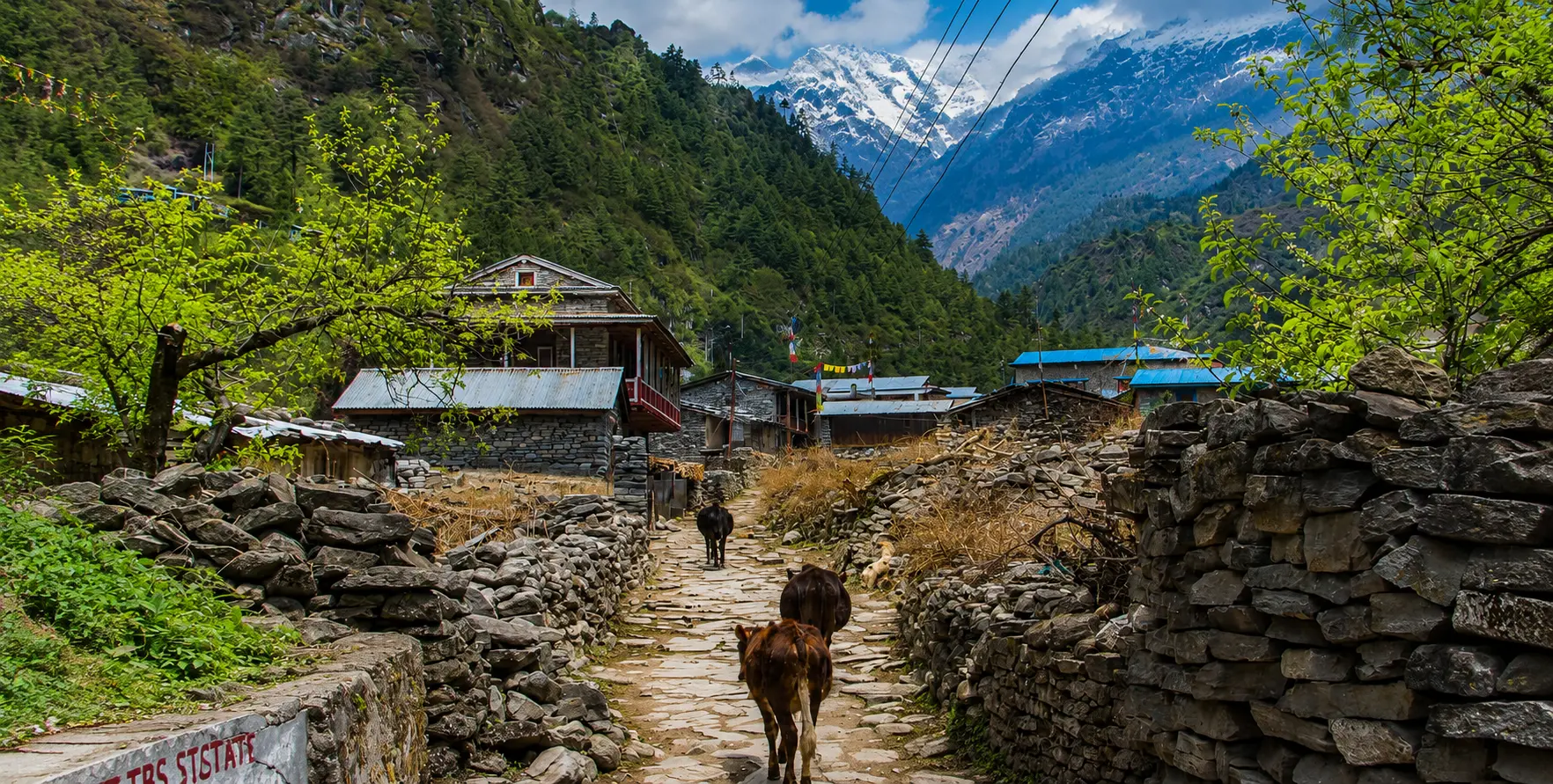
The Complete Route: Kathmandu to Jagat

Distance, Duration and Road Character

The road from Kathmandu to Jagat covers approximately 160 to 175 kilometres. A guide in Himalaya’s itinerary confirms the Kathmandu to Machha Khola distance at 160 km, taking 8 to 9 hours, and the Jagat extension adds 25 to 35 more kilometres on rough track, taking an additional 1 to 2 hours.

The complete Kathmandu to Jagat journey by private jeep therefore takes approximately 9 to 11 hours — one of the longer Nepal trailhead transfers but delivering trekkers to a significantly more remote and scenically dramatic starting point than the road’s lower termini.

The route exits Kathmandu westward on the Prithvi Highway before diverging northward toward Gorkha. From Gorkha town, the road continues through Arughat Bazaar and along the increasingly rough Budhi Gandaki valley track to Soti Khola, Machha Khola, and the extension section to Jagat.

The highway from Kathmandu to Gorkha-Arughat is generally in good condition; the track beyond Arughat through the gorge deteriorates progressively as it approaches Jagat—the primary reason a proper 4WD jeep is non-negotiable for this approach.

Two Route Options: Via Dhading Bensi or Via Gorkha Bazaar

Two routing options exist from Kathmandu, as Nepal’s transportation analysis documents. The Dhading Bensi route is generally quicker. The Gorkha Bazaar route goes via Gorkha town and descends into Arughat.

Nepal Vehicle Hiring Pvt Ltd’s drivers select the optimal routing based on current road conditions — typically preferring Dhading Bensi for time efficiency but switching to the Gorkha route when specific sections are affected by construction or weather. Both routes converge at Arughat for the final Budhi Gandaki gorge approach.

Book Kathmandu to Jagat Jeep Hire with a private 4WD jeep or Scorpio SUV for your Manaslu Circuit adventure. The road beyond Arughat becomes increasingly rough, so a suitable 4WD vehicle and an experienced mountain-road driver are important. Current route information indicates that access toward Jagat can vary with road and weather conditions, so the exact drop-off point should be confirmed before departure.
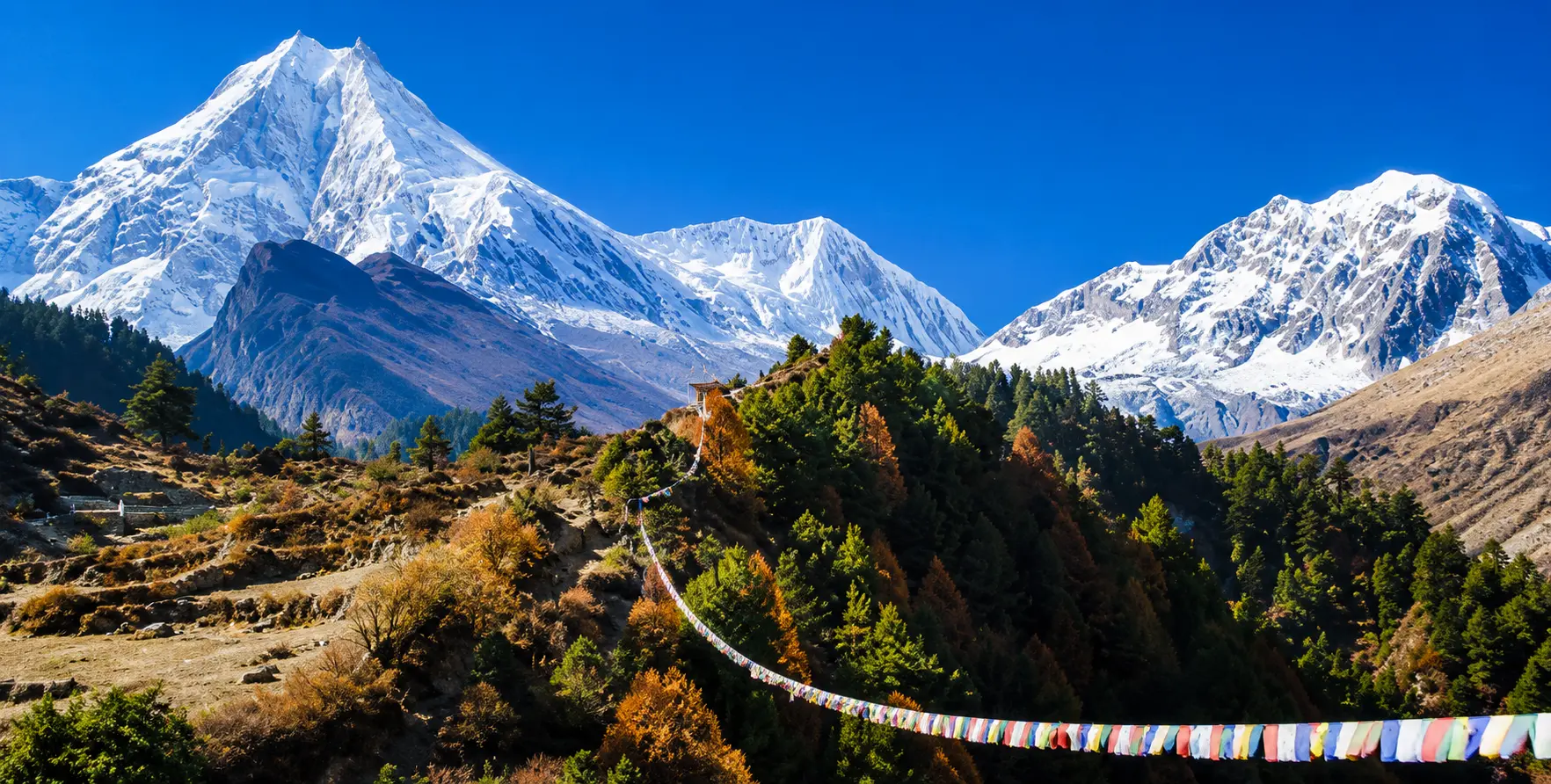
Beyond Machha Khola: The  Jagat Extension Road

The 25-to-35-kilometre section from Machha Khola to Jagat is the most technically challenging segment of the complete journey. The road follows the Budhi Gandaki River gorge northward through dramatic canyon terrain — cliff faces rising sharply above on one side, the river far below on the other, the road carved into rock with narrowness requiring vehicles to reverse for oncoming traffic at several points.

The surface is entirely unpaved with loose rock and gravel. In monsoon conditions, sections become muddy and more challenging, reinforcing the absolute need for 4WD.

The views from this extension section are extraordinary even before trekking begins — the gorge’s vertical scale and the first appearances of the Manaslu massif ahead provide visual rewards that immediately justify the additional journey time.

Why a 4WD Jeep Is Non-Negotiable for Kathmandu to Jagat

The 4WD jeep requirement on the Kathmandu to Jagat route is a practical necessity, not a preference. Multiple current transport guides confirm that large public buses cannot reach Jagat—the road’s narrowness, gradient, and surface make only jeep-class vehicles viable.

Standard sedans and non-4WD SUVs will struggle beyond Arughat and should not be used for this approach. Nepal Vehicle Hiring Pvt Ltd specifies the 4WD jeep as the minimum appropriate vehicle rather than an upgrade option.

The Toyota Land Cruiser Prado and VX are the top-end choices—offering genuine off-road capability, sophisticated 4WD management, and a spacious, well-insulated cabin that delivers mechanical competence on rough track sections and interior comfort over a 9-to-11-hour journey. The Mahindra Scorpio and Tata Sumo are the standard workhorses with proven Budhi Gandaki track credentials at a lower cost.

The driver’s specific route experience is as important as the vehicle — Nepal Vehicle Hiring Pvt Ltd assigns drivers to the Jagat approach exclusively from among those who have completed the full route multiple times.

As Basecamphike.com’s analysis notes, the Kathmandu to Machha Khola journey already takes 8 to 10 hours, and the Jagat extension adds further time on a road where familiarity matters more than general mountain driving confidence. Our Kathmandu to Jagat jeep hire service — built on the foundation of our established Kathmandu to Soti Khola private vehicle service — extends that proven expertise to the newest and most remote trailhead on the Manaslu Circuit.

Complete Cost Guide: Kathmandu to Jagat

Multiple sources confirm current market rates. Magical Nepal quotes USD 200 to USD 250 per vehicle for Machha Khola, Green Valley Nepal Treks quotes USD 120 to USD 180, and Himalayan Foot quotes USD 250 for the off-road drive to the destination. The Jagat extension adds approximately USD 30 to USD 50 above Machha Khola rates.

Nepal Vehicle Hiring Pvt Ltd’s private 4WD jeep hire from Kathmandu to Jagat: NPR 25,000 to NPR 38,000 for the full vehicle (approximately USD 188 to USD 285), accommodating 5 to 7 passengers. Per-person cost for a group of 6: NPR 4,167 to NPR 6,333. All rates are fully inclusive of vehicle, driver, fuel, and tolls, with no additions at settlement.

For groups of 8 to 14, a Hiace van hire at NPR 30,000 to NPR 42,000 is suitable to Machha Khola, with a coordinated jeep taking the group onward to Jagat on the extension track. For groups needing full-journey Jagat access for all passengers, multiple jeeps in convoy are the most practical solution, coordinated by Nepal Vehicle Hiring Pvt Ltd, with convoy-management documentation.

Public transport comparison: Local buses to Machha Khola cost USD 7 to USD 15 per person. Shared jeeps to Machha Khola cost USD 25 to USD 40 per person.

Neither bus nor shared jeep service currently reaches Jagat on a scheduled basis — the 2023 extension road is served primarily by private jeep arrangements, making Nepal Vehicle Hiring Pvt Ltd the most reliable option for any trekker targeting Jagat as the starting point.

Book Kathmandu to Jagat Jeep Hire with a private 4WD jeep or Scorpio SUV for your Manaslu Circuit adventure. The road beyond Arughat becomes increasingly rough, so a suitable 4WD vehicle and an experienced mountain-road driver are important. Current route information indicates that access toward Jagat can vary with road and weather conditions, so the exact drop-off point should be confirmed before departure.
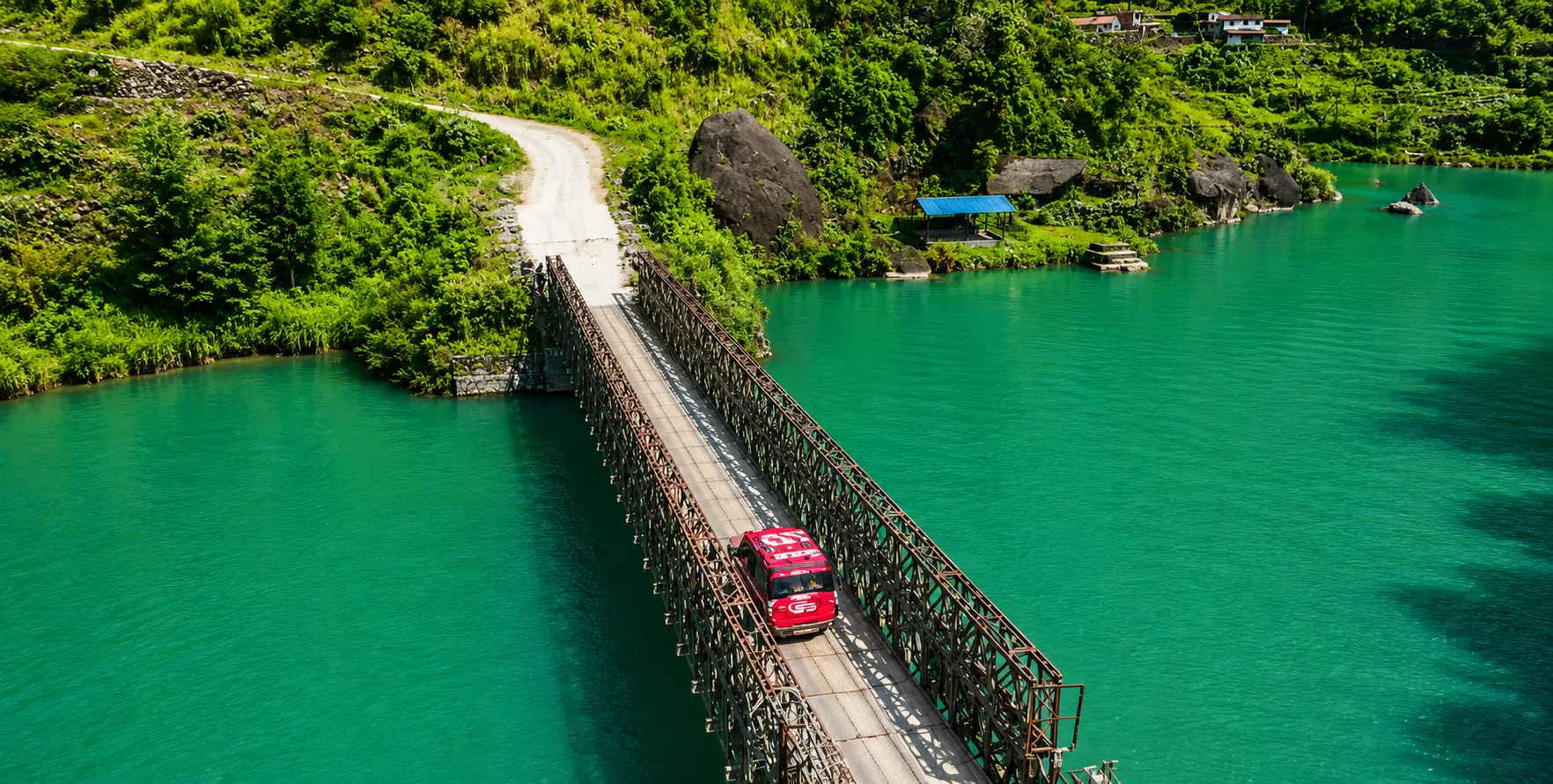
The Manaslu Circuit Trek: What Awaits Beyond Jagat

The Manaslu Circuit Trek is, as the Nepal Tourism Board describes it, one of Nepal’s most demanding but most rewarding circuits — a 14-to-18-day journey around the Manaslu Massif crossing the Larkya La at 5,106 metres, traversing the remote Nubri and Tsum cultural landscapes, and delivering a quality of mountain wilderness that the more heavily trafficked Annapurna and Everest corridors struggle to replicate despite their greater fame.

From Jagat at 1,340 metres, the trail continues through Deng (2,095 m), Namrung (2,900 m), Lho (3,180 m), and Samagaon (3,500 m) — the acclimatisation base before the Larkya La crossing. The pass itself is one of Nepal’s great trekking accomplishments: a dramatic glacier-and-scree crossing that takes trekkers from the Manaslu drainage into the Annapurna Conservation Area near Dharapani.

The Tsum Valley extension, branching near Chumling, adds 7 to 10 days for those who choose this perfectly preserved Tibetan Buddhist community—one of Nepal’s most remarkable off-trail encounters.

The Manaslu Conservation Area includes both the main circuit and the Tsum Valley extension, and Trek Nepal Himalayas calls it one of Nepal’s most ecologically diverse protected areas, spanning subtropical gorge to glaciated alpine environments within a single corridor.

Required Permits for the Manaslu Circuit

You need three permits, all obtained in Kathmandu before departure. Langtang Treks Nepal’s transport guide confirms the mandatory permit structure. The Manaslu Conservation Area Permit (MCAP) costs NPR 3,000 per person.
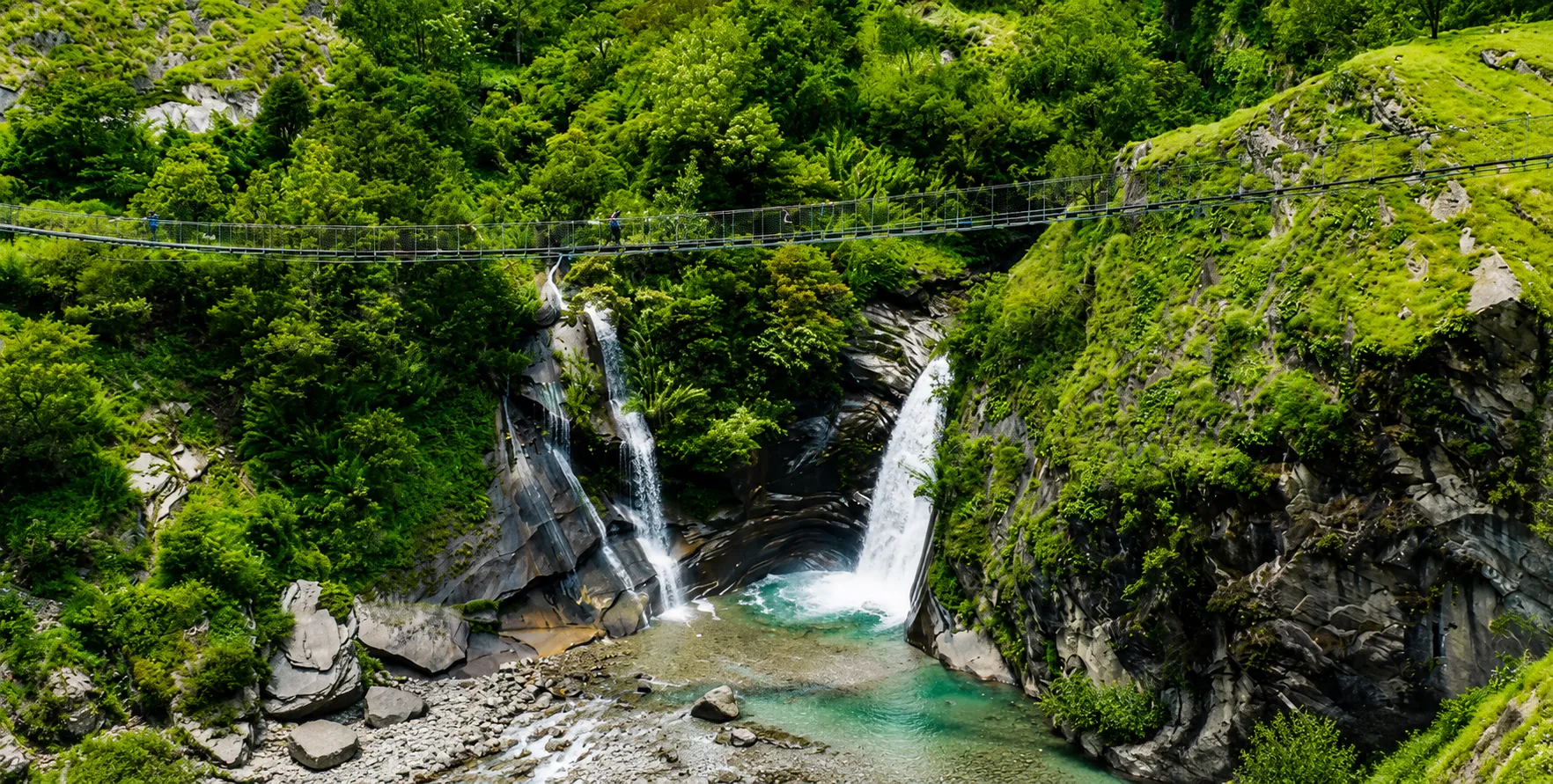
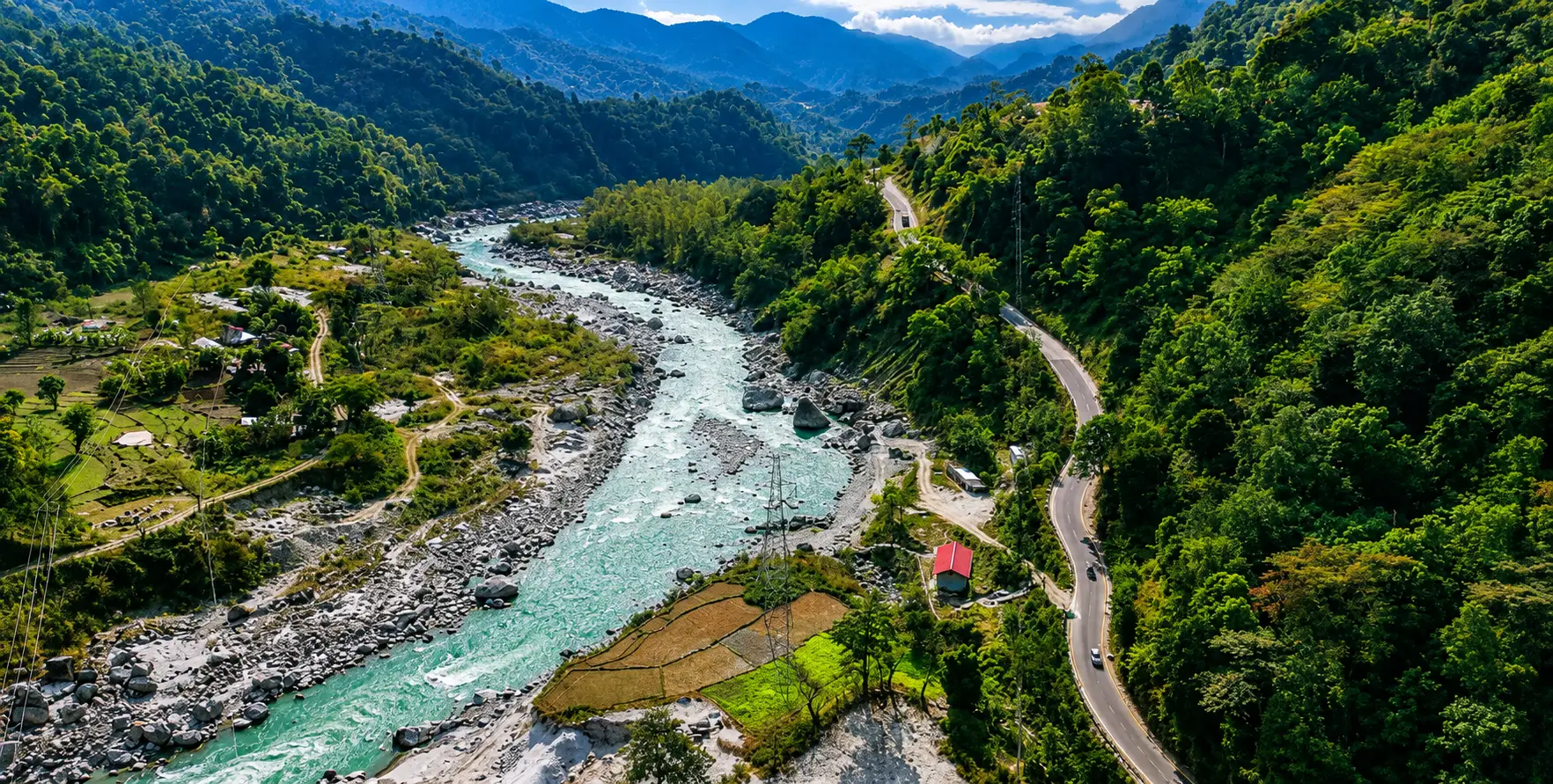
The Restricted Area Permit (RAP) costs USD 100 per person for 7 days in autumn, USD 75 per person in other seasons. The Annapurna Conservation Area Permit (ACAP) costs NPR 3,000. You can obtain all three from the Nepal Tourism Board within 2 to 3 hours.

A licensed guide is mandatory for all foreign trekkers on the Manaslu Circuit — the mandatory guide regulation enacted in 2023 applies here and cannot be circumvented. Guide fees typically run USD 25 to USD 35 per day. Nepal Vehicle Hiring Pvt Ltd works with registered trekking agencies to coordinate permits and guide arrangements for Manaslu Circuit clients, ensuring a streamlined pre-departure process.

Manaslu trek route (1)

The Return Journey: Dharapani to Kathmandu

The Manaslu Circuit exits at Dharapani (1,860 m) in the Marsyangdi River valley, connecting with the Besisahar road network. Haven Holidays Nepal confirms private jeeps from Dharapani at approximately NPR 12,000, while Langtang Treks Nepal notes regular local jeeps running from Dharapani to Besisahar, from where Kathmandu connections are available.
Nepal Vehicle Hiring Pvt Ltd provides a smooth Dharapani-to-Kathmandu return via our Besisahar private vehicle service network—a private jeep from Dharapani directly to Kathmandu at approximately US$320 for the full vehicle.
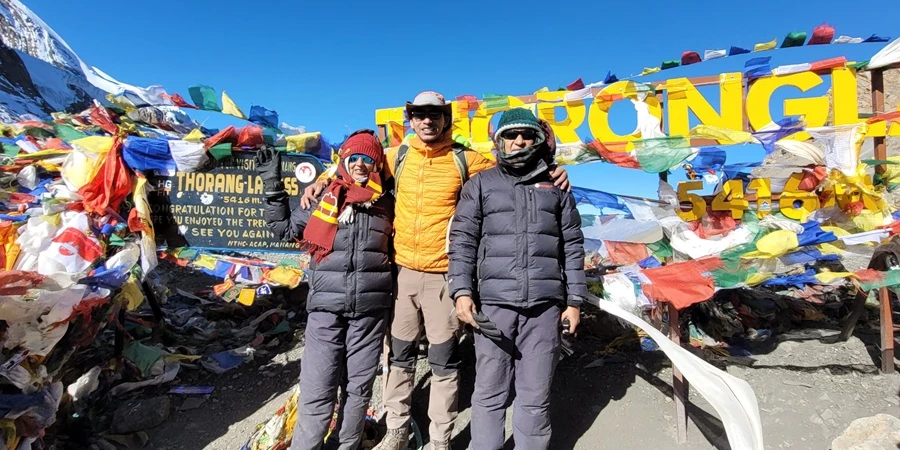
Pre-booking the Dharapani return simultaneously with the outbound Jagat booking is strongly recommended — particularly during peak season when vehicle demand in the Dharapani area is high. Nepal Vehicle Hiring Pvt Ltd coordinates outbound and return vehicles for all Manaslu clients and provides the return driver’s contact details before departure from Kathmandu, so the return arrangement is confirmed throughout the trek.

Seasonal Guide: Road Conditions Year-Round

Spring from March through May is one of the two primary Manaslu seasons. Road conditions are good, and rhododendron bloom adds visual drama to the approach drive.

Autumn from September through November is Nepal’s peak trekking season and the most popular Manaslu window—post-monsoon road surfaces are at their annual best, mountain visibility is finest, and the Jagat extension track is most reliably trafficable. Monsoon from June through August is not recommended — the Larkya La is genuinely hazardous and the Jagat extension road becomes muddy and potentially impassable after sustained heavy rainfall.

Nepal Vehicle Hiring Pvt Ltd advises against the Kathmandu-to-Jagat jeep service for trekking during the monsoon months.

Book Kathmandu to Jagat Jeep Hire with a private 4WD jeep or Scorpio SUV for your Manaslu Circuit adventure. The road beyond Arughat becomes increasingly rough, so a suitable 4WD vehicle and an experienced mountain-road driver are important. Current route information indicates that access toward Jagat can vary with road and weather conditions, so the exact drop-off point should be confirmed before departure.

From December through February, snow and ice close Larkya La to most trekkers, making the full Manaslu Circuit impractical. The lower Budhi Gandaki valley section,s including the Jagat approach road, is accessible by vehicle in winter but without a viable complete circuit ahead, winter bookings for the Jagat trailhead are rare.

Peak demand is in October and November for autumn and March and April for spring — Nepal Vehicle Hiring Pvt Ltd recommends booking two weeks during these windows.

Practical Tips for Kathmandu to Jagat

  • Book at least one week in advance during normal periods and two weeks during peak autumn-spring seasons — the Manaslu Circuit’s growing popularity creates genuine vehicle demand pressure in October and November
  • Confirm driver experience specifically on the Machha Khola to Jagat extension road — Nepal Vehicle Hiring Pvt Ltd assigns only route-familiar drivers, but confirming this at booking provides additional reassurance.
  • Depart Kathmandu no later than 6:00 AM — the 9-to-11-hour journey requires an early start to arrive at Jagat with sufficient daylight for guesthouse check-in and equipment organisation before Day 1 trekking.
  • Obtain all three permits (MCAP, RAP, ACAP) in Kathmandu 1 to 2 days before departure — Nepal Tourism Board processing takes 2 to 3 hours for the complete set.
  • Arrange the mandatory licensed guide before booking the vehicle departure date — guide availability can affect the complete departure schedule if left to the last minute.
  • Carry sufficient NPR cash — ATMs exist in Kathmandu and Gorkha town on the approach but not at Jagat or anywhere on the Manaslu Circuit trail.
  • Pack a small vehicle cabin daypack with water, snacks, motion sickness tablets, and immediate-access items — the Budhi Gandaki gorge track sections involve enough winding road to affect sensitive passengers.
  • Book the Dharapani return vehicle at the same time as the Jagat outbound transfer — confirmed return availability before the trek begins eliminates post-circuit transport uncertainty.

The Manaslu Circuit Stages: From Jagat to the Larkya La

From Jagat, the Manaslu Circuit’s successive stages reveal one of Nepal’s most complete and most rewarding high-altitude trekking journeys. Day 1 from Jagat leads to Deng at 2,095 metres through increasingly dramatic gorge terrain where the Budhi Gandaki carves between canyon walls rising hundreds of metres on both sides — a full day’s walk of 7 to 8 hours through terrain that immediately demonstrates why beginning at Jagat rather than walking from Soti Khola delivers a meaningfully better introduction to the circuit.

The lower road-construction-affected section is entirely bypassed, and the trail’s genuine mountain character is available from the very first steps.

Namrung at 2,900 metres provides the first proper mountain views — Ganesh Himal, Ngadi Chuli, and eventually Manaslu itself appearing above the valley walls as the trail climbs northward. Experienced Manaslu Circuit trekkers consistently rate the stages from Namrung through Lho to Samagaon at 3,500 metres as the finest daily sections of the complete circuit—mountain views of extraordinary quality, Tibetan Buddhist cultural environments of genuine authenticity, and physical demands that remain within a well-prepared trekker’s comfortable range.

Samagaon serves as the upper circuit’s emotional and logistical centrepiece — the village from which both the Manaslu Base Camp approach and the Birendra Lake side hike originate, and where most trekkers spend two nights for acclimatisation and appreciation.

The Larkya La at 5,106 metres is the circuit’s defining physical achievement — a pre-dawn departure from Dharamsala high camp in the dark, a climb through moraine and glacier sections to the pass’s summit in the sunrise’s first golden light, and a spectacular descent through 3,200 metres of altitude in a single day from the icy pass to the lush Bimthang valley and eventually to Dharapani at 1,860 metres. This descent completes the circuit and connects back to the Besisahar road network, where Nepal Vehicle Hiring Pvt Ltd’s return private vehicle waits for the group.

Pre-Trek Kathmandu Activities Before Jagat

Most Manaslu Circuit trekkers spend 1 to 3 preparation days in Kathmandu before departing for Jagat. Nepal Vehicle Hiring Pvt Ltd provides Kathmandu sightseeing by private vehicle for pre-trek cultural orientation, covering UNESCO World Heritage sites including Boudhanath Stupa — whose Tibetan Buddhist traditions mirror those the trekker will encounter in the Manaslu Circuit’s upper Nubri villages — Pashupatinath Temple on the Bagmati River banks, and Swayambhunath on its ancient hilltop above the valley.

The Bhaktapur Durbar Square day tour offers Nepal’s finest concentrated medieval Newar heritage experience — the 55-window palace, Nyatapola temple, and sacred courtyards of extraordinary craftsmanship. The Nagarkot sunrise tour gives Manaslu-bound trekkers their first visual encounter with Nepal’s complete Himalayan panorama — the full arc from Dhaulagiri through Ganesh Himal and Manaslu to Everest visible from the valley rim at 2,175 metres on clear mornings, providing a powerful orientation to the mountain world the circuit will explore.

Our Nagarkot vehicle hire covers this at any time of day. For complete Kathmandu cultural preparation, our Kathmandu airport transfer from Tribhuvan International smoothly begins your Nepal journey upon arrival.

Combining Manaslu with Other Nepal Adventures

The Manaslu Circuit pairs naturally with Nepal’s other great adventures through Nepal Vehicle Hiring Pvt Ltd’s complete vehicle network—a pre-circuit Kathmandu-to-Pokhara private vehicle trip offers an Annapurna introduction before Manaslu. The Sarangkot sunrise tour vehicle from Pokhara provides the Annapurna dawn panorama.

A Pokhara to Ghorepani Poon Hill jeep day trip delivers Nepal’s most celebrated sunrise viewpoint. After the circuit, our Pokhara to Upper Mustang overland jeep takes adventure-seeking trekkers into the ancient walled city of Lo Manthang through the world’s deepest gorge.

Our Pokhara to Nayapul jeep and Pokhara to Ghandruk jeep serve the Annapurna foothills cultural circuit. For those extending to the Everest region, our Everest Base Camp Trek approach coordination manages the complete Khumbu access chain.

For trekkers who want the complete Nepal experience combining Manaslu’s wilderness with a pilgrimage dimension, our Kathmandu to Muktinath jeep service connects Kathmandu to one of the Himalayan world’s most sacred sites at 3,710 metres. The Kathmandu to Salleri and Phaplu service opens the Solukhumbu District for the Everest overland approach.

Our Nepal tour packages combine these diverse destinations into coordinated multi-stage journeys with a single Nepal Vehicle Hiring Pvt Ltd booking covering every vehicle need from Kathmandu airport arrival to final departure — making us the ideal single transport partner for any Nepal trekking and touring adventure that includes the Manaslu Circuit as its mountain centrepiece. Plan your complete Nepal trip with our team or contact us directly at +977 981-4227196 (WhatsApp) to discuss your Jagat approach and complete Manaslu vehicle arrangement.

Understanding the Manaslu Circuit Permit System in Depth

The Manaslu Circuit’s three-permit system is among the most detailed and consequential in Nepal’s trekking regulatory framework, and understanding it fully before your Kathmandu-to-Jagat departure date saves the anxiety and potential disruption incomplete permit knowledge can create at trail checkpoints. Together, the three permits create a layered access-control system that has kept Manaslu Circuit trekking volumes at levels that preserve the route’s genuine wilderness character—a deliberate regulatory achievement every trekker who values an uncrowded Himalayan experience should recognise and appreciate.

The Manaslu Conservation Area Permit (MCAP) is the foundational permit, covering entry into the entire Manaslu Conservation Area, from the lower Budhi Gandaki valley through the full circuit. Issued by the National Trust for Nature Conservation (NTNC) via the Nepal Tourism Board, the MCAP costs NPR 3,000 for non-SAARC nationals and NPR 1,000 for SAARC nationals (Indian, Sri Lankan, Bangladeshi, Pakistani, Bhutanese, Maldivian, and Afghan citizens).

You obtain the MCAP at the Nepal Tourism Board office in Kathmandu, at Bhrikutimandap, alongside the other two permits in a single processing session. This permit is first verified at the MCAP checkpoint near the lower valley entrance, then cross-checked at Jaga,t where the Restricted Area checkpoint adds the second layer of permit verification.

The Restricted Area Permit (RAP) is the most expensive and most regulated of the three, reflecting the zone’s additional security and conservation sensitivity beginning at Jagat. The RAP costs USD 100 per person for the first 7 days during the peak autumn season (September to November) and USD 75 per person for the first 7 days during the off-peak spring and other seasons.

Beyond 7 days in the restricted zone, additional daily rates apply — USD 15 per day in peak season and USD 10 per day in off-peak. For a standard 10-day traverse of the restricted zone in October, the RAP cost is USD 100 (first 7 days) plus USD 45 (3 additional days at USD 15 each) = USD 145 per person.

Only a registered trekking agency that sponsors the application can issue the RAP— solo trekkers cannot obtain it independently through the Department of Immigration, making agency involvement a formal requirement rather than an optional convenience.

The Annapurna Conservation Area Permit (ACAP) covers the section of the Manaslu Circuit that exits the Manaslu Conservation Area and enters the Annapurna Conservation Area near Dharapani as trekkers complete the circuit and descend toward Besisahar. This NPR 3,000 permit is often overlooked by trekkers who don’t realise the Manaslu Circuit’s exit route crosses a conservation area boundary, but the Dharapani checkpoint verifies ACAP possession as part of standard exit processing—trekkers without it can face delays and fines that far exceed the permit’s modest cost.

Obtaining all three permits in Kathmandu before departure for Jagat, and allowing 2 to 3 hours for the full processing session, is the most reliable approach and is strongly recommended by Nepal Vehicle Hiring Pvt Ltd for all Manaslu Circuit vehicle hire bookings.

Seasonal Deep Dive: Planning Your Kathmandu to Jagat Journey by Month

March: The first viable month for the Manaslu Circuit in the spring season, with the Larkya La typically passable from mid-March onward. The lower Budhi Gandaki valley approaching Jagat is beautifully warm and green, with the first rhododendron blooms appearing on the forested sections of the approach track.

The Kathmandu-to-Jagat road is in good condition after the winter dry season. Permit demand is building but not yet at peak levels; booking 10 to 14 days in advance is sufficient. The Kathmandu to Jagat private jeep departs through the Prithvi Highway’s finest seasonal scenery as Nepal’s lowlands turn from winter brown to spring green.

April: One of the two finest months for the Manaslu Circuit, combining Larkya La accessibility with the spectacular rhododendron and magnolia bloom that transforms the trail’s middle altitude forest sections. The Kathmandu-to-Jagat approach road is in its best condition of the year.

Peak permit demand begins to build in late April — 2 weeks’ booking recommended for private jeep hire. Temperatures on the extension track to Jagat are warm and pleasant, with clear morning air offering excellent views of the Manaslu massif from the gorge sections.

May: The spring season’s final viable month before pre-monsoon conditions begin to affect predictability. The Larkya La remains open, but high-altitude conditions can be more variable in late May. The Jagat extension road is still in good condition.

Trekking numbers thin toward the end of May as early bookers clear the route and the approaching monsoon reduces demand—a good month for trekkers who want spring wildflower beauty with meaningfully reduced competition for teahouse beds.

September: The monsoon’s departure in late September (typically mid-to-late September in the Manaslu corridor) opens the autumn season with the finest road conditions of the year on the Kathmandu to Jagat approach. The landscape is at its most lush and vivid in the weeks immediately after the monsoon departs, before November dryness shifts the colour palette.

Permits are available without the intense competition of October — a genuinely excellent month for trekkers with flexible dates.

October: Nepal’s peak trekking month and the Manaslu Circuit’s most competitive booking window. Mountain views from the Kathmandu to Jagat extension road are at their annual best, crystal clear. The Larkya La conditions are ideal.

Teahouses on the circuit are at their fullest capacity. Nepal Vehicle Hiring Pvt Ltd strongly recommends 3a 3-week booking for October Kathmandu to Jagat private jeep hire — this is the month when vehicle availability is tightest and pre-confirmed bookings deliver the greatest peace of mind.

November: The autumn season’s final month, with the Larkya La typically remaining open through mid-to-late November before winter conditions begin to close it. November sees declining trekker numbers from the October peak, while trail and road conditions remain excellent.

Temperatures at Jagat and on the extension road track are noticeably cooler than in October, with frost possible on the higher sections of the gorge track in the early morning—a good month for trekkers who want autumn clarity with fewer fellow trekkers on the circuit.

Vehicle Safety and Preparation for the Jagat Extension Road

The 25-to-35-kilometre extension road from Machha Khola to Jagat places specific demands on both the vehicle and the driver, and Nepal Vehicle Hiring Pvt Ltd addresses them through dedicated pre-journey preparation protocols. Every 4WD jeep assigned to the Kathmandu to Jagat route undergoes a specific pre-journey check that includes tyre tread depth and pressure assessment (the loose rock surface of the extension track is particularly demanding on tyres), brake performance verification (the steep sections of the gorge track involve sustained downhill driving where brake reliability is directly safety-relevant), 4WD system engagement testing (ensuring that the vehicle’s 4WD capability is immediately available when the gorge track demands it rather than requiring driver-initiated engagement under pressure), and undercarriage clearance inspection (the extension track’s surface irregularities can include rocks that present undercarriage contact risk for vehicles with inadequate ground clearance).

Our drivers for the Jagat extension carry a comprehensive emergency kit in the vehicle—including a tow rope, basic tool kit, hydraulic jack compatible with the vehicle’s suspension, and sufficient supplies for an extended wait if the vehicle requires roadside assistance in a remote gorge section. The extension road’s remoteness — beyond the last reliable mobile connectivity and beyond the reach of standard vehicle recovery services — makes this self-sufficiency preparation not a precaution but a practical necessity for responsible operation on this specific corridor.

For trekkers travelling in monsoon-adjacent periods (late May, September, early October), Nepal Vehicle Hiring Pvt Ltd additionally checks the current status of the extension road’s most weather-sensitive sections before every Jagat departure during these months. We maintain contact with local transport operators and road authority staff who provide real-time information about the extension road’s condition, allowing us to advise clients immediately if recent rainfall has created temporary surface conditions that affect departure timing or routing.

This operational intelligence capability — built on our established Kathmandu to Soti Khola private vehicle service network — gives Nepal Vehicle Hiring Pvt Ltd a practical advantage over operators without established contacts on this specific road corridor.

What Makes the Manaslu Circuit Unique: A Trekker’s Perspective

The Manaslu Circuit’s distinctive character — the quality that separates it from Nepal’s other major trekking routes and that justifies the additional complexity of its permit structure, mandatory guide requirement, and the demanding Kathmandu to Jagat jeep approach — is ultimately a function of what has been deliberately kept out of it as much as what is naturally present within it. The restricted area permit sets an annual visitor ceiling the Annapurna and Everest circuits have never had, and the mandatory guide requirement creates a human connection to the landscape and communities that independent trekking bypasses.

These two regulatory elements, combined with the genuinely remote and physically demanding character of the upper Budhi Gandaki and Larkya La environments, produce a trekking experience whose quality per day of trail walked is among the highest available anywhere in the Nepal Himalaya.

The Nubri communities of the upper valley — the villages of Lho, Samagaon, and Samdo whose inhabitants descend from Tibetan refugees and whose cultural practices mirror those of Tibet itself far more closely than those of Nepal’s middle-hill communities — offer an encounter with living Tibetan Buddhist civilisation that the Everest region’s Sherpa communities, while equally fascinating in their own way, present through the lens of a culture that has adapted substantially to the demands of the trekking economy over five decades of high-volume tourism. In the upper Manaslu Circuit, the trekking economy is present but modest, and the communities’ primary cultural identity remains rooted in the agricultural, pastoral, and religious practices of the high-altitude Tibetan world rather than in the service of trekking visitors.

Experienced Himalayan trekkers who have previously visited the Everest region notice this difference in the quality of the cultural encounter immediately, and they consistently cite it as one of the Manaslu Circuit’s most distinctive and valued attributes.

The Larkya La crossing at 5,106 metres deserves its own paragraph. Unlike the Thorong La on the Annapurna Circuit — which, despite its greater height at 5,416 metres,s is crossed by hundreds of trekkers per day in October — the Larkya La is typically crossed by perhaps 20 to 50 people on the same day during peak season, creating a summit experience of relative solitude that profoundly shapes the emotional impact of the achievement.

Standing on the Larkya La at dawn, with the Manaslu massif glowing in the first light above the glacier and the Himchuli and Ngadi peaks framing the western horizon, with perhaps 10 other trekkers within sight and the silence of a high Himalayan morning unbroken by the crowd noise that the Thorong La summit sometimes generates — this is one of Nepal’s genuinely great mountain experiences, available to any well-prepared trekker who commits to reach it. That commitment starts with a Kathmandu-to-Jagat private jeep hire that begins the circuit at the right point.

Comparison Table: Jagat vs Soti Khola vs Machha Khola Starting Points

Soti Khola (710 m): Distance from Kathmandu is approximately 126 km; journey time is approximately 6 to 7 hours. Lowest starting altitude, providing maximum gradual acclimatisation on the approach.

Road from Soti Khola to Jagat is now heavily affected by construction activity — the trail follows the road for much of the section, significantly compromising the trekking experience. Best for: trekkers with altitude sensitivity concerns who need the lowest possible starting altitude.

Machha Khola (870 m): Distance from Kathmandu approximately 140 km, journey time approximately 7 to 9 hours. Modest altitude advantage over Soti Khola. The Machha Khola to Jagat section remains road-affected — still requires 1 to 1.5 days of road-following walking to reach Jagat.

Best for: trekkers who want to save some vehicle hire cost compared to the full Jagat approach while still accessing a point slightly above Soti Khola.

Jagat (1,340 m): Distance from Kathmandu approximately 160 to 175 km, journey time approximately 9 to 11 hours. The higher starting altitude avoids the road-construction-affected lower trail. Begins the walk at the restricted zone checkpoint where the circuit’s genuine wilderness character starts.

Best for: the majority of fit and well-prepared trekkers who want the finest possible Manaslu Circuit experience from the first steps. The definitive recommendation of Nepal Vehicle Hiring Pvt Ltd’s Manaslu Circuit transport team.

Nepal Vehicle Hiring Pvt Ltd offers private jeep hire from all three starting points: Kathmandu to Soti Khola for the lowest starting cost, and the extended Jagat service for the most complete trailhead delivery. Our team discusses the optimal starting point for each client group’s fitness level, altitude history, and time constraints at booking—ensuring the chosen starting point genuinely serves the trekking experience rather than simply reflecting a default preference.

Nepal Vehicle Hiring Pvt Ltd: The Complete Manaslu and Nepal Network

Nepal Vehicle Hiring Pvt Ltd’s Kathmandu to Jagat service is part of Nepal’s most comprehensive private vehicle hire network. Our Kathmandu to Soti Khola jeep service provides the shorter Manaslu Circuit starting option. Our Kathmandu to Besisahar vehicle and Kathmandu to Manang jeep serve the Annapurna Circuit.

Our Kathmandu to Syabrubesi jeep serves Langtang and the Kerung corridor. Our Kathmandu to Salleri and Phaplu jeep reaches Solukhumbu for the Everest overland approach. Our Kathmandu to Muktinath jeep serves the sacred Mustang pilgrimage.

From Pokhara, our Pokhara to Nayapul jeep serves Annapurna Base Camp and Poon Hill. Our Pokhara to Ghandruk jeep covers the Annapurna foothills circuit. Our Pokhara to Ghorepani direct jeep delivers Nepal’s finest sunrise viewpoint.

Our Pokhara to Upper Mustang overland jeep traverses the Kali Gandaki Gorge to Lo Manthang. Our Pokhara car hire covers all city transfers. Our Sarangkot sunrise tour vehicle offers an Annapurna dawn panorama.

In Kathmandu, our airport transfer service meets arriving trekkers at Tribhuvan International Airport. Kathmandu sightseeing vehicles cover UNESCO sites. Our Bhaktapur day tour vehicle takes you through the medieval Newar city.

Our Nagarkot sunrise tour and Nagarkot vehicle hire provide Himalayan dawn panoramas from the valley rim. Our Kathmandu to Pokhara private vehicle covers the scenic Prithvi Highway drive. Our fleet of private cars, 4WD jeeps, Hiace vans, coasters, and buses serves every group.

Our Nepal tour packages coordinate complete multi-stage itineraries, including approaches to Everest Base Camp and all major trekking routes. Plan your complete trip or contact us on WhatsApp to book.

Additional Manaslu Circuit Planning Resources

Planning the complete Manaslu Circuit adventure involves more than the trailhead transfer — it requires a coordinated approach to permits, guide arrangements, teahouse booking in the peak season, and the integration of the circuit within a broader Nepal itinerary. Nepal Vehicle Hiring Pvt Ltd serves as the vehicle coordination partner at every stage, working alongside registered trekking agencies that handle permits and guide logistics.

Our Nepal tour packages can incorporate the Manaslu Circuit into comprehensive Nepal itineraries that combine the circuit with Kathmandu cultural days, Pokhara Annapurna experiences, or the Everest Base Camp Trek for the ultimate Nepal mountain adventure. Our trekking services page outlines the complete range of trekking support we provide across all Nepal’s major routes.

The plan your trip service offers personalised itinerary consultation, including vehicle hire and budget guidance for every stage of a Nepal trekking journey — from the first airport transfer to the last vehicle drop after the circuit’s completion. For immediate booking enquiries, contact Nepal Vehicle Hiring Pvt Ltd at +977 981-4227196 via WhatsApp or Viber, available 24 hours for Manaslu Circuit vehicle hire enquiries.

Our drivers, private jeeps, Hiace vans, and coordination team are ready for every Manaslu Circuit group, from the solo trekker sharing with three others to the 20-person organised expedition requiring multiple vehicles in convoy to Jagat. Nepal Vehicle Hiring Pvt Ltd is the Kathmandu-to-Jagat jeep hire provider you can count on.

For the full Nepal vehicle hire picture, visit vehiclehiringnepal.com — our private car hire, 4WD jeep hire, Hiace van hire, coaster hire, and bus hire services cover every Nepal trekking and travel need.

Frequently Asked Questions

Can a jeep reach Jagat from Kathmandu?

Yes — Hiking Bees confirms the road was extended to Jagat , allowing private 4WD jeeps to complete the full journey. Public buses cannot reach Jagat, but private jeeps are capable with experienced drivers.

How long does the Kathmandu-to-Jagat drive take?

Approximately 9 to 11 hours total. Basecamp Hike.com confirms the Kathmandu to Machha Khola section at 8 to 10 hours, with the Jagat extension adding 1 to 2 more hours. A 6:00 AM departure from Kathmandu is strongly recommended.

How much does a private jeep from Kathmandu to Jagat cost?

NPR 25,000 to NPR 40,000 for the full vehicle (USD 188 to USD 285). Current operator rates confirm USD 200 to USD 250 for Machha Khola, with the Jagat extension adding USD 30 to USD 50. All Nepal Vehicle Hiring Pvt Ltd rates are fully inclusive.

Is Jagat the best starting point for the Manaslu Circuit?

For trekkers prioritising trail quality over lower starting altitude, yes — the Soti Khola to Jagat section is now road-construction-affected, making Jagat the point where the circuit’s genuine wilderness experience begins. For trekkers concerned about altitude, starting at Soti Khola via our shorter jeep service offers better acclimatisation.

How do I return from the circuit at Dharapani?

Nepal Vehicle Hiring Pvt Ltd arranges the Dharapani-to-Kathmandu return via our Besisahar vehicle service for NPR 18,000 to NPR 35,000. Book simultaneously with the outbound Jagat transfer. Contact us to arrange the complete outbound-return package.

What are the permits needed for the Manaslu Circuit?

Three permits: MCAP (NPR 3,000), RAP (USD 75 to 100 per person for 7 days), and ACAP (NPR 3,000). All are from the Nepal Tourism Board in Kathmandu and take 2 to 3 hours. Nepal’s trekking regulations also require a licensed guide for all foreign trekkers.

Conclusion: Start Your Manaslu Adventure at the Right Point

The Kathmandu to Jagat jeep hire represents one of Nepal’s most significant recent trailhead access improvements—a road extension that takes Manaslu Circuit trekkers to the genuine start of the wilderness rather than a road-construction zone. By choosing Jagat as the starting point and Nepal Vehicle Hiring Pvt Ltd as the vehicle partner, trekkers arrive at the circuit’s RAP checkpoint in the finest condition: comfortable from a properly maintained 4WD Land Cruiser rather than dusty from road following, energised by the gorge scenery of the extension track rather than fatigued by a long construction walk, and ready to experience the Manaslu Circuit at its most spectacular from the first steps beyond the checkpoint.

Nepal Vehicle Hiring Pvt Ltd offers Kathmandu-to-Jagat private jeep hire with experienced drivers, well-maintained 4WD vehicles, transparent all-inclusive pricing, and a coordinated return from Dharapani. Contact our team to book today, explore our Nepal trekking transport services, or plan your complete Manaslu Circuit trip, including permits, a guide, and a vehicle, in a single arrangement.

The Manaslu Circuit’s extraordinary mountain world begins at Jagat — and the right private jeep hire from Nepal Vehicle Hiring Pvt Ltd gets you there.

Kathmandu to Dharapani Private Vehicle Hire

Nepal Tour Package

Kathmandu to Dharapani Private Vehicle Hire: Complete

For trekkers beginning the Annapurna Circuit from Dharapani — the gateway village at the junction of the Marsyangdi and Dudh Khola rivers in Manang District — the journey from Kathmandu is one of Nepal’s most dramatic overland approaches. Covering approximately 235 to 240 kilometres and taking 9 to 12 hours depending on road conditions and stops, the Kathmandu-to-Dharapani drive is not a prelude to the Annapurna Circuit — it is the Annapurna Circuit’s opening chapter.

The road follows the Marsyangdi River from the plains to the lower mountains, passes through a sequence of increasingly dramatic valley landscapes, and delivers trekkers at Dharapani (1,860 m). At this exact point, the circuit road effectively ends for most vehicles, and the real trekking begins.

Dharapani is one of the most strategically significant points on the Annapurna Circuit. It sits at the convergence of two great trekking circuits — the Annapurna Circuit coming from Besisahar to the south, and the Manaslu Circuit coming from Arughat and Tsum Valley to the west.

Most modern Annapurna Circuit trekkers now start here rather than in Besisahar, because the road between Besisahar and Dharapani has been significantly improved, and walking alongside a jeep track for 3 to 4 days offers only a fraction of the wilderness experience the upper circuit provides. Starting at Dharapani means beginning the trek immediately in genuinely wild mountain country — and that means getting to Dharapani by vehicle rather than on foot.

Nepal Vehicle Hiring Pvt. Ltd., based in Thamel, Kathmandu, provides the definitive private jeep hire service for the Kathmandu-to-Dharapani route. Our experienced Annapurna-approach drivers, well-maintained 4WD vehicles, hotel-door pickup, and all-inclusive, transparent pricing make the journey to Dharapani as comfortable and time-efficient as the road allows.

This complete 2026 guide covers every kilometre from Kathmandu to Dharapani — distances, altitudes, road quality, key villages, transport options and costs, the permits required, seasonal advice, and the broader Annapurna Circuit context that makes Dharapani the right starting point for most trekkers 6.

Whether you are comparing this with our Kathmandu to Manang jeep service for a higher start point, our Besisahar private vehicle service for a Besisahar drop, or our Kathmandu to Besisahar bus ticket for the highway leg — this guide gives you everything you need to make the right Annapurna Circuit transport decision for your specific trek.

Kathmandu to Dharapani: Distance and Time at a Glance

The road distance from Kathmandu (Thamel) to Dharapani is about 240 km, and it takes 12 hours by private 4WD jeep with reasonable stops. This total breaks cleanly into two road types:

  • Kathmandu to Besisahar: approximately 178 km on the Prithvi Highway and provincial road, taking 5 to 6 hours — smooth national highway to Mugling, then provincial blacktop to Besisahar.
  • Besisahar to Dharapani: approximately 57 to 62 km of rough off-road mountain track, taking 4 to 5 hours — unpaved Marsyangdi valley road requiring 4WD, through Khudi, Bhulbhule, Syange, Jagat, Chamche, Tal, and Dharapani.

The contrast between these two legs is stark. The first 178 kilometres take 5 to 6 hours at a reasonable speed on paved roads. The final 57 to 62 kilometres takes 4 to 5 hours at a slow, careful mountain-road pace.

This is the essential reality of the Kathmandu-to-Dharapani journey: the last quarter of the distance takes almost half the total time. Understanding this helps set appropriate expectations and plan departure timing correctly. Nepal Vehicle Hiring’s standard recommendation for a same-day Dharapani arrival by late afternoon is a 6:00 to 6:30 AM departure from Thamel.

From Pokhara, the distance to Dharapani is approximately 110 km and takes 5 to 6 hours — significantly shorter than the Kathmandu approach. For trekkers already in Pokhara, our Hiace van hire or private car hire for the Pokhara-to-Besisahar leg, combined with a 4WD jeep for the Besisahar-to-Dharapani mountain section, is the most efficient configuration.

Book Kathmandu to Dharapani Private Vehicle Hire with a reliable 4WD jeep, Scorpio SUV, or other private vehicle. Travel comfortably through Besisahar toward Dharapani, a major starting point for the Annapurna Circuit Trek.

Kathmandu to Dharapani: Complete Section-by-Section Road Guide

Section 1: Kathmandu to Mugling (110 km, 2.5 to 3.5 hours)

The journey begins in Thamel and heads west on the Prithvi Highway — Nepal’s main Kathmandu-Pokhara artery — through the Naubise junction and the Nagdhunga Tunnel (Nepal’s first modern highway tunnel at 2.68 km, significantly reducing Kathmandu exit time) before descending to the Trishuli River gorge. The road follows the river through Malekhu (48 km from Kathmandu) — a popular breakfast stop for early departures, famous for fresh Trishuli River fish — before reaching Mugling (110 km, approximately 2.5 to 3.5 hours) at the confluence of the Trishuli and Marsyangdi rivers.

Mugling (190 m) is the highway junction where Kathmandu-to-Dharapani vehicles leave the Prithvi Highway heading for Dharapani and turn north onto the Marsyangdi Valley Road. The town is famous throughout Nepal for its riverside fish restaurants — the Mugling fish lunch is one of the great culinary traditions of the Prithvi Highway journey. For Dharapani-bound travellers, Mugling is typically the lunch stop: arriving around 10:00 to 11:30 AM for a 6:30 AM Kathmandu departure, with a 30 to 45 min45-minute break before the final stretch to Besisahar and the mountain road beyond.

Section 2: Mugling to Besisahar (68 km, 1.5 to 2 hours)

From Mugling, the road turns north from the Prithvi Highway junction. It follows the Marsyangdi River northward toward Dumre junction (134 km from Kathmandu) — where the road to Besisahar branches east from the main highway. From Dumre, the road runs about 10 km to Besisahar (760 m), the last major town and the critical prep point before the mountain road begins.

Besisahar is the essential pause point for every Kathmandu-to-Dharapani vehicle — the last reliable location for:

  • Fuel: the last fuel stations before Dharapani. Nepal Vehicle-Hirers always refuel in Besisahar, regardless of tank level.
  • ATMs: the last reliable cash machines before Chame. There are no ATMs in Dharapani. Carry ample NPR from Besisahar for the full trek.
  • ACAP permit: the Annapurna Conservation Area Permit checkpoint is here if not already obtained in Kathmandu.
  • Vehicle maintenance: do a final tire-pressure and vehicle inspection before the rough mountain road.
  • Rest and supplies: last chance for a proper sit-down meal, pharmacy supplies, and trekking supply top-ups before the trailhead.

Nepal Vehicle Hiring builds a 30-minute Besisahar stop into every Kathmandu-to-Dharapani itinerary. Our drivers handle the full vehicle check, while passengers use ATMs, eat, and gather any supplies. Our Besisahar private vehicle service covers the dedicated Besisahar-to-Dharapani section for trekkers who bus the highway leg and need 4WD from Besisahar northward.

Our Kathmandu to Besisahar bus ticket serves trekkers who want a public bus on the highway section and arrange separate 4WD from Besisahar.

Book Kathmandu to Dharapani Private Vehicle Hire with a reliable 4WD jeep, Scorpio SUV, or other private vehicle. Travel comfortably through Besisahar toward Dharapani, a major starting point for the Annapurna Circuit Trek.

Section 3: Besisahar to Jagat (28 km, 2 to 2.5 hours)

Beyond Besisahar, the paved highway ends and the Marsyangdi valley mountain track begins. This section — the first 28 kilometres of off-road driving from Besisahar to Jagat — is the transition from highway Nepal to mountain Nepal, and the difference is immediately apparent. The road surface changes to compacted gravel, then to rough track, with the Marsyangdi River increasingly audible below and the valley walls rising steeply on both sides.

Key stops on the Besisahar-to-Jagat section:

  • Khudi (790 m) — 5 km north of Besisahar. First suspension bridge crossing over the Marsyangdi. First checkpoint of the mountain road section. The gorge narrows noticeably here.
  • Bhulbhule (840 m) — 10 km from Besisahar. A larger village with guesthouses and tea shops. The road crosses a concrete bridge here and enters the first genuinely narrow gorge section.
  • Ngadi (930 m) — 17 km from Besisahar. Small settlement at a stream confluence. The road begins climbing more steeply after Ngadi.
  • Bahundanda (1,310 m) — 21 km from Besisahar. Ridge-top Brahmin village with wide valley views. Popular tea stop for both vehicle passengers and trekkers. The climb to Bahundanda is one of the steeper sections of this leg.
  • Jagat (1,300 m) — 28 km from Besisahar. The most significant town on this section, with multiple guesthouses and restaurants, and a critical checkpoint. All vehicles stop here, and officials check passengers’ permits (ACAP) and vehicle permits for the Manaslu trekking restricted area for anyone entering the Manaslu region. The section from Jagat onward enters increasingly wild gorge country.

The Besisahar-to-Jagat road section is the roughest and narrowest of the approach to Dharapani. The cliff-side sections between Syange and Jagat in particular — where the road is carved into the base of near-vertical walls above the roaring Marsyangdi — require careful driving and are genuinely challenging in a way that makes the 4WD requirement absolute and non-negotiable. Nepal Vehicle Hiring never sends standard cars or minivans beyond Besisahar.

Section 4: Jagat to Chamche and Tal (15 km, 1.5 to 2 hours)

From Jagat, the road continues through some of the finest gorge scenery on the entire Annapurna Circuit approach. Key stops:

  • Syange (1,100 m) — just north of Jagat, the most dramatic gorge section of the entire drive. The road is literally carved into the cliff base here, with the Marsyangdi thundering below and the opposite wall rising hundreds of meters above. For first-time visitors, this section is the moment they truly grasp the scale of the Himalayan river gorge. A brief stop here — if traffic allows — produces one of the most powerful landscape photographs of the entire journey.
  • Chamche (1,410 m) — a spectacular waterfall visible from the road, plunging from the cliff face above into the gorge below. The Chamche waterfall is one of the most photographed features of the Annapurna Circuit approach road and a natural pause point. The road here is in better condition than the Syange cliff section, with a wider verge for brief stops.
  • Tal (1,700 m) — the gorge opens suddenly into the widest flat-floored valley section on the entire Besisahar-to-Dharapani route. The name ‘Tal’ means lake, and the wide gravel-floored valley is indeed a former glacial lake, drained over thousands of years. The contrast between the narrow cliff gorge just below and this open, sunlit valley bowl is dramatic and beautiful. Tal has several guesthouses and is a popular overnight stop for trekkers walking the lower circuit. It’s also a natural vehicle rest stop — 20 to 30 minutes at Tal, with riverside views and some of the best photography opportunities of the mountain road section.

Section 5: Tal to Dharapani (14 km, 1 to 1.5 hours)

The final 14 kilometres from Tal to Dharapani continue through the narrowing upper gorge, passing through Karte (2,640 m) and Tilje (2,300 m) before reaching Dharapani at 1,860 meters. The road in this section improves slightly compared to the Jagat-to-Tal stretch—the upper valley has better road maintenance, and the surface is more compacted.

The altitude gain from Tal (1,700 m) to Dharapani (1,860 m) over 14 kilometres is relatively modest, meaning this final section is driven at a slightly higher speed than the lower gorge sections.

Dharapani itself sits at the confluence of the Marsyangdi River and the Dudh Khola (White River, so named for its glacier-flour colour). The confluence is visible from the road and has a dramatic character — two powerful rivers meeting in a wide gravel-floored valley beneath towering mountain walls.

The Dharapani checkpoint is where trekkers entering from either circuit direction have their Annapurna and Manaslu permits verified. Nepal Vehicle Hiring’s drivers handle the permit verification formalities, which typically take 5 to 10 minutes.

Book Kathmandu to Dharapani Private Vehicle Hire with a reliable 4WD jeep, Scorpio SUV, or other private vehicle. Travel comfortably through Besisahar toward Dharapani, a major starting point for the Annapurna Circuit Trek.

Why Start the Annapurna Circuit at Dharapani?

Most experienced trekkers, guides, and operators now consistently recommend starting the Annapurna Circuit at Dharapani rather than at Besisahar—the traditional starting point. Understanding the reasoning behind this shift helps trekkers make an informed decision about where to end their vehicle hire.

The Road Has Changed the Lower Circuit

The Annapurna Circuit from Besisahar to Dharapani follows the Marsyangdi valley through Khudi, Bahundanda, Jagat, Chamche, and Tal — a section that, before the jeep road was built, offered 3 to 4 days of genuine wilderness trekking through forest and gorge. Today, the same section is a jeep track carrying vehicle traffic—supply jeeps, local transport, and trekking approach vehicles like the one that brought you from Kathmandu.

Walking alongside a road shared with honking jeeps for 3 to 4 days is far less rewarding than the classic circuit description suggests, and many experienced Annapurna Circuit guides now describe this section as the route’s weakest part.

Dharapani Offers Immediate Wild Trekking

From Dharapani, the Annapurna Circuit trail immediately enters genuinely wild mountain country—the road becomes minimal, vehicle traffic drops dramatically, and the landscape shifts to the pristine gorge and forest the Annapurna Circuit is famous for. The first trekking stage from Dharapani to Chame (2,670 m) climbs through pine and oak forest past Bagarchhap and Timang with virtually no vehicle traffic, offering the classic wilderness trekking experience that the lower circuit can no longer reliably provide.

Starting at Dharapani saves 3 to 4 days of walking while improving the overall trekking experience by eliminating the road-walking section.

Better Acclimatisation

Starting at Dharapani (1,860 m) rather than Besisahar (760 m) also improves acclimatisation for the upper circuit. The 1,100-meter difference in starting altitude means Dharapani-start trekkers reach altitude points like Chame (2,670 m) and Pisang (3,200 m) with 1 to 2 more days of acclimatisation than Besisahar-start trekkers on the same calendar day of the trek.

This advantage is meaningful for the Thoacclimatizationg at 5,416 m, where proper acclimatisation is the most important single factor in a safe and successful experience.

Jagat as an Alternative Starting Point

Acclimatisation: Use an intermediate starting point between Besisahar and Dharapani—particularly Jagat (1,300 m)—which preserves the Chamche waterfall section and the Tal valley crossing while avoiding the busiest road sections below Jagat. Nepal Vehicle Hiring can provide a private jeep hire with Jagat as the drop-off point instead of Dharapani — a useful option for trekkers who want to walk the Tal and Chamche sections on foot while still arriving by vehicle for the lower Besisahar-to-Jagat road portion.

Ask about Jagat drop-off pricing when contacting us through our plan your trip page.

Vehicle Options for the Kathmandu to Dharapani Journey

Nepal Vehicle Hiring’s private 4WD jeep hire is the recommended and most popular vehicle option for the Kathmandu-to-Dharapani journey. Our Mahindra Scorpio (5 to 7 passengers) and Toyota Land Cruiser (4 to 5 passengers) offer 4WD traction, high ground clearance, and a comfortable cabin for the 235-kilometre journey.

Swayambhunath visit during Kathmandu Pokhara Tour

Private jeep hire Kathmandu to Dharapani: approximately US$320 per vehicle, all-inclusive — vehicle, experienced Annapurna-approach driver, fuel, and driver’s return costs. Per-person breakdown at various group sizes:

  • 2 passengers: NPR 11,000 to 15,000 per person
  • 3 passengers: NPR 7,333 to 10,000 per person
  • 4 passengers: NPR 5,500 to 7,500 per person — competitive with shared jeep fare
  • 5 passengers: NPR 4,400 to 6,000 per person — often cheaper than shared jeep
  • 6 passengers: NPR 3,667 to 5,000 per person — significantly cheaper than shared jeep

Private jeep hire advantages over shared transport: hotel door pickup at your specified departure time (typically 6:00 to 6:30 AM); stops at Malekhu, Mugling, Besisahar, Jagat, Syange, and Tal at your discretion; luggage stored inside the vehicle rather than on an open roof rack; experienced driver accountable to your group; no waiting at departure points for a vehicle to fill. Contact us through our plan your trip page for current pricing and availability.

Shared Jeep (Budget — NPR 2,000 to 3,500 per person)

Shared jeeps for Dharapani depart from Kathmandu’s Machhapokhari Bus Park (Gongabu) — approximately 15 to 20 minutes from Thamel by taxi or Pathao motorbike. Shared jeeps to Dharapani are not a direct single-vehicle service in most cases — the standard arrangement is a bus or shared jeep from Kathmandu to Besisahar (NPR 300 to 400, 5 to 6 hours), then a separate shared jeep from Besisahar to Dharapani (NPR 1,000 to 1,500 per person, 3 to 4 hours). Total fare: approximately NPR 1,300 to 1,900 per person.

Direct shared jeep services from Kathmandu to Dharapani occasionally operate but are rare and inconsistently available — when they exist, fares are approximately NPR 2,000 to 3,500 per person for the full route, with journey times of 10 to 12 hours. The shared jeep departs when full (7 to 9 passengers) with no fixed schedule.

For solo trekkers and budget pairs, the shared jeep option is the most economical. For groups of 4 or more, Nepal Vehicle Hiring’s private jeep offers competitive per-person costs and much better logistics.

Nepal Tour Package

Nepal Vehicle Hiring Hiace Van + 4WD Jeep (Groups of 8 to 14)

For larger trekking groups of 8 to 14 people, Nepal Vehicle Hiring offers a hybrid configuration: a Hiace van from Kathmandu to Besisahar (178 km, comfortable highway driving). Our Besisahar private vehicle service deploys dedicated 4WD jeeps for the Besisahar-to-Dharapani mountain section.

This configuration gives large groups highway comfort on the long first leg and proper mountain-road vehicles for the challenging Marsyangdi gorge section. The Hiace isn’t suitable beyond Besisahar on the mountain track—our 4WD jeep hire handles that section.

Key Villages Between Kathmandu and Dharapani: What to Know

Mugling (190 m) — The Fish Lunch Capital

Mugling at the Trishuli-Marsyangdi confluence is renowned throughout Nepal for its riverside fish restaurants. Fresh asla (Himalayan snow trout) and sahar (golden mahseer) caught from the Trishuli River each morning are grilled over charcoal and served with beaten rice — one of Nepal’s finest informal roadside dining experiences.

Arriving at Mugling around 10:30 to 11:00 AM for a 6:30 AM departure makes the timing perfect for a Mugling fish lunch before the final push north to Besisahar. The Kathmandu to Pokhara bus passes through Mugling on the highway — Dharapani-bound vehicles diverge at the Mugling-Dumre junction before reaching Pokhara.

Besisahar (760 m) — The Last Proper Town

Besisahar deserves a 30-minute proper stop, not a hurried drive-through. It is the last town with full commercial infrastructure before Dharapani — the last ATMs, last fuel stations, last pharmacy, last hardware store if you need trekking equipment. The ACAP permit checkpoint here verifies documentation before allowing any vehicle to proceed northward.

The Kathmandu-to-Besisahar bus ticket covers the highway approach to this town for trekkers using public transport for the Kathmandu-to-Besisahar leg.

Jagat (1,300 m) — The Gorge Gateway

Jagat is the most important checkpoint village on the Besisahar-to-Dharapani mountain road — all Annapurna and Manaslu trekking permits are verified here. The village sits in a dramatic section of the gorge, with the Marsyangdi audible and visible below.

Nepal Vehicle Hiring drivers are experienced with the Jagat checkpoint process, which typically adds 5 to 10 minutes to the journey. Jagat’s guesthouses are simple but adequate and offer an alternative overnight stop for trekkers starting the lower circuit from here.

Tal (1,700 m) — The Open Valley

Tal’s wide, flat valley floor — a former glacial lake bed — provides the finest photography opportunity of the entire mountain road section. The wide gravel-floored valley, the Marsyangdi braided across it, the vertical rock walls on both sides, and the distant snow peaks at the valley head create a landscape composition of extraordinary power.

Nepal Vehicle Hiring drivers know the best pull-off point at Tal for vehicle photography — usually a 15 to 20 minute stop here is factored into the journey when working with photography-motivated trekkers or tour groups.

Dharapani (1,860 m) — The Annapurna Circuit Gateway

Dharapani is a compact but well-equipped trekker village at the Marsyangdi-Dudh Khola confluence. The main street has 8 to 12 guesthouses, several restaurants serving dal bhat and trekker fare, a permit checkpoint, basic medical facilities, and shops selling trekking supplies.

The Dharapani checkpoint is where trekkers entering the Annapurna Conservation Area from the east get their permits verified. From Dharapani, the trail to Chame (the next major town) takes about 4 to 5 hours of walking—a manageable first day for most trekkers arriving by vehicle in the early-to-mid afternoon.

Book Kathmandu to Dharapani Private Vehicle Hire with a reliable 4WD jeep, Scorpio SUV, or other private vehicle. Travel comfortably through Besisahar toward Dharapani, a major starting point for the Annapurna Circuit Trek.

Permits Required for the Kathmandu to Dharapani Journey

Annapurna Conservation Area Permit (ACAP)

The ACAP is mandatory for all foreign nationals entering the Annapurna Conservation Area, which begins at Besisahar and covers the full Annapurna Circuit, including Dharapani, Chame, Manang, and all the way to Jomsom and Muktinath. 2026 fee: NPR 3,000 per person (approximately USD 22 to 25).

The ACAP is checked at Besisahar, Jagat, and Dharapani — carry it at all times after collecting it from the Nepal Tourism Board office in Kathmandu or Pokhara (recommended) or from the Besisahar ACAP office.

TIMS Card

The TIMS (Trekkers’ Information Management System) card requirement was revised in 2023 and is not currently mandatory for Annapurna Circuit trekkers holding a valid ACAP permit. Confirm current requirements with Nepal Vehicle Hiring at the time of booking — regulations can change without published notice. Our plan your trip page inquiry process always includes a current permit status check.

Licensed Guide Requirement

A licensed guide is mandatory for trekking in the Annapurna Conservation Area per current Nepal government regulations. The guide is not required for the vehicle journey from Kathmandu to Dharapani, but must accompany the trek from the Dharapani trailhead onward.

Nepal Vehicle Hiring coordinates with partner licensed guide services — contact us when booking your Dharapani approach vehicle if you need guide arrangements. Time for the Kathmandu to Dharapani Drive

Spring (March to May): Premier Season

Spring delivers the finest conditions for the Kathmandu-to-Dharapani drive. Rhododendrons bloom along the approach hills, the pre-monsoon skies are clear, and the mountain road from Besisahar is in its best annual condition after winter consolidation.

Book Nepal Vehicle Hiring 3 to 5 weeks in advance for April and May departures — peak Annapurna Circuit season means all 4WD jeep hire options fill quickly. The Kathmandu to Manang jeep option (continuing beyond Dharapani to Chame and Manang) is particularly popular in spring for trekkers wanting to minimise road-walking on the lower circuit.

Autumn (September to November): Post-Monsoon Clarity

Autumn is Nepal’s peak trekking mini season, offering the best mountain views on the Dharapani approach road. Post-monsoon air clarity means the Himalayan peaks visible at Tal and Dharapani — Manaslu, Annapurna II, and the first glimpses of the upper Marsyangdi snowfields — are exceptionally clear.

The road has been partially repaired after monsoon damage by October. Nepal Vehicle Hiking’s 4WD jeep hire for Dharapani is in maximum demand in October and November—book 4 to 5 weeks in advance.

Monsoon (June to August): Challenging

The monsoon significantly increases difficulty on the Besisahar-to-Dharapani mountain road —landslides, river crossings, and surface damage are more frequent. The Syange and Jagat cliff sections are the most vulnerable. Nepal Vehicle Hiring operates during monsoon and monitors road conditions daily.

Add 1 to 2 hours to travel times for monsoon estimates, and keep schedules flexible. The Besisahar private vehicle service monsoon notes provide the most current road status for the mountain section.

Winter (December to February): Quiet and Cold

Winter is the quietest period on the Annapurna Circuit approach. The road to Dharapani is generally accessible in winter with a 4WD vehicle — the altitude at Dharapani (1,860 m) is not high enough for snow closure on the approach road itself.

However, the trekking above Dharapani becomes significantly more demanding above 3,000 m in December through February. Winter driving on the mountain road requires attention to icy patches in the early morning — Nepal Vehicle Hiring’s winter-experienced drivers depart slightly later (7:00 to 7:30 AM rather than 6:30 AM) to allow morning ice to melt on the mountain sections.

Optimal Departure Timing from Kathmandu for Dharapani

Nepal Vehicle Hiring recommends a departure time from Thamel of 6:00 to 6:30 AM for the Dharapani run. Here is the full day timeline for a 6:30 AM departure:

  • 6:30 AM: Depart Thamel. Clear of Kathmandu morning traffic.
  • 8:30 to 9:00 AM: Malekhu — optional breakfast stop (20 minutes).
  • 10:30 to 11:00 AM: Mugling — lunch stop. Fresh river fish. 30 to 45 minutes.
  • 12:00 to 12:30 PM: Besisahar — fuel, ATM, ACAP permit check, brief rest. 30 minutes.
  • 1:00 to 1:30 PM: Depart Besisahar on mountain road north.
  • 2:30 to 3:00 PM: Jagat — permit checkpoint. 5- to 10-minute stop.
  • 3:00 to 3:30 PM: Chamche Waterfall photo stop. Tal Valley rest stop (20 minutes).
  • 4:30 to 5:30 PM: Arrivein  Dharapani. Guesthouse check-in. Permit registration at checkpoint. Rest before tomorrow’s first day of trekking.

This timeline lets trekkers arrive in Dharapani in the late afternoon—enough time to settle, check permits, organise packs, have dinner, and sleep before the first full trekking day to Chame. Nepal Vehicle Hiring’s hotel door pickup at 6 is guaranteed: no walking to a bus park, no waiting for a shared vehicle to fill, no uncertainty.
Book Kathmandu to Dharapani Private Vehicle Hire with a reliable 4WD jeep, Scorpio SUV, or other private vehicle. Travel comfortably through Besisahar toward Dharapani, a major starting point for the Annapurna Circuit Trek.

Beyond Dharapani: The Annapurna Circuit Ahead

For trekkers arriving at Dharapani by Nepal Vehicle Hiring’s private jeep, the circuit ahead is one of Nepal’s finest trekking experiences. Understanding the route gives context to the decision to start here:

  • Dharapani (1,860 m) to Chame (2,670 m): Day 1, approximately 22 km, 5 to 6 hours. Follow a trail through Bagarchhap, Danaque, and Timang, with excellent mountain views and minimal vehicle traffic. Chame is the administrative headquarters of Manang District with guesthouses, a bank, ACAP permit recheck, and the famous Paungda Danda curved rock wall just north of town.
  • Chame to Pisang (3,200 m): Day 2, approximately 17 km, 4 to 5 hours. The first jaw-dropping views of Annapurna II (7,937 m) appear above the valley. Upper Pisang monastery on the ridge above is one of the finest sunset viewpoints on the entire circuit.
  • Pisang to Manang (3,519 m): Day 3, approximately 22 km (upper route via Ghyaru and Ngawal) or 18 km (lower route via Humde). The upper route is universally recommended for its ridge-top views of Annapurna II, III, and IV. Manang is the circuit’s acclimatisation stop. For Nepal Vehicle Hiring’s complete Manang approach service from Kathmandu, see our Kathmandu to Manang acclimatisation
  • Manang to Thorong La Pass (5,416 m) and Muktinath (3,710 m): Days 4 to 6 after acclimatisation. The circuit’s high point and most memorable day. The descent from Thorong La to Muktinath covers 1,600 meters of acclimatisation. Our Muktinath Yatra itinerary covers transport to the sacred site for trekkers continuing to Muktinath Temple.
  • Muktinath to Jomsom to Pokhara: Days 7 to 10+. The lower Kali Gandaki valley circuit ends at Pokhara. Our Pokhara-to-Mustang jeep (in reverse) and Pokhara-to-Nayapul transportation cover the various exit vehicle options from the circuit’s southern end.

Kathmandu Durbar Square

Nepal Vehicle Hiring: Complete Annapurna Circuit Transport

The Kathmandu-to-Dharapani private vehicle hire is one part of Nepal Vehicle Hiring’s complete transport coverage for the Annapurna Circuit. From the Kathmandu airport transfer that begins your Nepal journey to the circuit exit vehicle that ends it, we coordinate every transport element:

Frequently Asked Questions: Kathmandu to Dharapani Vehicle Hire

How far is it from Kathmandu to Dharapani?

The road distance from Kathmandu (Thamel) to Dharapani is approximately 235 to 240 kilometres. The journey breaks into: Kathmandu to Besisahar (178 km, 5 to 6 hours on paved highway) and Besisahar to Dharapani (57 to 62 km, 4 to 5 hours on rough mountain road).

How long does the drive from Kathmandu to Dharapani take?

By private 4WD jeep with a 6:30 AM Kathmandu departure: 9 to 11 hours total, including a Mugling lunch stop and Besisahar service stop. In monsoon or after heavy rain, add 1 to 2 hours for the mountain road section.

What vehicle is required for the Kathmandu to Dharapani journey?

A 4WD vehicle is mandatory for the Besisahar-to-Dharapani mountain section. Standard cars and Hiace vans aren’t suitable beyond Besisahar. Nepal Vehicle Hiring deploys exclusively from our 4WD jeep hire fleet (Mahindra Scorpio and Toyota Land Cruiser) for the complete Dharapani journey.

Can I take a public bus from Kathmandu to Dharapani?

There is no direct public bus from Kathmandu to Dharapani. The standard public transport combination is: local bus from Kathmandu to Besisahar (NPR 300 to 400, 5 to 6 hours) plus shared jeep from Besisahar to Dharapani (NPR 1,000 to 1,500 per person, 3 to 4 hours), a total of approximately NPR 1,300 to 1,900. For groups of 4 or more, Nepal Vehicle Hiring’s private jeep often offers competitive per-person costs, including hotel pickup.

Should I start the Annapurna Circuit at Besisahar, Jagat, or Dharapani?

Most experienced Annapurna Circuit trekkers and guides in 2026 recommend starting at Dharapani. The Besisahar-to-Dharapani section is now largely a road walk alongside jeep traffic, which significantly reduces the trekking quality. Starting at Dharapani gives you immediate access to the circuit’s best walking while saving 3 to 4 days of less rewarding, road-parallel trail.

Jagat (1,300 m) is a viable intermediate option for trekkers who want to walk the Chamche and Tal section.

How do I book a private jeep from Kathmandu to Dharapani with Nepal Vehicle Hiring?

Contact us through our plan your trip page, WhatsApp, or email [email protected]. Provide your travel date, group size, and preferred departure time. We respond within 24 hours with vehicle confirmation and all-in pricing.

Book Your Kathmandu to Dharapani Private Vehicle with Nepal Vehicle Hiring

Nepal Vehicle Hiring Pvt. Ltd., based in Thamel, Kathmandu, offers top-quality private vehicle service for the Kathmandu-to-Dharapani Annapurna Circuit approach. Hotel-door pickup, experienced Annapurna-approach drivers, transparent all-in pricing, and the flexibility to make the journey’s best stops your own.

Visit our Plan Your Trip page to submit your trek dates, group size, and Dharapani (or alternative) drop-off preference. We respond within 24 hours with a vehicle proposal, driver assignment, and complete all-in pricing. The Annapurna Circuit awaits—let Nepal Vehicle Hiring get you to Dharapani in the condition you need to start your finest Himalayan adventure.

Book Kathmandu to Dharapani Private Vehicle Hire with a reliable 4WD jeep, Scorpio SUV, or other private vehicle. Travel comfortably through Besisahar toward Dharapani, a major starting point for the Annapurna Circuit Trek.

The Marsyangdi River Valley: Understanding the Road’s Character

The Marsyangdi River — the central geographic feature of the entire Kathmandu-to-Dharapani drive — is one of Nepal’s most powerful and most geologically active river systems. Originating from the glaciers of the Annapurna massif above Manang and descending more than 3,000 meters over approximately 110 kilometres to Besisahar, the Marsyangdi has carved one of the deepest and most dramatic river gorges in the central Himalayan range.

Understanding the river’s geography is key to understanding why the Besisahar-to-Dharapani road behaves the way it does — why it is so rough, why it is so slow, and why it is so spectacular.

The Marsyangdi gorge between Besisahar and Dharapani represents one of the world’s most extreme examples of rapid river incision— the process by which a river cuts downward through rock faster than the surrounding landscape can erode laterally. The result is a gorge far deeper relative to its width than most river valleys, with walls rising hundreds of meters almost vertically from the water.

The road through this gorge had to be blasted and carved from those walls in many sections — which is why the Syange cliff section is so dramatically narrow, why the Jagat approach involves such precise driving, and why the road surface is so variable: it is continuously being undermined, damaged, and rebuilt by a river whose sediment load and energy are among the highest in Asia.

The monsoon season dramatically amplifies all of these characteristics. The Marsyangdi in flood — carrying a silty, brown sediment load that turns the river from its dry-season turquoise to an opaque coffee colour — is a genuinely alarming natural force.

It routinely destroys or undermines road sections, takes out suspension bridges, and creates entirely new channel geometries that road maintenance crews must respond to each post-monsoon season. This is why monsoon travel on the Besisahar-to-Dharapani road adds 1 to 2 hours of buffer time to any itinerary, and why Nepal Vehicle Hiring’s monsoon-experienced drivers are so valuable: they know which sections are most vulnerable, which crossings to assess carefully, and when to wait for road clearance rather than push through.

For trekkers, understanding the Marsyangdi’s character also gives depth to the walking experience that begins at Dharapani. The gorge that trekkers must go through for 4 to 5 hours from Besisahar is the same trekking trail that will follow for the first several days of the circuit.

The visual relationship between the road and the river — always present, always audible, always making the road’s existence feel unlikely — is one of the great geographical leitmotifs of the Annapurna Circuit experience.

Book Kathmandu to Dharapani Private Vehicle Hire with a reliable 4WD jeep, Scorpio SUV, or other private vehicle. Travel comfortably through Besisahar toward Dharapani, a major starting point for the Annapurna Circuit Trek.

The Manaslu Connection: Why Dharapani Is a Double-Circuit Gateway

One of Dharapani’s most important, and most underappreciated, features is its position as the confluence point not just of two rivers, but of two of Nepal’s finest trekking circuits. The Marsyangdi River, coming from the east, brings the Annapurna Circuit approaching from Besisahar.

The Dudh Kho, coming from the west, st connects to the Manaslu Circuit, which approaches from Arughat and the Tsum Valley. Dharapani is the point where trekkers on these two circuits can meet — or where a trekker completing one circuit can begin the other.

The Manaslu Circuit is Nepal’s second most popular long-distance trekking circuit after the Annapurna Circuit, circling the world’s eighth-highest mountain (Manaslu at 8,163 m) through a restricted area that requires a dedicated Manaslu Circuit permit (USD 100 for the first week, USD 15 per day thereafter) and a mandatory licensed guide. The circuit connects to the Annapurna Circuit at Dharapani, making it possible to complete the Annapurna-Manaslu Grand Circuit, one of Nepal’s most ambitious and rewarding trekking itineraries, covering the high-altitude Thorong La (5,416 m) and Larkya La (5,160 m) passes over approximately 30 days.

For Nepal Vehicle Hiring clients, the Dharapani connection point means that Kathmandu-to-Dharapani vehicle hire serves not only Annapurna Circuit trekkers but also Manaslu Circuit trekkers approaching from the Annapurna side, Manaslu-Annapurna Grand Circuit trekkers, and trekkers who have completed the Manaslu Circuit and want a vehicle pickup at Dharapani for the Kathmandu return. Our private jeep hire covers the complete Dharapani pickup service — whether you arrive at Dharapani from the north (having trekked down from Chame and Bagarchhap) or from the west (having completed the Manaslu Circuit via Samagaon, Larkya La, and Tilje).

Contact us through our Plan Page to arrange a scheduled vehicle pickup in Dharapani on a specific date and time.

Practical Tips for the Kathmandu to Dharapani Drive

What to Pack in Your Day Bag for the Vehicle Journey

The9-9 to11-hour Kathmandu-to-Dharapani drive crosses three distinct climate zones — Kathmandu’s urban warmth (1,350 m), the Trishuli and Marsyangdi valley heat (700 to 1,000 m at the lowest points), and the gradually cooling upper valley as you approach Dharapani (1,860 m). Keep the following accessible in your day bag rather than in your main trekking pack (which will be stored in the jeep’s luggage area or on the roof rack):

  • Warm layer: a fleece or light down jacket for the Dharapani arrival, where late-afternoon temperatures are noticeably cooler than Kathmandu or the valley floor.
  • Water: minimum litres for the mountain road section. The Besisahar-to-Dharapani drive has few reliable places to buy water. Your Nepal Vehicle Hiring driver will advise on the last reliable water stop before the roughest sections.
  • Snacks and trail food: the mountain road from Jagat to Dharapani (approximately 29 km, 2 to 2.5 hours) has very limited food stops. Carry trail bars, nuts, or local biscuits for this section.
  • ACAP permit: keep it accessible in your day bag, not buried in your main pack. They check it at Besisahar, Jagat, and Dharapani. Unpacking at each checkpoint adds time and inconvenience.
  • Motion sickness medication: the switchback sections approaching Jagat and the cliff road at Syange produce significant lateral vehicle motion. Take medication before departure from Besisahar if you are susceptible.
  • Offline maps: download Maps.me or Gaia GPS covering the Lamjung and Manang districts before leaving Kathmandu. Mobile signal is available in Besisahar and Jagat but patchy between them.
  • Cash in NPR: ideally withdraw from Kathmandu before departure. The Besisahar ATM is a backup (sometimes functional, sometimes out of cash). There is no reliable cash source between Besisahar and Chame.

Book Kathmandu to Dharapani Private Vehicle Hire with a reliable 4WD jeep, Scorpio SUV, or other private vehicle. Travel comfortably through Besisahar toward Dharapani, a major starting point for the Annapurna Circuit Trek.

Photography Tips for the Drive

The Kathmandu-to-Dharapani road passes through some of the finest vehicle-accessible photography landscapes in the Annapurna region. Nepal Vehicle Hiring’s private jeep service allows stops at the photographer’s discretion — announce your interest when booking, and our driver will incorporate the following key photography stops into the journey:

  • Malekhu gorge (approximately 48 km from Kathmandu): the early morning light on the Trishuli River in spring and autumn is exceptional — golden-hour quality even at 8:30 AM for a 6:30 AM departure.
  • Mugling confluence (110 km): the visible meeting of the Trishuli and Marsyangdi rivers is best photographed from the bridge or the restaurant terraces overlooking the confluence.
  • Syange cliff road (approximately 205 km from Kathmandu): the narrow cliff-carved road section with the Marsyangdi visible below is one of Nepal’s most dramatic road photography subjects. Brief safe stops are possible at wider points — your driver will identify the best.
  • Chamche waterfall (approximately 210 km): visible directly from the road, the waterfall is best in morning light when it catches direct sun.
  • Tal valley floor (approximately 213 km): the wide, flat former-lake valley with braided river channels and vertical rock walls offers one of the finest compositional opportunities of the entire drive. A 15 to 20-minute stop in Tal allows time for multiple compositions.

Book Kathmandu to Dharapani Private Vehicle Hire with a reliable 4WD jeep, Scorpio SUV, or other private vehicle. Travel comfortably through Besisahar toward Dharapani, a major starting point for the Annapurna Circuit Trek.

Managing the Besisahar Transfer for Groups

For large groups using Nepal Vehicle Hiring’s Hiace van hire for the Kathmandu-to-Besisahar highway section and 4WD jeeps from Besisahar onward, the Besisahar transfer requires 15 to 20 minutes of vehicle changeover—transferring luggage from the Hiace to the jeeps, briefing on the mountain road section, and finalising permit and fuel stops. Our operations team pre-coordinates this transfer to minimise.

Groups should be prepared for the cramped conditions of the 4WD jeep compared to the Hiace — the available space is reduced. Still, there is less distance (57 to 62 km remaining) even though it takes similar time. The Besisahar lunch stop built in 30 minutes) makes the vehicle transition feel natural and unhurried.

Dharapani as an Overnight Stop: Guesthouses and Facilities

Most trekkers who arrive at Dharapani by vehicle from Kathmandu in the late afternoon (4:30 to 5:30 PM for a 6:30 AM departure) stay one night in Dharapani before beginning the first trekking day to Chame or Bagarchhap. Understanding what Dharapani offers as an overnight stop helps set appropriate expectations:

Dharapani has about 12 guesthouses, from very basic rooms with shared facilities (NPR 300 to 500 per person) to more comfortable lodge-style accommodation with attached bathrooms (NPR 700 to 1,200). The quality gap between Dharapani’s best and worst guesthouses is not enormous — this is a genuine mountain trailhead village rather than a tourist resort — but arriving before 5:00 PM gives you first choice of the better rooms.

Popular guesthouses in Dharapani include Himalayan Guest House, New Annapurna Guest House, and Hotel Dharapani — your Nepal Vehicle Hiring driver will know current recommendations based on recent passenger feedback.

Food in Dharapani is honest and adequate: dal bhat is the staple and is reliably good, with vegetable curry, lentil soup, rice, and seasonal pickle. Western trekker food (pasta, pancakes, fried potatoes, noodle soup) is available but of variable quality at this altitude and in this location.

The dal bhat at almost any Dharapani guesthouse is the nutritionally and culinarily correct choice for the evening before a full day of trekking. Local water is available — treat or boil it if you have any doubts; bottled water is available but environmentally costly at the quantities trekkers consume.

The Dharapani permit checkpoint closes at approximately 5:00-5:30 PM local time. Trekkers arriving after this hour must wait at the checkpoint the following morning before starting the trek. Nepal Vehicle Hiring sets departure timing so that most clients arrive at Dharapani before dark, avoiding logistical issues the following morning.

Mobile signal at Dharapani is available but limited — Nepal Telecom has better coverage than private operators. If you need to make calls or check messages before beginning the circuit, use Dharapani’s main street rather than the tin-roofed guesthouse rooms, which may be in a lower-signal area. Above Dharapani, mobile signal becomes progressively less reliable until you reach Chame (good signal) and then Manang (reasonable Nepal Telecom signal).

Comparing Dharapani with Other Annapurna Circuit Starting Points

The question of where to begin the Annapurna Circuit has evolved significantly since the road network expanded, and the answer in 2026 is different from the answer a decade ago. Here is the complete comparison of all viable vehicle-accessible starting points:

Besisahar was the traditional Annapurna Circuit starting point for decades — the end of the bus line, the beginning of the trail. Today, starting at Besisahar means walking alongside a jeep road for 3 to 4 days through villages that are still interesting but whose trail quality has been compromised by the road construction.

The Nepal Vehicle Hiring Besisahar private vehicle service efficiently takes trekkers to Besisahar if they specifically want to walk the lower circuit; most trekkers in 2026 are better served by continuing to Jagat or Dharapani.

Jagat (1,300 m) — A Good Intermediate Option

Jagat is a useful compromise — below the busiest vehicle traffic sections but above the least rewarding lower valley walking. Trekkers starting at Jagat walk the Chamche waterfall, Tal valley, and upper gorge sections (about to Dharapani) while skipping the Besisahar-to-Jagat road parallel.

Nepal Vehicle Hiring’s private jeep hire can be booked with Jagat as the drop-off point, typically at a slightly lower cost than the full Dharapani service given the shorter mountain road section.

Dharapani is the current consensus recommendation for most Annapurna Circuit trekkers in 2026—experienced guides, trekking operators, and individual trekkers have evaluated the post-road circuit experience enough to reach this conclusion. Starting at Dharapani provides: immediate entry into the circuit’s finest wilderness walking (from Dharapani to Chame, the road is minimal and the environment is genuinely wild); 3 to 4 days of saved trekking time (allowing more time at Manang and Tilicho Lake); a higher starting altitude that improves the acclimatisation profile for Thorong La; and the psychological benefit of stepping out of the vehicle directly onto a proper mountain acclimatisation route rather than into a road-parallel path.

Chame (2,670 m) — For the Most Time-Pressed Trekkers

Trekkers with very limited time sometimes ask about driving all the way to Chame rather than Dharapani — and Nepal Vehicle Hiring’s Kathmandu to Manang jeep service does serve trekkers who want to start at Chame or even at Pisang (3,200 m) or Manang (3,519 m). This approach maximises time for the upper circuit but removes the context-building journey through the lower valley that makes the circuit feel earned.

For a 7 to 10 day trek that focuses exclusively on the Manang-Thorong La section, a Chame or Manang start via our Kathmandu to Manang jeep service is entirely valid.

Annapurna Circuit Vehicle Hire

Dharapani trek start point of annapurna range

Annapurna Circuit Best Vehicle Hire — The Complete Guide

The Annapurna Circuit trek is Nepal’s most scenically diverse multi-day trekking route — a complete loop around the Annapurna massif that moves through subtropical river valleys, dense rhododendron forests, traditional Gurung and Magar villages, the high-altitude Tibetan-influenced settlements of Manang and the Mustang plateau, and over the famous 5,416-metre

Thorong La pass before descending to the sacred pilgrimage site of Muktinath and the apple orchards and hot springs of the Kali Gandaki valley. It is also the Nepal trekking route where the question of vehicle hire has changed most dramatically over the past decade — not because the circuit itself has changed

but because the road network serving it has extended progressively deeper into the mountains, transforming what was once a fixed, well-understood transport chain into a set of genuinely evolving options that offer trekkers more flexibility, more efficiency, and more choice than at any previous point in the circuit’s history.

In 2026, trekkers planning the Annapurna Circuit face vehicle hire decisions at multiple stages of their journey: the outward transfer from Kathmandu or Pokhara to the trailhead at Besisahar or beyond, the optional jeep section through the Marsyangdi gorge to Chame or Manang, the descent from Muktinath through the Kali Gandaki valley to Jomsom and Pokhara on the circuit’s exit, and the final return transfer to Kathmandu or the international airport.

Each stage has its own optimal vehicle choice, cost structure, and specific considerations that distinguish a well-arranged Annapurna Circuit vehicle hire from a poorly arranged one. This complete 2026 guide covers it all—the best vehicle for each stage, what it costs, and how Nepal Vehicle Hiring Pvt Ltd provides private jeep hire and transfer coordination that keeps every stage of the circuit’s transport as smooth as the trek itself.

Book Annapurna Circuit Best Vehicle Hire with private 4WD jeeps, Scorpio SUVs, or cars for convenient transportation along the Annapurna Circuit. Arrange pickup and drop-off for Besisahar, Chame, Manang, Muktinath, and other accessible trail points.

The Annapurna Circuit — What Vehicle Hire Actually Means Now

A decade ago, the transport question for the Annapurna Circuit was simple: a bus or jeep to Besisahar, then walking the complete circuit from Besisahar through Chamje, Tal, Dharapani, Chame, Pisang, Manang, Thorong La, Muktinath, Jomsom, and out through the Kali Gandaki valley. Today, the road has fundamentally changed this picture.

A paved or rough road now extends beyond Besisahar to Manang in good condition, meaning a trekker can reach the circuit’s highest-altitude trailhead village entirely by private 4WD jeep, skipping 7 to 10 days of approach walking that many experienced trekkers describe as the least interesting section of the full circuit. On the Kali Gandaki exit side, road access from Jomsom south through the gorge to Beni and Pokhara is similarly well established, and the road north from Jomsom toward Muktinath means the descent from Thorong La to the circuit’s first vehicle connection is now a single day’s walk rather than a multi-day journey.

The practical result is that the Annapurna Circuit offers a spectrum of vehicle hire integration options ranging from purely walking the complete traditional route (maximum trail, minimum vehicle) to a highly vehicle-supplemented fast itinerary that uses private jeep hire for the approach to Manang and the descent from Muktinath, walking only the genuine high-altitude section between Manang and Jomsom via Thorong La (minimum trail, maximum vehicle).

Most trekkers in 2026 choose somewhere in the middle of this spectrum, and the question of where exactly to begin and end the walking section — and consequently which vehicle hire stages are needed — is the central transport planning decision of any Annapurna Circuit trip.

Book Annapurna Circuit Best Vehicle Hire with private 4WD jeeps, Scorpio SUVs, or cars for convenient transportation along the Annapurna Circuit. Arrange pickup and drop-off for Besisahar, Chame, Manang, Muktinath, and other accessible trail points.

Stage 1 — Kathmandu to Besisahar: The Entry Transfer

Every Annapurna Circuit vehicle hire journey begins with the transfer from Kathmandu or Pokhara to Besisahar—the gateway town of Lamjung District at approximately 760 meters, where the paved national highway meets the Marsyangdi River valley approach, and the Annapurna Circuit’s road infrastructure begins. The full details of this transfer are covered in our dedicated Besisahar pickup and drop vehicle hire guide.

We strongly recommend reading that guide alongside this one for anyone planning their complete Annapurna Circuit transport from start to finish.

From Kathmandu. Kathmandu to Besisahar is approximately 173 to 185 kilometres via the Prithvi Highway and the Marsyangdi Valley road, taking 5 to 7 hours by private Scorpio  4WD jeep from Nepal Vehicle Hiring Pvt Ltd. The route follows the Prithvi Highway westward to Mugling junction, then turns north on the Marsyangdi Valley Road through Dumre to Besisahar. The 2026 cost for a private jeep from Kathmandu to Besisahar is approximately US$200 for the full vehicle, carrying 4 to 6 passengers with trekking luggage.

A Toyota Hiace van serves groups of 7 to 14 on this route at NPR 20,000 to 30,000 (USD 150 to 225). For budget-conscious trekkers, the Kathmandu to Besisahar bus covers the same route for approximately NPR 1,000 to 1,500 per person.

From Pokhara. Pokhara to Besisahar is approximately 75 to 90 kilometres via the Prithvi Highway eastward to Dumre and then north to Besisahar — a journey of just 2 to 3 hours by private jeep. For trekkers already in Pokhara before starting the circuit, this short Pokhara-to-Besisahar transfer is the most efficient and comfortable circuit entry option, and the shorter distance makes the per-vehicle cost considerably lower than the Kathmandu equivalent: approximately NPR 7,000 to 12,000 (USD 53 to 90) for a private Scorpio or Hilux.

Nepal Vehicle Hiring Pvt Ltd offers car hire in Pokhara, with hotel pickup from any address in Pokhara Lakeside.

Book Annapurna Circuit Best Vehicle Hire with private 4WD jeeps, Scorpio SUVs, or cars for convenient transportation along the Annapurna Circuit. Arrange pickup and drop-off for Besisahar, Chame, Manang, Muktinath, and other accessible trail points.

Stage 2 — Besisahar to Manang: The Best Jeep Section in Nepal

The road from Besisahar northward through the Marsyangdi gorge to Manang is, in the consistent experience of Nepal Vehicle Hiring Pvt Ltd drivers and of the trekkers they carry, one of the finest and most dramatic overland driving sections anywhere in the country — and it is also the section where the question of the best vehicle for Annapurna Circuit hire is most clearly answered. Beyond Besisahar, the road becomes unpaved, narrow, and technically demanding, with cliff-edge sections, river-bank crossings, exposed gorge driving, and the accumulated surface damage of seasonal weather and heavy jeep traffic that makes any non-4WD vehicle categorically unsuitable.

A Scorpio or Hilux 4WD jeep is the right vehicle for this section—not by preference, but by the terrain’s genuine requirements.

Besisahar to Chame (2,670 m). The first major section of the gorge drive passes through Bhulbhule (845 m), Ngadi, Syange, Jagat (1,340 m), Chamje with its famous waterfall directly beside the road, Tal (1,675 m), Dharapani (1,860 m — where the Manaslu Circuit trek exits and joins the Annapurna Circuit trail), Bagarchap, Danaque, and finally Chame —

the Manang District headquarters at 2,670 meters. The 50-kilometre section from Besisahar to Chame covers the most dramatically enclosed parts of the Marsyangdi gorge. It takes approximately 4 to 6 hours by private 4WD jeep depending on surface conditions and stop time.

For groups specifically wanting to begin walking from Besisahar but complete the gorge section by jeep hire, Chame is the most popular vehicle drop-off alternative to Manang — it sits high enough to begin meaningful acclimatisation while saving 2 to 3 days of approach walking through the less interesting lower gorge.

Chame to Pisang and Manang (3,519 m). Beyond Chame, the landscape opens progressively into the wide U-shaped glacial valley that defines the Annapurna Circuit’s upper section — pine forest giving way to juniper and altitude shrub, Annapurna II’s enormous north face appearing directly ahead as the road rounds the final turns before the Pisang ridge, and the wide, flat basin of Manang finally opening after the last gorge section above Upper Pisang.

Manang village itself, at 3,519 meters, with its yak herds, ancient monasteries, the famous Manang Bakery, and the Gangapurna Glacier immediately above, is the standard and most popular vehicle-hire drop-off point for Annapurna Circuit trekkers using vehicle assistance on the approach. From Manang, the walking section to the Thorong La begins in earnest — first the acclimatisation hike to Ice Lake (4,600 m) or Kyanjin Ri, then the high camp at Thorong Phedi, and finally the pass crossing itself at 5,416 meters.

The 2026 cost for a private jeep from Kathmandu to Manang, covering the full Kathmandu-Besisahar-Manang corridor, is approximately NPR 25,000 to 40,000 (USD 188 to 300) for the full vehicle, one way. From Pokhara, the equivalent Pokhara-Besisahar-Manang package costs approximately NPR 18,000 to 28,000 (USD 135 to 210).

Contact Nepal Vehicle Hiring Pvt Ltd at +977 981-4227196 via WhatsApp or through our plan trip page for current pricing specific to your group size and dates.

Annapurna range

The Vehicle Question — Why Scorpio and Hilux Are the Definitive Answer

The best vehicle for Annapurna Circuit hire is consistent across all operators, all sections, and all seasons: a Mahindra Scorpio or Toyota Hilux 4WD. The reasons are structural, not merely conventional.

Ground Clearance. The unpaved road sections from Besisahar to Manang feature exposed rock formations, active construction rubble, deep monsoon-cut channels, and occasional river-adjacent sections where road surface sits barely above the water level. Standard sedan ground clearance — typically 150 to 170 mm — is insufficient for these sections. The Scorpio and Hilux both offer ground clearance of 200 to 220 mm, providing the margin this terrain demands.

Low-Range 4WD. The steep gradients on multiple sections of the Besisahar-to-Chame and Chame-to-Manang road require genuine low-range differential engagement for controlled descent and ascent — not the terrain-response electronic management of modern SUVs, but the mechanical low-range that a Scorpio or Hilux provides directly. Nepal Vehicle Hiring Pvt Ltd uses these vehicles exclusively for the gorge and upper circuit sections, and our drivers use low range as standard procedure on steeper gradients rather than as an emergency-only measure.

Mechanical Simplicity and Parts Availability. In the Marsyangdi gorge between Besisahar and Chame, the nearest city is hours away by the same rough road. A vehicle breakdown in this section requires a local mechanic in Besisahar, Chame, or an intermediate village to effect repairs. The Mahindra Scorpio and Toyota Hilux are the two most commonly serviced vehicles in Nepal’s mountain districts —

Parts are available in every district headquarters town, and mechanics with specific experience on these models are found throughout the Annapurna-Manaslu region. A modern European or Korean SUV, for all its technical sophistication on paved roads, faces a genuine parts and expertise gap in exactly the sections where reliability matters most.

Load Capacity. A group of 4 to 6 Annapurna Circuit trekkers carries full expedition duffel bags, day packs, and often shared group equipment—a total luggage load that fills a standard vehicle’s boot. The Scorpio and Hilux roof racks, standard on all Nepal Vehicle Hiring Pvt Ltd jeeps, provide the extra luggage platform for this load, with securing ropes included on all mountain route bookings.

Stage 3 — After Thorong La: Muktinath to Jomsom Vehicle Hire

After crossing the Thorong La at 5,416 meters and descending to Muktinath at 3,710 meters, trekkers completing the Annapurna Circuit re-enter the vehicle network. From Muktinath’s Ranipauwa village, a 30- to 45-minute jeep hire takes trekkers to Jomsom at 2,720 meters — or they can walk the same distance in 2 to 3 hours for a final section before transitioning to road transport for the Kali Gandaki descent.

Most trekkers choose the jeep from Ranipauwa to Jomsom, especially after the physical demands of crossing the pass, and Nepal Vehicle Hiring Pvt Ltd’s pre-arranged pickup from Ranipauwa eliminates the need to negotiate with local operators at Muktinath after the most demanding walking day on the entire circuit.

The Jomsom-to-Pokhara road descent follows the same Kali Gandaki valley route described in our dedicated guides to the Muktinath tour from Sunauli: through Kagbeni, Marpha, Tukuche, Kalopani, Ghasa, Tatopani, Dana, and Beni to the Pokhara-Baglung Highway, then onward to Pokhara. This section — approximately 197 kilometres from Jomsom to Pokhara — takes 7 to 9 hours by private jeep and is one of Nepal’s most scenically rewarding full-day road journeys, passing through the deepest gorge on earth between the Dhaulagiri and Annapurna massifs.

In 2026, a private jeep from Jomsom to Pokhara costs approximately US$203 for the full vehicle. Nepal Vehicle Hiring Pvt Ltd coordinates this Jomsom-to-Pokhara circuit exit transfer as part of the complete Annapurna Circuit vehicle hire package.

Book Annapurna Circuit Best Vehicle Hire with private 4WD jeeps, Scorpio SUVs, or cars for convenient transportation along the Annapurna Circuit. Arrange pickup and drop-off for Besisahar, Chame, Manang, Muktinath, and other accessible trail points.

The Alternative Exit — Dharapani to Besisahar and Back to Kathmandu

Not every trekker completing the Annapurna Circuit exits via Jomsom and Pokhara. For trekkers who specifically want to minimise their time in the Kali Gandaki valley (having descended it rapidly after the pass crossing), or who need to return to Kathmandu rather than Pokhara at the circuit’s end, the alternative exit via Dharapani — descending from Muktinath and the Kali Gandaki to Jomsom and then following the high Thorong La descent route back north of the circuit, or more practically walking the standard Annapurna Circuit route in reverse back through Manang to Dharapani — provides jeep hire access at Dharapani for the return journey to Besisahar and Kathmandu.

Dharapani at 1,860 meters is where the Manaslu Circuit trek descends and joins the Annapurna Circuit road — and it is also where the Annapurna Circuit road access begins for trekkers exiting northward. A private jeep from Dharapani to Besisahar takes 2 to 3 hours on the same rough gorge road in reverse, connecting at Besisahar with the paved Marsyangdi Valley road and the Prithvi Highway back to Kathmandu.

Nepal Vehicle Hiring Pvt Ltd’s Besisahar pickup service includes Dharapani area pickups for Annapurna Circuit trekkers, specifically coordinating their exit through this northern circuit entry point.

Book Annapurna Circuit Best Vehicle Hire with private 4WD jeeps, Scorpio SUVs, or cars for convenient transportation along the Annapurna Circuit. Arrange pickup and drop-off for Besisahar, Chame, Manang, Muktinath, and other accessible trail points.

Jomsom — The Hub of the Kali Gandaki Valley

Jomsom, the Mustang District headquarters at 2,720 meters, functions as the vehicle transfer hub of the Annapurna Circuit’s Kali Gandaki exit — the point where trekkers descending from Muktinath, those flying in from Pokhara, and those walking down from the Upper Mustang trek all converge on the same valley floor town and its growing transport network.

Understanding Jomsom’s vehicle-hire ecology in 2026 is essential for anyone planning the Annapurna Circuit exit: local jeeps operate from the Jomsom vehicle stand to Muktinath northward (30-45 minutes) and Beni-Pokhara southward, but on a fill-and-go basis that creates departure uncertainty for groups with fixed onward schedules. A pre-arranged private jeep from Nepal Vehicle Hiring Pvt Ltd, departing Jomsom for Pokhara at a confirmed 6:00 to 7:00 AM, eliminates this uncertainty. It ensures the all-important early departure before the Jomsom wind builds.

Jomsom itself offers a pleasant half-day or overnight stay for trekkers with flexible schedules: the old Jomsom across the river has a quiet, traditional character quite different from the busier commercial strip on the main road, and the views of Nilgiri mountain and Dhaulagiri from the valley floor at the right time of day are among the finest available from any road-accessible point in Nepal.

The trekking agencies, permit offices, and equipment shops in Jomsom make it the last practical place to buy any forgotten gear or arrange any documentation that didn’t make it into Kathmandu or Pokhara planning. Nepal Vehicle Hiring Pvt Ltd’s Jomsom to Pokhara jeep hire includes a flexible early-morning departure from any Jomsom hotel, with hotel pickup; our contact team confirms the exact pickup time based on the client’s Jomsom accommodation address.

Book Annapurna Circuit Best Vehicle Hire with private 4WD jeeps, Scorpio SUVs, or cars for convenient transportation along the Annapurna Circuit. Arrange pickup and drop-off for Besisahar, Chame, Manang, Muktinath, and other accessible trail points.

Vehicle Hire Costs — Every Stage of the Annapurna Circuit

The following 2026 price ranges apply to private Scorpio or Hilux 4WD jeep hire with Nepal Vehicle Hiring Pvt Ltd for the full vehicle (4 to 6 passengers). All prices include driver, fuel, and road tolls. Contact us via WhatsApp at +977 981-4227196 or through our plan trip page for group-specific quotes.

Kathmandu to Besisahar (one way): NPR 13,000 to 26,000 (USD 98 to 180)

Pokhara to Besisahar (one way): NPR 7,000 to20,000 (USD 53 to 140)

Besisahar to Chame (one way): NPR 8,000 to 25,000 (USD 60 to 150)

Besisahar to Manang (one way): NPR 12,000 to 30,000 (USD 90 to 180)

Kathmandu to Manang (full route, one way): NPR 25,000 to 60,000 (USD 188 to 350)

Pokhara to Manang (full route, one way): NPR 18,000 to 40,000 (USD 135 to 300)

Muktinath / Ranipauwa to Jomsom (one way): NPR 3,000 to 10,000 (USD 23 to 60)

Jomsom to Pokhara (one way): NPR 15,000 to 35,000 (USD 113 to 188)

Dharapani to Besisahar to Kathmandu (one way): NPR 18,000 to 28,000 (USD 135 to 210)

For a Toyota Hiace van on paved sections (Kathmandu to Besisahar, Pokhara to Besisahar, Jomsom to Pokhara), add about 20 to 30 per cent to the jeep prices above. For tourist coaster or bus hire for large groups on highway sections, contact our team for specific pricing.

Permits Required for the Annapurna Circuit

The Annapurna Circuit trek passes through the Annapurna Conservation Area. It requires two core permits — both of which must be obtained in Kathmandu or Pokhara before departure, as there is no permit processing facility at any point on the circuit road or trail.

The ACAP (Annapurna Conservation Area Permit) costs NPR 3,000 (approximately USD 22 to 25) per person for foreign nationals, and NPR 1,000 per person for SAARC nationals. Obtain from the Nepal Tourism Board office in Kathmandu or Pokhara. The ACAP is checked at the Besisahar checkpoint — vehicles are not permitted to proceed beyond this point without valid permits for all passengers.

The TIMS Card (Trekkers Information Management System) costs USD 10-20 per person. Obtain from the Nepal Tourism Board or TAAN office in Kathmandu or Pokhara. Nepal’s 2023 trekking guide regulation requires a licensed guide for all Annapurna Circuit trekkers.

For the Nar Phu Valley trek extension branching from Koto village beyond Chame, an additional Restricted Area Permit is required (USD 90 per person per week during peak season). Our contact team will advise on current permit requirements when you book your Annapurna Circuit vehicle hire.

NOTE: Do not attempt to pass the Besisahar ACAP checkpoint without valid permits for all group members. Vehicles are turned back, and you can’t arrange permits at the checkpoint.

Book Annapurna Circuit Best Vehicle Hire with private 4WD jeeps, Scorpio SUVs, or cars for convenient transportation along the Annapurna Circuit. Arrange pickup and drop-off for Besisahar, Chame, Manang, Muktinath, and other accessible trail points.

Season Guide — Best Time for Annapurna Circuit Vehicle Hire

Autumn (October to November) is the definitive peak season for both the Annapurna Circuit trek and the vehicle hire that supports it. Post-monsoon road consolidation makes the Besisahar-to-Manang gorge road at its most drivable; Marpha’s apple orchards are in active harvest; and mountain views from Manang, Thorong La, and Muktinath are at their annual peak.

Private 4WD jeep hire demand is at its highest — book at least 2 weeks in advance for October and November departures.

Spring (March to May) is the second peak: rhododendron forests in the lower gorge between Jagat and Dharapani bloom spectacularly through March and April, the Thorong La is clear of heavy snow by late April, and the Annapurna Circuit permit office processes high volumes of ACAP applications during this window. The Annapurna Base Camp trek runs simultaneously in spring, adding to Vehicle hire demand from Pokhara to Nayapul from the same base city.

Winter (December to February) presents specific challenges on the Annapurna Circuit vehicle route: the Thorong La itself may be completely blocked by heavy snowfall in January and February, making the pass crossing impossible for some weeks. However, the road sections from Besisahar to Manang and from Jomsom to Pokhara generally remain passable in winter dry-season conditions, and Nepal Vehicle Hiring Pvt Ltd offers year-round vehicle transfer services for the circuit.

Monsoon (June to August) brings the highest landslide risk to the Besisahar-to-Chame gorge sections, and unstable snow covers Thorong La. The Kali Gandaki road south from Jomsom is comparatively better sheltered in the Mustang rain shadow but is still affected by washing in gorge sections.

Nepal Vehicle Hiring Pvt Ltd monitors road conditions throughout the monsoon season and advises on the current status before any planned departure through our contact team.

The Thorong La Crossing and Post-Pass Vehicle Access

The Thorong La pass at 5,416 meters is the physical and psychological centrepiece of the Annapurna Circuit trek — the highest point of the circuit, the moment that divides the trek into before and after, and the defining physical challenge that all the acclimatisation days in Manang and the early high camp night at Thorong Phedi (4,450 m) are specifically preparing for. The crossing typically takes 6 to 8 hours from the high camp to Muktinath: a 1,000-metre ascent in the pre-dawn darkness to the pass, the extraordinary dawn panorama from the cairn-marked summit including views of Annapurna I, Gangapurna, Khatung Kang, and the Dhaulagiri range beyond Muktinath, and then the long 1,700-metre descent to Ranipauwa that, while not technically difficult, demands careful knee management over 3 to 4 hours of sustained downhill.

The critical vehicle-hire consideration for the Thorong La crossing is this: once you descend to Ranipauwa, you re-enter the vehicle network. The pre-arranged private jeep from Nepal Vehicle Hiring Pvt Ltd should be confirmed and waiting at Ranipauwa for your expected arrival window — not something to arrange on the descent or after arrival, when the group is tired from one of the most demanding walking days of any Nepal trek.

All Annapurna Circuit vehicle hire packages from Nepal Vehicle Hiring Pvt Ltd include the Ranipauwa pickup as a confirmed, pre-arranged booking element coordinated with the outward Besisahar transfer at the time of initial booking. We share the Jomsom to Pokhara return driver details 24 hours before the expected arrival in Ranipauwa so you can adjust timing via WhatsApp if the pass crossing schedule changes due to weather or group pace.

For trekkers using the Annapurna Circuit guided package from Trek Nepal Himalayas, the vehicle hire coordination from Ranipauwa to Jomsom and Jomsom to Pokhara is managed directly through the trekking agency as part of the end-to-end package — with Nepal Vehicle Hiring Pvt Ltd providing the private jeep fleet for the Kali Gandaki valley descent. For independently organised trekkers, our contact team coordinates the Ranipauwa pickup and Jomsom-to-Pokhara return jeep hire, along with the outward Besisahar booking, as a single arrangement through our plan trip page.

Practical Tips for the Best Annapurna Circuit Vehicle Hire

  • Book both legs together: The outward Kathmandu or Pokhara to Besisahar/Manang jeep and the return Jomsom to Pokhara jeep hire should be booked as a single coordinated arrangement through Nepal Vehicle Hiring Pvt Ltd.
  • Depart Kathmandu or Pokhara by 6:00-7:00 AM: A full day of driving is needed to reach Manang in one push — an early departure ensures daylight arrival.
  • ACAP and TIMS permits first: Obtain in Kathmandu or Pokhara the day before transfer departure. Our team advises on permit offices.
  • Cash at Besisahar and Pokhara: ATMs exist at Besisahar and Chame but are unreliable beyond. Withdraw generous NPR in Pokhara or Besisahar. Manang has an eSewa kiosk that sometimes doesn’t work.
  • Confirm Ranipauwa pickup 24 hours ahead: WhatsApp our driver directly when you reach Thorong Phedi high camp so the Ranipauwa arrival window is updated for the following day.
  • Wind timing at Jomsom: The famous Jomsom valley wind builds from 10 AM. Departures from Jomsom to Pokhara should be by 6:30-7:00 AM to pass the narrowest gorge sections before midday.
  • Pack motion sickness medication: The Besisahar-to-Manang gorge drive involves continuous winding for 6-8 hours. Many trekkers who never experience car sickness find this road an exception.
  • For large groups: Hiace van covers Pokhara to Besisahar; 4WD jeeps cover Besisahar to Manang. Tourist coasters available for highway sections with 13+ passengers.

Starting the Circuit at Bhulbhule — Why Trekkers Are Pushing Beyond Besisahar

One of the most significant practical changes in Annapurna Circuit vehicle hire planning over the past several years has been the progressive shift in the recommended drop-off point further up the valley, beyond Besisahar. While Besisahar remains the ACAP permit checkpoint and the official gateway to the conservation area, experienced trekkers and operators alike increasingly recommend Bhulbhule (845 m, approximately 10 km beyond Besisahar) or even Jagat (1,340 m) as the vehicle hire drop point, reasoning that the Besisahar-to-Bhulbhule road section adds meaningful altitude gain with minimal scenic or cultural reward, and that beginning to walk from Bhulbhule rather than Besisahar saves a low-quality walking hour while adding essentially nothing to the circuit experience.

The argument for Chame as the starting point is even stronger for trekkers with limited time who specifically want to walk only the upper, most scenically dramatic sections of the Annapurna Circuit: from Chame at 2,670 metres, the circuit walk to the Thorong La and descent to Muktinath takes 5 to 7 days and covers the entire high-altitude section — Pisang, Upper and Lower Pisang, Manang, Thorong Phedi, and the pass itself — without any of the subtropical gorge walking that the lower circuit from Besisahar includes. For two-week trekkers specifically who have already completed the full Annapurna Circuit on a previous visit, the Chame-start vehicle hire approach is the most efficient way to experience the circuit’s finest alpine section without repeating the lower gorge.

Book Annapurna Circuit Best Vehicle Hire with private 4WD jeeps, Scorpio SUVs, or cars for convenient transportation along the Annapurna Circuit. Arrange pickup and drop-off for Besisahar, Chame, Manang, Muktinath, and other accessible trail points.

The Manang Acclimatisation Days — Why the Vehicle Drop Is Not the Trek End

A critical planning note for any trekker using private jeep hire to reach Manang directly from Kathmandu or Pokhara: driving to Manang at 3,519 metres in a single day represents a dramatically faster altitude gain than the standard multi-day walking approach, and the standard acclimatisation schedule for the Annapurna Circuit requires that groups who arrive at Manang by vehicle spend a minimum of 2 full rest and acclimatisation days in the village before attempting any ascent toward Thorong La.

The planned acclimatisation activities at Manang — a day hike to Gangapurna Lake (4,000 m) for morning acclimatisation, an ascent to Ice Lake (4,600 m) for the day hike that most experienced Annapurna Circuit guides describe as the single best acclimatisation day available on any Nepal trek, and a rest day focused on rest, hydration, and altitude observation — are genuinely non-optional for safety. Our sister company, Trek Nepal Himalayas, builds these acclimatisation days into the standard itinerary for its Annapurna Circuit trek packages, and we strongly recommend that any group using vehicle hire to Manang through Nepal Vehicle Hiring Pvt Ltd do the same.

Alpine Luxury Treks also builds proper acclimatisation into its top-end Manang-arrival itineraries.

Book Annapurna Circuit Best Vehicle Hire with private 4WD jeeps, Scorpio SUVs, or cars for convenient transportation along the Annapurna Circuit. Arrange pickup and drop-off for Besisahar, Chame, Manang, Muktinath, and other accessible trail points.

The Gorge Road Experience — What the Drive Actually Feels Like

For trekkers arriving at Besisahar for the first time, the section of the Annapurna Circuit road from Besisahar northward through the Marsyangdi gorge is often the most surprising part of the entire circuit. Nothing in the outward paved highway transfer from Kathmandu or Pokhara prepares the traveler for the character of this road: the way the valley walls close in almost immediately beyond Bhulbhule, narrowing from broad agricultural valley to tight gorge within the space of a few kilometres; the waterfalls that appear directly beside the track on cliff faces so close that the vehicle windows mist from the spray on damp days; the river crossings where the road drops to within metres of the Marsyangdi’s churning surface; and the exposed cliff-edge sections where the drop on one side of the vehicle is several hundred metres to the gorge floor below.

The famous Chamje waterfall section, approximately 32 km north of Besisahar, is the gorge drive’s most dramatic single moment: a single-drop waterfall of over 100 meters falls directly beside the road from the cliff face above, creating a permanent rainbow in its spray zone that extends across the track itself in certain light. Most Nepal Vehicle Hiring Pvt Ltd drivers on this route pause briefly at Chamje for photographs — it is one of those specific Nepal road experiences that no photograph fully prepares the traveller for and that images taken in the moment rarely capture adequately.

The total driving experience from Besisahar to Chame, covering approximately 50 kilometres of this terrain in 4 to 6 hours, rivals any mountain road journey in Nepal and is frequently described by travellers who have also done the Langtang Highway, the Manaslu Soti Khola approach via our Kathmandu to Soti Khola service, and the Solukhumbu eastern corridor as the most continuously dramatic of all Nepal’s major trekking transport drives.

The transition at Dharapani is another significant experiential marker on the drive: this is where the gorge road character shifts from the subtropical, humid, waterfall-rich lower gorge into the progressively drier, more open upper valley character that builds toward the Tibetan plateau landscape of Manang. The vegetation changes from dense forest and cultivated terraces to alpine shrub and the first prayer flags and flat-roofed Tibetan-influenced stone houses.

The Manaslu Circuit trek joins the Annapurna Circuit trail at Dharapani, and the ACAP-Manaslu area permit checkpoint at this junction is one of several document checks on the route that Nepal Vehicle Hiring Pvt Ltd drivers manage as a standard part of the transfer.

Book Annapurna Circuit Best Vehicle Hire with private 4WD jeeps, Scorpio SUVs, or cars for convenient transportation along the Annapurna Circuit. Arrange pickup and drop-off for Besisahar, Chame, Manang, Muktinath, and other accessible trail points.

The Upper Pisang Decision — Lower vs Upper Route

One of the most charming aspects of the Annapurna Circuit’s upper section is the choice at Pisang village: the main jeep road continues along the valley floor through Lower Pisang to Manang, while a higher trail climbs steeply to Upper Pisang on the ridge above — a traditional village with a beautiful monastery, dramatic valley views, and the kind of unhurried atmosphere that is increasingly difficult to find on the

Annapurna Circuit as vehicle access has made the lower valley route busier, for trekkers arriving by private jeep from Besisahar and beginning their walk from Manang, the Upper Pisang detour can be incorporated as a day hike from Manang village — a 6-kilometre round trip adding approximately 3 to 4 hours and 300 vertical meters, with the Upper Pisang monastery and its ridge-top panorama of Annapurna II, III, and IV as the reward.

The broader question of which sections of the Annapurna Circuit to walk and which to cover by vehicle hire reflects a genuinely personal trekking philosophy rather than any single correct answer. Our dedicated Besisahar private vehicle guide explores this in detail — the key principle being that sections covered by jeep should be those where the road and the trail occupy the same visual corridor anyway (lower gorge).

In contrast, sections walked should be those where the trail genuinely diverges from the road into different terrain and experience (Upper Pisang, the trail above Manang toward Thorong Phedi, and the high camp and pass itself). Trek Nepal Himalayas builds this philosophy into all its guided Annapurna Circuit packages, with Alpine Luxury Trek offering the highest-comfort version of the same itinerary for travellers wanting top-end guiding and lodge accommodation throughout the circuit.

For practical transport coordination, connecting any combination of vehicle and walking sections, Nepal Vehicle Hiring Pvt Ltd provides private jeep hire for every motorised leg—including short sections like Besisahar to Bhulbhule or Chame to Manang that trekkers sometimes want to cover by vehicle while walking the gorge’s most scenic sections in between. Contact our plan trip team to discuss the best combination for your itinerary, and we will coordinate the vehicle-hire stages around your walking plan.

Combining the Annapurna Circuit with Other Nepal Destinations

The Annapurna Circuit’s twin access cities — Kathmandu for the entry and Pokhara for the Kali Gandaki exit — create natural combination opportunities with Nepal’s broader destination network. Before the circuit, Kathmandu days can include sightseeing, the Bhaktapur heritage tour, and a transfer to Nagarkot for sunrise, all with Nepal Vehicle Hiring Pvt Ltd’s Kathmandu car hire.

After the circuit, a Pokhara extension adds Sarangkot sunrise, the Ghorepani Poon Hill trek via our Pokhara-to-Nayapul transfer, or the Annapurna Base Camp trek.

For a complete western Nepal circuit, the Upper Mustang trek extends naturally from the Annapurna Circuit exit at Jomsom northward into the restricted Mustang kingdom — with the Annapurna Circuit vehicle hire exit at Jomsom positioning trekkers at the Upper Mustang gateway. Our most popular post-circuit wildlife addition is a Chitwan jungle safari extension from Pokhara via our Pokhara to Chitwan bus.

The Langtang Valley trek and Manaslu Circuit trek serve as either preceding or following adventures for experienced trekkers building a multi-region Nepal program, with Manaslu Circuit transport and Salleri Phaplu jeep hire covering the eastern Nepal connections.

Book Annapurna Circuit Best Vehicle Hire with private 4WD jeeps, Scorpio SUVs, or cars for convenient transportation along the Annapurna Circuit. Arrange pickup and drop-off for Besisahar, Chame, Manang, Muktinath, and other accessible trail points.

Manang Village — What to Do While Acclimatising

Manang at 3,519 meters is far more than the Annapurna Circuit’s acclimatisation stopover — it is a genuinely remarkable high-altitude village with its own deep cultural history, extraordinary mountain setting, and range of activities that reward the 2 to 3 rest days that safe acclimatisation requires. For trekkers arriving by private jeep from Nepal Vehicle Hiring Pvt Ltd, Manang is both the end of the vehicle journey and the beginning of the authentic Annapurna Circuit trek experience, and making the most of those acclimatisation days is the difference between arriving at the Thorong La in proper physical condition and arriving depleted before the hardest day of the circuit has even begun.

The Gangapurna Lake day hike, reached in 30 to 40 minutes of gentle walking from the village, offers one of the Annapurna region’s finest glacial lake views: a deep turquoise body of water directly below the Gangapurna Glacier at approximately 3,950 meters, with the glacier’s ice cliffs and moraine visible on the opposing bank and Gangapurna’s 7,455-meter summit directly above.

The Ice Lake (Kicho Tal) ascent, reaching 4,600 meters in 3 to 4 hours of sustained climbing from Manang, is the definitive Manang acclimatisation hike: it climbs high, reaches a dramatic viewpoint overlooking the entire upper Annapurna valley, and returns to sleeping altitude the same day — the precisely correct pattern for high-altitude acclimatisation. The Braga Gompa, a 500-year-old monastery perched dramatically above the village floor 3 kilometres from Manang, houses one of the finest collections of ancient Buddhist statuary and thangka painting in the Annapurna region and is the primary cultural visit of the Manang acclimatisation days.

The famous Manang Bakery deserves specific mention for any Annapurna Circuit trekker arriving by private jeep or on foot: apple pie, cinnamon rolls, and freshly baked bread at 3,519 metres have achieved a near-legendary reputation among Himalayan trekkers worldwide, and the combination of altitude, fresh mountain air, and genuinely excellent baked goods creates a culinary experience memorably out of proportion with what any reasonable traveller would expect at this altitude.

The Manang noodle soup and dal bhat available at the village’s growing range of teahouses similarly reward trekkers who have been fueling a multi-day approach on standardised trail food—Manang has more culinary variety than any other village at this altitude on the Annapurna Circuit. The teahouse competition that has developed in recent years has noticeably raised standards.

Contact Nepal Vehicle Hiring Pvt Ltd at +977 981-4227196 or via our contact page to coordinate your complete Manang arrival and circuit transport package.

Why Nepal Vehicle Hiring Pvt Ltd Is the Best Choice for Annapurna Circuit Hire

  • Gorge road experience: Our drivers have specific, repeated personal experience on the Besisahar-to-Manang gorge road in all seasons — not general-fleet drivers covering this route for the first time.
  • Verified 4WD fleet: Scorpio and Hilux 4WD jeeps for all gorge sections; Hiace van, coaster, and bus for larger groups on paved sections.
  • Complete circuit coordination: Book the outward Kathmandu-Besisahar-Manang transfer and the return Jomsom-Pokhara or Dharapani-Besisahar-Kathmandu leg as a single arrangement.
  • Door-to-door hotel pickup: From any Kathmandu or Pokhara hotel — no navigation to bus parks with full trekking luggage.
  • Transparent pricing: Driver, fuel, and road tolls included — no hidden additions.
  • Permit advisory: Our contact team advises on current ACAP and TIMS requirements when booking.
  • 24/7 booking: WhatsApp +977 981-4227196 or the plan trip page.

Frequently Asked Questions — Annapurna Circuit Vehicle Hire

What is the best vehicle for the Annapurna Circuit?

A Mahindra Scorpio or Toyota Hilux 4WD is the definitive best vehicle for all off-road sections of the Annapurna Circuit, particularly the Besisahar-to-Manang gorge road. Nepal Vehicle Hiring Pvt Ltd uses these exclusively for all mountain sections.

How much does private jeep hire cost for the Annapurna Circuit?

Kathmandu to Besisahar: NPR 13,000-26,000. Besisahar to Manang extension: NPR 12,000-35,000. Jomsom to Pokhara: US$203. Contact us at +977 981-4227196 or via our plan trip page for a group-specific quote.

Should I start the Annapurna Circuit at Besisahar, Bhulbhule, Chame, or Manang?

Besisahar is the ACAP checkpoint and traditional start. Bhulbhule saves 1 walking hour of low-interest road walking. Chame gives access to the circuit’s most scenic alpine section with 5-7 days of walking remaining.

Manang puts trekkers at the acclimatisation village before Thorong La, with 3-4 days of walking remaining. The best drop point depends on your available time and trekking goals.

Do you need a guide for the Annapurna Circuit?

Yes — a licensed guide is mandatory for all Annapurna Circuit trekkers under Nepal’s trekking regulations. Our sister company, Trek Nepal Himalayas, offers fully guided circuit packages coordinated with our vehicle hire service.

Can I return to Kathmandu from the Annapurna Circuit via Dharapani?

Yestekkers exiting at Dharapani can arrange a private jeep from Dharapani to Besisahar, then to Kathmandu via the Prithvi Highway. Nepal Vehicle Hiring Pvt Ltd offers a pre-arranged pickup from Dharapani as part of its Besisahar private vehicle service.

What permits do you need for the Annapurna Circuit?

You need an ACAP (NPR 3,000 per person for foreign nationals) and a TIMS card (USD 10-20 per person). Obtain both in Kathmandu or Pokhara before departure. Our team advises on current requirements at booking time.

Conclusion

The Annapurna Circuit offers more vehicle hire flexibility than any other major Nepal trekking route — from a single Kathmandu to Besisahar bus for budget purists to a fully coordinated private jeep package covering the Kathmandu-Besisahar-Manang entry and the Jomsom-Pokhara Kali Gandaki exit for those seeking maximum comfort and efficiency. The best Annapurna Circuit vehicle hire is not a single arrangement but a thoughtfully staged sequence.

Each section matches the right vehicle, timing, and flexibility the circuit’s evolving road network and the trekker’s ambitions require.

Nepal Vehicle Hiring Pvt Ltd provides every stage of this sequence — from Kathmandu airport transfer to Besisahar private vehicle, through the Marsyangdi gorge to Manang, and from Jomsom back to Pokhara or Kathmandu — with verified 4WD jeeps, experienced drivers, and transparent pricing.

Book your Annapurna Circuit vehicle hire with Nepal Vehicle Hiring Pvt Ltd — call or WhatsApp +977 981-4227196, visit vehiclehiringnepal.com, or plan your circuit transport through our plan trip page.

Kathmandu to Gosaikunda Trek Vehicle Hire

Nepal Tour Package

Kathmandu to Gosaikunda Trek Vehicle Hire: Full Guide

Among Nepal’s Himalayan trekking destinations, Gosaikunda Lake holds a unique position: it is both one off the country’s most spiritually significant pilgrimage sites and one of its finest high-altitude trekking experiences, all within striking distance of Kathmandu. At 4,380 meters above sea level in Langtang National Park, Rasuwa District, Gosaikunda is a glacial lake of extraordinary beauty whose surface—deep turquoise in summer, frozen solid in winter—has been a sacred destination for Hindu pilgrims seeking the blessings of Lord Shiva for centuries.

The name itself is Sanskrit: ‘Gosain’ (saint or master) and ‘kunda’ (lake or pond) — the Lake of the Saint. According to Hindu mythology, Lord Shiva created the lake when he struck the frozen Himalayan ground with his trident to cool himself after swallowing the cosmic ocean’s poison during the churning of the sea of milk.

For trekkers and pilgrims alike, the journey to Gosaikunda begins not at the trailhead but at the vehicle hire desk in Kathmandu — because reaching the two main trailheads for the Gosaikunda trek (Syabrubesi at 1,503 m and Dhunche at 1,960 m) requires a road journey of approximately 122 kilometres from Kathmandu, taking 6 to 9 hours by private vehicle. This approach drive — following the Pasang Lhamu Highway north through the Trishuli valley, past Betrawati, and up through the forests to the Langtang National Park gateway — is itself a significant journey that demands the right vehicle and the right driver.

Nepal Vehicle Hiring Pvt. Ltd., based in Thamel, Kathmandu, is the premier provider of private jeep hire for the Kathmandu-to-Gosaikunda approach, covering both the Syabrubesi and Dhunche trailheads. Our trekking transport services are designed for Langtang region trekkers who need reliable, experienced 4WD transport from their Thamel hotel to their target trailhead

Whether that is Syabrubesi for the classic Gosaikunda circuit via Langtang Valley, Dhunche for the shorter direct Gosaikunda approach, or Sundarijal on the valley rim for the alternative Helambu-Gosaikunda circuit, this complete 2026 guide covers every vehicle option, every trailhead, the road itself section by section, the required permits, transport fares, seasonal conditions, and how Nepal Vehicle Hiring delivers trekkers to the Gosaikunda approach in the best possible condition for the day-to-day walking ahead.

Book Kathmandu to Gosaikunda Trek Vehicle Hire with a private 4WD jeep, Scorpio SUV, or car for a comfortable journey to Dhunche, the main road-access point for the Gosaikunda trekking route.

Gosaikunda Trek Overview: Why the Vehicle Approach Matters

The Gosaikunda trek is one of Nepal’s finest moderate-grade trekking experiences—accessible enough for reasonably fit first-time Himalayan trekkers yet rewarding enough to satisfy experienced walkers, with a mix of forest, alpine meadow, Buddhist monastery culture, and an extraordinary high-altitude lake that makes it a complete Himalayan experience. The standard itinerary covers 60 to 140 kilometres of trekking (depending on whether you include the Langtang Valley extension and/or the Helambu descent) over 6 to 13 days, reaching a high point of 4,610 metres at Lauribina La Pass above Gosaikunda Lake.

There are three main trekking approaches to Gosaikunda, and each begins with a different vehicle journey from Kathmandu:

  • Syabrubesi approach (most popular, 122 km from Kathmandu): Begins at Syabrubesi (1,503 m), follows the Langtang Khola through Bamboo, Lama Hotel, and Langtang Village before reaching Gosaikunda. Can be combined with the classic Langtang Valley trek (10 to 13 days total) or done as a direct Gosaikunda route (7 to 9 days) via Thulo Syabru.
  • Dhunche approach (shorter drive, same road): Branches off at Dhunche (1,960 m) rather than continuing to Syabrubesi, taking a direct trail through Sing Gompa (3,330 m) to Gosaikunda (4,380 m) in 3 to 4 days of walking. Best for trekkers with limited time who want the Gosaikunda experience without the full Langtang Valley circuit.
  • Sundarijal approach (Kathmandu Valley rim start): Begins at Sundarijal on the northeast rim of the Kathmandu Valley (accessible by taxi or local vehicle, approximately 15 km from Thamel), climbs through Helambu to Gosaikunda via Chisapani, Kutumsang, and Ghopte over 5 to 7 days. Returns via Dhunche or Syabrubesi by vehicle.

For all three approaches, Nepal Vehicle Hiring provides the optimal vehicle solution. Our 4WD jeep hire covers both the Syabrubesi and Dhunche drops, our car hire in Nepal handles the Sundarijal approach for small groups, and our Hiace van hire serves groups of 8 to 14 trekkers travelling together to any of these trailheads.

Book Kathmandu to Gosaikunda Trek Vehicle Hire with a private 4WD jeep, Scorpio SUV, or car for a comfortable journey to Dhunche, the main road-access point for the Gosaikunda trekking route.

The Road: Kathmandu to Syabrubesi and Dhunche — Section by Section

The Kathmandu-to-Syabrubesi road follows the Pasang Lhamu Highway (also known as the Trishuli-Dhunche Road, Highway F070). This 122-kilometre mountain road is one of Nepal’s most scenically rewarding approaches to any trekking region. Here is the complete section breakdown:

Kathmandu to Galchhi Junction (35 km, 1 to 1.5 hours)

The journey begins by heading west from Thamel on the Prithvi Highway — Nepal’s main Kathmandu-Pokhara artery — for approximately 35 kilometres to the Galchhi junction (800 m). This section is a fully paved national highway and comfortable for all vehicles.

Kathmandu’s exit traffic can add 30 to 60 minutes to this section if departing between 7:30 and 9:30 AM — Nepal Vehicle Hiring consistently recommends a 6:30 AM departure from Thamel to clear the city before the morning rush peaks. At Galchhi, the Prithvi Highway continues west, and our route turns north onto the Pasang Lhamu Highway toward the Trishuli River and ultimately Syabrubesi.

Galchhi to Trishuli Bazaar (18 km, 45 to 60 minutes)

From Galchhi, the Pasang Lhamu Highway runs north alongside the Trishuli River (870 m) — one of Nepal’s most important whitewater rivers and a stunning gorge section that sets the visual tone for the increasingly dramatic landscape ahead. The river here is fast and clear, flanked by forested hills.

Trishuli Bazaar is a riverside market town with fuel stations, restaurants, and a lively morning market atmosphere. It is the standard breakfast stop for early-morning Syabrubesi-bound vehicles — arriving around 8:00 to 8:30 AM for a 6:30 AM Kathmandu departure. Fresh river trout is a regional speciality at Trishuli’s riverside restaurants.

Nepal Vehicle Hiring drivers always know the best current establishments.

Trishuli to Betrawati (12 km, 30 to 40 minutes)

The 12 kilometres from Trishuli to Betrawati (1,000 m) continue along the river before the road crosses to the east bank. Betrawati is where the vehicle permit checkpoint is located — all vehicles heading north are checked here.

Nepal Vehicle Hiring’s drivers carry all required documentation and handle checkpoint formalities without passenger involvement, typically taking 2 to 5 minutes. Betrawati marks the start of the sustained climb toward Dhunche; the road leaves the river valley and begins ascending into Rasuwa District’s mid-hill country.

Betrawati to Dhunche (50 km, 2 to 2.5 hours)

The 50-kilometre section from Betrawati to Dhunche (1,960 m) is the longest, most scenically dramatic, and most variable stretch of road quality in the entire Kathmandu-Syabrubesi journey. The road climbs from 1,000 meters to 1,960 meters through a landscape of progressive beauty, passing through Ramche (approximately 1,600 m) — a popular tea stop with excellent northward views — before reaching Dhunche.

Near Kalikasthan, about 15 to 20 kilometres north of Betrawati, the peaks of Ganesh Himal (7,422 m) and Langtang Lirung (7,227 m) become visible above the forested ridgelines on a clear morning the first genuine Himalayan peak views of the journey, and the moment many trekkers grasp what lies ahead. In spring (March to April), rhododendron forests near Ramche and Dhunche bloom in full — vivid red and pink blossoms filling the roadside forest in one of Nepal’s finest botanical displays.

Road quality from Betrawati to Dhunche is variable in 2026 — the lower sections (Betrawati to Ramche) are rough but passable, while the upper sections (Ramche to Dhunche) are more challenging — narrower, steeper, and more susceptible to monsoon landslides. This section clearly distinguishes the Nepal Vehicle Hiring private 4WD experience from a public bus journey: our jeeps handle the rough upper sections smoothly, and experienced drivers know every narrow passing point and hazard.

Dhunche (1,960 m) is the administrative headquarters of Rasuwa District, the Langtang National Park permit checkpoint, the last point with a bank (ATM sometimes operational — carry cash from Kathmandu to be safe), and the trailhead for the direct Dhunche-to-Gosaikunda route.

Book Kathmandu to Gosaikunda Trek Vehicle Hire with a private 4WD jeep, Scorpio SUV, or car for a comfortable journey to Dhunche, the main road-access point for the Gosaikunda trekking route.

Dhunche to Syabrubesi (15 km, 1 to 1.5 hours)

Trekkers targeting the Syabrubesi trailhead continue 15 kilometres beyond Dhunche on a narrow, steep descent to Syabrubesi (1,503 m) — the village at the confluence of the Langtang Khola and the Bhote Koshi River. This 570-meter descent in 15 kilometres is a series of tight switchbacks through mixed cloud forest that is beautiful but technically demanding — a 4WD vehicle with high ground clearance is essential for this section.

The descent can be slippery in wet conditions and requires careful mountain road driving in the narrow sections. Nepal Vehicle Hiring’s Langtang-route drivers know this descent well and navigate it confidently, while passengers can focus on the spectacular forest and river valley views.

Syabrubesi’s main roadside stretches 15 to 20 guesthouses and teahouses catering to Langtang and Gosaikunda trekkers, a permit registration checkpoint at the village’s northern edge, and basic supplies for the trek ahead. Nepal Vehicle Hiring drops trekkers directly at their guesthouse — no additional local transport required on arrival.

Swayambhunath visit during Kathmandu Pokhara Tour

Vehicle Options for the Kathmandu to Gosaikunda Approach

Nepal Vehicle Hiring’s private 4WD jeep hire is the recommended vehicle for every Gosaikunda approach — whether you are heading to Syabrubesi, Dhunche, or any point in between. Our Mahindra Scorpio (seats 5 to 7 passengers) and Toyota Land Cruiser (seats 4 to 5 passengers in top-end comfort) handle the full 1122-kilometre Kathmandu-to-Syabrubesi road with the high ground clearance and 4WD traction the Betrawati-to-Syabrubesi mountain section demands.

Private jeep hire for the Kathmandu-to-Syabrubesi journey costs approximately NPR 18,000 to 26,000 per vehicle (USD 130 to 185 at 2026 exchange rates), all-inclusive — vehicle, experienced Langtang-route driver, fuel, and driver accommodation for the overnight in Syabrubesi if required. For a group of 4 trekkers splitting the cost, this equates to approximately NPR 4,500 to 6,250 per person — directly competitive with shared jeep fares, with hotel drop-off and schedule flexibility included.

For 6 trekkers splitting, the per-person cost drops to NPR 3,000 to 4,166 — significantly cheaper than the shared jeep.

Private jeep hire to Dhunche only (not continuing to Syabrubesi) costs approximately NPR 15,000 to 20,000 per vehicle — 15 km and 1 to 1.5 hours less than the full Syabrubesi journey, saving both time and cost for trekkers using the Dhunche-start direct Gosaikunda route.

Contact Nepal Vehicle Hiring through our plan your trip page or WhatsApp +977 981-4227196 for current pricing and availability on all Gosaikunda approach vehicle options.

Hiace Van Hire: Groups of 8 to 14 Trekkers

For trekking groups of 8 to 14 people travelling together to the Gosaikunda trailhead, our Hiace van hire provides comfortable, economical group transport from Kathmandu to Dhunche or Syabrubesi. The Hiace handles the Kathmandu-to-Dhunche section (107 km) well in good conditions.

For the final 115-kilometre Dhunche-to-Syabrubesi descent — the most demanding section—Nepal Vehicle Hiring can arrange a vehicle size assessment based on current road conditions and group size. In the dry season, the Hiace generally handles this section; in the monsoon or after heavy rain, a 4WD jeep is the better vehicle for the descent.

Our Hiace van hire for the Gosaikunda approach is often combined with our Kathmandu to Pokhara bus service for trekking groups spending time in Pokhara before or after their Langtang-Gosaikunda adventure.

Shared Jeep (Budget Option)

Shared jeeps from Kathmandu’s Machhapokhari Bus Park (Balaju) depart for Syabrubesi daily from approximately 6:00 to 7:00 AM when full. Shared jeep fares to Syabrubesi: approximately NPR 1,200 to 1,500 per person (USD 9 to 11). Journey time: 6 hours.

The shared jeep is the cheapest motorised option for the Gosaikunda approach and works well for solo trekkers and budget-conscious pairs. Motorised options: departs when full (potential 30 to 60 minute wait), no flexibility on stops, limited luggage space, and cramped seating in a fully loaded jeep for 7 to 9 hours on mountain roads.

From Machhapokhari Bus Park, add 15 to 20 minutes of taxi or Pathao motorbike travel from Thamel — plan and budget accordingly.

For trekkers comparing the shared jeep with Nepal Vehicle Hiring’s private service: at 4 or more trekkers travelling together, our private 4WD jeep hire delivers per-person costs competitive with the shared jeep fare while providing hot pickup, guaranteed early departure, and luggage stored safely inside the vehicle rather than on an overcrowded roof rack. Use our plan your trip page to request a current quote and comparison.

Public Bus (Budget — NPR 600 to 1,000)

Local buses from Machhapokhari Bus Park serve both Dhunche and Syabrubesi — Dhunche buses run for approximately NPR 600 to 800 per person and take 7 to 8 hours; Syabrubesi buses cost NPR 800 to 1,000 per person and take 8 to 10 hours. Buses depart in the morning (typically 6:00 to 7:00 AM) and are the cheapest available option.

The trade-off is significant: minimal comfort on the rough upper sections, no flexibility on stops, and journey times considerably longer than the private jeep. Public buses suit solo budget trekkers who need maximum flexibility in their schedule.

Nepal Vehicle Hiring does not provide public bus services on this route — we provide private vehicle services that deliver better value for almost every group configuration above 2 passengers.

The Three Gosaikunda Trailheads: Which Is Right for Your Trek?

Syabrubesi (1,503 m): The Classic Gateway — 122 km from Kathmandu

Syabrubesi is the most popular starting point for Gosaikunda treks because it opens access to both the Langtang Valley (northeast) and the Gosaikunda route via Thulo Syabru (south), allowing trekkers to combine both destinations in a single circuit. For the Langtang-Gosaikunda combination — Nepal’s finest medium-length trek combining a spectacular glacial valley with a sacred alpine lake — Syabrubesi is the only logical starting point.

From Syabrubesi, the Gosaikunda approach via Langtang follows: Syabrubesi (1,503 m) → Bamboo (1,960 m) → Lama Hotel (2,470 m) → Langtang Village (3,430 m) → Kyanjin Gompa (3,870 m) → [optional acclimatisation day] → return to Lama Hotel or Syabru Bensi → Thulo Syabru (2,210 m) → Sing Gompaacclimatizationuribina Yak (3,920 m) → Gosaikunda (4,380 m) → Ghopte (3,430 m) → Dhunche (1,960 m) → vehicle return to Kathmandu. Total duration: 10 to 13 days. Total trekking distance: approximately 100 to 140 kilometres

Nepal Vehicle Hiring’s Syabrubesi private jeep drop takes 6 to 8 hours from Thamel (6:30 AM departure, arrival in Syabrubesi 1:00 to 2:30 PM), leaving time for afternoon guesthouse check-in, permit registration at the checkpoint, and preparation for the first day’s walk. Our trekking transport services for the Syabrubesi approach coordinate pickup and drop-off timing with your trek’s specific first-day requirements.

If you need an early 6:30 AM departure to reach Lama Hotel on day one, our driver is at your Thamel hotel door at the agreed time.

Dhunche (1,960 m): The Shorter Approach — 107 km from Kathmandu

Dhunche is the direct approach for trekkers targeting Gosaikunda alone — without the Langtang Valley extension. From Dhunche, the direct Gosaikunda route follows: Dhunche (1,960 m) → Chandanbari/Sing Gompa (3,330 m) → Lauribina Yak (3,920 m) → Gosaikunda (4,380 m) in 3 to 4 days of walking.

The total Dhunche-based Gosaikunda trek takes 5 to 7 days return, making it Nepal’s most accessible high-altitude lake trek from Kathmandu — 5 days total including 2 days of vehicle transport.

The Dhunche approach is particularly popular with: trekkers with limited time (5 to 7 days total trip); Hindu pilgrims making the Gosaikunda sacred lake visit without a full mountain circuit; and experienced trekkers revisiting Gosaikunda who have already done the Langtang Valley circuit on a previous trip. Nepal Vehicle Hiring’s private jeep hire to Dhunche (107 km, 5 to 7 hours) is approximately 15 km shorter and 1 to 1.5 hours faster than the full Syabrubesi run, and the Dhunche-only vehicle cost is lower than the full Syabrubesi service — contact us through the plan your trip page for current Dhunche-specific pricing.

For the return from a Dhunche-start Gosaikunda trek, Nepal Vehicle Hiring can pre-book a return vehicle to collect trekkers at Dhunche on a specific agreed date—eliminating the uncertainty of finding shared transport at the end of a multi-day trek when you are tired and ready to return to Kathmandu. Our 4WD jeep hire return service from Dhunche to Kathmandu takes 5 to 7 hours and can be booked as part of the original drop-off booking.

Sundarijal (1,350 m): The Kathmandu Valley Rim Start — 15 km from Thamel

The Sundarijal approach begins on the northeast rim of the Kathmandu Valley itself — accessible by taxi or Pathao motorbike from Thamel in 20 to 30 minutes. From Sundarijal, the Gosaikunda route via Helambu follows: Sundarijal (1,350 m) → Chisapani (2,215 m) → Kutumsang (2,470 m) → Ghopte (3,530 m) → Lauribina La Pass (4,610 m) → Gosaikunda (4,380 m) over 5 to 6 days of walking.

The return is typically by vehicle from Dhunche or Syabrubesi — meaning the Sundarijal trek exits north onto the Pasang Lhamu Highway and then travels south by vehicle back to Kathmandu.

For the Sundarijal starting point, Nepal Vehicle Hiring provides a simple taxi or car hire in Nepal from Thamel to Sundarijal (15 km, 20 to 30 minutes) as the outward transport, and a full private jeep hire from Dhunche or Syabrubesi back to Kathmandu (107 to 122 km, 5 to 7 hours) as the return. This approach lets trekkers start from the Kathmandu Valley without a long vehicle journey on the outbound leg, while using Nepal Vehicle Hiring’s private jeep for a comfortable return from the trek’s endpoint.

Permits Required for the Gosaikunda Trek in

Langtang National Park Entry Permit

The Langtang National Park Entry Permit is mandatory for all foreign nationals trekking to Gosaikunda. The 2026 fee is NPR 3,000 per person (approximately USD 22 to 25).

SAARC nationals pay NPR 1,000. The permit is checked at the Dhunche checkpoint — the main park entry point — before trekkers proceed to either Syabrubesi or the Dhunche trailhead. Permits can be obtained at:

  • Nepal Tourism Board office, Bhrikutimandap, Kathmandu (most reliable, weekdays 9 AM to 5 PM)
  • The Dhunche checkpoint (available during office hours — less reliable for afternoon arrivals)
  • Through Nepal Vehicle Hiring’s partner agency coordination — we can arrange permit processing in Kathmandu before your departure; contact us via the Plan Your Trip page.

Nepal Vehicle Hiring strongly recommends obtaining the Langtang National Park permit in Kathmandu the day before your departure, to avoid checkpoint delays that could affect first-day trekking plans.

ACAP Permit (for some Gosaikunda routes)

The Gosaikunda area falls within the Langtang National Park boundary, so the Langtang National Park Entry Permit covers the standard trek. The ACAP (Annapurna Conservation Area Permit) is NOT required for Gosaikunda trekking — it is relevant for Annapurna-region treks covered by Nepal Vehicle Hiring’s Kathmandu to Manang jeep service and Besisahar private vehicle service.

Licensed Guide Requirement

Nepal government regulations require a licensed guide for trekking in Nepal’s protected areas, including Langtang National Park. The guide isn’t required for road travel to the trailhead but must accompany all foreign trekkers from the start of the trail. Nepal Vehicle Hiring works with partner licensed guide services — contact us when booking your Gosaikunda approach vehicle to arrange guide coordination as part of the complete trekking support package.

Book Kathmandu to Gosaikunda Trek Vehicle Hire with a private 4WD jeep, Scorpio SUV, or car for a comfortable journey to Dhunche, the main road-access point for the Gosaikunda trekking route.

Best Time for the Kathmandu to Gosaikunda Trek: Seasonal Guide

Spring (March to May): Premier Trekking Season

Spring is the finest season for the Gosaikunda trek and for the Kathmandu-to-Syabrubesi vehicle journey. Rhododendrons bloom along the road from Ramche to Dhunche in March and April — vivid red, pink, and white blossoms that make the approach road as beautiful as the trek itself.

Pre-monsoon skies deliver clear mountain views at Kalikasthan and the Dhunche approach, and the road is in its best annual condition — dry, compacted, and free from monsoon damage. Gosaikunda Lake, while still partially frozen in early March, is fully thawed and dazzling turquoise by late April and May.

Nepal Vehicle Hiring’s trekking transport services to Syabrubesi and Dhunche are at peak demand in spring — book 3 to 4 weeks in advance for the April-May window.

Janai Purnima (July to August): The Pilgrimage Season

The full moon of Shrawan (July or August) marks Janai Purnima — the annual Hindu pilgrimage to Gosaikunda Lake that draws tens of thousands of devotees who believe ritual bathing in the sacred waters on this auspicious day cleanses the sins of a lifetime. During Janai Purnima, Gosaikunda is one of the most extraordinary human gatherings in the Himalayan world — pilgrims chanting, bells ringing, fires burning, the lake surface broken by thousands of ritual bathers in what is, for most observers, one of the most genuinely moving spectacles available in Nepal.

Nepal Vehicle Hiring’s transport to Dhunche and Syabrubesi during Janai Purnima requires booking 0 to 2 months in advance. All vehicles on this route are booked well in advance for the pilgrimage peak. The road is also significantly more congested during this period than at any other time of year.

Our 4WD jeep and Hiace van hire operate during this period, with experienced drivers who know how to manage Janai Purnima traffic on the narrow mountain road. For Hindu pilgrim groups planning a Janai Purnima Gosaikunda visit, our trekking transport services coordinate a full round-trip vehicle for the pilgrimage window.

Autumn (September to November): Post-Monsoon Clarity

Autumn is Nepal’s peak trekking season and offers the best mountain views. On the Gosaikunda route, post-monsoon atmospheric clarity delivers outstanding Himalayan panoramas at every viewpoint — from the Kalikasthan road view of Langtang Lirung to the summit views from Lauribina La Pass at 4,610 meters.

The road from Kathmandu to Syabrubesi is typically assessed and partially repaired by October after monsoon damage. The trail conditions in Langtang National Park are at their annual best. Nepal Vehicle Hiking’s private jeep hire for the Gosaikunda approach books quickly for October and November; book 3 to 4 weeks in advance

Monsoon (June to August): Challenging but Possible

The monsoon brings the most challenging road conditions on the Kathmandu-to-Syabrubesi route; the Betrawati-to-Dhunche section is prone to landslides and surface water damage, and the Dhunche-to-Syabrubesi descent can be slippery and slow. Nepal Vehicle Hiring operates the Gosaikunda approach route throughout the monsoon with daily road-condition monitoring and experienced drivers who know when to proceed and when to wait.

Add 1 to 2 hours to travel time estimates for monsoon driving, and keep your schedule flexible. The trek itself above Gosaikunda is genuinely challenging in monsoon conditions — the trail is wet, some sections can be obscured, and Lauribina La Pass can be dangerous in poor visibility.

Outside of the Janai Purnima pilgrimage window, the monsoon is the quietest and least recommended period for the Gosaikunda trek.

Winter (December to February): Frozen and Quiet

Gosaikunda Lake freezes completely from approximately December through March — transforming from a turquoise alpine lake to a vast sheet of ice and snow that has its own extraordinary stark beauty. Winter trekking to Gosaikunda is possible but demanding: overnight temperatures at the lake can fall to minus 15°C, the Lauribina La Pass requires microspikes or crampons for icy conditions, and most guesthouses above Dhunche have minimal facilities (or are closed) in the depths of winter.

The road to Syabrubesi is generally accessible in winter with a 4WD vehicle, though icy patches near Dhunche in very cold periods can slow the journey. Nepal Vehicle Hiring’s 4WD jeep hire operates year-round with winter-experienced drivers who can assess and advise on road conditions in real time.

Optimal Departure Timing from Kathmandu

For the Kathmandu-to-Syabrubesi journey, Nepal Vehicle Hiring recommends departing Thamel at 6:30 AM. Here is why this timing matters:

  • Clears Kathmandu traffic: departure before 7:00 AM avoids the city’s morning rush hour (7:30 to 9:30 AM) entirely, saving 30 to 90 minutes of urban congestion.
  • Arrives at Trishuli for breakfast: a 6:30 AM departure reaches Trishuli Bazaar at approximately 8:00 to 8:30 AM — perfect timing for a 20-minute breakfast stop before the climb to Dhunche begins.
  • Reaches Dhunche for lunch: arriving at Dhunche at approximately 11:30 AM to 12:30 PM allows a proper lunch stop with time to visit the national park permit checkpoint without rushing.
  • Arrive in Syabrubesi in the early afternoon: a 6:30 AM departure gets trekkers to Syabrubesi guesthouses by about 1:30 to 2:30 PM—leaving the afternoon for rest, choosing a guesthouse, registering permits at the checkpoint, and preparing for day one of the trek.
  • For Dhunche-only drop: a 6:30 AM departure arrives at Dhunche by approximately 11:30 AM to 12:00 PM, allowing a full afternoon for the first day’s walking toward Sing Gompa if desired — an excellent option for energetic trekkers who don’t want to lose a trekking day to vehicle transport.

Nepal Vehicle Hiring’s private vehicle service guarantees the 6:30 AM departure from your Thamel hotel door — no walking to a bus park, no waiting for a vehicle to fill, no uncertainty about departure time. Your driver arrives on time, the vehicle is ready, your trekking bags are loaded, and the Gosaikunda trip begins immediately.
Book Kathmandu to Gosaikunda Trek Vehicle Hire with a private 4WD jeep, Scorpio SUV, or car for a comfortable journey to Dhunche, the main road-access point for the Gosaikunda trekking route.

What to Pack for the Kathmandu to Syabrubesi Vehicle Journey

The 6- to 8-hour Kathmandu-to-Syabrubesi drive crosses multiple altitude zones and road types — preparation for the vehicle journey itself makes a significant difference to comfort on arrival:

  • Layers accessible in a day pack: temperature at Syabrubesi (1,503 m) is noticeably cooler than Kathmandu (1,350 m), and the Dhunche section at 1,960 m can be genuinely cold in the early morning. Keep a fleece in your day bag rather than in the roof-stored trekking bag.
  • Langtang National Park permit: arrange this at the Nepal Tourism Board office in Kathmandu the day before departure. Without it, the Dhunche checkpoint will delay the journey and may require returning to Kathmandu to obtain it — avoidable entirely with preparation. Nepal Vehicle Hiring can help coordinate permits through our Plan Your Trip page.
  • Sufficient cash in NPR: the last reliable ATM is in Trishuli Bazaar (70 km from Kathmandu) or at Dhunche (sometimes operational, but frequently not). Carry NPR 8,000 to 15,000 per person for the full trek — accommodation, food, guide fees, and any emergency expenses.
  • Snacks and 2 litres of water: the road from Betrawati to Dhunche (50 km, 2 to 2.5 hours) has limited food stops. Your Nepal Vehicle Hiring driver will stop at Ramche for tea if requested, but carrying trail snacks and water ensures comfort through this section.
  • Motion sickness medication if needed: the Betrawati-to-Dhunche and Dhunche-to-Syabrubesi sections involve sustained switchback roads that can trigger nausea in susceptible travellers. Take medication before departure rather than waiting for symptoms to appear.
  • Offline maps downloaded: mobile signal is available at Trishuli and Dhunche but patchy on the mountain sections. Download Maps.me or Gaia GPS for the Rasuwa District route before leaving Kathmandu.
  • Left-side seating preference: sit on the left side of the vehicle (facing forward) for the best river gorge views along the Trishuli section and the clearest sightlines toward the Langtang peaks at Kalikasthan. Inform your Nepal Vehicle Hiring driver if you have photography priorities — our drivers know the best stop points for mountain views along the route.

Combining the Gosaikunda Trek with Other Nepal Experiences

The Gosaikunda trek fits naturally into a broader Nepal itinerary that Nepal Vehicle Hiring’s complete fleet can support. Most international trekkers arrive in Kathmandu first, spend 1 to 2 days in the valley, and then head to the Gosaikunda trailhead. Nepal Vehicle Hiring coordinates all elements of this sequence:

After our Kathmandu airport transfer on arrival, trekkers typically spend 1 to 2 days in the Kathmandu Valley—our Kathmandu sightseeing service covers Pashupatinath, Boudhanath, Swayambhunath, and Patan Durbar Square in a single, well-paced day. Our Bhaktapur Durbar Square day tour and Kathmandu-to-Nagarkot sunrise tour offer additional valley experiences before the trek begins.

The Nagarkot sunrise tour is particularly appropriate for Gosaikunda-bound trekkers — the Himalayan panorama from Nagarkot includes the full Langtang range (Langtang Lirung, Ganesh Himal, Dorje Lakpa) that will be the visual backdrop of the coming weeks’ walking.

After completing the Gosaikunda trek and returning to Kathmandu, trekkers commonly continue to Pokhara for lakeside recovery, and the Sarangkot sunrise tour — our Kathmandu to Pokhara bus service and Hiace van hire cover this well-established transit. From Pokhara, many post-Gosaikunda trekkers add the Annapurna Circuit approach for a second Himalayan trekking experience, or the Muktinath Yatra for the spiritual dimension of the Annapurna region.

Our Nepal tour packages and Nepal holiday tours cover all multi-destination combinations that include the Gosaikunda trek alongside broader Nepal experiences.

Frequently Asked Questions: Kathmandu to Gosaikunda Trek Vehicle Hire

How far is Kathmandu from the Gosaikunda trailhead?

The road distance from Kathmandu (Thamel) to Syabrubesi (the main Gosaikunda trailhead) is approximately 122 kilometres, taking 6 to 8 hours by private 4WD jeep. The Dhunche trailhead (for the direct Gosaikunda route) is approximately 107 kilometres, taking 5 to 7 hours. The Sundarijal approach is only 15 kilometres from Thamel —accessible by taxi or car hire in 20 to 30 minutes.

What vehicle is best for the Kathmandu to Syabrubesi drive?

A 4WD vehicle with high ground clearance and an experienced mountain road driver is the right choice for the full Kathmandu-to-Syabrubesi journey. Nepal Vehicle Hiring’s private jeep hire (Mahindra Scorpio or Toyota Land Cruiser) is especially recommended for the Betrawati-to-Dhunche and Dhunche-to-Syabrubesi sections, which have narrower, rougher roads that require mountain-road capability. Standard sedans and cars aren’t suitable for the mountain sections above Betrawati.

Can I take a public bus from Kathmandu to Syabrubesi?

Yes — public buses from Machhapokhari Bus Park run to Syabrubesi for approximately NPR 800 to 1,000 per person and take 8 to 10 hours. This is the cheapest option but the least comfortable.

For 4 or more trekkers travelling together, Nepal Vehicle Hiring’s private jeep hire delivers per-person costs competitive with the shared jeep (NPR 1,200 to 1,500 per person) while providing hot pickup, guaranteed departure time, and flexibility for stops. Visit our plan your trip page for a current per-person cost comparison.

How long does the Gosaikunda trek take?

The Gosaikunda trek duration depends on the route and trailhead: the Dhunche-start direct Gosaikunda route takes 5 to 7 days total (3 to 4 days walking to the lake and back plus 2 days vehicle transport). The Syabrubesi-start Langtang-Gosaikunda combination takes 10 to 13 days.

The Sundarijal-start Helambu-Gosaikunda route takes 8 to 10 days. Nepal Vehicle Hiring coordinates the vehicle transport for all three approaches.

What permits do I need for the Gosaikunda trek?

You need the Langtang National Park Entry Permit (NPR 3,000 for foreign nationals). Obtain it at the Nepal Tourism Board office in Kathmandu before departure — not at the Dhunche checkpoint, which is less reliable. A licensed guide is also required for trekking in the national park.

Nepal Vehicle Hiring can coordinate permit processing through our partner agencies — contact us through the plan your trip page.

Can Nepal Vehicle Hiring arrange both the drop-off and the return pickup? Nepal Vehicle Hiring provides both the outward drop-off (Kathmandu to Syabrubesi/Dhunche) and the return pickup (Syabrubesi/Dhunche to Kathmandu) as a single coordinated booking. The return vehicle is scheduled for your trek completion date, eliminating the uncertainty and discomfort of finding shared transport at the trailhead when you are tired after a multi-day trek. Contact us through our Plan Your Trip page to book both legs together.

Book Kathmandu to Gosaikunda Trek Vehicle Hire with a private 4WD jeep, Scorpio SUV, or car for a comfortable journey to Dhunche, the main road-access point for the Gosaikunda trekking route.

Book Your Kathmandu to Gosaikunda Trek Vehicle with Nepal Vehicle Hiring

Nepal Vehicle Hiring Pvt. Ltd., based in Thamel, Kathmandu, is your specialist transport provider for the Kathmandu-to-Gosaikunda trek approach and return. Our services for Gosaikunda trekkers:

Visit our plan your trip page to submit your trek dates, group size, preferred trailhead (Syabrubesi or Dhunche), and any specific requirements. We respond within 24 hours with a vehicle proposal, driver assignment, and all-in pricing. Gosaikunda Lake—with its extraordinary combination of Himalayan scenery, sacred significance, and wild alpine beauty—awaits.

Nepal Vehicle Hiring will get you to the trailhead safely and on time, ready for every step of the journey ahead.

Gosaikunda Lake: The Sacred Destination That Makes the Journey Worthwhile

Every kilometre of road from Kathmandu to Syabrubesi, every hour of walking from Syabrubesi through Bamboo, Lama Hotel, and Langtang Village, and every steep step of the climb from Sing Gompa through Lauribina Yak to Lauribina La Pass leads trekkers to one of Nepal’s most extraordinary natural and sacred sites. Gosaikunda Lake at 4,380 meters is not merely a trekking destination — it is a place that has been venerated as sacred for centuries longer than modern trekking has existed, a lake whose mythology, visual power, and high-altitude atmosphere combine into an experience that most visitors describe as one of the most affecting moments of their Nepal journey.

The lake sits in a glacially carved bowl at the upper edge of Langtang National Park, surrounded by rocky peaks and high-altitude meadows dotted with wildflowers in summer and buried under heavy snowfall in winter. The water is a deep, almost impossibly vivid shade of turquoise, coloured by glacial flour suspended in the water, catching and scattering light in a way no photograph quite captures.

On a clear autumn morning, the lake’s surface reflects the surrounding peaks and the sky above with mirror-like precision, creating th mirror-like landscape. In the early afternoon, with clouds wreathed around the surrounding ridges and rain breaking the lake’s surface, the atmosphere is entirely different—wilder, more mysterious, and more appropriate to a place Hindu mythology describes as Shiva’s own creation.

The sacred geography around Gosaikunda includes not just the main lake but a sequence of smaller lakes at various altitudes: Saraswatikunda (4,295 m), Bhairavkunda (4,220 m), and Suryakunda (4,610 m), among others — each with its own mythological identity and ritual significance. Hindus understand the Gosaikunda area as a manifestation of the sacred Himalayan tirtha concept—a crossing point between the human world and the divine, where the extraordinary natural environment, altitude, and effort of the journey reduce the distance between devotee and deity.

This is why even physically demanding monsoon pilgrimages to Gosaikunda during Janai Purnima carry so much spiritual merit in the Hindu tradition — the hardship of the journey is itself the offering.

For Buddhist pilgrims and trekkers, the route to Gosaikunda passes through the living Buddhist culture of the Tamang people — the indigenous community of the Rasuwa hills whose villages, monasteries, and daily life express a tradition of Tibetan Buddhism that has maintained extraordinary continuity in this relatively remote mountain district. The gompas at Sing Gompa and the prayer flags strung between the ridgelines above Gosaikunda connect the sacred lake to the wider tradition of Himalayan Buddhist sacred geography, in which high-altitude lakes, passes, and mountain summits are understood as the dwelling places of protective deities.

Book Kathmandu to Gosaikunda Trek Vehicle Hire with a private 4WD jeep, Scorpio SUV, or car for a comfortable journey to Dhunche, the main road-access point for the Gosaikunda trekking route.

The Langtang Valley Connection: Why Most Trekkers Start at Syabrubesi

The fact that Nepal Vehicle Hiring’s most common Gosaikunda drop-off is at Syabrubesi rather than Dhunche reflects a key reality of the trekking experience: the Gosaikunda trek is best when combined with the Langtang Valley circuit, rather than approached directly from Dhunche. Understanding why most experienced trekkers and guides recommend starting in Syabrubesi helps explain why they consistently choose the longer, more challenging vehicle journey to Syabrubesi over the shorter Dhunche drop.

The Langtang Valley offers a trekking experience that, by almost universal agreement, is one of Nepal’s finest. The valley follows the Langtang Khola northeast from Syabrubesi through progressively more dramatic mountain country, passing through the ancient forests of Bamboo and Riverside (named for the features that define each stop), then climbing to the open valley floor at Lama Hotel and the gradually widening upper Langtang where the great peaks begin to dominate the skyline.

Langtang Village (3,430 m) — rebuilt since the devastating 2015 earthquake-triggered avalanche that destroyed the original settlement — is a living Tamang community set directly beneath the wall of the Langtang range, with Langtang Lirung (7,227 m) rising on the northern skyline in a scale that is genuinely difficult to process.

Kyanjin Gompa (3,870 m) at the upper end of the valley is the trek’s first major high-altitude destination. In this small but active monastery community, yak cheese is produced and sold, where the HRA (Himalayan Rescue Association) maintains an outpost during trekking seasons, and where the surrounding peak views (Tserko Ri at 5,033 m offers a full-day hike with panoramic 360-degree mountain views) are among the finest accessible from the Langtang region.

After 1 to 2 nights at Kyanjin Gompa, most trekkers descend back to the Lama Hotel area before crossing west via Syabru Bensi to the Gosaikunda approach via Thulo Syabru and Sing Gompa.

This full Langtang-Gosaikunda circuit covers approximately 100 to 140 kilometres of walking over 10 to 13 days. It offers a complete Himalayan trekking experience: glacial valley, ancient forest, Tamang Buddhist culture, high-altitude yak pastures, a sacred alpine lake, and a Himalayan pass crossing.

The journey begins and ends with Nepal Vehicle Hiring’s vehicle—our private jeep hire delivers trekkers to Syabrubesi on day one. It picks them up from Dhunche or Syabrubesi at the end of the circuit.

Transport for Gosaikunda Pilgrims vs Trekkers: Different Needs, Same Vehicle

The Gosaikunda approach road serves two very different groups: trekkers seeking the experience and Hindu pilgrims visiting for the sacred lake’s spiritual significance inn Nepal. Hiring meets communities’ needs with the same professional, experienced approach.

Trekker Transport Needs

For trekkers, the Gosaikunda vehicle hire is primarily about efficiency, comfort, and timing. Trekkers want to reach the trailhead in good physical condition — not exhausted from a 10-hour bus journey in an overloaded vehicle — with time to settle into their guesthouse, check permits, and rest before the first day of walking.

They may have large trekking bags (60 to 80-litre packs plus day packs) that require proper luggage storage rather than roof-rack tie-downs. They may have a specific trekking schedule linked to booked teahouse accommodation or guide availability.

Nepal Vehicle Hiring’s private jeep hire meets these trekker transport needs: hotel drop-off and pickup, a guaranteed departure time, luggage stored safely inside the vehicle, an experienced driver who manages timing efficiently, and arrival at the trailhead in the mid-afternoon window that allows proper first-day preparation.

Pilgrim Transport Needs

For Hindu pilgrims visiting Gosaikunda — particularly during Janai Purnima — the transport requirements have an additional dimension of spiritual significance. The journey from Kathmandu to the Syabrubesi or Dhunche trailhead is seen as the start of the pilgrimage itself, not just a logistical step.

The vehicle’s quality, the journey’s punctuality, and the dignity of the approach to the sacred mountain region all contribute to the spiritual experience. Nepal Vehicle Hiring’s temple-time-aware approach to religious tour transport, described in detail in our Nepal Nekhor tour and Muktinath Yatra itinerary services, extends equally to the Gosaikunda pilgrim transport — our drivers are briefed on the pilgrimage context of the journey, respectful of the devotional purpose of the trip, and experienced in managing the Janai Purnima traffic on the Pasang Lhamu Highway.

For large pilgrim groups — parties of 15 to 25 people making the Janai Purnima Gosaikunda pilgrimage together — our Coaster bus hire provides group transport to Dhunche, with 4WD jeep hire covering the Dhunche-to-Syabrubesi section if required. For smaller pilgrim families and groups of 4 to 7, our private 4WD jeep hire is the standard approach, offering the flexibility to stop for roadside prayers, photograph mountain views at Kalikasthan and make offerings at the wayside shrines along the Pasang Lhamu Highway.

Book Kathmandu to Gosaikunda Trek Vehicle Hire with a private 4WD jeep, Scorpio SUV, or car for a comfortable journey to Dhunche, the main road-access point for the Gosaikunda trekking route.

Road Improvement Plans for the Kathmandu-Syabrubesi Route

The Kathmandu-to-Syabrubesi road is a road in active transition. The Rasuwa District local government and the provincial government of Gandaki Province have both identified the Pasang Lhamu Highway as a priority development corridor, given its importance as the primary access route for Langtang National Park trekking tourism, for the Rasuwagadhi-Kerung Tibet border crossing, and for connecting the Rasuwa District’s population centres to the Kathmandu Valley. Several improvement initiatives are underway as of 2026:

  • Betrawati to Dhunche surfacing: The most important ongoing infrastructure project on this route is the progressive surfacing of the Betrawati-to-Dhunche section with asphalt rather than compacted gravel. As of 2026, about 40 to 50 per cent of this section is surfaced, with the remainder scheduled for completion in 2027 and 2028. Each surfaced section significantly improves the driving experience; when the project is complete,  the Kathmandu-to-Syabrubesi drive will take about 5 to 6 hours and may be manageable for a wider range of vehicles.
  • Bridge improvements: Several stream crossings in Mati and Dhunche have been upgraded with permanent bridges, replacing vulnerable bridges damaged by floods. These bridge upgrades improve both safety and year-round accessibility on the most critical sections of the approach road.
  • Dhunche-to-Syabrubesi: The final 115-kilometre descent from Dhunche to Syabrubesi remains the most challenging section and the least improved. This section follows a very steep gradient through tight terrain, making road widening difficult and expensive. In the near term (2026 to 2028), this section will likely remain the route’s primary 4WD-essential stretch. Nepal Vehicle Hiring’s jeep fleet is specifically equipped for this section’s demands.

For trekkers planning the Kathmandu-to-Gosaikunda vehicle journey in 2026 and 2027, ongoing road improvements mean conditions will generally be better than in previous years. However, the route remains a mountain road that rewards proper vehicle selection and experienced drivers. Nepal Vehicle Hiring monitors road conditions daily during all seasons and updates our Langtang-route drivers with current surface information before each departure.

Sample Two-Day Gosaikunda Trek Approach Itinerary

For trekkers who want to make the most of the approach without rushing, Nepal Vehicle Hiring recommends a two-day approach that combines the vehicle journey with a night in Dhunche or Syabrubesi and a leisurely exploration of the trailhead area before beginning the main trek:

Day 1: Kathmandu to Syabrubesi or Dhunche

  • 6:30 AM: Nepal Vehicle Hiring: private jeep picks up from Thamel hotel. Trekking bags and day packs loaded.
  • 8:00 to 8:30 AM: Breakfast stop at Trishuli Bazaar. Fresh river trout or dal bhat. 20-minute stop.
  • 9:30 AM: Arrive in Betrawati. Handle vehicle checkpoint formalities with the; handle driver; continue northward toward Ramche and Dhunche.
  • 11:00 to 11:30 AM: Tea stop at Ramche with views of Ganesh Himal and an early sight of the Langtang range. A 10 to 15-minute stop.
  • 12:30 to 1:00 PM: Arrive in Dhunche. Register for the Langtang National Park permit rt the checkpoint. Lunch at Dhunche teahouse. Trekkers starting the Dhunche-route Gosaikunda trek can begin the first hour of walking toward Sing Gompa after lunch.
  • 1:30 to 2:30 PM (Syabrubesi trekkers): Depart Dhunche for the 15-15-kilometre descent to Syabrubesi. Arrive in Syabrubesi approximately 2:30 to 3:30 PM.
  • Afternoon at Syabrubesi: Guesthouse check-in, trail permit verification at the northern checkpoint, equipment check, and rest—optional short exploration of the village and the Langtang Khola riverside.

Day 2: Trek Begins

  • 7:00 AM: First day of trekking from Syabrubesi trailhead. The trail follows the Langtang Khola northeast. First destination: Bamboo (1,960 m, approximately 2 hours from Syabrubesi) or Lama Hotel (2,470 m, approximately 4 to 5 hours) for the Langtang Valley circuit, or Thulo Syabru (2,210 m, approximately 2.5 to 3 hours) for the direct Gosaikunda route.

This two-day approach means you arrive at the trailhead in good physical condition, well-rested and well-fed, with energy intact for day two. Nepal Vehicle Hiring coordinates this approach as a standard option — our driver delivers you to your trailhead guesthouse on day one, and you begin trekking fresh on day two.

Combining the 66- to 888-hour vehicle journey with the trek into an all-day, exhausting experience is possible but not recommended by our experienced team.

Manang to Kathmandu Private Jeep Hire Guide

Book a Manang to Kathmandu Private Jeep Hire with a reliable 4WD vehicle or Scorpio SUV. Explore route details, road conditions, travel time, pickup options, and comfortable transport after the Annapurna Circuit Trek.

Manang to Kathmandu Private Jeep Hire Guide: Complete Route, Cost & Booking Guide

After weeks in the high Annapurna, most trekkers want a fast, comfortable ride back to the capital. That’s why Manang to Kathmandu private jeep hire has become the preferred way to finish an Annapurna Circuit trek, a Nar Phu Valley expedition, or a Tilicho Lake side trip.

Instead of retracing days of walking or squeezing into a crowded local bus, you step straight from the mountains into a private 4×4 and get door-to-door to your Kathmandu hotel or the airport.

This guide breaks down everything you need to know about the journey — distance, road conditions, timing, cost, permits, and how it compares to other transport options — so you can plan the final leg of your Himalayan trip with confidence.

Book a Manang to Kathmandu Private Jeep Hire with a reliable 4WD vehicle or Scorpio SUV. Explore route details, road conditions, travel time, pickup options, and comfortable transport after the Annapurna Circuit Trek.

Why Choose a Private Jeep From Manang to Kathmandu

Manang sits at roughly 3,540 meters deep in the Marsyangdi Valley, and the route back to Kathmandu is long, high-altitude, and only partially paved. A private jeep solves three problems at once:

  • Comfort after a long trek. Your legs have already done the work; you don’t have to walk back down to Besisahar over several more days.
  • You choose the departure time, decide where to stop for photos, meals, or monastery visits, and aren’t tied to a fixed public bus schedule.
  • Safety on a demanding road. The stretch between Manang and Besisahar includes gravel switchbacks, river crossings, and narrow cliff-edge sections that experienced local drivers navigate far more safely than self-drivers or shared-vehicle drivers.

At Nepal Vehicle Hiring Pvt Ltd, our dedicated Manang to Kathmandu jeep service is built specifically for this overland transfer, using rugged, well-maintained 4×4 vehicles suited to Annapurna’s mountain tracks.

Kathmandu to Manang jeep

Route Overview: Manang – Chame – Besisahar – Dumre – Kathmandu

The overland journey covers approximately 230–265 kilometres, though the exact figure depends on the final drop point in Kathmandu and seasonal road diversions. It runs through four distinct stages, each with a different road character.

Manang to Chame (Roughly 2–3 Hours)

The first stretch follows the upper Marsyandi Valley on a gravel 4×4 track, passing pine forests, waterfalls, and mani walls. This section offers some of the best mountain panoramas of the entire drive, with Annapurna II, Annapurna IV, and Lamjung Himal visible for long stretches. It’s also the roughest section, so a genuine high-clearance jeep — not a standard sedan — is essential here.

Chame to Besisahar (Roughly 4–5 Hours)

From Chame, the road descends through a series of hairpin bends hugging steep valley walls, dropping in elevation as the landscape shifts from alpine terrain to greener mid-hill villages. Expect occasional landslide-prone patches, particularly just after monsoon season, and short stops as the road narrows near cliff edges. This is broadly the same stretch covered in our guide to the Besisahar to Chame and Upper Pisang jeep route, just travelled in reverse.

Besisahar to Dumre to Kathmandu (Roughly 6–7 Hours)

Once you reach Besisahar — the traditional gateway of the Annapurna Circuit — the road turns to smooth blacktop for the remainder of the trip. The jeep joins the Prithvi Highway near Dumre. It follows the Trishuli and Marsyangdi rivers most of the way back into the Kathmandu Valley, passing Mugling and Malekhu, both popular roadside stops for fresh fish and tea.

Book a Manang to Kathmandu Private Jeep Hire with a reliable 4WD vehicle or Scorpio SUV. Explore route details, road conditions, travel time, pickup options, and comfortable transport after the Annapurna Circuit Trek.

How Long Does the Trip Take?

Door to door, the full Manang to Kathmandu private jeep transfer takes around 12–14 hours of total driving time.  Many travellers split the journey over two days, overnighting in Besisahar or Bhulbhule to avoid the exhausting stretch and enjoy the ride in daylight rather than driving mountain roads after dark. If you’re on a tight schedule, our drivers can also complete the route in one long day, departing Manang before sunrise.

Cost of a Private Jeep From Manang to Kathmandu

A private jeep on this route typically costs around US$558 per vehicle (one-way) and comfortably fits up to 6 passengers, plus backpacks and trekking gear. Because the price is per jeep rather than per person, the cost per traveller drops significantly for groups of four to six, often coming out cheaper than four or five individual seats on a shared jeep once time, comfort, and door-to-door convenience are factored in.

For larger groups finishing a trek together, we also offer a Hiace van for parties of seven or more.

Rates can vary slightly based on season, fuel prices, and specific drop-off location in Kathmandu (Thamel, the airport, or elsewhere in the valley), so it’s worth confirming current pricing directly when booking.

Book a Manang to Kathmandu Private Jeep Hire with a reliable 4WD vehicle or Scorpio SUV. Explore route details, road conditions, travel time, pickup options, and comfortable transport after the Annapurna Circuit Trek.

Best Time of Year for This Route

  • Autumn (September–November): The most popular and reliable window, with clear skies, stable roads, and minimal landslide risk.
  • Spring (March–May): Good visibility and blooming rhododendrons, though afternoon winds can pick up in the upper valley.
  • Winter (December–February): Snow and ice are common near Manang and Chame; only experienced 4×4 drivers with the right vehicle and tyres should attempt this stretch, which is another reason a professionally operated 4WD jeep matters more here than a standard car.
  • Monsoon (June–August): The Besisahar-to-Chame section becomes prone to landslides and slippery surfaces. Travel is still possible but requires flexibility around delays.

Permits and Documents You’ll Need

Since the route runs through the Annapurna Conservation Area, make sure you’re carrying:

  • ACAP (Annapurna Conservation Area Permit): Approximately NPR 3,000 (about USD 25) per person.
  • TIMS Card: Roughly NPR 1,000–2,000 depending on category.
  • Passport and any trekking permits already issued during your Annapurna Circuit trek.

If you obtained these at the start of your trek in Kathmandu or Pokhara, you likely already have everything you need for the exit journey — don’t leave the originals behind at a teahouse. For background on how this protected area works and why these permits exist, our Annapurna Conservation Area guide covers the region’s conservation model in detail.

Book a Manang to Kathmandu Private Jeep Hire with a reliable 4WD vehicle or Scorpio SUV. Explore route details, road conditions, travel time, pickup options, and comfortable transport after the Annapurna Circuit Trek.

What to Pack for the Ride

  • Warm, layered clothing — temperatures swing sharply between Manang’s alpine air and the lowland heat near Kathmandu
  • Snacks and drinking water, since options thin out between Chame and Besisahar
  • Cash in Nepali rupees — ATMs are unreliable or nonexistent for much of the route
  • Motion sickness tablets if you’re sensitive to winding mountain roads
  • A power bank, sunglasses, and a light dust mask for the gravel sections

Private Jeep vs Shared Jeep vs Local Bus

Travellers finishing the Annapurna Circuit in Manang generally have three transport choices. A private jeep offers a fixed departure time, direct door-to-door service, and the comfort of travelling only with your own group, ideal after weeks of trekking.

Shared jeeps depart from Besisahar once full; they’re cheaper per seat but come with unpredictable wait times, cramped seating, and no guarantee of comfort on the rough upper sections. Local buses are the most budget-friendly option but only run from Besisahar onward, meaning you’d still need separate transport for the Manang-to-Besisahar leg, plus longer overall travel time and more stops.

For a broader comparison of options across Nepal’s road network, our ultimate Nepal vehicle rental guide explains how car, jeep, van, and bus hire differ across routes.

Manang hidden valley

Alternative: Flying Out via Hongde Airport

If time is extremely limited, a short domestic flight from Hongde (near Manang) to Pokhara is occasionally available, followed by road transport from Pokhara to Kathmandu. However, this route depends on the weather, seat availability is limited, and flights are frequently cancelled or delayed due to mountain winds—making the overland jeep a more dependable choice for travellers who need certainty in their return schedule, especially those with international flights to catch.

Exploring More of the Annapurna Region En Route

Because the Manang-to-Kathmandu drive passes through some of the Annapurna Circuit’s most storied villages, many travellers break the journey with short stops or side trips. Dharapani, often cited as the most popular starting point of the Annapurna Circuit, lies just off the main route, while those with extra time sometimes combine this transfer with a visit to Sikles or explore transport options from Pokhara to Manang if approaching from the other direction on a future trip.

If your itinerary allows a detour toward Mustang instead, our guide to 4WD jeep hire in Upper Mustang covers that equally dramatic alternative route.

Manang Valley Tour Jeep Rental for Himalayan Mountain Travel in Nepal

Why Book Your Jeep With Nepal Vehicle Hiring Pvt Ltd

We operate well-maintained 4×4 jeeps with drivers who know the Manang–Besisahar–Kathmandu road personally — not just the highway sections, but the tricky gravel switchbacks above Chame where inexperienced drivers struggle most. Every booking includes:

  • Transparent, upfront pricing with no hidden charges
  • Experienced high-altitude drivers familiar with seasonal road conditions
  • Flexible departure times, including early-morning starts
  • Door-to-door drop-off anywhere in the Kathmandu Valley, including the international airport
  • 24/7 customer support before and during your journey

Whether you’re finishing the full Annapurna Circuit, returning from Tilicho Lake, or wrapping up a Nar Phu Valley trek, you can compare our full range of vehicles on the Jeep page or reach out directly through our contact page to lock in your preferred date.

Frequently Asked Questions

How far is Manang from Kathmandu by road? The driving distance is about 230–265 kilometres, depending on the exact route and final drop-off point in Kathmandu.

Can a normal car make this journey? No. The Manang-to-Besisahar section requires a genuine 4×4 with high ground clearance; a standard car or sedan cannot safely handle this terrain.

Is it better to split the drive over two days? Many travelers prefer this, overnighting around Besisahar to avoid a single 12–14 hour drive and to enjoy the scenery in daylight. However, you can also do it in one day with an early departure.

Do I need any special permits for the drive itself? The ACAP and TIMS card you obtained for trekking cover the route, since it runs through the Annapurna Conservation Area.

Ready to book your private jeep hire from Manang to Kathmandu? Contact Nepal Vehicle Hiring for current rates, availability, and a driver who knows this route inside out.

Luxury Trek in Nepal

Book luxury trek vehicle hire in Nepal with premium Land Cruisers, Toyota Prados, Fortuners, and luxury 4WD SUVs. Enjoy private, comfortable, and reliable transportation for Everest, Annapurna, Langtang, Manaslu, Mustang, and other Himalayan adventures.

Luxury trek in Nepal vehicle hire: The Complete Vehicle Hire Guide

Nepal’s trekking landscape has undergone a quiet but profound revolution over the past decade. The image of the classic Himalayan trekker — dusty boots, a battered pack, basic teahouse accommodation, and a spirit of cheerful endurance in the face of cold shared bathrooms and limited menus — has not disappeared.

Still, it now shares the trail with a different breed of mountain traveller. The luxury trekker arrives in a well-appointed Toyota Land Cruiser, stays in lodges with en-suite bathrooms and heated rooms, dines on carefully prepared meals that balance Nepali authenticity with international dietary standards, and moves through the mountains accompanied by a private guide, personal porter, and the reassurance of a coordinated support team managing every logistical detail.

This is not roughing it dressed up as luxury — it is a genuinely distinct category of Nepal travel experience, one that has grown into a significant and rapidly expanding segment of the country’s tourism economy.

The luxury trek in Nepal is defined by a specific set of characteristics that distinguish it from standard trekking: accommodation in handpicked top-end lodges rather than basic teahouses, with private rooms, attached bathrooms, hot water and reliable power as standard; expert private guides with deep knowledge of the region and its cultural heritage; personal porter support so trekkers carry only a light day pack; high food standards on the trail, often including specially organised lunches and celebratory dinners at key milestones; helicopter transfers for approach and exit where this improves the itinerary; and door-to-door vehicle transport for every stage of the journey that does not involve flying or walking.

This last element — top-end vehicle hire for the ground transport stages of a luxury Nepal trek — is the specific focus of this guide. Nepal Vehicle Hiring Pvt Ltd (vehiclehiringnepal.com) has built its luxury trek vehicle hire service around the particular demands that this sophisticated, experience-conscious traveller brings to ground transport: vehicles whose quality matches the standard of the lodges they connect, drivers whose professionalism matches the quality of the guiding team, and a transport coordination capability that integrates smoothly with the broader luxury trek itinerary rather than creating friction at the boundary between the trek’s top-end experience and its more utilitarian-feeling transport logistics.

What follows is a comprehensive, deeply researched guide to luxury trek vehicle hire in Nepal, covering every major luxury trekking region — the Everest region, Annapurna, Upper Mustang, Langtang, and beyond — with specific route information, vehicle recommendations, accurate costs in NPR and USD, and the practical knowledge that distinguishes a truly well-planned luxury Nepal trek from one that gets the destination right but fumbles the journey to it.

Book luxury trek vehicle hire in Nepal with premium Land Cruisers, Toyota Prados, Fortuners, and luxury 4WD SUVs. Enjoy private, comfortable, and reliable transportation for Everest, Annapurna, Langtang, Manaslu, Mustang, and other Himalayan adventures.

What Defines a Luxury Trek in Nepal: The Full Picture

Before examining vehicle hire in detail, it is worth establishing a clear, honest understanding of what luxury trekking in Nepal actually means, since the term is applied inconsistently across the Nepal tourism market, sometimes describing a genuinely elevated experience and sometimes marketing modest upgrades with top-end language.

Genuine luxury trekking in Nepal is characterised by elements working together as a coherent whole rather than as isolated upgrades to an otherwise standard experience. The accommodation standard is the most visible marker: authentic luxury lodge trekking in Nepal means staying in properties such as the Yeti Mountain Home chain in the Everest region, the ATTA Himalayan lodges, the Ker & Downey mountain properties in the Annapurna foothills, or the custom lodge networks that specialist operators have developed in Langtang, Upper Mustang, and the Manaslu region.

These lodges offer private rooms with attached bathrooms, hot-water showers that reliably deliver hot water, heated rooms or, at minimum, superior insulation against mountain temperatures, proper beds rather than basic sleeping platforms, and food service that treats dietary requirements, allergies, and personal preferences as normal guest care rather than exceptional accommodation.

The guiding standard is the second defining element. A luxury trek allocates one private guide per group rather than one guide per multiple groups — ensuring that the trekker’s experience of every monastery, village, viewpoint, and cultural encounter is mediated by a knowledgeable, attentive, and personally engaged professional whose entire attention is on this specific group’s experience and wellbeing.

The best luxury trek guides combine technical mountain knowledge with genuine cultural depth, English and often additional language skills, first aid and altitude medicine competence, and the hospitality instinct that turns a walking day into a rich, layered experience rather than a simple traverse from one lodge to the next.

On a luxury trek, porters carry most of the gear, so trekkers carry only a light day pack—typically 5 to 8 kilograms—with personal essentials, a camera, water, and a layer or two. In contrast, le all main luggage, including sleeping bag, personal clothing, and equipment, is carried by dedicated porters.

This single element transforms the physical experience of trekking more profoundly than almost any other luxury upgrade, since walking all day without a heavy pack loaded on one’s back changes the quality of attention one can bring to the surrounding landscape and cultural encounters in ways that are genuinely revelatory for trekkers accustomed to carrying their own loads.

The transport element — which is where Nepal Vehicle Hiring Pvt Ltd focuses its luxury trek service — encompasses several distinct stages depending on the specific trek. An airport-to-hotel transfer in a top-end vehicle sets the initial tone of the experience.

City and heritage sightseeing days take place in top-end private cars or SUVs Trailhead transfers — the drives from Kathmandu or Pokhara to the trek starting point — use vehicles appropriately matched to the road conditions of each specific route, from smooth-riding SUVs for well-maintained highway corridors to properly equipped Toyota Land Cruisers for demanding mountain tracks. And exit transfers from trek finishing points back to city bases complete the circle with the same quality as the initial arrival.

Siddhartha Highway

Why Vehicle Quality Matters More on a Luxury Trek

Vehicle quality and the overall luxury trek experience are more closely linked and consequential than many trekkers initially appreciate, especially those who treat ground transport as purely logistical—a means to reach the starting point with no bearing on the experience itself. In the luxury trek context, this assumption requires significant revision.

Consider the typical itinerary structure of a luxury trek in Nepal. A traveller arrives at Tribhuvan International Airport after a long international flight — often 12 to 20 hours or more from Western origins — and the vehicle waiting at arrivals is the first physical encounter with their Nepal experience.

The vehicle’s quality, cleanliness, and comfort, along with the driver’s professional presentation and communication skills, create an immediate impression that either confirms or complicates the top-end expectations a luxury trek package has set. A well-maintained Toyota Land Cruiser Prado or Toyota Fortuner, spotlessly clean, with a professionally presented driver holding a clearly visible name board, immediately conveys that the delivery matches the standard set in the booking.

A less well-maintained or less appropriate vehicle creates an instant incongruity that sets a less confident tone for everything that follows.

The trailhead transfer stage is often the most demanding vehicle element of a luxury trek, and it’s where the gap between appropriate and inappropriate vehicle hire becomes most significant. Routes like Pokhara to Nayapul for the Annapurna luxury lodge circuit, or the overland approach from Pokhara to Jomsom for an Upper Mustang luxury jeep tour, or the Kathmandu to Syabrubesi transfer for a Langtang luxury lodge trek, involve hours of mountain road driving in conditions that demand genuine 4WD capability, high ground clearance, and experienced drivers familiar with the specific road’s seasonal quirks and technical demands.

A luxury trekker who has paid USD 3,000 to USD 8,000 or more for their overall Nepal adventure package deserves a trailhead transfer vehicle that matches this investment in quality rather than undermining it with a crowded, inadequate, or poorly maintained alternative.

The return transfer, at the end of the trek, carries its own emotional weight. A trekker finishing a multi-day luxury Himalayan experience and descending to the roadhead after days of extraordinary physical and cultural immersion is in a particular emotional state — physically tired, often deeply moved by the experience, already beginning to process the memories of what they have just lived through.

The vehicle that meets them at this moment and carries them back to civilisation is the physical element of the entire Nepal experience. A comfortable, spacious, well-maintained top-end vehicle, with a driver who understands that the moment calls for quiet, comfortable travel, provides the right container for this transition.

An uncomfortable or poorly coordinated return transfer creates an unnecessarily jarring end to an experience that deserves better.

Prithivi highway road png

Everest Region luxury trek in Nepal vehicle hire

The Luxury EBC Experience

The Everest Base Camp luxury trek has become one of the most sought-after top-end adventure experiences in global travel. This journey takes travellers to the foot of the world’s highest mountain in the company of expert Sherpa guides, with nights spent in the finest lodges available on the Khumbu trail, and typically with a helicopter transfer for at least one leg of the journey to combine dramatic aerial views of the Khumbu with significant time savings.

The luxury EBC market has grown significantly in recent years, with the Yeti Mountain Home lodge chain and several other top-end operators setting quality benchmarks that now attract a sophisticated international clientele willing to invest USD 2,500 to USD 8,500 per person for the complete experience.

The role of ground vehicle hire on an Everest luxury trek differs from other regions because the Khumbu approach’s dominant transport mode is the domestic flight from Kathmandu to Lukla. This 30-to-40-minute flight replaces what would otherwise be a 3-to-5-day walk from the roadhead.

In luxury EBC packages, this Lukla flight is often replaced or supplemented with a helicopter transfer directly from Kathmandu, eliminating the flight-cancellation uncertainty that plagues Lukla’s Tenzing-Hillary Airport and reducing the approach to a dramatic 45-minute helicopter flight over the Nepal hills and into the Khumbu glacier terrain. The helicopter return from Gorakshep after reaching Base Camp — a USD 800 to USD 1,200 per-person expense that saves 4 to 5 days of descent walking — has become a signature element of the luxury EBC experience.

Ground Vehicle Hire for Everest Luxury Treks

Despite the dominance of helicopter and domestic flight transport on the Khumbu approach, top-end vehicle hire plays a critical role at several stages of an Everest luxury trek itinerary. The airport arrival transfer from Tribhuvan International Airport to a five-star Kathmandu hotel — Hyatt Regency, Marriott, or Dwarika’s — sets the top-end standard from the first moment.

Pre-trek Kathmandu heritage sightseeing in a private top-end vehicle. The transfer to the domestic terminal for the Lukla flight or helicopter. Any Kathmandu Valley day trips incorporated into the itinerary before or after the trek.

And the final return journey from any trek finishing point or helicopter landing location back to the hotel. All these stages benefit from the same standard of vehicle and driver established elsewhere in the overall luxury trek package.

For trekkers who choose the overland alternative to the Everest region—starting in Salleri or Jiri rather than flying or helicoptering to Lukla—the vehicle hire becomes considerably more substantial. The overland route from Kathmandu to Salleri covers about 180 to 185 kilometres on a road that shifts from highway to rough mountain track, requires a proper 4WD jeep, and takes 8 to 10 hours.

A private 4WD jeep for this route costs approximately NPR 25,000 to NPR 35,000 one way. In the luxury trek context, this overland approach can be structured with top-end amenities — a picnic lunch at a scenic stop, a briefing by the guide on the Sherpa culture ahead, carefully planned rest stops — that transform the transit day into part of the experience rather than merely a logistical stage.

Annapurna Region Luxury trek in Nepal vehicle hire

Annapurna Luxury Lodge Trekking

The Annapurna region hosts the most developed luxury lodge trekking infrastructure of any Nepal destination, with multiple purpose-built top-end lodge networks specifically designed for the growing market of comfort-conscious international trekkers. The Annapurna foothills circuit — sometimes called the ‘tea house to lodge circuit’ — connects a series of top-end properties in the villages of Landruk, Ghandruk, Australian Camp, and surrounding areas in a 5- to 8-day itinerary that offers first-rate Annapurna massif views at relatively modest altitude, making it Nepal’s most accessible luxury trekking option in terms of physical demands.

For this circuit, vehicle hire is limited but important: a top-end SUV or jeep transfer from Pokhara to the trailhead at Phedi, Nayapul, or Ghandruk, plus a return pickup from the finishing trailhead.

The Annapurna Base Camp luxury trek reaches the famous 4,130-meter sanctuary amid the Annapurna peaks, offers a significant physical challenge, and remains one of Nepal’s most popular top-end trek destinations because of the extraordinary glacial amphitheatre at Base Camp itself. For this route, the trailhead transfer from Pokhara to Nayapul (42 km, 1.5 to 2 hours, NPR 3,000 to NPR 5,000 by private car or SUV) is one of Nepal’s most straightforward luxury trek vehicle hire arrangements, accessible on a well-maintained paved road in any standard top-end vehicle.

The luxury dimension of this transfer comes from the quality of the vehicle’s interior — the comfort of the seats for the drive, the reliability of the air conditioning, the luggage management capability — rather than from any off-road challenge.

The Annapurna Circuit luxury trek — a 15-to-20-day journey over the 5,416-meter Thorong La Pass — involves more complex vehicle hire arrangements, since the circuit enters the high mountains from Besisahar (accessible from Pokhara in 3 to 4 hours by private car or SUV, NPR 6,000 to NPR 12,000) and typically exits near Muktinath or Jomsom on the western side. For luxury trekkers, the approach to Besisahar in a top-end vehicle and the exit transfer from Jomsom or Muktinath back to Pokhara (NPR 28,000 to NPR 45,000 by 4WD jeep for the overland return) bracket an experience that includes top-end lodge stays throughout the circuit — the finest available rooms in Chame, Manang, Muktinath, Marpha, and Jomsom, combined with private guiding and porter support across the full crossing.

Upper Mustang Luxury Jeep Tour

Upper Mustang represents the most distinctive luxury vehicle hire scenario in Nepal trekking: a destination where the jeep is not just the trailhead transfer but the primary mode of exploration throughout the adventure. The luxury Upper Mustang jeep tour is built around a top-end 4WD vehicle — typically a Toyota Land Cruiser Prado or VX — that carries a small group of high-value travellers from Pokhara through the Kali Gandaki Gorge to Lo Manthang, serving as both transport and mobile base for daily excursions to the sky caves, monasteries, and plateau viewpoints that define the Upper Mustang experience.

In this context, the vehicle’s quality is inseparable from the overall experience. The difference between a well-maintained Toyota Land Cruiser Prado with a reclining rear-seat configuration and a basic working jeep with standard fixed seating is felt acutely over the 8 to 10 hours of driving the Pokhara-to-Lo Manthang overland journey requires.

Luxury Upper Mustang tour operators increasingly specify top-end Land Cruiser models for this reason, and the NPR 80,000 to NPR 150,000 round-trip vehicle hire cost for a private Land Cruiser on this route is a justified top-end when considered as a proportion of the total luxury package cost.

Langtang and Other Regions: Luxury Trek Vehicle Hire

Langtang Luxury Lodge Trek

The Langtang Valley, just 60 to 70 kilometres north of Kathmandu as the crow flies, has seen a growing luxury lodge infrastructure in recent years, supported by the valley’s gradual recovery from the devastating 2015 earthquake and the increasing sophistication of operators serving this comparatively accessible Himalayan destination. Luxury lodge trekking in Langtang typically involves the Kathmandu to Syabrubesi vehicle transfer (122 km, 6 to 8 hours, NPR 15,000 to NPR 25,000 by private jeep) as the approach stage, followed by lodge accommodation at top-end properties in Gatlang, Thulo Syabru, and Kyanjin Gompa — the latter at 3,870 meters with stunning Langtang Lirung glacier views.

For luxury Langtang trek clients, Nepal Vehicle Hiring Pvt Ltd provides top-end SUV or Land Cruiser transfers for the Kathmandu-to-Syabrubesi approach, with particular attention to the rough sections near Dhunche, where road quality deteriorates significantly. The choice between a top-end SUV (Toyota Fortuner or Prado) and a standard jeep for this route is one where Nepal Vehicle Hiring Pvt Ltd often recommends the Prado based on its superior ride quality on the mixed surfaces of the Syabrubesi road — the additional cost over a standard jeep is modest relative to the overall luxury package investment. The comfort difference over a 6-to-8-hour drive is significant.

Manaslu Circuit Luxury Trek

The Manaslu Circuit luxury trek has emerged as one of Nepal’s most compelling top-end trekking options for experienced trekkers who want the remoteness and cultural richness of this restricted-area route,e combined with the comfort of carefully selected upper-tier accommodation. The approach from Kathmandu to the Soti Khola or Arughat trailhead requires a full-day 4WD jeep transfer of about 150 to 165 kilometres (7 to 9 hours; NPR 20,000 to NPR 32,000 by private jeep), making it one of the more demanding approach-vehicle arrangements in Nepal’s luxury trek portfolio.

Nepal Vehicle Hiring Pvt Ltd recommends Land Cruiser-category vehicles for the Manaslu approach because the road becomes increasingly rough beyond Gorkha town and the journey is long, placing sustained demands on both vehicle and driver. The restricted-area permit requirements (Manaslu Conservation Area Permit and Restricted Area Permit), combined with the mandatory guide requirement, mean luxury Manaslu trek clients typically already work with a specialist operator that coordinates permits, guides, and vehicles as an integrated package.

Luxury Trek Vehicle Hire: Route Summary Table

The following table provides a comprehensive overview of vehicle hire requirements for Nepal’s major luxury trekking regions, with indicative costs:

Luxury TrekTrailhead / TransferFromVehicleDistanceDurationCost NPRCost USD
Annapurna Base CampPokhara → NayapulPokharaPrivate Car / SUV42 km1.5–2 hrsNPR 3,000–5,000$22–$60
Annapurna Foothills LodgePokhara → Ghandruk / PhediPokharaPrivate SUV / Jeep40–55 km1.5–3 hrsNPR 4,000–8,000$30–$100
Annapurna Circuit LuxuryPokhara → BesisaharPokharaPrivate Car / SUV106 km3–4 hrsNPR 6,000–12,000$45–$150
Annapurna Circuit Luxury (exit)Jomsom → Pokhara overlandJomsom4WD Jeep (Land Cruiser)143 km6–8 hrsNPR 28,000–38,000$210–$350
Everest (Overland via Salleri)Kathmandu → SalleriKathmandu4WD Jeep185 km8–10 hrsNPR 25,000–60,000$188–$400
Langtang Luxury LodgeKathmandu → SyabrubesiKathmanduSUV122 km6–8 hrsNPR 15,000–30,000$112–$300
Upper Mustang Luxury JeepPokhara → Lo Manthang (round)PokharaLand Cruiser VX / Prado500 km rtMulti-dayNPR 80,000–120,000$600–$900
Manaslu Circuit LuxuryKathmandu → Arughat / Soti KholaKathmandu4WD Jeep / Land Cruiser150–165 km7–9 hrsNPR 20,000–32,000$150–$240
Ghorepani Poon HillPokhara → NayapulPokharaPrivate Car / SUV42 km1.5–2 hrsNPR 3,000–5,000$22–$60
Mardi HimalPokhara → KandePokharaPrivate Car / SUV25 km45 min–1 hrNPR 2,500–8,000$19–$60
Kathmandu hotel ↔ 5-star, airportTribhuvan Airport transfersKathmanduCar/Jeep5–10 km20–60 minNPR 2,000–10,000$15–$60
Full golden circuit (multi-day)Ktm → Pokhara → Chitwan → KtmKathmandu Ca /Jeep500+ kmMulti-dayNPR 60,000–200,000$450–$900

Nepal Vehicle Hiring Pvt Ltd’s Luxury Trek Fleet

Book luxury trek in Nepal vehicle hire with premium Land Cruisers, Toyota Prados, Fortuners, and luxury 4WD SUVs. Enjoy private,

Toyota Land Cruiser VX and Prado — The Gold Standard

For Nepal’s most demanding luxury trek vehicle hire requirements — the Upper Mustang multi-day jeep tour, the overland approach to remote Everest region trailheads, the long cross-country transfers connecting Kathmandu with distant starting points — the Toyota Land Cruiser family represents the vehicle category that the combination of top-end interior quality and genuine mountain off-road capability demands. The Land Cruiser VX, Nepal’s flagship hire vehicle for the highest tier of top-end travel, offers a cabin environment of genuine luxury quality — full leather seating, multi-zone climate control, advanced infotainment, and noise insulation that transforms even a rough mountain road into a comparatively serene ride — built on a chassis and drivetrain that have been setting the standard for high-altitude, off-road reliability in the Himalayan region for decades.

The Land Cruiser Prado sits at a more accessible price point within the Land Cruiser family while keeping all the core off-road attributes that make this family the right choice for Nepal’s most demanding luxury trek routes. For multi-day Upper Mustang jeep tours and long cross-country luxury transfers, experienced Nepal luxury travel operators default to the Prado because it delivers the right combination of cabin quality and mountain-road capability without requiring the highest tier of vehicle expenditure.

Daily hire rates for the Land Cruiser Prado outside Kathmandu Valley range from NPR 35,000 to NPR 60,000, reflecting both the vehicle’s capability and the sustained top-end of operating it on Nepal’s more demanding routes.

Book luxury trek in Nepal vehicle hire with premium Land Cruisers, Toyota Prados, Fortuners, and luxury 4WD SUVs. Enjoy private, comfortable, and reliable transportation for Everest, Annapurna, Langtang, Manaslu, Mustang, and other Himalayan adventures.

Toyota Fortuner — Accessible Top-end for Most Luxury Routes

For the majority of luxury trek vehicle hire requirements — the Annapurna region trailhead transfers on well-maintained roads, the Kathmandu to Syabrubesi approach for Langtang luxury lodge treks, cross-city transfers between five-star properties, and similar routes where off-road capability is important but not pushed to its limits — the Toyota Fortuner delivers an outstanding top-end experience at a hire cost meaningfully below the Land Cruiser family. The Fortuner’s genuine 4WD capability, seven-seat capacity, quality interior, and strong diesel engine make it the most versatile vehicle in Nepal’s luxury hire fleet, capable of handling most luxury trek scenarios with competence and comfort.

Many luxury trek operators specify the Toyota Fortuner as their standard ground transport vehicle for Annapurna and Langtang region transfers because it meets the quality standard these travellers expect without the added cost of Land Cruiser-tier hire on routes that don’t genuinely require that capability. The Fortuner’s daily hire rate of NPR 12,000 to NPR 30,000 within Kathmandu Valley and NPR 18,000 to NPR 50,000 on longer outside-valley routes makes it the most cost-effective genuine top-end option in Nepal’s luxury hire market.

Matching Vehicle to Route: The Critical Decision

The most important practical decision in luxury trek vehicle hire planning is matching the right vehicle to the route’s demands—a decision that requires an honest assessment of road conditions rather than simply choosing the most prestigious or comfortable available option. The Toyota Fortuner is the right vehicle for the Pokhara-to-Nayapul trailhead transfer; the Land Cruiser or Prado is the right vehicle for the Pokhara-to-Lo Manthang overland journey.

Using a Fortuner on the Lo Manthang approach creates an incongruity between the vehicle’s capabilities and the route’s demands; using a Land Cruiser VX for the short Pokhara-to-Nayapul paved-road transfer adds cost without meaningful benefit.

Nepal Vehicle Hiring Pvt Ltd’s approach to luxury trek vehicle hire is specifically built around this matching principle. When a luxury trek operator or individual client shares their full itinerary, our team first maps each vehicle stage to its actual road conditions, then recommends the vehicle category that delivers the right mix of capability, comfort, and cost-efficiency for each segment.

This analysis sometimes results in recommending different vehicles for different stages of the same trek itinerary — a top-end SUV for the city and highway stages, upgrading to a Land Cruiser specifically for the more demanding mountain approaches — rather than applying a single vehicle category across the complete journey.

Luxury Trek Vehicle Hire vs Standard Jeep Hire: The Real Differences

Understanding what differs between luxury and standard vehicle hire in Nepal helps luxury trek operators and individual travellers decide where the top-end is justified and where a standard option can meet a stage of the journey without compromising overall experience quality.

The most fundamental differences operate at four levels simultaneously. Vehicle condition and age are the first: a luxury hire vehicle in Nepal’s genuine top-end fleet is typically a more recent model year, maintained to a higher standard, presented in immaculate cleanliness, and equipped with functioning air conditioning, entertainment, and navigation technology as reliable amenities rather than aspired-to features that may or may not work on the day.

The difference between a 2023 Toyota Land Cruiser Prado in excellent condition and a 2015 Mahindra Scorpio in standard working condition shows up hour after hour on a long mountain-road journey, adding up over a full trekking-day transfer.

Driver quality is the second and arguably most important differentiator. A luxury vehicle hire driver in Nepal Vehicle Hiring Pvt Ltd’s top-end fleet has been selected and ongoing-trained specifically for the demands of high-value client service: professional presentation standards, English communication that goes beyond basic directions to genuine conversational capability, the route-specific experience on the particular mountain roads of the relevant luxury trek region, and the service instinct that means anticipating a client’s needs — stopping for photographs without being asked, suggesting the best rest stop for lunch, managing the journey’s pace with the trekker’s comfort as the primary variable — rather than simply navigating competently from A to B.

The booking and coordination experience represents the third differentiator. Standard jeep hire in Nepal’s market is often arranged informally, with limited documentation, unclear inclusions, and limited recourse if something goes wrong.

Luxury trek vehicle hire through Nepal Vehicle Hiring Pvt Ltd provides confirmed booking documentation with specific vehicle and driver details, clear all-inclusive pricing in both NPR and USD, 24-hour customer support throughout the journey, and the accountability of a professional operator who manages the complete ground transport chain rather than a sequence of independently sourced vehicles.

The integration with the broader luxury trek itinerary is the fourth differentiator. A vehicle hire provider experienced in serving luxury trek operators understands that ground transport is one element in a carefully coordinated top-end experience, and that its timing, quality, and professionalism must mesh smoothly with guide handovers, lodge check-in times, helicopter coordination, and the overall pace and atmosphere of the trek.

Nepal Vehicle Hiring Pvt Ltd’s experience serving luxury Nepal trek operators across all major regions lets our team coordinate vehicle timing and logistics with the precision top-end trek operators require in every component of their product.

Luxury vs Standard Vehicle Hire: Direct Comparison

DimensionStandard Jeep HireNepal VHL Luxury Trek Hire
Vehicle ageOften 2015–2020 models2020–2025 models, newest available
Interior conditionBasic, worn, functionalImmaculate — detailed before every booking
Air conditioningPresent but reliability variableFully serviced, guaranteed reliable
Driver EnglishBasic to moderateFluent conversational English
Driver presentationCasualProfessional attire, groomed, punctual
Route knowledgeGeneral Nepal drivingSpecific experience on each luxury trek road
Booking documentationOften informal/verbalConfirmed in writing with full details
Pricing transparencyVariable, negotiatedAll-inclusive, documented NPR & USD
24hr supportTypically unavailableFull 24-hour customer support line
Vehicle trackingNoneDriver contact provided pre-journey
Luggage managementRoof rack / cramped interiorAmple interior space + roof storage
Integration with trek operatorNoneFully coordinated with trek itinerary

Book luxury trek vehicle hire in Nepal with premium 4WD jeeps, Land Cruisers, Prados, Fortuners, and luxury SUVs for comfortable trekking transfers and Himalayan tours.

Helicopter Transfers and Their Relationship to Ground Vehicle Hire

Helicopter transfers have become a defining element of Nepal’s luxury trekking market, increasingly used either as the primary approach and exit transport for the Everest and Upper Mustang regions or as a hybrid component that combines overland vehicle travel with a helicopter segment at the most scenic or time-sensitive point of the journey. Understanding how helicopter transfers interact with ground vehicle hire helps luxury trek operators design itineraries that use each transport mode most effectively.

The most common helicopter integration scenario in Nepal’s luxury trek market is the ‘drive in, fly out’ or ‘fly in, drive out’ arrangement, where a trekker uses overland vehicle transport for one leg of the journey to maximise round-level experience of the approach, and a helicopter for the other leg to save time, add aerial views, or avoid a repetitive retracing of the outbound route. For an Upper Mustang luxury jeep tour, a trekker might drive the full Pokhara to Lo Manthang route overland (2 to 3 days each way) for maximum immersion, or fly one way and drive the other for a mixed experience combining both modes.

For the Everest Base Camp luxury trek, the most sophisticated current approach involves a helicopter from Kathmandu to Lukla on arrival—replacing the often-delayed domestic flight with a more reliable, dramatically scenic aerial approach—followed by trekking the full Khumbu route to Base Camp in the ascent direction. A helicopter return from Gorakshep directly to Kathmandu, eliminating the repetitive descent and uncertainty of flying.

In this structure, the ground vehicle hire role focuses on transfers from the Kathmandu hotel to the helicopter departure point, and on any Kathmandu Valley sightseeing days that bookend the trek.

Nepal Vehicle Hiring Pvt Ltd coordinates ground vehicle arrangements for helicopter transfer itineraries with the same precision and timing awareness that helicopter operators require from their own ground staff. When a helicopter departure is scheduled for 6:00 AM from a Kathmandu helipad, the vehicle transfer from the hotel must arrive at 5:30 AM at the latest — and Nepal Vehicle Hiring Pvt Ltd treats this timing as an absolute rather than a guideline, with drivers briefed and positioned well in advance of every such early departure.

This reliable integration of timing between ground transport and helicopter operations is exactly the kind of detail that distinguishes a fully professional luxury trek support operation from a loosely coordinated collection of separate services.

Complete Cost Framework: Luxury Trek Vehicle Hire

This document consolidates the full range of luxury trek vehicle hire costs available through Nepal Vehicle Hiring Pvt Ltd, organised by tier and use case. All costs are fully inclusive of vehicle, driver, fuel, and applicable tolls. These represent current market rates:

Vehicle TierVehicleWithin Kathmandu (NPR/day)Outside Valley (NPR/day)USD/day (outside)
Ultra Top-endToyota Land Cruiser VXNPR 40,000–55,000NPR 50,000–70,000$375–$525
Top-endToyota Land Cruiser PradoNPR 35,000–50,000NPR 40,000–60,000$300–$450
Top-end SUVToyota FortunerNPR 12,000–30,000NPR 18,000–40,000$135–$280
Corporate/VIPMercedes-Benz GLENPR 20,000–35,000NPR 30,000–50,000$225–$375
Corporate/VIPBMW X5NPR 20,000–35,000NPR 30,000–50,000$225–$375
Access Top-endMahindra XUV700NPR 9,000–16,000NPR 14,000–26,000$105–$165

Booking Your Luxury Trek Vehicle Hire: Best Practices

Successfully integrating luxury vehicle hire into a Nepal trek package requires more planning and coordination than standard jeep hire. The following guidance reflects Nepal Vehicle Hiring Pvt Ltd’s accumulated experience serving luxury trek operators and top-end individual travellers across Nepal’s full range of trekking destinations.

Book as Part of the Trek Package, Not as an Afterthought

The most common vehicle hire planning mistake in the luxury trek context is treating the vehicle transport stages as an afterthought — logistics to be organised after the main trek components (guide, lodge, permits) are confirmed. This approach consistently produces sub-optimal results because vehicle availability for specific top-end models during peak season is more constrained than many travellers appreciate, and because many travellers schedule vehicle hire and coordination too late, requiring coordination.

Hiring Pvt Ltd recommends booking all vehicle hire stages at the same time as the overall luxury trek package, with vehicle type and route details specified alongside the trek itinerary itself.

Specify the Complete Itinerary, Not Just the Trailhead Transfer

A full luxury trek Nepal itinerary typically involves multiple vehicle stages beyond the main trailhead transfer: airport arrival pickup, hotel to heritage site for pre-trek sightseeing, hotel to domestic airport or helicopter pad for the Lukla approach, return vehicle from trek exit trailhead, hotel to airport for departure. Each stage benefits from the same vehicle quality and driver coordination as the main trailhead transfer, and booking all stages together through Nepal Vehicle Hiring Pvt Ltd ensures consistent quality across the journey and often yields better overall pricing than booking each stage separately.

Advance Notice Requirements

During Nepal’s peak luxury trek seasons — October through November and March through April — top-end Land Cruiser and Prado vehicles are in particularly high demand, with operators booking them well in advance for extended multi-day commitments. The following booking timelines are recommended for guaranteed vehicle availability at the preferred quality tier during peak season:

  • Toyota Land Cruiser VX or Prado (multi-day mountain trek): Minimum 2 to 3 weeks’ advance notice in peak season
  • Toyota Fortuner (standard luxury trailhead transfer): Minimum 1 week’s advance notice in peak season
  • Mercedes-Benz, BMW, or similar European luxury (Kathmandu city use): Minimum 1 week’s advance notice
  • Complete golden triangle circuit (multi-day): Minimum 2weeks’s advance notice in peak season
  • Outside peak season: 3 to 5 days’ advance notice is generally sufficient for all vehicle categories

Frequently Asked Questions

What vehicle do you recommend for an Annapurna luxury lodge trek trailhead transfer?

For the Annapurna luxury lodge trek’s Pokhara to Phedi or Nayapul trailhead transfer, we recommend a Toyota Fortuner or equivalent top-end SUV. The road is paved and well-maintained, so you don’t need a full Land Cruiser; the Fortuner offers excellent comfort and quality on this route at a more cost-effective rate. For Ghandruk trailhead access, which involves a rougher approach road, a Land Cruiser Prado performs better.

What does Nepal Vehicle Hiring Pvt Ltd’s luxury trek vehicle hire include?

All luxury trek vehicle hire through Nepal Vehicle Hiring Pvt Ltd includes: the vehicle itself in immaculate condition, a professional English-speaking driver with route-specific experience, fuel for the full agreed journey, all applicable road tolls and vehicle checkpost fees, and 24-hour customer support throughout the engagement. Not included: guide and porter costs, accommodation, meals, trekking permits, and helicopter transfers, which are coordinated separately.

Can I combine ground vehicle hire with helicopter transfers for a luxury Everest trek?

Yes — this is an increasingly common and highly recommended arrangement. Nepal Vehicle Hiring Pvt Ltd coordinates the ground vehicle stages (airport arrival, Kathmandu hotel sightseeing transfers, helipad transfers) while helicopter operators manage the Khumbu flight stages. We work closely with established helicopter operators to ensure timing integration between ground transport and departure/arrival schedules, which is especially important for early-morning helicopter departures.

What is the cost difference between a Land Cruiser and a standard jeep for an Upper Mustang luxury tour?

A standard Mahindra Scorpio or equivalent jeep for a Pokhara to Lo Manthang round trip typically costs NPR 55,000 to NPR 80,000. A Toyota Land Cruiser Prado for the same route costs NPR 80,000 to NPR 120,000. The top-end—roughly NPR 25,000 to NPR 40,000 (approximately USD 188 to USD 300)—reflects significantly superior cabin quality, ride comfort, and safety features for what is typically a 2- to 3-day driving itinerary each way. In the context of a complete luxury Upper Mustang package costing USD 2,500 to USD 5,000 per person, this vehicle top-end represents excellent value for the comfort upgrade it delivers.

How far in advance should I book luxury trek vehicle hire?

During peak trekking seasons (October–November, March–April), Land Cruiser and Prado vehicles should be booked 2 to 3 weeks in advance. Toyota Fortuner and other top-end SUVs require at least 1 week’s notice in peak season. Outside peak season, 3 to 5 days’ advance notice is generally sufficient.

For full multi-day circuit bookings with a dedicated vehicle for 5 to 10 days, book early. Contact vehiclehiringnepal.com to check current availability for your specific dates and requirements.

Is a luxury vehicle hire worth the top-end over a standard jeep for Nepal trekking?

For airport transfers and short city-to-trailhead runs on well-maintained paved roads, a Land Cruiser’s top-end over a standard jeep may offer more comfort than the route strictly demands. For multi-day mountain journeys, long cross-country transfers, demanding off-road routes like the Upper Mustang approach, and any occasion where the vehicle transport is a significant part of the overall luxury travel day rather than a brief functional transit, the top-end of a quality vehicle is consistently justified by the meaningfully superior experience it delivers.

Nepal Vehicle Hiring Pvt Ltd can advise on the specific cost-benefit for each stage of your planned itinerary.

Conclusion: Completing the Luxury Trek Experience

A luxury trek in Nepal is defined by the consistency of quality across every element of the experience — not just the lodge accommodation, not just the guiding excellence, not just the iconic mountain scenery, but every stage of every day, including the hours spent in a vehicle moving between the moments that trekkers will remember most vividly. The Land Cruiser that delivers a trekker to the Annapurna foothills, rested and comfortable after a smooth upland drive from Pokhara.

The top-end SUV that carries a post-trek family from the Kathmandu Valley heritage circuit back to Dwarika’s for their final elegant Nepal dinner. The immaculately presented driver waits at Tribhuvan International Airport arrivals, holding a name board that signals, before a single word is spoken, that everything ahead has been arranged with care.

Nepal Vehicle Hiring Pvt Ltd has built its luxury trek vehicle service around the understanding that top-end travel clients bring top-end expectations to every interaction with the support infrastructure around their adventure — and that meeting those expectations consistently and reliably, at every vehicle stage of every luxury trek journey, is what distinguishes a truly professional service from one that gets most things right while allowing a few transport stages to fall below the standard the overall experience has set. Our luxury fleet, driver team, and coordination approach are designed with this consistency in mind, ensuring the vehicle dimension of Nepal’s finest trekking adventures delivers the same quality as every other element.

Chat with us