Jomsom Airport to Muktinath

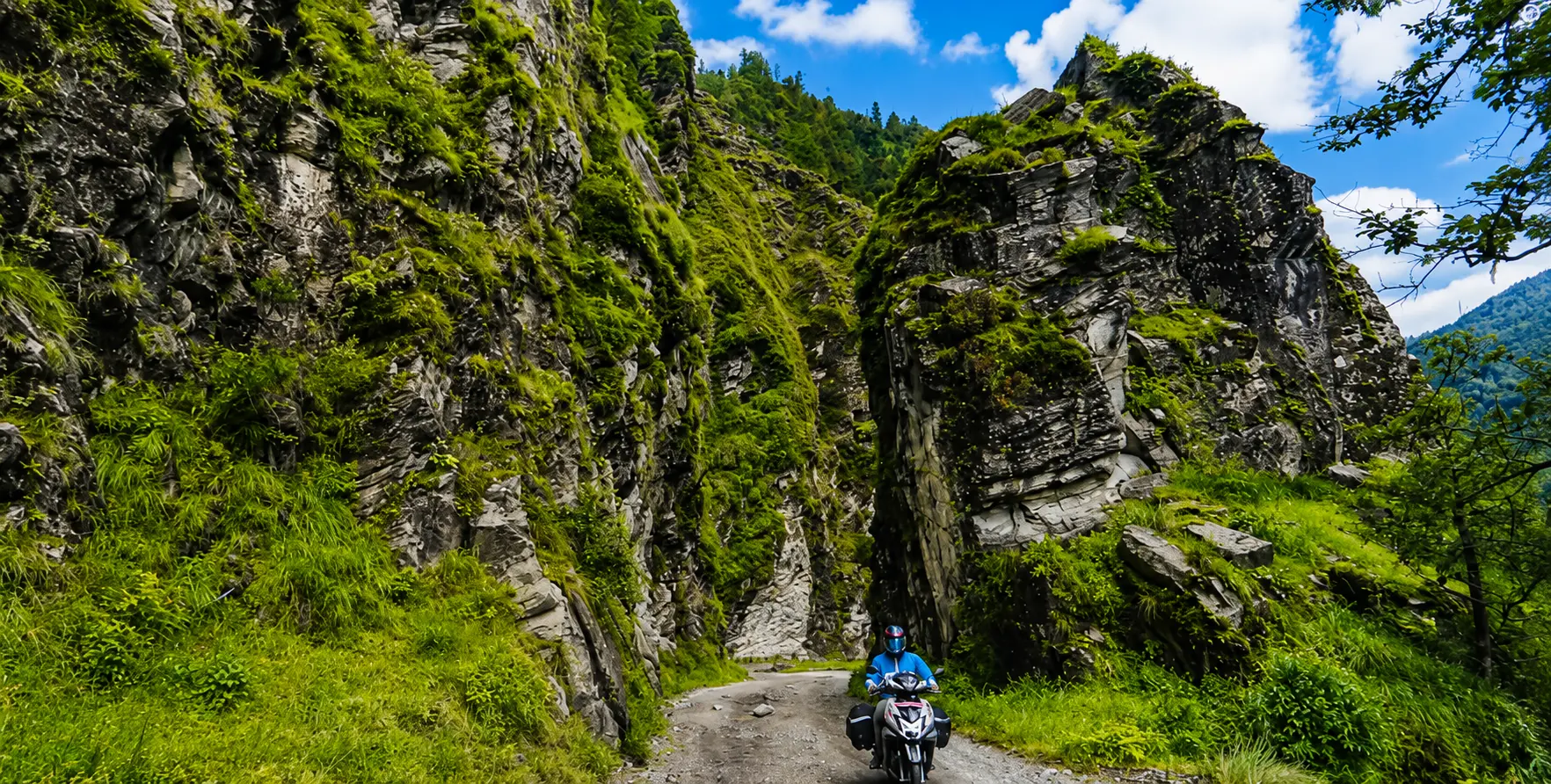
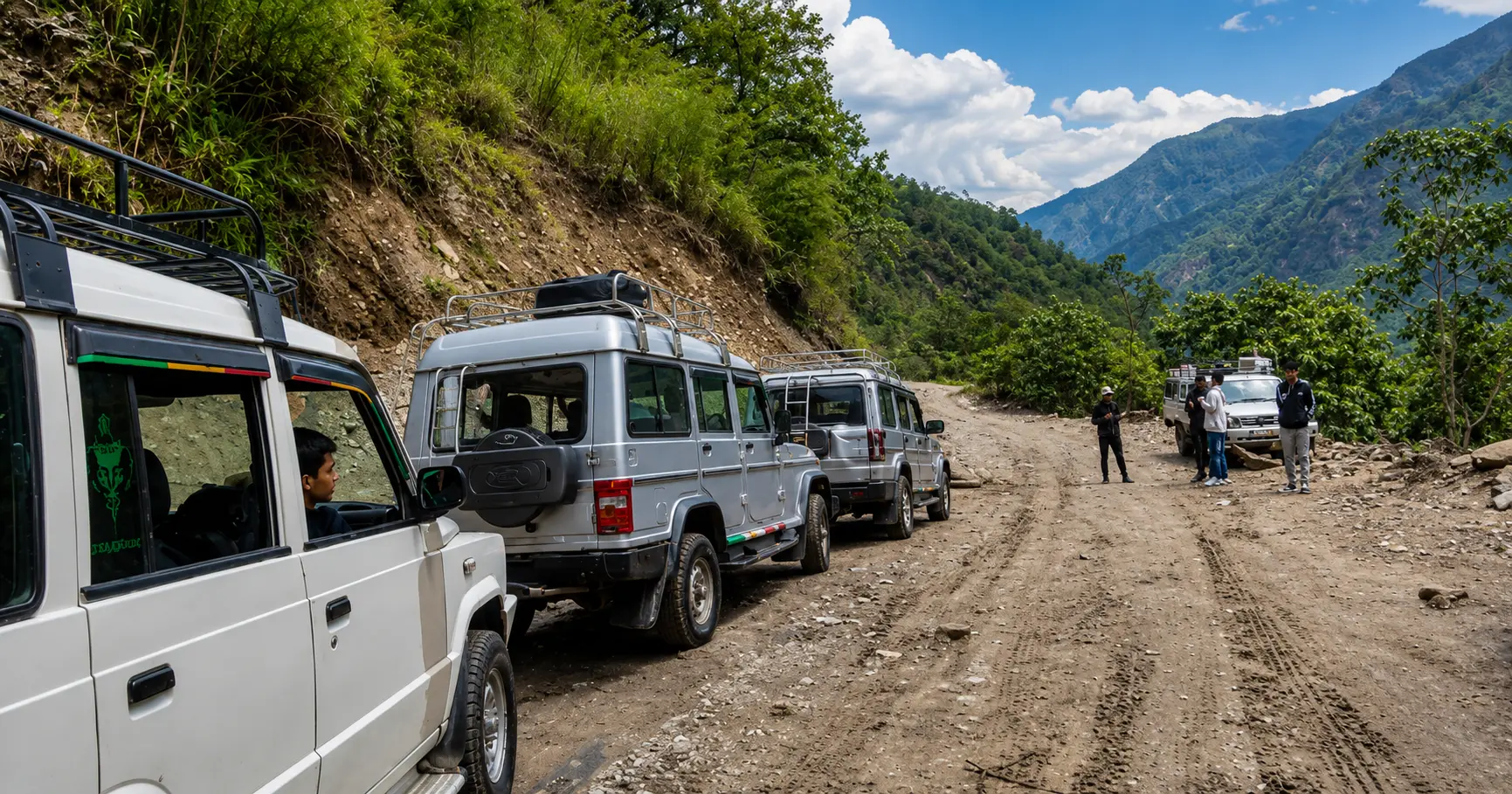
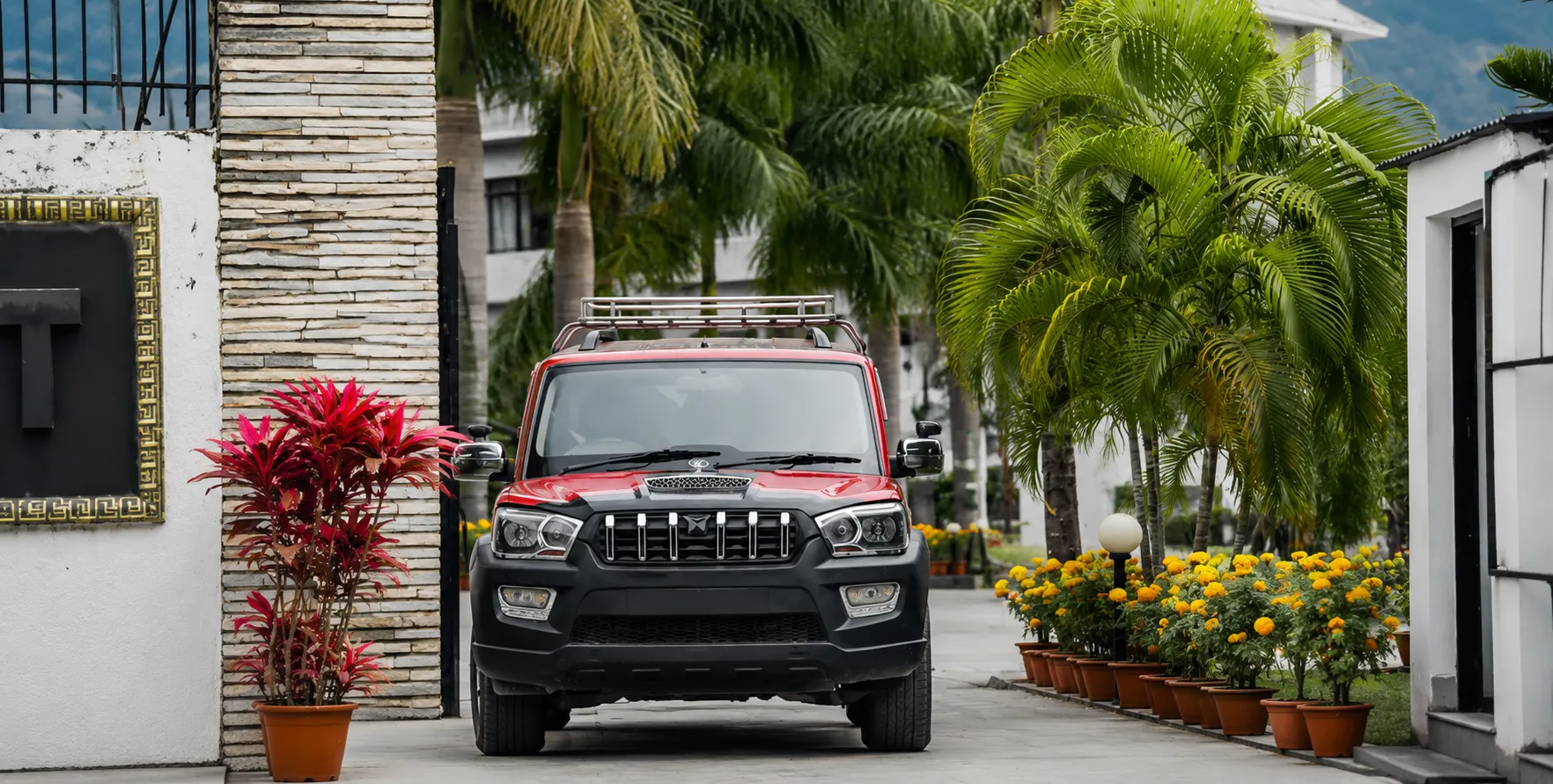
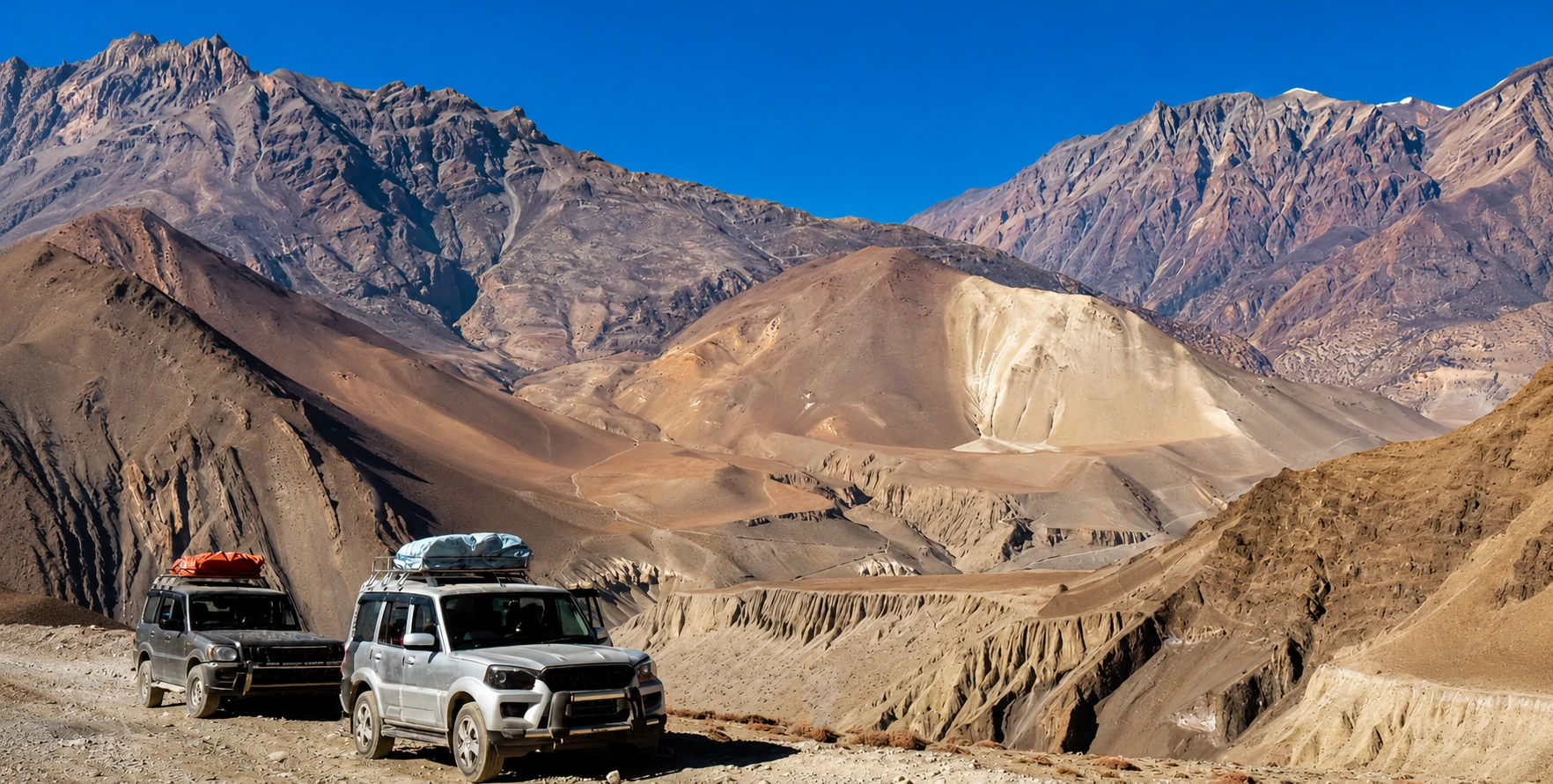
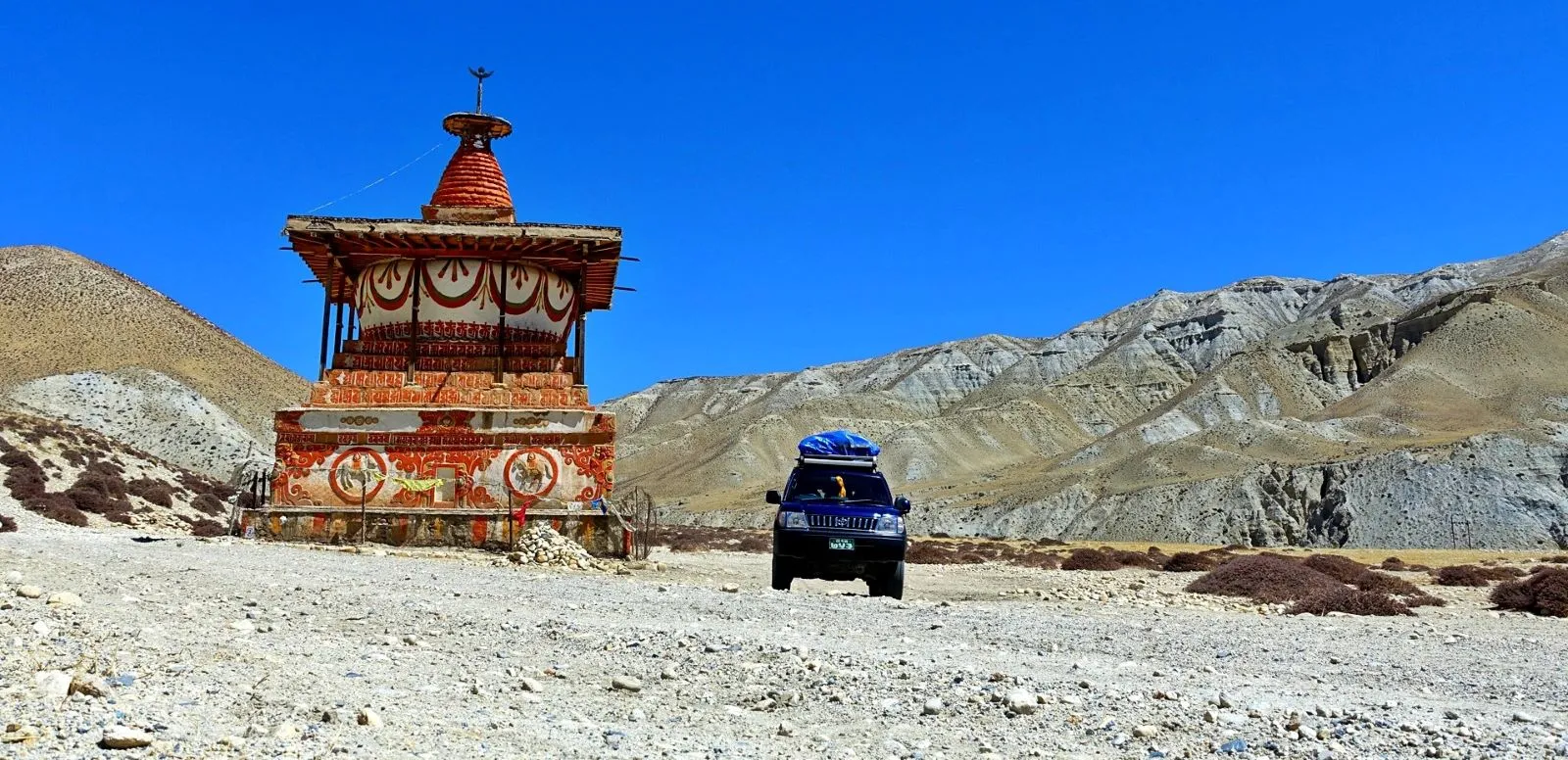
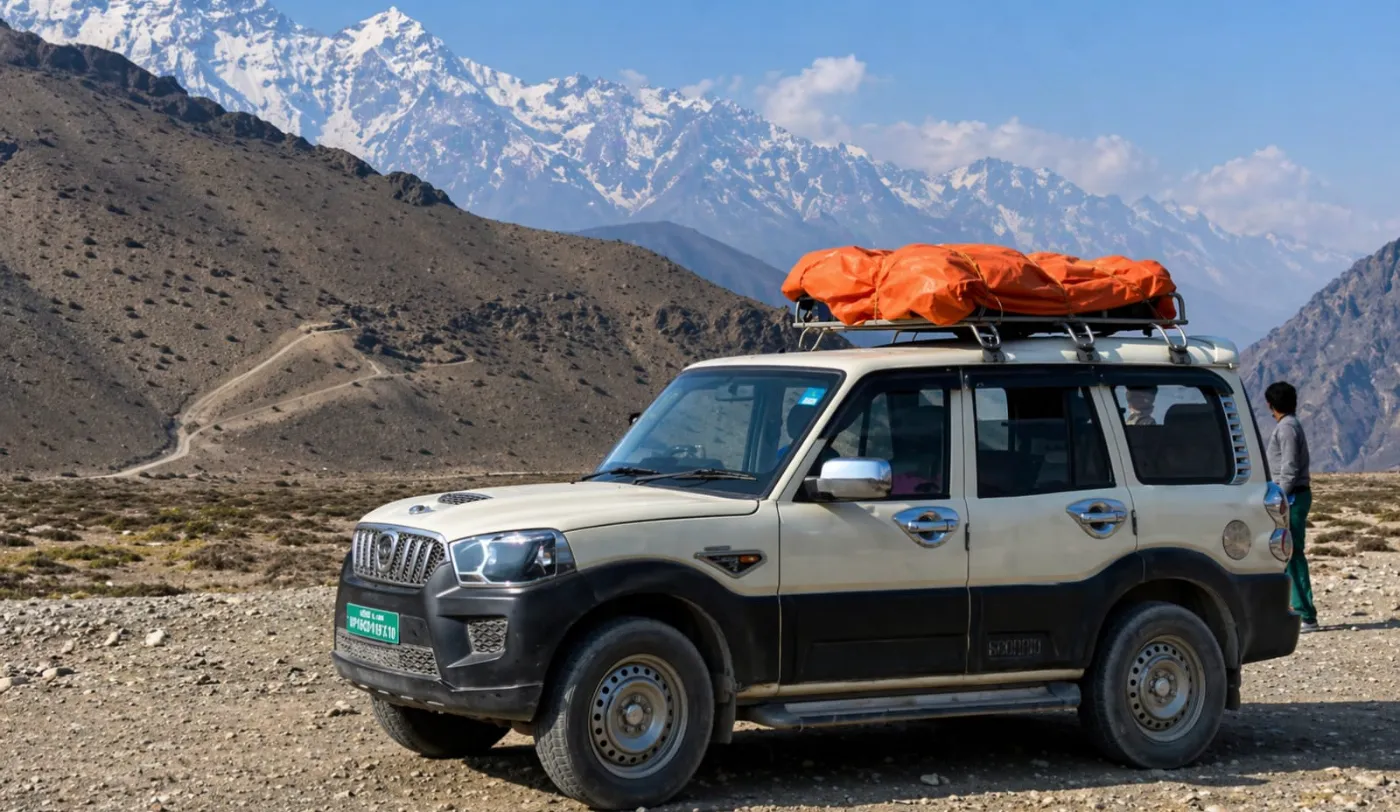
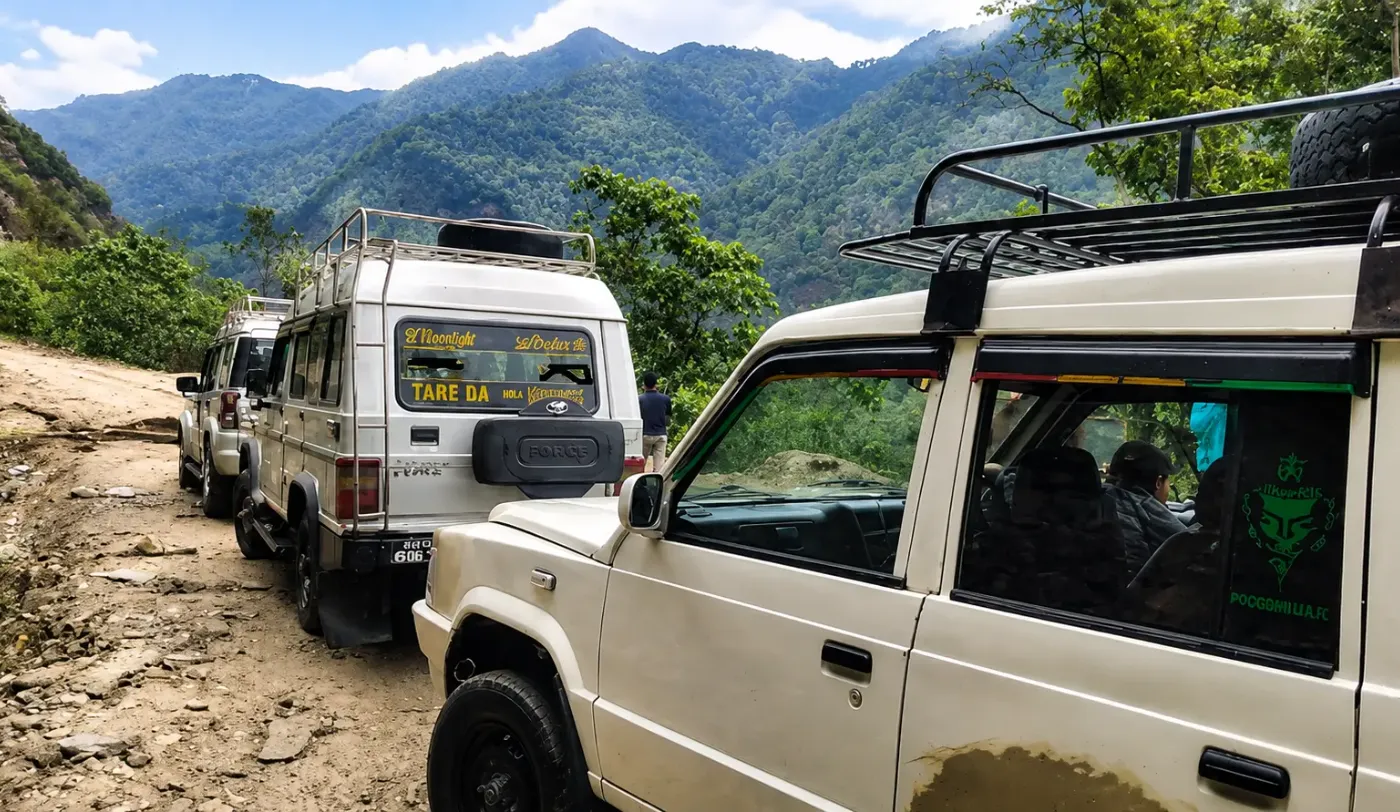
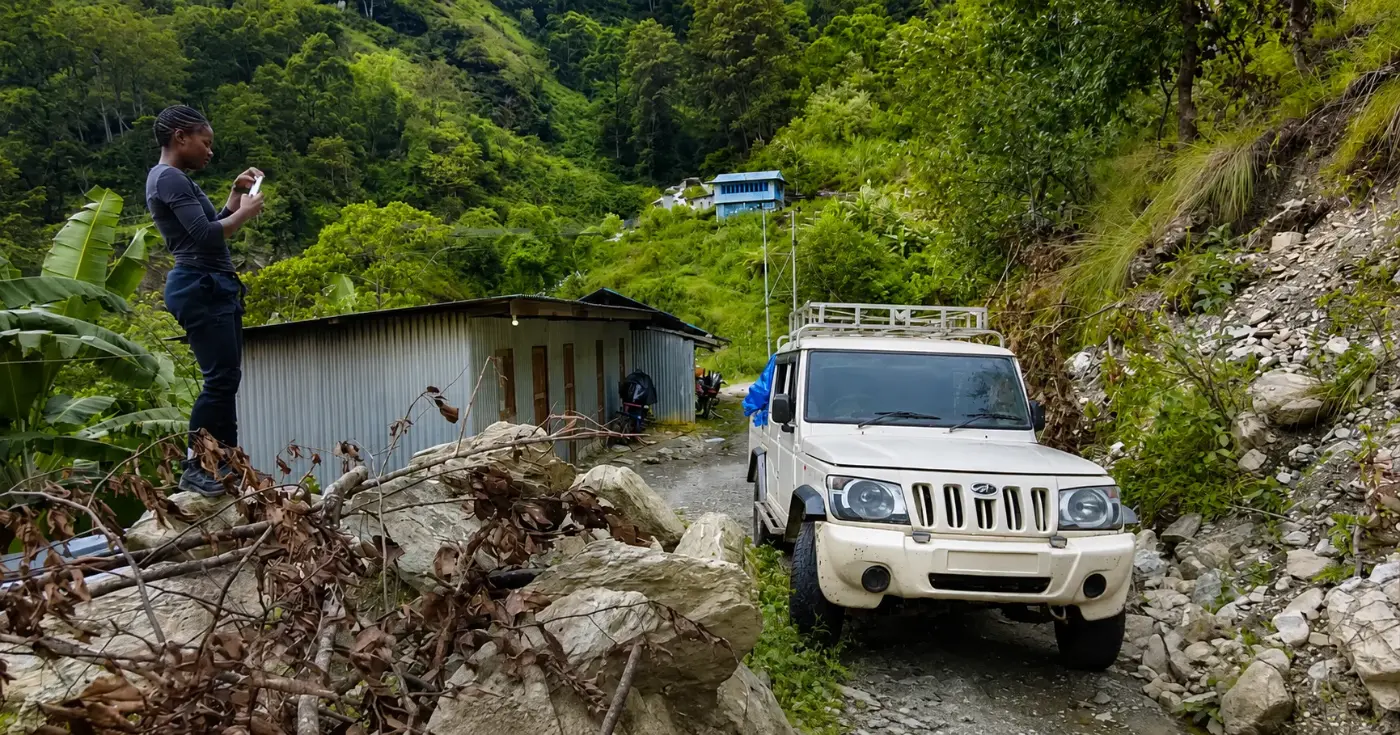
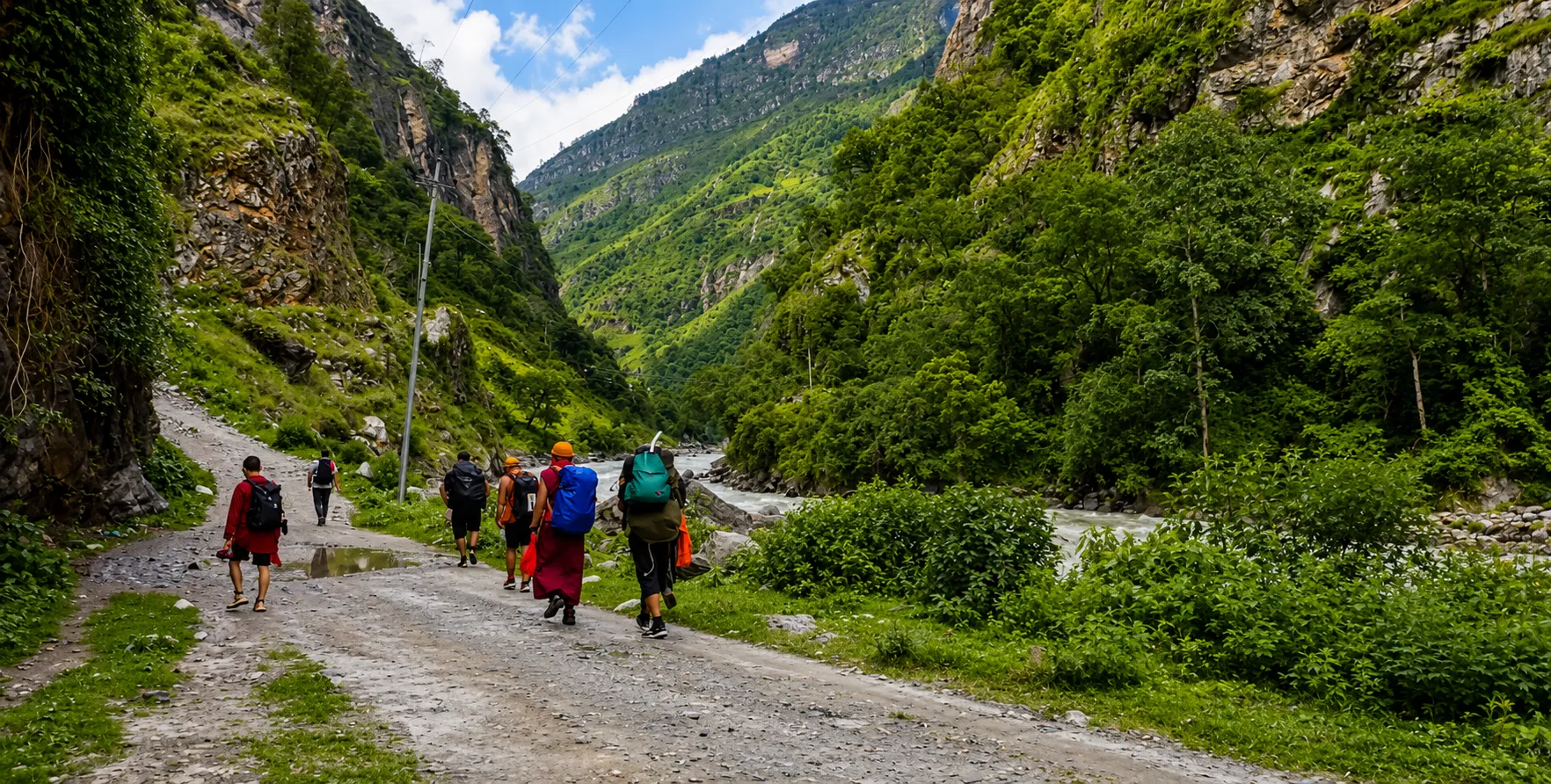
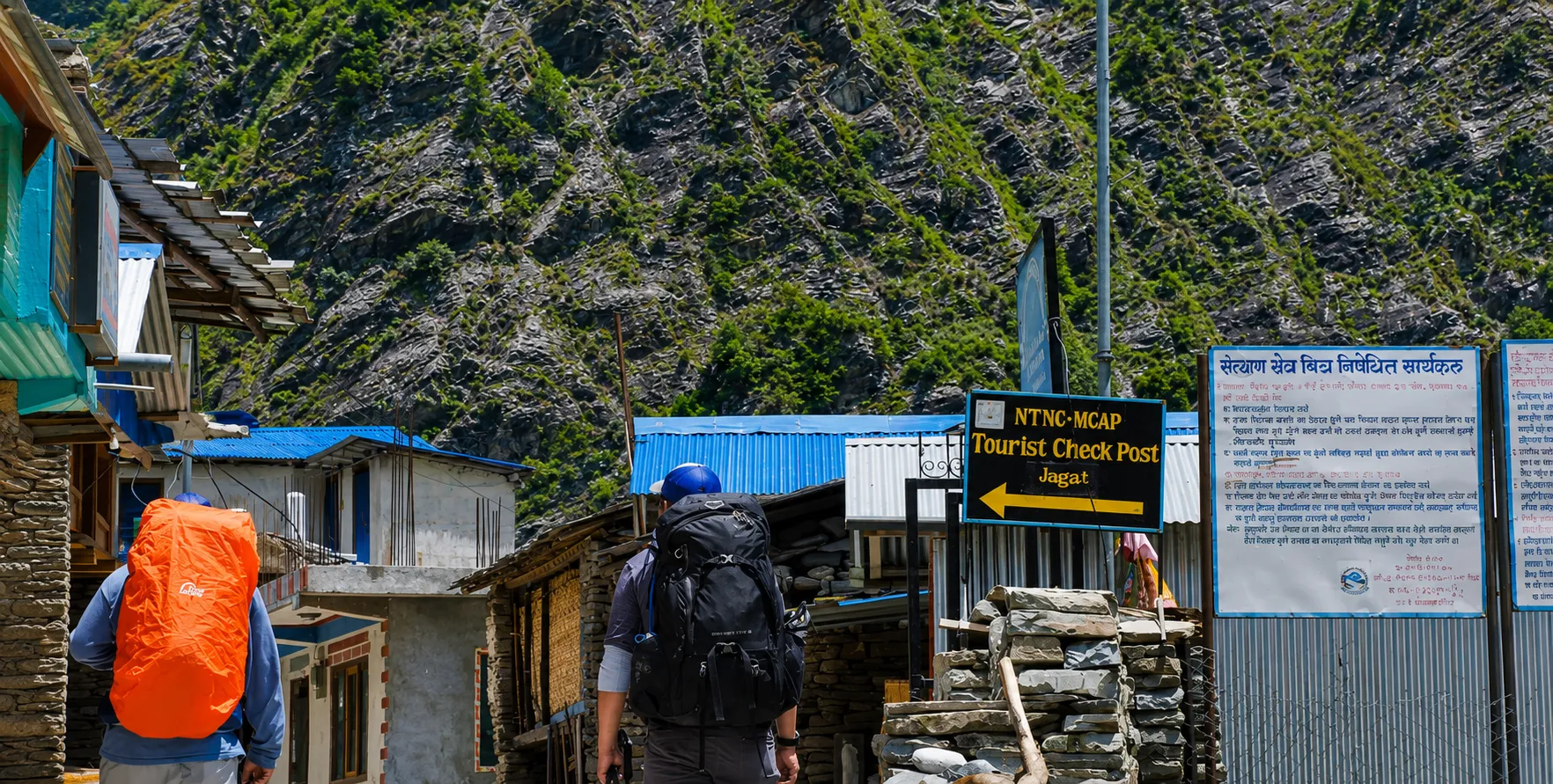
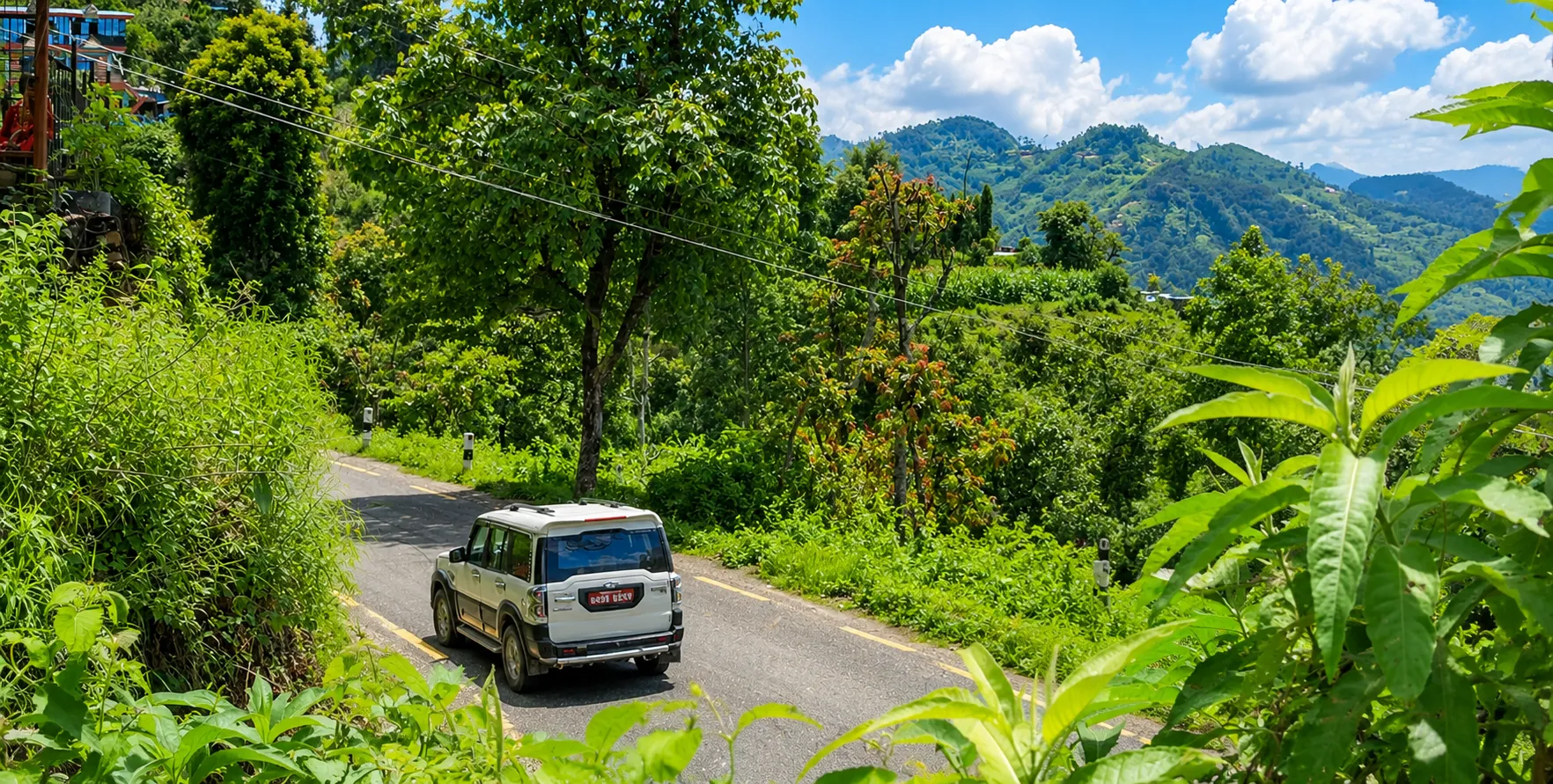
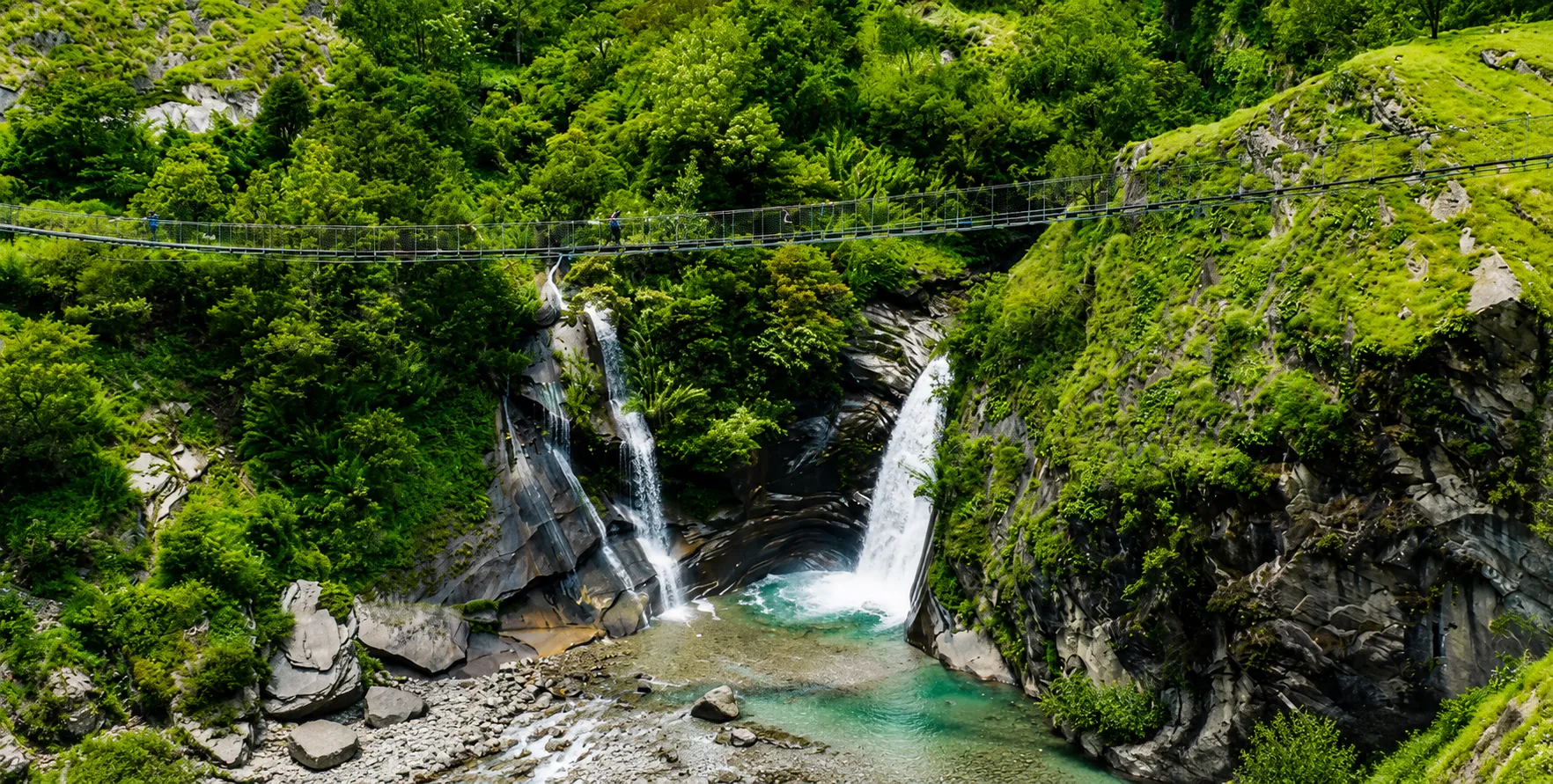
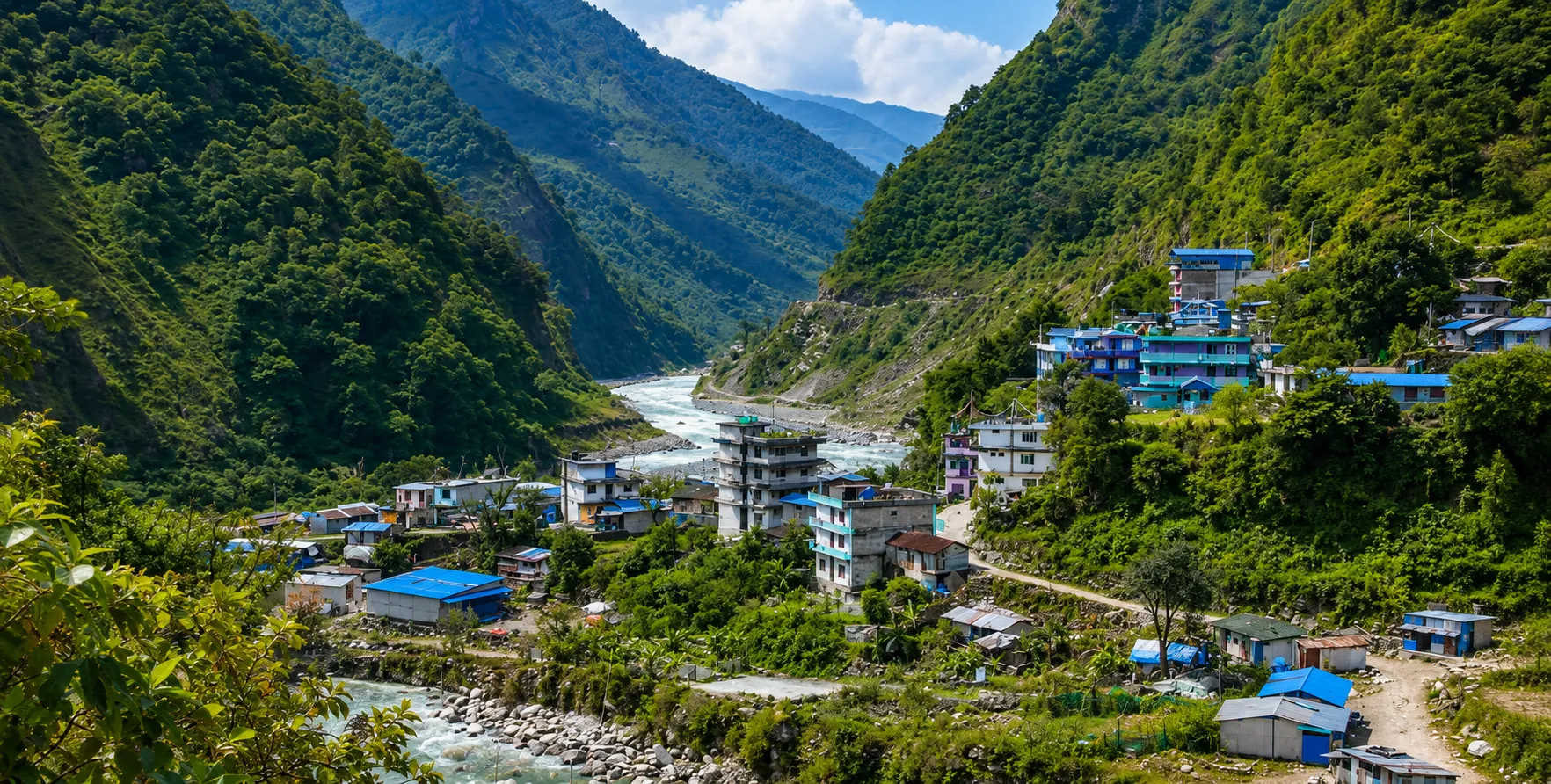
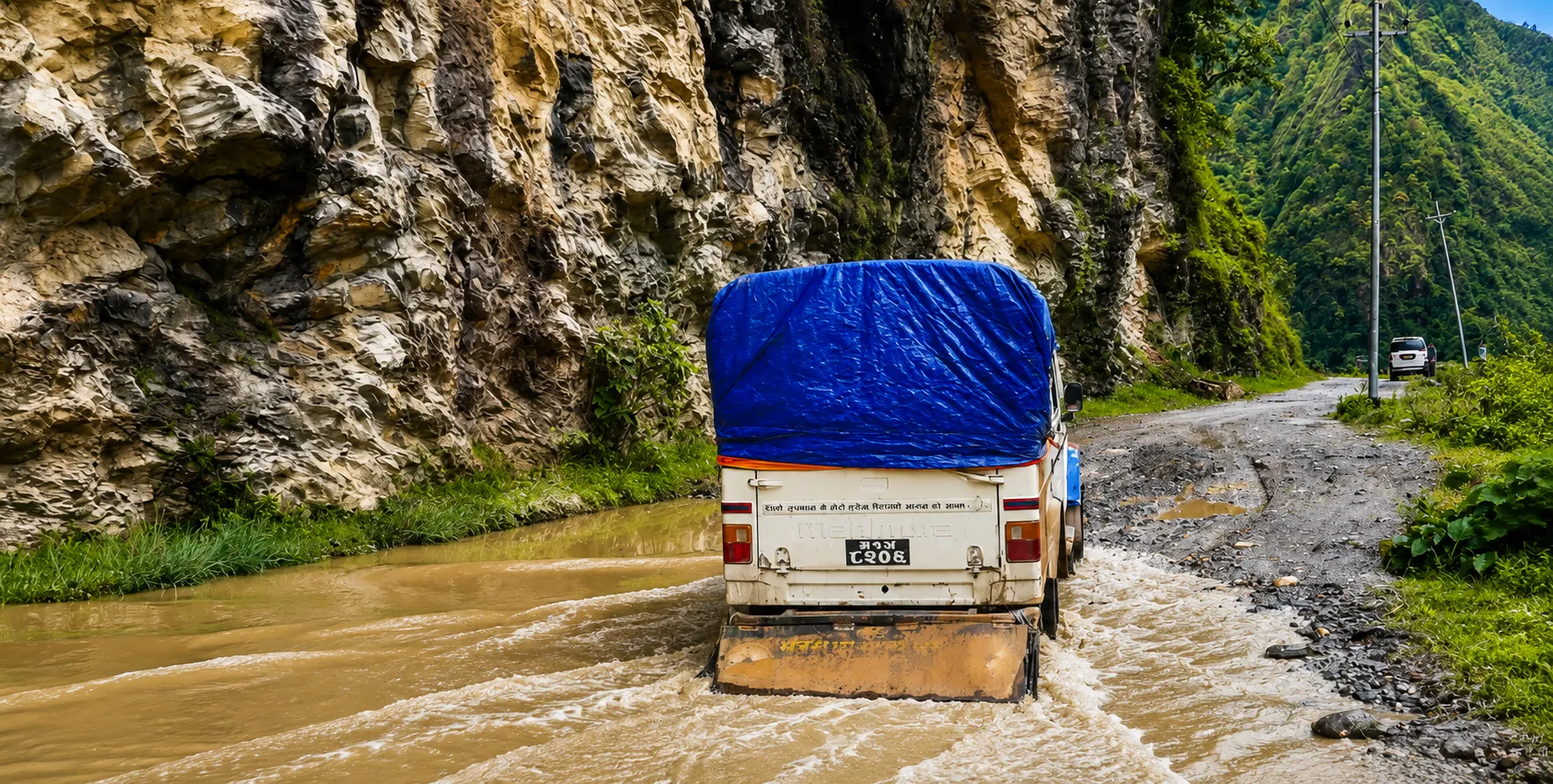
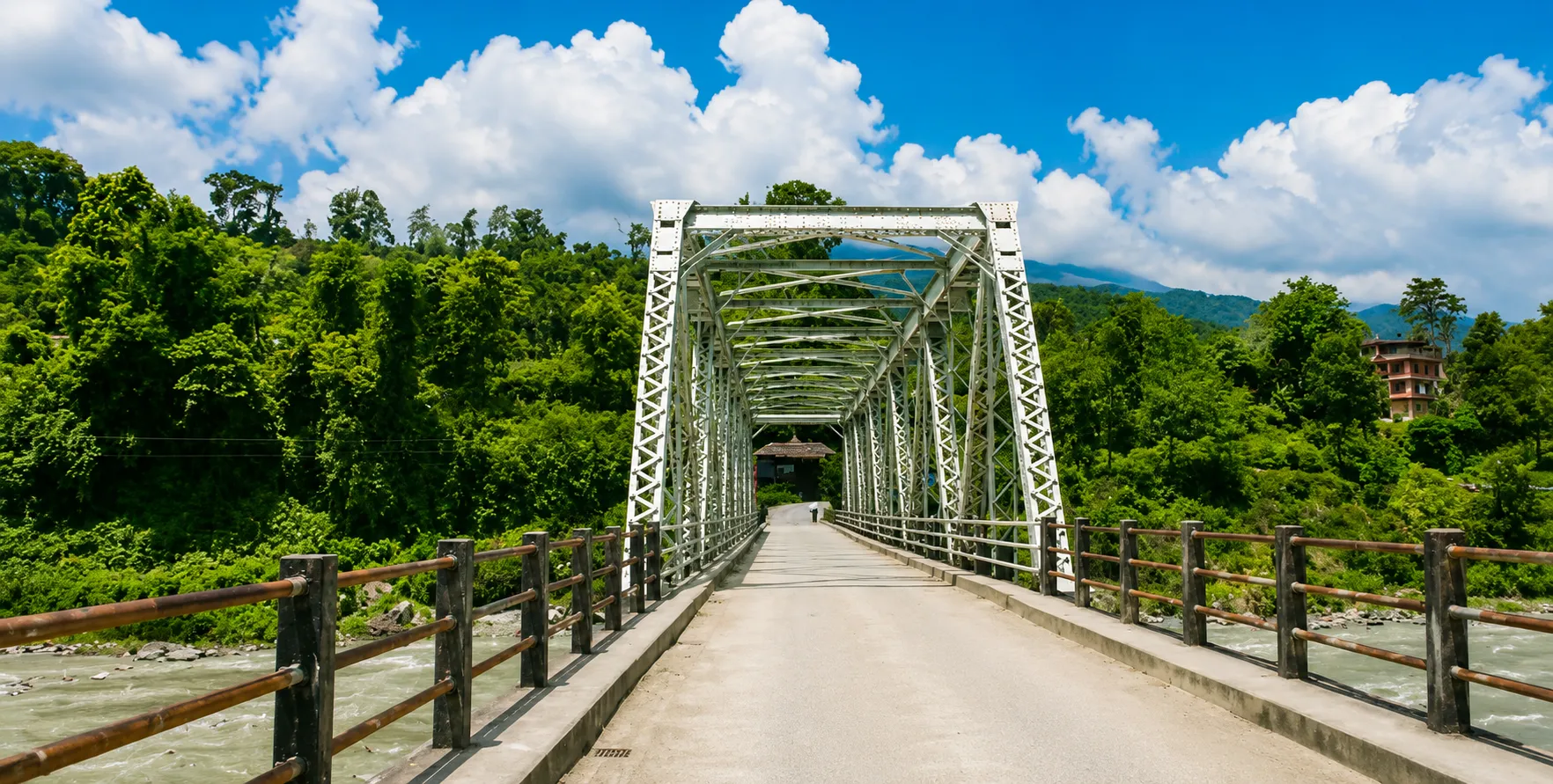
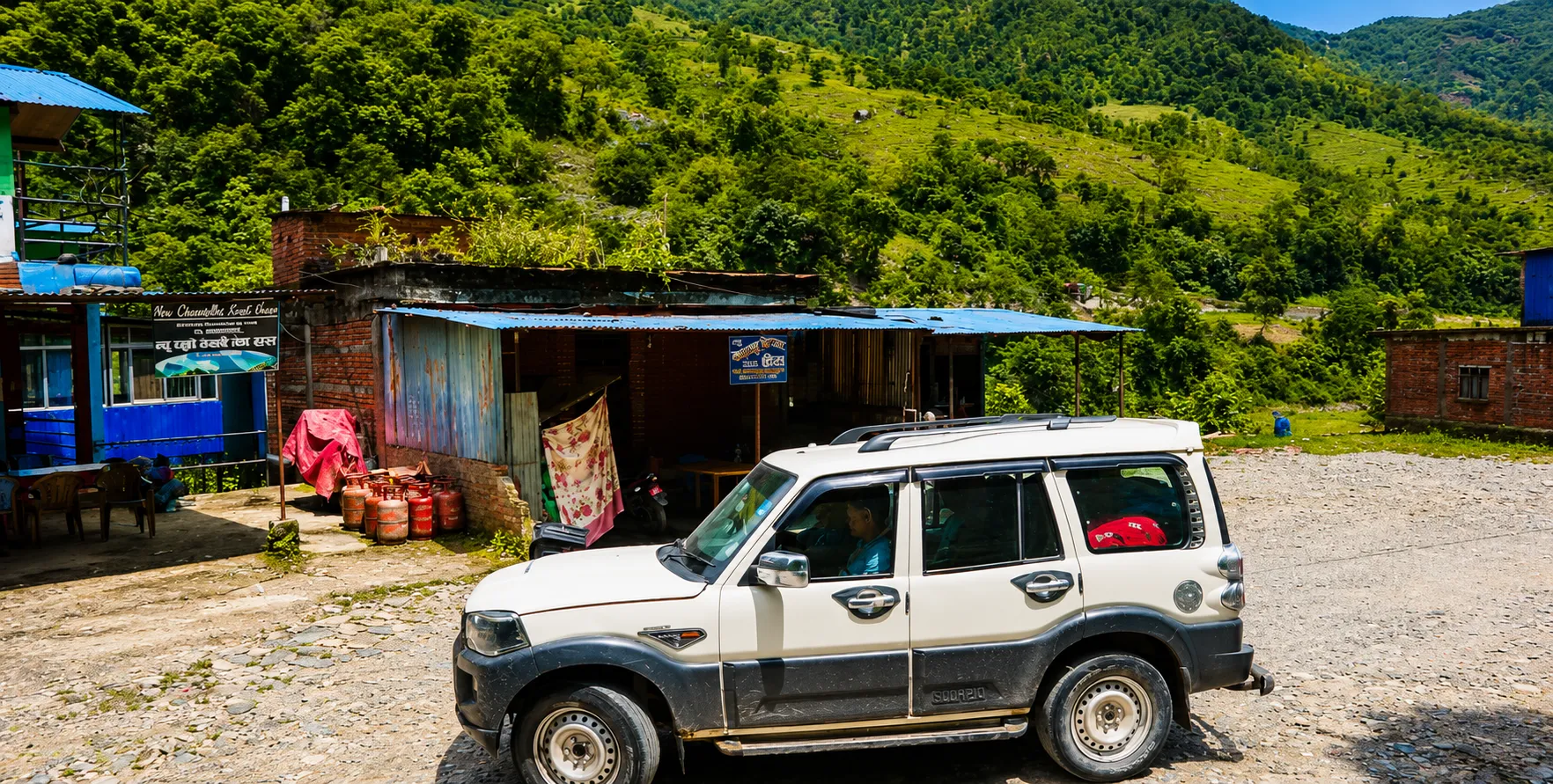
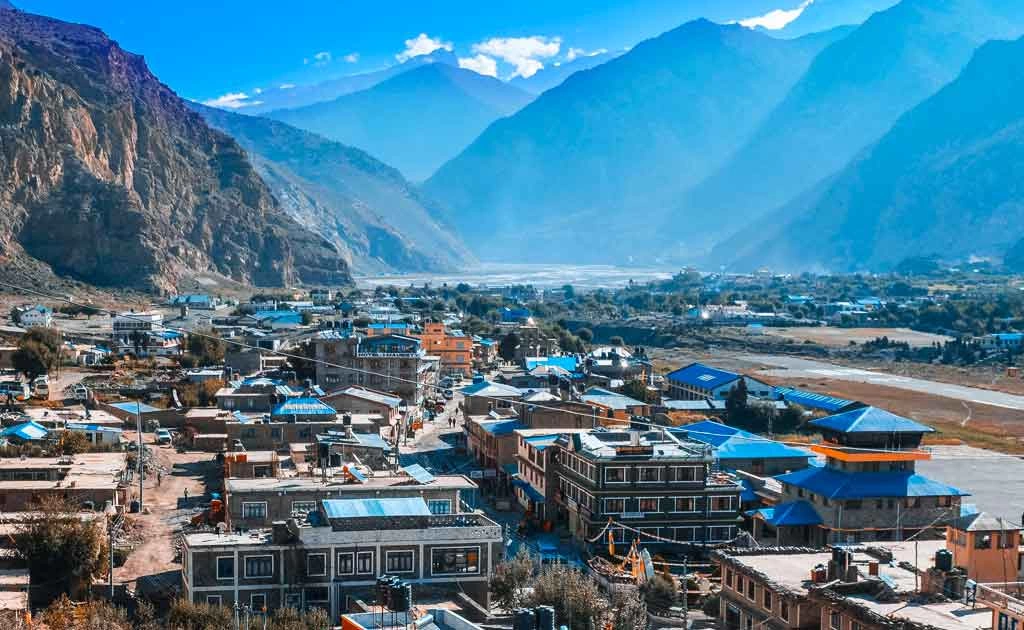
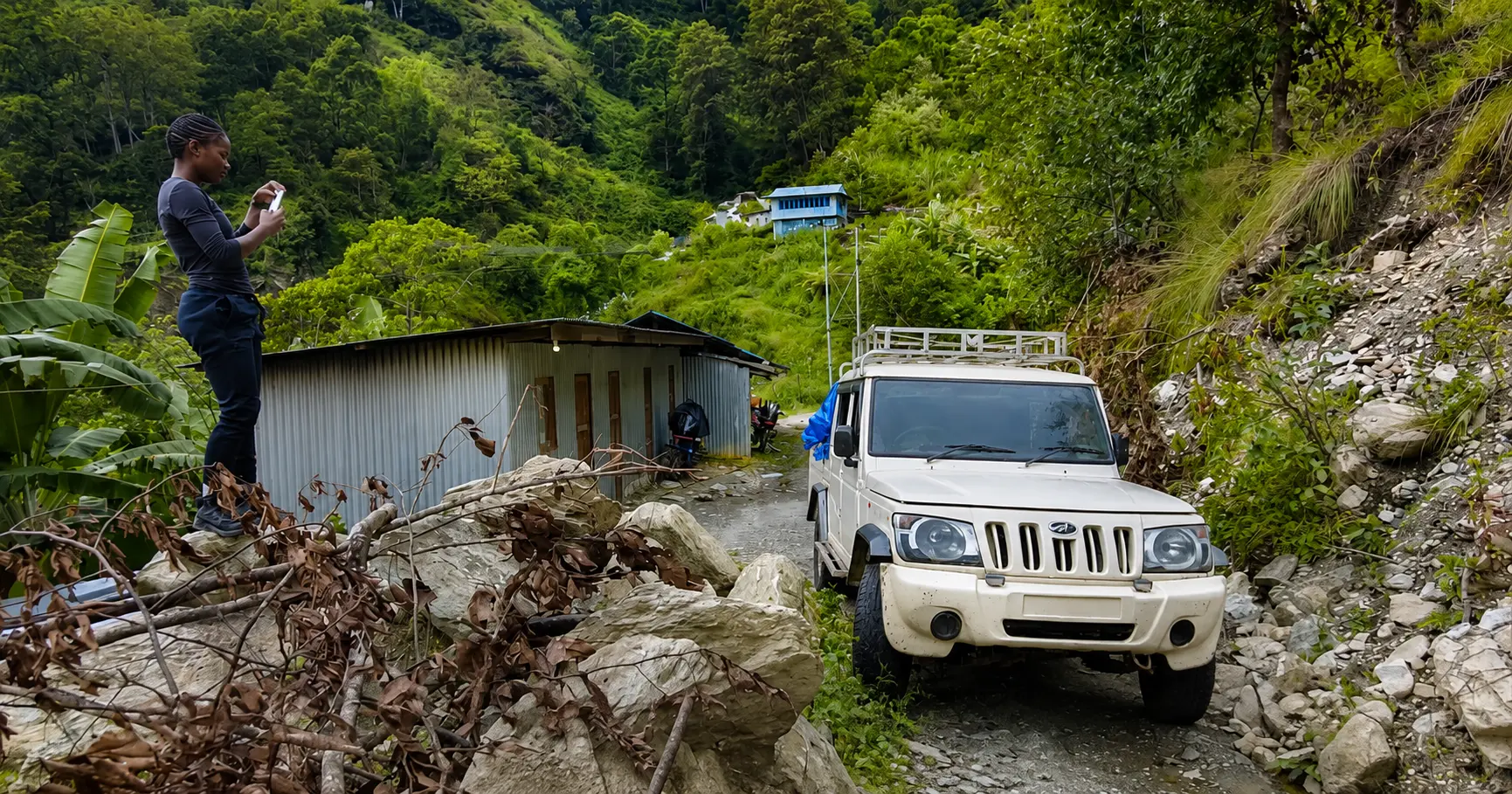
Private 4WD jeep traveling from Jomsom Airport to Muktinath Temple through the scenic Mustang mountain landscape

Jomsom Airport to Muktinath: Private Vehicle Options Compared

You’ve landed at Jomsom, the wind is already picking up over the valley, and the temple is still 20-odd kilometres and a 1,000-meter climb away. Choosing the right Jomsom Airport to Muktinath private vehicle isn’t just a comfort question—on this stretch, it genuinely shapes how the rest of your pilgrimage day unfolds.

This guide compares every real option available at Jomsom Airport: Scorpio jeep, car, Hiace van, and local bus, with honest guidance on which actually suits this route and which don’t.

This guide covers real distances, drive times, costs, schedules, and vehicle-by-vehicle honesty about what works on this short but demanding mountain stretch so that you can plan your Muktinath trip with confidence rather than guesswork at the airport.

Why Vehicle Choice Matters on This Specific Stretch

The Jomsom-Muktinath road covers only about 20 to 25 kilometres, but climbs from Jomsom’s roughly 2,700 meters to Ranipauwa’s approximately 3,710 meters in that short distance, on a road that mixes improved sections with genuinely rough, unpaved stretches. Unlike longer routes where a comfortable highway vehicle can handle most of the distance before switching to a jeep for a final rough section, this entire stretch is the rough section. There’s no easy paved lead-in to soften the vehicle-choice decision.

Our broader guide on why 4WD is best for Nepal explains this terrain logic in general terms, and our dedicated Jomsom to Muktinath jeep rental guide covers the jeep option specifically in depth. This article widens the lens to compare every vehicle type travellers actually consider for this leg.

It’s worth being upfront about why this comparison matters more here than on almost any other short route in Nepal: most travellers reaching Jomsom Airport have already invested considerable time and money getting there — a flight from Pokhara, permits, possibly days of prior travel — and the last thing anyone wants is for the final, shortest leg of the journey to become the least comfortable or most stressful part of the entire trip—getting this one decision right is disproportionately important, given how short the distance is.

Understanding Jomsom Airport Itself

Jomsom Airport is a small, single-runway facility known for its dramatic mountain setting and its equally dramatic wind-dependent flight schedule. Flights operate almost exclusively in the early morning, before winds strengthen enough to make the short runway genuinely risky for landing and takeoff.

This means your vehicle transfer to Muktinath will almost always begin in the morning, regardless of which option you choose, which works in your favour given the same wind pattern that governs the road itself.

It’s worth building a small buffer into your plans around the airport experience — luggage collection can take time, and if you haven’t pre-arranged ground transport, locating and confirming a vehicle on arrival adds further delay before you’re actually on the road. Many travellers underestimate this small but real buffer, arriving with plans that assume an immediate, frictionless transition from plane to vehicle.

Ranipauwa vs Muktinath: Where the Road Actually Ends

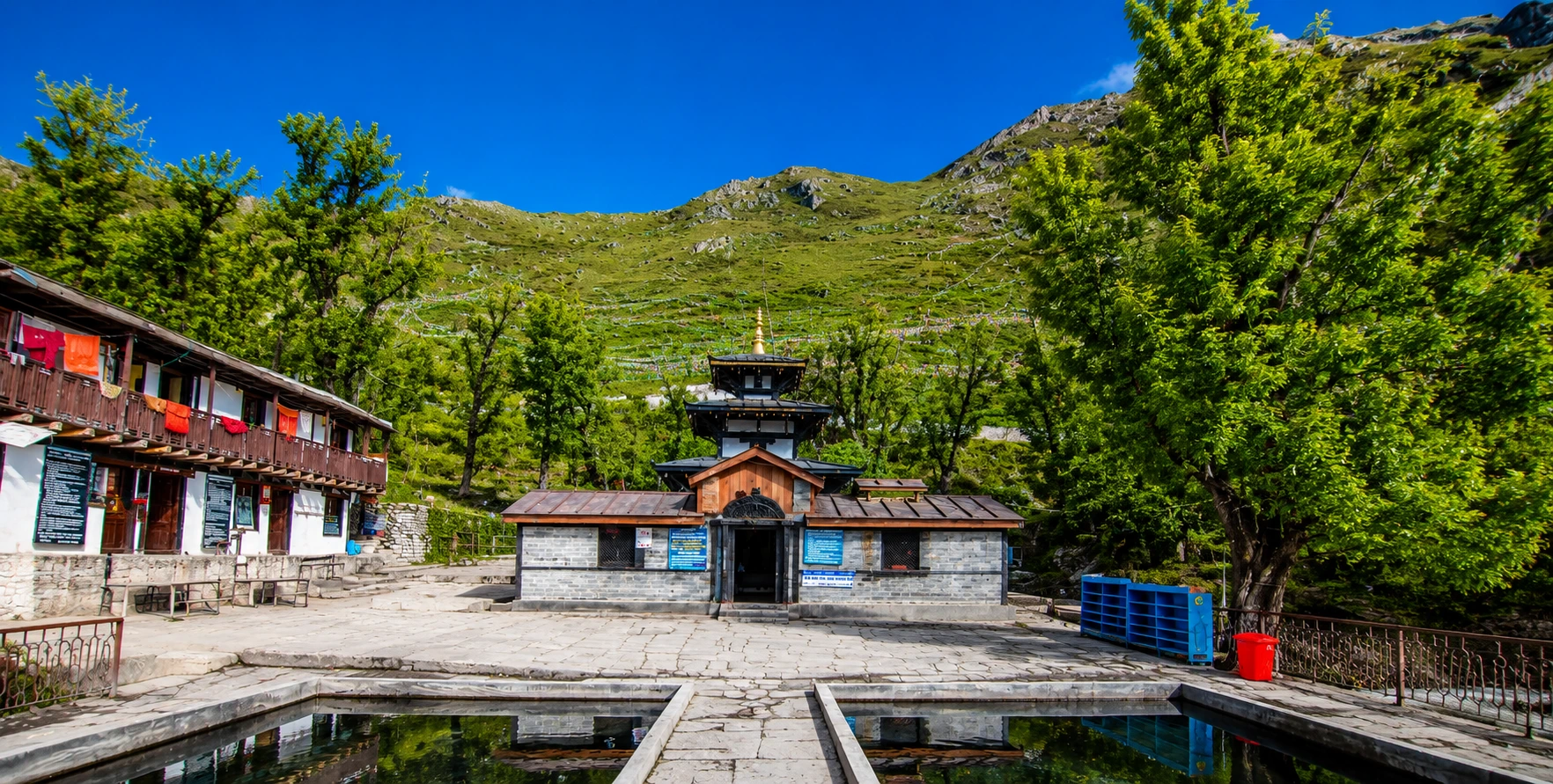
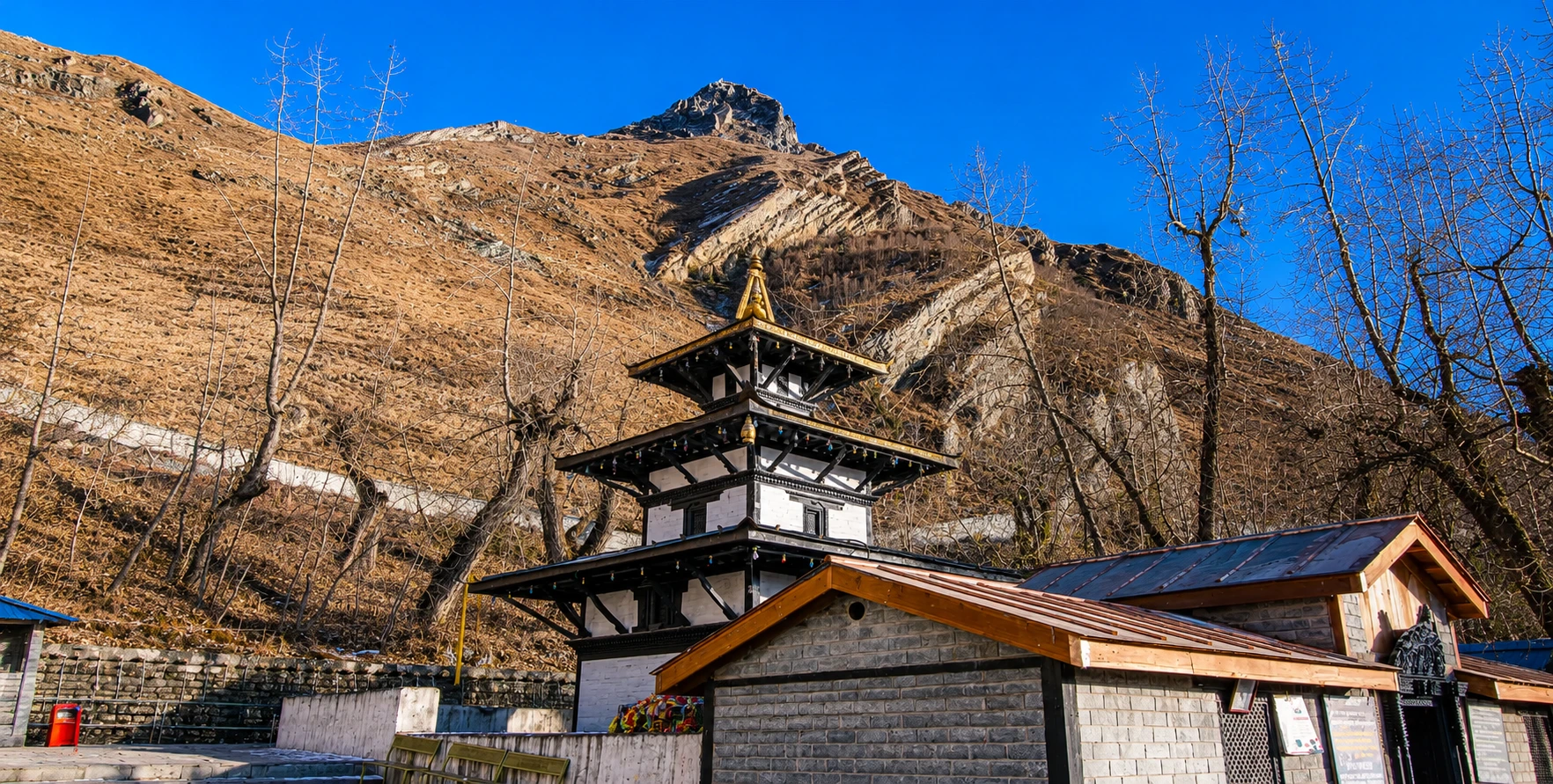
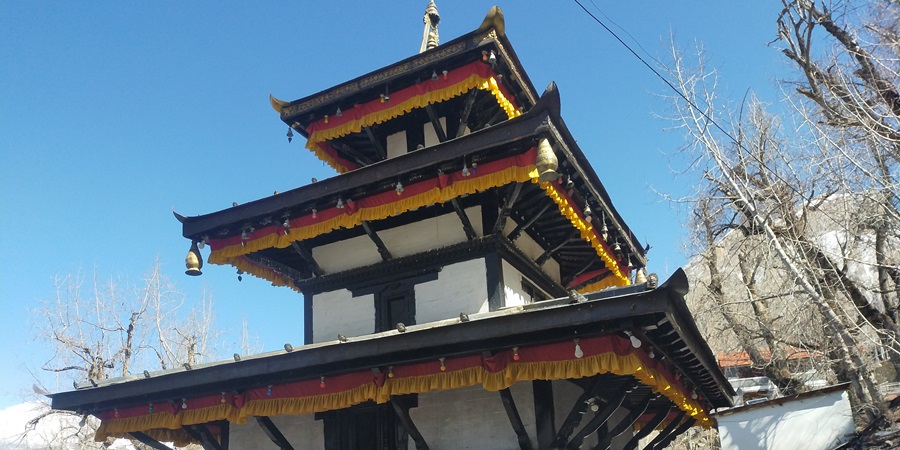
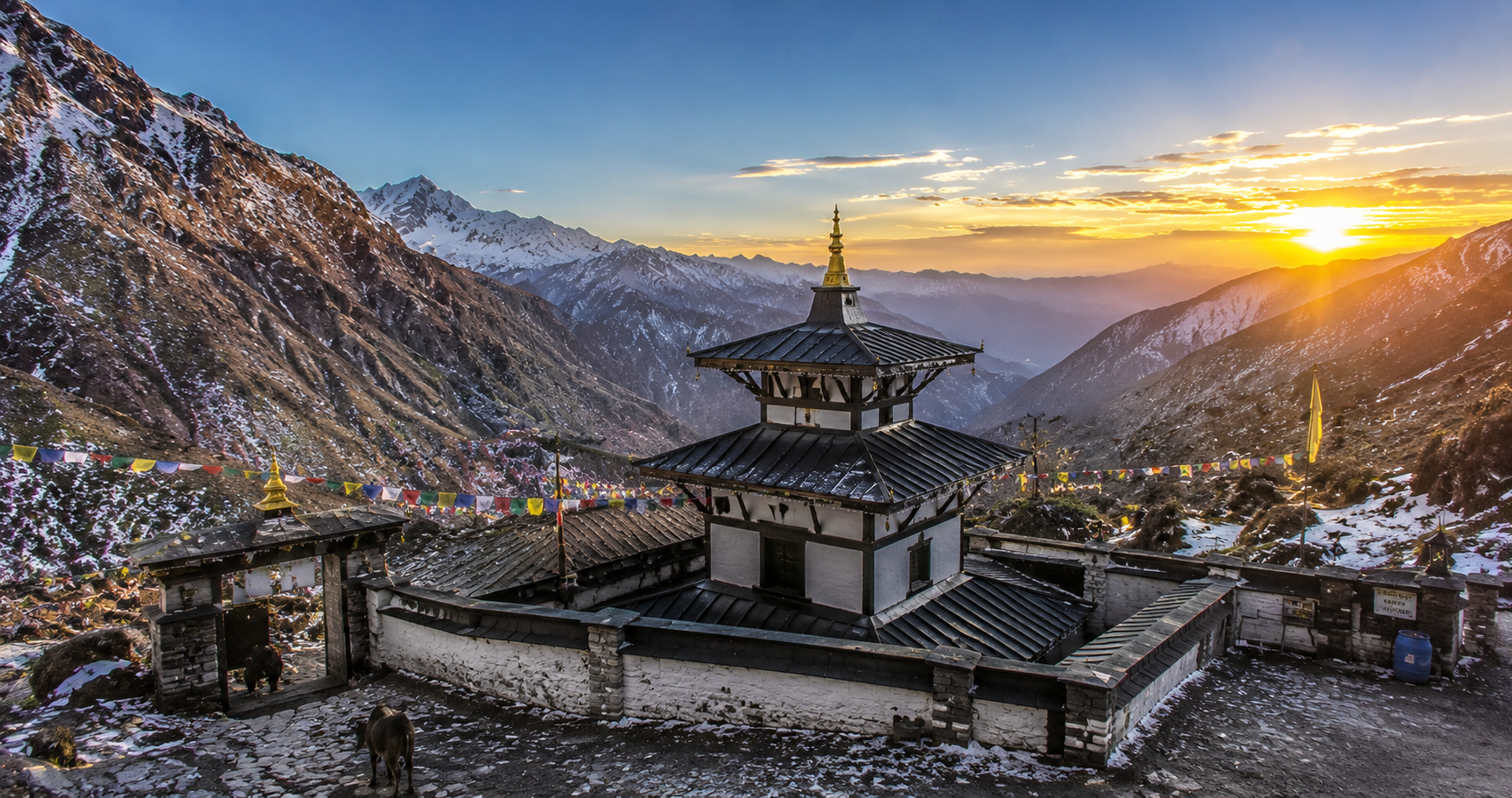
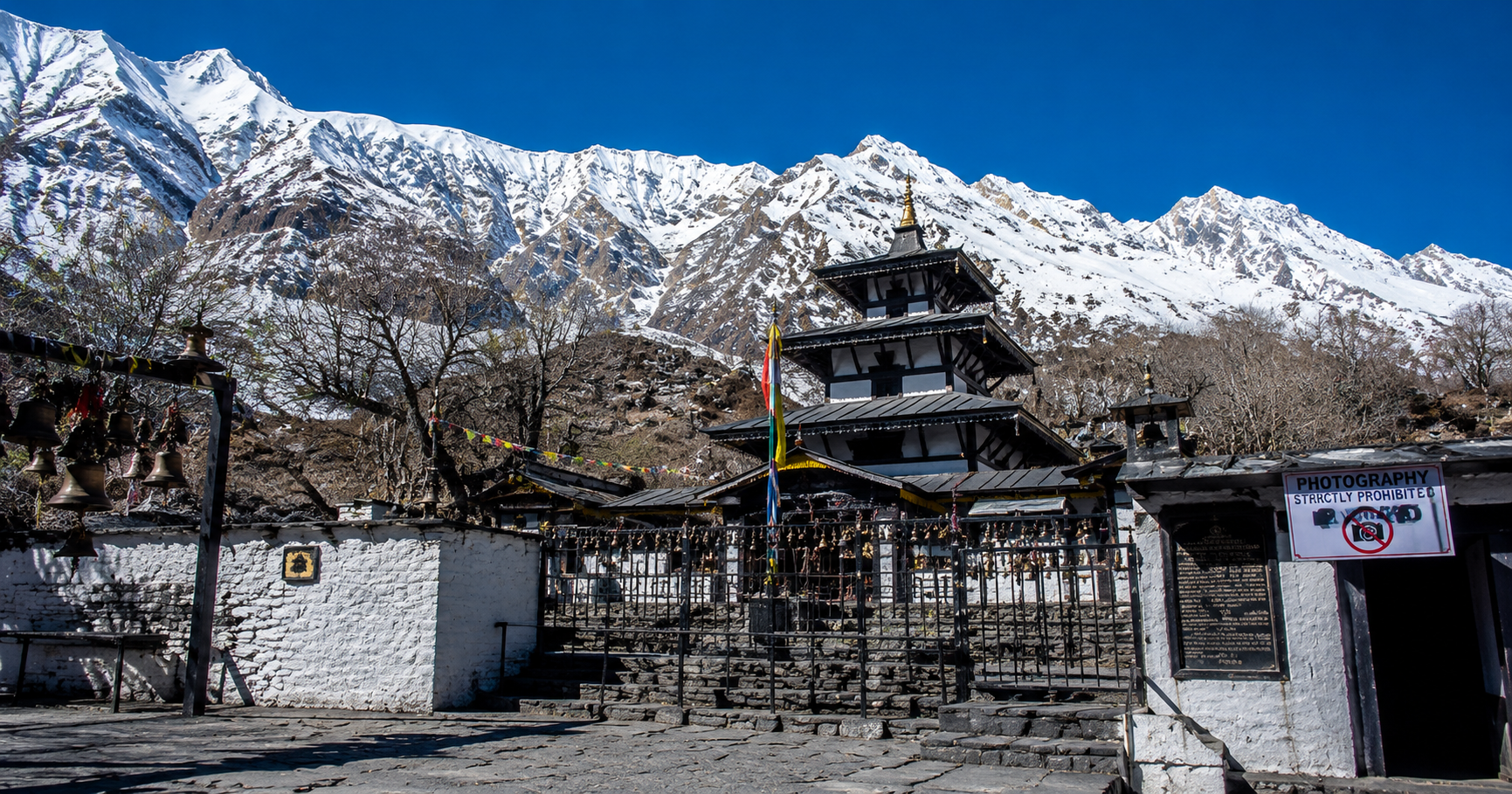
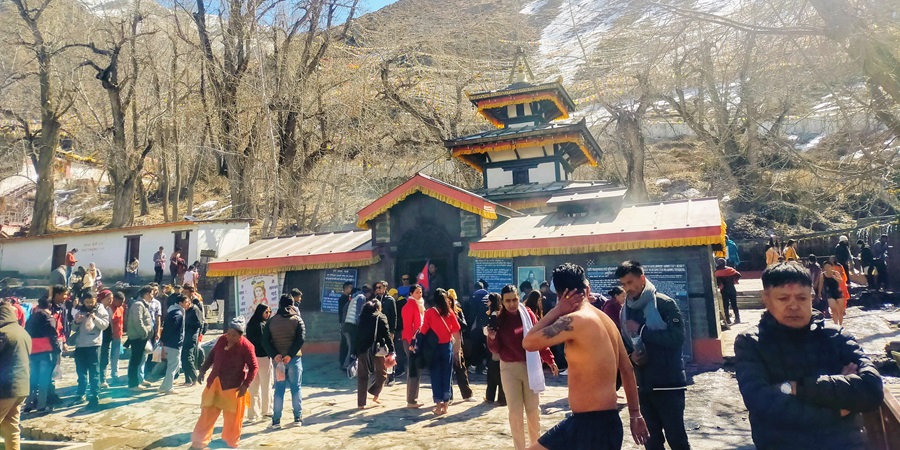
A small but genuinely useful detail: your vehicle, whichever type you choose, will drop you at Ranipauwa, the village just below the temple, not at Muktinath Temple itself. From Ranipauwa, a short uphill walk of roughly 15 to 20 minutes covers the remaining distance to the temple complex.

This isn’t a significant extra burden for most travellers, but it’s worth knowing in advance so you don’t expect your vehicle to take you directly to the temple gates.

Understanding the Route: Distance, Altitude, and Road Character

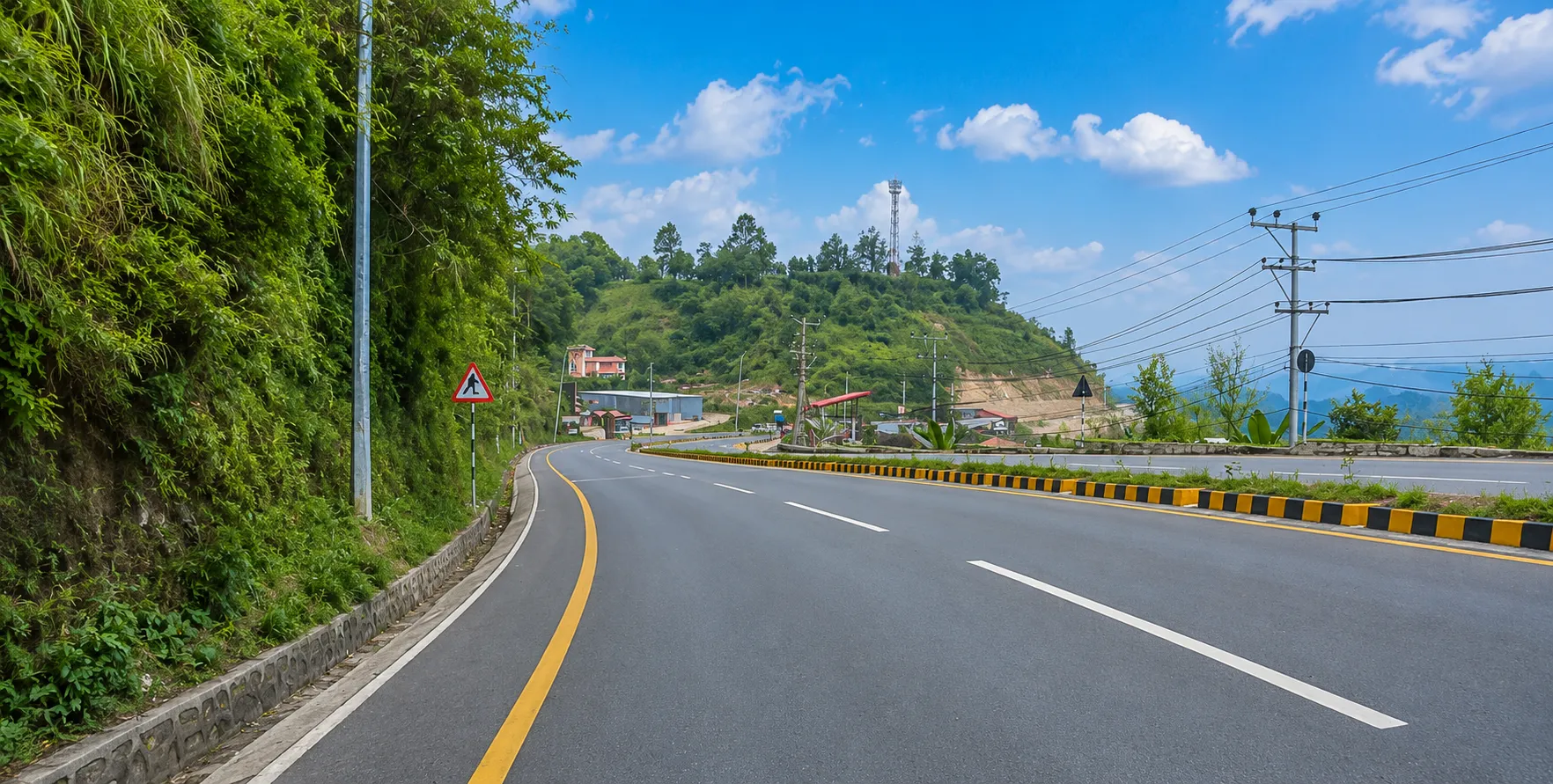
The drive from Jomsom Airport to Muktinath (technically to Ranipauwa, the village just below the temple, where the road ends) covers roughly 20 to 25 kilometres, climbing over 1,000 meters in the process. The road passes through Kagbeni, Jharkot, and Khingar, mixing recently improved sections with older, rougher gravel stretches, particularly closer to Ranipauwa.

Afternoon winds in the Kali Gandaki valley are a near-daily feature, so vehicle choice and departure timing matter more here than on most short Nepal drives.

This valley helps make the Kali Gandaki Gorge one of the deepest gorges on earth, and the road sits exposed along the valley floor and lower slopes, with little natural wind shelter for most of the drive. This geography is precisely why the afternoon wind pattern is so consistent and predictable — cool air funnels up from the lowlands as the day warms, intensifying through the afternoon before easing again toward evening.

Traveller Type Deep Dive: Pilgrims

Hindu and Buddhist pilgrims visiting Muktinath specifically for darshan or religious observance often prioritise timely arrival over cost savings, particularly older pilgrims or those travelling with family for a significant religious occasion. A private jeep, booked in advance so it’s waiting at the airport, removes uncertainty at the point in the trip where it feels most unwelcome—after a flight, before a meaningful temple visit.

Traveller Type Deep Dive: Trekkers

Trekkers using Jomsom as an entry or exit point for the wider Annapurna Circuit or Upper Mustang region often have more schedule flexibility and a higher tolerance for basic transport, making the local bus or shared jeep a genuinely reasonable choice, especially if budget matters more over a longer overall trip. That said, trekkers on a tight itinerary—say, needing to catch a specific Jomsom-Pokhara flight the same day—often find the private jeep’s schedule certainty worth the extra cost.

Traveller Type Deep Dive: Photographers and Casual Tourists

Travellers primarily visiting for the scenery, photography, or to see Muktinath as part of a broader Nepal trip often value the private jeep’s flexibility to stop along the way more than any other traveller type covered in this guide, since the ability to pause at Kagbeni or a particularly striking viewpoint genuinely enhances the experience in a way a fixed-schedule bus cannot accommodate.
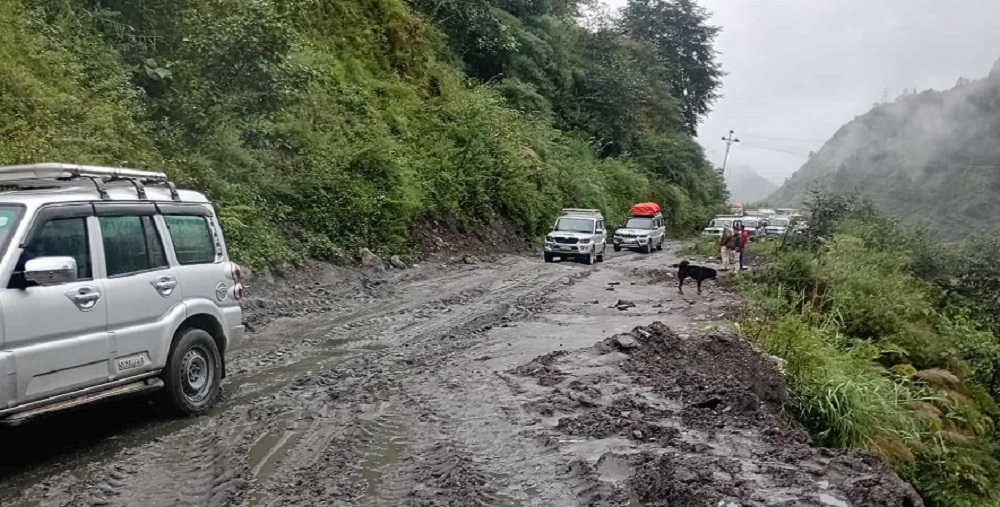
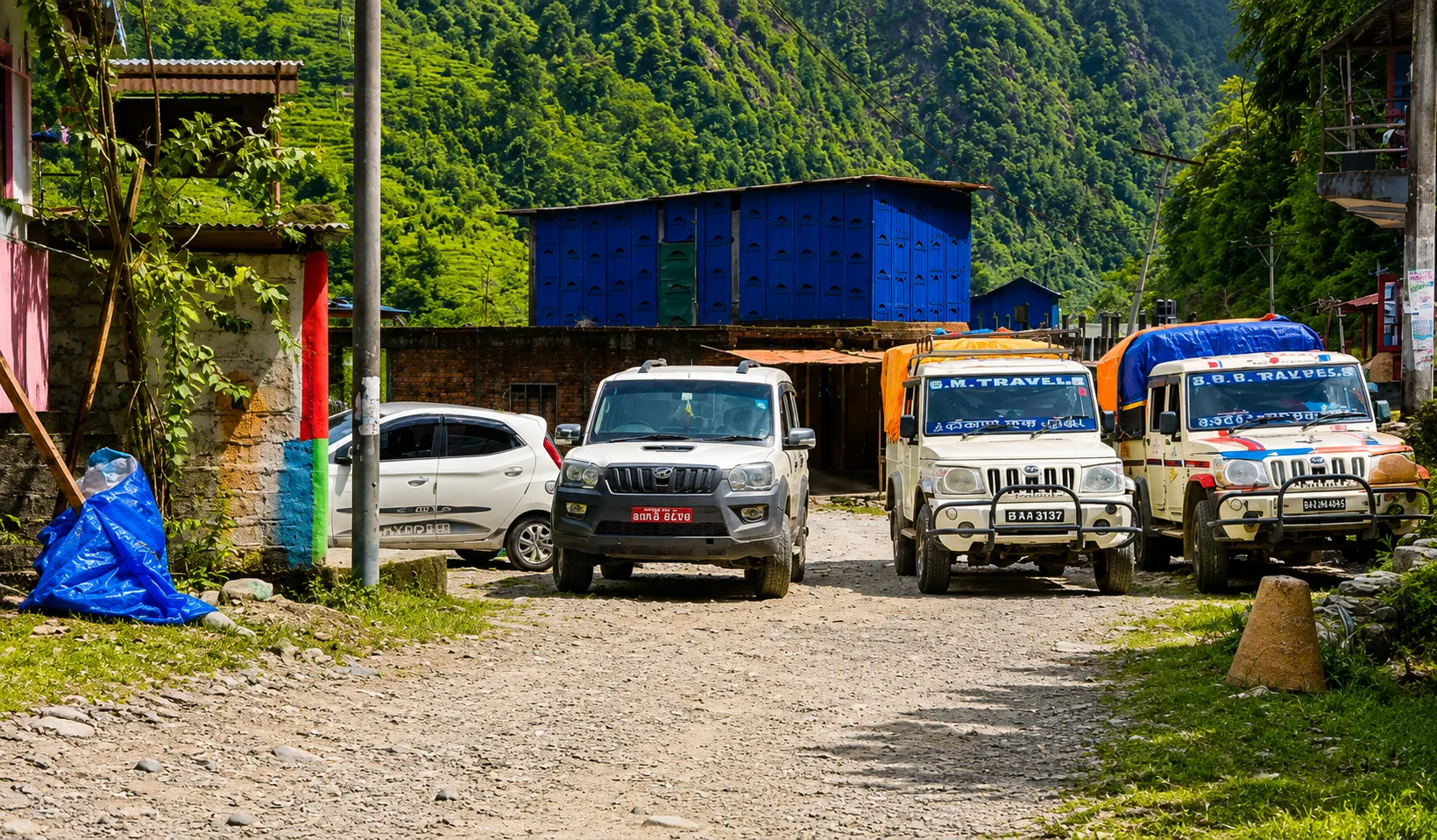
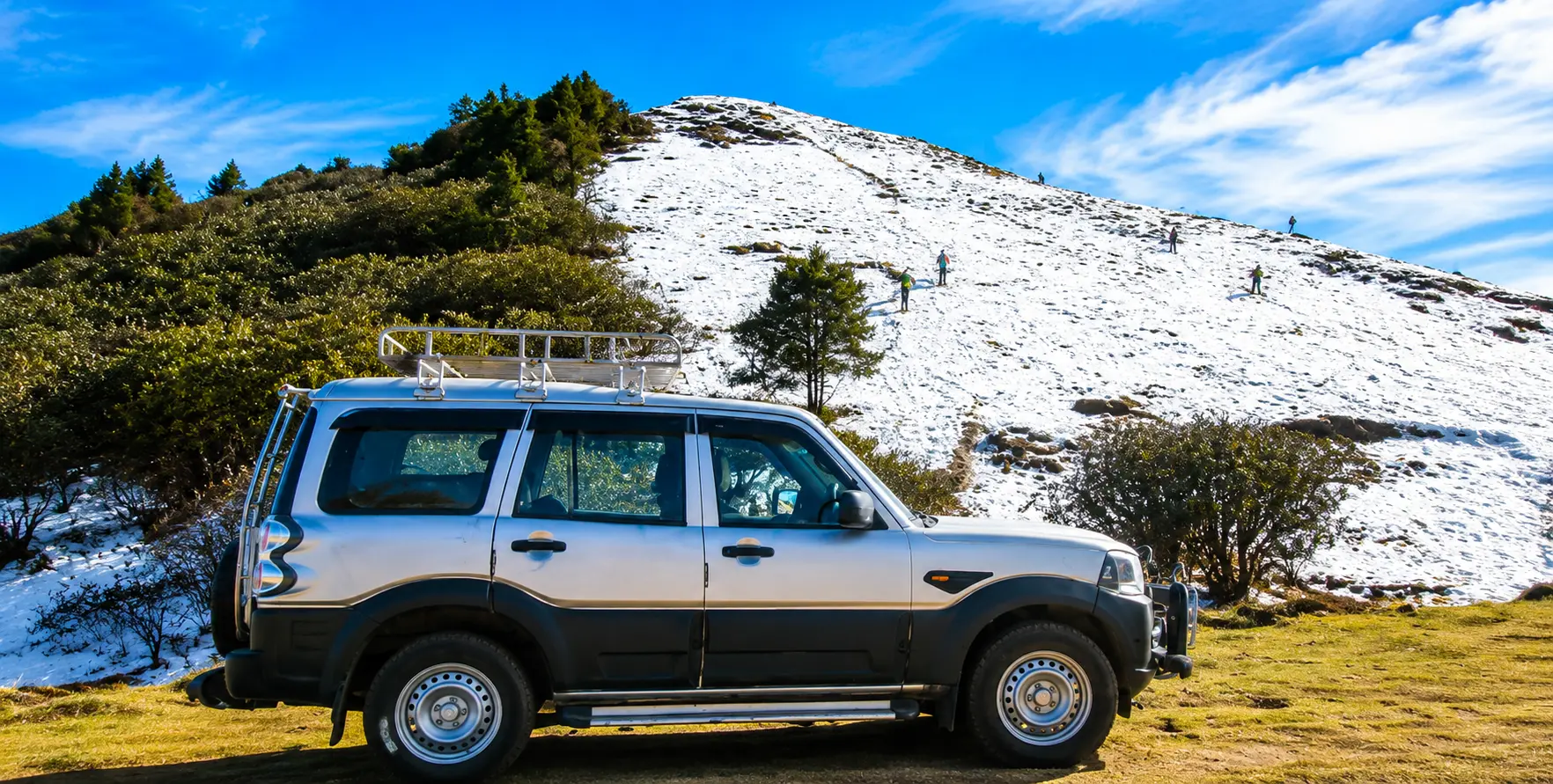
Private 4WD jeep traveling from Jomsom Airport to Muktinath Temple through the scenic Mustang mountain landscape

A Scorpio jeep hire is the standard, most widely used vehicle for this route, and for good reason: genuine 4WD, high ground clearance, and a rugged build that handles the rough gravel sections without drama. Private charters typically accommodate up to six passengers plus luggage, and the drive takes roughly 45 minutes to just over an hour, depending on conditions.

  • Best for: most travellers, families, and small groups wanting reliability and comfort together
  • Pros: genuine off-road capability, comfortable for the group, flexible timing
  • Cons: costs more than a shared bus or shared jeep seat

For travellers who’ve already flown a small mountain aircraft into a runway carved into the valley floor, a Scorpio jeep’s steady, predictable handling on the ground feels like a natural continuation of that same sense of capability — this is a vehicle genuinely built for exactly this kind of terrain, not adapted to it as an afterthought.

Option 2: Car or Local Taxi

Small cars and local taxis do operate on this route, particularly for shorter hops or when jeeps aren’t immediately available. They sometimes cost less than a full jeep charter.

That said, a standard car is a meaningfully less capable choice on this specific stretch than a genuine 4WD — lower ground clearance and less robust suspension make the rougher sections a rougher ride. In wet or icy conditions, traction becomes a real concern.

Where available, a car or taxi can work for a quick, opportunistic trip in good weather, but it isn’t the recommended default for this route the way it might be for a paved highway transfer elsewhere in Nepal.

  • Best for: solo travellers or pairs in good weather, prioritising immediate availability over comfort
  • Pros: sometimes cheaper, sometimes more readily available on short notice
  • Cons: less capable on rough or wet sections; less comfortable for the climb

Many of the vehicles marketed as ‘taxis’ on this route are higher-clearance local vehicles rather than standard sedans, since a genuine city car would struggle on the rougher stretches. Confirm exactly what vehicle you’re being offered before assuming ‘taxi’ means the same thing here as it would in Kathmandu or Pokhara.
Kathmandu to Muktinath Bus

Option 3: Hiace Van

A Hiace is Nepal’s standard group vehicle for highway travel, but it is not commonly used on the Jomsom-Muktinath stretch itself, and this guide doesn’t recommend it for this specific leg. Unlike routes where a Hiace comfortably covers a paved approach before switching to jeeps for a rough final stretch — the pattern covered in our Muktinath temple Hiace hire guide — the entire Jomsom-Muktinath road is the rough stretch, with no easier paved lead-in for a Hiace to handle.

Large groups arriving at Jomsom Airport should plan to split directly into multiple jeeps for this leg rather than expecting a single larger vehicle to manage it.

  • Best for: not recommended for this specific stretch
  • Pros: none specific to this route — better suited to paved approach legs elsewhere in a Mustang itinerary
  • Cons: lower ground clearance and less suited to rough gravel sections than a jeep

Option 4: Local Bus

A local bus runs between Jomsom and Muktinath, typically departing around 9 a.m. and 2 p.m., taking roughly 2 to 3 hours and costing only a few dollars per seat—by far the cheapest option on this route. The trade-off is what you’d expect: a fixed, limited schedule, shared seating with other passengers, and a much less comfortable ride on rough sections than in a private jeep.

For budget-conscious solo travellers with flexible timing, this remains a genuinely viable option; for anyone time-constrained or travelling with family, the fixed departure windows are a real limitation.

  • Best for: solo, budget-conscious travellers with flexible schedules
  • Pros: by far the cheapest option
  • Cons: fixed departure times (typically 9 a.m. and 2 p.m.), shared seating, least comfortable ride.

One practical consideration with the bus option: if you miss the morning departure, you’re often waiting until early afternoon for the next one, which can eat significantly into a tightly planned day, particularly if you also want time to properly visit the temple and explore Ranipauwa or Kagbeni before returning to Jomsom for a flight.
Private 4WD jeep traveling from Jomsom Airport to Muktinath Temple through the scenic Mustang mountain landscape

Option 5: Shared Jeep

A middle-ground option between the local bus and a private jeep charter, a shared jeep departs only when full, offering more flexibility than the bus at a lower cost than a private charter. The trade-off is genuine 4WD comfort shared with strangers, with no control over when the vehicle actually departs.

  • Best for: solo or paired travellers wanting jeep comfort without private charter cost
  • Pros: cheaper than private charter, more flexible than the fixed-schedule bus
  • Cons: departs only once full, shared with other passengers

Choosing a Reliable Operator

  • Confirm the operator has genuine, current experience specifically on the Jomsom-Muktinath stretch, not just general Mustang region driving.
  • Ask directly whether your vehicle is a genuine 4WD jeep or a lower-clearance car marketed loosely as a ‘taxi’
  • Request confirmation of pickup timing at Jomsom Airport, including how flight delays are handled
  • Check whether your quoted price is per vehicle (private charter) or per seat (shared), since these are priced very differently.
  • Ask about the driver’s experience with the valley’s afternoon wind pattern and how that affects their recommended departure timing.

Altitude and Health Considerations

Ranipauwa’s roughly 3,710-meter elevation is high enough to warrant basic altitude awareness, particularly for travellers who’ve flown directly into Jomsom without gradual acclimatisation. Whatevervehicle you choose, avoid rushing into strenuous activity on arrival at Ranipauwa, stay hydrated throughout the drive, and watch for mild headache, nausea, or unusual fatigue, adjusting your pace rather than pushing through.

Side-by-Side: Which Vehicle Actually Fits Your Trip

Travelling solo on a tight budget: take the local bus or a shared jeep seat, accepting the fixed schedule or waiting for a full vehicle.Travelling as a couple or small family: take a private Scorpio jeep charter, split the cost across the group, and keep full control of the schedule.Travelling as a larger group or pilgrimage party: multiple private jeeps rather than a single larger vehicle, since neither a car nor a Hiace suits this specific stretch — see our Muktinath temple Hiace hire guide for how to structure a larger group’s full itinerary around this reality.

Travelling with limited time:  book a private jeep in advance so you’re not waiting for a shared vehicle to fill or working around the bus’s fixed departure windows.

A History of Transport on This Route

For decades, the only way between Jomsom and Muktinath was on foot or by mule, a journey that took pilgrims and traders alike most of a day. Road construction reaching this far into the Mustang region is relatively recent, part of a broader wave of rural road expansion that has reshaped access across Nepal’s mid-hill and high-mountain districts over the past decade or so.

Understanding this history adds context to why the road still feels rough in places — it’s a genuinely young piece of infrastructure by any standard, still being incrementally improved rather than a mature, long-settled route. Older maps and trekking accounts of the region still occasionally reference the multi-day foot journey this drive has now largely replaced, a useful reminder of how quickly access to this part of Nepal has changed.

This also explains why online information about this route can quickly go stale. Trip reports and travel guides written even a few years ago may describe road conditions, vehicle options, or pricing that no longer reflect the current situation, making it worth confirming details directly with a current, locally experienced operator rather than relying solely on older sources.

Cultural Significance of the Journey Itself

For Hindu and Buddhist pilgrims specifically, the journey from Jomsom to Muktinath carries meaning beyond simple transportation — passing through Kagbeni, itself a place of some religious significance, and approaching the temple through increasingly stark, sacred high-desert terrain that has drawn pilgrims for centuries, long before any road existed at all. Whichever vehicle you choose, take a moment during the drive to appreciate that you’re covering, in under an hour or two, a journey pilgrims once spent days completing on foot.

Weather and Seasonal Considerations for This Route

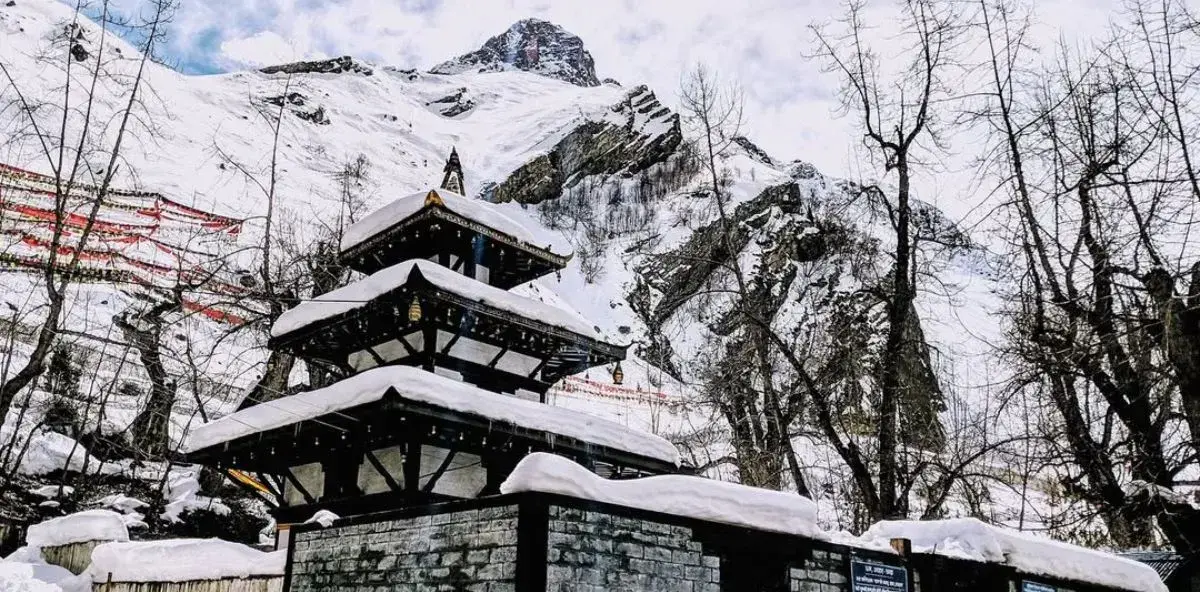
Autumn and spring bring the most stable overall conditions, both for the Pokhara-Jomsom flight and for the road itself. Winter can bring snow and ice at these elevations, making a genuine 4WD considerably more valuable than in the drier months.

In contrast, monsoon season brings its own risk of localised flooding or washout on the rougher sections, even though this valley sits in a rain-shadow zone less affected by monsoon than most of Nepal. No matter what season you’re travelling, check current road conditions with your operator shortly before departure, since conditions here can shift meaningfully within a few days.

Communicating With Your Driver

Most drivers working with established operators on this route have functional English, though a few basic Nepali phrases go a long way in building rapport over a short but shared journey. Confirm before departure how to communicate any change of plans — a longer stop at Kagbeni, an earlier or later return — so expectations are clear on both sides throughout the trip.

What Makes This Route Unique Compared to Other Nepal Transfers

Few routes in Nepal compress this much altitude gain, terrain change, and genuine vehicle-choice consequence into such a short distance. Most comparable mountain approaches — Besisahar to Chame, for instance, or the road toward Rolwaling’s Chhetchhet trailhead — cover considerably more distance to achieve a similar effect.

Jomsom to Muktinath does it in barely 20 kilometres, which is exactly why this guide treats vehicle choice as a genuinely significant decision rather than a minor afterthought.

Comparing This Route to Other Nepal Airport-to-Trailhead Transfers

Jomsom isn’t the only Nepal airport where the final ground transport leg matters enormously. Similar considerations apply for travellers connecting through Kathmandu airport transfers onward to trekking regions. However, most other airport-to-trailhead transfers in Nepal at least offer some paved highway distance before conditions roughen.

Jomsom’s near-total lack of an easy lead-in is genuinely unusual, and part of why this specific comparison guide exists as a standalone resource rather than folding into a broader Mustang region overview.

Checklist Before You Fly Into Jomsom

  • ACAP permit arranged in Kathmandu or Pokhara before departure
  • Ground transport booked in advance, ideally a private jeep, with pickup confirmed for your specific flight
  • Sufficient Nepali rupees for the leg itself and any stops along the way
  • Warm, windproof layers packed accessibly rather than in checked luggage
  • A realistic same-day or overnight plan for the return leg, confirmed with your driver or operator

Working through this short checklist before your flight removes almost all the uncertainty this guide has focused on throughout — the goal isn’t to overcomplicate a genuinely short journey, but to make sure the one variable that actually matters here, vehicle choice, is settled well before you land.

Combining This Leg With a Wider Mustang Itinerary

Few travellers treat the Jomsom-Muktinath drive as an isolated trip. Most connect it to a wider Mustang or Muktinath pilgrimage itinerary — see our best time to visit Muktinath guide for full seasonal planning, our jeep rental for Mustang tour guide if you’re continuing north into the restricted Upper Mustang zone beyond Kagbeni, or our Muktinath temple Hiace hire guide if you’re organising a group’s full trip from Pokhara or Kathmandu rather than just the Jomsom Airport leg covered here.

Cost Comparison

Local bus fares run only a few dollars per seat, the cheapest option by a wide margin. Shared jeep seats cost more than the bus but less than a private charter, varying with demand and season.

A private jeep charter is priced per vehicle rather than per seat — commonly cited in the range of roughly USD 40 to 45 for the Jomsom-Muktinath leg specifically when booked locally. However, rates vary by operator, season, and whether you book in advance from Pokhara or Kathmandu versus on the ground in Jomsom.

For a group of four to six, per-vehicle pricing often works out to be comparable to, or cheaper than, the same group booking individual shared-jeep or taxi fares.

Planning Your Overall Trip Timeline

Most travellers flying into Jomsom plan their Muktinath visit as part of a broader multi-day Mustang or Annapurna region itinerary rather than an isolated day trip. Building in at least one buffer day around your Jomsom flight—whether flying in or out—accounts for the real possibility of weather-related delays and prevents a single missed connection from cascading through the rest of a tightly scheduled trip.

Comparing This Leg’s Cost to the Rest of a Mustang Trip

In the context of a full Mustang or Muktinath pilgrimage budget — flights, permits, accommodation, guide fees if applicable — the cost difference between a private jeep and a local bus for this specific short leg is relatively modest. Many travellers who might otherwise default to the cheapest option on principle find that, once they see the full trip budget in context, the private jeep’s comfort and schedule certainty are a small price relative to the overall investment already made in reaching Jomsom.

What Happens if Your Jomsom Flight Is Delayed

Flight delays into Jomsom are common, particularly outside the reliable morning window, given the valley’s wind patterns. If you’ve pre-booked a private jeep, a reputable operator will track your actual arrival rather than the originally scheduled time, and adjust the driver’s wait accordingly.

This is one of the clearest practical advantages of booking a private vehicle in advance over relying on whatever transport happens to be available when you eventually land—your ground transport won’t have to guess your arrival time.

Family Travel Considerations

Families travelling with children or elderly members should weigh comfort more heavily than budget for this leg, given how physically jarring the rougher sections can feel in a less capable vehicle. A private Scorpio jeep, with its more stable ride and the flexibility to pause if anyone needs a break, is generally the more sensible choice for family groups than the fixed-schedule bus or a cramped shared jeep.

Solo Traveller Considerations

Solo travellers have the most flexibility ty weigh cost against comfort, without coordinating a group’s preferences. Budget-focused solo travellers can reasonably choose the bus or a shared jeep, accepting the trade-offs covered throughout this guide. At the same time, prioritising comfort can justify a private jeep’s cost more easily when compared against a single traveller’s overall trip budget rather than split unevenly across a group with different priorities.

Round-Trip Planning: Same-Day Return to Jomsom

Many travellers complete their Muktinath visit and return to Jomsom the same day, particularly those with an onward flight or continuing overland the same day. A private jeep makes this much easier to coordinate than relying on the bus’s fixed schedule or a shared jeep that fills up in both directions.

If your itinerary depends on a same-day return, confirm this explicitly with your driver or operator when booking, rather than assuming a one-way transport arrangement includes it automatically.
Private 4WD jeep traveling from Jomsom Airport to Muktinath Temple through the scenic Mustang mountain landscape

Travel Time by Vehicle Type

A private jeep covers the route in roughly 45 minutes to just over an hour under normal conditions. A shared jeep takes a similar driving time but adds unpredictable waiting time before departure. The local bus, given its fixed stops and shared nature, generally takes closer to 2 to 3 hours door to door.

In good conditions, a car or taxi’s actual driving time is comparable to a jeep’s, though it may need to slow further on the roughest sections because of its lower clearance.

What Drivers on This Route Know That Guidebooks Don’t

Experienced local drivers on the Jomsom-Muktinath stretch carry a kind of practical knowledge that rarely makes it into written guides — which specific sections tend to wash out first after rain, where the wind hits hardest and earliest in the afternoon, and which of the two main villages along the way (Kagbeni or Jharkot) is worth a stop on a given day based on light and weather. This is one of the strongest arguments for booking through an operator with genuine, current experience on this exact route rather than a general Mustang-region driver unfamiliar with this specific stretch’s particular quirks.

Documents and Cash to Carry

Beyond your ACAP permit, carry sufficient Nepali rupees for this leg, since card payment isn’t available for local transport on this route, whichever vehicle you choose. If you’re arranging a private jeep in advance through an agency, confirm whether you pay before arrival or directly to the driver on the ground, and keep a copy of any booking confirmation accessible in case you need it to identify your pre-arranged vehicle at the airport.

It’s a small piece of paperwork, but it can save time and prevent confusion in a busy arrivals area, especially during peak pilgrimage season when several jeeps and drivers may be waiting for different pre-booked groups at once.

Permits Required

Regardless of which vehicle you choose, every visitor needs a valid ACAP (Annapurna Conservation Area Permit) for this route, since it runs entirely within the Annapurna Conservation Area. Our ACAP permit guide covers exactly where to get it in Kathmandu or Pokhara before you fly into Jomsom — it isn’t available at the airport, so arrange it before you travel.

How This Guide Fits Into Your Wider Trip Planning

This guide deliberately focuses narrowly on one short but consequential leg of a much larger journey. If you’re still working out the broader shape of your trip — how you’re reaching Jomsom in the first place, whether you’re continuing into Upper Mustang afterwards, or how this fits alongside other Nepal destinations — our wider Mustang and Muktinath region guides, linked throughout this article and gathered in the resource section below, are the natural next stop.

Treat this page as the detailed answer to one specific, important question within a much bigger trip you’re piecing together.

One Last Practical Note: Confirming Your Booking

Whichever vehicle you ultimately choose, get your booking confirmation in writing — even a simple message thread with your operator confirming vehicle type, price, and pickup arrangements — before you fly. This small step protects you from any confusion or last-minute renegotiation at the airport, particularly during peak season when demand for jeeps at Jomsom can genuinely outstrip supply on the busiest mornings.

Atravellerr who lands with a confirmed booking in hand is in a categorically stronger position than one hoping to arrange transport fresh on arrival.

Frequently Confused Terms for This Route

A few terms are worth clarifying: a private jeep charter means your group has exclusive use of the vehicle, priced per vehicle rather than per passenger. A shared jeep departs once full with unrelated passengers and is priced per seat.

On this route, ‘taxi’ usually refers to a small local vehicle rather than a standard highway car, given the terrain. Ranipauwa and Muktinath are often used interchangeably, though technically Ranipauwa is the village where the road ends, with a short walk up to the temple.

It’s also worth distinguishing this Jomsom-Muktinath leg from the broader Kathmandu or Pokhara approach into the Mustang region. Some travellers fly directly into Jomsom, as this guide assumes throughout, while others drive the full overland route from Pokhara via Beni and reach Jomsom by road rather than air. Both approaches converge at Jomsom, after which everything covered in this guide applies equally regardless of how you got there.

Group Size Guidance by Vehicle

  • Solo or pair: local bus, shared jeep, or a private jeep if budget allows and schedule flexibility is limited
  • Small family (3-4): a private Scorpio jeep that comfortably fits the group and luggage.
  • Larger group (5-6): a single private jeep, at or near its comfortable passenger limit
  • Group of 7 or more: multiple private jeeps rather than a single larger vehicle, given the lack of a suitable Hiace-class option for this specific stretch

This scaling logic holds regardless of whether your group is a family marking a personal milestone, a temple committee, an organised agee, or a mixed tour group assembled for the trip — the underlying vehicle math on this particular stretch doesn’t change based on why the group is travelling together, only how many people and how much luggage need to fit.

Booking Private vs Waiting for Shared Transport

Booking a private jeep in advance — ideally before you even fly into Jomsom — removes the single biggest source of frustration on this route: standing at the airport uncertain how long you’ll wait for a shared vehicle to fill, especially as afternoon winds approach and flying conditions elsewhere in your itinerary depend on tight timing. A pre-arranged private vehicle means your transport is waiting when you land, regardless of how busy or quiet Jomsom is that day.

Insurance and Emergency Preparedness

Given the altitude and remoteness of this route, basic travel insurance covering the relevant elevations is worth having in place regardless of which vehicle you choose. Medical facilities are minimal beyond Jomsom, and any serious issue during the drive or at Ranipauwa would require evacuation back toward Jomsom or, in urgent cases, onward to Pokhara. Carry a basic first-aid kit and any personal medications for the trip.

A Note on Comparing Quotes

When comparing quotes for this leg, confirm exactly what’s included: vehicle type, whether it’s private or shared, and whether the fare covers a round trip or one-way only. A quote that sounds unusually cheap may reflect a shared seat rather than a private vehicle, or a car rather than a genuine jeep; always confirm the specifics rather than comparing headline numbers alone.

Road Conditions and Safety

The road mixes recently improved sections with older gravel stretches, particularly closer to Ranipauwa, and dust is a near-constant feature in the dry season. Whichever vehicle you choose, an experienced local driver familiar with current conditions matters more here than on most short Nepal drives, given how quickly weather and wind can change conditions on this exposed valley road.

Best Time to Travel This Route

Morning departures are strongly preferred, before the Kali Gandaki valley’s characteristic afternoon winds pick up, typically by late morning to early afternoon. Autumn (September-November) and spring (March-May) offer the most stable overall conditions for both flights into Jomsom and the road itself, consistent with the broader seasonal pattern across the Mustang and Muktinath region covered in our best time to visit Muktinath guide.

Photography Along the Drive

Whichever vehicle you choose, the drive itself offers genuinely striking photography opportunities — the Kali Gandaki gorge’s stark, wind-carved terrain, Kagbeni’s medieval alleyways, and the first glimpses of Muktinath’s temple complex as you approach Ranipauwa. A private jeep lets you pause briefly for photos, something the fixed-schedule bus or a shared jeep waiting on other passengers generally can’t accommodate.

What to Pack

  • Warm, windproof layers, regardless of season, given the valley’s near-constant wind
  • Dust protection (a light scarf or mask) for the drier months
  • Cash in Nepali rupees, since card payment isn’t available for local transport on this route
  • Your ACAP permit, easily accessible rather than packed away, in case it’s checked along the way
  • Sun protection, given the high altitude and often intense midday sun

Kagbeni: A Natural Stop Along the Way

Regardless of which vehicle you choose, Kagbeni sits roughly midway along the route and is worth a short stop if your schedule allows — a medieval-style village with narrow alleyways, mud-brick houses, and an old monastery, marking the traditional gateway to Upper Mustang. A private jeep makes this kind of flexible stop far easier to arrange than a fixed-schedule bus or a shared jeep on a tight timeline.

Group Travel Logistics

For groups arriving together at Jomsom Airport, plan directly for multiple jeeps rather than assuming a single vehicle will suffice — a group of twelve, for example, typically splits across two to three Scorpio-class jeeps. Our Muktinath temple Hiace hire guide covers this kind of group logistics in full, including how the jeep stage fits into a larger itinerary that may also involve a Hiace for other, more highway-suited legs of the same trip.

Vehicle Condition and What to Check Before Departure

Because this short route is demanding on tyres and suspension, ask about vehicle condition before departure, regardless of which option you choose. A well-maintained Jeep handles the rough sections predictably; a poorly maintained one — Jeep or otherwise — can turn a short drive into a genuinely uncomfortable and less safe experience.

This matters more here than on longer, gentler highway routes precisely because the terrain offers no easy stretches to compensate for a tired vehicle.

Common Mistakes to Avoid

  • Assuming a Hiace or standard car can comfortably handle this entire stretch the way it might handle a highway approach elsewhere
  • Not booking a private jeep in advance and then facing a long wait for a shared vehicle to fill, especially in peak season.
  • Planning a departure time that ignores the valley’s typical afternoon wind pattern
  • Forgetting to arrange your ACAP permit before flying into Jomsom, since it isn’t available at the airport
  • Underestimating how much rougher the road feels in a low-clearance car compared to a genuine 4WD

Booking Tips

  • Book your private jeep in advance from Pokhara or Kathmandu rather than arranging transport only after landing.
  • Confirm exactly which vehicle type you’re being offered, not just a general ‘transport included’ promise.
  • Ask about morning departure options specifically, to beat the afternoon winds.
  • For groups, confirm how many vehicles you’ll need based on your actual group size before arrival.
  • If budget is the top priority, ask locally about the current bus schedule, since departure times can shift slightly by season.

Comparing Quotes Across Operators

Before committing, compare a couple of quotes rather than booking the first option offered. Our ultimate Nepal vehicle rental guide covers general comparison-shopping advice that applies here, including confirming vehicle type, inclusions, and cancellation terms before finalising, regardless of which operator you choose.

A Word on Sustainable, Responsible Travel Here

The Annapurna Conservation Area, which encompasses this entire route, operates under a community-managed model funded partly by ACAP fees. Whichever vehicle you choose, supporting locally owned transport operators and drivers channels tourism income directly into the communities whose villages you’re passing through—Kagbeni, Jharkot, Khingar, and Ranipauwa all benefit far more from this kind of direct, local economic support than from spending concentrated only with larger, non-local operators.

Final Thoughts on Choosing Your Vehicle

This short stretch punches well above its weight in terms of how much vehicle choice actually matters. A private Scorpio jeep hire remains the sensible default for most travellers, the local bus a genuinely fine choice for the most budget-conscious and flexible, and cars or a shared jeep reasonable middle options depending on your specific priorities.

What matters most is going in with realistic expectations rather than assuming any vehicle marketed as available at Jomsom Airport is equally suited to the climb ahead.

Why This Guide Compares Every Option Honestly

Many transport guides for popular routes quietly steer readers toward whichever option is most profitable to recommend, without genuinely weighing the alternatives. This guide has taken a different approach throughout: recommending the Scorpio jeep as the default for most travellers isn’t a sales pitch dressed up as advice; it’s a straightforward reflection of what actually handles this specific terrain best, while still giving the bus, shared jeep, and car options their fair, honest due for the travellers they genuinely suit.

The same applies to being direct about the Hiace’s poor fit for this stretch, even though we’re equally happy to arrange it for the many other Nepal routes where it excels.

That honesty is worth more to you as a traveller than a one-size-fits-all recommendation, and it’s the same standard this guide applies across every route comparison we publish — matching the vehicle to the terrain and the traveller, not the other way around.

Summary: Key Facts for This Route

  • Distance: roughly 20-2kilometresrs from Jomsom Airport to Ranipauwa/Muktinath
  • Altitude gain: over 1,000 meters in a short distance
  • Recommended vehicle: private Scorpio jeep for most travellers
  • Private jeep cost: commonly around USD 40-45 for the full vehicle charter
  • Local bus: departs roughly 9 a.m. and 2 p.m., taking 2-3 hours, cheapest option
  • Drive time by jeep: 45 minutes to just over an hour
  • Best time of day: morning, before afternoon winds pick up
  • Permit required: ACAP, arranged before flying into Jomsom

A Final Word on This Route

It’s easy to underestimate a 20-kilometre drive, especially right after landing at one of Nepal’s most dramatically situated airports. This guide’s central point is simple: don’t.

The Jomsom-Muktinath stretch rewards a little upfront thought about vehicle choice with a smoother, more comfortable start to what is, for many travellers, a genuinely meaningful pilgrimage or trekking milestone. Whether you choose the comfort and flexibility of a private jeep, the budget-friendly reliability of the local bus, or something in between, going in informed rather than improvising at the airport makes all the difference.

This guide covers every vehicle option that can get you to Muktinath. The real question this guide tries to answer honestly is which option gets you there in the way that best fits your trip—your budget, timeline, group size, and how much comfort matters after whatever journey it took to reach Jomsom in the first place.

Why Book With Nepal Vehicle Hiring Pvt Ltd

We arrange private Scorpio jeep transport for the Jomsom-Muktinath leg with drivers experienced on this specific stretch, along with the wider vehicle logistics for your full Mustang or Muktinath itinerary. Every booking includes transparent pricing agreed before you fly into Jomsom, so your transport is simply waiting when you land.

Reach out through our contact page to arrange your Jomsom Airport to Muktinath private vehicle, whether you’re travelling solo, as a couple, or coordinating a larger pilgrimage group.

Explore More Nepal Routes, Tours, and Vehicles

Whatever vehicle you choose for this leg, here’s a fuller map of the routes, tours, and vehicle options we cover, in case your trip extends further across the Mustang and Muktinath region and beyond.

Annapurna Circuit and Manang Region

See Pokhara to Manang transport, Manang to Kathmandu private jeep hire, Kathmandu to Manang jeep, Besisahar to Chame and Upper Pisang, why Dharapani is the Annapurna Circuit’s most popular starting point, Pokhara to Landruk jeep hire, Pokhara to Ghandruk jeep, Kathmandu to Ghandruk private jeep hire, and Pokhara to Sikles jeep rental.

Mustang and Muktinath Region

See our Jomsom to Muktinath jeep rental guide, our best time to visit Muktinath guide, our Muktinath temple Hiace hire guide, Upper Mustang 4WD jeep, our jeep rental for Mustang tour guide, places to visit in Mustang, Kathmandu to Mustang private jeep, Pokhara to Beni jeep hire, Muktinath to Pokhara jeep, the ACAP permit guide, and the Annapurna Conservation Area overview.

Annapurna Circuit and Manang Region

See Pokhara to Manang transport, Manang to Kathmandu private jeep hire, Kathmandu to Manang jeep, Besisahar to Chame and Upper Pisang, why Dharapani is the Annapurna Circuit’s most popular starting point, Pokhara to Landruk jeep hire, Pokhara to Ghandruk jeep, Kathmandu to Ghandruk private jeep hire, and Pokhara to Sikles jeep rental.

Kathmandu and Pokhara Transport: Explore Kathmandu to Pokhara bus tickets, Kathmandu to Pokhara bus tickets, Pokhara to Kathmandu buses, Kathmandu to Pokhara road trips, Kathmandu to Pokhara vehicle rentals, Kathmandu to Pokhara private SUVs, our Pokhara bus ticket price guide, VIP Sofa Bus hire in Nepal, and car hire in Pokhara.

Kathmandu Valley Sightseeing

Round out your trip with Kathmandu sightseeing, Kathmandu’s historical heritage sites, our Nepal UNESCO World Heritage Sites guide, Bhaktapur Durbar Square, Kathmandu to Nagarkot vehicle hire, the Nagarkot sunrise tour, Kathmandu airport transfers, our Thamel to airport private vehicle hire guide, and our airport pickup to Thamel and hotel drop guide.

Chitwan, Lumbini, and Border Routes

See Pokhara to Chitwan bus, Chitwan to Kathmandu bus, our Chitwan VIP bus ticket price guide, Kathmandu to Lumbini bus, Lumbini to Kathmandu bus, Sunauli to Pokhara car, our Muktinath tour from Sunauli border guide, and our Bhairahawa to Kathmandu private car guide.

Other Remote Trekking Gateways

See Kathmandu to Soti Khola, Kathmandu to Salleri-Phaplu, Kathmandu to Gorkha jeep service, Kathmandu to Besisahar bus ticket, Besisahar private vehicle hire, our Rolwaling Valley vehicle service guide, the Everest Base Camp trek, and our general trekking services.

Vehicle Fleet and Booking Resources

Compare our full fleet: jeep, car, Hiace, bus, coaster, car hire in Nepal, our alternate Hiace van hire listing, Toyota Land Cruiser 4WD hire, our SUV rental in Nepal guide, jeep and SUV comparison, why a genuine 4WD jeep matters, why private vehicle hire is the smartest way to travel Nepal, and our ultimate Nepal vehicle rental guide.

Plan and Learn More

Use our plan your trip tool, browse our Nepal tour package options, learn more about us, read our luxury trek vehicle hire guide, or browse our blog for further route guides across the country.

Frequently Asked Questions

What’s the best vehicle from Jomsom Airport to Muktinath? We recommend a private Scorpio jeep, which offers genuine 4WD capability and comfort for the climb.

Can a Hiace van handle this route? Not recommended — the entire stretch is rough mountain road with no easier paved lead-in, unlike routes where a Hiace covers a highway approach before switching to jeeps.

How much does a private jeep cost for this leg? Commonly cited around USD 40-45 for the full vehicle charter, though rates vary by operator and season.

Is there a local bus from Jomsom to Muktinath? Yes, typically departing around 9 a.m. and 2 p.m., taking 2-3 hours and costing only a few dollars per seat.

How long does the jeep ride take? Roughly 45 minutes to just over an hour under normal conditions.

Can I take a car or taxi instead of a jeep? Cars and taxis do operate on this route, though a genuine 4WD jeep handles the rough sections more capably and comfortably.

Do I need a permit for this route? Yes, you need an ACAP permit, which you can arrange in Kathmandu or Pokhara before flying into Jomsom.

What’s the best time of day to travel? In the morning, before the Kali Gandaki Valley’s characteristic afternoon winds pick up.

Is a shared jeep cheaper than a private charter? Yes, per person, but it departs only when it’s full rather than on your schedule.

Can I book my vehicle before landing at Jomsom? Yes, and we strongly recommend it so your transport is waiting when you land rather than arranged on the spot.

How many people fit in a private jeep? Typically, up to six passengers comfortably, plus luggage.

What should a large group do for this leg? Split across multiple private jeeps rather than expecting a single larger vehicle to handle the route.

Is the road between Jomsom and Muktinath paved? Partially — sections have been improved in recent years, but rougher gravel stretches remain, particularly near Ranipauwa.

Does weather affect vehicle choice on this route? Yes, wet or icy conditions make a genuine 4WD considerably more important than in dry, stable weather.

Do all group members need to travel in the same jeep? No, larger groups typically split across multiple jeeps, and family members or friends can usually request to travel together within the same vehicle.

Can I negotiate the price on the ground at Jomsom? Some flexibility may exist, but pre-booking secures both your vehicle and a confirmed, transparent price without needing to negotiate after a flight.

Is there a difference between weekday and weekend availability? Demand can be higher around major festival dates or peak-season weekends, but this route doesn’t see the dramatic weekday-weekend swings common on more urban routes.

Landing at Jomsom soon? Book your private vehicle from Jomsom Airport to Muktinath in advance through our contact page, so your transport is ready the moment you land.
Kathmandu to Dhunche Syabrubesi Road Conditions 2026

Kathmandu to Dhunche Syabrubesi Road Conditions 2026

Kathmandu to Dhunche Syabrubesi Road Condition Guide 2026

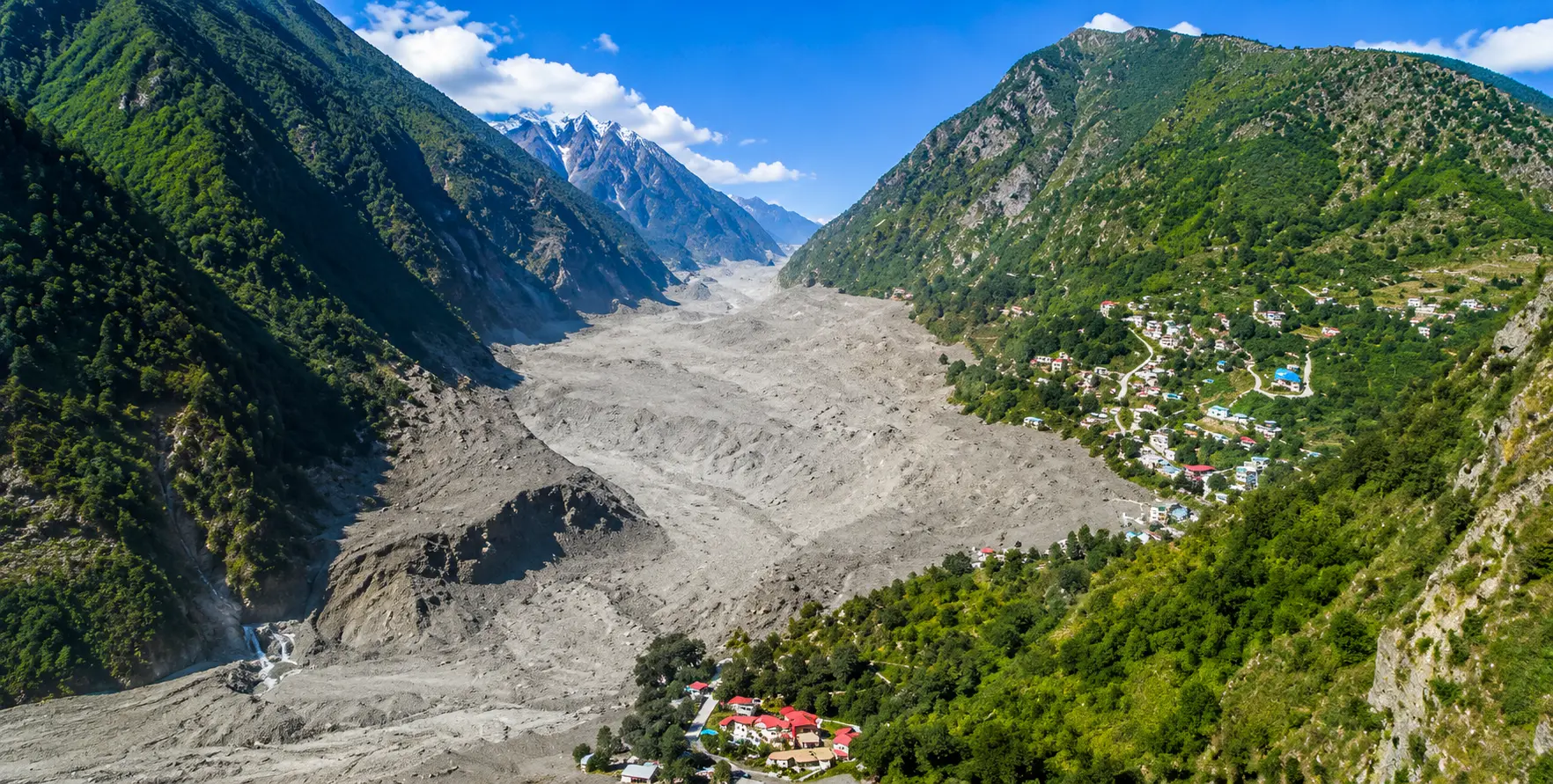
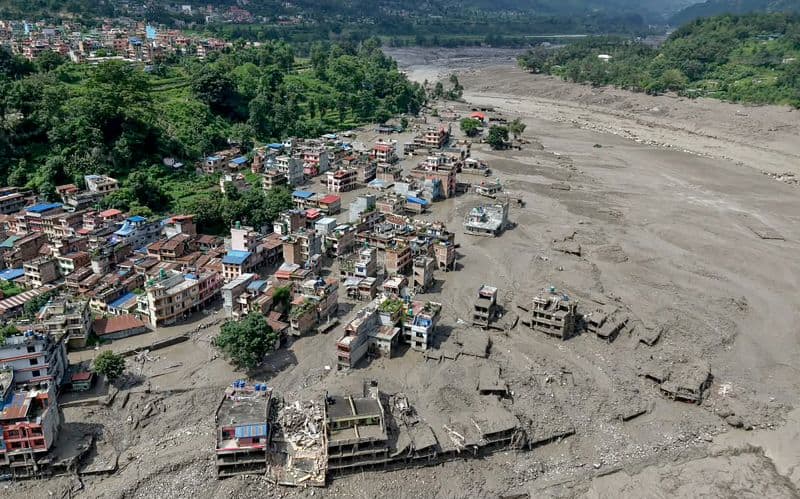
IMPORTANT — CURRENT ALERT: CRITICAL AUGUST 2026 UPDATE: A glacial lake outburst flood (GLOF) from Tibet struck the Bhotekoshi River in Rasuwa District on August 26, 2026, causing severe damage to Syabrubesi and Timure. The flood destroyed approximately 60 houses and 2 bridges. The Rasuwagadhi border crossing is currently closed.

Vehicle movement on sections of the Pasang Lhamu Highway near Syabrubesi and Timure is suspended. All travellers planning Langtang Valley treks via Syabrubesi or the Rasuwagadhi border crossings should contact their registered agency and Nepal Vehicle Hiring Pvt Ltd for current road status before departing Kathmandu.

The Dhunche-to-Gosaikunda route higher above the valley may remain operational — see Section 2 for details.

The Pasang Lhamu Highway — the road that connects Kathmandu northward through the Trishuli River valley to Dhunche, Syabrubesi, and ultimately the Rasuwagadhi border crossing with China — is Nepal’s primary access corridor for the Langtang Valley trek, the Gosaikunda pilgrimage, the Tamang Heritage Trail, and the overland route to Tibet via the Kerung border. It is also one of Nepal’s most frequently discussed trekking access roads in terms of road condition, because its reputation for difficulty — steep terrain, monsoon landslide vulnerability, the famous Ramche Landslide Zone before Dhunche, and the narrower, rougher section beyond the Trishuli River valley — precedes any first-hand description in virtually every Langtang trek planning guide available online.

This complete 2026 guide covers the full Kathmandu-to-Rasuwaghdi road corridor with honest, current information: the current flood emergency and its implications for travel, the road’s character section by section under normal conditions, the Ramche Landslide Zone that all drivers must navigate, the specific advantages of private 4WD jeep hire from Nepal Vehicle Hiring Pvt Ltd over buses and shared vehicles on this route, seasonal road condition variations, alternative trekking approaches when the main road is disrupted, and everything a traveler needs to know to make a safe and informed decision about when and how to travel this corridor in 2026 and beyond.

Kathmandu to Dhunche Syabrubesi Road Conditions 2026

Current Status — August 2026 Rasuwa Flood Emergency

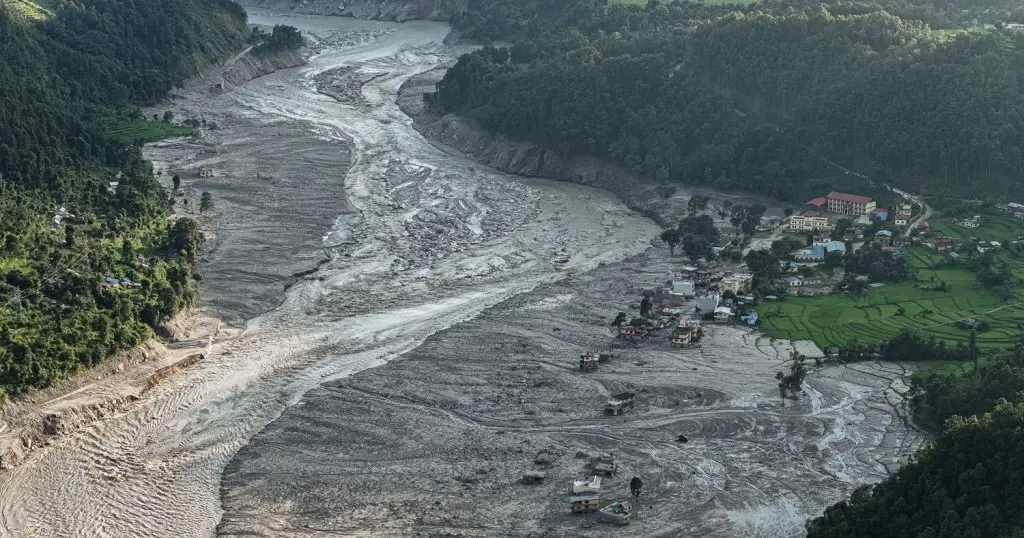
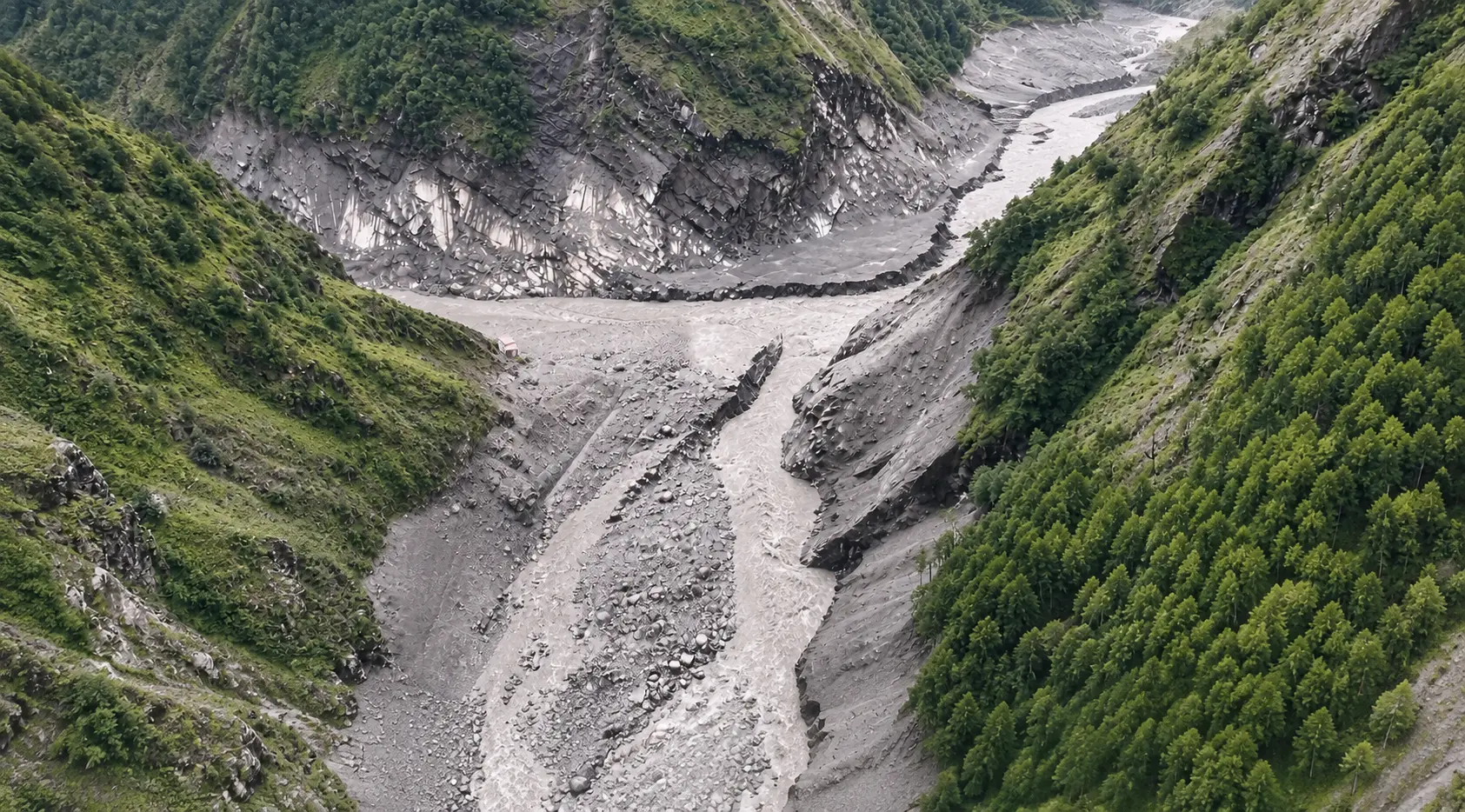
On the morning of August 26, 2026, a sudden and powerful flash flood tore through the Bhotekoshi River in Rasuwa District, triggered by what authorities have identified as a glacial lake outburst flood (GLOF) originating on the Tibetan side of the border. The flood struck without warning at about 9:15 a.m., moving downstream so fast that riverside communities had little time to evacuate.

Syabrubesi — the primary trailhead town for all Langtang Valley trekking routes and a community of significant size and tourism infrastructure — sustained severe structural damage. Timure, the last Nepali village before the Rasuwagadhi border crossing, was also severely affected.

The documented immediate impacts, as of August 29, 2026, include: approximately 60 houses and 2 bridges destroyed across the affected zone; the helipad at Timure swept away, removing the emergency helicopter access point for the upper Rasuwa valley; multiple hydropower installations along the Bhotekoshi River damaged or destroyed, including the Chilime Hydropower Project and Rasuwagadhi Hydropower facility; vehicle movement suspended on the Pasang Lhamu Highway in the sections most directly affected; the Rasuwagadhi border crossing with China closed; public transport between Kathmandu and seven downstream districts suspended as a precaution due to flood risk to the Trishuli River corridor; and communication infrastructure significantly disrupted with multiple telecom towers in Rasuwa and Nuwakot damaged.

As of this writing, August 29, 20266, the situation is evolving. Nepal Vehicle Hiring Pvt Ltd continues to monitor road conditions through our driver network in the Rasuwa corridor.

The specific advice for any traveller with planned Langtang or Rasuwa travel in September and October 2026 is: do not rely on pre-flood route information, do not attempt to reach Syabrubesi independently without current confirmation from your registered trekking agency, and contact Nepal Vehicle Hiring Pvt Ltd directly at +977 981-4227196 via WhatsApp for the latest road status before any departure from Kathmandu. We will not dispatch vehicles on a route we cannot confirm as currently safe.

The broader context matters: the Langtang region itself—the trekking trail above Syabrubesi into the valley—may be far less affected than road access to the trailhead, since the Langtang trail climbs away from the river almost immediately above Syabrubesi and follows high ground rather than the valley floor. This distinction matters for trip planning: the trail may reopen before the road reaches full capacity, and alternative approach routes (described in Section 11 below) may provide trekking access while road repairs continue.

The Dhunche and Gosaikunda Alternative — What Remains Accessible

One important distinction in the current flood situation is that Dhunche — the Rasuwa District headquarters at approximately 1,950 meters, which sits on higher ground above the Bhotekoshi River flood zone — and the Gosaikunda pilgrimage route that begins from Dhunche rather than Syabrubesi may be significantly less affected than the lower Syabrubesi flood zone. The road from Kathmandu to Dhunche follows the upper section of the Pasang Lhamu Highway.

Still, it diverges from the Syabrubesi flood corridor at the higher-ground Dhunche junction, potentially keeping Dhunche accessible when the lower Syabrubesi section is suspended.

Gosaikunda Lake (4,380 m) — the sacred glacial lake that is the destination of Nepal’s largest annual Hindu pilgrimage (Janai Purnima) and a genuinely spectacular high-altitude trekking destination in its own right — is accessed from Dhunche rather than Syabrubesi, climbing directly from the higher road junction rather than from the flood-affected valley floor. For travellers with Langtang October plans who find Syabrubesi access disrupted, a Gosaikunda trek starting from Dhunche is, as the Everest Holiday guide notes, a genuine alternative rather than a consolation prize — a sacred lake at 4,380 meters surrounded by dramatic Himalayan scenery, accessible on a dedicated Nepal trekking transport arrangement from Kathmandu to Dhunche via private jeep hire.

Nepal Vehicle Hiring Pvt Ltd will confirm Dhunche road accessibility specifically as distinct from the Syabrubesi section when clients contact our team.

Kathmandu to Dhunche Syabrubesi Road Conditions 2026

The Pasang Lhamu Highway — Normal Road Character

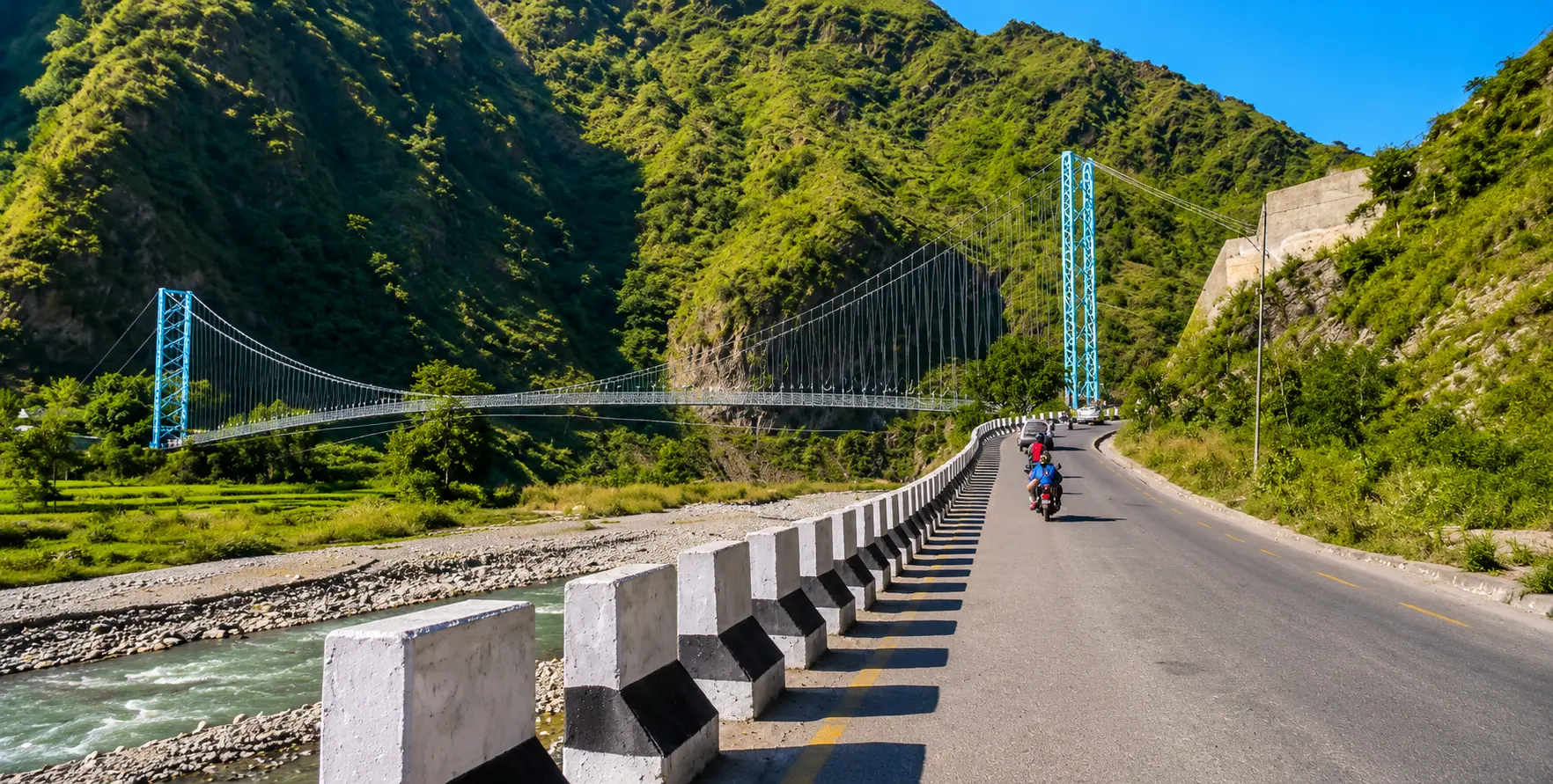
Under normal, non-flood conditions, the Pasang Lhamu Highway from Kathmandu to Syabrubesi is one of Nepal’s more challenging but manageable mountain access roads — used by thousands of trekkers, pilgrims, and residents every month of the year, except during severe monsoon disruptions. The total distance from Kathmandu to Syabrubesi is approximately 117 to 122 kilometres, and the drive takes 6 to 9 hours by private vehicle depending on road conditions, traffic, and rest stops.

Understanding the road’s character section by section is the foundation of realistic journey planning.

Kathmandu to Kakani and Trishuli Bazaar. The first 70 to 75 kilometres from Kathmandu to Trishuli Bazaar follow a well-maintained paved road through the Nuwakot District lowlands — leaving Kathmandu via the Ring Road and Balaju and heading northwest via Kakani, the hill viewpoint town at 2,073 meters that provides the first clear mountain panorama of the Langtang range for outward-bound travellers, then descending to the Trishuli River valley at Trishuli Bazaar (approximately 440 m). This Kathmandu-to-Trishuli section is comfortable, straightforward highway driving and takes approximately 2 to 3 hours.

Nepal Vehicle Hiring Pvt Ltd’s private jeep hire from Kathmandu to Syabrubesi includes a Trishuli rest stop for breakfast or mid-morning refreshment on the standard itinerary.

Trishuli Bazaar to Dhunche — The Road Becomes Mountain. From Trishuli Bazaar, the highway turns north, and the character changes immediately and significantly: the road narrows, the gradient steepens, and the terrain becomes the kind of exposed mountain road that makes the Kathmandu to Syabrubesi jeep hire the subject of every honest trekking operator’s road condition caveat. The Trishuli-to-Dhunche section, about 50 kilometres long, climbs about 1,500 vertical meters over a mixed paved and unpaved road surface that, in good conditions, takes 3 to 4 hours and, in poor conditions, takes considerably longer.

The road follows the Trishuli River and then the Betrawati tributary corridor northward, gaining altitude through a succession of small hill settlements and forested ridgeline sections that alternate between freshly paved surfaces in the most recently upgraded zones and the rougher original road surface in sections awaiting improvement. As of 2026, significant portions of this section have been paved as part of ongoing Pasang Lhamu Highway improvement works.

However, the overall corridor remains narrow, with tight curves and exposed cliff-edge sections that require a professional, experienced driver who knows this specific road—not a self-drive arrangement navigated by GPS alone.

The Ramche Landslide Zone — The Road’s Most Discussed Challenge. Approximately 3 kilometres before Dhunche, the Pasang Lhamu Highway passes through what is universally known among Langtang trek operators and trekkers as the Ramche Landslide Zone — a section of road cut through active landslide terrain that, even in the best dry-season conditions of 2026, remains unpaved and rough by the specific standards that make 4WD jeep hire a practical advantage over buses on this corridor. The section is 2 to 3 kilometres in length and involves the typical characteristics of active-slope road construction in Nepal’s middle hills: loose surface material, occasional rock debris on the roadway from above, variable track width, and the visible evidence of previous slide events in the scarred hillside above and the retained debris slopes below.

Dhunche to Syabrubesi — The Lower Rasuwa Valley Section

Dhunche (approximately 1,950 m), the Rasuwa District headquarters, marks a significant transition in the Pasang Lhamu Highway’s character. From Dhunche, the road descends about 500 meters to Syabrubesi on the valley floor at 1,460 meters—a descent of about 15 kilometres that takes 30 to 45 minutes in normal conditions.

This section has historically been better maintained than the Trishuli-to-Dhunche section above, as it is shorter and serves the district headquarters town’s year-round administrative and commercial traffic.

Under normal, non-flood conditions, the Dhunche-to-Syabrubesi section is paved for most of its length and offers the most comfortable drive on the final approach to the Langtang trailhead. The road descends through forested hillside with views over the Bhotekoshi River valley below — the same river whose August 2026 GLOF caused the emergency conditions described in Section 1. Nepal Vehicle Hiring Pvt Ltd’s private jeep drivers know this descent well and manage the tight hairpin curves and the Syabrubesi riverside approach that, while routine in dry conditions, require careful management when the road surface is wet.

Syabrubesi to Rasuwaghdi — The Border Approach

From Syabrubesi, the road continues approximately 21 kilometres northward to Rasuwaghdi (also spelt Rasuwagadhi) — the Nepal-China border crossing formally known as the Rasuwa-Kerung border, which serves as the overland crossing point for the Nepal-Tibet trade route and, in recent years, has become significant as the planned entry point for the rail connection between the two countries. This Syabrubesi-to-Rasuwaghdi section passes through Timure village — the second settlement severely affected by the August 2026 flood — and is entirely separate from the Langtang trekking route, which climbs eastward from Syabrubesi into the upper Langtang Valley rather than continuing northward along the river.

Under normal conditions, the Syabrubesi-to-Rasuwaghdi road serves primarily as: the Nepal-Tibet overland cargo route for bilateral trade between Nepal and China’s Tibet Autonomous Region; the access road for the multiple hydropower projects installed along the Bhotekoshi River between Syabrubesi and the border; and the approach for the small number of overland travellers making the overland Nepal-Tibet crossing as part of a Lhasa-bound road journey. The Department of Roads and the relevant hydropower project companies maintain the road, and in normal dry-season conditions it is passable by 4WD vehicle for the full 21-kilometre section. Under the current (August 2026) flood conditions, this section is suspended.

Kathmandu to Dhunche Syabrubesi Road Conditions 2026

The Seasonal Road Condition Cycle — What Changes Month by Month

The road condition on the Kathmandu-to-Syabrubesi-to-Rasuwaghdi corridor follows a predictable seasonal pattern in normal years (outside exceptional flood events like the August 2026 GLOF) that experienced operators like Nepal Vehicle Hiring Pvt Ltd have observed over many years of regular vehicle deployment on this route.

October to November — Best Conditions. The post-monsoon dry season delivers the most stable and predictable road conditions on the Pasang Lhamu Highway. Department of Roads crews complete the most significant repairs to monsoon damage in October, meaning that late October and November typically see the best surface consolidation of the year.

This window coincides with peak Langtang Valley trek season and the highest demand for private jeep hire on the corridor. Book at least 1-2 weeks in advance.

Note that the Ramche Landslide Zone remains unpaved and rough even in peak dry season — this section does not improve seasonally; only the sections subject to monsoon damage repair benefit from the post-monsoon improvement cycle.

March to May — Spring Conditions. Road conditions are good following the winter dry period. The Trishuli-to-Dhunche section is at its driest and most consolidated after winter. Light spring rainfall in March and April briefly softens unpaved sections but typically does not create the sustained disruption the monsoon brings.

Spring is the second peak season for transport demand on the Langtang trek. The Pasang Lhamu Highway in spring also serves significant pilgrim traffic for the Gosaikunda pre-festival season.

December to February — Winter Conditions. The road remains open throughout winter in most years, with dry surface conditions making the Ramche Landslide Zone and other unpaved sections more manageable than in the wet season. Snow on the highway above Dhunche is possible in January and February but is typically light and short-lived at road level (heavier snowfall above 2,500 m on the trekking trail).

Nepal Vehicle Hiring Pvt Ltd operates Syabrubesi jeep hire year-round — winter is the quietest booking period and vehicle availability is best.

June to August — Monsoon and High Risk. This is the most challenging season for the Pasang Lhamu Highway, and when the August 2026 GLOF event occurred. During monsoon, the Trishuli-to-Dhunche road section sees the highest landslide frequency of the year, with recurring problem sections near Ramche and several other identified slide zones that require regular clearing by Department of Roads crews.

At its most severe — as demonstrated by the July 2025 flood event (which the Everest Holiday notes took 13 days to restore to one-way traffic) and the August 2026 GLOF (still unfolding) — monsoon events can completely suspend traffic for days to weeks. Nepal Vehicle Hiring Pvt Ltd does not dispatch vehicles on the Syabrubesi corridor without current road confirmation during June to August and advises all clients with monsoon-season Langtang plans to keep schedules flexible and confirm departure the morning of the planned travel day.

Vehicle Choices — Why 4WD Matters on This Specific Road

The Kathmandu to Syabrubesi private vehicle hire discussion in the Nepal trekking community consistently returns to the same core recommendation: a 4WD Scorpio or Hilux jeep is the right vehicle for this corridor, not because the entire route requires 4WD in the mechanical sense, but because the Ramche Landslide Zone and several other unpaved sections benefit meaningfully from the ground clearance, low-range torque, and mechanical robustness that these vehicles provide over standard 2WD alternatives.

Private 4WD Jeep — The Standard and Recommended Choice. The private Scorpio or Hilux jeep from Nepal Vehicle Hiring Pvt Ltd is the vehicle most experienced Langtang trek operators specify for clients’ trailhead transfers. Its 4WD advantage matters most on the Ramche section—especially in wet conditions—where the loose, uncompacted surface of this landslide zone becomes soft and slippery, and where 4WD traction prevents the wheel-spin and sliding that 2WD vehicles experience.

The 2026 price for a private 4WD jeep from Kathmandu to Syabrubesi (or Dhunche, as current conditions require) is approximately NPR 14,000 to 22,000 (USD 105 to 165) one way for the full vehicle, carrying 4 to 6 passengers.

Shared Local Jeep — The Budget Alternative. Shared jeeps (colloquially called ‘Sumos’ in Kathmandu’s bus park) operate from the Machhapokhari/Gongabu area on the Kathmandu-to-Syabrubesi route, departing when full (typically early morning between 6:00 and 8:00 a.m.). The 2026 shared jeep rate is about NPR 2,000 to 2,500 (USD 15 to 19) per seat, with a 6 to 7-hour journey and 7 to 9 passengers.

The shared jeep’s advantages are cost and departure frequency—multiple shared vehicles depart each morning during trekking season. Its disadvantages are fixed departure times (no hotel pickup, no schedule adjustment), crowded seating that makes the long journey less comfortable, and the same luggage-management limitations as the local bus.

Local Bus — The Cheapest Option. Local buses to Syabrubesi depart from Gongabu Bus Park in Kathmandu early in the morning and take up to 10 hours for about NPR 700 to 1,000 (USD 5 to 8) per person. The bus is the most economical option but the most physically demanding — the 1,000+ turns described in multiple operator accounts, combined with the long journey duration and typically crowded conditions, make it the least comfortable option for most international trekkers.

Toyota Hiace Van — For Groups. For trekking groups of 7 to 13, a Toyota Hiace van covers the Kathmandu-to-Dhunche/Syabrubesi route efficiently on the paved sections, with all passengers together. The Hiace’s ground clearance is lower than the Scorpio/Hilux, making it less ideal for the Ramche Landslide Zone in wet conditions, but it completes the route routinely.

In dry conditions, Nepal Vehicle Hiring Pvt Ltd recommends the Hiace van hire for the Syabrubesi route in spring and autumn, and the 4WD jeep fleet for monsoon-adjacent or uncertain road conditions.

Kathmandu to Dhunche Syabrubesi Road Conditions 2026

The Trishuli River — The Road’s Defining Companion

One of the most distinctive experiences of the Kathmandu to Syabrubesi road journey is the Trishuli River’s sustained presence as the highway’s companion from the Nuwakot lowlands to the upper Rasuwa valley. The Trishuli — one of Nepal’s most commercially important whitewater rivers, supporting the hydropower sector and whitewater tourism industry — runs alongside the road for much of the Trishuli Bazaar-to-Dhunche section, alternating between visible proximity (where the road and river share the same narrow valley floor) and aerial distance (where the road climbs above the river gorge on exposed cliff-face sections).

This sustained river visibility keeps the private jeep journey visually engaging throughout—the river’s changing character between its broad lower sections and the compressed gorge of its upper canyon provides a continuous visual narrative of Nepal’s extraordinary hydrology in action.

The Trishuli’s whitewater character is visible from the road at several points, particularly in the Charaundi and Kurintar sections, where Grade 3 to 4 rapids create permanent whitewater foam against the river’s green depths. Occasional whitewater rafting groups are visible on the river surface in season — the same river that the Pasang Lhamu Highway follows north is one of Nepal’s most accessible multi-day rafting routes, and seeing the connection between the mountain source above and the commercial adventure tourism use below is one of the road journey’s more memorable moments.

The Langtang Valley Trek — What the Road Delivers You To

The entire purpose of the Kathmandu to Syabrubesi private jeep hire is to deliver trekkers to the starting point of the Langtang Valley trek — one of Nepal’s finest and most accessible long-distance mountain treks, combining outstanding natural scenery with the rich Tamang Buddhist culture of the Langtang communities and an approach logistics profile (no domestic flight required, road access to the trailhead from Kathmandu within a day) that makes it uniquely practical among Nepal’s major Himalayan trek destinations.

The Langtang Valley trek from Syabrubesi covers the route through Lama Hotel (2,470 m), Langtang Village (3,430 m — partially destroyed in the 2015 earthquake and rebuilt), Mundu, Kyanjin Gompa (3,870 m), and the optional climb to Kyanjin Ri (4,773 m) or Tserko Ri (4,984 m) for outstanding panoramic views of the Langtang, Dorje Lakpa, and Ganesh Himal ranges. The standard Langtang Valley trek round trip from Syabrubesi takes 7 to 10 days—considerably shorter than the Annapurna Circuit or Everest Base Camp trek—and, combined with Kathmandu road access that eliminates domestic flight costs and uncertainty, makes Langtang the most cost-accessible of Nepal’s three major trekking regions.

Our sister company, Trek Nepal Himalayas, provides fully guided Langtang Valley trek packages, coordinated with Nepal Vehicle Hiring Pvt Ltd’s private jeep transfer from Kathmandu to Syabrubesi. Alpine Luxury Tre offers a top-end-comfort version of the Langtang experience for travellers who want upgraded accommodation and guiding.

No matter which trekking package you choose, Syabrubesi jeep hire from Kathmandu through Nepal Vehicle Hiring Pvt Ltd gets the group to the trailhead with a professional standard that matches the trek itself.

The 2015 Earthquake Legacy and Road Recovery

The April 2015 Gorkha earthquake caused enormous damage to the Langtang region—an earthquake-triggered avalanche almost destroyed Langtang Village, and landslides and surface collapse across multiple sections severely damaged the Pasang Lhamu Highway. Since 2015, the road and region’s recovery has been one of Nepal’s most closely watched post-disaster reconstruction stories.

The highway’s current condition (pre-August 2026 flood) reflects nearly a decade of sustained repair, upgrades, and improvements by the Department of Roads, international development partners, and the local communities who depend on the road for their livelihoods.

The comparison between the 2016 road condition (the first trekking season after the earthquake, when the highway was passable but severely degraded) and the 2024 condition (with substantial new paving on many sections that were gravel-only in 2016) illustrates how significantly the Pasang Lhamu Highway has improved as a practical trekking transport corridor over the past decade. Nepal Vehicle Hiring Pvt Ltd has operated private jeep hire on this route throughout this recovery period and can attest from direct operational experience to the genuine improvements in surface quality, road width, and shoulder consolidation that have been achieved — while also noting honestly that the earthquake legacy and the ongoing geological activity of this steep Himalayan terrain mean that the road will always require proactive maintenance, seasonal repair, and the kind of real-time monitoring that the August 2026 GLOF event has once again demonstrated is essential.

The pattern of the 2026 flood — glacial lake outburst from Tibet, flood wave down the Bhotekoshi, damage to Syabrubesi and Timure, road and bridge destruction — closely parallels multiple previous flood events in this corridor. The 1993 flood, the 2016 Bhotekoshi flood, and the July 2025 Syabrubesi flood all followed essentially the same mechanism.

This repetition reflects the upper Bhotekoshi-Rasuwa corridor’s fundamental geological reality: glaciers are destabilising at an accelerating rate, and glacial lake outburst events from the Tibetan side of the watershed will likely continue to threaten this corridor periodically, regardless of road improvements at lower elevations. Nepal Vehicle Hiring Pvt Ltd’s approach is straightforward: maintain real-time road monitoring through our driver network, refuse to dispatch vehicles without current confirmation, and always have alternative routing options ready when the primary corridor is disrupted.

Kakani — The Rewarding First Stop

Kakani, at about 2,073 meters on the western rim of the Kathmandu Valley, about 29 kilometres from the city centre, is the first major landmark on the Kathmandu to Dhunche/Syabrubesi road journey and one of the finest day-trip viewpoints accessible from the capital. For trekking groups departing Kathmandu for the Langtang region with an early morning start, Kakani’s famous Himalayan panorama — a sweeping view from the Annapurna range in the west through the Ganesh Himal, the Jugal Himal, and the Langtang range to the east — provides a magnificent first sight of the mountain landscape the group is travelling toward, visible on clear mornings from the Kakani hilltop viewpoint that the private jeep passes just below on the main road.

More significantly for road condition awareness, Kakani is also the point from which the Pasang Lhamu Highway begins its descent toward the Trishuli Valley — the start of the section that becomes progressively more mountain in character and that, in monsoon conditions, can show early warning signs of the landslide activity in the Trishuli-to-Dhunche section further ahead. Nepal Vehicle Hiring Pvt Ltd’s experienced Syabrubesi route drivers begin making real-time road condition assessments from the Kakani descent onward, contacting our monitoring network for updates on the Ramche zone and the Trishuli gorge sections before committing to the full journey.

This proactive monitoring from the early stages of the drive—rather than discovering a problem 4 hours into the journey—is one of the specific professional advantages of booking private jeep hire from Nepal Vehicle Hiring Pvt Ltd rather than a local shared vehicle whose driver has no network support.

For travellers visiting the Kakani area as a Kathmandu day trip — rather than as a passing waypoint on the Langtang approach — Nepal Vehicle Hiring Pvt Ltd’s car hire in Nepal and Kathmandu sightseeing service covers the Kakani viewpoint visit alongside other Kathmandu Valley day trips including Bhaktapur, Nagarkot sunrise, and the full Kathmandu heritage circuit. The Panch Pokhari trek transport also departs from the Kathmandu Valley using roads near the Kakani approach before branching toward the Jugal Himal.

Langtang Trek Permits and What to Carry

The Langtang Valley trek from Syabrubesi requires two permits, which you must obtain in Kathmandu before departure — the Dhunche checkpoint verifies both for all vehicle passengers entering the Langtang National Park boundary. The Langtang National Park entry permit costs NPR 3,000 per person for foreign nationals (NPR 1,500 for SAARC nationals).

You can obtain it from the Nepal Tourism Board office in Kathmandu or at the national park office. The TIMS card (Trekkers Information Management System) costs USD 10-20 per person. Nepal’s 2023 trekking regulations require a licensed guide for all Langtang trekkers.

For the Helambu trek and Gosaikunda pilgrimage that share the Dhunche access road, the same permit set applies — Langtang National Park entry permit and TIMS card. Nepal Vehicle Hiring Pvt Ltd’s contact team advises on all current permit requirements for the Rasuwa corridor when clients book their Dhunche or Syabrubesi jeep hire. We always recommend obtaining permits in Kathmandu the day before departure, rather than buying them at the Dhunche checkpoint—the checkpoint office is not always fully stocked for walk-up purchases during peak season.

All Nepal trekking transport bookings through Nepal Vehicle Hiring Pvt Ltd include permit-requirement advice as a standard booking service.

The Tamang Heritage Trail — The Alternative for Culture-First Trekkers

For travellers whose Langtang region visit prioritises immersion over peak altitude, the Tamang Heritage Trail — an alternative trekking route that follows the ridgeline communities of the Rasuwa and Nuwakot districts through traditional Tamang villages inaccessible to normal vehicle traffic — provides one of Nepal’s finest and most completely uncommercialized trekking experiences. The trail passes through Gatlang, Tatopani, Nagthali, Thuman, Lingling, and Briddi.

Eventually, it connects to the Langtang Valley proper, covering the same ethnic and linguistic territory as the Langtang Valley trek, but through a landscape of working village communities rather than established teahouse lodges.

The Tamang Heritage Trail’s trailhead access follows the same Kathmandu-to-Dhunche private jeep-hire corridor as the Langtang Valley trek, with Gatlang village typically reached by 4WD from Dhunche via a short side road. Nepal Vehicle Hiring Pvt Ltd’s drivers know the Gatlang approach and the specific access points for each section of the Tamang Heritage Trail. Our contact team advises on the best vehicle drop-off point for each trail section when you book.

Alternative Access Routes When the Main Road Is Disrupted

The August 2026 flood situation highlights the value of knowing alternative approaches to the Langtang region when the Pasang Lhamu Highway is disrupted. The most established walking alternative is the classic Sundarijal-to-Chisapani-to-Gosaikunda ridgeline route, which bypasses the Syabrubesi valley floor entirely and reaches the Langtang region via the Shivapuri National Park and Jugal Himal ridgeline.

This route adds several days to any itinerary but is entirely independent of the Bhotekoshi River flood corridor and remains accessible when the highway is suspended.

The Helambu trek circuit — accessible from Sundarijal on the Kathmandu Valley rim, covered in our sister company’s Helambu trek guide — provides an alternative Langtang region experience that begins closer to Kathmandu and uses the Panch Pokhari trek transport corridor rather than the Pasang Lhamu Highway. For trekkers specifically determined to reach the Langtang Valley when the Syabrubesi road is suspended, coordinating with a registered agency for the walking alternative via the Gosaikunda ridge is the most reliable approach — Nepal Vehicle Hiring Pvt Ltd can support the Sundarijal approach transfer from Kathmandu by private car hire as the first leg of this alternative routing.

For the Gosaikunda pilgrimage specifically — Nepal’s most important high-altitude pilgrimage lake accessible in the Langtang region — the Dhunche approach (rather than Syabrubesi) is the standard vehicle access, and if Dhunche road access is confirmed as unaffected by the current flood, a private jeep from Kathmandu to Dhunche and then walking to Gosaikunda remains a viable option. Nepal Vehicle Hiking Pvt Ltd will confirm Dhunche road status specifically and separately from Syabrubesi when contacted via WhatsApp.

Combining the Langtang Region with Other Nepal Destinations

The Langtang region’s proximity to Kathmandu — requiring no domestic flight and reachable by private jeep in 6 to 9 hours — makes it the most logistically straightforward of Nepal’s three major trekking regions to combine with other Nepal destinations in a single extended visit. Before the Syabrubesi transfer, Kathmandu’s extraordinary concentration of UNESCO heritage sites provides the standard pre-trek cultural circuit: Kathmandu sightseeing covering Pashupatinath, Boudhanath, and Swayambhunath; the Bhaktapur day tour; and the Nagarkot sunrise transfer for the Himalayan dawn panorama that includes the Langtang range the trekker is about to enter.

After the Langtang trek, the most popular extension is a Chitwan National Park addition — the Chitwan jungle safari by private vehicle from Kathmandu or Pokhara to Chitwan, or by bus — providing a lowland wildlife complement to the Himalayan high-altitude experience. A Pokhara lakeside recovery extension is also popular — the Kathmandu to Pokhara bus or private car hire connecting the two cities in 4 to 6 hours and positioning the returned Langtang trekker at the gateway to the Ghorepani Poon Hill trek, the Annapurna Base Camp trek, or the Annapurna Circuit via our Pokhara to Nayapul transport and Besisahar private vehicle service.

For trekkers combining multiple Himalayan regions in an extended Nepal visit — for example, a Langtang trek followed by an Everest Base Camp trek or a Manaslu Circuit — Nepal Vehicle Hiring Pvt Ltd coordinates all the connecting trekking transport legs through our plan trip page: Kathmandu airport transfer on arrival, the Syabrubesi jeep for Langtang, onward to Soti Khola for Manaslu or Salleri for the Everest overland approach, and the final airport drop at journey end — all coordinated through a single professional transport partner.

Nepal Vehicle Hiring Pvt Ltd’s Rasuwa Corridor Service

Nepal Vehicle Hiring Pvt Ltd has been providing private jeep hire on the Kathmandu to Syabrubesi corridor throughout the Langtang trekking region’s recovery from the 2015 earthquake and its growth since — including the 2020-2021 COVID closure period, the 2023 and 2024 monsoon disruption events, the July 2025 flood (which closed the road for 13 days), and the current August 2026 GLOF emergency. Our approach to this specific corridor reflects the honest operational experience of a company that has managed vehicle deployments through multiple Rasuwa District road disruption events:

  • We do not dispatch vehicles when we cannot confirm the road is safe. We confirm every Syabrubesi or Dhunche jeep booking with a morning-of road status check through our driver network before departure.
  • Our drivers know the Ramche zone’s specific conditions. The 4WD Scorpio and Hilux drivers we use on this route have repeated, personal experience in the Ramche Landslide Zone and know when to proceed with caution and when to wait for the section to clear.
  • We update clients in real time. When conditions change between booking and departure, we contact the client immediately with the current status and options — schedule adjustment, alternative routing, or rescheduling.
  • We coordinate with registered agencies. For trekking groups booking through Trek Nepal Himalayas or Alpine Luxury Treks, we coordinate road status directly with the agency rather than leaving communication solely to the client.
  • 24/7 WhatsApp: +977 981-4227196. Our trip page and contact page receive and respond to all current road condition inquiries.

The Bhotekoshi River corridor’s importance for Nepal extends well beyond the Langtang trekking economy. The river powers multiple hydropower projects that contribute significantly to Nepal’s national electricity grid — the Chilime Hydropower Project (22 MW), the Rasuwagadhi Hydropower Project (111 MW), and several smaller run-of-river installations along the upper Bhotekoshi represent a substantial portion of Nepal’s domestic generation capacity.

Damage to these facilities during the August 2026 GLOF has direct implications for Nepal’s power supply, in addition to impacts on trekking and border trade. The road that Nepal Vehicle Hiring Pvt Ltd’s private jeeps travel on the Syabrubesi transfer is the same road that serves this critical national infrastructure — which is why the Department of Roads prioritises it and why the corridor typically sees faster recovery from flood damage than equivalent rural roads in districts without major infrastructure: the hydropower sector’s operational and maintenance requirements create sustained pressure for rapid road restoration that general road categories do not receive.

Nuwakot District, through which the Pasang Lhamu Highway passes in its lower sections between Trishuli Bazaar and Dhunche, is one of Nepal’s most historically significant districts — home to the Nuwakot Palace (Saat Tale Durbar), the seven-story tower palace built by King Prithvi Narayan Shah from which he planned and launched the unification of Nepal in the eighteenth century. The palace is visible from the road near Nuwakot Bazaar and is accessible on a brief detour from the main highway for groups with a flexible schedule.

This cultural and historical dimension of the Kathmandu to Syabrubesi road journey — passing through the birthplace of Nepal’s national unification narrative — is rarely mentioned in trekking guide descriptions of the route, which tend to focus exclusively on road conditions and journey times.

Nepal Vehicle Hiring Pvt Ltd’s experienced drivers on this corridor know the Nuwakot Palace approach and can accommodate a brief visit for groups interested in this remarkable historical site. It pairs naturally with a Kathmandu sightseeing day before the Langtang departure if you choose a two-day Kathmandu-to-Syabrubesi itinerary. Contact our team or visit our plan trip page to plan the complete trip.

Practical Tips — Kathmandu to Dhunche/Syabrubesi Road Journey

  • Check current road status the morning of departure: Contact Nepal Vehicle Hiring Pvt Ltd at+977 981-4227196 via WhatsApp before departing Kathmandu. This is non-negotiable in monsoon season and in the current August 2026 flood situation.
  • Depart Kathmandu by 6:00 to 7:00 a.m.The 6- to 9-hour journey is much more comfortable in daylight. An early departure also avoids Kathmandu morning traffic at the Ring Road exit.
  • Pack motion sickness medication: The 1,000+ curves of the Trishuli-to-Dhunche section genuinely affect a significant proportion of passengers. Don’t travel this road without anti-nausea medication available if you have any history of car sickness.
  • Carry dust protection: On the unpaved Ramche section and other rough stretches, vehicle interiors accumulate significant dust, particularly in dry conditions. A buff or light scarf over nose and mouth is strongly recommended.
  • Withdraw NPR cash in Kathmandu: Dhunche has limited ATM infrastructure; Syabrubesi even less so. Carry enough NPR for the full trek, withdrawn from Kathmandu ATMs before departure.
  • Obtain the Langtang National Park permit in Kathmandu: You must get the Langtang trekking permits (Langtang National Park entry + TIMS card) before the Dhunche checkpoint; you can’t buy them there.
  • Book the private jeep well in advance in peak season: October-November demand for Syabrubesi jeep hire is high. Contact our team at least 5-7 days in advance during peak season.

Frequently Asked Questions — Kathmandu to Dhunche and Syabrubesi Road

Is the Kathmandu to Syabrubesi road open in August-September 2026?

As of August 29, 2026, the road is severely disrupted due to the August 26 glacial lake outburst flood. Vehicle movement is suspended on sections near Syabrubesi and Timure. The situation is evolving — contact Nepal Vehicle Hiring Pvt Ltd at +977 981-4227196 for the current status before any planned departure.

How long does the Kathmandu to Syabrubesi journey take?

Under normal conditions: 6 to 9 hours by private jeep, 7 to 8 hours by shared jeep, 8 to 10 hours by local bus. Distance: approximately 117 to 122 km.

What is the 2026 price of a private jeep from Kathmandu to Syabrubesi?

NPR 14,000 to 22,000 (USD 105 to 165) for a full private Scorpio or Hilux 4WD, all-inclusive, for 4 to 6 passengers. Contact Nepal Vehicle Hiring Pvt Ltd at +977 981-4227196 or our plan trip page for a current quote.

What is the Ramche Landslide Zone?

A 2 to 3 kilometer unpaved section approximately 3 km before Dhunche, passing through active landslide terrain. This section is the Pasang Lhamu Highway’s roughest stretch in all seasons. A 4WD jeep handles it better than buses or 2WD vehicles, particularly in wet conditions.

Can I reach Gosaikunda if Syabrubesi is closed?

Gosaikunda is accessed from Dhunche, not Syabrubesi, and may be accessible via the higher-ground Dhunche road even when the lower Syabrubesi valley section is disrupted. Confirm Dhunche road status specifically with Nepal Vehicle Hiring Pvt Ltd before departing.

Do I need a private jeep, or can I take the shared jeep?

The shared jeep (Sumo) is a popular budget option at NPR 2,000 to 2,500 per seat. For groups of 4 or more with full trekking luggage, Nepal Vehicle Hiring Pvt Ltd offers a private jeep hire with hotel pickup, a fixed departure time, and significantly more comfort for a small per-person top-end.

Conclusion

The Kathmandu to Dhunche and Syabrubesi road is one of Nepal’s most important trekking access corridors — and, in August 2026, one of its most dramatically disrupted. The glacial lake outburst flood of August 26 fundamentally changed the short-term access picture for the Langtang region, and any traveller planning a Langtang visit in September-October 2026 must verify current conditions with Nepal Vehicle Hiring Pvt Ltd before departure.

For the long term — and across the normal seasonal cycle outside exceptional flood events — this road is a thoroughly manageable and rewarding mountain drive that, in a private 4WD jeep from Nepal Vehicle Hiring Pvt Ltd, delivers trekkers comfortably to one of Nepal’s finest and most accessible mountain trek starting points.

Contact Nepal Vehicle Hiring Pvt Ltd for current road status, private jeep hire booking, and Langtang region transport coordination — call or WhatsApp +977 981-4227196, visit vehiclehiringnepal.com, or submit your inquiry through our plan trip page.

Jeep Rental for Muktinath Tour

Kathmandu to Muktinath Bus

Jeep Rental for Muktinath Tour: Best for Pilgrims

Muktinath Temple — perched at 3,710 meters above sea level in Nepal’s Gandaki Province, Mustang District — is one of the most sacred destinations in the world for Hindu and Buddhist pilgrims. Known to Hindus as Mukti Kshetra (the Place of Liberation) and to Tibetan Buddhists as Chumig Gyatsa (Hundred Waters), the temple complex draws hundreds of thousands of devotees annually to its 108 sacred water spouts, its eternal natural gas flame that burns simultaneously through Earth and water, and its Vishnu temple that offers the rare blessing of all four elements — Earth, fire, water, and air — at a single sacred site.

For both Hindu and Buddhist traditions, the pilgrimage to Muktinath is considered one of the most meritorious acts a devotee can undertake — a journey that offers liberation (mukti) from the cycle of rebirth.

Reaching Muktinath by road requires a private jeep rental — there is no other way to get there. The mountain road from Jomsom (2,720 m) to Muktinath (3,710 m) is a rough, unpaved 21-kilometre track that climbs 990 meters through the Kali Gandaki rain-shadow landscape of arid stone, sparse juniper, and the extraordinary dry-valley character of the world’s deepest gorge.

Standard cars cannot navigate this road. Buses cannot reach it. Shared public transport is limited.

For most pilgrims and trekkers on the Muktinath journey, a private 4WD jeep rental is the vehicle of choice—and Nepal Vehicle Hiring Pvt. Ltd. provides the finest jeep rental service for the Muktinath tour from both Kathmandu and Pokhara.

Nepal Vehicle Hiring’s dedicated Muktinath Yatra itinerary service is designed specifically for pilgrims and trekkers on the Muktinath journey. Our Pokhara to Mustang jeep service covers the most popular approach from Nepal’s second city, and our Kathmandu to Mustang private jeep covers the full overland journey from the capital.

This complete jeep rental guide for the Muktinath tour covers every route option, every section of road, vehicle costs and what is included, the sacred significance of each stop, practical pilgrimage tips, seasonal guidance, and exactly how Nepal Vehicle Hiring makes the Muktinath Yatra journey as smooth, dignified, and spiritually focused as possible.

Book Jeep Rental for Muktinath Tour with a private 4WD jeep or Scorpio. Travel comfortably from Pokhara or Kathmandu to Muktinath with an experienced driver.

Why a Jeep is Essential for the Muktinath Tour

The Muktinath tour requires a 4WD jeep for one simple reason: the road from the Kali Gandaki valley floor to Muktinath isn’t suitable for any other vehicle type. The Jomsom-to-Muktinath road climbs 990 meters in 21 kilometres on an unpaved mountain track through the terrain of the Mustang District — compacted gravel and dirt where road quality exists, bare rocky track and river crossings where it does not.

The road surface varies significantly by season and by how badly the previous monsoon damaged it. In good conditions, an experienced driver in a capable 4WD can cover the 21 kilometres in 1 to 1.5 hours.

In poor conditions — after rain, after a hard monsoon, or in the strong afternoon Kali Gandaki winds that can blow sand and grit across the track — the same distance can take 2 to 3 hours and requires real mountain road skill.

Beyond the Jomsom-to-Muktinath track, the road from Beni to Jomsom through the Kali Gandaki gorge — the main approach from Pokhara that all Muktinath tour vehicles travel — is itself a mountain road that demands 4WD capability and experienced driving. The gorge section between Tatopani and Marpha, in particular, has rough, narrow sections that a standard car could technically navigate but would be very uncomfortable and potentially dangerous without the ground clearance and drivetrain a proper 4WD jeep provides.

Nepal Vehicle Hiring deploys exclusively from our 4WD jeep hire fleet for all Muktinath tour vehicle services — Mahindra Scorpio (seats 5 to 7 passengers) and Toyota Land Cruiser (seats 4 to 5 passengers). Both vehicles are maintained to high mechanical standards specifically for the demands of the Kali Gandaki gorge road and the Jomsom-to-Muktinath track.

Our drivers are route specialists — many have made the Muktinath journey hundreds of times and know every difficult section, every potential hazard, and the best stops for photos and pilgrimage appreciation along the route.

Two Routes to Muktinath: Pokhara Approach and Kathmandu Approach

The Pokhara-to-Muktinath approach is the most popular jeep rental route for the Muktinath tour, and Nepal Vehicle Hiring’s Muktinath Yatra itinerary is built around it. Starting from Pokhara Lakeside (827 m), the jeep journey covers approximately 200 kilometres to Muktinath (3,710 m) via Beni and Jomsom, taking 8 to 11 hours as a direct single-day drive — though Nepal Vehicle Hiring’s recommended approach is two days with an overnight at Jomsom (2,720 m) for altitude acclimatisation.

The Pokhara-to-Muktinath route via the Pokhara to Mustang jeep service follows:

  • Pokhara (827 m) to Beni (830 m): 68 km, approximately 2 hours — Gandaki Highway through the Pokhara valley and Baglung District hills to the Kali Gandaki confluence at Beni.
  • Beni to Tatopani (1,190 m): 53 km, approximately 2 to 2.5 hours — the road enters the Kali Gandaki gorge and begins climbing. Tatopani (meaning ‘hot water’ in Nepali) has famous natural hot springs — a natural stop for both trekkers and pilgrims.
  • Tatopani to Ghasa (2,010 m): 32 km, approximately 1.5 hours — the gorge narrows, and the landscape transitions from subtropical to temperate forest. Ghasa is a Thakali village with excellent guesthouses.
  • Ghasa to Marpha (2,670 m): 30 km, approximately 1 to 1.5 hours — passing through Kalopani (with extraordinary Dhaulagiri and Nilgiri peak views), Tukuche (a historic Thakali trading town), and arriving at Marpha, Nepal’s apple capital and one of the Kali Gandaki’s most charming walled villages.
  • Marpha to Jomsom (2,720 m): 12 km, approximately 30 minutes — Jomsom is the Mustang District headquarters, domestic airport town, and the base for the Muktinath final approach.
  • Jomsom to Muktinath (3,710 m): 21 km, approximately 1 to 1.5 hours — the final mountain track to Muktinath via Kagbeni (2,810 m).

Nepal Vehicle Hiring’s standard two-day Pokhara-to-Muktinath jeep rental: Day 1 — Pokhara to Jomsom (9 to 10 hours); Day 2 — Jomsom to Muktinath darshan, return to Jomsom or Pokhara. The Jomsom overnight allows altitude adjustment from 827 m to 2,720 m before the final rise to 3,710 m — significantly reducing altitude sickness risk at the temple.

Book Jeep Rental for Muktinath Tour with a private 4WD jeep or Scorpio SUV for a safe and comfortable pilgrimage journey. Travel through Pokhara, Jomsom, and the spectacular Mustang region with an experienced driver.

Route 2: Kathmandu to Muktinath (The Full Overland Journey)

The Kathmandu-to-Muktinath overland journey via our Kathmandu-to-Mustang private jeep covers about 368 to 380 kilometres. It takes 12 to 15 hours of total driving time — comfortably spread over 2 to 3 days with a recommended itinerary of: Day 1 — Kathmandu to Pokhara (6 to 7 hours) or Kathmandu to Beni (8 to 9 hours); Day 2 — continuing up the Kali Gandaki to Jomsom overnight; Day 3 — Jomsom to Muktinath, full darshan, return to Jomsom or begin return journey.

The Kathmandu approach makes most sense for pilgrims and travellers who: begin their Nepal journey in Kathmandu and want to combine Muktinath with Kathmandu’s sacred sites (Pashupatinath, Boudhanath); are making the Muktinath pilgrimage as part of the Nepal Nekhor tour sacred circuit; or prefer the maximum overland journey experience rather than beginning from Pokhara. Our Kathmandu to Mustang private jeep service covers the full Kathmandu-to-Muktinath overland as a single coordinated booking with hotel door pickup from Thamel.

The Kali Gandaki Gorge Road: What to Expect

The road through the Kali Gandaki gorge — the world’s deepest river gorge, passing between Dhaulagiri (8,167 m) to the west and Annapurna I (8,091 m) to the east — is one of the most extraordinary road journeys accessible by vehicle anywhere in Asia. Understanding what each section of this road involves prepares Muktinath tour travellers for more than a means to reach the temple; it’s one of Nepal’s most dramatic landscape experiences.

Beni to Tatopani: The Gorge Begins

From Beni, the road enters the Kali Gandaki gorge, and the landscape immediately changes character. The river — milky grey with glacial flour in monsoon, clear green-turquoise in dry season — fills the gorge bottom, and the road clings to the valley walls above it.

The first major section from Beni to Tatopani crosses the Kali Gandaki multiple times via suspension bridges and concrete crossings, passing through subtropical forest that gives way to scrubby hillside as altitude increases. Tatopani (1,190 m) — the hot spring village — is the standard lunch stop on the Pokhara-to-Jomsom run.

The natural thermal pools here are available for bathing (NPR 200 to 300 entry) and are particularly valued by trekkers returning from the circuit who stop to soak tired muscles on the way down. Our jeep drivers always allow 45 to 60 minutes at Tatopani for lunch and optional hot spring use.

Tatopani to Ghasa: The Gorge Narrows

Above Tatopani, the gorge narrows dramatically, and the road becomes more demanding — narrower, with more frequent river crossings and steeper gradient sections. The Dana and Ghasa sections involve some of the most technically challenging driving on the Kali Gandaki road — the road is cut into cliff faces in places, with the river visible far below and the gorge walls rising hundreds of meters on both sides.

The afternoon Kali Gandaki wind, one of the world’s most powerful daily wind phenomena, blows up the gorge from the Indian plains from about 11 a.m. to 5 p.m., reaches gale force in this section, and throws dust and grit across the road. Nepal Vehicle Hiring’s drivers time the Beni-to-Jomsom run with an early 6:30 a.a.m. departure from Pokhara, specifically to pass through the narrowest gorge sections before the wind peaks.

Ghasa to Marpha: The Thakali Villages

Above Ghasa, the gorge gradually opens, and the landscape shifts to the distinctive character of the Thakali heartland—the traditional homeland of the Thakali people, one of Nepal’s most commercially successful ethnic communities, whose teahouse and hospitality businesses have defined trekking culture in the Annapurna region for decades. The road passes through Kalopani (2,530 m) —

where the view of Dhaulagiri I (8,167 m) directly to the northwest is one of the finest accessible mountain views in Nepal; the peak fills the entire western sky in a way that is genuinely disorienting in its scale — then through Tukuche (2,590 m) (a historic Thakali trading town with traditional architecture), and Marpha (2,670 m) — Nepal’s apple capital, with apple orchards, apple brandy distilleries, and whitewashed stone houses lining a cobbled main street that is one of the Kali Gandaki valley’s most photogenic settings. Nepal Vehicle-Hiring drivers pause at Marpha’s main street viewpoint for photos.

Marpha to Jomsom: The Mustang Gateway

The 12-kilometre section from Marpha to Jomsom (2,720 m) continues up the widening valley floor on a road that is in better condition than the lower gorge sections. Jomsom is the administrative headquarters of Mustang District, a proper mountain town with a domestic airport (Jomsom Airport serves direct flights from Pokhara on fair-weather days), government buildings, hotels, restaurants, banks, and a small market.

Jomsom is the base for the Muktinath approach—most Muktinath Yatra groups spend one or two nights here to acclimatise before continuing to the temple. Nepal Vehicle Hiring’s jeep rental service includes hotel recommendations in Jomsom based on your group’s requirements and budget.

Jomsom to Kagbeni to Muktinath: The Sacred Approach

From Jomsom, the Muktinath approach road heads north through Kagbeni (2,810 m) — a remarkable medieval walled village at the confluence of the Kali Gandaki and Jhong Khola rivers, and the gateway to Upper Mustang (beyond Kagbeni is the restricted area of Upper Mustang, requiring the USD 50/day restricted area permit). Kagbeni’s ancient monastery, mud-brick labyrinthine lanes, and position at the junction of two great valleys make it one of the Mustang District’s finest heritage stops — Nepal Vehicle Hiring’s drivers pause here for 20 to 30 minutes for photos and a brief village walk.

From Kagbeni, the road climbs steeply for 16 kilometres to Muktinath (3,710 m) through the Jhong Khola valley — a dramatic desert landscape of eroded gullies, sparse juniper scrub, and the extraordinary arid plateau character that the Annapurna rain shadow produces. The ACAP checkpoint at Kagbeni verifies all permits before the final approach to Muktinath.

Nepal Vehicle Hiring’s drivers handle all checkpoint formalities — passengers should keep their permit documents accessible.

Book Jeep Rental for Muktinath Tour with a private 4WD jeep or Scorpio SUV for a safe and comfortable pilgrimage journey. Travel through Pokhara, Jomsom, and the spectacular Mustang region with an experienced driver.

Muktinath Temple: The Sacred Experience

Arriving at Muktinath after the long drive and the 3,710-meter altitude feels like a true arrival—a sense of having reached somewhere genuinely elevated, both geographically and spiritually. The temple complex sits on a plateau above the Mustang valley with a panoramic 360-degree view: Dhaulagiri and Tukuche Peak to the west, Nilgiri to the south, the great mountains of the Annapurna range to the southeast, and the high Tibetan plateau to the north.

The 108 Water Spouts

The 108 dhara (water spouts)—108 sacred Makara (celestial water-serpent) head spouts arranged in a semicircle around the main temple, from which water flows continuously year-round—are the site’s most distinctive physical feature and the central focus of the ritual bathing most Hindu pilgrims perform. The number 108 is auspicious in Hindu and Buddhist cosmology — it represents the 108 names of the divine, the 108 beads of a prayer mala, and the 108 Upanishads.

Bathing under all 108 spouts in sequence is a ritual of extraordinary spiritual potency in the Hindu tradition—the icy mountain water flowing continuously from the glaciers above creates a physical challenge that becomes part of the merit-earning experience. Most pilgrims complete the full 108-spout bath; Nepal Vehicle Hiring’s drivers carry extra towels and dry change sets for clients who choose to complete this ritual.

The Eternal Flame

The Jwala Mai (eternal flame) is one of Muktinath’s most remarkable natural phenomena — a natural gas seep that burns as an eternal flame through a water channel, creating the extraordinary sight of fire emerging from water. In Hindu tradition, this simultaneous manifestation of fire and water at a single sacred point is considered the rarest and most auspicious sign of divine presence—the point where normally opposing elements unite in the sacred geography of Mukti Kshetra.

The flame is located within the Jwala Devi Temple, a small temple adjacent to the main Vishnu shrine and accessible to all pilgrims.

The Vishnu Temple (Muktidhama)

The main Muktidhama Temple is dedicated to Lord Vishnu in his form as Muktinathasvami — the Lord of Liberation. The main sanctum houses the image of Vishnu in black stone (shaligram), flanked by images of Lakshmi and Saraswati.

Non-Hindus may not enter the inner sanctum, but they can access the outer temple courtyard, the 108 water spouts, and the surrounding sacred complex. The temple is open daily from 5:00 a.m. to 7:00 p.m. The most auspicious darshan (holy viewing) time is early morning between 6:00 and 8:00 a.m. — Nepal Vehicle Hiring’s two-day itinerary (overnight Jomsom, early morning drive to Muktinath on Day 2) is specifically timed to achieve this morning darshan window.

The Buddhist Dimension: Chumig Gyatsa

For Tibetan Buddhist pilgrims, Muktinath is Chumig Gyatsa — Hundred Waters — one of the 24 Tantric power places (pithas) of the Himalayan Buddhist world. The Jwala Devi Gompa, adjacent to the main temple complex, is a Buddhist monastery administered by Tibetan Buddhist monks, and pilgrims perform their own kora (circumambulation) around the main sacred complex.

The coexistence of Hindu and Buddhist devotion at Muktinath — pilgrims of both traditions sharing the 108 water spouts, the eternal flame, and the temple courtyard in a single sacred space — is one of the most profound expressions of Nepal’s syncretic religious culture and one of the most moving experiences available at any sacred site in the country.

Book Jeep Rental for Muktinath Tour with a private 4WD jeep or Scorpio SUV for a safe and comfortable pilgrimage journey. Travel through Pokhara, Jomsom, and the spectacular Mustang region with an experienced driver.

Jeep Rental Costs for the Muktinath Tour

Nepal Vehicle Hiring’s jeep rental pricing for the Muktinath tour is all-inclusive — vehicle, experienced driver, fuel, driver accommodation and meal allowance for multi-day journeys, and all road and bridge charges. No hidden supplements, no end-of-journey additions:

Pokhara to Muktinath and Return (2-Day Package)

The most common Muktinath jeep rental configuration: Pokhara Lakeside pickup, Day 1 drive to Jomsom overnight, Day 2 Jomsom to Muktinath darshan and return to Jomsom or Pokhara. Approximate all-inclusive price: NPR 28,000 to 40,000 per vehicle (USD 205 to 280). Per person at various group sizes:

  • 3 passengers: NPR 9,333 to 12,667 per person
  • 4 passengers: NPR 7,000 to 9,500 per person
  • 5 passengers: NPR 5,600 to 7,600 per person
  • 6 passengers: NPR 4,667 to 6,333 per person

Kathmandu to Muktinath and Return (4 to 5-Day Package)

Full overland from Thamel, Kathmandu — Kathmandu to Pokhara or Beni (Day 1), Beni to Jomsom (Day 2), Jomsom to Muktinath darshan (Day 3), return journey (Days 4 to 5)—approximate all-inclusive price: NPR 55,000 to 75,000 per vehicle for the complete return circuit. Contact us through our Plan Your Trip page for a detailed multi-day quote.

Pokhara to Jomsom One-Way (for Trekkers)

Trekkers who drive to Jomsom and then walk the Annapurna Circuit southward through Marpha, Tatopani, and Nayapul: Pokhara-to-Jomsom one-way jeep rental approximately NPR 18,000 to30,000 per vehicle (5 to 7 hours). Our Pokhara-to-Nayapul transportation covers the southern exit of the circuit.

Muktinath temple

Permits Required for the Muktinath Tour by Jeep

Annapurna Conservation Area Permit (ACAP)

The ACAP is mandatory for all foreign nationals travelling through the Annapurna Conservation Area, which covers the entire Kali Gandaki gorge road from below Beni northward through Tatopani, Ghasa, Marpha, Jomsom, and Muktinath. 2026 fee: NPR 3,000 per person.

Obtainable at the Nepal Tourism Board office in Kathmandu or Pokhara (strongly recommended — arrange before departure). The ACAP is checked at multiple points along the road i, including the Beni checkpoint and the Kagbeni checkpoint before Muktinath.

Nepal Vehicle Hiring’s drivers handle checkpoint formalities — passengers need to have their permits accessible in a day bag.

TIMS Card

The TIMS card is not currently mandatory for Muktinath tour travellers with a valid ACAP permit. Confirm current requirements with Nepal Vehicle Hiring at the time of booking — regulations can be updated without prominent published notice.

Restricted Area Permit for Upper Mustang: Travellers continuing north of Kagbeni into Upper Mustang (Lo Manthang) require an additional Restricted Area Permit of USD 50 per person per day. This is not required for the standard Muktinath tour that ends at the temple complex. The Upper Mustang extension requires a licensed guide and an RAP arranged through a licensed Nepal trekking agency. Nepal Vehicle Hiring’s Pokhara-to-Mustang jeep service and Kathmandu-to-Mustang private jeep both cover the Upper Mustang extension.

What to See on the Pokhara to Muktinath Jeep Journey

The Muktinath jeep tour is not just a way to reach the temple; the journey through the Kali Gandaki gorge is one of Nepal’s finest road experiences, and Nepal Vehicle Hiring’s private jeep rental lets you stop at every key viewpoint and village along the way. Key stops:

  • Tatopani Hot Springs (1,190 m): natural thermal pools. Lunch stop. Optional bathing (NPR 200 to 300). 45 to 60 minutes.
  • Kalopani Dhaulagiri Viewpoint (2,530 m): the closest and most dramatic accessible view of Dhaulagiri I (8,167 m). 15-minute photography stop.
  • Marpha Village (2,670 m): cobbled streets, apple orchards, apple brandy distillery—20 to 30 minutes.
  • Jomsom (2,720 m): Mustang District headquarters. Overnight stop for acclimatisation. Visit the Jomsom Museum (Thakali and Mustang culture)—morning departure for Muktinath.
  • Kagbeni (2,810 m): medieval walled village. Ancient monastery. Upper Mustang gateway. 20 to 30 minutes for photos and a walk through the village.
  • Jhong Cave Monastery (approximately 3,200 m): ancient cave monastery visible from the Muktinath approach road. Brief stop.
  • Muktinath Temple (3,710 m): the sacred destination. 108 water spouts, eternal flame, Vishnu temple, Jwala Devi Gompa. Allow 2-3 hours for a complete darshan and circumambulation.

Muktinath temple

Best Time for the Muktinath Jeep Tour

Spring (March to May): Finest Overall Season

Spring is the premier season for the Muktinath jeep tour. Pre-monsoon skies deliver extraordinary Himalayan views throughout the Kali Gandaki gorge, rhododendrons bloom on the hillsides below Ghasa, the road is in its best annual condition, and temperatures at Muktinath (3,710 m) are cold but manageable (daytime 5°C to 12°C, nights below 0°C).

The Muktinath Mela (fair) — a large annual pilgrimage gathering at Muktinath — typically occurs in spring, drawing Hindu pilgrims from across Nepal and India. Nepal Vehicle Hiring’s Muktinath Yatra itinerary is at peak demand in April and May — book 4 to 6 weeks in advance.

Monsoon (June to August): Best for Rain-Shadow Mustang

The Mustang District — including Jomsom and Muktinath — is one of Nepal’s most celebrated monsoon-season destinations because it lies in the rain shadow of the Annapurna and Dhaulagiri ranges and receives dramatically less rainfall than the rest of Nepal during the June-to-September monsoon. While Pokhara and the Kali Gandaki valley below Ghasa can receive significant rain, Jomsom and Muktinath typically remain relatively dry.

The Beni-to-Tatopani section of the gorge road is the most vulnerable to monsoon landslides — Nepal Vehicle Hiring monitors this section daily and can advise on current road status. July and August also host the Yartung Festival at Muktinath and throughout Mustang District—a celebration of the end of the harvest season with horse racing, archery, and traditional Thakali and Tibetan cultural performances.

Autumn (September to November): Peak Season

Autumn is Nepal’s premier trekking and travel season and an excellent time for the Muktinath jeep tour. Post-monsoon clarity delivers outstanding mountain views throughout the gorge. The road has been assessed and partially repaired after monsoon damage.

Temperatures at Muktinath in October and November are cool but comfortable for the darshan (daytime 0°C to 10°C). Nepal Vehicle Hiring’s Muktinath tour jeep rental is in peak demand in October and November — book 4 to 6 weeks in advance.

Winter (December to February): Cold but Accessible

Muktinath is accessible by jeep in winter, though temperatures at 3,710 meters are severe — nights can reach minus 20°C, and daytime temperatures rarely exceed 2°C to 5°C. The 108 water spouts at Muktinath partly freeze in deep winter, creating extraordinary icicle formations that give the temple complex a dramatic, otherworldly appearance.

For pilgrim groups seeking the winter atmosphere at Muktinath, Nepal Vehicle Hiring offers full Muktinath tour jeep rentals year-round, with winter-experienced drivers who know the Jomsom-to-Muktinath track’s icy conditions.

Muktinath by Jeep: Serving the Pilgrimage Community

Nepal Vehicle Hiring has extensive experience serving the pilgrimage community — Hindu and Buddhist devotees from India, Nepal, and the global diaspora for whom the Muktinath Yatra is one of the most significant spiritual journeys of their lives. Our approach to pilgrim transport recognises that the vehicle journey is part of the sacred experience, not merely a logistics exercise, and we provide our Muktinath tour jeep rental service with this understanding embedded in every element:

  • Temple arrival timing: our drivers are briefed on Muktinath Temple opening hours (5:00 a.m. to 7:00 p.m.) and the most auspicious darshan window (early morning, 6:00 to 8:00 a.m.). Our two-day itinerary is timed around arrival at Muktinath early in the morning.
  • 108 water spout support: drivers carry extra towels, dry clothing, and warm layers for pilgrims completing the ritual bath under all 108 spouts — essential practical support in a location where the water temperature is close to 0°C.
  • Puja material management: pilgrims typically carry flowers, coconuts, sweets, incense, and other offering materials. Our jeeps accommodate puja material luggage alongside personal luggage without cramping passenger space.
  • Shaligram collection: the shaligram ammonite fossils found in the Kali Gandaki riverbed between Kagbeni and Jomsom are sacred manifestations of Vishnu in Hindu tradition and important Tibetan Buddhist artefacts. Our drivers know the best riverbed access points for shaligram collection during appropriate rest stops.
  • Return route planning: pilgrims who fly Jomsom-to-Pokhara on the return rather than driving (25 minutes by domestic flight, a dramatic time-saver) can arrange this with Nepal Vehicle Hiring’s team at booking — we coordinate the Jomsom-to-airport drop on the return day.

For large pilgrim groups (15 to 25 people), our Coaster bus hire covers the Pokhara-to-Beni highway section, with our 4WD jeep hire fleet taking over from Beni for the gorge road and the Jomsom-to-Muktinath approach. For very large groups (25 to 45 people), our full bus hire covers the highway section, with multiple jeeps for the mountain-road stages. Contact us through our Plan Your Trip page for customised large-group Muktinath Yatra vehicle packages.

Frequently Asked Questions: Jeep Rental for Muktinath Tour

How much does a jeep rental for Muktinath cost?

The all-inclusive Pokhara-to-Muktinath-and-return 2-day jeep rental costs approximately NPR 28,000 to 40,000 per vehicle. For 5 passengers, this is NPR 5,600 to 7,600 per person — competitive with or cheaper than tourist bus per-person fares for a dedicated private vehicle with hotel pickup and a flexible schedule.

How long does the jeep journey from Pokhara to Muktinath take?

Pokhara to Jomsom (Day 1): 8 to 10 hours, including a lunch stop at Tatopani and a Marpha photography stop. Jomsom to Muktinath (Day 2 morning): 1 to 1.5 hours. Nepal Vehicle Hiking recommends the two-day approach, with an overnight in Jomsom, for altitude acclimatisation.

Is a 4WD jeep really necessary for the Muktinath road?

Yes — the road from Jomsom to Muktinath is an unpaved mountain track that requires 4WD, high ground clearance, and an experienced mountain road driver. The Beni-to-Jomsom gorge road also benefits significantly from 4WD capability. Nepal Vehicle Hiring uses only its 4WD jeep hire fleet for all Muktinath tour services.

What permit do I need for the Muktinath jeep tour?

The Annapurna Conservation Area Permit (ACAP, NPR 3,000 per foreign national) covers the entire Kali Gandaki gorge route and Muktinath. Arrange at the Nepal Tourism Board office in Kathmandu or Pokhara before departure. Upper Mustang beyond Kagbeni requires an additional Restricted Area Permit (USD 50 per person per day).

Can Nepal Vehicle Hiring arrange a helicopter alternative for an elderly pilgrim?

Yes — for elderly or mobility-limited pilgrims unable to make the full jeep journey, Nepal Vehicle Hiring coordinates helicopter services from Pokhara directly to Muktinath (approximately 40 to 50 minutes, weather dependent) combined with our ground jeep service for the Pokhara approach and hotel coordination. Contact us through the Plan Your Trip page for helicopter Muktinath packages.

Can I combine the Muktinath tour with Upper Mustang?

Yes — Nepal Vehicle Hiring’s Pokhara to Mustang jeep service and Kathmandu to Mustang private jeep both extend the Muktinath tour into Upper Mustang (Lo Manthang, 3,840 m). The Upper Mustang extension requires the USD 50/day Restricted Area Permit and a licensed guide, adding 3 to 5 days to the total itinerary.

Book Your Muktinath Tour Jeep Rental with Nepal Vehicle Hiring

Nepal Vehicle Hiring Pvt. Ltd., Thamel, Kathmandu — your specialist provider for Muktinath Yatra jeep rental from both Pokhara and Kathmandu. Our complete Muktinath-related services:

Visit our Plan Your Trip page with your Muktinath tour dates, group size, starting city (Pokhara or Kathmandu), and any specific requirements. We respond within 24 hours with a complete vehicle plan, an assessment of current road conditions, and all-in pricing. Muktinath’s 108 water spouts, eternal flame, and the liberation (mukti) that has drawn pilgrims across centuries — Nepal Vehicle Hiring will take you there in the vehicle it deserves.

Muktinath

The Kali Gandaki: Geography of the World’s Deepest Gorge

The Kali Gandaki River — the waterway that the entire Muktinath jeep tour follows upstream for most of its journey — is one of the world’s most geographically remarkable rivers and the defining physical feature of the Muktinath pilgrimage route. Understanding the Kali Gandaki’s geography enriches every kilometre of the jeep journey through its valley.

The Kali Gandaki originates in the high Tibetan plateau near Mustang’s northern border and descends through the world’s deepest river gorge — measured between the summits of Dhaulagiri (8,167 m) to the west and Annapurna I (8,091 m) to the east, the gorge depth exceeds 5,000 meters below the flanking peaks, making it deeper than any other gorge on Earth by this measurement.

The river drops from Kagbeni at 2,810 meters to Beni at 830 meters over about 60 kilometres—an average gradient of 33 meters per kilometre that creates the powerful, fast-moving river the Muktinath jeep tour follows upstream through the gorge.

The Kali Gandaki’s other remarkable feature is its ancient role as a trade route between the Indian subcontinent and Tibet. Long before the jeep road was built, this gorge was the primary overland corridor for salt, grain, and goods traded between the Tibetan plateau and the Nepalese and Indian hills.

The Thakali people of the Mustang valley built their prosperity on controlling this trade, and the imposing Thakali merchant houses of Tukuche and the fortified trading settlements of Marpha and Kagbeni all reflect the gorge’s historical function as a commercial highway. Walking (or driving) through the Kali Gandaki means moving along one of Central Asia’s great historical trade corridors—a dimension that gives the jeep journey to Muktinath significance beyond the sacred site at its northern end.

The Kali Gandaki is also the world’s richest known source of shaligram fossils—the black, ammonite-shaped stones sacred to Vishnu in Hindu tradition (each shaligram is considered a direct manifestation of Vishnu’s presence, too sacred to be ‘made’ by human hands and found only in this river).

The riverbed between Kagbeni and Jomsom is the traditional zone for collecting shaligrams. Pilgrim groups on the Muktinath Yatra by jeep traditionally stop at a suitable river access point to collect shaligrams. Nepal Vehicle Hiring’s drivers know the safest river access points along the route.

On request, they will pause at the right point in the journey for shaligram collection.

Jeep Rental for Muktinath Tour

Muktinath and the Upper Mustang Extension: Planning the Longer Journey

Many travellers who reach Muktinath by jeep and experience the extraordinary landscape of the Mustang District’s Kali Gandaki rain-shadow plateau are immediately drawn to the question of what lies further north — and what lies further north is Upper Mustang, the ancient Kingdom of Lo, one of Nepal’s most extraordinary and most restricted destinations.

Upper Mustang begins at Kagbeni (2,810 m) — the walled medieval village that the standard Muktinath jeep tour passes through on the approach to the temple. North of Kagbeni’s checkpoint, the restricted area begins and continues for 61 kilometres of jeep track northward to Lo Manthang (3,840 m) — the ancient walled capital of the Kingdom of Lo, inhabited continuously for over 600 years and accessible by vehicle since the road was pushed through in the early 2000s.

Lo Manthang is one of Nepal’s most extraordinary destinations: a complete medieval Tibetan Buddhist city with whitewashed walls, an ancient palace, four monastery compounds, cave dwellings carved into the cliffs above, and an atmosphere of genuine antiquity that the modern world has barely touched.

The Upper Mustang extension adds 3 to 5 days to the Muktinath jeep tour itinerary. It requires the Restricted Area Permit (USD 50 per person per day), a licensed guide, and vehicle hire that extends north of Kagbeni. Nepal Vehicle Hiring’s Pokhara to Mustang jeep service and Kathmandu to Mustang private jeep both cover the full Upper Mustang circuit, including Lo Manthang.

The Tiji Festival—held in Lo Manthang in May—is the most spectacular cultural event in the Mustang District and draws visitors from across Nepal and internationally to witness the three-day masked dance ceremony that reenacts the defeat of a demon threatening the kingdom. For the Tiji Festival, book Upper Mustang jeep rental 2 to 3 months in advance.

Jeep Rental for Muktinath Tour

Comparing Muktinath Transport Options: Jeep vs Helicopter vs Walk

For travellers planning the Muktinath pilgrimage, three transport options are available for the Jomsom-to-Muktinath section specifically, and understanding the comparison helps make the right choice for different traveller profiles:

The private jeep rental from Jomsom to Muktinath takes 1 to 1.5 hours and costs approximately NPR 3,000 to 5,000 per vehicle for the Jomsom-to-Muktinath leg alone (the larger Pokhara-to-Muktinath all-in package includes this). The jeep allows a stop in Kagbeni, a shaligram collection stop, flexible timing for the temple visit, and flexibility on the return. For groups of 2 to 6, the private jeep is the standard and recommended approach.

Domestic Flight Jomsom to Muktinath

There is no direct domestic flight from Pokhara or Jomsom to Muktinath — the Jomsom Airport serves Pokhara (25 minutes, NPR 8,000 to 15,000 per person on Buddha Air or Yeti Airlines) but not Muktinath directly. Trekkers flying Pokhara to Jomsom still need a jeep for the Jomsom-to-Muktinath section.

The domestic flight saves time on the Pokhara-to-Jomsom leg (25 minutes vs 8 to 10 hours by jeep), and Nepal Vehicle Hiring can co-arrange a Jomsom pickup vehicle for travellers arriving by air.

Helicopter to Muktinath

Helicopter service from Pokhara to Muktinath is available through licensed helicopter operators (approximately NPR 25,000 to 35,000 per person one-way, weather dependent, 40 to 50 minutes flight time). This is the fastest option for elderly or mobility-limited pilgrims who cannot make the jeep journey.

Nepal Vehicle Hiring coordinates helicopter service as part of a combined Muktinath package — helicopter outward flight from Pokhara to Muktinath, temple visit, then jeep downward from Muktinath to Jomsom and Pokhara for those who want to experience the gorge road on the return.

Trekking

The original Muktinath approach is on foot—the Annapurna Circuit trail from Pokhara via Nayapul or the Kali Gandaki Valley on foot. Trekking the full circuit to Muktinath takes 10 to 14 days from Pokhara via the southern Annapurna Circuit approach.

Nepal Vehicle Hiking’s Pokhara to Nayapul transportation includes a drop-off at the Nayapul trailhead for trekkers choosing the walking approach, and our Pokhara to Mustang jeep service includes a return from Jomsom at the circuit’s completion.

Practical Packing Tips for the Muktinath Jeep Tour

The Muktinath jeep tour crosses a significant altitude range — from Pokhara (827 m) to Muktinath (3,710 m) — and the temperature difference between departure and arrival is genuinely extreme. Packing correctly for the vehicle journey ensures maximum comfort at the temple and a dignified pilgrimage experience:

  • Warm layers for Muktinath: the temperature at 3,710 m is cold even in summer—bring a fleece and a windproof outer layer in your day bag, not packed in the roof luggage. At Muktinath, even in May, the wind can bite, and temperatures drop near freezing after sundown.
  • Ritual bathing preparation: if you intend to complete the full 108-spout ritual bath (highly recommended for pilgrims), pack a complete change of dry, warm clothes, a large towel, and waterproof sandals. The water at the spouts is glacier-cold, and the 108-spout circuit takes 20 to 30 minutes — being cold and wet at 3,710 m requires an immediate change into warm clothing.
  • ACAP permit accessible: you’ll check the permit at Beni, Tatopani, and Kagbeni. Keep it in a day bag front pocket rather than in your main luggage to avoid delays from unpacking at checkpoints.
  • Sun protection: the altitude and the arid, clear atmosphere of the Mustang District produce intense solar radiation even at cool temperatures. SPF 50 sunscreen, UV-protective sunglasses, and a wide-brimmed hat are essential — sunburn at 3,710 m in clear Mustang air can be severe even in a few hours.
  • Shaligram collection bag: a small cloth bag for shaligram collection at the Kali Gandaki riverbed stop. The stones range from small pebbles to large boulders — bring a bag sized for the quantity you intend to collect.
  • Water and snacks for the gorge sections: the road from Tatopani to Jomsom has limited roadside stops. Carry 1.5 litres of water per person and trail snacks for the afternoon gorge driving section.
  • Cash in NPR: carry enough NPR for the Jomsom hotel, Muktinath temple entry (NPR 200 per person), offerings at the temple, meals at Marpha and Tatopani, and any emergency expenses. Jomsom has ATMs (sometimes functional), but Muktinath itself has no banking facilities.

Muktinath and the Hindu Sacred Circuit: Connecting to the Broader Pilgrimage

For Hindu pilgrims, Muktinath is best experienced not as a standalone destination but as part of Nepal’s sacred circuit, which links the country’s most important Hindu shrines into a coherent pilgrimage geography. Nepal Vehicle Hiring’s transport network covers every element of this sacred circuit:

The classic Nepal Hindu pilgrimage circuit begins in Kathmandu with Pashupatinath—one of the most important Hindu temples in the world—whose evening Aarti on the Bagmati River ghats is one of the most extraordinary ceremonies in Asia. From Kathmandu, our Kathmandu sightseeing service covers the full valley sacred circuit,t including Pashupatinath, Boudhanath, Swayambhunath, and Budhanilkantha.

Our Kathmandu-to-Pokhara bus service or private car hire then takes you to Pokhara, where our Sarangkot sunrise tour vehicle offers a Himalayan dawn panorama that previews the mountain world ahead.

From Pokhara, the Muktinath Yatra jeep carries pilgrims north through the Kali Gandaki gorge to the temple complex, completing Nepal’s first great arc of the sacred circuit. After Muktinath, the circuit continues south — either back through the Kali Gandaki to Pokhara, or through the Annapurna Circuit exit at Dharapani to Besisahar.

Our Hiace van hire then carries pilgrim groups east along the Terai highway to Lumbini (the birthplace of the Buddha, also revered by Hindu pilgrims), and then to Janakpur (the birthplace of Goddess Sita, the divine feminine complement to the Muktinath Vishnu shrine). The complete circuit — Kathmandu to Muktinath to Lumbini to Janakpur and back to Kathmandu — is the Nepal Nekhor pilgrimage tour that Nepal Vehicle Hiring coordinates as a complete managed transport package.

For pilgrims who want to extend the sacred circuit into the Gosaikunda alpine lake pilgrimage (particularly during the Janai Purnima festival in July/August), our trekking transport services cover the Kathmandu-to-Syabrubesi approach for the Gosaikunda trek. The full Nepal sacred circuit—Pashupatinath, Muktinath, Lumbini, Janakpur, and Gosaikunda—connects five of Nepal’s most important pilgrimage sites into a single coherent devotional journey through Nepal Vehicle Hiring’s comprehensive transport network.

Sample Muktinath Yatra Itineraries with Jeep Rental Plans

Day 1: Arrive in Pokhara. Nepal Vehicle Hiring: airport transfer or Kathmandu to Pokhara bus service. Evening: Pokhara Lakeside orientation, Phewa Lake sunset, hotel check-in.

Day 2 (Pre-Trek): Sarangkot sunrise tour, vehicle at 5:00 a.m.AM for the Annapurna dawn panorama — a preview of the mountain world the Muktinath journey will enter—Pokhara Lakeside activities: Phewa Lake boat, Bindabasini Temple, Gupteshwar Mahadev Cave.

Day 3: Depart Pokhara Lakeside at 6:30 a.m. by Nepal Vehicle Hiring private 4WD jeep on the Muktinath Yatra itinerary. Drive via Beni through the Kali Gandaki gorge — Tatopani hot spring lunch stop, Kalopani Dhaulagiri viewpoint, Marpha apple village, Jomsom arrival late afternoon. Overnight Jomsom (2,720 m).

Acclimatisation.

Day 4: Depart Jomsom at 7:00 a.m. by jeep. Stop in Kagbeni village (20 minutes; explore the medieval monastery and village). Continue to Muktinath (3,710 m) via Jhong Valley; arrive around 9:00 to 9:30 a.m. for the auspicious morning darshan window.

108 water spouts ritual bath (pilgrim groups). Visit the eternal flame at Jwala Devi Temple. Vishnu Temple main darshan.

Circumambulation. Buddhist monastery Chumig Gyatsa kora. Lunch at Muktinath.

Return to Jomsom by jeep (early afternoon).

Day 5: Jomsom to Pokhara return by jeep (8 to 10 hours, same gorge road southbound with afternoon light on different mountain faces). Arrive Pokhara in the evening. Airport transfer for international departure or Kathmandu connection via Kathmandu to Pokhara bus service.

3-Day Express Muktinath Tour from Pokhara

Day 1: Depart Pokhara at 5:00 a.m. by private jeep (Nepal vehicle hiring). Push directly to Jomsom without extended stops (8 to 9 hours). Overnight in Jomsom with evening rest and altitude adjustment.

Day 2: Early departure from Jomsom; stop in Kagbeni; Muktinath morning darshan—full sacred site circuit. Return to Jomsom late afternoon. Optional: Jomsom to Pokhara domestic flight (25 minutes, if seats available) for those wanting the fastest return.

Day 3: If returning by jeep — Jomsom to Pokhara (8 to 10 hours). Airport transfer or onward connection.

10-Day Nepal Sacred Circuit (Kathmandu to Muktinath to Lumbini)

Days 1 to 2: Kathmandu arrival, airport transfer, Kathmandu sightseeing (Pashupatinath evening Aarti, Boudhanath kora, Swayambhunath).

Day 3: Kathmandu to Pokhara by private car hire or Kathmandu to Pokhara bus service (Manakamana Temple stop). Pokhara Lakeside.

Day 4: Sarangkot sunrise tour by vehicle—Pokhara’s sacred sites.

Days 5 to 6: Muktinath Yatra — Pokhara to Jomsom (Day 5), Jomsom to Muktinath darshan and return to Jomsom or Pokhara (Day 6).

Day 7: Return from Jomsom to Pokhara by jeep or domestic flight. Pokhara overnight.

Day 8: Pokhara to Lumbini by Hiace van hire (200 km, 4 to 5 hours). Lumbini Maya Devi Temple and Sacred Garden.

Day 9: Full Lumbini day — international monastery zone, Tilaurakot day trip (Kapilavastu, 25 km west, birthplace of Prince Siddhartha’s upbringing).

Day 10: Lumbini to Kathmandu by Hiace van hire (300 km, 6 to 8 hours). Airport transfer. Departure.

Muktinath

Muktinath Festivals and Festival-Season Jeep Rental

Several significant festivals at Muktinath and in the broader Mustang region attract concentrated pilgrim and visitor traffic that directly affects jeep rental availability and should be considered when planning the Muktinath tour:

Muktinath Mela (Spring Festival)

The Muktinath Mela — the annual fair at the temple — attracts Hindu pilgrims from across Nepal and India, particularly from the western hill and Terai regions. The festival falls in the Hindu month of Baisakh or Jestha (typically April to May).

It coincides with the spring pilgrimage season, when the weather at Muktinath is most accessible. Nepal Vehicle Hiring’s jeep rentals during the Muktinath Mela are in high demand—book 6 to 8 weeks in advance.

Yartung Festival (July to August)

The Yartung Festival — celebrated throughout Mustang District in the Nepali month of Shrawan (July to August) — is the traditional harvest celebration of the Thakali and Lo-pa communities, featuring horse racing on the Mustang plain, archery competitions, traditional music and dance, and the distinctive cultural atmosphere of a genuinely local festival with minimal tourist presence. The festival is held in multiple locations, including Muktinath, Marpha, and Jomsom, over several weeks.

Monsoon travel to the Mustang region is generally reliable (Mustang’s rain-shadow character means limited monsoon impact), and Nepal Vehicle Hiring’s jeep rental service operates throughout.

Tiji Festival (May — Upper Mustang)

The Tiji Festival at Lo Manthang in Upper Mustang is one of Nepal’s most visually spectacular cultural events — a three-day masked dance ceremony performed by Tibetan Buddhist monks that reenacts the myth of Dorje Jono defeating a demon threatening the kingdom. The festival attracts significant international attention, and the Upper Mustang jeep rental market is extremely tight in the weeks around Tiji.

Nepal Vehicle Hiring recommends booking an Upper Mustang jeep rental 2 to 3 months in advance for the Tiji Festival window—and pairing Tiji with a Muktinath Yatra in the same rental package creates one of Nepal’s finest combined cultural and spiritual experiences.

Nepal Flash Flood Conditions: Latest News

Nepal Flash Flood Conditions: Latest News

Operational and Structural Status Assessment of the Rasuwagadhi–Kerung Border Corridor Following the August 2026 Transboundary Hydrometeorological Disaster

The Rasuwagadhi border crossing (Rasuwagadhi Nakha), the primary overland trade and transit gateway between Nepal and the Tibet Autonomous Region (TAR) of China, is completely non-operational after a catastrophic flash flood and hyper-concentrated debris flow on August 26, 2026. The physical border facilities, customs yards, transport links, and supporting energy infrastructure along the Bhote Koshi and Lhende Khola river corridors suffered near-total erasure or structural failure.

This incident represents the second major destruction of the crossing within a 14-month window, following a similar supraglacial-driven flood in July 2025 that severed the border for nearly six months. The August 2026 disaster far exceeded the 2025 event in both volume and destructive force, obliterating the newly installed 91-meter Bailey bridge, destroying the Gyirong Port facilities on the Chinese side, and sweeping away the Timure customs complex on the Nepali side. Restoration of normal commercial trade or passenger transit through Rasuwagadhi is not anticipated for months, compelling a structural shift in regional trade logistics, energy grid management, and Himalayan tourism.

Geological and Hydrological Trigger Mechanisms

The disaster originated approximately 20 kilometers northeast of the Rasuwagadhi border point, high in the Langtang Lirung mountain mass. Satellite imagery and seismic monitoring confirmed that a massive rock-and-ice collapse involving a glacier about 610 meters wide was the primary trigger. Bedrock beneath the glacial mass failed, sending millions of cubic meters of ice, rock, and mountain substrate plunging over 1,200 meters into high-altitude valley catchments.

The physical impact of the initial collapse generated a seismic signal equivalent to a $M_s\ 5.2$ or $M_w\ 4.4$ event. While early reports attributed the disaster to an earthquake, geomorphological analysis confirmed that the seismic energy came entirely from the avalanche’s mass striking the valley floor. The resulting debris mixed with meltwater, entrained sediments, and supraglacial water bodies, forming a hyper-concentrated flow that impounded the Lhende Khola.

When this temporary landslide dam breached, a wall of water, mud, and boulders surged downstream at speeds estimated at $50\text{ m/s}$ ($180\text{ km/h}$). The floodwaters swept down the Lhende Khola into the Bhote Koshi River and rapidly progressed into the Trishuli River system. Downstream hydrographic stations recorded sudden stage increases, with the Galchhi monitoring point logging a river rise of about 99 meters within 30 minutes. Existing cross-border early warning systems failed to issue timely alerts because water-level monitoring stations upstream were physically swept away before signals could be transmitted, and sensors optimized for perennial monsoon swells were overwhelmed by the velocity of the rock-ice avalanche cascade.

Nepal Flash Flood Conditions: Latest News

Ground-Level Infrastructure Devastation and Border Operations

High-resolution satellite imagery captured on August 27, 2026, confirmed that the principal multi-story port complex at Gyirong (China) and the Timure customs facility (Nepal) were virtually erased. On the Nepali side, the surge swept directly through the low-lying settlements of Timure and Syabrubesi, submerging or burying customs yards, administrative buildings, security outposts, and residential structures.

The cross-border connecting infrastructure was completely severed. The 91-meter steel Bailey bridge—erected with Chinese technical assistance in late 2025 following the destruction of the historic Miteri Friendship Bridge—was torn from its abutments. More than 500 cargo trucks, container trailers, and private vehicles waiting at the border customs processing zones were carried away or buried under meters of gravel and silt.

Downstream, approximately 42 kilometers of the Pasang Lhamu Highway linking Betrawati in Nuwakot to Rasuwagadhi was washed out or severed by landslides, isolating the northern sector of Rasuwa District from overland vehicular access. Local helipads, including the facility at Timure, were carried away by the river, initially preventing aerial search-and-rescue helicopters from touching down.

Infrastructure ComponentLocationPre-Disaster FunctionPost-Disaster Status (August 2026)
Gyirong Port FacilityGyirong County, TARPrimary Chinese immigration & customs terminal

Destroyed; structural framework erased.

Timure Customs HubTimure, RasuwaPrimary Nepali freight inspection & clearing yard

Obliterated; vehicles, yards, and offices buried or swept away.

Miteri / Bailey BridgeBhote Koshi FrontierInternational overland vehicular crossing point

Destroyed; spans washed downstream.

Pasang Lhamu HighwayBetrawati–RasuwagadhiStrategic arterial road linking Kathmandu to TAR

42 km section severed or completely washed away.

Timure HelipadTimure, RasuwaEmergency air transport and rescue drop-point

Swept away, forcing aerial rescues to abort landing.

Local Telecom & GridRasuwa District-wideCellular towers, fiber lines, local power supply

Severed; initial total communications blackout.

The damage created acute logistical crises on both sides of the frontier. In Kerung, located roughly 30 kilometers north of the border in Tibet, at least 80 Nepali freight container drivers became stranded when the route south was cut. With the border road destroyed and damaged sections extending up to 5 kilometers into Tibetan territory, repatriation via Rasuwagadhi remains physically impossible. Transboundary municipal authorities have begun discussing rerouting stranded personnel via alternative mountain passes, such as Tatopani (300 km distant) or Korala (over 600 km distant).

Humanitarian Impact and Spatial Distribution of Casualties

The flood wave propagated along a 72-kilometer stretch of the Trishuli River corridor, impacting settlements across eight districts in central and southern Nepal, as well as Gyirong County in Tibet. The casualty footprint extends far beyond the immediate border zone, as victims and structural debris were carried downstream into the Narayani and Trishuli river basins, with bodies recovered as far as 240 kilometers away in the Indian states of Uttar Pradesh and Bihar.

Provisional data compiled by disaster response authorities indicates nationwide fatalities exceeding 620 individuals, with over 2,400 people listed as unaccounted for. A significant percentage of those listed as missing reflects collapsed telecommunication networks across mountain catchments rather than confirmed deaths. The disaster heavily impacted vulnerable populations, including a community of 250 households displaced by the 2015 Gorkha earthquake who had resettled along the low-lying riverbanks of the Trishuli; their settlement was swept away entirely.

District / RegionConfirmed Recovered FatalitiesFormally Reported MissingPrimary Casualty Groups / Context
Chitwan108+Unspecified

Downstream flash flood inundation along Narayani/Trishuli.

Nawalparasi East62–74Unspecified

Downstream river surge victims carried from upper valleys.

Dhading27Unspecified

Riverside market settlements destroyed by debris flow.

Gorkha20Unspecified

Tributary flooding and bank erosion along Trishuli basin.

Rasuwa17+384+

Customs staff, APF personnel, residents, trekkers.

Tibet Autonomous Region7+554+

Port workers, border security staff, residents.

Total (Cumulative)623+2,478+

Includes domestic residents, trade personnel, and foreign nationals.

The human toll includes foreign tourists, trekking crews, and international pilgrims trapped in the border transit zone. An entire overland Kailash Yatra pilgrimage group organized by a major tour operator, comprising 40 foreign nationals (from the United States, Canada, Australia, the United Kingdom, Singapore, and Russia) and 7 Nepali field staff, was caught at Rasuwagadhi during the surge, triggering international search-and-rescue interventions. Security personnel deployed at border outposts were also hit; multiple members of the Armed Police Force (APF), Nepal Police, and Nepal Army stationed at Timure were swept away.

Nepal Flash Flood Conditions: Latest News

Cascading Sectoral Impacts

Energy Grid Paralysis and Hydropower Infrastructure

The Bhote Koshi–Trishuli river corridor represents Nepal’s most concentrated hydroelectric energy generation artery. The August 26 surge caused structural damage or operational paralysis across 14 solar and hydroelectric facilities, representing approximately 748 megawatts (MW) of generation capacity.

Active generation facilities knocked offline include the 102 MW Rasuwagadhi Hydropower Project, the 221 MW Chilime Hydropower complex, the Trishuli 3A plant, the 220 kV Trishuli 3B hub substation, the Trishuli Hydropower Station, and the Devighat plant. In total, over 430 MW of active generation capacity was removed from the national grid instantly, causing rolling voltage fluctuations and power deficits across Bagmati and Gandaki provinces. Heavy siltation, submerged turbines, swept-away penstocks, and damaged transformer hubs mean that bringing these facilities back online will require extensive dredging and electromechanical repairs lasting months.

Transboundary Trade and Macroeconomic Pressures

The destruction of Rasuwagadhi paralyzes Nepal’s primary overland commercial artery with China. Since the 2015 earthquake damaged the historic Tatopani–Zhangmu (Kodari) border point on the Araniko Highway, Rasuwagadhi has absorbed most northern transboundary container traffic, carrying vital shipments of garments, electronics, industrial raw materials, and agricultural goods.

The timing of the disaster imposes severe macroeconomic costs. The closure occurred just weeks before the major autumn festival season (Dashain and Tihar), when consumer demand peaks across Nepal and import volumes through Rasuwagadhi traditionally surge. Importers face stranded cargo on the Chinese side, contractual default risks, and surging freight costs. The secondary Tatopani crossing cannot absorb the redirected container volume due to lingering structural bottlenecks on the Araniko Highway. Consequently, commercial supply chains in Kathmandu are experiencing immediate price volatility, cargo delays, and shortages of seasonal consumer goods.

Tourism Logistics and Regional Safety Disparity

The destruction of the border hub has altered regional tourism logistics, requiring a clear operational distinction between the affected corridor and the rest of the country. The overland route to Tibet and Mount Kailash via Kerung is shut for the remainder of the 2026 travel season. Travel agencies operating overland Tibet itineraries have canceled departures or transitioned clients to fly-in routes connecting Kathmandu to Lhasa’s Gonggar Airport. Similarly, vehicle access to the gateway towns of Syabrubesi and Timure for the Langtang Valley trek is severed.

Conversely, Nepal’s broader tourism infrastructure outside the affected watershed remains fully operational. Major trekking sectors—including the Everest (Khumbu) region, Annapurna Circuit and Base Camp, Manaslu Circuit, Upper Mustang, and key urban centers like Kathmandu and Pokhara—are located in separate river basins and suffered no physical impact. Flights to Lukla and Jomsom continue on standard schedules, and peak autumn trekking activities across these unaffected zones remain active.

Reconstruction Trajectory and Policy Implications

Long-Term Reconstruction Challenges

The repeated destruction of the Rasuwagadhi corridor within 14 months highlights a fundamental mismatch between traditional civil engineering standards and the reality of climate-driven mountain hazards. Reconstruction of the border crossing cannot simply replicate previous designs. Restoring vehicular transit through the Rasuwagadhi Nakha will require several key engineering adjustments:

  • Re-siting customs yards and border processing infrastructure onto higher bedrock terraces well above the 100-year flood line of the Bhote Koshi.

  • Designing multi-span, high-clearance suspension or cantilever bridges capable of withstanding hyper-concentrated debris flows laden with massive boulders.

  • Rebuilding the 42 km severed stretch of the Pasang Lhamu Highway using reinforced retaining structures and tunnel segments through chronic landslide zones.

Given the scale of terrain deformation, restoring full-capacity freight operations through Rasuwagadhi is projected to take 12 to 24 months, requiring joint diplomatic, financial, and engineering mobilization between Nepal and China.

Rasuwagadhi–Kerung Border Conditions Now: Nepal Update

Rasuwagadhi–Kerung Border Conditions Now: Nepal Update

Rasuwagadhi–Kerung Border Condition Now: Latest Road & Travel Update 2026

Updated: August 29, 2026

The Rasuwagadhi–Kerung border route between Nepal and Tibet, China, is currently severely affected by the catastrophic flash flood that struck the Rasuwa border area on August 26, 2026. Currently, this is not a normal travel or vehicle-access route, and travelers should not attempt to travel to Rasuwagadhi, Timure, or Kerung until authorities officially reopen the road.

The situation is changing as rescue operations, damage assessment, and monitoring of further flood risks continue.

Current Rasuwagadhi–Kerung Border Condition

Status: Severely damaged / travel disrupted

The August 26 flash flood caused extensive destruction along the route connecting Betrawati–Syabrubesi–Timure–Rasuwagadhi.

According to Nepal’s Department of Roads, approximately 42 kilometers of road between Betrawati and Rasuwagadhi have been severely damaged, with several concrete bridges swept away. Officials were initially still assessing the additional damage on the Syabrubesi–Rasuwagadhi section.

More recent reporting says the Rasuwagadhi–Timure–Syabrubesi road section has been effectively devastated, leaving normal road access severely disrupted. Around 80 Nepali container drivers were stranded in Kerung after the disaster.

In simple terms

AreaCurrent situation
Kathmandu → BetrawatiFlood-affected; conditions require checking
Betrawati → SyabrubesiSeverely damaged
Syabrubesi → TimureSeverely damaged/disrupted
Timure → RasuwagadhiSeverely damaged
Rasuwagadhi borderSeverely affected
Rasuwagadhi → KerungSeverely affected
Normal tourist vehicle movementNot currently recommended
Kailash overland route via KerungCurrently disrupted

Important: “Border open” and “road accessible” are different. Even if immigration/customs operations are technically functioning at some point, travelers still need a safe and usable road connection to reach the border.

Rasuwagadhi–Kerung Border Conditions Now: Nepal Update

What Happened at Rasuwagadhi?

On the morning of August 26, 2026, a major flash flood entered the Rasuwa border region from the Tibet side.

Nepal’s official mission in Geneva reported that the disaster caused extensive damage to homes and public infrastructure, including roads, bridges, hydropower projects, and other critical infrastructure.

The National Disaster Risk Reduction and Management Authority reported that a snow-and-rock landslide occurred approximately 20 km northeast of the Rasuwagadhi border at around 8:40 a.m., triggering a massive debris-filled flood in the Lhende Khola.

The resulting water and debris moved rapidly through the border region, affecting:

  • Rasuwagadhi
  • Timure
  • Syabrubesi
  • surrounding settlements
  • the Bhotekoshi River corridor
  • roads and bridges
  • hydropower infrastructure
  • the Nepal–China border connection

The event was particularly dangerous because the water and debris arrived extremely quickly.

Rasuwa Gandaki Road Damage

One of the biggest concerns for travelers is the road itself.

The Department of Roads reported that the 42-km Betrawati–Rasuwagadhi road corridor was damaged at multiple locations, with several bridges washed away.

This is important because the Rasuwagadhi border is not directly accessible from Kathmandu. Vehicles normally travel north through the Rasuwa corridor before reaching the border.

The basic overland route is:

Kathmandu → Galchi → Trishuli → Dhunche → Syabrubesi → Timure → Rasuwagadhi → Kerung

With major portions of the corridor affected, a normal Kathmandu-to-Kerung vehicle transfer is currently impractical.

Is Rasuwagadhi Border Open Now?

The practical answer is: Do not treat the border as open for normal tourism yet.

The catastrophic flooding has damaged both the approach road and border-area infrastructure.

Recent reports say the Rasuwagadhi–Timure–Syabrubesi road has been severely damaged, while rescue and relief operations continue.

Nepal’s Ministry of Foreign Affairs has also established an emergency control room specifically for foreign nationals affected by the Rasuwa flood, indicating that the region remains an active disaster-response area rather than a normal tourist corridor.

For travelers, the key message is:

Do not travel toward Rasuwagadhi simply because you hear that the border checkpoint itself has reopened or that some administrative activity has resumed. The road and surrounding infrastructure must also be safe and operational.

Rasuwagadhi–Kerung Border Conditions Now: Nepal Update

What Is the Situation on the Kerung Side?

The disaster also seriously affected Gyirong/Kerung in Tibet.

The Chinese side of the border experienced major flooding and infrastructure destruction. Rescue teams have faced difficult access conditions around the Gyirong border area.

Reports also indicate that Nepali container drivers became stranded in Kerung after the flood. They reportedly stayed in the area while authorities considered arrangements to return them to Nepal.

This demonstrates that the problem is not limited to the Nepal side.

Both sides of the Rasuwagadhi–Kerung corridor have been affected.

Is Kathmandu to Kerung Jeep Service Available?

Right now, travelers should not plan a normal Kathmandu–Kerung jeep transfer.

Under ordinary conditions, private jeeps are commonly used for the Kathmandu–Rasuwagadhi journey because the northern road is mountainous and can be difficult, particularly during monsoon.

However, after the August 26 disaster, the situation is completely different.

The issue is no longer simply:

“Which vehicle is best?”

The primary issue is:

“Is the road safe and physically passable?”

Until the authorities restore the damaged road sections and confirm safe access, arranging a private jeep to Rasuwagadhi would not be responsible.

What About Kailash Mansarovar Yatra via Kerung?

This is especially important for pilgrims.

The Rasuwagadhi–Kerung route is one of the major overland gateways used by travelers heading from Nepal toward Tibet, Mount Kailash, and Mansarovar.

The August 26 disaster has seriously disrupted this route.

Many travelers were in the region because of the Kailash Mansarovar pilgrimage season when the disaster occurred. International reports have documented large numbers of missing people and significant rescue operations involving foreign nationals.

Therefore, anyone holding a Kailash Mansarovar itinerary via Rasuwagadhi–Kerung should contact their tour operator before traveling.

Do not independently travel to Rasuwa expecting to cross the border.

Is It Safe to Travel to Syabrubesi and Timure?

At present, avoid travel to the affected northern Rasuwa corridor unless specifically authorized or required for emergency purposes.

New Zealand’s official SafeTravel advisory issued on August 27 advised travelers to avoid the Galchhi–Nuwakot–Rasuwa–Syabrubesi road and not to enter flood-affected areas until authorities remove restrictions.

This distinction matters for trekkers.

Langtang Trek

The normal road access toward Langtang passes through the affected Rasuwa region.

Gosaikunda Trek

Several approaches to Gosaikunda also rely on infrastructure within the affected region.

Tamang Heritage Trail

The northern Rasuwa area is also connected with the Tamang Heritage trekking region.

Therefore, trekkers should wait for official road and trekking-area safety updates before traveling toward these areas.

Why the Current Situation Is More Serious Than a Normal Monsoon Road Block

Rasuwagadhi has experienced road closures and floods before.

In 2025, flooding damaged the border route and the Miteri Bridge, resulting in a prolonged disruption. The border later resumed vehicle movement after a new Bailey bridge was installed.

There were also planned road closures in 2026 for construction and retaining-wall work on the Syabrubesi–Rasuwagadhi section.

But the August 2026 event is fundamentally different.

This was a major disaster involving massive debris flow, destroyed roads and bridges, damaged border infrastructure, and ongoing secondary flood risks.

Nepal is still monitoring upstream water bodies formed after the disaster because further flooding remains possible until those lakes drain safely.

Current Situation for Tourists

If you are planning to travel from Kathmandu to Rasuwagadhi or Kerung, the following advice is appropriate:

Kathmandu → Rasuwagadhi

Do not travel at present without official confirmation.

Kathmandu → Kerung

Normal road transfer is currently disrupted.

Rasuwagadhi → Kerung crossing

Not suitable for normal tourist travel at present.

Kailash Mansarovar via Rasuwagadhi: Reconfirm existing itineraries with the operator.

Independent travel to Timure

Not recommended while emergency operations continue.

Syabrubesi

Base travel on official local conditions rather than normal seasonal assumptions.

What Should Travelers Do If They Already Have a Booking?

If you have already booked:

Kathmandu → Syabrubesi → Rasuwagadhi → Kerung

contact your:

  • trekking agency
  • Kailash tour operator
  • vehicle company
  • hotel
  • local representative

before leaving Kathmandu.

Ask specifically:

  • Is the road from Kathmandu to Syabrubesi open?
  • Is Syabrubesi–Timure accessible?
  • Is Timure–Rasuwagadhi accessible?
  • Is the border crossing operational?
  • Is vehicle movement permitted?
  • Is the Chinese side accepting travelers?
  • Are permits being processed?
  • Is the route officially declared safe?

Do not rely solely on social-media videos or old travel information.

Are Alternative China–Nepal Border Routes Available?

Travelers sometimes ask whether they can use another border crossing.

Nepal has other northern crossings, including Tatopani–Khasa and Korala, but they should not automatically be considered substitutes for Rasuwagadhi.

For example, stranded Nepali drivers in Kerung reportedly discussed returning through Tatopani or Korala, but those routes involve significant additional distance and logistical complications.

For a tourist or pilgrimage group, an alternative border crossing requires coordination involving:

  • Chinese permits
  • Nepal-side transportation
  • Tibet-side transportation
  • immigration
  • accommodation
  • guide arrangements
  • road conditions
  • current border operating rules

A qualified tour operator should arrange an alternative route rather than improvising at the last minute.

Rasuwagadhi–Kerung Border: What Travelers Should Expect Next

The immediate priority is search, rescue, relief, and safety, not tourism.

Nepal’s government has mobilized emergency response operations and continues to assess the scale of infrastructure damage.

Road reconstruction will likely require:

  • removal of flood debris
  • temporary road access
  • bridge reconstruction
  • slope stabilization
  • retaining walls
  • riverbank protection
  • safety assessment
  • restoration of communication
  • border infrastructure assessment. Do not guess the exact reopening date.

The road may reopen in stages rather than all at once. Light vehicles, emergency vehicles, cargo trucks, and tourist vehicles may have different permissions.

Rasuwagadhi–Kerung Route Map

The normal overland corridor can be understood as:

Kathmandu
↓
Galchi
↓
Trishuli
↓
Dhunche
↓
Syabrubesi
↓
Timure
↓
Rasuwagadhi Border
↓
Kerung / Gyirong, Tibet
↓
Shigatse
↓
Mount Kailash / Mansarovar

The most severely affected portion is around the Rasuwa border corridor, particularly the road toward Timure and Rasuwagadhi.

Rasuwagadhi–Kerung Border Update for Vehicle Hire Customers

For people searching for:

  • Kathmandu to Kerung jeep
  • Kathmandu to Rasuwagadhi jeep
  • Kathmandu to Kerung private car
  • Rasuwagadhi border vehicle hire
  • Kerung border pickup
  • Kathmandu to Kerung transportation
  • Kailash Mansarovar vehicle from Nepal
  • Syabrubesi to Rasuwagadhi jeep. Right now, the most important thing is road status, not vehicle price.

A vehicle company may have a jeep available, but that doesn’t mean it can safely reach Rasuwagadhi. Right now, responsible operators should confirm road conditions before accepting a new booking.

When Will Rasuwagadhi–Kerung Reopen?

No reliable reopening date has been confirmed.

The August 26 flood caused extensive infrastructure destruction, and authorities are still conducting rescue operations and damage assessments.

The Department of Roads was still assessing damage to the affected corridor, while emergency agencies continued dealing with the disaster.

Therefore:

Do not publish a specific reopening date unless relevant Nepalese or Chinese authorities officially announce it.

A responsible travel update should say:

The Rasuwagadhi–Kerung route remains severely disrupted following the August 26, 2026 flash flood. Travelers should wait for official confirmation of road clearance and border operations before planning overland travel.

Important Safety Advice

If you are currently anywhere around Rasuwa, Timure, Syabrubesi or Rasuwagadhi:

  • Stay away from riverbanks.
  • Do not attempt to cross damaged bridges.
  • Do not drive through floodwater.
  • Follow instructions from Nepal Police and local authorities.
  • Avoid entering disaster zones for sightseeing.
  • Keep your passport and travel documents secure.
  • Contact your tour operator if you are part of a pilgrimage or trekking group.
  • Foreign nationals requiring assistance should contact their embassy or Nepal’s emergency coordination channels.

Nepal’s Ministry of Foreign Affairs established an emergency control room for foreign nationals affected by the disaster. The published contacts are +977-9744441227 and +977-9744441228, and the email is [email protected].

Final Rasuwagadhi–Kerung Border Update

As of August 29, 2026, the Rasuwagadhi–Kerung corridor is severely disrupted and unsuitable for normal tourist travel.

The August 26 flash flood destroyed or severely damaged major sections of the road, bridges, and infrastructure connecting Nepal’s Rasuwa border area with Tibet. The 42-km Betrawati–Rasuwagadhi corridor has suffered extensive damage, while the Syabrubesi–Timure–Rasuwagadhi section has also been severely affected.

The situation is still an active disaster-response and recovery operation. Authorities are monitoring for further flood hazards, and rescue teams continue working in difficult terrain.

Current recommendation: DO NOT PLAN NORMAL ROAD TRAVEL TO RASUWAGADHI–KERUNG UNTIL OFFICIAL AUTHORITIES CONFIRM THAT THE ROAD AND BORDER ARE SAFE AND OPERATIONAL.

Treat this update as a live situation, because road conditions, border procedures, and access restrictions can change quickly.

Sources checked for this update: Nepal Department of Roads reporting, Nepal Government/MOFA information, Nepal disaster-response reporting, Reuters, AP, Kathmandu Post, and official foreign travel advisories.

Best Vehicle for Nepal Highway Travel

Private Scorpio jeep with luggage on the roof

Best Vehicle for Nepal Highway Travel: Complete Route-by-Route Guide

In most countries, choosing a road-trip vehicle is mainly a matter of comfort and fuel economy — the road is paved, the surface consistent, and any modern vehicle of appropriate size handles the journey competently. Nepal is not like most countries. Nepal’s road network combines some of Asia’s finest mountain highway scenery with terrain diversity ranging from flat subtropical Terai plains at 70 meters above sea level to mountain passes exceeding 5,000 meters,

all within a country the size of a single mid-sized Indian state. In a single Nepal road trip, a traveller can encounter a smooth national highway, a winding two-lane gorge road carved into cliff faces above a roaring river, a rough gravel track through a construction zone, and a narrow mountain track with no guardrails and a sheer drop visible from the passenger window.

Choosing the wrong vehicle type can cause discomfort at best and a genuine safety risk at worst.

This complete guide from Nepal Vehicle Hiking Pvt Ltd (vehiclehiringnepal.com) provides thorough, up-to-date, route-specific vehicle selection guidance for Nepal’s principal highway corridors.

It covers every major Nepal highway — the Prithvi Highway from Kathmandu to Pokhara, the BP Highway to eastern Nepal, the Siddhartha Highway south to Sunauli, the Pasang Lhamu Highway north toward Tibet, the East-West Highway across the Terai, and the mountain road corridors to Upper Mustang and the Manaslu, Annapurna, and Langtang trekking regions — with specific vehicle recommendations for each, based on the actual road conditions each route presents.

Whether you approach the Everest Base Camp Trek via the BP Highway and Salleri overland route, start the Annapurna Circuit Trek from Besisahar, or begin the Manaslu Circuit Trek from Soti Khola, the vehicle you choose for the approach journey profoundly shapes the experience from the first kilometre out of Kathmandu.

The guide covers five vehicle categories: sedan cars and compact SUVs, mid-size and top-end SUVs, 4WD jeeps (Land Cruiser class), Toyota Hiace vans, and larger bus and coaster options for group travel. This guide’s core purpose is to match the right vehicle to each Nepal highway—and it underpins Nepal Vehicle Hiring Pvt Ltd’s vehicle-assignment philosophy for every booking.

Understanding Nepal’s Highway Categories: The Three-Tier Road System

Category 1: Paved National Highways

Category 1 covers Nepal’s major inter-city sealed highways: the Prithvi Highway (Kathmandu to Pokhara), the BP Highway (Kathmandu to eastern Nepal), the Siddhartha Highway (Butwal to Sunauli), and the East-West Highway (Mahendra Highway) across the Terai. These roads are sealed, maintained to national highway standards, and navigable by any well-maintained vehicle — sedan, SUV, van, or bus.

The challenge on Category 1 roads is not road quality but traffic management, monsoon-season damage in specific sections, and occasional construction disruptions.

Category 2: Semi-Paved Mountain Approaches

Category 2 covers roads that begin on sealed highway but transition to partially sealed or gravel surface as they approach mountain destinations. The Pasang Lhamu Highway from Dhunche toward Syabrubesi, the Marsyangdi valley road from Besisahar toward Manang, and the approach roads to Nagarkot and Dhulikhel fall here.

These roads need more than a sedan’s capabilities — some ground clearance, robust suspension — but not the full 4WD low-range capability of a true off-road jeep. A top-end SUV handles Category 2 adequately; a 4WD jeep handles them with comfortable reserve capacity.

Category 3: Off-Road Mountain Tracks

Category 3 covers unpaved, rough, narrow mountain sections serving remote trekking trailheads. The Soti Khola to Jagat extension on the Manaslu Circuit approach, the Pokhara to Jomsom Mustang overland road beyond Tatopani, and the approach roads into the Upper Mustang restricted zone fall here.

These are genuinely off-road sections that require a proper 4WD jeep— a Toyota Land Cruiser or Mahindra Scorpio. Sedans, compact SUVs, and Hiace vans should not attempt Category 3 roads.

For trekkers approaching the Tsum Valley Trek or the Manaslu Circuit Trek via upper Gorkha District roads, Category 3 conditions are the norm beyond Arughat Bazaar.

Private jeeps on a mountain road in Nepal

Route-by-Route Vehicle Recommendations

Prithvi Highway: Kathmandu to Pokhara — 200 km, 6–8 hrs

The Prithvi Highway (NH16) is Nepal’s most travelled tourist road — the sealed highway through the Trishuli and Marsyangdi river gorge corridors connecting Kathmandu with Pokhara. This category 1 road is generally well maintained, and its scenic gorge sections make it one of Asia’s finest highway drives.

Trekkers heading to the Annapurna Base Camp Trek, the Ghorepani Poon Hill Trek, or the Annapurna Circuit Trek all travel this highway as the first major leg of their Nepal journey.

Best vehicle: A comfortable sedan or mid-size SUV is ideal for individuals and couples. For groups of 6 or more, a Hiace van provides the best combination of space and highway comfort. The Toyota Fortuner handles this route with exceptional refinement.

A full-size Land Cruiser jeep is more vehicle than the Prithvi Highway demands—its higher fuel consumption and rougher cabin ride make it a less comfortable highway companion, without offering any practical off-road advantage on this sealed Category 1 corridor.

Nepal Vehicle Hiring Pvt Ltd’s Kathmandu to Pokhara private vehicle service offers both top-end SUVs and Hiace vans for this route, matching the right vehicle to your group size. The famous Mugling junction fish restaurants at the Trishuli-Marsyangdi confluence are the standard midpoint stop — ask your driver for the best riverside option.

BP Highway: Kathmandu to Eastern Nepal — 400 km to Biratnagar, 8–10 hrs

The BP Koirala Highway runs east from Kathmandu through Banepa, Dhulikhel, and Sindhuli District to Bardibas and the East-West Highway junction. The Sindhuli section is a significant mountain road that provides dramatically better Kathmandu-eastern Nepal connectivity than the older Terai routing.

Trekkers beginning the Kanchenjunga Base Camp Trek travel this corridor before turning north at Biratnagar toward Taplejung. The BP Highway is Category 1 on its main sections, with Category 2 characteristics in some mountain sections of Sindhuli District.

Best vehicle: A private car or comfortable SUV handles the BP Highway adequately in good road conditions. For groups, the Hiace van hire is the standard group transport choice for eastern Nepal highway travel, accommodating 12 to 14 passengers on a road whose sealed surface and manageable gradients keep the van within its optimal operating range throughout.

Siddhartha Highway: Pokhara/Butwal to Sunauli India Border — 170 km, 4–5 hrs

The Siddhartha Highway (NH17) connects Pokhara and Butwal southward through the Palpa District’s scenic hill terrain to the Terai plains and the Sunauli-Bhairahawa India border. The Palpa District section from Waling to Butwal is the most technically demanding portion — a winding mountain road with several challenging sections on the descent to the Terai. This is Category 1 to Category 2 transitional character throughout.

Best vehicle: A mid-size SUV with good suspension and confident mountain-road performance is recommended for the Palpa District section. For Indian pilgrims using this route for the Kailash Yatra approach — the same highway that connects Sunauli to Kathmandu via Pokhara — Nepal Vehicle Hiring Pvt Ltd’s private jeep or Hiace van hire provides group-appropriate transport.

The Terai sections south of Butwal toward Bhairahawa are flat and suitable for any vehicle, including a standard sedan.

East-West Highway: The Mahendra Highway Across the Terai — 1,027 km total

The East-West Highway (NH1) is Nepal’s longest road, crossing the entire Terai lowland belt from the eastern Mechi border to the western Mahakali border, with elevations rarely exceeding 500 meters. As Nepal’s busiest freight corridor, it carries heavy goods vehicles day and night on a two-lane sealed national highway of variable but generally adequate quality. Travellers from Jhapa to Kathmandu, and those connecting eastern Nepal trekking regions to the capital, use this highway extensively.

Best vehicle: A comfortable car or SUV with reliable air conditioning is the priority — the Terai’s warm temperatures make climate control more important than ground clearance on this flat Category 1 road. For groups crossing the Terai, Hiace van hire is the best group vehicle, and bus hire serves larger institutional groups of 30 or more on this flat, highway-standard corridor.

During monsoon season, a higher-clearance vehicle provides useful additional capability at low-lying river-crossing sections most affected by seasonal flooding.

Pasang Lhamu Highway: Kathmandu to Syabrubesi and Rasuwagadhi — 130 km, 6–9 hrs

The Pasang Lhamu Highway heads north from Kathmandu through Nuwakot District to Trishuli Bazaar, Dhunche, and Syabrubesi — the gateway to the Langtang Valley Trek. This highway is Category 1 from Kathmandu to Dhunche, transitioning to Category 2 on the Dhunche-Syabrubesi descent, which involves narrower, less consistently maintained road sections where ground clearance matters.

Best vehicle: A proper 4WD jeep is the recommended minimum for the complete Kathmandu to Syabrubesi route. Nepal Vehicle Hiking Pvt Ltd’s Kathmandu to Syabrubesi jeep transfer service specifically provides Land Cruiser or equivalent vehicles for this route—offering both comfort for a 6-to-9-hour journey and the capability reserve for the variable final sections.

A top-end SUV like the Fortuner handles the main highway section well but may be tested by the Dhunche-Syabrubesi descent after monsoon rainfall.

Manaslu Circuit Approach: Kathmandu to Soti Khola and Jagat — 126–175 km, 7–11 hrs

The Manaslu Circuit approach roads belong firmly to Category 2 (Arughat to Soti Khola) and Category 3 (Soti Khola to Jagat). The Manaslu Circuit Trek and the adjacent Tsum Valley Trek both approach via the Budhi Gandaki gorge on roads that demand genuine 4WD capability, high ground clearance, and a driver with specific experience on this corridor.

The 2023 road extension to Jagat is unpaved, narrow, and carved into cliff faces above the river gorge.

Best vehicle: A Toyota Land Cruiser (Prado or VX) is the clear recommendation for the Jagat approach. Nepal Vehicle Hiring Pvt Ltd’s Kathmandu-to-Soti Khola jeep service provides the established Manaslu approach transfer, with an extended Jagat option for trekkers who want to start at the restricted-zone checkpoint rather than walk the road-construction-affected lower valley section.

Annapurna Approaches: Besisahar, Nayapul, Ghandruk

The Annapurna region has multiple vehicle access points with different road categories. Nayapul (42 km from Pokhara on a paved road) and the initial Besisahar section are Category 1 — sedan adequate. The Besisahar-to-Manang mountain track beyond Chamje is Category 2 to Category 3, where a 4WD jeep becomes essential.

Trekkers starting the Annapurna Circuit Trek from the upper valley should book our Kathmandu-to-Manang jeep service. For the Ghorepani Poon Hill Trek and Annapurna Base Camp Trek via Nayapul, our Pokhara-to-Nayapul transport uses a standard car or SUV on the paved Nayapul road.

In contrast, the Pokhara to Ghandruk jeep ride uses a 4WD for the steeper, unpaved Ghandruk approach.

Upper Mustang Route: Pokhara to Lo Manthang — 220 km, 2–3 days

The Pokhara to Jomsom section of the Upper Mustang route follows the Kali Gandaki Gorge — the world’s deepest gorge — on a road that begins as Category 1 (Pokhara to Beni) but transitions firmly to Category 3 beyond Tatopani, where the road narrows, roughens, and demands genuine 4WD capability. The Upper Mustang Trek is one of Nepal’s most extraordinary restricted-zone adventures, and the vehicle must handle the Kali Gandaki’s demanding track conditions throughout.

Best vehicle: Toyota Land Cruiser (Prado or VX) without compromise. No other vehicle category suits the full Mustang overland route. Nepal Vehicle Hiring Pvt Ltd’s Pokhara to Upper Mustang overland jeep service provides Land Cruiser-class vehicles with drivers with extensive Mustang route experience—an essential combination for a route that presents different challenges each season.

Everest Region Overland: Kathmandu to Salleri and Phaplu — 267 km, 8–10 hrs

The overland approach to the Everest region via Salleri and Phaplu — the road alternative to the Lukla domestic flight — follows the BP Highway east from Kathmandu before turning north into the Solukhumbu District through progressively more demanding terrain. The BP Highway section is Category 1, but the Okhaldhunga-Salleri-Phaplu section transitions firmly to Category 2, with some Category 3 characteristics on the approach tracks to higher village trailheads.

Trekkers who choose this overland approach to the Everest Base Camp Trek and Gokyo Lake Trek gain a meaningful acclimatisation advantage by starting at 2,400 meters rather than flying to Lukla at 2,860 meters.

Best vehicle: A 4WD jeep is recommended for the full Kathmandu to Salleri/Phaplu route. Nepal Vehicle Hiring Pvt Ltd’s Kathmandu to Salleri and Phaplu service offers 4WD jeep hire with experienced drivers familiar with the eastern Solukhumbu corridor.

Vehicle-by-Vehicle Analysis: Strengths and Limitations for Nepal Highways

Sedan Cars and Compact SUVs

Standard sedans and compact SUVs—Toyota Corolla, Hyundai Elantra, Suzuki Ertiga, Tata Nexon, Hyundai Creta—are Nepal’s most economical private vehicle options for Category 1 highway travel. They offer adequate performance on Nepal’s paved national highways, comfortable interiors for long highway journeys, good fuel efficiency on flat Terai and highway sections, and enough boot space for 3 to 4 passengers’ luggage.

Strengths: Lower hire cost, comfortable on paved highways, fuel-efficient, good city parking. Best for Prithvi Highway, East-West Highway, Kathmandu to Chitwan, Kathmandu to Lumbini, and Kathmandu Valley sightseeing. Nepal Vehicle Hiring Pvt Ltd’s private car hire service provides Toyota Corolla, Hyundai Elantra, and similar options for Category 1 highway programs.

Limitations: Insufficient ground clearance for Category 2 and 3 roads, limited luggage capacity for large trekking packs, and no 4WD when required. Not suitable for the Syabrubesi descent, the Manaslu Circuit approach beyond Arughat, or the Mustang route beyond Tatopani.

Mid-Size and Top-end SUVs: Toyota Fortuner, Hyundai Tucson

The mid-size and top-end SUV category is Nepal’s fastest-growing private highway vehicle segment — offering the right balance of highway comfort, higher ground clearance, and robust construction for Category 1 and Category 2 roads. The Toyota Fortuner combines powerful road performance with a comfortable 7-seat interior and genuine Category 2 capability, making it one of Nepal’s most versatile all-purpose highway vehicles today.

Strengths: Comfortable for 5 to 6 passengers, higher ground clearance than sedans, strong highway performance, modern safety features. Best for Kathmandu to Pokhara, Kathmandu to Chitwan, Kathmandu to Lumbini, and Category 2 approach roads like the Pasang Lhamu Highway to Dhunche. Nepal Vehicle Hiring Pvt Ltd’s private car hire service includes top-end SUV options for clients who want the best balance of comfort and light off-road capability.

4WD Jeeps: Toyota Land Cruiser and Mahindra Scorpio

The 4WD jeep is Nepal’s most important private highway vehicle for any journey, including Category 2 or Category 3 road sections. The Toyota Land Cruiser Prado and VX are the top-end options, delivering the finest combination of mountain-road capability and interior comfort available in any Nepal hire vehicle.

The Mahindra Scorpio offers proven 4WD mountain-track capability at a meaningfully lower hire rate, making it the most cost-effective mountain-road option when the Land Cruiser’s interior refinement isn’t the priority. Our 4WD jeep hire service provides both options with route-appropriate assignments—Land Cruiser for the longest and most demanding approaches like Upper Mustang and the Everest overland, and Scorpio for the Manaslu and Langtang corridors, where capability, not luxury, is the primary requirement.

Strengths: Genuine 4WD capability, high ground clearance, spacious 7-seat interior, reliable climate control, and robust construction for extended mountain-road use. Best for every Category 2 and Category 3 road in Nepal — Syabrubesi, Soti Khola, Jagat, Jomsom, Upper Mustang, Salleri-Phaplu, and all other mountain approach corridors. Essential for the Everest Three Passes region approach and the Manaslu upper valley roads.

Toyota Hiace Van

The Toyota Hiace is Nepal’s most important group highway vehicle — the workhorse of the country’s tourist and private transport sector for groups of 8 to 14 passengers across every Category 1 and Category 2 highway corridor. Nepal Vehicle Hiking Pvt Ltd’s Hiace van hire service serves all major Nepal highway routes, offering the most economical per-person private vehicle rate for medium groups across the East-West Highway, Prithvi Highway, BP Highway, and Siddhartha Highway corridors.

Strengths: 12- to 14-seat capacity, comfortable seating for long highway journeys, reliable on Nepal’s sealed national highway network, adequate luggage space, and very competitive per-person hire costs. Best for all Category 1 highway routes with groups of 8 to 14. Limitations: Not recommended for Category 3 off-road sections — the Manaslu Circuit approach beyond Arughat and the Mustang route beyond Tatopani require a jeep arrangement instead.

Coaster and Bus for Large Group Highway Travel

For groups of 20 or more on Nepal’s national highway network, Toyota Coaster hire (20 to 24 passengers) and full bus hire (30 to 45 passengers) provide the most economical per-person highway transport. Appropriate for all Category 1 routes and major Category 2 sections without the narrowest mountain track characteristics. Corporate events, educational institution trips, large family gatherings, and festival travel all generate demand for these larger vehicles.

Route and Vehicle Summary Table

RouteDistanceBest VehicleRoad CategoryNotes
Kathmandu to Pokhara (Prithvi Hwy)200 kmCar/SUV or HiaceCategory 1Sedan adequate; Hiace for 8+ passengers
Kathmandu to Chitwan140 kmCar or SUVCategory 1Flat, paved; any vehicle suitable
Kathmandu to Lumbini310 kmCar or SUVCategory 1Via Prithvi + Siddhartha; paved throughout
Kathmandu to Syabrubesi130 km4WD JeepCat 1-2Final Dhunche–Syabrubesi descent demands a jeep
Kathmandu to Besisahar175 kmCar or SUVCategory 1Prithvi Highway; sedan adequate
Besisahar to Manang (jeep)70 km4WD JeepCat 2-3Mountain track; jeep essential beyond Besisahar
Kathmandu to Soti Khola126 km4WD JeepCat 2-3Gorkha district; jeep required beyond Arughat
Kathmandu to Jagat175 km4WD Jeep (Land Cruiser)Category 3Extension road; Land Cruiser or Scorpio only
Pokhara to Jomsom / Upper Mustang200 km4WD Land CruiserCategory 3Kali Gandaki Gorge; Land Cruiser essential
Pokhara to Nayapul42 kmCar or SUVCategory 1Paved; sedan entirely adequate
Pokhara to Ghandruk55 km4WD JeepCategory 2Steeper unpaved approach; jeep recommended
Kathmandu to Ramechhap135 kmCar or JeepCat 1-2BP Highway; car adequate in good conditions
East-West Highway (Terai)VariesCar, Hiace, or BusCategory 1Flat sealed highway; Hiace/bus for groups
Kathmandu to Salleri/Phaplu267 km4WD JeepCat 2-3Extended BP Highway; jeep for full approach

Seasonal Vehicle Selection: How Road Conditions Change Through the Year

Nepal’s seasonal variation fundamentally affects which vehicle best suits specific highway routes. Understanding the seasonal dimension of vehicle selection is as important as understanding the route-based dimension — the same road that a sedan handles comfortably in October may require a jeep in July.

The monsoon season (June through August) is when traction most directly affects safety. Heavy monsoon rainfall softens road surfaces, destabilises cuts, and causes temporary flooding at low-lying river crossings.

The East-West Highway near major river crossings is most affected by monsoon flooding; the Pasang Lhamu Highway and Gorkha District mountain approaches are most affected by landslides. During monsoon, a 4WD jeep becomes the recommended choice even on routes where a standard car is adequate in dry conditions — the extra ground clearance and 4WD capability provide a margin on temporarily compromised sections.

Autumn (September to November) delivers Nepal’s finest road conditions of the year — post-monsoon surfaces are newly stable, drainage is effective, and dry weather prevents new damage. This is when Nepal’s trekking seasons peak, with the Everest Base Camp Trek, Annapurna Circuit Trek, Langtang Valley Trek, and Gokyo Lake Trek all at peak traffic.

Autumn brings the highest demand for vehicles, so booking is essential. Spring (March to May) offers similar road quality, plus the added visual reward of rhododendron blooms along mountain highway sections.

Winter (December to February) brings the clearest skies and finest mountain visibility from Nepal’s highway viewpoints. Still, it can bring early morning frost on high-altitude approach road sections—where 4WD capability and appropriate tyres matter more than in dry autumn. The Nagarkot and Sarangkot sunrise viewpoints are at their visual best in winter, with the complete Himalayan panorama visible in crystal clarity.

The Cost Factor: Vehicle Economics for Nepal Highway Travel

Vehicle selection for Nepal highway travel involves a cost-benefit calculation. Nepal Vehicle Hiring Pvt Ltd’s all-inclusive per-vehicle pricing makes this straightforward: a private car hire costs NPR 5,000 to NPR 8,000 per day, a 4WD jeep hire NPR 8,000 to NPR 15,000 per day, and a Hiace van hire NPR 7,500 to NPR 12,000 per day, representing the three principal cost tiers.

The cost difference between car and jeep hire runs approximately NPR 3,000 to NPR 7,000 per day.

For routes where a standard car genuinely suffices — Kathmandu to Pokhara, East-West Highway — choosing a jeep pays no practical dividend while adding unnecessary cost. For routes where a jeep is genuinely required — Kathmandu to Syabrubesi, the Manaslu Circuit approach, Upper Mustang — the cost top-end isn’t discretionary; it’s essential for safe, reliable operation.

The core principle: match the vehicle to the route’s actual demands, not to a general impression of what Nepal roads are like. Over-specifying (Land Cruiser on the Prithvi Highway) wastes money. Under-specifying (sedan on the Soti Khola approach) creates risk.

For groups, per-person economics consistently favour the Hiace van on Category 1 highway routes — NPR 10,000/day divided by 12 passengers = NPR 833 per person, competitive with public bus fares while delivering private-vehicle flexibility, hotel pickup, and luggage security. For mountain road journeys requiring jeeps, coordinating 2 Land Cruisers for a group of 12 at NPR 12,000 each = NPR 2,000 per person — still far below the per-person cost of individual transport arrangements and delivering the full jeep capability the mountain road demands.

Practical Checklist: Choosing the Right Nepal Highway Vehicle

  • Identify your route’s road category before choosing a vehicle — Category 1 (sedan acceptable), Category 2 (SUV or jeep), Category 3 (4WD jeep only)
  • Consider the season — monsoon conditions upgrade the recommended vehicle category by one level for most mountain approach roads.
  • Calculate per-person cost with your actual group size — for 4 or more passengers, private vehicle per-person cost frequently matches or beats public transport.
  • Book in advance for peak seasons (October-November and March-May) — top-end vehicles like Land Cruiser Prado are limited in fleet and fill early.
  • Confirm all-inclusive pricing — the quote should specify the vehicle, driver, fuel for the agreed itinerary, parking, and tolls.
  • Request route-experienced drivers — ask specifically that the assigned driver has completed your specific route before, not just general Nepal driving experience.
  • For multi-day journeys, confirm driver rest arrangements — Nepal Vehicle Hiring Pvt Ltd provides dual-driver arrangements for overnight extended drives exceeding 10 hours.
  • Consider the return journey: for open-jaw trekking circuits (Kathmandu-to-Jagat and Dharapani-to-Kathmandu return), book both legs together for guaranteed return availability.ty.

Nepal Vehicle Hiring Pvt Ltd: Route-Matched Vehicle Assignment for Every Nepal Highway

Nepal Vehicle Hiring Pvt Ltd’s fleet and booking philosophy focus on route-matched vehicle assignment. Our private car hire service assigns appropriate sedans and compact SUVs for Category 1 highway journeys. Our 4WD jeep hire service assigns Land Cruiser and Scorpio options for Category 2 and 3 mountain road journeys.

Our Hiace van hire, coaster hire, and bus hire cover group highway travel across every capacity range. We match route-experienced drivers to each highway corridor.

This driver completes the Kathmandu to Syabrubesi run multiple times per week and provides better service on that route than a general hire driver making it for the first time.

Our complete route-specific services cover every major Nepal highway: Kathmandu to Pokhara (Prithvi Highway, car or Hiace). Kathmandu to Syabrubesi (Pasang Lhamu Highway, 4WD jeep). Kathmandu to Besisahar and Kathmandu to Manang (jeep; Annapurna Circuit approach).

Kathmandu to Soti Khola (Manaslu Circuit, 4WD jeep). Kathmandu to Salleri-Phaplu (Everest overland, 4WD jeep).

Kathmandu to Muktinath jeep (Mustang pilgrimage corridor). Pokhara to Nayapul, Pokhara to Ghandruk jeep, Pokhara to Ghorepani Poon Hill jeep, and Pokhara to Upper Mustang overland jeep.

City and valley services: Kathmandu airport transfer, Kathmandu sightseeing, Bhaktapur day tour, Nagarkot sunrise tour, Sarangkot sunrise vehicle, Pokhara car hire. Our Nepal tour packages coordinate vehicle selection across multi-destination itineraries. Plan your complete trip or contact us at +977 981-4227196 (WhatsApp/Viber).

Our trekking transport services and Everest Base Camp Trek support cover the full trekking network. Visit vehiclehiringnepal.com to book.

Deep Dive: Nepal’s Most Challenging Highway Sections

Nepal’s highway network includes sections that consistently challenge even experienced drivers and well-prepared vehicles—sections whose reputations among Nepal’s professional vehicle operators are built on accumulated firsthand knowledge of what each demands. Knowing these challenging sections in advance helps travellers choose the right vehicle and understand what it will face.

The Trishuli Gorge Section: Prithvi Highway

The Trishuli River gorge section of the Prithvi Highway between Malekhu and Mugling is the most technically demanding portion of the Kathmandu-Pokhara route—a sequence of cliff-side switchbacks where the two-lane road clings to the gorge wall, with the river far below and the rock face rising sharply above.

This section is fully paved and well maintained, but its tight bends, occasional single-lane pinch points at rock outcrops, and heavy freight traffic demand attentive driving and a vehicle with responsive steering. Any modern sedan or SUV handles this section competently with an experienced driver; what matters is alertness and familiarity with the road’s specific pinch-point locations, not the vehicle’s mechanical specifications.

The gorge section’s scenery is spectacular — the Trishuli River’s turquoise water visible between the road and the canyon wall, cascading side waterfalls crossing the road through culverts, and the valley progressively opening as the road approaches Mugling and the confluence with the Marsyangdi River. Trekkers heading toward the Annapurna Circuit Trek or the Ghorepani Poon Hill Trek via Pokhara pass through this section on their approach — and returning trekkers often describe the gorge drive as one of their most memorable Nepal road experiences, particularly in the post-monsoon autumn when the river is at its fullest and most dramatic.

The Krishna Bhir Section: Prithvi Highway Near Dhading

The Krishna Bhir section of the Prithvi Highway between Malekhu and Daraundi has a history of landslide susceptibility, making it one of Nepal’s most weather-monitored highway sections during monsoon season.

Several major slide events have temporarily closed this section in recent monsoon seasons, and road condition monitoring during June through August is standard practice for any Nepal Vehicle Hiring Pvt Ltd vehicle assigned to the Kathmandu-Pokhara route during this period. The section is passable and well-maintained for most of the year; heavy-rainfall monsoon periods specifically elevate risk beyond the normal Category 1 road profile.

The Dhunche to Syabrubesi Descent

Experienced Nepal Vehicle Hiring Pvt Ltd drivers consistently identify the 23-kilometre descent from Dhunche at 1,982 meters to Syabrubesi at 1,503 meters on the Pasang Lhamu Highway as the most technically demanding section of the complete Kathmandu-Syabrubesi route. The road narrows significantly on this descent, the surface quality deteriorates below the standard of the Trishuli-Dhunche approach section, and several sections involve single-lane, cliff-side driving that requires reversing to let oncoming vehicles pass.

This is why our Kathmandu to Syabrubesi jeep transfer service requires a 4WD vehicle rather than a standard car or SUV. The extra ground clearance and 4WD capability provide a meaningful safety and reliability margin on sections of this descent that test vehicle capability in ways the approach road does not.

Trekkers beginning the Langtang Valley Trek experience this descent as the final road stage before the trail begins, and arriving at Syabrubesi in a well-prepared jeep with an experienced driver makes the transition from vehicle to trail start noticeably more relaxed than the alternative.

The Kali Gandaki Gorge: Pokhara to Jomsom

The Kali Gandaki Gorge road from Beni southward to Tatopani and then northward to Jomsom runs through what is technically the world’s deepest river gorge — the chasm between the Dhaulagiri and Annapurna massifs through which the Kali Gandaki River has carved its extraordinary passage.

The road through this gorge alternates between rough unpaved track, riverside floodplain driving where the road crosses the riverbed, and cliff-face cut road with steep drops to the river below. The afternoon Kali Gandaki wind is a consistent meteorological phenomenon that funnels powerfully northward up the gorge from the Terai plains every afternoon and creates driving conditions where dust can reduce visibility and sustained strong side-wind pressure.

This is why Nepal Vehicle Hiring Pvt Ltd’s Pokhara to Upper Mustang overland jeep service specifies Land Cruiser-class vehicles for this route without exception. Adventurers heading to the Upper Mustang Trek begin their journey through one of the world’s most geographically dramatic road environments, where the right vehicle makes an adventure, and the wrong vehicle makes a genuinely stressful experience.

Vehicle Selection for Nepal’s Trekking Trailhead Approaches: The Complete Trek-by-Trek Guide

Matching the right approach vehicle to each trekking route is one of Nepal Vehicle Hiring Pvt Ltd’s core competencies. The following trek-by-trek guide consolidates our recommendations based on the actual road character of each approach:

Everest Base Camp Trek via Lukla flight (Ramechhap Airport): Private car or jeep for the 2:2:00 a.m. Kathmandu to Ramechhap transfer (130 km, Category 1 BP Highway). Any well-maintained vehicle can handle this route; the main consideration is driver alertness for the pre-dawn departure.

Everest Base Camp Trek via Salleri-Phaplu overland: 4WD jeep for the complete Kathmandu to Salleri and Phaplu service (267 km, Category 2-3 beyond Okhaldhunga). The Everest Base Camp Trek via overland approach offers superior acclimatisation and cultural richness versus the direct Lukla flight — the right jeep makes this extended approach as comfortable as the superior trekking experience it delivers justifies.

Three Passes Trek via Lukla or overland: Same vehicle considerations as EBC — the Everest Three Passes Trek uses identical approach infrastructure whether accessing Lukla via Ramechhap Airport transfer or via the overland Salleri route.

Gokyo Lake Trek: Same Lukla or Salleri overland approach as EBC. The Gokyo Lake Trek is one of Nepal’s finest high-altitude lake experiences — the turquoise Gokyo Lakes beneath Cho Oyu and the 360-degree panorama from Gokyo Ri making it arguably more visually spectacular than the EBC itself. The approach vehicle sets the tone for this extraordinary journey.

Annapurna Circuit Trek: Private car to Besisahar (Category 1), then 4WD jeep from Besisahar toward Manang (Category 2-3). The Annapurna Circuit Trek is Nepal’s most comprehensive mountain circuit — 160 to 230 kilometres of trail crossing the 5,416-meter Thorong La Pass. Starting from Manang by jeep, rather than walking the road-dominated lower Marsyangdi section, is increasingly the preferred approach.

Annapurna Base Camp Trek: Car or SUV to Nayapul from Pokhara (Category 1, 42 km). The Annapurna Base Camp Trek is Nepal’s most popular moderately challenging trek — the Annapurna Sanctuary’s glacial amphitheatre beneath Annapurna I, a destination of extraordinary mountain intimacy. The Nayapul approach road is paved throughout, making this one of Nepal’s most straightforward trailhead transfers.

Langtang Valley Trek: 4WD jeep for the Kathmandu to Syabrubesi transfer (Category 1-2). The Langtang Valley Trek is Nepal’s closest major Himalayan trek to Kathmandu, with the Kyanjin Gompa glacier valley and the Tamang cultural landscape creating one of Nepal’s most accessible yet deeply rewarding trekking experiences. The jeep for the approach reflects the demands of the Dhunche-Syabrubesi descent, not the main highway character.

Manaslu Circuit Trek: 4WD jeep for the Kathmandu to Soti Khola service (Category 2-3 beyond Arughat). The Manaslu Circuit Trek is Nepal’s finest restricted-zone circuit — the 5,106-meter Larkya La crossing and the remote Nubri valley creating a wilderness experience more authentic than any other major Nepal circuit—Land Cruiser for the Jagat extension; Scorpio adequate for Soti Khola.

Tsum Valley Trek: 4WD jeep for the Gorkha district approach via the same corridor as the Manaslu Circuit. The Tsum Valley Trek is Nepal’s most culturally pristine Buddhist valley experience—a community whose isolation has preserved a traditional way of life that no more accessible Nepal trek can replicate. The demanding approach road has helped preserve Tsum’s remarkable character.

Upper Mustang Trek: Land Cruiser for the Pokhara to Upper Mustang overland jeep service (Category 3 beyond Tatopani, no alternative vehicle appropriate). The Upper Mustang Trek to Lo Manthang — the ancient walled city of Nepal’s last Tibetan-heritage kingdom — is one of Asia’s most extraordinary cultural trekking destinations.

The Land Cruiser approach through the world’s deepest gorge is an adventure many Mustang visitors describe as one of their most memorable Nepal experiences.

Muktinath Tour: Kathmandu to Muktinath jeep service provides the 4WD jeep for the multi-day pilgrimage approach to the sacred temple at 3,710 meters. The Muktinath Tour is one of Nepal’s most important Hindu and Buddhist pilgrimage circuits — the same Kali Gandaki corridor approach that serves Upper Mustang also serves Muktinath, and the Land Cruiser’s comfort matters for pilgrim groups that may include elderly devotees for whom the vehicle journey’s quality is as important as the destination’s sanctity.

Multi-Destination Nepal Road Trips: Combining Routes and Vehicle Types

Many Nepal travellers plan journeys that combine multiple destinations across different road categories: a Kathmandu sightseeing day followed by a Pokhara highway drive, then an Annapurna Circuit approach, or an Everest region overland journey combined with a post-trek Pokhara extension. These multi-destination itineraries require a vehicle selection strategy that accounts for changing road character across legs, rather than selecting a single vehicle for the entire journey based on its most demanding section.

The most common multi-destination Nepal road trip combining different vehicle categories is the Kathmandu-Pokhara-Mustang itinerary. The first leg — Kathmandu to Pokhara on the Prithvi Highway — is a Category 1 road ideally served by a comfortable sedan or Hiace van for groups.

The second leg — Pokhara to Jomsom and Upper Mustang — is Category 3 from Tatopani onward and requires a Land Cruiser. Nepal Vehicle Hiring Pvt Ltd coordinates this vehicle transition smoothly: a Hiace van for the Kathmandu-to-Pokhara highway, then a Land Cruiser for the Pokhara-to-Upper Mustang overland jeep journey.

Attempting the entire Kathmandu to Mustang journey in a single Land Cruiser wastes the jeep’s capability top-end on the Category 1 Prithvi Highway section while paying the higher daily jeep rate. The coordinated approach — right vehicle for each leg — is both more economical and more comfortable.

For the Manaslu Circuit combined with an Annapurna extension, the open-jaw character of the Manaslu route creates a natural vehicle transition: a jeep approach from Kathmandu to the Manaslu Circuit trailhead (Soti Khola or Jagat), a trek completing at Dharapani, and then either a private vehicle from Dharapani to Pokhara for the Annapurna extension or a direct Dharapani to Kathmandu return by private vehicle.

Nepal Nepal Vehicle Hiring Pvt Ltd coordinates both legs—the outbound Manaslu approach and the return from Dharapani—as a single booking, ensuring the return vehicle assigned at Dharapani is road-appropriate for the Marsyangdi Valley trek to complete the circuit.

For trekkers combining the Langtang Valley Trek with the Gokyo Lake Trek or the Everest Base Camp Trek in a single extended Nepal adventure, Nepal Vehicle Hiring Pvt Ltd provides coordinated vehicle arrangements for both approach journeys — the Kathmandu to Syabrubesi jeep for the Langtang approach and the Ramechhap or Salleri transfer for the Everest approach — with transparent individual pricing for each leg and combined booking efficiency that saves time and coordination effort.

Our Nepal tour packages accommodate these multi-trek vehicle coordination needs, and our trip planning service helps design a vehicle arrangement that makes the complete multi-destination Nepal adventure as logistically smooth as its extraordinary trekking content. Contact us at+977 981-4227196 to discuss the right vehicle combination for your specific Nepal highway journey.

Understanding these multi-destination vehicle coordination strategies before booking eliminates the most common and most costly Nepal vehicle hire mistake: choosing a single vehicle type for a multi-leg journey based on its most demanding section, then paying the top-end vehicle rate for Category 1 highway sections that a far more economical sedan or Hiace would handle equally well.

Nepal Vehicle Hiring Pvt Ltd’s transparent per-leg pricing and multi-leg coordination make it easy to choose the right vehicle for every road segment, even on the most complex Nepal itineraries, from your first arrival at Kathmandu airport through every highway and mountain road to your final destination.

Frequently Asked Questions

What is the best vehicle for the Kathmandu to Pokhara highway?

A comfortable sedan or mid-size SUV is ideal for small groups on the Prithvi Highway. For 6 or more passengers, a Hiace van hire provides the best combination of space and highway comfort. Nepal Vehicle Hiring Pvt Ltd’s Kathmandu to Pokhara private vehicle service offers both options, with route-matched vehicle assignments.

Contact +977 981-4227196 to book.

Do I need a 4WD jeep for all Nepal highway travel?

No — only for Category 2 and Category 3 mountain approach roads. The Prithvi, East-West, and BP highways are Category 1 paved roads where a sedan or SUV is entirely adequate.

You specifically need a 4WD jeep for routes like the Syabrubesi descent, the Manaslu Circuit approach beyond Arughat, and the Upper Mustang Trek overland route beyond Tatopani. Use Nepal Vehicle Hiring Pvt Ltd’s 4WD jeep hire service for these mountain road journeys.

What is the best vehicle for the Annapurna Circuit approach?

It depends on how deep into the valley you drive. You can reach Besisahar by car or SUV from Kathmandu. The mountain track beyond Besisahar toward Chame and Manang requires a 4WD jeep.

Nepal Vehicle Hiring Pvt Ltd’s Kathmandu-to-Besisahar vehicle service and Kathmandu-to-Manang jeep service cover both legs. The Annapurna Circuit Trek is one of Nepal’s greatest mountain adventures —starting in the right vehicle ensures you arrive at the trailhead rested and on time.

What vehicle should a group of 10 people hire for Nepal highway travel?

Hiring a Toyota Hiace van is the most appropriate and cost-effective option for a group of 10 on Category 1 national highway routes. Per-person cost at NPR 10,000/day for 10 passengers = NPR 1,000 per person — competitive with public bus fares while delivering private vehicle flexibility. For mountain road routes requiring 4WD, Nepal Vehicle Hiring Pvt Ltd coordinates the standard arrangement of multiple 4WD jeeps in convoy.

What is the best vehicle for the Langtang Trek approach?

A 4WD jeep hire is recommended for the full Kathmandu-to-Syabrubesi journey that begins the Langtang Valley Trek. The main section of the Pasang Lhamu Highway can handle a top-end SUV, but the final Dhunche-Syabrubesi descent consistently rewards a Land Cruiser’s capability reserve. Nepal Vehicle Hiring Pvt Ltd’s Kathmandu-to-Syabrubesi jeep transfer is the dedicated service for this route, operated by drivers who make this run multiple times a week.

Conclusion: The Right Vehicle for Every Nepal Road

Nepal’s highways are among the world’s most spectacular and varied — demanding vehicle-selection knowledge that no standard ‘rent-a-car’ approach can replace. From the smooth Prithvi Highway gorge drive where a comfortable sedan delivers the finest travel experience, to the Budhi Gandaki gorge extension road to Jagat where only a

Land Cruiser is appropriate, to the Kali Gandaki Gorge toward Upper Mustang where any vehicle below 4WD jeep standard is simply wrong — the principle is always the same: match the vehicle to the road, not the road to the vehicle.

Nepal Vehicle Hiring Pvt Ltd’s route-matched vehicle assignment philosophy delivers this principle in practice for every booking, ensuring that whether you are approaching the Everest Base Camp Trek, the Manaslu Circuit Trek, the Annapurna Circuit Trek, or the Ghorepani Poon Hill Trek, the vehicle carrying you to the trailhead is the right one for the road ahead. Contact Nepal Vehicle Hiring Pvt Ltd at +977 981-4227196 or visit vehiclehiringnepal.com to book the right vehicle for your Nepal highway journey. Plan your complete trip with our expert team today.

Pokhara to Ghatekhola Private Vehicle Hire: Full Guide

Begnas Lake Pokhara

Pokhara to Ghatekhola Private Vehicle Hire: Full Guide

Ghatekhola is a small village on the Budhi Gandaki River in Nepal’s Gorkha District — a settlement on the approach trail to the Manaslu Circuit Trek, one of Nepal’s most rewarding and remote trekking adventures. Located approximately 165 to 180 kilometres from Pokhara by road — via the Prithvi Highway east to the Gorkha turn-off, then north on the rough track to Arughat and the Budhi Gandaki valley — Ghatekhola represents the point where the vehicle road effectively ends, and the Manaslu mountain world begins in earnest.

For trekkers starting the Manaslu Circuit from the Pokhara side, reaching Ghatekhola or the nearby trailhead villages of Arughat, Soti Khola, and Maccha Khola by private vehicle is the essential first step in the Circuit.

The journey from Pokhara to Ghatekhola is not a simple highway drive. It combines sections of good national highway with progressively rougher provincial road and ultimately the Budhi Gandaki valley track—a mountain road that requires a capable 4WD vehicle and an experienced driver for its final stages.

To plan this approach correctly, you need to understand the full route, conditions on each section, vehicle requirements, and the logistics of combining a Pokhara departure with arrival at the Manaslu Circuit trailhead. Vehicle Hiring Pvt. Ltd., based in Thamel, Kathmandu, provides dedicated private vehicle hire for the Pokhara-to-Ghatekhola approach and all transport to the Manaslu Circuit trailhead.

Our 4WD jeep hire fleet and trekking transport services cover the full Manaslu approach from both Pokhara and Kathmandu, with experienced mountain-road drivers who know the Gorkha-Arughat-Budhi Gandaki corridor in every season. This complete guide covers the full route, vehicle options, costs, permits, seasonal advice, and everything trekkers need to plan the Pokhara-to-Ghatekhola private vehicle journey correctly.

Book Pokhara to Ghatekhola Private Vehicle Hire with a private 4WD jeep, Scorpio, or SUV for a comfortable and reliable journey. Enjoy flexible pickup, experienced drivers, luggage space, and convenient mountain-road transportation.

Where is Ghatekhola? Understanding the Manaslu Approach

Ghatekhola (also written as Ghate Khola, literally meaning ‘Ghate Stream’ in Nepali) is a small community in the Budhi Gandaki River valley in Gorkha District, Gandaki Province. It sits on the lower approach trail of the Manaslu Circuit trek, between Soti Khola and Maccha Khola on the classic Manaslu trek route—about 15 to 20 kilometres north of Arughat Bazaar along the Budhi Gandaki gorge.

The village sits at approximately 950 to 1,000 meters above sea level, in the subtropical lower gorge section of the Manaslu approach where the trail passes through forested hillsides, terraced farmland, and traditional Gurung and Chhetri communities before the valley narrows into the restricted zone above Jagat.

For trekkers, Ghatekhola is a key reference point on the Manaslu Circuit’s lower approach — it lies on the trail section from Arughat to Soti Khola that follows the Budhi Gandaki’s west bank, passing through small settlements and crossing several suspension bridges in the river gorge. The vehicle road from Arughat extends varying distances northward depending on the season and road conditions — in good dry-season conditions, private jeeps can reach Soti Khola or even Maccha Khola (approximately 25 to 30 km north of Arughat), potentially passing through the Ghatekhola area.

In monsoon or after heavy rain, the road becomes impassable beyond Arughat, or just above it, so trekkers must walk from Arughat.

The Manaslu Circuit trek is one of Nepal’s most rewarding trekking circuits — a 14- 17-day journey circling Manaslu (8,163 m), the world’s eighth-highest mountain, through the Budhi Gandaki gorge, past high-altitude Buddhist monasteries and Tibetan-influenced villages, over the dramatic Larkya La Pass (5,160 m), and down to the Annapurna Circuit’s Dharapani junction. The Circuit is a restricted area requiring a Manaslu Restricted Area Permit (RAP: USD 100 for the first week, USD 15 per day thereafter) and a mandatory licensed guide.

Nepal Vehicle Hiring coordinates transport to all Manaslu Circuit trailhead points from both Pokhara and Kathmandu.

Pokhara to Ghatekhola: Distance and Journey Time

The total journey from Pokhara to the Ghatekhola/Arughat area breaks into three distinct road sections:

  • Pokhara to Gorkha junction (Prithvi Highway): approximately 90 km, 2 to 2.5 hours — smooth national highway heading east toward Kathmandu, turning north at Abu Khaireni junction for Gorkha.
  • Gorkha to Arughat Bazaar: approximately 52 to 60 km, 2 to 3 hours — provincial road climbing through Gorkha District hills, descending to the Budhi Gandaki River at Arughat. Mix of blacktop and rough track.
  • Arughat to Ghatekhola/Soti Khola: approximately 15 to 25 km, 1 to 2 hours — rough mountain track along the Budhi Gandaki gorge. 4WD essential. Seasonal accessibility — may be impassable in monsoon.

Total road distance Pokhara to Ghatekhola area: approximately 160 to 180 kilometres. Total drive time: 6 to 8 hours in good dry-season conditions. In monsoon or poor road conditions, the Arughat-onwards section may add 1 to 2 hours or require the jeep to stop at Arughat with trekkers walking the final stage.

For comparison: the Kathmandu-to-Arughat journey is approximately 138 to 150 kilometres via the Prithvi Highway to Mugling then north — taking approximately 5 to 7 hours by private vehicle. Pokhara is slightly farther from Arughat than Kathmandu, but the approach is well established, and Nepal Vehicle Hiring’s drivers know both routes.

Book Pokhara to Ghatekhola Private Vehicle Hire with a private 4WD jeep, Scorpio, or SUV for a comfortable and reliable journey. Enjoy flexible pickup, experienced drivers, luggage space, and convenient mountain-road transportation.

Road Guide: Pokhara to Ghatekhola Section by Section

Section 1: Pokhara to Abu Khaireni Junction (85 km, 2 hours)

The journey from Pokhara’s Lakeside district heads east on the Prithvi Highway — the main Kathmandu-Pokhara artery — passing through Pokhara’s eastern outskirts and climbing through the Tanahun District hills before descending toward the Marsyangdi River valley. The road is a well-maintained national highway throughout this section.

The Abu Khaireni junction (85 km from Pokhara) is where the road to Gorkha branches north from the Prithvi Highway—a clearly marked junction with fuel stations and roadside restaurants, making it a natural first stop.

This section is comfortable for all vehicle types and takes approximately 2 hours in good traffic conditions. An early 6:30 a.m. departure from Pokhara Lakeside reaches Abu Khaireni by approximately 8:30 a.m. — good timing for a 20-minute breakfast stop before the Gorkha road begins. Nepal Vehicle Hiring’s drivers use this junction stop as the standard fuel and morning break point for the Pokhara-to-Arughat journey.

Section 2: Abu Khaireni to Gorkha (21 km, 45 to 60 minutes)

From Abu Khaireni, the road climbs north to Gorkha Bazaar (1,070 m) — the historic hill town and ancestral home of the Shah dynasty (the royal family that unified modern Nepal), and one of Nepal’s most significant historical towns. Gorkha Durbar — the ancestral palace on the ridge above the town, a 20-minute climb from the bazaar — is one of Nepal’s finest heritage sites and well worth a 30- to 45-minute detour for historically interested travellers passing through.

The Gorkha Kalika Temple, adjacent to the Durbar, is an active and important religious site—the road from Abu Khaireni to Gorkha climbs about 2 kilometres and is well-maintained on a paved road.

Section 3: Gorkha to Arughat Bazaar (30 to 40 km, 1.5 to 2 hours)

From Gorkha Bazaar, the road descends northward toward the Budhi Gandaki River and Arughat Bazaar (600 m) — the primary gateway to the Manaslu Circuit. This section covers 30 to 40 kilometres (the exact distance depends on the route taken through the Gorkha hills) on a provincial road that is partially paved and partially rough track.

The road descends from Gorkha’s ridge to the Budhi Gandaki valley floor at Arughat, passing through Gurung and Magar communities and offering views of the surrounding hills that become increasingly dramatic as the valley narrows approaching Arughat.

Arughat Bazaar is the last town with commercial infrastructure before the Manaslu mountain zone begins. It has teahouses and guesthouses for trekkers, basic supplies, a Manaslu trekking permit checkpoint, and the last reliable vehicle access point before the rough Budhi Gandaki track begins. Nepal Vehicle Hiring’s Manaslu approach service always includes a 30-minute stop in Arughat for permit verification, a meal, and the driver’s vehicle check before the rough track section begins.

Section 4: Arughat to Ghatekhola/Soti Khola (15 to 25 km, 1 to 2 hours)

North of Arughat, the road follows the Budhi Gandaki River upstream through the Budhi Gandaki gorge. This final section to Ghatekhola and Soti Khola is a rough, unpaved mountain track that runs along the riverbank, crossing the river at several points via suspension bridges or concrete crossings. The road passes through small settlements including the Arkhet River area and the approaches to Soti Khola before reaching the Ghatekhola vicinity.

This section is fully off-road and requires 4WD. Road quality varies significantly by season — in the post-monsoon dry period (October to May), the track is generally navigable by experienced 4WD drivers; in monsoon (June to September), landslides and river crossings can render sections impassable.

Nepal Vehicle Hiring’s drivers assess the section’s current status before departure and adjust the drop-off point accordingly: when Soti Khola is accessible, trekkers are dropped there; when only Arughat is reachable, trekkers walk the final 15 to 20 km to Soti Khola on the first day of the trek.

As the road extends northward from Arughat, Soti Khola (1,000 m) has become the most commonly used trailhead for Manaslu Circuit trekkers starting from the Pokhara or Kathmandu side—it saves about 5 to 6 hours of walking on the trail section between Arughat and Soti Khola, which is largely road-parallel and less rewarding. Nepal Vehicle Hiring’s drivers target Soti Khola or Maccha Khola (1,000 m, approximately 30 km from Arughat) as the vehicle endpoint when road conditions allow — giving trekkers the maximum head start on the trail.

Book Pokhara to Ghatekhola Private Vehicle Hire with a private 4WD jeep, Scorpio, or SUV for a comfortable and reliable journey. Enjoy flexible pickup, experienced drivers, luggage space, and convenient mountain-road transportation.

Vehicle Options for the Pokhara to Ghatekhola Journey

Nepal Vehicle Hiring’s private 4WD jeep hire is the only appropriate vehicle for the complete Pokhara-to-Ghatekhola/Soti Khola journey. Our Mahindra Scorpio (5 to 7 passengers) and Toyota Land Cruiser (4 to 5 passengers) provide the 4WD traction, high ground clearance, and robust suspension that the Gorkha-to-Arughat provincial road and the Arughat-to-Soti Khola gorge track both demand. Standard cars and Hiace vans cannot safely navigate the Arughat-onwards section.

Private 4WD jeep hire Pokhara to Arughat/Soti Khola/Ghatekhola: approximately NPR 20,000 to 28,000 per vehicle (USD 145 to 205) all-inclusive — vehicle, driver, fuel, and driver return costs. Per person for groups:

  • 3 passengers: NPR 6,667 to 9,333 per person
  • 4 passengers: NPR 5,000 to 7,000 per person
  • 5 passengers: NPR 4,000 to 5,600 per person — competitive with shared jeep fare
  • 6 passengers: NPR 3,333 to 4,667 per person — often cheaper than shared jeep

The private jeep advantage on this route: hotel-door pickup from Pokhara Lakeside at your chosen departure time (6:30 a.m. recommended), a Gorkha Durbar heritage stop option, guaranteed Arughat arrival for permit processing, and maximum road penetration toward Soti Khola to reduce day-one trekking distance. Contact Nepal Vehicle Hiring through our Plan Your Trip page for current pricing and a seasonal road-condition assessment before booking.

Shared Jeep (Budget Option — NPR 1,500 to 2,500 per person)

Shared jeeps for the Manaslu Circuit approach operate from Pokhara’s Prithvi Chowk Bus Park on an irregular, fill-and-depart basis. The standard shared transport configuration is: local bus Pokhara to Gorkha (NPR 250 to 350, 2.5 to 3 hours), then a connecting vehicle from Gorkha to Arughat (NPR 400 to 600 per person, 1.5 to 2 hours), then a local jeep from Arughat northward (NPR 500 to 800 per person depending on how far the road allows).

Total shared transport cost to the trailhead: approximately NPR 1,150 to 1,750 per person with uncertain connection times and potentially a full day of transit.

For groups of 4 or more trekkers, Nepal Vehicle Hiring’s private jeep hire typically offers better per-person economics than the shared jeep combination, while providing direct hotel pickup, flexible departure times, and maximum road penetration to the trailhead. For solo trekkers and pairs on the tightest budgets, the shared transport combination is the most economical option.

Hiace Van Hire (Pokhara to Gorkha Only)

Nepal Vehicle Hiring’s Hiace van hire suits larger groups (8 to 14 people) on the Pokhara-to-Gorkha highway section. At Gorkha or Arughat, the Hiace transfers to 4WD jeeps for the rougher sections.

Larger trekking groups use this hybrid configuration when the per-person economics of a single Hiace on the highway section outweigh the complexity of the transfer. Our trekking transport services can coordinate the Hiace-to-jeep transition as part of a single managed booking.

Book Pokhara to Ghatekhola Private Vehicle Hire with a private 4WD jeep, Scorpio, or SUV for a comfortable and reliable journey. Enjoy flexible pickup, experienced drivers, luggage space, and convenient mountain-road transportation.

Permits Required for the Manaslu Circuit from Pokhara

The Manaslu Circuit is a restricted trekking area that requires multiple permits, which you must arrange before reaching Arughat—the main checkpoint where they verify all documentation. Nepal Vehicle Hiring strongly recommends arranging all permits in Kathmandu or Pokhara before the vehicle departure:

Manaslu Restricted Area Permit (RAP)

The Manaslu Restricted Area Permit is the primary document allowing entry into the Manaslu Conservation Area above Jagat. 2026 fee: USD 100 per person for the first 7 days, USD 15 per person per day thereafter. The RAP must be arranged through a licensed Nepal trekking agency — it cannot be obtained independently.

A licensed guide must accompany all Manaslu Circuit trekkers. Nepal Vehicle Hiking coordinates RAP processing through our partner agencies as part of the Manaslu approach vehicle service — contact us through our plan your trip page for the full permit and vehicle package.

Manaslu Conservation Area Permit (MCAP)

The MCAP covers the Manaslu Conservation Area and is required for all trekkers. 2026 fee: NPR 3,000 per person (approximately USD 22-25). Obtainable at the Nepal Tourism Board office in Kathmandu or Pokhara, or at the Arughat checkpoint.

We recommend obtaining this in Kathmandu or Pokhara before departure to avoid Arughat checkpoint delays.

Annapurna Conservation Area Permit (ACAP) — For Circuit Completion

Trekkers completing the full Manaslu Circuit exit at Dharapani, which is within the Annapurna Conservation Area. The ACAP (NPR 3,000) is required for the Dharapani-and-beyond section. If you plan to exit at Dharapani and travel south through the Marsyangdi valley, arrange the ACAP in Kathmandu or Pokhara alongside the Manaslu RAP and MCAP.

Our Kathmandu-to-Manang jeep and Besisahar private vehicle service covers transport from Dharapani to the Annapurna-side exit.

Book Pokhara to Ghatekhola Private Vehicle Hire with a private 4WD jeep, Scorpio, or SUV for a comfortable and reliable journey. Enjoy flexible pickup, experienced drivers, luggage space, and convenient mountain-road transportation.

Gorkha: The Heritage Stop on the Pokhara-Ghatekhola Road

The road from Pokhara to Arughat passes through Gorkha town — and Gorkha deserves much more than a drive-through. This historic hill town is the birthplace of Nepal’s modern nationhood—the ancestral home of King Prithvi Narayan Shah, who launched his campaign from Gorkha Durbar in the 1740s to unify the fragmented kingdoms of the Kathmandu Valley and the surrounding hill states into the modern Nepal we know today.

Nepal’s famous Gurkha soldiers — the legendary mountain warriors who have served in the British and Indian armies for over two centuries — take their name from this very town.

The Gorkha Durbar — the ancestral royal palace perched on the ridge above the town at approximately 1,070 meters — is a remarkably well-preserved medieval palace and temple complex reached by a 20-minute climb of stone steps from the town below. The palace’s architecture, the Gorkha Kalika Temple with its golden roof, and the panoramic view from the ridge — Manaslu (8,163 m) directly north, Ganesh Himal to the east, Annapurna II to the west — make Gorkha Durbar one of Nepal’s finest but least-visited heritage experiences.

For Manaslu Circuit trekkers spending the next two weeks surrounded by the mountain world Gorkha’s kings once ruled, a 45-minute stop in Gorkha Durbar on the drive north adds a powerful historical and cultural layer to the trekking experience that begins the following day.

Nepal Vehicle Hiring’s private jeep hire for the Pokhara-to-Ghatekhola journey includes a flexible Gorkha Durbar stop on request—your driver will park at the town’s base, accompany you to the stairway entry point, and wait while you visit the heritage site. This stop adds approximately 1 to 1.5 hours to the total journey.

Still, it is highly recommended for trekkers with historical interests or for those who want a cultural anchor for the Manaslu mountain landscape ahead.

The Manaslu Circuit Trek: What Awaits Beyond Ghatekhola

Understanding the full Manaslu Circuit helps contextualise the journey from Pokhara to Ghatekhola/Soti Khola. The Circuit is one of Nepal’s finest and most demanding trekking experiences — but it is significantly less crowded than the Annapurna or Everest circuits, offering a more authentic wilderness experience for trekkers willing to accept the logistical demands of the restricted-area permit system.

The standard Manaslu Circuit from Soti Khola follows the Budhi Gandaki River north through: Maccha Khola (1,000 m) → Jagat (1,400 m) — the restricted-area entry checkpoint — → Deng (1,804 m) → Namrung (2,630 m) → Lho (3,180 m) (with dramatic Manaslu views) → Samagaon (3,520 m) → Samdo (3,875 m) → Larkya Phedi (4,460 m) → Larkya La Pass (5,160 m) → Bimtang (3,720 m) → Tilije (2,300 m) → Dharapani (1,860 m) — exit to Pokhara or Kathmandu by vehicle.

The total trekking distance from Soti Khola to Dharapani is about 155 to 177 kilometres, typically covered over 11 to 14 walking days. The Circuit’s highlights include the extraordinary Budhi Gandaki gorge in the lower section (narrow, forested, with frequent suspension bridge crossings); the high-altitude Tibetan Buddhist village of Samagaon with its nearby Manaslu Base Camp; the dramatic Larkya La Pass crossing with panoramic views of Manaslu, Kang Guru (6,981 m), and the surrounding Himalayan chain; and the descent through rhododendron and pine forests to the Annapurna Circuit junction at Dharapani.

At Dharapani, Manaslu Circuit trekkers can connect to Nepal Vehicle Hiring’s Kathmandu-to-Manang jeep (in reverse, for a Dharapani pickup) or our Besisahar private vehicle service for the Dharapani-to-Besisahar section, then take a Kathmandu-to-Besisahar bus ticket or hire a private jeep for the highway return to Pokhara or Kathmandu. Our trekking transport services coordinate the complete Pokhara-approach and Dharapani-exit vehicle logistics as a single managed booking.

Book Pokhara to Ghatekhola Private Vehicle Hire with a private 4WD jeep, Scorpio, or SUV for a comfortable and reliable journey. Enjoy flexible pickup, experienced drivers, luggage space, and convenient mountain-road transportation.

Seasonal Guide: When to Make the Pokhara to Ghatekhola Drive

Spring (March to May): Best Season

Spring is the finest season for the Pokhara-to-Ghatekhola drive and the Manaslu Circuit trek. After winter consolidation, the road from Gorkha to Arughat is in its best condition; rhododendrons bloom on the Gorkha District hillsides in March and April, and the Arughat-to-Soti Khola track is consistently accessible.

Manaslu’s massive north face is visible with extraordinary clarity from the upper circuit sections in spring’s pre-monsoon air. Nepal Vehicle Hiring’s 4WD jeep hire for the Manaslu approach is in peak demand from March to May — book 3 to 4 weeks in advance.

Autumn (September to November): Second Best

Post-monsoon autumn delivers Nepal’s finest trekking conditions and good road access to Arughat and Soti Khola. The Budhi Gandaki gorge is lush with post-monsoon vegetation, restricted-area trails are in excellent condition after the monsoon, and the Larkya La crossing is safe and stable.

Road conditions on the Arughat-to-Soti Khola track typically recover by October after the last monsoon events. Book Nepal Vehicle Hiring’s Manaslu approach jeep 3 to 4 weeks in advance for October and November.

Monsoon (June to September): Most Challenging

The monsoon brings significant challenges to the Pokhara-to-Ghatekhola road. Heavy rain makes the Gorkha-to-Arughat provincial road prone to landslides and surface damage, and the Arughat-to-Soti Khola gorge track is often impassable or severely deteriorated during peak monsoon.

Most experienced Manaslu guides advise against attempting the Circuit during monsoon because of road access issues and trail safety concerns in the gorge sections. Nepal Vehicle Hiring will advise on current road status before booking any monsoon-season Manaslu approach.

Winter (December to February): Possible at Lower Elevations

The lower approach road from Pokhara to Arughat is accessible year-round in winter. The Arughat-to-Soti Khola track is generally passable in dry winter conditions with a 4WD vehicle.

However, the upper Manaslu Circuit above 3,500 meters is snowbound from December through February, and the Larkya La Pass (5,160 m) may be closed or extremely dangerous in deep winter. Winter is only recommended for experienced high-altitude trekkers who are specifically prepared for snow and cold conditions on the upper Circuit.

The lower circuit sections (Arughat to Jagat) can be walked comfortably in winter’s clear, cool atmosphere.

Practical Tips for the Pokhara to Ghatekhola Private Vehicle Journey

  • Depart Pokhara by 6:30 a.m.: this timing gets you to Gorkha for a morning heritage stop (optional, 1 hour), Arughat for lunch and permit check (30 minutes), and Soti Khola or Ghatekhola by 3:00 to 4:00 p.m. — good timing for a first guesthouse night before the trek begins.
  • Arrange all permits in Pokhara or Kathmandu before departure: the Manaslu RAP, MCAP, and ACAP (for circuit completion) should all be in hand before leaving Pokhara. The Arughat checkpoint verifies these rigorously—missing permits mean waiting at Arughat while you arrange documents, potentially losing a full trekking day.
  • Carry cash in NPR from Pokhara: there are no reliable ATMs between Gorkha and Arughat. Arughat may have basic banking facilities, but they are unreliable. Carry enough NPR for the full Circuit —accommodation, food, guide fees, and emergency expenses. You’ll need a minimum of NPR 25,000 to 40,000 per person for a 14-day Manaslu Circuit.
  • Nepal Vehicle Hiring will advise on how far the road is currently accessible: the Arughat-to-Soti Khola track condition changes significantly by season and after any heavy rainfall. Our operations team checks road status before your departure and advises on the most practical vehicle endpoint. Online sources can’t reliably provide this information, but our Manaslu-route drivers update it daily.
  • Pack for immediate trekking on vehicle exit: your main trekking pack (60 to 70 litres sleeping bag, trekking poles, and everything for 14+ days should be ready for immediate deployment when the jeep drops you at Soti Khola or wherever the road currently ends. Nepal Vehicle Hiring’s jeep has sufficient luggage space for well-packed trekking gear for groups of up to 6 trekkers.
  • Download offline maps: mobile signal is available in Gorkha and Arughat but patchy to non-existent along the Budhi Gandaki gorge road and trail. Download Maps.me or Gaia GPS covering Gorkha District and the Manaslu Circuit before leaving Pokhara.

Book Pokhara to Ghatekhola Private Vehicle Hire with a private 4WD jeep, Scorpio, or SUV for a comfortable and reliable journey. Enjoy flexible pickup, experienced drivers, luggage space, and convenient mountain-road transportation.

Nepal Vehicle Hiring: Complete Manaslu Circuit Transport

Nepal Vehicle Hiring provides complete vehicle coordination for the Manaslu Circuit — from Pokhara approach to Dharapani exit — as a single managed service:

Frequently Asked Questions: Pokhara to Ghatekhola Vehicle Hire

How far is Pokhara from Ghatekhola?

The road distance from Pokhara to the Ghatekhola/Soti Khola area is approximately 160 to 180 kilometres via the Prithvi Highway to Abu Khaireni, then Gorkha, then Arughat, then the Budhi Gandaki gorge track. Drive time: 6 to 8 hours in good dry-season conditions.

What vehicle is required for the Pokhara-to-Ghatekhola journey?

The Pokhara-to-Gorkha section on the Prithvi Highway is accessible for all vehicles. The Gorkha-to-Arughat provincial road requires a capable vehicle in good condition — preferably 4WD. The Arughat-to-Soti Khola/Ghatekhola track requires 4WD.

Nepal Vehicle Hiring deploys exclusively from our 4WD jeep hire fleet for the complete Pokhara-to-Manaslu trailhead journey.

Do I need to go all the way to Ghatekhola, or can I start at Arughat?

Most trekkers target Soti Khola (approximately 15 km north of Arughat) as their vehicle endpoint rather than specifically Ghatekhola. Soti Khola is the more commonly referenced Manaslu Circuit starting point for vehicle-approach trekkers. The road from Arughat to Soti Khola passes through the Ghatekhola area.

Nepal Vehicle Hiring’s drivers will take you as far as the road currently allows — in good conditions, Soti Khola or even Maccha Khola (saving 5 to 6 hours of road-parallel trail walking).

How much does it cost to hire a private jeep from Pokhara to the Manaslu trailhead?

Approximately NPR 20,000 to 28,000 per vehicle, all-inclusive (vehicle, driver, fuel, return costs). For 5 passengers, this is NPR 4,000 to 5,600 per person — competitive with or cheaper than shared transport for groups, with hotel pickup and maximum road penetration included.

Can Nepal Vehicle Hiring also arrange the Dharapani pickup at the end of the Manaslu Circuit?

Yes — Nepal Vehicle Hiring coordinates both the Pokhara-approach vehicle and the Dharapani-exit pickup as a single managed booking. We schedule the return vehicle for your specific circuit completion date, so you don’t have to worry about finding shared transport at Dharapani when you are tired after 14 days of trekking.

Book Your Pokhara to Ghatekhola Private Vehicle Hire

Nepal Vehicle Hiring Pvt. Ltd., Thamel, Kathmandu — your specialist provider for Manaslu Circuit approach transport from Pokhara and Kathmandu. Hotel door pickup from Pokhara Lakeside, experienced Gorkha- Arughat route drivers, and maximum road penetration to your Manaslu Circuit trailhead.

Visit our Plan Your Trip page with your Manaslu Circuit start date, group size, and Pokhara hotel address. We respond within 24 hours with a vehicle proposal, an assessment of current road conditions, and all-in pricing. The Budhi Gandaki gorge is waiting — Nepal Vehicle Hiring will get you to the trailhead.

Book Pokhara to Ghatekhola Private Vehicle Hire with a private 4WD jeep, Scorpio, or SUV for a comfortable and reliable journey. Enjoy flexible pickup, experienced drivers, luggage space, and convenient mountain-road transportation.

The Budhi Gandaki: Understanding the River That Defines the Journey

The Budhi Gandaki River is the physical and spiritual backbone of the Manaslu Circuit trek and the defining feature of the vehicle approach from Arughat northward. Understanding this river helps both trekkers and vehicle hire clients appreciate what the road journey north of Arughat involves—and why vehicle access is so seasonal and variable.

The Budhi Gandaki originates from glaciers high on the flanks of the Manaslu massif at over 5,000 meters and descends about 4,000 meters over its 110-kilometre course to its confluence with the Trishuli River near Malekhu on the Prithvi Highway. This extreme gradient—even steeper than the Marsyangdi that forms the Annapurna Circuit approach—creates one of Nepal’s most powerful and erosive river systems.

In the monsoon, the Budhi Gandaki carries an enormous sediment load that reshapes its channel, undercuts roads, and can completely obliterate vehicle tracks in the lower gorge section between Arughat and Jagat.

This is why the road north of Arughat is so variable in its accessibility. The Budhi Gandaki’s seasonal behaviour directly determines whether the track to Soti Khola is navigable by a 4WD jeep or has been washed away, blocked by landslide debris, or undermined by high water.

Nepal Vehicle Hiring’s Manaslu-route drivers travel this section regularly and keep up to date on road conditions, similar to online sources or trekking operator websites, often updated weeks or months in advance. Our pre-departure road condition assessment is one of the most valuable services we provide for Manaslu Circuit trekkers—giving you an accurate picture of how far the vehicle can realistically go on your travel day.

The Budhi Gandaki’s gorge character also gives the lower Manaslu Circuit trail its distinctive atmosphere. The narrowness of the gorge, the forested valley walls rising steeply on both sides, the suspension bridges swaying above the fast-moving water, the sound of the river amplified by the stone walls — all of this begins in the section between Arughat and Jagat, where the vehicle road ends, and the trekking trail takes over.

Trekkers who reach Soti Khola by vehicle from Pokhara through the Gorkha hills step out of the jeep directly into this gorge world, which feels different from the Prithvi Highway and from any environment in Nepal.

Comparing the Pokhara and Kathmandu Approaches to the Manaslu Circuit

Most Manaslu Circuit trekking packages start in Kathmandu rather than Pokhara, reflecting Kathmandu’s historical dominance as the trekking industry’s operational base. However, the Pokhara approach offers genuine advantages for certain trekker profiles, worth understanding before choosing your circuit starting point.

The Kathmandu Approach: Standard and Well-Established

From Kathmandu, the Manaslu Circuit approach drives south on the Prithvi Highway to Mugling (about 110 km), then north on a direct road through Gorkha and Arughat (about 40 to 50 km from the highway junction). Total Kathmandu-to-Arughat distance: approximately 138 to 150 km, taking 5 to 7 hours by private vehicle.

Most Manaslu Circuit trekking packages use this approach, and trekking operators have long used it. Nepal Vehicle Hiring’s Kathmandu-based operations naturally support this approach—our cars, jeeps, and Hiace vans all cover the Kathmandu-to-Arughat-to-Soti Khola run as a standard service.

The Pokhara Approach: Longer but Viable

From Pokhara, the approach is 160 to 180 km total via the Prithvi Highway east to Abu Khaireni, then north through Gorkha and Arughat. This is approximately 20 to 40 km longer than the Kathmandu approach, adding 1 to 2 hours to the drive time.

The Pokhara approach makes sense for trekkers who have already been in Pokhara for the Annapurna region and want to add the Manaslu Circuit without returning to Kathmandu; are combining the Manaslu Circuit with a Pokhara-based Nepal holiday circuit; or are flying into or out of Pokhara International Airport rather than Kathmandu. For these trekkers, Nepal Vehicle Hiring’s private jeep hire from Pokhara Lakeside to Soti Khola is the most direct and efficient transport solution.

The Circuit Exit: Why the Dharapani Connection Matters

One of the Manaslu Circuit’s key logistical advantages is that it exits at Dharapani—the same point where the Annapurna Circuit’s vehicle approach road ends and trekkers transition to the trail. This means Manaslu Circuit trekkers exiting at Dharapani can immediately connect to the Annapurna Circuit road transport network: our Kathmandu-to-Manang jeep service (in reverse) picks up at Dharapani, and trekkers can be in Pokhara or Besisahar within 3 to 5 hours of completing the Circuit.

Nepal Vehicle Hiking’s operations team pre-books the Dharapani exit vehicle for the same date as the Pokhara-approach vehicle, ensuring the full circuit transport is coordinated before the trek begins.

Book Pokhara to Ghatekhola Private Vehicle Hire with a private 4WD jeep, Scorpio, or SUV for a comfortable and reliable journey. Enjoy flexible pickup, experienced drivers, luggage space, and convenient mountain-road transportation.

Sample 16-Day Manaslu Circuit Itinerary with Vehicle Plan

The following sample itinerary shows how Nepal Vehicle Hiring’s transport integrates with a complete Manaslu Circuit experience for a group departing from Pokhara:

  • Day 0: Arrive in Pokhara. Nepal Vehicle Hiring airport transfer (if flying in). Sarangkot sunrise tour the following morning if desired.
  • Day 1: Depart Pokhara at 6:30 a.m. by private 4WD jeep (Nepal Vehicle Hiring). Gorkha Durbar heritage stop (optional, 45 minutes). Arrive in Arughat for lunch and permit check. Continue to Soti Khola by jeep (road conditions permitting). First guesthouse night at Soti Khola (1,000 m).
  • Day 2: Trek Soti Khola to Maccha Khola (approximately 15 km, 5 to 6 hours). The trail follows Budhi Gandaki through forest and terraced farmland.
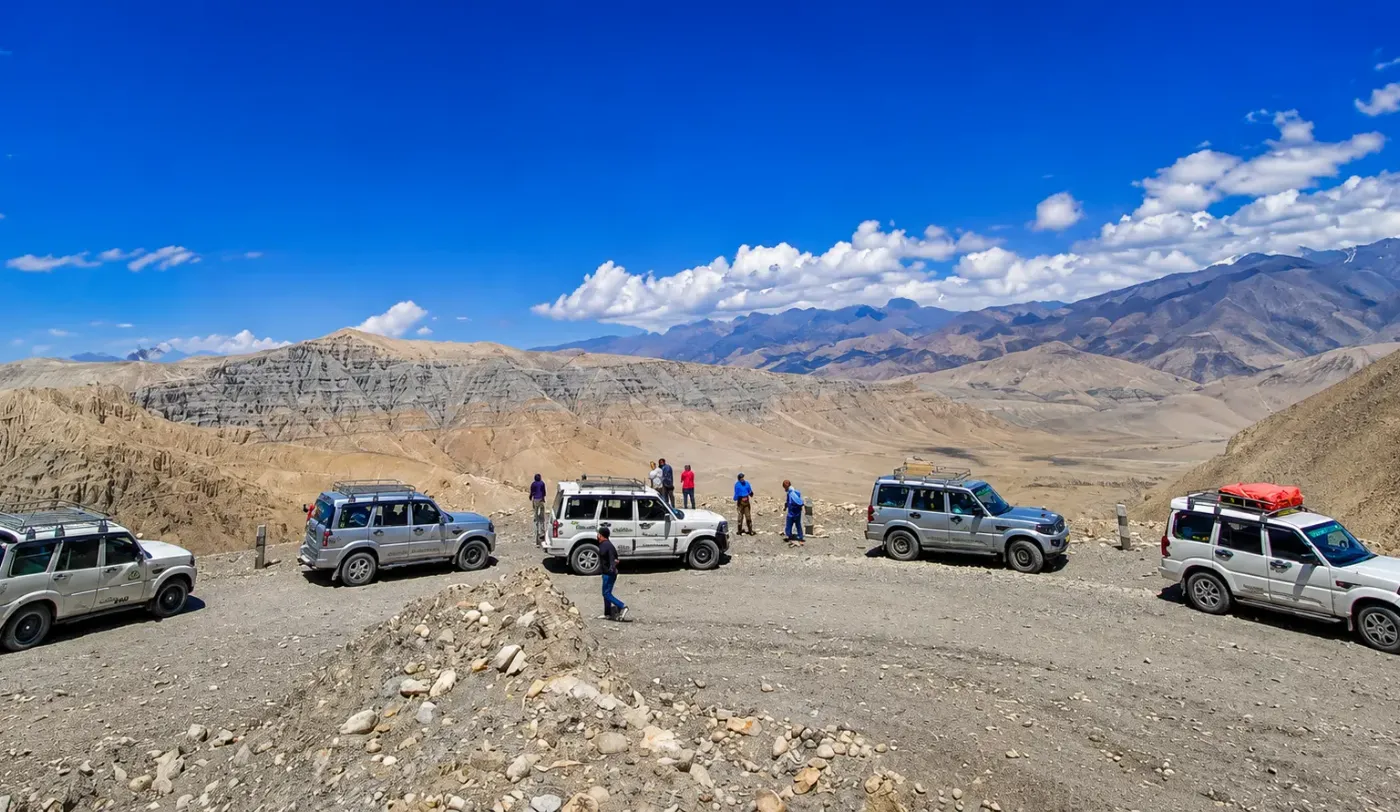
  • Day 3: Maccha Khola to Jagat (approximately 17 km, 6 to 7 hours). Restricted area entry checkpoint. Manaslu permit verified.
  • Day 4: Jagat to Deng (approximately 18 km, 6-7 hours). Trail enters pine and bamboo forest. Suspension bridge crossings.
  • Day 5: Deng to Namrung (approximately 20 km, 6 hours). Landscape transitions to alpine character.
  • Day 6: Namrung to Lho (approximately 11 km, 4 hours). First major Manaslu views from Lho (3,180 m). Ribung Gompa visit.
  • Day 7: Lho to Samagaon (approximately 10 km, 4 hours). Manaslu Base Camp side trip option (extra 2 hours). Acclimatisation: Day 8: rest and acclimatisation in Samagaon (3,520 m). Pungyen Monastery visit.
  • Day 9: Samagaon to Samdo (approximately 9 km, 3 hours). Tibetan refugee community. Rui La Pass excursion option.
  • Day 10: Samdo to Larkya Phedi (approximately 10 km, 4 hours). Final preparation for the pass.
  • Day 11: Larkya Phedi to Bimtang via Larkya La Pass (5,160 m) — the Circuit’s great day. 6 to 8 hours. Panoramic views of Manaslu, Himlung, and Kang Guru.
  • Day 12: Bimtang to Tilije (approximately 15 km, 5 hours). Descent through rhododendron forest.
  • Day 13: Tilije to Dharapani (approximately 12 km, 4 hours). Circuit ends at Annapurna Circuit junction.
  • Day 14: Nepal Vehicle Hiring: A pre-booked vehicle collects you in Dharapani. Drive to Pokhara (approximately 110 km via Besisahar, 3 to 4 hours) or Kathmandu (approximately 235 km, 8 to 10 hours).

This itinerary shows how Nepal Vehicle Hiring’s transport bookends the Manaslu Circuit experience: the jeep from Pokhara Lakeside on Day 1 and the return vehicle from Dharapani on Day 14 are pre-coordinated before the trek begins, giving trekkers total logistics certainty from the start.

Manaslu Circuit vs Annapurna Circuit: Choosing Your Pokhara-Based Trek

For trekkers based in Pokhara deciding between the Manaslu Circuit and the Annapurna Circuit, understanding the key differences helps you choose the right option — and Nepal Vehicle Hiring’s transport services cover both circuits from Pokhara equally well.

The Annapurna Circuit from Pokhara is significantly more accessible — Nepal Vehicle Hiring’s Pokhara to Manang jeep service or the Besisahar approach via Kathmandu to Manang jeep covers the approach in a single long drive, and the Jomsom-to-Pokhara return makes the Circuit a clean Pokhara-to-Pokhara loop. The Annapurna Circuit sees far more trekker traffic than Manaslu — particularly in the teahouse zone above Chame — which some trekkers find comforting.

Others find it too commercialised. The permit (NPR 3,000) is straightforward, and the Circuit doesn’t require a licensed guide or a restricted-area permit.

The Manaslu Circuit from Pokhara requires a longer vehicle approach to Arughat (160 to 180 km vs the Annapurna Circuit’s 85 to 178 km, depending on the start point), a more complex permit system (RAP + MCAP + optional ACAP), and a mandatory licensed guide. In exchange, it offers a far less crowded trail experience; some sections of the Manaslu Circuit retain genuine wilderness character that the Annapurna Circuit’s most popular sections have lost.

The restricted-area requirement adds complexity but also protection—the Manaslu Circuit’s permit system limits the number of trekkers and helps maintain the trail’s environmental quality.

Nepal Vehicle Hiring’s recommendation: if you have done the Annapurna Circuit and want the next level of Nepal trekking challenge, the Manaslu Circuit is the clear choice. If this is your first Nepal trek and you want the most established teahouse infrastructure, well-marked trails, and the least logistical complexity, the Annapurna Circuit is a better starting point.

Either way, Nepal Vehicle Hiking provides the approach vehicle from Pokhara — our Pokhara to Mustang jeep service and Kathmandu to Manang jeep for the Annapurna Circuit, and our dedicated Manaslu approach jeep service for the Budhi Gandaki route.

Book Pokhara to Ghatekhola Private Vehicle Hire with a private 4WD jeep, Scorpio, or SUV for a comfortable and reliable journey. Enjoy flexible pickup, experienced drivers, luggage space, and convenient mountain-road transportation.

What to Expect on the Pokhara to Gorkha to Arughat Road

For first-time travellers on the Pokhara-to-Arughat road, understanding what each section looks and feels like reduces the uncertainty of any long mountain road journey. Here is the honest, on-the-ground description of each section:

Pokhara to Abu Khaireni: Easy but Potentially Slow

This Prithvi Highway section is the most comfortable part of the journey. The road has been progressively widened over the last decade, and in 2026 it’s in its best-ever condition, with significant sections now dual carriageway.

The main challenge is traffic: the Prithvi Highway carries Nepal’s highest concentration of inter-city vehicles and can be congested, particularly at the Kathmandu exit end (less relevant here) and at market towns like Damauli. Landslides in the Trishuli gorge section can occasionally cause significant delays during monsoon—Nepal Vehicle Hiring monitors this section daily.

Average speed on this section: 50 to 70 km/h in normal conditions. The Pokhara-to-Abu Khaireni drive offers pleasant mid-hill landscape views and is generally relaxing.

Abu Khaireni to Gorkha: Steady Climb

The 21-kilometre Khaireni to Gorkha gains approximately 800 meters of altitude on a paved but narrow provincial road. The road is in reasonable condition and climbs steadily through switchbacks across terraced hillside farmland. The views across the Marsyangdi Valley widen as you gain altitude.
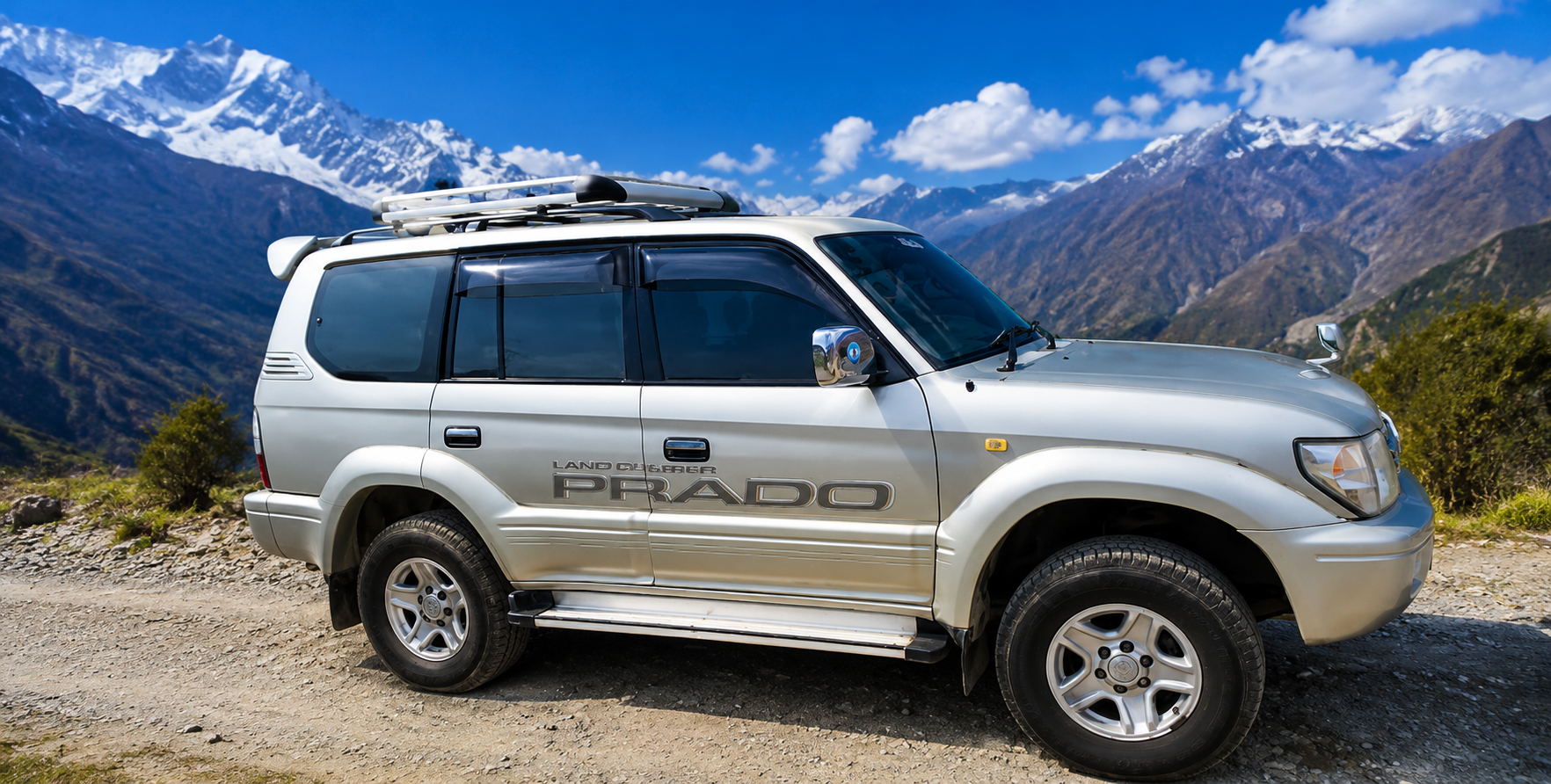
Average speed: 25 to 40 km/h. No significant technical driving challenges for an experienced driver, though the road is too narrow for larger vehicles to pass each other comfortably in some sections. Gorkha Bazaar at the top is a proper hill town with restaurants, shops, and Durbar above — worth the stop.

Gorkha to Arughat: Variable and Rough

The descent from Gorkha north to Arughat on the Budhi Gandaki is the most variable section of the pre-mountain approach. The upper portion near Gorkha is paved and in good condition. The lower portion approaching Arughat and the valley floor becomes rougher, with compacted gravel and dirt track sections alternating with paved stretches.

This section carries little tourist traffic and more local vehicle use — expect to share the road with tractors, motorbikes, and local goods vehicles. Average speed: 15-30 km/h on the rough sections.

The scenery is rewarding: the descent into the Budhi Gandaki valley reveals the distinctive deep gorge character that will define the next two weeks of trekking.

Arughat North to Soti Khola: Off-Road

North of Arughat, the road becomes a genuine off-road track along the Budhi Gandaki’s bank. This section passes through the Arkhet area and the approaches to Soti Khola, crossing several small tributaries and running close to the river in places. The road surface is rough compacted earth and gravel, with sections of exposed rock.

River crossing points vary by season — in low water (dry season), they are straightforward; in high water (monsoon and early post-monsoon), they require assessment and sometimes cannot be crossed. Average speed: 8 to 20 km/h.

This is classic Nepal mountain track driving — slow, purposeful, and requiring a driver who knows what they are doing.

Book Pokhara to Ghatekhola Private Vehicle Hire with a private 4WD jeep, Scorpio, or SUV for a comfortable and reliable journey. Enjoy flexible pickup, experienced drivers, luggage space, and convenient mountain-road transportation.

Accommodation at the Manaslu Circuit Trailhead

For trekkers arriving at Soti Khola or Maccha Khola in the late afternoon after the Pokhara-to-trailhead drive, understanding the accommodation options removes one layer of first-night uncertainty:

Soti Khola has several basic teahouses and guesthouses catering specifically to Manaslu Circuit trekkers — the start of the Circuit’s teahouse system that extends (with varying density) all the way to Dharapani. Room quality at Soti Khola is basic: simple beds, shared bathrooms, and a dining room serving dal bhat, noodle soups, and standard trekker fare.

The cost is low—about NPR 300 to 600 per room per night. Arriving by 4:30 to 5:00 p.m. for a 6:30 a.m.M Pokhara departure gives you first choice of rooms at Soti Khola, which matters more in peak season (October to November, April to May), when Manaslu Circuit trekker numbers peak.

Maccha Khola — the next settlement north of Soti Khola and the furthest point the Nepal Vehicle Hiring jeep can reach in good road conditions — also has basic teahouse accommodation. Its position slightly further along the Circuit means trekkers driven to Maccha Khola start the second day’s trek farther ahead, reaching Jagat (the restricted-area entry point) on Day 2 rather than Day 3.

Arughat Bazaar — for trekkers whose vehicle journey ends at Arughat due to road conditions — has the Circuit’s best accommodation before the trailhead, with proper hotel facilities, attached bathrooms, and restaurant options. Arughat is a genuine small town with commercial infrastructure, making it the most comfortable place to stay overnight before the trek begins, even if it adds 5 to 6 hours of walking to Day 1.

Manaslu Circuit: The Restricted Area Experience

The Manaslu Circuit’s restricted area status is one of its most important characteristics—both a logistical reality for permit planning and a quality-of-experience factor that sets it apart from Nepal’s more open trekking circuits. Understanding what the restricted area means in practice helps trekkers appreciate both the preparation required and the experience delivered.

The Manaslu Conservation Area above Jagat was designated a restricted area in 1992, requiring all foreign trekkers to obtain the Manaslu Restricted Area Permit and to be accompanied by a licensed guide. This requirement has two practical effects: it limits the total number of trekkers on the Circuit (as the permit cost and guide requirement exclude the budget solo-trekker market that dominates more open circuits), and it creates a permit revenue stream that funds conservation management in the Manaslu valley.

As a result, 30-plus years after the restriction was established, the Circuit has maintained better wildlife habitat, better trail infrastructure, and more authentic village communities than the Annapurna or Everest circuits.

The licensed guide requirement means that Manaslu Circuit trekkers travel with a local expert who provides cultural context, safety awareness on the Larkya La crossing, and emergency communication capability in a remote environment where rescue services are genuinely far away. Nepal Vehicle Hiring coordinates with partner licensed guide agencies for Manaslu Circuit guide assignment alongside the approach vehicle booking—contact us through our plan your trip page for complete vehicle-plus-guide coordination.

The restricted area also means that the teahouse system on the Manaslu Circuit, while adequate throughout the lower and middle sections, is less developed than on the Annapurna or Everest circuits. Trekkers should not expect the same range of menu options, accommodation quality, or access to charging facilities and Wi-Fi that has become standard on the Annapurna and Everest teahouse systems.

The Manaslu Circuit teahouse experience is more basic, more genuine, and, for many trekkers, more satisfying precisely because it lacks tourist infrastructure.

Toyota Prado Hire in Nepal: The Complete Guide

Way to manthali airport bp highway

The Toyota Prado — Nepal’s Premier Luxury 4WD Hire Vehicle

In Nepal’s top-end 4WD hire market, the Toyota Land Cruiser Prado holds a unique and highly sought-after position. It serves both the sophisticated urban traveller who demands luxury and refinement and the serious off-road adventurer who needs genuine four-wheel-drive capability to reach Nepal’s most remote and spectacular destinations.

It carries the legendary Land Cruiser name — with all the trust, durability, and prestige that name commands worldwide — while packaging those qualities in a more accessible, more agile, and arguably more elegantly styled form than the flagship Land Cruiser 200 or 300 series.

In Nepal specifically, the Toyota Land Cruiser Prado has become the vehicle of choice for an extraordinarily diverse range of clients: the Indian VIP pilgrimage group visiting Pashupatinath and Muktinath in comfort and dignity; the European couple on a luxury Himalayan adventure honeymoon; the senior diplomat or UN official requiring professional transport between Kathmandu meetings and district field visits; the family of five combining Kathmandu heritage sightseeing with a Chitwan wildlife safari; and the experienced trekker wanting to reach the trailhead for Upper Mustang or the Annapurna Circuit in a vehicle that matches the seriousness of the journey ahead.

This complete 2026 guide to Toyota Prado hire in Nepal covers everything prospective clients need to know: the full technical specification and feature set of the Prado (both the classic LC150 series and the new LC250 series), why the Prado is particularly well-suited to Nepal’s unique terrain mix, the full range of destinations and routes served by the Prado in Nepal, detailed pricing for different hire durations and destinations, a comparison of the Prado against other top-end vehicle options, practical guidance on getting the most from your Prado hire, and a step-by-step guide to booking your Prado through Nepal Vehicle Hiring Pvt. Ltd.

Nepal Vehicle Hiring Pvt. Ltd. — with over 8,000 satisfied clients, a 5.0 TripAdvisor rating, and a meticulously maintained fleet of Toyota Land Cruiser Prados driven by Nepal’s most professional mountain road drivers — is your trusted Prado hire partner across all of Nepal.

Private Scorpio jeep with luggage on the roof

What Is the Toyota Land Cruiser Prado? Nepal’s Most Prestigious Mid-Size 4WD

The Prado Heritage — Seven Decades of Land Cruiser DNA

The Toyota Land Cruiser Prado is a mid-size SUV in Toyota’s legendary Land Cruiser family. This lineage stretches back to 1951 when Toyota introduced its first purpose-built four-wheel-drive vehicle, inspired by the WWII-era Jeep but designed from the outset to be more reliable and more capable.

Over seven decades, the Land Cruiser family has evolved into one of the world’s most trusted and respected off-road vehicle ranges, with the flagship Land Cruiser, the mid-size Prado, and the compact FJ Cruiser each addressing different segments of the top-end 4WD market.

Toyota introduced the Prado as a distinct model in 1984 to offer a more refined, road-comfortable version of the classic Land Cruiser for buyers who wanted the brand’s off-road credentials with a more urban-friendly, passenger-focused package. Four generations of the Prado have followed, each adding refinement, technology, and capability while preserving the core qualities — robust construction, outstanding reliability, genuine off-road performance, and the iconic Land Cruiser badge — that have made it one of the most coveted SUVs in Asia, Africa, and the Middle East.

In Nepal, the Toyota Land Cruiser Prado has been the preferred vehicle of governments, international organisations, embassies, luxury tour operators, and discerning private travellers for over two decades. Its combination of on-road comfort, genuine off-road capability, prestigious appearance, and Toyota’s unmatched reliability makes it ideally suited to Nepal’s demanding terrain and the high standards expected by the top-end market segment it serves.

The Prado in Nepal — LC150 vs LC250: Understanding the Two Generations

Nepal’s Toyota Prado hire market features two distinct generations: the established, proven LC150 series (produced from 2009 to 2024) and the new LC250 series (launched globally in 2024 and becoming increasingly available in Nepal’s top-end hire market from 2025 onward). Understanding the differences between these two generations helps you select the right Prado for your Nepal journey.

SpecificationLC150 Prado (Classic)LC250 Prado (New Generation)
Production Years2009–20242024–present (GA-F platform)
Engine2.8L 4-Cyl Turbo Diesel | 177 PS | 450 Nm2.8L 4-Cyl Turbo Diesel | 245 PS | 500 Nm
Transmission6-speed automatic8-speed automatic
4WD SystemPart-time 4WD + KDSS | Multi-Terrain SelectFull-time 4WD | Multi-Terrain Select (7 modes)
PlatformTraditional body-on-frame (J150)TNGA-F body-on-frame (50% more rigid than LC150)
Ground Clearance210–215 mm225 mm
Seating5 or 7 (with 3rd row)5 or 7 (with 3rd row)
Interior QualityTop-end — leather, touchscreen, ambient lightingSignificantly upgraded — modern luxury, larger screens
Safety SystemsVSC, ABS, HAC, DAC, Pre-CollisionPre-Collision, Lane Departure, Radar Cruise, more
Hire AvailabilityWidely available in NepalLimited but growing in Nepal hire market
Hire Cost DifferenceStandard top-end rateHigher — latest model top-end applies

Both the LC150 and LC250 Prado generations are exceptional vehicles for travel in Nepal. The LC150 is the more proven and widely available option with an outstanding track record on Nepal’s mountain roads. The LC250 offers the latest technology, more engine power, enhanced safety systems, and a markedly more modern, comfortable interior.

Nepal Vehicle Hiring Pvt. Ltd. operates both generations — contact our team to confirm current availability and pricing for each.

Book Toyota Prado Hire in Nepal for premium and comfortable travel across city roads, highways, and mountain routes. A Prado is a suitable option for private tours, trekking transfers, pilgrimage journeys, and luxury road trips with a professional driver.

Toyota Prado Key Features: Why It Excels in Nepal

1. Multi-Terrain 4WD System — Built for Every Nepal Road Surface

The Toyota Land Cruiser Prado’s four-wheel-drive system is one of the most sophisticated and driver-friendly in its class—a critical feature for Nepal’s wide variety of road surfaces. The LC150 Prado’s Kinetic Dynamic Suspension System (KDSS) actively adjusts the stabiliser bars to improve on-road handling and off-road articulation — keeping the vehicle composed and comfortable on smooth highways while dramatically improving wheel contact on uneven mountain terrain.

The Multi-Terrain Select system — available on both the LC150 and LC250 — allows the driver to select from multiple terrain modes (Auto, Mud/Sand, Loose Rock, Rock, Mogul on LC150; Auto, Sand, Dirt, Deep Mud, Snow, Rock on LC250) that automatically optimise engine throttle response, brake modulation, and traction control for the specific surface being driven. In Nepal’s context, this means confident mountain driving from Kathmandu’s city streets (Auto mode) through the muddy post-monsoon sections of the Ramche landslide zone (Mud mode) to the rocky tracks above Jomsom toward Muktinath (Rock mode) — all in a single journey, with a single vehicle switch between modes.

2. Commanding Ground Clearance and Approach Angles

The Prado’s ground clearance of 210–225 mm (depending on generation and specification) is one of the most important practical attributes for mountain road driving in Nepal. Nepal’s roads—particularly above 2,000 meters—often feature protruding rocks, deep ruts, water-filled potholes, and rough compacted gravel surfaces that can damage lower-slung standard SUVs The Prado’s elevated ride height lets it navigate these obstacles with confidence, protecting the vehicle’s underside and delivering a smoother ride by absorbing surface variations through travel suspension rather than transferring them to the cabin.

The vehicle’s approach angle (28 degrees, LC150) and departure angle (25 degrees, LC150) allow it to tackle steep ascents and descents — critical for the switchback mountain roads above Betrawati (Langtang route), the descent from Dhunche to Syabrubesi, and the steep jeep tracks of the Kali Gandaki gorge above Jomsom. These are not abstract engineering specifications — they translate directly into the ability to complete journeys safely that would defeat lesser vehicles.

3. Top-end Cabin — Long-Distance Comfort at Nepal’s Highest Standard

Inside the Toyota Land Cruiser Prado, passengers discover a cabin that genuinely delivers on the vehicle’s top-end positioning. The LC150 Prado interior features high-quality leather seating (on top trim variants), a modern touchscreen infotainment system with navigation, dual-zone automatic air conditioning with independent front and rear controls, ambient interior lighting, top-end audio, multiple USB charging ports throughout the cabin, and generous headroom and legroom in both first and second rows.

The third row (in 7-seat configurations) is more compact and best suited to children or shorter-duration journeys.

The new LC250 Prado takes interior quality a significant step further — with a 12.3-inch touchscreen, a 10-inch digital instrument cluster, genuine leather upholstery, heated and ventilated front seats, a panoramic sunroof (on selected trims), ambient LED lighting, and a dramatically more modern and top-end overall impression that closes the gap with European luxury SUVs considerably. For clients booking the LC250 specifically, the cabin experience is one of the finest available in any vehicle for hire in Nepal.

4. Safety Systems — Peace of Mind on Nepal’s Mountain Roads

Nepal’s mountain roads present great driving challenges: narrow lanes with no barriers above sheer drops, poor visibility on tight switchbacks, loose gravel, sudden shifts from paved to unpaved roads, and the ever-present risk of landslide debris or rockfall. The Toyota Prado’s comprehensive safety systems—developed over seven decades of Land Cruiser engineering—provide meaningful electronic assistance that significantly reduces these risks.

Key safety systems in the LC150 Prado include: Vehicle Stability Control (VSC) preventing oversteer and understeer on loose surfaces; Traction Control System (TCS) preventing wheel spin on slippery or uneven terrain; Hill-start Assist Control (HAC) preventing rollback on steep uphill starts; Downhill Assist Control (DAC) maintaining controlled speed on steep descents without brake pumping; Anti-lock Braking System (ABS) with Electronic Brake-force Distribution (EBD) and Brake Assist for maximum braking performance; and a Pre-Collision System for forward collision warning and automatic emergency braking.

The LC250 also adds Lane Departure Alert with steering control, Blind Spot Monitor, Rear Cross Traffic Alert, Proactive Driving Assist, and an advanced Pre-Collision System with cyclist and pedestrian detection. Together, these systems create a substantially safer driving environment on Nepal’s most challenging roads.

5. Fuel Efficiency and Mountain Performance

The Prado’s 22.8-litre turbocharged diesel engine delivers an excellent combination of power and fuel economy, well suited to Nepal’s demanding terrain. On highway sections of major Nepal routes (Kathmandu to Pokhara, Kathmandu to Chitwan), the diesel engine achieves approximately 12–14 km per litre, providing impressive range between fuel stops.

On mountain roads with significant climbs and descents (Langtang, Mustang, Annapurna approaches), economy drops to approximately 8–10 km per litre but remains competitive. The diesel engine’s high torque at low rpm—450 Nm at 1,600–2,800 rpm in the LC150, 500 Nm at 1,600–2,800 rpm in the LC250—delivers effortless hill-climbing without aggressive gear changes, keeping mountain driving smooth and composed for both driver and passengers.

Book Toyota Prado Hire in Nepal for premium and comfortable travel across city roads, highways, and mountain routes. A Prado is a suitable option for private tours, trekking transfers, pilgrimage journeys, and luxury road trips with a professional driver.

Top Destinations for Toyota Prado Hire in Nepal

1. Kathmandu City and Valley — VIP Urban Transfers and Heritage Sightseeing

Kathmandu is where the Toyota Prado’s dual personality — urban sophistication and off-road readiness — is most immediately apparent. The vehicle navigates the capital’s busy, often chaotic streets with composure, with an elevated driving position that offers practical safety advantages and clear visibility to reduce stress.

For hotel-to-hotel transfers, airport pickups, business meeting transport, and multi-site heritage sightseeing circuits, the Prado’s top-end appearance and spacious, air-conditioned comfort make it the natural choice for discerning clients.

Kathmandu’s narrower streets — particularly in the old city areas of Thamel, Indrachowk, and the lanes approaching Pashupatinath and Boudhanath — require careful navigation, and the Prado’s dimensions (more compact than the Land Cruiser 200) give it a meaningful advantage in these environments. The 7-UNESCO-heritage-site sightseeing circuit (Pashupatinath, Boudhanath, Swayambhunath, Kathmandu Durbar Square, Patan Durbar Square, Bhaktapur Durbar Square, Changu Narayan) is one of the most popular Prado hire itineraries in Kathmandu Valley and one that perfectly showcases the vehicle’s ability to transition between highway driving, city navigation, and the uphill approaches to hilltop monument sites.

The 200 km drive from Kathmandu to Pokhara along the Prithvi Highway is one of Nepal’s most celebrated road journeys — a spectacular transit through the Trishuli River gorge, across the productive agricultural valleys of the Gandaki Province, and into the lakeside beauty of Pokhara with the Annapurna range growing progressively larger on the northern horizon. In a Toyota Prado from Nepal Vehicle Hiring Pvt. Ltd., this 5–6 hour journey is a genuinely pleasurable top-end experience: leather seating, dual-zone air conditioning, superior sound insulation that reduces road noise to a whisper, and panoramic views through the Prado’s large windows of some of Nepal’s finest scenery.

The Kathmandu to Pokhara Prado hire is particularly popular with honeymoon couples, VIP delegations, and corporate teams who want to arrive in Pokhara having truly enjoyed the journey, not simply endured it. Nepal Vehicle Hiring Pvt. Ltd. drivers know the best stops along this route — the Trishuli riverside viewpoints, the riverside restaurants at Mugling, the first mountain viewpoints approaching Pokhara — and will suggest pauses appropriate to your schedule and preferences.

3. Pokhara to Muktinath — The Sacred High-Altitude Journey

The journey from Pokhara to Muktinath Temple (3,800 m) via the Kali Gandaki gorge and Jomsom is one of Nepal’s most spectacular and challenging road journeys — and one for which the Toyota Prado is ideally suited. The route combines the smooth Siddhartha Highway south of Pokhara with the dramatically scenic (and occasionally rough) jeep track up the world’s deepest gorge through Tatopani, Ghasa, Marpha, Jomsom, and Kagbeni to Muktinath.

The Prado’s Multi-Terrain Select system, high ground clearance, and powerful diesel engine handle every surface transition on this route with confidence.

Muktinath is one of the holiest sites in both Hinduism and Tibetan Buddhism—a temple at 3,800 meters where a natural eternal flame burns from the earth, fed by underground natural gas, alongside the sacred 108 water spouts and a carved stone Vishnu figure. The journey to Muktinath by Toyota Prado from Pokhara (approximately 8–10 hours driving) is an increasingly popular alternative to flying to Jomsom and trekking, especially for pilgrims, older visitors, or those with limited time who want to reach this sacred site in comfort.

Nepal Vehicle Hiring Pvt. Ltd. Prado drivers are experienced on the full Pokhara-to-Muktinath route and can arrange an English-speaking guide on request.

4. Kathmandu to Chitwan — Luxury Wildlife Safari Transfer

The drive from Kathmandu to Chitwan National Park (Sauraha) — approximately 170 km, 4–5 hours via the Prithvi Highway and Muglin-Narayanghat road — is one of the smoothest and most comfortable long-distance drives in Nepal, and the Toyota Prado makes it feel even more so. Chitwan National Park is Nepal’s premier wildlife destination: one-horned rhinoceroses, Bengal tigers, Asian elephants, gharial crocodiles, and an extraordinary diversity of bird species inhabit the UNESCO World Heritage Site’s terai forests and river systems.

For guests staying at Chitwan’s top-end lodges and resorts, arriving by Toyota Prado from Kathmandu rather than by tourist bus perfectly matches the standard of their accommodation and wildlife experience. Nepal Vehicle Hiring Pvt. Ltd.’s Prado fleet handles the Kathmandu to Chitwan route comfortably in any season, including the post-monsoon period when roads can be damp, and the jungle is at its lushest.

5. Kathmandu to Lumbini — Lord Buddha’s Birthplace in Top-end Comfort

Lumbini — the birthplace of Siddhartha Gautama (Lord Buddha) around 563 BC — is one of the world’s most significant sacred sites and a UNESCO World Heritage Site, drawing Buddhist pilgrims from across Asia. Located about 330 km west of Kathmandu in the Rupandehi District of the Terai lowlands, Lumbini is a 7–9 hour drive from Kathmandu via the Prithvi Highway to Pokhara, then the Siddhartha Highway south to Butwal and the Terai.

For Buddhist pilgrim groups, monastery delegations, and cultural tourists making this significant journey, the Toyota Prado provides a dignified, comfortable vehicle for travel to one of humanity’s most sacred places. The Mayadevi Temple (marking the exact spot of the Buddha’s birth), the sacred pond where the young Siddhartha was bathed, the Ashoka Pillar erected in 249 BC, and the international monastery zone where more than 20 nations have built stunning Buddhist monuments — all are accessible from the Lumbini Development Zone.

A Prado hire provides the ideal vehicle for a comprehensive site circuit.

6. Upper Mustang Jeep Tour — The Forbidden Kingdom

For the most adventurous and prestigious Prado hire experience in Nepal, the Upper Mustang jeep tour stands in a category of its own. Upper Mustang — the ancient Kingdom of Lo, accessible to outsiders only since 1992 — is a high-altitude Tibetan-landscape desert of striking dramatic beauty: ochre and red eroded cliffs, cave complexes carved by ancient inhabitants, centuries-old Buddhist monasteries, and the medieval walled city of Lo Manthang at 3,840 meters.

The road from Jomsom north through Kagbeni to Lo Manthang is rough, remote, and demanding—exactly the kind of terrain the Prado’s full 4WD capability, Multi-Terrain Select, and high ground clearance were designed for.

An Upper Mustang Toyota Prado tour from Pokhara (typically 8–12 days) is one of Nepal’s most exclusive and memorable travel experiences — combining the extraordinary Himalayan desert landscape of the Mustang plateau with the cultural depth of Tibetan Buddhist Lo Kingdom heritage, all experienced from the top-end comfort of a Land Cruiser Prado with an expert local driver who knows every turn of this remarkable route.

7. Nagarkot, Dhulikhel, and Kavrepalanchok Hill Resorts

The hill resort areas east of Kathmandu — Nagarkot (2,195 m), Dhulikhel (1,550 m), Namobuddha (1,750 m), Panauti, and Balthali — are among the most popular short-break destinations for Kathmandu residents and visiting travellers alike. Famous for panoramic views of the Himalayan range (Everest, Lhotse, and Makalu to the east; Ganesh Himal, Manaslu, and the Annapurnas to the west on the clearest days), these hill destinations are accessible from Kathmandu via good paved roads in 45–90 minutes.

The Toyota Prado handles these routes effortlessly and provides the top-end comfort hill-resort guests expect from their ground transport.

8. Everest View — Ramechhap and Salleri Road Access

For trekkers and travellers approaching the Everest region by road rather than the increasingly congested Lukla flight, Nepal Vehicle Hiring Pvt. Ltd. provides Toyota Prado hire from Kathmandu to the eastern hill districts of Ramechhap (Manthali Airport) and Salleri (Solu Khumbu gateway). These drives traverse Nepal’s eastern hill roads—progressively more mountainous and scenic as you move east from Kathmandu—and the Prado’s 4WD capability and mountain-road performance ensure a safe, comfortable journey to these less-visited but extraordinarily rewarding eastern Nepal destinations.

Book Toyota Prado Hire in Nepal for premium and comfortable travel across city roads, highways, and mountain routes. A Prado is a suitable option for private tours, trekking transfers, pilgrimage journeys, and luxury road trips with a professional driver.

Toyota Prado Hire Cost in Nepal

Long-Distance Route Pricing (One Way)

RouteLC150 Prado (One Way)LC250 Prado (One Way)Drive Time
Kathmandu → PokharaNPR 28,000–50000NPR 35,000–70,0005–6 hours
Pokhara → Muktinath (via Jomsom road)NPR 32,000–60,000NPR 40,000–80,0008–10 hours
Kathmandu → Chitwan (Sauraha)NPR 22,000–50,000NPR 28,000–70,0004–5 hours
Kathmandu → LumbiniNPR 38,000–70,000NPR 48,000–90,0007–9 hours
Kathmandu → Syabrubesi (Langtang)NPR 24,000–60,000NPR 30,000–800,0005–7 hours
Kathmandu → GorkhaNPR 16,000–40000NPR 20,000–60,0004–5 hours
Kathmandu → Salleri / PhapluNPR 26,000–70000NPR 32,000–90,0006–8 hours
Kathmandu → NagarkotNPR 8,000–20,000NPR 10,000–40,0001.5–2 hours
Pokhara → GhandrukNPR 14,000–30,000NPR 18,000–40,0003–4 hours

Multi-Day Package Rates

Tour PackageDurationLC150 Prado RateIncludes
Kathmandu Heritage + Nagarkot Tour2 daysNPR 30,000–70,000Driver, fuel, 2 days unlimited valley + Nagarkot
Kathmandu–Pokhara–Chitwan Circuit7 daysNPR 160,000–320,000Full 7-day exclusive hire, all routes
Pokhara to Muktinath Return3 daysNPR 80,000–210,000Return journey + 1 waiting day in Muktinath
Upper Mustang Prado Tour10 daysNPR 280,000–580,000Full expedition, Jomsom to Lo Manthang
Nepal Grand Circuit12–14 daysNPR 340,000–880,000Kathmandu + Pokhara + Mustang + Chitwan + Lumbini

All rates include: Professional driver, fuel for all journeys, vehicle insurance, hotel pickup from any Kathmandu or Pokhara location, road tolls and parking fees, emergency vehicle kit.

Not included: Passenger accommodation and meals, guide fees, national park or monument entry fees, trekking permits, driver accommodation on overnight stays (charged at cost, approximately NPR 1,000–1,500/night).

Why Choose Nepal Vehicle Hiring Pvt. Ltd. for Your Toyota Prado Hire?

In Nepal’s competitive top-end vehicle hire market, Nepal Vehicle Hiring Pvt. Ltd. stands out for consistent, high-quality service across three critical dimensions: vehicle quality, driver professionalism, and customer support. These are not aspirational claims—they are backed by our 5.0 TripAdvisor rating from 200+ verified international client reviews and the repeat-booking rate from our corporate and tour operator client base.

Why Nepal Vehicle Hiring Is Nepal’s Trusted Prado Hire Provider

TripAdvisor — 200+ verified reviews | 8,000+ satisfied customers across all vehicle types. Well-maintained Prado fleet — LC150 & LC250 series | Regular Toyota-authorized servicing Professional drivers — mountain-road certified, bilingual (English/Nepali/Hindi), uniformed. Nepal-wide service — Kathmandu, Pokhara, Chitwan, Lumbini, Mustang, Langtang, Everest region.

Full AC, leather, dual-zone climate control — representing the highest standard24/7 support: WhatsApp — instant response guaranteed

Our Prado Driver Standards — The Top-end Difference

A Toyota Prado with a mediocre driver is simply an expensive taxi. A Toyota Prado with one of Nepal Vehicle Hiring Pvt. Ltd.’s professional drivers is a genuinely top-end travel experience. We select our Prado drivers through the most rigorous process in our fleet, befitting the clients and occasions this vehicle typically serves.

All Prado drivers hold advanced mountain-driving certification, have at least five years of experience on Nepal’s top-end vehicle routes, have verified English-language proficiency (conversational and route-narrative level), and pass a client-service assessment covering punctuality, presentation, passenger management, and cultural knowledge.

In practice, this means your Prado driver arrives at your hotel 5–10 minutes early, in uniform, with your name on a greeting card for airport pickups. They help with luggage, confirm the day’s itinerary, point out the most interesting aspects of the landscape, recommend the best meal stops on long routes, and communicate proactively about any schedule changes or route adjustments.

For VIP and corporate clients especially, our Prado drivers understand that their professionalism extends the client’s experience—and they take that responsibility seriously.

How to Book Your Toyota Prado Hire in Nepal

7-Step Booking Process

  • Step 1 — Contact Nepal Vehicle Hiring Pvt. Ltd. via WhatsApp, phone, email ([email protected]), or the booking form at vehiclehiringnepal.com. Our team responds within minutes during business hours and within 1 hour at any time.
  • Step 2 — Share your requirements: travel date(s), destination or full route itinerary, number of passengers, pickup location (hotel name and address), preferred departure time, and preferred Prado generation (LC150 or LC250 if you have a preference).
  • Step 3 — Specify any special requirements: airport meet-and-greet service, onboard refreshments, child seats, an English-speaking guide in addition to the driver, particular scenic stops, or corporate billing arrangements.
  • Step 4 — Receive your detailed quotation with full pricing breakdown, vehicle confirmation (including approximate year and specification), and driver background information.
  • Step 5 — Confirm your booking. For multi-day tours and corporate accounts, we may require a booking deposit. For single-day hires and transfers, confirmation is typically without deposit.
  • Step 6 — Receive your booking confirmation document with the driver’s name, direct WhatsApp number, vehicle plate number, vehicle colour and model year, and precise pickup instructions.
  • Step 7 — On travel day, your Prado arrives at your hotel at the agreed time. Your uniformed driver greets you, helps with your luggage, and ensures your vehicle is immaculate. Your top-end Nepal journey begins.

Booking Lead Times and Peak Season Advice

For single-day Kathmandu Valley Prado hires, we can often confirm bookings with 48 hours’ notice. For long-distance routes and multi-day packages, we recommend booking 5–7days in advance. For top-end multi-day tours (Upper Mustang, Nepal Grand Circuit, Muktinath pilgrimage circuits), please book 10–14 days in advance to allow proper preparation.

During Nepal’s peak tourism seasons — October–November (post-monsoon autumn) and March–May (spring) — demand for Toyota Prado hire is highest, and vehicles book out quickly. Clients planning Prado hire during these periods are strongly advised to book 3–4 weeks in advance.

Corporate and VIP Account Services

Nepal Vehicle Hiring Pvt. Ltd. offers dedicated corporate and VIP account services for organisations and individuals requiring regular Prado hire. Benefits include a named account manager for all bookings; priority Prado availability even during peak season; monthly consolidated invoicing with detailed trip reports; discounted rates on volume bookings (5+ trips per month); 24/7 emergency vehicle access for VIP client requirements; and customised booking protocols aligned to your organisation’s internal travel policies. Contact our team to discuss a corporate account arrangement.

Practical Tips for Your Toyota Prado Hire in Nepal

Maximising Your Prado Experience

  • Book the 7-seater configuration if you have 5–6 passengers plus luggage—the third row folds flat to create excellent luggage space or can seat additional passengers while keeping luggage in the rear boot.
  • For heritage sightseeing tours, request a licensed guide in addition to your Prado driver — the driver handles the vehicle. In contrast, the guide handles the cultural interpretation, letting both excel in their respective roles.
  • Request your preferred temperature setting at the start of the journey — the Prado’s dual-zone climate control lets you set front (driver area) and rear (passenger area) temperatures independently, keeping everyone comfortable regardless of preference.
  • For photography enthusiasts, the Prado’s large panoramic windows make it an excellent vehicle for in-transit photography on mountain roads—clean glass, stable chassis vibration damping, and a large viewing area combine for excellent results.
  • For the Muktinath and Upper Mustang routes, confirm current fuel station locations with your Nepal Vehicle Hiring driver — the last reliable fuel stations before the high-altitude sections are in Pokhara (for Muktinath) and Jomsom (for Upper Mustang). Your driver will ensure the vehicle is fully fuelled before entering remote sections.

Altitude Awareness for High-Altitude Prado Routes

For Prado hire routes that reach significant altitude — Muktinath (3,800 m), Upper Mustang (up to 4,200 m), Gosaikunda (4,380 m), or high mountain passes — altitude sickness (AMS) is a genuine health consideration for passengers. The Toyota Prado’s sealed, pressurised-feeling cabin doesn’t eliminate altitude effects but can temporarily mask mild symptoms.

Nepal Vehicle Hiring Pvt. Ltd. recommends consulting your doctor about AMS prevention medications before the journey; ascending gradually with overnight stops at intermediate altitudes; staying well hydrated throughout; and letting your driver know about any symptoms (headache, nausea, dizziness) so they can adjust the pace or recommend a lower-altitude rest.

What to Expect at Airport Pickup

For Toyota Prado airport pickup service (Tribhuvan International Airport, Kathmandu), Nepal Vehicle Hiring Pvt. Ltd. follows a professional protocol: your uniformed driver arrives at the arrivals hall 30 minutes before your expected landing time; they hold a card with your name prominently displayed; they assist with trolley and luggage to the vehicle; they confirm your hotel destination and any intermediate stops; and they provide a brief route commentary on the approximately 20–30 minute drive to your hotel. For clients arriving on late-night or early-morning flights, our drivers remain available regardless of the hour — this is what 24/7 service means in practice.

Frequently Asked Questions — Toyota Prado Hire in Nepal

What is the difference between hiring a Toyota Prado and a Toyota Fortuner in Nepal?

Both the Prado and Fortuner are excellent top-end 4WD vehicles, but they differ in several important ways. The Prado carries the prestigious Land Cruiser nameplate and sits higher in the Toyota SUV hierarchy—it has a more refined interior, a more sophisticated suspension system (KDSS on the LC150), and a stronger association with VIP and luxury travel.

The Fortuner is slightly more compact, more fuel-efficient, and marginally more agile in city environments. For VIP transfers, corporate clients, and high-prestige occasions, clients often prefer the Prado. For trekking trailhead transfers, budget-conscious family groups, and standard mountain road journeys, the Fortuner offers excellent value and capability.

Nepal Vehicle Hiring Pvt. Ltd. can recommend the best vehicle for your specific journey and requirements.

Is the Toyota Prado suitable for the Muktinath and Jomsom road?

Yes—the Toyota Land Cruiser Prado is one of the best vehicles for the Pokhara to Muktinath route via the Jomsom road. The Kali Gandaki gorge road above Tatopani includes rough sections, stream crossings, rocky terrain, and high-altitude passes that the Prado’s Multi-Terrain Select system, 4WD capability, and ground clearance handle with confidence.

Nepal Vehicle Hiring Pvt. Ltd.’s Prado drivers are specifically experienced on this route. Note that the Jomsom road has seasonal variations in condition — the monsoon period can make sections temporarily impassable; contact our team for current road condition updates.

How many passengers can a Toyota Prado carry in Nepal?

The Toyota Land Cruiser Prado is available in both 5-seat (2-row) and 7-seat (3-row with fold-flat third row) configurations. In Nepal Vehicle Hiring Pvt. Ltd.’s fleet, we primarily operate the 7-seat configuration.

For groups of 5–6 passengers with luggage, we fold the third row flat to create rear luggage space, providing an effective 5–6 passenger capacity with comfortable luggage accommodation. For groups of 7 passengers with minimal luggage (daypacks only), you can use the full 7-seat configuration.

Specify your passenger count and luggage volume when booking so we can advise the optimal configuration.

What is the most affordable way to hire a Toyota Prado in Nepal?

Nepal Vehicle Hiring Pvt. Ltd. offers Toyota Prado hire at some of the most competitive rates in Nepal’s top-end vehicle market — significantly below the NPR 35,000–50,000 per day quoted by some operators. Our Kathmandu Valley full-day LC150 Prado rate starts from NPR 15,000 (approximately USD 109).

For the best value, book directly with us (no middlemen or agency markup), book for multiple days to access multi-day tour pricing, travel in the off-peak season (December–February and June–September), and combine Prado hire with return transport in a single package booking. Contact our team for a specific quote on your itinerary.

Is self-drive available for the Toyota Prado hire in Nepal?

Nepal Vehicle Hiring Pvt. Ltd. does not currently offer self-drive hire of any vehicle in our top-end fleet, including the Toyota Prado. All Prado hires include a professional driver.

Nepal’s driving conditions — particularly on mountain roads — require specific local knowledge, familiarity with Nepal’s right-hand-traffic conventions, awareness of seasonal road hazards, and expertise in 4WD mountain driving that visitors without local experience would find highly challenging. Our professional drivers add significant value to the Prado hire experience through their road knowledge, cultural insight, and genuine commitment to client safety and satisfaction.

Can I hire a Toyota Prado for a wedding or special event?

Yes — Nepal Vehicle Hiring Pvt. Ltd. offers Toyota Prado hire for weddings, anniversaries, VIP events, and special occasions. The Prado’s prestigious appearance, spacious cabin, and professional driver service make it an excellent choice for wedding-day transport for the main couple or key family members. We can arrange basic wedding decorations upon advance request.

Contact our team at least one week before the event to discuss your specific requirements, preferred decoration style, and event timeline for a fully customised wedding vehicle package.

Conclusion: The Toyota Prado — Nepal’s Ultimate Travel Companion

The Toyota Land Cruiser Prado is more than a hire vehicle in Nepal — it is a statement of intent. When you choose a Prado for your Nepal journey, you are choosing a vehicle that has been refined over four generations and seven decades to handle exactly the kind of terrain Nepal presents: mountain roads that demand 4WD confidence, city streets that require refined handling and top-end comfort, high-altitude passes that test engine performance, and the unpredictable surfaces of remote Himalayan valleys that demand maximum ground clearance and Multi-Terrain Select sophistication.

You are also choosing a vehicle with one of the world’s most respected automotive nameplates—one that diplomats, heads of state, UN officials, and luxury travellers worldwide recognise as the global benchmark for capable, prestigious four-wheel-drive transport. In Nepal, where the Prado’s combination of attributes is more relevant and more immediately tested than almost anywhere else on earth, this recognition carries genuine meaning.

Nepal Vehicle Hiring Pvt. Ltd. brings to every Toyota Prado hire the same commitment to excellence that the Prado itself represents: a meticulously maintained vehicle presented to an immaculate standard, a professional and knowledgeable driver who enhances every journey, transparent pricing that rewards the client’s trust, and 24/7 support that means you are never alone on Nepal’s extraordinary roads.

Whether you are arriving at Tribhuvan International Airport for a VIP transfer to your five-star Kathmandu hotel, beginning a 10-day Upper Mustang expedition from Pokhara, making a sacred pilgrimage to Muktinath from the comfort of a leather-seated 4WD, or exploring the UNESCO heritage sites of the Kathmandu Valley on a full-day private circuit — the Toyota Prado from Nepal Vehicle Hiring Pvt. Ltd. is the vehicle that does justice to the extraordinary country you have come to experience.

Contact our team today. Nepal is waiting — and so is your Prado.

Book Your Toyota Prado Hire in Nepal Today!

Website: www.vehiclehiringnepal.com

WhatsApp (24/7

Email: [email protected]

Office: Bhagawatisthan, Thamel, Kathmandu, Nepal

VIP Guest Transportation in Nepal: Luxury Car Hire

Siddhartha Highway

VIP Guest Transportation Nepal — Luxury Car Hire and Top-end Transfer Guide

Nepal offers extraordinary contrasts: ancient temple complexes and modern airport terminals, rural mountain villages and five-star Kathmandu hotels, spiritual pilgrimage routes and high-altitude helicopter tours for those who can afford to reach the peaks in comfort rather than on foot. The travellers who arrive in Nepal requiring VIP guest transportation — heads of government and their delegations, corporate executives attending investment conferences, diplomatic visitors from neighbouring countries, high-net-worth adventure travellers, celebrity guests of luxury lodges, and the growing MICE (meetings, incentives, conferences, and exhibitions) clientele that Nepal’s hospitality sector has worked hard to attract — bring with them expectations of transport quality that the standard taxi and shared vehicle infrastructure cannot meet.

VIP guest transportation in Nepal is a specific and growing market segment, driven by Nepal’s emergence as a destination for high-end tourism and international business events alongside its traditional trekking and pilgrimage visitor base. Nepal Vehicle Hiring Pvt Ltd provides the top-end private vehicle hire services Nepal’s most discerning guests require— Land Cruiser Prado transfers, luxury car hire, airport VIP pickups, multi-day corporate convoys, and coordinated multi-vehicle arrangements for delegates.

This complete guide covers every aspect of VIP transportation in Nepal: the vehicle fleet, the service standards, the specific requirements of different VIP guest categories, the destinations and routes that top-end vehicle hire serves, and how Nepal Vehicle Hiring Pvt Ltd delivers the level of professionalism that turns a transport booking into an experience worthy of the guests it serves.

Who Needs VIP Guest Transportation in Nepal

VIP guest transportation in Nepal serves a specific, clearly defined set of traveller profiles, each with distinct requirements that standard private vehicle hire meets differently.

Government and Diplomatic Delegations. State visitors, ministerial delegations, and diplomatic missions visiting Nepal from neighbouring countries, India, China, Bangladesh, Sri Lanka, Pakistan, and from further afield, require transportation that reflects the dignity of their position and the seriousness of their purpose. Nepal Vehicle Hiring Pvt Ltd provides Toyota Land Cruiser convoys for diplomatic delegations, with drivers who understand protocol requirements for flag placement, vehicle positioning, and coordinating security escorts.

Our VIP transport coordination team confirms the precise vehicle requirements for diplomatic guests in advance, whether a single Land Cruiser Prado for a bilateral meeting or a coordinated convoy of five to eight luxury vehicles for a full state visit.

Corporate Executive Travel. International executives visiting Kathmandu for investment meetings, bilateral business discussions, factory inspections, or partnership negotiations require a different quality of transport experience from what commercial taxis and shared vehicles offer: punctuality guaranteed to the minute, professionally presented drivers in formal attire, vehicles with working air conditioning and charging facilities for devices, and the kind of quiet, efficient service that allows corporate guests to use travel time for calls and document review rather than managing their own navigation. Nepal’s growing position as a destination for infrastructure investment—hydropower, digital connectivity, tourism infrastructure—has created sustained demand for corporate VIP vehicle hire in Kathmandu, which Nepal Vehicle Hiring Pvt Ltd meets with a professional standard aligned with international expectations.

MICE and Conference Groups. Meetings, incentives, conferences, and exhibitions have become an increasingly important segment of Nepal’s international tourism economy, with Kathmandu’s growing convention infrastructure attracting regional and global events. Conference organisers need coordinated transport for groups of 20 to 200 delegates over multiple days, covering airport transfers, hotel-to-venue routes, sightseeing excursions, and evening banquet transfers.

This logistics challenge requires both an appropriate fleet and the organisational capacity to deploy it. Nepal Vehicle Hiring Pvt Ltd provides full MICE transport solutions, from individual car hire for VIP speakers to Hiace van fleets and tourist coasters for delegate groups.

Luxury and High-Net-Worth Travellers. Nepal’s luxury tourism market has grown substantially in recent years, driven by the country’s extraordinary natural and cultural assets, first-rate accommodation at Kathmandu’s five-star hotels, and a growing portfolio of luxury lodges in the Annapurna and Everest regions. High-net-worth travellers arriving for luxury Everest Base Camp trek experiences, Upper Mustang expeditions, and top-end Nepal tour packages require transport quality consistent with their accommodation and guiding standards.

Alpine Luxury Treks and Nepal Vehicle Hiring Pvt Ltd work closely to provide top-end vehicle hire services for this visitor category.

Wedding and Social Events. Top-end VIP car hire for weddings in Nepal—both for Nepali families celebrating at Kathmandu’s five-star venues and for destination weddings with international guests—is a specific and growing application of Nepal Vehicle Hiring Pvt Ltd’s luxury vehicle fleet. Our team provides bridal convoy arrangements, guest transfer coordination, and the attention to vehicle presentation wedding photography demands.

Prithivi highway road png

The VIP Vehicle Fleet — What Nepal Vehicle Hiring Pvt Ltd Provides

The foundation of any genuine VIP guest transportation service in Nepal is the vehicle fleet itself. Vehicle condition, age, interior quality, and specifications directly communicate the service standard the moment the guest opens the door, and no amount of professional driver behaviour can compensate for a dirty, poorly maintained, or mechanically unreliable vehicle.

Toyota Land Cruiser Prado. The Toyota Land Cruiser Prado is the premier VIP vehicle hire option in Nepal — and across the broader South and Southeast Asian luxury ground transport market — for reasons that are both practical and reputational. Its 4WD capability handles Nepal’s mountain roads as easily as it handles Kathmandu’s urban traffic.

Its dual-zone climate control, leather upholstery, and electronically adjustable seats provide the comfort standard expected by senior diplomatic and corporate guests. Its 220 mm ground clearance suits routes that include the uneven surfaces of Nepal’s heritage sites, rural hotel approaches, and mountain road sections.

Its universally recognised status as the vehicle of choice for heads of state, senior officials, and five-star hotel airport fleets across the region instantly signals to any VIP guest that the transport arrangement reflects their status. Nepal Vehicle Hiring Pvt Ltd provides Land Cruiser Prado hire for single-vehicle VIP transfers and for convoy arrangements requiring multiple matched vehicles.

Toyota Fortuner. The Toyota Fortuner is Nepal’s most popular top-end SUV in the non-diplomatic VIP transport category: robust, comfortable, well-equipped with modern safety features, and available in higher trim levels with leather seating, dual-zone climate control, and the refined interior corporate and high-end leisure guests expect. As a VIP vehicle hire option for executive travel within and beyond Kathmandu, the Fortuner combines genuine 4WD capability on Nepal’s variable road surfaces with the passenger comfort long transfers between Kathmandu, Pokhara, and Chitwan require.

Nepal Vehicle Hiring Pvt Ltd maintains its Fortuner fleet to the specific standard required for VIP guest use—regular interior detailing, verified air-conditioning performance, and driver presentation briefed to VIP service standards.

Top-end Sedan — Toyota Camry and Similar. For VIP guests whose itinerary is confined to Kathmandu’s paved urban road network, a top-end private sedan hire offers a sleeker, more formal option than an SUV—the kind of airport-to-hotel transfer in a well-maintained Toyota Camry or Hyundai Sonata that corporate travel managers specify for their executive clients in major Asian cities. Nepal Vehicle Hiring Pvt Ltd’s private car hire in Nepal for VIP urban transfers provides professionally presented sedans with uniformed drivers for this market segment.

Luxury Toyota Hiace — VIP Van. For small VIP delegations of 5 to 8 people travelling together, a top-end Hiace van configured for VIP use with leather or top-end fabric seating, individual air-conditioning vents, and dedicated luggage space keeps delegations together while maintaining the comfort standard appropriate for senior guests. Nepal Vehicle Hiring Pvt Ltd’s Hiace hire fleet includes models configured specifically for VIP group use.

VIP Sofa Bus. For larger delegations and MICE groups, the VIP Sofa Bus — with its 2×1 reclining sofa seats, WiFi connectivity, USB charging points, air suspension, and full climate control — provides the top-end group travel format for long-distance Nepal routes like Kathmandu to Pokhara and Kathmandu to Chitwan. Our bus hire services include VIP configuration for corporate and diplomatic group movements.

VIP Airport Transfer — The First and Last Impression

The Kathmandu airport VIP transfer is the single most important moment in any VIP guest’s Nepal transportation experience — the first point at which the quality of the transport arrangement becomes physically apparent. A VIP guest emerging from Tribhuvan International Airport’s arrivals hall, potentially after a long international journey, forms their first direct impression of Nepal’s hospitality standards when they are greeted and guided to their vehicle.

An efficient, professional, pre-arranged VIP airport pickup from Nepal Vehicle Hiring Pvt Ltd immediately signals that the entire Nepal visit has been organised to a standard consistent with the organiser’s own expectations.

Nepal Vehicle Hiring Pvt Ltd’s VIP airport transfer service at Tribhuvan International Airport includes: a uniformed meet-and-greet representative inside the arrivals hall holding a personalised name board; assistance with personalised trolley management through the arrivals concourse; escorted transit to the waiting Land Cruiser Prado or top-end vehicle in the designated parking area; and direct transfer to the hotel with prior hotel booking confirmation verified before arrival. For VVIP guests requiring additional protocol — government official status, diplomatic immunity documentation, or security escort coordination — our team liaises with the relevant airport authorities and hotel security in advance to ensure a smooth handover at every stage.

For guests departing from Tribhuvan International Airport, the VIP airport drop service reverses the arrival arrangement: hotel pickup at a confirmed time calculated back from the scheduled flight departure, allowing for Kathmandu’s variable traffic conditions, check-in processing time, and the preferred arrival buffer that senior guests and their security teams typically require. Nepal Vehicle Hiring Pvt Ltd’s drivers on the Kathmandu airport route monitor real-time traffic and adjust departure timing from the hotel to account for unexpected congestion—a standard practice in our VIP airport transfers that prevents the timing anxiety poorly coordinated departure arrangements create.

Book VIP Guest Transportation in Nepal with luxury cars, premium SUVs, Land Cruisers, Prados, Fortuners, and executive vans. Enjoy professional chauffeur service, airport pickup, hotel transfers, business travel, sightseeing, and private tours.

Kathmandu to Other International Airports — VIP Transfers

While Tribhuvan International Airport in Kathmandu is Nepal’s primary international gateway, Gautam Buddha International Airport in Bhairahawa (Siddharthanagar), near the Lumbini World Heritage Site, has grown significantly as an international entry point since opening its new terminal, with direct flights from major Asian hubs now operating regularly. Nepal Vehicle Hiring Pvt Ltd provides VIP airport transfer services from Gautam Buddha International Airport for VIP guests arriving on Lumbini-focused visits, diplomatic delegations to the Lumbini Development Zone, and high-profile visitors combining the Lumbini UNESCO heritage experience with onward travel to Pokhara or Kathmandu by private top-end vehicle.

The Pokhara International Airport, which completed its new terminal and international runway in recent years, now receives direct flights from several Asian destinations and serves as an international entry point for visitors arriving specifically for the Annapurna and Mustang region experiences. Nepal Vehicle Hiring Pvt Ltd provides VIP airport transfers from Pokhara International Airport to all Lakeside hotels, plus onward transfers to the Nayapul trailhead for the Annapurna Base Camp trek and Ghorepani Poon Hill trek through our Pokhara car hire service.

For VIP guests arriving in Pokhara and needing onward transport to Kathmandu, our Pokhara to Kathmandu private vehicle service offers a top-end road transfer option. For budget groups, our Kathmandu to Pokhara bus and Pokhara to Kathmandu bus connect both cities for non-VIP travel.

Plan all Nepal tour packages, including multi-airport Nepal circuits, through our plan trip page.

VIP Hotel to Heritage Site Transfers — Kathmandu Sightseeing

VIP guests visiting Kathmandu’s extraordinary concentration of UNESCO World Heritage Sites — Pashupatinath Temple, Boudhanath Stupa, Swayambhunath, Patan Durbar Square, Bhaktapur Durbar Square, Changu Narayan — require private car hire that manages the specific access challenges of heritage site environments: narrow lanes, limited parking, and the occasional requirement to stop short of the main entrance and walk the final approach. Nepal Vehicle Hiring Pvt Ltd’s Kathmandu sightseeing car hire for VIP guests coordinates these logistics in advance—identifying the correct vehicle drop point for each site, confirming the local guide arrangement alongside the driver, and ensuring the guest’s time at each site is maximised rather than consumed by navigation logistics.

Book VIP Guest Transportation in Nepal with luxury cars, premium SUVs, Land Cruisers, Prados, Fortuners, and executive vans. Enjoy professional chauffeur service, airport pickup, hotel transfers, business travel, sightseeing, and private tours.

The Bhaktapur heritage day tour by private VIP car from Nepal Vehicle Hiring Pvt Ltd is one of the most consistently rewarding single-day cultural experiences available to any Kathmandu visitor — the medieval Newar city east of Kathmandu, with its ceramic-tiled Durbar Square, the famous 55-Window Palace, and the potters’ square where traditional black pottery is still made by hand in the open air, delivers a UNESCO heritage experience of international quality in a 45-minute drive from any five-star Kathmandu hotel. The Nagarkot sunrise transfer — a pre-dawn private car hire to the hilltop viewpoint at Nagarkot for the famous Himalayan dawn panorama — is the single most requested optional addition to any VIP Kathmandu itinerary, with the full range from Langtang to the Everest massif visible on clear mornings from this single accessible viewpoint east of the valley.

For VIP guests continuing beyond Kathmandu to Nepal’s trekking regions, Nepal Vehicle Hiring Pvt Ltd’s trekking transport network connects the same top-end vehicle hire standard to trailhead transfers: Besisahar private vehicle for the Annapurna Circuit approach, Manaslu trek transport for the Manaslu Circuit, Salleri and Phaplu jeep hire for the Everest overland approach, and Kathmandu to Soti Khola jeep service for the Manaslu southern approach. Every trailhead transfer available through Nepal Vehicle Hiring Pvt Ltd is bookable at the same VIP standard — top-end vehicles where appropriate, verified drivers, all-inclusive transparent pricing, and hotel pickup from any Kathmandu address.

Multi-Destination VIP Transportation — Kathmandu, Pokhara, Chitwan and Beyond

Many VIP guests visiting Nepal combine a Kathmandu cultural experience with a Pokhara mountain base and a Chitwan wildlife safari in a coordinated multi-destination circuit. The vehicle hire requirements for this kind of multi-day, multi-city VIP itinerary are more complex than a single-city transfer arrangement: different vehicle types may be appropriate for different legs, the accommodation quality at each destination affects the standard of vehicle expected at hotel arrival, and the total journey length — Kathmandu to Pokhara is approximately 200 km; Pokhara to Chitwan approximately 150 km — requires vehicles with the reliability and comfort appropriate for full-day transfers.

Nepal Vehicle Hiring Pvt Ltd coordinates the complete vehicle arrangement for multi-destination VIP Nepal tours: Land Cruiser Prado hire for the Kathmandu airport arrival, private car hire in Kathmandu for city sightseeing days, the Kathmandu-to-Pokhara intercity leg by private top-end vehicle along the Prithvi Highway, Pokhara car hire for the Sarangkot sunrise transfer and lakeside sightseeing, and the Pokhara-to-Chitwan leg for the Chitwan jungle safari extension. The return to Kathmandu by private vehicle from Chitwan, or the Lumbini heritage site extension via our Kathmandu-to-Lumbini service, completes a fully coordinated Nepal VIP circuit through a single vehicle-hire relationship.

For VIP guests combining the multi-destination ground transport circuit with luxury trekking — an Everest Base Camp with helicopter return or the luxury Annapurna Base Camp experience — Alpine Luxury Treks and Trek Nepal Himalayas provide the trekking component coordinated alongside Nepal Vehicle Hiring Pvt Ltd’s top-end vehicle hire services for the road transport legs.

Corporate Convoy and Delegation Transportation

Large diplomatic delegations and corporate groups requiring multiple matched vehicles present a specific coordination challenge that distinguishes professional VIP transport providers in Nepal from standard vehicle hire operations. A convoy of four to eight matched Land Cruiser Prados for a ministerial delegation — with consistent vehicle colour, confirmed seat assignments, coordinated departure timing, and radio contact between drivers — is a fundamentally different logistical operation from booking four separate vehicles independently and hoping they all arrive at the same time.

Nepal Vehicle Hiring Pvt Ltd manages corporate convoy arrangements through a dedicated logistics coordinator who confirms each delegation’s specific requirements—vehicle count, configuration, timing, route, and protocol requirements —48 to 72 hours before the scheduled service. On the day, a lead driver manages inter-vehicle communication and timing, ensuring the convoy maintains formation through Kathmandu traffic and arrives at each destination as a unified group.

This level of convoy management is available to diplomatic guests, MICE conference delegates, and corporate delegations as a top-end service, confirmed through our contact team on WhatsApp.

Long-Distance VIP Transfers — Kathmandu to Pokhara by Private Car

The Kathmandu to Pokhara private car transfer is Nepal’s most frequently booked long-distance VIP vehicle hire route — a 200-kilometre journey along the Prithvi Highway taking 5 to 7 hours that a growing number of business travellers, high-end tourists, and government officials prefer to complete by road rather than the 25-minute domestic flight, specifically because the Prithvi Highway drive through the Trishuli River gorge, the Mugling riverside section, and the arrival into the Pokhara valley is one of Nepal’s genuinely finest scenic road experiences. In a well-maintained, air-conditioned Land Cruiser Prado or top-end SUV from Nepal Vehicle Hiring Pvt Ltd, the same journey that would be tiring in a standard taxi or bus becomes a comfortable, interesting, and visually rewarding experience that itself constitutes part of the Nepal visit.

Nepal Vehicle Hiring Pvt Ltd’s VIP Kathmandu-to-Pokhara transfer includes: hotel-to-hotel door service, a professionally presented driver briefed on the guest’s specific requirements, a confirmed mid-journey rest stop at a recommended Mugling restaurant, and the option of detours to the Manakamana Temple cable car station or scenic viewpoints along the Trishuli River gorge. For VIP guests who prefer to travel overnight, our Kathmandu to Pokhara bus service offers a budget alternative, while our private car hire service provides the VIP standard.

Our Pokhara to Kathmandu bus or private vehicle covers the return trip with the same professional service.

VIP Transportation for Weddings and Special Events

Nepal’s five-star wedding industry at venues like the Hyatt Regency, Dwarika’s, and Soaltee Westmin requires coordinated VIP vehicle hire that goes beyond booking a cleaner car. A wedding convoy arrangement includes matched top-end vehicles, coordinated timing across multiple pickup points, bridal vehicle presentation to photographer standards, and smooth delivery of the wedding party to each venue without logistical friction.

Nepal Vehicle Hiring Pvt Ltd coordinates wedding arrangements through our contact team: Land Cruiser Prado for the bridal couple, top-end cars for immediate family, and Hiace vans or coasters for the wider guest group.

For international guests arriving in Nepal for destination wedding events, Kathmandu airport VIP transfers, Kathmandu sightseeing, Bhaktapur day tours, and Nagarkot sunrise transfers for pre-wedding days create a full transport experience that extends the event’s quality into every guest’s stay in Nepal. Formal attire, interior detailing to a photography standard, and pre-confirmed timing distinguish Nepal Vehicle Hiring Pvt Ltd wedding vehicle hire from standard taxi arrangements.

Inter-City VIP Transportation — Kathmandu, Pokhara and Chitwan Network

Nepal’s three primary VIP destination cities are connected by road at a standard that top-end vehicle hire can make genuinely preferable to domestic flights for many high-end guests. The Kathmandu to Pokhara VIP transfer by Land Cruiser Prado or Fortuner delivers the Prithvi Highway’s Trishuli River gorge scenery, the optional Manakamana Temple cable car stop, and the dramatic Annapurna range arrival into Pokhara — all eliminated by the 25-minute domestic flight.

Nepal Vehicle Hiring Pvt Ltd’s private car hire on this route is the VIP standard, while our Kathmandu to Pokhara bus service offers a budget alternative.

The Pokhara to Chitwan VIP transfer connects the lakeside mountain city to Nepal’s finest wildlife destination —3-a 34-hour private vehicle journey for Chitwan jungle safari guests. Our Pokhara to Chitwan bus offers a budget option; private VIP car hire provides a top-end hotel-to-hotel service.

The full Nepal VIP triangle — Kathmandu, Pokhara, Chitwan, and Kathmandu return — is coordinated as a single package through our Nepal tour package service and is bookable through our plan trip page.

VIP Transportation for the Pilgrimage Circuit — Lumbini, Muktinath, Pashupatinath

A significant and growing category of VIP guest transportation in Nepal is high-profile Hindu and Buddhist pilgrimage travel—senior religious leaders, prominent devotees, and political figures visiting Nepal’s most important sacred sites, often with security requirements and protocol considerations that standard shared transport cannot accommodate. The three most significant pilgrimage destinations for VIP guests are Lumbini (the birthplace of Lord Buddha, a UNESCO World Heritage Site), Muktinath (the 106th Divya Desam of Vaishnavite tradition, at 3,710 metres in the Mustang region), and Pashupatinath Temple in Kathmandu (one of the most important Shiva temples in the Hindu world).

Nepal Vehicle Hiring Pvt Ltd provides VIP pilgrimage circuit transport for all three destinations: private car hire to Lumbini from Kathmandu by top-end vehicle (or connecting from the Sunauli border for VIP visitors from India), Kathmandu sightseeing for Pashupatinath and heritage zone visits, and the coordinated Muktinath yatra transport covering Pokhara to Muktinath via the Kali Gandaki gorge. The private VIP jeep from Pokhara to Muktinath is the standard vehicle for all high-profile pilgrimage groups, with our experienced drivers familiar with Jomsom wind timing, the Kagbeni permit checkpoint, and Ranipauwa access requirements, which make this transfer different from a standard highway car hire.

Driver Standards for VIP Guest Transportation

The driver is the most visible representative of the VIP transportation service for every guest, every journey. Nepal Vehicle Hiring Pvt Ltd selects and briefs its VIP driver team to a specific standard that differentiates the service from standard vehicle hire.

Professional Presentation. VIP guest drivers from Nepal Vehicle Hiring Pvt Ltd present in formal attire—typically dark trousers, a formal shirt, and, where required for diplomatic assignments, a suit jacket—and maintain this presentation throughout multi-day assignments. Vehicles are pre-cleaned at the pickup point, with floor mats and functional air conditioning verified before the guest boards, and no personal items visible in the driver compartment.

English Communication. All VIP driver assignments through Nepal Vehicle Hiring Pvt Ltd are staffed by drivers with functional to proficient English communication skills—enough to provide route information, handle guest requests during the journey, and confirm arrival times. For guests with specific language requirements (Mandarin, Hindi, Japanese), our booking team can assign drivers with the required language background with prior notice

Discretion and Privacy. VIP guests, particularly diplomatic and corporate travellers, need confidence that their conversations, business discussions, and personal travel details will not leave the vehicle. Nepal Vehicle Hiring Pvt Ltd’s VIP driver team is specifically briefed on confidentiality standards as a condition of service on VIP assignments — no phone calls in the guest cabin during travel, no discussion of passenger identity or travel details with third parties, and full compliance with any specific privacy requirements communicated at booking.

Punctuality. VIP transportation in Nepal demands a standard of timing precision that standard vehicle hire rarely achieves. Nepal Vehicle Hiring Pvt Ltd’s VIP drivers arrive at the pickup location 10 to 15 minutes before the confirmed time, message the booking contact with the vehicle’s position and arrival confirmation, and stay in touch with our central coordination team for any real-time adjustments needed due to traffic or access changes.

24/7 VIP Transportation — Availability That Matches Global Guest Schedules

International VIP guests arrive at Tribhuvan International Airport on flights from across Asia and the world that land at every hour of the day and night — early morning arrivals from the Middle East transit hub flights, late evening arrivals from Southeast Asian connections, and the occasional dedicated charter arrival at times that commercial scheduled services do not serve. A VIP airport transfer service in Nepal that is only available during standard business hours is not a VIP service at all.

Nepal Vehicle Hiring Pvt Ltd provides 24-hour VIP transportation for pre-booked transfers—every confirmed VIP pickup, regardless of arrival time, is met by our team with the vehicle and driver already in position.

Booking and coordination are equally available 24/7: WhatsApp gives you direct access to our VIP booking team for confirmations, schedule changes, and urgent requests outside standard business hours. Our plan trip page lets you submit online enquiries for VIP transport requirements, which we receive, review, and respond to within two hours during business hours and within four hours at any other time.

Book VIP Guest Transportation in Nepal with luxury cars, premium SUVs, Land Cruisers, Prados, Fortuners, and executive vans. Enjoy professional chauffeur service, airport pickup, hotel transfers, business travel, sightseeing, and private tours.

VIP Transportation for Luxury Trekking Guests

The intersection of VIP guest transportation and Nepal’s luxury trekking market is a specific and growing category — travellers arriving for the luxury Everest Base Camp lodge trek, the EBC with helicopter return, or the top-end Annapurna region experiences offered by our sister companies Trek Nepal Himalayas and Alpine Luxury Treks, who arrive with expectations of a consistently high standard across every component of their Nepal visit — including and especially the ground transport that connects their five-star Kathmandu hotel to the domestic flight departure, the highland lodge arrival, and the return journey home.

For these guests, the Kathmandu airport VIP transfer in a Land Cruiser Prado from Nepal Vehicle Hiring Pvt Ltd is the standard arrangement, setting the tone for the top-end Nepal experience the guest has booked before the first trekking step is taken. Pre-trek Kathmandu sightseeing by private top-end car covers the heritage zone visits (Pashupatinath, Boudhanath, Swayambhunath) and the Bhaktapur day tour at the guest’s preferred pace.

The Nagarkot sunrise transfer provides the pre-departure Himalayan panorama for guests who want to see the range they are about to walk into before the domestic flight lifts off from Tribhuvan Airport. After the trek, the airport drop service closes the Nepal experience as professionally as it began.

VIP Transportation Protocol — Understanding Nepal’s Standards

Nepal has hosted more high-profile state visits, SAARC summits, and international conferences over the past decade, and its protocol standards for VIP and VVIP transportation have evolved accordingly. Understanding the specific protocol requirements different categories of VIP guests in Nepal expect—and ensuring the vehicle hire arrangement meets them rather than creating protocol friction—is a core competency that distinguishes a professional VIP transportation provider in Nepal from a standard vehicle hire company that has acquired a cleaner car.

For government and ministerial guests, the protocol hierarchy governs vehicle assignment: the most senior official travels in the lead vehicle, which is the most prestigious in the convoy, with security personnel in the following vehicle and support staff in subsequent private vehicles. Flag placement on the lead vehicle — Nepal national flag and guest country national flag on opposite bonnet positions — is arranged by Nepal Vehicle Hiring Pvt Ltd in advance for official state visits, using the correct flag specifications confirmed with the relevant embassy or protocol office.

For ministerial-level visits that do not require full state protocol, the flag arrangement is optional and confirmed with the delegation’s protocol officer.

For diplomatic guests at the ambassador or high commissioner level, the standard VIP vehicle hire arrangement covers a single Land Cruiser Prado with a uniformed, protocol-briefed driver, meeting at the hotel rather than at the airport arrivals hall (as diplomatic guests at this level often travel with their own security team who manages arrivals). The driver is briefed on diplomatic title usage and the correct form of address for the guest’s specific position.

For corporate C-suite and board-level guests, the protocol standard focuses on punctuality, vehicle presentation quality, and a friction-free transfer process rather than formal ceremony. A Land Cruiser Prado or Fortuner with a professionally dressed driver who arrives 10 minutes early, assists with luggage, and navigates without requiring the guest to provide directions meets the full corporate standard.

Nepal Vehicle Hiring Pvt Ltd’s VIP car hire service for corporate guests focuses on these operational strengths rather than ceremonial protocol.

VIP Transportation for Nepal’s Film and Media Industry

Nepal’s growing film and media sector—both domestic Nepali production and international film crews and documentary teams that visit the country for its extraordinary landscapes, cultural richness, and access to Himalayan environments unavailable anywhere else on earth—represents a specific and growing segment of Nepal’s VIP transportation market. Film crews have specific vehicle hire requirements that differ from both standard tourism and corporate travel: large amounts of equipment requiring vehicle cargo space rather than passenger seating, location-to-location flexibility that requires vehicles available for extended hours at unpredictable sites, and the occasional requirement for 4WD vehicles capable of accessing remote off-road locations for shooting in areas that standard production vehicles in other countries would never reach.

Nepal Vehicle Hiring Pvt Ltd provides film and media production vehicle hire across the full spectrum of production needs: Land Cruiser Prados for on-screen vehicle appearances and VIP talent transport, Hiace vans for equipment and crew movement, and a 4WD jeep fleet for location access on mountain roads, river valley approaches, and the remote tracks that Nepal’s most visually spectacular documentary and film locations require. Our drivers on production assignments are briefed to accommodate the flexible, extended-hours schedule film productions run—available from early morning call times to late evening wrap times —with meals and rest breaks coordinated around the production schedule rather than a fixed daily hire period.

For international documentary crews filming Nepal’s Annapurna Circuit trek landscape, Everest Base Camp approaches, or the extraordinary cultural environments of Upper Mustang and the Karnali region, Nepal Vehicle Hiring Pvt Ltd coordinates the complete ground transport chain — from Kathmandu airport transfer for the arriving crew to the trailhead access jeeps, the return vehicle arrangements, and the inter-city production transfers between Kathmandu, Pokhara, and any other production base cities.

Pricing — VIP Vehicle Hire Rates in Nepal

The following 2026 daily and per-transfer rates apply to Nepal Vehicle Hiring Pvt Ltd VIP guest transportation services. All rates are all-inclusive of driver, fuel, and road tolls within Nepal. Airport meet-and-greet service is included in all VIP airport transfer bookings.

Toyota Land Cruiser Prado (Full Day, Kathmandu Valley): NPR 30,000 to 40,000 (USD 225 to 300) for the full vehicle, 8 to 10 hours. Ideal for diplomatic guests, senior corporate visitors, and VIP sightseeing for luxury tourism.

Toyota Fortuner (Full Day, Kathmandu Valley): NPR 20,000 to 30,000 (USD 150 to 225) for the full vehicle, 8 hours. Corporate executive standard for city transfers and sightseeing.

Top-end Sedan (Airport Transfer, Kathmandu): NPR 4,000 to 7,000 (USD 30 to 53) per transfer from Tribhuvan International Airport to any Kathmandu hotel, including meet-and-greet. VIP standard single-leg transfer.

Land Cruiser Prado (Kathmandu to Pokhara): NPR 22,000 to 35,000 (USD 165 to 263) for a full-vehicle, one-way, hotel-to-hotel transfer. Top-end long-distance VIP transfer.

Hiace VIP Van (Per Day): NPR 18,000 to 28,000 (USD 135 to 210) for up to 13 passengers, 8 hours. Diplomatic delegation small-group movement.

VIP Sofa Bus Charter (Kathmandu to Pokhara): NPR 60,000 to 90,000 (USD 450 to 675) for a full bus, 30 to 35 seats. MICE conference delegate group transfer.

Multi-day VIP package pricing for full Nepal circuits — Kathmandu sightseeing, Pokhara transfer, Chitwan, and return — is available through a single all-inclusive quote from our VIP booking team. Contact us on WhatsApp or via our plan trip page with your full itinerary dates and guest profile for a comprehensive VIP transport quotation.

Practical Guide to Booking VIP Transportation in Nepal

  • Book at least 48 to 72 hours in advance: VIP vehicle assignments require driver briefing, vehicle preparation, and coordination with hotel security and airport protocol teams. We can accommodate same-day bookings where possible, but we cannot guarantee the specific vehicle type or driver assigned to a VIP standard.
  • Provide complete guest details at booking: Full name, nationality, hotel name and address, flight number and arrival time, and any specific protocol or security requirements. Contact Nepal Vehicle Hiring Pvt Ltd at +WhatsApp via WhatsApp or through our plan trip page.
  • Confirm vehicle type at booking: Land Cruiser Prado for diplomatic and senior corporate guests; Toyota Fortuner for executive standard; top-end sedan for urban-only VIP transfers; Hiace van for small VIP delegations.
  • Specify driver language requirement: English-speaking drivers are standard for all VIP assignments. Specify Hindi, Mandarin, or other language requirements at the time of booking.
  • For MICE and conference groups: Provide the full delegation list, schedule, and hotel list at least one week before the event. Nepal Vehicle Hiring Pvt Ltd assigns a dedicated logistics coordinator for all multi-day conference transport programmes.
  • Dress code: VIP service drivers are present in formal attire as standard. Specific uniform requirements (dark suit, specific colour) can be requested at booking.
  • Airport fast-track: Nepal Vehicle Hiring Pvt Ltd’s VIP airport transfer service includes a meet-and-greet representative inside the arrivals hall. Security escort or diplomatic channel access requires coordination with the Ministry of Foreign Affairs — advise Nepal Vehicle Hiring Pvt Ltd at booking if the guest’s status requires this.

Why Choose Nepal Vehicle Hiring Pvt Ltd for VIP Guest Transportation

  • Top-end fleet: Land Cruiser Prado, Toyota Fortuner, top-end sedans, luxury Hiace vans, VIP sofa buses, and tourist coasters — full range for individual VIPs to large delegations.
  • VIP driver standard: Formal presentation, English communication, a confidentiality briefing, and a punctuality protocol for every VIP assignment.
  • Airport meet-and-greet: Uniformed representative in the arrivals hall with a personalised name board for all VIPs.
  • 24/7 availability: All confirmed VIP transfers honoured regardless of flight arrival time. 24-hour WhatsApp contact: +977WhatsApp
  • Multi-destination coordination: Complete Nepal VIP circuit coordination — Kathmandu, Pokhara, Chitwan, Lumbini, Muktinath — through a single booking relationship.
  • Luxury trekking integration: Coordinated with Alpine Luxury Treks and Trek Nepal Himalayas for guests combining top-end vehicle hire with luxury trekking packages.
  • Transparent pricing: All-inclusive quotes covering driver, fuel, and road tolls — no surprise additions at journey end.
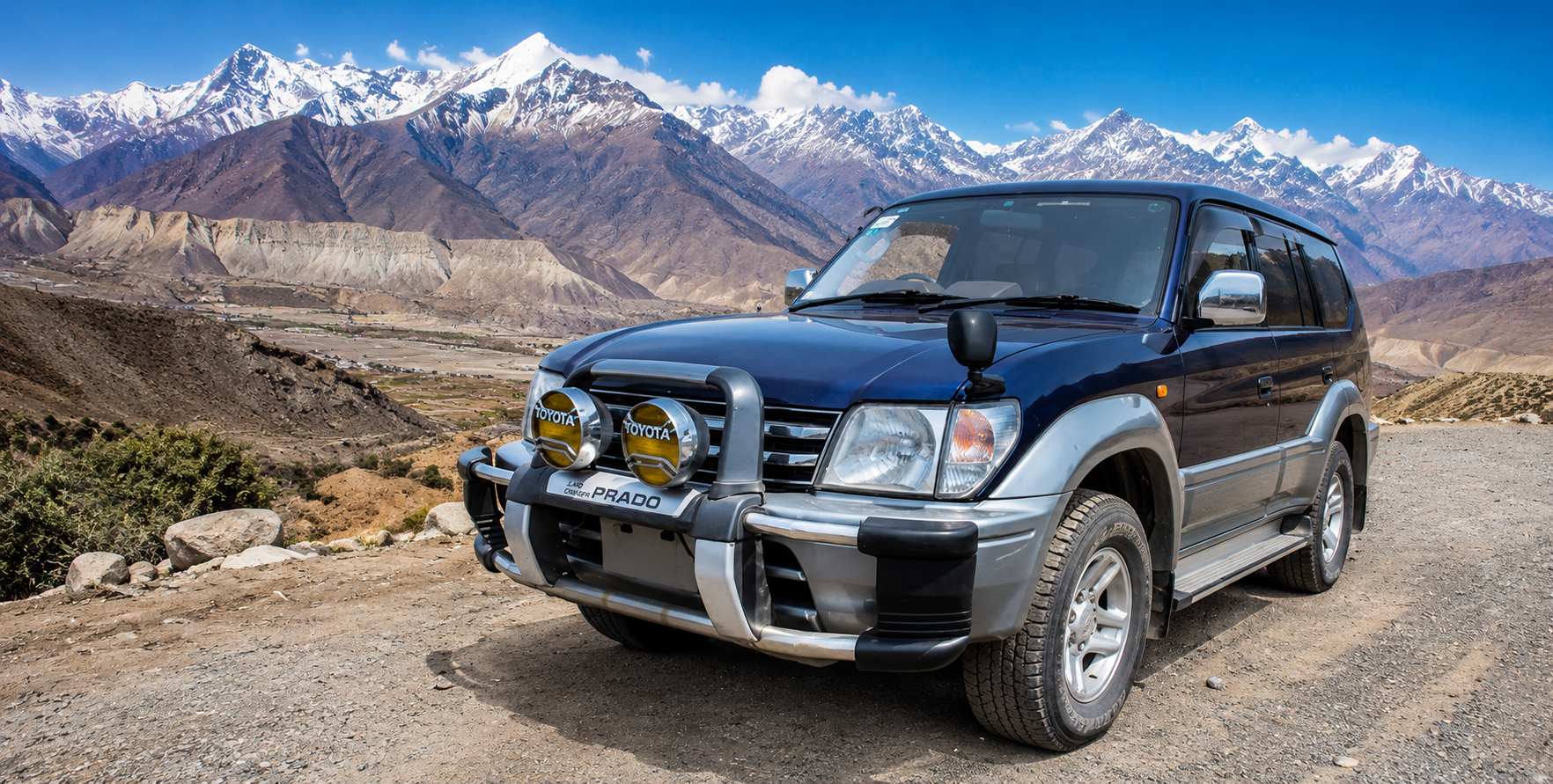
  • Book through: WhatsApp or our plan trip page.

Nepal’s Growing MICE Tourism — VIP Transport Demand

Nepal’s government and private sector have invested significantly in developing the country’s MICE (meetings, incentives, conferences, and exhibitions) tourism capacity over the past decade, recognising that this segment delivers higher visitor spending than standard leisure tourism and creates year-round demand that partially counterbalances the seasonal nature of the trekking-dominated visitor economy. The infrastructure now available for international conferences in Kathmandu — the BICC (Birendra International Convention Centre), the Hyatt Regency’s conference facilities, and the growing number of five-star hotels with fully equipped meeting rooms and event spaces — creates a genuine capacity for regional and global conference events that previously had to be held in neighbouring countries.

For conference organisers, Nepal Vehicle Hiring Pvt. Organises several distinct vehicle hire requirements for MICE events in Nepal as an integrated service. Airport transfers for VIP speakers and keynote guests require individual Land Cruiser Prado pickups with personalised meet-and-greet.

Delegate transportation from the international conference hotel to the venue requires a coordinated fleet of Hiace vans or tourist coasters, timed to the conference programme’s session schedule. Evening banquet and cultural programme transfers require the same fleet deployed at different times of day.

Post-conference excursions to Bhaktapur Durbar Square, Nagarkot sunrise, or the Kathmandu heritage sightseeing circuit require tour vehicles configured for group sightseeing rather than the formal airport-to-hotel transfer standard.
Nepal Vehicle Hiring Pvt Ltd assigns a dedicated logistics coordinator for all MICE events involving more than 20 delegates or more than two days of conference transport. This coordinator manages the full vehicle schedule, driver assignments, timing confirmations, and real-time adjustments throughout the event—the single point of contact conference organisers need to manage a complex transport programme alongside other event management responsibilities.
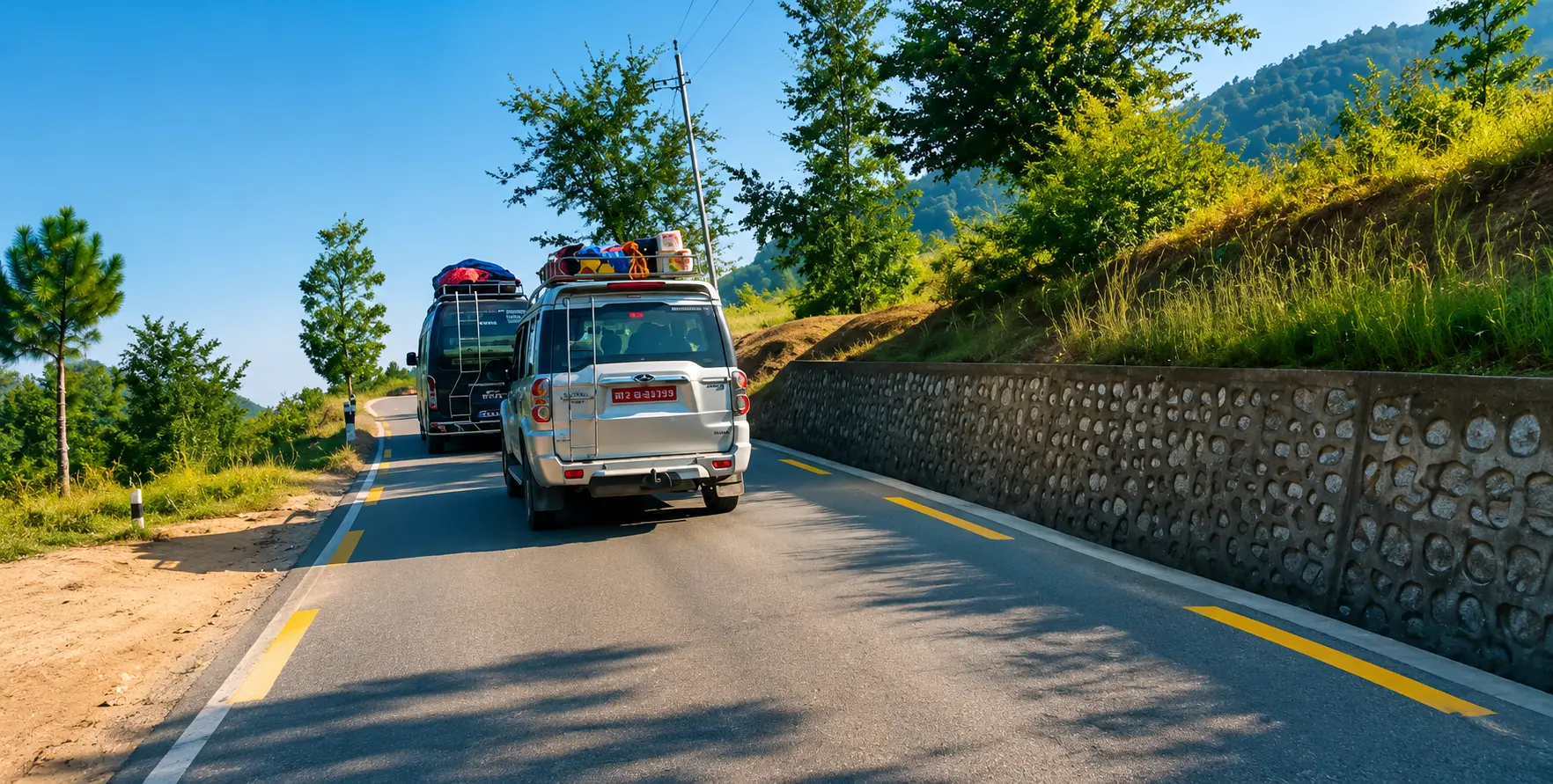
Contact our team on WhatsApp or via our plan trip page with your full conference dates, expected delegate count, venue details, and programme schedule for a comprehensive MICE transport quotation.

Frequently Asked Questions — VIP Guest Transportation Nepal: What is the best vehicle for VIP airport transfer in Nepal?

The Toyota Land Cruiser Prado is the premier choice for VIP airport transfers for diplomatic, senior corporate, and luxury travel. The Toyota Fortuner meets executive standards. Nepal Vehicle Hiring Pvt Ltd provides both with uniformed, English-speaking chauffeurs.

How far in advance should VIP transportation in Nepal be booked?

Minimum 48 to 72 hours for individual VIP transfers. One week or more for convoy and MICE group arrangements. Contact our team on WhatsApp via WhatsApp or through our plan trip page.

Do you provide diplomatic convoy arrangements?

Yes — Nepal Vehicle Hiring Pvt Ltd coordinates multi-vehicle diplomatic convoy arrangements with matched Land Cruiser Prados, protocol-briefed drivers, and inter-vehicle radio coordination. Contact our VIP team for delegation-specific arrangements.

Is 24-hour airport pickup available for VIP guests?

Yes — all confirmed VIP airport transfer bookings are honoured regardless of arrival time, including early morning and late-night flights. Our meet-and-greet representative will be in the Tribhuvan International arrivals hall at the confirmed arrival time.

Can VIP vehicle hire be combined with luxury trekking packages?

Yes — Nepal Vehicle Hiring Pvt Ltd coordinates top-end vehicle hire with luxury EBC trek packages from Trek Nepal Himalayas and luxury Himalayan experiences from Alpine Luxury Treks as a coordinated service.

What does VIP Kathmandu sightseeing include?

Nepal Vehicle Hiring Pvt Ltd’s VIP Kathmandu sightseeing service covers Pashupatinath Temple, Boudhanath Stupa, Swayambhunath, and Patan Durbar Square in a top-end private vehicle with an English-speaking driver. Optional add-ons include the Bhaktapur heritage tour and the Nagarkot sunrise transfer.

Conclusion

VIP guest transportation in Nepal is not simply about providing a cleaner or larger vehicle than the standard taxi fleet offers. It is a comprehensive service standard that begins before the guest lands at Tribhuvan International Airport and ends only after the final journey back to the departure terminal is complete—covering every vehicle, every driver presentation, every timing confirmation, and every protocol requirement throughout the Nepal visit.

Nepal Vehicle Hiring Pvt Ltd provides this standard through a verified top-end vehicle fleet, a driver team briefed to VIP service standards, and the operational capacity to coordinate everything from a single airport VIP pickup to a week-long multi-city delegation circuit.

Book your VIP guest transportation in Nepal with Nepal Vehicle Hiring Pvt Ltd — call or WhatsApp, visit vehiclehiringnepal.com, or submit your VIP transport requirements through our plan trip page.

Pokhara Bus Ticket Price

Find the latest Pokhara Bus Ticket Price for tourist and public buses, including Kathmandu to Pokhara routes, departure schedules, facilities, travel times, and booking information.

Pokhara Bus Ticket Price: The Complete Guide to Every Route, Bus Class, and Fare

Pokhara sits at the centre of Nepal’s overland travel network, and figuring out the real Pokhara bus ticket price before you travel can be surprisingly confusing. Between standard local buses, deluxe tourist coaches, and VIP Sofa buses, and between routes heading to Kathmandu, Chitwan, Lumbini, or the Annapurna trailheads, fares can range from a few hundred rupees to well over two thousand for what looks, on paper, like the same journey.

Part of the confusion comes from Pokhara’s role in Nepal’s travel geography. Sitting on the shores of Phewa Lake with the Annapurna range as a backdrop, the city functions simultaneously as a lakeside holiday destination in its own right, the main gateway for Annapurna Circuit and Annapurna Base Camp trekkers, and a mandatory stop on the classic Kathmandu-Pokhara-Chitwan ‘Golden Triangle’ route most first-time visitors follow.

Each role pulls travellers in a different direction, onto a different route, and often into a different bus class, which is why ticket prices quoted online can vary so widely depending on which journey someone describes.

This guide is built to clear that confusion up entirely. We’ll walk through every major route in and out of Pokhara, explain exactly what separates a cheap local bus fare from a top-end VIP Sofa ticket, break down realistic price ranges for 2026, and help you decide when a bus makes sense and when a private vehicle is the smarter call.

If you only read one section, make it the bus-class breakdown below — it explains almost every price difference you’ll encounter across every route in this guide.

Why Pokhara Bus Prices Vary So Much

Ask three different people what a Pokhara bus ticket costs and you’ll likely get three different answers, and all three could be correct. The reason is that ‘bus ticket to Pokhara’ isn’t a single product — it’s a spectrum spanning at least three distinct comfort tiers, multiple operators with different pricing strategies, seasonal demand swings, and the gap between booking through a hotel desk, a street agent, or directly online.

A backpacker paying roughly NPR 800 for a cramped local bus and a honeymooning couple paying close to NPR 3,000 for a VIP Sofa seat are technically buying the same route. Still, almost nothing else about their journey is the same.

There’s also a currency and rounding effect worth flagging. Nepali operators quote in NPR, while many international booking platforms and blogs convert to USD using whichever exchange rate happened to be current when the page was last updated.

A fare quoted as ‘USD 10’ on one site and ‘USD 13’ on another may reflect different snapshots of the same NPR 1,300 ticket, not a real price difference. Throughout this guide, we quote both NPR and approximate USD ranges so you can double-check any figure you come across elsewhere.

Understanding this spectrum is the single most useful thing you can do before booking, because it means you can stop asking ‘what’s the price’ and start asking ‘what’s the price for the comfort level I actually want, on the specific route and date I’m travelling.’ That’s exactly what the rest of this guide breaks down, route by route and class by class.

Understanding Nepal’s Bus Classes. Some combination of four broad categories serves every route out of Pokhara. Not every category runs on every route, but understanding all four makes every price in this guide immediately easier to interpret, and it’s worth reading this section in full even if you already know which route you’re taking.

Local or Standard Buses

The cheapest way to travel by far, local buses use basic 2×2 seating with minimal padding, no reliable air conditioning, and no amenities beyond a seat and a luggage rack, often on the roof rather than in an underfloor hold. They stop frequently to pick up and drop off local passengers, which stretches journey times considerably compared with a tourist-oriented service that stops only at designated rest points.

Fares are typically a fraction of tourist bus prices — sometimes less than half — but the trade-off is real: crowded aisles, unpredictable departure times, luggage handled with far less structure, and a much less comfortable ride, especially over Nepal’s winding mountain highways. Local buses suit only the most budget-conscious travellers who are comfortable navigating Nepali-language signage and schedules with little tourist infrastructure support, and they are generally not recommended for a first visit to Nepal unless budget is the absolute overriding priority.

Find the latest Pokhara Bus Ticket Price for tourist and public buses, including Kathmandu to Pokhara routes, departure schedules, facilities, travel times, and booking information.

Deluxe or Standard Tourist Buses

This is the default choice for most independent tourists and remains the backbone of Nepal’s tourist transport network. Deluxe buses run on fixed daily schedules for foreign visitors, departing from designated tourist bus parks rather than chaotic local stations.

They offer air conditioning, reclining 2×2 seating, complimentary drinking water, and scheduled rest stops for meals and toilet breaks. Fares generally range from USD 10 to 15 (roughly NPR 1,200 to 1,800), depending on the route, season, and operator, making this tier the most reliable balance of cost and comfort for most travellers moving between Pokhara, Kathmandu, Chitwan, and Lumbini.

Luggage allowance is typically generous enough for a standard backpack or suitcase plus a daypack, stored in an underfloor hold with a claim tag system similar to checked airline baggage.

VIP Sofa Buses

The top-end tier, and the fastest-growing segment of Nepal’s tourist bus market, is the VIP Sofa Bus. Rather than the standard 2×2 seating layout, VIP Sofa Buses use a 2×1 configuration—two seats on one side of the aisle and a single seat on the other—giving every passenger significantly more width, a wider aisle, and deep-cushioned, fully reclining sofa-style seats with padded armrests and adjustable headrests.

Add to that USB charging at every seat, WiFi on some major routes, a dedicated bus attendant in addition to the driver, and included passenger insurance, and it’s easy to see why VIP Sofa fares run noticeably higher than deluxe tickets, generally in the NPR 1,600 to 3,500 range depending on the route and season. For a full breakdown of this bus category across all of Nepal’s routes, see our VIP Sofa Bus hire guide.

Because each VIP Sofa Bus carries fewer passengers than a standard deluxe bus of the same length, seats sell out faster during peak periods, so book further in advance.

Find the latest Pokhara Bus Ticket Price for tourist and public buses, including Kathmandu to Pokhara routes, departure schedules, facilities, travel times, and booking information.

Night Buses

On flatter, well-lit highway routes — primarily those running through the Terai plains rather than mountain roads — some operators run overnight services, departing in the evening and arriving the following morning. Night buses on VIP Sofa vehicles are particularly popular for longer routes like Kathmandu to Lumbini, where the fully reclining seat becomes a genuinely restful overnight option, effectively combining a night’s accommodation cost with your travel day.

Nepal Vehicle Hiring’s policy, like most reputable operators, restricts night services to safe, flat Terai routes and avoids overnight driving on winding mountain highways for safety reasons—a distinction worth checking with any operator, since not every company applies the same restriction.

Private Charter as a Fifth Option

Technically outside the ‘bus ticket’ category but worth mentioning here since it changes the entire pricing conversation: any of the bus classes above can also be booked as a private charter, where your group hires the entire vehicle rather than individual seats. This flips the pricing model from per person to per vehicle, which can become more cost-effective than you might expect once a group reaches four to six travellers, while also removing the fixed schedule entirely. We cover this trade-off in more depth later in this guide.

Kathmandu To pokhara Sofa Bus-Find the latest Pokhara Bus Ticket Price for tourist and public buses, including Kathmandu to Pokhara routes, departure schedules, facilities, travel times, and booking information.

Kathmandu to Pokhara and Pokhara to Kathmandu Bus Ticket Price

This is Nepal’s busiest tourist bus corridor, and understandably the route most people ask about when searching for a Pokhara bus ticket price. The journey covers approximately 200 kilometres along the Prithvi Highway.

While road conditions have steadily improved in recent years as widening and resurfacing work has progressed, journey times still typically run 6 to 8 hours, depending on traffic, weather, and delays around the Mugling junction. In this notorious bottleneck, the routes to Pokhara, Chitwan, and Bardiya all converge.

On the standard tourist bus tier, fares generally fall between NPR 1,200 and 1,800 (roughly USD 9 to 14). At the same time, VIP Sofa Bus tickets on the same route typically run NPR 1,600 to 3,500 (roughly USD 12 to 26), the wide range reflecting differences between operators, how far in advance you book, and seasonal demand.

Both tiers usually offer a 7:00 AM morning departure from Kathmandu’s Sorhakhutte tourist bus hub, with some operators also running an evening departure around 7:00 PM, sometimes from a secondary point like Balaju. Buses arrive at Pokhara’s Tourist Bus Park, within easy walking distance of the Lakeside hotel district or a short taxi ride away.

For current departure times and fare details on this route, see our Kathmandu to Pokhara bus and Kathmandu to Pokhara bus tickets pages, our dedicated Kathmandu to Pokhara VIP Sofa Bus ticket page for the top-end tier, or the return-direction Pokhara to Kathmandu bus page.

What to Expect Along the Way

The Prithvi Highway is one of Nepal’s most scenic drives, tracing the Trishuli River gorge before opening onto the Pokhara valley with Annapurna and Machhapuchchhre views on a clear day. Most tourist and VIP buses schedule two stops: a shorter tea-and-toilet break, typically around Malekhu or Naubise, and a longer meal stop, most commonly at Mugling, well known among travellers for its riverside grilled-fish restaurants.

Delays around Mugling are common because it’s a major road junction; if you hit a slow patch, the honest answer is that patience is the only real fix, since traffic reports rarely reach the bus before you’re already through it.

The Bandipur Stopover Option

Roughly two-thirds of the way along the route, the hillside town of Dumre marks the turnoff for Bandipur, a beautifully preserved Newari hill town many independent travellers choose to break their journey at rather than ride straight through to Pokhara. A scheduled tourist bus won’t detour here, but a private vehicle can, and a fair number of travellers use a private car or jeep specifically to combine the Kathmandu-Pokhara leg with a night in Bandipur — something worth considering if a fixed bus schedule feels too rigid for the trip you have in mind.

Family and First-Time Traveller Considerations

For families travelling with young children, ren or anyone taking their first long-distance Nepal bus journey, the choice between deluxe and VIP often comes down to the length of the ride. Six to eight hours is a long stretch for a young child in a standard reclining seat.

The VIP Sofa tier’s extra legroom, wider seats and overall comfort can make a meaningful practical difference on this route, even setting amenities aside. Motion sickness is also worth planning for on the winding gorge sections between roughly the two- and four-hour marks of the journey; keep medication in hand luggage rather than checked bags, a simple precaution worth taking regardless of bus class.

Pokhara to Chitwan Bus Ticket Price

The Pokhara-Chitwan corridor is the second most common route for travellers completing Nepal’s classic ‘Golden Triangle’ circuit of Kathmandu, Pokhara, and Chitwan. The journey covers roughly 145 to 150 kilometres and takes 4 to 6 hours, running south along the Prithvi Highway before turning toward Chitwan’s Sauraha gateway.

Standard deluxe tourist bus fares on this route are among the most affordable of the major tourist corridors, typically around USD 10 (roughly NPR 1,200 to 1,300) per ticket. At the same time, VIP Sofa options follow the broader NPR 1,600 to 3,500 pattern seen on other routes.

Full schedule and fare details are on our Pokhara to Chitwan bus page.

Most services depart Pokhara’s Tourist Bus Park early in the morning and arrive in Sauraha in the early afternoon—timing that works well for travellers who want a full afternoon free for an initial jungle walk or canoe ride before their first scheduled safari activity the following day. As with the Kathmandu route, expect a couple of scheduled rest stops along the way, and be prepared for possible delays around Dumre, where the Besisahar road branches off toward the Annapurna Circuit trailhead.

Travellers connecting onward toward Kathmandu after their Chitwan safari, rather than looping back to Pokhara, can check the Chitwan to Kathmandu bus or Kathmandu to Chitwan VIP Sofa Bus Ticket pages for that leg, since fares and schedules differ slightly from the Pokhara-Chitwan connection covered here.

Kathmandu to chitwan Bus Tickets-Find the latest Pokhara Bus Ticket Price for tourist and public buses, including Kathmandu to Pokhara routes, departure schedules, facilities, travel times, and booking information.

Pokhara to Lumbini Bus Ticket Price

Direct Pokhara-to-Lumbini tourist bus services are less common than the Kathmandu and Chitwan routes, and many travellers instead route through Kathmandu or Butwal, or arrange a private vehicle for more flexibility. Where direct or connecting tourist bus services are available, fares tend to sit in a similar or slightly higher range than the Kathmandu-Lumbini corridor, given the added distance from Pokhara — generally in the USD 15 to 25 range depending on bus class and specific routing, with the journey often taking 7 to 9 hours.

Because scheduling and routing can be less predictable on this leg, many travellers heading to Lumbini for the birthplace of Buddha find it more efficient to book a private vehicle directly for the full journey, or to route through Kathmandu using our Kathmandu to Lumbini bus and Lumbini to Kathmandu bus services, which run considerably more frequently and predictably than the direct Pokhara connection. Pilgrim groups, many of whom include elderly travellers making a long journey for religious reasons, often prioritise the VIP Sofa tier or a private vehicle on this route, given how demanding a 7 to 9-hour journey can be in a standard seat.

Pokhara to Besisahar and the Annapurna Trailheads

Travellers heading toward the Annapurna Circuit typically aren’t looking at a conventional ‘bus ticket’ in the same sense as the Kathmandu or Chitwan routes — this leg is more commonly covered by shared or private jeep, given the mountain terrain and the more specialised trailhead destinations. Our Pokhara to Manang transport guide covers this corridor in depth, while shorter hops toward Besisahar are covered on our Besisahar private vehicle hire page.

Shared jeeps on these routes are generally priced per seat. They are considerably cheaper than a private charter, but with far less flexibility around departure time and comfort—a trade-off similar to choosing a standard bus over a VIP Sofa service on the flatter routes covered above.

For trekkers heading toward Nayapul, the classic starting point for the Annapurna Base Camp and Ghorepani Poon Hill routes, our Pokhara to Nayapul transportation page covers pricing and timing for that shorter, more frequently travelled leg. In contrast, those heading toward Sikles can check our Pokhara to Sikles jeep rental guide.

In general, the shorter the trailhead route, the more likely a shared jeep will run that day without needing to be booked far in advance, while longer routes deeper into the Annapurna region benefit from booking ahead, particularly at the start and end of trekking season when trailhead traffic is heaviest.

Kathmandu to Pokhara Deluxe Bus-Find the latest Pokhara Bus Ticket Price for tourist and public buses, including Kathmandu to Pokhara routes, departure schedules, facilities, travel times, and booking information.

Local Pokhara Transport and Day-Trip Vehicle Pricing

Not every ‘Pokhara bus ticket’ question is about leaving the city — plenty of travellers are really asking about getting around Pokhara itself or reaching nearby viewpoints. A sunrise trip to Sarangkot, Pokhara’s famous Himalayan viewpoint, is rarely done by public bus because it requires an early departure, typically well before dawn; most visitors book a private vehicle instead, covered on our Sarangkot sunrise tour vehicle page.

For general car hire while based in Pokhara — whether for day trips, airport transfers, or onward travel — see our car hire in Pokhara page, which covers vehicle options separate from the fixed-schedule tourist bus network.

Within Lakeside, most attractions along Phewa Lake, the World Peace Pagoda viewpoint, and the Old Bazaar are close enough to walk or reach by a short taxi ride. Hence, a bus ticket rarely comes into play for purely local sightseeing.

It’s really the onward and day-trip journeys — Sarangkot, Begnas Lake, or a half-day loop toward the Mahendra Cave area — where the choice between a shared local option and a private vehicle becomes relevant. For early departures or fixed groups, a private vehicle is almost always more practical than waiting for a public option that may not run at that hour.

Arriving in Pokhara: Tourist Bus Park to Lakeside

Every tourist and VIP Sofa bus arriving from Kathmandu, Chitwan, or elsewhere drops passengers at Pokhara’s Tourist Bus Park, a short distance from the Lakeside hotel and guesthouse district, not directly in it. On arrival, expect a scrum of taxi drivers and hotel touts near the bus park entrance; if you’ve already booked a hotel, most guesthouses can arrange a pickup if you give your bus and approximate arrival time, avoiding last-minute negotiation after a long journey.

If not, a short taxi ride into Lakeside is inexpensive and straightforward, and most drivers here are used to dealing with arriving tourists.

This is also the point where a private vehicle transfer shows its value most clearly: rather than a bus-park drop-off followed by a separate taxi negotiation, a private car or jeep booked for the full Kathmandu-Pokhara or Chitwan-Pokhara journey takes you directly to your hotel’s door, which matters more than it might sound like after a 6-to-8-hour journey with luggage.

Seasonal Price Variations Throughout the Year

Bus ticket prices on every route in this guide fluctuate with Nepal’s tourism seasons, though the swings are generally more modest than with flights or hotel rates. During the autumn peak season (September through November) and the spring trekking season (March through May), demand for seats on all Pokhara routes rises sharply, particularly on VIP Sofa services.

Fares often creep toward the upper end of the ranges quoted throughout this guide, with a real risk of full buses if you don’t book a few days ahead.

Breaking this down month by month: October and November typically see the year’s highest demand, coinciding with the Dashain and Tihar festival travel surge and peak Annapurna and Everest trekking season, meaning both a general demand spike and a specific squeeze on any route feeding trekking trailheads. March through May sees a second, slightly smaller peak tied to spring trekking season and generally clearer mountain visibility.

June through August, the monsoon months, are the quietest and often the most flexible for last-minute bookings. However, this comes with a real trade-off: heavier rainfall increases the risk of landslides and road delays on mountain sections of the Prithvi Highway, which can turn a 6-hour journey into a considerably longer one and, in rare cases, can suspend a route entirely for a day.

December through February sits in between — moderate demand, generally reliable roads at these lower-altitude routes, and occasional early-morning fog delays around the Kathmandu Valley rim that can push back departure times, particularly in late December and January.

Nepal’s major festival periods—particularly Dashain and Tihar in the autumn—deserve special mention, since domestic travel demand spikes as Nepalis return to their home districts, and both bus fares and seat availability can be affected even on routes primarily used by tourists. If your travel dates overlap with these festivals, booking further in advance than usual is worth the extra effort, and it’s worth asking directly whether the quoted fare already includes a festival-period adjustment.

Factors That Affect Your Bus Ticket Price

Beyond the bus class and season already covered, a handful of other factors shift the exact fare you’ll be quoted for any given route:

  • Booking channel. Booking directly through an operator or a reputable local agency is generally cheaper than booking through a third-party international platform. However, the latter can offer more assurance for first-time visitors unfamiliar with Nepal’s booking landscape. Booking window. Last-minute bookings during peak season can carry a top-end, or be unavailable on your preferred date, pushing you toward a pricier alternative departure.
  • Day vs night departure. Night VIP Sofa services on eligible routes sometimes carry a modest top-end over daytime departures, reflecting the added driver rotation and overnight operational costs.
  • Group size and private charter. Booking an entire bus privately is priced per vehicle rather than per seat, which changes the math considerably for larger groups compared with individual tickets.
  • Fuel price fluctuations. Like most transport pricing in Nepal, bus fares can shift modestly in response to changes in fuel costs over the course of a year.
  • Seat position. Some operators charge a small top-end for front-row or single-side VIP Sofa seats, given the added privacy and view compared with a standard row seat.
  • Nationality-based pricing. While uncommon on bus tickets compared with park entry fees, it’s worth confirming that the quoted fare is the standard tourist rate rather than a marked-up walk-up price occasionally offered to visibly foreign travelers at busy bus parks.

Coasters and Mini-Buses: A Fifth Vehicle Category Worth Knowing

Alongside the four bus classes already covered, small minibus-sized groups traveling to or from Pokhara sometimes choose a coaster or minibus rather than a full-size tourist or VIP Sofa bus. This sits closer to the private charter end of the minibus spectrum than the shared-seat bus network, typically booked by a single group — a family, a small tour party, or a corporate team — rather than sold as individual tickets.

Pricing is per vehicle, similar to a full private bus charter, and the appeal is largely the same as private car or jeep hire: a fixed departure time chosen by your group, flexible stops, and a size that suits eight to twenty passengers more efficiently than either a small private car or a full-size 30-plus-seat coach.

Understanding Your Ticket: Confirmation, Cancellation, and Changes

A standard tourist or VIP Sofa bus ticket in Nepal typically shows your name, travel date, departure time and point, seat number (on VIP Sofa services; deluxe tickets sometimes use open or lightly assigned seating), and the operator’s contact details. Keep a photo of your ticket on your phone in addition to any paper copy, since bus park check-in staff often confirm bookings against a phone screen as well as a printed slip.

Cancellation and change policies vary meaningfully between operators, so it’s worth asking directly at the time of booking rather than assuming a standard policy applies. Across Nepal’s tourist bus market, cancellations made a day or more in advance are more likely to receive a partial refund or free rebooking than same-day cancellations, and VIP Sofa tickets, given their smaller per-bus capacity, tend to have stricter change policies than deluxe tickets.

If your plans are genuinely uncertain, ask specifically about flexibility before paying rather than after.

Currency, Payment, and Tipping on Nepal’s Bus Routes

Nearly all bus ticket payments in Nepal, whether booked online, through a hotel desk, or directly at the bus park, are ultimately settled in Nepali rupees, even when a website or agent quotes you a figure in US dollars for convenience. Card payment is increasingly available for online bookings.

Still, it remains unreliable or nonexistent at physical ticket counters and virtually all highway rest stops, so carry a reasonable amount of cash in small denominations for incidental costs, even if you prepaid your main ticket by card.

Tipping is not mandatory or strictly expected in Nepal’s bus culture, as it is for meals or hotel service. Still, on VIP Sofa services, where a dedicated attendant actively assists passengers throughout a long journey, a modest tip at the end of the trip is appreciated and increasingly common, particularly from international travellers used to tipping in their home country.

There is no fixed expectation here, and no bus operator will ask for or require it.

Find the latest Pokhara Bus Ticket Price for tourist and public buses, including Kathmandu to Pokhara routes, departure schedules, facilities, travel times, and booking information.

Driver Standards, Vehicle Safety, and Road Conditions

Nepal’s tourist and VIP Sofa bus operators generally meet higher standards than the local bus network, with licensed commercial drivers, scheduled vehicle maintenance, and, on reputable services, passenger insurance included in the ticket price. That said, Nepal’s highway network, including the Prithvi Highway that carries most Pokhara-bound traffic, includes genuinely challenging sections — river gorges, landslide-prone slopes during monsoon, and stretches still undergoing widening or resurfacing work at any given time.

None of this is unique to buses; the same roads carry private vehicles, and the same seasonal cautions apply regardless of vehicle type.

A reasonable general practice, and one most reputable Nepal-based operators already follow, is to avoid unnecessary night travel on winding mountain sections, prioritise operators that can demonstrate vehicle maintenance and driver experience, and treat any operator unwilling to answer basic safety questions as a signal to book elsewhere. This applies as much to a cheap local bus fare as it does to a top-end VIP Sofa ticket — price alone is not a reliable indicator of safety standards.

Sample Trip Budgets: What Different Travellers Actually Pay

Numbers in isolation can be hard to translate into a real trip, so it’s worth walking through how the ranges in this guide play out for a few common traveler profiles making the Kathmandu-Pokhara-Chitwan loop, the most popular multi-leg journey for first-time visitors to Nepal.

The solo backpacker travelling on standard deluxe tourist buses for all three legs of the loop — Kathmandu to Pokhara, Pokhara to Chitwan, and Chitwan back to Kathmandu — is looking at a combined bus fare total that rarely exceeds the cost of a single one-way domestic flight, making this by far the most budget-efficient way to complete the classic circuit, with the trade-off being roughly 15 to 18 hours of total travel time spread across the three legs.

The couple splitting VIP Sofa tickets for the same loop pays noticeably more per person than the backpacker above, but still well under what either domestic flights or a private vehicle for two would cost, while gaining the wider seating and attendant service that make longer legs, particularly Kathmandu-Pokhara, considerably more comfortable.

The family of four considering a private vehicle for the same loop, once the per-vehicle charter cost is divided by four passengers, frequently finds the per-person cost landing close to, or only modestly above, individual VIP Sofa tickets, while gaining door-to-door pickup at each leg, the flexibility to stop for children’s needs, and short detours like Manakamana or Bandipur that a fixed bus schedule can’t accommodate. This is the calculation worth doing explicitly before assuming a private vehicle is automatically the pricier option for a group.

Begnas Lake Pokhara

Bus vs Flight vs Private Vehicle: Full Cost Comparison

Domestic flights between Kathmandu and Pokhara take around 25 minutes in the air, a dramatic time saving over a 6 to 8 hour bus journey, but at a considerably higher price point, and flights remain vulnerable to weather-related delays and cancellations, particularly during monsoon season and periods of poor mountain visibility. For travellers on a tight schedule, the time saved often justifies the cost; for those with flexible itineraries, it rarely does, especially since the Prithvi Highway drive is itself considered one of Nepal’s more scenic overland routes rather than simply a means to an end.

Tourist and VIP Sofa buses sit at the value end of the spectrum covered throughout this guide — affordable, reliable, and scenic, with the trade-off being a full-day commitment to the journey itself and a fixed departure schedule that doesn’t adjust to your preferences.

Private vehicle hire costs more than a shared bus ticket. Still, it delivers a meaningfully different experience: your own departure time, the ability to stop for photos or side trips like Manakamana or Bandipur along the way, and door-to-door pickup and drop-off rather than a walk from the tourist bus park to your hotel.

For 3 or more people, the per-person cost of a private car or jeep often closes the gap with individual VIP Sofa tickets, while offering far more flexibility. Our Kathmandu to Pokhara vehicle rental page covers this option in detail, and our broader case for this approach is laid out in why private vehicle hire is the smartest way to travel Nepal.

As a rough way to think about total trip cost, not just the ticket price: a solo backpacker on a standard deluxe bus, factoring in a rest-stop meal or two, gets one of the cheapest ways to cover this distance anywhere in the world. A family of four splitting a private jeep, once divided per person, often lands closer to VIP Sofa pricing than people expect, while gaining a private, flexible, door-to-door journey—which is why private vehicle hire has grown steadily more popular among groups and families over individual bus tickets in recent years.

The Prithvi Highway: A Brief History Behind the Journey

Completed in the 1970s as Nepal’s first major highway link between Kathmandu and Pokhara, the Prithvi Highway transformed a journey that once took several days on foot or by mule track into a single-day drive. Named after King Prithvi Narayan Shah, the highway follows the Trishuli and Marsyangdi river valleys for much of its length, a routing choice driven as much by the mountainous terrain as by engineering preference — there wasn’t a flatter path available between the two cities.

Decades of incremental widening, resurfacing, and bridge reconstruction have gradually reduced typical journey times. However, sections through the steepest gorge terrain remain inherently slower than a flat highway of the same length would be anywhere else in the world.

Understanding this context helps explain why, even with continued road investment, the 200-kilometre Kathmandu-Pokhara journey is unlikely ever to match the point-to-point speed of a flatter Terai route of similar distance, and why the scenic value of the drive is, for many travellers, a genuine part of the appeal rather than simply an inconvenience to be minimised.

Planning Your Itinerary Around Bus Travel

For travellers building a full Nepal itinerary rather than booking each leg as it comes up, map your bus and vehicle choices against your overall schedule before committing to individual tickets. A common mistake is booking a fixed-schedule deluxe or VIP Sofa bus for every leg of a trip that also includes a multi-day trek, only to find the trekking end date doesn’t align neatly with the next bus departure, resulting in an unplanned extra night or a rushed connection.

Build in a buffer day around any leg that connects directly to a trek start or end point, or default to a private vehicle for those specific legs while using shared buses for the more flexible portions of your trip, to avoid this common planning trap.

It’s also worth deciding early whether your priority for this trip is minimising cost, minimising time, or maximising comfort and flexibility; the right bus class and vehicle choice depends on which of those three goals matters most to you on a given leg. Few travellers optimise for all three simultaneously on every leg of a Nepal trip, and that’s a reasonable trade-off to make consciously rather than by default.

Kathmandu- pokhara Bus-Find the latest Pokhara Bus Ticket Price for tourist and public buses, including Kathmandu to Pokhara routes, departure schedules, facilities, travel times, and booking information.

How to Book Pokhara Bus Tickets

Tickets on every route covered in this guide can generally be booked through several channels, each with its own trade-offs. Booking online in advance, directly through an operator’s website or a reputable local booking service, gives you a confirmed seat and printed or digital ticket before you arrive, which is particularly valuable during peak season.

Booking through your hotel or guesthouse travel desk is the most common approach for independent travellers already in Nepal, and it usually carries only a small service markup in exchange for convenience and someone to answer questions in English.

Booking directly at the tourist bus park, either the day before or on the morning of travel, remains possible outside of peak periods. However, it carries the real risk that your preferred departure or bus class is sold out, especially for VIP Sofa seats, which have far fewer seats per vehicle than deluxe buses.

Whichever channel you choose, arrive at the bus park at least 20 to 30 minutes before departure, as luggage loading and seat check-in take time, especially on busier morning departures.

For travellers who prefer to lock in their entire Nepal itinerary before arrival, booking your Pokhara-bound bus ticket, or a private vehicle alternative, alongside your accommodation and any trekking permits at the same time can save a genuine amount of on-the-ground coordination once you’re actually in the country and dealing with jet lag, altitude adjustment, or a tight day-by-day schedule.

What to Expect On Board, by Class

On a standard deluxe tourist bus, expect 2×2 reclining seating, working air conditioning, a bottle of drinking water, and two scheduled stops along most routes — one shorter break and one longer meal stop. Toilets on board are uncommon on this tier; rest stops handle that need instead.

On a VIP Sofa Bus, expect the wider 2×1 sofa-style seating described earlier in this guide, individual USB charging, a dedicated attendant checking on passenger comfort throughout the journey, and on select major routes, onboard WiFi (though connectivity in the deeper river gorge sections of most routes is unreliable across every network in Nepal, so downloading entertainment offline beforehand is a smart backup).

On both tiers, luggage is generally stored in an underfloor hold with a reasonable per-passenger allowance, plus space for a smaller bag inside the cabin.As a general travel precaution, keep valuables and travel documents with you rather than in checked luggage, not because of a specific issue with Nepal’s bus operators. Rest-stop restaurants along major routes are generally used by tourist groups and offer both Nepali and simpler Western-style options, along with reasonably clean toilet facilities, though standards vary by stop.

Accessibility for Travelers with Limited Mobility

Nepal’s tourist bus infrastructure, including VIP Sofa services, was not primarily designed with wheelchair accessibility in mind, and boarding typically involves a few steps up into the vehicle without a ramp or lift. Travellers with limited mobility are generally better served by a private vehicle, where boarding assistance and vehicle choice can be arranged directly with the driver or operator ahead of time, than by a fixed-schedule shared bus where accommodating limited mobility within a tight turnaround is harder to guarantee.

If you still prefer a shared bus, call the operator directly to discuss boarding arrangements rather than assuming standard accommodations will be available on arrival.

Tips for Families, Solo Travellers, and Elderly Passengers

Families travelling with children benefit most from the VIP Sofa tier’s extra space on longer routes like Kathmandu-Pokhara or Kathmandu-Lumbini, and from booking a private vehicle where the budget allows, given the flexibility to stop more frequently than a fixed-schedule bus would allow. Solo travellers, particularly women travelling independently, generally report tourist and VIP Sofa buses as a safe, well-established part of Nepal’s tourism infrastructure, though the usual common-sense precautions — keeping bags close, avoiding late-arrival routes into unfamiliar bus parks after dark, and confirming your onward transport or hotel pick-up in advance — apply here as they would anywhere.

Elderly travellers, including pilgrimage groups heading toward Lumbini or Muktinath-bound trekkers passing through Pokhara, generally find the VIP Sofa tier’s deep recline and wider seat much easier on longer routes than a standard deluxe seat, and operators are generally used to helping older passengers with boarding and luggage. If mobility is a specific concern, it’s worth calling ahead to confirm boarding arrangements at your specific departure point, since bus park platforms are not always step-free.

Money-Saving Tips for Pokhara Bus Travel

  • Book 3 to 7 days ahead during shoulder season, and 1 to 2 weeks ahead during autumn, spring, or festival periods, since last-minute fares and availability both worsen closer to peak dates.
  • Compare deluxe and VIP Sofa fares directly for your specific date, since the price gap between them can narrow or widen noticeably depending on demand.
  • Consider a morning rather than evening departure where both are offered, since morning buses are typically the higher-demand, better-maintained service on most routes.
  • For groups of three or more, price out a private vehicle alongside individual bus tickets before assuming the bus is automatically cheaper per person
  • Carry Nepali rupees in small denominations for rest-stop meals, since card payment is unreliable at highway restaurants regardless of which bus class you’re on.
  • Ask directly whether a quoted online fare already includes any booking or service fee, since some platforms add this at checkout rather than displaying it upfront.

Sarangkot Pokhara

When to Choose a Private Vehicle Instead of a Bus

A shared bus, even at the VIP Sofa tier, still runs on someone else’s schedule and follows someone else’s stops. If your priority is photographing the Annapurna range at a specific viewpoint along the Prithvi Highway, visiting Manakamana Temple by cable car en route, spending a night in Bandipur’s hilltop old town partway through the journey, or simply avoiding the fixed 7:00 AM departure entirely, a private car, jeep, or Hiace gives you that control in a way no shared bus schedule can.

For larger groups, our coaster and full tourist bus hire services let you charter an entire vehicle privately while keeping bus-style comfort, combining the flexibility of a private hire with the space of a full-size coach.

As a rough rule of thumb worth carrying through this whole guide: solo travellers and pairs on a fixed budget generally get the best value from a standard deluxe or VIP Sofa bus ticket, while families, small groups, or anyone with an itinerary that doesn’t fit neatly into a 7:00 AM fixed departure tend to find better overall value, comfort, and time efficiency in a private vehicle, even accounting for the higher upfront cost.

Environmental Considerations and Shared Travel

Choosing a shared tourist or VIP Sofa bus over a private vehicle or domestic flight is also, incidentally, the lower-impact option in terms of fuel use per passenger, since a single bus carrying 20 to 30 travellers replaces what would otherwise be several private cars or a portion of a flight’s fuel burn. For travellers weighing this factor alongside cost and comfort, it’s a reasonable additional point in favour of the shared bus network for at least some legs of a Nepal itinerary, even where a private vehicle is chosen for others based on flexibility needs.

Explore More Nepal Routes, Tours, and Vehicles

Pokhara is rarely the only stop on a Nepal itinerary. Here’s a fuller map of the routes, tours, and vehicle options we cover, in case your trip extends beyond the bus classes and fares discussed above.

Kathmandu Valley Sightseeing

Round out a Pokhara trip with time in the capital: Kathmandu sightseeing, a stop at Kathmandu’s historical heritage sites, a full day at Bhaktapur Durbar Square, sunrise views via Kathmandu to Nagarkot vehicle hire or the dedicated Nagarkot sunrise tour, and reliable Kathmandu airport transfers on arrival or departure.

Trekking Routes and Annapurna/Mustang Approaches

If your Pokhara trip connects to trekking, see our guides to Kathmandu to Soti Khola, Kathmandu to Salleri-Phaplu, Kathmandu to Besisahar bus ticket, the Everest Base Camp trek, and our general trekking services. For the Annapurna Circuit specifically, see Manang to Kathmandu private jeep hire, the reverse Kathmandu to Manang jeep, Besisahar to Chame and Upper Pisang, why Dharapani is the Annapurna Circuit’s most popular starting point, Kathmandu to Ghandruk private jeep hire, and the Annapurna Conservation Area.

Heading further west, see our Upper Mustang 4WD jeep guide and places to visit in Mustang. Groups heading toward Gorkha can see our Kathmandu to Gorkha jeep service and our note on choosing a genuine 4WD jeep, while travellers wanting extra comfort throughout can look at luxury trek vehicle hire.

Vehicle Fleet and Other Transfers

For choosing between vehicle types generally, see our jeep and SUV comparison, our Scorpio jeep hire and Toyota Land Cruiser 4WD hire pages, our alternate Hiace van hire listing, general car hire in Nepal, and our bus fleet page. For travellers connecting through Chitwan onward to the border or elsewhere, see Chitwan to Birgunj border transport, our Kathmandu to Chitwan luxury car hire, and the Janakpur airport transfer service.

Plan and Learn More

Use our plan your trip tool to sketch a full itinerary, learn more about us, or browse our blog for further route guides across Nepal.

Why Book With Nepal Vehicle Hiring Pvt Ltd

We operate both shared-seat tourist and VIP Sofa bus services and full private vehicle charters across every route covered in this guide, with transparent, upfront pricing confirmed before you book — no surprise fees at the bus park, and no guesswork about which bus class you’re actually getting. Whether you’re booking a single VIP Sofa seat for a solo trip to Pokhara or chartering a full coaster for a group heading on to Chitwan and Lumbini, our team can walk you through the exact fare and schedule for your specific travel dates.

For a broader look at vehicle options across the country, see our ultimate Nepal vehicle rental guide, or browse our full Nepal tour package options if you’d like your Pokhara travel bundled into a complete multi-destination itinerary.

Frequently Asked Questions

What is the cheapest way to travel to or from Pokhara by bus? A standard local bus is the cheapest option by a wide margin, though with a significant comfort trade-off; among tourist-oriented services, a standard deluxe tourist bus is generally cheaper than a VIP Sofa ticket on the same route.

How much does a VIP Sofa Bus ticket to Pokhara cost? Generally, it costs NPR 1,600 to 3,500 (roughly USD 12 to 26), depending on the season, operator, and how far in advance you book.

How long does the Kathmandu-Pokhara bus journey take? Typically 6 to 8 hours, depending on traffic, weather, and any delays around the Mugling junction.

Is it cheaper to fly or take the bus to Pokhara? The bus is considerably cheaper; flights cost significantly more but save several hours of travel time.

Can I book a Pokhara bus ticket on the day of travel? Often, yes, outside peak season, but availability, particularly for VIP Sofa seats, isn’t guaranteed, so booking is recommended during autumn, spring, and festival periods.

Do Pokhara buses include meals in the ticket price? No, passengers pay for rest-stop meals separately, typically NPR 300 to 700 per person.

Is there a direct bus from Pokhara to Lumbini? Direct services are less frequent than the Kathmandu or Chitwan routes; many travellers route through Kathmandu or arrange a private vehicle instead.

What’s the difference between a deluxe and a VIP Sofa bus? Seating configuration is the core difference — 2×2 reclining seats on deluxe buses versus wider 2×1 sofa-style seating with more amenities on VIP Sofa buses.

Can I charter a full bus privately for my group? Yes, private charter is available and priced per vehicle rather than per seat, giving your group full control over departure time and stops.

Is it safe to travel by public bus in Nepal? Tourist and VIP Sofa buses operated by reputable companies are generally safe and well-maintained, with experienced drivers on established routes; standard advice like keeping valuables with you and choosing daytime travel on mountain routes still applies.

Does the ticket price change between morning and evening departures? Sometimes; night VIP Sofa services on eligible routes can carry a modest top-end over daytime departures.

Can I get a refund if I need to cancel my bus ticket? Policies vary by operator; cancellations made further in advance are more likely to receive a partial refund or free rebooking than same-day changes, so confirm the policy at booking.

How much luggage can I bring on a Pokhara tourist bus? Most tourist and VIP Sofa services allow a standard backpack or suitcase in the underfloor hold plus a smaller bag in the cabin; confirm exact limits with your operator if you’re carrying oversized trekking gear.

Is a private vehicle a better option than a bus for a family with kids? For many families, yes — the flexibility to stop when needed and the door-to-door convenience often outweigh the higher cost compared with fixed bus schedules.

Where do Pokhara-bound buses arrive, and how do I get to my hotel? Buses arrive at Pokhara’s Tourist Bus Park, a short taxi ride or walk from the Lakeside hotel district; many guesthouses can arrange pick-up if given your arrival details in advance.

Do I need to tip the attendant on a VIP Sofa service? It’s not mandatory, but a modest tip at the end of the journey is appreciated and increasingly common on VIP Sofa services with a dedicated attendant.

Can I pay for my bus ticket by card? Card payment is increasingly available for online bookings, but cash is still the more reliable option at physical ticket counters and highway rest stops.

Is the Prithvi Highway safe to travel during monsoon season? Generally, yes,s with a reputable operator, though landslide-related delays are more common during heavy monsoon rainfall than in dry season months.

What’s the difference between a coaster charter and a VIP Sofa bus ticket? A coaster charter is a private vehicle booked per group at a per-vehicle price, while a VIP Sofa ticket is an individual seat on a shared, fixed-schedule departure.

Should I book my Pokhara transport before arriving in Nepal? It’s not required outside peak season, but booking in advance removes one variable from your itinerary and is strongly recommended during autumn, spring, and festival periods.

Ready to lock in your travel plans? Compare current Pokhara bus ticket prices across deluxe and VIP Sofa options, or ask our team about a private vehicle alternative through our contact page. Whichever route you’re taking out of Pokhara, we can match the right vehicle and budget to your trip.

Complete Your Nepal Journey with Trusted Travel Experiences

For travellers who have completed their trek and are planning to explore Kathmandu, we recommend continuing your journey with our trusted sister companies Trek Nepal Himalayas and Alpine Luxury Treks. We specialise in organising a wide range of experiences across Nepal, from classic trekking adventures to cultural and wildlife tours.

Our top offerings include iconic journeys such as the Everest Base Camp Trek, in-depth Kathmandu sightseeing tours, striking Nagarkot sunrise experiences, and exciting Chitwan jungle safari and luxury packages. We can also arrange short hikes, heritage tours, mountain flights, and customised travel plans tailored to your schedule and interests.

Whether you want a budget-friendly trip or a luxury trekking experience with top-end lodges, private guides, and high-end services, we manage every detail professionally. Our goal is to provide a smooth transition from your trekking adventure to a comfortable) and a memorable travel experience in Nepal.

Chat with us