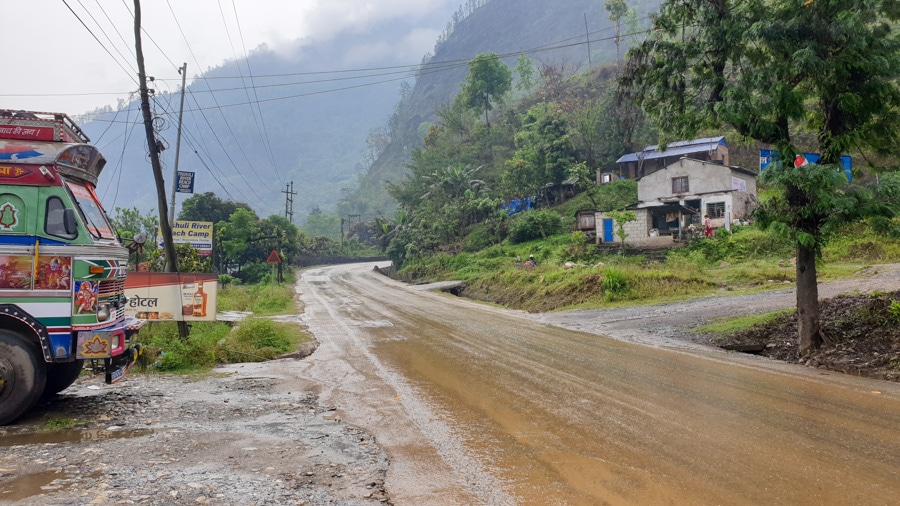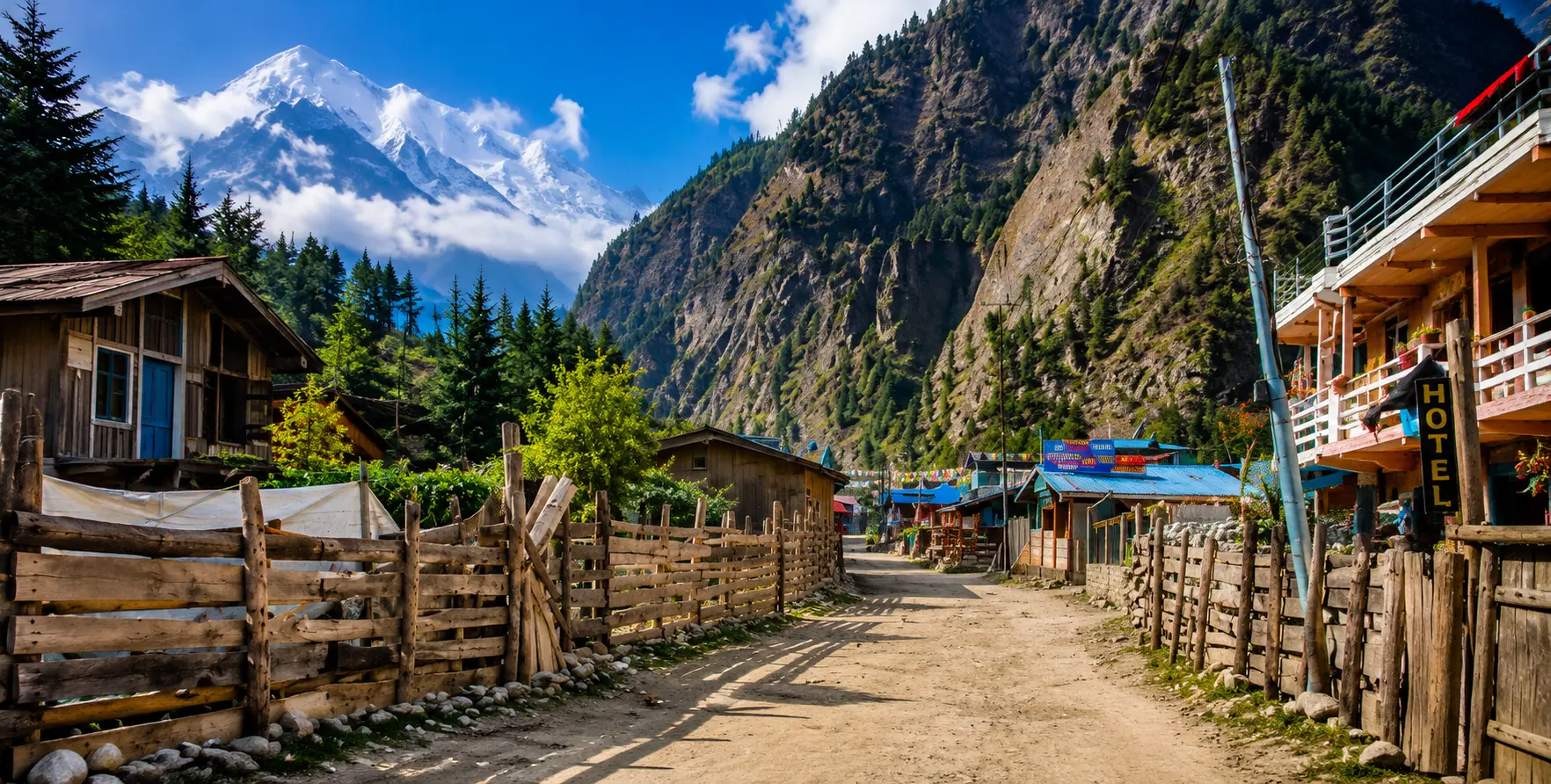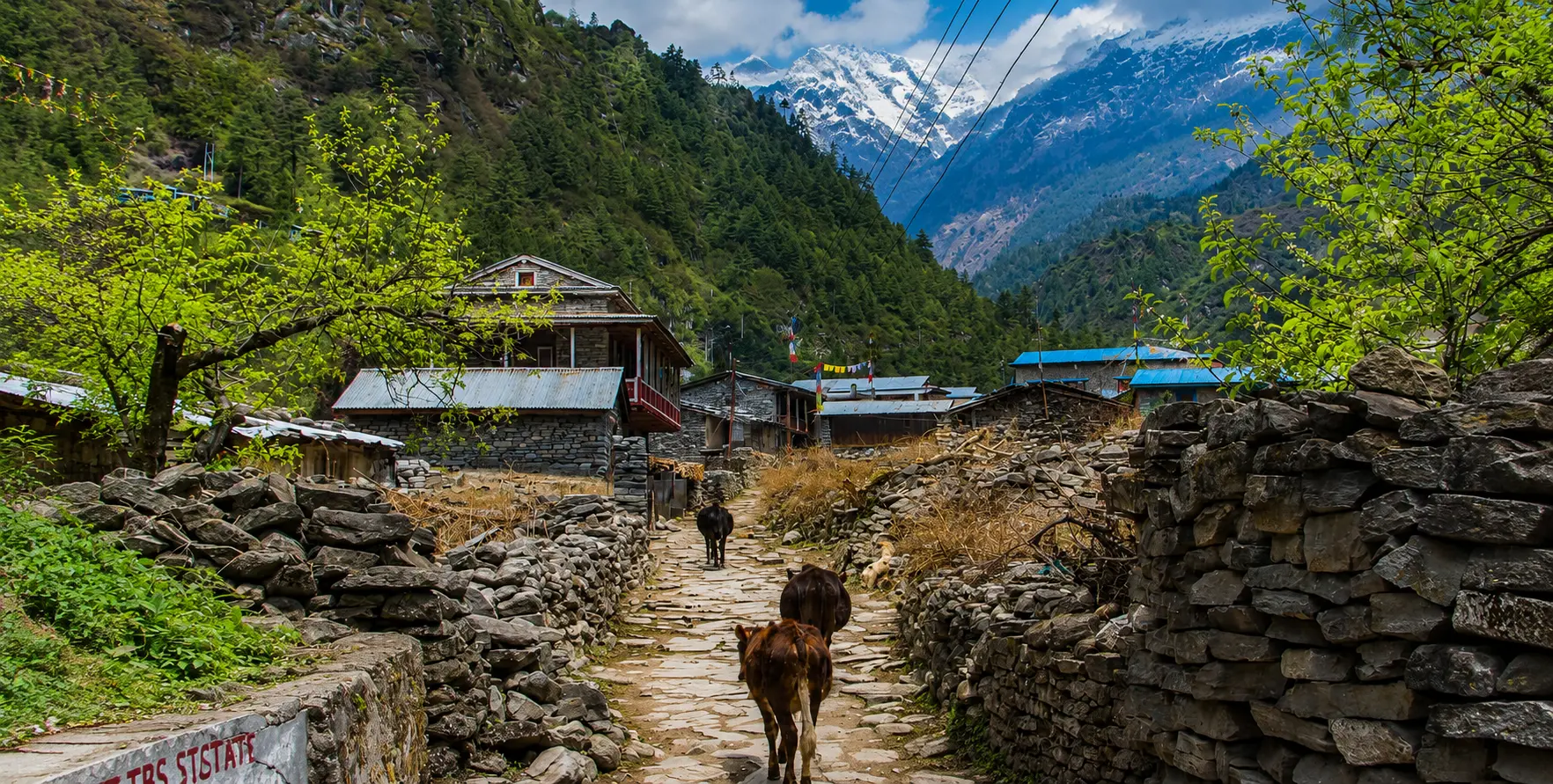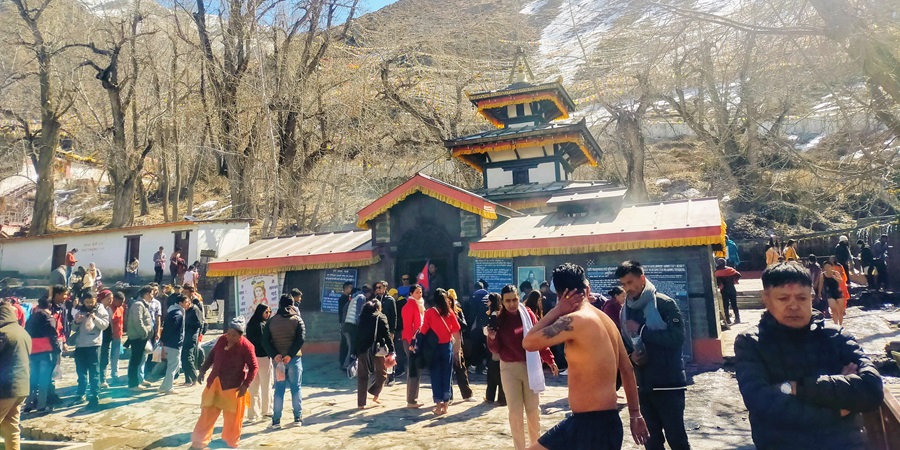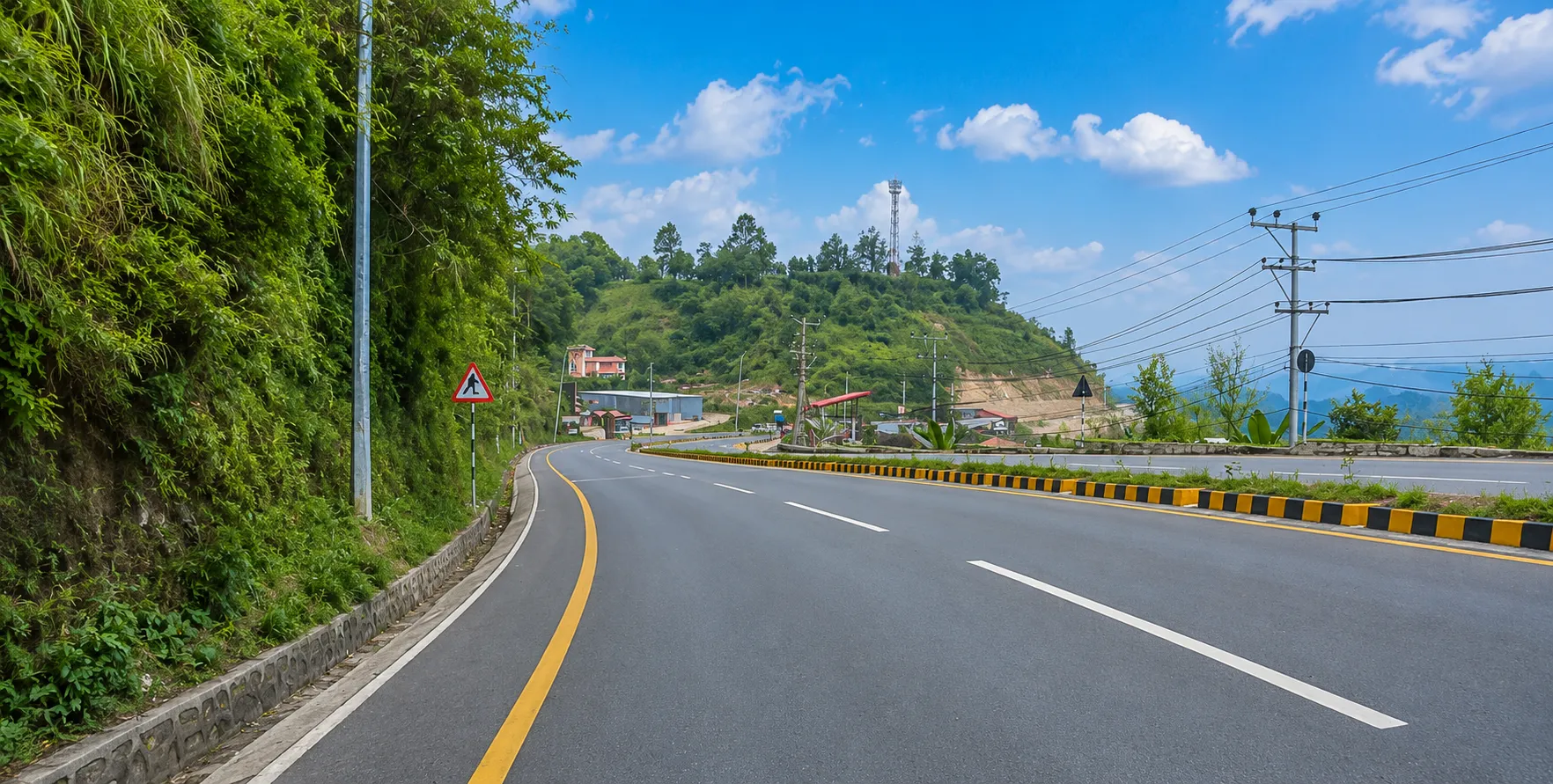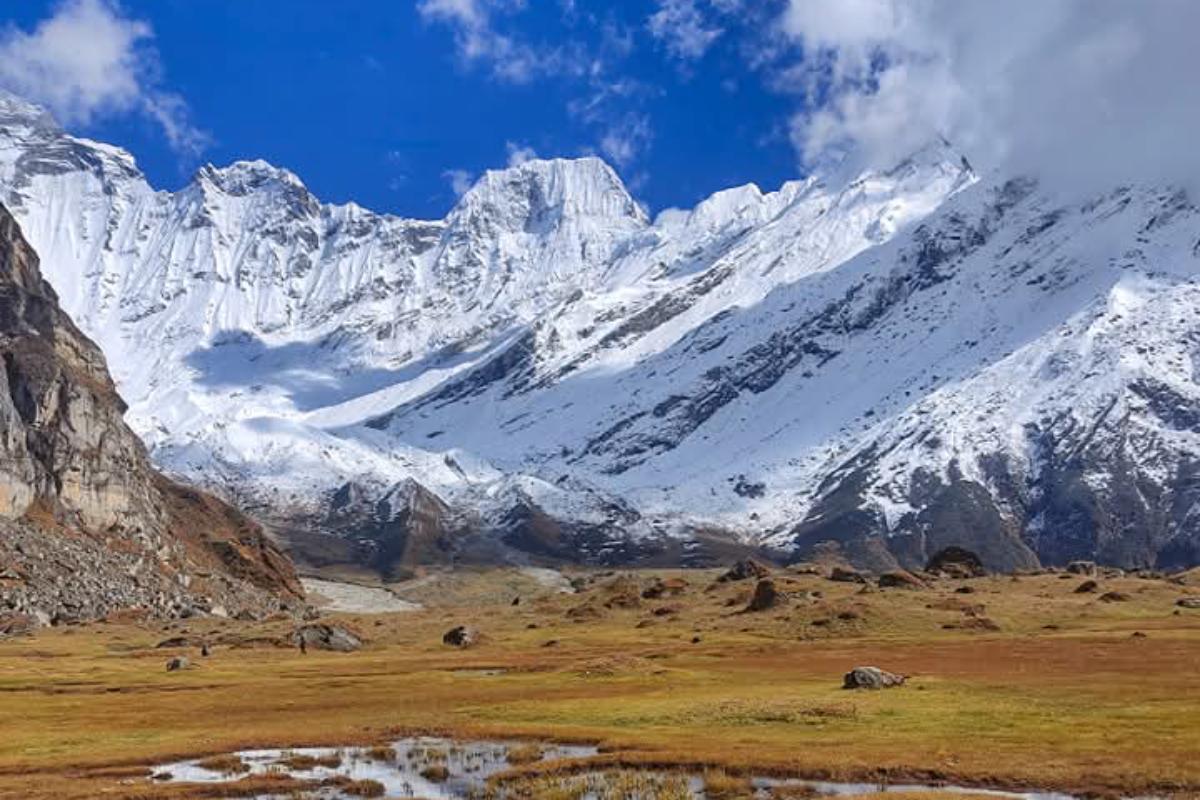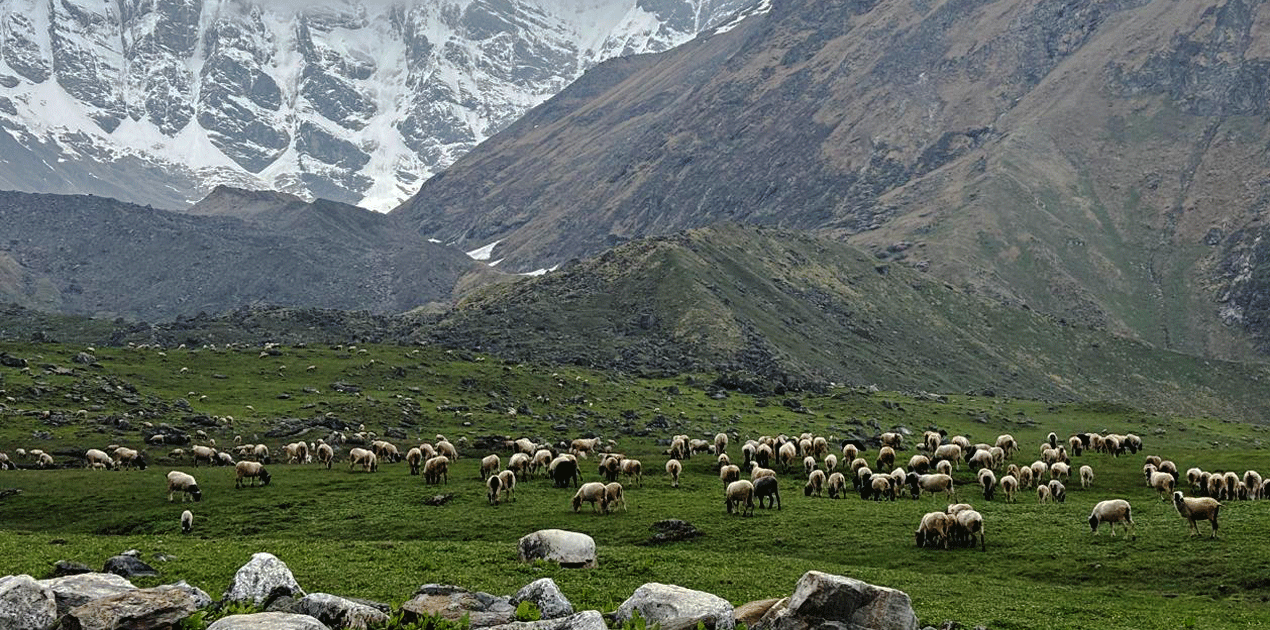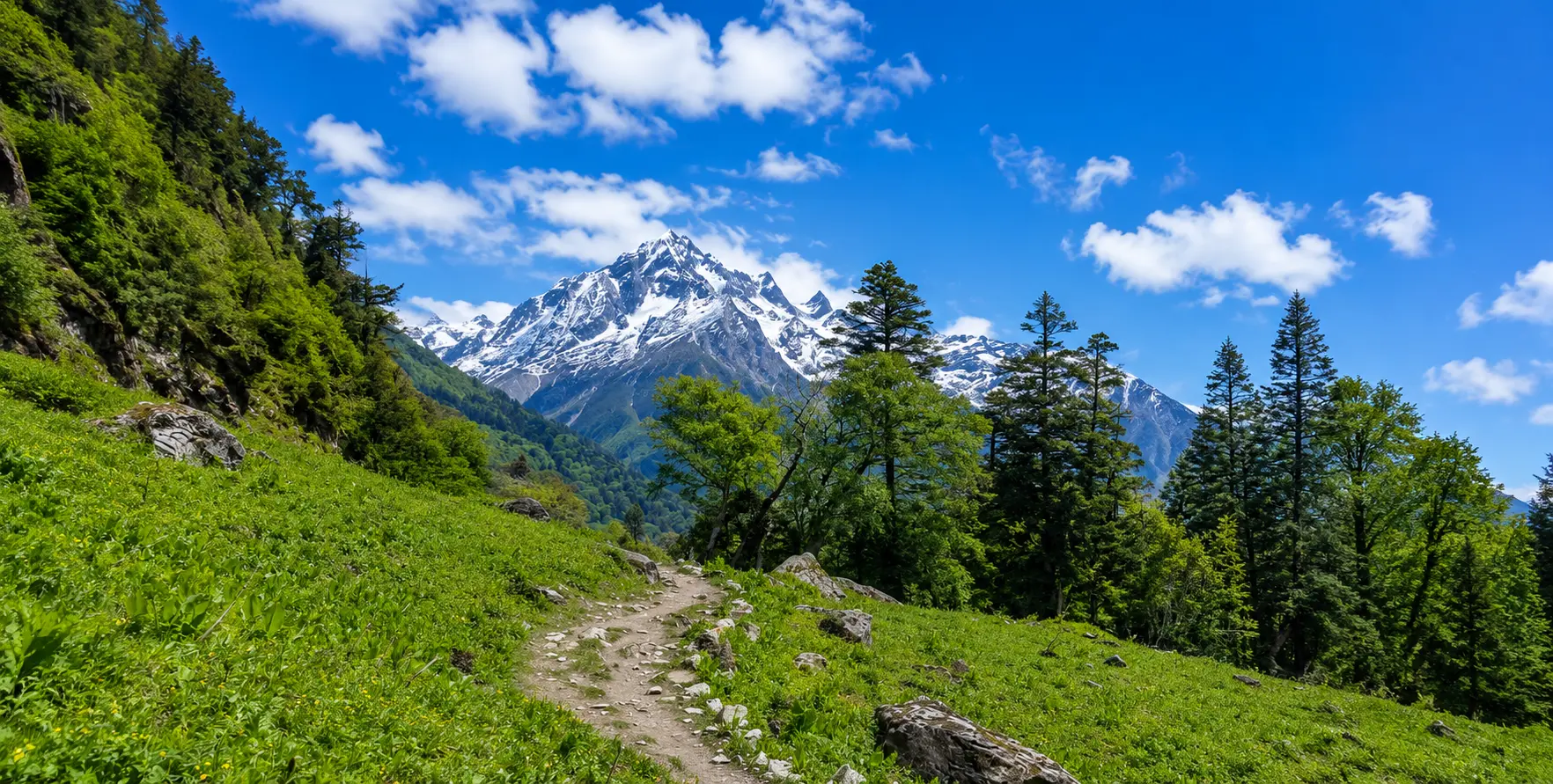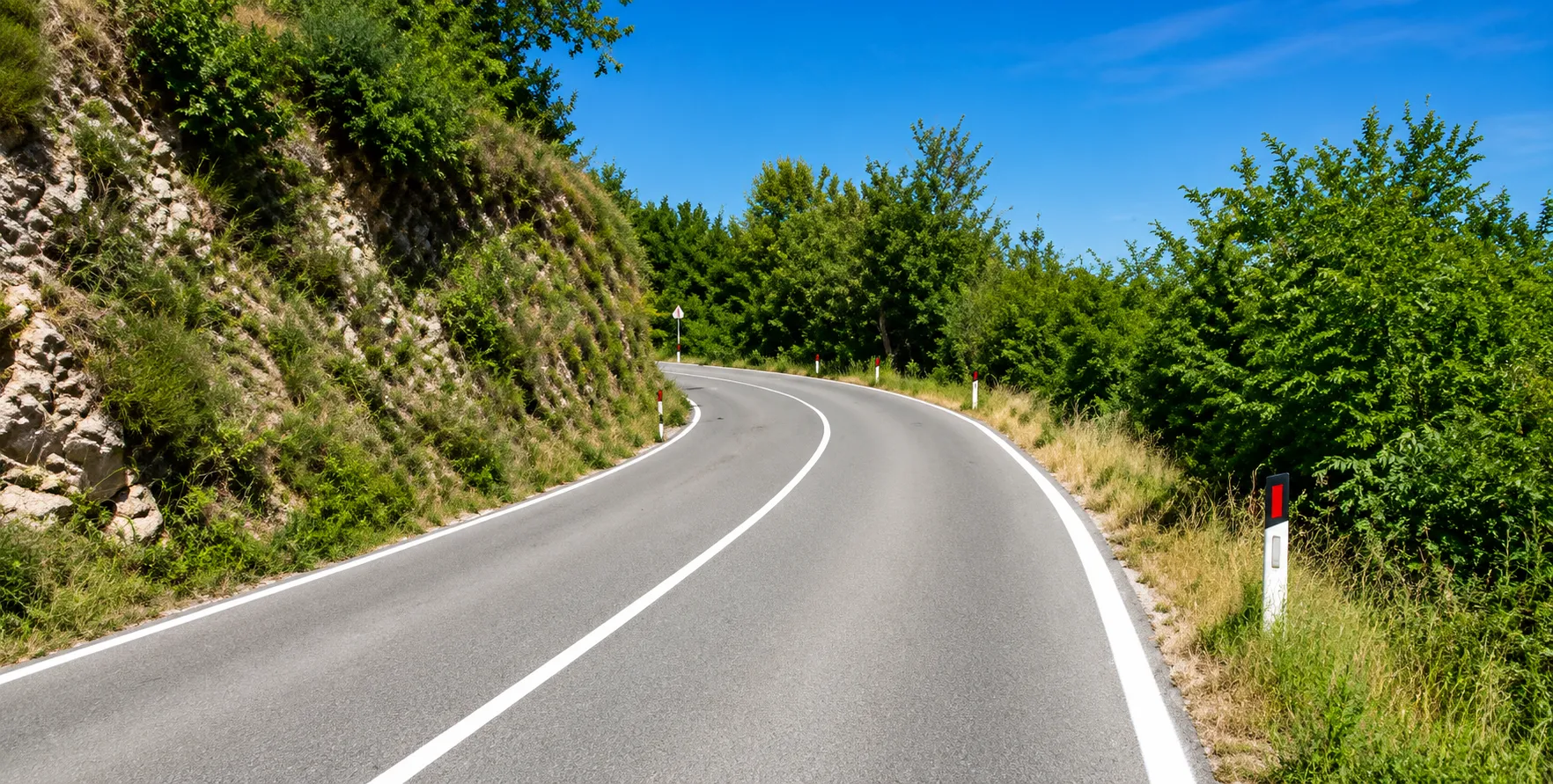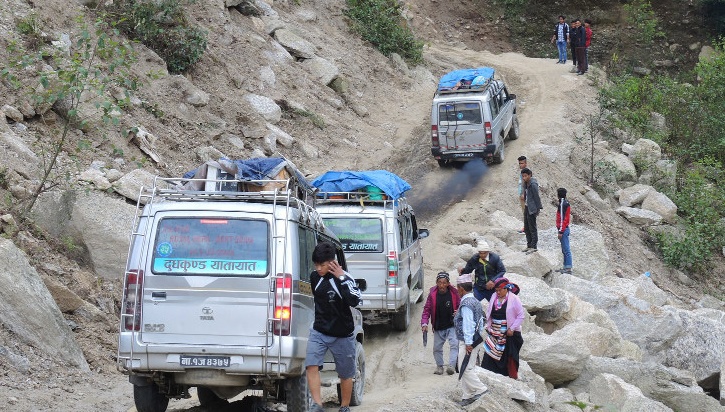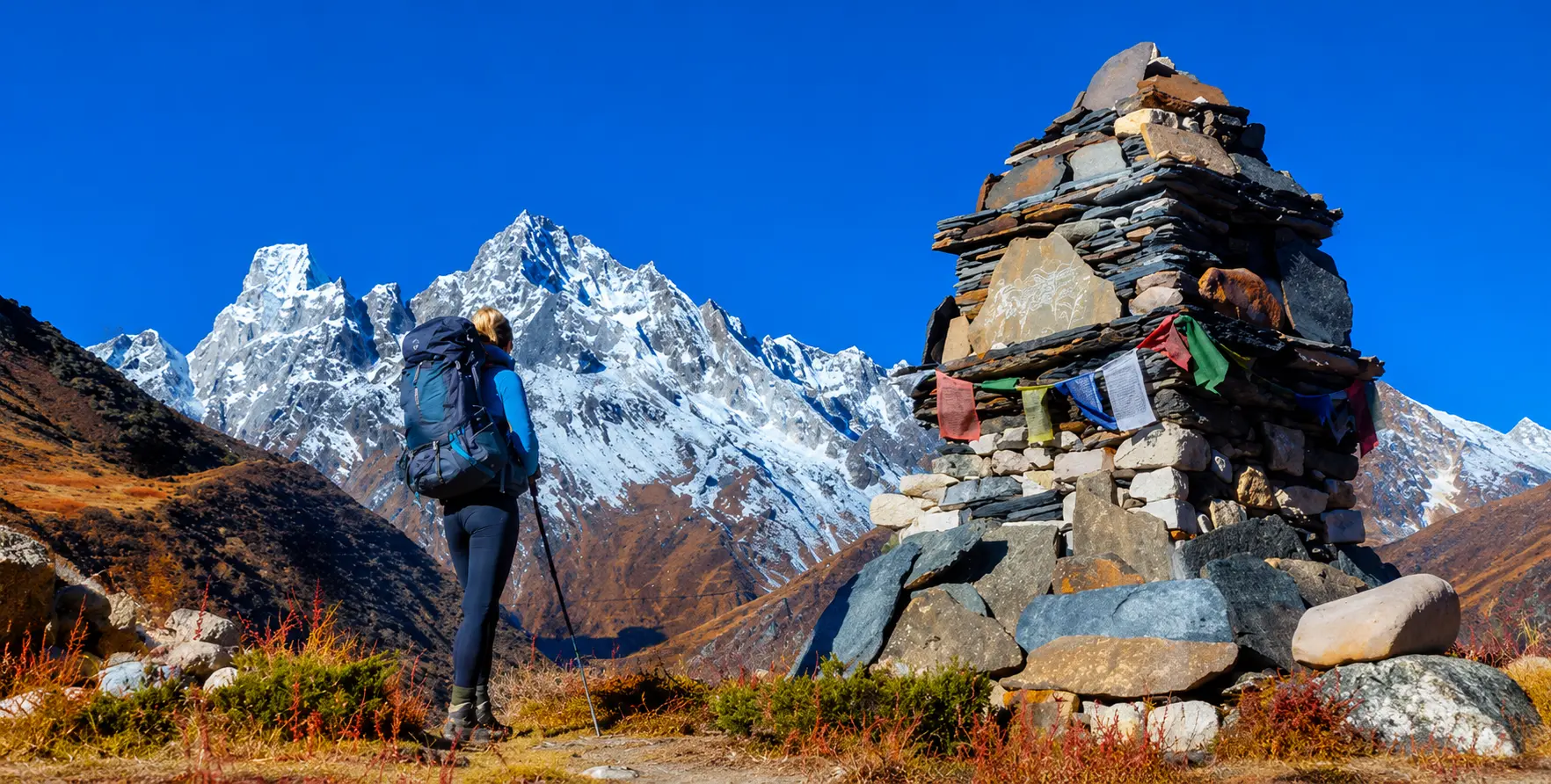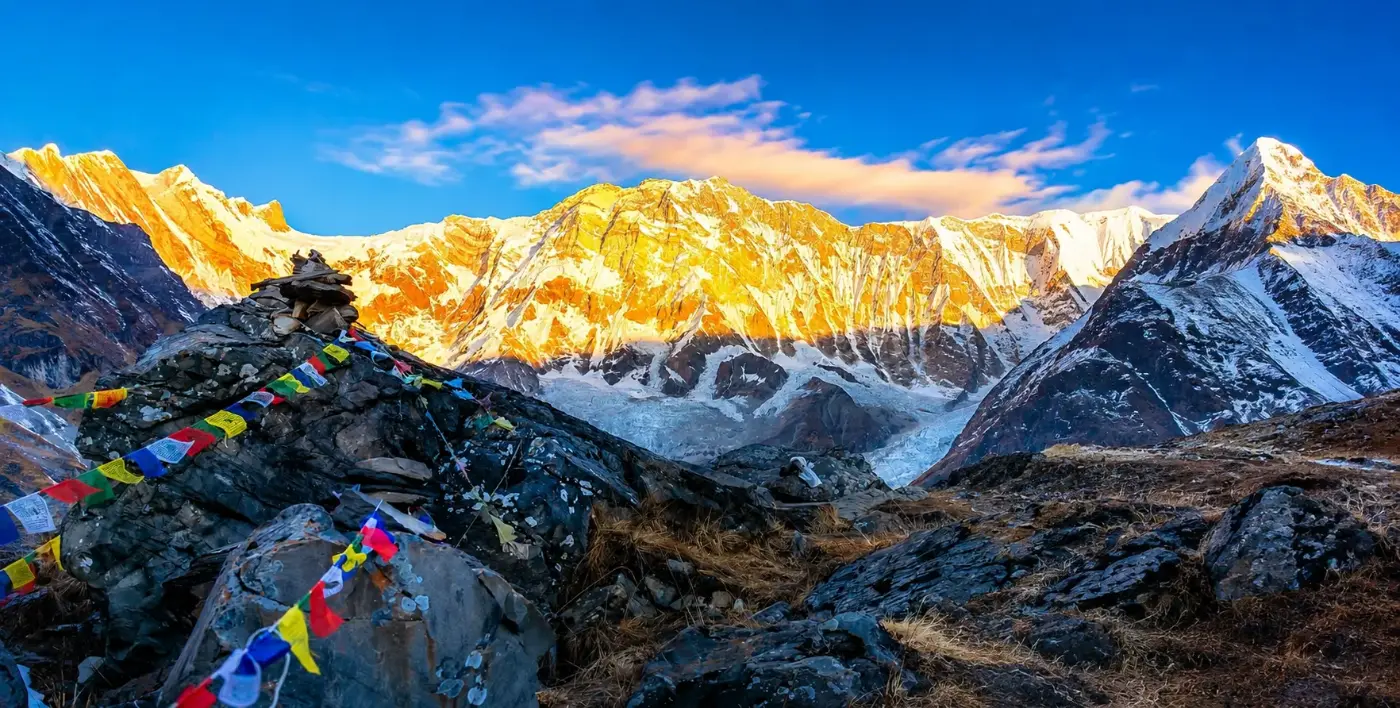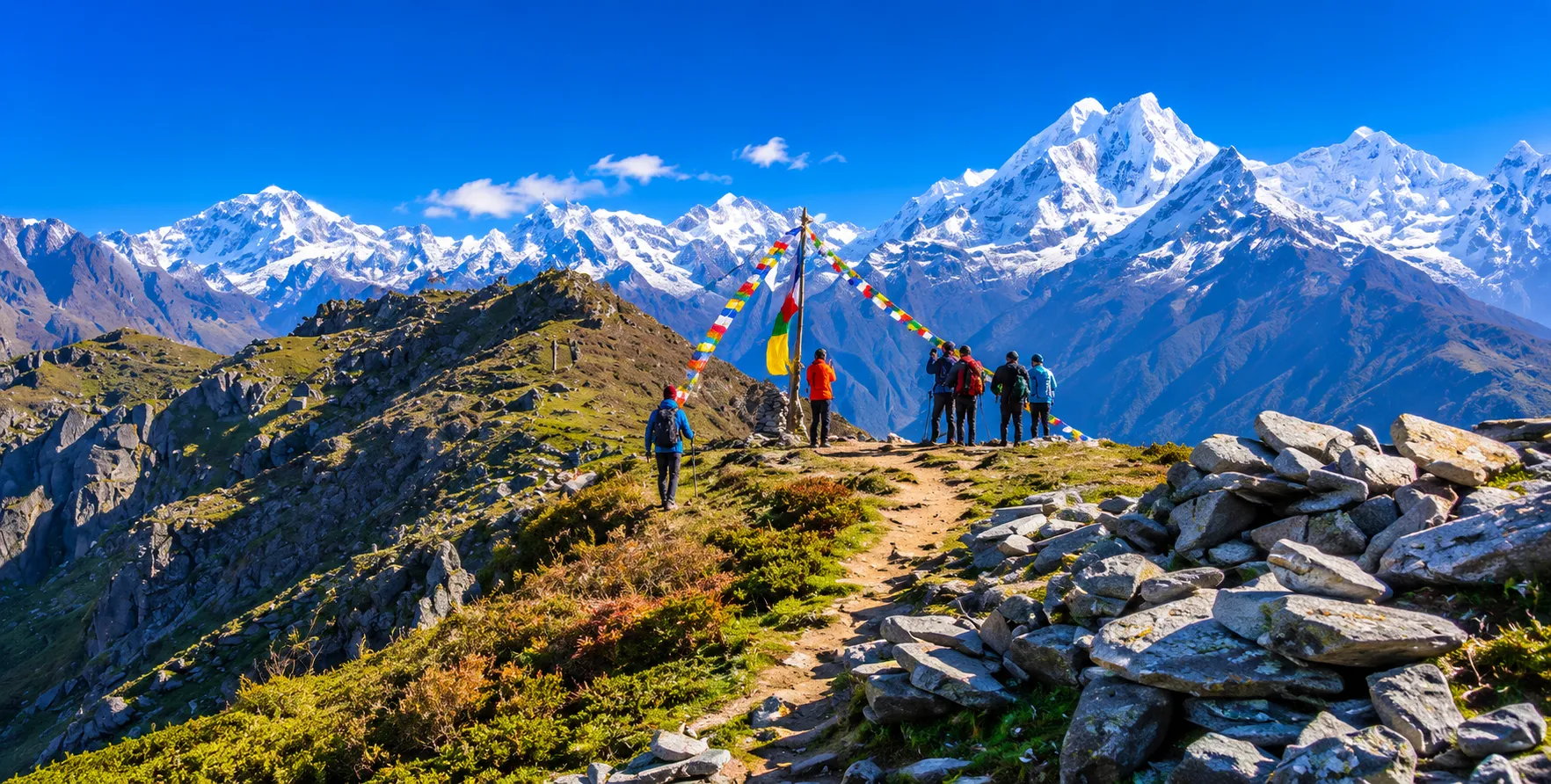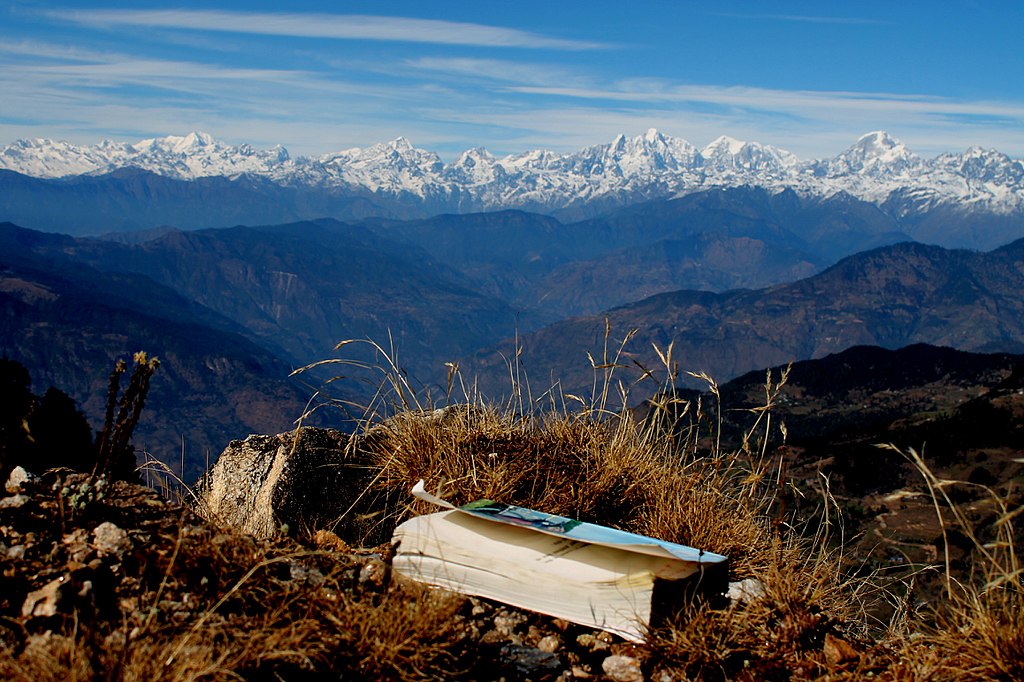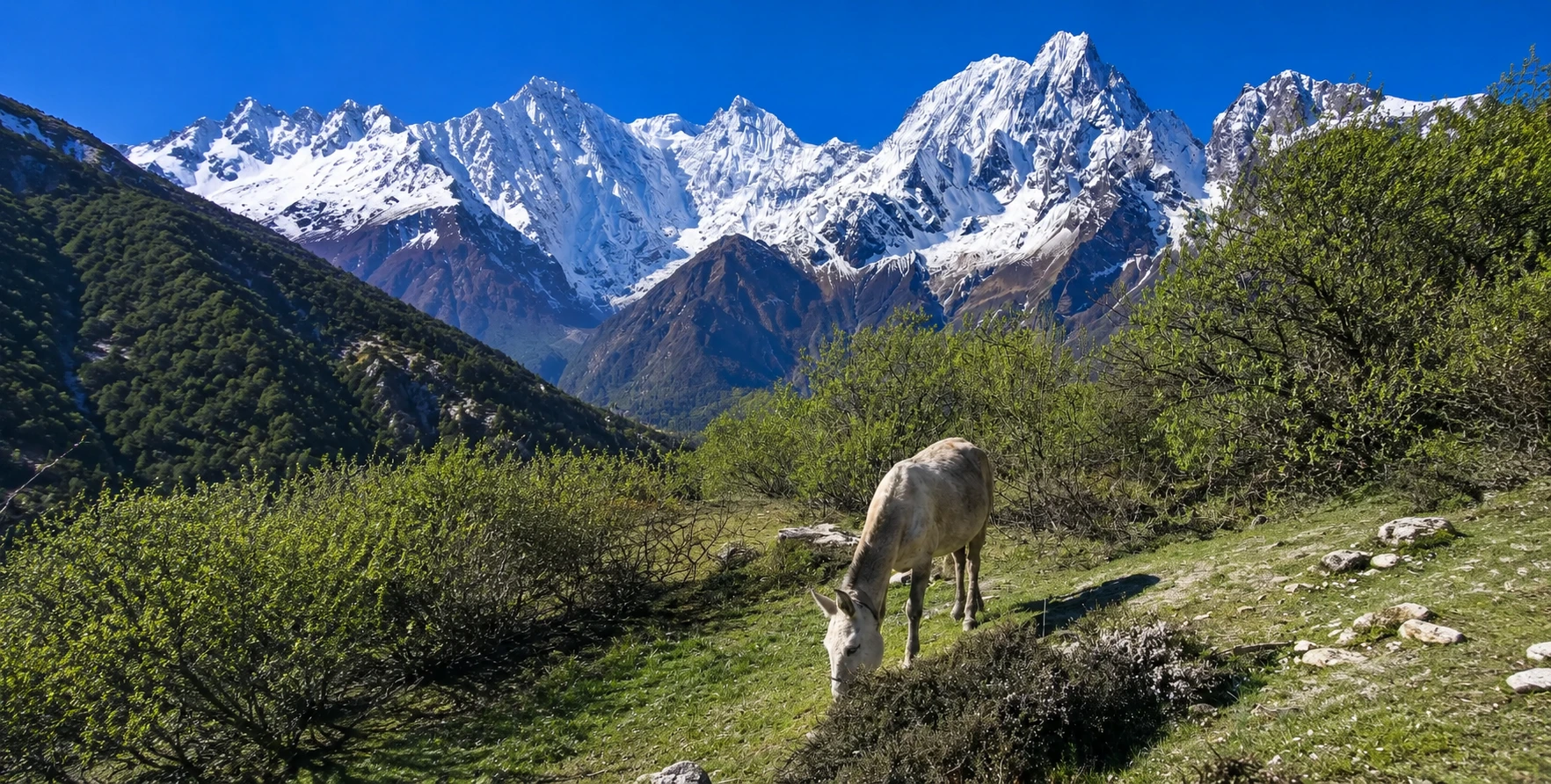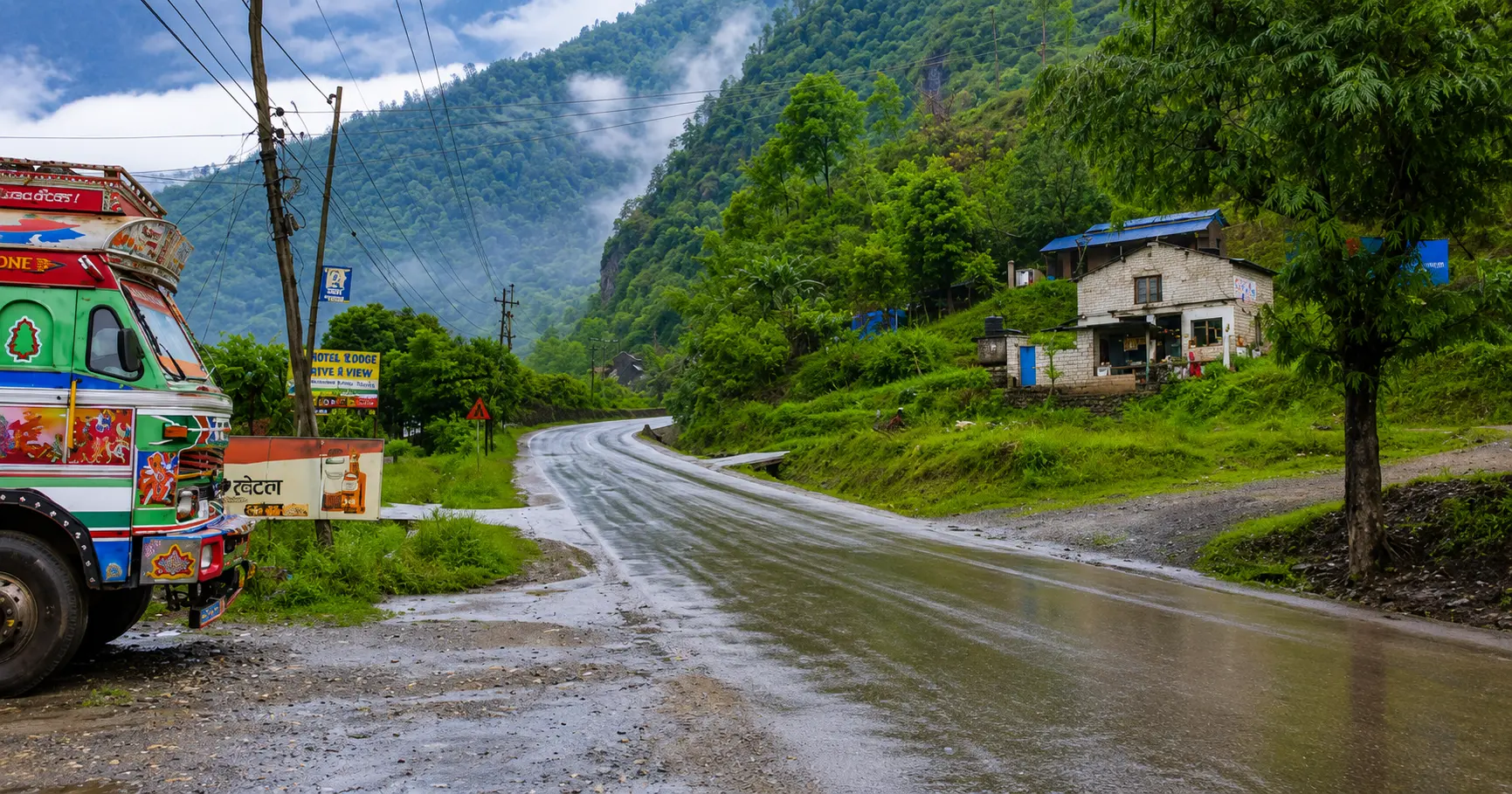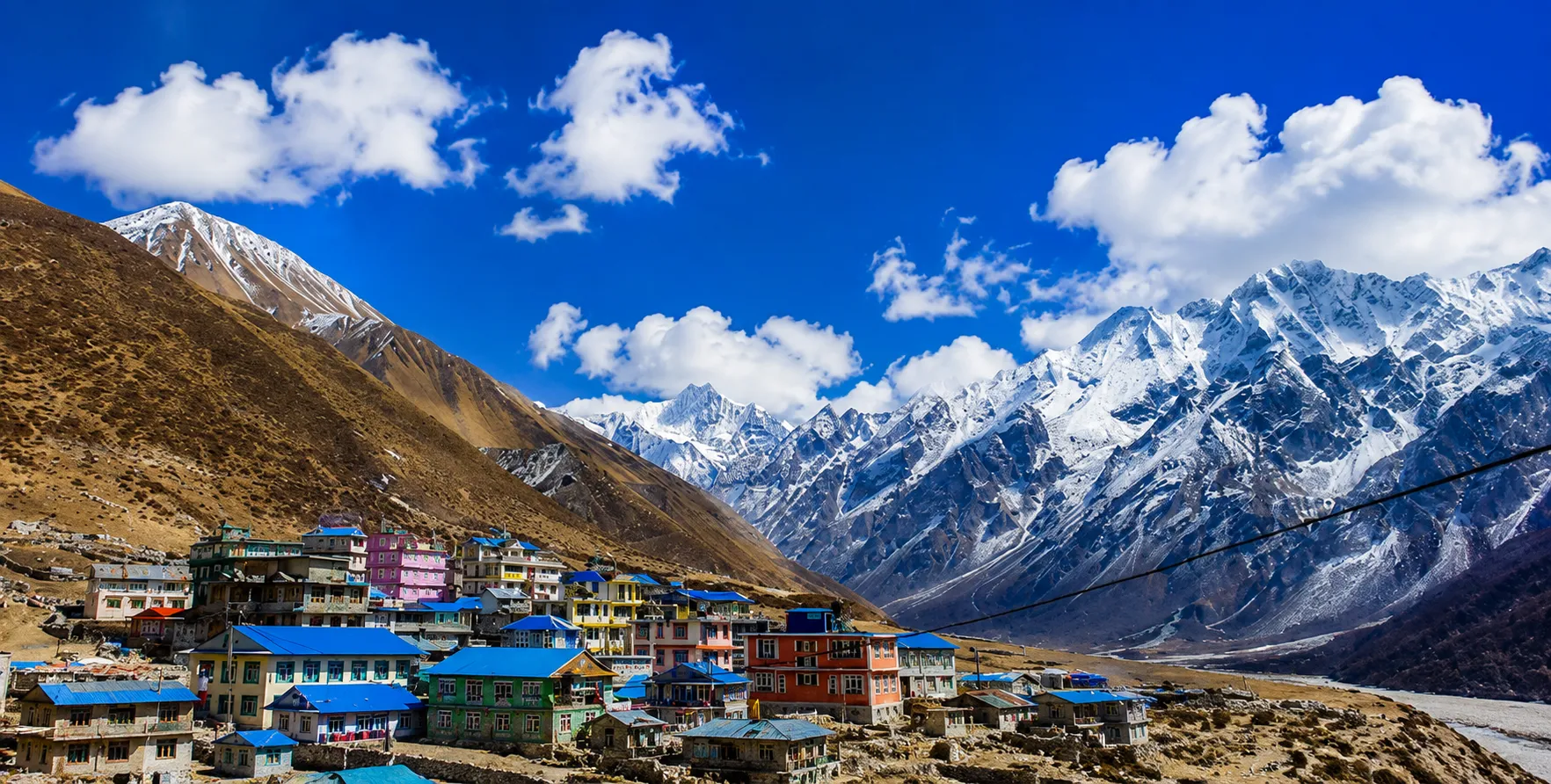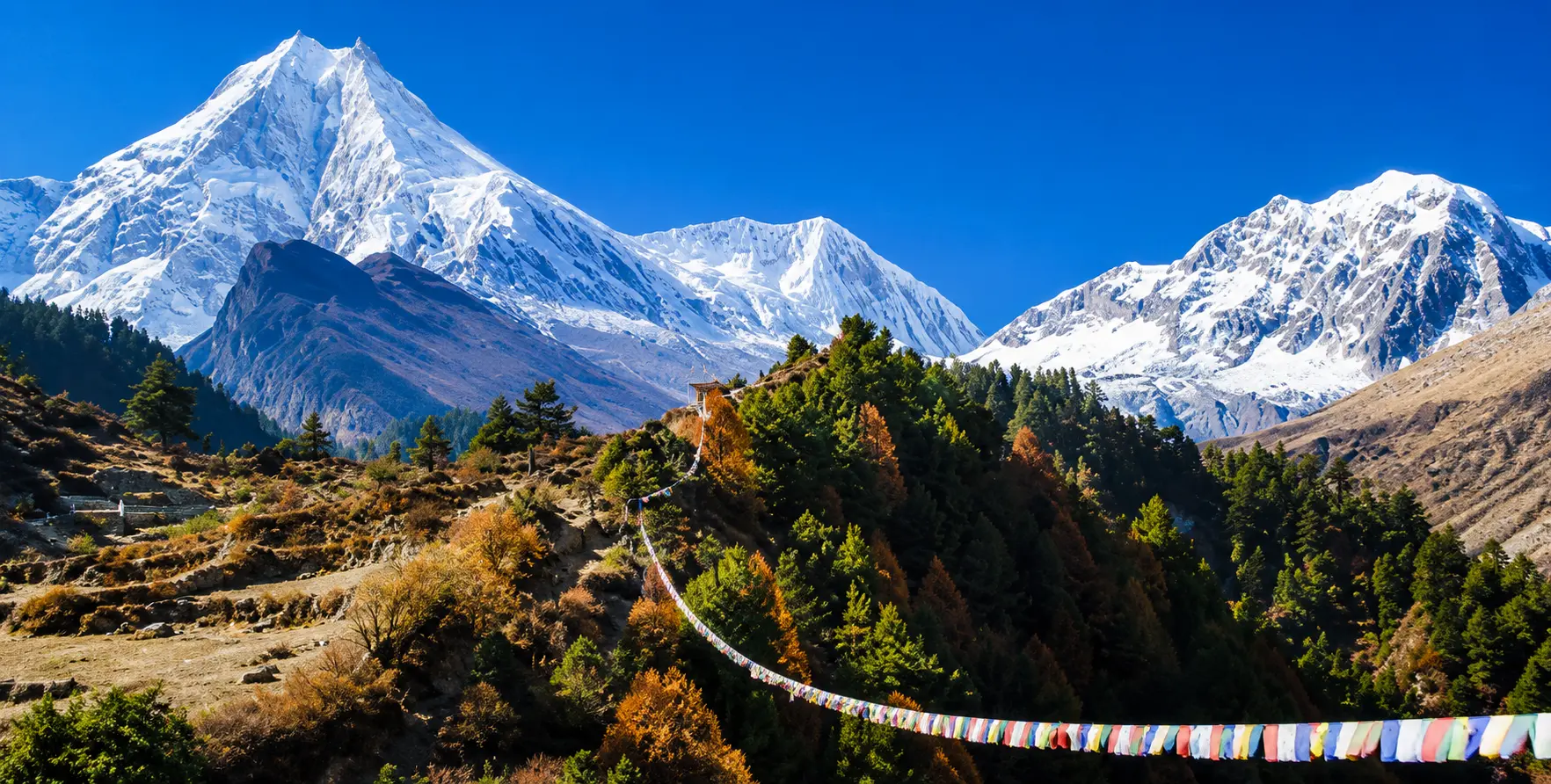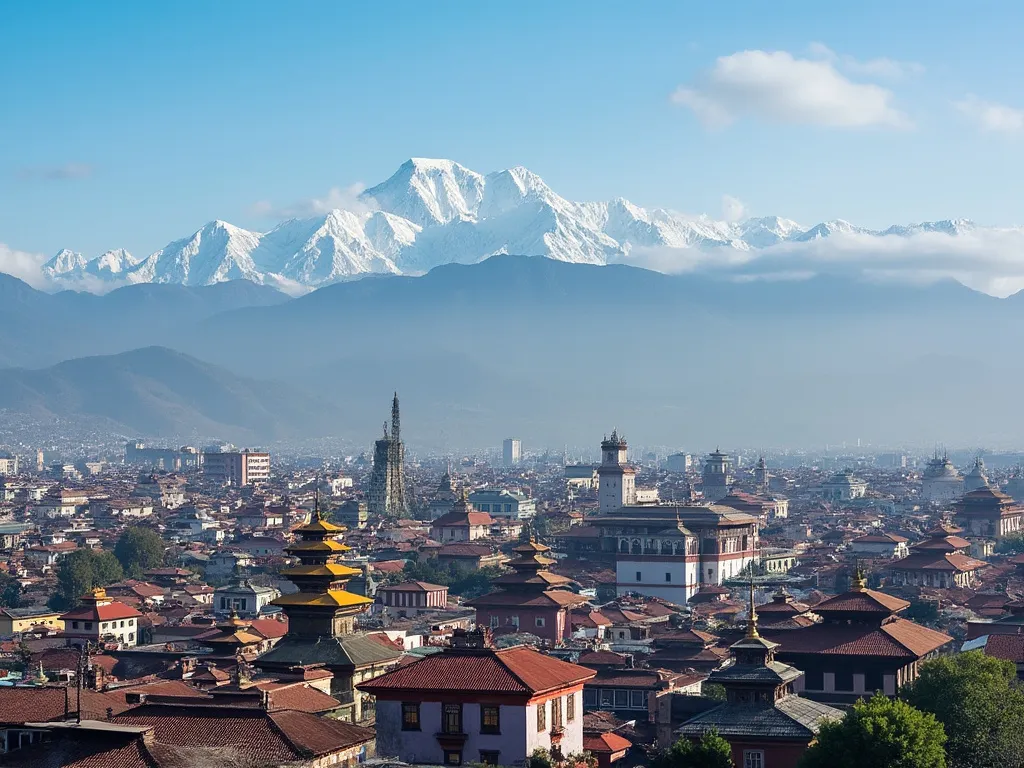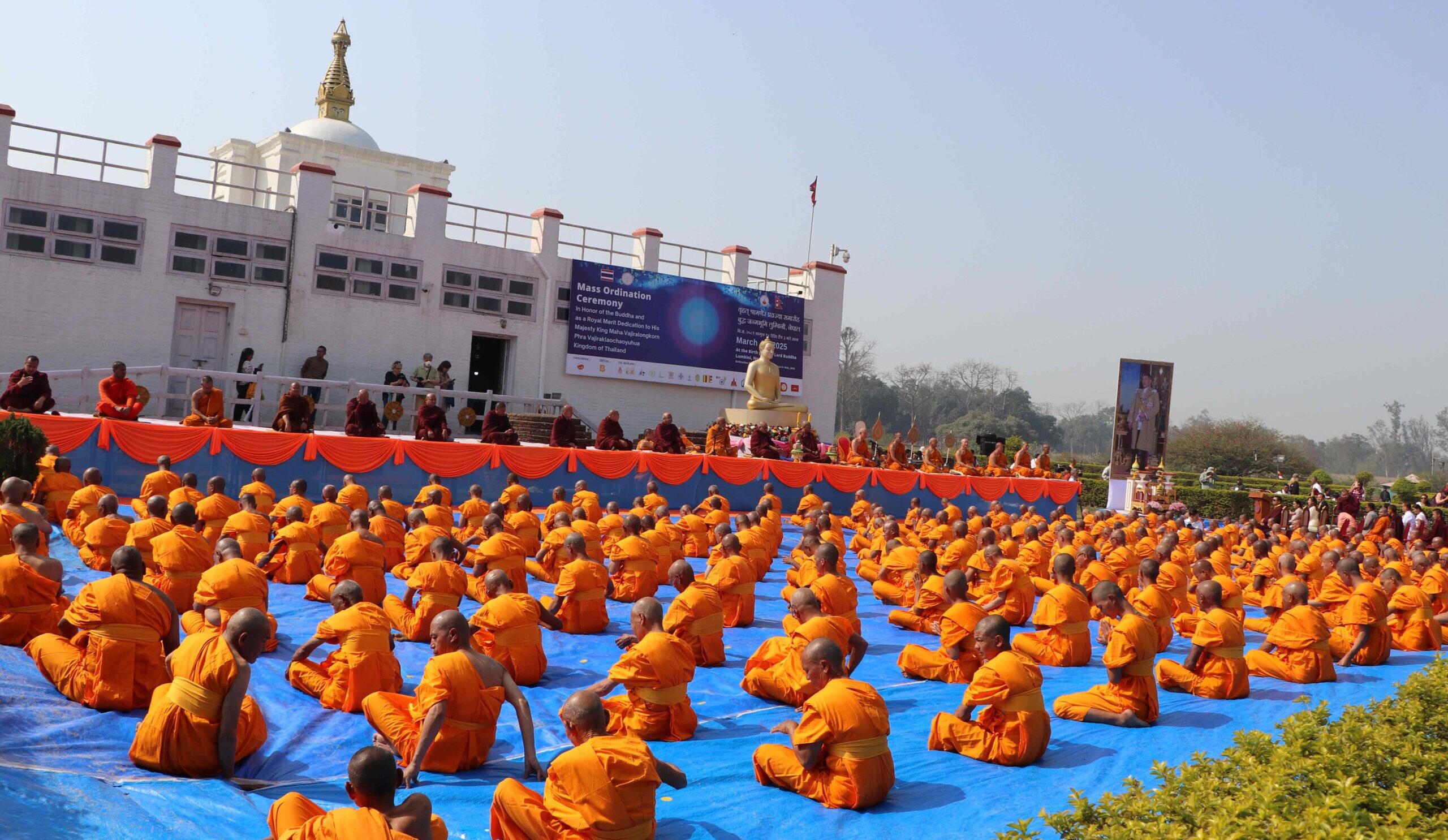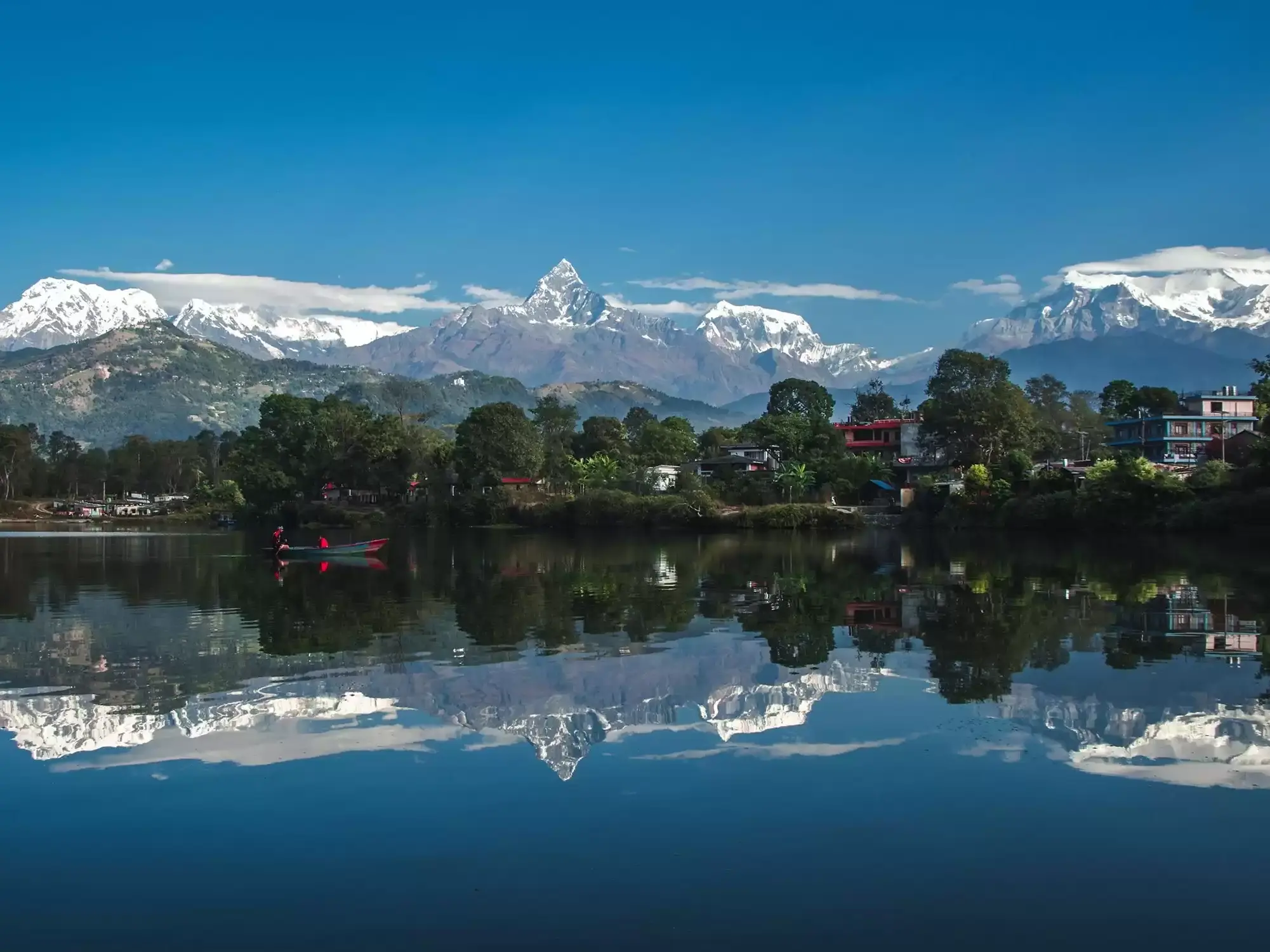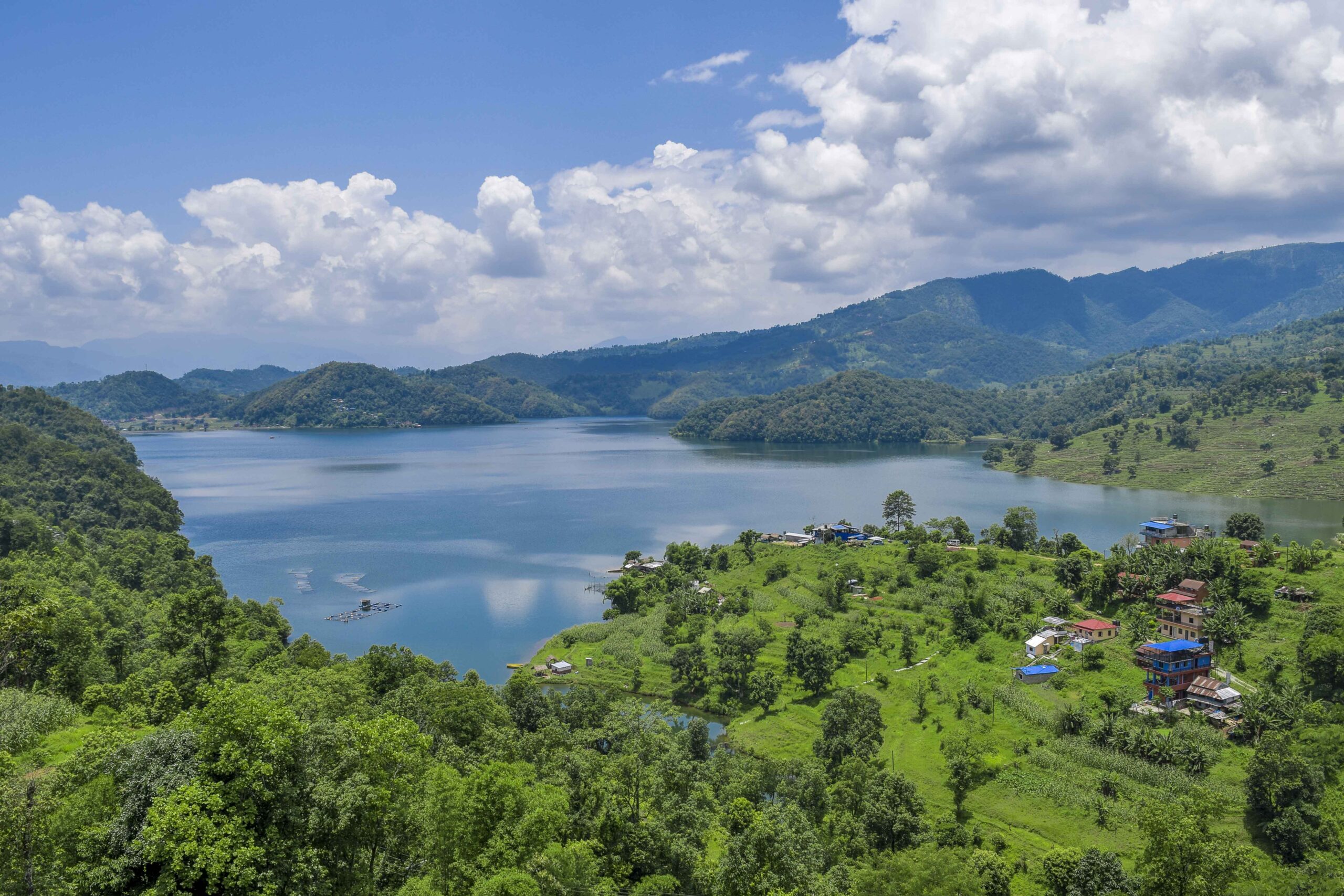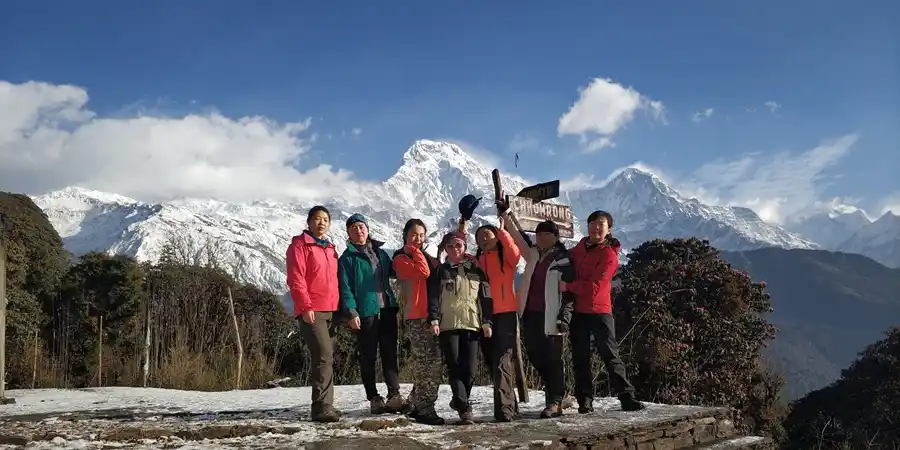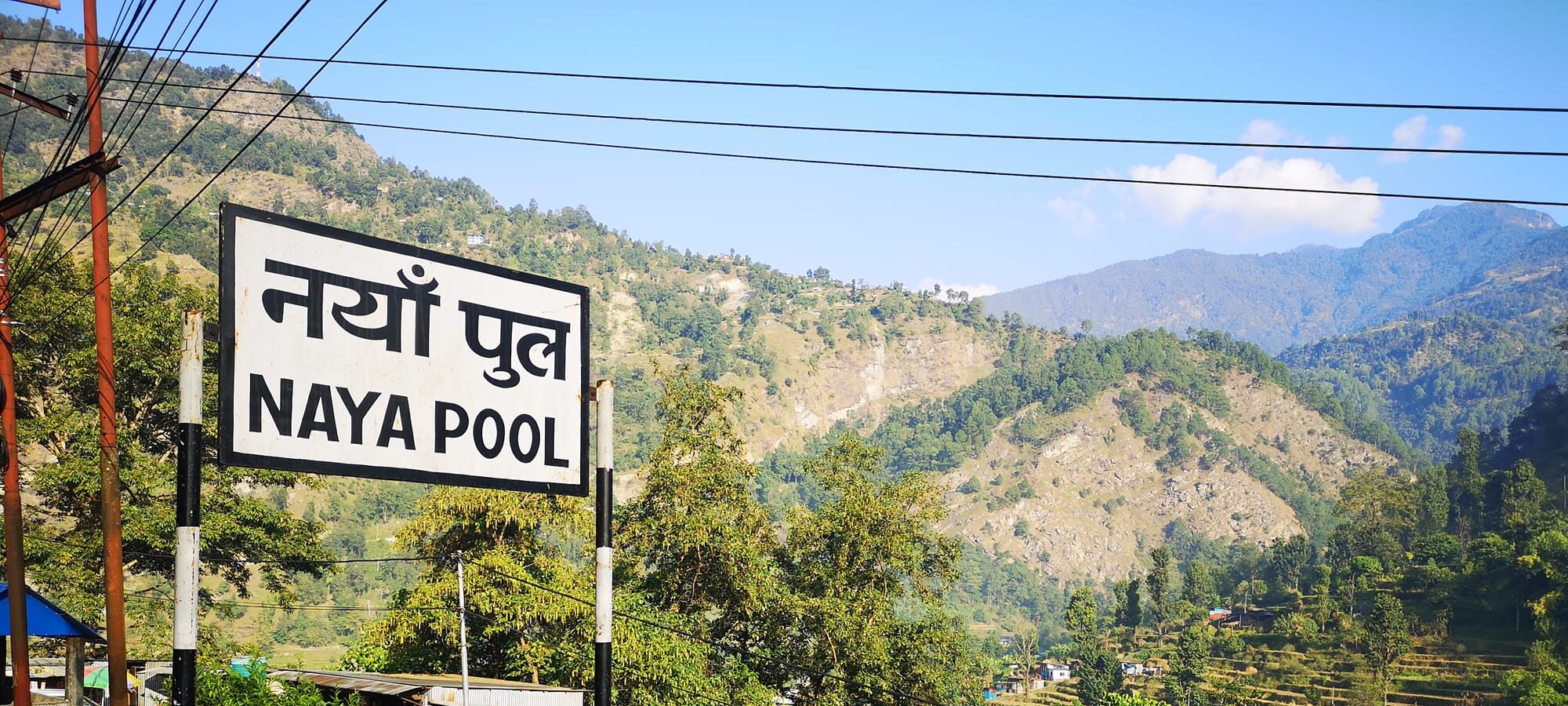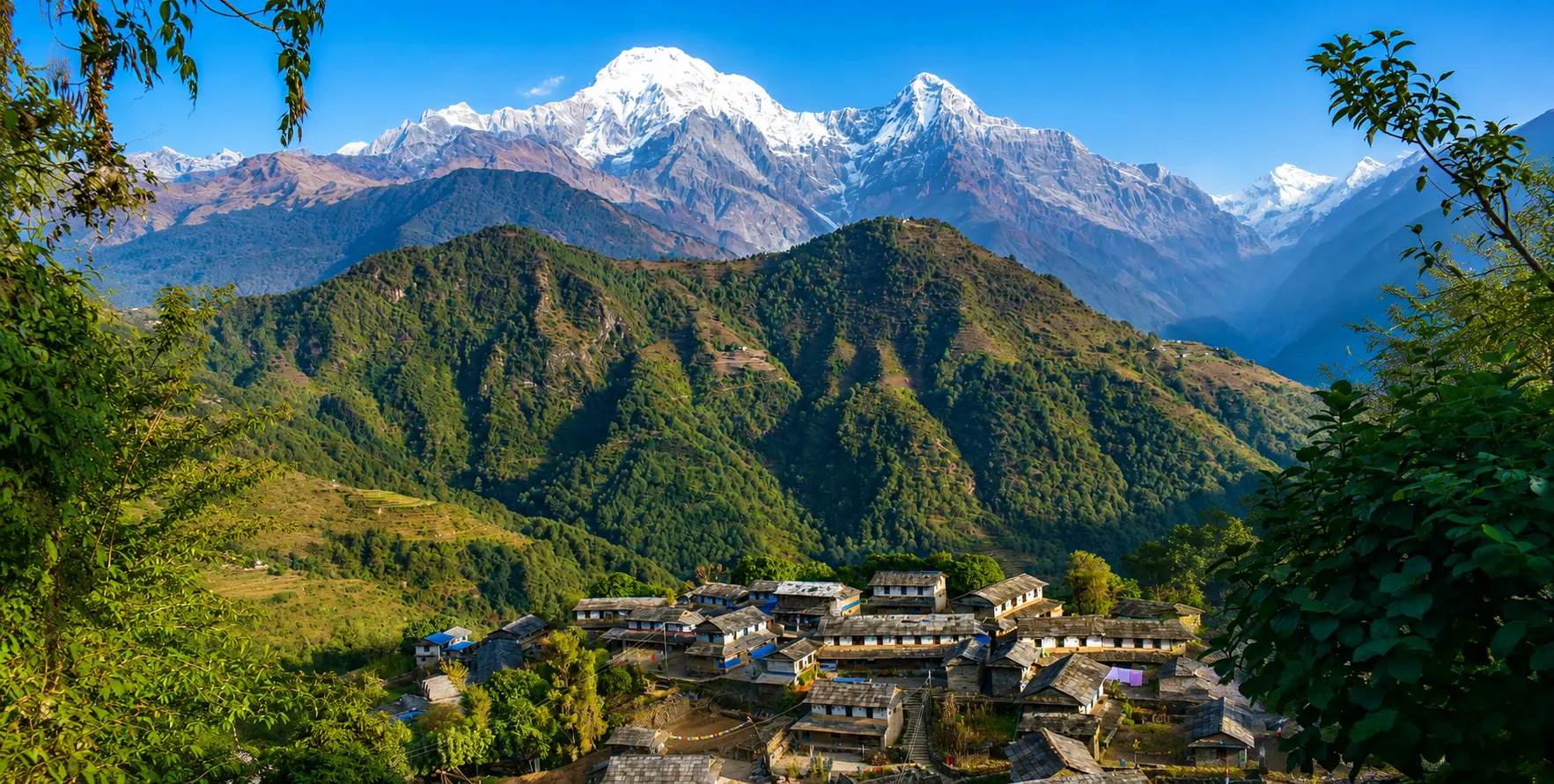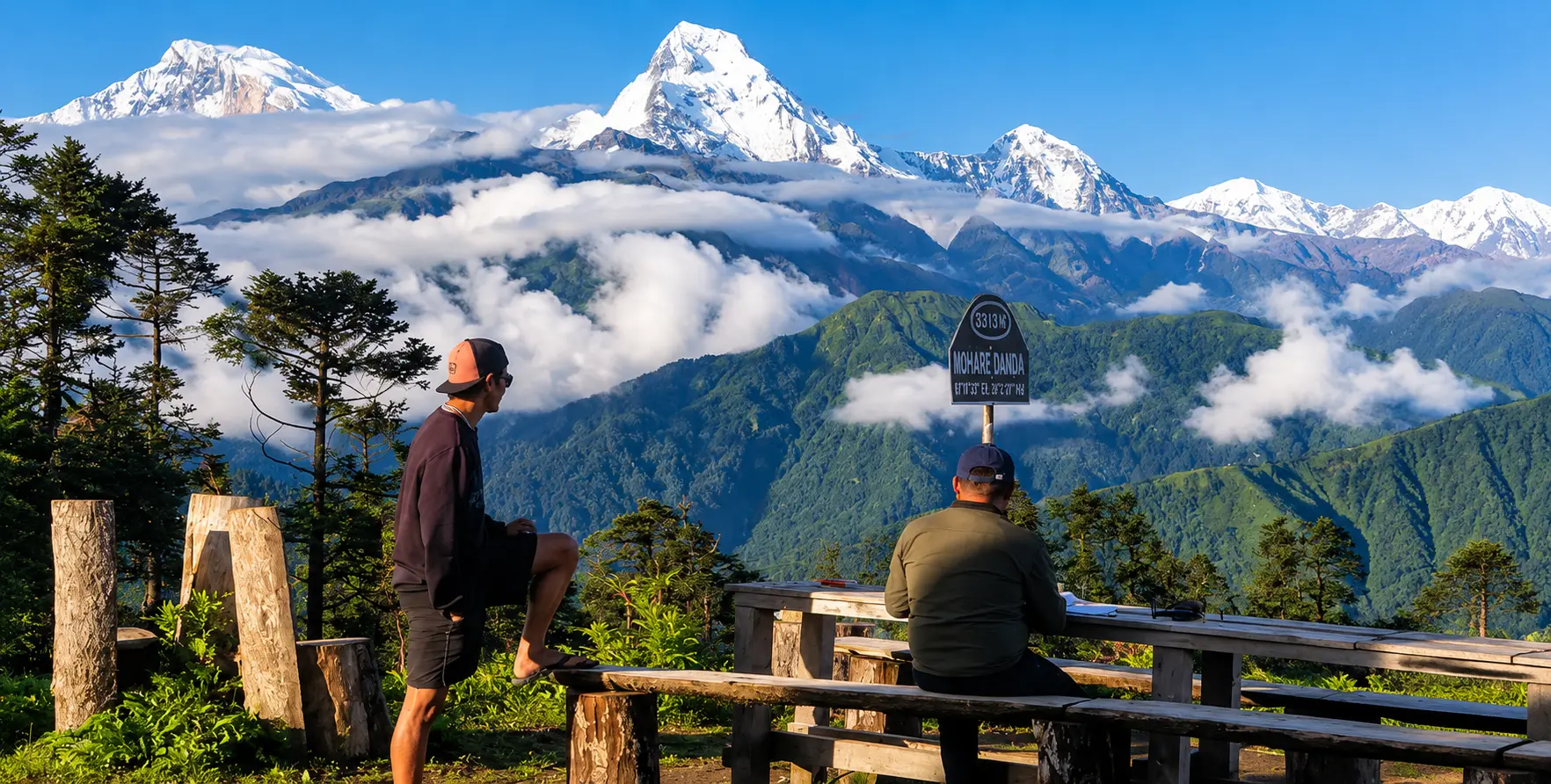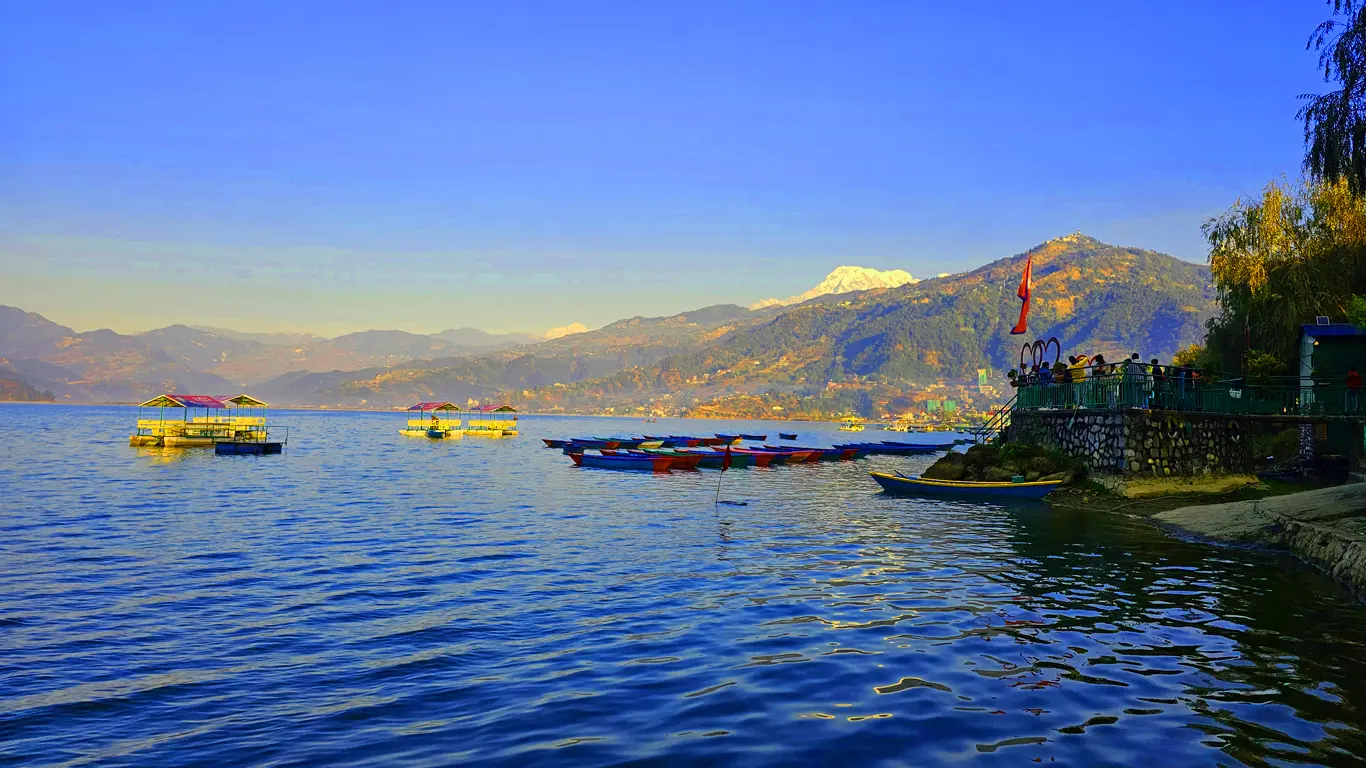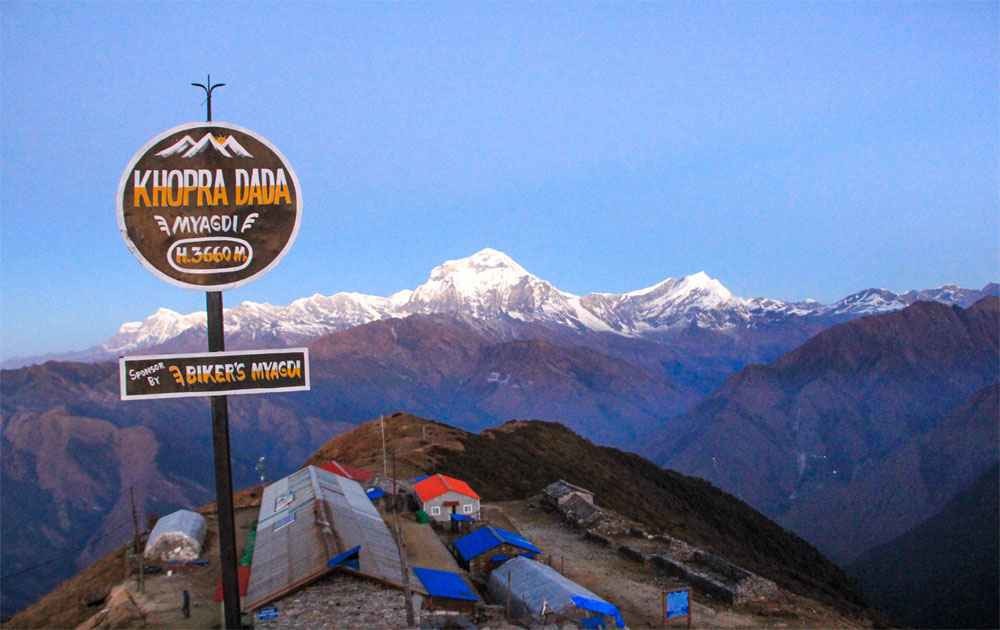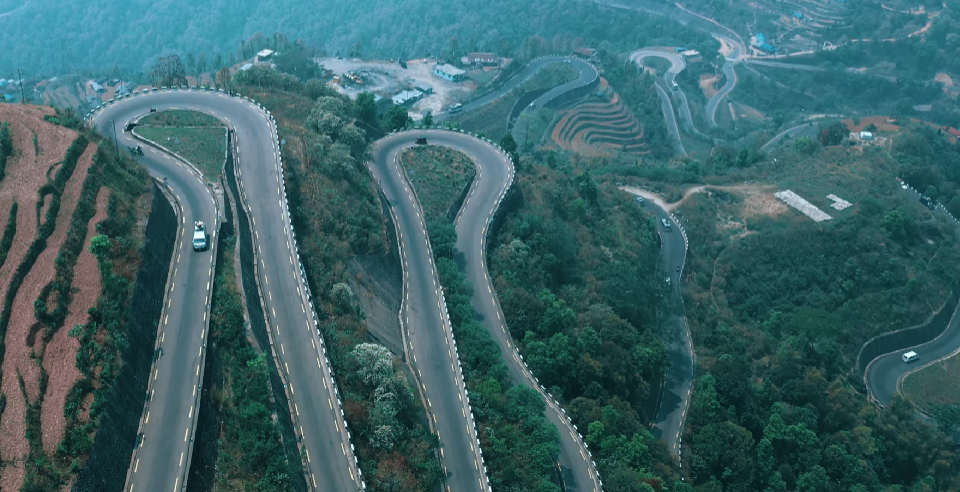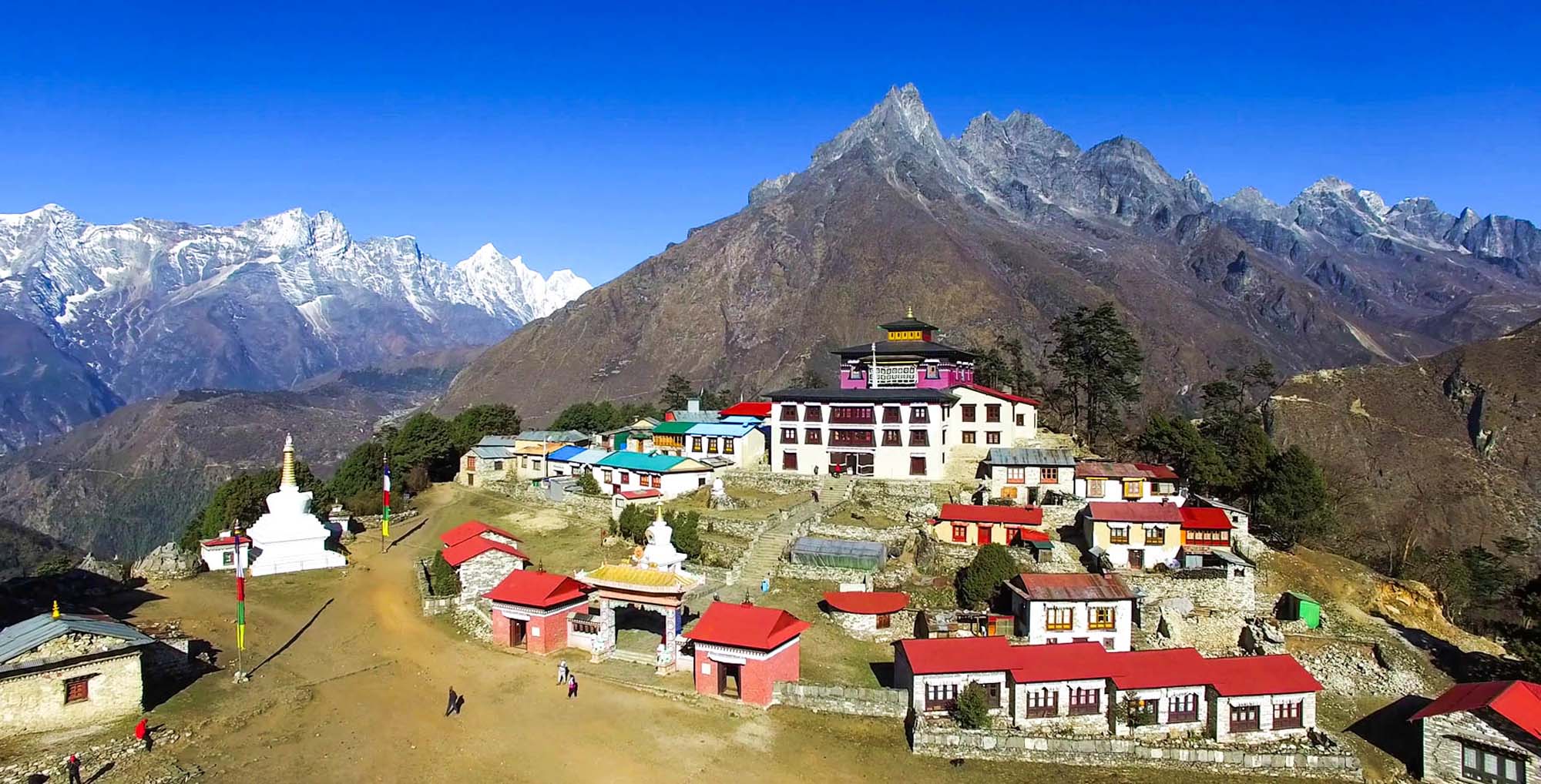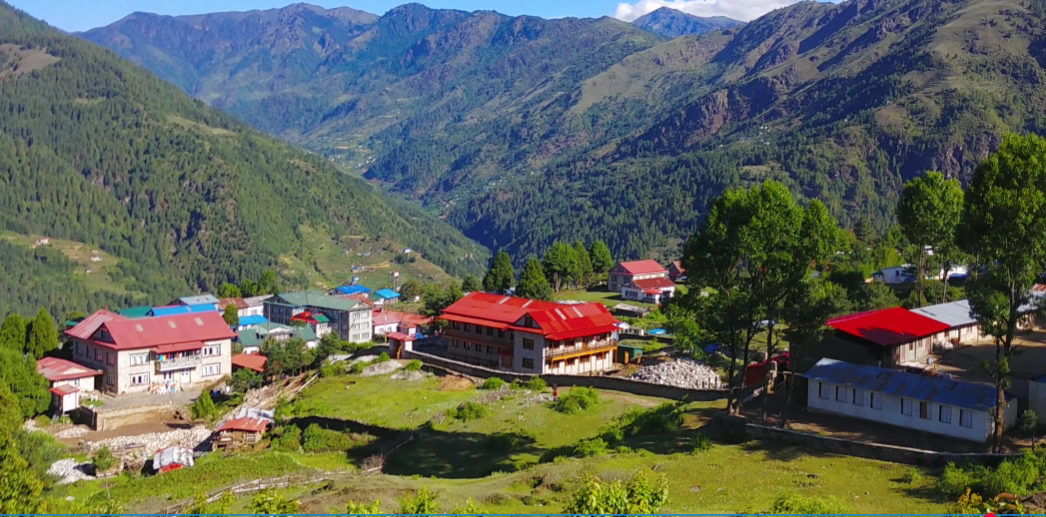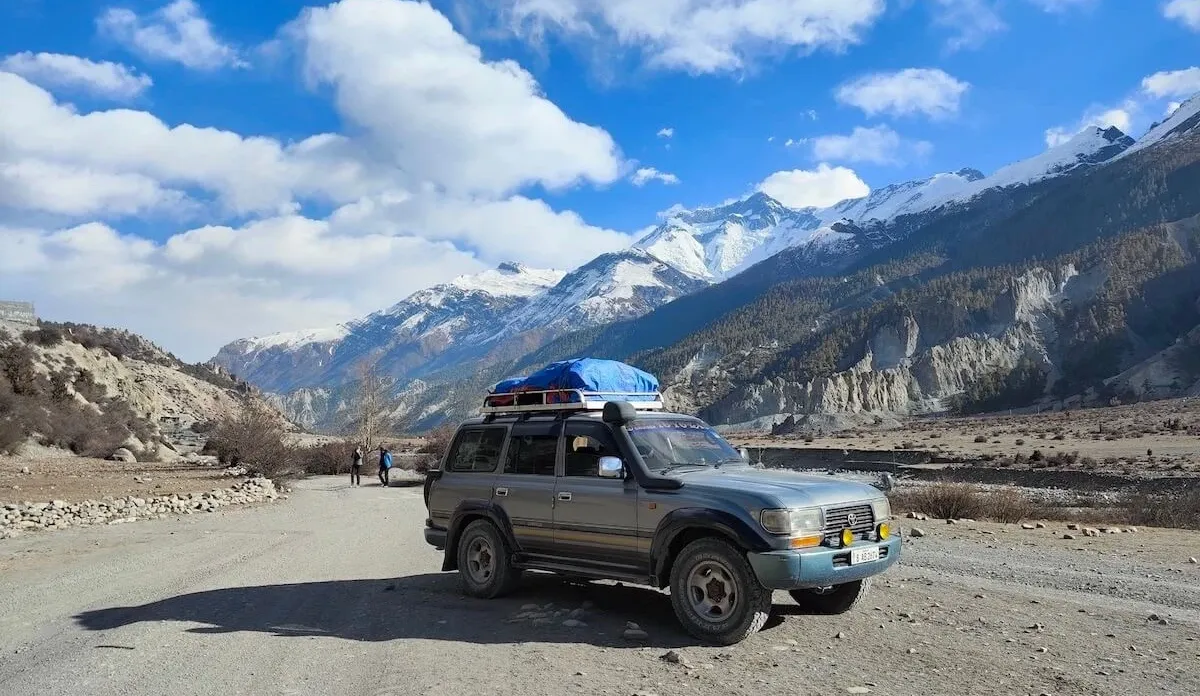
Kathmandu to Ruby Valley Jeep Service

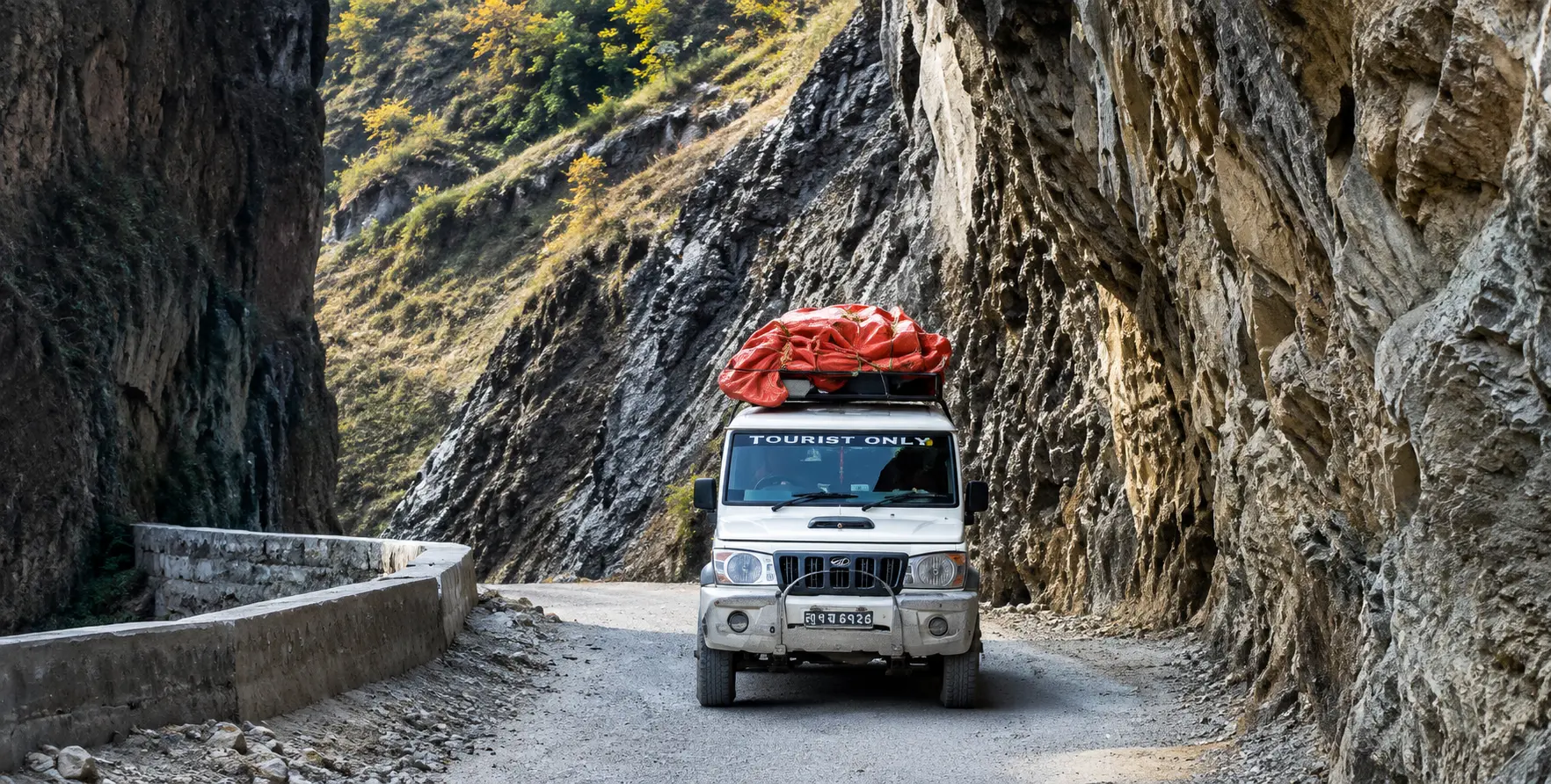
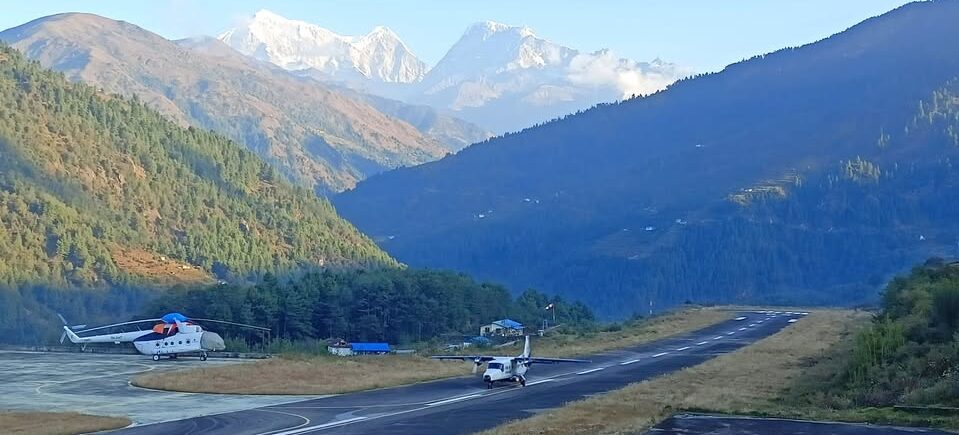
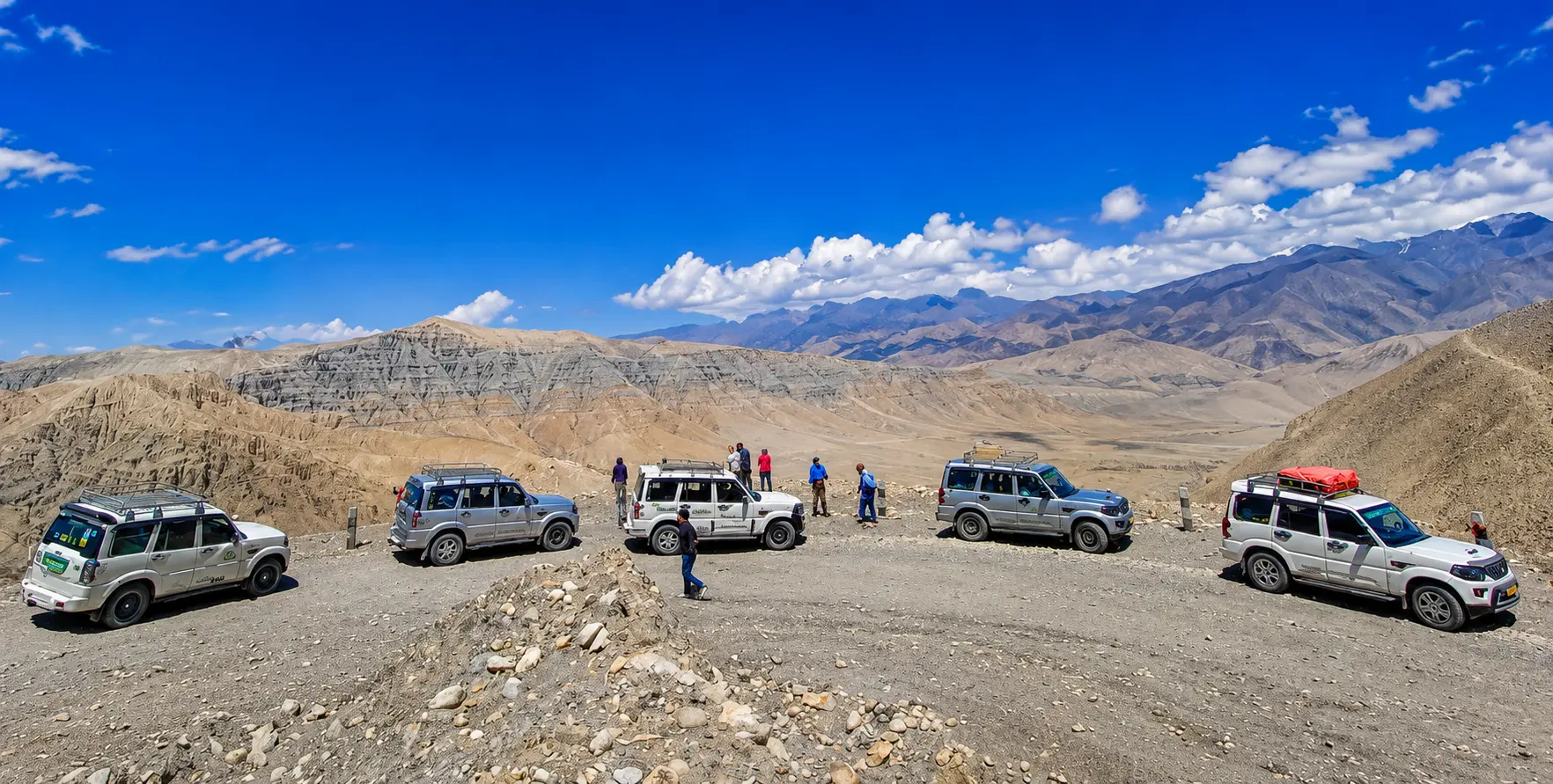
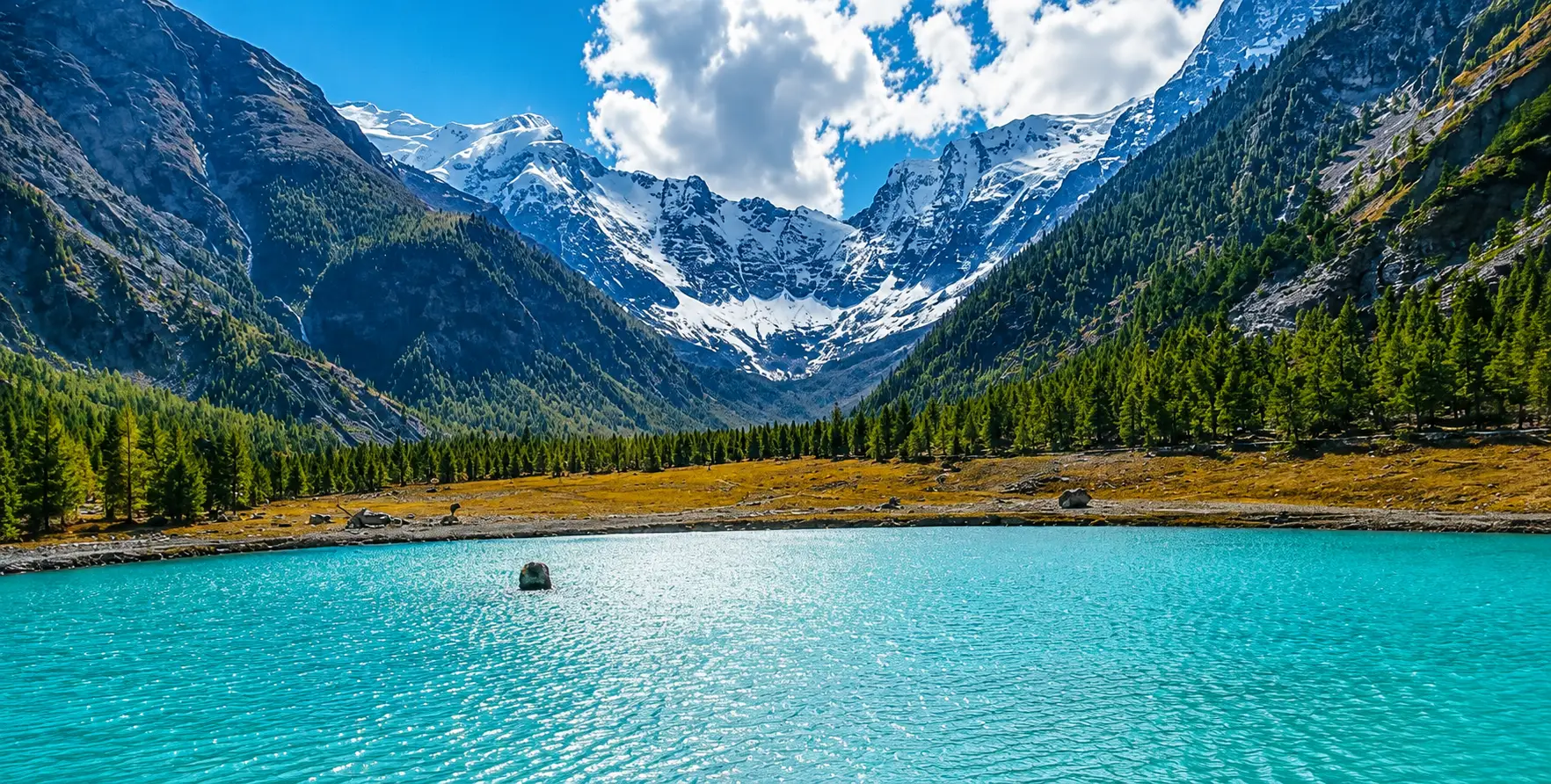
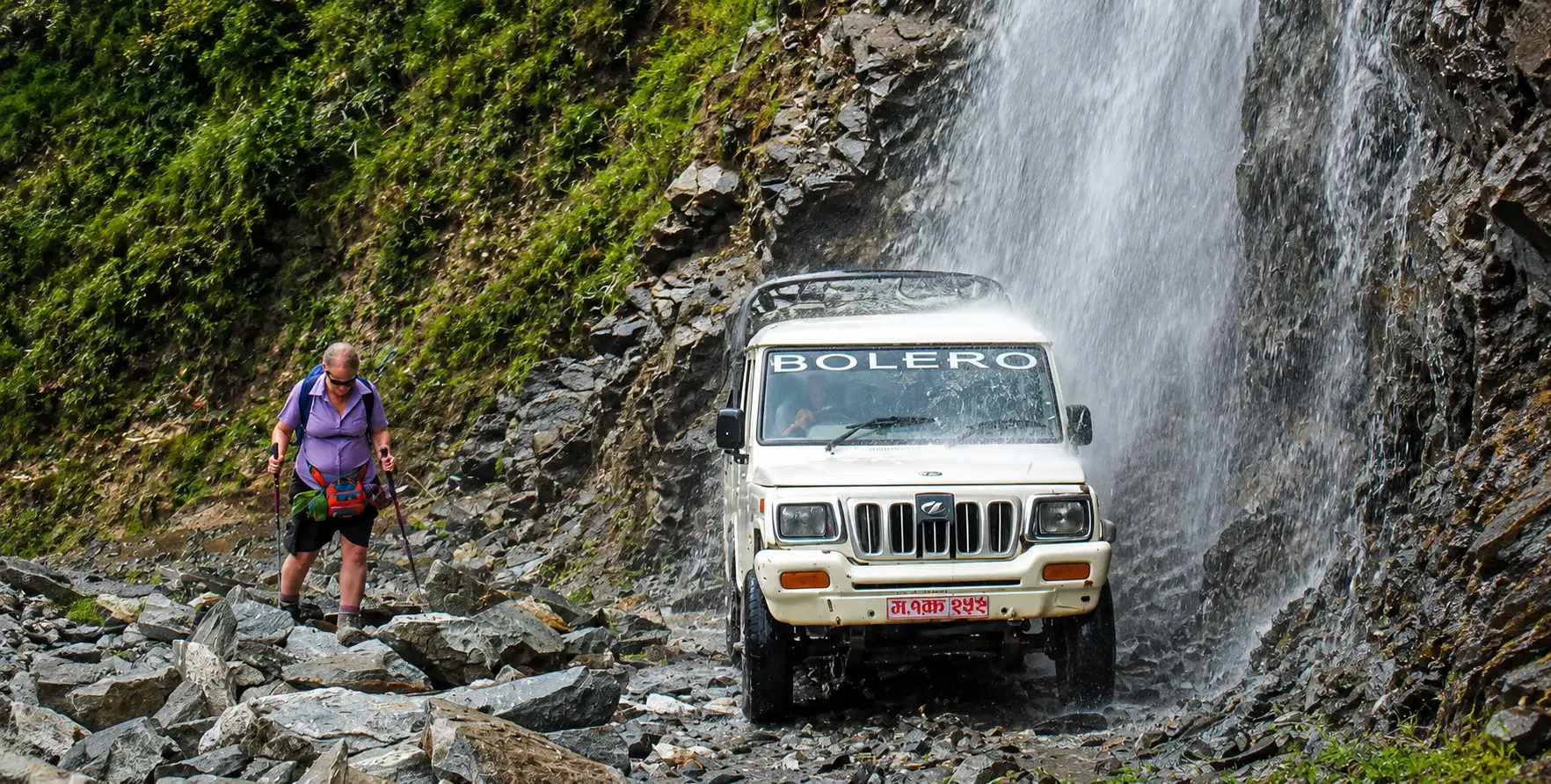
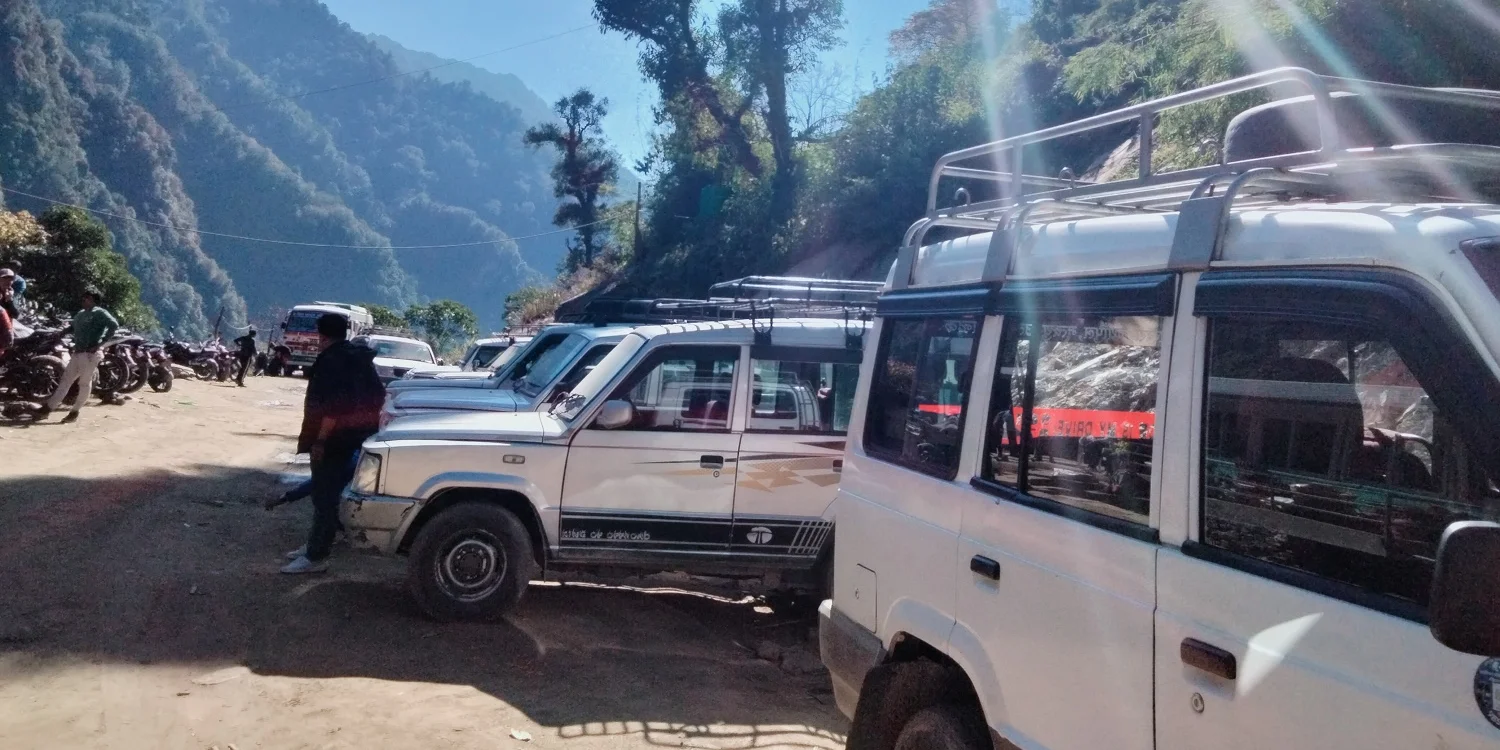
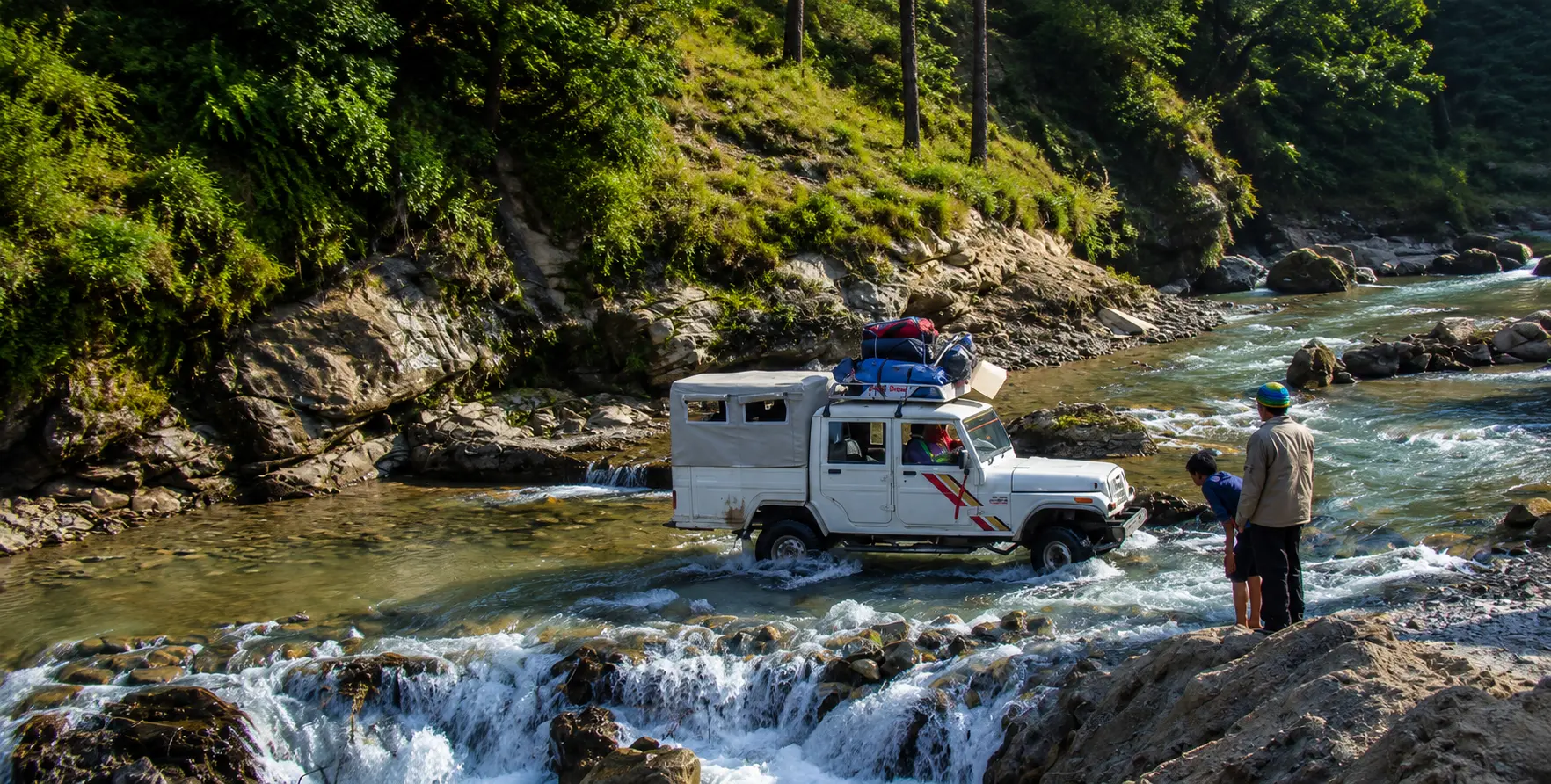
Kathmandu to Ruby Valley Jeep Service with a private 4WD jeep and Scorpio on the mountain roads of Ganesh Himal

Kathmandu to Ruby Valley Jeep Service: Complete Transport Guide

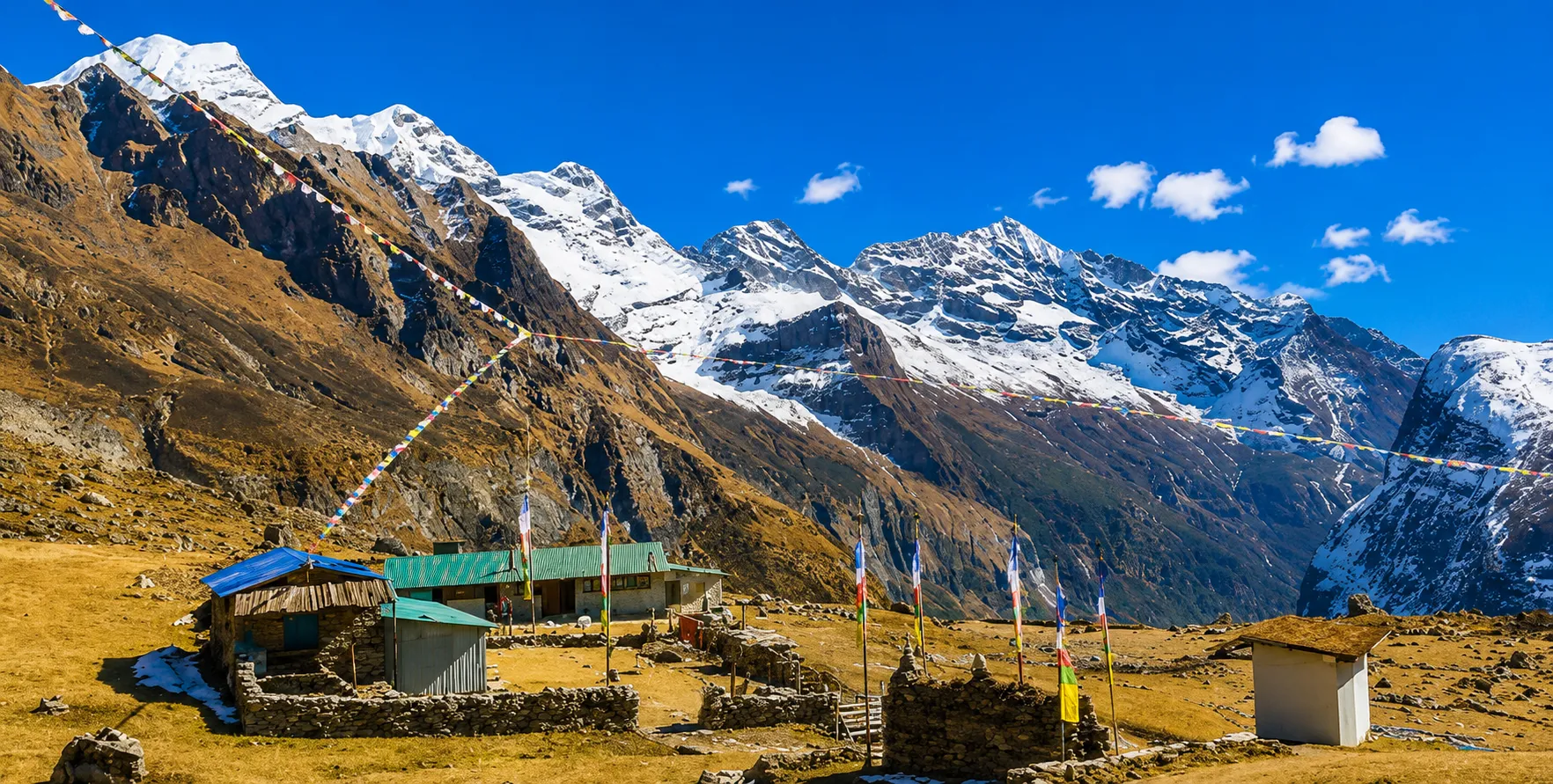
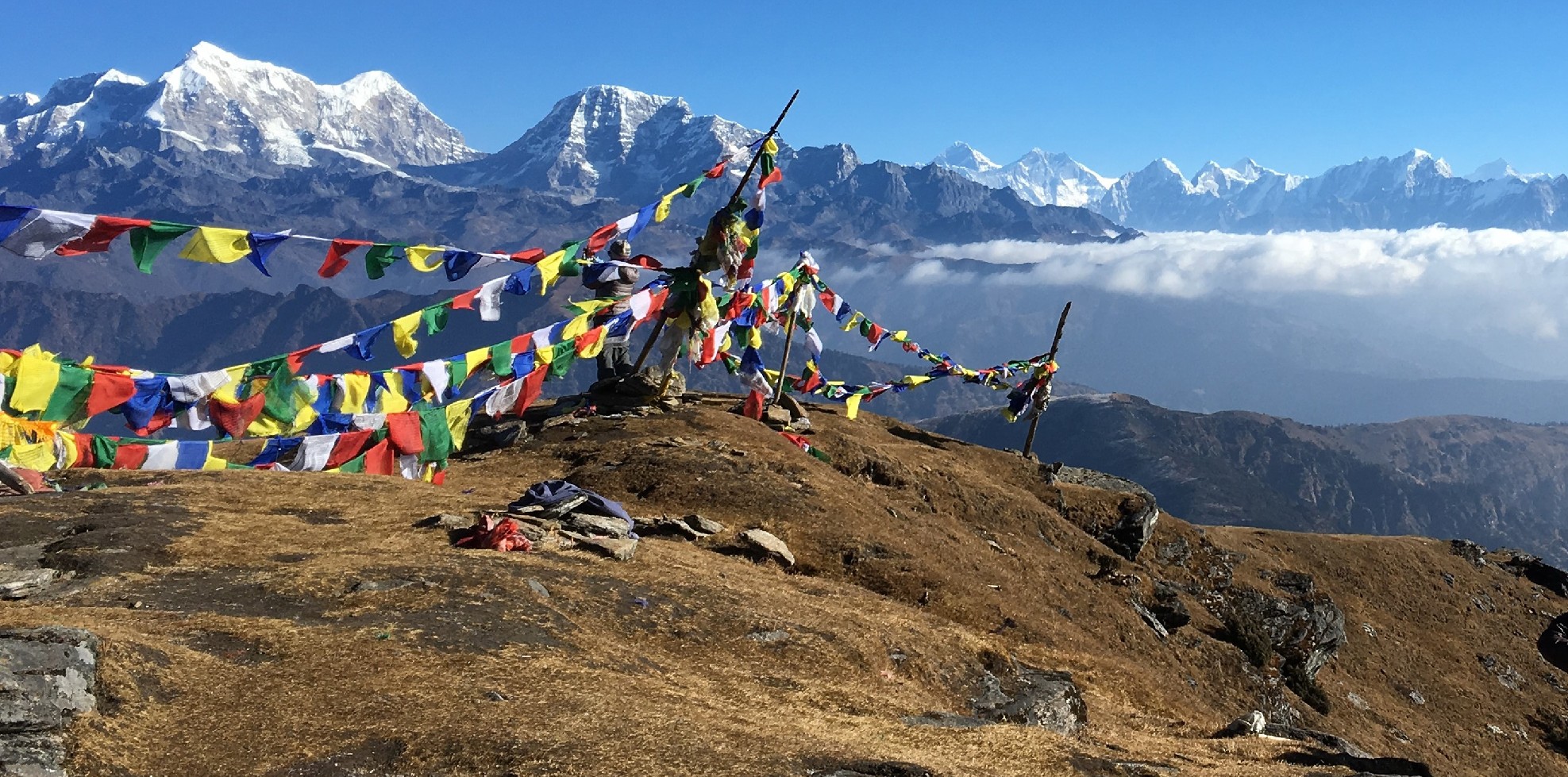
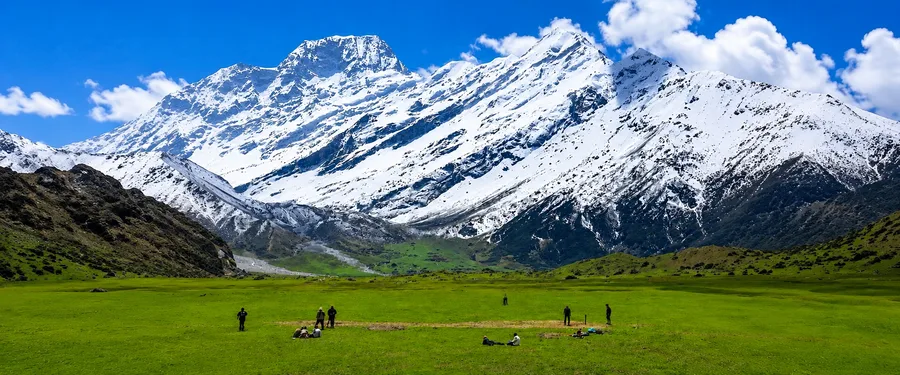
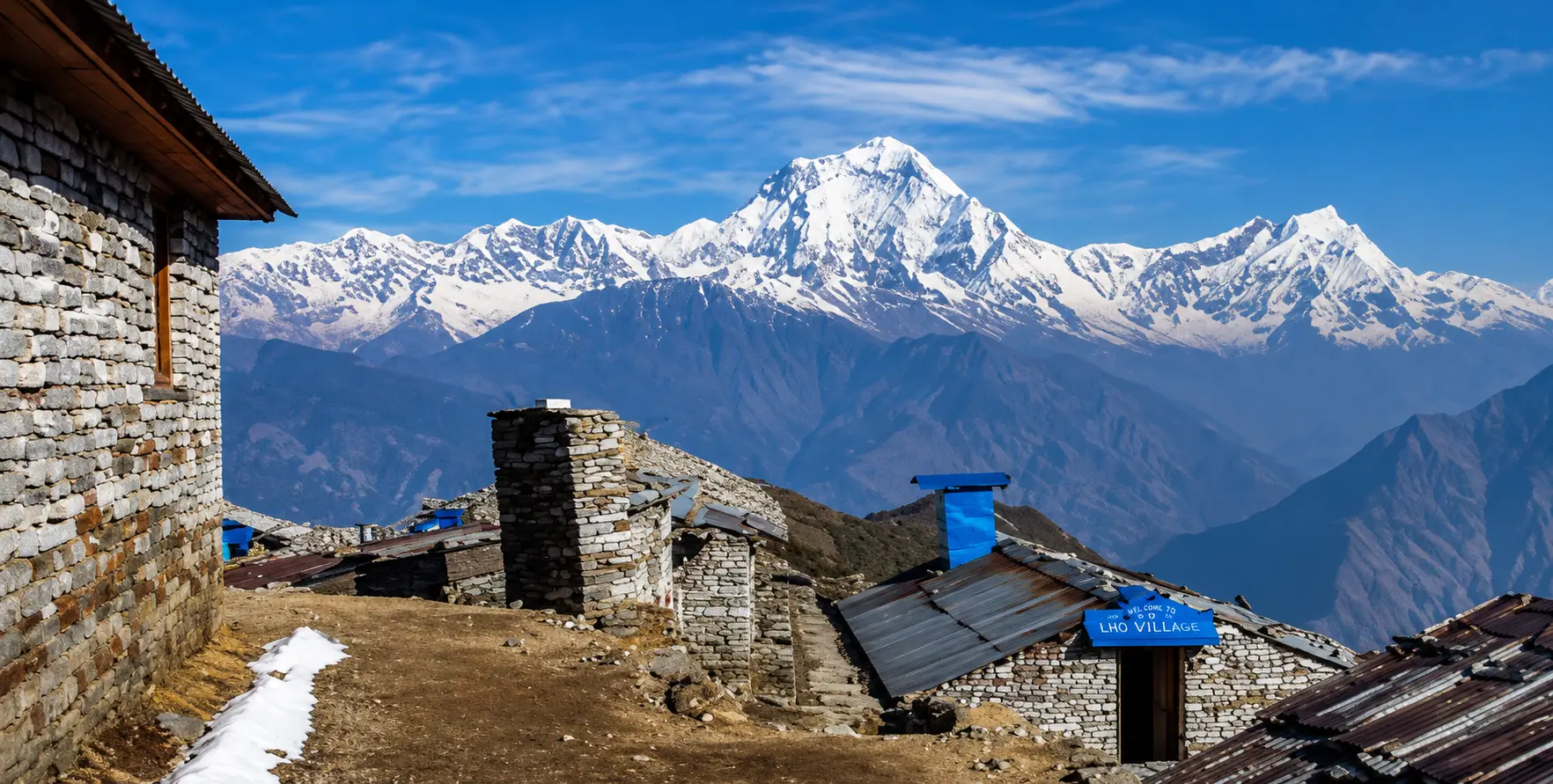
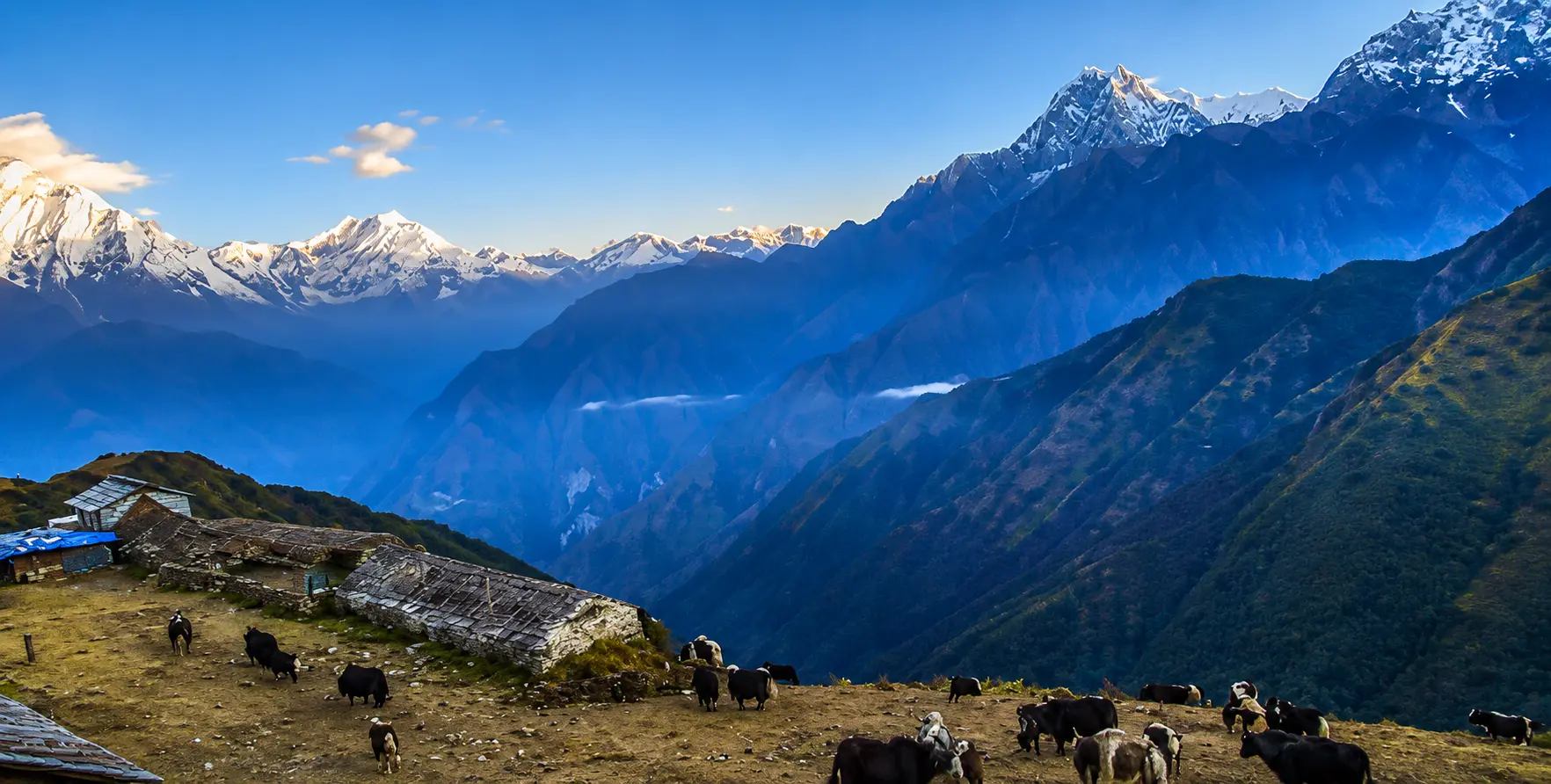
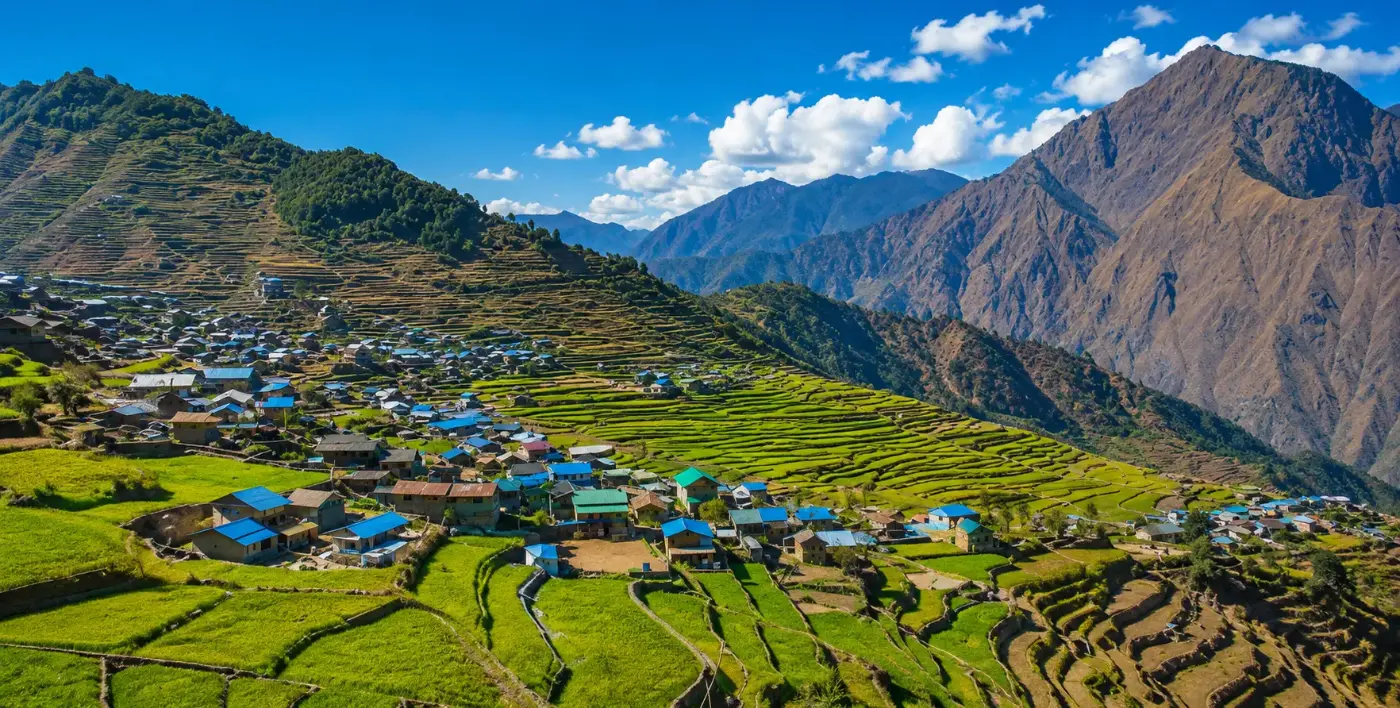
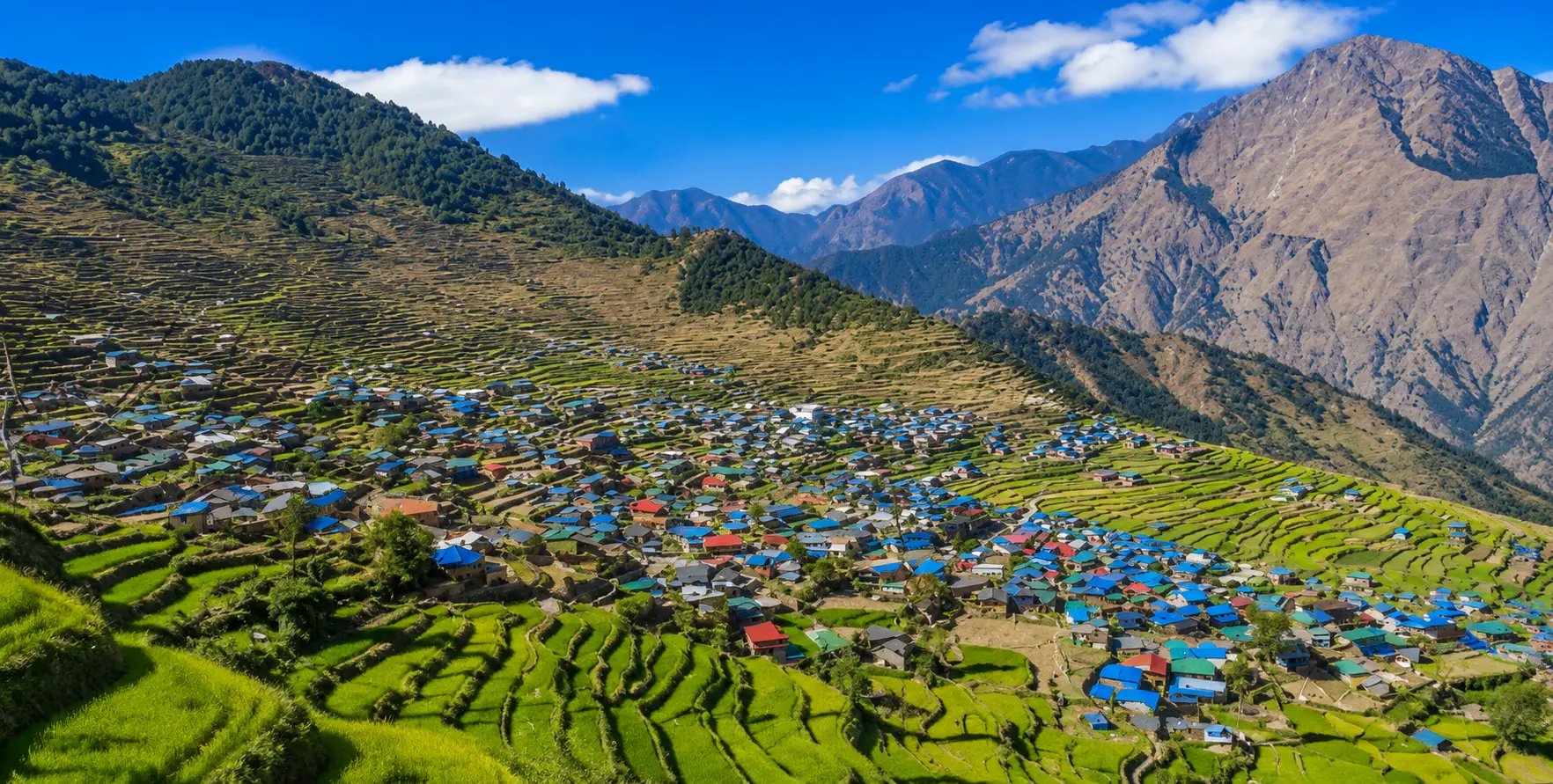
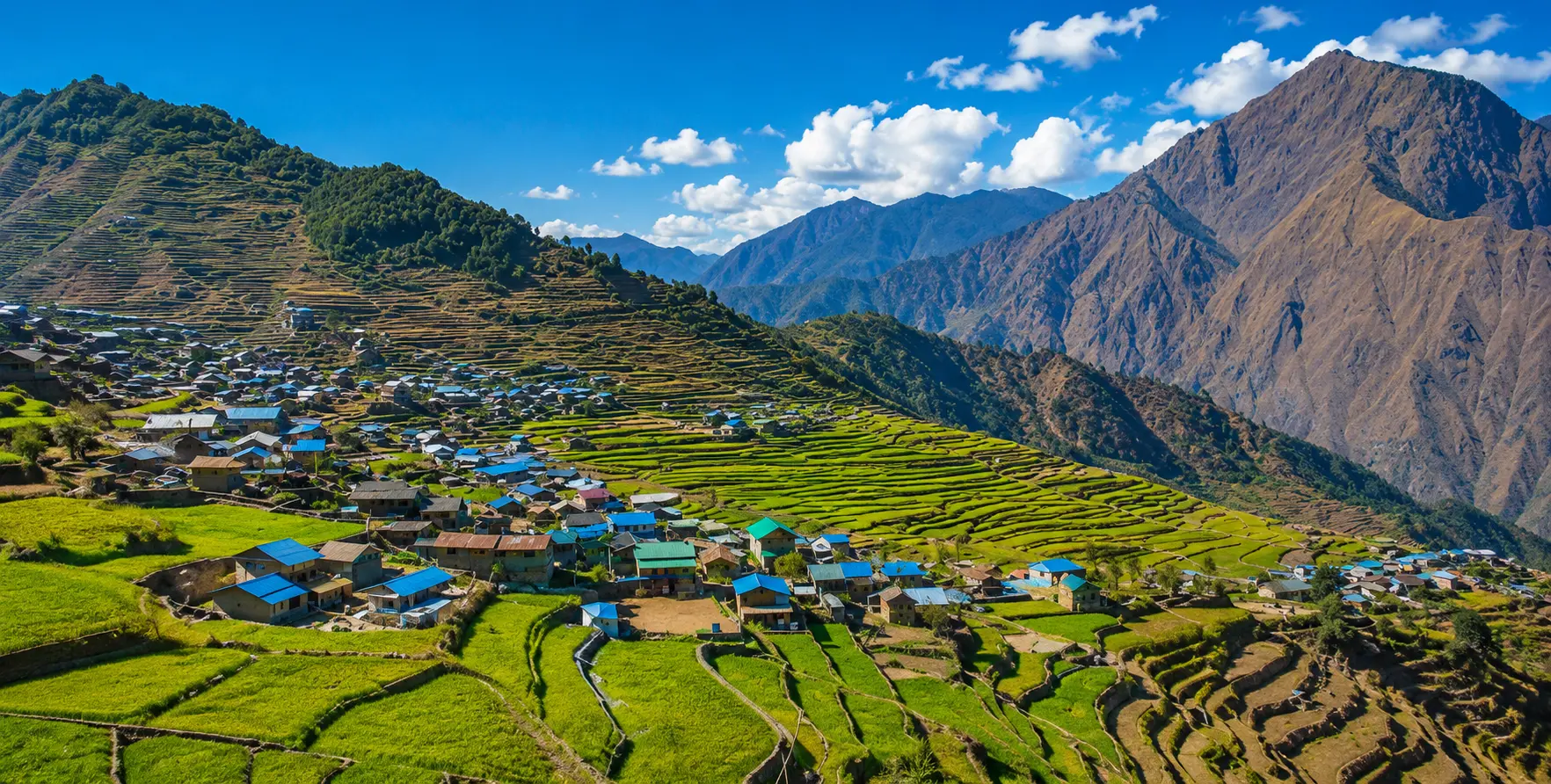
Tucked between the Langtang National Park and the Manaslu Conservation Area, cradled in the foothills of the magnificent Ganesh Himal range, lies one of Nepal’s most rewarding and least-visited trekking destinations: Ruby Valley. Named after the rubies and semi-precious stones historically found in the area, and enriched by the warm hospitality of the Tamang communities whose terraced villages and ancient monasteries define its cultural character, Ruby Valley has steadily emerged in the past few years as the destination that serious trekkers recommend to each other when they want to share something genuinely special.

This place delivers the full richness of a Himalayan trekking experience in Nepal without the crowds that now characterise the Annapurna and Everest corridors.

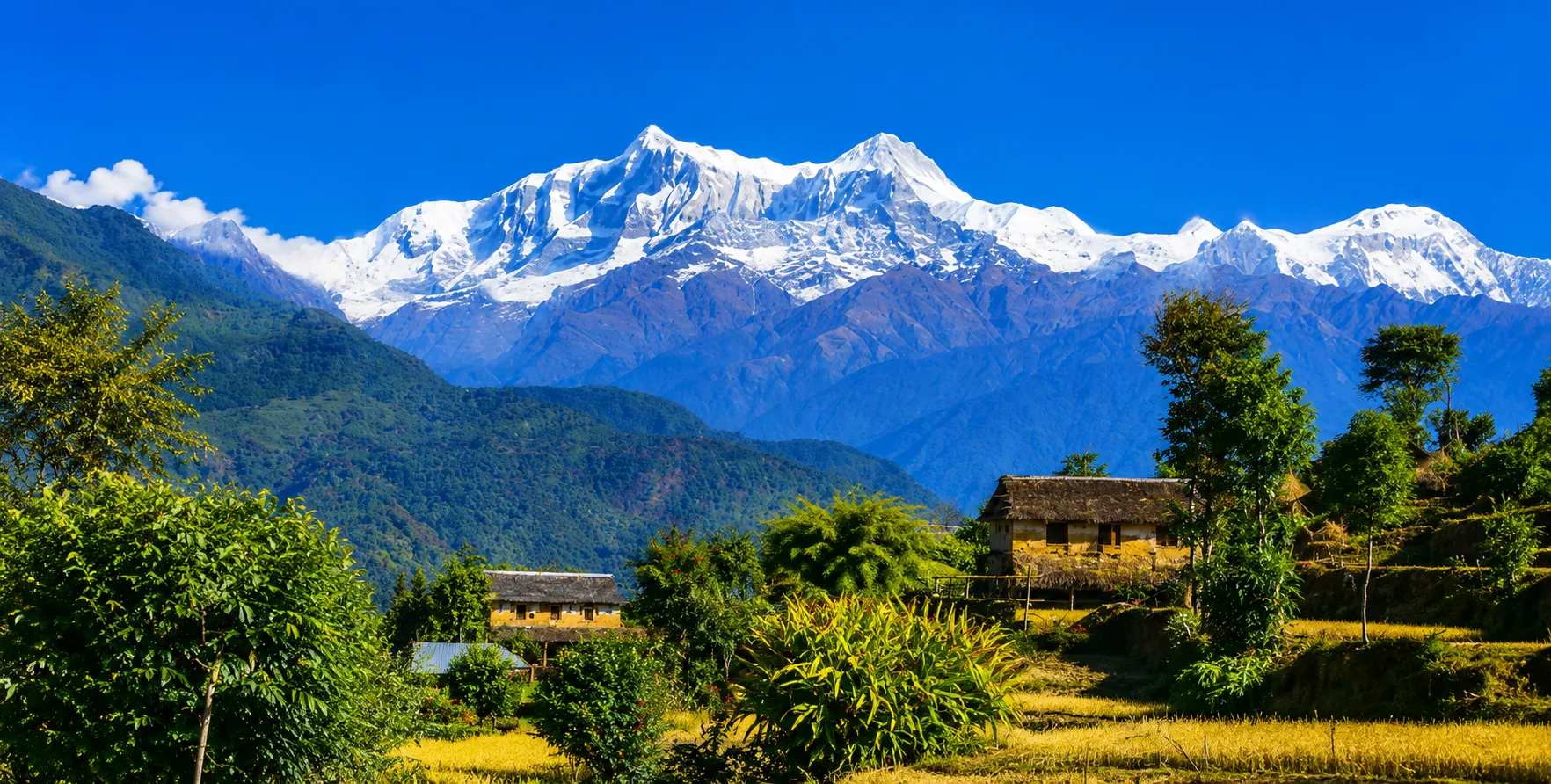
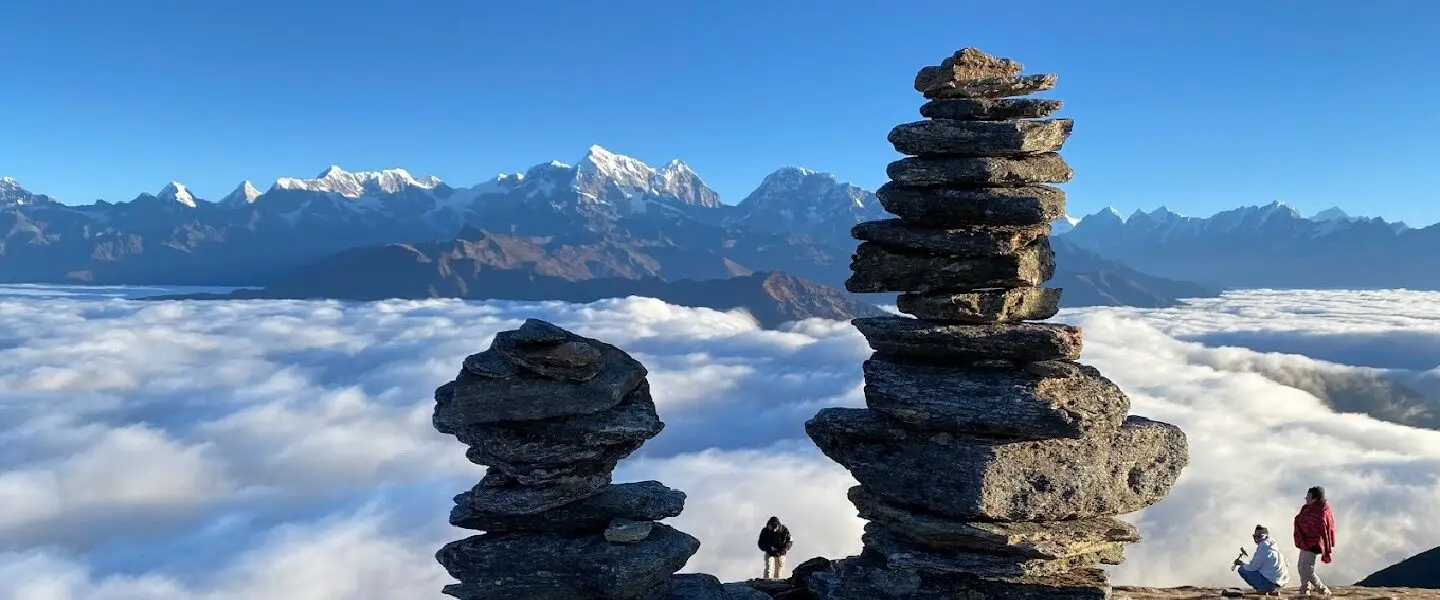
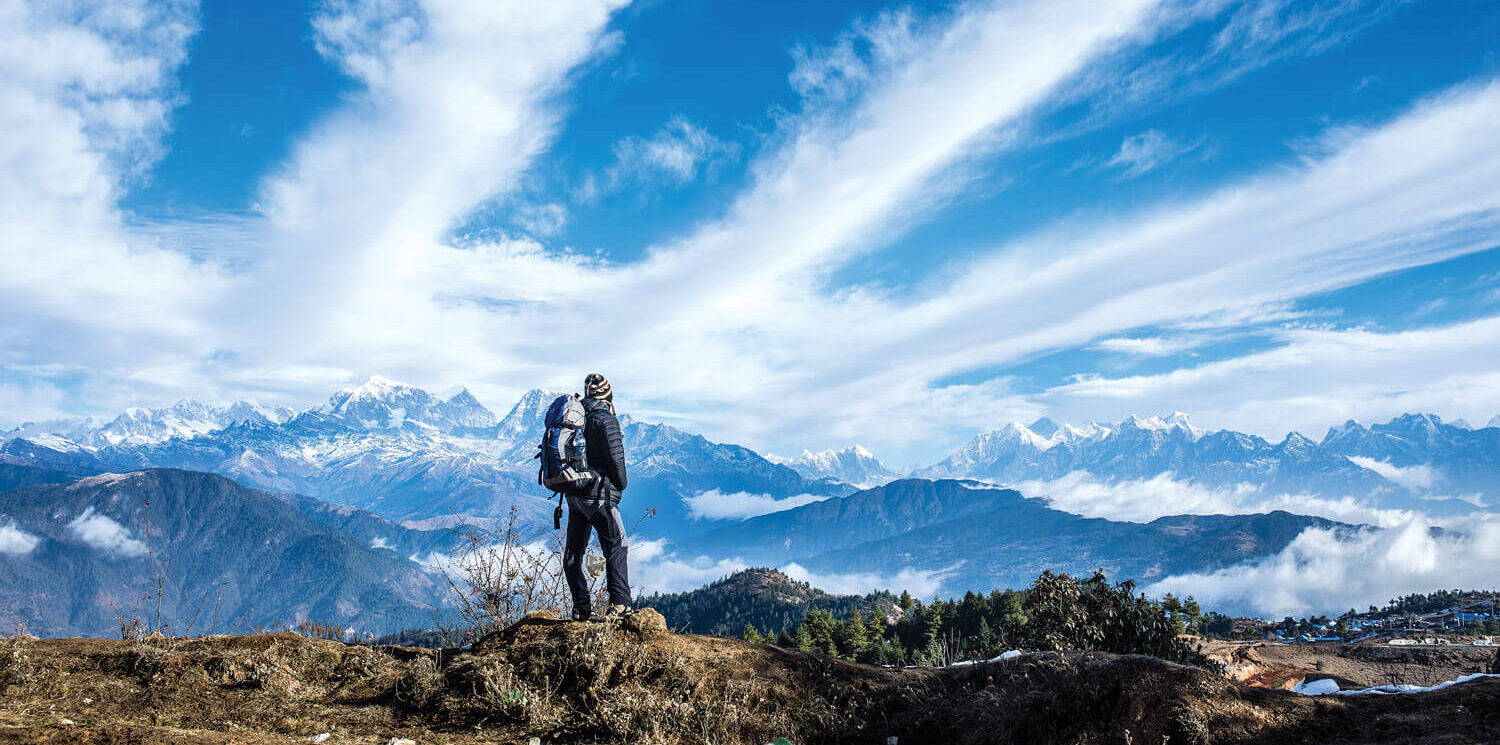
Sitting at the intersection of Rasuwa, Gorkha, and Dhading districts, Ruby Valley offers a unique geographic advantage: trekkers can enter from one side and exit from the other, creating a natural loop that passes through the extraordinary landscapes of Ganesh Himal’s southern flanks and connects trekking routes that would otherwise require backtracking on the same trail. Highlights include panoramic views of Ganesh Himal, Manaslu, Annapurna, Langtang, and the Tibetan Himalaya from open ridgelines, as well as encounters with traditional Tamang culture in villages like Gatlang and Somdang that remain largely untouched by mass tourism.

These natural hot springs reward tired trekking legs with mineral-rich waters, high-altitude meadows grazed by yak and sheep herds, and the crossing of Tamsang La Pass at 3,842 meters, which separates the Rasuwa and Gorkha sections of the route.

What makes Ruby Valley particularly relevant to Nepal Vehicle Hiring Pvt Ltd (vehiclehiringnepal.com) is the critical role vehicle transport plays at both the start and end of this adventure. Unlike some Nepal treks where a simple bus ride to a well-known starting point is sufficient, the Ruby Valley trek offers multiple entry and exit points, each served by distinct road connections from different directions that require thoughtful vehicle-hire planning to optimise the trekking experience.

Whether you begin from Syabrubesi in the north (served by the road from Kathmandu through Dhunche), from Dhading Besi in the south, or from Arughat in the west, the quality of your trailhead transport sets the tone for the entire adventure that follows.

This guide covers everything you need to know about jeep service from Kathmandu to Ruby Valley in 2025 and 2026 — the three principal trailhead approach routes and their road conditions, the specific vehicle requirements of each, accurate costs in both Nepali rupees and US dollars, the permits required, practical planning advice, and the specific advantages of private jeep hire over public bus options for this particular trek. Nepal Vehicle Hiring Pvt Ltd provides private jeep service to all three Ruby Valley trailhead gateways with well-maintained vehicles, experienced drivers, and transparent, all-inclusive pricing that lets travellers plan with confidence.
Kathmandu to Ruby Valley Jeep Service with a private 4WD jeep and Scorpio on the mountain roads of Ganesh Himal

Ruby Valley: Understanding the Destination and Its Trek

What Makes Ruby Valley Unique

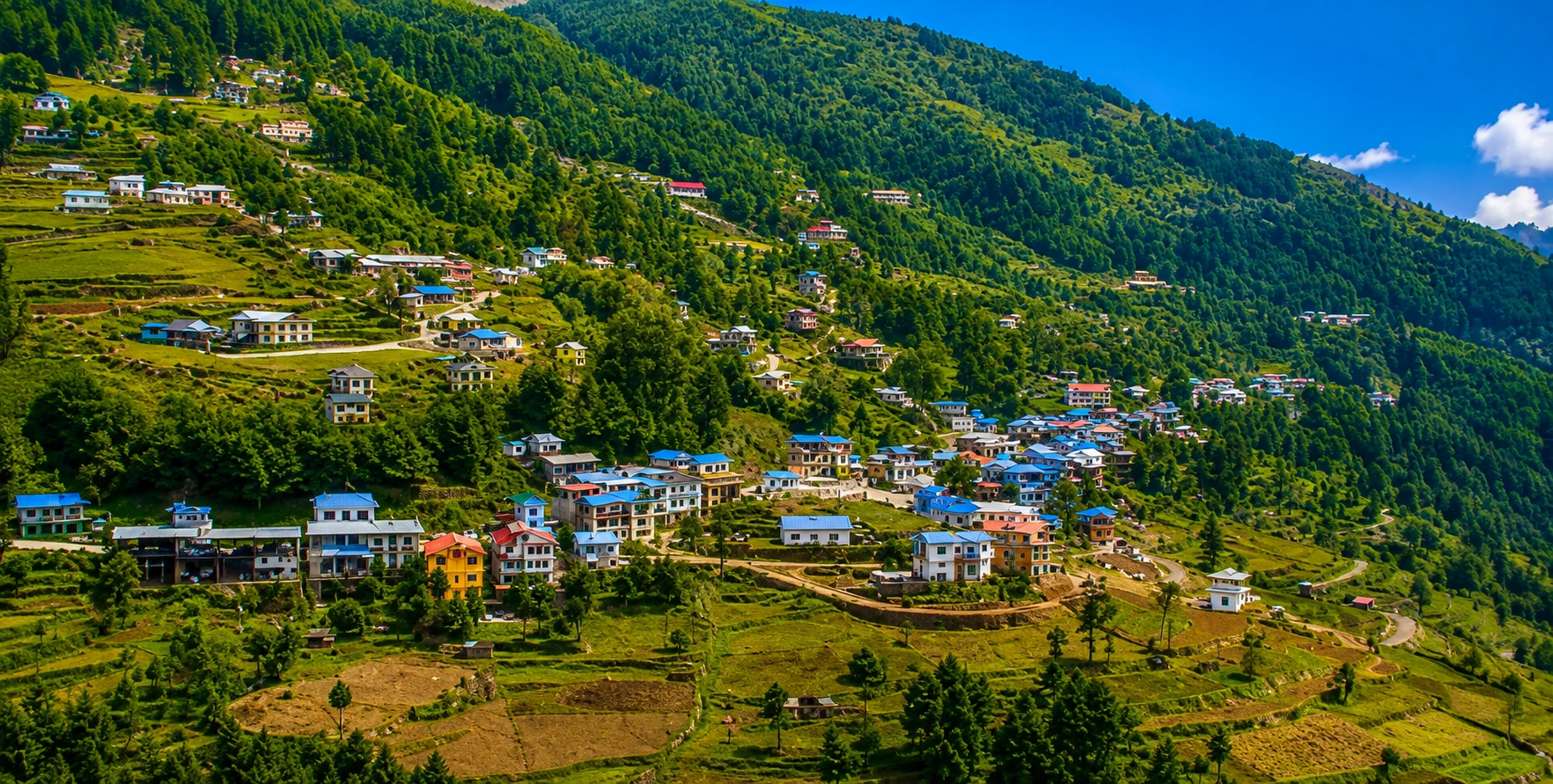
Ruby Valley’s appeal rests on a combination of characteristics that distinguish it sharply from Nepal’s more famous trekking corridors. The first and most immediately apparent is the authentic, intimate quality of the cultural encounters the route offers. Because Ruby Valley sees a fraction of the visitor numbers of Annapurna or Everest, the Tamang villages along the route have not developed the layers of tourist infrastructure that, while convenient, inevitably alter the cultural experience.

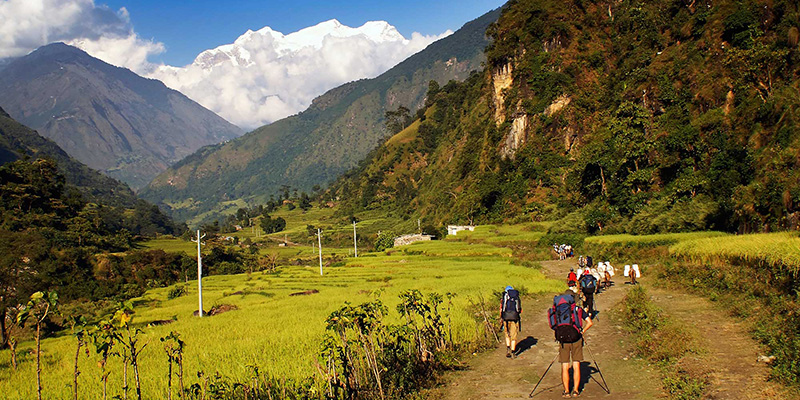
Trekkers stay in homestays — actual family homes where meals are prepared on the family hearth and evenings are spent in genuine conversation with hosts whose lives are rooted in the agricultural and pastoral traditions of the Ganesh Himal foothills — rather than in purpose-built teahouses designed primarily for trekking throughput.

The second distinguishing characteristic is the scenic variety packed into a relatively compact trek. The route transitions from the warm, subtropical character of the lower valleys through temperate rhododendron and oak forest into sub-alpine meadow and the high-altitude terrain below Pangsang La, all within distances that keep daily walking stages manageable for trekkers of moderate fitness.

From the higher ridgelines, the panoramic views encompass an extraordinary range of Himalayan peaks — the guidebooks cite 23 snow-capped summits visible from certain points, including Manaslu, the full Ganesh Himal range, Langtang Himal, Dorje Lakpa, and sections of the Annapurna and Tibetan Himalaya — making this one of the most panoramically rewarding short-to-medium treks anywhere in Nepal.

The third characteristic is practical accessibility from Kathmandu. Unlike Everest region treks that require a domestic flight, or the distant western Nepal destinations that add days of travel to reach the starting point, Ruby Valley’s trailheads are all reachable within a day’s drive from Kathmandu, making the trek ideal for travelers with limited total time who still want a genuinely in-depth, off-the-beaten-path Nepal experience.

Multiple entry and exit points add flexibility, letting trekkers design itineraries around their preferred start and end points rather than being constrained to a single in-and-out route.
Kathmandu to Ruby Valley Jeep Service with a private 4WD jeep and Scorpio on the mountain roads of Ganesh Himal

Ruby Valley Trek Route Overview

The Ruby Valley Trek does not follow a single fixed route but rather a network of interconnected trail segments that different trekking operators and individual trekkers combine in various ways depending on their starting point, available time, and specific interests. The most common full circuit follows a broadly north-to-south or south-to-north arc across the Ganesh Himal foothills, typically structured around the following key villages and waypoints:

Starting from Syabrubesi (the northern entry point, at 1,503 m), the route climbs through the Tamang Heritage Trail to Gatlang (2,240 m), a beautifully preserved stone-house village on a south-facing hillside with outstanding views of Ganesh Himal. From Gatlang, the trail continues to Somdang (3,090 m), the route’s highest village and the base for acclimatisation before the Pangsang La crossing.

The pass at 3,842 m represents the route’s geographic and emotional high point, with panoramic Himalayan views in multiple directions before the long, satisfying descent to Tipling (2,400 m) in Gorkha district.

From Tipling, the trail passes through Shertung — where natural hot springs provide one of the trek’s most celebrated rest stops — before reaching Chalish Gaon (Chalis Gaon) and gradually descending toward Darkha Phedi and eventually Dhading Besi for the vehicle return to Kathmandu. An alternative finish at Arughat or Barpak offers yet another exit point for trekkers who prefer to end their walk at different points along the southern approach corridor.

The complete circuit typically takes seven to twelve days, depending on pace, optional extensions, and the combination of entry and exit points used. A popular shorter version of six days focuses on the northern section between Syabrubesi and Tipling, while trekkers with more time can extend to ten or twelve days by adding side trips to viewpoints, hot springs, and villages along the way.

Three Trailhead Approach Routes from Kathmandu

The Ruby Valley trek’s multiple entry and exit points mean that vehicle transport from Kathmandu must be planned based on the specific trailhead the trekker intends to use. Three principal approach corridors have distinct road characteristics, distances, and vehicle requirements, and Nepal Vehicle Hiring Pvt Ltd matches each booking with the appropriate vehicle and driver.
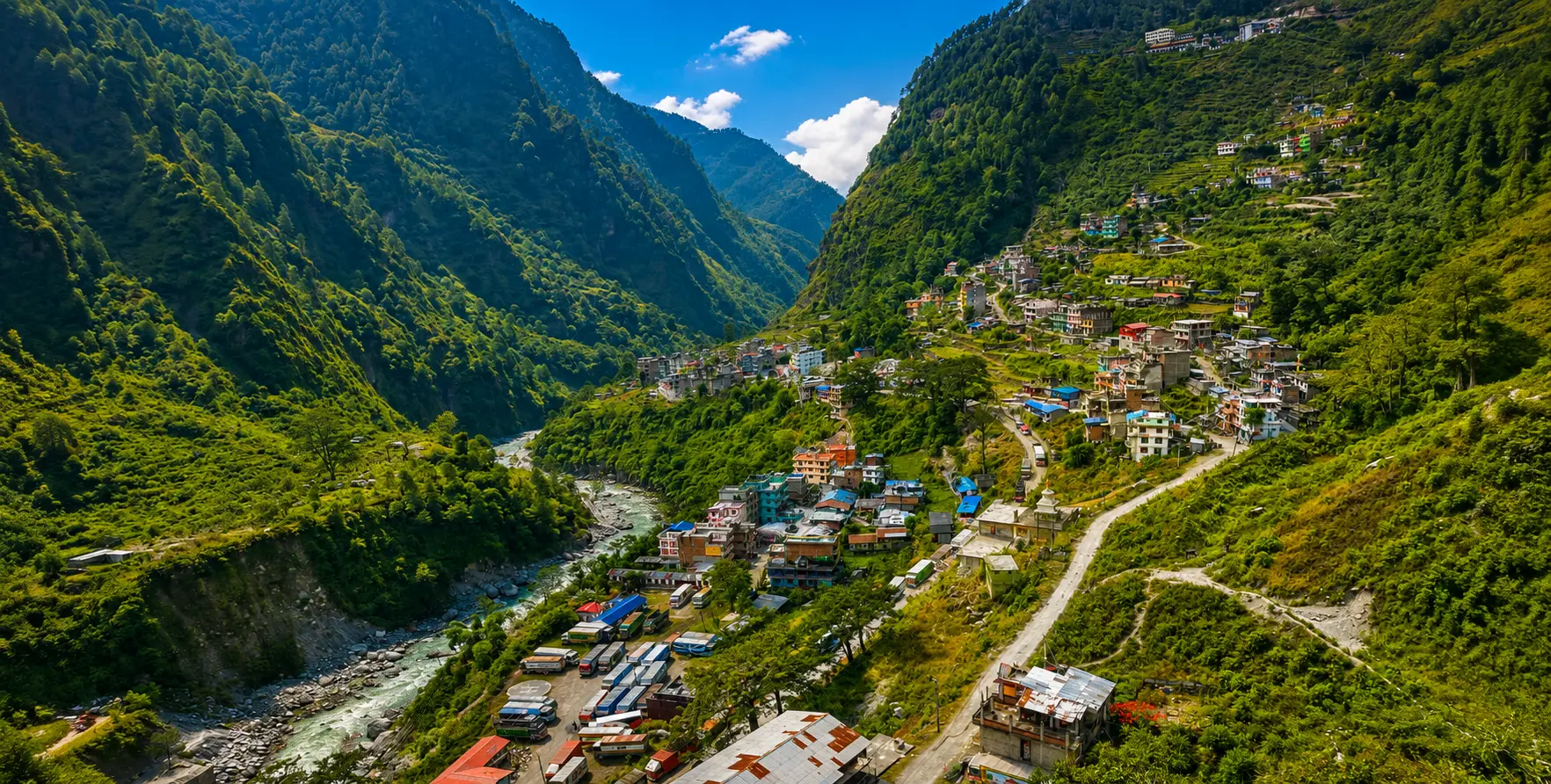
Kathmandu to Ruby Valley Jeep Service with a private 4WD jeep and Scorpio on the mountain roads of Ganesh Himal

Route 1: Kathmandu to Syabrubesi (Northern Entry via Rasuwa District)

Syabrubesi, located at 1,503 meters in the Rasuwa District, is the most commonly used starting point for the Ruby Valley trek’s northern approach through the Tamang Heritage Trail villages. It is also the gateway to the Langtang Valley and Gosaikunda treks, making it a well-established route with regular transport options.

The road from Kathmandu to Syabrubesi covers approximately 122 kilometres. It follows the Pasang Lhamu Highway northward from the capital through Trishuli Bazaar and Dhunche before descending to Syabrubesi at the convergence of the Langtang and Trishuli rivers.

The road is largely paved but includes rough, winding sections, particularly around Dhunche and on the descent to Syabrubesi, so it requires a vehicle with sufficient ground clearance and a driver familiar with this corridor. The drive takes about 6 to 8 hours in a private jeep, depending on traffic conditions and any rest stops along the way.

An early departure from the capital is essential for trekkers who want to arrive in Syabrubesi with enough daylight to settle in comfortably before beginning the trek the following morning.

Private jeep hire from Kathmandu to Syabrubesi costs approximately NPR 15,000 to NPR 25,000 for the entire vehicle in 2025, comfortably accommodating up to 6 passengers with trekking gear. This route is one of the most frequently operated in Nepal Vehicle Hiring Pvt Ltd’s portfolio, giving our drivers deep familiarity with the road’s seasonal variations, traffic patterns, and the particular challenges that monsoon landslides occasionally introduce near Ramche and Dhunche.

The shared jeep option, departing from Machhapokhari Bus Park in Kathmandu when the vehicle is full, costs approximately USD 12-20 per person one-way. However, the fixed schedule and limited flexibility make private hire the clearly preferred option for trekkers with specific timing requirements.
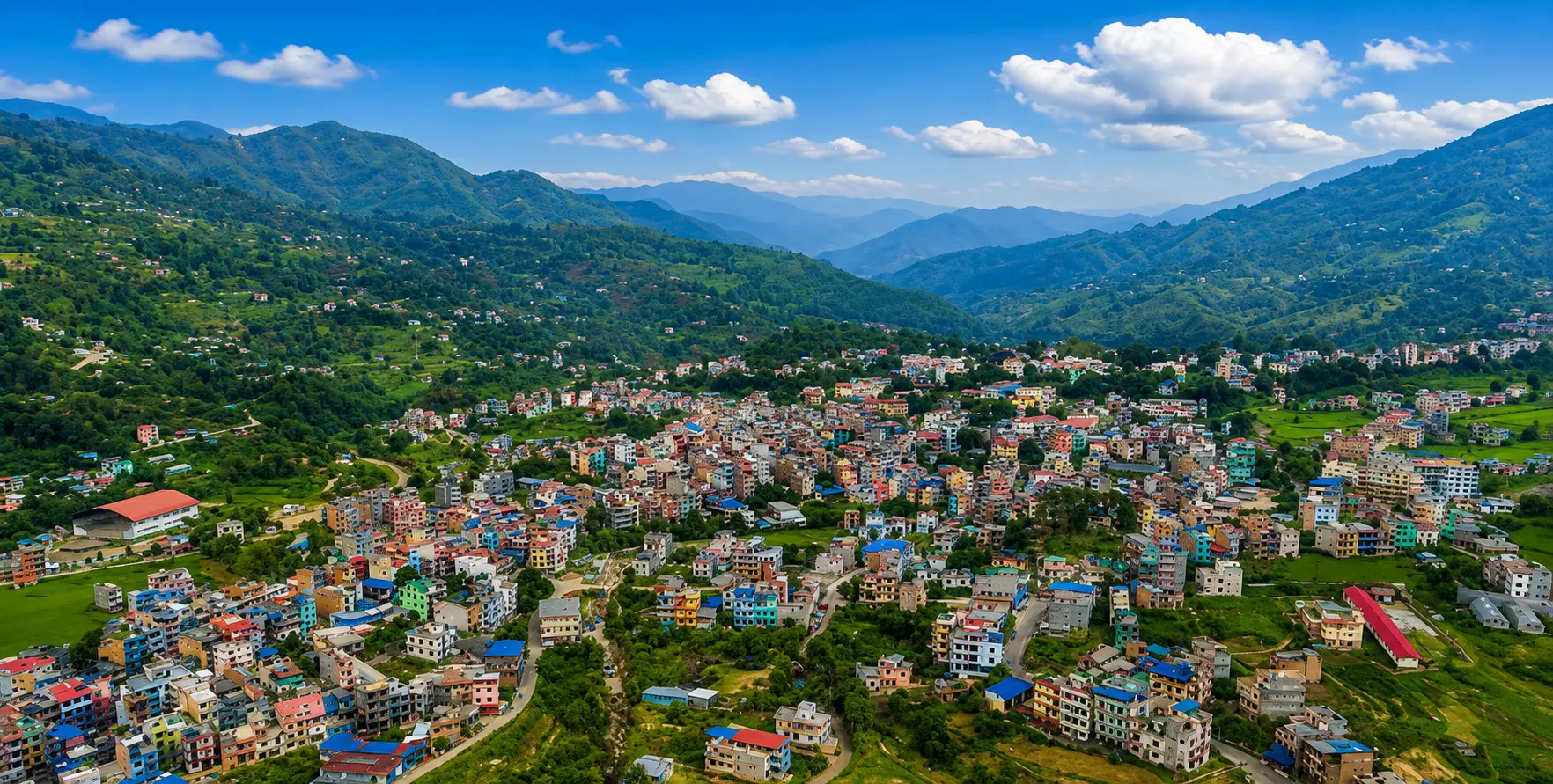
Kathmandu to Ruby Valley Jeep Service with a private 4WD jeep and Scorpio on the mountain roads of Ganesh Himal

Route 2: Kathmandu to Dhading Besi (Southern Entry/Exit via Dhading District)

Dhading Besi, the district headquarters of Dhading District, serves as the primary southern gateway for the Ruby Valley trek, used either as an entry point for trekkers who prefer a south-to-north direction through the route, or more commonly as the exit point for trekkers completing the circuit from the northern Syabrubesi approach and descending southward from Chalish Gaon and Darkha Phedi. The road from Kathmandu to Dhading Besi covers approximately 75 to 80 kilometres and follows the Prithvi Highway westward from Kathmandu before branching north toward Dhading Besi itself.

This route is shorter than the Syabrubesi approach. It typically takes 2.5 to 3.5 hours by private vehicle, making it the most practical option for road travel time.

The Prithvi Highway section is well-maintained, while the branch road to Dhading Besi is generally in good condition but narrows considerably and includes some rough patches in the final approach to town. From Dhading Besi, trekkers either begin their walk directly or take a short additional jeep transfer—typically a hired local Tata Sumo or shared jeep— for 3 hours farther into the hills to the actual trekking trailhead at Dundur Khola, or go directly to the higher entry points.

Private vehicle hire from Kathmandu to Dhading Besi costs approximately NPR 5,000 to NPR 9,000 for a standard car or SUV, reflecting the shorter distance and generally good road conditions compared to the Syabrubesi route. For trekkers completing their Ruby Valley circuit and returning from Dhading Besi to Kathmandu, Nepal Vehicle Hiring Pvt Ltd provides pre-arranged return pickups that remove the uncertainty of finding transport at the end of the journey in a smaller district town with limited vehicle availability.
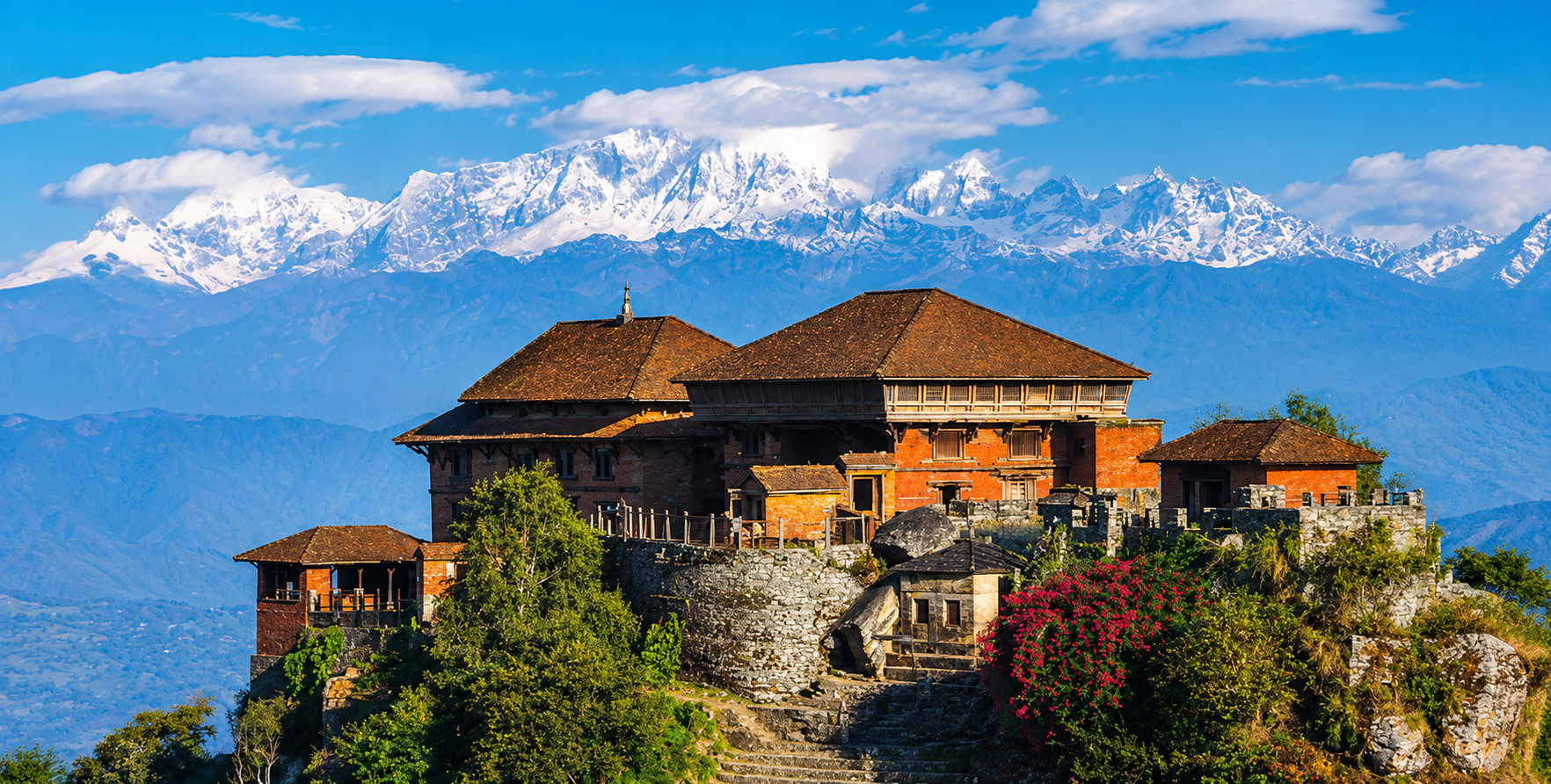
Book Kathmandu to Ruby Valley Jeep Service with a private Scorpio or 4WD jeep for a comfortable and reliable journey to the Ruby Valley Trek and Ganesh Himal region.

Route 3: Kathmandu to Arughat (Western Entry via Gorkha District)

Arughat Bazaar, on the Budhi Gandaki River in Gorkha District, serves as the western gateway for both the Ruby Valley trek (via the Barpak village approach) and the Manaslu Circuit Trek, making it a well-established trailhead with a developed jeep service infrastructure. The road from Kathmandu to Arughat is approximately 140-150 kilometres long.

It follows the Prithvi Highway westward before turning north through Gorkha town and continuing along increasingly rough roads to Arughat itself.

The journey from Kathmandu to Arughat typically takes 6 to 8 hours by private 4WD jeep, with the final sections of road beyond Gorkha town involving sufficiently rough and narrow terrain that a proper jeep is clearly more appropriate than a standard car. The driving time and road conditions make this the most demanding of the three Ruby Valley approach routes from a vehicle perspective, and Nepal Vehicle Hiring Pvt Ltd accordingly matches Arughat bookings with jeeps rather than standard cars to ensure both reliability and comfort throughout the entire journey.

Private jeep hire from Kathmandu to Arughat typically costs NPR 18,000 to NPR 28,000 for the full vehicle, reflecting both the longer distance and the rougher road conditions of the final approach. Trekkers who prefer to begin their Ruby Valley circuit at the Barpak or Laprak entry points, reaching these villages from Arughat, often combine the Kathmandu-Arughat jeep transfer with an additional local vehicle hire in Arughat for the final approach to their specific starting point.

Ruby Valley Trailhead Transport: Route Comparison

GatewayDistrictDistance from KTMDrive TimeRoad TypeBest VehicleUsed For
SyabrubesiRasuwa122 km6–8 hrsPaved + rough sections4WD Jeep / SUVNorthern entry (Gatlang, Somdang)
Dhading BesiDhading75–80 km2.5–3.5 hrsMainly pavedCar / SUVSouthern exit (from Chalish, Darkha)
ArughatGorkha140–150 km6–8 hrsPaved + rough/dirt4WD JeepWestern entry (Barpak, Laprak)

Book Kathmandu to Ruby Valley Jeep Service with a private Scorpio or 4WD jeep for a comfortable and reliable journey to the Ruby Valley Trek and Ganesh Himal region.

Private Jeep Hire Costs: Kathmandu to Ruby Valley Trailheads

The following costs represent current market rates for private vehicle hire from Kathmandu to each Ruby Valley trailhead. All Nepal Vehicle Hiring Pvt Ltd quotes include the vehicle, driver, fuel, and applicable road tolls, with no hidden additions at the time of settlement.

RouteVehicle TypeCost (NPR)Cost (USD approx.)Journey TimeNotes
Kathmandu → Syabrubesi (one-way)Private Jeep / SUVNPR 15,000–25,000~$112–$1886–8 hrsFull vehicle up to 6 pax
Syabrubesi → Kathmandu (return)Private Jeep / SUVNPR 15,000–25,000~$112–$1886–8 hrsPre-arrange return pickup
Kathmandu → Dhading Besi (one-way)Private Car / SUVNPR 5,000–9,000~$38–$682.5–3.5 hrsShorter, paved route
Dhading Besi → Kathmandu (return)Private Car / SUVNPR 5,000–9,000~$38–$682.5–3.5 hrsCommon trek exit point
Kathmandu → Arughat (one-way)Private 4WD JeepNPR 18,000–28,000~$135–$2106–8 hrsRough final approach
Arughat → Kathmandu (return)Private 4WD JeepNPR 18,000–28,000~$135–$2106–8 hrs
Shared jeep per seat (Kathmandu–Syabrubesi)SharedNPR 1,500–2,500~$11–$197–8+ hrsDeparts when full, less flexible
Open-jaw: Syabrubesi entry, Dhading exitTwo vehiclesNPR 20,000–34,000~$150–$255Both legsMost popular Ruby Valley circuit option

Tip: The most popular Ruby Valley arrangement is an open-jaw booking — private jeep to Syabrubesi for the northern entry, and a separate return vehicle from Dhading Besi at the trek’s southern exit. Book both vehicles together through vehiclehiringnepal.com for the best coordinated pricing and scheduling.
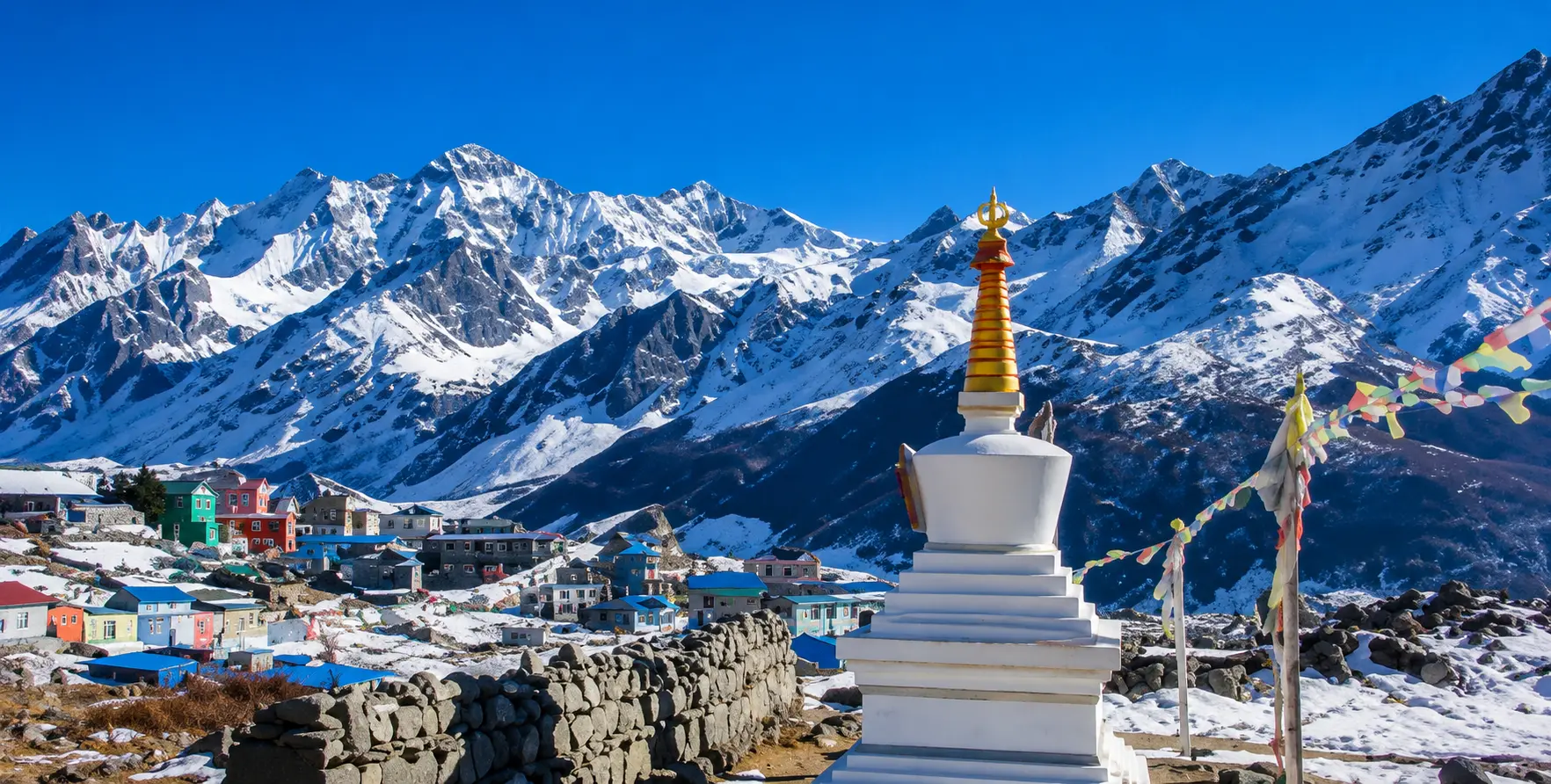
Ganesh himal trek ruby valley

Why Private Jeep Service Is the Right Choice for Ruby Valley

The Ruby Valley trailhead approach routes all have public transport options — local buses to both Syabrubesi and Dhading Besi, and shared jeeps that run when enough passengers have assembled. For most trekkers planning a Ruby Valley adventure, however, private jeep service offers advantages that public alternatives cannot match, directly affecting the quality of the subsequent trekking experience.

The most immediate advantage is control over timing. Most trekkers want to begin their first day on the trail with as much daylight as possible, which means arriving at the trailhead as early as possible.

A private jeep departing from a Kathmandu hotel at 6:00 AM can reach Syabrubesi by early afternoon, even in normal traffic, giving a trekker a comfortable afternoon to settle in, prepare gear, and rest before the next morning’s start. Public buses on the Syabrubesi route depart from Gongabu Bus Station on fixed schedules that may not align with a trekker’s preferred departure time.

Their 7- to 9-hour travel time often means arriving later in the day than a private vehicle would.

Group dynamics provide a second compelling argument for private hire. A Ruby Valley trekking group of three to six people — a very common configuration for this social, culturally oriented trek — pays approximately the same total fare by splitting a private jeep as they would each pay individually on shared transport options, while gaining a comfortable, uncrowded vehicle with complete luggage space, flexible stopping opportunities for photography and rest breaks, and the door-to-door hotel pickup that eliminates the need to carry gear across Kathmandu to a bus station before the trek even begins.

The open-jaw routing advantage is a third consideration specific to Ruby Valley’s multi-entry format. Because the trek begins at one trailhead and ends at another, a public transport approach requires either accepting that you will be at the mercy of local transport availability at an unfamiliar finishing point, or making complex advance arrangements for return transport from a town you have never visited.

A coordinated private vehicle booking through Nepal Vehicle Hiring Pvt Ltd resolves both problems: your return vehicle is pre-arranged, the driver knows your expected finishing date, and a brief communication at the end of the journey confirms the exact pickup time and location without uncertainty or last-minute scrambling.

Luggage management rounds out the practical case for private jeep hire. The Ruby Valley trek, while not technically demanding at its most accessible, takes trekkers through villages where porters are available but not ubiquitous, and trekking gear,r including sleeping bags, additional clothing layers, and trekking poles,s adds up to volumes that public buses accommodate poorly and often insecurely.

A private jeep provides ample dedicated luggage space, keeps gear inside the vehicle rather than precariously on a roof rack, and delivers everything intact and dry to the trailhead, regardless of the weather encountered during the journey.
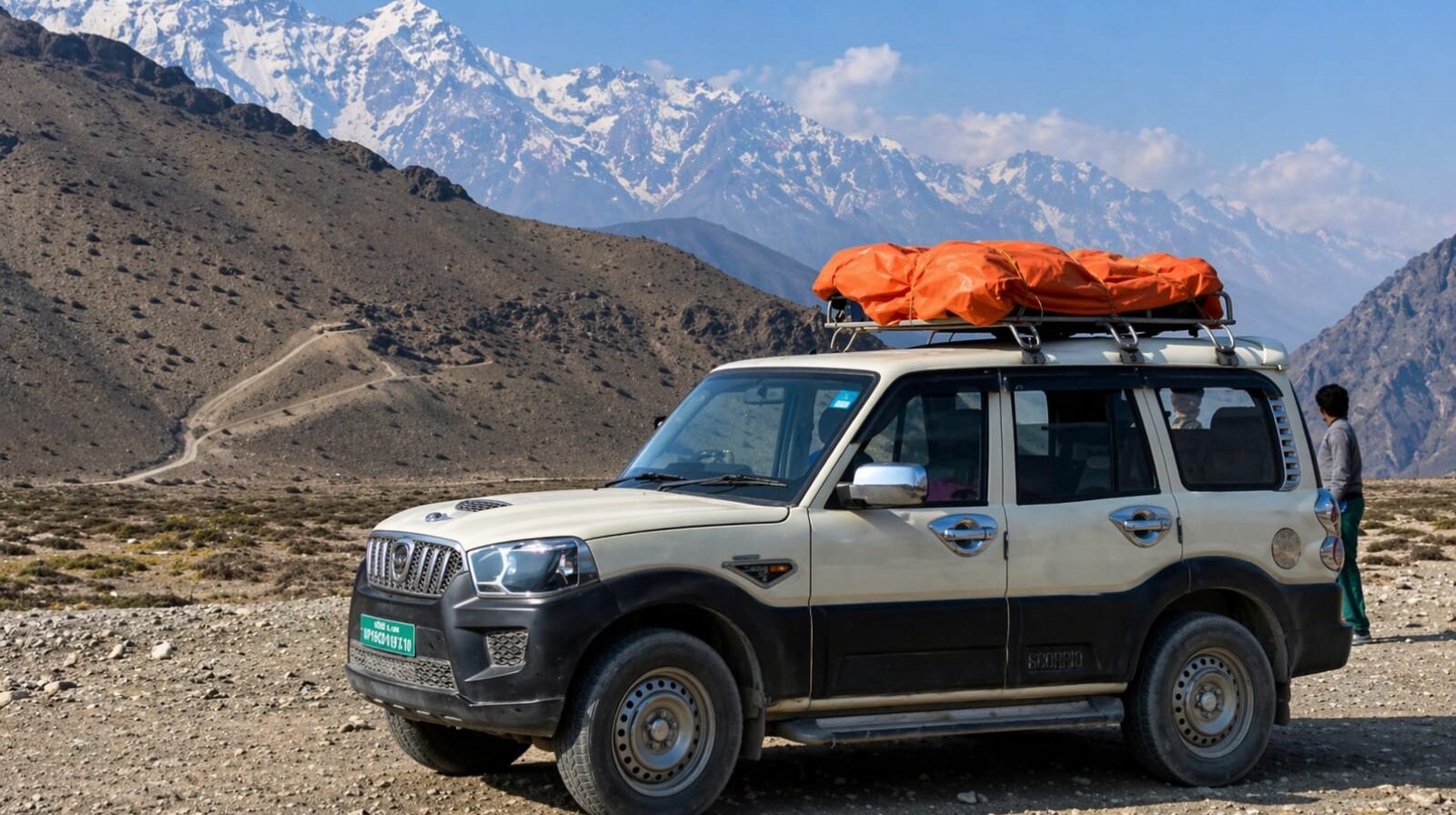
Kathmandu to Ruby Valley Jeep Service with a private 4WD jeep and Scorpio on the mountain roads of Ganesh Himal

What to Expect on the Drive: Kathmandu to Ruby Valley

Kathmandu to Syabrubesi: The Northern Approach

The drive from Kathmandu to Syabrubesi is one of Nepal’s most consistently rewarding long-distance vehicle journeys, combining accessible mountain scenery with a gradual sense of departure from the urban world that prepares a trekker emotionally and physically for the adventure ahead.

Leaving Kathmandu through the ring road and heading north on the Pasang Lhamu Highway, the road initially passes through the outer suburban fringe of the Kathmandu Valley before climbing into the more rural hill terrain of Nuwakot District. The landscape quickly shifts from the congested sprawl of Nepal’s capital to terraced farmland, pine forest, and river-gorge scenery that grows progressively more dramatic as the vehicle climbs northward.

The town of Trishuli Bazaar, approximately kilometres from Kathmandu, offers the last reliable fuel and ATM facilities before Syabrubesi, and most experienced drivers suggest a brief stop here to top up fuel and withdraw any cash needed for the trek ahead. Beyond Trishuli, the road climbs steadily toward Dhunche — the district headquarters of Rasuwa at approximately 2,030 meters — before descending to Syabrubesi at the river confluence below.

The section around Dhunche features some of the roughest road conditions of the entire journey, with narrow switchbacks and occasional rough patches that test the road-holding capability of a properly maintained jeep. From Dhunche, the descent to Syabrubesi takes approximately 45 minutes on a road that winds through pine forest and offers glimpses of the Langtang and Ganesh Himal ranges ahead.

Kathmandu to Dhading Besi: The Southern Return Corridor

The Dhading Besi leg of the Ruby Valley transport equation is typically the return journey rather than the outbound approach, taken after trekkers complete the circuit and descend from the hills to the road at Darkha Phedi or Dhading Besi itself. The drive from Dhading Besi to Kathmandu follows the Prithvi Highway — the same well-maintained inter-city road that connects Kathmandu and Pokhara — for most of its length, making it a comfortable, relatively straightforward 2.5- to 3.5-hour return journey that feels almost anticlimactically smooth after the rugged terrain of the preceding trek days.

Many trekkers finishing the Ruby Valley circuit at Dhading Besi or Darkha Phedi find that the contrast between the remote mountain landscape they have just traversed and the busy highway town of Dhading Besi, with its teahouses, vehicle workshops, and the familiar flow of highway commerce, creates a striking re-entry into the ordinary world that is emotionally quite different from the quiet mountain immersion of the preceding days. A comfortable private vehicle waiting at Dhading Besi makes this transition smooth and unhurried, allowing trekkers to review photographs and process the experience during the final comfortable drive back to Kathmandu.
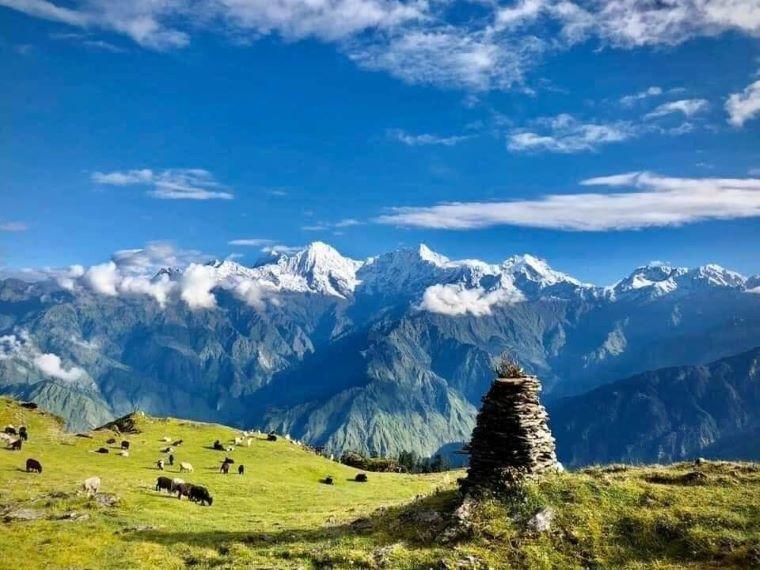
Kathmandu to Ruby Valley Jeep Service with a private 4WD jeep and Scorpio on the mountain roads of Ganesh Himal

Permits Required for the Ruby Valley Trek

One of Ruby Valley’s practical advantages over Nepal’s more developed trekking corridors is its relatively straightforward permit system. Unlike the Annapurna or Everest regions, which require multiple overlapping permits at varying costs, the Ruby Valley trek currently requires only a TIMS card for most standard route combinations — a significantly more affordable entry to one of Nepal’s most rewarding trekking experiences.

PermitRequired?CostWhere to Obtain
TIMS Card (Trekkers’ Information Management System)Yes — for all routesNPR 2,000 per person (non-SAARC)Nepal Tourism Board, Kathmandu or Pokhara
Langtang National Park PermitYes — ONLY if crossing Pangsang La pass and entering Langtang NPNPR 3,000 per person (non-SAARC)Nepal Tourism Board or at the park entry
Manaslu Conservation Area Permit (MCAP)Yes — only if the route enters Manaslu CANPR 3,000 per personNepal Tourism Board
Restricted Area PermitNot required for standard Ruby Valley routesN/AN/A
Licensed guideStrongly recommended — trails are remote and poorly marked in sectionsArranged through an agencyRegister with a TAAN-affiliated agency

Note: Permit requirements can change. Always confirm current requirements with the Nepal Tourism Board or your trekking agency before departure. If your route crosses the Pangsang La pass into Langtang territory, get the Langtang National Park Permit in Kathmandu before leaving for the trailhead.
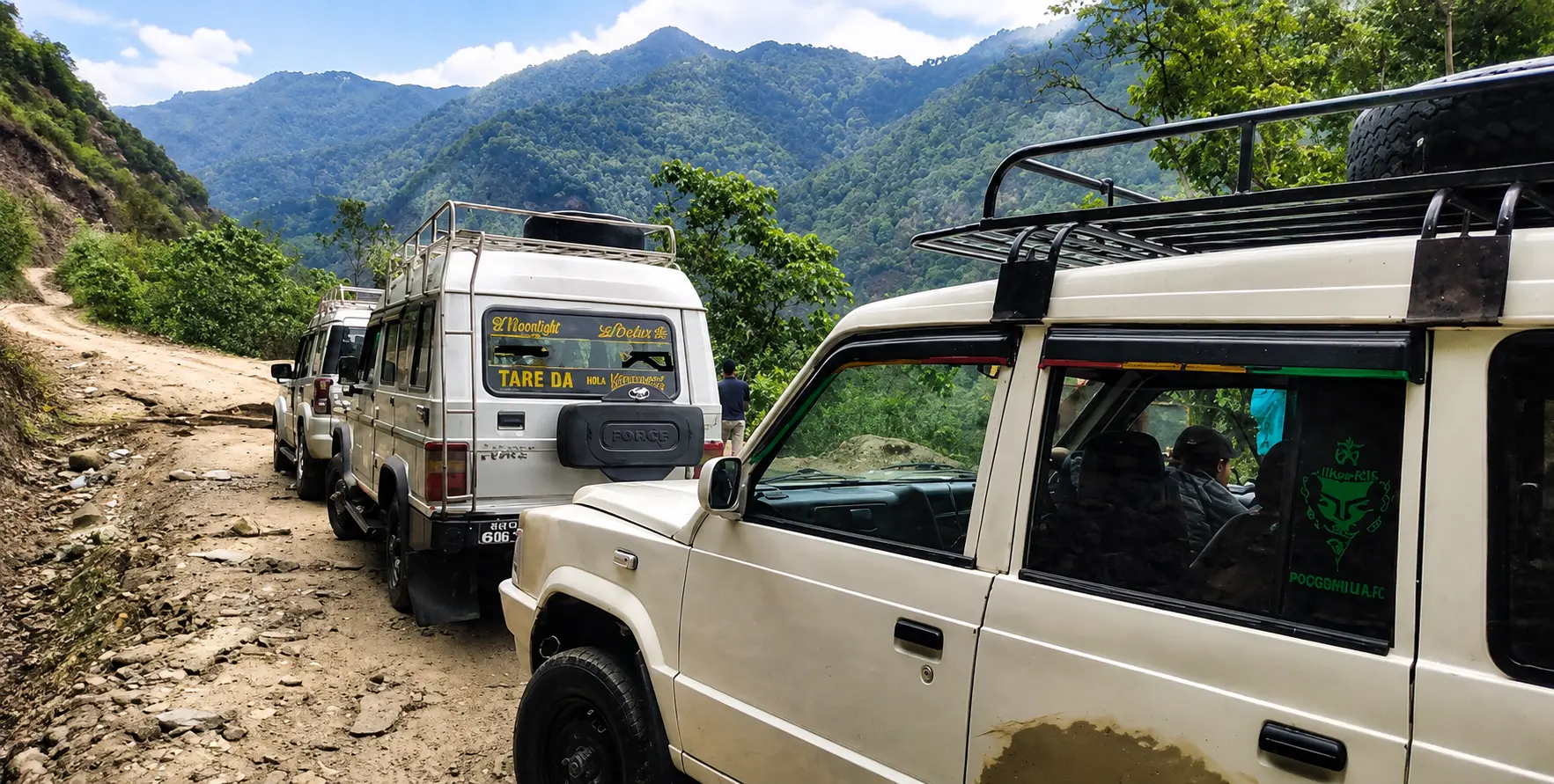
Kathmandu to Ruby Valley Jeep Service with a private 4WD jeep and Scorpio on the mountain roads of Ganesh Himal

Best Season for Kathmandu to Ruby Valley Jeep Service

Seasonal timing affects the Ruby Valley transport equation in two ways: road conditions on the trailhead approach routes and trekking conditions within the valley itself. Both considerations favour the same two windows that define Nepal’s national trekking seasons. However, Ruby Valley’s relatively low altitude and off-the-beaten-path location give it somewhat more seasonal flexibility than higher-altitude or more heavily trafficked routes.

Spring, from March through May, is one of the finest in Ruby, with several factors that build on one another. The approach roads are dry and generally in good condition after the winter dry period, making vehicle transfers comfortable and predictable.

On the trail, the rhododendron forests that cover much of the lower- and middle-altitude sections of the route are in spectacular flower from March through April, creating a vivid, colourful forest atmosphere that makes Nepal’s spring trekking season so celebrated. The Tamang villages along the route celebrate several significant cultural festivals during this period, offering trekkers opportunities for cultural encounters timed to the local calendar.

Autumn, from September through November, delivers the stable, clear conditions that define Nepal’s peak trekking season across the country, and Ruby Valley benefits. The Pangsang La crossing is most reliably clear of snow during September-November, making this the safest season for trekkers who want to complete the full circuit over the pass.

Mountain visibility is at its seasonal best, maximising the visual reward of the route’s panoramic viewpoints. Road conditions on all three trailhead approach routes are generally at their most reliable in this post-monsoon period, reducing the uncertainty that monsoon-season landslides occasionally introduce on the Syabrubesi and Arughat approaches.

The monsoon season from June through August is not recommended for the Ruby Valley trek primarily because of trail conditions within the valley — leeches in the lower forests, muddy, slippery paths, and reduced visibility from cloud cover — which significantly diminish the trekking experience during this period. The Syabrubesi road, in particular, can be affected by landslides during heavy monsoon rainfall.

For trekkers who can only travel during this period, the Dhading Besi approach is somewhat less affected by monsoon road disruptions than the northern route. Still, the trekking itself will inevitably be more challenging than in either spring or autumn.

Winter, from December through February, brings cold temperatures to the higher sections of the Ruby Valley route, and snowfall can affect the Pangsang La crossing depending on the year’s conditions. The lower sections of the route the Gatlang area from the Syabrubesi approach, and the Barpak-Chalish section from the Gorkha approach remain accessible in most winters, making shorter winter variations of the Ruby Valley itinerary possible for well-equipped trekkers comfortable with cold conditions.

The approach roads are generally unaffected by winter conditions on the Dhading and Syabrubesi routes below 2,000 m.

  • Depart Kathmandu by 6:00–7:00 AM for the Syabrubesi and Arughat routes — both are 6–8-hour journeys, and an early start ensures daylight arrival with time to settle before the trek begins.s
  • Withdraw sufficient NPR cash in Kathmandu before departure — Dhading Besi has ATMs, but Syabrubesi facilities are basic, and Arughat options are limited.
  • Obtain your TIMS card and any required permits from the Nepal Tourism Board office in Thamel or Bhrikutimandap before your jeep transfer — permit offices are not reliably available at the trailhead.s
  • Book your open-jaw transfer together — confirm both your outbound trailhead jeep and your return vehicle from the exit trailhead at the same time through vehiclehiringnepal.com
  • Pack a light day bag that stays in the vehicle cabin — keep snacks, water, camera, and motion sickness tablets easily accessible during the drive.
  • Carry motion sickness tablets — the Syabrubesi road, in particular, involves sustained winding mountain driving that affects some travellers.s
  • Pack warm layers even for the vehicle journey — the Syabrubesi drive reaches altitudes above 2,00,0 m and temperatures can be significantly cooler than in Kathmandu, especially in early mornings.
  • Confirm your return pickup date and time with your driver and Nepal Vehicle Hiring Pvt Ltd before beginning the trek — mobile connectivity in parts of Ruby Valley is limited.
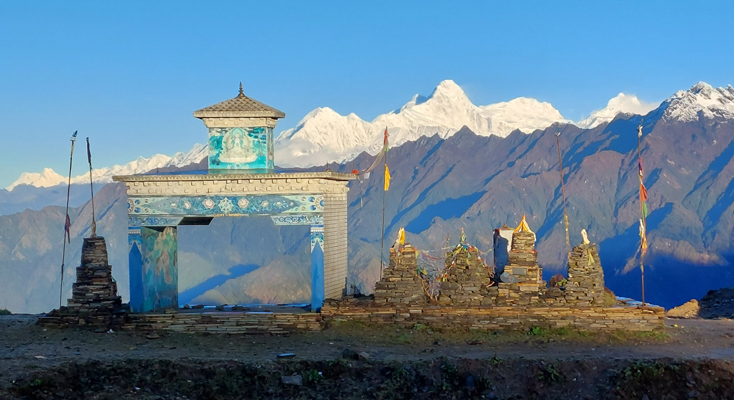
Book Kathmandu to Ruby Valley Jeep Service with a private Scorpio or 4WD jeep for a comfortable and reliable journey to the Ruby Valley Trek and Ganesh Himal region.

Suggested Itinerary: Ruby Valley Trek with Jeep Service from Kathmandu

Day 1: Kathmandu → Syabrubesi (Jeep Transfer)

Depart early from your Kathmandu hotel by private jeep, heading north on the Pasang Lhamu Highway through Trishuli Bazaar and Dhunche, then descending to Syabrubesi by mid-afternoon. Rest, gear check, and overnight at a guesthouse in Syabrubesi. Brief permit verification if not already completed in Kathmandu.

Day 2: Syabrubesi → Gatlang

The first trekking day climbs steadily from Syabrubesi through lower forest and Tamang settlements to the beautifully preserved village of Gatlang at 2,240 meters, with the first clear views of Ganesh Himal appearing as you reach he ridge above the village. Overnight in a local homestay — a warm introduction to the Tamang hospitality that defines the Ruby Valley experience.

Day 3: Gatlang → Somdang (Acclimatisation Village)

A longer walking day continues the ascent from Gatlang toward Somdang at 3,090 meters, passing through rhododendron and oak forests that progressively transform into sub-alpine terrain. Somdang serves as the acclimatisation base before the Pangsang La crossing, and most itineraries include at least one rest day here to adjust to the altitude and explore the immediate surroundings.

Day 4: Somdang → Pangsang La (3,842 m) → Tipling

The trek’s high point is an early start from Somdang for the Pangsang La crossing at 3,842 meters, with panoramic views across a remarkable sweep of Nepal’s Himalaya from the pass. The long descent to Tipling at 2,400 meters in Gorkha District marks the southern half of the circuit and the beginning of the Ganesh Himal foothills.

Days 5–6: Tipling → Shertung → Chalish Gaon

The southern section of the circuit passes through Shertung — home of the celebrated natural hot springs that provide one of Ruby Valley’s most beloved trail rewards — and continues through traditional Gorkha District villages to Chalish Gaon. Cultural encounters in this section often differ from those in the Tamang villages of the northern approach, reflecting the Gurung and mixed-community heritage of the Gorkha hill communities.

Day 7: Chalish Gaon → Darkha Phedi → Dhading Besi (Jeep Return)

The final trekking day descends from Chalish Gaon to Darkha Phedi, where the road meets the trail, and a pre-arranged local jeep takes trekkers to Dhading Besi over 2 to 3 hours of winding hill roads. At Dhading Besi, the Nepal Vehicle Hiring Pvt Ltd return vehicle waits to deliver trekkers back to Kathmandu in 2.5 to 3.5 hours, arriving in the capital by early evening.
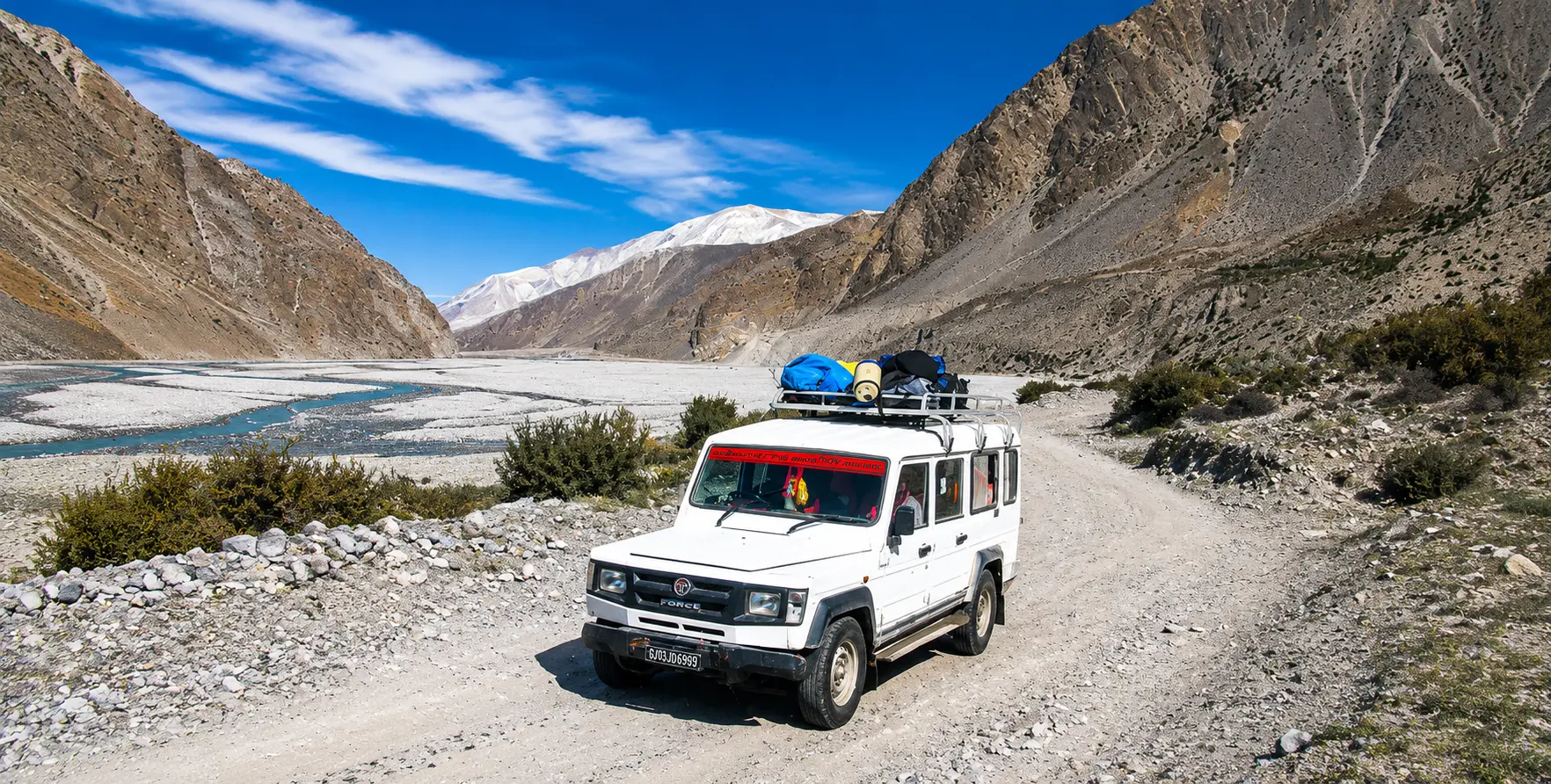
Kathmandu to Ruby Valley Jeep Service with a private 4WD jeep and Scorpio on the mountain roads of Ganesh Himal

Ruby Valley vs Other Nepal Treks: Why the Transport Difference Matters

Comparing the Ruby Valley transport arrangement with those required for Nepal’s more established trekking routes helps clarify why the specific planning considerations this guide has emphasised are genuinely important rather than an administrative formality. On the Annapurna Circuit, trekkers have decades of accumulated transport infrastructure to rely on — shared jeeps run multiple times daily between Pokhara and Besisahar, onward shared transport continues to Chame and Manang on an established schedule, and the density of local transport options means that even an unplanned change in itinerary can usually be accommodated without major difficulty.

On the Everest region routes, a domestic flight to Lukla has become so normalised that the trailhead transfer question reduces to a simple airport taxi booking. The Langtang Valley trek has similarly well-established bus and shared jeep services between Kathmandu and Syabrubesi that any traveller can navigate with basic planning.

Ruby Valley lacks the depth of established infrastructure precisely because it is still relatively new to international trekking attention, which is both what makes it so rewarding as an off-the-beaten-path experience and what makes thoughtful transport planning genuinely important. The trekker who arrives in Kathmandu hoping to improvise a Ruby Valley trailhead transfer on the morning of departure may find limited shared jeep options to the specific entry point they need, particularly for the Arughat approach, which serves a narrower traveller base than the Syabrubesi route.

The trekker who completes the circuit and descends to Dhading Besi without a pre-arranged return vehicle may find that the district town has limited transport options back to Kathmandu upon arrival, particularly outside the morning window when most vehicles depart.

These are not hypothetical difficulties but practical realities that travellers encounter when they underestimate the transport-planning requirements of less-developed trekking corridors. Nepal Vehicle Hiring Pvt Ltd’s Ruby Valley jeep service is built specifically around eliminating these risks — ensuring that the entry transfer is reliable, the return vehicle is waiting, and the open-jaw circuit arrangement that makes this trek so rewarding to design is supported by coordinated, accountable vehicle hire across both legs rather than left to chance at either end.

The comparison with more established treks also highlights the value of working with a provider who understands the specific road conditions of the Ruby Valley approach routes rather than treating them as generic Nepal jeep hire. The section of the Syabrubesi road around Ramche and Dhunche, where landslides occasionally affect the corridor during heavy rainfall, the particular character of the Dhading Besi branch road that diverges from the Prithvi Highway, and the rougher sections of the Arughat approach beyond Gorkha town all reward driver familiarity that a provider with genuine experience on these specific routes brings naturally to every booking.

This route-specific knowledge, built through repeated journeys on all three Ruby Valley approach corridors, is precisely what Nepal Vehicle Hiring Pvt Ltd offers clients booking Ruby Valley trailhead transfers—not generic Nepal driving competence, but experience on the exact roads this adventure requires.

Frequently Asked Questions

What is the best starting point for the Ruby Valley trek?

Most trekkers prefer Syabrubesi as the northern entry point, as it allows a classic north-to-south traverse through the full diversity of Ruby Valley’s landscapes, culminating in the southern exit at Dhading Besi. This open-jaw approach avoids retracing the same trail and creates a natural sense of journey completion. Nepal Vehicle Hiring Pvt Ltd arranges coordinated open-jaw transfers with a jeep to Syabrubesi and a return vehicle from Dhading Besi.

How long does the jeep journey from Kathmandu to Syabrubesi take?

The drive from Kathmandu to Syabrubesi covers approximately 12 kilometres and takes 6 to 8 hours by private jeep, depending on traffic conditions in and around Kathmandu and road conditions near Dhunche. An early-morning departure (6:00–7:00 AM) from your Kathmandu hotel is strongly recommended to ensure a mid-afternoon arrival in Syabrubesi.

Can I take a public bus from Kathmandu to Syabrubesi?

Yes. Public and tourist buses run from Kathmandu’s Gongabu Bus Station to Syabrubesi, with local bus tickets costing NPR 700 to NPR 1,000 and the journey taking approximately 7 to 9 hours.

However, private jeep hire offers significant advantages for trekkers: door-to-door hotel pickup, flexible departure time, more comfortable seating, direct luggage management, and the ability to stop freely along the route. For groups of three or more, sitting in a private jeep is comparable to buying separate bus tickets.

What permits do I need for the Ruby Valley trek?

The standard Ruby Valley circuit requires only a TIMS card (NPR 2,000 for non-SAARC nationals). If your route crosses the Pangsang La pass and enters Langtang National Park, you will additionally need a Langtang National Park Entry Permit (NPR 3,000). If your route enters the Manaslu Conservation Area, you also need the corresponding permit. .No restricted-area permit is required for standard Ruby Valley routes.

How much does private jeep hire from Kathmandu to Ruby Valley cost?

Private jeep hire costs vary by trailhead: NPR 15,000 to NPR 25,000 for Kathmandu to Syabrubesi, NPR 5,000 to NPR 9,000 for Kathmandu to Dhading Besi, and NPR 18,000 to NPR 28,000 for Kathmandu to Arughat. All Nepal Vehicle Hiring Pvt Ltd rates include the vehicle, driver, fuel, and tolls.

How do I arrange return transport from Dhading Besi after the trek?

The most reliable and recommended approach is to book your return vehicle from Dhading Besi at the same time as your outbound Syabrubesi transfer through Nepal Vehicle Hiring Pvt Ltd. Provide your expected finishing date, and we will arrange a dedicated return vehicle to be waiting at Dhading Besi. This eliminates the considerable uncertainty of finding transport independently in Dhading Besi at the end of a multi-day trek when you may have limited mobile connectivity to make last-minute arrangements.

Is Ruby Valley suitable for first-time trekkers?

Ruby Valley suits first-time trekkers with a moderate fitness level and some prior mountain-walking experience. The. The Pangsang La crossing at 33,842 meters requires adequate acclimatisation and a full day of sustained trekking.

First-time trekkers should build appropriate fitness, understand basic altitude awareness, and travel with a licensed guide who knows the route — trails in Ruby Valley are less clearly marked than those in the more developed Annapurna and Everest corridors.

Conclusion: Start Your Ruby Valley Adventure the Right Way

Ruby Valley is Nepal trekking at its most authentic — a route where the mountain views are first-rate, the cultural encounters are genuine, the trail is still genuinely off the beaten path, and the homestay hospitality of the Tamang communities rewards every trekker who takes the time to travel beyond the well-marked corridors of the Annapurna and Everest regions. Getting to the trailhead of this extraordinary destination deserves the same care and quality as the trek itself.

Nepal Vehicle Hiring Pvt Ltd provides the private jeep service that Ruby Valley trekkers need — comfortable, reliable, and punctual vehicles from Kathmandu to Syabrubesi, Dhading Besi, and Arughat, with experienced drivers who know these specific roads in every season, transparent all-inclusive pricing in NPR and USD, and the coordinated open-jaw booking management that turns a complex multi-trailhead transport arrangement into a single, stress-free booking. Whether you begin your Ruby Valley adventure at first light or return from the hills at the journey’s end, our vehicles are where your experience of Nepal’s lesser-known spot truly begins.
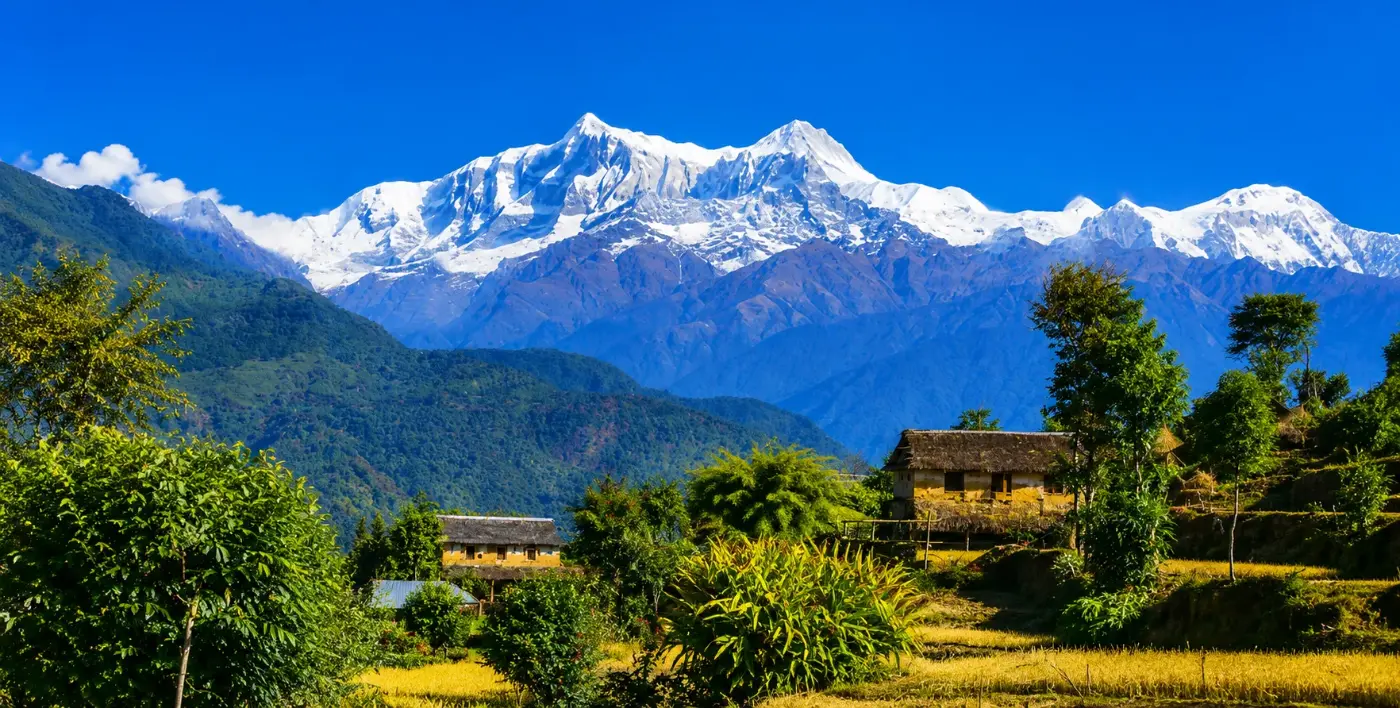
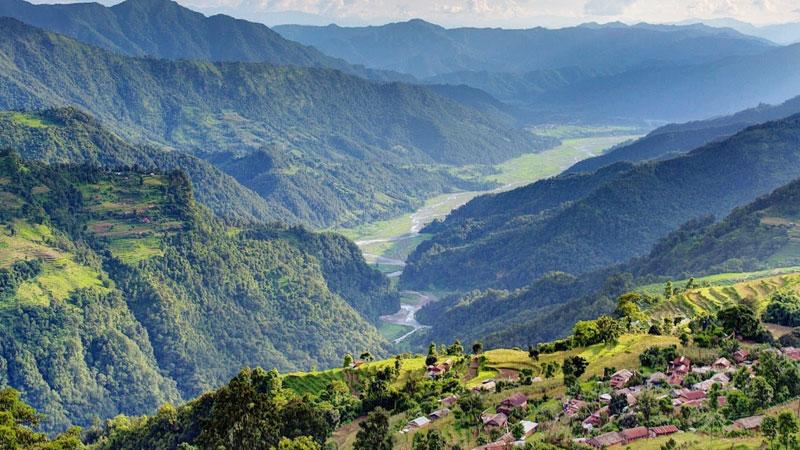
Kathmandu to Tumlingtar Private Jeep

Kathmandu to Tumlingtar Private Jeep

Kathmandu to Tumlingtar Private Jeep

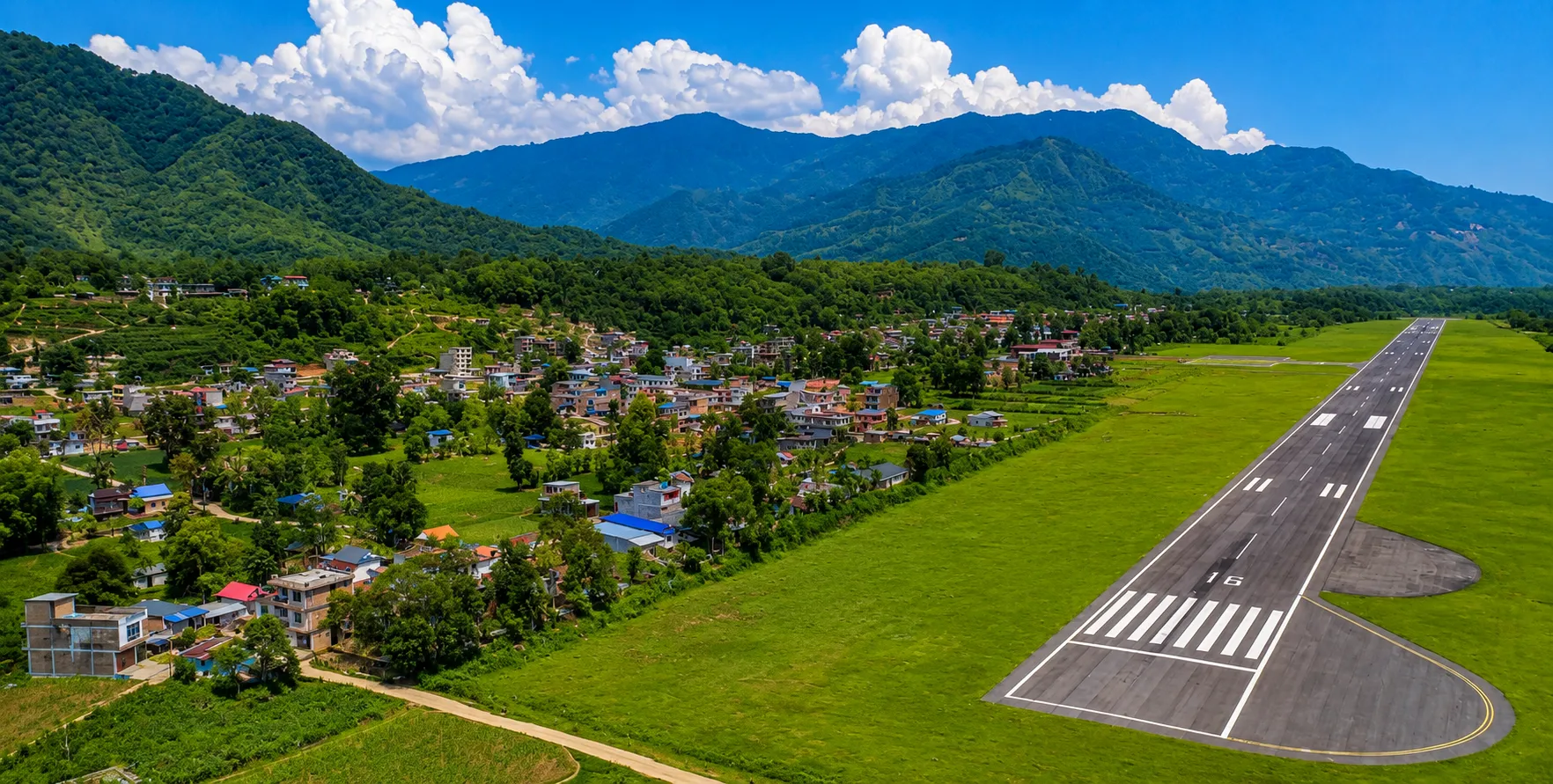
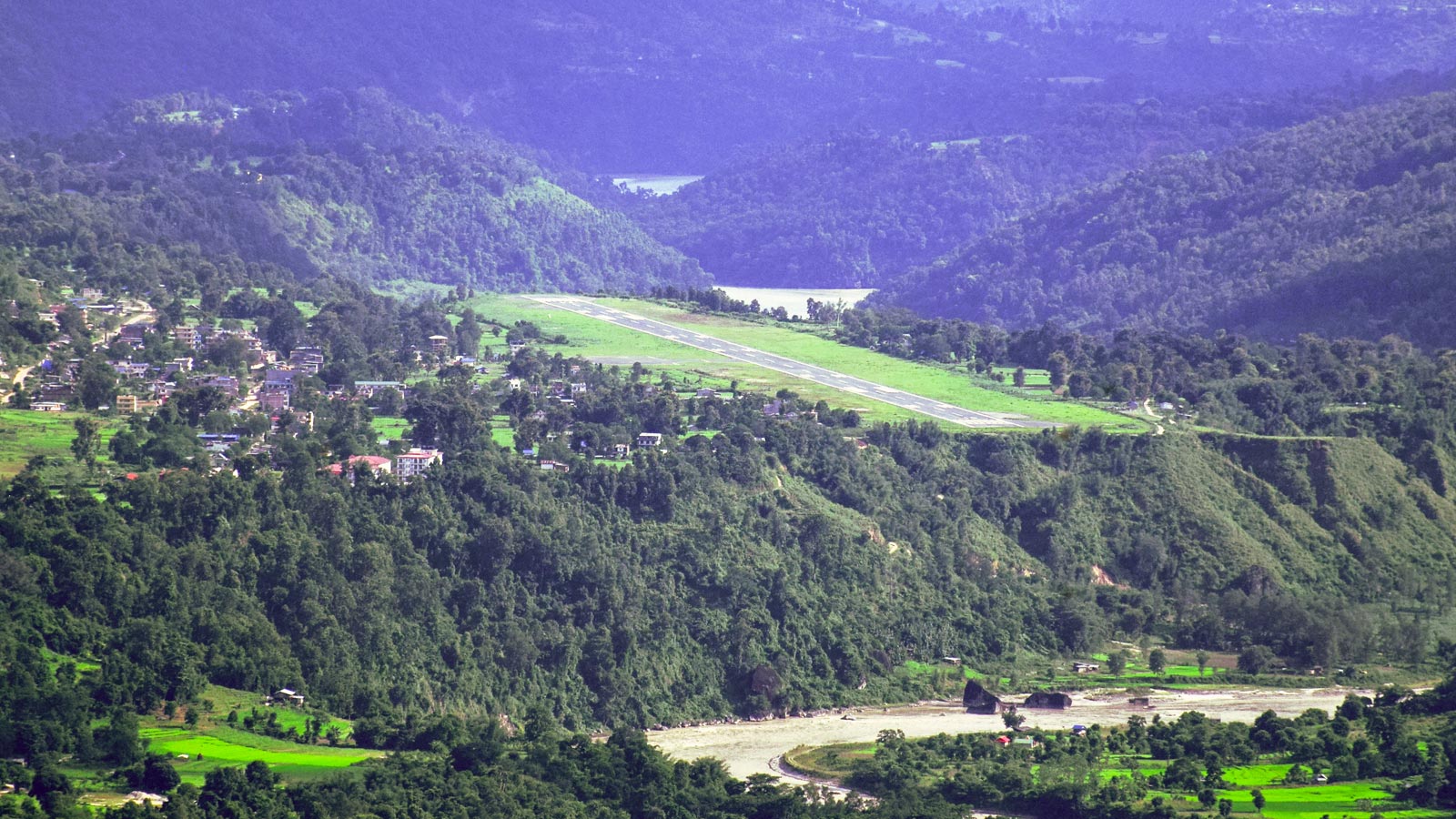
Tumlingtar is one of those small, unassuming Himalayan gateway towns whose importance vastly exceeds its size. Sitting at a modest altitude of around 410 to 460 metres on the floor of the Arun Valley in Sankhuwasabha District, in Nepal’s far eastern Koshi Province, Tumlingtar serves as the principal access point for the Makalu Base Camp Trek — the journey to the foot of the world’s fifth-highest mountain — as well as the increasingly popular Tumlingtar to Lukla trekking route that links the relatively undiscovered Makalu region with the world-famous Everest region via the high pass of Salpa Bhanjyang.

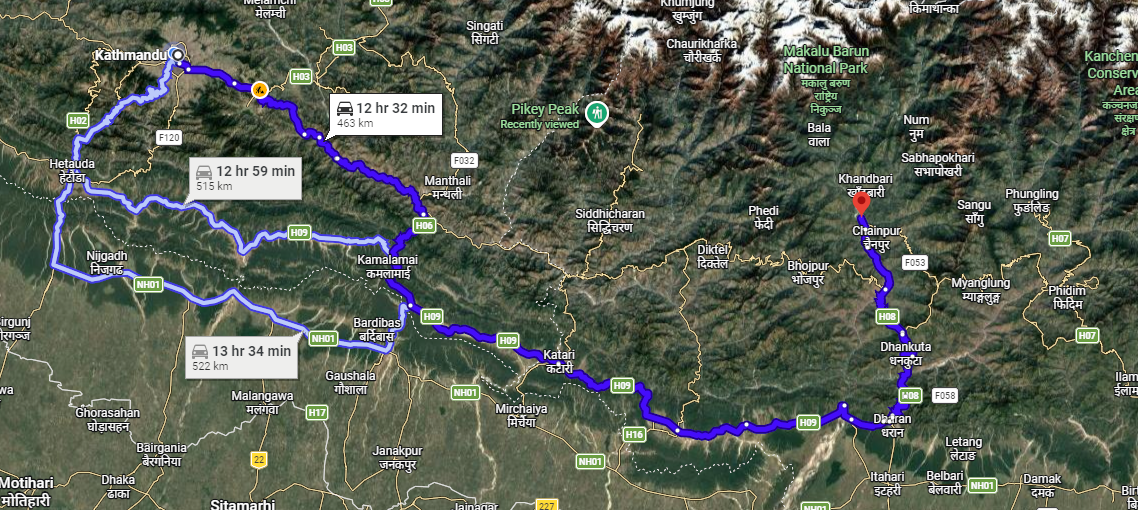
For decades, the overwhelming majority of trekkers heading to Makalu reached Tumlingtar by the short 35- to 50-minute domestic flight from Kathmandu — a journey that, on a clear day, offers some of the most spectacular aerial Himalayan views available on any Nepal domestic route. But Tumlingtar is also connected to Kathmandu by road — a long, genuinely demanding 425-kilometre overland journey through the hills of Sindhuli, the flat Terai stretch of the East-West Highway, and the climbing eastern hill roads through Dharan, Hile, and Khandbari — and for trekkers with the time, the budget constraints, or simply the inclination for a proper overland Himalayan road adventure, a private jeep from Kathmandu to Tumlingtar is an increasingly viable and genuinely rewarding alternative to flying.

This complete guide covers everything about the Kathmandu to Tumlingtar private jeep journey: the full route, all transport options and their costs, the onward jeep connection from Tumlingtar to Num for Makalu trekkers, permits, seasonal road conditions, and why Nepal Vehicle Hiring Pvt Ltd is a reliable private vehicle partner for this long but rewarding eastern Nepal journey.

Kathmandu to Tumlingtar Private Jeep

Tumlingtar — Gateway to the Makalu and Arun Valley Region

Tumlingtar’s significance lies almost entirely in its function as a transport hub rather than as a destination in itself. The small airstrip town sits on a flat river terrace above the Arun River, surrounded by terraced farmland and a scattering of basic guesthouses, shops, and Jeep stands that serve trekkers continuing onward into the mountains.

From here, the road climbs steadily into the hills toward Khandbari — the headquarters of Sankhuwasabha District and the last town with reliable services before the trek toward Makalu Base Camp genuinely begins.

The Makalu Base Camp Trek itself is one of Nepal’s most rewarding and least crowded major trekking routes — a journey through the Makalu Barun National Park and Conservation Area to the foot of Makalu (8,463 m), the world’s fifth-highest mountain, via the dramatic Barun Valley. Unlike the Everest and Annapurna regions, Makalu has little teahouse infrastructure along much of its route, and trekkers should expect a more remote, basic experience—simple timber lodges, family-run homestays, and a genuine sense of travelling through a landscape tourism has only lightly touched.

  • Altitude: Approximately 410–460 m (Tumlingtar town itself, on the Arun Valley floor)
  • District: Sankhuwasabha District, Koshi Province, far eastern Nepal
  • Primary function: Gateway airstrip and road-head for Makalu Base Camp Trek and Tumlingtar-Lukla Trek
  • Facilities: Domestic airport, basic guesthouses, jeep stand, small market
  • Best known for: The starting point most trekkers use before continuing by Jeep to Num or Chichira to begin walking toward Makalu

Kathmandu to Tumlingtar Private Jeep

Key Facts at a Glance — Kathmandu to Tumlingtar

Route DetailInformation
Total Road Distance425 km (Kathmandu to Tumlingtar)
Tumlingtar Altitude410–460 m (Sankhuwasabha District, Koshi Province)
Travel Time by Private Jeep8 to 10 hours — often split across 2 days
Flight AlternativeKathmandu to Tumlingtar Airport — 35 to 50 minutes
Flight CostUSD 120–200 one way; USD 250–400 round trip
Road TypeMostly paved (BP Highway + East-West Highway) with unpaved sections near Khandbari.
General RouteKathmandu → Bardibas (BP Highway) → Itahari → Dharan → Hile → Khandbari → Tumlingtar
4WD Required?Recommended for the final Khandbari–Tumlingtar stretch; not mandatory for the main highway sections
Gateway ForMakalu Base Camp Trek, Arun Valley, Tumlingtar–Lukla Trek, Sankhuwasabha cultural region
Onward from TumlingtarJeep to Khandbari (30 min) and onward to Num/Chichira (Makalu trek start) — 4 to 7 hours off-road
Permits RequiredMakalu Barun National Park / Conservation Area entry fee + TIMS card

This is a Long Overland Journey: At approximately 425 km with sections of genuinely rough road near Khandbari, the Kathmandu-Tumlingtar drive is among the longer domestic road journeys commonly undertaken in Nepal. Nepal Vehicle Hiring Pvt Ltd generally recommends splitting this journey across two days, with an overnight stop in the Itahari or Dharan area, rather than attempting the full distance in a single very long driving day.

Nepal Tour Package

Why Choose a Private Jeep Over Flying?

For most Makalu-bound trekkers, the domestic flight from Kathmandu to Tumlingtar remains the fastest and most practical option — but it has limitations, and a private jeep journey offers real, specific advantages for the right kind of traveller.

  • Flight reliability: Tumlingtar flights, like most of Nepal’s mountain domestic routes, are subject to weather-related delays and cancellations, particularly during monsoon and periods of poor visibility — a private jeep removes this uncertainty entirely.
  • Luggage flexibility: Domestic flights to small Nepali airstrips have strict baggage weight limits; a private jeep has no such restrictions, making it useful for expedition-level gear or larger groups with substantial equipment.
  • Budget for larger groups: For a group of 5 to 6 sharing a private jeep, the per-person cost can be comparable to, or even lower than, the combined cost of multiple flight tickets, especially when fares rise during peak booking periods.
  • The journey itself as an experience: The overland route passes through some of eastern Nepal’s most beautiful and least-visited hill country — the tea gardens around Hile, the market town of Dharan, and the dramatic final descent into the Arun Valley — offering a cultural and scenic dimension that a 40-minute flight cannot provide.
  • No flight availability on short notice: Tumlingtar flights run on a limited daily schedule with few seats; a private jeep can depart at any time that suits your schedule.

Nepal Vehicle Hiring Pvt Ltd’s Honest Advice: For trekkers on a tight overall itinerary, flying remains the more time-efficient choice. For groups with flexible schedules, a genuine interest in overland travel, or budget considerations that favour road transport for larger parties, the private jeep journey is a worthwhile alternative, not simply a fallback option.

All Transport Options — Kathmandu to Tumlingtar

Transport OptionCapacity2026 CostTravel TimeBest For
Private Sedan Car1–3 passengersNPR 32,000–42,000 / USD 240–3158–10 hrs (or 2-day split)Small groups on paved sections
Private Jeep (4WD)4–6 passengersNPR 38,000–52,000 / USD 285–3908–10 hrs (or 2-day split)Trekkers with gear, families, and groups
Private Hiace Van7–14 passengersNPR 48,000–65,000 / USD 360–4909–11 hrs (or 2-day split)Larger trekking or expedition groups
Tourist BusMany passengersNPR 1,200–1,800 per person14–18 hrs (overnight)Budget travellers — long and tiring
Domestic FlightPer seatUSD 120–160 one way35–50 minFastest — best for time-pressed trekkers
Flight + Local Jeep ComboPer seat + shared/private jeepUSD 120–160 + USD 25–30 (Tumlingtar–Num)1.5–2 hrs totalMost common choice for Makalu trekkers

Swayambhunath visit during Kathmandu Pokhara Tour

A private 4WD jeep is the most practical and comfortable choice for trekking groups travelling by road. The vehicle’s roof rack and cargo capacity comfortably handle full expedition gear for 4 to 6 passengers, and the higher ground clearance is genuinely useful on rougher road sections near Khandbari and on any onward continuation toward Num.

  • 2026 cost: NPR 38,000–52,000 (USD 285–390) for the full vehicle, one way
  • Includes: Driver, fuel, road tolls — all-inclusive from Nepal Vehicle Hiring Pvt Ltd
  • Recommended approach: Split across 2 days with an overnight stop in Itahari or Dharan

Domestic Flight — The Standard Choice

Yeti Airlines, Tara Air, and other domestic carriers operate scheduled flights between Kathmandu’s Tribhuvan International Airport and Tumlingtar Airport, typically once or twice daily depending on season and demand. The flight takes approximately 35 to 50 minutes and offers genuinely spectacular views of the eastern Himalayan foothills and, on the clearest days, distant glimpses of Makalu and Everest themselves.

  • 2026 fare: USD 120–160 per person, one way; USD 250–310 round trip
  • Baggage allowance: Typically 10–15 kg checked plus hand luggage — verify with your specific airline
  • Weather sensitivity: Flights can be delayed or cancelled due to poor visibility, particularly outside the core autumn and spring trekking seasons

Kathmandu to Tumlingtar Private Jeep

The Route — Kathmandu to Tumlingtar Step by Step

StopDistance from KTMRoadKey Notes
KathmanduStartCity roadsHotel pickup — departure via BP Highway
Sindhuli Hills / BP Highway100 kmBP Highway (hill road)Winding hill section — scenic but slower
Bardibas165–180 kmBP Highway joins the East-West HighwayMajor junction — fuel and food stop
Itahari330 kmEast-West (Mahendra) HighwayMajor eastern junction — common overnight stop
Dharan350 kmPaved link roadEastern hill town — last major city before climbing
Hile390 kmPaved, increasingly windingDhankuta District — tea-growing hill town, viewpoint
Khandbari415 kmMixed paved/roughSankhuwasabha District HQ — fuel, permits, ATM
Tumlingtar425 kmLocal descent roadArun Valley floor — airstrip, jeep stand, trek gateway

Kathmandu to Tumlingtar Private Jeep

Kathmandu to Bardibas — The BP Highway Hill Crossing

The journey begins on the BP Highway, climbing through the hill districts of Kavrepalanchok and Sindhuli before descending to Bardibas, where the route joins the East-West (Mahendra) Highway — Nepal’s principal Terai artery. This initial hill section is winding and slower, but much more direct than the older alternative route via Mugling and Narayanghat.

Bardibas to Itahari — The Long Flat Stretch

From Bardibas, the East-West Highway runs flat and fast through the fertile Terai plains of eastern Nepal, passing through a succession of market towns before reaching Itahari — the major transport junction of eastern Nepal and a natural overnight stopping point for travellers splitting the journey across two days.

Itahari to Dharan and the Climb to Hile

From Itahari, the route turns north toward Dharan, a substantial hill-edge city at the foot of the Mahabharat range, before beginning a steady climb into the hills of Dhankuta District toward Hile — a charming hill town known for its tea gardens and as an important junction for routes continuing further into Nepal’s eastern hill country, including toward Tumlingtar and, in the other direction, toward Basantapur and the trekking routes of the Sankhuwasabha and Solukhumbu border country.

Hile to Khandbari to Tumlingtar — The Final Descent

Beyond Hile, the road continues through increasingly rugged and scenic hill terrain to Khandbari, the headquarters of Sankhuwasabha District and the last significant town with reliable fuel, an ATM, and other services before the final descent to Tumlingtar on the floor of the Arun Valley. This final stretch includes some rougher, partially unpaved sections, and a 4WD vehicle is genuinely useful, though not strictly mandatory in good dry-season conditions.

Onward from Tumlingtar — The Jeep to Num for Makalu Trekkers

For most travellers using Tumlingtar as a gateway, the journey to Kathmandu is only the first leg. The actual start of the Makalu Base Camp Trek lies considerably further into the hills, at the village of Num (or, for some itineraries, the alternative starting point of Chichira) — reached by a further jeep journey of 4 to 7 hours, depending on road conditions, through Khandbari and the dramatic descending and re-ascending terrain that characterises the approach to the Arun River and Barun Valley region.

StopDistance from TumlingtarRoad TypeNotes
Khandbari12–15 kmPavedDistrict headquarters — last reliable services
Leguwaghat / Hururu40–50 kmOff-road, roughDescending toward the Arun River valley
Num Bazaar100–120 kmOff-road, steep, roughMakalu Base Camp Trek starting point — overnight
ChichiraSlightly beyond Num (alt. start)Off-roadAlternative trek starting village
  • Shared Jeep (Tumlingtar to Num): Approximately USD 25–30 per person
  • Private Jeep (Tumlingtar to Num): Approximately USD 150–200 for the full vehicle (5–6 seats)
  • Road character: Increasingly rough and off-road as the route descends toward the Arun River and climbs again toward Num — a 4WD vehicle is genuinely required for this section, regardless of how the main Kathmandu-Tumlingtar leg was completed

Nepal Vehicle Hiring Pvt Ltd can coordinate both the Kathmandu-Tumlingtar leg and the onward Tumlingtar-Num connection as a single, smooth booking for trekkers undertaking the complete overland approach to Makalu Base Camp, eliminating the need to arrange local transport separately upon arrival in Tumlingtar.

Kathmandu to Tumlingtar Private Jeep

What to See Along the Way

Dharan — The Gateway City of the Eastern Hills

Dharan, a substantial and historically significant town at the foot of the Mahabharat range, has long served as a major recruitment and transit point for the British and Indian Gurkha regiments and retains a distinctive cosmopolitan character shaped by generations of military service and the resulting connections to the wider world. The town has good hotels, restaurants, and facilities, making it a sensible overnight stop for travellers splitting the Kathmandu-Tümlingtar journey across two days.

Hile — Tea Gardens and Mountain Views

Hile, perched on a ridge in Dhankuta District, is known for its tea cultivation — a tradition shared with the more famous tea districts further south near Ilam — and, on clear days, offers genuinely impressive views of the eastern Himalayan range, including distant glimpses of Makalu itself. The town’s bazaar has a distinctive hill-trading character, having historically served as an important stop on trade routes connecting the high country to the Terai plains.

Khandbari and the Arun Valley

Khandbari, the headquarters of Sankhuwasabha District, sits on a ridge above the dramatic Arun Valley and serves as the last significant service town before the final descent to Tumlingtar. The surrounding Sankhuwasabha District is home to a rich mix of ethnic communities, including Rai, Sherpa, and Bhote populations, each contributing to a cultural diversity that rewards travellers willing to spend time exploring beyond the immediate transit corridor.

Permits Required

  • Makalu Barun National Park entry fee: Required for all foreign nationals entering the park area on the Makalu Base Camp Trek — obtainable in Kathmandu or at the park entry point
  • TIMS Card: Recommended for trekkers continuing beyond Tumlingtar into the Makalu region — obtainable through the Nepal Tourism Board or a registered trekking agency
  • Licensed guide: Increasingly required under Nepal’s broader 2023 guide regulation for trekking in remote and restricted areas, including Makalu Barun

Arrange your Makalu Barun permits in Kathmandu before departure — facilities for permit processing become progressively more limited the further east and the closer to the mountains you travel.

Kathmandu to Tumlingtar Private Jeep

Season Guide — Best Time for the Journey

SeasonMonthsRoad & Flight ConditionsRecommendation
AutumnOct–NovGood road conditions, reliable flightsBest season — peak Makalu trekking period
WinterDec–FebCold but generally clear; occasional fog delays flightsGood — quieter, clear Himalayan views
SpringMar–MayGood road conditions, rhododendrons bloomingExcellent — second peak season
MonsoonJun–SepRisky — landslide-prone hill sections, frequent flight cancellationsAvoid if possible — high disruption risk

Because this journey combines flat Terai highway driving with substantial hill-road sections, seasonal road conditions matter considerably more here than on a purely flat-plains route. The Hile-Khandbari-Tumlingtar stretch, in particular, can be affected by monsoon-season landslides and surface damage, and Nepal Vehicle Hiring Pvt Ltd monitors current conditions on this corridor and provides proactive advice before departure.

Practical Tips for the Kathmandu to Tumlingtar Journey

  • Decide early whether to split the journey across two days with an overnight stop in Itahari or Dharan — this is the recommended approach for comfort given the substantial distance involved.
  • Book your private Jeeps at least 5 days in advance during the peak Makalu trekking season (October–November and March–May).
  • Carry NPR cash — ATMs become less reliable beyond Itahari and Dharan; Khandbari has the last consistently functioning ATM before Tumlingtar.
  • If continuing to Num for the Makalu trek, confirm whether your booking includes this connecting leg or you need to arrange it separately on arrival in Tumlingtar.
  • Pack for the full range of conditions — the journey passes from the mild Kathmandu Valley climate through hot Terai plains to cooler eastern hill country, all within a single long drive.
  • Arrange your Makalu Barun National Park permits and any required guide services in Kathmandu before departure.
  • Build in buffer days if your itinerary depends on a specific onward flight or trek start date — road conditions and the additional Tumlingtar-Num jeep leg can introduce delays, particularly outside the core dry seasons.

Why Choose Nepal Vehicle Hiring Pvt Ltd

  • Long-Distance Route Experience: Our drivers are experienced on the full eastern Nepal corridor — the BP Highway, the East-West Highway, and the hill roads through Dharan, Hile, and Khandbari to Tumlingtar.
  • Flexible One-Day or Two-Day Planning: We can arrange this journey as a single long driving day or, as generally recommended, a comfortable two-day journey with an overnight stop in Itahari or Dharan.
  • Onward Connection Coordination: We can arrange the connecting Tumlingtar-to-Num jeep leg for Makalu-bound trekkers as part of a single smooth booking.
  • All Vehicle Types: Private sedan, 4WD jeep, or Hiace van — sized correctly for your group, with full luggage capacity for trekking and expedition gear.
  • Transparent All-Inclusive Pricing: Every quote includes the driver, fuel, and road tolls for this substantial cross-country journey.
  • 24/7 Booking: WhatsApp or call WhatsApp — plan this longer eastern Nepal journey with full itinerary support.

Frequently Asked Questions

How far is Kathmandu from Tumlingtar by road?

The road distance from Kathmandu to Tumlingtar is about 425 km and takes 8 to 10 hours by private vehicle; alternatively, we recommend splitting the journey over two days with an overnight stop in Itahari or Dharan.

What is the 2026 cost of a private jeep from Kathmandu to Tumlingtar?

A private 4WD jeep costs about NPR 38,000 to NPR 52,000 (USD 285 to USD 390) for the full vehicle, one way, including driver and fuel; a private sedan costs slightly less, ranging from NPR 32,000 to NPR 42,000.

Is it better to fly or drive to Tumlingtar?

Flying (35 to 50 minutes, USD 120–160 one way) is faster and the standard choice for most trekkers, but is subject to weather-related delays and cancellations. A private jeep takes 8 to 10 hours but offers reliable scheduling, no baggage restrictions, and can be more economical for larger groups.

How do I get from Tumlingtar to the Makalu Base Camp trailhead?

From Tumlingtar, a further 4- to 7-hour journey via Khandbari leads to Num (or the alternative starting village of Chichira), where the Makalu Base Camp Trek actually begins. A shared jeep costs approximately USD 25–30 per person; a private jeep costs USD 150–200 for the full vehicle.

Is a 4WD vehicle necessary for the journey from Kathmandu to Tumlingtar?

The main highway sections (BP Highway and East-West Highway) suit any vehicle type. The final stretch from Hile through Khandbari to Tumlingtar includes rougher, partially unpaved sections, so a 4WD jeep is recommended, especially outside the dry season. The onward Tumlingtar-to-Num leg of the Makalu trek requires a 4WD vehicle.

What permits do I need for the Makalu region?

Foreign nationals require the Makalu Barun National Park entry permit, and trekkers should also carry a TIMS card. Nepal’s broader 2023 trekking guide regulation increasingly requires a licensed guide for this remote, restricted region. Arrange all permits in Kathmandu before departure.

Conclusion

The journey from Kathmandu to Tumlingtar is a genuine eastern Nepal road adventure — 425 kilometers through hill country, Terai plains, tea-growing ridges, and a dramatic final descent into the Arun Valley, leading to the gateway of one of the Himalaya’s most rewarding and least-visited major trekking regions. Whether you choose to fly for speed and convenience or take the long road for budget, flexibility, or the simple pleasure of seeing eastern Nepal unfold mile by mile, reaching Tumlingtar is the first real step toward the wild, remote grandeur of the Makalu Barun region.

Nepal Vehicle Hiring Pvt Ltd provides experienced, reliable private vehicle hire for this substantial cross-country journey with flexible one- or two-day itinerary planning, coordinated onward connections to Num for Makalu trekkers, and a full range of vehicle options to suit any group size and budget.

Book your Kathmandu to Tumlingtar transfer — Call or WhatsApp

E-mail: [email protected]

Kathmandu to Pikey Peak Trek Transport

Kathmandu to Pikey Peak Trek transport with a Scorpio and 4WD jeep on the mountain roads of Nepal

Kathmandu to Pikey Peak Trek Transport

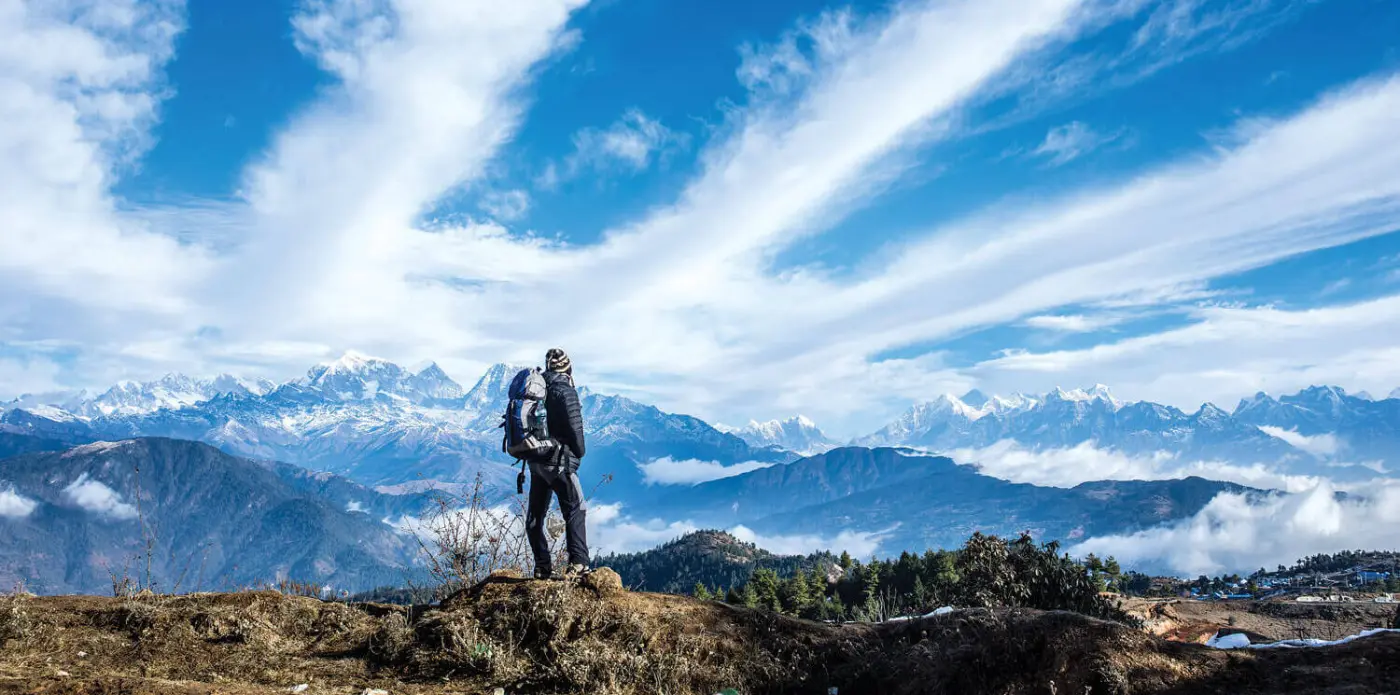
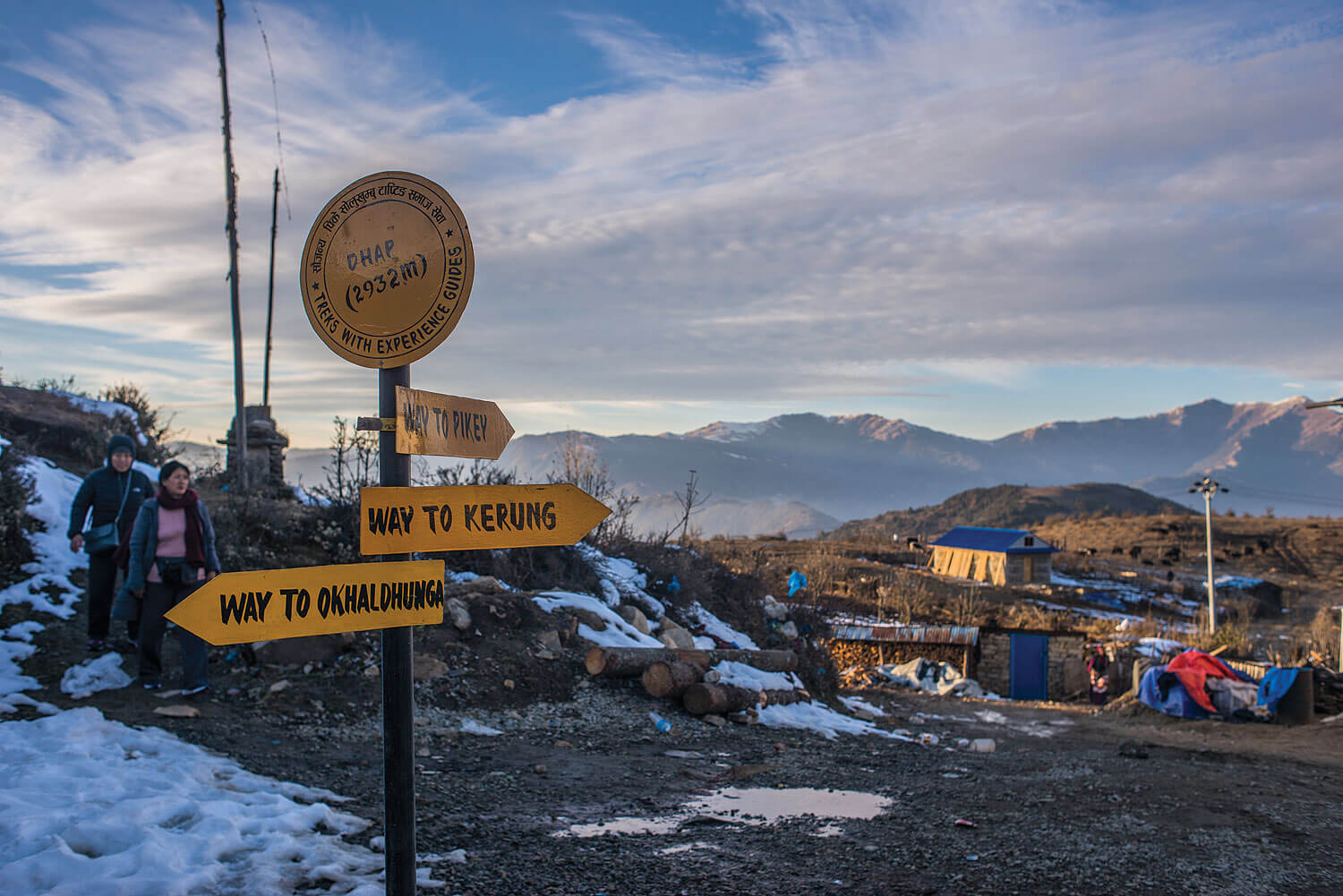
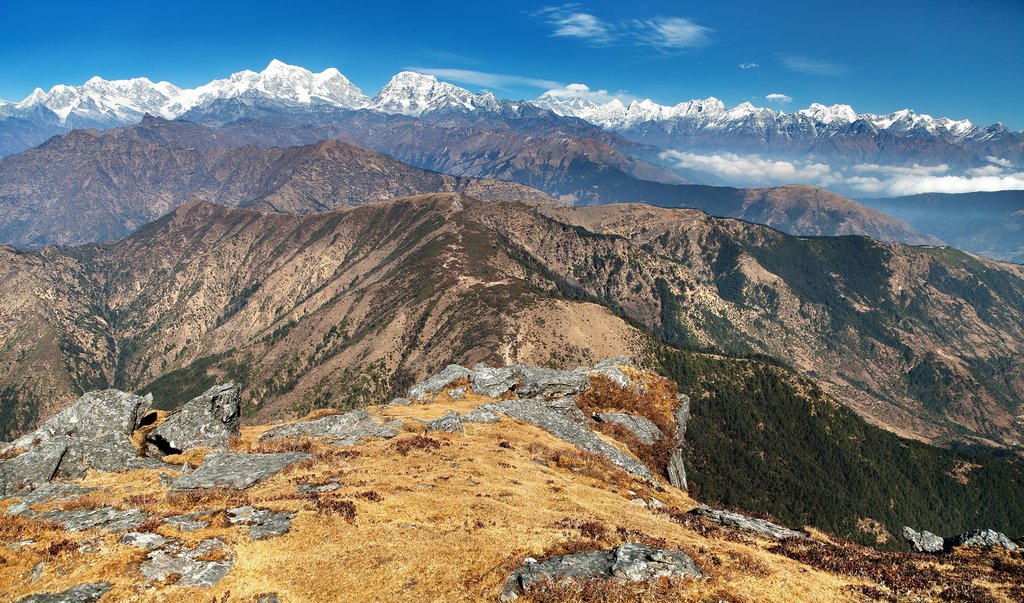
Pikey Peak, at 4,065 metres in Nepal’s Solukhumbu District, has earned a reputation that few moderate-altitude viewpoints anywhere in the Himalaya can match: it is widely said to have been described by Sir Edmund Hillary himself as offering the finest panoramic mountain view in the entire Everest region — a single, sweeping vantage point from which Everest, Lhotse, Makalu, Kanchenjunga, and dozens of other major Himalayan summits arrange themselves across the horizon in an uninterrupted sunrise panorama. Unlike Everest Base Camp, reaching this view requires no flight to Lukla, no multi-day acclimatisation schedule, and no risk of serious altitude sickness — making Pikey Peak one of the most accessible, genuinely first-rate Himalayan viewpoints in Nepal.

Getting to the Pikey Peak trek, however, begins with a road journey rather than a flight — and this is where careful transport planning matters. The trek’s most common starting point, the small hill village of Dhap, lies approximately 230 to 280 kilometres from Kathmandu by road, depending on the exact route taken, and the journey typically takes 6 to 10 hours, whether you travel by private jeep, shared jeep, or local bus.

The trek then continues on foot through Jhapre, the Pikey Peak Base Camp area, and the summit viewpoint, before descending through the Sherpa village of Junbesi to finish in Phaplu or Salleri—from where travellers either drive back to Kathmandu or take a short domestic flight.

This complete guide covers everything about transport for the Kathmandu to Pikey Peak Trek: the full route to Dhap, all transport options and their  costs, the return journey from Phaplu or Salleri, required permits, a sample trek itinerary, and why Nepal Vehicle Hiring Pvt Ltd is a reliable private vehicle partner for the road sections of this increasingly popular short Himalayan trek.

Kathmandu to Pikey Peak Trek transport with a Scorpio and 4WD jeep on the mountain roads of NepalPikey Peak — Sir Edmund Hillary’s Finest Viewpoint
Pikey Peak sits on a forested ridge in Solukhumbu District, well south and west of the main Everest trekking corridor that runs through Lukla, Namche Bazaar, and the Khumbu Valley toward Everest Base Camp. Because it lies outside the core high-altitude Khumbu region, Pikey Peak offers a fundamentally different trekking experience: lower maximum altitude (4,065 m at the summit, compared to 5,364 m at Everest Base Camp), correspondingly lower risk of altitude sickness, a shorter overall trek duration, and — perhaps most appealing to many travellers — a trail that remains genuinely quiet even during Nepal’s busiest trekking months, when the main Everest Base Camp trail can feel crowded with hundreds of trekkers.

What Pikey Peak does not sacrifice, remarkably, is the quality of the mountain view itself. From the summit viewpoint at dawn, a 270-degree-plus panorama opens across the entire eastern Himalayan range: Everest, Lhotse, and Nuptse cluster together on one section of the horizon, Makalu rises distinctly to the east, and on exceptionally clear days even Kanchenjunga — far to the east on the Sikkim border — becomes visible, alongside the closer peaks of the Rolwaling and Gaurishankar ranges to the west.

The trek’s relatively forgiving altitude profile and shorter duration (typically 5 to 9 days depending on the specific itinerary chosen) have made it one of Nepal’s fastest-growing short trekking options in recent years, frequently recommended as either a standalone trek for travellers with limited time or as an excellent lower-altitude acclimatisation and orientation trek before a more demanding Everest region expedition.

Key Facts at a Glance — Kathmandu to Pikey Peak

Route DetailInformation
Trek RegionSolukhumbu District (lower Everest region foothills)
Standard Start PointDhap Bazaar / Dhap Village ~2,900 m)
Standard End PointPhaplu or Salleri
Pikey Peak Altitude4,065 m (summit viewpoint)
Distance — Kathmandu to Dhap230–280 km (sources vary by exact route)
Drive Time — Private Jeep6 to 7 hours (direct) — often 8–10 hrs realistically with stops
Drive Time — Shared Jeep/Bus8 to 10 hours
Distance — Salleri/Phaplu to Kathmandu (return)267 km
Return Drive Time7 to 8 hours
Return Flight OptionPhaplu to Kathmandu — 30 minutes, USD 100–180
Main RouteKathmandu → Dhulikhel → BP Highway → Khurkot → Ghurmi → Dhap
Guide Requirement (2026)Mandatory — licensed guide required since the April 2023 regulation
Why Trekkers Choose Pikey PeakPanoramic Everest/Lhotse/Makalu views at moderate altitude, far fewer crowds than EBC

Kathmandu to Pikey Peak Trek transport with a Scorpio and 4WD jeep on the mountain roads of Nepal

The Route — Kathmandu to Dhap

StopDistance from KTMRoadKey Notes
KathmanduStart (1,400 m)City roadsEarly departure — typically 5:00–7:00 AM
Dhulikhel35 kmPaved — Araniko/BP HighwayHill viewpoint, photo stop on clear mornings
Khurkot105–126 kmBP HighwayStandard breakfast/rest stop
Ghurmi Junction150 kmBP HighwayRoute continues toward Okhaldhunga/Solukhumbu
Okhaldhunga area175–200 kmMixed paved/roughDistrict headquarters area — last reliable fuel/ATM
Dhap Village230–280 kmLocal hill roadTrek starting point — altitude 2,900 m

The journey to Dhap follows the same BP Highway corridor used for several of our other eastern Nepal route guides — heading northeast from Kathmandu through Dhulikhel and Nagarkot, then descending onto the BP Highway proper through Khurkot and Ghurmi Junction before turning into the Solukhumbu foothills toward Dhap.

The road is paved for most of the distance, with the final stretch into Dhap on rougher, more rural hill roads that make a 4WD vehicle genuinely worthwhile, even if not strictly mandatory in good dry-season conditions.

Most jeep departures for Pikey Peak leave Kathmandu very early — typically between 5:00 AM and 7:00 AM — both to allow sufficient daylight for the long drive and to take advantage of generally lighter early-morning traffic leaving the Kathmandu Valley. Trekking agencies and shared jeep services commonly depart from the Machhapokhari area of Kathmandu.

At the same time, private vehicle hire through Nepal Vehicle Hiring Pvt Ltd offers door-to-door pickup from any hotel in Kathmandu at whatever time best suits your schedule.

All Transport Options — Kathmandu to Dhap

Transport OptionCapacity2026 Cost (one way)Travel TimeBest For
Local Bus (Kathmandu–Dhap)Many passengersUSD 8–12 per person8–10 hrsTightest budget — basic, frequent stops
Shared JeepUp to 7 passengersUSD 20–35 per person8–10 hrsBudget travellers are comfortable sharing
Private Jeep (Scorpio/Hilux 4WD)4–7 passengersUSD 200–300 (full vehicle)6–7 hrs (often 8–9 hrs realistic)Groups, comfort, flexible departure
Private Jeep Round Trip Package4–7 passengersUSD 400–500 (full vehicle, both ways)Same as aboveMost popular choice for trekking groups
Return Flight (Phaplu–Kathmandu)Per seatUSD 100–180~30 minFastest return — book in advance, limited seats

Nepal Tour Package

A private 4WD jeep is the most comfortable and flexible way to reach Dhap, especially given the genuinely long driving distance. Nepal Vehicle Hiring Pvt Ltd provides Mahindra Scorpio 4WD and Toyota Hilux 4WD vehicles for this route, both well-suited to the rougher final approach into Dhap and capable of carrying full trekking gear on the roof rack for groups of 4 to 7 passengers.

  • One-way cost: USD 200–300 for the full vehicle
  • Round-trip package: USD 400–500 for the full vehicle, both legs
  • Includes: Driver, fuel, road tolls — all-inclusive from Nepal Vehicle Hiring Pvt Ltd
  • Departure: Flexible — typically 5:00–7:00 AM for the best daylight driving window

Group Value: For 6 trekkers sharing a private jeep round trip at USD 450, the per-person cost is about USD 75 for the entire outward and return journey—comparable to shared jeep fares but with vastly superior comfort, hotel pickup, and schedule flexibility.


Kathmandu to Pikey Peak Trek transport with a Scorpio and 4WD jeep on the mountain roads of NepalShared Jeep — Mid-Range Budget Option

Shared jeeps, typically seating up to 7 passengers, operate between Kathmandu and Dhap on a fill-and-depart basis. This is a reasonable middle ground between the cheapest local bus option and a fully private vehicle, though departure times and comfort levels are less predictable.

  • Cost: USD 20–35 per person, one way
  • Travel time: 8 to 10 hours
  • Best for: Budget travellers comfortable sharing with other trekkers

Local Bus — Cheapest Option

Local buses connect Kathmandu to destinations along the BP Highway corridor toward Okhaldhunga, with some services continuing to or near Dhap. This is the most economical option but takes the longest, with frequent stops and the least comfortable seating.

  • Cost: USD 8–12 per person, one way
  • Travel time: 8 to 10 hours, sometimes longer with transfers
  • Best for: Extremely budget-conscious solo travellers with flexible schedules

Kathmandu to Pikey Peak Trek transport with a Scorpio and 4WD jeep on the mountain roads of Nepal

The Return Journey — Phaplu or Salleri to Kathmandu

The Pikey Peak Trek typically finishes at Phaplu or the nearby town of Salleri, both of which offer two distinct return options to Kathmandu.

Return by Road

The drive from Salleri or Phaplu back to Kathmandu covers approximately 267 km. It takes 7 to 8 hours and passes through Jir, historically the traditional overland starting point for Everest expeditions before the construction of Lukla’s airstrip made flying the standard approach. This route offers its own scenic and cultural rewards, taking in traditional hill villages and a genuine sense of how Everest-bound expeditions travelled before the era of mountain flights.

  • Private jeep: Similar pricing structure to the outward journey — USD 200–300 one way
  • Shared jeep/bus: USD 20–35 per person

Return by Flight

For trekkers who prefer to save time on the return leg, a short domestic flight connects Phaplu Airport directly to Kathmandu in approximately 30 minutes.

  • Cost: Approximately USD 100–180 per person
  • Note: Flights are not daily, and seats are limited — book well in advance, particularly during peak trekking season
  • Weather: Like all of Nepal’s mountain domestic routes, Phaplu flights are subject to occasional weather-related delays

Popular Combination: Many trekkers choose a private jeep for the outward journey to Dhap (for comfort and reliable timing at the start of the trek) and a flight from Phaplu back to Kathmandu at the end of the trek — combining the best of both transport options across the two legs of the journey.

Travel from Kathmandu to Pikey Peak with a private Scorpio or 4WD jeep. Reliable trekking transport, experienced drivers, and comfortable service to the trek starting point.

Permits Required for the Pikey Peak Trek

PermitCost (approx.)Required WhenNotes
Pikey Peak / Local Area PermitNPR 2,000 (USD 15) per personAlways, for the standard Dhap–Phaplu routeCollected at local checkpoint
TIMS CardNPR 2,000 (USD 15) per personAlwaysObtainable via Nepal Tourism Board or trekking agency
Gaurishankar Conservation Area Permit (GCAP)NPR 3,000 (USD 23) per personOnly if starting from the Shivalaya/Jiri routeNOT required for the standard Dhap–Phaplu route
Sagarmatha National Park PermitNPR 3,000 (USD 22) per personOnly if the itinerary extends into Sagarmatha NP territoryVerify with your guide if your route includes this
Licensed Guide (mandatory 2026)USD 25–35 per dayAlways, per the April 2023 regulationArranged through any registered trekking agency

Route Matters for Permits: The standard Dhap-to-Phaplu route does NOT require the Gaurishankar Conservation Area Permit — this is only needed if your itinerary starts from Shivalaya or Jiri instead. Confirm your exact planned route with your trekking agency before assuming which permits apply to your specific itinerary.

Travel from Kathmandu to Pikey Peak with a private Scorpio or 4WD jeep. Reliable trekking transport, experienced drivers, and comfortable service to the trek starting point.

Sample Pikey Peak Trek Itinerary

DayActivityAltitude/Notes
Day 1Drive Kathmandu → Dhap (6–10 hrs by jeep)2,900 m — overnight in Dhap
Day 2Trek Dhap → JhapreForest trail, gradual ascent
Day 3Trek Jhapre → Pikey Peak Base CampApproaching the viewpoint ridge
Day 4Pre-dawn hike to Pikey Peak summit (4,065 m) → Jasmane BhanjyangPanoramic Everest, Lhotse, Makalu sunrise view
Day 5Trek to JunbesiSherpa village, monastery, apple orchards
Day 6Trek to Phaplu / Salleri5–6 hrs walking
Day 7Drive (or fly) Phaplu/Salleri → Kathmandu7–8 hrs by road, or ~30 min by flight

This 7-day itinerary is one of the most common formats for the Pikey Peak Trek. However, trekking operators also offer shorter 5- to 6-day versions and longer 9- to 10-day versions with additional acclimatisation or side-trip days. The pre-dawn ascent to the Pikey Peak summit viewpoint on Day 4 is the unquestioned highlight of the entire trek — most itineraries time this specifically to catch the sunrise illuminating the Everest, Lhotse, and Makalu panorama.

Swayambhunath visit during Kathmandu Pokhara Tour

Season Guide — Best Time for the Journey and Trek

SeasonMonthsRoad & Trail ConditionsRecommendation
AutumnOct–NovExcellent — dry, clearBest season — peak Everest panorama clarity
WinterDec–FebGood but cold; possible light snow near summitGood — quiet, very clear skies
SpringMar–MayGood — dry, rhododendron forests in bloomExcellent — second peak season
MonsoonJun–SepVariable — landslide risk on hill roadsManageable at this lower altitude vs EBC, but views are often clouded

Because Pikey Peak’s maximum altitude is considerably lower than Everest Base Camp, the trek itself remains viable across a slightly wider range of conditions than higher-altitude alternatives — though the clearest and most rewarding mountain panoramas are still concentrated in the core autumn and spring trekking seasons.

The road journey to Dhap, passing through genuine hill country along the BP Highway corridor, is more affected by monsoon-season conditions than the trek itself, and Nepal Vehicle Hiring Pvt Ltd monitors current road conditions on this route and will proactively advise before departure during the wetter months.

Practical Tips for Pikey Peak Trek Transport

  • Book your private jeep at least 3 to 5 days in advance during peak season (October–November and March–May) — Pikey Peak’s growing popularity has significantly increased demand for vehicles on this route in recent years.
  • Depart Kathmandu by 5:00–7:00 AM at the latest — the long drive to Dhap requires the full daylight hours available.
  • If planning to fly back from Phaplu, book your flight as early as possible — seats are limited, and the route does not operate daily.
  • Confirm with your trekking agency exactly which permits your specific route requires — the Dhap-to-Phaplu standard route has different permit requirements from the alternative Shivalaya/Jiri starting route.
  • Carry NPR cash for the journey — ATMs become unreliable beyond Okhaldhunga and are unavailable in Dhap itself.
  • Pack layers for a wide temperature range — the journey moves from the mild Kathmandu Valley climate to the cooler hill altitude of Dhap at 2,900 meters.
  • A licensed guide is mandatory for this trek under Nepal’s 2023 regulations — arrange this through a registered trekking agency before departure, along with your transport booking.
  • If your group is splitting outward and using different return transport modes (jeep outward, flight return, for example), confirm baggage-handling arrangements in advance so gear isn’t left stranded at the wrong end of the route.

Why Choose Nepal Vehicle Hiring Pvt Ltd

  • Eastern Nepal Route Experience: Our drivers know the BP Highway corridor and the hill roads leading into Dhap and the broader lower Solukhumbu region.
  • Flexible Departure Timing: We accommodate the early 5:00–7:00 AM departures this route typically requires, with door-to-door pickup from any hotel in Kathmandu.
  • Round Trip Coordination: Book your outward Kathmandu-to-Dhap jeep and your return Phaplu/Salleri-to-Kathmandu transport as a single coordinated package.
  • Right Vehicle for the Terrain: Scorpio 4WD and Toyota Hilux 4WD vehicles suit the rougher final approach into Dhap, with full luggage capacity for trekking gear.
  • Transparent All-Inclusive Pricing: Every quote includes the driver, fuel, and road tolls.
  • 24/7 Booking: WhatsApp or call WhatsApp — book your Pikey Peak trek transport with full itinerary support.

Travel from Kathmandu to Pikey Peak with a private Scorpio or 4WD jeep. Reliable trekking transport, experienced drivers, and comfortable service to the trek starting point.

Frequently Asked Questions — Kathmandu to Pikey Peak

How far is Dhap from Kathmandu, and how long does the drive take?

Dhap, the standard starting point for the Pikey Peak Trek, is approximately 230-280 km from Kathmandu, depending on the exact route. A private jeep takes about 6 to 7 hours in good conditions, though 8 to 10 hours is more realistic, accounting for stops and road conditions. Shared jeeps and local buses typically take 8 to 10 hours.

What is the 2026 cost of a private jeep from Kathmandu to Dhap?

A private jeep costs approximately USD 200 to USD 300 for a full-vehicle one-way trip (carrying 4 to 7 passengers). A round-trip package, covering both the outward journey to Dhap and the return from Phaplu or Salleri, typically costs USD 400-500.

Can I fly back from the Pikey Peak Trek instead of driving?

Yes. A short domestic flight connects Phaplu Airport to Kathmandu in approximately 30 minutes and costs USD 100-180 per person. Flights are not daily and have limited seats, so booking is recommended, particularly during peak trekking season.

Do I need the Gaurishankar Conservation Area Permit for the Pikey Peak Trek?

Only if your itinerary starts from Shivalaya or Jiri rather than the standard Dhap starting point. If you begin your trek from Dhap and finish at Phaplu or Salleri — the most common itinerary — you do not need the Gaurishankar Conservation Area Permit, only the Pikey Peak Local Area Permit and a TIMS card.

Is a guide mandatory for the Pikey Peak Trek?

Yes. Since Nepal’s April 2023 regulation, a licensed guide is mandatory for the Pikey Peak Trek, as for virtually all major trekking routes in Nepal. Arrange this through a registered trekking agency before you depart.

Why is Pikey Peak recommended over Everest Base Camp for some trekkers?

Pikey Peak’s summit altitude of 4,065 metres is considerably lower than Everest Base Camp’s 5,364 metres, resulting in significantly lower altitude sickness risk, a shorter overall trek duration (typically 5 to 9 days versus 12 to 16 days for EBC), and a much quieter trail experience, while still offering a comparably spectacular panoramic view of Everest, Lhotse, Makalu, and the surrounding Himalayan range.

Nepal Tour Package

Conclusion

The journey to Pikey Peak begins, like so many of Nepal’s great trekking adventures, with a long and genuinely scenic road journey — out of the Kathmandu Valley, along the BP Highway, and into the forested hills of lower Solukhumbu, before the trek itself carries travellers up to one of the finest and most accessible Himalayan panoramas anywhere in Nepal. For trekkers seeking the visual reward of an Everest-region viewpoint without the altitude risk, crowds, or extended time commitment of the classic Everest Base Camp trek, Pikey Peak offers one of the best-value Himalayan experiences available today.

Nepal Vehicle Hiring Pvt Ltd provides reliable, comfortable private vehicle hire for both legs of this journey — the outward drive to Dhap and the return from Phaplu or Salleri — with flexible early departure times, the right 4WD vehicle for the terrain, and transparent, all-inclusive pricing for trekkers of all group sizes.

Book your Pikey Peak trek transport — Call or WhatsApp

E-mail: [email protected]

Nepal Annapurna Circuit Road: Complete Vehicle Hire and Trekking Guide

Nepal Annapurna Circuit Road: Complete Vehicle Hire and Trekking Guide

Nepal Annapurna Circuit Road  – Complete Vehicle Hire and Trekking Guide

The Annapurna Circuit has been called, with only modest exaggeration, one of the world’s greatest treks. A 160–230 km loop encircling the Annapurna Massif through some of the planet’s most diverse Himalayan landscapes — from the subtropical warmth of the lower Marsyangdi River valley, through the extraordinary cultural depth of Manangi and Thakali villages, to the high-altitude drama of Thorong La Pass at 5,416 m and the sacred, wind-scoured pilgrimage town of Muktinath — the circuit has drawn adventurous travellers from across the world since it was first opened to foreigners in 1977. At its peak in the early 2000s, it was Nepal’s single most-trekked route. Despite significant changes over the past two decades, it remains one of the most rewarding multi-week trekking experiences on Earth.

But the Annapurna Circuit is not the circuit of 2000 — and anyone who arrives without understanding the fundamental transformation of the past decade will be neither prepared for what they find nor equipped to make the smart decisions about vehicle hire, route planning, and NATT trail alternatives that will determine the quality of their experience.

The core change is simple to state but complex in its implications: a vehicle road now runs from Besisahar to Manang (3,540 m) on the eastern side of the circuit, and from Beni through Jomsom to Muktinath (3,760 m) on the western side. Where trekkers once walked every step of the classic circuit, they can now drive jeeps through what were once the circuit’s first 5–6 days of walking — saving enormous amounts of time, but fundamentally altering the nature of the lower circuit experience.

This guide by Nepal Vehicle Hiring Pvt Ltd is the most comprehensive resource on the Annapurna Circuit road — covering the complete jeep road in segment-by-segment detail, the NATT (Natural Annapurna Trekking Trails) system that provides off-road alternatives, the full vehicle hire options for every segment, the correct approach to acclimatisation when using jeep shortcuts, a recommended 8-day vehicle-optimised circuit itinerary, permits, seasonal conditions, and the frank honest assessment of what the circuit offers today versus what it was — and why, above Chame, the Annapurna Circuit is every bit as magnificent as it ever was.

Book your Annapurna Circuit jeep transfer: Nepal Vehicle Hiring | All Vehicles | Call/WhatsApp: +977 981-4227196

Annapurna Circuit – Complete  Route Overview

Circuit Start PointBesisahar (760 m) – from Kathmandu 180 km, 6-7 hrs / from Pokhara 80 km, 3-4 hrs
Popular Jeep StartChame (2,670 m) – skips lower dusty road sections; 8-9 hrs from Kathmandu / 5-6 hrs from Pokhara
Eastern Road ExtentBesisahar to Manang (3,540 m) – full jeep track; 5-6 days of walking replaced by vehicle
Western Road ExtentBeni to Jomsom (2,720 m) via Kali Gandaki gorge; Jomsom to Muktinath (3,760 m)
Trek High PointThorong La Pass – 5,416 m – entirely on foot; no road; the circuit’s defining experience
Total Circuit Distance160-230 km trekking depending on start/end points and side trips
Recommended Duration12-14 days with jeep sections | 15-21 days walking full circuit | 7-10 days with maximum vehicle use
Best Vehicle (Eastern)Mahindra Scorpio 4WD or Bolero 4WD – Besisahar to Chame/Dharapani off-road track
Best Vehicle (Western)Toyota Land Cruiser – Muktinath and above; Scorpio for Jomsom/Muktinath standard
Permits RequiredACAP (NPR 3,000) + TIMS (USD 20); licensed guide mandatory since April 2023
Best SeasonOctober-November (Autumn) and March-May (Spring)
Contact Nepal VH WhatsApp | vehiclehiringnepal.com
Nepal Annapurna Circuit Road 2026 with 4WD jeep transport, mountain roads, and trekking routes through Manang
Explore the Nepal Annapurna Circuit Road with reliable vehicle hire, including private jeeps, SUVs, and trekking transport for a safe Himalayan adventure.

The Annapurna Circuit Road – What Was Built, When, and What It Changed

A Decade of Road Construction That Changed Everything

Road construction in the Annapurna region did not happen overnight — it was a gradual, decade-long process that began in the early 2000s and accelerated through the mid-2010s. The lower Marsyangdi Valley, from Besisahar northward, was the first section to receive a jeep track — initially rough, seasonal, and passable only by the most capable 4WD vehicles.

Year by year, this track was extended, improved, and pushed further northward — past Bhulbhule, past Jagat, through the dramatic Chamje gorge, through Dharapani, through Bagarchhap and Chame, and ultimately all the way to Manang (3,540 m) — the circuit’s traditional acclimatisation base. On the western side, the Beni-Jomsom Kali Gandaki Valley road connected Pokhara to Jomsom and onward to Muktinath (3,760 m), replacing days of trekking with an accessible jeep track.

The impact of this road construction is deeply controversial within Nepal’s trekking community — and an honest assessment must acknowledge both the genuine losses and the genuine gains. The losses are real: villages like Dharapani, Bagarchhap, and Chame—which quiet trekking stops received steady foot traffic—now sit adjacent to a busy, dusty jeep road used for local transport, construction vehicles, and tourist jeeps.

The walking experience in the lower Marsyangdi Valley below Chame is now significantly diminished compared to the classic era. As one guide put it, “Besisahar to Chame and Jomsom to Tatopani have the highest concentration of road impact.”

But the gains — and the intelligent response to the road that most experienced trekkers and operators now take — are equally real: the lower circuit sections that the road has most affected were always the least scenically spectacular and most physically taxing early sections of the trek, walking through warm lowland terrain before the mountains fully reveal themselves. Taking a jeep to skip these sections and starting the actual trekking at Chame or Dharapani is not a compromise of the circuit—it maximises the quality of every trekking day, putting you in genuine mountain terrain from day one.

Nepal Annapurna Circuit Road 2026 with 4WD jeep transport, mountain roads, and trekking routes through Manang
Explore the Nepal Annapurna Circuit Road 2026 with reliable vehicle hire, including private jeeps, SUVs, and trekking transport for a safe Himalayan adventure.

What the Road Has Not Touched – The Upper Circuit Remains Magnificent

For all the debate about road construction, the most important fact for any prospective Annapurna Circuit trekker in 2026 is this: the circuit’s most magnificent sections remain entirely road-free and unchanged. The NATT high route from Upper Pisang through Ghyaru and Ngawal to Manang — which follows the high ridge above the road with views passengers below never see — is a pristine trail.

The entire Manang-to-Thorong La Pass section is untouched by vehicles. The Thorong La crossing itself at 5,416 m remains the same defining, life-changing experience it always was. The descent to Muktinath’s sacred temple is unchanged.

The Tilicho Lake side trip (4,919 m) — widely considered one of the finest 2–3-day diversions in Nepal — is entirely road-free. And the NATT trail system, actively maintained and signed by ACAP, provides marked alternatives to nearly every road-adjacent section that remains on the lower circuit.

The Annapurna Circuit Road – Segment by Segment Guide

Road SegmentDistanceJeep TimeRoad Type4WD?Key Villages / Features
Kathmandu to Besisahar180 km6-7 hrsPaved highwayNoPrithvi Highway; Dumre junction; Lamjung District; Manaslu views
Pokhara to Besisahar80 km3-4 hrsPaved highwayNoVia Khudi; easy; standard car adequate; good warm-up to circuit
Besisahar to Jagat25 km1.5-2 hrsRough jeep trackYESMarsyangdi River valley; Bhulbhule; Ngadi; ACAP checkpoint; waterfalls
Jagat to Dharapani20 km1-1.5 hrsRocky off-road trackYESChamje; Tal (dramatic waterfall bowl); Karte; ACAP check; Marsyangdi gorge
Dharapani to Chame25 km1.5-2 hrsGravel mountain roadYESBagarchhap; Danaque; Timang; Koto; pine and rhododendron forest; Manaslu views
Chame to Manang30 km2-3 hrsRocky Mountain trackYESPisang; apple orchards; Annapurna II & IV; Annapurna Sanctuary views begin
Jomsom to Muktinath (western)22 km1-1.5 hrsUnpaved mountain trackYESKagbeni; ACAP/RAP checkpoint; Jhong; Khinga; sacred temple at 3,760 m
Muktinath to Jomsom to Pokhara165-200 km7-9 hrsGravel + pavedYES from MuktinathKali Gandaki gorge; Marpha; Tukuche; Ghasa; Tatopani; Dana; Beni; Kali Gandaki river
Explore the Nepal Annapurna Circuit Road 2026 with reliable vehicle hire, including private jeeps, SUVs, and trekking transport for a safe Himalayan adventure.
Kathmandu to besisahar road

Kathmandu to Besisahar – The Highway Approach

The Annapurna Circuit jeep journey from Kathmandu follows the Prithvi Highway westward, Nepal’s main highway corridor connecting Kathmandu to Pokhara. The route turns north at Dumre junction (approximately 140 km from Kathmandu) onto the Besisahar road, passing through increasingly hilly terrain and traditional Gurung villages as it climbs to Besisahar (760 m) — the administrative headquarters of Lamjung District and the official start of the Annapurna Circuit.

The 180 km drive from Kathmandu takes 6–7 hours in a private vehicle departing at 6:30–7:00 AM.

At Besisahar, the road transitions from paved highway to rough jeep track — and here the 4WD requirement begins. Nepal Vehicle Hiring recommends confirming 4WD engagement before leaving Besisahar and having passengers use the toilet at Besisahar’s basic facilities, as the next reliable stop is Jagat (1,300 m), about 5 km and 1.5–2 hours further.

From Pokhara, the 80 km drive to Besisahar is significantly shorter (3–4 hours), and many trekking groups prefer to stage from Pokhara rather than Kathmandu — particularly for circuits that finish in Jomsom with a flight back to Pokhara.

Nepal Annapurna Circuit Road 2026 with 4WD jeep transport, mountain roads, and trekking routes through Manang
Annapurna Circuit road to Manang

Besisahar to Jagat to Dharapani – The Marsyangdi Gorge

The Besisahar to Jagat (25 km, 1.5–2 hrs) and Jagat to Dharapani (20 km, 1–1.5 hrs) sections follow the Marsyangdi River northward through a dramatically deepening gorge. This is the section that best illustrates both the beauty and the challenge of the circuit road: the river crashes through narrow canyon walls, waterfalls plunge from the clifftops, suspension bridges swing above turbulent water, and the jeep track — sometimes barely wider than the vehicle itself — threads between the cliff face on one side and an unbarriered drop on the other.

It is magnificent, demanding driving — and it is precisely here that Nepal Vehicle Hiring’s experienced mountain drivers, familiar with every section of this track in all conditions, provide their greatest practical value.

The village of Tal (1,700 m), between Jagat and Dharapani, sits in an extraordinary natural amphitheatre — a wide flat valley floor surrounded by towering cliff walls, with the Marsyangdi entering through a narrow gorge at the northern end and the most dramatic waterfall on the entire circuit cascading from the western cliff. The NATT trail here offers an east-bank river trail that avoids the road and provides the best walking experience in the lower circuit — and trekkers who opt to walk even part of this section (having ridden to Tal from Besisahar) experience one of the circuit’s truly spectacular spots in its proper context.

Nepal Annapurna Circuit Road 2026 with 4WD jeep transport, mountain roads, and trekking routes through Manang
Dharapani-to-chame-road

Dharapani to Chame – Entering the Upper Valley

The Dharapani to Chame section (25 km, 1.5–2 hours by jeep) marks a clear shift from subtropical lower valley to genuine Himalayan mountain terrain. From Dharapani (1,860 m), the road climbs through Bagarchhap, Danaque, Timang, and Koto — passing through pine and rhododendron forests as the air cools and the mountain views grow dramatically larger.

At Timang, the Manaslu range (8,163 m) is visible in the background — one of the great mountain panoramas of the entire approach.

The road reaches Chame (2,670 m) — the district headquarters of Manang District — with banks, accommodation, equipment shops, and medical facilities, the last such services before Manang. For most Nepal Vehicle Hiring clients, Chame is the best first overnight stop on jeep-assisted circuit itineraries—well placed for acclimatisation and to begin the true upper-circuit walk the following morning.

Chame to Manang – The Upper Track Where Road and Mountain Merge

From Chame, the road continues another 30 km to Manang (3,540 m) — but the vast majority of experienced trekkers and guiding services choose to walk this section rather than drive it, using the NATT high route via Upper Pisang, Ghyaru (3,730 m), and Ngawal (3,657 m) — the ridge trail that sits 400+ metres above the road and offers views of Annapurna II (7,937 m), Annapurna IV (7,525 m), and Gangapurna (7,455 m) that are among the finest accessible mountain panoramas in Nepal.

Nepal Vehicle Hiring’s recommended 8-day optimised itinerary (see itinerary table below) uses the jeep to reach Chame on Day 1, then walks the NATT high route from Chame to Manang over Days 2–3 — the approach that virtually all experienced trekking operators describe as the ideal modern Annapurna Circuit strategy.

Dharapani trek start point of annapurna range
Chame-to-manang

The Western Road – Jomsom to Muktinath and Beyond

On the western side of the circuit, the road from Beni through the Kali Gandaki gorge to Jomsom and onward to Muktinath is one of Nepal’s most celebrated jeep drives — and Nepal Vehicle Hiring’s most frequently booked single-route jeep service. The Kali Gandaki gorge section between Beni and Tatopani is astonishing — the world’s deepest gorge running between the 8,000+ meter flanks of Annapurna I and Dhaulagiri I.

In places, the road threads along the riverbed and crosses side streams on wooden bridges. Above Tatopani, the landscape transforms completely: the lush gorge vegetation gives way to the extraordinary ochre and grey terrain of the Kali Gandaki rain shadow as the road climbs to Jomsom — the most atmospheric stopping point on the western descent, with its whitewashed stone houses, apple orchards, and immediate sense of proximity to Tibet.

From Jomsom, the 22 km road to Muktinath (3,760 m) via Kagbeni climbs steeply into the Muktinath Valley—the home to Nepal’s most significant combined Hindu-Buddhist pilgrimage site. 108 stone water spouts ring the Vishnu temple courtyard at Muktinath; pilgrims of both faiths bathe in the icy waters and circumambulate the temple complex.

The Jwa,y a Mai temple near the remarkable natural eternal flame fed by underground natural gas escaping through the rock face — one of Nepal’s most extraordinary natural and religious phenomena. Nepal Vehicle Hiring provides complete Pokhara-to-Muktinath Jeep Rental and Kathmandu-to-Muktinath Tour services along this western route.

Muktinath-Nepal Annapurna Circuit Road 2026 with 4WD jeep transport, mountain roads, and trekking routes through Manang
Muktinath-temple

The NATT System – How to Trek the Annapurna Circuit Without the Road

ACAP (the Annapurna Conservation Area Project) recognised that the expanding road network threatened the circuit’s core trekking experience and responded by developing and maintaining the NATT (Natural Annapurna Trekking Trails) system — a network of marked, maintained off-road trail alternatives to road-adjacent sections throughout the circuit. Blue-and-white NATT markers at trail junctions guide trekkers away from roads and onto historic foot trails—many of which are dramatically more scenic, higher, quieter, and more culturally authentic than the road sections they replace.

NATT SectionAltitude RangeDistance / TimeWhy Take This Route
Tal to Dharapani East Bank1,700-1,860 m8 km / 3-4 hrsFollows the east bank of the Marsyangdi River; quieter and more scenic than the roadside west bank trail; dramatic Tal waterfall bowl
Upper Pisang to Ghyaru to Ngawal3,300-3,730 m12 km / 6-7 hrsTHE most important NATT section. Ridge trail 400+ m above the road. Ghyaru village views of Annapurna II—juniper descends into Manang. No vehicles.
Braga Village Circuit (Manang area)3,3,460-,590 m~4 km / 2 hrsAncient fortified village above Manang. 500-year-old monastery. Extraordinary Annapurna III views. Off-road and totally peaceful.
Kangla Pass variant (Nar Phu entry)3,400-5,322 m5-7 extra daysRestricted area extension into Nar Phu Valley. Traditional Tibetan Buddhist villages. USD 90 permit per week. Extremely wild and uncrowded.
Tilicho Lake Side Trip3,540-4,919 m2-3 extra daysThe highest lake of its size in the world. Entirely road-free. Turquoise water ringed by 7,000 m peaks. One of Nepal’s finest 2-3 day diversions.
Kagbeni to Muktinath via High Trail2,810-3,760 m15 km / 6-7 hrsTrek via Jhong and Khinga villages rather than the jeep track. Ancient cave dwellings. Upper Mustang character. Dramatically quieter than the road.
Nepal Annapurna Circuit Road 2026 with 4WD jeep transport, mountain roads, and trekking routes through Manang
Upper-pisang

The Upper Pisang to Ngawal High Route – The Circuit’s Most Important Walking Decision

Of all the NATT alternatives, the Upper Pisang-to-Ghyaru-to-Ngawal high-ridge route is the single most important trekking decision on the modern Annapurna Circuit. At this point, the road runs through Lower Pisang — dusty, busy, and offering none of the extraordinary views the ridge above delivers.

The NATT alternative climbs to Upper Pisang (3,300 m) — a dramatically sited village above the gorge — then continues along the ridge through Ghyaru (3,730 m). In this traditional village, the entire Annapurna range from Annapurna II to Gangapurna is laid out in an unbroken 180-degree arc, and onward to Ngawal (3,657 m), from which the forest descent into Manang follows ancient mani walls and juniper stands rather than the jeep track.

Experienced trekking guides universally recommend this high route, and Nepal Vehicle Hiring’s recommended 8-day itinerary includes it on Day 3. The views from Ghyaru alone — genuinely one of the finest mountain panoramas accessible without technical climbing in Nepal — justify the additional 2–3 hours over the lower road route.

This section of the circuit best shows the key truth of modern Annapurna Circuit trekking: the road has changed the lower sections, but the upper circuit is every bit as magnificent as it ever was for those who know where to look and which trails to take.

Nepal Annapurna Circuit Road: Complete Vehicle Hire and Trekking Guide

Thorong La Pass – The Circuit’s Heart Remains Untouched

All debate about the Annapurna Circuit road ultimately comes down to the same conclusion: above Manang (3,540 m), the circuit is completely road-free and exactly what it always was — one of the world’s finest high-altitude trekking experiences. The journey from Manang to Thorong La Pass (5,416 m) via Yak Kharka (4,050 m) and Thorong Phedi (4,450 m) is among the most physically and emotionally demanding sections of any trek in Nepal — and among the most rewarding.

The Acclimatisation Protocol at Manang – Why It Is Non-Negotiable

Manang is the mandatory acclimatisation point on the Annapurna Circuit — the place where every trekker must spend at least one full rest day before attempting the Thorong La crossing. The reason is physiological and non-negotiable: the crossing from Manang (3,540 m) to the Thorong La summit (5,416 m) is a gain of nearly 1,900 meters in a single day — a rate of ascent that any trekker who has not properly acclimatised will almost certainly experience as acute mountain sickness (AMS).

The standard AMS guideline — do not gain more than 300–500 meters of sleeping altitude per day above 3,000 m — exists precisely for sections like this one.

This acclimatisation requirement has a critical implication for trekkers using jeep shortcuts to save time on the lower circuit: the time saved by jeeping from Besisahar or Chame to Manang does not speed up acclimatisation — the body’s altitude adjustment mechanisms operate on their own timetable, regardless of how you reached the altitude. A trekker who drives from Kathmandu to Manang in two days has the same acclimatisation deficit as if they had walked the lower circuit and arrived in two days — which is impossible on foot.

Nepal Vehicle Hiring always includes this guidance when coordinating jeep-assisted itineraries: spend the right amount of time in Chame and Manang, regardless of how quickly you cover the lower circuit road.

Nepal Annapurna Circuit Road 2026 with 4WD jeep transport, mountain roads, and trekking routes through Manang
Muktiath-temple

The Pass Day – Thorong Phedi to Muktinath

The Thorong La crossing is a 15–17 km, 8–10-hour day that begins in pre-dawn darkness at approximately 4:00–5:00 AM from Thorong High Camp (4,880 m) or Thorong Phedi (4,450 m). The early start is critical: afternoon winds at the Thorong La summit can be violent, and afternoon cloud often reduces visibility.

The 1,968 m ascent from Thorong Phedi to the summit is exposed, relentlessly upward, and at an altitude where every step requires conscious effort.

At the prayer-flag-strewn summit at 5,416 m, the panorama — Annapurna I, Gangapurna, Tilicho Peak, Yakawa Kang, and the Kali Gandaki valley stretching southward to the distant Terai plains — is, without qualification, one of the most extraordinary views available to a non-technical mountaineer anywhere on Earth.

The 1,600+ meter descent from the summit to Muktinath is steep, knee-testing, and exhilarating. Nepal Vehicle Hiring coordinates jeep pickups at Muktinath for circuit groups who have arranged vehicle-assisted exits from the western circuit — with the vehicle waiting in the Muktinath parking area for groups descending from the pass.

The 9-hour jeep drive from Muktinath via Jomsom, through the Kali Gandaki gorge, to Pokhara completes the circuit — one of Nepal’s most scenic vehicle journeys.

Vehicle Hire Options for the Annapurna Circuit

VehicleCapacity4WDRoute SuitabilityBest For
Mahindra Scorpio 4WD6-7 paxYesBesisahar to Chame, Dharapani, Muktinath via JomsomStandard trekking groups; best value 4WD; most popular vehicle for Annapurna Circuit transfers
Mahindra Bolero 4WD6-7 paxYesBesisahar to Chame and Dharapani; Pokhara to Ulleri/NayapulBudget trekking groups; excellent mechanical reliability; Annapurna Circuit eastern road
Toyota Land Cruiser1-6 paxYesFull circuit including Muktinath, Kagbeni, optional Upper Mustang extensionTop-end groups; VIP pilgrims; expeditions; Manang approach in challenging conditions
Toyota Hiace Van8-13 paxNoKathmandu to Besisahar (highway only) / Pokhara to NayapulLarge trekking groups highway section; a separate 4WD is required for Besisahar onward
Tata Sumo 4WD7-9 paxYesBesisahar to Dharapani / Chame in 4WD versionLarge groups needing a single vehicle 4WD solution; Annapurna Circuit eastern road
Annapurna range
Nepal Annapurna Circuit Road 2026 with 4WD jeep transport, mountain roads, and trekking routes through Manang

The Kathmandu/Pokhara to Chame Transfer – Nepal VH Standard Service

Nepal Vehicle Hiring’s most popular Annapurna Circuit jeep service is the private Scorpio or Bolero 4WD transfer from Kathmandu or Pokhara to Chame. The Scorpio or Bolero reliably handles the full Besisahar-to-Chame off-road section (approximately 66 km, 4–5 hours by jeep)—well within the capability of either vehicle in good seasonal conditions.

From Kathmandu, the full Chame transfer takes 8–9 hours (6–7 hours to Besisahar plus 4–5 hours from Besisahar to Chame), requiring an early departure of 6:00–6:30 AM. From Pokhara, the total journey to Chame is 5–6 hours.

Pricing: USD 100–180 for the complete vehicle (5–7 passengers), making the per-person cost very competitive compared to individual bus-and-shared-jeep combinations — particularly given the significant advantages of door-to-door service, fixed timing, and guaranteed seat space with full luggage security.

The Muktinath and Western Circuit Jeep – Nepal VH Top-end Service

For the western circuit approach and the Muktinath service, Nepal Vehicle Hiring deploys Toyota Land Cruiser 4WDs for the Kagbeni-to-Muktinath section and above, with Scorpions and Boleros adequate for the Pokhara-to-Jomsom section. The Kali Gandaki gorge road, while dramatically beautiful, is also genuinely demanding—particularly the afternoon winds that funnel through the gorge from midday onward —making early departure from Jomsom or Muktinath for the southern return critically important.

Nepal Vehicle Hiring’s drivers on this route have extensive, specific experience with the conditions of the Kali Gandaki Valley and time their journeys accordingly. See our dedicated blog post on Pokhara-to-Muktinath Jeep Rental.

Nepal Annapurna Circuit Road 2026 with 4WD jeep transport, mountain roads, and trekking routes through Manang
Nepal Annapurna Circuit Road  with 4WD jeep transport, mountain roads, and trekking routes through Manang

Group Size and Vehicle Matching

For trekking groups of 5–7 people, the Mahindra Scorpio or Bolero 4WD is the most cost-effective private vehicle solution—filling exactly with a complete trekking party and their packs. For groups of 8–9, the Tata Sumo 4WD accommodates the larger party without requiring two vehicles.

For groups of 10–13 travelling to Besisahar only (paved highway), the Toyota Hiace van provides the most comfortable and economical highway transfer — with separate Scorpio arrangements for the off-road Besisahar-onward section. See our dedicated Mahindra Bolero and Tata Sumo Nepal Trekking Transfer blog for full specification details.

DayRoute SegmentModeAltitudeNotes
1Kathmandu to ChameNepal VH Jeep2,670 mDepart 6:30 AM; Scorpio/Bolero 4WD; 8-9 hrs; first acclimatisation night at district HQ
2Chame to Upper Pisang (NATT high route)Trek3,300 m14 km; 5-6 hrs; NATT high trail via Swargadwari; Annapurna II views; leave road behind
3Upper Pisang to Manang via Ghyaru-NgawalTrek (NATT)3,540 m16 km; 9-10 hrs; high ridge route above road; Ghyaru (3,730 m); Ngawal (3,657 m); juniper forest descent
4Manang – Acclimatisation DayRest + hike3,540 mMANDATORY. Day hike to Gangapurna Lake or Ice Lake (4,600 m). Do not skip. AMS risk is very high if rushing past Manang
5Manang to Yak KharkaTrek4,050 m10 km; 4-5 hrs; Larkya La views; mani walls; first high-altitude camp feel
6Yak Kharka to Thorong La Pass to MuktinathTrek (PASS DAY)5,416 m then 3,760 m15-17 km; 8-10 hrs; depart by 5 AM; Thorong La summit 5,416 m; dramatic descent; Muktinath temple
7Muktinath to JomsomNepal VH Jeep OR Trek2,720 mJeep option: 1-1.5 hrs; trek option: 4-5 hrs via Kagbeni; VH jeep awaits at Muktinath for groups taking the vehicle exit
8Jomsom to PokharaNepal VH Jeep OR Flight822 mJeep: 7-9 hrs via Kali Gandaki gorge and Beni; Flight: 25 min; Nepal VH coordinates full Pokhara drop-off

Why This Itinerary Works – The Strategic Logic

This 8-day itinerary represents the current industry consensus on the optimal Annapurna Circuit approach for trekkers with 10–12 days total Nepal travel time. It achieves three things simultaneously: (1) uses Nepal Vehicle Hiring jeep transfers to skip the dusty, road-impacted lower circuit sections and begin trekking at scenic Chame; (2) takes the NATT high route from Pisang through Ghyaru and Ngawal on Day 3 — the upper circuit’s most spectacular non-technical trekking day; and (3) maintains the correct acclimatisation schedule with a non-negotiable rest day in Manang before the pass — the most critical safety element of the entire circuit.

The return jeep from Muktinath through the Kali Gandaki gorge to Pokhara on Day 8 is itself one of Nepal’s greatest drives — completing a circuit that uses vehicles strategically to enhance, rather than replace, the trekking experience.

Annapurna range mountain

Permits and Requirements – Annapurna Circuit

PermitCost (Foreign)CheckpointNotes
ACAP (Annapurna Conservation Area Permit)NPR 3,000 (USD 22)Besisahar, Jagat, Dharapani, Chame, Muktinath, JomsomPrimary permit. Checked at multiple points. Obtain at NTB KTM or Pokhara before departure.
TIMS CardUSD 20 (NPR 2,700)Besisahar entry checkpoint and trail checkpointsTrekker safety registration. NTB / TAAN offices in KTM and Pokhara.
Licensed Guide (Guided)Included in the trekking agency costVerified at Dharapani, Chame, Manang, Muktinath, JomsomMandatory since April 2023. Solo trekking without a guide is permitted. Guide checked at all major checkpoints.
Upper Mustang RAP (if extending beyond Kagbeni)USD 50 per person per day (2026 rate)Kagbeni checkpointOnly if extending the trek to Lo Manthang or Upper Mustang. Not required for the standard circuit to Muktinath.
Nar Phu Valley Restricted Area PermitUSD 90 per week per personKoto village checkpointOnly if taking the Nar Phu Valley extension. Trekking agency arrangement required.

The Licensed Guide Requirement – Changed in April

A critical update for trekkers: since April 2023, solo independent trekking without a licensed guide has been prohibited on the Annapurna Circuit. This requirement applies to all foreign nationals without exception and is enforced at permit checkpoints at Dharapani, Chame, Manang, Muktinath, and Jomsom.

A licensed guide accompanies trekkers throughout the circuit — the guide’s credentials are checked alongside the trekkers’ permits at each checkpoint, and trekkers found without a guide face fines and may be required to arrange one on-trail at top-end prices. Nepal Vehicle Hiring partners with licensed, English-speaking Annapurna Circuit guides — contact us to arrange combined vehicle hire and guide services.

Seasonal Guide – Annapurna Circuit Road and Trek

SeasonMonthsRoad ConditionTrek ConditionRecommendation
AutumnOct-NovDry, stable – best of the yearPerfect – clear, cool, stableBEST SEASON. Book jeeps 7-14 days ahead. Very high demand.
SpringMar-MayGood; some soft patches post-winterExcellent; rhododendrons bloom2nd best season. Book 5-7 days ahead. Some afternoon cloud.
WinterDec-FebSnow above 3,000 m; Thorong La may closeCold; challenging; teahouses above Manang may closeExperienced trekkers only. Snow chains needed Chame+. Thorong La can be closed for weeks.
MonsoonJun-SepLandslide risk on Marsyangdi road sectionsLeeches; cloud; limited views below ChameNot recommended. Western circuit (Mustang side) is dry in the monsoon – rain shadow.

Autumn (October–November) – The Definitive Season

October and November are the most recommended months for the Annapurna Circuit — and the period of peak vehicle-hire demand for all circuit trailhead transfers. Post-monsoon stability means the Besisahar to Chame off-road track is in its best annual condition, dry and well-settled after the monsoon has cleared.

Thorong La Pass is accessible and reliable in October and November, and is typically clear of snow until late November. Mountain views are at their finest — crisp, cloudless mornings and superb visibility from every high point.

Nepal Vehicle Hiring strongly recommends booking all Annapurna Circuit jeep transfers 7–14 days in advance for October and November; Dashain and Tihar festival dates require 2–3 weeks’ notice.

Spring (March–May) – Rhododendrons and Reliable Conditions

Spring delivers the second great circuit season — rhododendron forests in full bloom on the approach through Bagarchhap and Chame in March and April, excellent visibility on Thorong La (though occasional spring snowfall on the pass is possible in early March), and pleasant trekking temperatures across all elevations. The Kali Gandaki gorge in spring offers particularly outstanding conditions — warm valley temperatures and brilliant light on the canyon walls.

Book Annapurna Circuit jeep transfers 5–7 days in advance for March and April; 10+ days in advance for Nepal New Year (mid-April).

Monsoon (June–September) – The Western Circuit Exception

The monsoon season is not recommended for the eastern circuit approach — the Besisahar to Chame off-road track carries active landslide risk during heavy monsoon rainfall, and the trail sections below Chame become muddy and leech-infested. However, the western circuit (Pokhara to Jomsom to Muktinath via the Kali Gandaki valley) is a rain-shadow route that remains largely dry and accessible even during Nepal’s monsoon season.

Many experienced trekkers plan Muktinath pilgrimages and Jomsom valley treks during June–September to take advantage of much smaller crowds and the extraordinary light quality in the dry rain-shadow landscape.

Off road annapurna range

Why Private Vehicle Hire Is the Smartest Choice for Annapurna Circuit Transport

The Shared Jeep vs Private Hire Reality

The shared jeep (local public jeep) alternative that serves the Besisahar to Dharapani and Dharapani to Chame sections is significantly cheaper per seat than private hire. Still, it comes with practical disadvantages that make it a false economy for most organised trekking groups. Shared jeeps: depart only when full (5–7 passengers), which can mean waiting 1–3 hours in Besisahar; stop frequently at every village along the route; carry mixed passenger and freight loads (local goods, construction materials); operate on no fixed schedule; and provide no guarantee that the same vehicle will serve the complete Besisahar–Chame route without intermediate transfers.

For a trekking group of 5–7 people, the per-head cost difference between a shared and private jeep is often NPR 500–1,500 per person — a relatively modest sum for the substantial improvements in timing control, comfort, and certainty that private hire delivers.

The Return Journey – Muktinath to Pokhara

Nepal Vehicle Hiring’s coordination of vehicle returns from Muktinath to Pokhara after the Thorong La crossing is one of the services trekking groups appreciate most. After 10–12 hours of the most physically demanding day of the entire circuit (the pass day), arriving at Muktinath to find a private vehicle ready for the 7–9-hour drive to Pokhara — with a comfortable seat, air conditioning, and a trusted driver who knows the road — is a genuinely valuable end to one of the hardest days of your trekking life.

Nepal Vehicle Hiring pre-arranges this return coordination at the time of the outward booking, guaranteeing transport on both ends of the circuit in a single confirmed booking.

Annapurna Circuit Extensions – Tilicho Lake, Nar Phu, and Upper Mustang

Tilicho Lake – The Finest Off-Road Extension

The Tilicho Lake side trip (4,919 m) is a 2–3-day extension from Manang that visits the highest lake of its size in the world — a pristine, turquoise glacial lake ringed by 7,000 m peaks, completely road-free and untouched by vehicle traffic. As virtually every experienced Annapurna Circuit guide agrees, it is one of the finest 2–3-day diversions on any Nepal trekking circuit.

Adding Tilicho Lake extends the recommended 8-day itinerary to 10–12 days — still achievable as part of a 14–16-day total Nepal trip when combined with Nepal Vehicle Hiring jeep shortcuts on the lower circuit.

Nar Phu Valley – The Restricted Area Alternative

For trekkers seeking maximum remoteness and cultural depth, the Nar Phu Valley extension (USD 90 per week restricted area permit) branches west from Koto village (just before Chame) into a traditional Tibetan Buddhist valley that remains almost entirely free of tourist traffic. The 5–7-day extension adds extraordinary cultural encounters with communities that maintain some of Nepal’s most intact pre-modern Himalayan cultural traditions and approaches the circuit from the Kangla Pass (5,322 m) — a high, demanding alternative to Thorong La.

Nar Phu requires a licensed guide and an arrangement with a trekking agency for the restricted-area permit.

Upper Mustang – The Natural Circuit Extension

For trekkers completing the circuit via the western exit through Jomsom, Upper Mustang (USD 50/day Restricted Area Permit) offers the most natural circuit extension — continuing north from Kagbeni through Lo Manthang to the Korala Tibet border crossing, or completing the walled medieval kingdom circuit in 5–7 days before returning to Jomsom for the Pokhara jeep drive. Nepal Vehicle Hiring coordinates complete Annapurna Circuit plus Upper Mustang vehicle logistics — see our dedicated Korala Tibet Border Nepal blog and Luxury Jeep Hire Nepal pages.

Frequently Asked Questions – Annapurna Circuit Road and Vehicle Hire

Is the Annapurna Circuit still worth doing given the road construction?

Absolutely yes — with the right approach. The circuit above Chame, including the NATT high route from Pisang through Ghyaru and Ngawal, the Manang acclimatisation, the Thorong La crossing, and the descent to Muktinath, is every bit as magnificent as ever. The road has affected the lower sections (Besisahar to Chame).

Still, the standard approach now is to drive those sections by jeep and begin trekking at Chame, which improves the overall experience by putting you directly into the scenic upper circuit from day one.

How far does the jeep road go on the Annapurna Circuit?

On the eastern side, the jeep track extends from Besisahar to Manang (3,540 m), though most trekkers choose to walk the Chame-to-Manang section via the NATT high route rather than drive it. On the western side, the road connects Beni to Muktinath (3,760 m) via Jomsom. Above Manang, there is no road — the Thorong La Pass section is entirely on foot.

What is the best vehicle to hire for the Annapurna Circuit jeep transfer?

For the eastern approach (Kathmandu/Pokhara to Chame or Dharapani), the Mahindra Scorpio or Bolero 4WD is the recommended vehicle for groups of 5–7. For the western circuit (Muktinath and above), Nepal Vehicle Hiring recommends the Toyota Land Cruiser for its superior performance at altitude and on demanding terrain. The Scorpio is adequate for the standard routes to Jomsom and Muktinath.

Is a licensed guide mandatory for the Annapurna Circuit?

Yes — since April 2023, a licensed guide has been mandatory for all foreign trekkers on the Annapurna Circuit. The guide checks permits at checkpoints at Dharapani, Chame, Manang, Muktinath, and Jomsom. Trekking without a guide is not permitted and is subject to fines.

Nepal Vehicle Hiring can coordinate licensed guide arrangements alongside vehicle hire bookings.

How long does the Kathmandu-to-Chame jeep transfer take?

Approximately 8–9 hours total from Kathmandu to Chame — comprising 6–7 hours from Kathmandu to Besisahar (Prithvi Highway) plus 4–5 hours from Besisahar to Chame (off-road 4WD track). Departing from Kathmandu by 6:00–6:30 AM is essential to ensure you arrive in Chame with daylight to spare.

From Pokhara, the transfer to Chame takes 5–6 hours in a Tundha. Should I acclimatise at Chame or go directly to Manang by jeep?

Nepal Vehicle Hiring strongly recommends spending the first overnight stop at Chame (2,670 m) rather than driving directly to Manang (3,540 m) on the same day. The 870 m altitude gain between Chame and Manang requires at least one night of acclimatisation, whether you cover the lower circuit by jeep or on foot. Attempting Manang in a single day from Kathmandu carries a significant risk of AMS.

Can Nepal Vehicle Hiring arrange both start and end transport for the circuit?

Yes — Nepal Vehicle Hiring provides coordinated vehicle arrangements for both ends of the circuit: the inward transfer from Kathmandu or Pokhara to Chame/Dharapani, and the return transfer from Muktinath or Jomsom to Pokhara. Both transfers are confirmed in a single booking before departure — guaranteeing the return vehicle is waiting at Muktinath when you arrive after the pass day. Contact Nepal Vehicle Hiring on WhatsApp

What are the NATT trails and why are they important?

NATT (Natural Annapurna Trekking Trails) is a system of marked off-road trail alternatives developed by ACAP to route trekkers away from road-adjacent sections and onto historic mountain footpaths. The most important NATT section is the Upper Pisang to Ghyaru to Ngawal high-ridge route — a dramatic ridge trail 400+ meters above the road with extraordinary views of the Annapurna range.

Blue-and-white NATT markers at junctions guide trekkers onto these alternatives throughout the circuit. Taking NATT routes wherever possible is the single best strategy for maximising the quality of the modern Annapurna Circuit trekking experience.

Book Your Annapurna Circuit Jeep Transfer with Nepal Vehicle Hiring

The Annapurna Circuit is a different trek from the circuit of 2000 — but in the ways that matter most, it is unchanged. The road has touched the lower sections, but it has also enabled smarter trekking — using private vehicle hire to skip the least scenically rewarding sections and begin the circuit in genuine mountain terrain from day one.

The NATT system provides beautiful alternatives to road sections throughout. And above Chame, from the extraordinary ridge views of the Upper Pisang high route to the indescribable silence and scale of the Thorong La summit at 5,416 m, the Annapurna Circuit remains exactly what it has always been: one of the greatest treks on Earth.

Nepal Vehicle Hiring Pvt Ltd provides the most reliable, professionally operated Annapurna Circuit jeep transfer service in Nepal—private 4WD Scorpio, Bolero, and Land Cruiser hire from Kathmandu and Pokhara to all Annapurna Circuit trailheads, with coordinated return transfers, experienced mountain drivers, and 24/7 support throughout your trek.

Call / WhatsApp: +977 WhatsApp  |  Website: vehiclehiringnepal.com  |  Book Annapurna Circuit Jeep  |  Nepal Trekking Packages

Api Himal Trek Transport: The Complete Vehicle Service Guide

Pokhara
Book reliable Api Himal Trek transport with private jeeps and 4WD vehicles for a safe and comfortable journey to the Api Himal trekking region.

Introduction: The Most Remote Trek in Nepal and Why Transport Is Everything

Somewhere in the far western corner of Nepal — in the Darchula District where the borders of Nepal, India, and Tibet converge in a landscape of extraordinary wilderness and dramatic mountain terrain — stands Api Himal, the highest mountain in Nepal’s Far-Western Province, rising to 7,132 meters (23,399 feet) above sea level.

Api Himal is not as famous as Everest, Annapurna, and Manaslu. It does not appear on the covers of mainstream adventure magazines. Its base camp does not see the stream of trekkers that walk to Kyanjin Gompa or Everest Base Camp.

But among trekkers who have made the extraordinary effort required to reach it, Api Himal is spoken of in the kind of reverent terms reserved for the world’s most genuinely special places — a mountain wilderness of extraordinary beauty, complete solitude, authentic cultural immersion, and the particular profound satisfaction that comes only from reaching somewhere that very few people have ever visited.

The Api Himal Trek is genuinely one of the most remote and demanding logistical undertakings in all of Nepal trekking — not because the trek itself is technically extreme (the maximum altitude of the base camp at approximately 3,900 metres and the holy Kalidhunga Lake at 4,200 metres is significantly lower than many more popular Nepal treks), but because getting to the trailhead requires a journey of remarkable length through Nepal’s least-visited and least-developed region. In the opinion of many who have completed it, the transport logistics of the Api Himal Trek are the most complex and demanding element of the entire experience.

From Kathmandu, reaching the Api Himal trailhead at Makarigaad in Darchula District involves one of two options: a combined road and vehicle journey of approximately 800–900 km that takes 18–24 hours of driving through the Terai lowlands and the remote far-western hills, or a domestic flight from Kathmandu to Dhangadhi (approximately 1 hour) followed by a further 13–15 hours of road travel in a jeep or local vehicle. Neither option is simple.

Both require careful planning, pre-arranged vehicles, overnight stops, and the kind of logistical coordination that transforms a weekend adventure into a genuine expedition.

Api Himal Trek transport with 4WD jeep and private vehicle service to the trek starting point in Far West Nepal
Book reliable Api Himal Trek transport with private jeeps and 4WD vehicles for a safe and comfortable journey to the Api Himal trekking region.

Nepal Vehicle Hiring Pvt. Ltd. provides complete transport solutions for the Api Himal Trek — from your hotel pickup in Kathmandu or airport transfer in Dhangadhi, through the long overland journey to Gokuleshwor (Darchula District headquarters), and the final rough jeep track to the Makarigaad trailhead. With our experienced drivers, well-maintained 4WD fleet, and deep familiarity with Nepal’s far-western road network, we take the logistical complexity out of the Api Himal transport equation—so you can focus on the extraordinary trek ahead.

This complete guide covers everything you need to know about Api Himal Trek transport: the mountain and the trek itself, the two main transport options from Kathmandu, stage-by-stage road descriptions with distances and drive times, the 4WD vehicle requirement for the Gokuleshwor to Makarigaad section, all required permits, the best season for the trek and transport, vehicle hire costs, and the practical details that make the difference between a successful Api Himal expedition and a frustrated one.

Api Himal Trek Transport — Quick Reference

Trek Destination: Api Himal Base Camp, Darchula District, Sudurpashchim Province, Far-Western Nepal
Mountain: Api Himal — 7,132 m (23,399 ft) | Highest peak in Far-Western Nepal
Base Camp Altitude: Approx. 3,900 m (12,795 ft) | Kalidhunga Lake: 4,200 m (13,780 ft)
Kathmandu to Makarigaad Trailhead: Approx. 850–900 km total road distance
Fastest Option: Flight Kathmandu–Dhangadhi (1 hr) + 13–15 hrs road to Gokuleshwor + 5 hrs to Makarigaad
Road Only Option: Kathmandu–Mahendranagar (18+ hrs) + Gokuleshwor (15 hrs) + Makarigaad (5 hrs)
Vehicle Requirement: 4WD Jeep ESSENTIAL from Gokuleshwor/Attariya northward to Makarigaad
Permits: Api Nampa Conservation Area Permit + TIMS + Restricted Area Permit (group requirement)
Best Season: March–May (Spring) and September–November (Autumn)
Book With: Nepal Vehicle Hiring Pvt. Ltd. | WhatsApp | vehiclehiringnepal.com

Api Himal: Understanding Nepal’s Most Remote Trek Destination

Api Himal Trek transport with 4WD jeep and private vehicle service to the trek starting point in Far West Nepal
Book reliable Api Himal Trek transport with private jeeps and 4WD vehicles for a safe and comfortable journey to the Api Himal trekking region.

Mt. Api — The Grandmother of the Far West

The name ‘Api’ derives from the Tibetan word meaning ‘grandmother’ — a name that carries in it both the immense age and the nurturing, encompassing character of this extraordinary mountain. Api Himal (7,132 m) is the highest peak in the entire Yoka Pahar section of the Gurans Himal range, and the highest mountain in Nepal’s Sudurpashchim (Far-Western) Province.

It rises from Darchula District near the tri-junction where Nepal, India (Uttarakhand), and the Tibetan Autonomous Region of China meet, a location of extraordinary geographic significance at the far western extremity of the main Himalayan chain.

Api Himal is part of a compact but impressive cluster of high peaks in the far western Himalaya, including Nampa (6,755 m), Bobaye (6,808 m), Jethi Bahurani (6,850 m), Kapchuli (6,680 m), and the imposing Rajramba (6,537 m). From Api Base Camp and the holy Kalidhunga Lake, views of this extraordinary concentration of high mountains—seen in complete solitude, without the crowds that populate the viewpoints of the Annapurna and Everest regions—create a panoramic experience of rare and profound impact.

Despite its impressive height and the extraordinary beauty of its surroundings, Api Himal has been climbed—only a few times. A Japanese expedition first ascended the mountain in 1960, and since then, successful summit attempts have been extremely rare. The Government of Nepal has issued climbing permits for Ap.

Still, its remoteness, complex access logistics, and the technical demands of the climbing routes have deterred all but a handful of serious mountaineering expeditions. This means that the base camp area — unlike the crowded pre-summit zones of Everest or the well-trodden approach to Annapurna Base Camp — retains an atmosphere of genuine wilderness and solitude that is increasingly rare in the Himalayan trekking world.

The Api Nampa Conservation Area — Nepal’s Forgotten Wilderness

The Api Himal trek traverses the Api Nampa Conservation Area—a 1,903-square-kilometre protected area established in 2010 in the Darchula District of Sudurpashchim Province. The conservation area encompasses the entire watershed of the upper Chameliya River and its tributaries, including the habitat ranges of several globally threatened species and some of the least-disturbed forest and alpine ecosystems in the entire Himalayan chain.

The biodiversity of the Api Nampa Conservation Area is extraordinary for a protected area that sees so few visitors. Snow leopards (Panthera uncia) roam the high alpine zones, musk deer (Moschus moschiferus) inhabit the temperate forest bands, Himalayan black bears(Ursus thibetanus) are present in the mixed forests, and the entire conservation area falls within a critical corridor for the movement of wildlife between Nepal, India, and Tibet.

The birdlife is equally impressive—the Himalayan Monal (Nepal’s national bird), various pheasant species, Lammergeier, and dozens of forest bird species have been recorded within the conservation area.

The plant communities of the Api Nampa Conservation Area range from subtropical deciduous forest in the lower valleys (below approximately 1,500 m), through temperate mixed and rhododendron forest (1,500–3,500 m), to sub-alpine scrub, alpine meadow (locally known as bugyals), and permanent snow and glacier ice above 5,000 m. The rhododendron forests in the temperate zone are particularly spectacular in spring (March–April), when multiple rhododendron species bloom simultaneously—creating the same extraordinary floral display that makes spring trekking in the Annapurna and Langtang regions so celebrated, but experienced here in near-complete solitude.

Api Himal Trek transport with 4WD jeep and private vehicle service to the trek starting point in Far West Nepal

The Communities of the Api Himal Trek Route

The villages the Api Himal trek passes through are among the most genuinely remote and culturally distinct communities in Nepal. The primary ethnic and caste groups in the Darchula District include Brahmin, Chhetri, Mahara, Bohora (dominant landowning castes), Thakuri, and artisan communities such as Jhakari and Lohar (iron smiths).

Many of these communities maintain distinct linguistic and cultural traditions—some villages in the upper valleys have residents who speak limited Nepali, communicating primarily in local dialects not widely understood outside the immediate area.

A particularly fascinating element of the Api Himal cultural landscape is the presence of the Raute people—one of Nepal’s last nomadic communities —whose members traditionally lived in forest caves and moved seasonally between highland and lowland areas. During summer, Raute families traditionally ascend toward the Api Himal base camp area; in winter, they descend to the Terai lowlands near the Indian border.

Encounters with Raute families on the Api Himal trek trail—tough, not guaranteed—offer some of the most extraordinary and rare cultural encounters available to any trekker anywhere in Nepal.

The architecture of the upper-valley villages is distinctive and differs from the typical Newar or Brahmin hill architecture of central and eastern Nepal. Four-storied mud-and-stone houses with flat roofs reflect both the drier climate of the western Himalayan rain shadow zone and the cultural influence of nearby Tibet and India’s Uttarakhand region.

The four-story mud houses of Siti village and Domal — visible from the trail and described with affection by virtually every trekker who has passed through — are particularly characteristic of this architectural tradition.

Kalidhunga Lake — The Sacred Heart of the Trek

Above the Api Himal Base Camp, at approximately 4,200 meters, lies Kalidhunga Lake — a sacred high-altitude lake whose name translates as ‘Black Stone’ in Nepali, referring to the dark-coloured metamorphic rocks that line the shore and give the water its characteristic deep indigo colour. Kalidhunga Lake is the spiritual centrepiece of the Api Himal trek — a site of religious significance for both the Hindu and Buddhist communities of the Darchula region, who make annual pilgrimages to the lake for ritual bathing, offerings, and prayer during specific festival periods.

The approach to Kalidhunga Lake from the Api Base Camp takes approximately 2 hours of walking through increasingly open, rocky alpine terrain. The lake sits in a natural rock amphitheatre below the faces of the Api Himal glacier, with the summit of Api Himal and the surrounding 6,000–7,000-meter peaks reflected in its extraordinary dark waters.

The combination of the lake’s sacred character, the quality of the mountain reflection, the absolute solitude of the location, and the visceral sense of wilderness at 4,200 meters makes Kalidhunga Lake one of the most moving natural sanctuaries accessible to trekkers anywhere in Nepal — and a destination well worth the extraordinary logistical effort required to reach it.

The Api Himal Trek — Complete Route and Itinerary Overview

Standard 15-Day Trek Itinerary

The standard Api Himal Trek itinerary runs for 15 to 18 days in total, including transport days to and from Kathmandu. This length reflects both the destination’s extreme remoteness and the nature of the trek itself—a genuine wilderness-camping experience through terrain that demands careful day-by-day progression.

Unlike the teahouse treks of the Annapurna and Everest regions, the Api Himal trek is a camping trek: tented accommodation throughout the trekking section is the norm, with teahouse-style accommodation only in the larger towns of Gokuleshwor, Makarigaad, and Attariya. This camping character requires comprehensive equipment and logistical preparation, which adds to planning complexity but also enhances the authenticity and wilderness quality of the experience.

DayActivityLocation / DestinationAltitudeMode
Day 1Arrival in Kathmandu | Hotel check-in | Trek briefingKathmandu1,334 mFlight/Road
Day 2Kathmandu to Dhangadhi (flight: 1 hr) | Drive Dhangadhi to AttariyaAttariya, Kailali180 mFlight + Vehicle
Day 3Drive Attariya to Gokuleshwor (Darchula HQ)Gokuleshwor, Darchula900 m4WD Jeep — 9–10 hrs
Day 4Drive Gokuleshwor to Makarigaad (Trek Trailhead)Makarigaad1,200 m4WD Jeep — 4–5 hrs
Day 5Trek: Makarigaad to Ghusa VillageGhusa1,600 mTrek — 5–6 hrs
Day 6Trek: Ghusa to Siti VillageSiti2,200 mTrek — 6–7 hrs
Day 7Trek: Siti to Dhauliodar (Dhaulidhar)Dhauliodar2,800 mTrek — 6–7 hrs
Day 8Trek: Dhauliodar to DomalDomal3,200 mTrek — 5–6 hrs
Day 9Trek: Domal to Api Base CampApi Base Camp3,900 mTrek — 5–6 hrs
DayAcclimatisationAcclimatisation Day | Exploration | Kalidhunga Lake visitApi BC / Kalidhunga Lake3,900–4,200 mDay hike — 4–5 hrs return
Day 11Trek: Api Base Camp to Simar / NaaliSimar / Naali2,600 mTrek — 5–6 hrs
Day 12Trek: Naali to MakarigaadMakarigaad1,200 mTrek — 6–7 hrs
Day 13Drive: Makarigaad to Gokul Restor | RestGokuleshwor900 m4WD Jeep — 4–5 hrs
Day 14Drive: Gokuleshwor to Attariya / DhangadhiAttariya / Dhangadhi180 m4WD Jeep + vehicle — 10–12 hrs
Day 15Flight: Dhangadhi to Kathmandu | Farewell dinnerKathmandu1,334 mFlight + Vehicle

Note: Itinerary timing can vary based on weather, road conditions (particularly between Gokuleshwor and Makarigaad), group fitness levels, and acclimatisation requirements. Nepal Vehicle Hiring Pvt. Ltd. recommends allowing 1–2 buffer days in the overall itinerary for acclimatisation or road delays — far-western Nepal’s infrastructure can be unpredictable, and a flexible schedule significantly reduces the risk of missed domestic flights at the end of the trip.

Extended 18-Day Option — Including Saipal Himal Extension

For trekkers with additional time and a desire for an even more comprehensive far-western Nepal wilderness experience, the 18-day Api Saipal Himal Trek extends the standard Api Base Camp route to include the approach to Saipal Base Camp (Saipal: 7,031 m — the second-highest peak in Far-Western Nepal). The Saipal extension adds approximately 3–4 trekking days to the standard Api itinerary and requires an additional rest day for acclimatisation between the two base camps.

Vehicle transport arrangements for the extended itinerary are identical; Nepal Vehicle Hiring Pvt. Ltd. can plan both options.

Book reliable Api Himal Trek transport with private jeeps and 4WD vehicles for a safe and comfortable journey to the Api Himal trekking region.

The Complete Transport Routes: Kathmandu to Api Himal Trailhead

Overview — Two Main Transport Options

Getting to the Api Himal Trek trailhead from Kathmandu is a significant journey — one that most trekking agencies and experienced operators describe as one of the most logistically challenging in Nepal trekking. The total distance from Kathmandu to the Makarigaad trailhead is about 850–900 km by road, split into three vehicle segments that take 22–28 hours of driving over two or three days.

Choosing between a full overland journey and the combined flight-plus-road option is the first and most important transport decision for any Api Himal trekker.

Transport OptionTotal DurationKathmandu to DhangadhiDhangadhi to GokuleshworGokuleshwor to MakarigaadCost (Vehicle)Best For
Option A: Flight + Road2 days total1 hr domestic flight9–10 hrs by 4WD Jeep4–5 hrs by 4WD JeepNPR 45,000–75,000 (road segments)Most popular — saves 16+ hrs of driving
Option B: Full Overland3–4 days total18–20 hrs by vehicle (Terai highway)Same as aboveSame as aboveNPR 80,000–130,000 (full journey)Budget-conscious; those wanting scenic overland

The recommended transport approach for the Api Himal trek is a domestic flight from Kathmandu’s Tribhuvan International Airport to Dhangadhi Airport (Kailali District) — the primary air hub of far-western Nepal — followed by a 4WD jeep journey northward through Attariya, Gokuleshwor (Darchula), and finally to the Makarigaad trailhead. This combined flight-and-road approach saves approximately 16–18 hours of road travel compared to the full overland option.

All trekking agencies and experienced operators in far-western Nepal strongly favour it.

Stage 1A: Dhangadhi to Attariya (13 km / 30 minutes)

Dhangadhi is the largest city in far-western Nepal and the commercial and transportation hub of the Kailali and surrounding districts. The Dhangadhi Airport receives multiple daily flights from Kathmandu operated by Buddha Air, Yeti Airlines, and Shree Airlines, with a flight duration of approximately 55–65 minutes.

After landing, the first leg is a short 13 km transfer from Dhangadhi to Attariya, a roadside town on the East-West (Mahendra) Highway that serves as the junction point for northward travel toward Darchula District.

This section is paved and straightforward and takes about 30 minutes. Attariya has basic restaurants and teahouses suitable for a meal before the longer northward journey begins. Nepal Vehicle Hiring Pvt. Ltd. arranges airport pickup at Dhangadhi Airport and smooth transfer through Attariya as part of the complete Api Himal transport package.

Stage 2A: Attariya to Gokuleshwor (approximately 220 km / 9–10 hours)

From Attariya, the road heads north into the increasingly remote terrain of Darchula District, one of Nepal’s most logistically challenging overland routes. The road follows the Mahakali River upstream through dramatic gorges, traditional villages, and progressively narrowing valleys as it climbs from the subtropical lowlands toward the mountain districts of the far west.

The road from Attariya to Gokuleshwor covers approximately 220 km and takes 9–10 hours in a well-maintained 4WD driven by an experienced driver from far western Nepal. The road quality varies significantly along this route: the lower sections near Attariya and the major town of Chainpur are paved and in reasonable condition, but the sections above Chainpur become progressively rougher, narrower, and more demanding as the road climbs into the mountains of Darchula District.

Several sections follow narrow ledge tracks cut into the cliff faces above the Mahakali River—dramatic to look at and requiring careful, experienced driving to navigate safely.

Key stops along the Attariya to Gokuleshwor route include: Dadeldhura (a district headquarters town with fuel stations and basic accommodation, approximately 4 hours from Attariya), Bajhang (another district headquarters with fuel and accommodation), and the town of Chainpur (Bajhang District headquarters, approximately 6 hours from Attariya) before the final 3–4-hour drive to Gokuleshwor. Nepal Vehicle Hiring Pvt. Ltd. drivers know the best fuel stations, rest stops, and meal points along this entire route and plan accordingly.

Key Information: Distance: approximately 220 km. Drive time: 9–10 hours. Road: Mixed paved and rough mountain road — 4WD essential. Fuel: Available in Dadeldhura and Chainpur — carry extra.

Overnight: Gokuleshwor has basic guesthouses (NPR 500–1,000/room) suitable for an overnight stay.

Stage 3A: Gokuleshwor to Makarigaad (approximately 65 km / 4–5 hours)

Gokuleshwor is the headquarters of Darchula District—a small but functional mountain town at about 900 meters, with basic guesthouses, restaurants, a few shops selling basic supplies, and the Darchula District administration offices, where you can confirm trekking permits and registration. From Gokuleshwor, the final leg continues northward on an increasingly rough jeep track toward the Api Himal trailhead at Makarigaad.

The Gokuleshwor to Makarigaad road is the most technically demanding vehicle segment of the entire Api Himal transport approach. The track climbs from 900 meters to approximately 1,200 meters through a series of steep switchbacks, river crossings (seasonal), and sections of severely deteriorated road surface that require a skilled 4WD driver with specific experience on this route.

In the dry season (October–May), the route is challenging but passable for capable 4WD vehicles. During monsoon season (June–September), sections of the track can be washed out or blocked by landslides, making the journey significantly more uncertain and potentially much longer.

Makarigaad is the effective end of the vehicle track for Api Himal trekkers — a small roadside settlement where the trek proper begins. Accommodation in Makarigaad is very basic (typically local homestays rather than established guesthouses), and trekkers often spend their first night camping here after the journey by vehicle.

Nepal Vehicle Hiring Pvt. Ltd. drivers will wait with the vehicle at Makarigaad for the duration of your trek or return to Gokuleshwor and come back on a pre-arranged date for your return pickup.

Key Information: Distance: approximately 65 km. Drive time: 4–5 hours. Road: Rough mountain track — 4WD ESSENTIAL. Very limited fuel beyond Gokuleshwor—carry extra; basic accommodation only at Makarigaad.

Transport Route B: Full Overland Kathmandu to Dhangadhi Road Journey

For trekkers who prefer the full overland experience — perhaps combining the Api Himal trek with sightseeing in the Terai lowlands, a Bardia National Park wildlife safari, or simply preferring road travel to domestic flights — the complete overland route from Kathmandu to Dhangadhi is possible but requires significant time and physical endurance.

Api Himal Trek transport with 4WD jeep and private vehicle service to the trek starting point in Far West Nepal

The overland route from Kathmandu to Dhangadhi follows the main Prithvi Highway westward from Kathmandu to Narayanghat (approximately 165 km, 4–5 hours), then joins the East-West Mahendra Highway heading westward through Butwal, Bhairahawa, Kohalpur, and Nepalgunj before reaching Dhangadhi (approximately 575 km from Kathmandu, 12–14 hours from Narayanghat). The total Kathmandu-to-Dhangadhi overland drive is approximately 740 km and takes 16–20 hours — typically broken into two days with an overnight stop in Nepalgunj or Kohalpur.

The Mahendra Highway through the Terai is generally well-paved and fast by Nepal standards. The drive passes through or near Chitwan National Park, Bardia National Park, and the fertile agricultural landscape of Nepal’s southern lowlands.

For trekkers with a more relaxed schedule who want to experience the full breadth of Nepal’s geographic diversity — from Kathmandu’s hills to the subtropical Terai to the far-western mountains — the overland option offers a rich, comprehensive introduction to the country.

SegmentDistanceDrive TimeRoad QualityKey Stops
Kathmandu to Narayanghat165 km4–5 hrsGood paved highway (Prithvi Hwy)Mugling junction (food/fuel)
Narayanghat to Butwal100 km2.5–3 hrsGood paved (Mahendra Hwy)Chitwan NP area, Bharatpur
Butwal to Kohalpur195 km4–5 hrsGood paved Terai highwayBhairahawa, Tansen viewpoint
Kohalpur to Dhangadhi140 km3–4 hrsGood paved Terai highwayBardia NP area, Chisapani
Dhangadhi to Attariya13 km30 minPaved — goodEast-West Hwy junction
Attariya to Gokuleshwor220 km9–10 hrsMixed paved/rough — 4WD neededDadeldhura, Chainpur for fuel
Gokuleshwor to Makarigaad65 km4–5 hrsRough mountain track — 4WD essentialLast vehicle point for the trek
TOTAL (Full Overland)~898 km38–45 hrs (2–3-day journey)Highway to rough mountainMultiple overnight stops

Siddhartha Highway

Vehicle Requirements for the Api Himal Trek Transport

Why 4WD Is Non-Negotiable Beyond Attariya

The vehicle requirement for the Api Himal trek transport is unambiguous and non-negotiable: from Attariya northward to Gokuleshwor and from Gokuleshwor to Makarigaad, only proper 4WD vehicles with high ground clearance, low-range gearing, and experienced mountain-road drivers are appropriate and safe. Standard cars, taxis and non-4WD vehicles cannot reliably manage these road conditions, particularly on the Gokuleshwor to Makarigaad track, among the most demanding roads in Nepal for surface quality and gradient.

The terrain above Attariya presents multiple road challenges simultaneously: steep gradient ascents and descents (some sections exceed 20% gradient), narrow single-track sections requiring precise vehicle placement, loose gravel and rocky surface that provides low traction, seasonal river crossings that vary in depth and character, and cliff-edge sections where a vehicle error could have serious consequences. Nepal Vehicle Hiring Pvt. Ltd.’s 4WD fleet — including Toyota Land Cruiser, Toyota Fortuner, and Toyota Hilux — is specifically maintained and driven by experienced drivers from Ar-Western Nepal who know these roads well.

VehicleCapacitySuitability for Api Himal RouteBest Use Case
Toyota Land Cruiser 4WD1–7 paxOutstanding — best-in-class for far western Nepal roadsLarge groups, maximum comfort, long-distance expedition support
Toyota Fortuner 4WD1–6 paxExcellent — powerful, comfortable, proven on mountain roadsSmall groups and couples are the most popular choice for Api Himal
Toyota Hilux 4WD1–5 paxExcellent — highest ground clearance, most robust off-roadHeavy gear loads, technical sections, and the most demanding conditions
Toyota Hilux Double Cab1–6 paxExcellent — luggage in truck bed, passengers in cabTrekking teams with large equipment loads
Hiace Van7–14 paxNOT RECOMMENDED beyond Attariya — road too roughKathmandu to Dhangadhi or Terai sections only
Critical Vehicle Warning — Api Himal Trek Transport
Standard cars, sedans, SUVs (non-4WD): NOT suitable beyond Attariya — road conditions will defeat them
Standard taxis from Dhangadhi or Attariya: NOT capable of the Gokuleshwor–Makarigaad section
Hiace Vans: NOT recommended for the mountain road sections (Attariya to Makarigaad)
Toyota Land Cruiser 4WD: BEST CHOICE — maximum capability and comfort for all sections
Toyota Fortuner 4WD: EXCELLENT — powerful, capable, most popular for Api Himal
Toyota Hilux 4WD: IDEAL — for teams with heavy equipment and maximum off-road needs
Nepal Vehicle Hiring Pvt. Ltd. provides all three options with experienced drivers from Far-Western Nepal.

Permits Required for the Api Himal Trek

The Api Himal Trek requires several permits that you must obtain and carry throughout the journey. Unlike some Nepal treks where permits can be arranged at checkpoints, several Api Himal permits require advance arrangement in Kathmandu before departure—making pre-trip permit planning an important part of the overall logistics.

PermitWho Needs ItCostWhere to ObtainNotes
Api Nampa Conservation Area PermitAll foreign nationals entering the Api Nampa Conservation AreaNPR 3,000 per personDepartment of National Parks and Wildlife Conservation (DNPWC), Kathmandu, or through a registered agencyMust be obtained before reaching Darchula — not available at remote checkpoints
TIMS Card (Trekkers Information Management System)All foreign trekkersNPR 2,000 per person (individual)Nepal Tourism Board offices in KathmanduStrongly recommended — some checkpoints verify
Restricted Area Trekking PermitRequired — Api Himal trek is in a restricted trekking zone (minimum 2 persons + licensed guide mandatory)Varies — typically USD 10–50/week (confirm current rate with DNPWC or registered agency)Through registered trekking agencies in Kathmandu ONLY — cannot self-obtainMust be in a group of at least 2 people — solo trekking Nis OT permitted in the restricted zone
Licensed Guide (Mandatory)All foreign trekkers in the restricted areaGuide fee: USD 25–40/day (separate from permit)Arrange through a registered trekking agency in KathmanduGuide must be licensed and registered — checkpoint verification enforced
SAARC NationalsIndia, Bangladesh, Pakistan, Sri Lanka, Bhutan, Maldives, AfghanistanConservation permit: NPR 1,500 | TIMS: NPR 1,500Same as aboveRestricted area permit still required
Nepali NationalsNepali citizensConservation permit: NPR 100 | No TIMS requiredSame as aboveRestricted area rules apply equally

Important: The Api Himal trek falls within a Restricted Trekking Area designation. This means solo trekking is not permitted under Nepali law — all foreign trekkers must be in a group of at least 2 and accompanied by a licensed guide.

These requirements are strictly enforced at checkpoints in Darchula District, and trekkers who try to enter without the proper documentation and group composition will be turned back. Nepal Vehicle Hiring Pvt. Ltd. can connect you with trusted licensed guide services and registered trekking agencies in Kathmandu that handle all Api Himal permit arrangements.

Complete Api Himal Trek Permit & Document Checklist 2026

Api Nampa Conservation Area Permit — NPR 3,000 (foreign) | Obtain in Kathmandu BEFORE departure
Restricted Area Trekking Permit — Obtain through a registered agency in Kathmandu — MANDATORY.
TIMS Card — NPR 2,000 per person | Nepal Tourism Board offices, Kathmandu
Licensed Guide — Mandatory for all foreign trekkers | Minimum group of 2 persons required
Valid Passport — Carry original throughout | Photocopies also recommended
Nepal Entry Visa — Current and valid
Travel Insurance — Must cover trekking to 4,200 m and helicopter evacuation in a remote area.
Emergency Contact Details — Share with Nepal vehicle-hiring driver and guide
Medical Fitness Clearance — Far-western Nepal has minimal medical infrastructure — be fit.
Carry PRINTED copies of all permits — digital-only versions may not be accepted at remote checkpoints.

Book reliable Api Himal Trek transport with private jeeps and 4WD vehicles for a safe and comfortable journey to the Api Himal trekking region. Image Title Attribute

Best Season for Api Himal Trek and Vehicle Transport

Spring is the most popular season for the Api Himal Trek and the best time for both the trekking experience and vehicle transport. The pre-monsoon months of March, April, and May bring the following conditions to the far-western Nepal region: road conditions at their best following the dry winter months (the Gokuleshwor–Makarigaad track is driest and most passable in spring), rhododendron forests in full bloom from approximately 1,500–3,000 m (creating extraordinary landscape colour through the mid-sections of the trek), wildlife most active as animals emerge from winter conservation behaviors, moderate temperatures on the trek (pleasant at lower altitudes, appropriately cool at the base camp), and good mountain visibility in the mornings before afternoon cloud build-up.

The spring window is also important logistically because the Api Himal Darchula region receives significantly less monsoon rainfall than the central and eastern Nepal Himalaya — but it does receive increasing cloud cover and some rain as the pre-monsoon period advances in late May. Trekkers planning spring Api Himal expeditions should aim for March–mid-April for the clearest conditions and the best rhododendron display.

Autumn (September to November) — Clear Skies and Dry Roads

The post-monsoon autumn season offers the clearest mountain views of the year and the most stable road conditions following monsoon repairs. October and November are excellent months for the Api Himal Trek — the landscape is freshly washed and lush from the monsoon, the sky is consistently clear with excellent mountain visibility, and the Gokuleshwor-to-Makarigaad road section (which can be badly affected during the monsoon) is at its most reliable.

Autumn temperatures are ideal: warm at lower altitudes, progressively cooler toward base camp, with cold but manageable nights at camp. The mountain views from the base camp and Kalidhunga Lake in October and November can be extraordinary.

Winter trekking in the Api Himal region is generally not recommended and is rarely attempted. Temperatures at the base camp (3,900 m) drop well below -15°C at night in January; the upper trail sections can be snow-covered and icy, and the Gokuleshwor to Makarigaad road can be affected by frost and ice, making vehicle travel hazardous.

Some of the high-altitude sections of the trail become inaccessible in winter conditions. Nepal Vehicle Hiring Pvt. Ltd. advises against winter transport arrangements to Api Himal unless clients have specific winter expedition experience and equipment.

Monsoon (June to September) — Challenging but Possible

The monsoon season is the most challenging period for transport on the Api Himal trek. The Gokuleshwor to Makarigaad section is most vulnerable to road damage during heavy monsoon rainfall — landslides, washed-out sections, and river crossings in flood can significantly delay or block vehicle passage.

However, the Api Himal region (unlike the central Nepal hills) receives less monsoon rainfall because it lies in the partial rain shadow of the main Himalayan chain. In lighter monsoon years, vehicle passage remains possible with appropriate preparation and flexibility.

Nepal Vehicle Hiring Pvt. Ltd. provides real-time road condition updates for monsoon-season transport requests and will honestly advise clients of current conditions before confirming bookings.

SeasonMonthsTrek ConditionsRoad ConditionsMountain ViewsRecommendation
SpringMarch–MayExcellent — rhododendrons, wildlife activeGood — dry roads, post-winterClear mornings, afternoon cloudsBEST — most popular
AutumnSep–NovExcellent — clear, post-monsoon freshnessVery Good — post-monsoon repairs doneCrystal clearEXCELLENT
WinterDec–FebNot recommended — cold, snow at altitudeRisky — ice and frost on mountain roadsClear but cold — good visibility Generally avoid
MonsoonJun–SepChallenging — rain, leeches in lower areasRisky — landslide damage possiblePoor — mostly cloud coverExpert/flexible only
Api Himal Trek transport with 4WD jeep and private vehicle service to the trek starting point in Far West Nepal
Book reliable Api Himal Trek transport with private jeeps and 4WD vehicles for a safe and comfortable journey to the Api Himal trekking region.

Api Himal Trek Transport Cost Guide

Api Himal trek transport costs are among the highest of any trek in Nepal because of the extreme distances involved, the need for specially equipped 4WD vehicles and experienced drivers, and the journey’s multi-day nature. The following cost guide covers the main vehicle segments and service options:

AirlineRouteDurationApprox. Fare (One Way)Notes
Buddha AirKathmandu (TIA) to Dhangadhi (DHI)55–65 minUSD 95–140Most reliable schedule | Book at least 2 weeks in advance
Yeti AirlinesKathmandu (TIA) to Dhangadhi (DHI)55–65 minUSD 90–135Popular option | TARA Air codeshare sometimes available
Shree AirlinesKathmandu (TIA) to Dhangadhi (DHI)60 minUSD 85–130Budget option | Check current safety certifications

Important: Domestic flights in Nepal are subject to weather cancellations and schedule changes. Dhangadhi Airport can experience fog or poor visibility, particularly in the inter-monsoon months. Always build a buffer day into your itinerary around the Dhangadhi flight to avoid downstream cascade delays to your trekking schedule.

Api Himal Trek transport with 4WD jeep and private vehicle service to the trek starting point in Far West Nepal
Book reliable Api Himal Trek transport with private jeeps and 4WD vehicles for a safe and comfortable journey to the Api Himal trekking region.

Private 4WD Vehicle Hire — Road Segments

Vehicle SegmentVehicle TypeDrive TimeOne-Way CostNotes
Dhangadhi Airport → AttariyaCar or Jeep30 minNPR 1,500–2,500Short transfer — any vehicle
Attariya → Gokuleshwor (Darchula)4WD Fortuner / Land Cruiser9–10 hrsNPR 22,000–32,0004WD essential | Overnight stop in Gokuleshwor
Gokuleshwor → Makarigaad (Trailhead)4WD Fortuner / Hilux / Land Cruiser4–5 hrsNPR 12,000–18,000Roughest section — only 4WD Land Cruiser/Fortuner/Hilux
Makarigaad → Gokuleshwor (Return)Same as above4–5 hrsNPR 10,000–16,000Return trip sis lightly cheaper
Gokuleshwor → Dhangadhi (Return)4WD Fortuner / Land Cruiser9–10 hrsNPR 20,000–30,000Return to the airport for the flight
FULL ROUND TRIP: Dhangadhi → Makarigaad → Dhangadhi4WD Land Cruiser~28–30 hrs total drivingNPR 65,000–95,000Multi-day package — driver accommodation extra

Full Overland Package: Kathmandu to Makarigaad and Return

PackageDurationVehicleApprox. Total CostWhat’s Included
Full Overland (Kathmandu to Makarigaad return)4–5 days driving4WD Land CruiserNPR 160,000–220,000Driver, fuel for all segments, vehicle tolls, parking
Flight + Road Package (KTM flight, road segments by Nepal Vehicle Hiring)2–3 days totalFortuner or Land Cruiser for road sectionsNPR 65,000–95,000 (road only) + flight cost4WD vehicle from Dhangadhi to trailhead and return — flight arranged separately
Trek Support Vehicle (vehicle waits at Makarigaad during trek)Full trek duration (7–10 days)4WD Hilux / FortunerNPR 8,000–12,000/day standbyVehicle and driver remain at Makarigaad — available for emergency or return on any day.

Driver Accommodation Allowance: For multi-day journeys requiring the driver to stay overnight at Gokuleshwor, Makarigaad, or other points along the route, a daily accommodation and meal allowance of NPR 800–1,200/day for the driver is standard practice and is in addition to the vehicle hire rate. This is clearly stated in Nepal Vehicle Hiring Pvt. Ltd. quotations — no hidden charges.

Why Choose Nepal Vehicle Hiring Pvt. Ltd. for Api Himal Trek Transport

The Api Himal trek transport is among the most logistically complex vehicle hire services available in Nepal — demanding specifically capable 4WD vehicles, drivers with genuine experience on far-western Nepal’s demanding roads, detailed knowledge of the fuel stops, accommodation, and checkpoint logistics, and the reliability and professionalism to execute a multi-day vehicle journey to Nepal’s most remote trekking destination without failure. Nepal Vehicle Hiring Pvt. Ltd. brings all of these qualities to the Api Himal transport service.

Our team has specific knowledge and experience with Nepal’s far-western road network, including the Attariya to Gokuleshwor route and the demanding Gokuleshwor to Makarigaad track. We understand seasonal road variability in this region, fuel availability at each point along the route, the best overnight accommodation options in Gokuleshwor and Chainpur, and the logistical coordination needed to get trekking groups to the Makarigaad trailhead on schedule and in good condition.

Why Nepal Vehicle Hiring for Api Himal Trek Transport

8,000+ satisfied customers | 5.0 TripAdvisor | 200+ verified 5-star reviews
Specific 4WD experience on far-western Nepal roads, including the Attariya–Gokuleshwor–Makarigaad route
Fleet: Toyota Land Cruiser | Fortuner | Hilux — all 4WD, all mountain-road maintained
Bilingual drivers (English/Nepali) experienced in multi-day far-western Nepal expeditions
Full transparency on road conditions — we advise honestly if conditions are hazardous
Airport pickup at Dhangadhi | Hotel pickup in Kathmandu for the overland option
Vehicle standby service at Makarigaad for trek duration (advance arrangement required)
Real-time road condition monitoring — especially important for Gokuleshwor–Makarigaad section
24/7 support: WhatsApp throughout your entire Api Himal journey
Licensed & Registered | Reg. No. 219204 | vehiclehiringnepal.com

Booking Process for Api Himal Trek Transport

  • Step 1 — Contact Nepal Vehicle Hiring Pvt. Ltd. via WhatsApp (+977  WhatsApp), phone, email ([email protected]), or the website form at vehiclehiringnepal.com.
  • Step 2 — Share your trek dates, group size, preferred transport option (flight + road or full overland), and whether you need airport pickup in Dhangadhi or hotel pickup in Kathmandu.
  • Step 3 — Specify whether you require the vehicle to wait at Makarigaad during the trek (standby service) or to return to Gokuleshwor on a pre-arranged date.
  • Step 4 — Receive a detailed quotation with a breakdown by vehicle segment, driver accommodation allowances, and the total cost.
  • Step 5 — Confirm booking with deposit. Nepal Vehicle Hiring Pvt. Ltd. will assign specific driver(s) with experience in far-western Nepal.
  • Step 6 — Ensure all Api Himal permits (Api Nampa Conservation Area Permit, Restricted Area Permit, TIMS) are obtained through a registered trekking agency in Kathmandu BEFORE your departure day.
  • Step 7 — On travel day, your driver meets you at Dhangadhi Airport or your Kathmandu hotel at the agreed time. The expedition to Nepal’s Far West begins.
Api Himal Trek transport with 4WD jeep and private vehicle service to the trek starting point in Far West Nepal
4Wd Jeep

Practical Tips for the Api Himal Trek: Transport and Preparation

Fuel Planning — Critical for the Far West

Fuel availability in far-western Nepal is significantly less reliable than in the central regions. The following fuel planning guide is essential for vehicle arrangements to the Api Himal trailhead:

  • Dhangadhi: Multiple fuel stations—the last reliable high-capacity fuel points before heading north. Nepal Vehicle Hiring drivers will always fuel up fully in Dhangadhi.
  • Dadeldhura (approx. 150 km north of Attariya): Fuel available but limited selection — verify availability before the expedition.
  • Chainpur (approx. 180 km north of Attariya): Fuel available — important stop before Gokuleshwor.
  • Gokuleshwor: Limited fuel availability — stock up before proceeding to Makarigaad.
  • Makarigaad and beyond: NO fuel available — all fuel must be carried from Gokuleshwor. Nepal Vehicle Hiring drivers carry spare jerry cans for the Gokuleshwor-Makarigaad section.

Overnight Accommodation on the Transport Route

Overnight LocationDistance from DhangadhiAvailable AccommodationQualityNotes
Attariya13 kmSeveral basic guesthouses and hotels★★☆☆☆Highway junction town — adequate for a night stop
Chainpur (Bajhang HQ)180 kmDistrict HQ — several guesthouses★★★☆☆Best accommodation option on the route — clean rooms available
Dadeldhura (District HQ)150 kmDistrict HQ — guesthouses available★★★☆☆Alternatively, overnight here vs Chainpur
Gokuleshwor (Darchula HQ)220 kmSeveral basic guesthouses★★☆☆☆Final town before trailhead — most trekkers overnight here
Makarigaad (Trailhead)285 kmBasic homestays only★☆☆☆☆Very basic — bring a sleeping bag and be prepared.

Communication and Emergency Preparation

Far-western Nepal has significantly more limited mobile network coverage than the central and eastern regions. Nepal Telecom and Ncell networks are available in Dhangadhi and the main district headquarters (Gokuleshwor, Chainpur), but coverage becomes increasingly spotty above Gokuleshwor and is essentially absent in the upper Api Himal trek area. This communication limitation has important implications for emergency response and logistics:

  • Inform Nepal Vehicle Hiring Pvt. Ltd. of your daily planned position throughout the trek — our WhatsApp support team will communicate with the vehicle driver who remains within range.
  • A satellite communicator (SPOT device or Garmin inReach) is strongly recommended for the trek section — it provides emergency SOS capability and two-way messaging regardless of mobile coverage.
  • Share your complete itinerary with your home-country emergency contact before departing Kathmandu — include return flight details, guide contact, Nepal Vehicle Hiring contact, and expected daily locations.
  • The nearest helicopter evacuation landing zone for the Api Base Camp area is either at Gokuleshwor or at a suitable flat area near the trek route — helicopter rescue in this region is possible but expensive and weather-dependent. Ensure your travel insurance explicitly covers helicopter evacuation from remote areas of far-western Nepal.

Api Himal Trek transport with 4WD jeep and private vehicle service to the trek starting point in Far West Nepal

Physical Preparation for the Api Himal Trek

The Api Himal Trek is physically demanding not because of extreme altitude (maximum 4,200 m at Kalidhunga Lake is significantly lower than Everest Base Camp or the Annapurna Circuit high pass) but because of the combination of remote camping, multi-day consecutive trekking, limited rescue infrastructure, and the significant approach journey that must be completed before and after the trek itself. Trekkers who arrive at Makarigaad already fatigued from the long vehicle journey will struggle on the first days of walking.

  • Train specifically for multi-day hiking with a loaded pack — the camping nature of the Api Himal trek means porters carry most gear, but day packs of 6–10 kg are standard.
  • Build aerobic fitness with sustained activity (hiking, cycling, swimming) for at least 3 months before the trek.
  • If possible, complete a shorter Nepal teahouse trek (Poon Hill, Langtang Valley) as a warm-up before the Api Himal expedition — the experience of trekking conditions in Nepal is invaluable preparation.
  • Consult a travel medicine doctor about altitude sickness prevention (Diamox/acetazolamide), vaccination requirements for travel to remote Nepal, and any specific health considerations for the far-western region.

Frequently Asked Questions — Api Himal Trek Transport

How far is it from Kathmandu to the Api Himal trailhead, and how long does the journey take?

The total distance from Kathmandu to the Makarigaad trailhead is approximately 850–900 km by road. With the recommended flight option (Kathmandu to Dhangadhi, approximately 1 hour), the total journey takes 2 days: Day 1 covers the flight to Dhangadhi plus the drive to Gokuleshwor (9–10 hours in a 4WD jeep), and Day 2 covers the drive from Gokuleshwor to Makarigaad (4–5 hours).

With the full overland option, the total journey from Kathmandu takes 3–4 days.

Is a 4WD vehicle really necessary for the approach to the Api Himal trek?

Absolutely yes — a proper 4WD vehicle is essential from Attariya northward and is non-negotiable for the Gokuleshwor to Makarigaad section. The mountain road above Gokuleshwor is too rough, too steep, and too technically demanding for standard cars, non-4WD SUVs, or local taxis.

Nepal Vehicle Hiring Pvt. Ltd. provides Toyota Land Cruiser, Fortuner, and Hilux 4WD vehicles specifically for this route, driven by experienced drivers from far-western Nepal. Never attempt the Gokuleshwor-Makarigaad section in an unsuitable vehicle.

What permits do I need for the Api Himal Trek?

The Api Himal Trek requires: (1) Api Nampa Conservation Area Permit (NPR 3,000 for foreign nationals) — obtain from DNPWC in Kathmandu; (2) Restricted Area Trekking Permit — obtain through a registered trekking agency in Kathmandu (mandatory as the area is restricted); (3) TIMS Card (NPR 2,000) — from Nepal Tourism Board; (4) Licensed Guide — mandatory for all foreign trekkers. Minimum group size is 2 persons for the restricted area.

All permits should be arranged in Kathmandu before departure — they are not reliably available at remote checkpoints.

Can I do the Api Himal Trek without a licensed guide?

No — the Api Himal Trek falls within a Restricted Trekking Area under Nepali government designation, which requires all foreign trekkers to have a licensed guide. Solo trekking is not permitted. The minimum group size is 2 persons.

These requirements are enforced at checkpoints in the Darchula District. Attempting to trek without a guide and a proper restricted-area permit will result in being turned back at the first checkpoint. Nepal Vehicle Hiring Pvt. Ltd. can connect you with reputable licensed guide services and registered trekking agencies in Kathmandu.

What is the best time of year to do the Api Himal Trek?

Spring (March to May) and Autumn (September to November) are the best seasons for the Api Himal Trek. Spring offers rhododendron blooms, active wildlife, and pleasant temperatures. Autumn offers the clearest mountain views and the best road conditions after monsoon repairs.

March to April is the most popular spring window. October to November is the most popular autumn window. Winter (December–February) is not recommended due to extreme cold and snow at altitude.

The monsoon (June–September) is challenging due to the risk of road damage and cloud cover.

Does Nepal Vehicle Hiring Pvt. Ltd. have specific experience on the Gokuleshwor-Makarigaad road?

Yes — Nepal Vehicle Hiring Pvt. Ltd. has specific experience and drivers familiar with routes in far-western Nepal, including the Gokuleshwor-Makarigaad section. We understand the road conditions, best seasonal timing, fuel planning requirements, and overnight accommodation options along this entire route. When you book Api Himal trek transport with Nepal Vehicle Hiring, we assign drivers with specific experience on the Ar-Western Nepal roads, not generalist city drivers.

Can the vehicle wait at Makarigaad during my trek?

Yes — Nepal Vehicle Hiring Pvt. Ltd. offers a vehicle standby service at Makarigaad for the duration of your trek. The vehicle and driver remain at or near the trailhead, available for emergency vehicle transport or to return with you on any day you choose to end the trek.

The standby rate is NPR 8,000–12,000 per day (including vehicle and driver accommodation and meals). This service provides maximum flexibility and emergency backup and is strongly recommended for first-time Api Himal expeditions. Contact our team for current standby availability and pricing.

Why the Api Himal Trek Is Worth Every Kilometre of Transport Effort

After reading through the logistical complexity of reaching the Api Himal trailhead — the domestic flight, the 14-hour 4WD journey, the rough Gokuleshwor-to-Makarigaad track, the permit requirements, the fuel planning — it is entirely reasonable to wonder: is it worth it? The answer, from every trekker who has completed the Api Himal journey, is an unequivocal yes.

The Api Himal Trek delivers what has become genuinely rare in Nepal’s trekking landscape: absolute solitude. You will almost certainly not encounter another foreign trekker on the trail. The villages through which you pass — Ghusa, Siti, Domal, Dhauliodar — see perhaps a few dozen foreign visitors per year, not per week or per day.

The community life you encounter is genuine and unperformed, because no tourism industry performs for it. The hospitality families offer in these villages comes from a culture of genuine mountain welcome, not a business calculation about tourist revenue.

And the landscapes — the subtropical forest gorges of the lower Chameliya valley, the spectacular rhododendron forest of the mid-altitude sections, the increasingly open and dramatic terrain as you ascend toward the Api Base Camp, and finally the extraordinary panorama of 6,000–7,000 metre peaks reflected in the sacred dark waters of Kalidhunga Lake — are of a quality and character that the more visited regions of Nepal cannot match in terms of solitude and authentic wilderness.

The Api Himal trek is not for everyone. It requires time (15–18 days total), fitness, careful preparation, significant logistical effort, and a willingness to embrace the unpredictability of operating in one of Nepal’s least-developed regions.

But for those who invest that effort — with reliable transport partners like Nepal Vehicle Hiring Pvt. Ltd. managing the vehicle logistics at both ends of the expedition — it delivers an experience that ranks among the most profoundly memorable available to any trekker anywhere in the Himalayan world.

Contact Nepal Vehicle Hiring Pvt. Ltd. today to begin planning your transport for the Api Himal Trek. The farthest corner of Nepal awaits — and we will get you there.

Book Your Api Himal Trek Transport with Nepal Vehicle Hiring Pvt. Ltd

Website: www.vehiclehiringnepal.com
WhatsApp (24/7 Support)
Email: [email protected]
Office: Bhagawatisthan, Thamel, Kathmandu, Nepal
Fleet: Toyota Land Cruiser | Fortuner 4WD | Hilux 4WD — all Api Himal route capable
Complete Package: Dhangadhi Airport Pickup → Attariya → Gokuleshwor → Makarigaad Trailhead
Return Service: Makarigaad → Gokuleshwor → Dhangadhi (for return flight) — all arranged
Standby Service: Vehicle waits at Makarigaad during your trek — emergency backup available
8,000+ Happy Customers | 5.0 TripAdvisor | 200+ Verified Reviews
Licensed & Registered | Company Reg. No. 219204 | Best Price Guaranteed


The Best Treks in Nepal and the Vehicle Hire That Gets You There

Ultimate Best Treks in Nepal featuring Everest Base Camp, Annapurna Circuit, Langtang Valley, and Manaslu trekking routes
Explore Nepal’s best treks, featuring striking Himalayan views, diverse landscapes, traditional villages, and memorable trekking adventures.

The Ultimate Best Treks in Nepal — and the Vehicle Hire That Gets You There

Every list of Nepal’s best treks ever published focuses on the same things: altitude, scenery, duration, difficulty. All of that matters enormously, and this guide covers it in genuine depth.

But there is a second dimension to choosing the right Himalayan trek that almost no list properly addresses, and it is the dimension this guide exists specifically to fill: how you actually get to the trailhead, how far a vehicle can now carry you before your boots ever touch trail, and how dramatically that has changed — and is still changing, year by year — across every major trekking region in the country.

Nepal’s trekking trails have never been a fixed, unchanging network. They are reshaped continuously by road construction, by jeep tracks pushing further into mountain valleys than anyone trekking these same routes a decade ago would have believed possible, and by a 2026 regulatory landscape that has made vehicle access more central to trip planning than at almost any point in the sixty-year history of organised Himalayan trekking in this country.

This guide ranks and explains Nepal’s best treks, with that reality at the centre of the discussion, alongside the altitude profiles, permit requirements, and seasonal advice every serious trekker needs, drawing throughout on the deeper region-specific guides our wider blog series has already built, route by route.

A Short History of How Nepal’s Trekking Industry Actually Began.

Organised commercial trekking in Nepal traces its origin to a specific person and a specific year: Colonel Jimmy Roberts, a retired British Army officer who had spent years in the Gurkha regiments and developed an intimate knowledge of Nepal’s mountain trails, founded Mountain Travel Nepal in 1965 — widely credited as the country’s first commercial trekking company. Before Roberts, foreign visitors who walked Nepal’s mountain trails did so almost exclusively as members of mountaineering expeditions, scientific surveys, or diplomatic missions; the idea of organising a trek purely as a recreational, paid holiday experience for ordinary travellers, with porters, camping equipment, and a planned itinerary, did not exist as a commercial category until Roberts created it.

This single development, building on Nepal’s broader opening to international visitors in the early 1950s following the end of the Rana regime’s long isolationist policy, set in motion the trekking economy that today welcomes well over a million visitors a year and supports an enormous network of teahouses, guides, porters, and — increasingly, as this guide will explore in depth — vehicle hire operators across every major mountain region in the country. The 1953 first ascent of Everest by Tenzing Norgay Sherpa and Edmund Hillary, just over a decade before Roberts founded his company, had already placed Nepal’s mountains firmly in the global imagination; Roberts gave ordinary travelers, for the first time, a structured way to actually go and see them.

Other early figures shaped this period alongside Roberts, even if their contributions came through mountaineering rather than commercial tourism directly: the British explorer Bill Tilman and the French climber Maurice Herzog, whose 1950 first ascent of Annapurna I made it the first eight-thousand-metre peak ever climbed, both helped establish Nepal’s reputation as the premier destination for serious mountain travel in the years immediately following the country’s opening, laying cultural groundwork that Roberts’s commercial trekking model would later convert into a sustainable, broadly accessible industry rather than an activity reserved for elite mountaineering expeditions alone. As you walk any of the thirteen trails surveyed in this guide today, remember that each one carries this same layered history — exploration first, mountaineering second, and only then the organised, guided, increasingly vehicle-supported trekking industry that makes these journeys accessible to the ordinary traveller.

Private Scorpio jeep with luggage on the roof
Explore Nepal’s best treks for striking Himalayan views, diverse landscapes, traditional villages, and memorable adventures.

The Vehicle Revolution That Is Quietly Reshaping Every Major Trek

If one theme connects nearly every trek discussed in this guide, it is this: the trailhead keeps moving —and it keeps moving in the same direction, further into the mountains and closer to what used to be the trek’s halfway point. The Annapurna Circuit, historically nicknamed the ‘Apple Pie Trail’ for its once-leisurely teahouse pace through Manang‘s orchards, has been so substantially reshaped by jeep road construction along significant sections of its lower course that a dedicated alternative trail network, the Natural Annapurna Trekking Trails (NATT), has been developed specifically to give walkers a way to avoid sharing the original route with vehicle traffic.

Upper Mustang has undergone an even more dramatic transformation: road expansion has progressed far enough that, by 2026, several experienced Nepal trekking operators will explicitly recommend experiencing the route as a 4WD jeep tour or a combined ‘trek and drive’ itinerary rather than a purely on-foot expedition, a genuinely significant shift for a region once defined by its remoteness and inaccessibility.

This is not a story of trekking being diminished by roads — it is a story of trekking being given new options. The same jeep roads that have changed the character of the lower Annapurna Circuit have also made the Besisahar-to-Manang off-road drive, covered in exhaustive detail in our dedicated guide to that route, one of the country’s most thrilling vehicle-based mountain adventures.

The same road expansion reshaping Upper Mustang has made a historically multi-week trekking expedition achievable for travellers with less time or different physical capabilities, such as a private Land Cruiser journey to Lo Manthang and back. Nepal Vehicle Hiring Pvt Ltd sits at this intersection—providing private 4WD vehicles that let travellers choose, for each region discussed below, how much of the journey they want to walk and how much to drive.

It is worth being clear-eyed about what this shift does and does not mean for the character of any individual trek. A jeep road reaching Manang or Lo Manthang does not eliminate the high-altitude pass crossings, the Sherpa and Tibetan Buddhist cultural encounters, or the dramatic mountain scenery that made these destinations worth visiting in the first place — it simply changes how much of the lower, less dramatic approach a traveller needs to walk to reach them.

For some trekkers, particularly those with limited time or specific physical considerations, this is an unambiguous improvement. For others, particularly those who value the slow, cumulative physical and psychological transition that a full multi-day approach on foot provides, the choice to walk rather than drive the lower sections remains entirely available, and several of the region-specific guides referenced throughout this piece explain exactly how to make that choice deliberately rather than by default.

Ultimate Best Treks in Nepal featuring Everest Base Camp, Annapurna Circuit, Langtang Valley, and Manaslu trekking routes
Explore Nepal’s best treks for striking Himalayan views, diverse landscapes, traditional villages, and memorable trekking adventures.

Everest Base Camp — The Legend, and the Overland Alternative Few Consider

Everest Base Camp remains, by every measure of global recognition, the undisputed champion of Nepal’s trekking trails — a 110-to-16-day journey through the legendary Khumbu, following in the footsteps of Tenzing Norgay and Edmund Hillary’s historic 1953 ascent, past Namche Bazaar, Tengboche Monastery, and a string of Sherpa villages whose Tibetan Buddhist culture and high-altitude hospitality have become inseparable from the trek’s own identity.

The trail’s defining 2026 vehicle-access reality, covered exhaustively in our dedicated Ramechhap Manthali Airport guide, is that the flight to Lukla now frequently departs not from Kathmandu directly but from Ramechhap, requiring a predawn 4- to 5-hour road transfer before the flight itself — making the vehicle leg of this ‘flight-based’ trek a genuinely consequential planning factor rather than an afterthought.

Far fewer trekkers consider the overland alternative: a 17- to 20-day itinerary that travels entirely by road from Kathmandu to Phaplu before beginning the trek on foot, bypassing Lukla and its flight uncertainty altogether, and ascending through the lower Solukhumbu foothills to reach the same high Khumbu trail that flight-based trekkers join much further along the route. For travellers specifically wary of Lukla’s well-documented weather cancellations, or drawn to the idea of a complete overland Everest approach in the spirit of the original 1953 expeditions, this route — and the private vehicle hire to Phaplu or Salleri that begins it — represents one of the most underused vehicle-access options on Nepal’s entire trekking map.

Ultimate Best Treks in Nepal featuring Everest Base Camp, Annapurna Circuit, Langtang Valley, and Manaslu trekking routes
Explore Nepal’s best trek featuring striking Himalayan views, diverse landscapes, traditional villages, and memorable trekking adventures.

Annapurna Circuit — The Most Varied Trek, Now Half-Drivable

The Annapurna Circuit’s enduring appeal rests on sheer landscape diversity: a single trek that moves from lush subtropical river valleys near Besisahar through Manang’s increasingly Tibetan-influenced high desert, over the demanding Thorong La pass at 5,416 meters, and down into the sacred pilgrimage town of Muktinath and the Kali Gandaki gorge beyond. What has changed most significantly since the route’s classic teahouse-trekking heyday is the extent to which its lower sections are now jeep-accessible — the Besisahar to Manang off-road drive covered in our dedicated guide allows trekkers to cover the circuit’s eastern approach by 4WD jeep over one to two days, dramatically compressing an itinerary that once required the better part of a week’s walking to reach Manang.

This has created two genuinely distinct ways to experience the same circuit: the traditional full teahouse trek, now substantially supplemented by the NATT alternative trail network for walkers who specifically want to avoid jeep traffic on the lower route, and a hybrid jeep-and-trek approach that uses private 4WD hire for the lower approach before switching to foot travel for the high-altitude Thorong La crossing and the descent into Muktinath and the Kali Gandaki valley. Nepal Vehicle Hiring Pvt Ltd’s Scorpio and Hilux fleet serves precisely this hybrid model, and our dedicated off-road jeep Annapurna guide covers every variation of this combined approach in full detail.

Ultimate Best Treks in Nepal featuring Everest Base Camp, Annapurna Circuit, Langtang Valley, and Manaslu trekking routes
Explore Nepal’s best treks, featuring striking Himalayan views, diverse landscapes, traditional villages, and memorable trekking adventures.

Annapurna Base Camp — The Best First Big Trek, and the Easiest to Drive Toward

Annapurna Base Camp’s enduring status as the recommended starting point for first-time Himalayan trekkers — discussed at length in our dedicated Annapurna versus Everest Base Camp comparison guide — rests on a combination of moderate altitude (4,130 metres, well below the threshold where serious AMS risk begins), a shorter overall duration of 7 to 12 days, and a trailhead that requires no domestic flight at all, making it logistically simpler to fit around almost any traveller’s schedule. The entire approach to ABC’s trailhead at Nayapul or Jhinu Danda can be completed by private vehicle directly from Pokhara, a journey of 45 minutes to 2 hours, fully covered in our dedicated Pokhara to Annapurna Base Camp route guide.

This complete flight-free accessibility is, in itself, one of ABC’s most underrated advantages from a pure logistics standpoint: a trekker can fly into Kathmandu, reach Pokhara by road or short domestic flight, and be standing at the Annapurna Base Camp trailhead within a single day of private vehicle transfer, with zero dependency on the kind of mountain flight scheduling uncertainty that affects Everest, Manaslu’s Tumlingtar-adjacent extensions, and several other treks discussed in this guide.

Manaslu Circuit — Everest’s Teahouse Comfort, Without Everest’s Crowds

The Manaslu Circuit’s rapid rise in popularity through the mid-2020s reflects a specific and increasingly well-articulated trekker preference: the same teahouse-based comfort and dramatic high-pass crossing that define the Everest and Annapurna experience, delivered through a noticeably quieter trail and a deeper, less commercially developed cultural immersion in the Tibetan Buddhist Nubri and Tsum valleys. As covered in exhaustive detail in our dedicated MCAP permit guide, Manaslu’s defining administrative feature is its unusual three-permit system — RAP, MCAP, and ACAP — a direct consequence of the route’s proximity to the Tibet border and its layered conservation and security regulations.

Ultimate Best Treks in Nepal featuring Everest Base Camp, Annapurna Circuit, Langtang Valley, and Manaslu trekking routes
Explore Nepal’s best treks, featuring striking Himalayan views, diverse landscapes, traditional villages, and memorable trekking adventures.

The trek’s vehicle access point, Soti Khola or Machha Khola, is reached by a 7- to 9-hour private 4WD journey from Kathmandu along the Prithvi Highway and Arughat corridor — a transfer Nepal Vehicle Hiring Pvt Ltd provides directly, with the same coordinated outward-and-return booking covering the Dharapani or Besisahar exit point at the circuit’s far end. For trekkers weighing Manaslu against Everest specifically because of crowding, the comparison is often decisive: Manaslu offers comparable high-altitude drama and teahouse infrastructure with a fraction of the foot traffic on the trail itself.

Upper Mustang — The Forbidden Kingdom That Turned Into a Road Trip

No trek in this entire guide illustrates the vehicle-access revolution discussed in Section 2 more dramatically than the Upper Mustang trek. For decades after its 1992 opening to foreign visitors, the walled medieval kingdom of Lo Manthang and the high desert valleys surrounding it were among Nepal’s most demanding, exclusively foot-based, restricted-area trekking experiences.

Ultimate Best Treks in Nepal featuring Everest Base Camp, Annapurna Circuit, Langtang Valley, and Manaslu trekking routes

Road construction through the Kali Gandaki valley and beyond Kagbeni has now progressed to the point that, as of 2026, established trekking operators explicitly advise most visitors to experience the route as a 4WD jeep expedition or a combined trek-and-drive itinerary rather than attempting the traditional multi-week walking approach — a recommendation echoed throughout our own dedicated Muktinath Pilgrimage and Mustang Tour guide.

This shift has, if anything, made Upper Mustang more accessible to a broader range of travellers rather than less appealing — older visitors, those with limited holiday time, and anyone drawn to the region’s extraordinary culture and landscape but unable to commit to a full trekking itinerary can now reach Lo Manthang, the sky caves of Chosar, and the ancient Lo Gekar Monastery via a private Toyota Land Cruiser journey from Jomsom, the vehicle of choice given the route’s continued technical demands even with road improvement. Nepal Vehicle Hiring Pvt Ltd’s Land Cruiser fleet is perfectly suited to this expedition.

Langtang Valley — The Closest Major Trek to Kathmandu, and a Story of Genuine Resilience

Langtang Valley‘s defining practical advantage is proximity: at just 7 to 10 days round trip and reachable via a single private 4WD transfer from Kathmandu to Syabrubesi, covered in full in our dedicated Kathmandu to Syabrubesi guide, Langtang delivers a complete, dramatically scenic Himalayan trekking experience — Kyanjin Gompa, the Tserko Ri viewpoint, and close views of Langtang Lirung at 7,227 metres — without the flight dependency or extended time commitment of Everest or Manaslu. The valley’s other defining quality is less practical and more emotional: Langtang village was catastrophically destroyed by an earthquake-triggered avalanche in April 2015, an event that killed a significant proportion of the village’s population and very nearly ended the region’s trekking economy entirely.

Langtang Valley Trek, one of the ultimate best treks in Nepal with stunning Himalayan mountain views and Tamang villages
Langtang Valley Trek is one of Nepal’s best treks, offering spectacular mountain scenery, rich Tamang culture, and beautiful alpine landscapes.

The valley’s subsequent rebuilding — new teahouses, restored trails, and a Tamang and Tibetan Buddhist community that chose to remain and rebuild rather than abandon their ancestral home — has made Langtang as much a trek about human resilience as about mountain scenery, a dimension worth understanding before setting out on what remains, on the surface, one of Nepal’s most accessible and most rewarding short treks.

Gokyo Lakes and the Three Passes — Everest’s Views Without Everest’s Single Trail

For trekkers drawn to the Khumbu’s scenery but wary of the sheer foot traffic the standard Everest Base Camp trail now carries during peak season, the Gokyo Lakes route and its more demanding Three Passes extension (crossing Kongma La, Cho La, and Renjo La) offer essentially the same Everest, Lhotse, Cho Oyu, and Makalu panorama from the Gokyo Ri viewpoint, by most informed accounts at least as spectacular as the classic Kala Patthar view, while sharing the Lukla-bound flight and Ramechhap road transfer logistics already discussed for standard EBC itineraries, but distributing trekkers across a wider network of trails rather than concentrating them on a single corridor. The Three Passes variant, considerably more demanding at 15 to 20 days and requiring genuine high-altitude experience, is generally recommended only for trekkers who have already completed at least one standard teahouse trek.

Private jeeps on a mountain road in Nepal
The Ghorepani Poon Hill Trek is one of Nepal’s best treks, famous for panoramic sunrise views and beautiful rhododendron forests.

Ghorepani – Poon Hill and Mardi Himal — The Best Short Treks Near Pokhara

For travellers with a week or less, Nepal’s two outstanding short-trek options both begin with a private vehicle transfer from Pokhara rather than any flight. Ghorepani-Poon Hill, at 4 to 6 days and reaching only 3,210 metres, remains the country’s most popular short trek specifically because of its sunrise panorama over Dhaulagiri and the Annapurna range — a view Sir Edmund Hillary himself is widely reported to have named among his personal favourites in the entire Himalaya — though its popularity means genuine crowding during peak season, leading several operators to recommend now overnighting at the quieter neighbouring village of Tadapani rather than Ghorepani itself.

Mardi Himal, reached via a private jeep transfer to the Kande trailhead covered in our dedicated guide, offers a comparably rewarding but considerably quieter alternative, climbing to a Base Camp viewpoint at approximately 4,500 meters with close, intimate views of Machhapuchhre that rival anything on the more crowded Poon Hill trail.

Kanchenjunga, Makalu, and Rolwaling — Nepal’s Genuine Wilderness Frontier

For trekkers who have completed Nepal’s classic routes and are specifically seeking the kind of remoteness those routes can no longer offer, three far-flung regions remain — by any honest measure — genuinely wild. The Kanchenjunga Base Camp trek, opened to foreign visitors only in 1988 and reaching the foot of the world’s third-highest mountain at 8,586 meters, takes 18 to 26 days through Limbu, Rai, and Sherpa villages in Nepal’s remote far east, accessed via a flight-and-jeep combination through Taplejung that this guide’s wider series on eastern Nepal transport covers in adjacent detail.

The Makalu Base Camp trek, approached via Tumlingtar as covered in our dedicated guide, reaches the foot of the world’s fifth-highest peak via the sparse, largely camping-based trail network of the Makalu Barun National Park.

The Rolwaling Valley occupies a genuinely distinctive place in this list. Once a popular international trekking destination, the route fell into years of neglect during Nepal’s decade-long internal conflict from the mid-1990s to the mid-2000s, as trekking infrastructure deteriorated and visitor numbers collapsed.

A recent and still-building revival, driven substantially by domestic Nepali tourism rather than international arrivals, has begun restoring the valley’s trails and its access via Charikot — reachable by private 4WD jeep from Kathmandu — making Rolwaling one of the more compelling ‘comeback’ stories in Nepali trekking, and a region likely to feature far more prominently in trekking guides written five years from now than it does in most published today.

Season-by-Season — When Each Trek Is at Its Best

Nepal’s two recognised trekking seasons — autumn, running roughly from mid-September to early December, and spring, running from March to mid-June — apply broadly across every trek in this guide. Still, the specific reasons each season suits a particular region vary enough to deserve individual treatment rather than a single blanket recommendation.

Autumn is, without serious dispute, the single best season for the Everest region specifically: the post-monsoon atmosphere delivers the crystal-clear visibility that makes the Kala Patthar and Gokyo Ri viewpoints worth the journey, and this is also the season when mountaineering expeditions are visibly preparing at Everest Base Camp itself, adding a layer of genuine atmosphere that spring, while still excellent, cannot quite replicate.

Spring carries the opposite advantage for the Annapurna region specifically: the rhododendron forests lining the lower approaches to Ghorepani, Poon Hill, and the broader Annapurna Circuit’s southern flank burst into vivid bloom across March and April, transforming what is already one of Nepal’s most scenic trekking corridors into something considerably more vivid still. Manaslu and Upper Mustang both perform well in either season.

However, Manaslu’s restricted-area permit pricing structure, detailed in our dedicated MCAP guide, creates genuine cost differences between peak autumn departures and the cheaper December-to-August window. This consideration can meaningfully influence timing decisions for budget-conscious trekkers willing to sacrifice some weather reliability for real savings.

Kanchenjunga and Makalu, given their far-eastern location and correspondingly different monsoon exposure patterns, are most reliably trekked in the same autumn and spring windows as the rest of the country. However, their already low visitor volumes mean the practical difference between ‘busy’ and ‘quiet’ seasons barely registers compared to the dramatic crowd swings visible on the most popular sections of Everest and Annapurna.

The Real Cost Picture — Comparing What Each Trek Actually Costs to Reach

Trekking cost comparisons published elsewhere typically focus on guide fees, permit costs, and teahouse pricing—all genuinely important and covered in detail across our region-specific guides—but rarely give proper weight to the vehicle transport cost that begins and ends every itinerary in this guide. This cost varies dramatically by region, and directly affects the trekker’s total budget.

Annapurna Base Camp and Ghorepani-Poon Hill have the lowest vehicle costs of any major trek in this guide, since both are reached by a short private jeep transfer from Pokhara that costs a few thousand Nepali rupees, with no flight involved at any stage. Everest Base Camp and its Gokyo and Three Passes variants, by contrast, carry the highest vehicle-related cost of the group, driven overwhelmingly by the round-trip Lukla flight — frequently exceeding the cost of an entire week of teahouse food and accommodation on the trail itself, as our dedicated Annapurna versus Everest Base Camp comparison guide explores in detail.

Manaslu and Upper Mustang occupy a middle ground; both require a longer private 4WD transfer than Annapurna’s short Pokhara hop. Still, neither depends on an expensive domestic flight like Everest does, making their total vehicle cost meaningfully lower than EBC’s despite the longer driving distances.

Kanchenjunga and Makalu, given their genuine remoteness, typically combine a domestic flight to a regional airstrip (Taplejung or Tumlingtar, respectively) with a further local jeep transfer, placing their total transport cost closer to Everest’s than to Annapurna’s, a factor worth weighing carefully against these treks’ otherwise considerable appeal for experienced trekkers seeking genuine wilderness.

Combining Treks — Building a Complete Nepal Itinerary

Few visitors to Nepal complete a single trek in a single visit, and the vehicle-access patterns discussed throughout this guide offer several efficient ways to combine multiple regions into a single extended itinerary without excessive backtracking. The most common and most logistically sensible combination pairs Annapurna Base Camp or the Annapurna Circuit with a Pokhara-based rest period and an onward private vehicle transfer to Chitwan National Park for a wildlife safari — a combination covered in our dedicated Muktinath, Chitwan, and Pokhara circuit guide, and one that requires no flights at all if approached via the Beni-Pokhara-Chitwan road corridor.

A second efficient combination pairs the Annapurna Circuit with its Muktinath and Upper Mustang extension, using the same Jomsom-based vehicle infrastructure for both the high pass crossing and the jeep-based Mustang expedition — effectively turning two of this guide’s entries into a single extended western Nepal itinerary reachable through one continuous private vehicle relationship rather than two separate bookings. For travellers with sufficient time, a third combination pairs Everest Base Camp or its Gokyo variant with the lower-altitude Pikey Peak trek covered in our dedicated guide, using the shared Ramechhap Manthali Airport corridor to link both itineraries efficiently, or combining Everest with the historic Jiri-to-Phaplu overland approach discussed in Section 3 above as a way to see both the modern flight-based and the traditional overland faces of Everest trekking history in a single extended visit.

Altitude and Safety — How the Treks in This Guide Actually Compare

Beyond the duration and scenery comparisons already covered, the treks in this guide differ meaningfully in their actual altitude-sickness risk profiles. This factor should weigh as heavily in trek selection as personal fitness or available holiday time.

Annapurna Base Camp, Ghorepani-Poon Hill, and Mardi Himal all top out below 4,600 metres, placing them in a meaningfully lower AMS risk category than Everest Base Camp, the Annapurna Circuit’s Thorong La crossing, Manaslu’s Larkya La, and Upper Mustang’s high desert plateau, all of which exceed 5,000 metres at their highest points and require the kind of disciplined acclimatisation schedule discussed at length in our dedicated Muktinath altitude health guide.

Kanchenjunga and Makalu, despite their remoteness rather than their altitude being the primary draw, also reach altitudes in this higher-risk category, while typically offering less developed medical and rescue infrastructure than the comparable high points on Everest or Annapurna, given the considerably lower visitor volume these regions receive. This combination of high altitude and thin rescue infrastructure is precisely why this guide, consistent with every other altitude-related guide in our wider series, treats a licensed guide’s altitude monitoring role as a genuine safety function rather than a bureaucratic formality — a point worth holding in mind regardless of which of this guide’s recommended treks ultimately matches your own ambitions.

Mardi Himal Trek, one of the best treks in Nepal with close-up views of Machhapuchhre and the Annapurna range
Mardi Himal Trek is one of the best treks in Nepal, offering peaceful trails, alpine forests, and spectacular Himalayan scenery.

Teahouse Comfort or Camping Self-Sufficiency — A Distinction That Matters More Than Difficulty Ratings

Most published trek comparisons rank difficulty by altitude and duration alone, but a more practically important distinction for travellers is whether a given route can be walked lodge-to-lodge, with a hot meal and a private room guaranteed at the end of each day, or whether it requires a full camping setup with tents, a cooking crew, and porters carrying kitchen equipment. Everest Base Camp, the Annapurna Circuit, Annapurna Base Camp, Manaslu, Langtang, and the Gokyo and Three Passes routes all benefit from genuinely well-developed teahouse networks, an infrastructure built up over decades of sustained trekking traffic that makes these six routes accessible to a far broader range of travellers than their altitude statistics alone might suggest.

Kanchenjunga, Makalu, and — for much of its route — Rolwaling sit on the opposite end of this spectrum. Teahouse coverage along these three routes remains sparse, inconsistent, or,r in Rolwaling’s case,se still actively recovering from the conflict-era infrastructure collapse discussed in Section 11, meaning most properly organised itineraries to these destinations are run substantially as camping expeditions, with the corresponding increase in required equipment, crew size, and advance logistical planning that this entails.

This single factor — teahouse availability rather than altitude or distance — is, in practice, the most reliable predictor of whether a given trek in this guide suits a first-time Himalayan visitor or specifically requires prior high-altitude camping experience. It deserves at least as much weight in trek selection as the headline difficulty ratings most comparison guides lead with.

Beyond the permit regulations and vehicle access shifts already discussed at length, the lived experience of trekking Nepal’s major routes has changed in several smaller but genuinely noticeable ways as we head into 2026. A meaningful luxury trekking trend has taken hold specifically on the Everest Base Camp trail, where a growing number of upgraded lodges in Namche Bazaar and other larger Khumbu settlements now offer amenities — electric blankets, proper espresso machines, considerably improved private rooms — that would have been unimaginable on this trail even a decade ago, allowing trekkers to combine a genuinely demanding high-altitude challenge with a level of evening comfort previously associated only with much lower-altitude destinations.

Connectivity has changed just as much as satellite internet services are steadily expanding into high-altitude lodges across several routes in this guide, meaning trekkers can now expect at least intermittent internet access at stops where, a few years ago, complete digital disconnection was the norm. This connectivity is not free — WiFi access typically costs a few dollars per use at remote lodges, and charging a phone or camera battery can cost a comparable amount per charge, a real budget line item worth planning for on longer itineraries.

None of this changes the fundamental physical and altitude challenge that any of these treks present. Still, it does mean that the popular image of Himalayan trekking as a journey of total disconnection from the modern world is, for an increasing number of routes and lodges, no longer entirely accurate — a development some experienced trekkers welcome.

Others specifically seek to avoid it by choosing the quieter, less-developed alternatives discussed throughout this guide.

The Conservation Areas Behind Every Trek in This Guide

Every major trek discussed in this guide passes through a protected area whose governance history is worth understanding, as it directly shapes the permit requirements, guide mandates, and visitor experience each route offers today. The Annapurna Conservation Area, established in 1986 as Nepal’s first and largest protected area and explored in exhaustive detail in our dedicated feature, pioneered the community-based conservation model that the National Trust for Nature Conservation later extended to Manaslu, creating the layered RAP-MCAP-ACAP system covered in our MCAP permit guide.

Sagarmatha National Park, established in 1976 specifically to protect the Everest region, predates Annapurna’s conservation area by a decade and operates under a more traditional national park structure rather than the community-managed model Annapurna pioneered — part of the reason, as noted in Section 13, that the Khumbu has at times applied permit and guide arrangements slightly distinct from the rest of the country.

Langtang National Park, Nepal’s fourth protected area, extends its boundaries eastward from the main Langtang valley to encompass the Panch Pokhari sacred lake region covered in our dedicated deep-dive guide, while the Kanchenjunga Conservation Area, established considerably later than Annapurna or Sagarmatha, reflects Nepal’s more recent conservation thinking applied to one of its most ecologically pristine and least-visited corners — a sanctuary, as discussed earlier in this guide, for snow leopard and red panda populations alongside the relatively undisturbed Limbu, Rai, and Sherpa communities who call the region home. Understanding this institutional backdrop — which conservation model governs which trek, and why — transforms what can otherwise feel like an arbitrary patchwork of permits and fees into a coherent picture of how Nepal has, region by region and decade by decade, worked out its own answer to the challenge of protecting extraordinary landscapes while keeping them open to the travellers, like you, who hope to walk through them.

The Decision Matrix — Matching Yourself to the Right Trek

If You Want…Choose This Trek
Maximum global prestige and Sherpa cultureEverest Base Camp
The single most varied landscape in one trekAnnapurna Circuit
A shorter, gentler first major trekAnnapurna Base Camp
Everest-grade scenery with far fewer peopleManaslu Circuit
A trek you can now substantially complete by jeepUpper Mustang
The closest big mountains to KathmanduLangtang Valley
Everest’s views without Everest’s crowdsGokyo Lakes / Three Passes
A perfect long weekend in the mountainsGhorepani – Poon Hill
A quiet, short, close-to-Pokhara alternativeMardi Himal
True wilderness and almost no other trekkersKanchenjunga Base Camp
A remote eighth-highest-peak adventureMakalu Base Camp
A historic trail is being revived after years of neglectRolwaling Valley

Permits and the Guide Mandate — A Region-by-Region Reality Check

RegionCore Permits Required2026 Guide Rule
Everest / SagarmathaSagarmatha NP permit + TIMS (or local Khumbu permit)Mandatory nationally; Khumbu has at times applied its own local permit system alongside it
AnnapurnaACAP + TIMSMandatory — solo unguided trekking not permitted
ManasluRAP + MCAP + ACAP (if crossing Larkya La)Mandatory regardless of group size, even after the 2026 solo-permit rule change
Upper MustangACAP + Upper Mustang Restricted Area PermitMandatory licensed guide, plus restricted-area entry conditions
LangtangLangtang NP permit + TIMSMandatory
KanchenjungaKanchenjunga Conservation Area permit + restricted area permitMandatory

The single most important regulatory fact for any 2026 Nepal trek, covered in detail across several of our region-specific guides, is that independent solo trekking without a licensed guide is no longer broadly permitted across Nepal’s major conservation areas and restricted zones. One nuance worth understanding: the Khumbu region has, at various points, applied its own local permit and guide arrangement alongside the national framework — a reminder that the specific mechanism of guide enforcement can vary meaningfully by region even where the underlying mandate is consistent.

Whichever trek you choose from this guide, budget for a licensed guide as a non-negotiable line item, and confirm the current specific permit and guide arrangement for your chosen region with a registered trekking agency before finalising your itinerary.

Quick Reference — Every Trek in This Guide at a Glance

TrekMax AltitudeDurationBest ForVehicle Access Point
Everest Base Camp5,364 m10–16 daysThe legendary classicRamechhap Manthali Airport (or overland via Jiri/Phaplu)
Annapurna Circuit5,416 m (Thorong La)12–18 daysDiversity of landscape and cultureBesisahar (4WD jeep beyond) and Jomsom/Muktinath
Annapurna Base Camp4,130 m7–12 daysBest first big trekPokhara to Nayapul / Jhinu Danda
Manaslu Circuit5,160 m (Larkya La)12–18 daysTeahouse comfort without the crowdsSoti Khola / Machha Khola (4WD jeep)
Upper Mustang3,840 m (Lo Manthang)8–12 days (or jeep tour)The Forbidden Kingdom, now drivableJomsom to Lo Manthang — 4WD/Land Cruiser
Langtang Valley4,984 m (Tserko Ri)7–10 daysClosest major trek to KathmanduSyabrubesi (4WD jeep)
Gokyo Lakes / Three Passes5,545 m (Kala Patthar) / 5,420 m (Cho La)15–20 daysEverest without the single-trail crowdsRamechhap Manthali Airport
Ghorepani – Poon Hill3,210 m4–6 daysBest short classicPokhara to Nayapul or Ulleri
Mardi Himal4,500 m (Base Camp)5–7 daysQuiet alternative near PokharaPokhara to Kande
Kanchenjunga Base Camp5,143 m (Pang Pema)18–26 daysFar-eastern wildernessTaplejung (flight + jeep)
Makalu Base Camp5,000 m+16–20 daysRemote eighth-highest peakTumlingtar (flight or overland jeep)
Rolwaling Valley5,755 m (Tashi Lapcha)12–16 daysThe trek is making a comebackCharikot (4WD jeep)

Why Vehicle Hire Is the Hidden Key to Every Great Nepal Trek

Every trek discussed in this guide begins, in practice, with a vehicle — whether that is a 45-minute private jeep ride from Pokhara to the Annapurna Base Camp trailhead, a predawn road transfer to Ramechhap before a Lukla flight, a multi-day 4WD expedition deep into the Marsyangdi gorge toward Manang, or an entire jeep-based substitute for what used to be a multi-week walk into Upper Mustang.

As our companion deep-dive into Nepal vehicle rental explores at length, the country’s vehicle hire industry has spent seventy years of road-building history, regulatory development, and — increasingly — electric vehicle adoption building toward exactly this role: the connective infrastructure that makes every one of the treks in this guide actually reachable, and that will continue reshaping, year after year, which of these journeys can be driven and which still demand to be walked.

Choosing the right trek, according to the framework this guide has set out, is therefore inseparable from choosing the right vehicle and driver to get you there. Nepal Vehicle Hiring Pvt Ltd’s fleet — sedans for Pokhara and Kathmandu trailhead transfers, Scorpios and Hilux 4WDs for off-road approaches to Besisahar, Soti Khola, and Syabrubesi, and Land Cruisers for the demanding Upper Mustang expedition route — is built specifically to match this complete spectrum of Nepal’s best treks, region by region, season by season, and trailhead by trailhead.

Why Choose Nepal Vehicle Hiring Pvt Ltd

  • Complete Trailhead Coverage: From Pokhara’s Annapurna trailheads to Ramechhap’s predawn Lukla transfers, Besisahar’s off-road gorge drive, Soti Khola’s Manaslu approach, and Jomsom’s Upper Mustang expedition route — every trek in this guide, one trusted operator.
  • Route-Specific 4WD Expertise: Our drivers bring the accumulated, trek-specific road knowledge that distinguishes a safe mountain transfer from a risky one.
  • Coordinated Outward-and-Return Booking: Arrange both legs of any trek’s vehicle logistics—outward to the trailhead and return from wherever your itinerary concludes—in a single reservation.
  • Transparent All-Inclusive Pricing: Every quote includes the driver, fuel, and tolls for every trek and region in this guide.
  • 24/7 WhatsApp Booking: Whichever trek from this list you choose, reach us onWhatsApp to plan the vehicle leg alongside your permits and guide.

Frequently Asked Questions — Best Treks in Nepal

What is the best trek in Nepal for a first-time visitor?

Annapurna Base Camp is generally the best first major trek — moderate altitude (4,130 m), no flight required to reach the trailhead from Pokhara, and a 7 to 12-day duration that fits most holiday schedules. Ghorepani-Poon Hill is an even shorter alternative at 4 to 6 days.

Which trek offers Everest-quality views with fewer crowds?

The Manaslu Circuit and the Gokyo Lakes route (an alternative within the Everest region itself) both offer comparably dramatic high-altitude scenery with significantly less foot traffic than the standard Everest Base Camp trail.

Can Upper Mustang really be done by vehicle now?

Yes — road expansion through the Kali Gandaki valley has progressed far enough that most 2026 itineraries to Lo Manthang are now completed substantially or entirely by private 4WD jeep or Land Cruiser, rather than the traditional multi-week walking approach historically required.

Is a guide mandatory for all these treks?

Yes, for virtually every region covered in this guide. Independent solo trekking without a licensed guide is not broadly permitted in Nepal’s major conservation areas and restricted zones, including Everest, Annapurna, Manaslu, Upper Mustang, Langtang, and Kanchenjunga.

Which trek is best for someone who has already done Everest and Annapurna?

Kanchenjunga Base Camp, Makalu Base Camp, and the Rolwaling Valley offer genuinely remote, far less commercially developed alternatives for experienced trekkers seeking true wilderness beyond Nepal’s classic routes.

Conclusion

Sixty years after Jimmy Roberts organised Nepal’s first commercial trek, the question facing today’s traveller is no longer which mountain to walk toward — it is also how far a private vehicle can now carry you before the walking even begins, and how that changing balance between road and trail can be turned to your own advantage. Whether your choice from this guide is Everest’s legendary Khumbu, Manaslu’s quieter teahouse comfort, or Upper Mustang’s newly drivable Forbidden Kingdom, Nepal Vehicle Hiring Pvt Ltd is ready to provide the vehicle, the driver, and the route knowledge that gets you to wherever your own best trek in Nepal actually begins.

There is no single correct answer among the thirteen treks surveyed in this guide — only the answer that best matches your own time, fitness, budget, and appetite for crowds versus solitude. What this guide has tried to offer, beyond the standard altitude tables and difficulty ratings published everywhere else, is the deeper context that actually explains why each of these routes looks the way it does today: a sixty-year trekking history, a conservation and permit architecture still actively evolving region by region, and a vehicle access revolution that continues, year after year, to redraw the line between where the road ends and where the real adventure begins.

Book your trek transport — Call or WhatsApp
E-mail: [email protected]

Nepal Tour and Trek Vehicle Hire

Siddhartha Highway
Unlimited tour and trek vehicle hire in Nepal, offering private jeeps, SUVs, Hiace vans, Coaster buses, tourist buses, and cars for all destinations.

Unlimited Tour and Trek: The Complete Guide to Comfortable Vehicle Hire on Every Nepal Route

Nepal does not reveal itself from a single seat on a single bus. It reveals itself in layers — the chaotic, marigold-scented lanes of Kathmandu’s old city, the terraced green stairways climbing out of Pokhara, the bone-dry cliffs of the Mustang trans-Himalaya, and the muddy, boulder-strewn jeep tracks that disappear into the Annapurna and Manaslu foothills.

Seeing all of it in one trip, on one schedule, with no anxiety about missed connections or overcrowded local buses, requires one early decision: hiring your own private vehicle for the entire journey, rather than piecing together public transport leg by leg.

This is the idea behind unlimited tour and trek vehicle hire — a single private vehicle and driver booked for your whole Nepal itinerary, covering city sightseeing, highway transfers, and rugged trekking trailhead access without you needing to switch transport providers at every district border. At Nepal Vehicle Hiring Pvt Ltd, this is exactly the service we have built our fleet and our route knowledge around.

In this guide, we will walk through how it works, which vehicle suits which terrain, what the major highways and trekking access roads are actually like to drive, how every major trekking region in the country is reached by road, what permits intersect with your driving schedule, and how to plan a multi-day private hire that takes you from the valley floor of Kathmandu to the high passes of the Himalaya without a single uncomfortable transfer.

This guide is intentionally long and detailed. Vehicle hire decisions in Nepal are not cosmetic choices between brands or comfort levels; they directly determine whether your itinerary is achievable, safe, and enjoyable. A sedan that is perfect for a Kathmandu city tour will not reach a Manaslu trailhead.

A jeep booked without checking permit logistics can leave you stuck at a checkpoint. Reading through the sections below before you book will save you time, money, and frustration on the ground.

For travellers looking for a trek and planning to explore Kathmandu, we recommend continuing your journey with our trusted sister companies, Trek Nepal Himalayas and Alpine Luxury Treks. We specialise in organising a wide range of travel experiences across Nepal, from classic trekking adventures to cultural and wildlife tours.

Our top offerings include iconic journeys such as the Everest Base Camp Trek, in-depth Kathmandu sightseeing tours, striking Nagarkot sunrise experiences, exciting Chitwan jungle safaris, and luxury packages. We can also arrange short hikes, heritage tours, mountain flights, and customised travel plans tailored to your schedule and interests.

Whether you are looking for a budget-friendly trip or a luxury trekking experience with top-end lodges, private guides, and high-end services, we manage every detail professionally. Our goal is to provide a smooth transition from your trekking adventure to a comfortable) and a memorable travel experience in Nepal.

Unlimited Tour and Trek Vehicle Hire in Nepal with 4WD Jeep, Hiace, Coaster Bus, Car and Tourist Bus
Unlimited tour and trek vehicle hire in Nepal offering private jeeps, SUVs, Hiace vans, Coaster buses, tourist buses, and cars for all destinations.

Why a Single Private Vehicle Changes the Whole Trip

Most visitors underestimate how much time and energy public transport consumes in Nepal. A public bus from Kathmandu to Pokhara might take six to eight hours depending on traffic and roadworks, with cramped 2×2 seating and unscheduled stops.

Add a side trip to Chitwan, a few days in Lumbini, and a trek to Ghorepani-Poonhill, and a traveller relying purely on buses and local jeeps will spend a disproportionate share of their holiday simply waiting, transferring, and negotiating fares at bus parks.

A private hire collapses all of that into one continuous, predictable plan. The same vehicle and the same driver who picked you up at Kathmandu Airport can take you sightseeing in the valley, drive you out to Nagarkot for sunrise, carry you over the Prithvi Highway to Pokhara, and then continue up a rough mountain track to a trekking trailhead such as Syabrubesi, Besisahar, or Soti Khola.

No language barrier to negotiate at each new ticket counter, no guessing whether a shared jeep will leave on time, and no risk of being stranded mid-route because a connecting service is full.

This model particularly suits four kinds of travellers. Families and groups want flexibility on schedules and stops, especially with children or older relatives who cannot manage long waits at bus stops.

Trekkers need reliable transport to and from remote trailheads before and after a multi-day hike, often arriving at odd hours or needing an early-morning departure that no public service runs. Pilgrims and cultural travellers visiting temple circuits such as Muktinath, Pashupatinath, Janakpur, or Lumbini find public transport to these destinations sparse, indirect, or simply uncomfortable for older or devotional travellers.

Business or diplomatic travellers who need a fixed schedule with zero risk of delay often default to private hire as the only sensible option.

Experienced Nepal travellers also mention a quieter advantage: the driver becomes a genuine local resource. A driver who has spent years running the Kathmandu-Pokhara-Mustang corridor knows which roadside teahouse has the best momos, which viewpoint along the Trishuli gorge is worth the five-minute stop, and which alternate lane to take when the main highway near Mugling is backed up with trucks.

None of this is available to a traveller hopping between anonymous shared jeeps and public buses.

The Vehicle Fleet: Matching the Machine to the Mission

Nepal’s terrain is genuinely varied — flat Terai highways in the south, winding hill roads in the middle hills, and unpaved, landslide-prone mountain tracks in the high country. No single vehicle type suits every route, which is why a good vehicle hire company offers a graded fleet rather than a one-size-fits-all car. Understanding the fleet categories below will help you avoid overpaying for capacity you don’t need and underestimating what a route actually requires.

Prithivi highway road png
Unlimited tour and trek vehicle hire in Nepal, offering private jeeps, SUVs, Hiace vans, Coaster buses, tourist buses, and cars for all destinations.

Car (Sedan / Hatchback) — Best for Cities and Paved Highways

A standard sedan is the most economical and comfortable option for 1 to 3 passengers travelling on paved roads. This is the right choice for Kathmandu sightseeing, a Bhaktapur Durbar Square day tour, an airport transfer, or a smooth highway run on tarmac, such as from Kathmandu to Pokhara.

See our full car hire in Nepal page, or the dedicated car hire in Pokhara service if your trip is based out of the lake city. Sedans are fuel-efficient, easy to manoeuvre through narrow old-town lanes, and the least expensive per day, making them the default for any traveller whose entire itinerary stays on asphalt.

Jeep (4WD) — Built for Mountain Roads and Trekking Trailheads.

This is the workhorse of Nepal’s trekking transport network. A 4WD jeep, typically a Mahindra Scorpio, Bolero, or similar rugged SUV, has the ground clearance, drivetrain, and durability to handle landslide debris, river crossings, and the steep, switchbacked dirt tracks leading to trekking regions.

If your itinerary includes any road beyond the main highways, hiring a jeep is not a luxury; it is the only practical option. We explain the reasoning in detail in our blog on why you should choose a 4WD jeep for mountain roads in Nepal, and our full route list is on the Jeep page.

Jeep routes we operate cover virtually every major trekking gateway in the country, including Kathmandu to Syabrubesi for Langtang, Kathmandu to Besisahar and onward to Chame and Upper Pisang for the Annapurna Circuit, Kathmandu to Soti Khola for the Manaslu Circuit, Pokhara to Ghorepani Poon Hill and Pokhara to Ghandruk for the Annapurna foothills, and Kathmandu to Salleri Phaplu for the classic overland approach to Everest region treks.

For the high trans-Himalayan plateau, our Kathmandu-to-Mustang private jeep and Upper Mustang 4WD jeep services follow the dramatic Kaligandaki gorge route. In contrast, the Kathmandu-to-Muktinath jeep and the dedicated Muktinath Yatra itinerary serve pilgrims heading to the sacred Muktinath temple.

We also operate a Kathmandu-to-Gorkha jeep service for the historic Gorkha Durbar, a Kathmandu-to-Jiri service for the classic overland Everest approach, and a one-day jeep hire within the Kathmandu Valley for travellers who want extra ground clearance for exploring the valley.

Jeeps trade some ride comfort for capability. The suspension is firmer, the cabin is noisier on rough sections, and a long mountain transfer day can feel physically tiring in a way a smooth highway car ride does not.

This is the honest trade-off of mountain travel in Nepal: comfort decreases as the road gets more remote, and no vehicle changes that fundamental geography. What a properly maintained 4WD jeep and an experienced driver do change is your safety margin and your probability of actually arriving, rather than being stuck at a river crossing or a landslide-blocked switchback in an underpowered car.

Hiace (Van) — Comfort and Capacity for 7 to 14 People

The Toyota Hiace and equivalent vans sit between the jeep and the larger bus in both capacity and comfort. They suit families, small groups, and trekking parties of up to roughly 14 people who want more room than a jeep but do not need a full bus.

They work well on paved or moderately rough roads and are popular for valley tours and group transfers. See the Hiace page for available routes, including the scenic Nagarkot sunrise tour.

A Hiace is also frequently the right choice for trekking agencies and tour operators moving an entire group, plus duffel bags and gear, to a single trailhead in one vehicle, rather than splitting the party across two or three jeeps.

Bus and Coaster — For Larger Groups on Highway Routes

When a group exceeds roughly 18 passengers, a tourist bus or coaster becomes the more economical and practical choice, especially on well-paved highway routes such as Kathmandu-Pokhara, Kathmandu-Chitwan, or Kathmandu-Lumbini. We operate scheduled and private bus and coaster services, along with point-to-point tickets such as Kathmandu to Pokhara Bus, Kathmandu to Lumbini Bus, Lumbini to Kathmandu Bus, and Kathmandu to Besisahar Bus.

For groups wanting a more top-end overland experience on long highway legs, our blog on VIP sofa bus hire in Nepal explains the upgraded reclining-seat option, which is increasingly popular with tour operators bringing larger groups between Kathmandu and Pokhara without sacrificing comfort.

Understanding Nepal’s Road Network Before You Book

Nepal’s national highway system spans more than 11,000 kilometres across roughly 80 designated national highways, but the driving experience varies widely by region. The Mahendra Highway (also called the East-West Highway) runs roughly 1,028 kilometres from Jhapa in the east to Kanchanpur in the west through the flat Terai belt, and is the longest highway in the country.

The Prithvi Highway connects Kathmandu and Pokhara across roughly 173 kilometres and is the route most foreign visitors will drive at some point. The Araniko Highway runs from Kathmandu to the Tibet border at Kodari, the Tribhuvan Highway connects Kathmandu to Birgunj on the Indian border, and the Siddhartha Highway links the Sunauli border crossing to Pokhara.

These five are generally considered the country’s busiest and most strategically important highways.

All of these primary corridors are paved and motorable year-round under normal conditions. However, both can become hazardous and slow during the monsoon months from June to September due to landslides and flooding. The Butwal-Palpa hill section of the Siddhartha Highway is particularly prone to rockfalls and debris.

Heavy truck and bus traffic, combined with reckless overtaking on blind curves, makes road safety a genuine concern on these highways year-round, which is one of the strongest arguments for hiring an experienced local driver rather than self-driving.

Beyond these primary corridors, conditions change quickly. District and rural roads—the ones that actually reach trekking trailheads in Langtang, Manaslu, Mustang, and the more remote Annapurna villages—are often unpaved, narrow, and subject to seasonal damage.

Many of these roads are still under active construction, with sections of bare dirt, temporary diversions around bridge works, and washouts that can close a route for hours or days after heavy rain. This is precisely why trekking transport in Nepal relies so heavily on 4WD jeeps rather than ordinary cars: a sedan cannot manage a washed-out gravel switchback at 2,800 meters, while a properly driven jeep can.

Nepal Tour and Trek Vehicle Hire

In practice, this means your itinerary should separate “highway days” from “mountain days.” A Kathmandu-to-Pokhara transfer on the Prithvi Highway is a comfortable half-day drive in any vehicle.

A Kathmandu-to-Gorkha or Kathmandu-to-Jiri run, covered in our guides to the Kathmandu-to-Gorkha jeep service and Kathmandu-to-Jiri by private jeep, involves more demanding hill roads and should be budgeted for extra time and a sturdier vehicle. A Besisahar-to-Chame run climbing into the Annapurna Circuit corridor is squarely 4WD mountain-road territory, and a Kathmandu-to-Soti Khola transfer for the Manaslu Circuit typically takes around eight to nine hours, much of it on bumpy dirt road, even though the straight-line distance is relatively modest.

Region-by-Region: How Vehicle Hire Connects to Every Major Trekking Area

One of the most valuable things a vehicle hire company can offer is not just a vehicle, but a clear understanding of how road transport intersects with each of Nepal’s trekking regions. Below is a region-by-region breakdown because the right vehicle, route, and permit logistics differ meaningfully from one trekking area to the next.

Nepal Tour and Trek Vehicle Hire

Everest (Khumbu) Region

The Everest region is unusual in that most trekkers fly into Lukla rather than drive, since there is no direct road into the high Khumbu. However, road transport still plays an important role for two groups: trekkers taking the classic overland approach via Jiri or Phaplu, which avoids the notoriously weather-dependent Lukla flights, and trekkers connecting between Kathmandu and Ramechhap or Manthali, since many Lukla flights now depart from Manthali during peak season rather than Kathmandu itself.

We operate jeep transfers covering exactly this corridor, including Kathmandu to Jiri by private jeep, Kathmandu to Salleri Phaplu, Salleri to Kathmandu, and the Ramechhap connection via Kathmandu to Manthali jeep hire and Manthali to Kathmandu private jeep, along with the broader Ramechhap Manthali transportation service. For travellers planning the full trek, our Everest Base Camp Trek page outlines both the flight and overland transport options.

On the Everest route itself, permits are checked at Monjo when entering Sagarmatha National Park, at Namche Bazaar, and at several points along the trail. Notably, the TIMS card system is no longer used in this region; instead, the local Khumbu Pasang Lhamu Rural Municipality charges its own entry fee, typically between roughly NPR 2,000 and 3,000, in place of the older TIMS requirement.

Annapurna Region

Annapurna is Nepal’s most accessible major trekking region by road, and consequently the one where vehicle hire plays the largest role. Multiple trailheads are reachable directly from Pokhara, including Pokhara to Nayapul (and the reverse, Nayapul to Pokhara), Pokhara to Ghorepani Poon Hill, Pokhara to Ghandruk and the return leg, Ghandruk to Pokhara, Pokhara to Jhinu Danda (also detailed in our dedicated Pokhara to Jhinu Danda jeep rental guide), and Jhinu Danda to Pokhara for the return.

Nepal Tour and Trek Vehicle Hire

For the longer Annapurna Circuit, the classic starting point is Besisahar, served by our Kathmandu to Besisahar Private Jeep, Kathmandu Besisahar Private Vehicle, and Besisahar to Kathmandu Jeep for the return, plus the onward mountain leg covered by Besisahar to Chame and Upper Pisang Jeep. Trekkers who prefer the western, Mustang-side approach to the circuit often use our Kathmandu to Upper Pisang Private Jeep, Kathmandu to Chame Private Jeep, Kathmandu to Manang Jeep, and Manang to Kathmandu Jeep for the return drive.

We have also written a dedicated piece on why Dharapani is the most popular starting point for the Annapurna Circuit among trekkers, and we compare entry points.

Every checkpoint across the Annapurna region, from Birethanti to Chhomrong and Besisahar to Jomsom, requires a valid Annapurna Conservation Area Permit (ACAP). This is mandatory and strictly enforced; trekkers without it are typically charged double at the checkpoint or, in some cases, turned back entirely.

The TIMS card, by contrast, has fallen out of practical use in the Annapurna region in recent years, even though some older online guides still reference it. Always confirm current requirements with your driver or trekking agency before departure rather than relying on outdated information.

Langtang Region

Langtang sits closest to Kathmandu of any major trekking region, which makes it the most popular short-trek option for visitors without time for the longer Everest or Annapurna circuits. The standard trailhead is Syabrubesi, reached via our Kathmandu-to-Syabrubesi Jeep Transfer.

This route also connects to Dhunche, the gateway town for Langtang National Park, served by the Kathmandu-to-Dhunche Jeep and the return leg, Dhunche-to-Kathmandu Jeep. This corridor also connects to the Rasuwa border crossing into Tibet, which our Kathmandu-to-Kerung border transportation service covers.

Langtang requires only a national park entry permit rather than a more complex restricted-area system, making it logistically one of the simplest regions to combine with a short, well-planned jeep transfer. Altitudes on the main valley trail are relatively moderate by Himalayan standards, and the route remains accessible for much of the year, except during heavy monsoon disruption.

Nepal Tour and Trek Vehicle Hire

Manaslu Region

The Manaslu Circuit has earned a reputation among repeat visitors as a quieter, equally spectacular alternative to the Annapurna Circuit, encircling the world’s eighth-highest mountain. The standard starting point is Soti Khola, served by our Kathmandu-to-Soti Khola jeep service. The drive typically takes around seven to nine hours and covers a substantial stretch of bumpy dirt road, making this one of the routes where 4WD capability genuinely matters, not just a nice-to-have.

Manaslu is a restricted area, meaning trekkers need a TIMS card, a Manaslu Conservation Area permit, and a Restricted Area Permit that can only be arranged through a registered trekking agency, typically with a minimum group size of two trekkers and a compulsory licensed guide. Restricted area permit fees for Manaslu are charged weekly and increase during the September-to-November peak season, so sequence your vehicle booking around confirmed permit paperwork rather than the other way around.

Nepal Tour and Trek Vehicle Hire

Upper Mustang and the Trans-Himalayan Plateau

Mustang offers a fundamentally different landscape from the rest of Nepal’s trekking regions: a high-altitude desert in the rain shadow of the Annapurna and Dhaulagiri massifs, with a culture and architecture closer to Tibet than to the rest of Nepal. Because Mustang sits in this rain shadow, it is one of the few regions you can visit comfortably during the monsoon months, when most of the rest of the country is wet and overcast.

Road access runs along the dramatic Kaligandaki gorge, reportedly the deepest gorge in the world, and is covered by our Kathmandu to Mustang Private Jeep and Upper Mustang 4WD Jeep services, as well as the Pokhara-side approach via Pokhara to Mustang Jeep.

Upper Mustang is the most expensive restricted area in the country to enter on a permit basis, requiring a Restricted Area Permit, an ACAP permit, and a TIMS card, arranged through a registered agency with a compulsory guide and typically a minimum of two trekkers. The restricted area fee structure has historically featured a high upfront cost for an initial period of around 10 days, followed by a lower daily add-on rate, so factor this into your overall budget alongside the jeep transfer itself.

Nepal Tour and Trek Vehicle Hire

Muktinath Pilgrimage Route

Muktinath, sacred to both Hindus and Buddhists, draws a steady stream of pilgrims independent of the trekking calendar. Because many pilgrims are older, travel in family groups, or are visiting for a focused devotional trip rather than a multi-day trek, vehicle hire is especially valuable here, removing the need to navigate shared jeeps or long bus connections.

Our Kathmandu to Muktinath Jeep and Muktinath to Kathmandu Jeep cover the direct route, while our structured Muktinath Yatra itinerary packages the entire pilgrimage into a fixed multi-day plan. Pilgrims based in Pokhara can also use the Muktinath-to-Pokhara Jeep.

Dolpo and the Far West

Dolpo, home to Nepal’s deepest lake, Shey Phoksundo, remains one of the least-visited and most logistically complex regions in the country. Unlike most other regions, Dolpo is typically reached by flying to Nepalganj and then on to Juphal, since no continuous road network connects the area to Kathmandu.

We cover this region in detail in our blog on the Shey Phoksundo Lake jeep tour, which explains how overland and flight transport combine for travellers determined to reach this remote turquoise lake. Like Mustang, Dolpo sits in the Himalayan rain shadow, making it trekkable even during the summer monsoon when most of the rest of the country is wet.

Kathmandu Valley: The Hub of Every Unlimited Itinerary

Almost every unlimited tour and trek itinerary begins and ends in the Kathmandu Valley, which makes the valley’s own internal road network worth understanding on its own terms. The valley floor is a dense, often congested grid of city roads connecting Kathmandu, Patan (Lalitpur), and Bhaktapur.

These three historically separate city-states have grown into a single urban sprawl. Traffic within the Ring Road can be slow and unpredictable, particularly during morning and evening rush hours, festival periods, and around major intersections near Kalanki, Koteshwor, and Chabahil.

KATHMANDU DAY TOUR

Beyond the immediate city, the valley rim offers several short, popular excursions that are almost always built into a longer itinerary rather than booked separately. Nagarkot on the eastern rim is the classic sunrise viewpoint over the Himalayan range, typically visited as an early-morning out-and-back or as an overnight stop combined with a day tour of Bhaktapur Durbar Square.

The Sarangkot sunrise tour vehicle plays a similar role above Pokhara, and our Pokhara-to-Sarangkot Jeep and Sarangkot-to-Pokhara Jeep routes cover the short, steep drive up and back.

Pokhara also serves as a second hub for the western half of the country, with several short excursions radiating from the lakeside area. Our Pokhara-to-Pumdikot Mahadev Temple Jeep serves travellers visiting this hilltop shrine overlooking the city.

At the same time, the Pokhara-to-Dhampus Jeep and the Dhampus-to-Pokhara Jeep are among the easiest short Annapurna foothill excursions for travellers with very limited time. The Pokhara to Kande Jeep and the Kande to Pokhara Jeep serve as another popular short-trek entry point in the same foothill range.

Terai, Pilgrimage Cities, and Border Connections

While trekking transport gets most of the attention in route planning, a truly comprehensive Nepal itinerary often extends south into the flat Terai belt, where the country’s wildlife parks, pilgrimage sites, and border crossings are located. Chitwan National Park, accessible from either Kathmandu or Pokhara, is the most popular jungle safari add-on to a mountain-focused trip, and our Pokhara-to-Chitwan Bus service covers this leg directly.

Lumbini, the birthplace of the Buddha and a UNESCO World Heritage Site, draws both pilgrims and history-focused travellers and is well served by our Kathmandu to Lumbini Bus and Lumbini to Kathmandu Bus service. Travellers arriving from India often combine this leg with a border crossing.

The Kathmandu-to-Sunauli border private jeep service, along with the wider Nepal Tour from Gorakhpur package, is designed specifically for this kind of cross-border itinerary, where the vehicle must handle both international crossing logistics and a multi-day onward tour.

For travellers continuing north rather than south, the Rasuwa border crossing into Tibet via Kerung is an increasingly common extension, and we operate a dedicated Kathmandu-to-Kerung border transportation service for exactly this purpose. This route shares much of its early stretch with the Langtang approach via Dhunche and Syabrubesi, which is one reason an experienced driver who already knows that corridor is valuable: the same general route knowledge applies whether your final destination is a trekking trailhead or an international border post.

Nepal Tour and Trek Vehicle Hire

Group Tours, Pilgrimage Circuits, and Longer Cultural Itineraries

Not every unlimited hire is built around trekking. A substantial share of our bookings comes from groups touring Nepal’s cultural and religious circuit without any trekking component: heritage tours through the valley’s Durbar Squares, multi-city pilgrimage circuits, and longer holiday packages that string together several of the country’s signature destinations.

Our Nepal Tour Package, Nepal holiday tour 2026, and Nepal Nekhor Tour packages are built for exactly this kind of trip, typically combining Kathmandu Valley sightseeing, a Pokhara leg, and either a Chitwan safari or a Lumbini pilgrimage stop into a single multi-day private hire.

For larger groups, the vehicle decision becomes a balance between cost efficiency and comfort. A group of twenty or more travelling together on a fixed highway itinerary is usually better served by a single coaster or bus than by splitting across several cars or jeeps, both because it keeps the group together for meals and stops and because the per-person cost typically comes down with a larger shared vehicle.

Groups planning a mixed itinerary that includes both highway sightseeing and a short trekking add-on, however, often need to plan for a vehicle switch partway through the trip, swapping a bus or Hiace for jeeps once the itinerary leaves paved roads. A good operator will flag this need at the planning stage rather than leaving it as a surprise.

Frequently Asked Questions About Unlimited Tour and Trek Vehicle Hire

Is an unlimited hire genuinely unlimited mileage, or are there hidden caps?

This varies by operator, and it is the single most important question to ask before booking. Some companies advertise an unlimited or all-inclusive package but apply an unstated daily distance cap and charge extra once you exceed it. When you request a quote, ask specifically whether the rate is truly unlimited mileage for the duration of the hire or whether a daily kilometre allowance applies, and get the answer in writing before you travel.

Can the same vehicle and driver really cover both city sightseeing and a mountain trekking trailhead?

Generally, yes, with one caveat: if your itinerary mixes pure highway days with genuine mountain-road days, you may need two different vehicle types rather than one, since a sedan that is perfect for Kathmandu sightseeing cannot handle the rough Manaslu or Mustang access roads. A well-planned unlimited hire often means one continuous booking with the operator, but with a vehicle swap from car to jeep where road conditions change, with the same company managing both legs smoothly.

Do I need to arrange permits myself, or can the vehicle hire company help?

Standard national park permits and ACAP permits can typically be arranged quickly at the Nepal Tourism Board office in Kathmandu or Pokhara, often on the same day. Restricted area permits for places like Upper Mustang or Manaslu must go through a registered trekking agency and usually take longer to process, so these should be arranged well in advance of your travel date, ideally before you finalise your vehicle booking dates, so that the two schedules align.

What happens if a landslide blocks a mountain road during my trip?

This is one of the main reasons to travel with an experienced local driver rather than self-driving. A driver who knows the route will typically know of alternate roads, will have local contacts who can confirm whether a blockage is temporary or multi-day, and can adjust the day’s plan, whether that means waiting at a safe point, taking a longer alternate route, or rescheduling the day’s activities.

This kind of real-time problem-solving is very difficult to replicate as a self-driving visitor with no local network.

How far in advance should I book an unlimited multi-day vehicle hire?

For travel during peak spring (March-May) and autumn (September-November), booking several weeks in advance is strongly advisable, as the best vehicles and most experienced drivers are in high demand during these periods. Outside peak season, booking one to two weeks ahead is usually sufficient. However, if your itinerary includes a restricted area that requires permit processing time, the permit timeline, not vehicle availability, will usually be the limiting factor.

What a Professional Booking Process Should Look Like

A well-run vehicle hire booking is more than picking a vehicle off a list and paying a deposit. Before confirming, a reliable operator should walk through your full itinerary with you, flag any point where the road condition requires a vehicle change, confirm whether overnight driver stays are needed and what that allowance covers, and clarify exactly what is included in the quoted price versus what you will pay separately on the ground.

Vehicle condition matters more in Nepal than in many other travel markets, given the road network’s demanding state. Ask whether the vehicle has been serviced recently, whether it carries a spare tyre and basic recovery equipment, and whether the driver carries a charged phone with offline maps or local contacts for remote sections where mobile signal can disappear for hours at a time.

None of these questions is excessive; they are standard due diligence for mountain travel anywhere in the world, and a professional operator will answer them without hesitation.

It is also worth confirming communication arrangements before departure: how you will reach the company office if plans change mid-trip, whether the driver speaks enough English for your comfort level, and what the cancellation or rescheduling policy is if a permit delay or a weather closure forces a date change. At Nepal Vehicle Hiring Pvt Ltd, we handle these conversations directly during the planning stage through our Plan a Trip process, precisely so that nothing is left ambiguous once you are already on the road.

Building an Unlimited Multi-Day Itinerary: A Detailed Sample Route

One of the most requested itineraries we arrange combines Kathmandu Valley culture, Pokhara’s lakeside calm, and a short Annapurna foothill trek, all on one continuous private hire. A typical structure looks like this, with the understanding that it can be compressed, extended, or rerouted on short notice because the same vehicle and driver remain assigned to you throughout:

For travellers entering from the Indian side, this exact template can be adapted starting at the Sunauli border crossing, using our Kathmandu-to-Sunauli border private jeep or the broader Nepal Tour from Gorakhpur package, while travellers extending toward Tibet can connect via the Kathmandu-to-Kerung border transportation service. Longer cultural circuits combining multiple cities are also available through our Nepal Nekhor Tour 2026.

Pricing Logic: What Actually Determines the Cost

Vehicle hire pricing in Nepal is not arbitrary; it follows a few consistent variables that you should understand before you request a quote, so that you can sense-check any quotation you receive rather than simply comparing headline numbers between operators.

  • Vehicle type — a sedan is the most economical, a 4WD jeep costs more due to higher fuel consumption and specialised maintenance, and a Hiace or bus scales up with passenger capacity.
  • Road conditions — hill and mountain routes typically cost more per kilometre than flat Terai highway routes, reflecting slower speeds, greater wear on the vehicle, and the driver’s added skill requirements.
  • Rental duration — multi-day and “unlimited” hires generally carry a better effective daily rate than single-day bookings, since the vehicle and driver are committed to one client for longer.
  • Distance and overnight stays — trips that require the driver to stay overnight away from base typically include a modest daily driver allowance, sometimes called food kharcha locally, in addition to the vehicle rate.
  • Mileage caps — some operators set a daily distance allowance, commonly around 200 kilometres per day on outstation hires, with additional per-kilometre charges beyond that; confirm whether your quoted package is genuinely unlimited mileage or capped before booking.

Most reputable operators, including Nepal Vehicle Hire, offer packages that bundle the vehicle, driver, fuel, and standard driver allowance, leaving only items like toll charges, parking fees, and your own entrance tickets as separate costs. For an in-depth breakdown of how Nepal’s vehicle categories compare in price and use cases, see our companion guide, The Ultimate Nepal Travel Companion: Vehicle Rental Guide.

Permits and Paperwork for Trekking-Linked Vehicle Hire

If your unlimited tour and trek itinerary includes any trekking component, vehicle and permit planning must happen together, since several trekking regions allow entry only with specific paperwork checked at roadside posts and trailhead checkpoints.

  • TIMS Card — the Trekkers’ Information Management System card remains a standard reference document for general trekking areas. However, current on-the-ground enforcement varies by region: Everest has replaced it with a local municipal entry fee, and Annapurna checkpoints, in practice, verify only the ACAP permit, even though TIMS still appears in some official literature.
  • ACAP (Annapurna Conservation Area Permit) — mandatory at every checkpoint from Birethanti to Chhomrong and from Besisahar to Jomsom if your route touches the Annapurna region, including Poon Hill, Ghandruk, and the Annapurna Circuit.
  • National park entry permits — required for regions such as Langtang and Sagarmatha (Everest) — are typically priced at around NPR 3,000 for foreign nationals, in addition to any restricted area fee.
  • Restricted Area Permits — required for sensitive border regions such as Upper Mustang, Manaslu, Upper and Lower Dolpo, Nar Phu Valley, and Tsum Valley- are arranged only through a registered trekking agency, typically alongside a compulsory licensed guide and a minimum group size. However, recent regulatory updates have allowed solo trekkers with a guide in some restricted areas.

Because our drivers regularly run routes into Langtang, Manaslu, Annapurna, and Mustang, we know where these checkpoints are along the road. We can help you plan your journey so permit collection in Kathmandu or Pokhara doesn’t derail your driving schedule.

As a general rule, plan to obtain your permits in Kathmandu or Pokhara a day before you need to depart for the trailhead; arriving at a checkpoint without the correct paperwork can mean a multi-hour delay or a forced return to the nearest town with permit-issuing authority.

Nepal Tour and Trek Vehicle Hire

Seasonal Timing for Road and Trek Conditions

Nepal’s two trekking and touring high seasons, spring (March to May) and autumn (September to November), also bring the best road conditions: dry surfaces, clear mountain views, and minimal landslide risk. The monsoon months (June to September) bring lush green hillsides but also a real risk of road blockages on hill and mountain routes, particularly toward Langtang, Manaslu, and parts of the Annapurna Circuit.

Winter (December to February) offers clear, cold conditions at lower elevations but can close high passes such as Thorong La and restrict access to upper Mustang and Manaslu.

There is a useful exception to this pattern worth knowing about: Mustang and Dolpo sit in the rain shadow of the Himalaya, meaning they receive comparatively little monsoon rainfall and remain trekkable, with a starker, drier high-desert character, during the very months when Annapurna, Langtang, and Everest are wettest. Travellers visiting Nepal in July or August, when most trekking regions are at their least favourable, often shift their plans toward Mustang for this reason, and our jeep services into that region run year-round to support it.

Booking your vehicle with a company that monitors these seasonal road risks, rather than simply renting a car with no local route knowledge, meaningfully reduces the chance of a stranded or rerouted trip. A driver who knows that a particular Manaslu access road typically washes out in late July, or that the Besisahar-Chame road is best driven early in the morning before afternoon cloud buildup in the high valleys, is providing a form of risk management that a self-drive rental simply cannot.

Nepal Tour and Trek Vehicle Hire

Why an Experienced Local Driver Matters as Much as the Vehicle

It is easy to focus entirely on the vehicle category and overlook the driver, but on Nepal’s roads, the driver is arguably the more important variable. Self-drive rentals are available in Nepal, and for short, paved city trips by a confident, experienced driver,r they can work reasonably well. For anything beyond that, the calculation changes quickly.

Nepal’s roads combine several risk factors simultaneously: mixed traffic of trucks, buses, motorcycles, and pedestrians sharing narrow lanes; unpredictable monsoon-season landslide and flood risk on hill roads; high-altitude mountain tracks with steep drop-offs and minimal guardrails; and local driving conventions, horn signalling, and overtaking customs that are unfamiliar to most foreign visitors. An experienced local driver has spent years internalising exactly these patterns.

They know which sections of a route are prone to early-morning fog, which bridges have weight or width restrictions, and how to read a river crossing at a borderline-safe water level.

Beyond pure safety, a driver who has run a particular route dozens of times brings practical value that is difficult to quantify but easy to notice on the ground: accurate time estimates rather than optimistic ones, knowledge of which teahouses or rest stops are clean and reliable, and the ability to adjust a day’s plan in real time if a road is unexpectedly blocked. This is part of why we emphasise driver experience as heavily as vehicle condition when assigning a route, and why a genuinely unlimited tour and trek hire should always be read as vehicle plus driver, not vehicle alone.

Why Choose Nepal Vehicle Hiring for Your Unlimited Tour and Trek

We are a Kathmandu-based operator built for this style of travel: one booking, one trusted driver, and a fleet spanning car, jeep, Hiace, coaster, and bus categories, covering city sightseeing, highway transfers, and the roughest trekking-access mountain roads in the country. Our drivers know the checkpoints, the seasonal risk points, and the back roads that save hours on long transfers.

If you are planning a multi-day, multi-region itinerary, start with our Plan a Trip page or our broader Nepal Tour Package, which we can customise around your trekking dates. For a broader view of how our vehicle categories fit together across a single trip, our companion guide, The Ultimate Nepal Travel Companion: Vehicle Rental Guide, and our piece on why private vehicle hire is the smartest way to travel Nepal both expand on the themes covered here.

Plan Your Unlimited Nepal Journey Today

Whether you need a single car for a Kathmandu day tour or a full multi-week jeep itinerary covering several trekking regions, Nepal Vehicle Hiring Pvt Ltd can arrange comfortable, well-maintained vehicles with experienced local drivers for every route in the country. From the paved highways of the Terai to the high, dusty switchbacks above Jomsom, our fleet and drivers are built for the full range of what Nepal’s geography demands.

Hence, the single booking covers your entire trip rather than a single segment. Call or message us on WhatsApp or visit vehiclehiringnepal.com to start planning your trip.

Pokhara to Khopra Danda Jeep Hire: Trekking Transport in Nepal

Begnas Lake Pokhara
Private Jeep Hire from Pokhara to Khopra Danda Trek Starting Point

Pokhara to Khopra Danda Vehicle Hire: The Complete Jeep and Trekking Transport Guide

Khopra Danda doesn’t appear on most first-time visitors’ itineraries, and that absence is precisely its appeal. Sitting at 3,660 meters on a high ridge facing Annapurna South and the Dhaulagiri massif, Khopra offers a face-to-face Himalayan panorama that rivals the far more crowded Poon Hill, without the long lines of headlamps climbing in the dark or the packed teahouse dining rooms.

It is a trek built on quiet forest trails, scattered Magar and Gurung villages, and a genuinely community-driven tourism model rather than a commercial one. Reaching it, however, depends entirely on getting the road transport right.

This guide focuses specifically on vehicle hire from Pokhara to Khopra Danda. These private jeep transfers take you from Pokhara’s lakeside to whichever trailhead suits your chosen route into Khopra, since, unlike many single-trailhead treks, Khopra Danda can be approached from several directions, each with its own driving time, road condition, and trekking-day trade-off. At Nepal Vehicle Hiring Pvt Ltd, we regularly run jeep transfers along this exact corridor.

This guide draws on that route knowledge to walk you through every access option, the road conditions you can expect, the permits required, the best season to travel, and how to combine the trek with a wider Annapurna itinerary using a single private vehicle hire.

This guide is intentionally thorough because Khopra Danda’s multiple access points genuinely shape a trip in ways that a single, generic route description cannot capture. Readers planning a first visit to this part of the Annapurna region will find a clear walk-through below of each option, along with the practical, on-the-ground details, road conditions, permits, seasonal timing, and pricing logic needed to choose confidently between them and to book vehicle transport that matches the route they ultimately select.

Pokhara to Khopra Danda vehicle hire jeep with Himalayan mountain views on the Khopra Danda trekking route in Nepal.
Private Jeep Hire from Pokhara to Khopra Danda Trek Starting Point, Nepal

Where Is Khopra Danda, and Why Does the Access Route Matter So Much?

Khopra Danda sits in the Annapurna region of central Nepal, on a high ridge south of the main Annapurna range and just off the famous Ghorepani Poon Hill circuit. Locally, it is also called Khopra Ridge. At 3,660 meters, it is meaningfully higher than Poon Hill’s 3,210 meters.

Trekkers who have done both routes consistently report that the mountain views from Khopra, looking directly across at Annapurna South, Annapurna I, Dhaulagiri, Nilgiri, and Machhapuchhre (Fishtail), are at least as dramatic, if not more so, with a fraction of the foot traffic.

What makes Khopra Danda unusual among Nepal’s trekking destinations is that it lacks a single fixed starting point. Unlike Everest Base Camp, which begins at Lukla, or the Annapurna Circuit, which has a handful of conventional starting points, Khopra can be approached from at least four genuinely different directions, each connecting to a different road network and, therefore, a different vehicle-hire route from Pokhara.

Choosing the right approach isn’t a minor logistical detail; it changes your total trekking days, driving time, the villages you pass through, and even your acclimatisation profile. That is why understanding vehicle hire options matters as much as the itinerary itself.

Route One: Pokhara to Nayapul, the Classic Poon Hill Approach

The most widely used approach to Khopra Danda follows the same trailhead used for the classic Ghorepani Poon Hill trek, then branches off from Ghorepani toward Swanta rather than returning directly to Pokhara. This route begins with a jeep transfer from Pokhara to Nayapul, a roughly 1-hour drive. Our Pokhara to Nayapul Jeep service covers this leg directly, with the return journey available through the Nayapul to Pokhara Jeep.

From Nayapul, trekkers cross the Modi Khola on a suspension bridge and begin walking toward Tikhedhunga and the famous 3,000-plus-step climb to Ulleri. Some itineraries instead drive a little farther from Nayapul to Tikhedhunga before starting on foot, shaving a few hours off the first day.

However, this depends on the current road conditions, since the stretch between Birethanti and Tikhedhunga is occasionally affected by landslides during and after the monsoon season and may require a short walking detour even for vehicles attempting to drive through.

Pokhara to Khopra Danda vehicle hire jeep with Himalayan mountain views on the Khopra Danda trekking route in Nepal.
Private Jeep Hire from Pokhara to Khopra Danda Trek Starting Point, Nepal.

From Ulleri, the trail continues up through rhododendron and oak forests to Ghorepani, the same hub village used for the Poon Hill sunrise trek. Our Pokhara to Ghorepani Poon Hill Jeep Hire serves it on its own for trekkers doing that shorter circuit separately.

For Khopra-bound trekkers, Ghorepani is a junction rather than a final destination. From here, the trail descends through Chitre and Phalate before dropping into Swanta, a Magar settlement that marks the beginning of the dedicated Khopra Ridge trail proper.

This route’s principal advantage is convenience: it uses well-established, well-supplied trekking infrastructure for its first two to three days, with reliable teahouses and a gentle, well-graded trail, before peeling off into the quieter, less-trodden Khopra-specific section. Most foreign trekkers choose this route, and most travel operators default to it when building a Khopra Danda itinerary, because the road and trail logistics on this stretch are the most predictable in the region.

Route Two: Pokhara to Ghandruk, the Tadapani-Dobato High Route

A second, increasingly popular approach drives directly from Pokhara to Ghandruk. This well-known Gurung village also serves as a gateway to the Annapurna Base Camp trek and to Khopra, which is approached from the east via Tadapani and Dobato. Our Pokhara to Ghandruk Jeep service covers this transfer, typically taking three to four hours depending on road conditions, with the return trip available via the Ghandruk to Pokhara Jeep service.

Pokhara to Khopra Danda vehicle hire jeep with Himalayan mountain views on the Khopra Danda trekking route in Nepal.
Ghandruk

From Ghandruk, the trail climbs through a rhododendron forest to Tadapani, a popular overnight stop for Annapurna Base Camp trekkers, before continuing to Bayeli Kharka and on to Dobato, passing the well-regarded Mulde Viewpoint along the way. From Dobato, the trail reaches Khopra Danda directly, without detouring through Ghorepani or Swanta first.
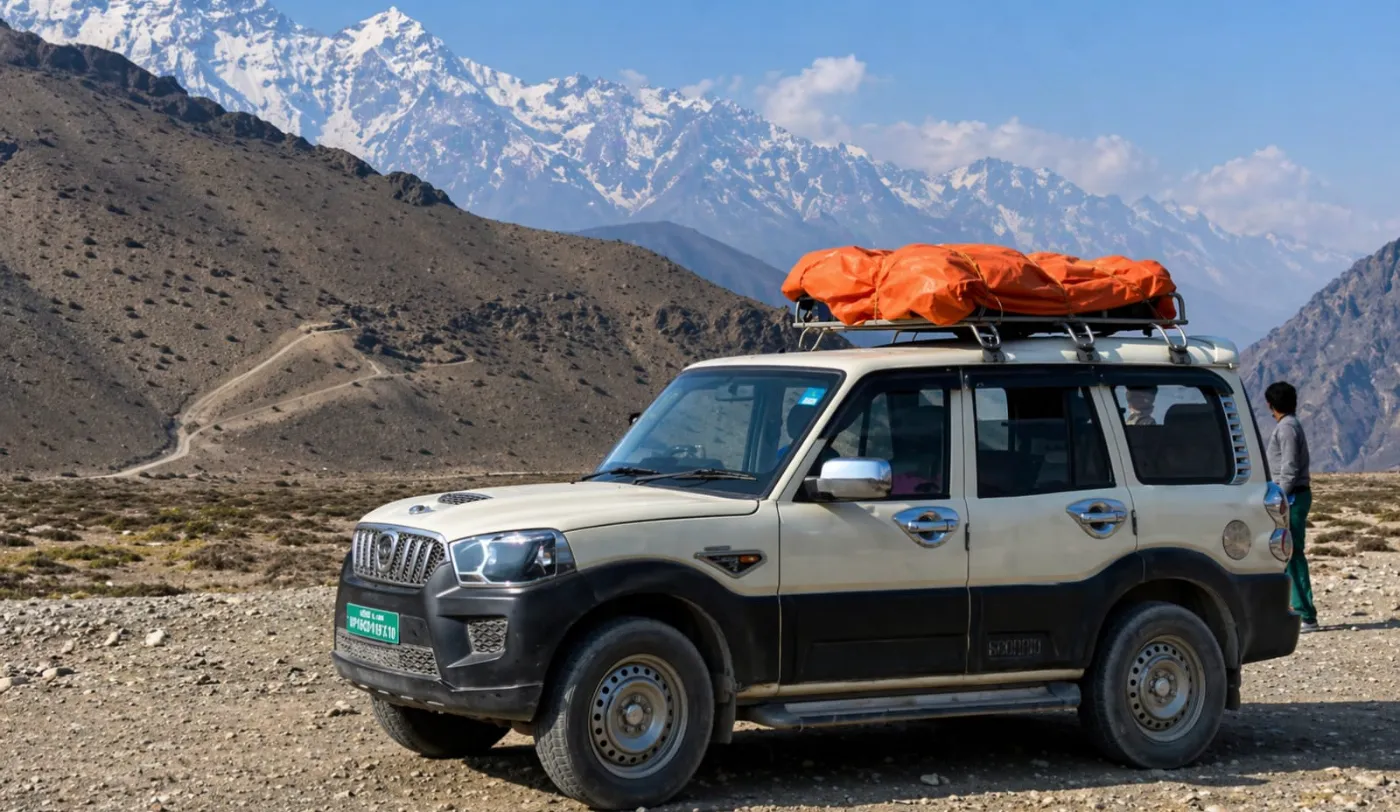
Trekkers descending after their stay at Khopra often loop back down through Swanta and Ghorepani to add the classic Poon Hill sunrise before finally returning to Pokhara via Nayapul or Ulleri, effectively combining both major approaches into a single, longer circuit.

This route’s appeal is twofold: it shares its first two days with the considerably more famous Annapurna Base Camp trek, giving travellers a taste of that classic trail’s villages and forest scenery, and it approaches Khopra from a direction many guidebooks describe as the gentler, more gradual ascent profile, reducing altitude sickness risk compared to some of the steeper, more direct alternatives further west.

Route Three: Pokhara to Swanta Direct, the Fast but Demanding Approach

For trekkers short on time or specifically seeking the most direct vehicle access, some operators run a jeep transfer straight to Swanta village, cutting out the multi-day walk-in via Ghorepani or Ghandruk entirely. From Swanta, the trail to Khopra Danda climbs steeply and almost continuously uphill, typically taking seven to eight hours of strenuous walking to reach the ridge in a single push.

This route is honest about its trade-off: it saves substantial time and several trekking days, but the altitude gain is rapid, and the climb is demanding, which is why most guides and trekking agencies recommend it primarily for fit, experienced trekkers who are confident in their acclimatisation, rather than as a default choice for first-time visitors to the Himalaya. Less experienced trekkers are generally steered toward the gentler Ghandruk-Tadapani-Dobato approach or the classic Ghorepani-Swanta route described above, both of which spread the altitude gain over several more gradual days.

Route Four: Pokhara to Tatopani and Galeshwor, the Mohare Danda and Nangi Village Extension

The fourth and most culturally distinctive approach combines Khopra Danda with the neighbouring Mohare Danda trek and a visit to Nangi village, reached via a jeep transfer from Pokhara toward Beni and onward to Tatopani or Galeshwor on the Kali Gandaki River road. This corridor overlaps with our Kathmandu to Mustang Private Jeep route and the broader Pokhara to Mustang Jeep service in its early stages, since both follow the same Kali Gandaki gorge road out of Pokhara before diverging toward their respective destinations.

Pokhara to Khopra Danda vehicle hire jeep with Himalayan mountain views on the Khopra Danda trekking route in Nepal.

This is the route most associated with the social entrepreneur Mahabir Pun, a Magsaysay Award-winning Pun Magar native of Nangi village, who returned home after his studies abroad and built one of rural Nepal’s most remarkable community development projects: a network of wireless internet antennas strung between mountain villages, a model secondary school, telemedicine links, and a paper-manufacturing cottage industry using traditional lokta bark. By most accounts, it was the first remote village in Nepal to connect to wireless internet, and visiting it remains a genuinely unusual experience even by the standards of Nepal’s trekking circuits: a high-mountain Magar settlement with working computer labs and a deliberate, community-owned approach to tourism revenue.

Trekkers on this route walk from Galeshwor or a similar trailhead to Banskharka, then climb to Nangi, continue to Mohare Danda for a sunrise viewpoint that rivals Poon Hill in clarity but with almost none of the crowds, and then proceed onward through Swanta and Dhan Kharka (also called Chistibang or Dhankharka) to reach Khopra Danda. This route typically adds two to three extra trekking days compared to the direct Ghorepani approach, but rewards the additional time with a genuinely community-based trekking experience: most accommodation along the way consists of community-run lodges and homestays whose profits fund local schools, rather than privately owned teahouses.
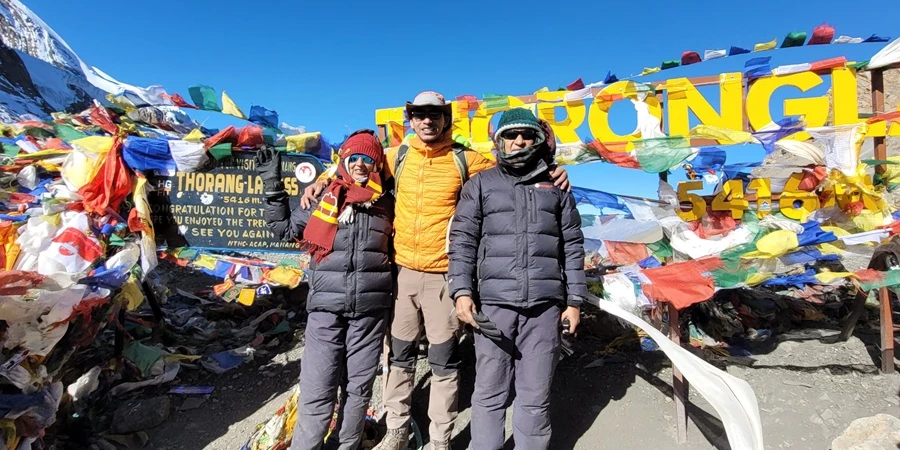
Comparing the Four Approaches: Which Vehicle Hire Route Fits Your Trip

Choosing between these four access routes really comes down to how much time you have, how experienced you are as a trekker, and what kind of experience you are seeking. The classic Nayapul-Ghorepani-Swanta route, our most frequently booked option, suits trekkers who want reliable infrastructure and the option to combine Khopra with a Poon Hill sunrise in a single trip.

The Ghandruk-Tadapani-Dobato route suits trekkers who want a gentler altitude profile and a taste of the Annapurna Base Camp trail’s scenery without committing to the full duration and cost. The direct Swanta approach suits experienced, time-constrained trekkers comfortable with a single demanding climbing day.

The Tatopani-Galeshwor-Nangi-Mohare Danda route suits travellers most interested in cultural immersion and community tourism, who are willing to add extra days for a meaningfully different kind of trekking experience.

Pokhara

Whichever route you choose, the vehicle hire portion of the trip should be booked as part of a single, coordinated plan rather than as an afterthought, since trailhead drop-off and pickup points differ across all four routes, and a driver unfamiliar with the specific trailhead you need can waste hours on the wrong access road. Our team at Nepal Vehicle Hiring regularly runs all four corridors and can advise on which trailhead best matches your chosen itinerary before you book.

Road Conditions on the Way to Khopra Danda’s Trailheads

The roads serving all four Khopra Danda access points share a common character: paved and comfortable for the first stretch out of Pokhara, then progressively rougher as they climb into the hills. The Pokhara-Nayapul-Birethanti corridor is generally in reasonable condition and motorable for most of the year.

However, the short stretch between Birethanti and Tikhedhunga has a history of landslide disruption, particularly during and immediately after the monsoon. Travellers should be prepared for a short detour on foot around a blocked section, rather than a continuous ride to the trailhead.

Pokhara to Khopra Danda vehicle hire jeep with Himalayan mountain views on the Khopra Danda trekking route in Nepal.
Private Jeep Hire from Pokhara to Khopra Danda Trek Starting Point, Nepal.

The Pokhara-Kimche-Ghandruk road is steeper and more winding, gaining altitude quickly. Hence, a 4WD jeep is the right vehicle for this stretch rather than a standard car, both for traction on the steeper grades and for ground clearance over rougher sections.

The Pokhara-Beni-Tatopani-Galeshwor corridor follows the Kali Gandaki River road, which is wider and more heavily used as the main artery toward Jomsom and Mustang. However, it still includes unpaved sections and occasional construction diversions typical of Nepal’s hill highways.

Across all of these routes, the same general principle applies that holds throughout Nepal’s trekking transport network: an experienced local driver in a properly maintained 4WD jeep is the appropriate choice the moment your route leaves the main paved highway, and a standard sedan, however comfortable on the flat Pokhara-Kathmandu corridor, is simply the wrong tool for any of the Khopra Danda access roads.

Permits Required for the Khopra Danda Trek

Khopra Danda sits within the Annapurna Conservation Area, and trekkers need two permits regardless of which of the four access routes they choose. The first is the Annapurna Conservation Area Permit (ACAP), which is mandatory and checked at trail checkpoints, including Birethanti and Ghorepani. The second is the Trekkers’ Information Management System (TIMS) card, obtainable from Nepal Tourism Board offices in either Kathmandu or Pokhara.

Some itineraries that combine Khopra Danda with the Mohare Danda and Nangi village extension also note a requirement for a Machhapuchhre Rural Municipality permit, reflecting that the trail passes through that municipality’s jurisdiction on its way toward the Khopra-Dhaulagiri side of the route. Because permit requirements and checkpoint locations can shift as municipal boundaries and conservation area management evolve, confirm current requirements with your driver or a registered trekking agency in Pokhara immediately before departure, rather than relying solely on older published itineraries.

Unlike the restricted areas covered in our broader guide to unlimited tour and trek vehicle hire across Nepal, Khopra Danda does not require a special restricted-area permit or a minimum group size, which makes it considerably simpler to plan and book on relatively short notice than destinations such as Upper Mustang or Manaslu.

Pokhara to Khopra Danda vehicle hire jeep with Himalayan mountain views on the Khopra Danda trekking route in Nepal.
Private Jeep Hire from Pokhara to Khopra Danda Trek Starting Point, Nepal.

Khayer Lake: The Optional High-Altitude Extension

Most itineraries that reach Khopra Danda offer an optional side trip to Khayer Lake, a sacred alpine lake sitting at roughly 4,600 meters, considerably higher than Khopra Danda itself. The round trip typically takes six to nine hours of walking from Khopra and back, crossing open, exposed terrain above the tree line with no teahouses along the way, meaning trekkers need to carry their own food, water, and weather protection for the day.

Khayer Lake holds genuine religious significance for Hindu pilgrims, particularly during the Janai Purnima festival, when local devotees from surrounding villages make a pilgrimage to worship there. For trekkers, the extension offers an even more direct, closer vantage point on Annapurna South and the surrounding peaks than Khopra Danda itself provides.

However, the altitude gain and exposed terrain mean it should be attempted only by trekkers who are well acclimatised and in good physical condition, and only with stable weather, since cloud and wind exposure at this elevation can change quickly.

Best Season for the Khopra Danda Trek and Vehicle Hire

Khopra Danda follows the same seasonal pattern as most of the Annapurna region: spring, from March through May, and autumn, from September through November, offer the clearest mountain views and the most stable road conditions for the jeep transfer from Pokhara. Spring also brings rhododendron forests in full bloom along much of the trail, particularly on the Ghorepani-Swanta and Ghandruk-Tadapani sections, turning the forest understory shades of red, pink, and white.

kathmandu to salleri jeep
Private Jeep Hire from Pokhara to Khopra Danda Trek Starting Point, Nepal.

Because Khopra Danda’s maximum elevation of 3,660 meters is considerably lower than that of high-altitude treks like the Annapurna Circuit or Everest Base Camp, it remains a viable winter option for trekkers comfortable with cold temperatures. However, snow can make some sections more demanding and occasionally close the Khayer Lake extension entirely.

Monsoon season, from June through September, brings the greatest road risk on the access routes described above, particularly the Birethanti-Tikhedhunga stretch, and is generally the least recommended period due to trail conditions and vehicle reliability. However, the rhododendron and general forest scenery remain lush and green for travellers willing to accept the trade-off.

A Sample Pokhara-Based Khopra Danda Itinerary Using Private Vehicle Hire

For travellers planning a complete, vehicle-supported Khopra Danda trip based out of Pokhara, a typical structure using the classic Ghorepani-Swanta approach looks like this, with all road transfers handled by a single private jeep booking:

  • Day 1 — Arrival in Pokhara, with time to explore the lakeside area around Phewa Lake before an early start the next morning.
  • Day 2 — Jeep transfer from Pokhara to Nayapul, then trek to Tikhedhunga and on to Ulleri or Banthanti, depending on pace and road conditions.
  • Day 3 — Trek up the stone staircase to Ghorepani, arriving in time to rest before an optional sunset hike to Poon Hill.
  • Day 4 — Optional sunrise hike to Poon Hill, then descend through Chitre and Phalate into Swanta village.
  • Day 5 — Trek from Swanta to Dhan Kharka (Chistibang), through oak and rhododendron forest with steady Dhaulagiri views.
  • Day 6 — Final ascent to Khopra Danda itself, arriving at the ridge for sunset views across Annapurna South and Dhaulagiri.
  • Day 7 — Optional full-day excursion to Khayer Lake, returning to Khopra Danda for a second night.
  • Day 8 — Descend toward Dobato or back through Swanta and Ghorepani, depending on the chosen loop direction.
  • Day 9 — Final descent to Ghandruk or Nayapul, with jeep pickup from Ghandruk to Pokhara or Nayapul to Pokhara, then return to Pokhara for a well-earned rest.

You can shorten this template by skipping the Khayer Lake side trip, lengthen it by adding the Mohare Danda and Nangi village extension, or restructure it entirely around the Ghandruk-Tadapani-Dobato approach. Because the same jeep and driver can be booked for the full Pokhara-based portion of the trip, including any additional excursions such as a Sarangkot sunrise visit before or after the trek, the logistics stay simple regardless of which specific route you choose.

Combining Khopra Danda with a Wider Annapurna and Pokhara Itinerary

Because Khopra Danda sits within easy reach of several other popular short treks in the Annapurna foothills, many travellers extend their Pokhara-based trip to include a second route on the same vehicle booking. Our Pokhara to Ghorepani Poon Hill Jeep Hire and Pokhara to Jhinu Danda Jeep Rental services cover two of the most popular complementary short treks in the same general area.

At the same time, the Pokhara to Dhampus Jeep and the Pokhara to Kande Jeep serve travellers seeking an easier, shorter day-long or two-day add-on hike before or after the main Khopra trek.

Pokhara to Khopra Danda vehicle hire jeep with Himalayan mountain views on the Khopra Danda trekking route in Nepal.
Private Jeep Hire from Pokhara to Khopra Danda Trek Starting Point, Nepal.

For travellers who want to extend further west toward the Kali Gandaki valley and Mustang after completing the Khopra Danda trek, particularly those who approached via the Tatopani-Galeshwor route, our Pokhara to Mustang Jeep and Upper Mustang 4WD Jeep services can extend the same general travel corridor into a considerably longer, trans-Himalayan trip, since the Beni-Tatopani road that serves Khopra’s western approach continues onward toward Jomsom and the Mustang plateau. Travellers based in Kathmandu, rather than starting directly from Pokhara, can combine this entire itinerary with a highway transfer via our Kathmandu-to-Pokhara Bus service, or arrange a single continuous private hire covering both the Kathmandu-to-Pokhara leg and the Khopra Danda jeep transfers through our broader Nepal Tour Package.

Why an Experienced Driver Matters Specifically on the Khopra Danda Corridor

Khopra Danda’s multiple access routes are part of what makes this trek special, but they also make local driving knowledge unusually important compared to single-trailhead treks. A driver who only knows the standard Nayapul route may be unfamiliar with the Ghandruk-Kimche road, and a driver booked generically for hill routes may not know the current state of the Birethanti-Tikhedhunga landslide-prone section in a given week.

Because Khopra Danda is still, relatively speaking, a newer and less heavily trafficked route than Poon Hill or Annapurna Base Camp, accurate, up-to-date route knowledge varies more among drivers and operators than it does in Nepal’s busiest trekking corridors.

This is also a region where trailhead drop-off and pickup points genuinely differ by itinerary: a trekker doing the Ghorepani-Swanta loop needs pickup at a different point than one finishing via Ghandruk, and a driver who shows up at the wrong access road, or who is unfamiliar with the village layout at Swanta or Kimche, can cost a tired trekker hours at the end of a long trekking day. We brief our drivers on the specific trailhead and pickup point for each Khopra Danda booking precisely to avoid this kind of mismatch.

There is also a practical safety dimension worth noting. Several sections of the Khopra Danda access roads, particularly toward Ghandruk and Kimche, involve narrow single-lane stretches with limited passing room and significant drop-offs on one side.

Drivers who run these roads regularly develop a feel for exactly where oncoming traffic is likely to appear, which corners require a horn signal before entering, and how to judge whether a given surface is safe to cross after rain. This is precisely the kind of accumulated, route-specific judgment that cannot be replicated by a generically experienced driver encountering the road for the first time, and it is one of the strongest practical arguments for booking with an operator who specifically knows the Khopra Danda corridor rather than simply booking the cheapest available jeep in Pokhara.

Pokhara to Khopra Danda vehicle hire jeep with Himalayan mountain views on the Khopra Danda trekking route in Nepal.

What to Expect From Teahouses and Lodges Along the Different Routes

Accommodation standards vary meaningfully across the four access routes, and you should factor this into your planning alongside your vehicle-hire decision. The classic Nayapul-Ghorepani-Swanta route benefits from Ghorepani’s status as a major hub on the Poon Hill circuit, meaning trekkers will find a wide range of well-established teahouses with attached bathrooms, reliable hot showers, and varied menus, at least for the portion of the trek that overlaps with the Poon Hill trail.

Once the route diverges toward Swanta and onward to Khopra itself, accommodation becomes simpler: basic teahouses and community lodges with twin-sharing rooms, shared bathrooms, and more limited menus, though still generally clean and welcoming.

The Ghandruk-Tadapani-Dobato route follows a similar pattern, with well-developed facilities at Ghandruk and Tadapani given their shared use with the Annapurna Base Camp trail, before transitioning to more basic lodges at Bayeli Kharka, Dobato, and Khopra Danda itself. The Tatopani-Galeshwor-Nangi-Mohare Danda route stands apart in character: most accommodation here consists of genuinely community-run lodges and homestays, often in private Magar households, with the explicit goal of funnelling tourism revenue directly into local schools and community projects rather than private commercial operators.

Trekkers on this route should expect a simpler, more rustic standard of accommodation throughout, in exchange for what many describe as a considerably more authentic, person-to-person cultural experience.

Across all routes, lodges typically offer electricity for charging devices, Wi-Fi, and hot showers for a small additional charge, and trekkers should carry enough cash, since card payment is rarely available once the trail leaves Pokhara. A reliable driver who regularly runs the route can often advise on which lodges along your chosen path best suit your standards and budget, based on recent client feedback rather than outdated guidebook listings.

Travellers weighing Khopra Danda against the more famous Ghorepani Poon Hill trek, or against the considerably longer Annapurna Base Camp trek, often want a clear sense of how the experiences actually differ before committing their limited vacation days to one or the other. The comparison is worth setting out plainly, since all three routes share overlapping trailheads and, in places, literally the same trail.

pokhara

Poon Hill is shorter, more heavily trafficked, and built around a single dramatic sunrise moment rather than a sustained multi-day ridge-walking experience. Most Poon Hill itineraries can be completed in four to five days, including the Pokhara transfers, making it a good choice for travellers with very limited time who still want a genuine taste of Himalayan trekking.

Its popularity, however, means crowded teahouses and a packed viewpoint at sunrise during peak season, with headlamp queues forming on the final stone staircase before dawn.
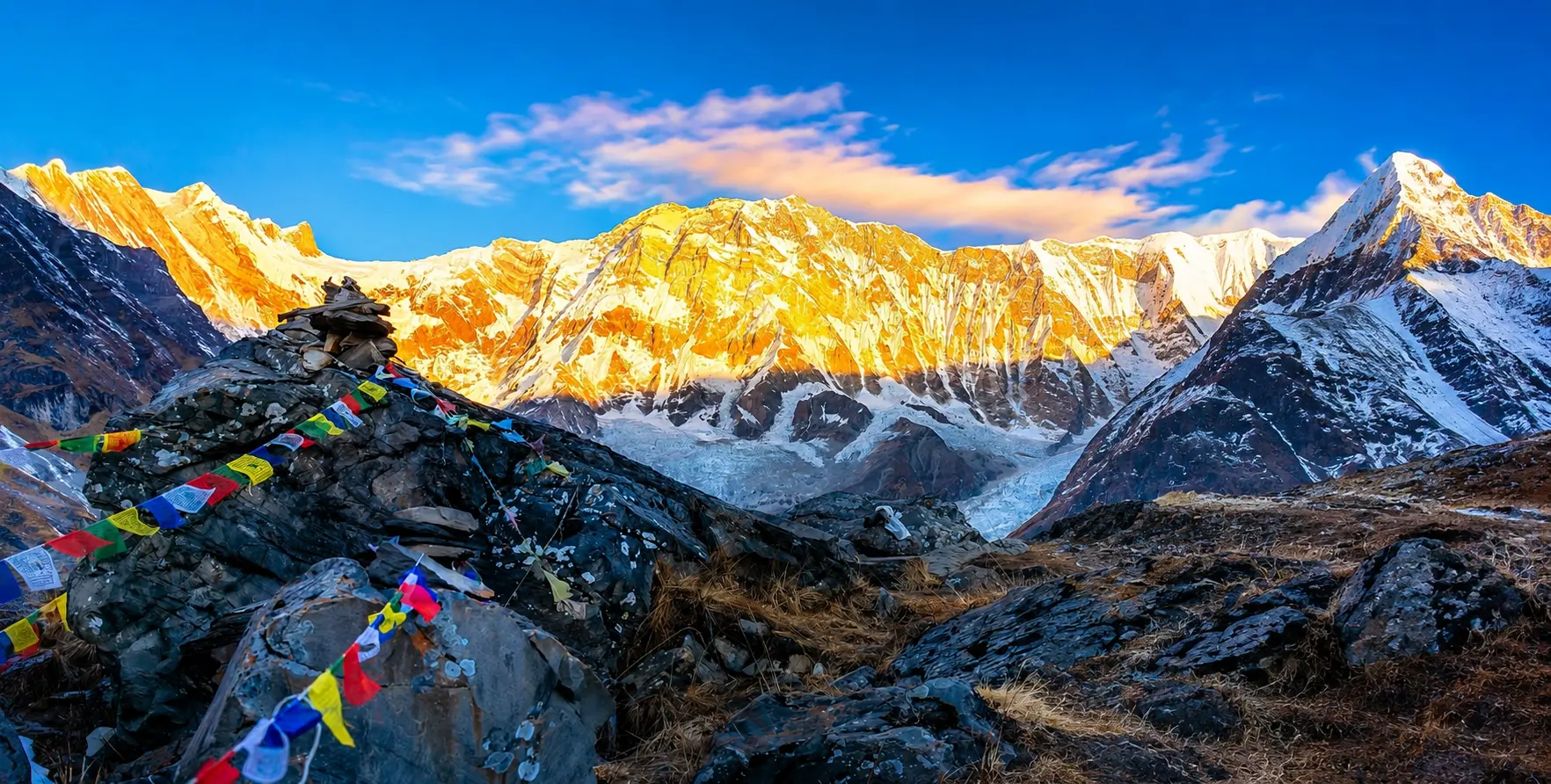
Annapurna Base Camp is considerably longer, typically seven to twelve days, and takes trekkers directly into the Annapurna Sanctuary itself, surrounded by 7,000- and 8,000-meter peaks at the trek’s high point. It is widely regarded as one of the world’s great short treks.

Still, its fame also makes it one of the region’s busier trails during peak season, and teahouse accommodation sometimes needs to be secured in advance during the most popular weeks of October and November.

Khopra Danda sits between these two in duration, typically six to nine days depending on the chosen route and whether the Khayer Lake extension is included, and offers something neither route quite matches: genuine solitude on a trail with views that hold their own against both. Where Poon Hill gives you one outstanding sunrise, and Annapurna Base Camp gives you several days deep inside a mountain amphitheatre, Khopra Danda gives you a sustained, several-day ridge walk with continuous, close-up views of Dhaulagiri and Annapurna South, on trails where it remains entirely possible to walk for an hour without passing another trekking group.

For travellers who have already done Poon Hill or Annapurna Base Camp on a previous trip to Nepal and want a worthwhile, less commercialised alternative within the same region, Khopra Danda is consistently the route recommended by trekking operators and repeat visitors alike. Our article on why Dharapani is the most popular starting point of the Annapurna Circuit covers a similar comparison for trekkers weighing entry points on the longer Annapurna Circuit, including those considering an even longer Annapurna-region itinerary.
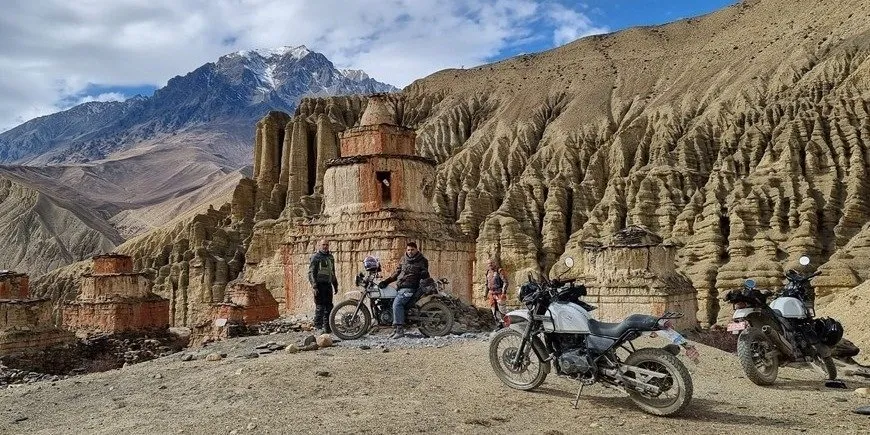
Preparing for the Trip: Fitness, Packing, and Altitude Considerations

Khopra Danda is generally classified as a moderate trek, suitable for trekkers with a reasonable baseline fitness level rather than requiring prior high-altitude mountaineering experience. That said, several of the access routes involve sustained, multi-hour uphill walks, particularly the climb from Nayapul to Ghorepani via the Ulleri stone staircase and the direct Swanta-to-Khopra ascent for trekkers choosing that faster but steeper route.

Building general cardiovascular fitness in the weeks before departure through regular walking, hiking, or stair-climbing training meaningfully improves comfort on these longer climbing days.

Because Khopra Danda’s maximum elevation of 3,660 meters, or 4,600 meters if the Khayer Lake extension is included, sits within the altitude range where mild altitude symptoms can begin to appear in some trekkers, it remains sensible to follow standard acclimatisation practices: ascend gradually, stay well hydrated, avoid alcohol during the trekking days, and pay attention to early symptoms such as headache or unusual fatigue rather than pushing through them. The itineraries along the Ghorepani-Swanta or Ghandruk-Tadapani-Dobato routes are deliberately paced to allow gradual acclimatisation, which is another acclimatisation strategy; acclimatisation experts recommend these over the faster, more abrupt direct Swanta ascent for first-time high-altitude trekkers.

Packing for Khopra Danda should account for a wider temperature range than the relatively gentle elevations might suggest, since nights at Khopra Danda itself and especially during the Khayer Lake extension can be genuinely cold even outside of winter. A warm, layered system, including a fleece or down mid-layer, a windproof and waterproof outer shell, sturdy, broken-in hiking boots, and a good sleeping bag rated for below-freezing temperatures, will cover most conditions.

A headlamp is essential for early-morning hikes on this route and for basic evening use at teahouses, since electricity can be limited or unavailable in some of the more remote community lodges along the Tatopani-Galeshwor-Nangi extension. Trekking poles are genuinely useful given the steep, sometimes uneven descents on several sections of trail, particularly the steep downhill stretch between Ghorepani and Swanta that many trekkers describe as harder on the knees than the climbs themselves.

Carry enough cash for the entire trekking portion of the trip, since card payment facilities are essentially nonexistent once the trail leaves Pokhara, and even basic services like hot showers, device charging, and Wi-Fi typically carry small additional charges at each lodge. A basic first aid kit, water purification tablets or a UV purifier, and a copy of your travel insurance details, ideally one that explicitly covers high-altitude trekking and helicopter evacuation, round out the essential preparation for this route.

Pokhara to Khopra Danda vehicle hire jeep with Himalayan mountain views on the Khopra Danda trekking route in Nepal.

Pricing Considerations for Pokhara to Khopra Danda Vehicle Hire

Vehicle hire costs for the Khopra Danda corridor follow the same general logic across Nepal’s trekking transport network. Still, a few route-specific factors are worth understanding before requesting a quote. The Pokhara-to-Nayapul leg, being short and largely on a reasonable road surface, is typically the most economical of the four access options per trip.

The Pokhara-to-Ghandruk route costs somewhat more because of the longer driving time and the steeper, more demanding hill road. The Pokhara-to-Tatopani or Galeshwor leg, the longest of the four in distance, generally has the highest one-way fare.

However, this is often offset because travellers choosing this route are typically planning a longer overall trip with more trekking days to amortise transport costs.

Group size affects vehicle choice and therefore the cost. A solo trekker or couple can comfortably use a standard jeep, while a family group or small trekking party of four to six is often better served by booking a slightly larger 4WD vehicle or a Hiace for the Pokhara-to-trailhead leg, particularly if the group is also carrying significant gear or duffel bags that a porter will later carry on the trail itself.

Larger groups of trekkers, such as those travelling with an organised trekking agency, sometimes organise two jeeps to keep per-vehicle passenger counts comfortable on rougher road sections, rather than overloading a single vehicle.

As with the broader Nepal vehicle hire market covered in our companion guide on the ultimate Nepal vehicle rental guide, it is worth confirming exactly what is included in any quoted price for a Khopra Danda transfer: whether fuel and standard driver allowance are bundled into the headline figure, whether toll charges along the route are included or separate, and whether the quote covers only the outbound trailhead drop or the full round trip including a return pickup at a different exit point if your itinerary requires one. A clear, itemised breakdown at the booking stage prevents unexpected charges once you are already on the trail and you can’t easily renegotiate terms
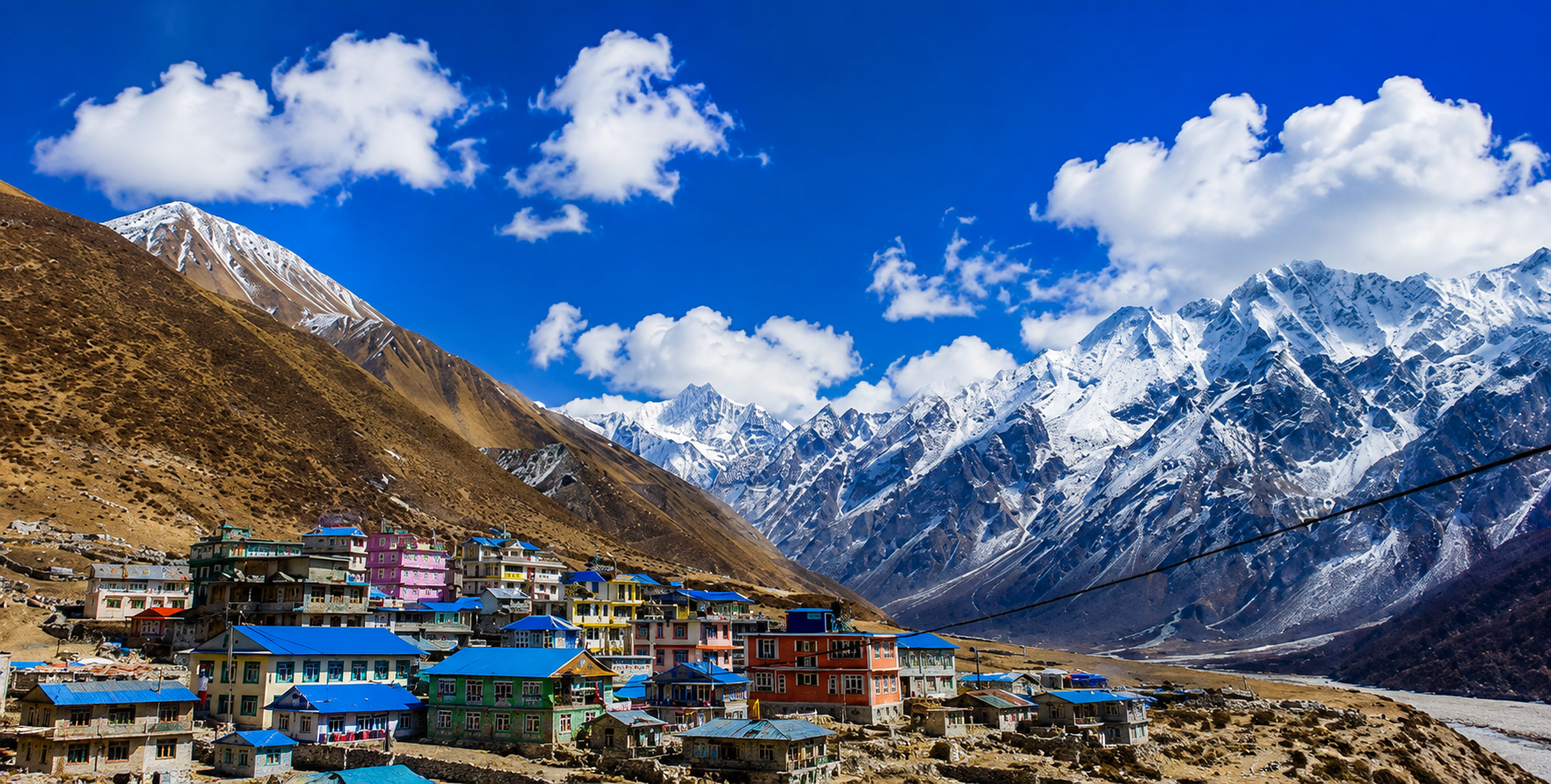
Traveling to Khopra Danda as a Family, Couple, or Solo Trekker

The four access routes to Khopra Danda aren’t equally suited to every kind of traveller, and thinking honestly about your group composition before booking transport will save considerable frustration later. Families travelling with children or trekkers with limited prior hiking experience are generally best served by the classic Nayapul-Ghorepani-Swanta route, given its well-established infrastructure, gentler overall gradient when paced across enough days, and the option to turn back or shorten the itinerary relatively easily if needed, since this route shares its early stages with the heavily trafficked Poon Hill trail, where help and basic services are never far away.

Pokhara to Khopra Danda vehicle hire jeep with Himalayan mountain views on the Khopra Danda trekking route in Nepal.

Couples and small groups of friends seeking a more adventurous yet still moderate experience often gravitate toward the Ghandruk-Tadapani-Dobato route, which offers a slightly wilder experience while still following a well-marked, well-used trail for most of its length. Solo trekkers with strong fitness and prior high-altitude experience are the most natural fit for the direct Swanta approach, where the demanding single-day ascent rewards confident, self-sufficient hikers without unnecessarily exposing less experienced trekkers to its steeper risk profile.

Trekkers specifically motivated by cultural immersion, community tourism, and a genuine off-the-beaten-path experience, including those with some flexibility in their schedule, are the ideal audience for the Tatopani-Galeshwor-Nangi-Mohare Danda extension. This group tends to value the extra days and the homestay-style accommodation as a feature rather than a drawback, and frequently describes this route as the most memorable and meaningful portion of their entire Nepal trip, precisely because it offers direct, sustained contact with rural Magar community life in a way that none of the more heavily trafficked Annapurna trails can replicate.

Whichever profile best describes your trip, clearly communicating your group composition, fitness level, and priorities when booking your vehicle hire allows your transport operator to recommend the access route and specific pickup and drop-off points that genuinely fit your trip, rather than defaulting to the most commonly booked option out of habit.

Connectivity, Weather Awareness, and Staying in Touch on the Trail

Mobile network coverage along the Khopra Danda corridor is inconsistent and should not be relied upon as a primary safety net. Pokhara and the lower trailhead villages, such as Nayapul, Ghandruk, and Tatopani, generally have reasonable coverage.

Still, signal becomes patchy or disappears entirely on higher sections of the trail, particularly around Dobato, Khopra Danda itself, and especially during the Khayer Lake extension. Some teahouses offer Wi-Fi for a small fee, which can be more reliable than mobile data at altitude, though you still shouldn’t assume it’s continuously available.

This connectivity gap is another reason why an experienced local driver and a properly briefed trekking guide matter more on this route than they might on a more developed, heavily monitored trail. Weather at these elevations can shift quickly, particularly cloud buildup in the afternoon that can reduce visibility on exposed ridge sections, and a guide or driver with local knowledge of typical daily weather patterns, such as the tendency for clearer mornings and cloudier afternoons common across much of the Annapurna region, helps trekkers plan their most weather-dependent activities, such as the Poon Hill or Mohare Danda sunrise hikes, for the times of day when conditions are most likely to cooperate.

Before departing Pokhara, inform your accommodation or a trusted contact of your planned route and expected return date, given the limited connectivity once on the trail. Reputable trekking agencies and vehicle hire operators typically track client itineraries for this reason, providing an additional safety net beyond what a trekker’s mobile phone can offer in this part of the Annapurna region.

Pokhara to Khopra Danda vehicle hire jeep with Himalayan mountain views on the Khopra Danda trekking route in Nepal.

Frequently Asked Questions About Pokhara to Khopra Danda Vehicle Hire

How long does the jeep ride from Pokhara to the Khopra Danda trailhead take?

This depends entirely on which access route you choose. The Pokhara-to-Nayapul leg takes roughly an hour. The Pokhara-to-Ghandruk drive typically takes three to four hours, given the steeper hill road.

The Pokhara-to-Tatopani or Galeshwor leg, following the Kali Gandaki River road, generally takes about 5 hours. A direct transfer to Swanta, where road conditions allow, can take longer still, given the more remote, less-maintained final stretch.

Can I book a single vehicle for the entire Khopra Danda round trip, including both the outbound trailhead drop and the return pickup at a different point?

Yes, and this is the most efficient way to book the trip if your itinerary involves entering via one trailhead and exiting via another, such as driving into Nayapul and trekking out through Ghandruk. A single operator managing both legs of the journey, with the driver and vehicle pre-briefed on the drop-off and eventual pickup point and date, removes the need to coordinate two separate bookings or risk miscommunication about where and when to meet at the end of the trek.
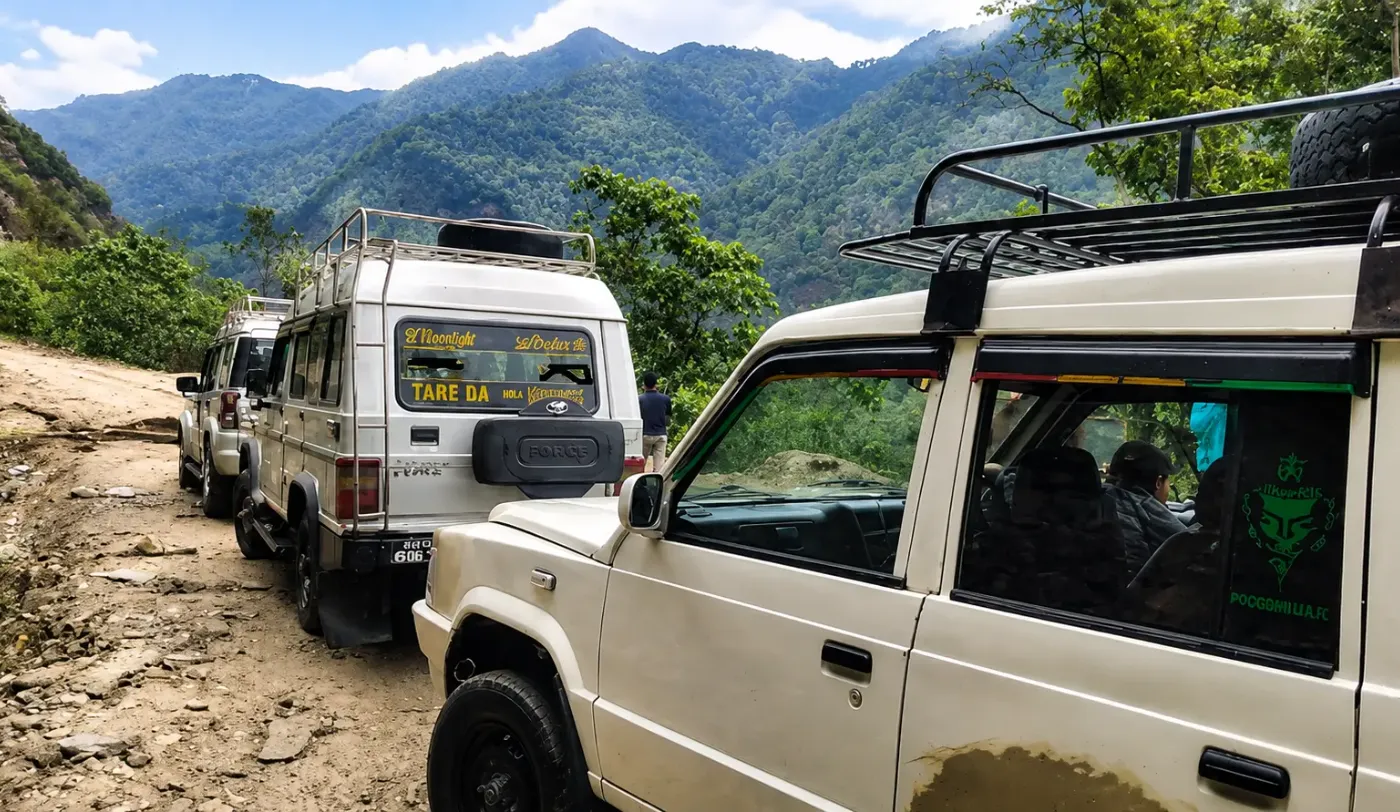
Is a 4WD jeep strictly necessary, or can I use a standard car for any portion of this trip?

A standard car is perfectly suitable for the flat, paved roads within Pokhara itself. Still, each of the four access routes described in this guide eventually leaves the pavement and climbs into hilly or mountainous terrain, where a 4WD jeep becomes necessary rather than optional. Attempting any of these routes in a standard sedan risks both vehicle damage and, more importantly, becoming stuck or stranded on a steep or rough section.
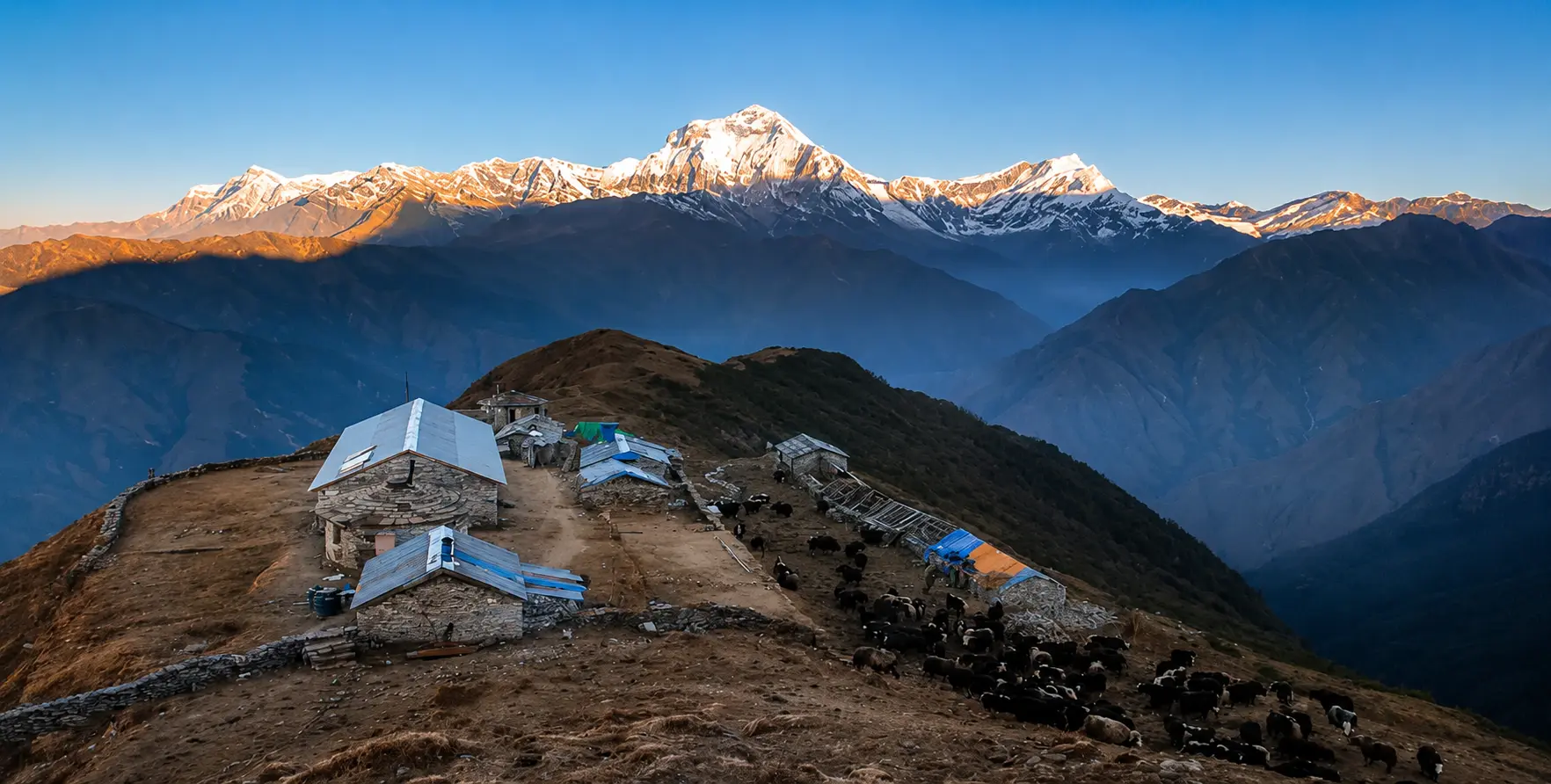
Do I need a guide in addition to a driver for the Khopra Danda trek?

While Khopra Danda does not fall under Nepal’s restricted area rules that mandate a licensed guide, current trekking regulations in much of Nepal increasingly require guides for independent trekkers on many routes. A guide provides real safety and navigation value on routes with multiple possible paths, such as the Khopra Danda route.
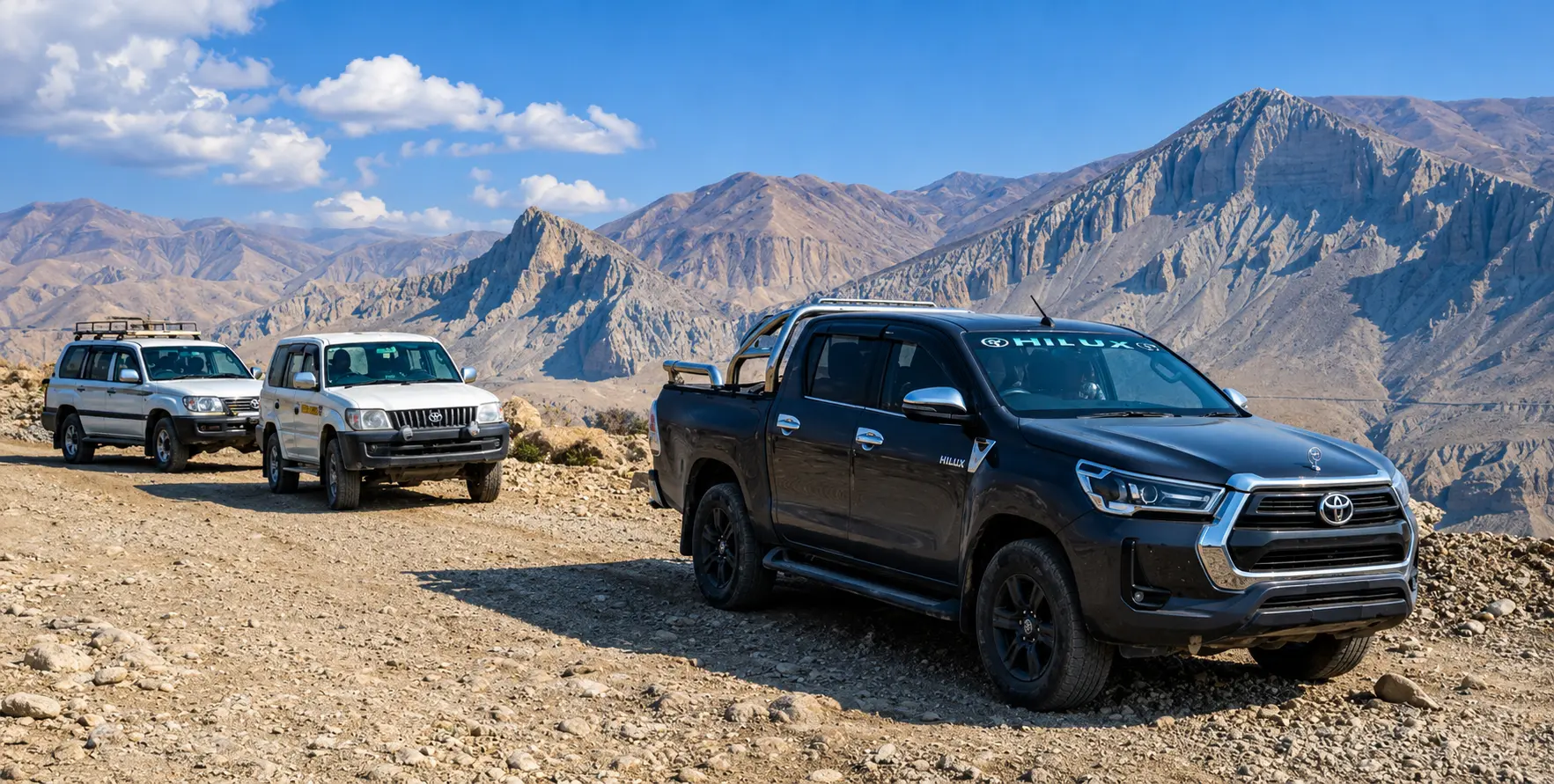
Your driver handles the road transport portion of the trip; a separate trekking guide, arranged through a registered trekking agency in Pokhara, handles the on-trail portion once you leave the vehicle.

What is the best route to choose if I only have five to six days available in total?

For a tight timeline, the direct Swanta approach combined with a Ghorepani descent, or the shorter Ghandruk-Tadapani-Dobato loop, is generally the most time-efficient option, since both can be completed in roughly six to seven days, including the Pokhara-based driving days. The Tatopani-Galeshwor-Nangi-Mohare Danda extension generally requires about 10 to 13 days, given its additional distance and cultural stops. It suits travellers with more flexible schedules.

Why Choose Nepal Vehicle Hiring for Your Khopra Danda Trip

We operate jeep transfers across all four of the corridors described in this guide, from the classic Pokhara to Nayapul route to the Pokhara to Ghandruk approach, and the wider Pokhara to Mustang corridor used for the Tatopani-Galeshwor extension. Our drivers are familiar with the seasonal landslide risk on the Birethanti-Tikhedhunga stretch, the steeper grades on the road to Ghandruk, and the longer stretch along the Kali Gandaki River toward Beni and Tatopani.

If you are planning a Khopra Danda trip and are unsure which of the four access routes best fits your timeline and fitness level, our Plan a Trip service can help you choose and can combine your Khopra Danda transfers with any wider Pokhara or Annapurna-region itinerary you have in mind, whether that means a short add-on to Ghorepani Poon Hill or a longer extension toward Upper Mustang. For a broader sense of how our jeep fleet and route network cover the Annapurna region and beyond, see our companion guide on unlimited tour and trek vehicle hire across every route in Nepal

Book Your Pokhara to Khopra Danda Jeep Today

Whether you are heading to Khopra Danda via Nayapul, Ghandruk, Swanta, or the Mohare Danda and Nangi village extension, Nepal Vehicle Hiring Pvt Ltd can arrange a comfortable, well-maintained 4WD jeep with an experienced local driver who knows this specific corridor, its seasonal road risks, and its multiple trailhead options. From the well-travelled Poon Hill approach to the quieter, community-focused Tatopani and Nangi village route, our fleet and our drivers are equipped to handle whichever path into Khopra Danda fits your time, fitness level, and travel style, and we are glad to walk through the trade-offs with you before you commit to a specific itinerary.

Call or message us on WhatsApp or visit vehiclehiringnepal.com to start planning your Khopra Danda trek transport.

Salleri and Phaplu Pickup and Drop Service All Year Round

4WD Jeep Salleri Phaplu Pickup Drop Service
4WD Jeep

Salleri Phaplu Pickup Drop Service: Complete Year-Round Guide

Ask any experienced Nepal trekker for an alternative to a Lukla flight, and the answer almost invariably begins with Salleri and Phaplu. In the popular imagination, the journey to the Everest region begins at Tribhuvan International Airport’s domestic terminal, with a 30- to 40-minute flight to Tenzing-Hillary Airport in Lukla, followed by the first steps on the well-worn trail northward toward Namche Bazaar and the high Khumbu.

This is how most Everest Base Camp trekkers begin their adventure, and for good reason: the Lukla flight is fast and dramatic, dropping trekkers within a day’s walk of Namche’s bustling trekking hub. But it is also weather-dependent, subject to cancellations that can strand trekkers in Kathmandu or Lukla for days on end, and increasingly expensive compared with an overland vehicle journey to the same general region.

Salleri, the district headquarters of Solukhumbu at an altitude of approximately 2,390 meters above sea level, represents the end of the main motorable road into Nepal’s Everest region from Kathmandu — or more precisely, the point from which the road becomes rough enough that the journey’s character changes fundamentally from highway travel to mountain track adventure. Phaplu, located just 3 to 4 kilometres above Salleri at approximately 2,400 meters, sits even closer to the mountains and is home to the region’s small domestic airport.

This facility serves only a limited number of seasonal flights compared to Lukla. Still, it offers an additional option for those who want to fly one way and drive the other.

Together, Salleri and Phaplu are the road gateway to Nepal’s most famous mountain region, and the jeep service connecting Kathmandu to these two towns is one of Nepal’s most important and consistently underrated transport services.

Nepal Vehicle Hiring Pvt Ltd (vehiclehiringnepal.com) provides pickup and drop-off service between Kathmandu and Salleri-Phaplu year-round, covering both well-travelled routes and lesser-known approaches to destinations such as Bupsa, Thamdanda, and Kharikhola, which extend the road journey deeper into the Solukhumbu District. This comprehensive guide covers every aspect of this service in detail: the route, the road conditions in every season, the accurate costs in both Nepali rupees and US dollars, the departure times and logistics, what passengers should know and prepare before booking, and why a private pickup and drop service from Nepal Vehicle Hiring Pvt Ltd delivers a fundamentally superior experience to the shared alternatives available on this route.

Whether you are a trekker seeking a reliable Lukla flight alternative, a resident of Solukhumbu District travelling to and from Kathmandu for business or family visits, an adventure traveller who wants to experience the overland approach to Everest’s foothills by road, or an expedition team looking for dependable equipment and personnel transport to the start of a Khumbu expedition, this guide provides everything you need to plan and book your Kathmandu to Salleri-Phaplu journey with complete confidence.

For travellers who want to go on a trek and plan to explore Kathmandu, we recommend continuing your journey with our trusted sister company, Trek Nepal Himalayas a. We specialise in organising a wide range of travel experiences across Nepal, from classic trekking adventures to cultural and wildlife tours.

Our top offerings include iconic journeys such as the Everest Base Camp Trek, in-depth Kathmandu sightseeing tours, striking Nagarkot sunrise experiences, exciting Chitwan jungle safaris, and luxury packages. We can also arrange short hikes, heritage tours, mountain flights, and customised travel plans tailored to your schedule and interests.

Understanding Salleri and Phaplu: The Twin Gateways to Solukhumbu

Salleri: District Headquarters and Road Terminus

Salleri sits at the heart of Nepal’s Solukhumbu District, serving as its administrative headquarters and the primary commercial and service hub for a district that encompasses some of the world’s most significant trekking territory. At approximately 2,390 meters above sea level, Salleri sits at a comfortable mid-altitude, with a pleasant climate for much of the year—warmer than the high Khumbu valleys in summer, cooler and cleaner than Kathmandu in the pre-monsoon heat, and well-supplied with sunshine during the dry season.

The town has a government complex including the District Administration Office, the District Court, hospitals, schools, banks and ATMs, and a market area with shops, teahouses, and guesthouses that cater to the steady flow of travellers and residents passing through.

From a transport perspective, Salleri’s significance lies primarily in its role as the point where the BP Highway, Nepal’s principal east-west road connection through the hills, transitions to the rougher network of district roads serving the Solukhumbu District’s more remote areas. The road from Kathmandu reaches Salleri in serviceable condition for all vehicle types, making it the furthest point along this corridor where shared jeeps regularly terminate and private vehicle operators can reliably promise a straightforward journey without specialised off-road expertise.

Beyond Salleri, the roads to Bupsa, Thamdanda, Kharikhola, and the deeper Khumbu valley approach become progressively rougher, narrower, and more demanding of both vehicle capability and driver experience.

Salleri itself is not a trekking destination in the conventional sense — most travellers who stop here are either overnighting before continuing by vehicle toward Bupsa and Thamdanda or before beginning their trek northward from Phaplu toward the Sherpa villages of the lower Khumbu. The town has sufficient accommodation for an overnight stay, with multiple guesthouses offering basic but comfortable rooms at rates of NPR 400 to NPR 800 per night in 2025. Travellers often cite the Hill View Guest House as one of the better options for a comfortable overnight stay in town.

Meals at Salleri’s teahouses and restaurants typically cost NPR 200 to NPR 500 per person for a standard Nepali dal bhat, making it one of the more affordable overnight stops along the Kathmandu-to-Khumbu corridor.

Salleri and Phaplu pickup and drop service available year-round in Solukhumbu, Nepal.
Phaplu-airport

Phaplu: The Airport Village and Trek Starting Point

Phaplu, located 3 to 4 kilometres above Salleri at about 2,400 meters, sits at a slightly higher and arguably more scenic spot, offering better mountain views on clear days and the added significance of hosting Phaplu Airport. This small domestic airstrip serves occasional flights from Kathmandu during the spring and autumn trekking seasons.

Flights to Phaplu, operated by small aircraft because of limited runway capacity, cost about NPR 15,000 per person one way and offer a faster alternative to the overland jeep journey. However, their irregular schedule and weather-dependent reliability mean they cannot be counted on for time-sensitive travel the way the road jeep service can.

For trekkers beginning the Everest region approach from Phaplu rather than from Lukla, the town represents a genuinely rewarding starting point for the walk north toward Namche Bazaar. The route from Phaplu to Namche covers approximately 60 kilometres of trail.

It typically takes three to four days for a reasonably fit trekker carrying a moderate pack to pass through the Sherpa and mixed-culture communities of the Solu region before the landscape shifts toward the higher, more Tibetan-Buddhist atmosphere of the Khumbu proper.

Many experienced Himalayan trekkers choose the Phaplu approach because it offers a more gradual, culturally richer introduction to the Everest region than arriving at Lukla Airport, building landscape immersion slowly over several days of walking rather than arriving instantly in the high-altitude trekking zone.

The walk from Phaplu to Lukla alone takes approximately two days for normal trekkers, making Phaplu an excellent starting point specifically for those who want to experience the lower Khumbu region’s distinctive character — the beautiful rhododendron and oak forests of the Solu region, the traditional Rai and Sherpa mixed communities of Khari Khola and Bupsa, and the gradual altitude gain that provides natural and gentle acclimatisation rather than the altitude shock that many Lukla-arrived trekkers experience when they push too quickly north toward Namche.

The Route: Kathmandu to Salleri-Phaplu in Full Detail

Total Distance and General Route Character

The road distance from Kathmandu to Salleri is approximately 267 to 270 kilometres depending on the specific routing followed, making it one of Nepal’s longer single-day vehicle journeys in terms of road distance while not being the longest in terms of actual travel time — the BP Highway through the Dolakha and Okhaldhunga sections is generally in reasonable condition, allowing speeds adequate to cover the distance in eight to ten hours under normal conditions. The overall route follows a broadly eastward, then northward, arc from Kathmandu, leaving the capital via Bhaktapur and continuing to the BP Highway via Dhulikhel.

This scenic mid-hill road offers some of Nepal’s finest continuous highway scenery across terraced hillsides, river gorges, and periodic Himalayan viewpoints.

The route passes through several significant towns and road junctions that serve as reference points for passengers monitoring their progress and for drivers who may make brief stops for fuel, food, and passenger rest. From Kathmandu, the primary road towns include Banepa, Dhulikhel, Khopasi, Suri, Mude, Namdu, Manthali, Khurkot, Okhaldhunga, and finally, the turn northward into the Solukhumbu District toward Salleri.

Each of these towns marks a slight shift in the road’s character and the surrounding landscape, with the scenery progressively transitioning from the peri-urban character of Kathmandu’s eastern outskirts through the market towns of the Koshi hill corridor to the increasingly remote, mountain-influenced landscape of the Solukhumbu approach.

Departure Points and Pickup Locations in Kathmandu

The standard departure point for shared jeep services to Salleri and Phaplu from Kathmandu is Chabahil Chowk, specifically the junction near the Dhobi Khola Bridge on Gopi Krishna Marg, where shared vehicles depart each morning between 4:30 and 5:00 AM. Some services also pick up passengers at the Om Samaj Hospital area in Chabahil.

The journey’s length dictates the early departure time — a 5:00 AM departure from Chabahil typically reaches Salleri between 3:00 and 5:00 PM under good road conditions, with the exact arrival time depending on road conditions, traffic, and the number of stops for meals and rest.

For travellers staying in Thamel or other central Kathmandu hotel districts, reaching Chabahil between 4:00 and 4:30 AM for the shared jeep departure requires either an overnight arrangement near the departure point or a taxi from the hotel at approximately 3:30 AM — a timing that many travellers find inconvenient enough to justify the additional cost of hotel pickup service. Nepal Vehicle Hiring Pvt Ltd’s private pickup and drop service specifically addresses this inconvenience: our drivers arrive at the client’s hotel in Thamel, Boudha, Lazimpat, or any other Kathmandu hotel district at the agreed time, eliminating the need to navigate to a separate departure point in the pre-dawn hours while carrying trekking luggage.

Shared jeep services also have documented pickup routes throughout Kathmandu, collecting passengers from points along the Gaushala-Koteshwar-Jaributti-Sallaghari Chowk-Bhaktapur-Banepa-Dhulikhel corridor. Passengers living along or staying along this route can often arrange roadside pickups, reducing their overall travel time to the departure area. Nepal Vehicle Hiring Pvt Ltd offers custom pickup arrangements that follow or improve on this route for private clients, collecting from any specified hotel or address within the greater Kathmandu area.

Key Stops Along the Route

The Kathmandu-to-Salleri journey is long enough that several food and rest stops are standard practice for all vehicle services along this corridor. The most common stopping point is Khurkot, about 130 kilometres from Kathmandu, where the road drops to cross the Sun Koshi River before climbing again on the eastern bank.

Here, several roadside restaurants and teahouses offer adequate dal bhat, noodles, and tea for travellers. Most shared jeep services make a 20- to 30-minute stop here for lunch, and private vehicle operators follow a similar pattern, adjusted to their clients’ preferences.

The road between Khurkot and Okhaldhunga, as it climbs into the Solukhumbu approaches, involves some of the most scenic driving of the entire journey — broad river gorges, terraced hillsides at various stages of cultivation depending on season, traditional villages perched on ridges above the road, and increasingly frequent views of the high Himalayan range to the north that announce the proximity of the Everest region even before the formal district boundary is reached. A second brief stop near Okhaldhunga for tea or a comfort break is common on most services before the final push to Salleri itself.

Bp Highway-salleri phaplu road-Salleri and Phaplu pickup and drop service available year-round in Solukhumbu, Nepal.
Bp Highway

Round-the-Year Service: Seasonal Road Conditions and What to Expect

One of the most important questions for anyone considering the Kathmandu to Salleri-Phaplu vehicle journey is how road conditions vary across the year, since the route passes through terrain that is genuinely affected by seasonal variation and where the consequences of poor conditions are felt more directly in journey time, comfort, and occasional disruption risk than on Nepal’s more heavily maintained highway corridors. Nepal Vehicle Hiring Pvt Ltd operates this service year-round, but conditions and recommended preparations differ meaningfully by season, as detailed in this section.

Autumn — September to November (Best Season)

Autumn is the most reliable and comfortable season for the Kathmandu-to-Salleri-Phaplu vehicle journey and, coincidentally, the period when demand for this service is highest due to the simultaneous peak in Everest region trekking traffic. The road is typically in its best annual condition in the weeks immediately following the monsoon’s departure in late September, with any monsoon-season damage repaired or at least stabilised before the main autumn travel surge, and with the dry, clear conditions that characterise Nepal’s autumn making road surfaces firm and predictable throughout the journey.

Autumn travel times are the most consistently achievable, with eight to nine hours for the Kathmandu-to-Salleri leg a reliable estimate rather than an optimistic one.

On clear autumn days, the mountain views are exceptional along the upper sections of the route approaching Okhaldhunga and Salleri, with the high Himalayan range visible on the northern horizon in a clarity that summer haze and monsoon cloud cover completely obscure. For travellers who appreciate the scenic dimension of this journey as part of the overall Solukhumbu experience, autumn morning departures that put the vehicle in the middle sections of the route during the morning, when clear post-dawn light illuminates the surrounding hillsides and mountain viewpoints most vividly,  deliver the finest visual experience of any season.

Spring — March to May (Second Best Season)

Spring offers the second-most reliable window for the Kathmandu-to-Salleri-Phaplu service, with conditions generally good from March through most of May, before the monsoon’s approach introduces uncertainty in the final weeks of the season. The landscape along the route is most vibrant in spring, with rhododendrons flowering in the forested sections of the mid-hills, providing vivid colour contrasts against the terraced farmland and the blue sky above.

Snow remaining on the higher Himalayan peaks, visible from the route’s upper sections, creates a striking visual backdrop for the journey’s final approach to Salleri, and the relatively mild daytime temperatures of the spring months make the long vehicle journey more physically comfortable than the hotter conditions of the pre-monsoon period leading up to May.

One consideration specific to spring travel is the gradual buildup of dust on the route’s unpaved sections as the dry season nears its end. By late April and May, dust can be a significant nuisance on the unpaved sections between Okhaldhunga and Salleri, and travellers should carry a face covering or cloth mask to manage dust exposure.

Nepal Vehicle Hiring Pvt Ltd vehicles keep windows closed on dusty sections as a standard precaution. Still, the dust penetration through door seals on mountain roads means that some exposure is inevitable on the most recently graded sections.

Monsoon — June to August (Possible with Caution)

The monsoon season presents the most challenging conditions for the Kathmandu-to-Salleri-Phaplu vehicle service, but it does not render the journey impossible, as some travellers assume. Nepal Vehicle Hiring Pvt Ltd maintains its pickup and drop service throughout the monsoon season, and most monsoon-season journeys are completed without significant incident. What changes is the uncertainty around journey timing and the possibility of road disruptions due to landslides—the dominant monsoon-season road risk on this corridor.

The BP Highway section of the route is one of Nepal’s more landslide-prone highways during the monsoon, with the Rosi Khola area having experienced significant blockages in multiple recent monsoon seasons. The stretch near Manthali and the sections approaching Okhaldhunga also carry elevated landslide risk during periods of heavy rainfall.

Nepal Vehicle Hiring Pvt Ltd monitors road conditions on this route throughout the monsoon season and will advise clients of any known closures or significant disruptions before confirming departure dates. When a major landslide creates a sustained road closure, our team works to identify the best available alternatives—whether waiting for clearance, routing via alternative tracks where possible, or advising postponement until conditions stabilise.

Travellers who must travel to or from Salleri-Phaplu during the monsoon season are advised to book a private rather than shared vehicle, for the straightforward reason that a private vehicle can adapt more flexibly to road disruptions and can turn back or change plans according to actual conditions encountered, rather than being committed to completing the journey regardless of what the road presents. The cost difference between shared and private hire is clearer in the monsoon season, not as a luxury top-end but as a practical investment in journey adaptability that may save considerable time and stress if road conditions deteriorate during the trip.

Winter — December to February (Reliable with Cold Preparation)

Winter presents fewer road disruption risks than the monsoon on this corridor, since the absence of heavy rainfall removes the primary landslide trigger. Still, it brings cold-weather challenges that passengers must prepare for—particularly during early-morning departures when the vehicle leaves Kathmandu in pre-dawn darkness. The route’s mid-hill sections can be genuinely cold.

The road surface in winter is generally stable and predictable, with occasional frost on shaded sections in the early morning as the main driving challenge; drivers at Nepal Vehicle Hiring Pvt Ltd manage it by reducing speed and exercising appropriate caution in corners.

Winter also brings significantly lower demand than the autumn and spring peaks, so vehicle availability is generally better and booking lead times are shorter. The overall journey is less crowded, both on the road and in the overnight accommodation options at Salleri and Phaplu, for trekkers who break their journey overnight.

For travellers with flexibility in their timing, the January-February window offers the genuine advantage of a quieter, less-competitive journey and the same reliable road conditions as in autumn, without the peak-season vehicle-booking pressure.

Seasonal Summary: Kathmandu to Salleri-Phaplu Service

SeasonMonthsRoad ConditionsDisruption RiskDust/MudRecommended?
AutumnSep–NovExcellent — best of the yearVery LowLowHighly Recommended
SpringMar–MayGood — some dust late seasonLowMediumRecommended
WinterDec–FebGood — occasional frost/coldVery LowLowGood (quieter)
MonsoonJun–AugVariable — landslide riskMedium–HighHighPossible with caution
Salleri and Phaplu pickup and drop service available year-round in Solukhumbu, Nepal.
Salleri, Phaplu, and surrounding areas.

Complete Cost Guide: Salleri-Phaplu Pickup and Drop Service

To understand the full cost of the Kathmandu to Salleri-Phaplu jeep service, distinguish between service categories: shared versus private, standard versus extended destinations, and additional pickup charges that apply to some shared services when you request hotel collection rather than the standard departure from Chabahil Chowk.

Shared Jeep Costs (Per Person)

Shared jeep services to Salleri and Phaplu from Kathmandu operate year-round and depart from Chabahil Chowk between 4:30 and 5:00 AM, once enough passengers have assembled. Multiple current sources confirm a shared jeep cost of NPR 3,000 to NPR 4,000 per person for the Kathmandu-to-Salleri or Phaplu journey, equivalent to approximately USD 22 to USD 30 per person, depending on current exchange rates.

One operator quotes USD 25 per person as their standard shared jeep rate for this route, with an additional USD 5 to USD 7 pickup charge for hotel collection from Thamel or other central Kathmandu hotel districts, bringing the total per-person cost with hotel pickup to about USD 30 to USD 32.

The shared jeep typically accommodates seven to eight passengers, with seats allocated on a first-come, first-served basis at boarding. Travelling with six or seven other passengers on an eight-to-ten-hour journey over winding mountain roads is uncomfortable by any standard.

For travellers with any concern about motion sickness or simple claustrophobia, the shared configuration can make the journey genuinely arduous, regardless of road conditions. This is the most frequently cited practical argument for upgrading to a private vehicle hire, even at the significantly higher cost.

Private Jeep Hire Costs

Private jeep hire from Kathmandu to Salleri varies considerably by vehicle type, operator, and season. Current market research for 2025/2 shows quoted prices ranging from NPR 20,000 to NPR 25,000 from one operator, NPR 25,000 to NPR 30,000 from another, and USD 250 to USD 310 (equivalent to approximately NPR 33,000 to NPR 41,000) from operators targeting international travellers.

The variation reflects both genuine differences in vehicle quality and service standards and price segmentation between domestic-market operators quoting in NPR for local clients and tourism-market operators quoting in USD for international trekkers.

Nepal Vehicle Hiring Pvt Ltd’s private pickup and drop service for the Kathmandu-to-Salleri-Phaplu route is priced transparently at NPR 25,000 to NPR 35,000 for a complete private vehicle rental, depending on vehicle type and the specific month of travel (seasonal surcharges apply during the peak October-November period when demand is highest).

This rate includes hotel pickup from any hotel in Kathmandu, fuel for the entire journey, and an experienced driver familiar with the BP Highway and the Solukhumbu approach road. No additional charges apply beyond this all-inclusive rate, and Nepal Vehicle Hiring Pvt Ltd provides written booking confirmation with the total cost before requesting any payment.

For extended destinations beyond Salleri, private hire costs increase to reflect the additional distance and road difficulty involved. The Kathmandu to Bupsa-Thamdanda extension, which takes the vehicle approximately 63 kilometres beyond Salleri on increasingly rough road to the nearest motorable point to Lukla, adds significantly to both the journey time and cost — multiple operators quote USD 450 to USD 550 for the complete Kathmandu to Bupsa-Thamdanda private jeep, with the Kathmandu to Bupsa journey taking approximately 18 to 20 hours total, including the overnight break at Salleri that most itineraries require for this extended routing.

Complete Cost Reference: Kathmandu to Salleri-Phaplu and Beyond

RouteService TypeCost (NPR)Cost (USD)Journey TimeNotes
Kathmandu → Salleri / PhapluShared jeep (per person)NPR 3,000–4,000$22–$308–10 hrsDeparts 4:30–5:00 AM, Chabahil
Kathmandu → Salleri / PhapluShared + hotel pickupNPR 3,700–4,700$28–$358–10 hrs+$5–7 pickup from Thamel
Kathmandu → Salleri / PhapluPrivate jeep (full vehicle)NPR 25,000–35,000$188–$2638–10 hrsUp to 6–7 pax, hotel pickup
Kathmandu → Salleri / PhapluPrivate Scorpio jeepNPR 32,000–42,000$240–$3158–10 hrsTop-end Tata Sumo / Scorpio
Salleri / Phaplu → KathmanduPrivate return jeepNPR 25,000–35,000$188–$2638–10 hrsPre-arrange return pickup
Kathmandu ↔ Salleri / PhapluPrivate round tripNPR 45,000–60,000$338–$450Multi-dayWaiting charge for multi-day
Kathmandu • Bhaktapur / ThamdandaPrivate jeepNPR 55,000–75,000$413–$56318–20 hrs2-day journey, overnight in Salleri
Kathmandu → KharikholaPrivate jeepNPR 40,000–55,000$300–$41312–15 hrsExtended beyond Salleri
4WD Jeep pickup and drop service in Salleri and Phaplu, Solukhumbu, Nepal.
4WD-luxury-Jeep

Why Use This Route: The Salleri-Phaplu Jeep Service vs Lukla Flight

The comparison between the overland jeep service to Salleri-Phaplu and the Lukla flight is one that every Everest region visitor implicitly or explicitly makes when planning their journey, and understanding the genuine trade-offs involved — rather than defaulting to the conventional assumption that the Lukla flight is always the better option — produces better-informed decisions for different categories of travellers.

Cost Advantage

The cost comparison between the Lukla flight and the overland jeep service strongly favours ground transport for budget-conscious travellers, particularly groups, where the private jeep cost can be split among multiple passengers. The Lukla domestic flight from Kathmandu costs approximately USD 120 to USD 140 per person one-way in 2025, meaning that a private group of four travellers pays approximately USD 480 to USD 560 in one-way Lukla flight costs.

A private jeep from Kathmandu to Salleri costs about USD 188 to USD 263 for the full vehicle, roughly half the flight cost for four passengers, with greater schedule certainty and the bonus of an overland scenic experience.

Reliability Advantage

The Lukla flight’s notorious susceptibility to weather cancellations is perhaps the most frequently cited practical argument for the overland alternative. Lukla’s Tenzing-Hillary Airport operates under strict visual meteorological conditions requirements that even minor cloud cover, precipitation, or high winds can violate, leading to cascading cancellations that have left trekkers waiting in Kathmandu or Lukla for four, five, or even more consecutive days in extreme weather periods.

A multi-day Lukla cancellation period disrupts carefully planned trekking itineraries and can fundamentally compromise a trek built around a specific number of available days. The overland jeep service, while subject to weather-related disruptions during the monsoon season, is far more reliably available year-round, particularly in autumn and spring, when monsoon and winter extremes are absent.

Acclimatisation Advantage

Perhaps the most underappreciated advantage of the Salleri-Phaplu approach over the Lukla flight is the superior acclimatisation profile it provides for trekkers heading to Everest Base Camp or other high-altitude Khumbu destinations. The Lukla flight delivers trekkers to 2,860 meters after a 40-minute flight from Kathmandu at 1,400 meters—an altitude gain achieved with zero physical exertion that can, particularly for trekkers arriving from sea-level destinations after a long international flight, trigger acute mountain sickness symptoms before the first day’s trekking is complete.

The overland approach through Salleri-Phaplu begins at 2,390 meters. It gradually gains altitude over several days of walking, giving the body time to acclimatise effectively and significantly reducing the risk of altitude-related illness in the first days of trekking. Many trekking doctors and experienced Himalayan guides specifically recommend the overland approach for travellers with any concern about altitude sickness or who have experienced altitude-related symptoms on previous high-altitude journeys.

Cultural Immersion Advantage

The overland route from Kathmandu through the BP Highway corridor and into the Solukhumbu foothills reveals a dimension of Nepal’s cultural and physical geography that the Lukla flight completely bypasses. The BP Highway passes through the Dolakha and Okhaldhunga districts.

In these regions, Tamang, Rai, Magar, and mixed-caste Nepali communities have maintained traditional agricultural and pastoral practices in a landscape of extraordinary beauty — terraced rice paddies, traditional village architecture, river gorges, and the gradual transition from subtropical to temperate to subalpine vegetation that accompanies the increase in altitude toward Salleri. For travellers who see Nepal’s rural countryside as integral to the value of a journey to Nepal rather than simply a geographic obstacle between the airport and the mountains, the overland route is not a lesser alternative to flying but a richer one.

Salleri Phaplu Pickup Drop Service available year-round in Solukhumbu, Nepal.
Salleri-bajar

Onward Destinations from Salleri-Phaplu: The Deeper Solukhumbu Network

Salleri and Phaplu serve not just as destinations in their own right but as starting points for an extensive network of onward road and trekking connections into the Solukhumbu District. Understanding this network helps travellers plan their complete journey from Kathmandu to their final destination in the Everest region, whether that is a trail beginning at Phaplu or Salleri, a vehicle extension to Bupsa or Thamdanda, or the connecting walks linking these road termini to the main Everest trekking corridor.

Salleri/Phaplu to Bupsa and Thamdanda

The road beyond Salleri continues through Kharikhola and onward to Bupsa and Thamdanda — the furthest points currently accessible by vehicle toward Lukla and the Khumbu. The 63 kilometres from Salleri to Thamdanda involve significantly rougher road than the BP Highway approach to Salleri, with the track becoming progressively more demanding as it climbs into the Dudh Koshi valley system.

Most operators serving this extended route require a vehicle change at Salleri—the shared jeep or vehicle that brought passengers from Kathmandu is typically not the same vehicle that continues beyond Salleri, as local operators with specific knowledge of the tracks beyond Salleri handle the extension.

From Thamdanda, which sits at approximately 2,900 meters, trekkers can begin walking toward Lukla (approximately 37 kilometres, or two days’ walking for fit trekkers), with a planned road from Thamdanda toward Chaurikharka near Lukla still under construction as of 2025. When complete, this road will create an unprecedented continuous motorable connection from Kathmandu to within a few kilometres of Lukla itself — a development that will fundamentally transform the Kathmandu-to-Khumbu transport landscape, and Nepal Vehicle Hiring Pvt Ltd is monitoring it closely to ensure our service pricing and routing evolve appropriately as infrastructure develops.

Trek Routes Starting from Salleri and Phaplu

For trekkers who begin their Khumbu journey from Salleri or Phaplu rather than Lukla, the trail options are more diverse and less crowded than those from the standard starting point. The most direct route northward from Phaplu to Lukla takes approximately two days of walking, passing through Ringmo and continuing to Khari Khola before the final climb to Lukla’s hillside location.

From Lukla, the standard trail toward Namche Bazaar and the higher Khumbu continues as it does for all EBC trekkers regardless of how they reached Lukla.

An alternative, considerably more scenic approach from Phaplu continues not via Lukla but directly north to Namche Bazaar via Solu Khumbu’s trail network, bypassing Lukla entirely and joining the main EBC trail at Namche after about three to four days of walking from Phaplu. This direct Phaplu-Namche approach is particularly popular with trekkers who want to experience the full cultural and ecological range of the Solu Khumbu region rather than reach the high Khumbu as efficiently as possible, and it offers the best acclimatisation profile of any EBC approach, given its gradual altitude gain.

Practical Guide to Booking and Preparing for the Journey

Advance Booking Requirements

Booking advance requirements for the Kathmandu-to-Salleri-Phaplu service vary significantly by season and service type. During the peak autumn trekking season — October and November — private vehicle demand on this route is at its annual maximum, driven by the simultaneous peak in Everest region trekking traffic and Lukla flight cancellations that can create sudden spikes in demand for ground transport alternatives.

During these peak periods, Nepal Vehicle Hiring Pvt Ltd recommends booking private vehicle hire at least 5 to 7 days in advance. Ideally, 2 weeks in advance, for clients with fixed departure dates who cannot accommodate flexibility in their travel schedule.

During the spring season, booking three to five days in advance is generally sufficient for private hire, while the quieter winter and monsoon seasons typically allow same-week or even same-day booking in most circumstances. Shared jeep services operate daily year-round, but they can fill up quickly during peak season, so booking ahead helps—especially for hotel-pickup variants that guarantee a seat without requiring a pre-dawn journey to Chabahil Chowk.

What to Pack for the Journey

An eight-to-ten-hour vehicle journey through Nepal’s mid-hills demands a specific approach to personal preparation that differs from both a short city transfer and a multi-day trek. The following items consistently improve the comfort and well-being of passengers on the Kathmandu to Salleri-Phaplu route regardless of season:

  • Motion sickness medication — the BP Highway’s winding mountain sections are the most common cause of discomfort on this route, and even travellers who do not typically experience motion sickness in urban driving contexts can find sustained hill driving challenging
  • Light snacks and at least two litres of water — stops for food occur at approximately Khurkot (approximately 4 hours from Kathmandu) and near Okhaldhunga (approximately 7 hours), with limited options in between
  • Warm layers for early morning departure — the 4:30 to 5:00 AM departure time means the first two to three hours of the journey occur in cool pre-dawn and early morning conditions, particularly relevant in autumn and winter.
  • Dust protection (cloth mask or scarf) — the later dry-season sections of the BP Highway near Okhaldhunga can be dusty, and the beyond-Salleri sections for travellers continuing to Bupsa are consistently described as dusty regardless of season
  • Small daypack accessible within the vehicle cabin — main luggage should be packed and stowed, but a small bag with immediate-access items including water, snacks, phone charger, and medication is important for a vehicle journey of this length
  • Sufficient NPR cash for meals at stops and for any overnight accommodation at Salleri if breaking the journey
  • Trekking permits,  if required for onward destination IMS, and any applicable national park permits should be obtained from the Nepal Tourism Board before departure from Kathmandu, not at Salleri.

Accommodation in Salleri and Phaplu

For travellers who plan to break their journey with an overnight stay, Overtravelers or Phaplu before continuing by vehicle or on foot, both towns offer adequate accommodation options at rates considerably lower than those in the trekking hubs of Kathmandu or Pokhara. In Salleri, the trekking hub, House is frequently cited in trekker accounts as one of the more comfortable options, offering rooms at NPR 400 to NPR 800 per night with basic facilities.

Phaplu offers similar options at comparable rates, with a small but adequate selection of teahouse-style guesthouses serving the modest flow of trekkers and locals who stay overnight.

During peak trekking season, particularly in October, accommodation in both Salleri and Phaplu can fill up unexpectedly, given the relatively limited number of rooms in both towns. Travellers with confirmed plans to stay overnight at either location — particularly in October or November when all Everest region accommodation is under pressure — are advised to ask their vehicle hire provider or a local contact to make a basic booking in advance, since the limited phone connectivity along sections of the approach route can make last-minute arrangements difficult once the journey is already underway.

Nepal Vehicle Hiring Pvt Ltd: Why Our Pickup and Drop Service Stands Apart

The Kathmandu-to-Salleri-Phaplu vehicle service market in Nepal comprises shared jeep operators, informal private car services, and registered trekking agencies that offer transportation as part of their broader packages. Understanding what sets Nepal Vehicle Hiring Pvt Ltd’s pickup and drop service apart from these alternatives helps travellers choose the option that best fits their needs.

The key difference is the combination of transparency, reliability, and experience Nepal Vehicle Hiring Pvt Ltd brings to every booking. We select drivers for the Kathmandu-to-Salleri-Phaplu route specifically for their experience on the BP Highway corridor and the Solukhumbu approach road, not just their general Nepal driving credentials.

This route-specific experience matters: a driver who has covered this road dozens of times knows its seasonal variations, its most demanding sections, the best stopping points for fuel and food, and the current road status at specific problem locations that no amount of general driving experience can replicate.

Our vehicles for this service are maintained to a standard that reflects the sustained demands of a 267-kilometre mountain road journey, with pre-journey mechanical checks covering tyres, brakes, fluid levels, and drivetrain components specifically because the consequences of a mechanical failure in a remote Okhaldhunga mountain section are far more serious than those of a breakdown in an urban environment where assistance is readily available. Every Nepal Vehicle Hiring Pvt Ltd vehicle on this route carries at least one spare tyre.

This detail may sound obvious, but not all operators in this corridor consistently maintain it.

Our booking process is fully documented in writing, and clients receive confirmation of their specific departure time, pickup location, vehicle, driver contact details, and all-inclusive price before we request or receive any payment. This written confirmation eliminates the ambiguity informal bookings often create about what’s included in a quoted price—whether fuel, meals, and any necessary road tolls are covered, or charged as additional costs at settlement.

Nepal Vehicle Hiring Pvt Ltd’s Kathmandu-to-Salleri-Phaplu service is consistently all-inclusive, with no hidden charges.

Frequently Asked Questions

How far is it from Kathmandu to Salleri and Phaplu?

The road distance from Kathmandu to Salleri is approximately 267-270 kilometres via the BP Highway. Phaplu is 3 to 4 kilometres above Salleri, adding negligible distance. The journey typically takes eight to ten hours by private jeep and ten to twelve hours by shared jeep or bus, depending on road conditions and the number of stops made along the route.

What time do shared jeeps depart from Kathmandu to Salleri?

Shared jeeps to Salleri and Phaplu from Kathmandu typically depart from Chabahil Chowk between 4:30 and 5:00 AM each morning, with passengers expected to arrive between 4:00 and 4:30 AM. Some services also offer hotel pickup from Thamel and other central areas at an additional charge of approximately USD 5 to USD 7 per person, with the hotel pickup vehicle collecting clients between 3:30 and 4:00 AM.

What is the cost of a private jeep from Kathmandu to Salleri?

A private jeep from Kathmandu to Salleri costs approximately US$350 for the full vehicle through Nepal Vehicle Hiring Pvt Ltd, accommodating up to six or seven passengers with luggage. This all-inclusive rate covers the vehicle, driver, fuel, and hotel pickup from any hotel in Kathmandu.

The equivalent per-person cost for a group of four is approximately NPR 6,250 to NPR 8,750, competitive with or only modestly above the shared jeep per-person rate, while delivering significantly better comfort, timing certainty, and door-to-door service.

Is the service available during the monsoon season?

Yes — Nepal Vehicle Hiring Pvt Ltd operates the Kathmandu to Salleri-Phaplu pickup and drop service year-round, including the monsoon season. Monsoon season travel carries a higher risk of road disruptions due to landslides, particularly in the Rosi Khola area and near Manthali, and delays at affected sections can extend journey times.

We recommend private hire for monsoon-season travel for its greater flexibility during road disruptions, and we monitor road conditions before every monsoon-season departure to provide clients with accurate information.

Can I arrange a return pickup from Salleri or Phaplu after my trek?

Yes — Nepal Vehicle Hiring Pvt Ltd arranges return pickup from Salleri and Phaplu as part of our standard service. We strongly recommend booking the return journey at the same time as the outbound transfer, especially during peak season, as it guarantees vehicle availability on your planned departure date and avoids last-minute arrangements in a location with limited local transport options.

Provide your expected return date and approximate pickup time when booking, and we will confirm the return vehicle details alongside your outbound booking.

What happens if my Lukla flight is delayed? Change the emergency jeep service?

Yes — Nepal Vehicle Hiring Pvt Ltd provides emergency same-day or next-day jeep service to Salleri for travellers whose Lukla flights have been cancelled. During peak season, when Lukla cancellations create sudden high demand for ground transport alternatives, we can’t always guarantee same-day availability. We still prioritise confirmed clients and maintain capacity for these situations.

Contact us immediately via vehiclehiringnepal.com, phone, or WhatsApp once flight cancellation is confirmed, and we will advise you of current vehicle availability and the earliest possible departure.

Conclusion: The Year-Round Road to Khumbu Starts Here

The Kathmandu-to-Salleri-Phaplu pickup-and-drop service is, in the fullest sense of the phrase, Nepal trekking’s most underestimated mode of transport. It connects the capital to the Solukhumbu District throughout every month of the year, delivering travellers to the gateway of the Everest region at a cost significantly below the Lukla flight, with a reliability advantage during weather-disrupted periods that can prove decisive for trekkers with fixed itineraries, and with the added dimensions of overland cultural and scenic immersion that no flight can provide.

For experienced Himalayan travellers who have done the Lukla flight multiple times and want a different approach to the region, for budget-conscious trekkers for whom the flight cost represents a significant proportion of their total trek budget, and for anyone whose Lukla flight has ever been cancelled and is committed to never again leaving their Khumbu access to weather-dependent aviation, the Salleri-Phaplu overland route is not a compromise. It is a choice.

Nepal Vehicle Hiring Pvt Ltd is committed to making that choice as well-serviced, reliably priced, and logistically effortless as any Nepal vehicle hire. Our year-round Kathmandu to Salleri-Phaplu pickup and drop service is backed by experienced drivers, well-maintained vehicles, transparent all-inclusive pricing, and a customer support infrastructure that solo travellers and large groups alike can depend on, regardless of the season they choose to travel or the road conditions on departure day.

Book Your Salleri / Phaplu Pickup & Drop Today

WhatsApp
E-mail: [email protected]

Luxury Vehicles for Trekking in Nepal: Land Cruiser Hire

luxury vehicles for trekking in Nepal-Luxury 4WD vehicle transporting trekkers through the Himalayan mountain roads in Nepal.
SUVs and 4WD vehicles

Luxury Vehicles for Trekking in Nepal

Trekking in Nepal has always meant trading comfort for adventure — bumpy jeep rides, crowded local buses, and long hours on dust-choked mountain roads before the trail even begins. But a new generation of travellers, particularly those booking high-end lodge treks, honeymoon itineraries, and bucket-list Himalayan journeys, no longer wants to sacrifice comfort to reach the trailhead. That is exactly where

luxury vehicles for trekking in Nepal come in. A private Toyota Land Cruiser Prado, a leather-seated executive Hiace van, or a chauffeur-driven top-end car turns the often gruelling approach drive into a smooth, scenic, and genuinely enjoyable part of the trip—not something to endure.

At Nepal Vehicle Hiring, we have spent years driving trekkers, mountaineers, and luxury tour groups across some of the roughest and most spectacular roads on earth. In this guide, we look at why top-end vehicles matter for trekking transfers, which routes benefit most from an upgraded ride, what comfort and safety features actually make a difference at altitude, and how to pair your vehicle hire with a luxury lodge trek or top-end tour package for a smooth, five-star Himalayan experience from the moment you land in Kathmandu.

Why Choose Luxury Vehicles for Trekking Transport in Nepal

Nepal’s trekking regions sit at the end of some of Asia’s most demanding rural roads. Even a short 100-kilometre drive can take seven or eight hours once you factor in switchbacks, landslide-prone sections, and unpaved stretches through the middle hills.

On a standard shared bus or an ageing local jeep, that same drive can leave trekkers exhausted, nauseated, and sore before they have even put on their boots. A well-maintained

Luxury4WD hire in Nepal changes that equation entirely.

A private, professionally driven vehicle gives you control over departure time, the freedom to stop for photos at viewpoints such as Kurintar, Malekhu, or Marpha, and the flexibility to pause for altitude acclimatisation breaks without holding up a bus full of strangers. For trekkers heading into remote regions such as Manaslu, Upper Mustang, or Kanchenjunga, a private vehicle can also carry extra permits, paperwork, porters’ kits, and emergency supplies that would be impossible to manage on public transport.

Comfort also has a genuine safety dimension. Mountain roads in Nepal are narrow, frequently unsurfaced, and shared with buffalo carts, motorbikes, and landslide debris in equal measure.

A vehicle with a high ground clearance, strong suspension, four-wheel drive, and an experienced mountain driver is not a luxury indulgence here — it is often the safest and most sensible way to travel. The added comfort of leather seating, climate control, and reliable air conditioning is simply the bonus that comes with getting the safety fundamentals right.

The Luxury Fleet: Land Cruisers, Prados, Top-end Hiace, and Executive Cars

Not every vehicle marketed as a “jeep” in Nepal is built the same way. Our luxury fleet is selected specifically for trekking and touring clients who want reliability, comfort, and presentation, not just four-wheel drive on paper.

Toyota Land Cruiser and Prado

The Land Cruiser Prado remains the benchmark vehicle for serious mountain driving in Nepal. With full-time four-wheel drive, generous ground clearance, and a torque-rich diesel engine, it handles the rutted tracks toward Besisahar, Syabrubesi, and Soti Khola with far less strain than smaller SUVs Inside, leather seating, strong air conditioning, and smooth ride quality make an eight-hour transfer feel closer to four. Explore our full

Jeep Hire in Nepal lineup for Land Cruiser and Prado options by route and group size.

Private jeeps on a mountain road in Nepal

Executive Hiace and Top-end Vans

For families, small groups, or trekking parties travelling with a support crew, our

Hiace hire service offers a top-end alternative to a standard jeep. Reclining seats, individual air vents, extra luggage space for duffel bags and trekking poles, and a smoother highway ride make the Hiace an excellent choice for the tarmac sections of a journey, such as the Kathmandu-to-Pokhara route, before switching to a Land Cruiser for the final unpaved approach to the trailhead.

Private Cars, Coaster, and Bus for Larger Luxury Groups

Luxury tour operators bringing larger groups — for a Nepal, Tibet, and Bhutan combination tour, for example — often need a mix of vehicle classes across a single itinerary. Our Coaster hire fleet covers comfortable, air-conditioned inter-city legs, while private cars handle airport transfers and pickups, as well as day tours around the Kathmandu Valley.

Private jeep on the road to Manang
top-end luxury SUV and 4WD vehicles

Luxury Vehicle Trekking Routes Across Nepal

Below is a route-by-route look at where a top-end vehicle makes the biggest difference to the overall trekking experience, along with the classic trek each drive supports.

Kathmandu to Besisahar — Gateway to the Annapurna Circuit

The drive from Kathmandu to Besisahar covers roughly 180 kilometres and, depending on road conditions around Dumre and Bhulbhule, takes anywhere from six to eight hours. It’s best done in a Land Cruiser or Prado rather than a standard microbus, since the final stretch narrows considerably as it climbs into the Marsyangdi valley. Trekkers heading out on the

Annapurna Circuit Trek with our sister company, Alpine Luxury Treks, typically begins exactly here, and a private vehicle transfer means arriving at the trailhead rested rather than rattled. See our dedicated

Kathmandu to Besisahar private vehicle service for departure times and vehicle options.

Pokhara to Nayapul — Ghorepani Poon Hill and Annapurna Base Camp

This shorter but scenic 45-kilometre drive from Pokhara to Nayapul takes around 90 minutes and is the standard starting point for two of Nepal’s most iconic short treks. For the

Ghorepani Poon Hill Trek, a comfortable private car or jeep gets guests to the trailhead in time for an early lunch and an unhurried first day’s walk toward Tikhedhunga. The same road also serves as the access point for the

Annapurna Base Camp Trek, one of Alpine Luxury Treks’ most popular luxury lodge itineraries. Book the transfer through our

Pokhara to Nayapul transportation page, and pair it with our

car hire in Pokhara for lakeside sightseeing before or after the trek.

Kathmandu to Syabrubesi — Langtang Valley in Comfort

The road to Syabrubesi, the gateway to Langtang National Park, is one of the more physically demanding drives in Nepal — around 120 kilometres that can take seven to eight hours due to sharp switchbacks past Trishuli Bazaar and Dhunche. This is precisely the kind of route where the difference between a tired old jeep and a well-serviced Land Cruiser becomes obvious within the first hour. Trekkers booked on the

Langtang Valley Trek through Alpine Luxury Treks consistently rates the drive itself as smoother and less draining when arranged through a dedicated private vehicle rather than the public bus service.

Kathmandu to Salleri, Phaplu and Jiri — the Classic Everest Approach

For travellers who prefer overland travel to flying into Lukla, the drive to Salleri and Phaplu, or farther along the classic route to Jiri, offers a scenic, culturally rich alternative in the Everest region. These are long drives — often split across a full day or two — through the middle hills of Ramechhap and Solukhumbu districts.

A top-end 4WD with an experienced high-altitude driver is essential here, both for comfort and for safely navigating landslide-prone sections during the monsoon shoulder seasons. This route connects directly to the

Everest Base Camp Trek and the classic

Jiri to Everest Trek, both offered by our sister company Alpine Luxury Treks, and for travellers wanting a five-star finish, the

Everest Base Camp Luxury Lodge Trek pairs beautifully with a private vehicle transfer on either end of the journey. Reserve your seat through our

Kathmandu to Salleri Phaplu jeep service.

Kathmandu to Soti Khola — Manaslu Circuit Gateway

The road to Soti Khola, the trailhead for the restricted Manaslu Circuit, is about 15 kilometres of increasingly rough terrain past Arughat and can take 7 to 9 hours, depending on the season. This route requires four-wheel drive and a top-end Land Cruiser, and a driver experienced on this corridor is by far the most comfortable and reliable option. It connects directly to the

Manaslu Circuit Trek, one of Nepal’s more remote and increasingly sought-after luxury-adjacent trekking routes. Book your transfer via our

Kathmandu-to-Soti Khola jeep hire listing.

Upper Mustang and the Trans-Himalayan Plateau

Upper Mustang’s high-desert landscape, accessible via Pokhara and Jomsom, rewards travellers who invest in a genuinely capable vehicle. The terrain here is less about mud and more about altitude, wind, and long stretches of exposed gravel road, all of which favour a well-suspended, high-clearance 4WD over a standard car. Combined with the

Upper Mustang Trek, offered by Alpine Luxury Treks, private-vehicle segment makes it possible to see monasteries, chortens, and the walled city of Lo Manthang in relative comfort between walking sections.

Kathmandu to Lumbini and the Terai — Combining Pilgrimage with Trekking Tours

Not every luxury itinerary in Nepal is purely mountain-focused. Many international travellers pair a Himalayan trek with a visit to Lumbini, the birthplace of Lord Buddha, or a wildlife stop in Chitwan National Park before or after their trekking days.

The drive from Kathmandu to Lumbini covers around 280 kilometres of mostly paved highway, making it well suited to a top-end Hiace or private car rather than a 4WD jeep. Groups combining a trek with a cultural and wildlife circuit can arrange this leg through our

Kathmandu to Lumbini bus and private vehicle service, and continue to Pokhara or Chitwan using our

The Pokhara-to-Chitwan bus service completes a well-rounded, multi-region itinerary.

Kathmandu Valley Rim — Nagarkot, Bhaktapur, and Sarangkot Before or After the Trek

Most trekking itineraries include at least one or two rest days in the Kathmandu Valley, either before acclimatising or after returning from the mountains, and these days are far more enjoyable with a private vehicle at your disposal than with taxis. A sunrise excursion with our

Nagarkot sunrise tour vehicle service offers sweeping Himalayan panoramas without the early-morning hassle of arranging last-minute transport, while our

Bhaktapur Durbar Square tour lets trekking groups explore medieval Newar architecture in comfort. For those based in Pokhara, the

Sarangkot sunrise tour vehicle offers an equally memorable view of the Annapurna range before or after a trek in the region.

Luxury Ground Transport for Non-Trekking Companions

Not every member of a travel party wants to walk to Base Camp, and hiring a top-end vehicle has become an important part of how mixed groups travel in Nepal. It is increasingly common for one or two members of a family or corporate group to join a trek.

In contrast, others prefer a gentler itinerary of valley sightseeing, spa time in Pokhara, or a wildlife safari in Chitwan. A private, comfortable vehicle allows non-trekking companions to explore independently, meet the trekking party at agreed points, and still be part of the wider journey without ever setting foot on a mountain trail.

This kind of flexible, multi-track itinerary is something our team plans regularly, coordinating pickup and drop-off times around a trekking group’s daily walking schedule so that everyone, walkers and non-walkers alike, arrives at the same lodge, hotel, or airport at the right time.

Corporate incentive groups and larger family reunions often request exactly this kind of split itinerary. It is one of the clearest examples of where a fleet that spans Land Cruisers, executive Hiace vans, and larger Coaster buses proves its worth. Each sub-group travels in a vehicle suited to its own pace and comfort needs, rather than everyone being forced into a single, one-size-fits-all transport plan.

Choosing Between a Land Cruiser, Prado, Hiace, or Private Car

Clients often ask which vehicle class suits their trip, and the honest answer depends on group size, luggage volume, and the road surface for each leg of the journey, rather than on any single vehicle being universally best.

A Land Cruiser or Prado is the right call whenever the route includes a genuinely unpaved or rutted section — Besisahar, Syabrubesi, Soti Khola, and the Salleri/Phaplu corridor all fall into this category. These vehicles trade a little interior space for far superior traction, clearance, and ride control on rough ground.

For groups of one to four trekkers with a moderate amount of luggage, they remain the most dependable option.

An executive Hiace makes more sense for larger groups of six to ten travelling primarily on paved highways, such as Kathmandu to Pokhara or Kathmandu to Lumbini, where the priority shifts toward legroom, luggage volume, and a smoother highway ride rather than off-road capability. Many of our clients use a Hiace for the highway portion of a longer, multi-leg itinerary and switch into a Land Cruiser only for the final unpaved stretch into the mountains.

A standard private car suits solo travellers or couples for Kathmandu Valley sightseeing, airport transfers, or short Pokhara-based day trips with no rough terrain involved. For groups larger than ten, our Coaster-sized vans remain the most cost-effective and comfortable way to move an entire trekking party or tour group together.

Luxury Vehicle and Helicopter Combos for the Ultimate Trekking Experience

More top-end travellers are combining ground transport with short helicopter hops to maximise comfort while minimising time on the road. A typical pattern is a private vehicle transfer for the scenic, lower-altitude legs of a journey, followed by a helicopter tour for the final approach or the return leg from high-altitude regions such as Everest Base Camp or Gokyo. Alpine Luxury Treks’

Helicopter tour packages pair naturally with our ground transfers, letting guests avoid a second full day of overland travel on the return journey after days of high-altitude trekking. This combination has become especially popular with honeymooners, senior travellers, and anyone on a tighter schedule who still wants to experience Everest, Annapurna, or Gokyo without sacrificing days to road travel.

Comfort Features That Actually Matter on Mountain Roads

Not all comfort upgrades are equal once you are three hours into a climb toward Dhunche or Besisahar. A few features consistently make the biggest difference for our trekking clients:

  • Genuine four-wheel drive with locking differentials, rather than cosmetic all-wheel-drive badging, for traction on wet clay and loose gravel.
  • High ground clearance to clear rutted sections without scraping the undercarriage on rocky river crossings.
  • Reclining, cushioned seating with adequate legroom, since many transfer days exceed seven hours.
  • Reliable air conditioning and heating, given that a single day’s drive can move from valley heat to alpine cold.
  • Ample, secure luggage space for duffel bags, trekking poles, and climbing or photography equipment.
  • Power outlets or USB charging for phones, satellite communicators, and cameras.
  • Large windows and a raised seating position for uninterrupted mountain views along the way.

Professional Drivers and Safety Standards

A luxury vehicle is only as good as the driver. We select our drivers for their experience on mountain corridors, not just city roads, and many have spent over a decade navigating routes to Besisahar, Syabrubesi, Soti Khola, and the Solu-Khumbu foothills. This matters enormously during the monsoon and early post-monsoon months, when landslides, temporary road closures, and river crossings require judgment that only comes from repeated exposure to the same routes.

Every vehicle in our top-end fleet undergoes regular mechanical inspection, with particular attention to brakes, suspension, and tyres before any trekking transfer, since these routes place far more strain on a vehicle than ordinary city driving. Drivers also carry basic first-aid kits, tyre chains for winter conditions on higher routes, and maintain clear communication with our Kathmandu office in case of delays, so that trekking groups and their guides are never left without an update on arrival timing.

Communication is another underrated safety factor. Many of the roads serving trekking trailheads pass through areas with patchy mobile network coverage, and our drivers are trained to plan fuel stops, rest breaks, and contingency routes well before the signal drops out.

For multi-day overland approaches, such as the drive toward Salleri and Phaplu, drivers coordinate overnight stops at vetted guesthouses along the way, so that even the transport phase of the journey feels considered and pre-planned rather than improvised. Trekking agencies and tour leaders working with our sister companies often specifically request drivers who have handled their exact route before, and, wherever possible, we match returning clients with the same driver for a familiar, consistent experience on future trips.

Seasonal Considerations for Luxury Trekking Transport

Nepal’s trekking calendar directly affects road conditions and, therefore,n vehicle choice.

Spring (March to May)

Roads are generally dry and in their best condition, making this an ideal time for both the Annapurna and Everest approach routes. This is peak season for the Everest Base Camp Trek and the Annapurna Circuit Trek, so book vehicle availability well in advance.

Monsoon (June to August)

Rainfall increases landslide risk on unpaved sections, particularly toward Syabrubesi and Soti Khola. A genuine 4WD with an experienced driver is essential, and some luxury travellers prefer to combine a shorter vehicle segment with a helicopter tour during this period to reduce total road time.

Autumn (September to November)

The year’s clearest skies and most stable road conditions, and the busiest season for both trekking and vehicle bookings. Reserving a top-end vehicle several weeks ahead is strongly advised.

Winter (December to February)

Higher routes toward Mustang and the upper Solu-Khumbu can see snow and freezing temperatures overnight. Vehicles with strong heating systems and drivers experienced in cold-weather driving are particularly important during this period.

Cost Factors and the Real Value of Luxury Vehicle Hire

Top-end vehicle hire in Nepal costs more than a shared local bus or a basic jeep, but the value comparison rarely stops at the ticket price. A private Land Cruiser transfer eliminates waiting time at bus parks, removes the risk of being squeezed into an overcrowded vehicle for 8 hours, and lets a trekking group control its schedule around acclimatisation, photo stops, and meal breaks.

For groups already investing in a top-end lodge trek or luxury tour package, the incremental cost of upgrading ground transport is typically a small fraction of the overall trip cost. At the same time, the comfort gain is disproportionately large given how physically demanding these approach roads can be.

Pricing depends on vehicle class, route distance, road conditions, and group size. Our team is happy to build a custom quote once we know your trekking dates, group size, and preferred trailhead. Visit our

homepage or explore the full

Trekking transport section for route-specific pricing guidance.

Combining Vehicle Hire With Luxury Trekking Packages

Many of our clients now book their entire journey as a single, coordinated experience: pickup, Kathmandu Valley sightseeing, a private vehicle transfer to the trailhead, the trek itself, and a return journey home, all arranged together rather than piecemeal. Because Nepal Vehicle Hiring works closely with our sister companies,

Alpine Luxury Treks and

Trek Nepal Himalayas, we can help coordinate ground transport around any of their luxury lodge treks, classic teahouse treks, or combined treks.

Nepal, Tibet,t and Bhutan tour itineraries. This kind of integrated planning removes the usual friction of booking transport and trekking separately. It means every leg of the journey — from Tribhuvan International Airport to the mountains and back — is handled by people who understand exactly what a trekking schedule requires.

A typical combined itinerary might begin with our

Kathmandu airport transfer service, continue with a day of

Kathmandu sightseeing and a Bhaktapur Durbar Square tour, move on to a private vehicle transfer to the trailhead of your chosen trek, and finish with a relaxed

Nagarkot sunrise tour before departure — all bookable through a single point of contact.

Sustainability and Responsible Luxury Travel

Luxury and responsible travel are not mutually exclusive. Well-maintained vehicles run more efficiently and produce fewer emissions than poorly serviced older jeeps, and private transfers reduce the number of half-empty buses making the same journey.

We work with local drivers and mechanics on each route, supporting rural livelihoods in towns like Besisahar, Trishuli, and Arughat, which serve as staging points for trekking traffic. Choosing a professionally managed vehicle hire service also means fewer breakdowns, less roadside waiting, and a smaller overall environmental footprint per traveller.

Booking Tips for Luxury Vehicle Trekking Transfers

  • Book at least three to four weeks ahead during peak spring and autumn trekking seasons, when top-end vehicles are in highest demand.
  • Confirm your exact trailhead — Besisahar, Nayapul, Syabrubesi, Soti Khola, or Salleri/Phaplu — since vehicle type and pricing vary by road condition.
  • Ask about combined packages if you are also booking a luxury lodge trek, a helicopter tour, or a Nepal–Tibet–Bhutan itinerary through our sister companies.
  • Share your group size and luggage requirements in advance so the right vehicle class — Land Cruiser, Prado, or executive Hiace — is assigned.
  • Build in a buffer day during monsoon months, where possible, in case of temporary road closures.

Frequently Asked Questions

What is the best vehicle for trekking transfers in Nepal?

For unpaved or high-altitude routes such as Besisahar, Syabrubesi, or Soti Khola, a Toyota Land Cruiser or Prado is the best choice due to its ground clearance and four-wheel drive. For paved highway sections such as the Kathmandu-Pokhara route, a top-end Hiace or private car offers a smoother, more relaxed ride.

How far in advance should I book a luxury vehicle for trekking?

During peak spring (March–May) and autumn (September–November) seasons, book at least three to four weeks in advance. You can usually confirm off-peak bookings within a week.

Can a luxury vehicle reach every trekking trailhead in Nepal?

Most major trailheads — including Besisahar, Nayapul, Syabrubesi, Soti Khola, and Salleri/Phaplu — are accessible by road. Some remote trailheads, such as Lukla for the standard Everest Base Camp route, are reached by air rather than road, though our vehicles can cover the alternative overland approach via Jiri or Phaplu.

Is it safe to drive on Nepal’s mountain roads in the monsoon season?

It is possible with an experienced driver and a genuine 4WD vehicle, though some routes carry a higher risk of landslides during heavy rain. Many travellers combine a shorter vehicle segment with a helicopter tour during peak monsoon months for comfort and safety.

Can I combine vehicle hire with a luxury lodge trek?

Yes. Nepal Vehicle Hiring coordinates directly with our sister companies, Alpine Luxury Treks and Trek Nepal Himalayas, to arrange smooth ground transport around any luxury lodge trek, classic teahouse trek, or combined regional tour package.

Do luxury vehicles cost significantly more than standard jeep hire?

Top-end vehicles cost more than shared buses or basic jeeps. Still, the difference is generally modest relative to the overall cost of a trekking holiday, especially when weighed against the comfort, safety, and time saved on long approach roads.

Are private drivers experienced with high-altitude routes?

Yes. We select our drivers specifically for their experience on mountain corridors, and many have spent years driving the same routes to the Annapurna, Langtang, Manaslu, and Everest regions in every season.

Can vehicles be arranged for both airport transfers and trekking in a single booking?

Yes, a single booking can cover your Kathmandu airport transfer, Kathmandu Valley sightseeing, and your full trekking transfer, simplifying logistics for the entire trip.

Final Thoughts: Travel the Himalayas the Way They Deserve

A trek through Nepal’s mountains is often the trip of a lifetime, and the journey to the trailhead should reflect that same sense of occasion, not detract from it. Choosing

Luxury vehicles for trekking in Nepal mean arriving at Besisahar, Nayapul, Syabrubesi, Soti Khola, or Salleri rested, comfortable, and ready for the trail ahead, rather than drained from the drive itself. Whether you are heading toward the

Everest Base Camp Trek, the

Annapurna Circuit, the

Ghorepani Poon Hill Trek or a luxury Nepal, Tibet, and Bhutan tour, Nepal Vehicle Hiring can arrange the right top-end vehicle, an experienced mountain driver, and a route plan tailored to your trekking schedule.

Contact Nepal Vehicle Hiring today at +977 981-4227196 or visit

vehiclehiringnepal.com to book your private Land Cruiser, executive Hiace, or top-end car for your next Himalayan trekking adventure.

Chat with us